
INTRODUCTION
The global ornamental plants industry has expanded steadily, driven by growing aesthetic demand and increased awareness of environmentally friendly cultivation practices. Among bulbous ornamentals, Freesia hybrida ranks among the most popular species, valued for its elegant form, fragrance and broad colour range (Mahmood et al., 2024). Although mainly used as a cut flower, Freesia is also suitable for pots and landscape applications, and its commercial value depends largely on corm yield and quality (Rezvanypour et al., 2015; Yadav et al., 2024). However, heavy reliance on chemical fertilisers (C.F.), while boosting shortterm productivity, has caused nutrient leaching, soil degradation, microbial imbalance and higher production costs, raising environmental and health concerns (Zaib et al., 2023; Singh et al., 2024; Yenikalayci, 2025). Therefore, sustainable alternatives such as microbial biofertilizers are increasingly promoted to improve productivity while minimising ecological impact (Vandana et al., 2017). These challenges underscore the urgent need for resource-efficient production systems that preserve soil and ecosystem integrity (Joshi et al., 2025; Khan et al., 2025).
Plant growth-promoting rhizobacteria (PGPR) have become a key component of low-input, sustainable agriculture (Shah et al., 2021). They enhance nutrient uptake, stre ss tolerance and resilience in many crops, including ornamentals (Gunjal and Glick, 2024; Yenikalayci, 2025). Recent reviews highlight the central role of microbial biofertilizers in maintaining soil fertility and reducing dependence on synthetic inputs (Vyas et al., 2017). Beneficial microbes improve soil structure and nutrient cycling, thereby contributing to sustainable crop productivity. The combined use of PGPR and arbuscular mycorrhizal fungi (AMF) has been shown to enhance nutrient uptake and yield even with reduced fertiliser input (Adesamoye et al., 2009).
PGPR promote plant growth through mechanisms such as nitrogen fixation, phosphorus and potassium solubilisation, siderophore-mediated micronutrient mobilisation and phytohormone biosynthesis (Backer et al., 2018; Kumar et al., 2019; De Andrade et al., 2023; Timofeeva et al., 2023). They also regulate ethylene production via ACC deaminase activity, reducing stress-induced root inhibition (Belimov et al., 2001; Glick, 2012). PGPR enhance osmolyte accumulation and maintain ionic balance, improving chlorophyll synthesis and water relations under environmental constraints (Günes et al., 2014; Pahalvi et al., 2021; Kisvarga et al., 2022). These processes strengthen biomass production, nutrient efficiency and stress resilience (Zaidi et al., 2016; Vocciante et al., 2022; Espinosa-Palomeque et al., 2025; Yenikalayci, 2025). According to Vyas et al. (2017), synergistic interactions among soil microbes sustain long-term plant–microbe relationships, improving nutrient solubilisation and plant vigour.
Various genera such as Acinetobacter, Azospirillum, Azotobacter, Bacillus, Burkholderia, Enterobacter, Gluconacetobacter, Pseudomonas, Klebsiella and Paenibacillus have been identified as potential biofertilizer candidates (Rodriguez et al., 2006). Many of these strains are phosphate-solubilising and produce phytohormones such as gibberellins and auxins. They can also tolerate and immobilise heavy metals like Pb, Cd, Zn, Cu and Co (Gómez-Godínez et al., 2023). The most effective genera, including Bacillus, Pseudomonas, Rhizobium and Azotobacter, have been widely integrated into commercial bioformulations for their broad adaptability and consistent effects across crop species (Stelluti et al., 2023; Bhattacharya et al., 2024).
PGPR have shown promising effects in a variety of ornamental crops. In Ocimum basilicum, microbial inoculation increased vegetative growth and essential oil content (Ordookhani et al., 2011). Osteospermum hybrida responded positively to biofertilizers with improved flower yield and chlorophyll content (Khandan-Mirkohi et al., 2016). Impatiens walleriana and Viola × wittrockiana showed higher flower number, leaf area (LA) and chlorophyll fluorescence after PGPR application (Nordstedt and Jones, 2021), while Tagetes erecta and Petunia hybrida exhibited enhanced vegetative vigour and biomass (Harris et al., 2021). Similarly, South et al. (2021) demonstrated that 94 PGPR strains improved Petunia × hybrida growth, flower number and visual quality under reduced fertiliser inputs. Collectively, these results confirm the potential of microbial inoculants to sustain ornamental plant productivity in nutrient-limited environments.
In bulbous ornamentals, similar findings have been documented. PGPR and AMF consortia enhanced corm development and nutrient accumulation in Crocus sativus (Stelluti et al., 2023). In Gladiolus, biofertilizers containing Azotobacter and phosphate-solubilising bacteria significantly increased corm number and yield, particularly when applied via corm dipping (Sahu et al., 2025). In Tulipa sintenisii, Bacillus strains improved bulb number and weight (Yenikalayci, 2025), while PGPR enhanced F. hybrida growth, bulb size and flowering duration (Prisa and Benati, 2021). Similar trends were also observed in orchids such as Cattleya and Cymbidium, where microbial and coconut water-based biostimulants improved rooting and biomass (Manhães et al., 2015). Recent transcriptomic evidence shows that co-inoculation of Bacillus and Pseudomonas enhanced auxin signalling and phenylpropanoid metabolism in Chrysanthemum, improving nutrient uptake and flower yield (Wang et al., 2024).
Despite growing evidence of PGPR efficacy in various crops, studies on bulbous ornamentals remain limited. F. hybrida offers a suitable model to explore the effects of indigenous microbial consortia on corm development and nutrient accumulation under greenhouse conditions. Considering that tea (Camellia sinensis) rhizospheres harbour diverse and well-adapted microbial populations, the evaluation of native PGPR consortia from this ecosystem represents a valuable step towards sustainable ornamental production. Therefore, this study aimed to (1) assess the effects of five tea rhizosphere-derived PGPR consortia (A1–A5) on morphological, physiological and nutritional traits of F. hybrida 'White River'; (2) compare their efficacy with C.F. and control treatments; and (3) analyse treatment relationships using multivariate tools such as principal component analysis (PCA) and least significant difference (LSD) tests. The findings will contribute to developing eco-efficient PGPR-based biofertilizers for sustainable production of bulbous ornamentals.
MATERIALS AND METHODS
The research was conducted in a glasshouse and laboratory at the Faculty of Agriculture, Recep Tayyip Erdogan University, during the 2024–2025 growing season.
Materials
In this study, F. hybrida cv. 'White River', a commercially important white-flowered cultivar (Figure 1), was selected as the plant material, with corms obtained from a certified private supplier to ensure genetic and sanitary consistency. PGPR used in this study were supplied by SoilBiom Biotechnology R&D Co. Ltd. (Ankara, Türkiye). The bacterial strains were originally isolated from the rhizosphere of tea plants (C. sinensis L.) cultivated in Rize, Türkiye (Yildiz and Özcan, 2024). Five microbial consortia were formulated from 10 distinct rhizobacterial isolates based on their synergistic growth-promoting effects. These consortia were derived from genotypes maintained at the Recep Tayyip Erdoğan University National Tea Gene Pool. Detailed compositions and application ratios of the PGPR mixtures are provided in Table 1.
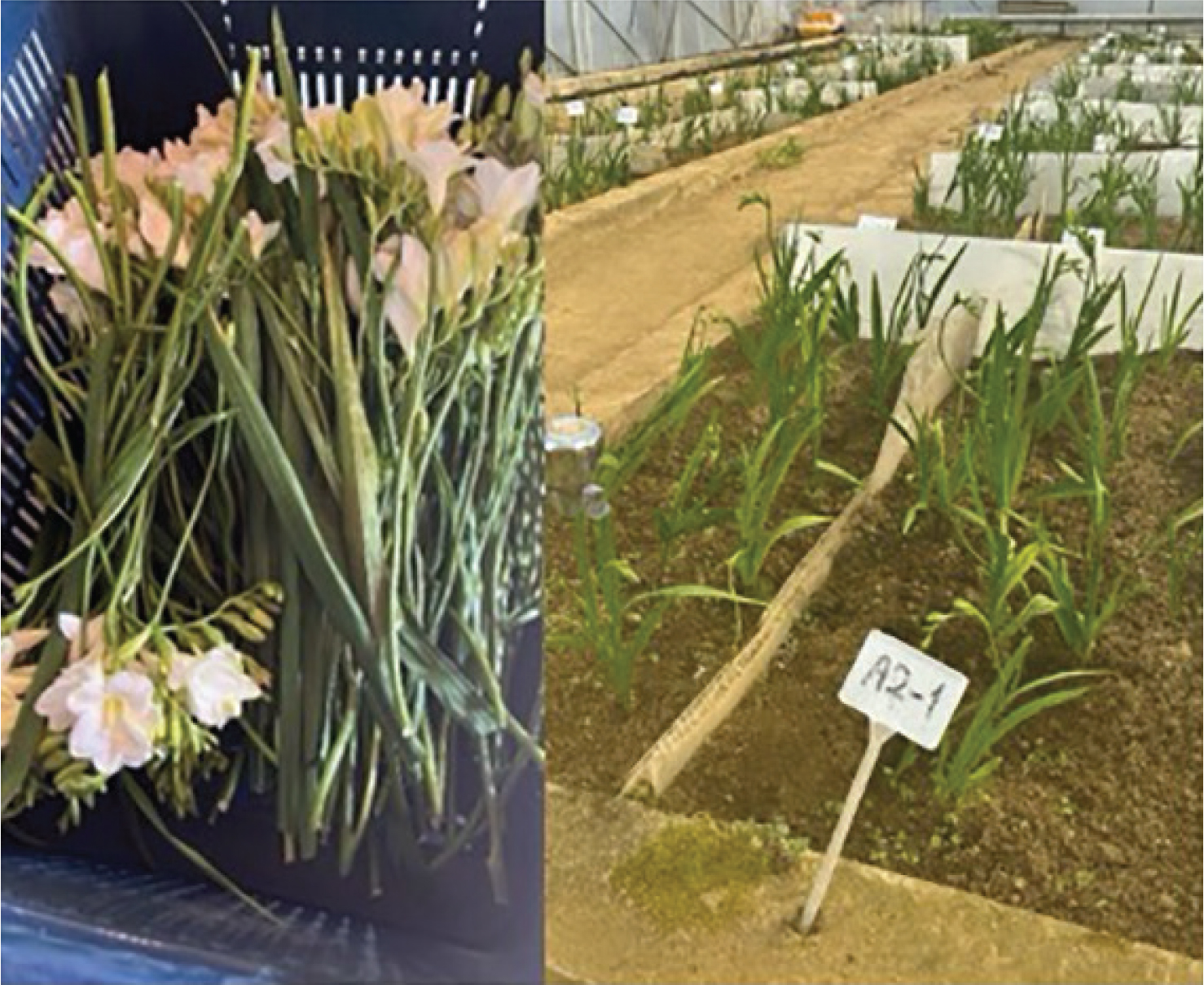
Figure 1.
F. hybrida 'White River' (left) and experimental layout in soil-based greenhouse (right).
Table 1.
Microbial traits and compositions of PGPB formulations implemented in the trial.
| Code | Characteristics | Active components | Proportions (CFU · mL-1) |
|---|---|---|---|
| A1 | Siderophores production | Bacillus toyonensis, Lysinibacillus fusiformis | 1 × 10⁷ |
| A2 | IAA production | Bacillus toyonensis, Pseudomonas putida | 1 × 10⁷ |
| A3 | Phosphate solubilisation | Bacillus proteolyticus, Pseudomonas batumici | 1 × 10⁷ |
| A4 | Potassium solubilisation | Pseudomonas lini, Bacillus safensis | 1 × 10⁷ |
| A5 | N2 fixer | Pseudomonas konensis, Bacillus thuringiensis | 1 × 10⁷ |
Experimental design
On 28 November 2024, Freesia corms were transplanted into a soil-based medium under controlled glasshouse conditions (Figure 1). Five distinct PGPR formulations, detailed in Table 1, along with a standard C.F. (NPK 20:20:20) applied for comparative purposes, were administered at four critical phenological stages: at planting (28 November), during the vegetative phase (5 December), at the onset of floral bud formation (18 February) and throughout the post-anthesis corm enlargement period (21 March). Corms in the control group were treated with an equivalent volume of sterile distilled water. The experimental layout followed a randomised complete block design (RCBD) with three replications, each comprising 15 uniform corms.
Climate monitoring
Environmental parameters including temperature and relative humidity were monitored daily using a HOBO digital data logger. Data included minimum, average and maximum values of temperature (°C) and relative humidity (%). The average daily values were recorded and visualised to assess climatic stability throughout the cultivation period (Figure 1). During the experimental period, the average photoperiod ranged between 12 hr and 13 hr under natural daylight conditions.
Soil chemical properties
Soil samples were collected from each treatment at harvest and air-dried before analysis. Standard laboratory protocols were used to determine pH (1:2.5 soil:water), CaCO3 content, electrical conductivity (EC) and organic matter (Walkley-Black method). Available macro-(P, K) and micronutrients (Fe, Zn, Mn, Cu) were extracted using ammonium acetate and measured using atomic absorption spectrophotometry (AAS). All analyses were performed by an accredited external laboratory using standard spectrophotometric quality control procedures. Results were expressed as mg × kg-1 dry soil.
Morpho-physiological measurements
At the end of the experimental period, a comprehensive set of morpho-physiological parameters was evaluated to assess the effects of microbial and chemical treatments on Freesia corm development. All quantitative evaluations were performed under standardised post-harvest laboratory conditions to minimise environmental variability and ensure high reproducibility of the results. Corm dry weight (CDW) was determined by oven drying the harvested corms at 72 ± 1°C until a constant mass was reached using a precision analytical scale. To assess the enhancement in bulb swelling, Net change in corm diameter (Net Δ CD) and net change in corm fresh weight (Net Δ CFW) were calculated as the difference between initial and final values of corm size and mass, respectively. The number of cormlets (NC) per plant was manually counted to evaluate reproductive propagation. LA was measured using an electronic LA meter (LI-3100C, LI-COR Biosciences, Lincoln, NE, USA), which allowed for precise quantification of photosynthetically active surface area. Chlorophyll content was assessed non-destructively using a portable chlorophyll meter soil plant analysis development (SPAD)-502 Plus, Konica Minolta, Tokyo, Japan, and measurements were taken from fully expanded mature leaves to ensure inter treatment comparability. All measurements were performed on every plant within each replicate (15 plants per replicate), and data were averaged for statistical analysis.
Statistical analyses
All data were subjected to analysis of variance (ANOVA) using the JMP Pro 13.0 statistical software. (SAS Institute Inc., Cary, NC, USA). Mean separations among treatments were evaluated through the LSD test at a 5% significance level. Additionally, a correlation matrix among all variables was visualised using a heatmap constructed in OriginPro 2021 (OriginLab Corporation, Northampton, MA, USA). PCA was performed using normalised data to identify the interrelationships among growth, physiological and nutrient parameters.
RESULTS
Climatic observations
During the observation period, average daily temperatures in the greenhouse ranged between approximately 11.6°C and 14.6°C, while relative humidity varied from 56% to 76%. The fluctuations in relative humidity were notably wider than those in temperature, with certain days showing sharp differences between maximum and minimum values. This variability, particularly in humidity, may have influenced physiological processes such as transpiration, nutrient uptake and bulb enlargement in Freesia. The relatively mild temperature regime likely supported optimal vegetative growth, while elevated humidity levels, especially on days exceeding 75%, may have contributed to increased leaf turgor and photosynthetic efficiency (Figure 2). These stable greenhouse conditions ensured comparable environmental effects across treatments, allowing clearer interpretation of microbial impacts on physiological and nutritional parameters.
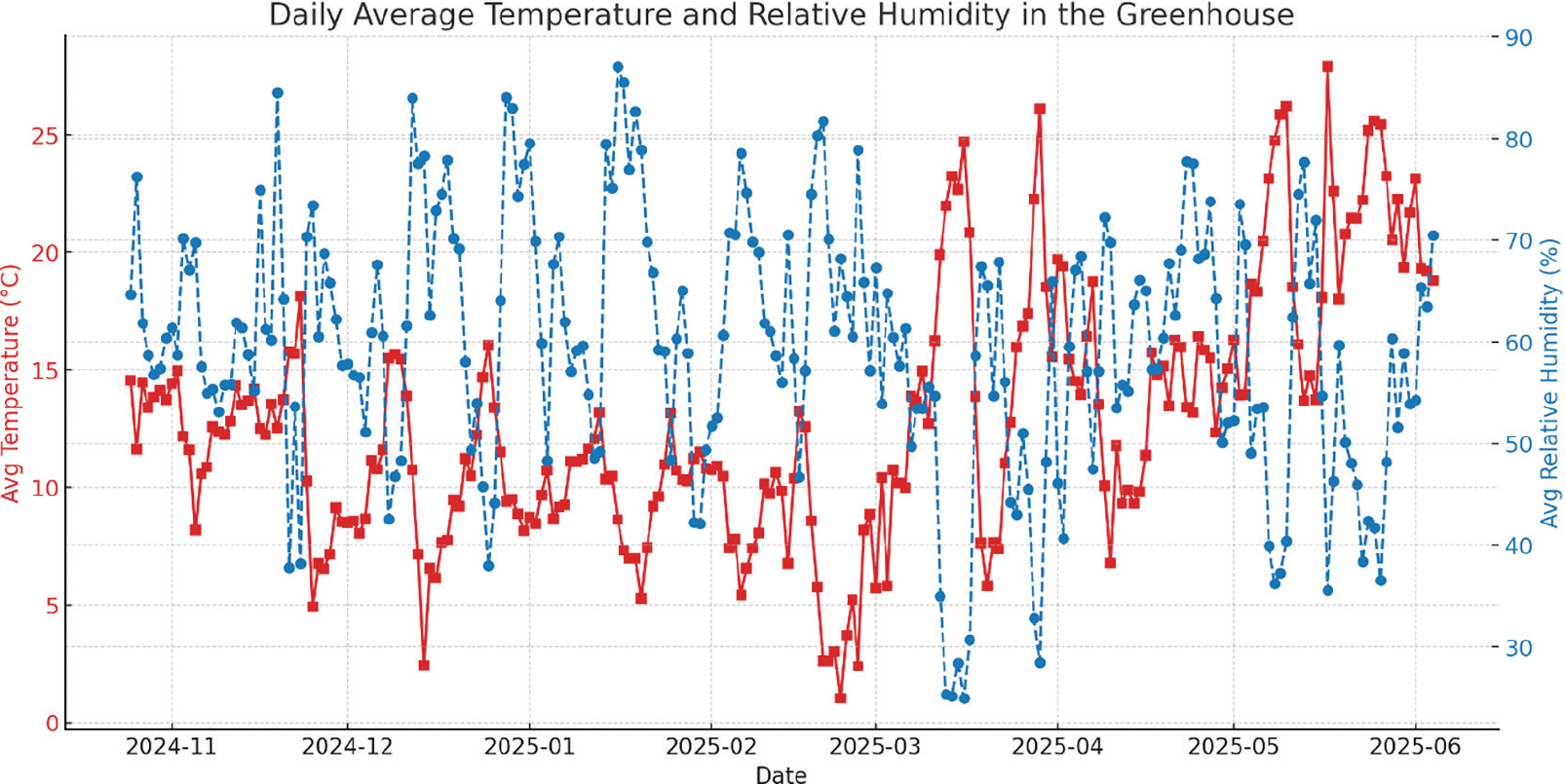
Figure 2.
Daily mean temperature (red) and relative humidity (blue, dashed) in the greenhouse, shown with dual y-axes.
Soil properties by treatments
Soil chemical characteristics varied notably among treatments (Table 2). Bacterial applications (Al–A5) resulted in slightly more acidic soil (pH 5.53), which is favourable for micronutrient availability, compared with the C.F. group (pH 6.22). Electrical conductivity was highest in the bacterial group (0.15%), suggesting enhanced microbial activity and nutrient transformation processes. Although organic matter content slightly decreased under bacterial treatments (3.18%) compared with the control (4.25%), the levels remained within a functional range. Available phosphorus and potassium were lower in bacterial treatments, likely due to greater plant uptake. Notably, bacterial plots had higher levels of available Fe, Zn and Cu, indicating improved micronutrient mobilisation. These findings suggest that PGPR applications modulate soil chemistry in a way that supports nutrient bioavailability and plantabsorption. The observed alterations in soil chemical balance under PGPR treatments indicate that indigenous microbial consortia can modulate rhizosphere conditions more effectively than synthetic fertilisers, enhancing nutrient bioavailability in low-input greenhouse systems.
Table 2.
Soil properties by treatment.
| Grp. | PH | CaCO. (%) | Salt (%) | Sat (%) | OM (%) | Ntotal (%) | P avail | Kavail | Caextr | Mgextr | Feextr | Mnextr | Znextr | Cuextr |
|---|---|---|---|---|---|---|---|---|---|---|---|---|---|---|
| Bad | 5.53 ± 0.05 c | 0.86 ± 0.11b | 0.15 ±0.00 a | 75.6 ± 0.57 b | 3.18 ± 0.02 c | 0.21 ± 0.00 b | 26.4 ± 0.59 c | 89.4 ± 1.22 a | 2284 ± 19.68 ab | 282 ± 1.80 b | 33.3 ± 1.10 b | 15.9 ± 0.40 b | 1.91 ± 0.05 c | 1.92 ± 0.07 c |
| C.F. | 6.22 ±0.00 a | 1.70 ± 0.2 a | 0.04 ±0.001 c | 78.6 ±0.57 a | 3.65 ± 0.01b | 0.23 ± 0.00 a | 43.52 ±2.87 a | 83.3 ± 1.85 b | 2184 ± 77.86 b | 233 ± 7.90 c | 33.7 ± 0.80 b | 8.10 ±0.21 c | 2.64 ± 0.08 b | 2.21 ± 0.07 b |
| Cont | 5.83 ± 0.05 b | 0.83 ± 0.05 b | 0.10 ± 0.0005 b | 77.6 ± 1.154 a | 4.25 ± 0.025 a | 0.20 ± 0.00 c | 39.7 ± 1.086 b | 73.5 ± 1.80 c | 2341 ± 37.06 a | 316 ± 7.29 a | 37.4 ± 0.75 a | 15.4 ± 0.22 b | 2.79 ± 0.05 a | 3.87 ±0.12 a |
| LSD | 0.09 | 0.27 | 0.00 | 1.63 | 0.04 | 0.00 | 3.61 | 3.30 | 102.05 | 12.59 | 1.80 | 0.59 | 0.13 | 0.19 |
| %CV | 0.80 | 12.12 | 0.11 | 1.06 | 0.54 | 1.22 | 4.93 | 2.01 | 2.25 | 2.27 | 2.59 | 2.16 | 2.68 | 3.56 |
Morphophysiological and biochemical responses
Morphological and physiological traits
PGPR treatments significantly influenced key morphological parameters of Freesia (p < 0.05). Among the treatments, A2 and A4 consortia demonstrated superior performance across most traits. A2 achieved the highest plant height (38.2 cm) and LA (70.5 cm2), while A4 recorded the largest bulb diameter (4.5 cm) and dry bulb weight (3.62 g). The NC was also maximised in A2 (4.1 × plant-1), exceeding both C.F. and control treatments (Table 3). These findings suggest that selected PGPR formulations promote vegetative growth and bulb multiplication effectively.
Table 3.
Effects of PGPB consortia and chemical fertilisation on bulb development and reproductive traits in F. hybrida.
| Grp. | CDW (g · parcel-1) | Net Δ CFW (g · parcel-1) | Net Δ CD (mm · parcel-1) | NC (number · parcel-1) | LA (cm2) | CHL |
|---|---|---|---|---|---|---|
| A1 | 3.47 ± 0.26 c | 8.87 ± 1.33 b | 16.13 ± 0.67 c | 3.13 ± 0.34 a | 85.42 ± 10.29 bc | 59.58 ± 6.52 a |
| A2 | 4.20 ± 0.42 a | 10.46 ± 0.36 a | 21.15 ± 1.58 a | 2.53 ± 0.50 bc | 91.11 ± 9.65 a | 60.35 ± 5.65 a |
| A3 | 3.15 ± 0.51 d | 9.21 ± 1.33 b | 15.04 ± 1.24 d | 2.17 ± 0.38 d | 86.59 ± 11.81 bc | 58.03 ± 7.12 ab |
| A4 | 3.94 ± 0.49 b | 10.51 ± 0.31 a | 17.35 ± 1.59 b | 2.97 ± 0.14 a | 87.04 ± 9.90 ab | 59.64 ± 6.08 a |
| A5 | 3.27 ± 0.50 d | 8.37 ± 1.25 c | 15.09 ± 1.88 d | 2.62 ± 0.49 b | 85.09 ± 9.95 bc | 55.26 ± 8.11 b |
| C.F. | 3.21 ± 0.48 d | 9.03 ± 1.27 b | 14.10 ± 1.67 e | 2.40 ± 0.49 c | 84.90 ± 10.04 bc | 56.32 ± 4.22 b |
| C | 3.28 ± 0.54 d | 8.30 ± 0.97 c | 14.37 ± 2.01 e | 2.00 ± 0.21 e | 82.55 ± 9.56 c | 52.19 ± 8.37 c |
| LSD | 0.29 | 0.77 | 0.66 | 0.16 | 4.23 | 4.92 |
| %CV | 12.33 | 11.52 | 9.77 | 15.38 | 11.83 | 11.72 |
1 C, control; C.F., chemical fertiliser; CDW, corm dry weight (g · parcel-1); CFW, corm fresh weight; CHL, chlorophyll content (SPAD units; chlorophyll index); CV, coefficient of variation (%); LA, leaf area (cm2); LSD, least significant difference at p < 0.05; NC, number of cormlets (number · parcel-1); Net Δ CD, net change in corm diameter (mm · parcel-1); Net Δ CFW, net change in corm fresh weight (g · parcel-1); PGPB, plant growth-promoting bacteria; PGPR, plant growth-promoting rhizobacteria.
Visual inspection of the corms across treatments clearly reinforces the quantitative data, particularly for A2 and A4 (Figure 3). These groups exhibited visibly larger corms, more numerous and uniform bulblets, and overall greater biomass compared with C.F. and control groups. Such phenotypic improvements are consistent with enhanced nutrient uptake and photosynthetic efficiency documented in the corresponding measurements (Table 2 and Table 3). The superior morphology observed in A2 and A4 also suggests a synergistic effect of their microbial compositions, likely involving improved root–rhizosphere interactions and hormonal regulation. In contrast, A3 and A5 showed intermediate responses, while the control group consistently displayed the smallest and least developed corms. These findings highlight that Freesia exhibited distinct response patterns to multi-strain microbial formulations compared with single-strain PGPR treatments reported previously. This synergistic interaction among native isolates contributed to superior corm development and nutrient uptake efficiency, confirming the originality of the current approach.
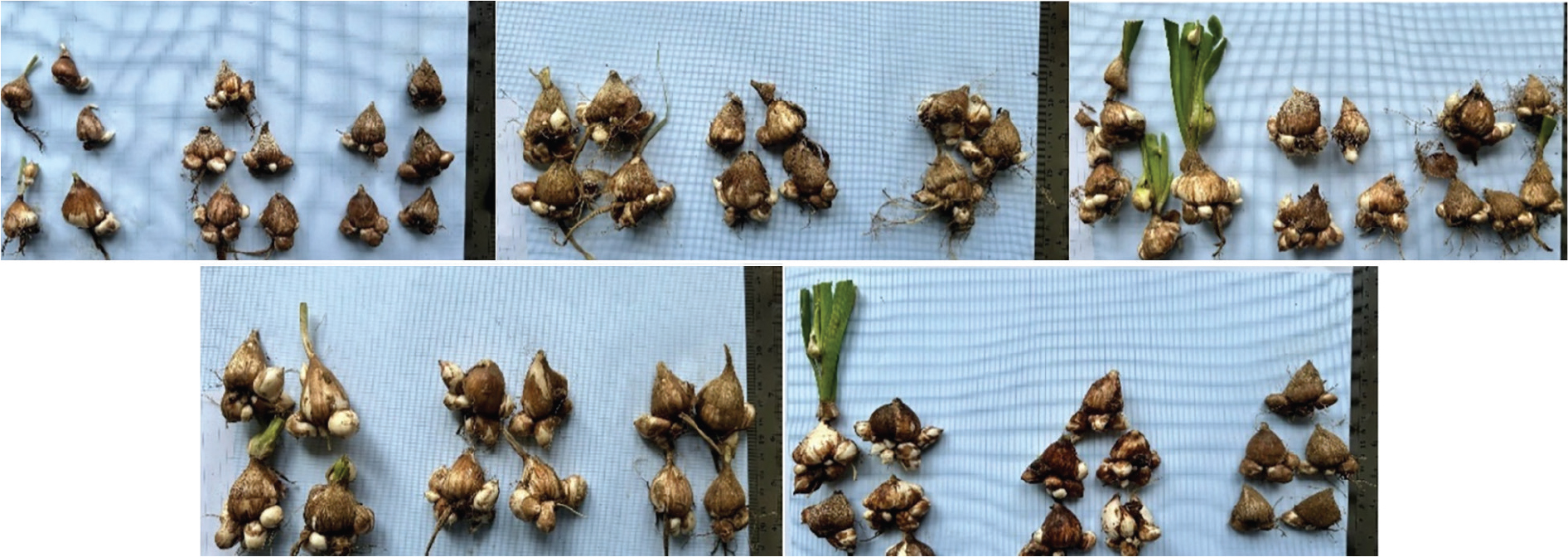
Figure 3.
Representative corms of F. hybrida under PGPR treatments (A1–A5), fertiliser (C.F.) and control (C). Within each panel: PGPR (left), fertiliser (middle), control (right). C.F., chemical fertilizer; PGPR, plant growth-promoting rhizobacteria.
Biochemical composition of bulbs
The nutrient content analysis of bulbs revealed significant differences (p < 0.05) among treatments in terms of macro-(N, P, K, Ca, Mg) and micronutrients (Fe, Mn, Zn, Cu) (Table 4). Among the PGPR treatments, A4 exhibited the highest bulb nitrogen content (2.35%), followed closely by A2 (2.10%) and A3 (1.93%), significantly outperforming both the C.F. and control (C) groups. The phosphorus (P) and potassium (K) levels were also notably elevated in A4 (0.16% and 0.36%, respectively), suggesting improved nutrient solubilisation and uptake efficiency mediated by microbial inoculation. In terms of secondary macronutrients, magnesium (Mg) and calcium (Ca) accumulation was again superior in A4-treated plants, reaching 0.15% and 0.31%, respectively. The Fe content, a critical micronutrient for chlorophyll synthesis and enzymatic functions, peaked at 37.51 mg · kg-1 in A4, significantly higher than the C.F. (37.51 mg · kg-1) and C (37.51 mg · kg-1) groups. Similarly, the highest values for zinc (Zn) and copper (Cu) were recorded in A4 (52.36 mg · kg-1 and 5.73 mg · kg-1, respectively), highlighting the positive role of PGPR consortia in enhancing the bioavailability of micronutrients, possibly via siderophore-mediated mechanisms. The control group (C) consistently exhibited lower nutrient concentrations across most parameters, while the C.F. treatment showed intermediate values that were statistically inferior to the top-performing PGPR treatments. The coefficient of variation (CV) ranged from 0.48% (for Cu) to 9.18% (for Zn), indicating acceptable experimental precision and biological variability. Overall, the results clearly demonstrate that specific PGPR consortia particularly A4 can significantly improve nutrient accumulation in Freesia bulbs, outperforming conventional fertilisation and offering a sustainable alternative for optimising bulb quality. The nutrient enrichment observed in A2 and A4 emphasises the complementary roles of native bacterial isolates, suggesting that locally adapted microbial combinations may outperform commercial inoculants under region-specific soil and climatic conditions.
Table 4.
Bulb content analyses after harvest.
| Grp. | N | P | K | Ca | Mg | Fe | Mn | Zn | Cu |
|---|---|---|---|---|---|---|---|---|---|
| A1 | 1.85 ±0.011 e | 0.19 ± 0.03 b | 0.63 ± 0.032 e | 0.28 ± 0.005 b | 0.12 ± 0.005 d | 1362 ± 33.45 e | 27.4 ± 1.153 cd | 10.03 ± 1.87 c | 4.23 ± 0.28 e |
| A2 | 2.10 ± 0.015 b | 0.24 ±0.00 a | 0.76 ± 0.015 b | 0.32 ±0.005 a | 0.25 ±0.005 a | 4660 ±61.46 a | 83.53 ±2.122 a | 18.36 ±0.28 a | 11.93 ±0.11 a |
| A3 | 1.93 ± 0.017 d | 0.14 ± 0.00 d | 0.64 ± 0.05 de | 0.27 ± 0.005 b | 0.10 ±0.01 e | 394 ± 20.54 f | 26.1 ± 19.52 de | 4.80 ±0.2 e | 3.73 ±0.51 f |
| A4 | 2.35 ±0.005 a | 0.19 ± 0.00 b | 0.82 ±0.005 a | 0.23 ± 0.005 c | 0.15 ± 0.005 c | 2106 ± 24.2 c | 39.36 ± 1.001 c | 10.46 ± 0.50 c | 5.73 ± 0.15 c |
| A5 | 1.80 ±0.011 f | 0.20 ± 0.05 b | 0.66 ±0.01 d | 0.22 ±0.001 d | 0.10 ± 0.00 e | 358 ± 17.95 f | 13.2 ± 0.66 e | 7.53 ± 1.10 d | 4.86 ± 0.25 d |
| C.F. | 1.71 ± 0.015 g | 0.16 ±0.05 cd | 0.59 ± 0.00 f | 0.21 ±0.01 d | 0.12 ± 0.005 d | 1546 ± 61.20 d | 30.6 ± 1.17 cd | 5.66 ± 0.68 e | 4.16 ± 0.15 ef |
| C. | 1.98 ±0.01 c | 0.18 ±0.01 be | 0.72 ± 0.005 c | 0.21 ±0.00 d | 0.18 ± 0.005 b | 3307 ± 94.90 b | 57.53 ± 2.35 b | 12.9 ± 0.55 b | 7.46 ± 0.25 b |
| LSD | 0.02 | 0.01 | 0.01 | 0.01 | 0.01 | 64.5 | 13.16 | 1.135 | 0.48 |
| %CV | 0.66 | 7.87 | 2.18 | 2.46 | 4.14 | 2.65 | 18.94 | 9.18 | 4.59 |
Multivariate evaluation of treatment effects
PCA of morphophysiological and nutritional traits
To better understand the relationships among morphological and physiological traits, a PCA was conducted. The first four principal components (PC1–PC4) explained 81.4% of the total variation, indicating that most of the variability among treatments could be summarised through these four axes. The multivariate separation of treatment groups clearly indicates that indigenous PGPR consortia triggered complex, multidimensional responses in Freesia, integrating morphological, physiological and nutritional traits in a unique manner not previously documented for this species.
PC1 accounted for the largest portion of variation (35.7%) and was mainly influenced by bulb dry weight, net change in CFW and the NC traits closely related to yield and reproductive performance. PC2 (16.6%) was associated with LA, reflecting differences in vegetative growth and plant size. PC3 (15.4%) represented variation in chlorophyll content, which is a key indicator of photosynthetic activity and plant vitality. PC4 (13.7%) contributed to minor differences related to chlorophyll and weight, further refining the classification of treatment effects. The PCA score plot clearly separated treatment groups along the PC1 and PC2 axes. Notably, groups A2 and A4 were positioned on the positive side of PC1, suggesting they performed better in terms of yield-related characteristics. In contrast, groups K and G clustered near the origin, indicating average or limited response in the measured traits.
In the loading plot, bulb dry weight and net change in CFW vectors were closely aligned, indicating strong positive correlation. Conversely, chlorophyll content appeared nearly orthogonal to bulb traits, suggesting independence. The wide angle between cormlet number and LA reflected a moderate negative association.
These findings demonstrate the power of PCA to reduce data complexity and reveal the most critical traits influencing treatment differences. This can provide practical guidance in selecting more effective treatment strategies (e.g. microbial inoculants or nutrient combinations) for improving bulb yield and physiological quality under similar cultivation systems.
Variable contributions and loading structure
The distribution pattern in the PCA plot reveals clear differentiation among treatment groups based on their composite effects on the measured traits (Figure 4). Notably, the A2 treatment was positioned furthest along the positive axis of F1, indicating its substantial contribution to the observed variability. This suggests that A2 had the most pronounced effect on traits such as bulb weight, nutrient accumulation and vegetative growth. Similarly, A4 also clustered in the positive quadrant, confirming its performance-enhancing role. In contrast, the C.F. and control (C) treatments were situated closer to the origin or in the negative quadrants, reflecting a relatively lower cumulative impact on the studied variables. The clustering of A1 and A3 in proximity to the origin suggests moderate influence, while A5’s location near the negative F1 region indicates limited effectiveness compared to A2 and A4. These results corroborate the superior efficiency of selected PGPR consortia (particularly A2 and A4) in modulating the physiological and biochemical responses under greenhouse conditions.
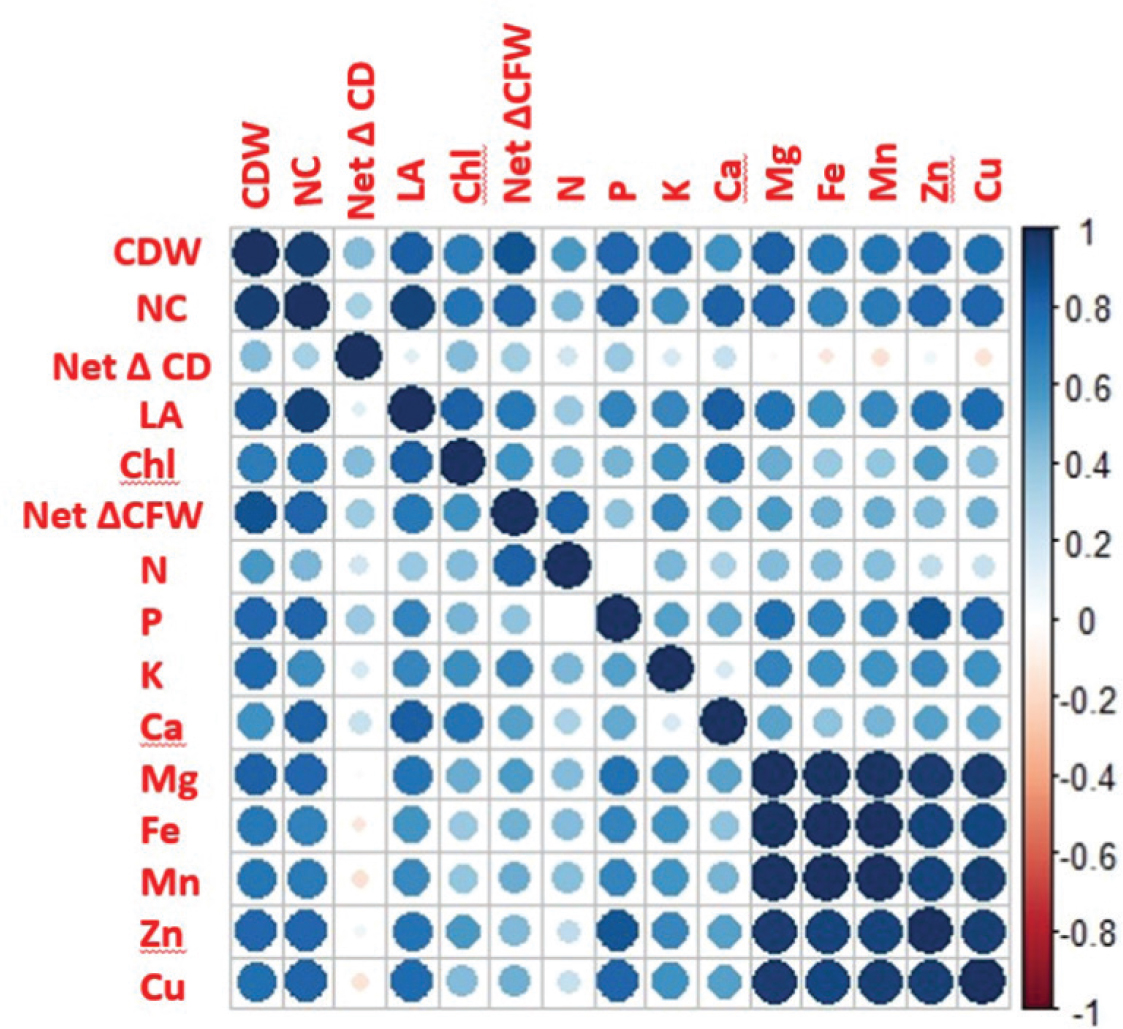
Figure 4.
PCA of morphophysiological and nutritional traits of F. hybrida. PCA, principal component analysis.
PCA-based treatment discrimination
The distribution of treatment contributions across principal components offers insight into the overall influence of each fertiliser regime on the morphophysiological and nutritional properties of F. hybrida (Table 5). Notably, A2 treatment showed the highest contribution to PC1 (63.36%), emphasising its dominant role in explaining the major variation associated with traits such as bulb dry weight, nutrient uptake and vegetative vigour. A4, in contrast, contributed most strongly to PC2 (23.36%) and PC3 (20.97%), reflecting its multifactorial influence on secondary trait clusters. While A3 and A5 displayed moderate to high contributions to PC3, PC4 and PC5, these treatments had more trait-specific effects, possibly linked to localised physiological responses. Interestingly, the control treatment (C) showed a disproportionate influence on PC2 (49.97%), likely due to distinct patterns of reduced nutrient content or suppressed growth, which separated it from other treatments in PCA space. The C.F. group exhibited a broad distribution, particularly contributing to PC5 (46.89%), suggesting an influence on residual or less-explained variation – possibly associated with chlorophyll content or ionic imbalance. Overall, this component-level breakdown validates the superior and more consistent performance of A2, followed by A4, in shaping comprehensive trait variability, thereby confirming the potential of select PGPR consortia as reliable biostimulants under greenhouse conditions.
Table 5.
PCA loadings of morphophysiological and nutritional traits in F. hybrida.
| Contribution of the observations (%) | |||||
|---|---|---|---|---|---|
| F1 | F2 | F3 | F4 | F5 | |
| A1 | 0.325 | 14.725 | 16.077 | 0.000 | 12.147 |
| A2 | 63.360 | 2.646 | 2.755 | 7.090 | 3.387 |
| A3 | 7.720 | 5.919 | 3.687 | 54.765 | 13.054 |
| A4 | 5.723 | 23.365 | 20.972 | 27.441 | 7.961 |
| A5 | 9.469 | 0.512 | 39.624 | 8.856 | 7.101 |
| C | 0.076 | 49.967 | 3.043 | 1.411 | 9.453 |
| C.F. | 13.327 | 2.865 | 13.841 | 0.437 | 46.897 |
Pearson correlation matrix among traits
Correlation patterns among morphophysiological and nutritional traits
The Pearson correlation matrix revealed significant positive associations among several morphophy-siological traits and nutrient concentrations (Figure 5, Table 6). Notably, CDW exhibited strong correlations with chlorophyll content (Chl), nitrogen (N), phosphorus (P) and potassium (K), suggesting that nutrient uptake efficiency plays a pivotal role in biomass accumulation. LA and chlorophyll content (Chl) were positively associated with each other and with macronutrients, further supporting the role of photosynthetic potential in vegetative growth. In contrast, some micronutrients, such as Mn and Cu, showed weaker or non-significant associations with morphological traits, indicating more independent uptake or utilisation dynamics. These interrelationships highlight the complex physiological interactions influenced by different fertilisation strategies.
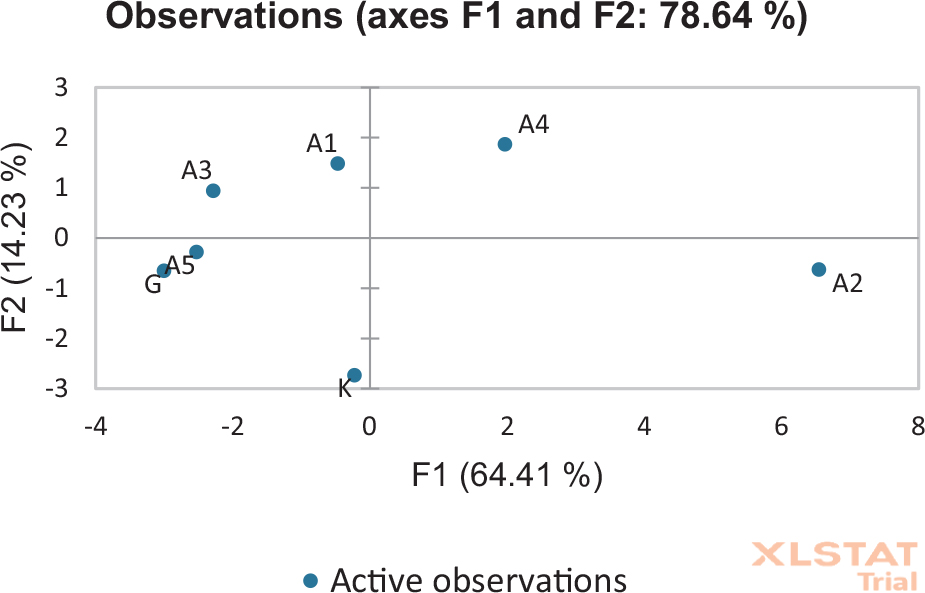
Figure 5.
PCA biplot of fertiliser treatments based on morphophysiological and nutritional traits in F. hybrida. PCA, principal component analysis,
Table 6.
Pearson correlation matrix among morphophysiological and nutritional traits of F. hybrida.
| Variables | CDW | NC | Net Δ CD | LA | CHL | Net Δ CFW | N | P | K | Ca | Mg | Fe | Mn | Zn | Cu |
|---|---|---|---|---|---|---|---|---|---|---|---|---|---|---|---|
| CDW | 1 | 0.943 | 0.439 | 0.823 | 0.699 | 0.861 | 0.576 | 0.795 | 0.780 | 0.605 | 0.810 | 0.715 | 0.724 | 0.796 | 0.758 |
| NC | 0.943 | 1 | 0.339 | 0.930 | 0.730 | 0.801 | 0.455 | 0.807 | 0.623 | 0.810 | 0.796 | 0.674 | 0.710 | 0.793 | 0.803 |
| Net Δ CD | 0.439 | 0.339 | 1 | 0.130 | 0.438 | 0.360 | 0.209 | 0.372 | 0.171 | 0.234 | -0.045 | -0.130 | -0.157 | 0.079 | -0.142 |
| LA | 0.823 | 0.930 | 0.130 | 1 | 0.810 | 0.718 | 0.371 | 0.670 | 0.651 | 0.829 | 0.730 | 0.593 | 0.644 | 0.734 | 0.774 |
| Chl | 0.699 | 0.730 | 0.438 | 0.810 | 1 | 0.601 | 0.439 | 0.468 | 0.619 | 0.736 | 0.500 | 0.373 | 0.390 | 0.575 | 0.432 |
| Net Δ CFW | 0.861 | 0.801 | 0.360 | 0.718 | 0.601 | 1 | 0.817 | 0.407 | 0.663 | 0.541 | 0.567 | 0.471 | 0.492 | 0.444 | 0.484 |
| N | 0.576 | 0.455 | 0.209 | 0.371 | 0.439 | 0.817 | 1 | -0.001 | 0.458 | 0.325 | 0.439 | 0.433 | 0.425 | 0.254 | 0.234 |
| P | 0.795 | 0.807 | 0.372 | 0.670 | 0.468 | 0.407 | -0.001 | 1 | 0.543 | 0.504 | 0.744 | 0.661 | 0.670 | 0.854 | 0.802 |
| K | 0.780 | 0.623 | 0.171 | 0.651 | 0.619 | 0.663 | 0.458 | 0.543 | 1 | 0.177 | 0.664 | 0.602 | 0.591 | 0.658 | 0.610 |
| Ca | 0.605 | 0.810 | 0.234 | 0.829 | 0.736 | 0.541 | 0.325 | 0.504 | 0.177 | 1 | 0.530 | 0.405 | 0.462 | 0.545 | 0.550 |
| Mg | 0.810 | 0.796 | -0.045 | 0.730 | 0.500 | 0.567 | 0.439 | 0.744 | 0.664 | 0.530 | 1 | 0.982 | 0.988 | 0.959 | 0.960 |
| Fe | 0.715 | 0.674 | -0.130 | 0.593 | 0.373 | 0.471 | 0.433 | 0.661 | 0.602 | 0.405 | 0.982 | 1 | 0.996 | 0.924 | 0.920 |
| Mn | 0.724 | 0.710 | -0.157 | 0.644 | 0.390 | 0.492 | 0.425 | 0.670 | 0.591 | 0.462 | 0.988 | 0.996 | 1 | 0.926 | 0.944 |
| Zn | 0.796 | 0.793 | 0.079 | 0.734 | 0.575 | 0.444 | 0.254 | 0.854 | 0.658 | 0.545 | 0.959 | 0.924 | 0.926 | 1 | 0.941 |
| Cu | 0.758 | 0.803 | -0.142 | 0.774 | 0.432 | 0.484 | 0.234 | 0.802 | 0.610 | 0.550 | 0.960 | 0.920 | 0.944 | 0.941 | 1 |
1 CDW, corm dry weight; CFW, corm fresh weight; CHL, chlorophyll content (SPAD units; chlorophyll index); LA, leaf area; NC, number of cormlets. Bold values in Table 6 represent the diagonal self-correlation coefficients (r = 1.00) for each trait.
Relative contributions of traits to principal components
PCA revealed that most variables contributed substantially to the first two principal components (Table 7). Specifically, NC, Net Δ CD and Chl showed the highest contributions to PC1, indicating their collective influence in defining the overall variation among treatments. The high loading of NC and Net Δ CD in PC1 suggests a shared variance pattern related to reproductive vigour and corm multiplication. In contrast, micronutrients such as Zn and Mn contributed more strongly to PC2 and PC3, indicating that secondary components capture nutrient-specific variation not directly tied to primary growth. The relatively low contributions of certain variables in higher-order components (PC4-PC5) suggest diminishing variance explanation beyond the first three components. These results support the robustness of PCA in distinguishing trait clusters and functional dependencies under varying fertiliser regimes.
Table 7.
Variable contributions (%) to principal components (F1-F5) in F. hybrida.
| F1 | F2 | F3 | F4 | F5 | |
|---|---|---|---|---|---|
| CDW | 9.298 | 2.352 | 0.064 | 3.831 | 0.449 |
| NC | 9.300 | 1.773 | 1.692 | 0.867 | 0.763 |
| Net Δ CD | 0.443 | 26.367 | 7.287 | 21.948 | 12.173 |
| LA | 8.212 | 1.165 | 1.591 | 8.995 | 9.854 |
| Chl | 5.358 | 10.412 | 1.478 | 2.892 | 16.346 |
| Net Δ CFW | 5.896 | 10.063 | 10.705 | 0.010 | 0.544 |
| N | 2.722 | 6.975 | 40.434 | 0.672 | 7.444 |
| P | 6.629 | 0.617 | 17.751 | 9.799 | 1.459 |
| K | 5.794 | 0.236 | 4.714 | 14.823 | 40.051 |
| Ca | 4.974 | 3.663 | 7.127 | 34.386 | 3.819 |
| Mg | 8.991 | 5.203 | 0.636 | 0.033 | 1.037 |
| Fe | 7.508 | 9.385 | 2.431 | 0.360 | 3.295 |
| Mn | 7.833 | 9.133 | 1.842 | 0.014 | 2.750 |
| Zn | 8.700 | 4.472 | 1.790 | 1.142 | 0.011 |
| Cu | 8.342 | 8.183 | 0.457 | 0.226 | 0.004 |
DISCUSSION
The present findings confirm the significant role of indigenous PGPR consortia in enhancing the morphological and physiological traits of F. hybrida under greenhouse conditions. Consortia A2 and A4, in particular, improved CDW, diameter, chlorophyll content and macro- and micronutrient accumulation, outperforming C.F. and control treatments. These results are aligned with those of Prisa and Benati (2021), who reported improved bulb morphology and vegetative vigour in Freesia, Iris, Tulip and Narcissus following PGPR application in ornamental bulbous crops (Prisa and Benati, 2021), and are consistent with earlier observations in other ornamental crops (Khoso et al., 2024; Tafaroji et al., 2025). The increase in bulb dry weight and number observed under indigenous PGPR application in freesia is consistent with similar results reported in tulip species. In T. sintenisii, Bacillus spp. strains such as EZF13 and EZF104 led to significant gains in bulb number and weight, highlighting the broad-spectrum efficacy of Bacillus-based bioinoculants on bulbous ornamentals (Yenikalayci, 2025).
The enhancement of chlorophyll content, relative water status and corm weight in Freesia observed in the present study corresponds with the findings of Nordstedt and Jones (2020), who reported that PGPR-treated green-house ornamentals exhibited improved photosynthetic activity and stress recovery. Moreover, Wang et al. (2024) demonstrated that Bacillus–Pseudomonas co-inoculation activates WRKY70 and BHLH35 transcription factors, promoting phenylpropanoid biosynthesis and energy metabolism, mechanisms that could underlie the enhanced physiological efficiency recorded in Freesia consortia A2 and A4.
The observed improvements are likely attributable to multiple PGPR-mediated mechanisms including classical processes such as phosphate solubilisation, nitrogen fixation and siderophore production, as previously described by Vandana et al. (2017). Enhanced nutrient acquisition especially of Fe, Zn and Mn suggests microbial siderophore production and increased root surface area facilitated by auxin-like compounds such as indole-3-acetic acid (IAA) (Vessey, 2003; Zaib et al., 2023). These findings are supported by Sharma et al. (2022), who reported that PGPR strains increased Fe and K accumulation in Capsicum annuum through similar pathways. Moreover, improved cormlet formation and biomass in A1 and A4 treatments may be associated with the stimulation of cytokinin biosynthesis, which has been linked to enhanced cell division and shoot proliferation (Bhattacharya et al., 2024).
Glick (2012) noted that excessive C.F. input may suppress microbial activity in the soil, potentially limiting the effectiveness of PGPR. In the present study, C.F. was used as a comparative standard rather than a combined treatment. The fact that indigenous PGPR consortia particularly A2 and A4 outperformed the C.F. treatment in terms of nutrient uptake and biomass accumulation highlights their standalone efficacy. This supports Glick’s view indirectly by demonstrating that PGPR, when applied alone, can provide superior outcomes without the inhibitory effects sometimes associated with high chemical input systems.
In the study conducted by Hoda and Mona (2014), Petunia plants treated with only 50% of the recommended fertiliser dose exhibited comparable or even superior growth performance when inoculated with beneficial bacteria such as Azospirillum lipoferum and Bacillus polymyxa, relative to control plants receiving the full fertiliser dose. However, their experimental design involved only two foliar spray applications of the microbial agents, with plants grown in a partially soil-based medium and fertilisation applied as a single dose. In contrast, the present study adopted a more comprehensive approach by applying indigenous PGPR consortia directly to the growth medium via four separate drenching events. This repeated soil-based application strategy likely enhanced the persistence and colonisation efficiency of the PGPR strains, enabling a more sustained and measurable impact on plant physiological and morphological responses.
In this study, the effects of indigenous PGPR consortia, particularly A2 and A4, on the morphological, physiological and nutritional traits of F. hybrida were evaluated using comprehensive multivariate statistical analyses. PCA revealed that the first two components accounted for 78.64% of the total variance, with A2 and A4 treatments clearly separating from the others, indicating broad-spectrum effects across multiple traits. These differences were statistically validated by LSD tests (p < 0.05), underscoring the robustness and reliability of the observed responses. Similarly, the tea seedling study employed ANOVA, Duncan’s test and PCA to evaluate the impact of PGPR treatments on parameters such as shoot height, leaf number, root length and biomass accumulation (Thakur et al., 2025). In that study, PCA effectively classified PGPR isolates based on growth performance, showing distinct clustering of treatment groups with high explanatory power. Both studies demonstrate the strong utility of PCA in differentiating microbial effects in horticultural crops. Moreover, in the Freesia study, the separate clustering of A2 and A4 treatments reflects multidimensional, systemic influences on plant performance, while the tea study confirms such variation through metabolic (carbon source utilisation) profiles as well. These parallels confirm that PGPR-induced plant responses are not only phenotypically significant but also statistically distinguishable, with broad applications in precision horticulture and sustainable crop management.
South et al. (2021) primarily emphasised vertical growth dynamics and vegetative shoot development, which are appropriate for ornamental species like Petunia, where floral aesthetics are a key trait. In contrast, the present study centres on a bulbous ornamental Freesia where underground storage organ development is a critical performance indicator. In this context, the applied PGPR consortia not only enhanced corm diameter and biomass but also improved LA and chlorophyll content, thereby optimising photosynthetic efficiency and source-assimilate balance. The observed improvements in corm development, LA and nutrient accumulation in Freesia under PGPR consortia can be partially attributed to optimised microbial plant interactions in the rhizosphere. Plants actively shape their rhizosphere by releasing root exudates and signalling molecules, which help attract or influence beneficial microbes. These compounds produced especially during early growth can represent up to 40% of the plant’s photosynthetically fixed carbon (Nordstedt and Jones, 2021; Ullah et al., 2024). Therefore, the establishment of a supportive rhizosphere microbiome likely enhanced nutrient mobilisation and stress resilience in our study. Furthermore, increased accumulation of micronutrients such as Fe, Zn and Mn may be attributed to siderophore production and auxin-like hormonal activity (e.g. IAA). Similarly, in the study conducted by González-Mancilla et al. (2024) on C. annuum, co-inoculation of AMF (Funneliformis and Claroideoglomus spp.) and PGPR (particularly Pseudomonas tolaasii) resulted in substantial enhancements in LA, leaf number, shoot dry weight, phosphorus content and photosynthetic traits. The combination of AMF and PGPR clearly supported plant growth, nutrient acquisition and photosynthetic efficiency. The highest biomass production and phosphorus accumulation were recorded under AMF + Pseudomonas treatments, highlighting the synergistic impact of microbial co-inoculation in crop development.
However, while AMF served as a critical component in González-Mancilla et al.’s (2024) study, the current research relied exclusively on PGPR consortia yet achieved comparable levels of productivity in Freesia. This demonstrates that PGPR can act as effective biostimulants even in the absence of AMF support. The marked improvements observed in chlorophyll content, LA and corm development with PGPR-only treatments suggest their strong potential for wider adoption in sustainable ornamental crop production.
Recent studies have emphasised the role of microbial volatile organic compounds (VOCs) such as 2,3-butanediol in modulating plant stress responses, root system architecture and nutrient homeostasis under abiotic stress (Li et al., 2021). Although the present study did not directly analyse VOC profiles of A2 and A4 consortia, the observed improvements in chlorophyll content, root proliferation and nutrient accumulation are suggestive of potential VOC-mediated signalling. It is plausible that PGPR strains within these consortia may have emitted bioactive volatiles that complemented phytohormone signalling and enhanced root-shoot balance, as previously demonstrated in Robinia pseudoacacia exposed to Rahnella-derived VOCs (Li et al., 2021).
Furthermore, Li et al. (2021) demonstrated that VOCs produced by PGPR not only improved biomass and chlorophyll levels but also significantly reduced oxidative stress markers such as H2O2 and Malondialdehyde (MDA), while enhancing antioxidant enzyme activities. Although our study did not quantify oxidative biomarkers, the consistent improvements in photosynthetic traits and nutrient uptake under PGPR consortia treatments suggest a similar underlying alleviation of stress-induced damage, possibly mediated through induced systemic tolerance mechanisms.
In conclusion, all three studies, South et al. (2021), González-Mancilla et al. (2024) and the present investigation, clearly support the plant growth-promoting effects of microbial inoculants in ornamental species (Kumari et al., 2016). Despite differences in plant material (Petunia, C. annuum, Freesia), microbial formulations (single PGPR strains, AMF + PGPR, or indigenous PGPR consortia) and evaluation parameters, the overall trend points towards consistent enhancements in photosynthetic capacity, nutrient accumulation and organ development. In this regard, the present study demonstrates that substantial physiological responses can be achieved through PGPR consortia alone, affirming their broad-spectrum biostimulant potential in ornamental horticulture.
The combined use of Bacillus and Pseudomonas strains in the A2 and A4 consortia appears to reflect a synergistic microbial interaction, akin to the ‘microbial cocktail’ effect described by Joshi et al. (2025). These genera are known to promote plant growth through multiple complementary mechanisms, including enhanced nutrient solubilisation, suppression of soil-borne pathogens and modulation of plant signalling pathways via the release of phytohormones and VOCs (Li et al., 2021). The mechanistic basis of these interactions is further illustrated in Figure 6, which summarises key PGPR-mediated processes such as VOC release, IAA and ACC deaminase production, siderophore activity and induced systemic resistance. This visual synthesis supports the physiological changes observed in PGPR-treated Freesia plants, reinforcing the interpretation of the underlying microbial mechanisms.
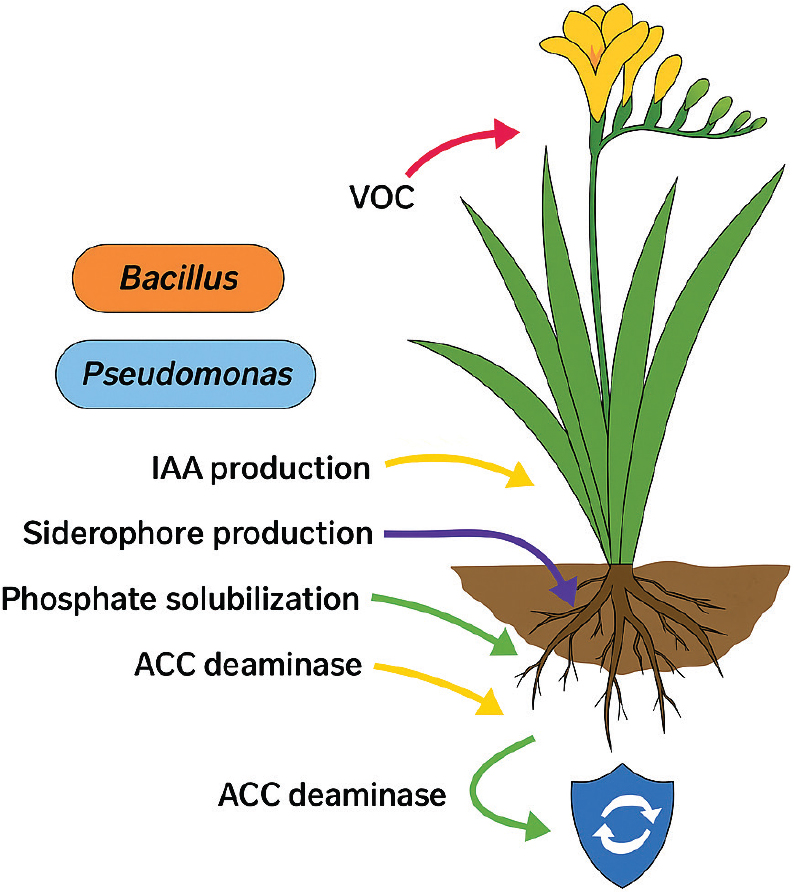
Figure 6.
Proposed mechanisms by which Bacillus and Pseudomonas spp. enhance F. hybrida growth through VOCs, IAA, siderophores, phosphate solubilisation and ACC deaminase. ACC, 1-aminocyclopropane-1-carboxylate; IAA, indole-3-acetic acid; VOCs, volatile organic compounds.
Notable parallels exist between the present study and the research conducted by Boyaci et al. (2025) on Trachystemon orientalis. Both studies employed the same PGPR genera, specifically Bacillus spp. and Pseudomonas spp., highlighting that the observed improvements in plant growth and nutrient uptake are not merely species-specific but rather reflect the consistent functional potential of these microbial taxa across diverse plant systems. Despite belonging to different taxonomic groups, both T. orientalis and F. hybrida propagate via underground vegetative organs rhizomes and corms, respectively. This shared physiological trait underscores the relevance of PGPR activity directed towards subterranean storage and reproductive tissues. In both studies, enhancements in underground organ development (rhizome/corm diameter, dry weight and bulblet formation) and leaf-related parameters were recorded. These findings suggest that PGPR treatments exert dual effects by promoting photosynthetic surface expansion and directing carbon allocation towards underground storage organs. Moreover, the use of the same microbial genera (Bacillus and Pseudomonas) in both investigations reinforces their broad-spectrum biostimulant potential in ornamental crops. The present study’s findings of increased iron, potassium and zinc uptake in A2 and A4 treatments mirror the elevated nutrient accumulation in rhizomes reported by Boyaci et al. (2025). Together, these results affirm the reproducibility and reliability of PGPR-mediated physiological enhancements targeting underground reproductive structures. A similar trend was reported by Karagöz et al. (2019), who demonstrated that PGPR strains, particularly Pseudomonas putida and Kluyvera cryocrescens, significantly improved stem diameter, LA, chlorophyll content and bulb nutrient accumulation (e.g. N, Ca, Mg) in Hyacinthus orientalis. These enhancements in underground storage organ development, chlorophyll content and macronutrient uptake closely mirror the improvements recorded in F. hybrida under A2 and A4 treatments, further reinforcing the cross-species consistency of PGPR efficacy in bulbous ornamentals. The present findings align well with earlier studies reporting that microbial inoculants such as PGPR and mycorrhizal fungi contribute to better plant growth and nutrient uptake in ornamental species like rose, chrysanthemum and gerbera, while also helping to reduce reliance on C.F. (Sisodia et al., 2024). Furthermore, the findings of Pathak et al. (2017) emphasised that eco-friendly and cos t-effective microbial biofertilizers such as Azotobacter, Azospirillum, Bacillus and Pseudomonas can effectively replace a portion of C.F. in horticultural crops, improving soil health, nutrient uptake and crop productivity. Their results also highlighted that the combined use of organic amendments and PGPR inoculants enhances yield and quality attributes in ornamental and vegetable species while minimising environmental contamination. The synergistic effects observed in A2 and A4 treatments suggest that the combined inoculation of compatible bacterial strains can enhance nutrient solubilisation, root-soil interaction and overall plant productivity more effectively than single inoculations. These results are in accordance with the concept described by Selim and Zayed (2017), who emphasised that co-inoculation of compatible PGPRs could improve microbial survival, metabolic activity and soil fertility while maintaining ecosystem stability. The enhanced performance of the indigenous PGPR consortium in F. hybrida therefore supports the development of multi-strain biofertilizer formulations aimed at optimising both plant growth and soil health under controlled horticultural conditions.
Given the increasing need for eco-friendly inputs in ornamental horticulture, the deployment of native PGPR consortia tailored to specific crop ecophysiologies such as that of F. hybrida offers a promising strategy to reduce chemical dependency and improve soil health (Hasan et al., 2024).
CONCLUSIONS
This study demonstrated that indigenous PGPR consortia, particularly A2 and A4, exerted significant biostimulant effects on F. hybrida ‘White River’ under soil-based greenhouse conditions. The application of these consortia enhanced multiple key agronomic traits, including corm diameter, CDW, LA, chlorophyll content and the accumulation of essential macro- and micronutrients (e.g., K, Fe, Zn). Notably, the PGPR treatments outperformed both the C.F. and untreated control groups, highlighting their potential as standalone biological inputs for sustainable ornamental crop production.
The observed improvements can be attributed to the multifaceted actions of the microbial strains within the consortia, such as auxin production, siderophore-mediated nutrient solubilisation and possible VOC-based signalling pathways. The multivariate statistical analyses (PCA, correlation, LSD) confirmed the broad-spectrum impact of PGPR treatments across physiological, morphological and nutritional parameters, providing robust evidence for their systemic influence on plant development.
Importantly, the native origin of the PGPR strains from the tea rhizosphere may have contributed to their ecological compatibility and functional efficiency in promoting growth under reduced chemical input conditions. The consistent separation of A2 and A4 from other treatments in PCA plots and the high correlation with nutrient uptake further affirm their effectiveness. These findings suggest that indigenous PGPR consortia can serve as a viable alternative to synthetic fertilisers in the floricultural industry, aligning with current demands for environmentally friendly, resource-efficient cultivation strategies. Future research should aim to elucidate the molecular and metabolic interactions between PGPR and bulbous plants like Freesia, as well as to validate these results across different cultivars, substrates and stress conditions. Overall, this study lays a scientific foundation for integrating microbial biostimulants into mainstream ornamental horticulture, particularly in bulbous plant systems. To validate the greenhouse-based outcomes, large-scale trials under open-field conditions should be conducted to assess the consistency of PGPR effects across diverse environmental and soil contexts. Such translational efforts could facilitate the adoption of bio-based technologies by commercial growers, offering a cost-effective and environmentally sustainable alternative to conventional fertiliser programmes.
In agreement with the findings of Nordstedt and Jones (2020) and Wang et al. (2024), the present study highlights the potential of indigenous PGPR consortia to improve nutrient acquisition and stress resilience in ornamental bulbous crops such as F. hybrida. These results collectively confirm that the ecological origin of the microbial consortia plays a crucial role in determining plant physiological efficiency under reduced chemical input conditions, suggesting that region-specific PGPR formulations could be integrated into sustainable ornamental production systems.
It is of great importance to test the applicability of these promising results, obtained under greenhouse conditions, in open-field environments with varying soil types and climatic conditions. Such large-scale trials will reveal whether the indigenous PGPR consortia can achieve similar success under real-world farming practices and will facilitate growers’ adoption of these biological inputs. In doing so, the reliance on C.F. can be reduced, contributing to the development of more environmentally friendly and cost-effective production systems. Indeed, a field-based study conducted by Kurniawan et al. (2025) reported that farmer training and on-site demonstrations on PGPR applications significantly increased awareness and acceptance among growers, encouraging a reduction in chemical input dependency in ornamental plant cultivation. These findings indicate that microbial solutions are not limited to controlled experimental settings but can also be practically applicable and adoptable under real-world field conditions.
ACKNOWLEDGEMENTS
The authors thank SoilBiom Biotechnology R&D Co. Ltd. for providing rhizobacterial strains used in this study. The company had no role in the experimental design, data analysis, interpretation or decision to publish. They are also grateful to the staff of the Faculty of Agriculture, Recep Tayyip Erdoğan University, for their valuable technical assistance during the greenhouse experiment.
Notes
[11] Contributed by AUTHOR CONTRIBUTIONS
Ü.Ö.K. designed and supervised the experiment. E.E. and S.İ. conducted the greenhouse and laboratory analyses. A.Y. contributed to microbial strain characterisation and provided biotechnological support. All authors contributed to data interpretation and writing of the manuscript, and approved the final version.
[12] Conflicts of interest CONFLICT OF INTEREST
The authors declare no conflicts of interest.
Abbreviations
- ACC
1-aminocyclopropane-1-carboxylate
- AMF
arbuscular mycorrhizal fungi
- C.F.
chemical fertiliser
- CDW
corm dry weight
- CFW
corm fresh weight
- Chl
chlorophyll content
- IAA
ındole-3-acetic acid
- LA
leaf area
- LSD
least significant difference
- NC
number of cormlets
- Net Δ CD
net change in corm diameter
- PCA
principal component analysis
- PGPB
plant growth-promoting bacteria
- PGPR
plant growth-promoting rhizobacteria
- VOC(s)
volatile organic compounds