
INTRODUCTION
Fruits that human beings have used for centuries, especially as food and medicine, are grown in different continents of the world including temperate, subtropical and tropical climates with a great variety of species. They are sources of vitamins and minerals, playing an important role in the healthy nutrition chain. Due to their high phenolic and anthocyanin contents, organic acids, vitamin C, A, E and K contents and antioxidant properties, fruits help protect from metabolic diseases such as heart, cancer and diabetes and help keep digestive system healthy (Ercisli et al., 2003; Erturk et al., 2012; Li et al., 2021; Cosme et al., 2022; Bolling et al., 2023; Orman, 2023; Ozkan, 2023).
Wild edible fruits (WEFs) show greater variability compared with cultivated relatives. Most of the WEFs found in rural areas and forests importantly contribute biodiversity. They are also an important source of food and income for rural communities. WEFs are very rich in non-nutritive, nutritive and bioactive substances and have perfect flavour and excellent medicinal value (Sikora et al., 2013; Cosmulescu et al., 2017; Mikulic-Petkovsek et al., 2017; Rampáčková et al., 2021; Ghanbari et al., 2022).
Recently, several governmental agencies have been conducting several trainings and demonstrations to impart knowledge and skills to the local people on WEFs, particularly to obtain and improve knowledge on value-added products such as jam, vinegar and pickles (Rymbai et al., 2023).
Berries grow easily among the fruit species. They are especially preferred in fresh and processed products due to their attractive and aromatic fruits. The most produced and consumed berries around the world are strawberries, blueberries, blackberries, raspberries and elderberries. There is a wide range of colours in berries (usually from red to purple or black), depending on the species. In addition to fresh consumption, its fruits are also used as different food products such as jam, marmalade, jelly and beverages (Sariburun et al., 2010; Golovinskaia and Wang, 2021; Pap et al., 2021). Rubus L. is indigenous to six continents and is one of the most diverse genera in the plant kingdom with its main constituents being raspberries and blackberries. The raspberry, which belongs to the Rosaceae family, Rubus genus and Idaeobatus focke subgenus, is divided into three groups: Rubus idaeus (red raspberries), R. occidentalis (black raspberries) and R. neglectus (purple raspberries) (Thompson, 1997).
Red raspberry, R. idaeus L, originated from western Türkiye, including Kaz (Ida) mountains, is called ‘red forest fruit’. In many regions in Türkiye, it is also known locally as more, mudimak, kavuklu, etc. Although Türkiye is the homeland of red raspberries, there are many suitable areas for raspberry cultivation. Today, its cultivation has gained importance in large enterprises, family businesses and as an intermediate production option (Sariburun et al., 2010; Aglar et al., 2023).
Due to their attractive colour, distinct taste and perfect flavour, red raspberry fruits are preferred by consumers with pleasure. With the increasing greenhouse production in recent years, their availability in the market throughout the year increases the consumption rate. In addition to its fresh availability, raspberry is a fruit species that is a candidate to become an important branch of cultivation in the country, with its industrial products such as fruit juice, ice cream, pastry and deep freezing. In particular, in Black Sea, Marmara and Northern Anatolia forests are covered with wild red raspberry plants and they include many valuable ecotypes. The most suitable condition for raspberry cultivation in the country is cool weather in summer and without rain during harvest time. Plant growth slows down in places with hot, dry and windy summer. The best cultivation occurs at an altitude of 800-1500 m with an average annual rainfall of 750800 mm (Thompson, 1997; Sariburun et al., 2010; Aglar et al., 2023). In different parts of the world, wild red raspberries are found as populations and are an important genes source for breeding activities for producing new raspberries. For red raspberry breeding, the most important characteristics are berry size and shape, firmness, colour, taste, aroma, suitability to different processing methods, postharvest response and ease of harvest (Jennings, 1988; Sariburun et al., 2010).
Characterisation is the identification of plant germplasm. Identification by morphological, biochemical or molecular markers indicates highly heritable characters. Characterisation of germplasm is necessary to provide end users with information about the properties of genotypes. Recording and compiling data on important characteristics that distinguish genotypes within a species allow easy and rapid discrimination between phenotypes. It provides a better understanding of the composition and genetic diversity of the collection, allowing simple grouping of genotypes, development of core collections and generation of valuable germplasm for breeding programmes (Kuru Berk et al., 2020; Lavic et al., 2023; Titirica et al., 2023).
In recent years, biochemical analyses on fruits, including raspberries, have become more important due to their properties on human health (Alibabic et al., 2018; Comlekcioglu et al., 2022; Titirica et al., 2023). Although there are many biochemical studies on cultivated red raspberry fruits (Thompson, 1997; Sariburun et al., 2010; Titirica et al., 2023), biochemical analysis and study results on wild red raspberry fruits are limited in literature.
Thus, the study investigates the content of compounds which might have health-promoting potential on a large number of wild-grown red raspberry ecotypes from Vercenik plateau of Türkiye and they can be used in specific breeding purposes (to obtain cultivars that had high human health-promoting substances). Theobtained data will provide more detailed information to the researchers to determine ecotypes for multipurpose use such as for food, cosmetics, pharmaceutics and functional product sectors.
MATERIAL AND METHODS
Plant material
Vercenik plateau is located between Erzurum and Rize provinces and it is very rich in terms of wild-grown red raspberries naturally propagated by seeds (Figure 1). The fruits at full maturation stage, determined by soluble solid content (SSC) content of 11 red raspberry ecotypes, a distinct form of a plant in a particular habitat, were harvested in the second week of August in both years according to the pre-selection criteria (high yield, attractive fruits and free of pest and disease). The climate of district is described as Humid Continental by the Köppen Climate System, which is abbreviated as Dfb. All ecotypes are found similar climate and soil conditions in Vercenik plateau. Of note, 11 wild-grown plant materials were given a code number. These code numbers were preceded by the abbreviation of the Vercenik plateau (V) and the shrub number. Thus, each ecotype was named from V-1 to V-11.
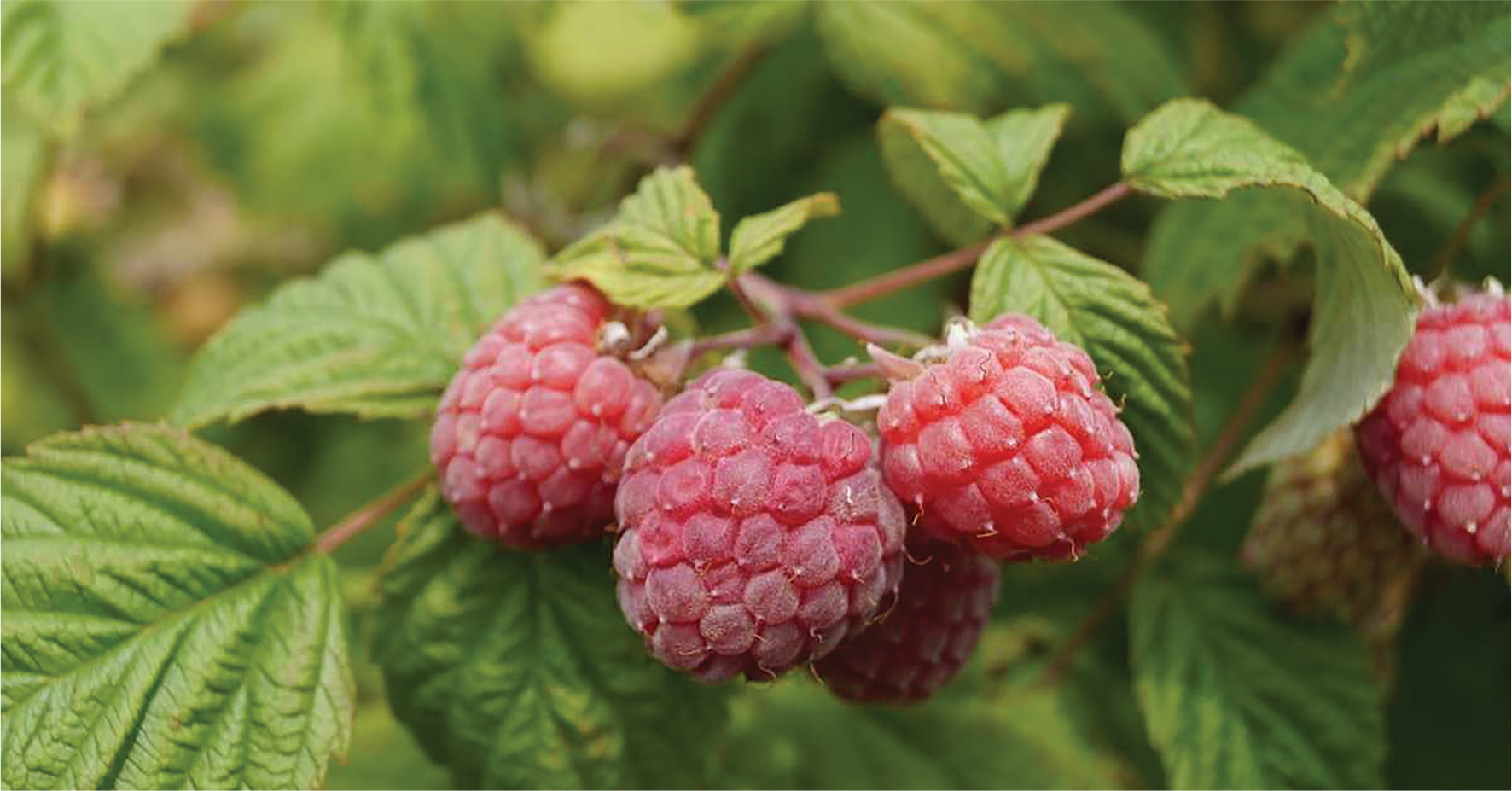
Figure 1.
Wild raspberry plants in Vercenik plateau.
Sensory analysis of fruits
The harvested red raspberry fruits belonging to 11 ecotypes were subjected to sensory analysis by 10 experts, including 5 males and 5 females, and tasting team was selected from people who have tasted this fruit before. Sensory analysis based on aroma, taste and juiciness parameters. The classical and widely used 0–9 bipolar hedonic scale was used to rate the overall pleasantness of aroma, taste and juiciness (Gecer et al., 2020).
Morphological traits
Fruit weight, the number of drupelets per fruit and chroma were morphological parameters determined on 30 fruits per genotype with three replicates (10 fruits per replicate). Fruit weight was determined using a digital balance (±0.01 g) (Scaltec SPB31, Scaltec Instruments GmbH, Goettingen, Germany). The number of drupelets in the raspberry fruits was determined by counting. The skin colour of the wild red raspberries was measured using chromameter (Minolta CR-400, Konika Minolta Inc., Tokyo, Japan). The results were expressed in terms of L*, a* and b* values, and Chroma value were obtained by using those values (Tas et al., 2023). Berry firmness was determined with a non-destructive Acoustic Firmness Sensor (Aweta B.V., Pijnacker, The Netherlands) expressed as N.
Biochemical parameters
Sample preparation
Around 300 g wild red raspberry fruits were harvested from each ecotype and the fruit juice was obtained using a juice presser and immediately stored at -80°C until further biochemical analyses (SSC, vitamin C, organic acids, total anthocyanins [TA], total phenolics, total flavonoids and antioxidant capacity).
SSC
SSC in juice was determined by a digital refractometer (Kyoto Electronics Manufacturing Co. Ltd., Japan, Model RA-250HE) at 22°C and expressed in percentage (Tas et al., 2023).
Vitamin C
Vitamin C (ascorbic acid) was quantified using a reflectometer (RQFlex, Merck, Darmstadt, Germany) with a measuring range of 25–450 mg · 100 L−1 and expressed in mg · 100 g−1 fresh fruit base.
The method enhances the change of yellow molybdophosphoric acid to molybdenum blue by the action of ascorbic acid (Serna-Cock et al., 2011).
Organic acids
The extraction of organic acids was carried out with the modification of the method reported by Bevilacqua and Califano (1989). A 10 g aliquot of sample was taken into centrifuge tubes and then 10 mL of 0.009 N H2SO4 was added to the samples and homogenised. The samples were mixed for 1 h and centrifuged at 14000 rpm for 15 min. The liquid (supernatant) remaining at the top of the centrifuge tube was filtered through a filter paper, and then passed through a 0.45 μm membrane filter and finally through the SEP-PAK C18 cartridge. It was injected into the HPLC (Agilent HPLC 1100 series G 1322 A, Germany) device and the separations were performed on the appropriate column (Aminex HPX – 87 H, 300 mm × 7.8 mm). Organic acids were determined at the wavelengths of 214 nm and 280 nm. The 0.009 N H2SO4 solution was used as the mobile phase. All organic acid standards were obtained from Sigma-Aldrich (Germany), with at least 99% purity with an HPLC grade. Results were expressed as g · 100 g−1 fresh weight (f.w.) base.
Total phenolic content (TPC)
TPC was determined using the Folin–Ciocalteu reagent in the modified method developed by Singleton and Rossi (1965). The obtained results are expressed in mg gallic acid equivalents (GAEs) · 100 g−1 f.w.
Total flavonoid content
For total flavonoid analysis, a total of 40 fruits were used. The fruits were crushed in a blender and homogenised. About 30 mL of the homogenate was obtained and it was placed in a 50-mL falcon tube. Pulp and juice were separated from each other by a centrifuge at 12000 × g at 4°C for 35 min. Total flavonoids were determined as described in the study by Marinova et al. (2005) and were expressed as mg quercetin equivalent (QE) · 100 g−1 f.w.
Total anthocyanin content (TAC)
The TAC of fruits was determined using Krawczyk and Petri (1992). Anthocyanins were extracted from 2 g of fruits with 0.1% HCl (2 mL) in 96% ethanol. The mixture was centrifuged at 5500 rpm for 10 min. Results were expressed as mg of cyanidin-3-glucoside equivalents · 100 g−1 f.w.
Total antioxidant capacity
Ferric Reducing Antioxidant Power (FRAP) (Benzie and Strain, 1996) assay was used for total antioxidant capacity analysis. Results are given as mmol Trolox equivalent · 100 g−1 f.w.
Data analysis
SPSS Statistics, version 19.0 was used for analysis. Duncan’s multiple range tests were performed at the significant level of p < 0.05. Multivariate data analysis is a statistical tool that aggregates samples based on similarities by calculating the distance between all possible pairs of samples in the dimensional space. For two-way heat map with dendrogram (HMD), data on the investigated traits in fruit samples of red raspberry ecotypes were standardised by the z-score normalisation method. Heat map and dendrogram of traits identified were performed using the OriginLab software (10.1, OriginLab, Northampton, MA, USA).
RESULTS AND DISCUSSION
Sensory analysis
The main sensory characteristics of 11 wild-grown red raspberry ecotypes are shown in Table 1. Most of the genotypes had high aroma (V-1, V-4, V-5, V-6, V-8, V-9 and V-10), sweet fruit taste (V-2, V-3, V-4, V-5, V-9 and V-10) and high juiciness (V-1, V-4, V-5, V-7, V-8 and V-9) in 2021 (Table 1). In 2022, 8 ecotypes had high aroma (V-1, V-2, V-4, V-6, V-7, V-8, V-9 and V-10), 6 ecotypes had sweet taste (V-2, V-3, V-4, V-5, V-9 and V-10) and 7 ecotypes had high juiciness (V-1, V-2, V-4, V-5, V-7, V-8 and V-9) (Table 1).
Table 1.
The sensory characteristics of the fruits of 11 wild red raspberry ecotypes in 2021 and 2022.
| Aroma | Taste | Juiciness | ||||
|---|---|---|---|---|---|---|
| Ecotypes | 2021 | 2022 | 2021 | 2022 | 2021 | 2022 |
| V-1 | High | High | Sweet-Sour | Sweet | High | High |
| V-2 | Moderate | High | Sweet | Sweet | Moderate | High |
| V-3 | Moderate | Moderate | Sweet | Sweet | Moderate | Moderate |
| V-4 | High | High | Sweet | Sweet | High | High |
| V-5 | High | Moderate | Sweet | Sweet | High | High |
| V-6 | High | High | Sweet-Sour | Sweet | Moderate | Moderate |
| V-7 | Moderate | High | Sweet-Sour | Sweet-Sour | High | High |
| V-8 | High | High | Sweet-Sour | Sweet-Sour | High | High |
| V-9 | High | High | Sweet | Sweet | High | High |
| V-10 | High | High | Sweet | Sweet | Moderate | Moderate |
| V-11 | Moderate | Moderate | Sweet-Sour | Sweet-Sour | Moderate | Moderate |
Fresh fruit quality is determined by nutritional and bioactive composition but aroma, taste, flavour and juiciness parameters in fruits are also very important and expressed as sensory properties (Kaplan et al., 2015; Pereira et al., 2020). Sugars, acids and volatile components have an important role, especially on taste and flavour parameters (Celik et al., 2007; Serradilla et al., 2012). Alibabic et al. (2018) examined the morphological, chemical and sensory properties of four cultivars of raspberry (Meeker, Willamette, Fertödi and Polka) in Bosnia and Herzegovina and found great variability on sensory characteristics. Rambaran and Bowen-Forbes (2020) indicated sensory differences among red raspberries and cv. Polka showed the best properties for most of the sensory properties. Yu et al. (2022) made sensory analysis (including appearance, colour, flavour, taste and overall acceptability) on 22 red raspberry cultivars in China and found that sensory properties are cultivar dependent and the general sensory evaluation showed that the fruits of 'Rerille', 'DNS4', 'Ruby', 'Haritage' and 'Beijing 32' are excellent in quality and they could be recommended to consumers and traders. Kaplan et al. (2015) evaluated sensory fruit quality characters (appearance, juiciness, aroma, flavour and overall taste) of 17 elderberry cultivars and found significant differences among cultivars.
High bioactive content as well as high sensory profiles are the main aims of special breeding programmes. Aroma and taste combination promotes the formation of flavour. In addition, sugars, acids, phenolics and hundreds of volatile compounds contribute to the fruit flavour (Baldina et al., 2016; Sheng et al., 2021; Karatas, 2022; Mukherjee et al., 2022).
Morphological traits
Table 2 presents fruit weight, number of drupelets per fruit, fruit firmness and chroma values in the fruits of 11 wild-grown red raspberry ecotypes. Significant differences (p < 0.05) were evident among ecotypes for all searched parameters.
Table 2.
Fruit morphological characteristics of wild-grown red raspberry ecotypes.
| Ecotypes | Fruit weight (g) | Number of drupelets | Firmness (N) | Chroma | ||||
|---|---|---|---|---|---|---|---|---|
| 2021 | 2022 | 2021 | 2022 | 2021 | 2022 | 2021 | 2022 | |
| V-1 | 1.14 ±0.18 be | 1.09 ±0.16 be | 65 ±3.8 cd | 61 ± 3.3 ab | 0.41 ± 0.2 be | 0.45 ± 0.2 ab | 29.34 ± 1.7 abc | 25.22 ± 1.6 ab |
| V-2 | 1.02 ± 0.12 d | 0.99 ± 0.10 d | 56 ±3.1 ef | 50 ±3.2 c | 0.44 ± 0.4 be | 0.51 ± 0.3 ab | 32.11 ± 1.9 ab | 30.19 ± 1.8 a |
| V-3 | 1.21 ± 0.16 b | 1.15 ± 0.17 b | 68 ±4.2 c | 63 ± 4.0 ab | 0.52 ±0.5 a | 0.56 ±0.3 a | 30.03 ± 1.6 b | 26.14 ± 1.4 ab |
| V-4 | 1.33 ±0.24 a | 1.27 ±0.20 a | 76 ± 3.0 a | 68 ±3.1 ab | 0.40 ± 0.2 be | 0.43 ± 0.4 ab | 28.30 ± 1.4 ab | 26.56 ± 1.3 ab |
| V-5 | 1.11 ±0.10 c | 1.08 ±0.11 be | 62 ± 3.2 d | 60 ± 3.4 b | 0.41 ±0.3 be | 0.46 ± 0.5 ab | 26.36 ± 1.4 c | 27.19 ± 1.6 ab |
| V-6 | 1.14 ±0.12 be | 1.11 ±0.10 be | 66 ±3.0 cd | 59 ± 3.0 b | 0.47 ± 0.6 abc | 0.53 ± 0.5 ab | 33.70 ±2.1 a | 29.06 ± 2.4 ab |
| V-7 | 1.04 ±0.10 cd | 1.02 ±0.11 c | 58 ±2.7 e | 54 ±2.8 be | 0.40 ± 0.2 be | 0.45 ± 0.3 ab | 27.30 ± 1.5 be | 28.25 ± 1.4 ab |
| V-8 | 1.07 ±0.10 cd | 1.03 ±0.10 c | 72 ± 3.8 b | 69 ±3.5 a | 0.41 ± 0.2 be | 0.47 ± 0.2 ab | 29.11 ± 1.8 be | 25.44 ± 1.6 ab |
| V-9 | 1.04 ±0.10 cd | 1.00 ±0.09 cd | 68 ±3.4 c | 62 ± 3.0 ab | 0.38 ±0.9 c | 0.40 ± 0.5 b | 31.18 ± 1.9 ab | 30.10 ±2.2 a |
| V-10 | 1.06 ±0.10 cd | 0.97 ± 0.08 d | 70 ± 4.4 be | 67 ± 4.0 ab | 0.46 ± 0.7 b | 0.47 ± 0.4 ab | 30.33 ± 1.9 b | 27.41 ± 1.8 ab |
| V-11 | 1.10 ±0.09 c | 1.06 ±0.11 be | 60 ± 3.7 de | 55 ±3.8 be | 0.43 ±0.8 be | 0.49 ± 0.6 ab | 26.11 ±2.1 c | 23.17 ± 2.0 b |
In 2021, fruit weight was the highest in the ecotype V-4 (1.33 g), followed by V-3 (1.21 g), V-1 (1.14 g) and V-6 (1.14 g), while it was the lowest in the ecotype V-2 (1.02 g) (Table 2). In 2002, in general, same trend on fruit weight was observed. Fruit weight was slightly lower in 2022. In 2022, the average temperature of fruit set to harvest was lower. Fruit weight was the highest in the ecotype V-4 (1.27 g), followed by V-3 (1.15 g) and V-6 (1.11 g), while it was the lowest in the ecotype V-10 (0.97 g) (Table 2).
Number of drupelets were between 56 (V-2) and 76 (V-4) in 2021 and 50 (V-2) and 69 (V-8) in 2022. Previously, quite variable fruit weights (between 1.0 g and 6.0 g) among wild and cultivated raspberries sampled from different agro-climatic regions of Türkiye were reported (Tosun et al., 2009; Cekic and Ozden, 2010; Aglar et al., 2023). In other studies, based on wild red raspberry samples, the fruit weight varied from 1.1 g to 1.6 g (Petrovic and Milosevic, 2002), while the fruit weight in cultivated varieties is between 3.0 g and 6.0 g (Misic and Nikolic, 2003). In another study conducted on wild red raspberry fruits, fruit weight was found as 1.01 g (Kulina et al., 2012). Cekic and Ozden (2010) reported berry weight between 0.7 g and 1.2 g among wild-grown raspberries in Türkiye. Karaklajic-Stajic et al. (2023) showed a significant effect of genotype on the fruit weight and the number of drupelets in red raspberries. They found the highest fruit weight in 'Tulameen' (5.17 g), while the lowest value of this parameter was obtained from 'Willamette' (3.57 g). They reported that the number of drupelets of cultivars was between 80 and 96, which is higher than our samples. Titirica et al. (2023) reported the number of drupelets between 55 and 105 on cultivated and selection of red raspberries in Romania. Maro et al. (2014) reported the number of drupelets in raspberry cultivars was between 51 and 61, which shows similarities with our results. The influence of the cultivation placed upon the number of drupelets may be associated with pollination-inherent factors. The low mass of the wild red raspberries allows to infer about the reduction in the sizes of these drupelets (Maro et al., 2014). In the present study, berry firmness and chroma were between 0.38 N (V-9)-0.52 N (V-3) and 26.11 (V-11)-33.70 (V-6) in 2021 and 0.43 N (V-4)-0.56 N (V-3) and 23.17 (V-11)-30.19 (V-2) in 2022, respectively (Table 2). Berries, like other fruit groups (pome fruits, stone fruits, nuts, etc.) have an attractive appearance. Fruit size and colour (external appearance) have a significant impact on quality evaluation by consumers. Cekic and Ozden (2010) indicated that berry colour was perfect in wild and cultivated red raspberries and wild ecotypes showed lower chroma values.
Firmness is an important factor particularly for fruit resistance to the transportation, handling and marketing (Bañados et al., 2002). As a berry crop, raspberries are very delicate (Krüger et al., 2011). Bañados et al. (2002) reported firmness differences among the raspberry cultivars. They indicated that firmness was 0.73 in cv. Heritage and 0.24 in cv. Autumn Bliss. In contrast, Maro et al. (2014) reported lower berry firmness with an average value of 0.12 N in raspberries in Brazil. These results explain how growing conditions and genotypes affect berry firmness on raspberries.
Biochemical content
Table 3 presents organic acid content of wild-grown red raspberry ecotypes. There were statistical differences among ecotypes at p < 0.05 level for citric and malic acid contents (Table 3). The citric acid was the predominant organic acid in all wild-grown red raspberry ecotypes, with its content ranging from 1.93 g · 100 g−1 (V-9) and 2.46 g · 100 g−1 (V-1) in 2021 to 1.99 g · 100 g−1 (V-9) and 2.73 g · 100 g (V-1) in 2022, followed by malic acid with the content ranging from 0.50 (V-4) g · 100 g and 0.66 (V-1) g · 100 g−1 in 2021 to 0.55 g · 100 g−1 (V-3) and 0.75 g · 100 g (V-7) g · 100 g in 2022. Tartaric acid was detected in some ecotypes with minor contents.
Table 3.
Organic acid content in the fruits of 11 wild-grown red raspberries.
| Ecotypes | Citric acid (g · 100 g−1 f.w.) | Malic acid (g · 100 g−1 f.w.) | Tartaric acid (g · 100 g−1 f.w.) | |||
|---|---|---|---|---|---|---|
| 2021 | 2022 | 2021 | 2022 | 2021 | 2022 | |
| V-1 | 2.46 ± 0.09 a | 2.73 ± 0.12 a | 0.66 ± 0.2 a | 0.71 ± 0.1 ab | 0.14 ± 0.01 NS | 0.17 ± 0.01 NS |
| V-2 | 2.11 ± 0.09 bc | 2.32 ± 0.10 bc | 0.59 ± 0.1 ab | 0.63 ± 0.2 ab | 0.10 ± 0.03 | 0.12 ± 0.03 |
| V-3 | 2.07 ± 0.08 bc | 2.15 ± 0.09 bc | 0.60 ± 0.1 ab | 0.55 ± 0.1 b | 0.15 ± 0.03 | 0.15 ± 0.01 |
| V-4 | 2.04 ± 0.11 c | 2.07 ± 0.10 bc | 0.50 ± 0.1 ab | 0.57 ± 0.2 ab | 0.21 ± 0.02 | 0.23 ± 0.02 |
| V-5 | 2.10 ± 0.07 bc | 2.07 ± 0.11 bc | 0.60 ± 0.2 ab | 0.64 ± 0.1 ab | 0.09 ± 0.01 | 0.14 ± 0.01 |
| V-6 | 2.32 ± 0.09 ab | 2.26 ± 0.13 bc | 0.65 ± 0.2 a | 0.68 ± 0.2 ab | 0.12 ± 0.02 | 0.10 ± 0.02 |
| V-7 | 2.41 ± 0.09 a | 2.47 ± 0.12 ab | 0.63 ± 0.1 ab | 0.75 ± 0.1 a | 0.16 ± 0.00 | 0.22 ± 0.00 |
| V-8 | 2.22 ± 0.06 b | 2.27 ± 0.14 bc | 0.63 ± 0.1 ab | 0.70 ± 0.1 ab | 0.10 ± 0.00 | 0.19 ± 0.00 |
| V-9 | 1.93 ± 0.07 bc | 1.99 ± 0.09 c | 0.57 ± 0.2 b | 0.63 ± 0.1 ab | 0.20 ± 0.02 | 0.26 ± 0.00 |
| V-10 | 2.16 ± 0.08 bc | 2.22 ± 0.09 bc | 0.58 ± 0.2 ab | 0.65 ± 0.2 ab | 0.23 ± 0.00 | 0.27 ± 0.01 |
| V-11 | 2.43 ± 0.12 a | 2.37 ± 0.14 b | 0.64 ± 0.4 ab | 0.69 ± 0.3 ab | 0.11 ± 0.00 | 0.16 ± 0.00 |
In China, Yu et al. (2022) reported that 22 red raspberry cultivars predominantly (nearly 90% portion) include citric acid, followed by malic acid. In Türkiye, citric acid (1.14-1.82 g · 100 g f.w.) was also identified as the major organic acid in wild red raspberry accessions and small amounts of malic acids (0.05-0.12 g · 100 g f.w.) were also detected (Cekic and Ozden, 2010). Our findings are in agreement with this study results.
Organic acids are abundant constituents of ripe fruits depending on species and cultivars and responsible for their sourness. In addition, they contribute to fruit flavour. In many fruits, malic and citric acids are the most abundant organic acids. Oxalic and tartaric acids are also found in fruits. In particular, the flavour of most fruits is formed by the acid–sugar balance. Organic acids are mostly free in the cell sap of fruits, but some are salts, esters, glycosides, etc. They are found in various compounds, but are always dissolved in water (Bae et al., 2014).
Tables 4 and 5 shows SSC, vitamin C, total phenolics, total flavonoids, TA and total antioxidant capacity in the fruits of 11 wild-grown red raspberry fruits. There were statistically significant differences (p < 0.05) among used ecotypes in terms of SSC, vitamin C, total phenolics, total flavonoids, TA and total antioxidant capacity.
Table 4.
SSC and vitamin C in the fruits of 11 wild red raspberry ecotypes
| Ecotypes | SSC (%) | Vitamin C (mg · 100 g−1 f.w.) | ||
|---|---|---|---|---|
| 2021 | 2022 | 2021 | 2022 | |
| V-1 | 9.8 ± 0.4 cd | 10.3 ± 0.6 de | 36.3 ± 1.9 ab | 41.3 ± 2.1 ab |
| V-2 | 11.2 ± 0.6 bc | 11.5 ± 0.7 c | 29.3 ± 1.7 c | 33.4 ± 1.8 c |
| V-3 | 12.4 ± 1.0 ab | 12.2 ± 1.1 b | 33.6 ± 2.1 bc | 36.0 ± 2.0 bc |
| V-4 | 11.7 ± 0.8 b | 11.9 ± 0.7 bc | 39.7 ± 2.4 ab | 43.4 ± 2.0 ab |
| V-5 | 12.8 ± 0.7 a | 12.9 ± 1.3 a | 37.2 ± 2.2 ab | 39.1 ± 2.0 abc |
| V-6 | 10.3 ± 0.5 cd | 11.1 ± 0.6 cd | 38.8 ± 2.0 ab | 38.6 ± 2.1 b |
| V-7 | 10.5 ± 0.4 cd | 10.8 ± 0.5 d | 37.2 ± 1.8 ab | 40.3 ± 1.8 ab |
| V-8 | 9.9 ± 0.4 d | 10.2 ± 0.3 e | 40.1 ± 1.9 ab | 44.4 ± 2.1 a |
| V-9 | 11.9 ± 0.6 abc | 11.8 ± 0.7 bc | 35.5 ± 2.5 b | 38.3 ± 2.3 bc |
| V-10 | 11.6 ± 0.6 abc | 12.0 ± 0.7 bc | 35.0 ± 2.3 bc | 39.0 ± 2.2 abc |
| V-11 | 10.6 ± 0.7 c | 10.9 ± 0.5 cde | 41.4 ± 3.1 a | 42.7 ± 3.0 ab |
Table 5.
Total phenolics, total flavonoids, TA and total antioxidant capacity in the fruits of 11 wild red raspberry ecotypes.
| Ecotypes | Total phenolics (mg GAE · 100 g 1 f.w.) | Total flavonoids (mg QE · 100 g 1 f.w.) | TA (mg cy-3-g eq. · 100 g−1) | FRAP (mmol TE · 100 g−1) | ||||
|---|---|---|---|---|---|---|---|---|
| 2021 | 2022 | 2021 | 2022 | 2021 | 2022 | 2021 | 2022 | |
| V-1 | 255 ± 13.2 d | 303 ± 15.1 c | 14.8 ±0.9 cd | 15.4 ±0.8 be | 27.0 ± 0.8 e | 26.3 ±0.7 be | 17.0 ±1.0 e | 19.3 ±1.1 c |
| V-2 | 210 ± 10.9 ef | 232 ± 14.2 | 17.2 ± 1.1 a | 16.9 ± EOab | 32.1 ± El b | 28.3 ± 1.0 ab | 14.8 ± 0.9 f | 16.2 ± 0.8 de |
| V-3 | 270 ± 12.6 cd | 279 ± 11.3 d | 15.0 ±0.7 cd | 15.5 ± 0.8 b | 28.4 ± 0.9 d | 26.2 ±0.7 be | 18.2 ± 1.3 d | 19.5 ±1.0 be |
| V-4 | 233 ±11.2 e | 256 ± 12.0 e | 14.0 ± 0.8 de | 15.2 ±0.9 be | 23.2 ± 0.6 f | 23.0 ±0.5 c | 16.2 ± 0.8 ef | 17.9 ± 0.7 d |
| V-5 | 164 ± 9.8 g | 188 ± 9.2 g | 12.9 ±0.6 ef | 13.3 ±0.5 c | 19.4 ± 0.6 g | 20.3 ±0.4 cd | 13.4 ± 0.4 g | 14.6 ± 0.5 ef |
| V-6 | 362 ± 18.4 a | 390 ± 17.1 a | 16.3 ± 0.9 b | 17.6 ± 1.1 a | 33.2 ±1.3 a | 31.0 ± 1.1 a | 22.3 ±1.5 a | 23.3 ±1.4 a |
| V-7 | 355 ± 17.6 ab | 367 ± 18.0 b | 13.6 ±0.8 e | 14.2 ± 0.9 be | 22.0 ± 0.8 fg | 21.4 ±0.7 cd | 21.0 ± 1.3 b | 22.7 ± 1.2 ab |
| V-8 | 241 ± 12.0 de | 250 ± 11.1 e | 14.4 ± 1.1 d | 14.8 ± EObc | 17.3 ± 0.5 i | 17.6 ± 0.4 de | 12.0 ± 0.6 h | 15.5 ±0.7 e |
| V-9 | 296 ± 14.9 c | 308 ± 15.2 be | 15.2 ±1.2 c | 15.9 ± 1.1 ab | 30.9 ± 1.1 c | 27.9 ± 1.0 b | 19.0 ± 1.1 cd | 21.4 ± 1.4 b |
| V-10 | 188 ± 10.5 f | 204 ± 11.0 f | 10.3 ± 0.5 f | 11.8 ± 0.5 d | 30.0 ±1.2 cd | 29.6 ± 1.1 ab | 10.4 ±0.5 i | 12.3 ± 0.8 f |
| V-11 | 340 ± 16.7 b | 361 ± 18.0 b | 15.9 ± 1.1 be | 14.6 ± 1.0 be | 18.0 ± 0.5 h | 19.2 ± 0.7 d | 19.6 ±0.9 c | 20.7 ± El be |
SSC content was in the range of 9.8% (V-1) and 12.8% (V-5) in 2021 and 10.2% (V-8) and 12.9% (V-5) in 2022. All ecotypes were found in similar soil and climatic conditions in sampling area, thus the differences could be attributed to the genetic structure of the ecotypes. Tosun et al. (2009) reported SSC content between 10.87% and 13.60% and Cekic and Ozden (2010) reported SSC content from 10.87% to 13.60% among a number of wild-grown red raspberry ecotypes naturally grown in different regions of Türkiye. Veljkovic et al. (2019) found SSC as 7% in wild-grown red raspberry fruits. Titirica et al. (2023) reported the SSC between 8.72% and 9.15% on cultivated and selection of red raspberries in Romania. The present SSC results are comparable with the data obtained from above studies. SSC content of fruits is affected by a lot of factors including species, cultivars, ecotypes, maturation time and altitude. For determination of ripening, SSC and titratable acidity are used. SSC also influences the taste and flavour of raspberry fruits (Tosun et al., 2009; Cekic and Ozden, 2010).
In 2021, the highest vitamin C content was observed in the ecotype V-11 (41.4 mg · 100 g f.w.), followed by V-8 (40.1 mg · 100 g−1 f.w.) and V-4 (39.7 mg · 100 g’1 f.w.). The lowest vitamin C was obtained in the ecotype V-2 (29.3 mg · 100 g−1 f.w.) in 2021. In 2022, the highest vitamin C content was observed in the ecotype V-4 (43.4 mg · 100 g−1 f.w.) and the lowest vitamin C was obtained in the ecotype V-2 (33.4 mg · 100 g−1 f.w.) (Table 4). The vitamin C content was slightly higher in 2022.
Veljkovic et al. (2019) reported relatively higher vitamin C content (49 mg · 100 g−1 f.w.) in wild-grown red raspberry fruits. In Türkiye, vitamin C content was reported between 21 mg · 100 g−1 f.w. and 36 mg · 100 g−1 f.w. in a number of raspberry fruits (Tosun et al., 2009). Vitamin C content in the fruits of red raspberries had been previously reported between 17 mg · 100 g−1 f.w. and 37 mg · 100 g−1 f.w. (De Ancos et al., 2000; Pantelidis et al., 2007). In Croatia, Purgar et al. (2002) studied on wild-grown red raspberries and found vitamin C between 22.34 mg · 100 g−1 f.w. and 45.00 mg · 100 g−1 f.w.
TPC was the highest in the ecotype V-6 (362 mg GAE · 100 g−1 f.w.), followed by the ecotype V-7 (355 mg GAE · 100 g−1 f.w.) and V-11 (340 mg GAE · 100 g−1 f.w.), while the lowest value was obtained from the ecotype V-5 (164 mg GAE · 100 g−1 f.w.) in 2021. In 2022, TPC was the highest in V7 ecotype (355 mg GAE · 100 g−1 f.w.) while it was the lowest in the ecotype V5 (164 mg GAE · 100 g−1 f.w.) (Table 5). The genotypes had higher TPC in 2022 than 2021, indicating more stress conditions for plants in 2022. Results present diversity and richness for TPC of wild-grown red raspberries. Cekic and Ozden (2010) reported variable TPC between 148 mg GAE · 100 g−1 and 347 mg GAE · 100 g−1 among a number of wild-grown raspberries in Türkiye. Milivojevic et al. (2010) determined the total phenolics in raspberry to be 102-222 mg GAE · 100 g−1 in the cultivars and 110 mg · 100 g−1 in the wild sample. Pantelidis et al. (2007) studied on raspberries in Greece and determined the phenolics of raspberry cultivars between 65.7 mg GAE · 100 g−1 f.w. and 249 mg GAE · 100 g−1 f.w.
The total flavonoid content of 11 ecotypes varied greatly and is presented in Table 5. The ecotype V-2 had the highest total flavonoid content with a value of 17.2 mg QE · 100 g f.w. base whereas the ecotype V-10 had the lowest value with 10.3 mg QE · 100 g in 2021. In 2022, the ecotype V-6 had the highest total flavonoid content with a value of 17.6 mg QE · 100 g f.w. base whereas the ecotype V-10 again had the lowest value with 11.8 mg QE · 100 g (Table 5).
In Croatia, Purgar et al. (2002) studied on wild-grown red raspberries and reported total flavonoid content between 20.4 mg QE · 100 g f.w. and 24.6 mg QE · 100 g−1 f.w. Aglar et al. (2023) found total flavonoid content as 15.1 mg QE · 100 g in one wild-grown red raspberry ecotype in Türkiye. Sariburun et al. (2010) used red raspberry cultivars ('Aksu Kirmizisi', 'Rubin', 'Newburgh', 'Hollanda Boduru' and 'Heritage') in biochemical analysis and reported total flavonoid content between 15.4 mg catechin equivalent · 100 g f.w. and 41.1 mg catechin equivalent · 100 g f.w. The total flavonoid content in our samples was comparable with the above reports and differences could be due to extraction methods, cultivars or growth and cultivated conditions. Environmental factors, including light, temperature, soil nutrients and altitude, also influence the flavonoid content in fruits (Sariburun et al., 2010).
In 2022, TAC of 11 wild-grown red raspberry ecotypes was in the range of 17.3 (V-8)-33.2 (V-6) mg cy-3-g eq. · 100 g−1 in 2021 and 17.6 (V-8)-31.0 (V-6) mg cy-3-g eq. · 100 g−1. indicating twofold differences among the highest and the lowest anthocyanin-included ecotypes (Table 5). Previous studies conducted on both wild and cultivated red raspberries indicated genotypic differences among samples. For example, Sariburun et al. (2010) used five red raspberry cultivars and found quite variable TAC between 12.4 mg cy-3-g eq. · 100 g and 69.5 mg cy-3-g eq. · 100 g according to cultivars and extraction solvents (water and methanol). Cekic and Ozden (2010) reported significant differences (13.7-29.6 mg cy-3-g eq. · 100 g−1) among wild-grown red raspberry samples. Purgar et al. (2002) studied on wild-grown red raspberries and reported TA between 27.9 mg cy-3-g eq. · 100 g and 47.0 mg cy-3-g eq. · 100 g−1. Kostecka-Gugala et al. (2015) reported TAC among red raspberries as 29.69-81.13 mg cy-3-g eq. · 100 g f.w. It was found between 35.1 mg and 49.1 mg in Greece (Pantelidis et al., 2007).
Total antioxidant capacity of 11 wild-grown red raspberry samples is given in Table 5. In 2021, the ecotype V-6 showed the highest FRAP value (22.3 mmol · 100 g f.w.) while V-10 genotype showed the lowest value (10.4 mmol · 100 g−1). In 2022, the ecotypes in general displayed same trend and were similar to 2021. V-6 showed the highest FRAP value (23.3 mmol · 100 g f.w.) while V-5 genotype showed the lowest value (14.6 mmol · 100 g−1). Previously, FRAP value of wild-grown red raspberry fruits was reported between 8.1 imnol · 100 g f.w. and 12.4 imnol · 100 g f.w. (Tosun et al., 2009), and 11.21 mmol · 100 g−1 f.w. and 19.7 mmol · 100 g−1 f.w. (Cekic and Ozden, 2010), which corresponds to the results we obtained. Studies on red raspberry fruits in different agri-ecological conditions in Türkiye and abroad showed that the red raspberry fruits had high antioxidant capacity determined by different assays such as FRAP, TEAC and CUPRAC (Cekic and Ozden, 2010; Sariburun et al., 2010; Yu et al., 2022).
Fruit antioxidant capacity are affected by some factors, including genetic background and maturity stage. However, genotype proved to be the most important factor influencing the fruits’ bioactive capacity (Ercisli et al., 2003; Benjak et al., 2005; Altindag et al., 2006; Dogan et al., 2014; Karatas et al., 2021; Urün et al., 2021; Unal et al., 2022, 2023; Boyaci et al., 2023).
Heat map analysis
The heat map analysis to identify groups among 11 wild-grown red raspberries is shown in Figure 2. This analysis revealed and confirmed significant differences in the morphological and biochemical content of wild red raspberry ecotypes (Figure 2). In the dendrogram, the ecotypes were grouped into two main clusters according their similarity. The ecotypes V-1, V-7, V-11 and V-8 were placed in the first cluster and the rest of the ecotypes (V-2, V-9, V-3, V-6, V-5, V-10 and V-4) were placed in the second cluster.
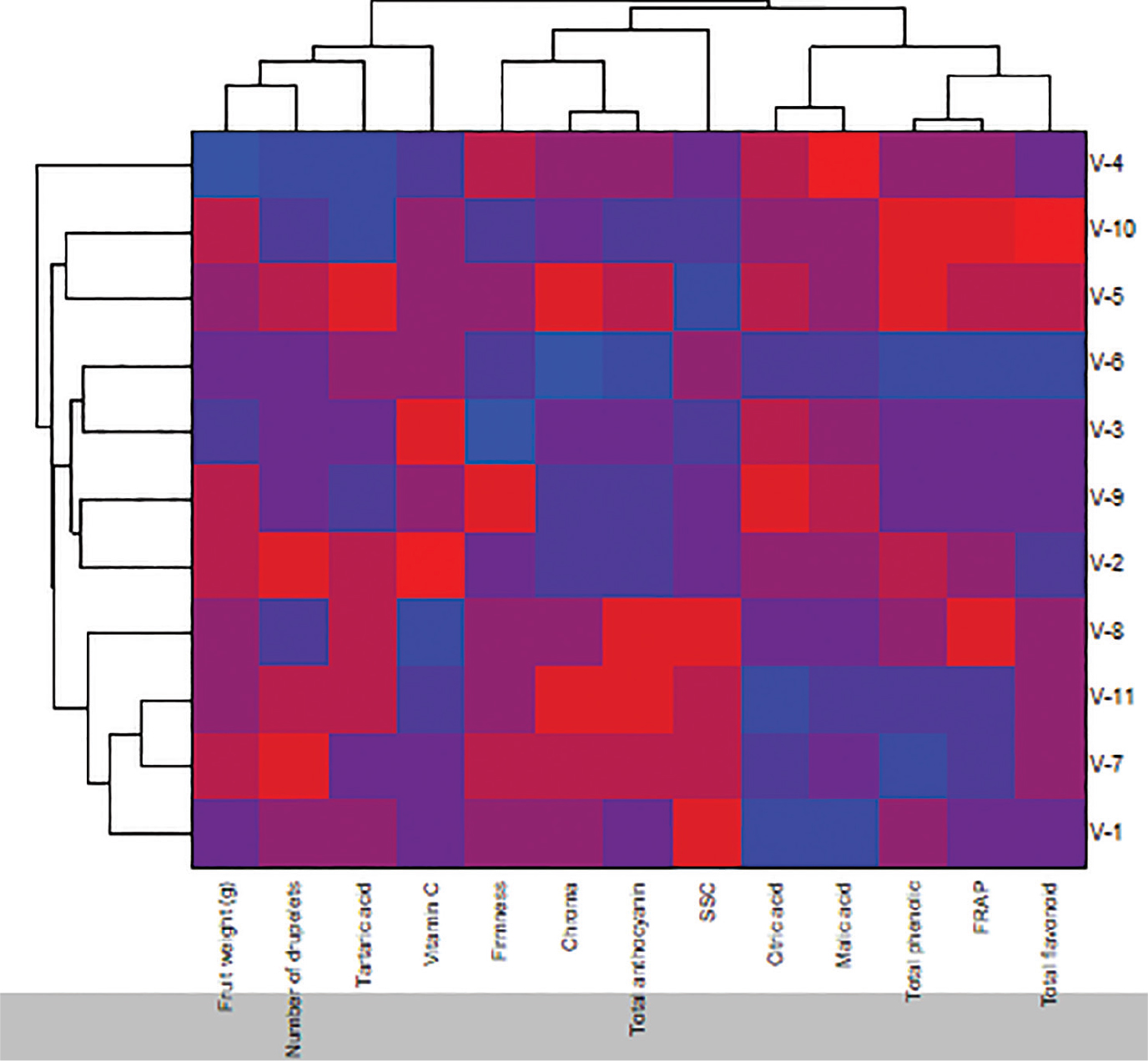
Figure 2.
Hierarchical clustering analysis. Dendrogram associated with heat map of physiological and biochemical characteristics from fruit samples of red raspberry genotypes. f.w., fresh weight; FRAP, Ferric Reducing Antioxidant Power; SSC, soluble solid content.
Furthermore, heat map grouped the measured traits into two main clusters. Accordingly, it was observed that fruit weight, the number of drupelets, tartaric acid and vitamin C were grouped in the first cluster and firmness, chroma, TA, SSC, citric acid, malic acid, total phenolics, FRAP and total flavonoids were placed in the second cluster. Additionally, we have clearly seen from the dendrogram that the groups generated by the clustering of the measured traits were effective in the clustering of red raspberry ecotypes.
CONCLUSIONS
A detailed morphological, sensory and biochemical analysis was reported in this study for the first time in a large number of wild-grown red raspberry in North eastern Türkiye. The results indicated that even in same growing location, wild-grown red raspberry ecotypes showed rich diversity on most of the morphological traits and nutritional and nutraceutical compositions. According to the results, V-4, V-8, V-3 and V-10 had attractive bigger fruits which indicate their suitability for fresh consumption. V-3 and V-5 had sweeter fruits which indicate their suitability for processing and V-6, V-7 and V-11 had richer human health-promoting compounds (higher TPC and antioxidant capacity), making them suitable for future use as functional foods and as promising sources of natural antioxidants.
ACKNOWLEDGEMENTS
The authors wish to thank Researchers Supporting Project Number (RSPD2024R706) at the King Saud University, Riyadh, Saudi Arabia for their financial support.
Notes
[8] Contributed by AUTHOR CONTRIBUTIONS
S.P.E., S.E., G.I., G.O. and N.E. were involved in conceptualisation, project administration, methodology, software, validation, formal analysis, investigation and data curation. S.E., M.R.B., M.K.G, J.H., A.A., R.L., A.F., R.U. and A.B. were involved in writing – original draft preparation, writing – review and editing and funding acquisition.
[9] Contributed by CONFLICTS OF INTEREST
The authors declare no conflict of interest.