
Table 1.
Real-time fluorescence qPCR primers for candidate genes
| Gene name | Forward primer (5′ – 3′) | Reverse primer (5′ – 3′) |
|---|---|---|
| Zlat_10042236 | AGTGGTGACTCTGGAATTGG | G-CCCATGAGTGTGTTGTGATCT |
| Zlat_10016445 | CATGGAAGGAAGGCAGATAC | CAAAGCCACCCTCACCTATT |
| Zlat_10028687 | GAGTCAAGACAGGGAGTAAAGG | CCTTCCACACAATAGCCATAAAG |
| Zlat_10030446 | GCAGAGAATCACAGTTGAGGAG | GCTTCATCTGGTCCTCGTTTAG |
| Zlat_10002195 | TAT-CCACCTCACGCCCAGT | TA-TCCTTGACGACGCCTCC |
| Zlat_10008237 | TCCTACTCAGACTTCTCGTTCC | CTGCTGCTGCTGACATCTATAC |
| Zlat_10020312 | CACGACAACGAGAACTCC | GATCTCAATCTCCGACCT |
| Zlat_10028790 | GGATTCCAAGAGATGGAGGAAAG | TCGATGTCGCTCATGGTTTG |
| Zlat_10045823 | GC-TGACCACCAAATCTTCGACTAC | GCTCATGGAGTTCTCGTTGT |
| Zlat_10008367 | C-TATGTGCACGGCAGATGTT | C-GCTTGTAATGACGCTCCTATC |
| Zlat_10029338 | AACGTGTTGTGGCGCTTA | TTGCAGCCCGTTCAAACT |
| Zlat_10007178 | GACAAGACGGTGGTATGGTATG | GGGATCTCGAAGAGAAAGAACC |
| Zlat_10004780 | G-ACAAGGCGGGCTCTTATTT | GGTACTAGGAGTTGCTGTGAAG |
| Zlat_10023424 | CAAGTAGGTCAGGGTGGATTTG | CTTGTTTGGTGCCAGGAGT |
| Zlat_10024926 | GCAGAGAATCACAGTTGAGGAG | GCTTCATCTGGTCCTCGTTTAG |
| Zlat_10004358 | TGGGTATCAATGGCGGAAG | CCTTCTTCTTCACCGGACAC |
| Zlat_10003815 | ACGGAAGGCAACGTTTGA | GGTCGAAAGCTGGGTAGTATG |
| ZlActin2 | C-TAACCGGCCACGTGTATTT | AGAGCAGAGGCATTCCAAGT |
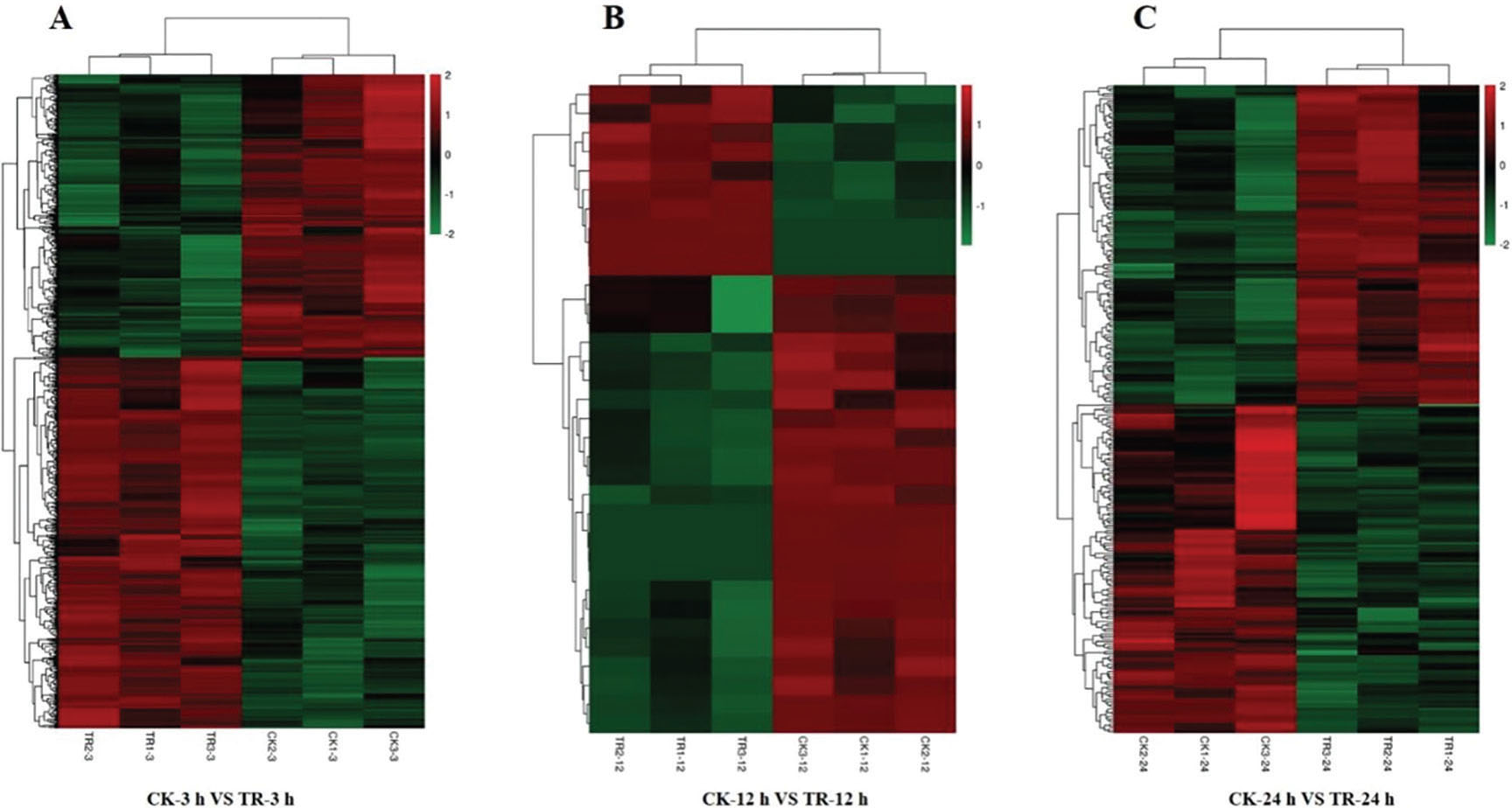
Figure 1.
Clustering heat map of DEGs. (A) CK-3 hr vs. TR-3 hr; (B) CK-12 hr vs. TR-12 hr; and (C) CK-24 hr vs. TR-24 hr. Red indicates upregulation whereas green indicates downregulation, and the darker the colour, the greater the up- or downregulation. DEGs, differentially expressed genes.
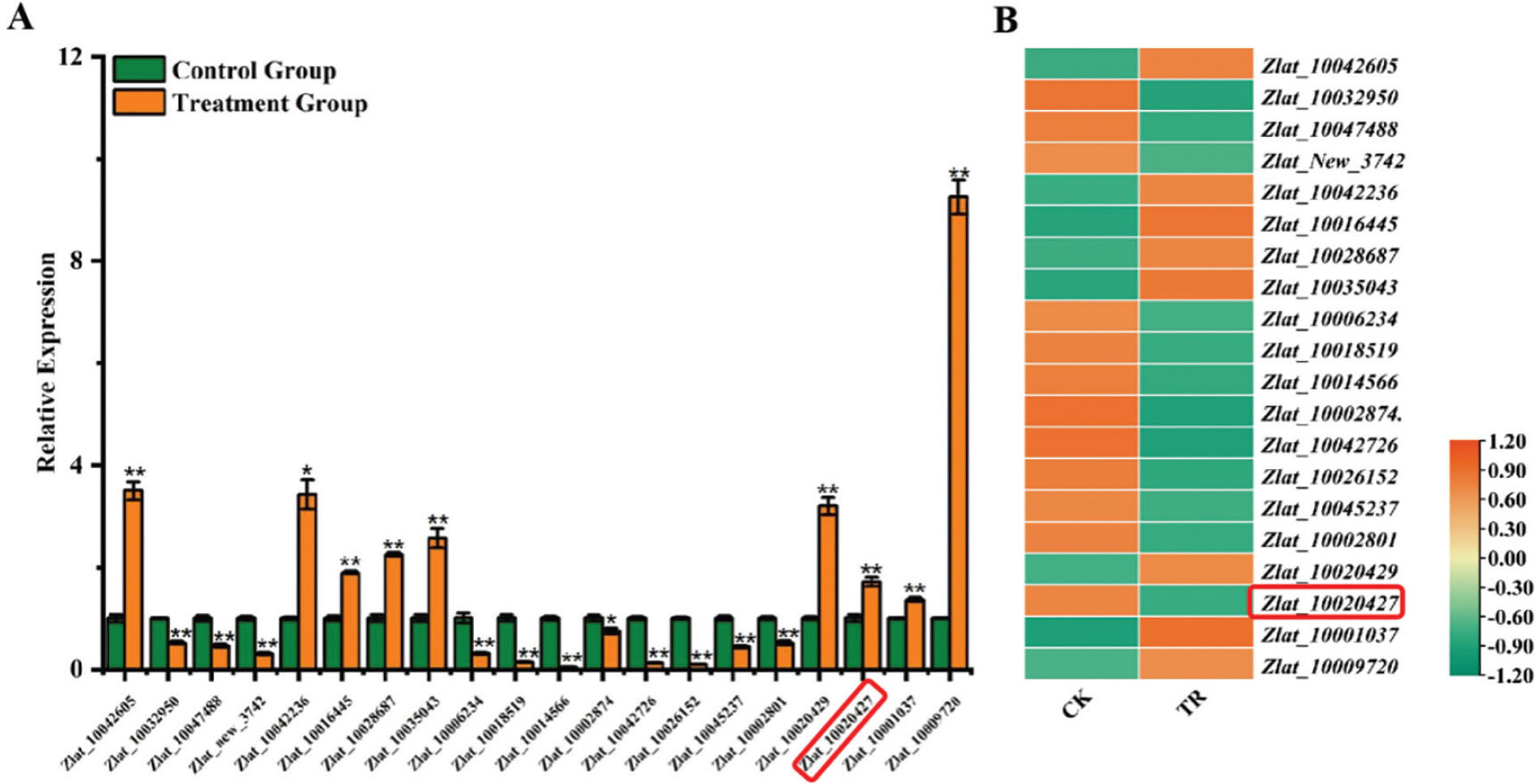
Figure 2.
qPCR verification of DEGs. (A) qPCR analysis of DEGs. Orange represents the treatment group and green represents the control group. (B) Differential gene expression heatmap of transcriptome sequencing data. Orange indicates upregulation whereas green indicates downregulation, and the darker the colour, the more obvious the greater the up or downregulation. DEGs, differentially expressed genes; qPCR, quantitative PCR.
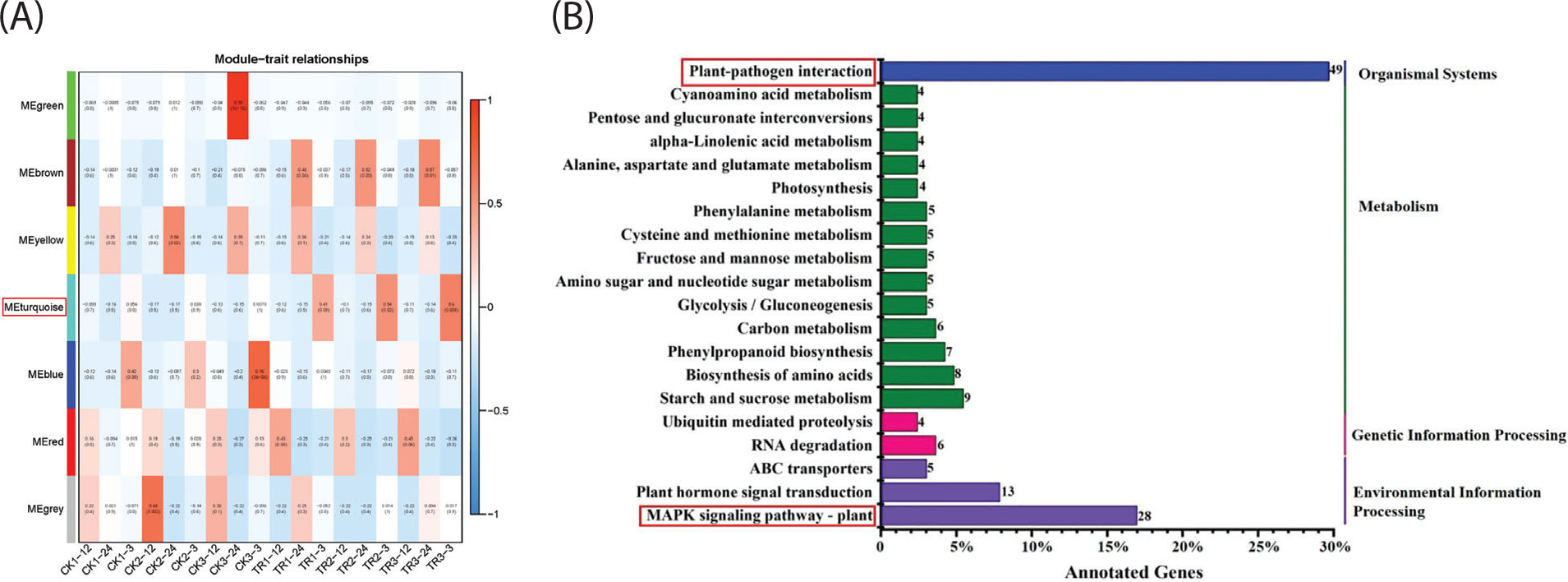
Figure 3.
Correlation heatmap of the gene expression network module and different processes (A), and KEGG pathway analysis results of MEturquoise modules (B). (A) The abscissa represents samples, and the ordinate represents modules. The number of each block represents the correlation between modules and samples; the closer the value is to 1, the stronger the positive correlation between modules and samples; the closer the value is to −1, the stronger the negative correlation. The number in brackets represents the significance p-value; the lower the number, the stronger the significance. The darker the colour of the square (the redder), the stronger the correlation; the lighter the colour, the weaker the correlation. KEGG, Kyoto Encyclopedia of Genes and Genomes.
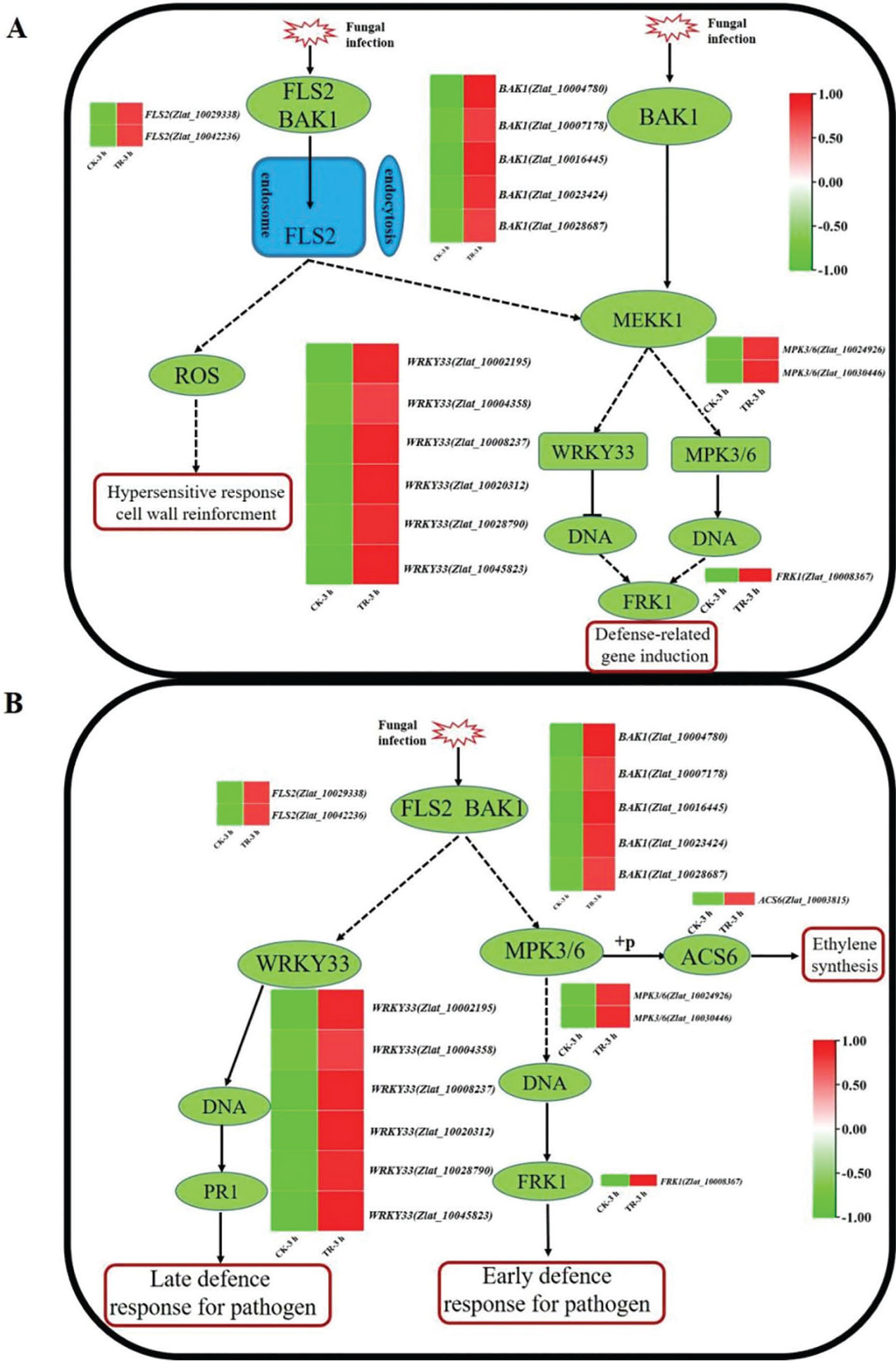
Figure 4.
Analysis of important pathways in CK-3 hr vs. TR-3 hr. (A) Analysis of ‘plant–pathogen interaction’ pathways. (B) Analysis of ‘MAPK signalling pathway-plant’ pathways. Red indicates the treatment group (TR-3 hr) whereas green the control group (CK-3 hr).
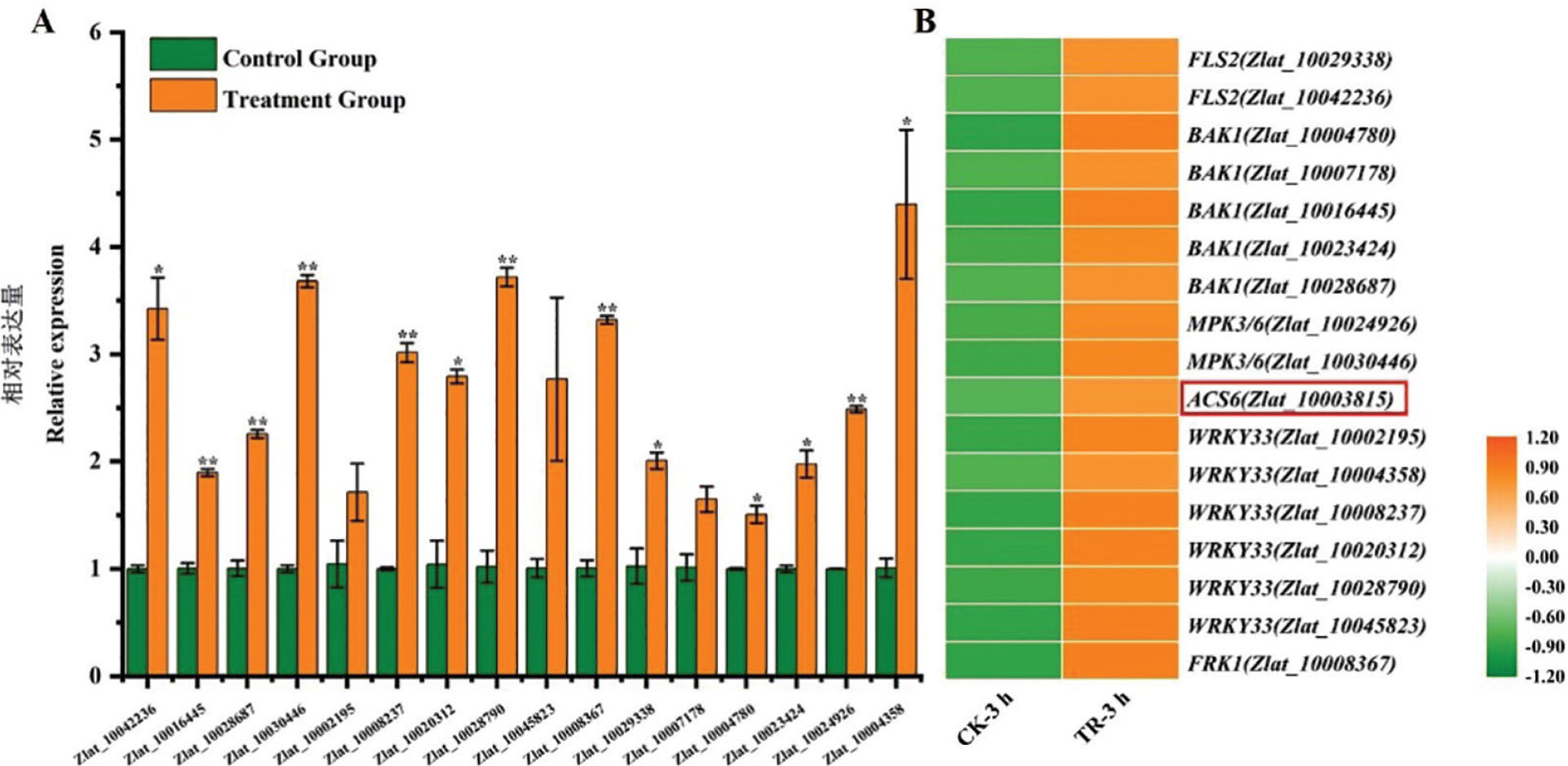
Figure 5.
Analysis of differential gene expression in ‘plant–pathogen interaction’ and ‘MAPK signalling pathway-plant’ pathways. (A) qPCR verification of DEGs. Orange indicates the treatment group whereas green indicates the control group. (B) Differential gene expression heatmap of transcriptome sequencing data. Orange indicates upregulation whereas green indicates downregulation, and the darker the colour, the greater the up or downregulation. qPCR, quantitative PCR.
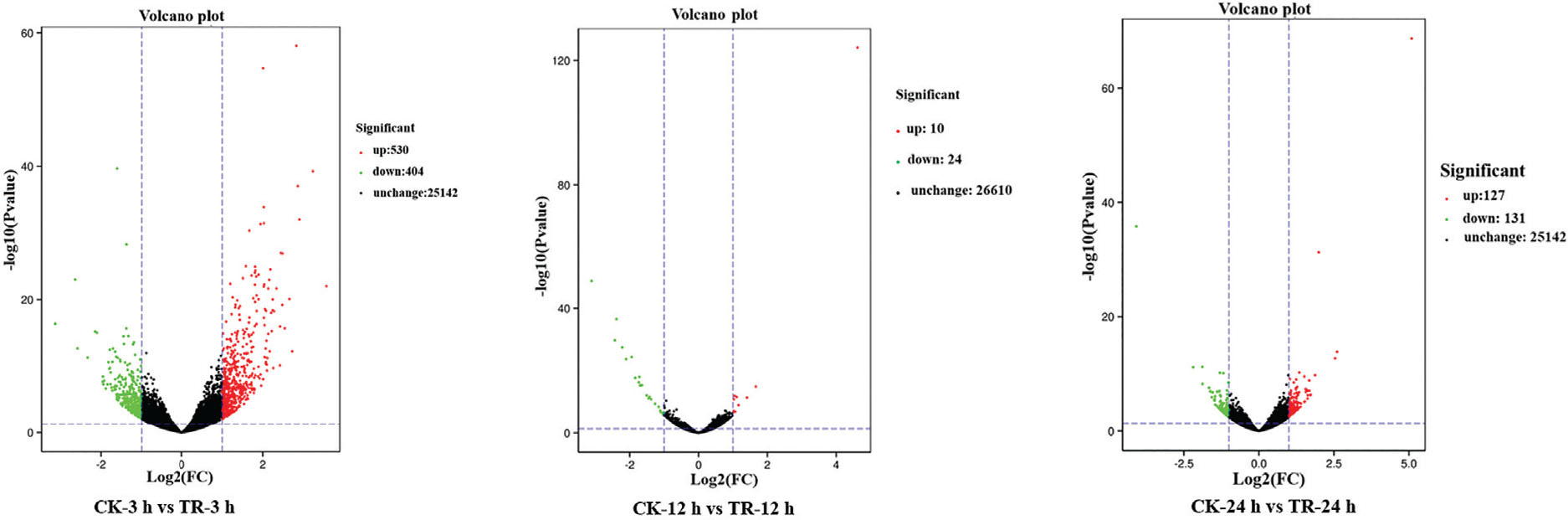
Figure S1.
Volcano map of DEGs at 3 hr, 12 hr and 24 hr after inoculation with U. esculenta. DEGs, differentially expressed genes.
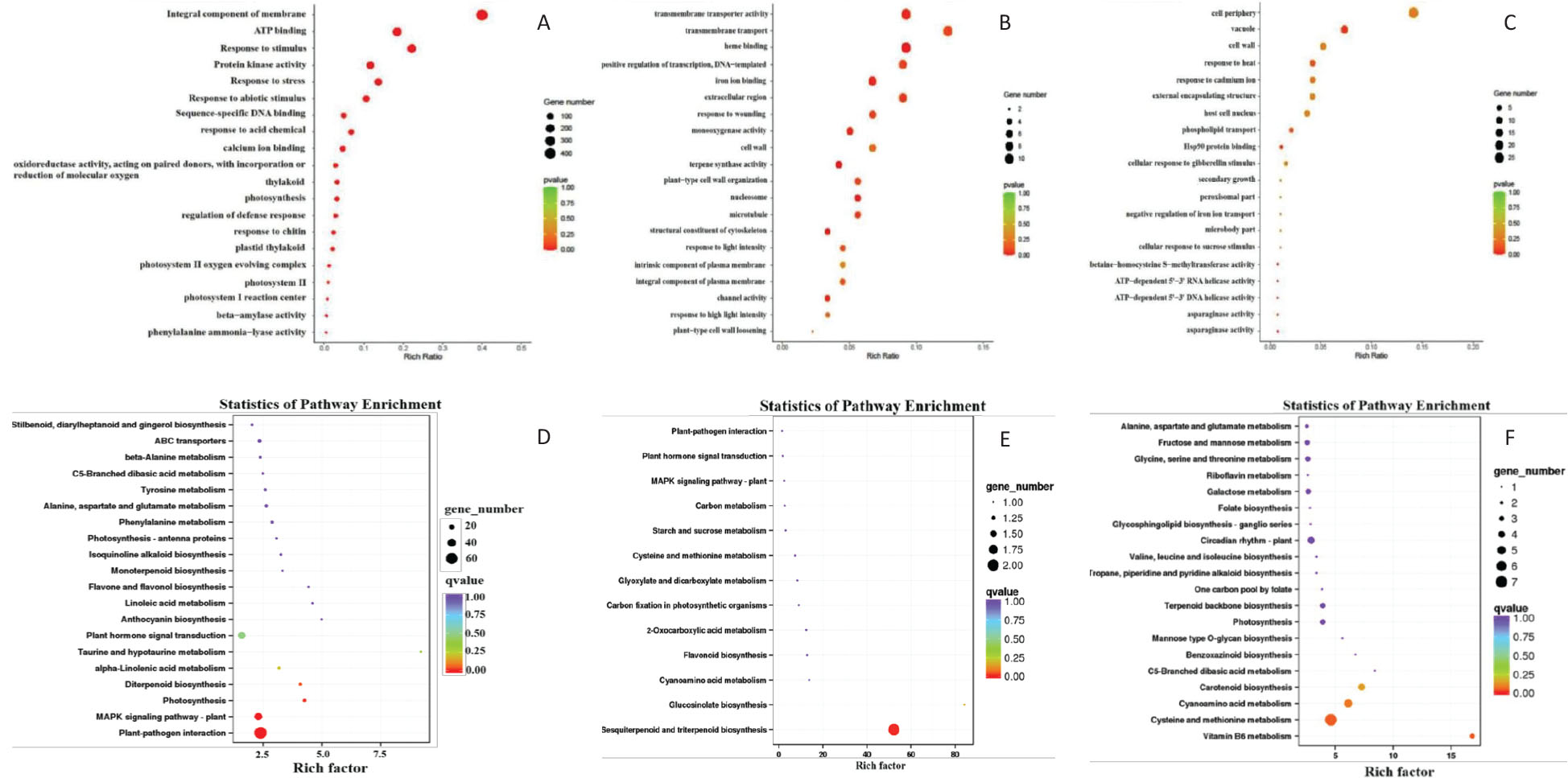
Figure S2.
GO enrichment and KEGG pathway analyses of DEGs after inoculation. (A) GO enrichment at 3 hr after inoculation. (B) GO enrichment 12 hr after inoculation. (C) GO enrichment 24 hr after inoculation. (D) KEGG pathways at 3 hr after inoculation. (E) KEGG pathways at 12 hr after inoculation. (F) KEGG pathways at 24 hr after inoculation. DEGs, differentially expressed genes; GO, Gene Ontology; KEGG, Kyoto Encyclopedia of Genes and Genomes.
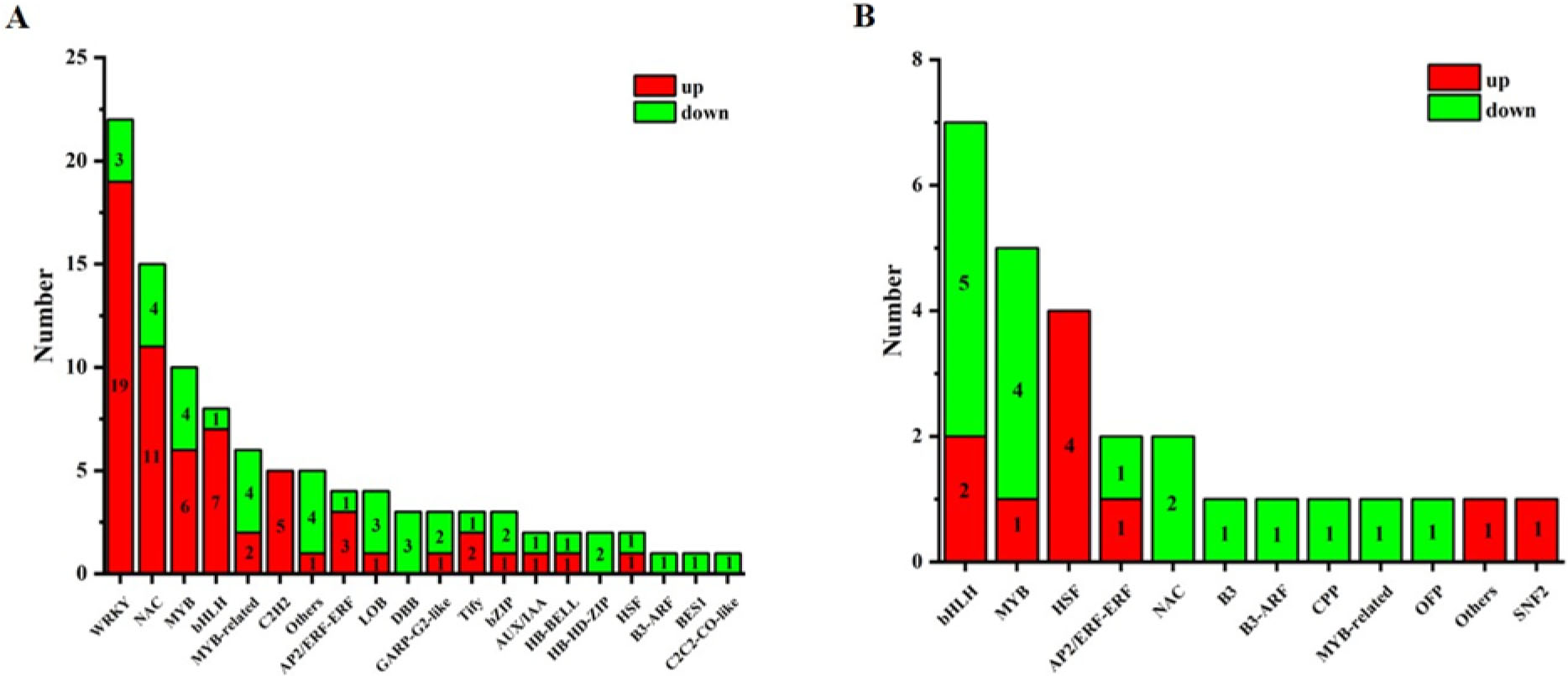
Figure S3.
Statistics of differentially expressed transcription factor after inoculation. Red indicates upregulation whereas blue indicates downregulation, and the numbers indicates the number of transcription factors. (A) 3 hr after inoculation. (B) 24 hr after inoculation.
Table S1.
Real-time fluorescence qPCR primers for transcriptome data validation
| Gene name | Forward primer (5′ – 3′) | Reverse primer (5′ – 3′) |
|---|---|---|
| Zlat_10042605 | GCTTGTTCCTCCTCGTCATC | TT-GACGGCGAAGGGAGGTT |
| Zlat_10032950 | CCAACACCAACCTCAACTACG | A-CGGAGATCCTGATGCCTAC |
| Zlat_10047488 | CGTGGTATCGGAGACAGGGT | CG-GAAGAGAGCGAAGAGGTACACG |
| Zlat_New_3742 | ACCAACACGACGACCAGACT | AAGAAGAGCACCGCCAATG |
| Zlat_10042236 | AGTGGTGACTCTGGAATTGG | G-CCCATGAGTGTGTTGTGATCT |
| Zlat_10016445 | CATGGAAGGAAGGCAGATAC | CAAAGCCACCCTCACCTATT |
| Zlat_10028687 | GAGTCAAGACAGGGAGTAAAGG | CCTTCCACACAATAGCCATAAAG |
| Zlat_10035043 | CGTGGATTGGGCAACCTT | CTTCTTGTTCTCCTCGCTCG |
| Zlat_10006234 | GTGACGGCGACCAACTTCT | T-GAGTGCCCGTTGATGGTG |
| Zlat_10018519 | GTGGAAGGGTATGGCAGTG | C-AGATTCGGGTTTGGTAGGC |
| Zlat_10014566 | ATCACCGCCACCAACCT | T-CCTCCCTTCTTCACGCAC |
| Zlat_10002874 | GGAGTATCTCCACCTACCTGTCT | CCGTCGTCGTATTCTTCGTCT |
| Zlat_10042726 | TT-GGCTTCTTCCCTCTCCTCC | CGGTGAAGTCAGAGGCGTT |
| Zlat_10026152 | GTGGGTGGACGAGAAGAAGT | CAGCCGATGAGGATGGAGT |
| Zlat_10045237 | A-TGTGGCAGTCGTGTCCGT | A-CGTTGAACAGGGGCTCGT |
| Zlat_10002801 | ACGACAGAGGAACTGAAGGACT | TCGTGTTGAGGATTTGGAGG |
| Zlat_10020429 | ACGGGCTCACCTACACCAAC | T-ACAGCCGACGTGGTCGAT |
| Zlat_10020427 | T-CCTACCCTGGTGTCTCCTTC | T-CCGTGGACACCTTGATGC |
| Zlat_10001037 | T-ATTCACCTCCCACACTCAGC | CCATCACCACCTATCTTCAAGC |
| Zlat_10009720 | CATCGCCTTCTCCCTCAT | GGTTCCAGGGTTGATTGC |
| ZlActin2 | C-TAACCGGCCACGTGTATTT | AGAGCAGAGGCATTCCAAGT |
Table S2.
Information on candidate genes related to ‘plant–pathogen interaction’ and ‘MAPK signalling pathway-plant’ pathways in male Z. latifolia in response to U. esculenta infection
| Gene ID | Log2(FC) | Genetic traits | Homologous gene |
|---|---|---|---|
| Zlat_10029338 | 1.16 | LRR receptor-like serine/threonine-protein kinase FLS2 | AT5G46330 |
| Zlat_10042236 | 1.30 | LRR receptor-like serine/threonine-protein kinase FLS2 | AT5G46330 |
| Zlat_10004780 | 1.32 | BAK1 | AT4G33430 |
| Zlat_10007178 | 1.10 | BAK1 | AT4G33430 |
| Zlat_10016445 | 1.06 | BAK1 | AT4G33430 |
| Zlat_10023424 | 1.48 | BAK1 | AT4G33430 |
| Zlat_10028687 | 1.20 | BAK1 | AT4G33430 |
| Zlat_10024926 | 1.02 | Mitogen-activated protein kinase 3 | AT3G45640 |
| Zlat_10030446 | 1.49 | Mitogen-activated protein kinase 3 | AT3G45640 |
| Zlat_10002195 | 1.24 | WRKY33 | AT2G38470 |
| Zlat_10004358 | 2.72 | WRKY33 | AT2G38470 |
| Zlat_10008237 | 2.02 | WRKY33 | AT2G38470 |
| Zlat_10020312 | 1.60 | WRKY33 | AT2G38470 |
| Zlat_10028790 | 1.85 | WRKY33 | AT2G38470 |
| Zlat_10008367 | 1.52 | WRKY33 | AT2G38470 |
| Zlat_10045823 | 1.59 | Senescence-induced receptor-like serine/threonine-protein kinase (FRK1) | AT2G19190 |