
1. INTRODUCTION
The safety of an engineering structure is typically assessed by comparing the stress or strain state at a critical location, often referred to as a “hot spot,” with the stress or strain corresponding to a material’s limit state, usually determined under uniaxial tension. In most cases, material failure defines this limit state, although other conditions – such as the onset of plastic flow – can also be relevant. The stress or strain at the hot spot may be obtained through numerical simulations (e.g., the Finite Element Method) or experimental techniques such as strain gauges or full-field methods, including digital image correlation (DIC).
To relate the complex stress or strain state at the hot spot to the simpler results of uniaxial tension (or other basic loading conditions), the concept of material effort is introduced. Material effort provides a measure of how close the material at the hot spot is to reaching its limit state. In the general case, it is expressed as a function of the six independent components of the stress tensor:
or, in terms of principal stress tensor components:The form of the function is determined by the adopted strength hypothesis. In his seminal 1904 work Huber (1904/2004) proposed that “material effort is measured by specific work of strain” provided that the material obeys a generalized form of Hooke’s law; then “if in a certain point of the body work of strain goes beyond a determined value depending on the material (in a constant temperature), a permanent separation of molecules of the body, that is its fracture, must occur.” Later, Freudenthal (1950) proposed a similar condition for material failure: when the specified potential strain energy within a given collection of material particles exceeds a critical value, which depends on preceding irreversible dissipative processes and certain environmental parameters, macroscopic material failure occurs in this collection of particles.
This postulate can be expressed mathematically as the most general form of the failure criterion:
Index “c” stands for critical value of the potential strain energy (or specific work of strain). Dissipated energy density can be also expressed as the sum of work of plastic strain and damage (decohesion) energy:
In the case of composites, we can assume that no slip of crystal defects (plasticity) occurs. This assumption allows the failure criterion to be expressed in the following simple form:
Failure of structural materials is generally classified into two categories: brittle and ductile. For most CFR composites, brittle fracture can be assumed, which makes it appropriate to use a stress-based criterion. In the coordinate system σ1, σ2, σ3, such a criterion can be represented as a limit surface that defines the critical stress states (Figure 1). When the material effort reaches this critical value, failure occurs.
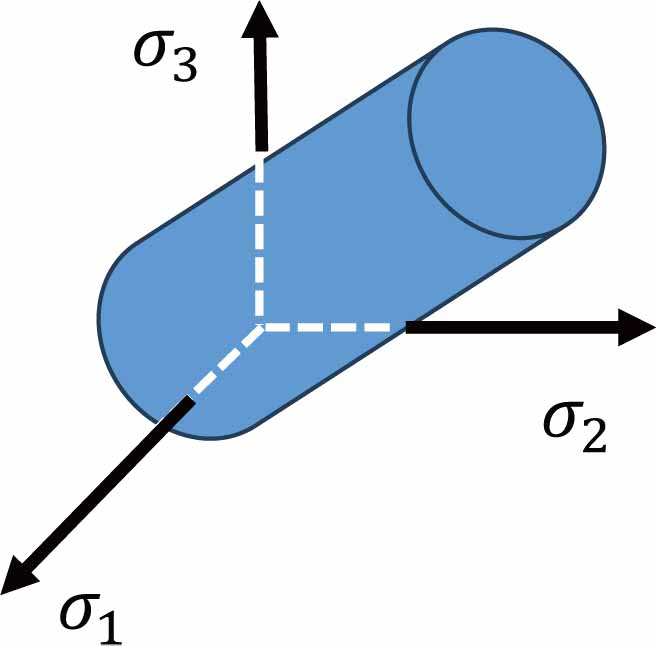
Figure 1.
Limit surface representing critical stress states in the principal stress space.
We have to mention however, that failure mode is not only related to material properties. The same kind of material can experience brittle and ductile failure with respect to stress state, strain rate and temperature.
Taking into account that the failure mode for the material in question is related to mechanical properties and the stress state, appropriate strength hypothesis must be based on experimental investigations. Currently about 40 hypotheses of damage and corresponding damage criteria is used by engineers and scientists [2-10]. The best known and frequently used are following stress-based criteria for solids are listed below (both criterion and formula for specific work of strain w are presented).
Maximum normal stress failure criterion
Maximum shear stress failure criterion
Huber-Mises (distortion strain energy density) failure criterion
Formulating a credible strength hypothesis for fiber-reinforced composites is a challenging task, as it requires accounting for the material’s non-homogeneity and anisotropy. It is generally accepted that physical hypotheses should be applied separately to the fiber and the matrix, although some experimental results challenge this approach.The most reliable way to establish an appropriate criterion is through complex stress testing. Such a testing program was carried out as part of the present study, using tubular specimens manufactured from FORMOSA EC3X EA45 2x2T 200 g/m2 prepreg at the Lukasiewicz Research Network – Institute of Aviation in Warsaw, Poland. The experimental techniques and results are presented in the following sections.
2. SPECIMEN AND MATERIAL
All specimens were fabricated from FORMOSA EC3X EA45 2x2T 200 g/m2 prepreg in fabric form. The fabric was laid out at an angle of 0° with respect to the specimen axis. To enable the application of axial tensile load and internal pressure sufficient to fracture the gage section, a buttonhead design was adopted for the tubular specimens, incorporating two steel rings (Figure 2). The thickness of the gripping section was increased relative to the gage section to ensure proper load transfer (see Figure 2).
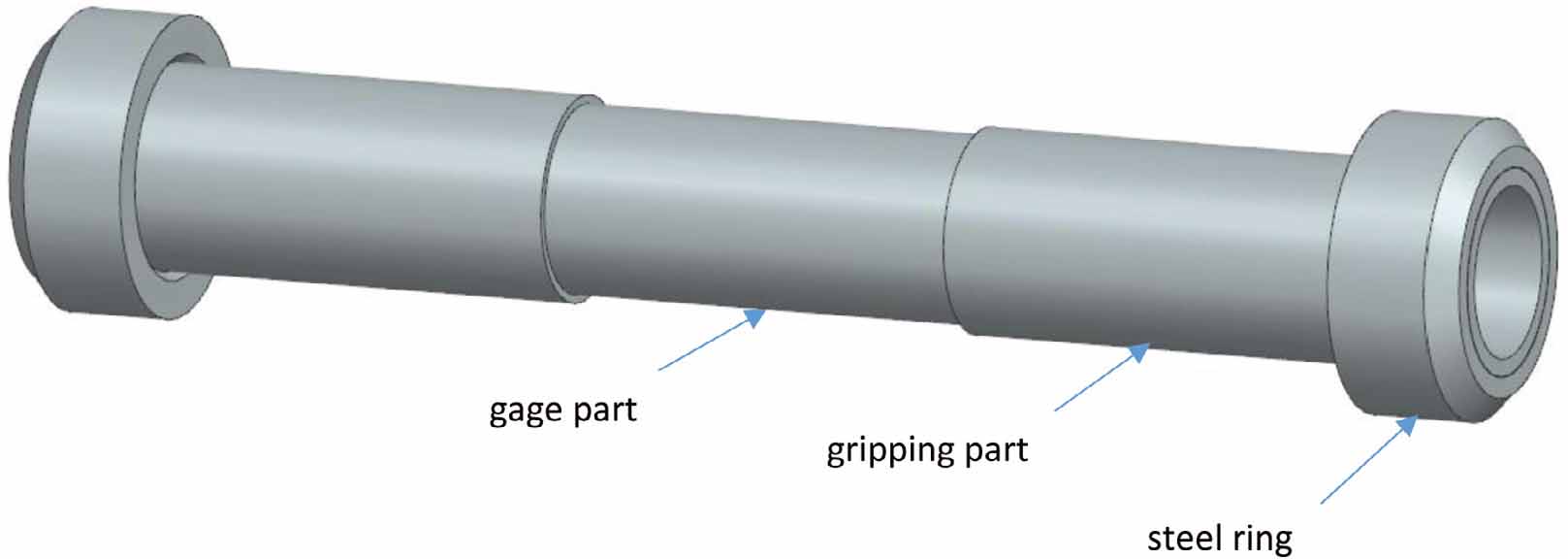
Figure 2.
Tubular specimen.
The prepreg was wrapped around a steel rod with a diameter of 20 mm and cured. The resulting material in the gage section of the specimen exhibited the following mechanical properties.
Table 1.
Mechanical properties of the material in the gage section of the specimen (X – axial direction, Y – circumferential direction).
| Parameter | Value | Factor of scatter CV |
|---|---|---|
| Tensile strength Xt | 684 MPa | 4.41 [%] |
| Tensile strength Yt | 638 MPa | 6.45 [%] |
| Compressive strength Xc | 600 MPa | 4.18 [%] |
| Compressive strength Yc | 638 MPa | 3.41 [%] |
| Shear strength S | 75 MPa | 1.62 [%] |
| Modulus Ex | 54.41 GPa | |
| Modulus Ey | 57.72 GPa | |
| Modulus Gxy | 3.66 GPa | |
| Poisson coefficient v12 | 0.041 [-] |
The specimen dimensions were determined based on the load capacity of the testing system: ±100 kN of axial load and a maximum internal pressure of 1000 bar. This capacity was sufficient to ensure specimen failure under either pure axial loading (tensile or compressive) or internal pressure. The specimen was also designed to withstand compressive loading without the risk of buckling. The final dimensions of the tubular specimen are shown in Figure 3.
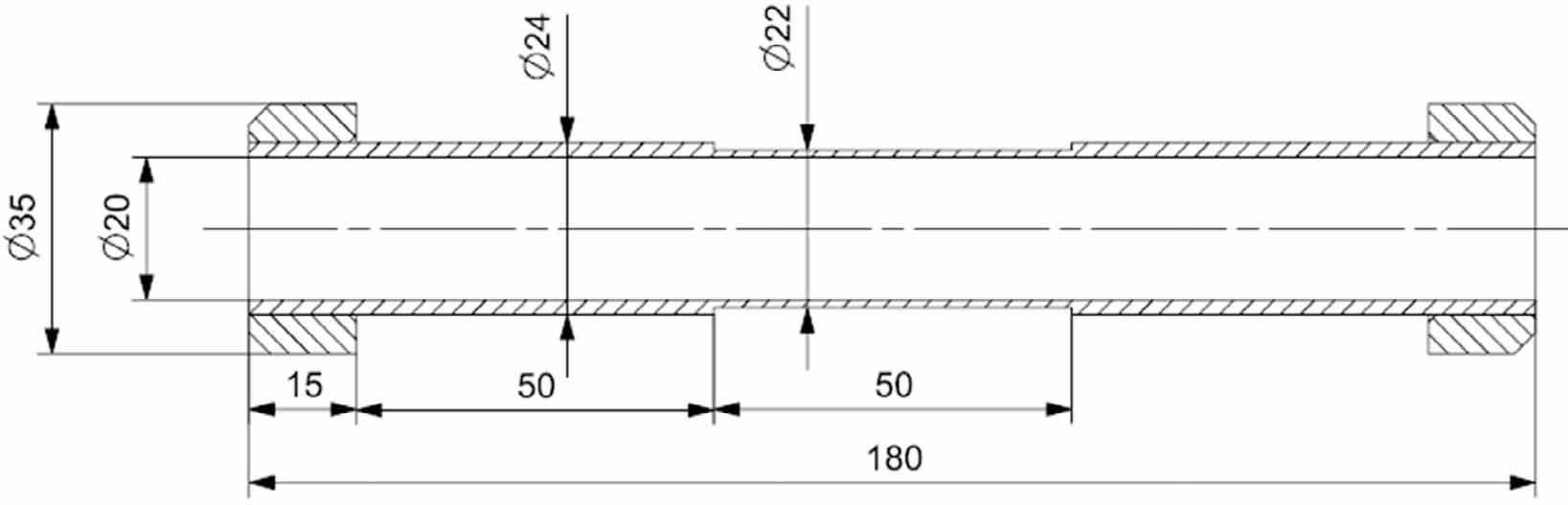
Figure 3.
Dimensions of tubular specimen in mm.
3. STRESS AND STRAIN STATE IN THE GAGE PART OF THE TUBULAR SPECIMEN
In the gage section of a tubular specimen subjected to axial force F and internal pressure p, a plane stress state can be assumed with three nonzero components of the stress tensor: axial, hoop, and radial. These components coincide with the principal stresses. Since the internal pressure acts hydrostatically, it contributes to the stress in all directions, including the axial direction. The axial stress resulting from the internal pressure can therefore be calculated using the following formula:
In this formula, the internal diameter of the gage part of tubular specimen is denoted as di and the outer diameter is denoted as do.
Moreover, axial force produces axial stress in the gage part of the tubular specimen, given by formula:
So, the total axial stress in the gage part of the specimen is given by formula:
The second nonzero component of the stress tensor – hoop stress – can be calculated by the following formula:
where t denotes the thickness of the gage part wall.The third nonzero stress tensor component – radial stress – varies with the thickness of the specimen wall in the gage part. At the internal surface, this component, perpendicular to the internal surface of the specimen, is negative and equal to pressure p, while at the external surface of the gage part it is equal to zero.
Two components of the strain tensor were obtained either directly from measurements or calculated post-test using the biaxial extensometer shown in Figure 4. This device enables simultaneous recording of axial and transverse (hoop) strains in the gage section of the composite tubular specimen. Axial strain was measured on two opposite sides of the gage section, with a 10 mm gauge length. The extensometer allows recording of these two signals separately or as an averaged signal to eliminate the influence of bending. In the present investigations, the averaged signal was used.
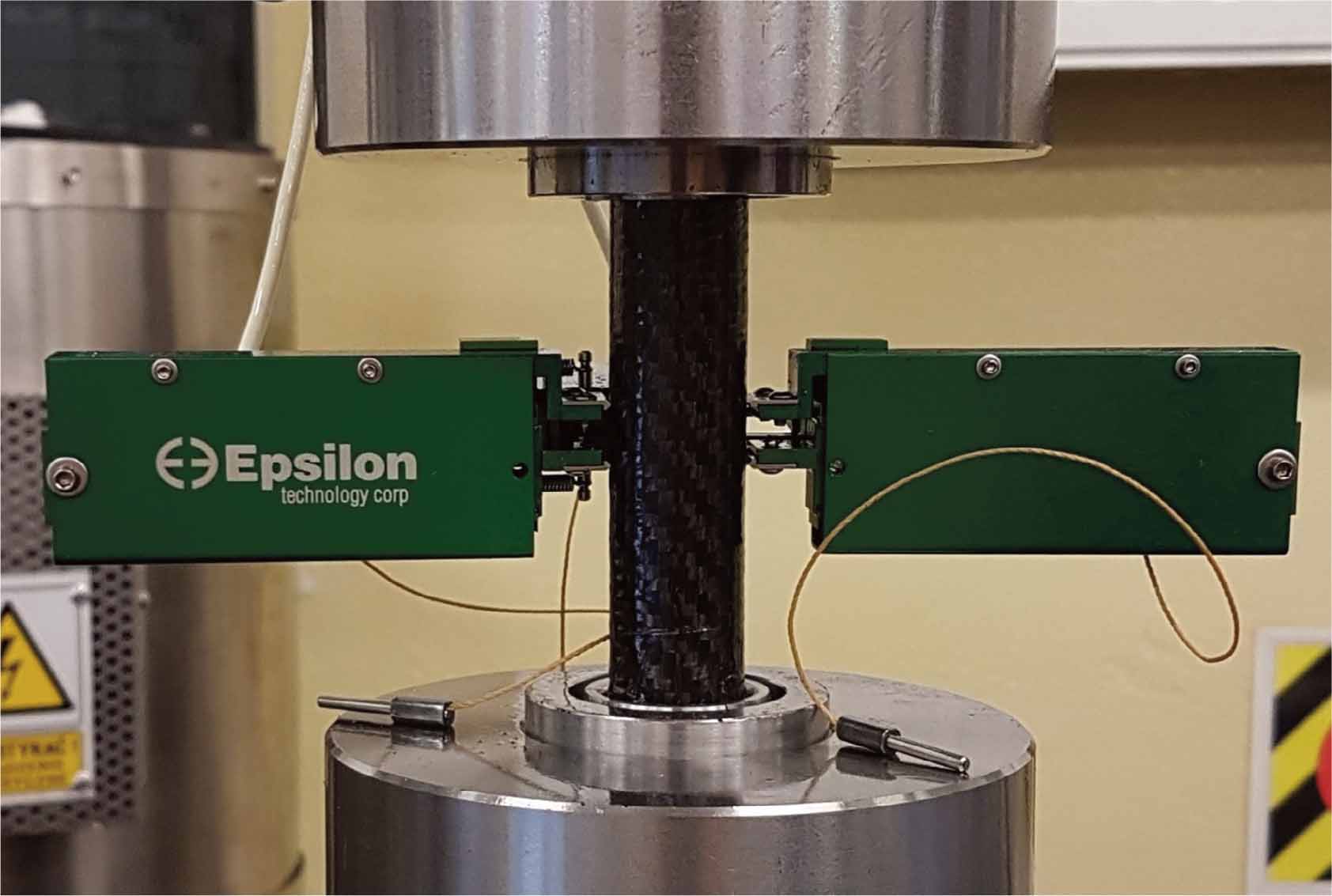
Figure 4.
Biaxial extensometer attached to the gage part of the tubular specimen.
The transverse strain, equal in this case to the hoop strain, was calculated post-test from the transverse displacement of the extensometer and the outer diameter of the specimen’s gage section (the measurement base). Accurate determination of the hoop strain therefore required precise measurement of the specimen’s outer diameter. This was achieved using a high-precision, contactless digital micrometer (KEYENCE LS-7030), shown in Figure 5. The device measures diameter by means of a light curtain, with a range of 0.3–30 mm, a resolution of 2 μm, and a repeatability of 0.15 μm. High measurement accuracy is ensured by averaging across 100 samples, made possible by the device’s high scanning frequency of 2400 samples per second.
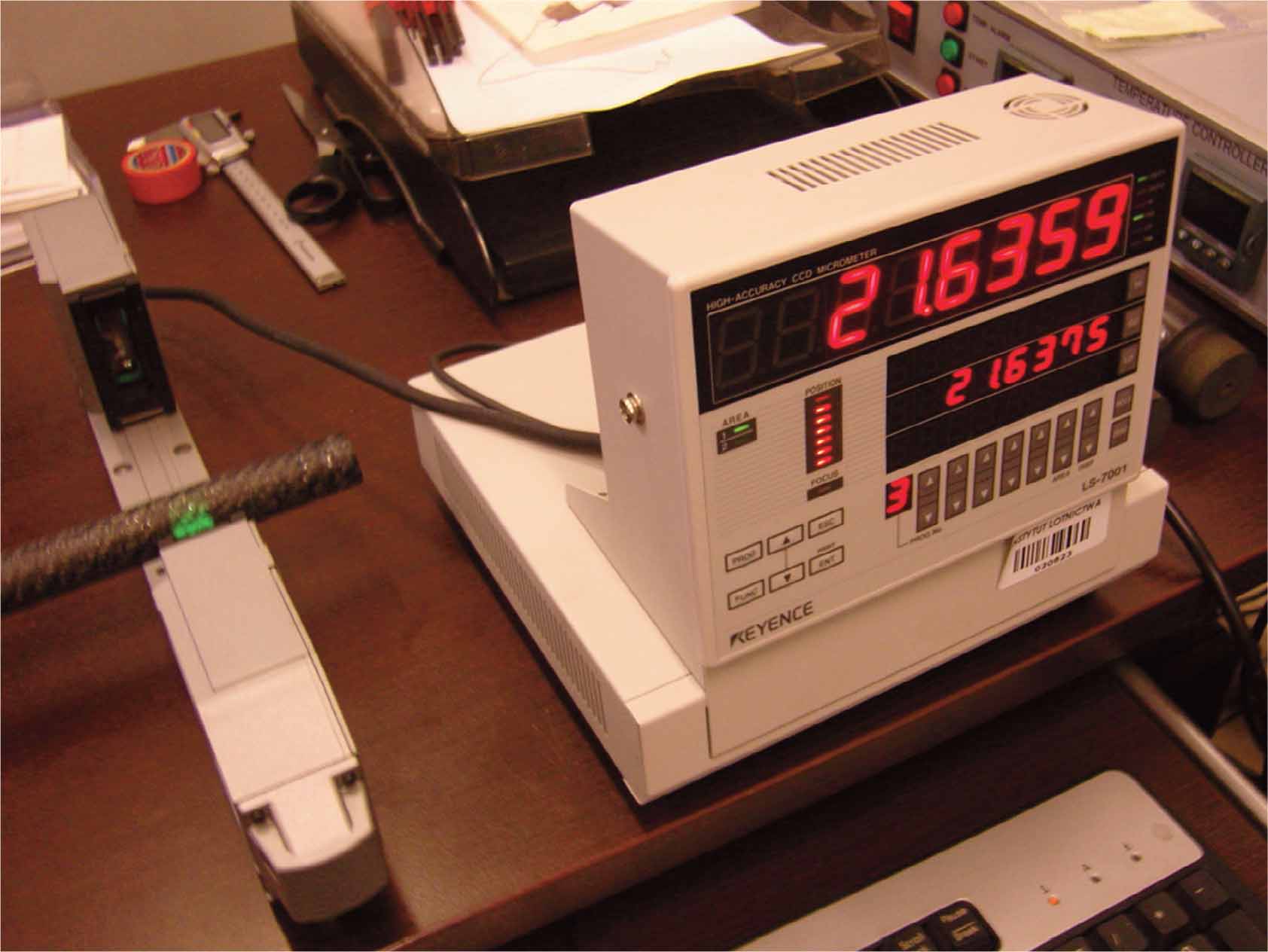
Figure 5.
Contactless digital micrometer KEYENCE LS-7030.
4. EXPERIMENTAL SETUP FOR COMPLEX STRESS TESTING
The experimental setup used for complex stress testing is shown in Figure 6. It was based on a standard uniaxial loading frame (MTS 810) equipped with a pressurization system. Although this system was originally designed to operate optional hydraulic wedge grips, in the present study it was adapted to apply internal pressure to the tubular specimens. The system capacity was limited to a maximum axial load of ±100 kN (tension or compression) and a maximum internal pressure of 500 bar. Axial force was programmed and controlled in a PID closed loop using the MTS FlexTest digital controller. The maximum internal pressure, however, could only be regulated manually via a hand valve. The rate of pressurization could be adjusted by controlling oil flow through a damping valve.
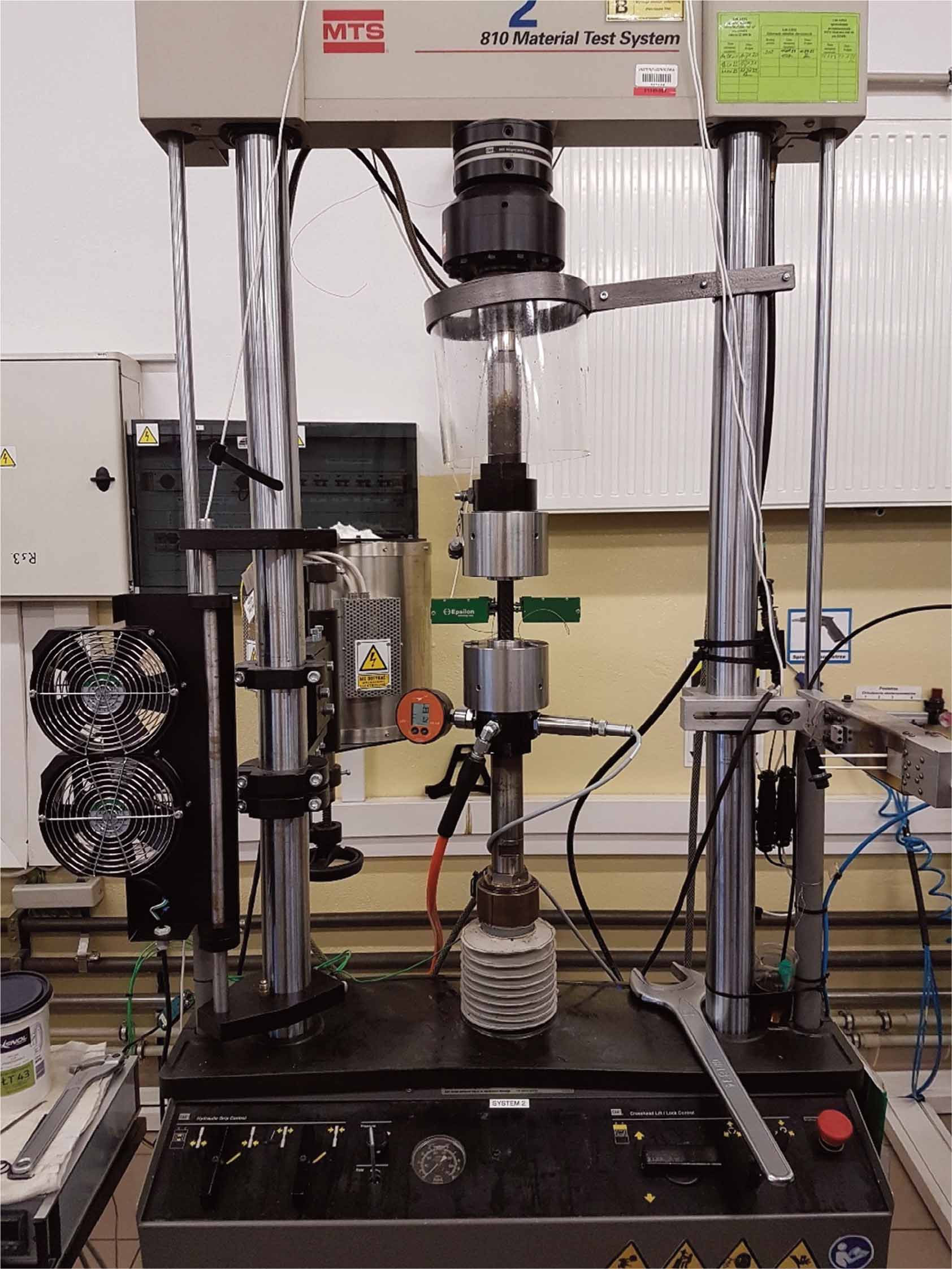
Figure 6.
Experimental setup for complex stress testing.
The controller of the testing machine also enabled data acquisition from the following transducers:
MTS force transducer (model 661.20F-03), measuring range +/- 100 kN
Hottinger Bruel&Kjaer pressure transducer, measuring range 0–1000 bar
Biaxial extensometer (model 360-BIA-010_HT2, Epsilon technology group) with measuring ranges of axial strain +/- 0.1 mm/mm and transversal travel +/- 1 mm (to calculate strain, the transverse displacement was divided by the specimen diameter in mm).
Data were recorded digitally during testing at a frequency of 10 measurements per second, in the following sequence: time, axial force, pressure, axial stress, hoop stress, axial strain, and hoop strain. The values of axial and hoop strain were calculated online by the machine controller using the formulas described in the previous section.
5. EXPERIMENTAL PROGRAM AND RESULTS
The experimental program consisted of 17 complex stress tests performed on the composite tubular specimens shown in Figure 2. To carry out each test, the machine controller was programmed to execute a specific sequence of events. In the first phase, with the specimen unloaded, the strains in the gage section (axial and transverse), as indicated by the extensometer, were balanced to zero. In the subsequent phase, two loading options were employed. In the first, internal pressure was ramped up while the actuator displacement was held constant at a predefined value, after which the axial load was increased or decreased until specimen failure. In the second, control was transferred from displacement to force, and the axial load was increased or decreased to a predefined value, followed by an increase in internal pressure until specimen failure. The loading sequence and parameters for all tested specimens are listed in Table 2. One exception was specimen no. 10, for which axial load and internal pressure were increased simultaneously to realize a proportional loading path in stress space.
Table 2.
Loading sequence for all tested specimens.
| Number of test | Loading sequence | End of first ramp | End of second ramp |
|---|---|---|---|
| 1 | tension | specimen failure | n. a. |
| 2 | pressure | specimen failure | n. a. |
| 3 | pressure-tension | 100 bar | specimen failure |
| 4 | pressure-tension | 200 bar | specimen failure |
| 5 | pressure-tension | 300 bar | specimen failure |
| 6 | tension-pressure | 10 kN | puncture of matrix |
| 7 | tension-pressure | 20 kN | puncture of matrix |
| 8 | tension-pressure | 30 kN | puncture of matrix |
| 9 | pressure-tension | 150 bar | specimen failure |
| 10 | simultaneous pressure and tension | specimen failure | n. a. |
| 11 | pressure-compression | 100 bar | Specimen failure |
| 12 | pressure-compression | 200 bar | Specimen failure |
| 13 | pressure-compression | 50 bar | Specimen failure |
| 14 | pressure-compression | 150 bar | Specimen failure |
| 15 | compression-pressure | -10 kN | puncture of matrix |
| 16 | compression-pressure | -20 kN | puncture of matrix |
| 17 | compression-pressure | -15 kN | puncture of matrix |
The stress paths realized during the testing program can be represented in the principal stress space on the plane defined by points A, B, and C (Figure 7). In this space, σ1, σ2, and σ3 correspond to the axial, hoop, and radial stresses in the wall of the gage section of the tubular specimen. Owing to the specimen geometry and the applied loading scheme, the ratio between the hoop and radial stresses on the internal surface – where material effort is highest – remains constant. This ratio is equal to the tangent of the angle between the plane ABC and the axial-hoop stress plane (σ3 = 0).
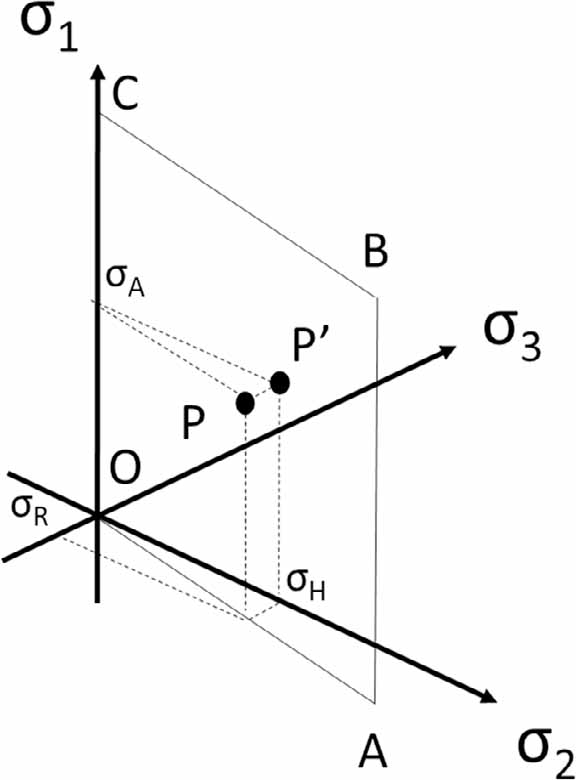
Figure 7.
Loading plane in the stress space, with point P representing failure stress state.
To simplify the interpretation of results, the stress paths are presented as projections onto the axial-hoop stress plane (σ3 = 0). The projection of all realized stress paths is shown in Figure 8.
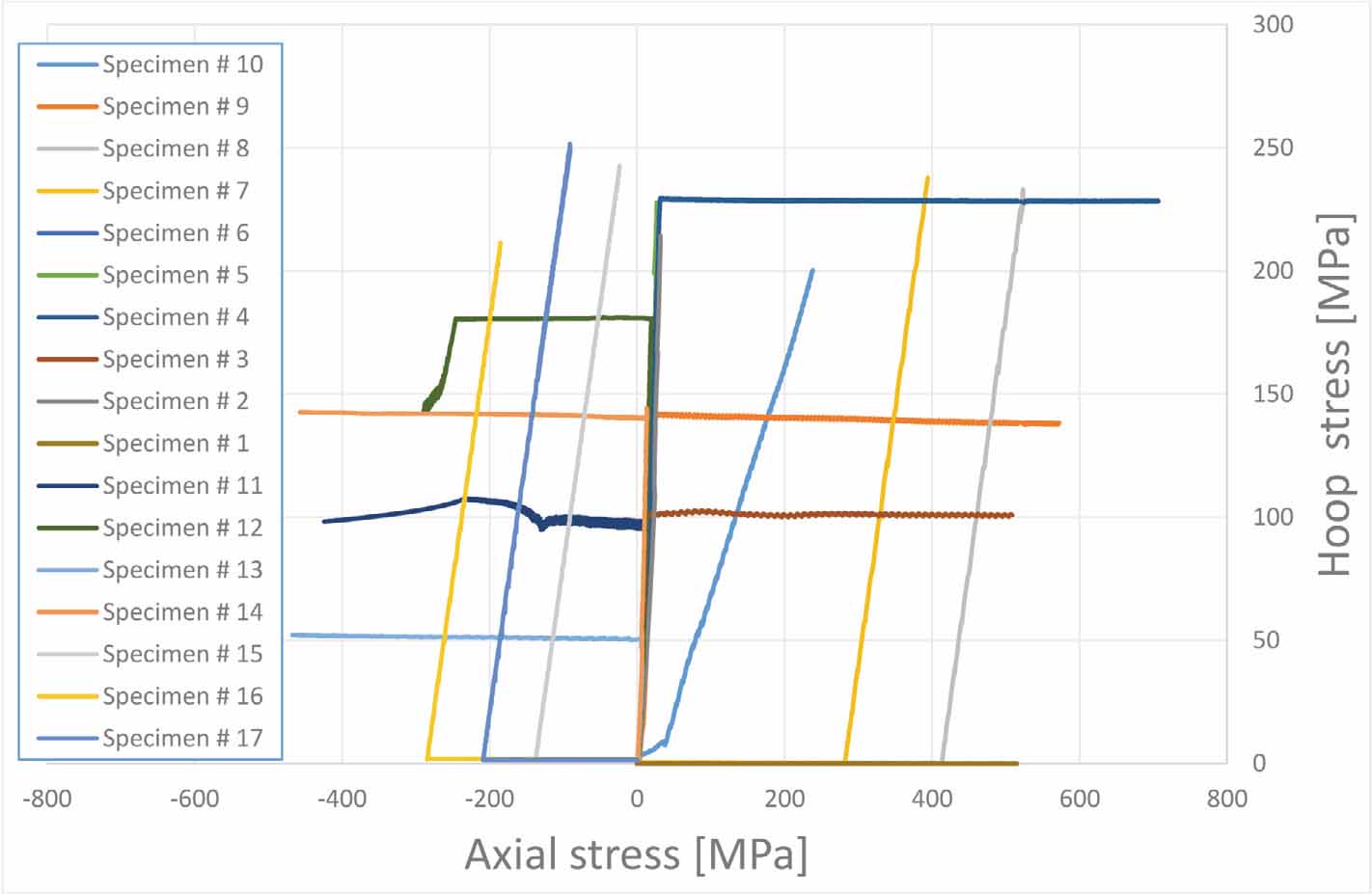
Figure 8.
Stress paths realized during the testing program.
A representative plot of axial and hoop stress versus time for test no. 7 is shown in Figure 9. This test followed the tension-pressure loading sequence.
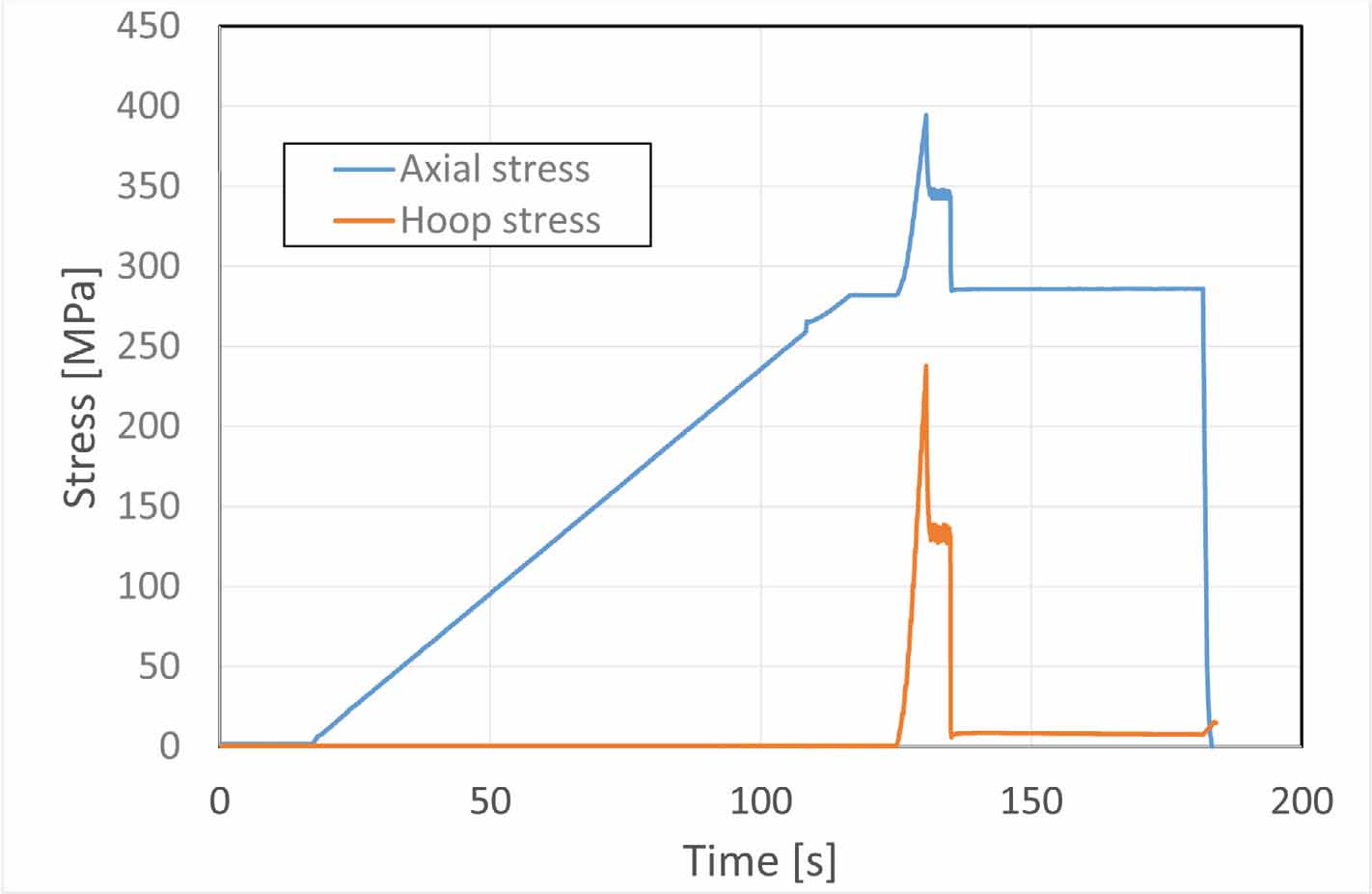
Figure 9.
Plot of axial and hoop stress vs. time during test number 7.
During the first phase of the test (approximately 18 seconds), the specimen remained unloaded while the extensometer signals were balanced to zero strain. Axial loading was then initiated, reaching a final value of 20 kN. After about 10 seconds, internal pressure in the gage section of the specimen was increased, and when the hoop stress approached 240 MPa, failure of the composite occurred in the form of matrix puncture. This is visible in Figure 9 as a sudden pressure drop at around 130 seconds. The corresponding stress path, shown in Figure 8, is characteristic of the tension-pressure loading sequence applied in these tests.
Another loading approach was to apply the sequence of internal pressure followed by axial load, as in the case of specimen no. 9. Figure 10 shows the variations of axial and hoop stress during this test. After about 30 seconds, internal pressure was increased, although the rate was not constant due to manual control, and the programmed maximum of 150 bar was reached after approximately 70 seconds. As seen in the figure, the increase in internal pressure caused a corresponding rise in both hoop and axial stress. After about 90 seconds, axial loading was initiated under closed-loop digital control, ensuring a constant loading rate. This phase ended with specimen rupture, which in this case took the form of a circumferential crack and complete separation into two parts. On the stress plot, this failure appears as the sudden drop of both stress components to zero. The stress path for specimen no. 9 is shown in Figure 6 and is representative of the pressure-tension loading sequence.
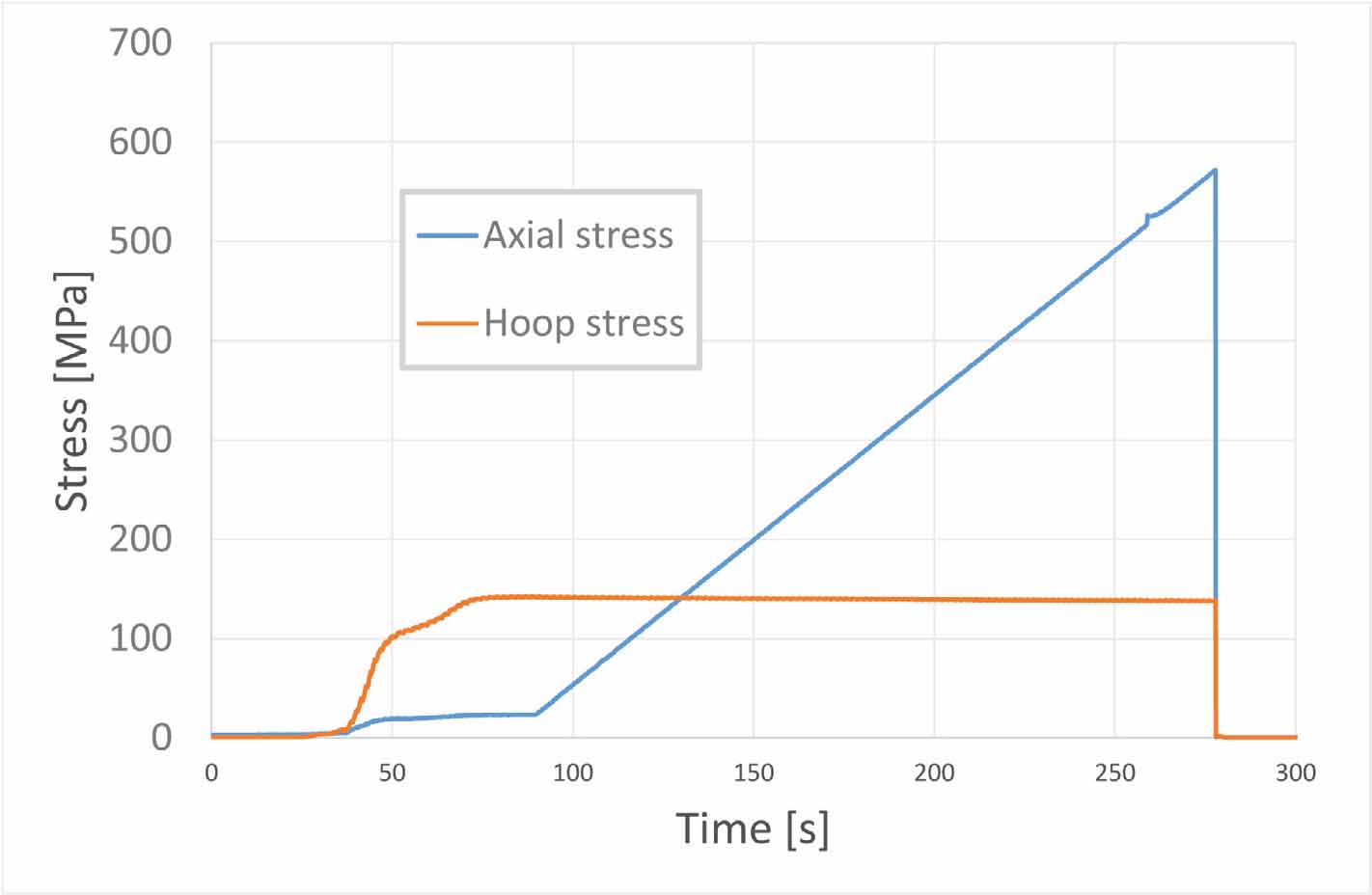
Figure 10.
Axial and hoop stress variations for specimen number 9.
The axial-hoop stress plane with projected failure data points is shown in Figure 11. Three distinct composite failure modes were observed. The first, indicated by open circles, was resin matrix puncture leading to a drop in internal pressure. The second, shown as filled circles, was a circumferential crack that caused the specimen to separate into two parts. The third mode, represented by solid squares, was a longitudinal (axial) crack. These failure modes were linked to the type of final loading ramp: pressure ramping to failure typically resulted in matrix puncture or longitudinal cracking, while axial load ramping produced circumferential cracking and complete separation. Considering these three modes, a failure condition for the tested material and loading scheme can be proposed. It must be noted, however, that resin matrix puncture is influenced simultaneously by all three stress tensor components acting at the internal surface of the gage section. While Figure 11 shows the axial and hoop stresses, the third component – radial stress – is illustrated in Figure 12 through projections onto the σ1 = 0 and σ2 = 0 planes. The magnitude of radial stress at the internal surface is equal to the applied internal pressure. For example, in specimen no. 7 at failure, the internal pressure was 25 MPa, while the axial and hoop stresses were 394 MPa and 237 MPa, respectively. This indicates that the radial stress was about ten times smaller than the other two nonzero stress components. For metals, such a small radial component is typically neglected in defining the failure surface. In composites, however, it clearly contributes to failure. When the principal stress directions are aligned with the fiber directions (as in this study), indices 1, 2, and 3 correspond to the axial, hoop, and radial directions, respectively, with T denoting tensile and C compressive strengths. Under these assumptions, the failure condition can be written in the following form:
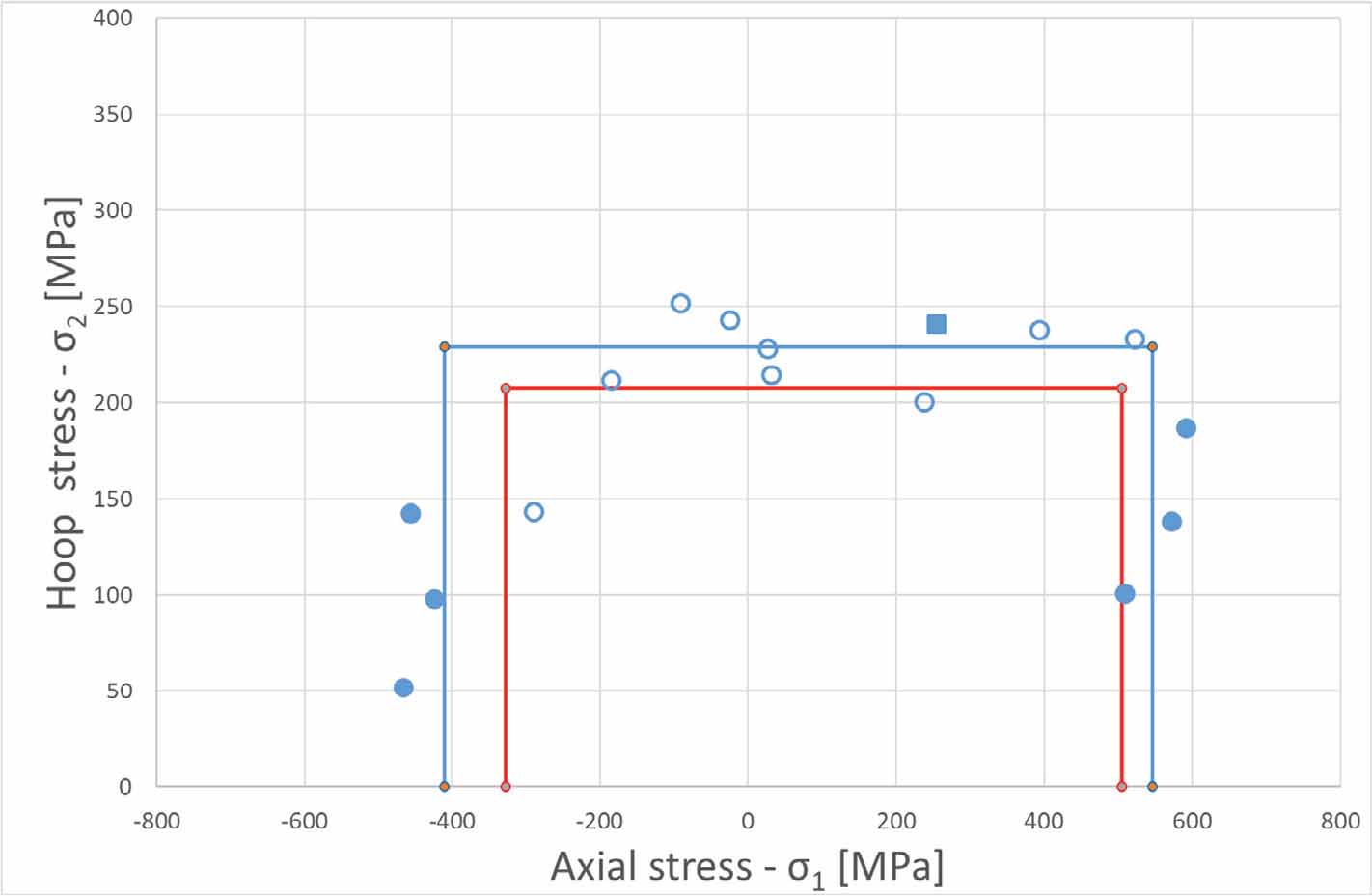
Figure 11.
Limit lines at the axial-hoop stress plane.
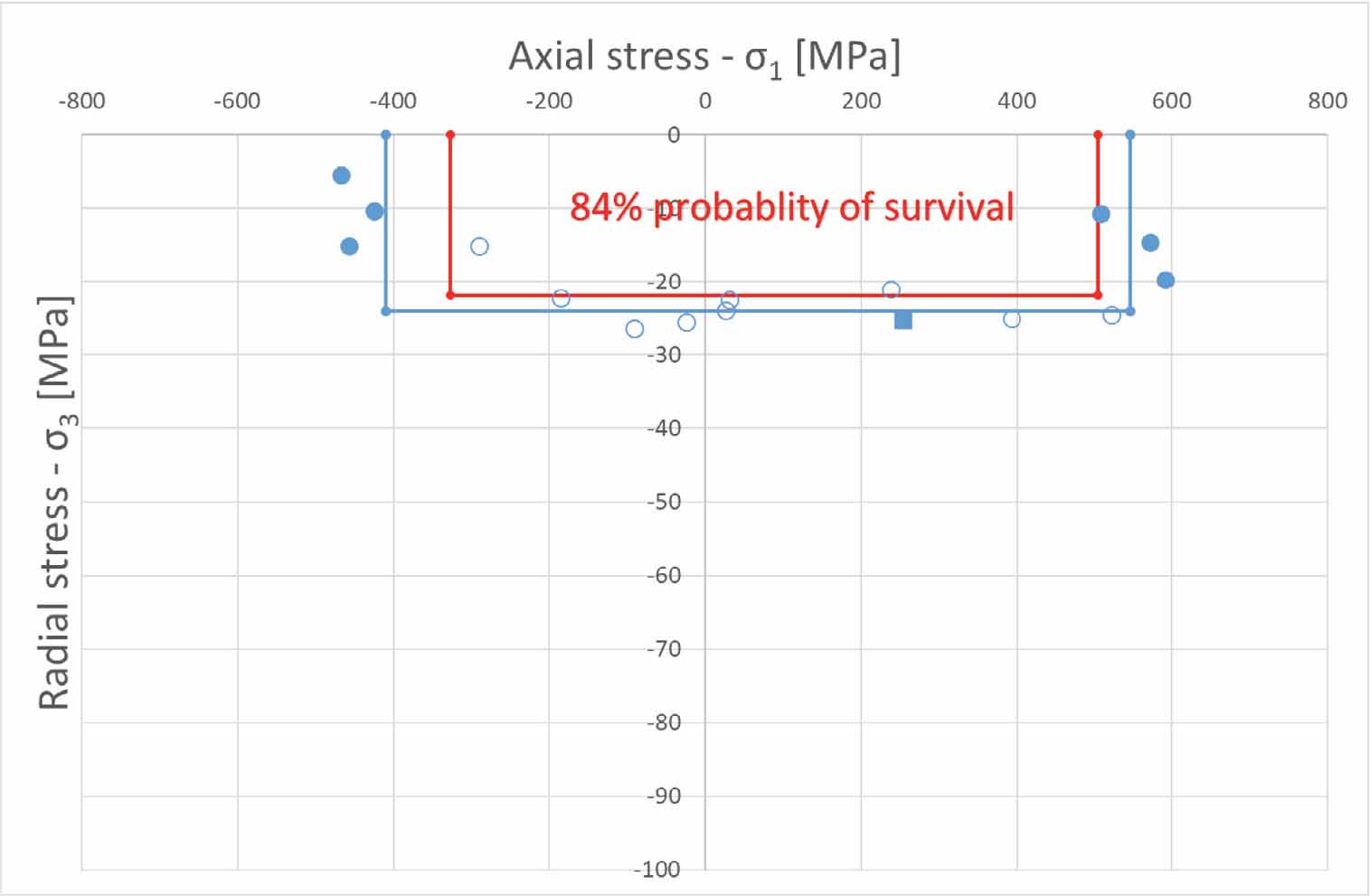
Figure 12.
Limit lines at the radial-axial stress plane.
For the investigated composite (and likely for other composites as well), a significant scatter of failure data points was observed. To address this issue, a probabilistic approach is required, in which the failure strain is replaced by the expected (mean) value of the failure stress. For the material under study, the mean values of failure stress were:
Following the probabilistic approach, the failure stress can be replaced by the stress value corresponding to a defined probability of survival. Assuming a normal distribution of data points, the expected value is reduced by one standard deviation, yielding:
In this way, a limit stress value is obtained that ensures an 84% probability of composite survival, provided the applied stress does not exceed this limit. In Figure 11, this is represented by the red line, which encloses stress states corresponding to a failure probability of less than 16%.
A similar procedure can be applied to the data points in the axial-radial stress plane, resulting in an area of 84% survival probability for the investigated composite, bounded by the red line shown in Figure 12.
As mentioned earlier, the loading scheme ensures that the ratio of radial to hoop stress remains constant in the gage section of the tubular specimen for all stress states and paths. As shown in Figure 13, all data points therefore lie on a straight line passing through the origin of the coordinate system. The mean value of the failure stress is represented by a single point on this line, and likewise, the limit stress value corresponding to an 84% probability of composite survival is represented by a single point. In the threedimensional principal stress space, the limit surfaces can then be constructed according to the following scheme:
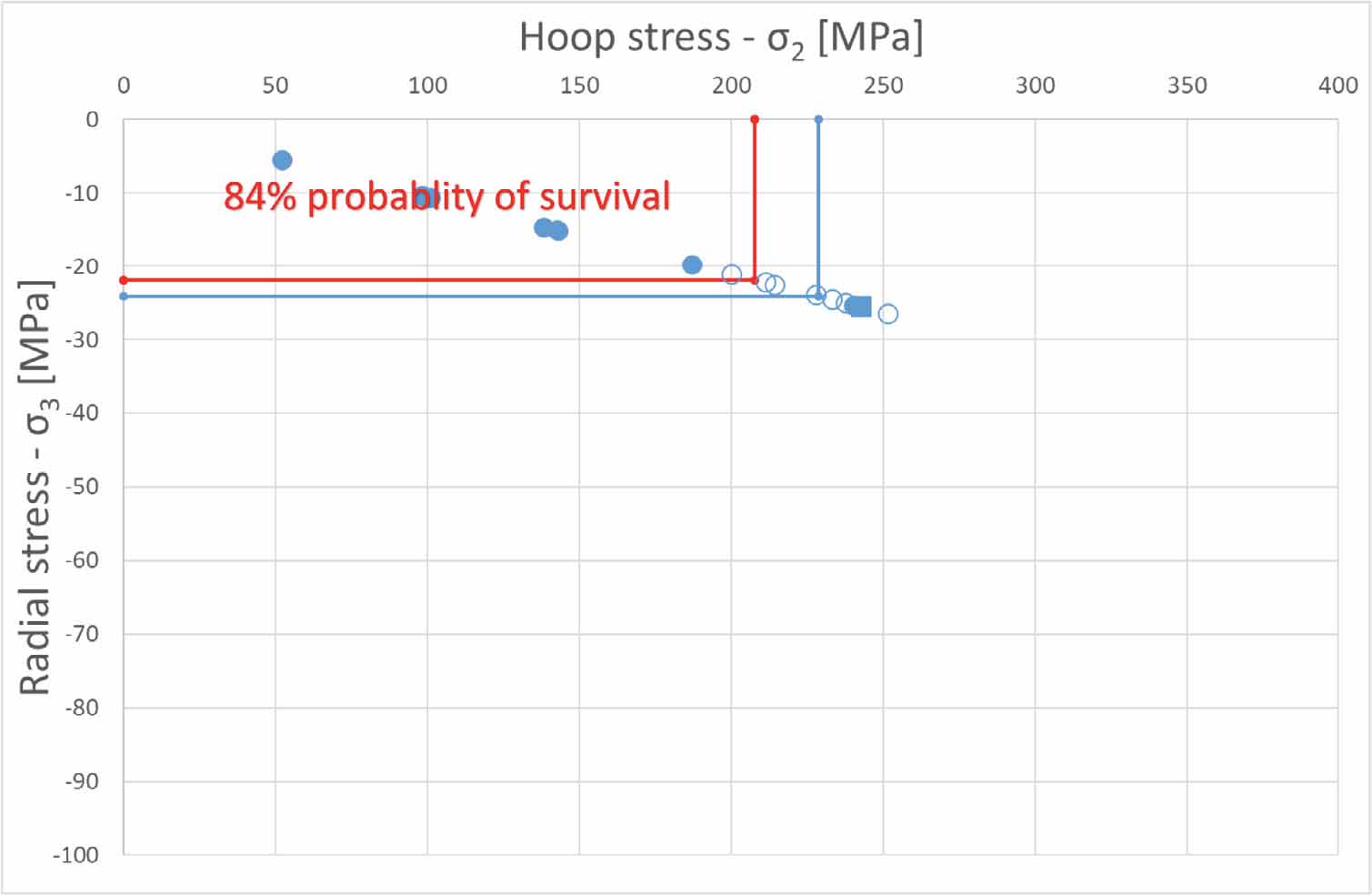
Figure 13.
Limit lines at the radial-hoop stress plane.
Projection of the limit surface onto the three planes (σ33 = 0, σ22 = 0, and σ11 = 0) produces the views shown in Figures 11, 12, and 13. Considering the red lines in these figures, the limit surface encloses the stress states associated with a composite failure probability of less than 16%. If this level of risk is unacceptable for a given design, the expected failure stress may be reduced by two standard deviations, which corresponds to a failure probability of only 2.4% (assuming a normal distribution of the data points).
6. CONCLUSIONS
This paper presents original investigations on tubular composite specimens subjected to combined axial force and internal pressure. Complex stress tests were performed to establish a failure criterion appropriate for the material and loading scheme. The main findings are as follows:
Experimental results indicate that the most suitable failure criterion for the investigated composite is the maximum principal stress criterion, formulated in principal stress space with the coordinate system aligned along the fiber directions.
Three distinct failure modes were observed: circumferential cracking with complete separation of the specimen, longitudinal cracking, and resin matrix puncture leading to a drop in internal pressure.
The third principal stress component – radial stress – is nonzero at the internal surface of the tubular specimen under the applied loading scheme and is proportional to the hoop stress, as described earlier. Although its magnitude is about 10% of the hoop stress, it contributes significantly to matrix puncture failures and must therefore be included in a three-dimensional principal stress failure criterion. A schematic of the resulting failure surface is shown in Figure 14.
Due to the large scatter of the experimental data, a probabilistic approach is the most appropriate means of formulating a failure criterion. In this framework, the failure stress is replaced with the stress corresponding to a specified probability of survival (or equivalently, failure).
The combination of a probabilistic approach with the proposed failure condition for carbon fiber provides a realistic basis for determining composite failure probability.
Under compressive axial loading, the failure force is strongly influenced by shell buckling in the gage section, resulting in a large scatter of data points on the compressive side of the failure surface.
Future investigations of this type should include different fiber orientations in order to establish a comprehensive anisotropic failure criterion.
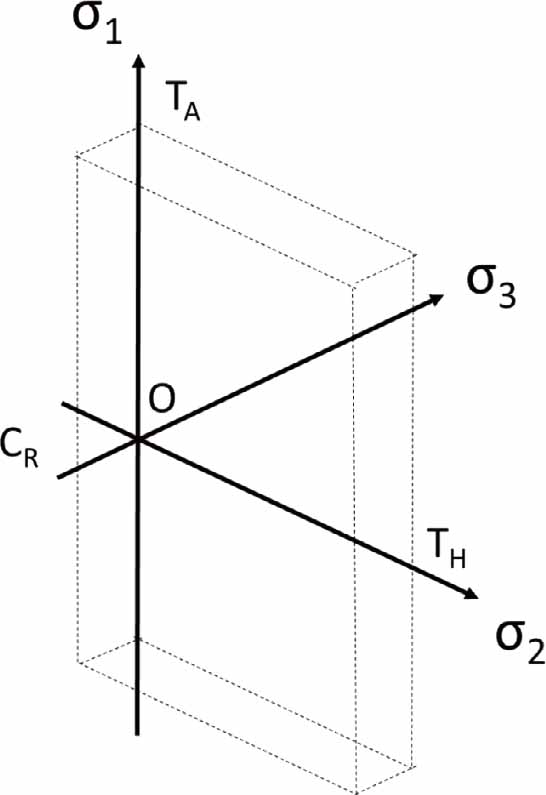
Figure 14.
Failure surface in the principal stress space.