
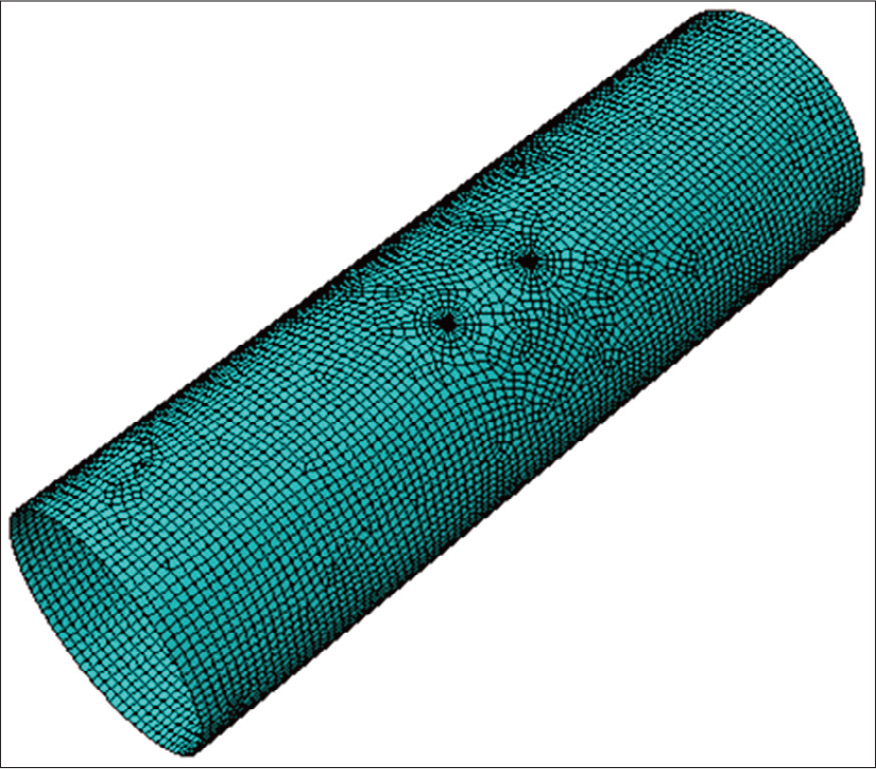
Figure 1.
Mesh of the pipe.
Table 1.
Mechanical properties of X52 steel. (Harter, 2002; NASA, 2001)
| Young’s modulus E (MPa) | 200 |
| Poisson’s ratio υ | 0.30 |
| Yield stress σY (MPa) | 410 |
| Ultimate tensile stress σUTS (MPa) | 498 |
| Elongation εf (%) | 35 |
| Toughness fracture (Mpa.mm1/2) | 95 |
| Threshold (MPa.mm1/2) | 7 |
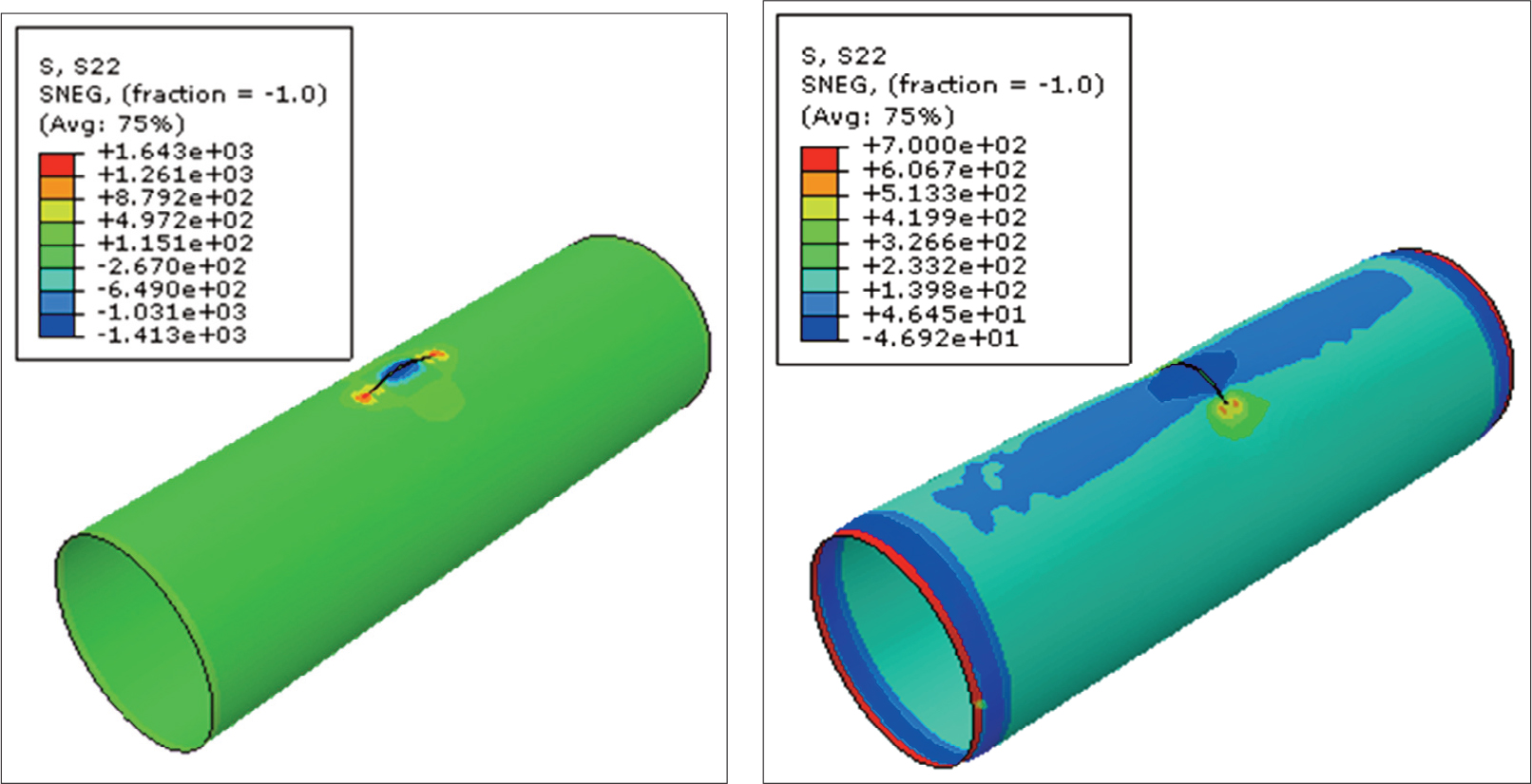
Figure 2.
Stress distribution Syy in the case of a) longitudinal (axial) crack, b) circumferential (transversal) crack.
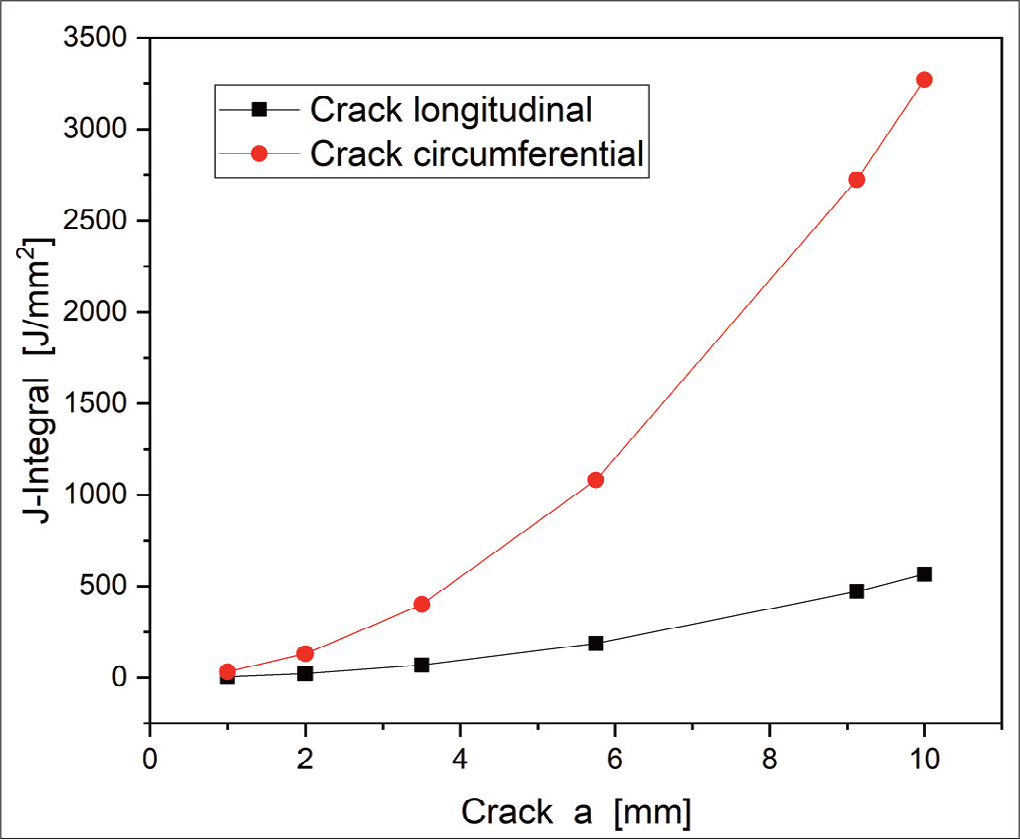
Figure 3.
J-integral versus crack length.
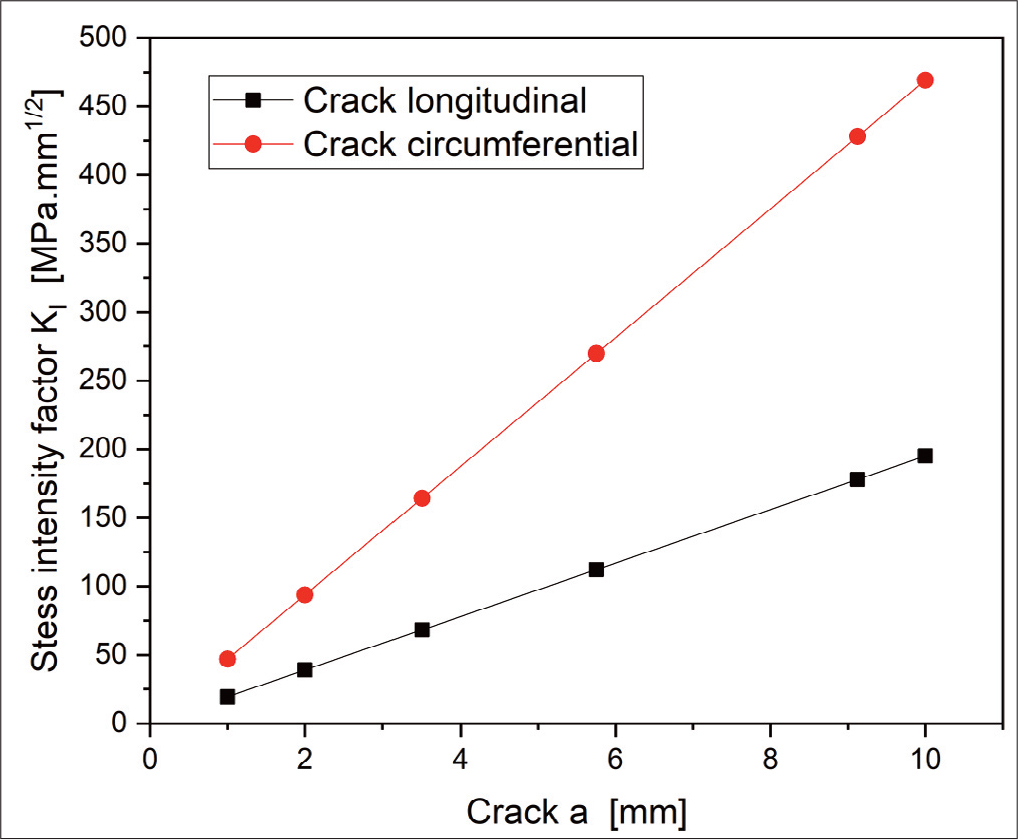
Figure 4.
Stress intensity factor KI versus crack length.
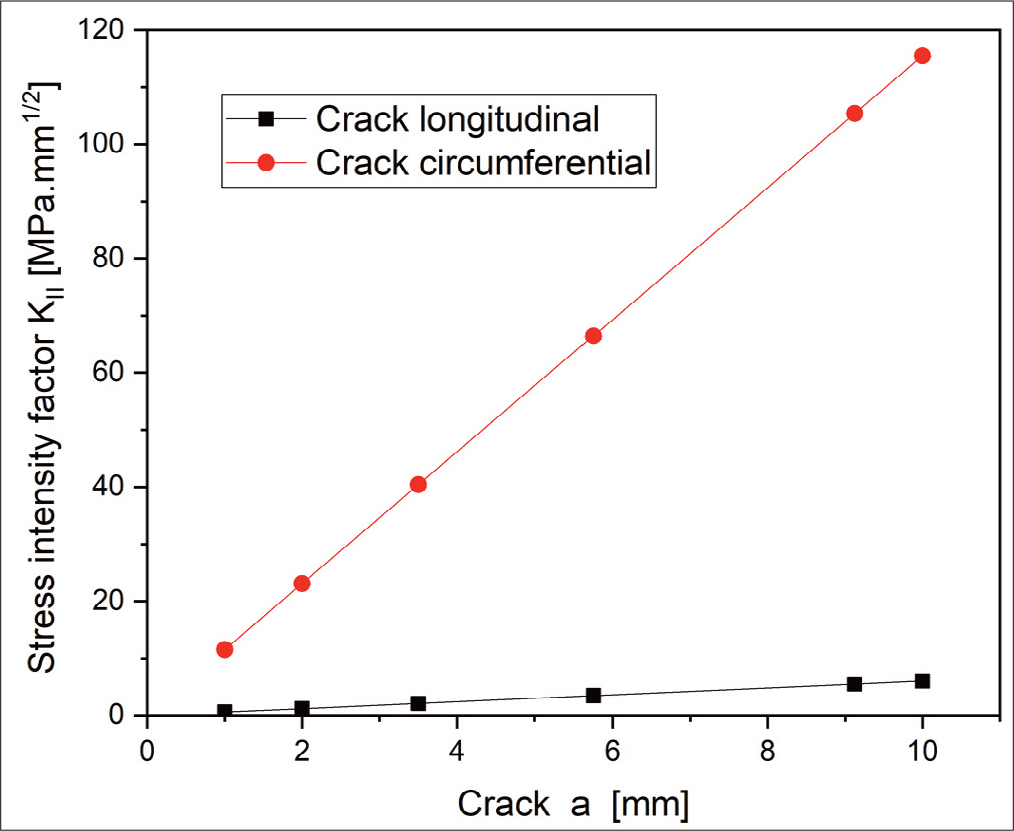
Figure 5.
Stress intensity factor KII versus crack length.
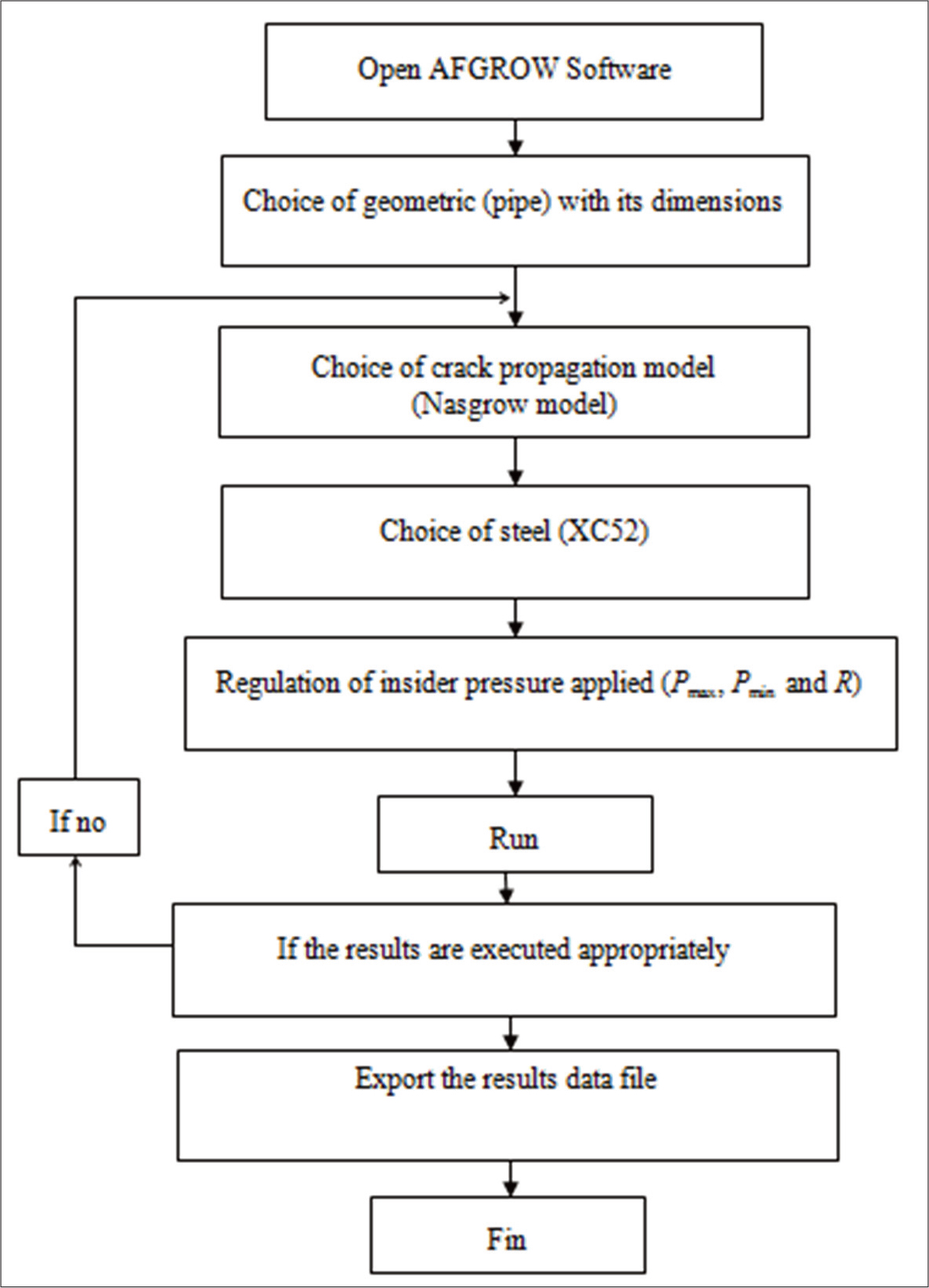
Figure 6.
An organogram of fatigue life prediction in AFGROW.
Table 2.
Mechanical properties of X52 steel for NASGROW model. (Harter, 2002; NASA, 2001)
| Young’s modulus E (MPa) | 200 |
| Poisson’s ratio υ | 0.30 |
| Yield stress σY(MPa) | 410 |
| Ultimate tensile stress σUTS(MPa) | 498 |
| Elongation εf (%) | 35 |
| Toughness fracture Kc (Mpa.mm1/2) | 95 |
| Threshold Kth (Mpa.mm1/2) | 200 |
| p | 0.65 |
| q | 0.001 |
| C | 1.15e-10 |
| n | 2.41 |
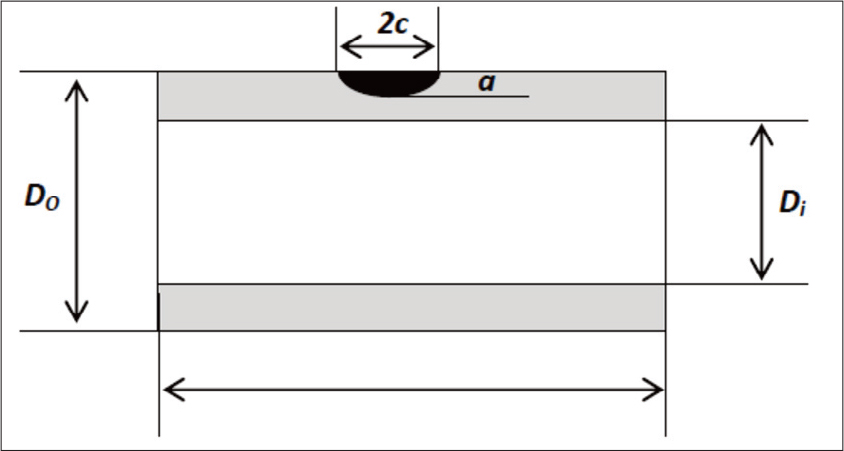
Figure 7.
Geometrical parameters of semi-elliptic crack and pipe.
Table 3.
Test simulation conditions with different values of relative depth a/t.
| Test | Do mm | Di mm | t mm | a/t |
|---|---|---|---|---|
| 1 | 350 | 344 | 3 | 0.30 |
| 2 | 350 | 342 | 4 | 0.25 |
| 3 | 350 | 340 | 5 | 0.20 |
| 4 | 350 | 339 | 6 | 0.16 |
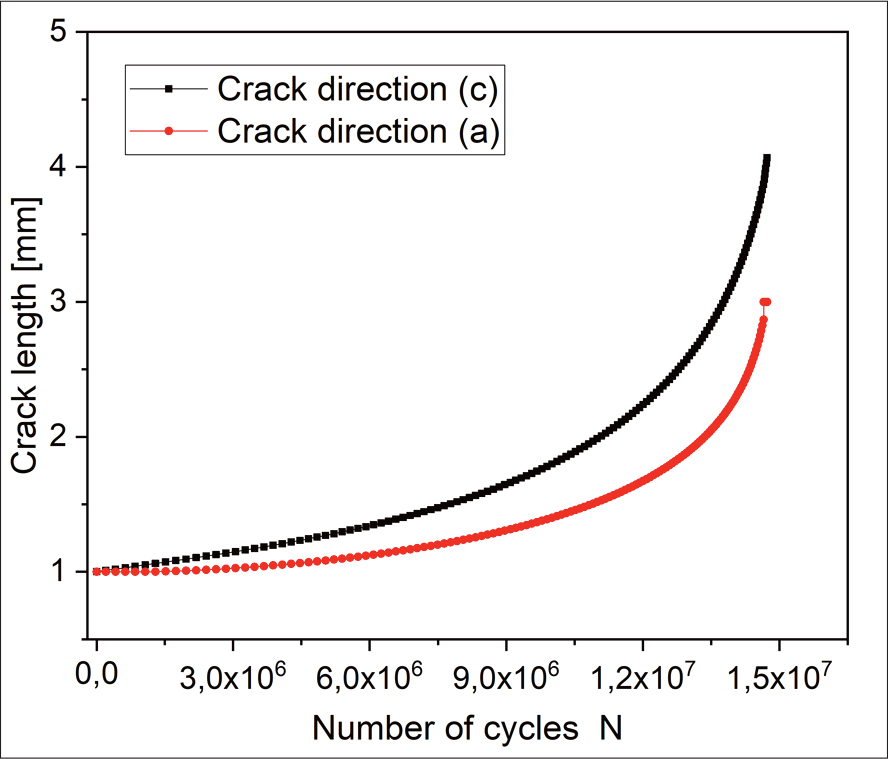
Figure 8.
Evolution of the crack depth a and crack length c according to the number of cycles N (t = 3 mm).
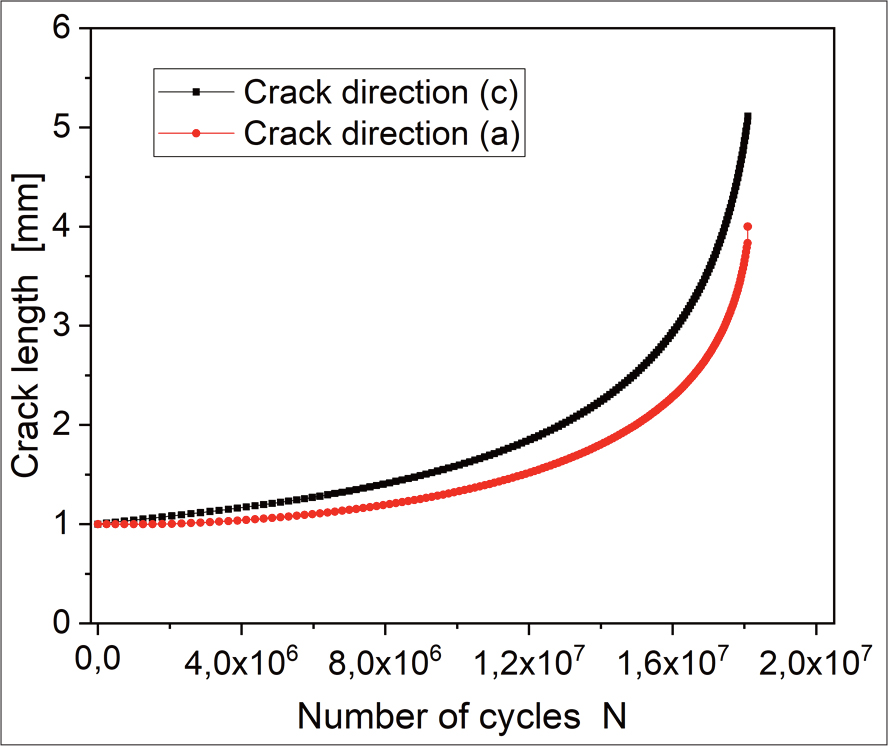
Figure 9.
Evolution of the crack depth a and crack length c according to the number of cycles N (t = 4 mm).
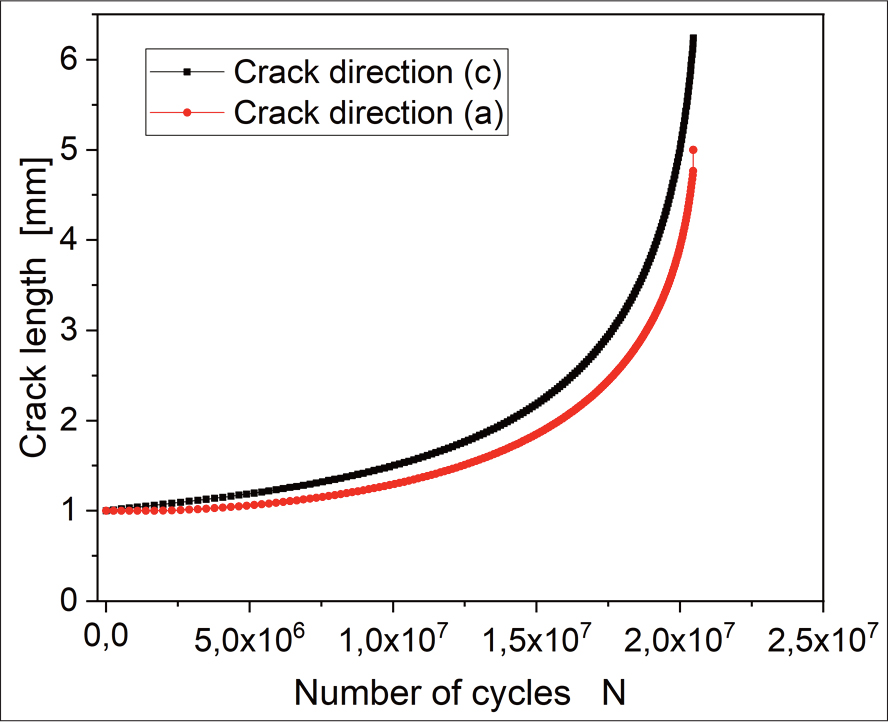
Figure 10.
Evolution of the crack depth a and crack length c according to the number of cycles N (t = 5 mm).
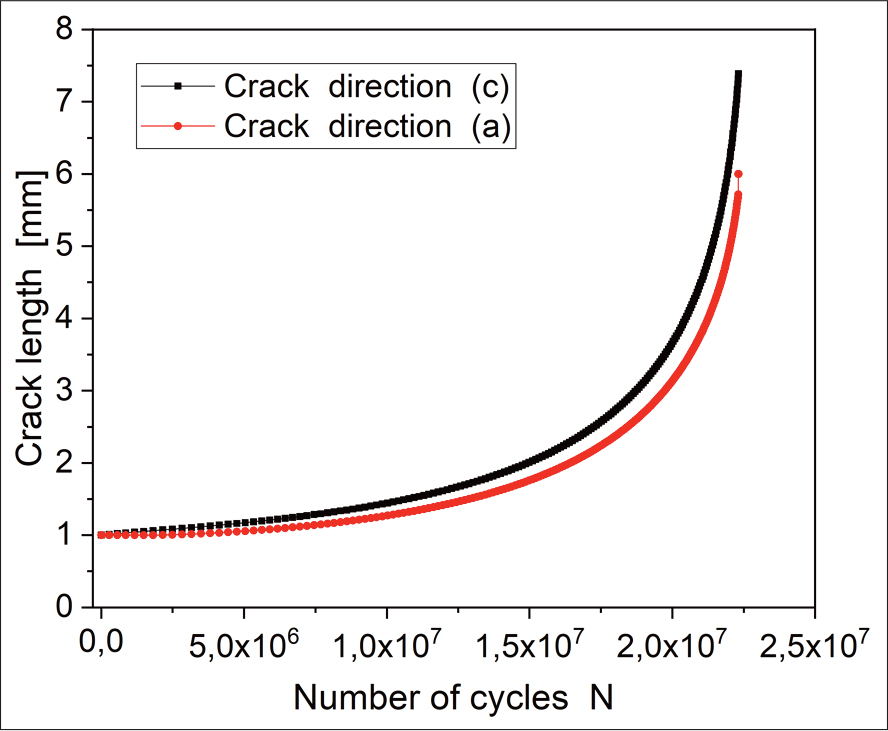
Figure 11.
Evolution of the crack depth a and crack length c according to the number of cycles N (t = 6 mm).
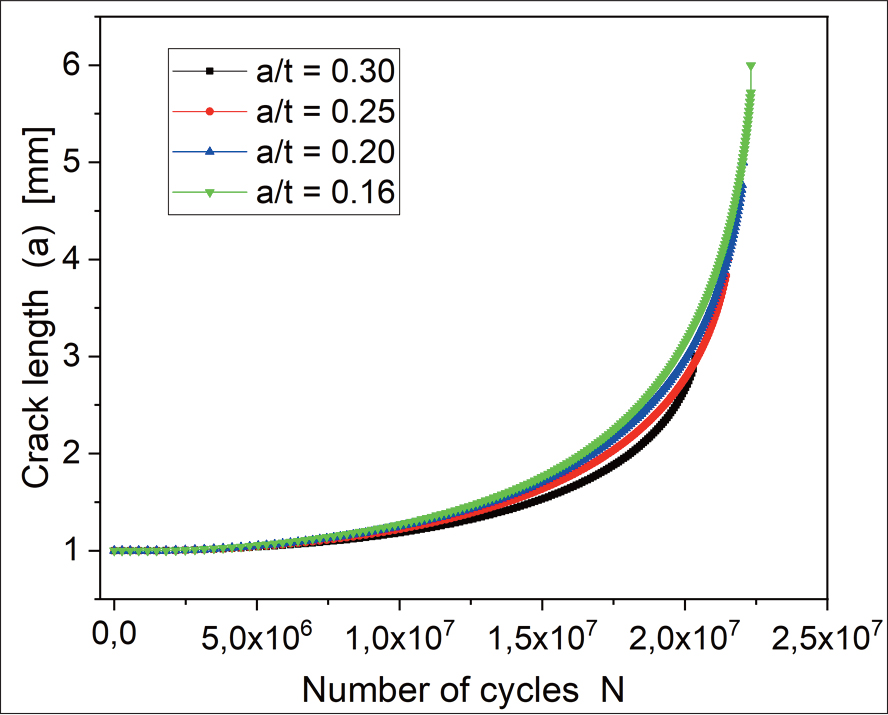
Figure 12.
Evolution of the crack length c according to the number of cycles N for different ratios a/t.
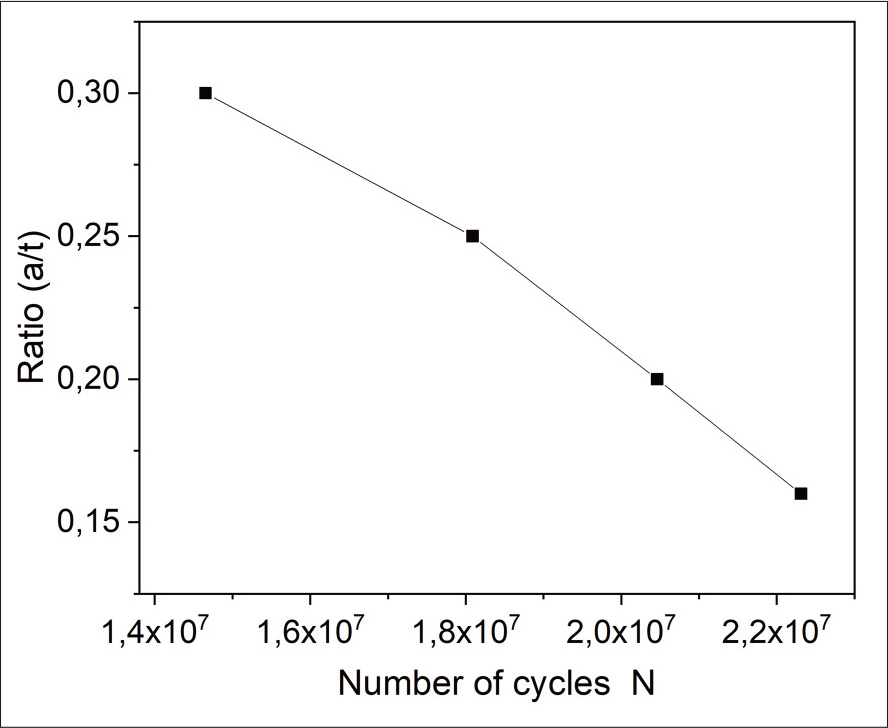
Figure 13.
Evolution of the relative crack depth a/t according to the number of cycles N.
Table 4.
Tests simulation conditions with different values of aspect ratio a/c.
| Test | Depth | Length | Aspect ratio |
|---|---|---|---|
| a mm | c mm | a/c | |
| 1 | 1 | 1 | 1 |
| 2 | 1 | 1.2 | 0.83 |
| 3 | 1 | 1.4 | 0.71 |
| 4 | 1 | 1.6 | 0.62 |
| 5 | 1 | 1.8 | 0.55 |
| 6 | 1 | 2 | 0.50 |
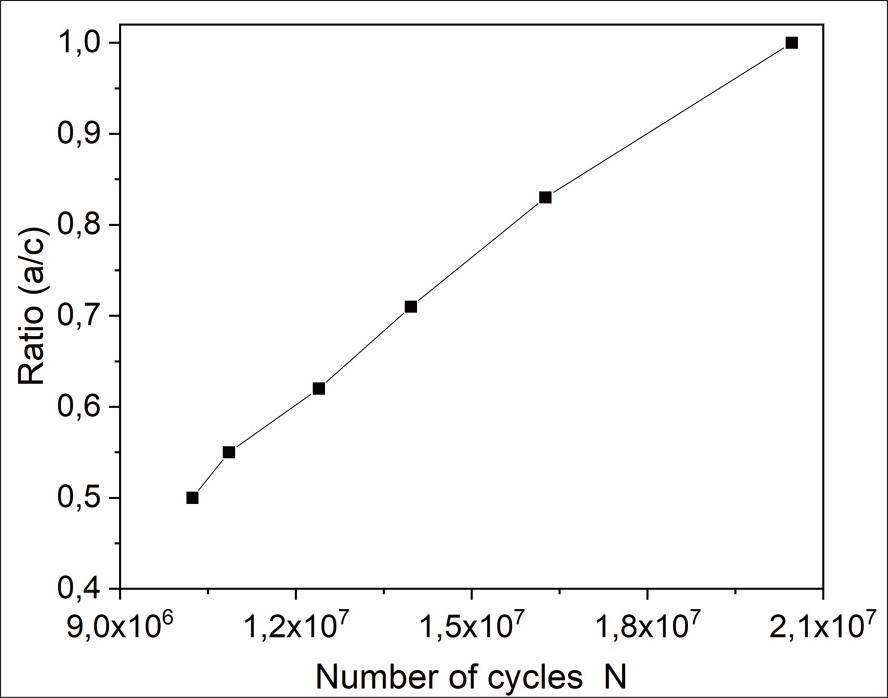
Figure 14.
Evolutionof the aspect ratio a/c according to the number of cycles N.
Table 5.
Tests simulation conditions with different values of outer diameter Do.
| Test | Do mm | Di mm | t mm | a/t |
|---|---|---|---|---|
| 1 | 350 | 340 | 5 | 0.2 |
| 2 | 345 | 335 | 5 | 0.2 |
| 3 | 340 | 330 | 5 | 0.2 |
| 4 | 335 | 325 | 5 | 0.2 |
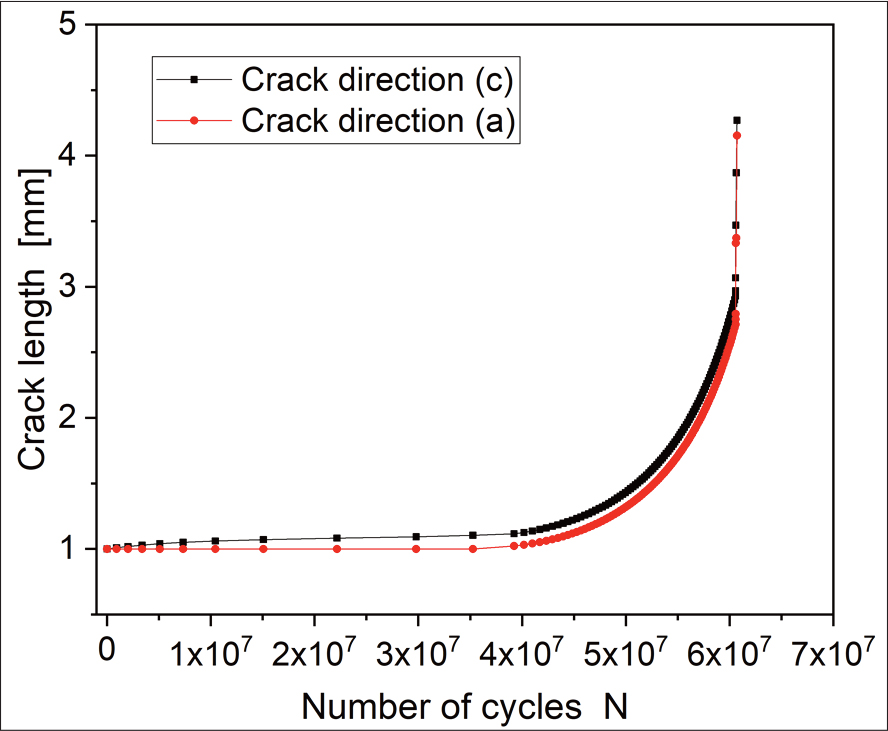
Figure 15.
Evolution of the crack depth and length crack (a and c) according to the number of cycles N(Do = 350 mm)
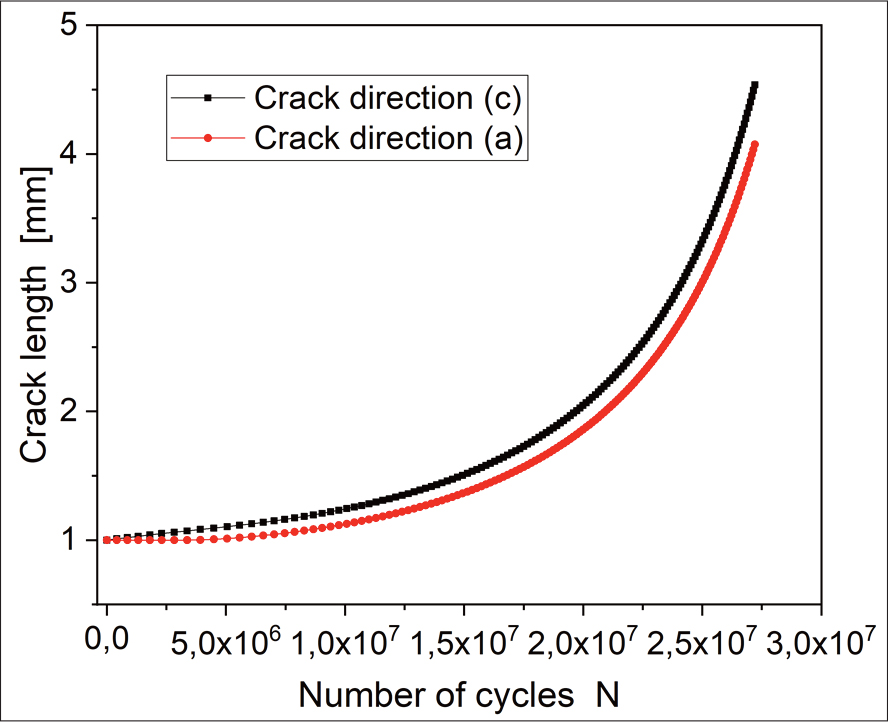
Figure 16.
Evolution of the crack depth and length crack (a and c) according to the number of cycles N (Do = 345 mm)
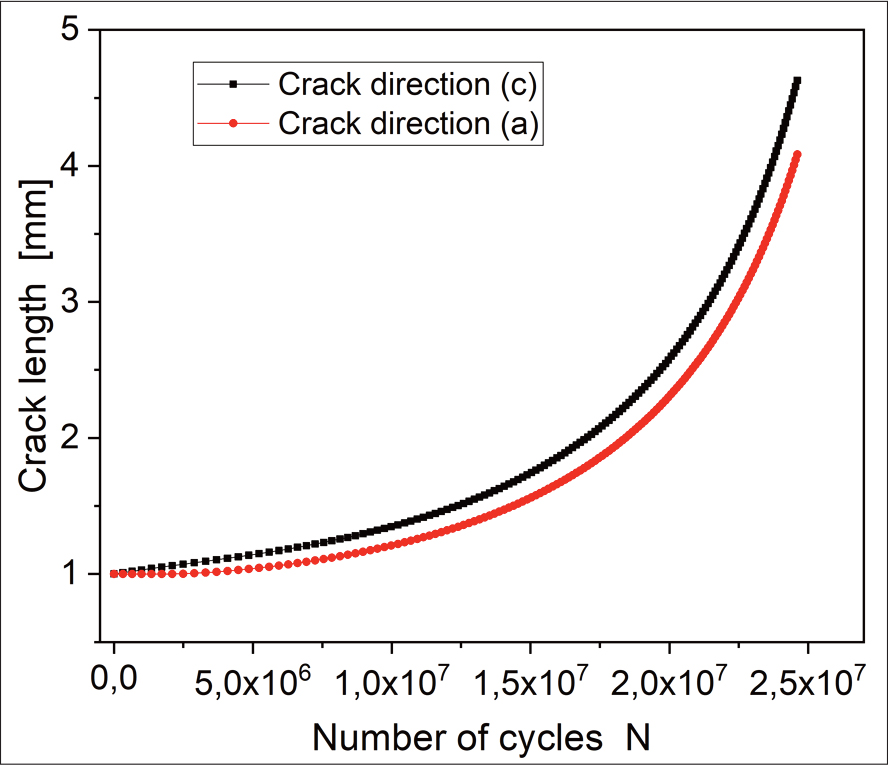
Figure 17.
Evolution of the crack depth and length crack (a and c) according to the number of cycles N (Do = 340 mm)
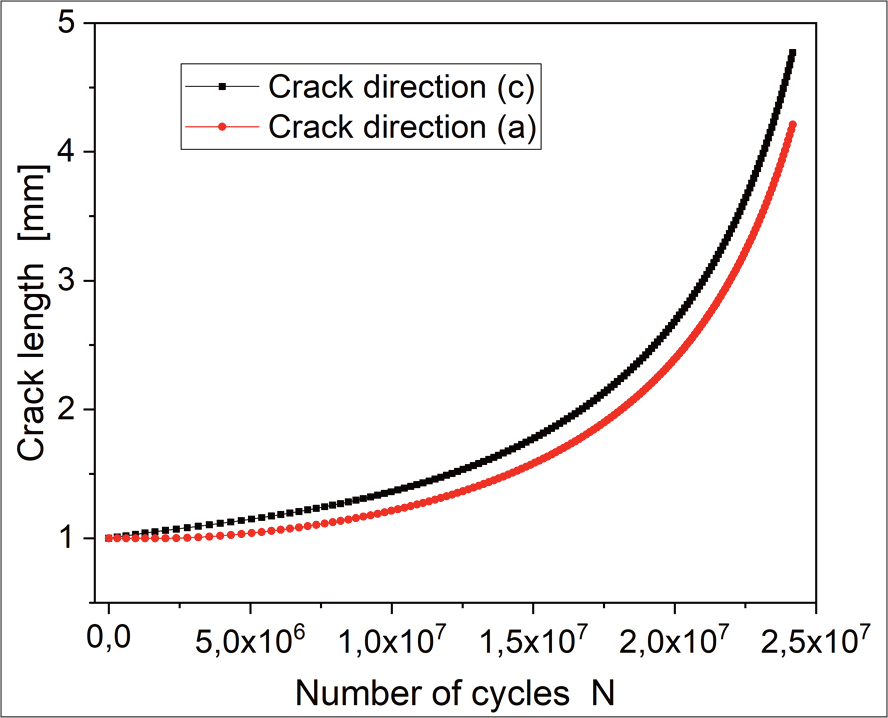
Figure 18.
Evolution of the crack depth and length crack (a and c) according to the number of cycles N (Do = 335 mm)
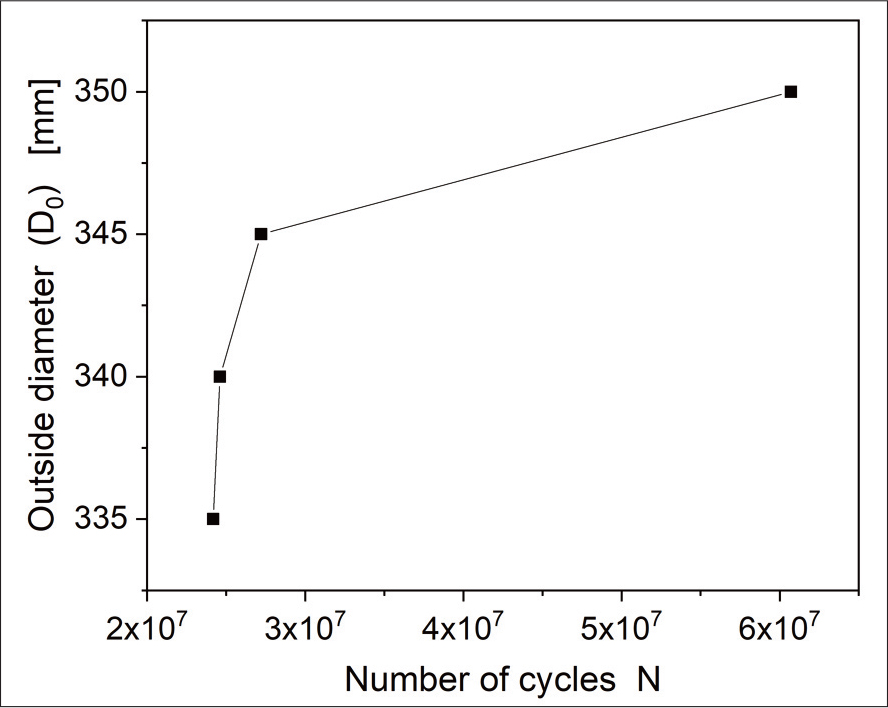
Figure 19.
Evolution of outside diameter of pipe Do as a function of number of cycles N.
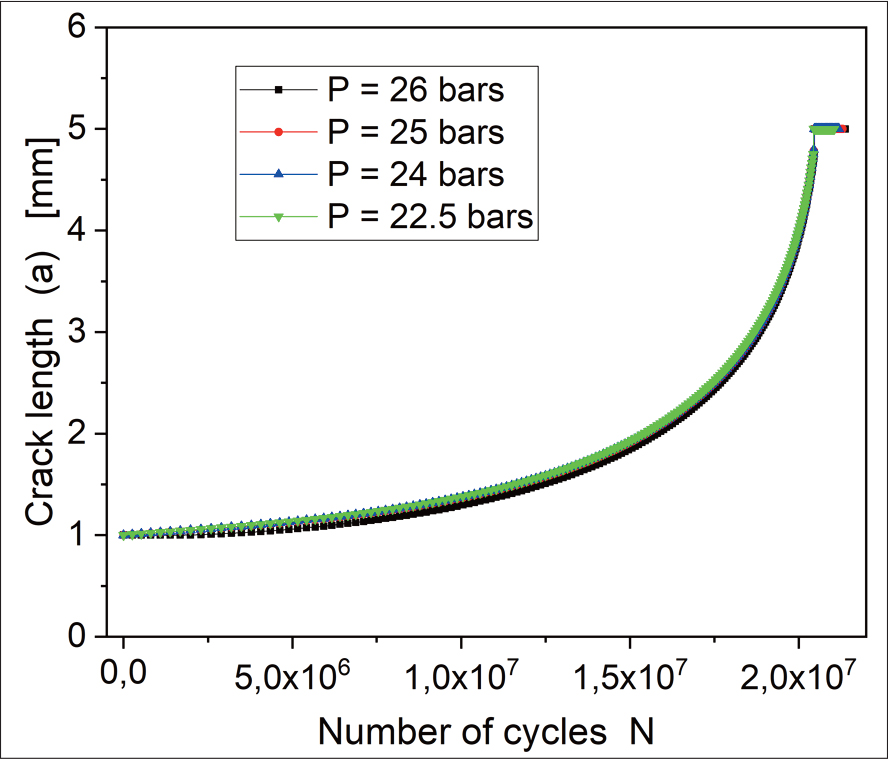
Figure 20.
Evolution of the crack depth and length (a and c) according to the number of cycles N for different values of internal pressure.
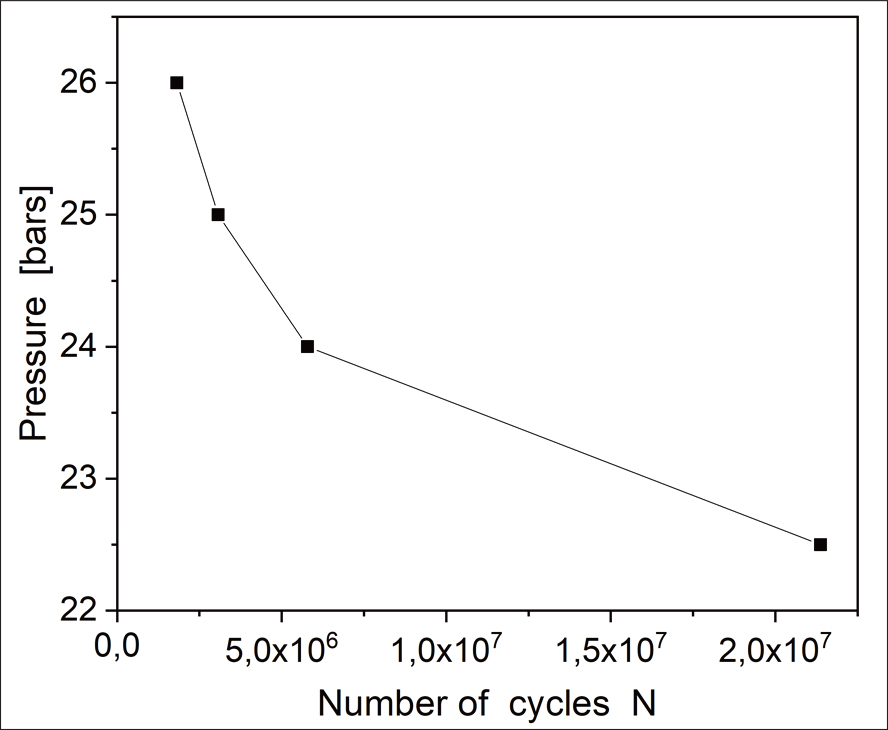
Figure 21.
Internal pressure versus number of cycles N.