
INTRODUCTION
The most important factors in the successful development of the state are the effectiveness of public administration mechanisms, as well as the quality of the civil service system. The modern literature and practices of developed and developing countries suggest that potential of civil service system modernization could be unlock through increasing efficiency and motivation of public sector employees.
There is increasing interest in analyzing job satisfaction through several factors of organization’s current state and activities. It is considered to be essential for job performance, which leads to efficiency of the company, and for public sector – to the quality of public services provided to the citizens and private companies. Managers should play a major role in motivating employees to give their best, using the motivation tools provided by the organization (Armstrong and Taylor, 2014).
The development of Kazakhstan in the medium terms is carried out in the context of global, regional, and intra-country challenges that require restructuring and enhancing the efficiency of the state apparatus. A crucial component of success is building the human resources potential of the civil service. Despite all the initiatives taken by the government, the civil service still has its problem areas. Among the main ones is lack of highly qualified personnel in the civil service, instability of moral values and moral principles, and weak feedback with the population. Thus, the main purpose of this study is to analyze the effectiveness of measures taken by the government through the prism of assessment by civil servants of the current state of public administration in the country.
This study involves a number of research questions:
How do civil servants evaluate the current civil service system?
What are the main reasons to work in civil service, as well as competency level and criteria of satisfaction of civil servants?
What kind of issues of the modern civil service system are the most important based on civil servants’ assessment?
The research contributes to the literature by providing policy suggestions based on in-depth analysis of civil servants’ satisfaction with ongoing reforms in public sector. The special attention is paid to modern theoretical research on factors of job satisfaction. In addition, the institutional context of Kazakhstani public sector reforms is revealed. The determining aspect of the study is defined through civil servants’ survey data analysis by applying regression statistic tool. The obtained theoretical and practical suggestions became a basis for policy recommendations and directions for future research endeavors.
LITERATURE REVIEW
Public sector employee satisfaction
Governance has appeared as a key concept pre-occupying the public policy and administration community. This is a very broad concept operating at various levels including households, municipalities, nations, regions, or the globe (Nzongola-Ntalaja, 2002). Public governance relates to the process by which a society arranges its affairs and operates itself (Manning and Kraan, 2006). On the other hand, governance concerns of the governmental organization’s ability to serve citizens, as well as the way public affairs are implemented, public resources are used, and public regulatory powers are employed (Graham, Amos, and Plumptre, 2003).
In recent years, the public sector in most countries has been transformed by reforms under the new public management that brought some important changes to the civil service system such as the introduction of private sector practices to the public sector and the external organization of public management as quasi-markets (Dunleavy and Hood, 1994; Pollitt and Dan, 2011). The general assumption is that the business-like procedures could improve the effectiveness and efficiency of the civil service system (Alford and Hughes, 2008).
Meanwhile, scholars have emphasized the complex characteristics of governmental organizations and their civil service performance (Park, 1984; Boyne and Chen, 2007; Walker et al., 2011). Andrews, Boyne, and Walker (2011) refer to a set of administrative measures which include efficiency, effectiveness, equity, responsiveness to public needs, citizen satisfaction, quantity and quality of outputs, and the like. To enhance the openness and transparency of the civil service systems, countries across the globe introduce an e-government system as a strategic tool for ensuring accessibility of civil services (Jussupova, Bokayev, and Zhussip, 2019).
The literature also underlines the critical role of management capacity and leadership on organizational performance. According to Andrews and Boyne (2010), management capacity and leadership are strongly correlated with good civil service performance. Regardless of the governmental or stakeholders’ priorities, management has a serious influence on civil service performance indicators (Andrews, Boyne, and Walker, 2011). Moreover, public sector leaders act as role models for civil servants to emulate the behaviors and attitudes they convey and motivate (Wright, Hassan, and Park, 2016).
In addition, the literature highlights the strategic contribution of middle management in governmental organizations’ outcomes (Mintzberg and Waters, 1985; Currie and Procter, 2005; Birken and Currie, 2021). The quality of civil service is greatly affected by the middle-level management rather than the top level (Wooldridge and Floyd, 1990; Nonaka and Takeuchi, 1995). Yet, the strategic role of middle management can be limited by various factors linked to the professional bureaucracy context (Currie and Procter, 2005). Nevertheless, the leadership role and its ambiguity can be negotiated by a socialization and communication process among stakeholders (Van Maanen and Schein, 1979).
In the meantime, the performance appraisal system has an enormous impact on the outcomes of governmental organizations, and the salary is one of the most important factors for the level of civil service quality (Ismajli and Qosja, 2012; Windasari, 2019). Thus, job satisfaction is closely related to the rewards civil servants receive after getting a job done (Inuwa, 2016).
The literature suggests major determinants of public sector employee satisfaction. Parameters include but not limited to Working Conditions (Work Environment), Pay and Promotion, Job Safety and Security, Training and Development, Work Communication, Employee Empowerment, Turnover Intention, Transformational Leadership, and so on (Demircioglu, 2020; Zanardi and Zhau, 2020; Nguyen and Tuan, 2021; Kiyak and Karkin, 2022). In various spheres of the state policy, socio-demographic indicators, such as age, gender, and income level, at any rate affect the assessment of the civil service system by respondents. For example, in Canada “nutrition policies and regulations” are greater supported on the part of older people, which means age might play an important role in perception. In addition, men were less likely to support the current policy than women. This, in turn, means that the respondent’s gender affects the assessment of coloring (Bhawra et al., 2018). Dwivedi and Williams (2008:261) examining the influence of demographic indicators in the United Kingdom found that “the three variables of age, education, and broadband access at home significantly influence citizens’ adoption of the Government Gateway, whilst gender was found to be non-significant.”
Several studies apply Herzberg’s two-factor theory to examine job satisfaction and dissatisfaction of government employees. The theory states that factors that affect job satisfaction are divided into two categories: hygiene factors (supervision, interpersonal relations, physical working conditions, salary, company policy and administration, benefits, and job security) and motivation factors (achievement, recognition, the work itself, responsibility, and advancement) (Herzberg, 1974). Thus, interpersonal relationships, factors in personal life, work itself, and recognition were major determinants of job satisfaction, and working conditions, interpersonal relations, factors in personal life, supervision-technical, and recognition all influenced job dissatisfaction of public employees in Myanmar (Thant and Chang, 2021). Besides this, working conditions, pay and promotion, job safety and security, training and development, and employee empowerment have impact on employee satisfaction in public organizations of Bahawalpur City, Pakistan (Masood et al., 2014). Similarly in Australia, the work environment has a positive and significant effect on job satisfaction of public sector employees (Zanardi and Zhau, 2020).
Boardman and Sundquist (2009:519) argue that “perceived civil service efficacy (PPSE), which quantifies public servants’ perception about the benefit their employing agencies provide the public, is significantly and positively related to organizational commitment and job satisfaction” (Boardman and Sundquist, 2009:530). This might imply that the civil servants’ attitude toward the civil service system, in general, depends on the satisfaction level of the working environment.
As for perceptions of civil servants toward the existing civil service systems, the literature refers to several studies examining this phenomenon (Xie and Yang, 2021; Kim and Han, 2017; Battaglio and Gelgec, 2017). For example, Xie and Yang (2021) have revealed that perceptions of promotion opportunities in the civil service system in China are influenced by rank, supervisor–subordinate relationships, and promotion justice. More specifically, perceptions of promotion opportunities may directly impact both task performance and contextual performance of civil servants. Furthermore, perceptions of promotion opportunities may also affect task and contextual performances by the mediating role of job engagement among Chinese civil servants. Kim and Han (2017) examine the link between civil servants’ perceptions of organizational culture and job attitudes in South Korea. The results of the study demonstrate that perceptions of the competing values in organizational culture types like a clan, market, hierarchy, and adhocracy variously impact the job attitudes of civil servants. This study also highlights the mediating effect of job satisfaction on the perceptions of organizational culture and commitment among civil servants. In turn, Battaglio and Gelgec (2017) investigated the structure and meaning of civil service motivation in the Turkish public sector. The results demonstrate that civil service motivation in most public agencies is influenced by stewardship and the empowerment of managers. The study also found that job-based mediators may not compliment leadership styles and self-generating rewards but rather impact separately in their appeal to job motivation in the civil service system.
Kazakhstani institutional context
The Civil service system of Kazakhstan consists of political and administrative service. As of January 1, 2024, the staff number of civil servants amounted to 90,583 units, and the actual number was 83,009 people. Since 1991, the average age of employees has decreased from 44 to 40 years. Currently, 92% of employees have higher education, while at the central level, it reaches 100%. In general, modern civil service is marked by stability and a low level of turnover. In 2023, the share of net turnover was 4.9% or 4,385 people (Agency for Civil Service Affairs, 2024). Since independence, the country’s civil service has gone through four key stages of development, each of which has its own priorities.
First stage (1992–1997): the strategy of formation and development of Kazakhstan as a sovereign state was adopted. The main direction of the state personnel policy was to improve the status, social image, and qualifications of civil servants. The principles of meritocracy and equal access of citizens to public service are constitutionally ensured.
Second stage (1997–2012): in order to ensure the implementation of a unified policy in the field of public service, the Agency for Civil Service Affairs was established. In 1999, the Law “On Public Service” was adopted. Civil servants are legally divided into political and administrative. In order to professionalize the state apparatus, the Academy of Public Administration under the President was established, systematic measures were taken to minimize the facts of ethics violations, and social guarantees were strengthened.
Third stage (2012–2020): the 100 Concrete Steps Plan and new Law on Public Service were adopted. In order to ensure the principle of meritocracy, positions are filled exclusively on a competitive and transparent basis. Moreover, training standards have been improved, remuneration based on results is provided, and measures have been taken to prevent violations of ethical standards.
Also, work is being actively carried out in other areas of modernization of public administration. Thus, to improve the quality of the civil service system, an annual assessment of the effectiveness of the activities of state bodies, state audits, as well as a career model of civil service has been introduced. Further, the Unified Competency Framework for civil servants was approved.
Fourth stage (2020–nowadays): Kazakhstan is undergoing the most significant changes in the entire history of independence since 1991. Budgetary savings, widespread cuts in the state apparatus, and constant criticism of the work of state bodies from the public create difficulties and, to some extent, uncertainty about the future of civil service. It is worth noting that the 2020 coronavirus pandemic has further exposed all the hidden and obvious gaps.
Notably, very important tasks have been set in Concept of civil service system modernization of Kazakhstan. So, by 2025, inter alia, is planned to move “from the complexity of the performing process of actions to managing results and qualitative changes based on an integrated approach to the effectiveness of public administration and measuring the real needs of society and business; from overstaffing to a compact, efficient, flexible and ‘human-centered’ state apparatus with high manageability and well-structured activities; from operational management and excessive control over the execution of individual orders to project management and concentration on the implementation of strategic documents” (Strategic Development Plan of Kazakhstan up to 2025, 2018).
In addition, this year Kazakhstan approved the state Concept for the development of public administration in the Republic of Kazakhstan until 2030, which “reflects the semantic vector of transformation of the public sector and reflects the basic principles, tasks, and approaches to modernizing public administration” (Concept for the Development of Public Administration in the Republic of Kazakhstan until 2030, 2021). The main tasks of the Concept are “the formation of a client-oriented and open state apparatus; improving approaches to strategic and budget planning, as well as reforms; formation of an optimal and efficient state apparatus; transition to proactive public services based on the needs of citizens; improving the quality of human resources and professionalizing the state apparatus; formation of an efficient, optimal and transparent quasi-public sector; further improvement of local self-government; creating favorable conditions for business development; and transformation of the judicial system and administration, as well as the law enforcement system to build a service model of the state” (Concept for the Development of Public Administration in the Republic of Kazakhstan until 2030, 2021).
This fully correlates and corresponds to the national priorities of the country, among which “the fair and effective state to protect the interests of citizens” and “the new model of public administration” (National priorities of the Republic of Kazakhstan until 2025, 2021). In this context, digitalization is an excellent example. These measures are designed to ensure the transparency of government agency activities in Kazakhstan. Improving the efficiency of document flow and the quality of public services should then have a further effect on reducing the level of corruption (Bokayev et al., 2021).
In other words, all these tasks contribute to fundamental changes in the strategy and planning of state power. Generally, the conceptual transformation of the civil service helps to eradicate the causes that give rise to the main problems, such as low levels of competence, lack of innovation, poor governance, growing cases of conflicts of interest, and corruption. One of the most significant challenges on the way to transforming the civil service today is the issue of optimizing the state apparatus. According to Kazakhstani experts, overstaffing does not bring the expected positive results, and huge budget money is spent on such staff maintenance. In this regard, the Head of State instructed to reduce the state apparatus by 10% in 2020 and by 15% in 2021 (Markova, 2020).
In general, attempts to optimize, that is, to reduce the number of civil servants, were made over a long period, to be precise from 2006. The most effective case is the 2010 attempt. At that time, a presidential decree “About measures to optimize the staffing of bodies supported by the state budget” was adopted based on which 15% of the number of all civil servants of all levels was cut at one time. As a result of optimization of the staffing of state bodies, the number of civil servants has indeed decreased to 90,000 people. Meanwhile, in the following years, the number of civil servants increased again (Kosenko, 2021).
Western countries are also facing similar challenges. So, for example, the Australian civil service lost thousands of employees even before the coronavirus pandemic. Overall, Australia has laid off 21,400 employees since the 2013 elections and now employs just 144,700 people (Manheim, 2020).
In addition, this step solves another problematic issue of low wages. By reducing the number of civil servants, it is planned to attract the most highly qualified personnel and increase the level of wages. Five-year strategic plans of government agencies have also been introduced, the number of state programs has been reduced, and the implementation of Open Government mechanisms has begun. Besides, the work on the decentralization of public administration by transferring a certain part of public functions to lower levels of government, as well as to a competitive environment, is being continued.
METHODS
To understand the attitude of civil servants toward the current situation in the public sector, we conducted a survey during September–October 2020 among Kazakhstani civil servants from both local and central levels. Participants were recruited using convenience sampling techniques. The survey included 14,250 civil servants from all regions of Kazakhstan, with 8,522 women (59.8%) and 5,728 men (40.2%). Given that there are approximately 99,000 civil servants in Kazakhstan, this sample is quite representative, covering nearly 15% of the public sector workforce (Agency of the Republic of Kazakhstan for Civil Service Affairs, 2021). The respondents’ ages ranged from 20 to over 60 years, with 23.9% aged 20–29, 34.5% aged 30–39, and 23.2% aged 40–49. The smallest age group was those over 60 years old, comprising 1.3% of respondents. Regarding education, 84.4% held a bachelor’s degree, 8.25% had a master’s degree, and the remaining participants had secondary, specialized, or advanced degrees. Income levels varied, with 35.1% earning below 100,000 tenges per month, 51.9% earning up to 200,000 tenges, and 8.7% earning below 300,000 tenges. The rest earned between 300,000 and over 1 million tenges monthly.
The primary aim of the survey was to analyze the overall satisfaction of civil servants with the current state of the public sector and identify key issues for civil service reform in Kazakhstan. To analyze the factors influencing civil servants’ assessments of the civil service, we employed multiple linear regression models. The Stepwise methodology was used for variable selection in each model, allowing us to identify the most significant predictors of civil servants’ evaluations. The output for each model included residual distributions, model coefficients, and validity measurements such as the F-test, degrees of freedom, and R-squared values.
The regression models utilized the question “How do you assess the current state of the civil service in Kazakhstan?” as the predictor variable, with explanatory variables including socio-demographic characteristics, professional competencies, and other relevant factors. The first model focused on socio-demographic variables such as age, marital status, number of children, income, region, education level, housing, and job position. The second model incorporated both socio-demographic variables and additional factors like reasons for working in the public sector, professional competency assessments, and satisfaction with various aspects of the job.
In the regression analysis, the Stepwise methodology was employed to select variables that had the most significant impact on the outcome. While this method helps in identifying relevant predictors, it has some limitations. The Stepwise approach can sometimes lead to overfitting, where the model becomes too complex and fits the noise in the sample rather than capturing the underlying relationships. Additionally, Stepwise selection may inadvertently exclude important variables that are correlated with the included variables, potentially leading to omitted variable bias.
Moreover, the R-squared values for the models indicate that while the second model explains a more substantial proportion of the variance in civil servants’ assessments (R-squared = 0.355), the first model explains only a small fraction (R-squared = 0.029). This suggests that many factors influencing civil servants’ perceptions are not captured by the variables included in the models. The limitations of the chosen methods highlight the importance of careful interpretation and consideration of additional variables and potential biases in future analyses.
The detailed regression results are summarized in Table 1, where significant predictors and their coefficients are presented for assessing the current state of the civil service in Kazakhstan.
Tab. 1:
Regression models for assessment of the current state of the civil service in Kazakhstan.
| VARIABLES | (1) Assessment of the civil service | (2) Assessment of the civil service |
|---|---|---|
| Reason for working in the public sector: financial stability | 0.235*** (0.0683) | |
| Reason for working in the public sector: obtain professional experience | 0.380*** (0.0684) | |
| Reason for working in the public sector: career development | 0.466*** (0.0733) | |
| Reason for working in the public sector: develop professional networks | 0.619*** (0.111) | |
| The problem is in a government body: high degree of corruption | −0.136** (0.0564) | |
| The problem is in a government body: lack of competent staff | 0.0784** (0.0393) | |
| The problem is in a government body: low competence of the leadership of the state body (system management, change management, strategic thinking, and stress resistance) | −0.194*** (0.0494) | |
| The problem is in a government body: uncertainty associated with the lack of a clear state policy development strategy specific vision | −0.235*** (0.0391) | |
| The problem is in a government body: low salary | −0.313*** (0.0766) | |
| Salary satisfaction | 0.659*** (0.0178) | |
| Self-assessment of the general level of professional competencies | 0.355*** (0.00842) | |
| Trust to line manager | 0.104*** (0.0239) | |
| Satisfaction with the working conditions in a government agency (availability of a workplace, computer, Internet, paper, necessary office supplies, telephone communication, and other technologies) | 0.158*** (0.0195) | |
| Satisfaction with the working atmosphere in the team in terms of interaction with colleagues, relations with management, etc. | 0.106*** (0.0260) | |
| Satisfaction with the work schedule | 0.0649*** (0.0208) | |
| Assessing the conditions for career growth | 0.283*** (0.0141) | |
| Gender | 0.0955** (0.0375) | 0.0857*** (0.0314) |
| Age | −0.0126*** (0.00192) | −0.0115*** (0.00162) |
| Education | −0.338*** (0.0440) | −0.221*** (0.0361) |
| Monthly_Inc | 0.112*** (0.0288) | −0.0483** (0.0237) |
| Reg_Aktobe | 0.292* (0.174) | −0.140 (0.143) |
| Reg_Atyrau | 0.584*** (0.156) | −0.267** (0.128) |
| Reg_Akmola | 0.296* (0.172) | 0.116 (0.141) |
| Reg_Karaganda | 0.396** (0.158) | −0.239* (0.130) |
| Reg_Kostanay | 0.415*** (0.153) | 0.0397 (0.125) |
| Reg_Pavlodar | 0.517*** (0.149) | 0.0216 (0.122) |
| Reg_Mangystau | 0.967*** (0.192) | 0.239 (0.158) |
| Reg_Kyzylorda | 0.598*** (0.152) | 0.0597 (0.125) |
| Reg_Zhambyl | 0.452** (0.187) | 0.152 (0.153) |
| Position_Type | 0.633*** (0.124) | 0.333*** (0.101) |
| Constant | 6.800*** (0.257) | 0.0160 (0.253) |
| Observations | 14,250 | 14,250 |
| R-squared | 0.029 | 0.355 |
| Standard errors in parentheses | ||
RESEARCH RESULTS
Evaluation of civil service reform
This study focused on the general evaluation of Kazakhstani civil servants of the civil service system in the country. As the data show, most of the respondents gave a rather weak assessment of the current state of the civil service of the country (47.6%), and only 10.5% of the respondents gave a high appreciation (Fig. 1).
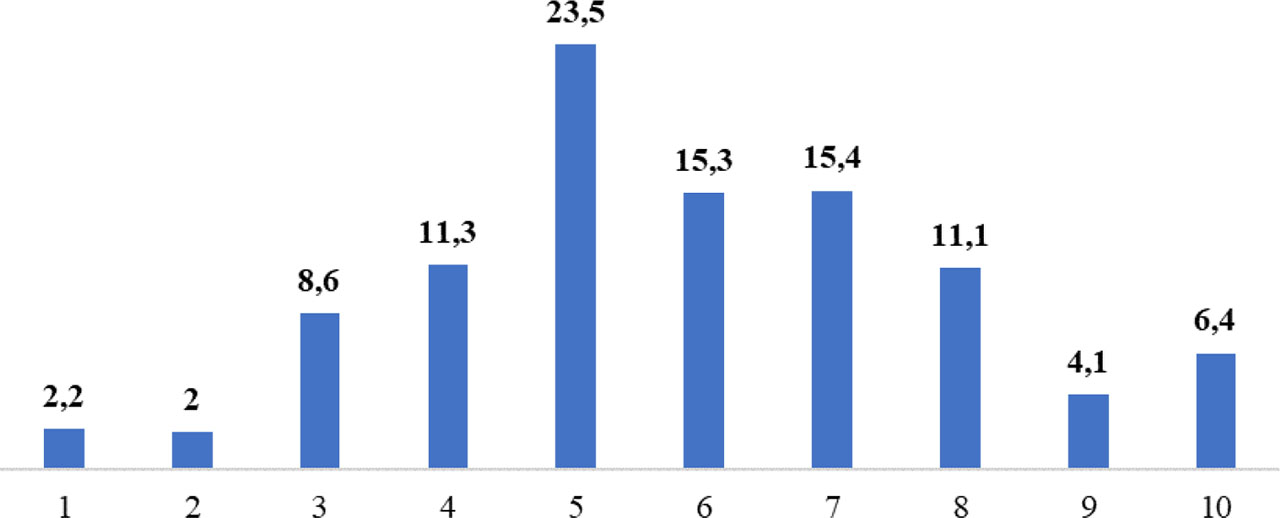
Fig. 1:
Assessment of the current state of the civil service in Kazakhstan (%).
The socio-demographic characteristics of the respondents influence their attitude toward the evaluation of the civil service system. For a more detailed study of the criteria influencing the respondents’ assessment of the current state of the civil service in Kazakhstan, the research group used regression and correlation analysis. According to the data, the national average of the assessment of the current state of the civil service in Kazakhstan is 6.8 out of 10.
The first regression model shows the main socio-demographic factors that are associated with the assessment of the current state of the civil service in Kazakhstan. According to the Table 1, civil servants who have higher education on average more negatively assess the level of the current situation in the public sector of Kazakhstan. So, keeping all the predicting values constant, each increase of one level of a respondent’s education is predicted to decrease the assessment by 0.34 points. Meanwhile, keeping all the predicting values constant, each increase of one unit of a respondent’s age is predicted to decrease the assessment by 0.01 points (Table 1). At the same time, according to the results of the analysis, with an increase in wages (or family income), civil servants assess the current state of the civil service in the country more positively.
Also, the assessment of the civil service depends on the region. Thus, civil servants of Aktobe, Atyrau, Karaganda, Kostanay, Pavlodar Mangystau, and Kyzylorda rate the state service higher than the national average. The results demonstrate a higher assessment of the civil service system in the Mangistau region, which is 0.99 points higher than the national average.
Along with this, the management staff of civil servants rates the civil service much higher than ordinary employees. Thus, the position of a civil servant influences his assessment of the civil service system. According to the result, keeping all the predicting values constant, each increase of one unit of a respondent’s position is predicted to increase the assessment by 0.63 points.
Assessment of reasons, competencies, and satisfaction of civil servants
According to the survey results, most Kazakhstani civil servants chose to work for the public sector due to its financial stability (37%), possibility of obtaining good professional experience (35%), as well as career growth (17.1%) (Fig. 2).
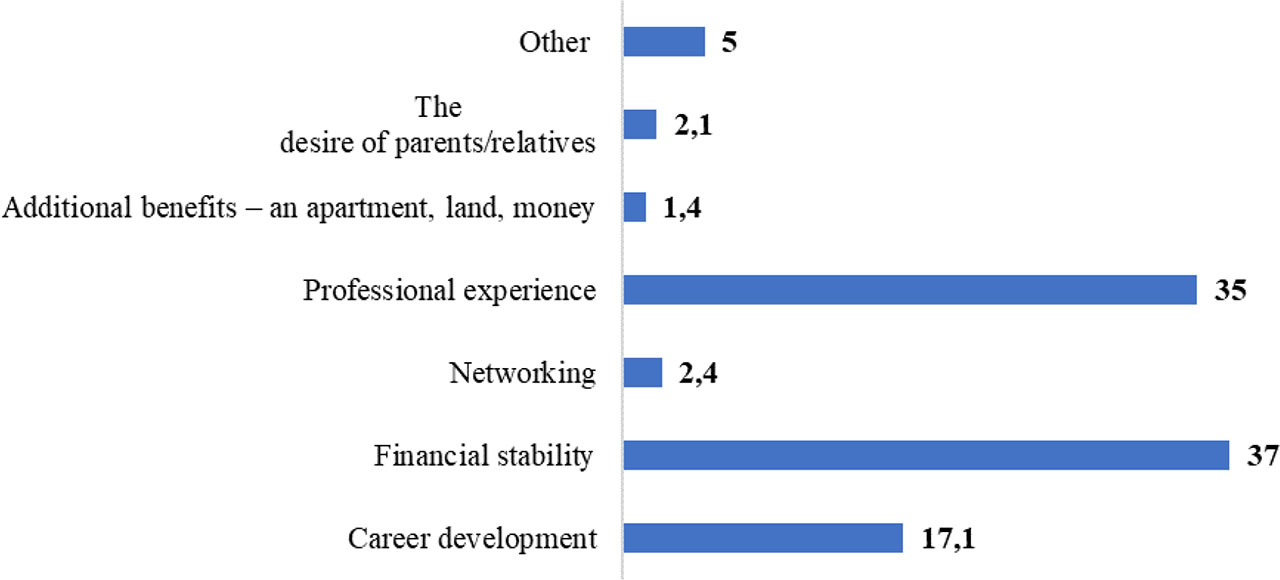
Fig. 2:
The main reasons for working at civil service (%).
In addition, the assessment of the civil service in Kazakhstan inevitably affects the problem of human potential in the public sector. Thus, according to 45.9% of respondents, the civil service of Kazakhstan is characterized by a shortage of highly qualified personnel, as well as a weak professional competence of employees (24.3%). Despite this, when evaluating their professional competencies, about 70% of respondents give a high assessment of their professional skills, and only 10% of respondents estimate their professional capabilities relatively low (Fig. 3).
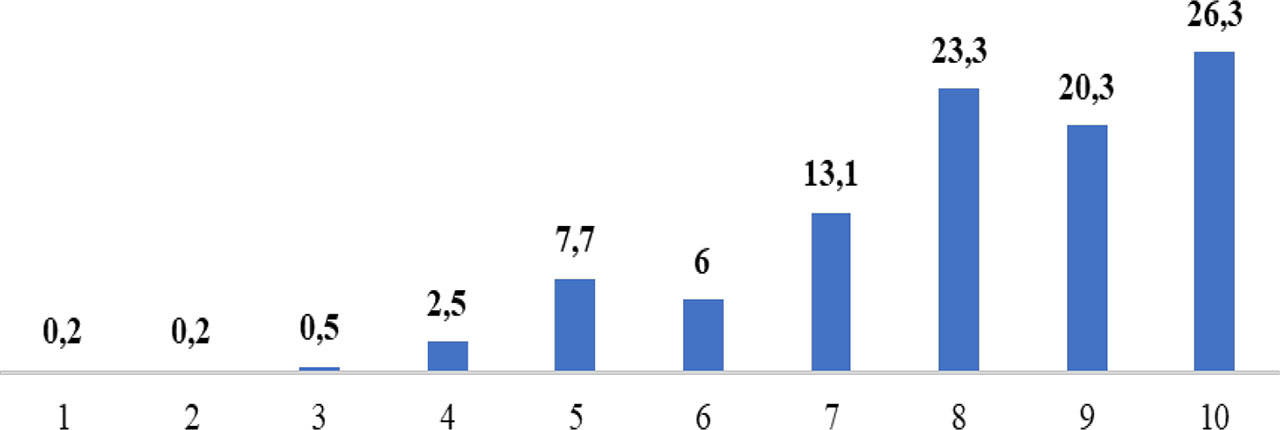
Fig. 3:
Self-assessment of the professional competency level by civil servants (%).
Regression model 2 shows how other factors impact civil servants’ assessment of the current state of the public sector. So, the reason for working in the public sector has a high association of their assessment. Keeping all the predicting values constant, those who stated the gaining of developing professional networks as their main reason for working in civil service are predicted to rate more positively than those who stated that the reason is the desire of their parents by 0.6 points.
The survey participants believe that a high degree of corruption, uncertainty and low competence of the leadership of their state body associated with the lack of a clear strategic vision of state policy development. Besides this, the respondents assume that low salary more negatively rate the level of the civil service system in Kazakhstan. For example, respondents assume that low salary is one of the main problems in their government body predicted to negatively assess the level of civil service system by 0.3 points. Result also shows that keeping all the predicting values constant, each increase of one level of satisfaction from the salary is predicted to increase the rating by 0.65 points.
Keeping all the predicting values constant, each increase of one unit of assessing the competencies for performing functional duties is predicted to increase the assessment of the current state of the civil service in Kazakhstan by 0.35 points.
Despite the satisfaction with the salary, the interaction with colleagues, working atmosphere, and job conditions play an essential role in the well-being of the civil servants.
According to the result of the survey, 86.7% of respondents are satisfied with the work schedule in the public sector of Kazakhstan, and only 3.3% of the respondents are completely dissatisfied (Fig. 4).
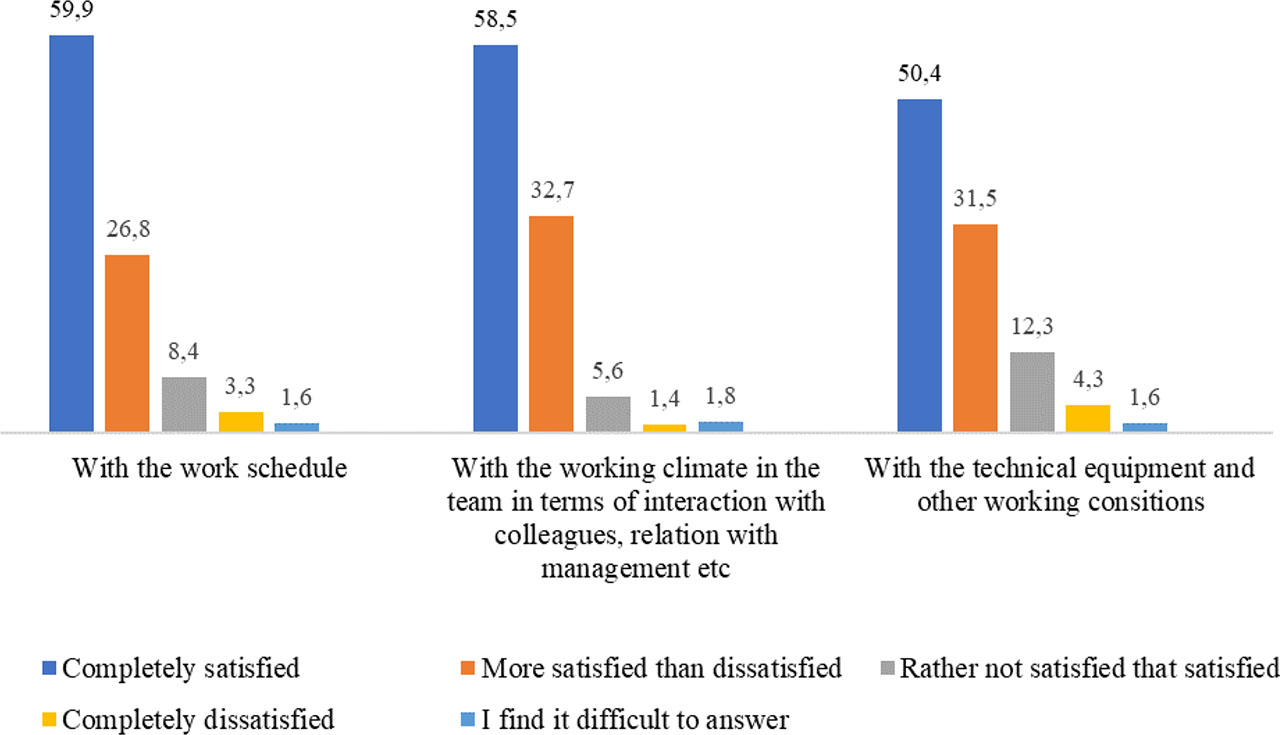
Fig. 4:
The level of satisfaction among the civil servants (%).
During the survey, 91.2% of respondents also expressed their satisfaction with the working climate in a government agency, which demonstrates a quite high satisfaction level, while 1.4% of the civil servants expressed their complete dissatisfaction with the current situation regarding the working climate in the state body. Similarly, 81.9% of the respondents highly appreciated the current state of the working conditions in general and the technical equipment. At the same time, 4.3% of the civil servants are fully dissatisfied with the mentioned aspects.
A more detailed review shows that participants who are more satisfied with the working conditions in a government agency (availability of a workplace, computer, Internet, paper, necessary office supplies, telephone communication, and other technologies) estimate the current state of the civil service by 0.15 points higher.
At the same time, keeping all the predicting values constant, each increase of one level of satisfaction with the working climate in the team in terms of interaction with colleagues, relations with management, etc. is predicted to increase the rating by 0.1 points. Participants who have higher satisfaction with the work schedule also predict the level of civil service more positively by 0.06 points.
Assessment of the conditions for career growth and the trust of the line manager are also associated with participants’ assessment of the current situation in the public sector. So, those who trust their line manager more positively rate the level by 0.1 points.
Main issues of civil service system
According to the results of a sociological survey, the level of assessment of the civil service system in Kazakhstan among respondents is primarily associated with the socio-economic well-being of civil servants. Thus, 83.2% of respondents, when assessing the civil service system, point to a low level of wages in the country’s civil service (Fig. 5).
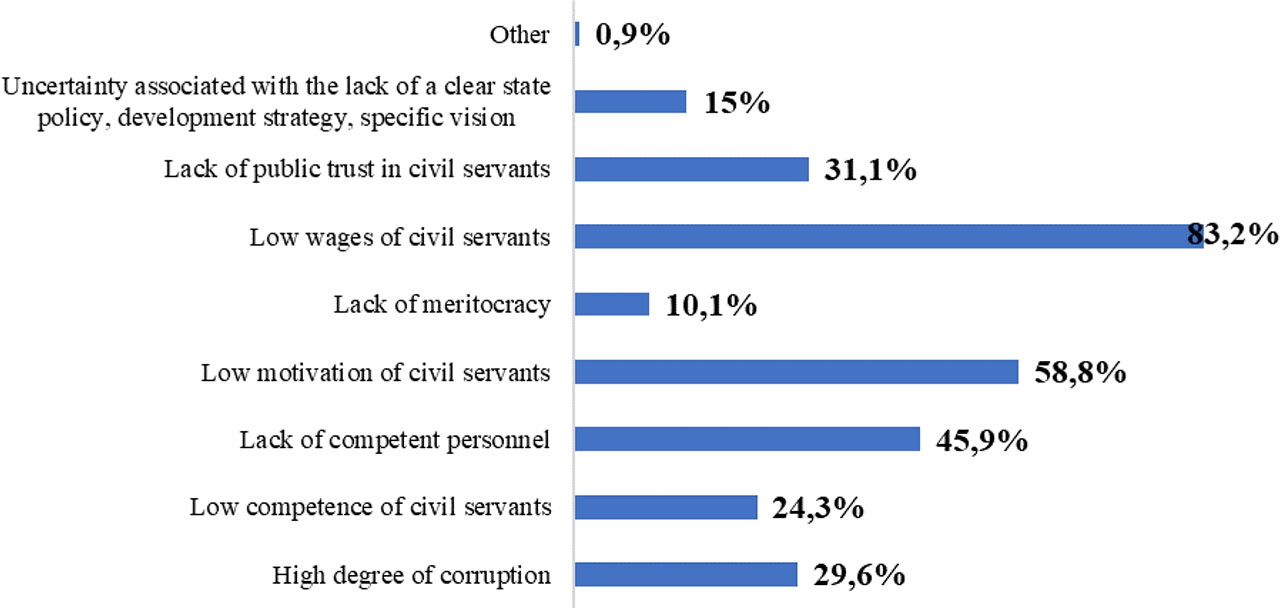
Fig. 5:
Key issues of the modern system of civil service in Kazakhstan.
Besides this, 58.8% of respondents, among the main problems in this area, also note the low level of motivation of civil servants. The presence of a high level of corruption among public sector employees is another important aspect associated with the socio-economic well-being of civil servants. This fact is confirmed by 29.6% of the respondents. In this regard, 31.1% of respondents focus their attention on the lack of public trust in civil servants.
DISCUSSION AND CONCLUSION
Summary of findings
Within the framework of the study, answers to all research questions were obtained. First, the results showed that, in general, civil servants in Kazakhstan are satisfied with the current state of the country’s civil service system. The public sector of Kazakhstan is characterized by financial stability (according to 37% of respondents), opportunities for gaining professional experience (according to 35% of respondents), and career development (according to 17.1% of respondents). This study demonstrates that the system of encouraging professional achievements has a significant role in improving the efficiency of state bodies. This approach can not only increase the level of trust on the part of both the population and civil servants but also influence the perception of the current changes in the public sector.
Second, a list of criteria for evaluation of civil servants’ satisfaction with civil service system was identified and assessed. Thus, the system of civil service in Kazakhstan, according to the respondents, has good material and technical base (81.9% of respondents), correct labor organization mechanisms (86.7% of respondents), a favorable working climate (91.2% of respondents), as well as a fair distribution of job duties and functions (62% of respondents).
Nevertheless, 45.9% of respondents believe that the civil service of Kazakhstan suffers from a shortage of highly qualified personnel. The assessment of professional competencies of both ordinary civil servants and middle-level and senior-level managers indicates the prevalence of basic competencies among all groups of civil servants, such as integrity, responsibility, initiative, efficiency, and focus to service recipients (Nonaka and Takeuchi, 1995; Birken and Currie, 2021).
Meanwhile, according to the respondents, not all middle-level and senior-level managers of state bodies have important, at the same time, mandatory competencies for them, such as system management (52.9% of respondents), change management (52.7% of respondents), strategic thinking (53.9% of respondents), and stress resistance (53.7% of respondents). In the meantime, the degree of assessment of certain conditions in a state body most often depends on the level of education of the respondents and their age characteristics. In particular, the higher the level of education and age of the respondents, the lower the assessment of a certain indicator.
Moreover, the level of assessment is also influenced by the respondents’ wage levels. So, the higher the salary, the higher the assessment of the current state of the civil service in the country. This phenomenon can be associated with the presence of a certain loyalty among some groups of respondents to the management of the state body due to their good financial situation. According to the conducted regression analysis, the career development of civil servants to one degree or another depends on the level of trust between the employee and the line manager (R-0.1109). In other words, the higher the level of trust in the manager, the higher the assessment of the career opportunities in a state body.
In this context, 48.1% of the respondents of the sociological survey agree that widespread implementation of project management in civil service will increase the efficiency of state apparatus. So, the transition to project thinking, which provides for the proactive participation of business and civic society in the implementation of state programs and projects (from “vertical” to “flat” organizational structures), can bring the quality of such programs and projects to a higher level.
And, finally, in order to provide directions for further research, the key issues in civil service of Kazakhstan were identified. According to civil servants’ responses, the Top-3 problems are low wages (83.2%), low motivation (58.8%), and lack of competent personnel (45.9%). The presence of a significant level of corruption is also associated with the low wages in the civil service.
Comparison of job satisfaction policies across countries
The results of the study reflect the global trends and researches in the field of public policy. Thus, according to OECD (2023), the human capital is a key asset for organizational modernization. Therefore, the competencies, satisfaction, and employee “comfort” became a new challenge despite the age, cultural, or national boundary.
For example, in Korea, during the survey of 596 local government employees, it was found that “individual-level analysis revealed that employees who perceive a high level of efficiency and a principled ethical climate tend to demonstrate a higher level of PSM (public service motivation)” (Shim and Park, 2019). Similarly, Wulandari (2021) revealed that based on the survey among the 165 public sector employees, “there is a positive and significant effect of a cooperative psychological climate on harmonious passion and organizational commitment. The effect of cooperative psychological climate on harmonious passion has the highest coefficient.” Specifically in the UAE, the demographic and environmental factors affect job satisfaction among Dubai police employees (Abdulla et al., 2011). Another case study is Indonesian public sector employees. Due to coronavirus disease (Covid-19), the government decided to apply the teleworking policies for mostly all sectors in Indonesia. The survey was conducted among 168 public sector workers. And the result showed that teleworking caused the stress feeling for public workers and therefore decreased their job satisfaction (Novianti and Roz, 2020).
Similarly for Kazakhstan, the digitization is one of the main challenges for civil servants. To tackle this issue, public sector leaders need to identify the preferred working method (in-person, remote, or hybrid). Also, being a Top-3 challenging aspect, the monetary and non-monetary motivation of the state personnel as well the levels of competency are potentially “growth points” for innovative civil service.
Implications for policymakers and future research
To solve government problems in the medium term, the further vector of development of the civil service could be aimed at resolving issues of excessive bureaucracy in the state apparatus, strengthening communication and interaction with the population, attracting talented youth to the civil service, automating personnel processes, and reorienting personnel management services to strengthen the personnel potential of government agencies. Thus, the above-mentioned concluding points suggest that public sector employees’ job satisfaction is a powerful tool to increase government performance with citizen-centricity principle in mind.
This research has few limitations due to time and resources constraints. The first limitation could be discovered based on the period of the survey (one month). The future research might cover several months to provide comparative longitudinal analysis – cover similar amount of days within 2–3 years.
The next limitation is a number of factors covered by survey questionnaires. Constant development of the theory and practice, transformation of a labor market, and generation gaps unlock the meridian of parameters and determinants affecting job satisfaction. And, finally, the cross-sectional analysis among public and private sector employees will highlight the similarities and differences of human resource motivation.
Nevertheless, the current study covers noticeable gap in research and practice on civil servants’ job satisfaction with public administration reforms and organizational and motivational factors. By understanding these determinants, this study is of great importance to both scholars and practitioners in the post-soviet region and worldwide.
Further study of these issues will determine a new stage in the development of the civil service of Kazakhstan. Changes may affect not only the monetary component of policy but also the quality of personnel. Thus, for both practitioners and interested researchers, the results of the article provide resources and knowledge for further in-depth study of each aspect separately and the general outline of government reform.
ACKNOWLEDGMENTS
The paper is prepared based on a research report on the topic “Improving management in government” within the framework of a project of the Astana Civil Service Hub to support the Scientific School of Public Administration (Issenova et al., 2020). This research has been funded by the Science Committee of the Ministry of Science and Higher Education of the Republic of Kazakhstan (BR18574203).