

1. Introduction
The viability of small farms is in the interest of the entire society. The positive aspects of the functioning of this group of actors have been described in the literature many times. Von Braun et al. (2023) underline that agricultural systems with smallholder farmers provide healthier food, provide better protection against hunger and are more environmentally friendly. The publication by Czekaj et al. (2020) indicates that small farms perform key non-economic functions, such as maintaining the viability of disadvantaged areas, preventing depopulation and creating public goods. Mizik (2021) emphasises that smallholder farms constitute the core of the global food chain and generate income for the majority of poorer populations. Therefore, it is essential to support them, especially in the context of their transformation towards climate-resilient units. According to Ricciardi et al. (2021) and Slámová and Belčáková (2019), the advantages of small farms over large ones result from the more pro-environmental orientation of their production, especially higher biodiversity, and maintaining social ties and tradition in rural areas. In turn, Stępień (2025) proves that small farms are more sustainable both environmentally (diversification of production, lower levels of fertilisation and pesticides) and socially (building local structures, creating jobs, caring for traditions and culture), although they experience high income disparity. The problems of small-scale agriculture have also been repeatedly pointed out. Studies by various authors mainly highlight such dilemmas as low profitability of production (Borychowski, Poczta-Wajda & Sapa, 2020; Dhillon & Moncur, 2023; Touch, 2024), high susceptibility to production risks and crisis situations (Alekneviciene, Stareviciute & Alekneviciute, 2018; Touch et al., 2024), a weak position in the food supply chain and low bargaining power (Carbone, 2017; Pinto-Correia et al., 2021; Cortes & Jackson, 2022). In these conditions, the participation of agricultural producers in short food supply chains (SFSCs) becomes a hope for improving their economic performance and continuing business activity.
A SFSC refers to a food distribution system that involves either direct sales or no more than one intermediary between producer and consumer, with an emphasis on geographical and social proximity. The functioning of SFSCs is based on proximity in three dimensions: physical—refers to the distance from the farm to the consumer; organisational—a limited number of intermediaries in the chain, a maximum of one (e.g. retail store, school, restaurant); social—refers to building bonds and relationships between the producer and the consumer (Mengoni, Belletti & Marescotti, 2026). Within SFSCs, there are many sales methods, which can be divided into individually managed vs collectively managed initiatives or direct-to-consumers vs intermediated initiatives. Individually managed and direct-to-consumers include on-farm selling, roadside selling, and on-farm shops. On the other hand, among collective forms, we can distinguish farmers’ markets, bazaars (managed by farmers) or consumers’ cooperatives and community-supported agriculture (CSA) (managed by consumers). Whereas intermediated initiatives include farmers’ cooperation with restaurants, hotels, schools, hospitals and catering (Belletti & Marescotti, 2020).
The development of SFSCs is driven by economic (decline in the number of small farms, dominance of large corporations in supply chains, growing risk of crises, disparity in agricultural income relative to its surroundings), social (disappearance of social ties in the countryside, changes in consumer expectations and attitudes) and environmental factors (nature degradation and climate instability). Research generally shows that the operation of short supply chains increases the level of social sustainability, although economic and environmental conditions typically elicit more heterogeneous results, while their health/nutrition and governance dimensions remain under-explored (Chiffoleau & Dourian, 2020). SFSCs are commonly seen as a way to reduce the uncertainty and risk tied to economic disruptions, making it easier for farmers to plan future income with more precision, minimise a farm’s exposure to external shocks—such as supply chain interruptions or climate-related events—and strengthen its ability to cope with such challenges (Berti & Mulligan, 2016). By shortening supply chains, producers gain more flexibility to respond to crises, which are becoming more frequent and unpredictable. Additionally, since SFSCs are less dependent on international markets and more focused on local production, they are often less vulnerable to global trade disruptions such as those caused by pandemics or broken international supply routes (Bakucs et al., 2021; Van Hoyweghen et al., 2021). Their local orientation also helps cut operational costs—such as those for locating buyers, price negotiations and transportation—thus improving overall economic efficiency (Collison et al., 2019). In a broader context, the development of local sales systems creates opportunities for a more equal and fair distribution of income in the supply chain, which is disrupted under the domination of transnational corporations (Allen, 2010). Furthermore, short channels are thought to promote environmentally friendly land use, through practices that support soil health, biodiversity and organic farming, while also encouraging stronger ties within local communities (Tiwari, 2021; Paraušić et al., 2024). On the other hand, the reviewed studies highlight that the economic and social benefits of SFSCs are context-dependent and may be accompanied by increased labour demands, organisational challenges and limited opportunities for scaling up production. Similarly, the environmental benefits of SFSCs in terms of reducing food miles and carbon footprint are questionable (Malak-Rawlikowska et al., 2019). For this reason, SFSCs must be and, in practice, are supported by local, regional and national organisations. As Renting, Mardsen and Banks (2003) point out, sustaining rural development through the evolution of SFSCs requires and, in practice, receives support from a number of entities operating within the chains and their networks. In addition, for short supply chains to be a sustainable alternative to conventional sales channels, it is necessary to increase both the number and the volume of products sold in this system and to move from traditional intermediaries (wholesalers, retailers) towards substitute forms of relations, such as producer and consumer cooperatives, business platforms and food hubs (Renkema-Singh & Hilletofth, 2025).
Although the literature on SFSCs is extensive, existing research has focused primarily on the governance and effectiveness or resilience of SFSCs (e.g. Michel-Villarreal, 2022; Deroche-Leydier, 2025; Smędzik-Ambroży et al., 2025; Borychowski et al., 2026), their diverse and alternative distribution channels (e.g. de Souza, 2020; Gori & Castellini, 2023; Twaróg & Wronka-Pośpiech, 2023; Mengoni et al., 2026) and their links to sustainable development (e.g. Vittersø et al., 2019; Raftowicz, Solarz & Dradrach, 2024; Panciszko-Szweda, 2025). Many studies focus on a specific region or country (e.g. Aguado-Gragera et al., 2024, on Spain; Brumă et al., 2021, on Romania; Horvath et al., 2024, on France; Mert-Cakal & Miele, 2022, on Wales; Ossowska et al., 2025, on Poland; Saulters, Hendrickson & Chaddad, 2018, on Midwest USA), although there are also comparative studies (e.g.. Atalan-Helicke & Abiral, 2021, for Turkey; Ribeiro et al., 2021, for Poland, Portugal and Netherlands; Sellitto, Machado Vial & Viegas, 2018, for Italy and Brazil). But relatively few studies address comparative analysis on SFSCs in Central and Eastern European countries, including the Visegrad Group countries (V4)—the Czech Republic, Hungary, Poland and Slovakia. The V4 countries constitute a particularly interesting research setting because they combine a common post-socialist legacy with substantial differences in agricultural structures and the development of SFSCs. Historical processes such as collectivisation and post-socialist agrarian restructuring have shaped farm size, land ownership patterns and production organisation in different ways across the region. At the same time, relatively low levels of institutional trust, limited cooperation among farmers and the continuing importance of informal food exchange and self-provisioning distinguish the region from many Western European countries. These common historical roots combined with divergent development trajectories provide an appropriate context for comparative analysis of SFSC development. To the best of our knowledge, there is no research assessing the association of the agrarian structure of these countries with the development and functioning of SFSCs. This article, therefore, fills a research gap in this area.
The aim of this study is to systematically review and compare the existing literature on the functioning of SFSCs in the V4 countries, with a particular focus on (i) the participation and forms of SFSCs and (ii) the key drivers, motivations and barriers influencing the participation of smallholder farmers, as the main actors in these chains (Martinez et al., 2010; Kneafsey et al., 2013). The study was designed as a focused systematic review addressing predefined research questions rather than a broad mapping of all literature related to local food systems, sustainability or alternative agri-food networks. Through comparative analysis across countries with different agrarian structures, the review assesses how the structural characteristics of agriculture in the studied countries may be related to differences in the functioning of food marketing channels. To achieve this goal, the following research questions were formulated:
RQ 1: What types of SFSCs are identified in the literature for the V4 countries, and what is the share of small farms in these systems?
RQ 2: What motivations and barriers to small farm participation in SFSCs are described in the literature?
RQ 3: Are differences in agrarian structure among the V4 countries associated with the scale and forms of SFSCs operation?
Referring to these questions, the authors hypothesise that:
H I: The share of short supply chains in the total sales of agricultural products is relatively low but with the potential for growth;
H II: Economic factors constitute the principal stimulants for participation in SFSCs, whereas the main barriers reported in the literature relate to limited knowledge, experience, infrastructure and time constraints;
H III: Agrarian structure appears to be one of the factors associated with the development of SFSCs in the V4 countries, with countries characterised by a larger share of small farms tending to exhibit more developed SFSCs.
The article contributes to the literature on SFSCs across borders, highlighting common patterns and region-specific characteristics. Recognising the popularity, motivations for participation and barriers to the functioning of SFSCs give rise to practical implications for agricultural policy in the V4. The remainder of the paper is organised as follows. Section 2 describes the study area and methods, Section 3 presents the results, Section 4 includes the discussion and Section 5 concludes the paper.
2. Spatial Scope of the Study and Methods
2.1. Spatial scope
The study covers 4 Central and Eastern European countries belonging to the Visegrad Group, the so-called V4 countries. These countries represent two different types of agrarian structure, which is particularly useful for addressing RQ1. In Poland and Hungary, the share of small and medium-sized farms is significantly higher, while in the Czech Republic and Slovakia, a strong core of highly commercial entities has developed, based on the capital of former state-owned enterprises. As Zdrahal, Asfourová and Chmelíková (2016) and Fenyves et al. (2020) argue, the average size of farms in the Czech Republic and Slovakia is the result of the operation of large-scale agricultural enterprises, shaped by historical conditions. They refer to the collectivisation of agriculture after the First World War (sometimes through the forced seizure of private property) and the model of restructuring of the agricultural sector in the 1990s, during the economic transition. While in other post-communist countries (e.g. Poland) state ownership of farms was liquidated and land was parcelled out to small agricultural producers, in the Czech Republic and Slovakia, agricultural cooperatives or companies were created based on state property. Although small agricultural producers became the owners of the land, about 80% of the area is leased by large agricultural conglomerates, which are the actual users of the estates. As a result, the share of family farms, generally small-sized, in land ownership is one of the lowest in the EU (Śmigielska-Siarkowska, 2022), whereas the share of legal entities is almost 15%, while, for example, in Poland it is less than 1% and in the EU on average 3.5% (Eurostat, 2026).
Among the countries studied, Poland has the largest number of farms (over 1.2 million) and the smallest average area of agricultural land (less than 12 ha of Utilised Agricultural Area UAA in 2023, compared to the EU average of 17 ha). The number of farms in Hungary is less than 200,000, with an average area of 26 ha. Against this background, the Czech Republic and Slovakia record significantly different results. These are the two countries with the largest average area of agricultural farms, 130 ha and 95 ha, respectively (see Table 1). Dynamically, in three countries, except for the Czech Republic, we observe a decline in the number of farms (the largest in Hungary), with a simultaneous increase in physical size. The increase in the number of farms in the Czech Republic resulted from the restitution of land to former owners after the fall of communism, the fragmentation of large agricultural holdings into smaller farms and the growth of the local food movement (Lososová, Zdeněk & Maršík, 2023). The average area may influence the economic size of the farm (measured by the average 5-year output); hence the order for the V4 countries is the same in this respect, and the specific numbers are as follows: Poland—19,600 (euro per annum), Hungary—28,900, Slovakia—96,400, the Czech Republic—181,900 (Eurostat, 2026).
Table 1.
Number of farms and their average size in V4 countries
| Country | Number of farms (thousands) | Change 2023/2010 | Average size of the farm (ha of UAA) | Change 2023/2010 | ||||
|---|---|---|---|---|---|---|---|---|
| 2010 | 2016 | 2023 | 2010 | 2016 | 2023 | |||
| Czechia | 22.9 | 26.5 | 33.2 | 1.45 | 152.4 | 130.2 | 130.0 | 0.85 |
| Hungary | 571.7 | 430.0 | 196.0 | 0.34 | 8.2 | 10.9 | 26.1 | 3.18 |
| Poland | 1,506.6 | 1,410.7 | 1,232.6 | 0.82 | 9.6 | 10.2 | 11.9 | 1.24 |
| Slovakia | 24.5 | 25.7 | 19.2 | 0.78 | 77.5 | 73.6 | 95.0 | 1.23 |
[i] Source: Own performance based on Czech Statistical Office, 2024; Eurostat, 2026; Statistics Poland; Hungarian Central Statistical Office, 2024; European Commission, 2026
2.2. Methods
The study is based on a systematic literature review, using inductive, deductive and meta-analytic approaches. The choice of V4 countries was deliberate and dictated by the desire to compare two groups of countries with different agrarian structures: Hungary and Poland vs the Czech Republic and Slovakia. The Preferred Reporting Items for Systematic Reviews and Meta-Analyses (PRISMA) method was used to collect information and data. PRISMA is a structured, evidence-based tool developed to support the conduct of systematic reviews and meta-analyses. This methodological framework is commonly applied to improve the transparency, clarity and thoroughness of such reviews (Li et al., 2020). It involves three key phases: (1) identification, (2) screening and (3) inclusion (Page et al., 2021). The literature search and screening process was conducted between May and August 2025. During the identification phase, authors used the Scopus search engine, which is one of the most comprehensive and reliable sources of information, peer-review focused, highly compatible with PRISMA and more transparent and replicable than other databases. To ensure transparency and consistency of the selection process, studies were included if they simultaneously met the following criteria: (i) addressed SFSCs, (ii) focused on small farms or family farming, (iii) examined motivations and/or barriers to participation in SFSCs, (iv) referred to one or more V4 countries, (v) were indexed in Scopus and searchable through titles, abstracts or keywords, (vi) belonged to the subject areas of economics, business, management, social sciences or agriculture and (vii) were published in English. Our search strategy was deliberately designed to identify studies directly addressing SFSCs in relation to small- and medium-sized farms, rather than the broader literature on local food systems. We, therefore, prioritised conceptual specificity over maximum sensitivity of the search. Although broader search terms such as ‘local food’, ‘local food systems’ or ‘direct sales’ may retrieve additional publications, these concepts encompass substantially broader research domains than SFSCs and include many studies falling outside the scope of the present review. Expanding the search in this way would considerably reduce the specificity of the review and substantially increase the number of irrelevant records requiring screening. Furthermore, terms such as ‘local food’, ‘direct sales’ or ‘local food systems’ are not synonymous with SFSCs. They represent broader or partially overlapping concepts and may include studies unrelated to the organisational and relational characteristics that define SFSCs. We also acknowledge that the inclusion of the term ‘small farm’ may have excluded some potentially relevant studies that discuss farm size only within the full text. However, this decision reflected the specific objectives of the review, which explicitly focused on the participation of small and medium-sized farms in SFSCs.
Finally, the data collection involved the following search phrase: TITLE-ABS-KEY((“short food supply chain*” OR “direct sale” OR “alternative food networks”) AND agriculture OR (“small farm*” OR “family farm*”) OR (“motivation*” OR “barrier*”) AND (“eu” OR “europe” OR “european union” OR “poland” OR “hungary” OR “czech” OR “czech republic” OR “slovakia”)) AND (PUBYEAR > 2014) AND ( LIMIT-TO ( SUBJAREA,”ECON” ) OR LIMIT-TO ( SUBJAREA,”SOCI” ) OR LIMIT-TO ( SUBJAREA,”BUSI” ) OR LIMIT-TO ( SUBJAREA,”MANAG” ) OR LIMIT-TO ( SUBJAREA,”AGRI” )) AND ( LIMIT-TO ( LANGUAGE,”English” )). The time range of the databases searched was set to 2015. The time frame was limited to the period 2015–2025 because the past decade has witnessed a substantial increase in both academic interest and policy support for SFSCs within the European Union. This period also captures recent developments related to the implementation of the European Green Deal, the Farm to Fork Strategy and growing attention to resilient local food systems. Furthermore, restricting the review to the most recent decade ensured that the synthesis reflects the current institutional, policy and market context of SFSC development in the V4 countries. The selected period also encompasses significant changes in consumer behaviour and food distribution systems, particularly following the COVID-19 pandemic, which renewed interest in local food systems and SFSCs.
The initial search yielded 86 documents. The relatively low number of records indicates a high specificity of the search, despite additional searches using institutional repositories and publicly available sources being performed where possible. After screening the abstracts, 17 records were excluded for not being relevant, as they focused strongly on organic food, agroecological farms and sustainability. Studies primarily focusing on organic farming, agroecology or sustainability were excluded when SFSCs did not constitute their principal research topic or when they did not directly address the research questions of this review. Then, 16 were excluded due to unavailable full texts (for which the full text could not be accessed through the institutional subscriptions available to the authors or publicly accessible repositories) and another 16 due to the incompatible spatial scope of the studies (including 4 from Spain, 3 from Italy, 2 from Greece, France and Latvia, 1 from Bulgaria, Austria and Romania). After the screening process, only studies meeting all inclusion criteria and directly addressing at least one of the predefined research questions were retained for the final review. Specifically, the selected publications provided evidence regarding (1) the types of SFSCs identified in V4 countries and the participation of small farms and/or (2) the motivations and barriers affecting farmers’ participation in these systems. Ultimately, 37 publications were selected to form the basis of the subsequent analysis. The publication selection process is presented in Figure 1. Each of the 37 publications was coded using a predefined coding framework developed in accordance with the research questions. The coding included bibliometric information (year, country and journal), thematic scope, dominant analytical focus, primary SFSC channel, research methods, and the key motivations and barriers discussed in each study. The coded material formed the basis for both the bibliometric statistics and the comparative content analysis presented in the following sections. The screening and coding procedures were conducted by the first author using predefined inclusion and exclusion criteria and a coding framework aligned with the research questions. Each publication was read in full and assigned to predefined analytical categories reflecting its dominant characteristics.
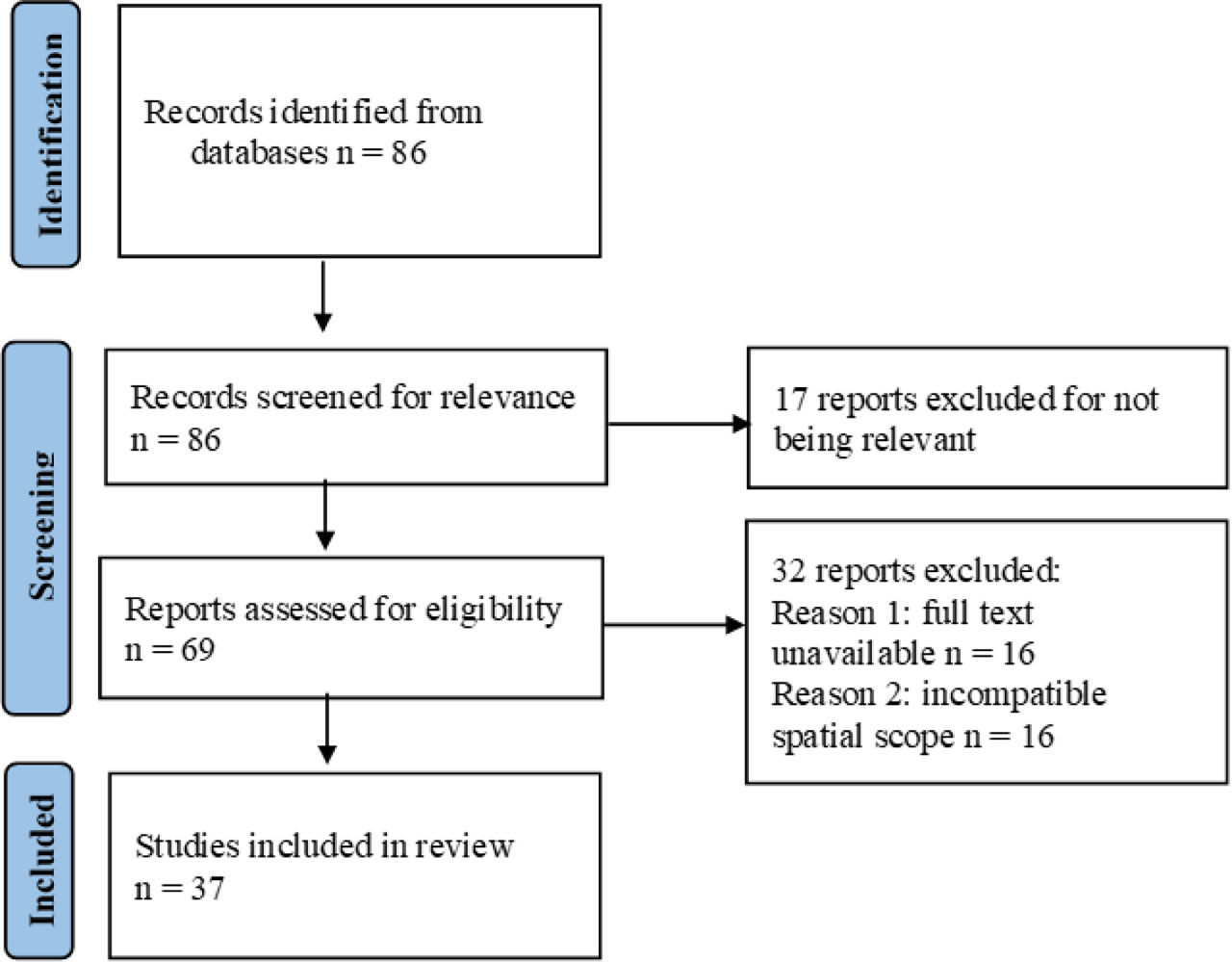
Figure 1.
PRISMA flow diagram for the study. Source: own performance based on PRISMA Executive (2026). PRISMA, Preferred Reporting Items for Systematic Reviews and Meta-Analyses
In addition to the Scopus-indexed scientific publications included in the systematic review, 36 supplementary sources (institutional documents, statistical publications and national reports) were consulted exclusively to provide contextual and background information and up-to-date descriptive data on agriculture and SFSC development in the V4 countries. They contained official statistical data, policy documents or country-specific information unavailable in peer-reviewed journal articles. Thus, these sources were not included in the systematic review itself and, therefore, not subject to the PRISMA selection procedure. The supplementary materials were selected purposively based on their relevance, credibility and official character. Of them, 6 focused on the Czech Republic, 9 on Hungary, 6 on Poland, 7 on Slovakia and 8 concerned more than one country.
3. Results
3.1. Bibliometric statistics
The information on the scope of the articles is presented in Table 2. Several notable trends emerge from the analysis. First, there has been an increase in the number of articles published on the topic of SFSC in the second part of the analysed period. For the years 2015–2021, between 0 and 3 publications were found. In 2022, this number increased to 6, which may reflect the growing academic interest in SFSCs following the disruptions caused by the COVID-19 pandemic. The pandemic itself shifted consumer attention towards locally produced food, while the increase in scientific publications became visible only after the time required to conduct, review and publish research. In 2023 and 2024, the number of records decreased again to 2 and 3, respectively, before increasing to 7 in 2025. Interestingly, 6 publications were found for 2026, despite the selection taking place at the end of January. It is expected that in the coming months, the database will include further publications, which could result in a record number of publications. This is partly the result of the so-called special issues published in recent months, dedicated to the topic of short supply chains. Second, the largest number of articles concerned Hungary and Poland. The interest in the issue of SFSCs in these countries stems from the fact that the agrarian structure is dominated by small- and medium-sized farms (as indicated in the description of the spatial scope of the study), whose participation in direct, local sales systems is relatively higher than that of large-scale farms. Third, the keywords associated with the searched sources obviously concern short food supply chain(s) and food supply, while other related terms include alternative food network, sustainability, food consumption, supply chain management, rural development and food production. Fourth, among the journals, Sustainability ranks first, guaranteeing full open access to its articles. The high representation of publications in open access journals, particularly Sustainability, may have facilitated broader accessibility of research findings, although this review did not assess the actual reach or impact of open access publishing.
Table 2.
Scopes of the articles selected under the PRISMA checklist
| Time scope | Spatial scope | Topic scope | |||
|---|---|---|---|---|---|
| Year | No. | Country | No. | Key wordsa | No. |
| 2015 | 1 | Poland | 14 | Short food supply chain(s) | 13 |
| 2016 | 0 | Hungary | 14 | Food supply | 12 |
| 2017 | 3 | The Czech Republic | 9 | Alternative food network | 7 |
| 2018 | 2 | Slovakia | 3 | Sustainability | 5 |
| 2019 | 2 | Italy, UK, Spain (each) | 3 | Food consumption | 5 |
| 2020 | 3 | Journal name | No. | Supply Chain Management | 5 |
| 2021 | 3 | Sustainability | 10 | Rural development | 4 |
| 2022 | 6 | Deturope | 3 | Food production | 4 |
| 2023 | 2 | Studies in Agric. Econom. | 3 | Alternative agriculture | 3 |
| 2024 | 3 | Int. Jour. of Food Science | 2 | Farming system | 3 |
| 2025 | 7 | Agriculture | 2 | Farms | 3 |
| 2026 | 5 | Others | 17 | Urban agriculture | 3 |
The reviewed literature shows a strong dominance of studies focusing on SFSCs in general terms and on CSA, while specific channels such as digital SFSCs, foodservice-oriented chains or urban/peri-urban models remain under-represented. Methodologically, the literature is characterised by a prevalence of qualitative and descriptive approaches, particularly in studies addressing alternative food networks and self-provisioning practices. Quantitative analyses are more common in research examining farmers’ and consumers’ motivations, efficiency and socio-demographic determinants of participation in SFSCs. Only a limited number of studies adopt a clearly evaluative or comparative framework, indicating a need for more outcome-oriented and cross-country research designs in future SFSC studies. Details are presented in Table 3.
Table 3.
Classification of SFSC literature by sales channel, type of analysis and methods (n = 37)
| No. | Author(s), year | Main sales channel analysed | Type of analysisa | Methods used |
|---|---|---|---|---|
| 1 | Borychowski et al. (2026) | SFSCs (general) | Explanatory | Quantitative (survey, statistics) |
| 2 | Nováčková, Pixová and Plank (2026) | CSA | Qualitative explanatory | Interviews, qualitative analysis |
| 3 | Plank and Pixová (2026) | Alternative food networks (AFNs) | Conceptual/political economy | Qualitative, document analysis |
| 4 | Raftowicz and Struś (2026) | CSA | Descriptive explanatory | Qualitative interviews |
| 5 | Kufel-Gajda (2026) | Organic/local food systems | Explanatory | Qualitative policy analysis |
| 6 | László, Czuppon and Michalec (2025) | Local food systems/direct sales | Exploratory | Qualitative interviews |
| 7 | Onyszkiewicz and Sylla (2025) | CSA | Evaluative | Mixed methods |
| 8 | Ritter and Orbán (2025) | Digital SFSCs | Explanatory | Quantitative survey |
| 9 | Varecha, Laginová and Jarábková (2025) | SFSCs food service | Descriptive | Quantitative survey |
| 10 | Pijet-Migoń et al. (2025) | Direct sales/wine tourism | Exploratory | Qualitative interviews |
| 11 | Smędzik-Ambroży et al. (2025) | SFSCs (general) | Comparative | Quantitative efficiency analysis |
| 12 | Gjokaj et al. (2025) | SFSCs (general) | Descriptive explanatory | Mixed methods |
| 13 | Smędzik-Ambroży et al. (2024) | SFSCs (general) | Comparative | Quantitative survey |
| 14 | Daněk and Jehlička (2024) | Self-provisioning | Conceptual empirical | Qualitative |
| 15 | Acella et al. (2024) | Direct sales/local products | Evaluative | Mixed methods |
| 16 | Oleksiuk and Rull Quesada (2023) | Direct sales/SMEs | Exploratory | Qualitative case studies |
| 17 | Drejerska and Sobczak-Malitka (2023) | SFSCs (general) | Descriptive | Literature + empirical synthesis |
| 18 | Csordás, Lengyel and Füzesi (2022) | SFSCs (consumer side) | Systematic review | Literature review |
| 19 | Daněk et al. (2022) | Self-provisioning | Longitudinal qualitative | Interviews |
| 20 | Kovács, Balázsné Lendvai and Beke (2022) | Local food markets | Explanatory | Quantitative survey |
| 21 | Floriš et al. (2022) | SFSCs/small farms | Descriptive | Quantitative survey |
| 22 | Aouinaït et al. (2022) | SFSCs (multi-actor) | Evaluative | Qualitative stakeholder analysis |
| 23 | Török et al. (2022) | SFSCs restaurants | Economic evaluation | Case study |
| 24 | Ruszkai, Pajtók Tari and Patkós (2021) | Local food networks | Institutional analysis | Qualitative |
| 25 | Raftowicz et al. (2021) | CSA (aquaculture) | Exploratory | Case study |
| 26 | Wiśniewska-Paluszak and Paluszak (2021) | Urban/peri-urban farming | Relational analysis | Qualitative |
| 27 | Goszczyński (2019) | AFNs(conceptual) | Conceptual | Theoretical |
| 28 | Rivera et al. (2020) | SFSCs/small farms | Comparative | Mixed methods |
| 29 | Hruška et al. (2020) | AFNs | Historical descriptive | Qualitative |
| 30 | Slámová and Belčáková (2019) | Small farms/local food | Evaluative | Case studies |
| 31 | Kacz, Hegyi and Gombkötő (2019) | CSA | Descriptive | Quantitative survey |
| 32 | Sacchi et al. (2018) | Alternative food systems | Multi-actor review | Literature review |
| 33 | Mezei et al. (2018) | Local food systems | Comparative | Qualitative |
| 34 | de Hoop and Jehlička (2017) | Self-provisioning | Explanatory | Qualitative interviews |
| 35 | Szabó (2017) | SFSCs (consumer side) | Explanatory | Quantitative |
| 36 | Bakos (2017) | Community-supported food systems | Descriptive | Literature review |
| 37 | Sovová (2015) | Self-provisioning | Exploratory | Qualitative |
a The analytical focus of each publication was classified according to its primary research objective. Each study was assigned to a single dominant category reflecting the principal aim of the analysis. Explanatory studies sought to identify causal relationships or determinants; they investigated relatively under-researched phenomena; descriptive studies characterised existing conditions or practices; evaluative studies assessed the effectiveness or performance of specific solutions; comparative studies compared countries, systems or groups; conceptual studies developed theoretical frameworks or conceptual discussions; and institutional analyses focused on institutional, policy or governance aspects of SFSC development
3.2. SFSCs in V4 countries—demand and supply sides
In the early 1990s, the countries of Central and Eastern Europe, including the Visegrad group, began restructuring the food supply chain. Disintegration of the previous centrally planned system eliminated barriers to entry on the market and enabled the arrival of a new segment—wholesale chains. The state monopoly of processing and retail chains was gradually being replaced by private business, including foreign capital. Food systems became organised mostly around long food supply chains, similar to other countries in the European Union. However, as this process progressed, the need for the sale of food produced locally and traditionally became apparent. Although the Central European Consumer Behaviour Survey indicates that in countries such as the Czech Republic, Hungary, Poland and Slovakia citizens consider price to be one of the main factors in buying goods and services, they also search for health aspects and high quality of food and tend to buy directly from the farm (Krivošíková et al., 2019; Šedík et al., 2019; Oravecz et al., 2020). Higher quality of food is identified with such criteria as seasonality, homemade production and the absence of additives, supplemented by sociological quality criteria such as food waste, animal welfare and environmental sustainability (Csordás et al., 2022; Acella et al., 2024). Nevertheless, the analysed studies indicate that differences also exist: Polish consumers prioritise trust in familiar, traditional farms; Hungarian consumers increasingly demand functional or specialised products; Czech consumers are concentrated in urban areas with growing interest in CSA models; Slovak consumers currently have limited product range options, reflecting the nascent stage of the SFSC system. Regardless of this, taking into account the demand side of the functioning of SFSCs, the four countries studied represent a strong potential for the development of SFSCs.
There are some common features of farms participating in SFSCs. Data indicate that they are managed by people who are better educated, possess organisational skills, represent higher social capital and have a higher share of female managers (Benedek, Ferto & Molnár, 2018; Smędzik-Ambroży et al., 2024). Diversity of production, with a special focus on vegetables and fruits, is a fundamental feature of SFSCs, and various species and varieties are used to ensure continuous yearly yields (Onyszkiewicz & Sylla, 2025).
Answering the first research question about the types of SFSCs identified in the literature for the V4 countries, we conclude that direct sales remain the dominant marketing channel across the V4. In the Czech Republic, although small farms constitute the majority, large agribusinesses control most agricultural land, focusing on products unsuitable for direct sale, such as cereals, corn and rapeseed (Borychowski et al., 2024). Consequently, most food flows through long retail chains owned largely by foreign capital (Havlová & Duha, 2018). Nevertheless, demand for local, high-quality food is increasing, with approximately 20% of Czech consumers purchasing directly from farmers or farmers’ markets (Smutná, Vávra & Duží, 2024). Following the trend, the number of farmers selling directly to consumers through short supply chains is growing. Although the exact data on farms participating in SFSCs is not known, the online database of farmers, Adresář farmáře (2025), contains 575 contacts of farmers selling directly to consumers (data from June 2025). This is still a small share of all farms in the Czech Republic, i.e. less than 2% (on average it is 15% in the EU; cf. Augère-Granier, 2016). On the other hand, farmers’ markets, box schemes, garden markets and CSA initiatives have expanded, particularly in urban areas such as Prague, Brno and Ostrava, reflecting growing consumer interest in environmental awareness, community and ethical consumption (Konečný, Hajná & Zdráhal, 2016; Miškolci, 2017; Nováčková et al., 2026). There were more than 30 CSA groups in 2025 (the oldest was created in 2008; in 2018, there were about 20 CSAs) (Access to Land Network, 2025).
After reviewing the literature, it can be concluded that Hungary exhibits a similarly dynamic growth in SFSCs. Demand is rising across social groups, especially among women, highly educated individuals and those with at least average income (Szabó, 2017). Consumers prioritise freshness, absence of harmful substances and health benefits, with younger consumers also emphasising animal welfare (Kovács et al., 2022). Small-scale producers innovate continuously, introducing new products and functional foods, including options for specialised diets (László et al., 2025). About 20% of Hungarian farms (i.e. 40,000 producers) participate in SFSCs (Augère-Granier, 2016), mainly small actors using limited marketing channels (55% of farmers use 1 or 2 channels), often selling fruits and vegetables (ca. 25% of farms), dairy (19%) and meat (12%) directly to consumers on a farm or through local farmers’ markets (Ruszkai et al., 2021; Bálint, 2022). CSA systems are becoming more and more popular, concentrating mainly near Budapest and including 30 farms in 2024. Digital tools for order management, inventory and logistics are increasingly adopted to meet evolving consumer demands (Kacz, 2019; Benedek et al., 2021; Hitka et al., 2024).
The reviewed literature suggests that in Poland, where over a million mostly small farms exist, SFSCs have high development potential (Wiśniewska-Paluszak & Paluszak, 2021; Oleksiuk & Rull Quesada, 2023). Legislative changes have enabled farmers to process and sell products directly under favourable tax and sanitary conditions, leading to dynamic growth in short-selling systems (Serafin & Pilis, 2020). Trust in family-owned, locally situated farms may be a key factor driving consumer choices (Kufel-Gajda, 2026). The findings suggest that direct sales from farms dominate (85%), supplemented by home deliveries (41%) and farmers’ markets (31%) (Borychowski & Stępień, 2024). The latter operate in almost every major city, and in smaller towns, they are enjoying renewed interest. CSA initiatives are slowly emerging (in 2025, there were more than 30 farms involved in this system, as evidenced by Fundacja Agrinatura, 2025), as well as internet-based sales platforms, while winemaking and agritourism increasingly integrate local sales (Pijet-Migoń et al., 2025). Data on farm participation vary: official sources of the Ministry of Agriculture and Rural Development (2023) report around 36,000 supervised producers (ca. 3% of all Polish farms), yet informal sales suggest broader involvement—more than 200,000 individual agricultural holdings (approximately 13.8% of farms; Gołębiewski & Bareja-Wawryszuk, 2016). SFSCs are represented by small farms, mainly in a group of 1–5 ha (they account for 68% of SFSC farms, although farms ranging from 5 ha to 25 ha have almost a 70% share in sales). Products in Polish SFSCs are dominated by fruits, vegetables, dairy and honey (Borychowski et al., 2024).
The literature reports that in Slovakia, food supply chain sectors are characterised by a high degree of intermediate input intensity, including imported inputs into production (Capobianco & Abate, 2024). SFSCs remain relatively new but are growing in popularity (Floriš et al., 2022). Available data suggest that approximately 20% of farms, mainly small-scale, participate, offering fruits (almost 50% of farms), dairy, vegetables and sheep or goat products. Direct sales from farms are most common (ca. 75%), followed by delivery to customers upon order (70%), retail shops (less than 40%) and occasional sales through events, external institutions, such as hotels, restaurants, schools and online (ca. 10%) (Horská et al., 2020; Floriš et al., 2022). CSA systems are underdeveloped, whereas community gardens are emerging, especially in urban centres such as Bratislava, which hosted 13 out of 40 community gardens in the country in early 2025 (Feher, 2012; Hencelová, Križan & Bilková, 2021). An interesting initiative is a portal connecting local food producers with consumers called Lokálny trh, which means local market (Lokálny trh, 2026). This online platform offers several features: a map of food producers in Slovakia, a search engine for local producers, an ordering/pre-ordering system for local products and a tool for promoting small producers. The map indicates that most offers concern alcoholic beverages, dairy products, fruit and honey. Farmers prefer channels that allow direct interaction with consumers, fostering relationships and trust. As Hencelová et al. (2021) point out, less than 40% of towns, in 2019, regularly organised farmers’ markets but, overall, more than half supported or planned to support their organisation. To conclude this part, the comparison between V4 countries, especially between Poland and the Czech Republic, and, to a lesser extent, Slovakia, illustrates how historical differences in agrarian structures may shape the institutional and organisational context for SFSC development. Nevertheless, the reviewed literature also indicates that agrarian structure alone is insufficient to explain cross-country differences, as social, economic and behavioural factors appear to play an equally important role.
Policy support is crucial in all V4 countries. In the Czech Republic, multiple entities, including the State Agricultural Intervention Fund, local action groups using the LEADER method and the Ministries of Agriculture and Environment, support farmers through training, grants and marketing aid (Rural Facilitator Training, 2019; European Commission, 2024). Hungary has implemented national programs and strategies, such as the Food Chain Security Strategy, along with Common Agricultural Policy (CAP) sub-programs supporting SFSCs (Szabó & Juhász, 2015; Bakos & Khademi-Vidra, 2019; Ministry of Agriculture, 2021). In Poland, post-2017 deregulation and the European Innovation Partnership (EIP) Agri programs have facilitated local food sales, while local governments enhance trust and cooperation between producers and consumers (Serafin, 2019; Raftowicz & Solarz, 2024; Raftowicz & Struś, 2026). Slovakia’s 2014–2020 programs aimed to strengthen rural development through support for local producers, grants and technical assistance (Floriš & Schwarcz, 2021). However, the reviewed studies also indicate that the practical accessibility of these support mechanisms may be constrained by administrative, sanitary, financial and organisational requirements, particularly for small farms.
At the end of this subchapter, it is worth adding that the reported estimates should be interpreted with caution, as they originate from different data sources employing different methodologies, sampling procedures and definitions of SFSC participation. Consequently, the presented figures are intended to provide an approximate picture of the scale of SFSC development in individual V4 countries rather than support direct quantitative comparisons.
3.3. Motives and barriers to participation in SFSCs
The second research question concerned the motivations and barriers for farms operating in short supply chains. The following information provides an answer. Thus, higher prices of products sold, and as a result higher revenue/income, are definitely the most important motivator for farms to participate in SFSCs. For example, in the study by Borychowski and Stępień (2024), this factor was mentioned as the most significant by as many as 68% of respondents. Confirmation can also be found in the work by Szabó and Juhász (2015). In fact, SFSCs are economically beneficial for producers, and besides, they contribute to social cohesion and local development with lower environmental effects (Renting et al., 2003; Malak-Rawlikowska et al., 2019). Among other factors, the growing interest of citizens in purchasing traditional, local food is important. For an increasingly wider group of consumers, food produced and sold locally is an alternative to food ‘from nowhere’, as Plank and Pixová (2026) call it, which is offered by large retail chains. This factor has gained importance especially during the COVID-19 pandemic, but it remains one of the most important to this day. Consumers engaging with SFSCs are motivated by a desire to participate in a social movement that prioritises environmental sustainability, fairness and democratic principles (Gjokaj et al., 2025).
Farmers emphasised the importance of direct relationships with customers and their loyalty (Benedek et al., 2020; Horská et al., 2020). In addition, producers indicated that the involvement of SFSCs is a good way to diversify income sources, thus reducing vulnerability to crises and allowing for greater independence from other entities in the supply chain. Higher resilience to crisis was also observed in the study by Borychowski et al. (2026). Only a few per cent of farmers cite environmental goals as a reason for engaging in short supply chains (Borychowski & Stępień, 2024). As László et al. (2025) claim, SFSC farms often face the challenge of securing their livelihoods first, before they can focus on sustainability. As a result, environmental awareness takes a back seat to their more immediate innovation needs, as securing their daily livelihood remains a fundamental priority. On the other hand, the motivation to contribute to ecological sustainability is a common factor among CSA members in Poland (Onyszkiewicz & Sylla, 2025). Some farmers do not see any barriers to participating in the SFSCs. For instance, in Poland, the share of such entities amounts to 27%, and in the Czech Republic, 14% (Zdrahal et al., 2024). Such an opinion is usually formed a few weeks after the decision to start selling via SFSCs and often changes compared to the situation when the farmer did not participate in this system. Nevertheless, the vast majority of SFSC participants identify some barriers and challenges. Generally, regardless of the country, they concern the same or similar issues; the differences concern the importance of individual variables. For Polish, Czech and Slovak farmers, the main barrier was that participation in SFSCs is time-consuming. Amongst other difficulties farmers mentioned are difficulties in meeting consumer expectations and retaining regular customers; high competition from large suppliers (discount stores, supermarkets, retail chains); and bureaucracy and formal regulations (Horská et al., 2020; Zdrahal et al., 2024). Other elements common for Polish, Czech and Hungarian are lack of knowledge; lack of financial capacity to organise infrastructure and logistics (machines and equipment, storage rooms, refrigerators, delivery vans, etc.); and complexity of activities (combining the role of farmer, processor, seller, marketer) (Bakos & Khademi-Vidra, 2019; Pitrová et al., 2020). This latter barrier can be linked to the above-mentioned lack of working time and low level of knowledge. In addition, farmers from Poland and Slovakia were more likely to emphasise that the problem of participation in SFSCs is the seasonality of revenue/income (Varecha et al., 2025). Hungarian farmers emphasised the problem of a lack of entrepreneurial and marketing skills. That is why most of them do not use advertising platforms, and only about 10% use applications for this purpose, such as YouTube, Google, Instagram, and municipal websites (Ritter & Orbán, 2025). In turn, Gjokaj et al. (2025) mention infrastructure constraints such as a lack of local slaughterhouses and processing plants, low consumer awareness or low level of knowledge about SFSC, a lack of cooperation between producers and consumers, scarcity of networking events and insufficient support for SFSC in public institutions. Distance to market, high cost of transportation, packaging standardisation and marketing communication were listed as barriers for Polish SFSC farms (Oleksiuk & Rull Quesada, 2023). Finally, low access to land may be a problem, as Slovak farmers point out (Horská et al., 2020).
It can also be noted that a common challenge for all countries is collaboration or partnerships with other supply chain actors, including farmers, food producers, individual consumers, local community leaders, municipal authorities, regulators from sanitary authorities, restaurants, schools, etc. Cooperation with other farmers is particularly important, as it broadens the range of products offered and reduces the unit costs of operating in SFSCs, e.g. logistics and redistribution. All the more so because, as Polish and Slovak producers admit, the barrier to selling via short channels is the low scale of production, limited variety of products and meeting order volume requirements of larger clients, especially in the public sector. Only a small proportion mentioned low customer awareness of SFSCs, which means that there is potential to expand the customer base if these customers can be reached.
Nováčková et al. (2026) emphasise the importance of historical conditions for the development of SFSCs in Central and Eastern European countries. Consumers in post-socialist markets are more focused on personal gains and less trusting of new models of cooperation and social engagement. They are also less willing to share costs and risks with farmers, which hinders the functioning of systems such as CSA. At the same time, however, they emphasise that in countries such as the Czech Republic, Hungary and Poland, the potential for such solutions is growing. SFSCs’ development strategies should take into account minimising barriers facing consumers and include increasing the availability and range of products in retail chains, expanding sales points, making local food more available at restaurants, etc. Communication and marketing strategies promoting short channels should highlight such attributes of local food as taste, freshness, naturalness and health (Aouinaït et al., 2022).
To sum up, although the literature review suggests that barriers to participation in SFSCs are more numerous and frequently reported than motivating factors, this does not imply that SFSCs are unattractive or irrational from the farmers’ perspective. Rather, motives and barriers operate at different analytical levels. Motivations for engaging in SFSCs tend to be concentrated around a limited number of strong economic and relational factors, such as higher product prices, income diversification and direct relationships with consumers. In contrast, barriers are typically operational, cumulative and experienced during everyday functioning, including time constraints, administrative burden, logistical complexity and skill requirements. In the context of Central and Eastern European countries, the barriers are further amplified by historical conditions, i.e. lower levels of cooperation and insufficient trust in collective arrangements. Consequently, while motives are sufficient to initiate participation, barriers dominate farmers’ assessments of day-to-day operation, highlighting the need for institutional, educational and cooperative support rather than questioning the economic rationale of SFSCs.
Table 4 summarises the key characteristics of SFSCs in the 4 studied countries, based on 37 articles selected through the PRISMA procedure. Generally, the literature on SFSCs in Visegrad countries provides a relatively comprehensive understanding of several key dimensions of their functioning. In particular, there is strong evidence on consumer behaviour, including preferences for local, high-quality food, as well as on the socio-economic characteristics of farms participating in SFSCs. The structure of distribution channels, with the dominant role of direct sales and the growing importance of farmers’ markets, CSA initiatives and emerging digital tools, is also well documented. Moreover, the main motivations for farmers’ participation, especially economic incentives such as higher product prices and income diversification, together with relational factors such as direct contact with consumers, are consistently identified across studies. In addition, the literature offers a coherent picture of operational barriers, including time constraints, administrative burden, logistical challenges and the need for multifunctional skills.
Table 4.
Comparative characteristics of SFSCs in V4 countries based on literature review
| Dimension | Czech Republic | Hungary | Poland | Slovakia |
|---|---|---|---|---|
| Estimated share of farms in SFSCs | Officially very low 1%–2%; informal activity likely higher | Around 20% | Officially low (≈3%), but informal participation substantial | Around 20% |
| Main products sold via SFSCs | Mainly animal products; limited diversification | Fruits, vegetables, dairy, herbs; some functional foods | Fruits, vegetables, dairy, honey | Fruits, vegetables, dairy, sheep and goat products |
| Dominant marketing channels | Direct sales, farmers’ markets, box schemes | Direct sales, farmers’ markets | Direct sales, farmers’ markets, home delivery | Direct sales, order-based delivery |
| Role of CSA | Moderately developed; mainly urban-based | Moderately developed; concentrated around Budapest | Emerging; limited but growing | Very weak/marginal |
| Digital tools and online sales | Limited but growing | Relatively advanced (online platforms, apps, inventory tools) | Emerging slowly | Very limited |
| Consumer motivations | Quality, locality, ethical and environmental values | Freshness, health, uniqueness, animal welfare | Trust in local, family farms; food origin | Freshness, direct relationship with producer |
| Main producer motivations | Higher income/prices, direct customer relationships | Higher income/prices, innovation opportunities | Higher income/prices, regulatory facilitation, trust | Higher income/prices, direct contact, local embeddedness |
| Key barriers identified by farmers | Time constraints, bureaucracy, lack of knowledge, seasonality | Skills deficits, marketing limitations, low scale | Time constraints, seasonality, lack of knowledge, low scale | Time constraints, low scale, skills deficits, access to land |
| Policy and institutional support | Strong, multi-level (CAP, ministries, Local Action Groups) | Strong, long-term national programs | Strong since 2017, focused on deregulation | Moderate, mainly project-based |
| Overall level of SFSC development | Low–moderate | Moderate | Moderate (with high growth potential) | Low |
[i] Note: Estimates are derived from heterogeneous sources (scientific publications, institutional reports and official statistics) and should, therefore, be interpreted as indicative rather than directly comparable.
[ii] Note: This qualitative assessment takes into account the combined evidence regarding the diversity of SFSC channels, the scale of farmer participation, institutional support, market development and other characteristics consistently reported across the reviewed studies. It does not represent a quantitative index.
4. Discussion
SFSCs in the V4 countries share several overarching and similar characteristics, such as the predominance of small-scale farms and growing consumer interest in local high-quality food, the dominance of direct sales as the main marketing channel, the high share of fruit and vegetables in total sales through SFSCs, as well as common motives and barriers to participation. Nevertheless, differences in farm structure—particularly in terms of average farm size, specialisation and labour inputs—shape how SFSCs operate in each national context. The available evidence indicates that in the Czech Republic, for example, the agricultural sector is characterised by a high share of large farms in terms of land use, even though small farms predominate in number (Borychowski et al., 2024). Many large producers focus on commodity crops (e.g., cereals, rapeseed) that are not easily integrated into direct-to-consumer sales. This restricts the pool of producers who can profitably participate in SFSCs and limits the overall market penetration of direct channels. The result is a dual structure in which a minority of small, diversified farms participate actively in SFSCs, often near urban areas, while large farms remain embedded in long supply chains. The reviewed literature suggests that, in the Czech Republic, the number of SFSC farms is low compared with the other countries studied because of farm area structure and the relatively low share of labour inputs (Statista, 2025). Research indicates that participation in SFSCs requires higher workloads, because of the need to conduct processing and marketing activities that are likely to disrupt farmers’ existing work routines (Dupé et al., 2025). Although alternative channels such as box schemes, home deliveries and community gardens have gained traction (Konečný et al., 2016; Miškolci, 2017), fostered a sense of community and shared values between producers and consumers, strengthening social capital—key driver of SFSCs success in the Czech Republic (Benedek et al., 2018)—the relatively small size of these channels compared to mainstream long chains suggests that, while culturally significant, they currently play a supplementary rather than transformative role in overall food provisioning.
By contrast, Poland’s overwhelmingly small farm structure, with over a million mostly small-scale holdings, provides a relatively fertile ground for SFSCs (Wiśniewska-Paluszak & Paluszak, 2021; Oleksiuk & Rull Quesada, 2023). Small farms naturally align with the needs of direct sales, as they tend to produce a variety of consumer-oriented products (fruits, vegetables, dairy, honey) and are often located near population centres. Poland also has a relatively high labour input (the highest among the V4), which favours the development of labour-intensive short sales channels. On the other hand, the dominant direction of agricultural production is field crops—the degree of specialisation in this area of Polish farms accounted for almost 60% in 2020 and was the highest among the V4 (Eurostat, 2026). The direction of production may be important when assessing the potential for the development of SFSCs in a given country. Short channels qualify farms for diversified production, primarily fruit, vegetables, dairy products, eggs and honey. Narrow specialisation, especially in field crops, makes it difficult to perform such functions (Evola et al., 2022; Herzig & Zander, 2025). But the review studies indicate that, compared to other analysed countries, Poland has a higher share of dairy production, which can be seen as the potential for the development of SFSCs. For now, this potential seems to be untapped, as the number of households participating in short sales channels is relatively low. However, the informal nature of many direct sales complicates official measurement and may mask the full scale of participation (Gołębiewski & Bareja-Wawryszuk, 2016), making policy targeting and support more challenging. The strength of interpersonal trust between consumers and well-known producers—a factor particularly important in Polish consumer behaviour (Kufel-Gajda, 2026)—favours the development of SFSC but also highlights the limited role of formal digital infrastructure, for example, in comparison to Hungary.
In Hungary, where small farms also form a significant part of the agricultural sector, the structure of production is somewhat more mixed. As the literature indicates, of all countries, Hungary has the highest level of specialisation in fruit and vegetable cultivation, as well as a well-developed wine sector, which favours the development of short supply chains. Labour inputs are also relatively high. Furthermore, small producers have adopted innovative product strategies (László et al., 2025), such as functional foods and specialised offerings for niche consumer groups (e.g., gluten-free diets). This specialisation increases the ability of producers to differentiate their SFSC products and build brand loyalty compared to countries where commodity production dominates. Hungarian producers utilise more diverse delivery channels including digital platforms, telephone orders and associations of farmers with shared online presence (Ruszkai et al., 2021; Hitka et al., 2024), which can enhance efficiency and consumer reach. Conversely, in Slovakia, although about 20% of farms participate in SFSCs, restricted diversification (with many farms focusing on a narrow range of products) and low labour inputs may constrain the attractiveness of SFSCs and slow market expansion (Horská et al., 2020; Floriš et al., 2022). Additionally, Slovak producers show a strong preference for direct, personal interactions with consumers, with less uptake of digital ordering, suggesting that traditional relationship-based mechanisms remain central to SFSC functioning in that context and the development of SFSCs through innovative solutions remains hindered (Floriš et al., 2022).
The literature review also enabled the identification of topics that appear to be relatively underrepresented within the reviewed body of literature. In the Czech Republic, the reviewed studies devoted relatively little attention to the effectiveness of institutional support, farmer skills and competitive pressure from large retail chains. In Poland, limited evidence was found regarding longitudinal changes in farmers’ perceptions of barriers, producers who do not perceive barriers and the cost structure of SFSCs. In Hungary, the reviewed literature provided relatively little insight into farmers’ entrepreneurial and marketing competencies, particularly in the context of low digital adoption, as well as cooperation networks among market actors. In Slovakia, structural constraints such as access to land and small-scale production were less frequently addressed, especially with regard to their relationship with profitability and market viability. At the broader level, the reviewed literature on the V4 countries remains fragmented and often examines motivations and barriers separately, with narrow integration between these dimensions. Similarly, relatively little attention has been devoted to value distribution and bargaining power within SFSCs, the practical effectiveness of policy support, farmers’ competencies, cooperation networks and socio-cultural factors such as trust. Finally, within the reviewed literature, the long-term sustainability, scalability and systemic role of SFSCs in food system transformation remain comparatively underexplored, indicating promising directions for future research.
5. Conclusions
The review of the literature on SFSCs in the Visegrad (V4) countries leads to several key conclusions. First, all V4 countries show clear potential for SFSC development, driven by growing consumer demand for local and high-quality food and the presence of structurally predisposed small-scale farms. These findings may support Hypothesis 1 for Poland and the Czech Republic, where the share of formally operating SFSC entities remains relatively low, while it is not supported for Hungary and Slovakia, where participation exceeds the EU average despite lower organisational maturity in some cases. Second, the reviewed literature suggests that agrarian structure alone is insufficient to explain differences in SFSC development across the V4 countries. Although farm size appears to be one of the relevant contextual factors, the analysed studies also emphasise the importance of production specialisation, labour intensity, marketing orientation and social capital. Consequently, the available evidence provides only partial support for Hypothesis 3. For example, Hungary combines favourable structural and behavioural characteristics associated with SFSC development, whereas, in Poland, the literature indicates that a high share of small farms does not necessarily translate into broader participation in SFSCs, possibly because of production specialisation and lower levels of social capital.
Third, several common patterns can be identified across the V4 countries. Direct on-farm sales remain the dominant model, while more advanced forms, such as e-commerce or CSA, are still developing. Fruit and vegetables dominate SFSC sales, alongside selected animal products, particularly dairy. As the literature suggests, the main motivation for participation is higher product prices and improved income, assisted by relational benefits, whereas key barriers include time constraints, seasonality, limited scale, lack of knowledge and resources, and administrative burden. These findings partially support Hypothesis 2, as motivations and barriers are broadly similar across countries, although their relative importance differs. Moreover, the principal motivations and barriers identified in the reviewed studies are largely consistent with the broader SFSC literature and typical for other regions. This suggests that certain mechanisms of SFSC operation are universal, despite their different historical, institutional and structural contexts. Finally, SFSCs are increasingly recognised as instruments of rural development. They generate economic, social and environmental benefits, contributing to income diversification, local development, stronger community ties and more sustainable production. Therefore, policy support should adopt an integrated approach, combining financial, educational, institutional and digital measures. Such a framework is necessary for SFSCs to evolve from a niche activity into a stable component of sustainable rural development.
Several limitations of the study should also be acknowledged. As a review based on the PRISMA methodology, the findings depend on the availability, scope and quality of existing studies and do not provide new primary empirical evidence. In addition, significant heterogeneity across studies in terms of methods, definitions and data sources limits full cross-country comparability, while uneven research coverage across countries and thematic areas may introduce bias. It should also be emphasised that many of the findings are based on country-specific primary studies that often cover only selected segments of SFSC markets and relatively small or non-representative samples. As a result, several aspects may remain under-researched. This limitation is particularly relevant for countries with a smaller number of available studies, such as Slovakia, where empirical evidence is relatively scarce. Therefore, the results should be interpreted with caution, as they reflect the scope and focus of the underlying literature rather than fully comprehensive national assessments of SFSC systems. These limitations highlight important directions for future research. In particular, there is a need to harmonise definitions and measurement frameworks for SFSCs to improve comparability across countries. Broader, more representative and comparative empirical studies should be conducted to capture the full complexity and heterogeneity of SFSC functioning across countries and market contexts. Future studies should also expand the use of primary and longitudinal data to better capture the dynamics of SFSC development. Furthermore, comparative research on policy effectiveness is required, especially in relation to different institutional contexts within Central and Eastern Europe. Additional attention should be given to the role of digitalisation, cooperation networks and value chain governance, as well as to the long-term economic sustainability and scalability of SFSC models. Such research would significantly enhance understanding of SFSCs not only as an agricultural phenomenon but also as a broader instrument of rural transformation.
Acknowledgements
The study is funded by the National Science Centre, Poland, under the OPUS call in the Weave programme, grant no. UMO-2021/43/I/HS4/01090, Czech Science Foundation GACR, grant no. 22-04055L and the Visegrad + Grant ‘Family Farms in Short Food Supply Chains: Transfer of Experience from the Czech Republic, Slovakia and Poland’, grant no. 22430104.