

1. Introduction
Although the history of pandemics dates back to the origins of humanity, the current pandemic has presented unique challenges and changes to modern society (Billah et al., 2020). Hays (2005) chronicled the history of 50 epidemics, demonstrating the enduring impact of infectious diseases on human history. The COVID-19 pandemic not only triggered psychological strain but also forced institutions to accelerate digital adaptation, reshaping both public administration and individual online behaviour (Gabryelczyk, 2020).
Epidemics and pandemics have always influenced human history, with diseases spreading from person to person and causing significant societal disruption (Piret & Boivin, 2021). Fear, anxiety, nervousness, and stress can exacerbate somatic diseases and even lead to death. However, many lives can be saved by providing appropriate psychological and social support, including through information and communication technologies for development (ICT4D) (Kowal & Paliwoda-Pekosz, 2017; Afshari & Kowal, 2017), such as social media. ICT4D can improve the quality of life through economic, social, and human development, supporting communities and individuals (Bailey & Osei-Bryson, 2018; Qureshi, 2019). Psychological and social support, whether in person or through technological platforms, is invaluable in mitigating the psychological impact of crises.
The COVID-19 pandemic has presented unprecedented health and economic challenges, as well as profound psychological impacts, on individuals and society (Aggarwal et al., 2020). With billions of people affected by lockdowns (Greyling et al., 2021), social distancing, and isolation measures, social media has become a vital means of communication, entertainment, and information sharing (Yang et al., 2022). However, the massive influx of COVID-related information on social media has also resulted in a surge in mental health issues, including anxiety, depression, and burnout. According to a recent study, 60% of adults reported increased stress levels during the pandemic, with social media being one of the primary sources of information and support (Fedina et al., 2024). Social media has also become a support for maintaining social contacts. It has become essential for people who have been in home isolation and has helped to reduce the impact of isolation on their mental health (Brooks et al., 2020).
Since the psychological impact of the pandemic on society and social media use is multifaceted (Choi, 2021), a comprehensive analysis of multiple sources is necessary to gain a deeper understanding of this phenomenon. This need is reinforced by recent research indicating how pandemic-related stressors interact with online behaviours and influence subjective well-being across diverse populations (Aytekin et al., 2024; Kowal et al., 2024). On the other hand, knowledge in this area is scattered and yields contradictory findings. Therefore, this study aims to analyse and synthesise existing literature in order to draw an evidence-based set of insights. In addition, we identify and discuss the research gaps, and in this context, possible future research directions are outlined.
Specifically, to address this goal in a reliable and reproducible manner, we employ a systematic literature review (SLR), following well-established and widely accepted guidelines and protocols. By its very nature, this research method aims to comprehensively and transparently identify, appraise, and synthesize all existing and available evidence on a specific research topic. From a practical perspective, SLR entails a rigorous and systematic search for relevant literature, followed by a critical appraisal of the studies’ quality and a synthesis of the findings.
The remainder of the paper is structured as follows. Section 2 presents the research background and all current social media tools in a global perspective. Section 3 discusses the methodology adopted and adapted to achieve the objectives formulated for the research endeavour. Section 4 presents the results of the research questions formulated. Section 5 presents research gaps and future research directions, along with study contributions, limitations, and implications in both theoretical and practical dimensions. Section 6 concludes the study.
2. Background
The concept of ‘social media’ (SM) originated in 1994 within an online media space in Tokyo, known as Matisse (Aichner et al., 2021). In scholarly discourse, SM is commonly defined as a broad category encompassing various online platforms. More specifically, social media has been described as:
‘(…) websites and software programs used for social networking,’ including platforms such as Facebook and Instagram. These tools are not only central to communication and information sharing but also shape how people interact, work, and make purchasing decisions in modern society. As the dictionary notes, ‘Social media are changing the way people communicate, work, and shop’ (Oxford University Press, 2024, accessed July 31, 2025).
‘Social Media is a group of Internet-based applications that build on the ideological and technological foundations of Web 2.0, and that allow the creation and exchange of User Generated Content’ (Kaplan & Haenlein, 2010, p. 61; Kaplan, 2015).
Social media is media for social interaction as a super-set beyond social communication. Enabled by ubiquitously accessible and scalable communication techniques, social media has substantially changed the way organizations, communities, and individuals communicate’ (Velev & Zlateva, 2012, p. 42 ).
Despite variations in emphasis, these definitions share the view that social media enables individuals to connect, communicate, and exchange information using digital tools.
Initially, social media functioned primarily as a medium for interpersonal contact with friends and family. Over time, however, it evolved into a multifunctional space for sharing personal experiences, thoughts, and opinions (Tarigan et al., 2023), in diverse formats including short messages (Takeichi et al., 2015; Lubis et al., 2019), photos (Zheng et al., 2016; Alwabel & Alsuhibany, 2022), short videos (Wu et al., 2024), and even full-length films (Johnson & Ranzini, 2018; Singh & Goyal, 2019).
Recent studies also explore the darker consequences of digital exposure, such as cybercrime-related risks associated with social networking platforms (Kumar & Mathew, 2024), and the mental health toll of visual self-monitoring in virtual communication (Amiot, 2024).
In 2004, MySpace became the first network to reach 1 million monthly active users (Ortiz-Ospina, 2019). By 2005, only 5% of U.S. internet users engaged with social media (Jones, 2024). Although MySpace grew rapidly, its dominance was soon eclipsed by Facebook, which in 2008 became the most visited social platform globally.
Today, Facebook — owned by Meta — is widely recognized as the global leader in social networking (Goode & Calore, 2024). Its ongoing innovation, including features such as news feeds, live video, and integrated messaging, has helped maintain its dominance. With over three billion monthly active users, Facebook remains virtually synonymous with social media (see Table 1).
Table 1.
Social media platforms (as of July 2024)
| Social Media | Monthly Users (Millions) | Core Function | Country of Origin |
|---|---|---|---|
| 3,065 | General social networking | United States | |
| YouTube | 2,504 | Video sharing and streaming | United States |
| 2,000 | Photo and story sharing | United States | |
| 2,780 | Messaging and calling | United States | |
| TikTok | 2,048 | Short video content | China |
| 1,343 | Messaging, payments, social feed | China | |
| 554 | Instant messaging | China | |
| Messenger | 1,010 | Text and media messaging | United States |
[ii] 1. DataReportal. (2024). Digital 2024: Global Overview Report. We Are Social & Meltwater. Retrieved from https://datareportal.com/reports/digital-2024-global-overview-report
[iii] 2. Meta Platforms, Inc. (2024). Q1 2024 Earnings Report. Retrieved from https://investor.fb.com/
[iv] 3. Tencent Holdings Ltd. (2024). First Quarter 2024 Financial Results. Retrieved from https://www.tencent.com/en-us/investors.html
[v] 4. Statista. (2024). Most popular social networks worldwide as of July 2024, ranked by number of monthly active users (in millions). Retrieved from https://www.statista.com/statistics/272014/global-social-networks-ranked-by-number-of-users/In
To provide concise and verifiable context, Table 1 summarizes selected major social media platforms as of July 2024, including their monthly active users (MAU), core functionality, and country of origin. Only corporate reports and academically accepted databases were used. In case of discrepancy, priority was given to primary disclosures.
In first place, stands Facebook, the most widely used social media platform with over three billion monthly active users as of 2024 (DataReportal, 2024). It combines messaging, media sharing, community building, and content discovery into a unified space. Facebook’s scale and versatility make it a central hub for social interaction, news, and even commerce (Meta, 2024).
In second place is YouTube, which blends entertainment, content creation (Yue et al., 2019), and interaction by allowing users to upload, view, and comment on videos (Geetha et al., 2021). It merges storytelling and social features, promoting engagement, user collaboration, and shaping digital culture (Rafiq et al., 2021; Yousaf & Nawaz, 2022).
Instagram, ranking third, focuses on visual storytelling. Users share photos, videos, and stories, making it a space for creativity, marketing, and cultural influence (Nandagiri & Philip, 2018; Lee & Kim, 2020). Influencers play a key role in global trends and consumer behavior.
WhatsApp, launched in 2010 and now part of Meta, is an instant messaging and VoIP app that supports text, images, and calls (Seufert et al., 2023). With 2.78 billion users in 2024, it revolutionized communication by offering free, encrypted connectivity across the globe (Statista, 2024; Nair, 2024).
TikTok, launched in 2016, allows users to share and explore short videos (Webwise, 2025). In 2024, it reached over 2 billion users. With nearly 272 videos uploaded every second, it drives content virality and redefines media consumption (Grossman, 2024).
WeChat (He et al., 2022), Messenger (Smutny & Schreiberova, 2020), Telegram (Urman & Katz, 2022), and Snapchat (Billings et al., 2017) offer real-time chat, status updates, and conferencing. These messaging apps are core tools for constant digital presence.
Douyin, TikTok’s Chinese counterpart, specializes in music-driven short videos and livestreams (Kaye et al., 2021; Fu & Wakabayashi, 2024). Although related, Douyin and TikTok differ by region, design, and algorithm (Digital Crew, 2025).
Kuaishou, another Chinese video platform, emphasizes spontaneous, everyday content, resonating with both rural and urban users (Tan et al., 2020; ChinaFY, 2025a).
X (formerly Twitter), launched in 2006, provides real-time news and social commentary (Rogers, 2013; Parker, 2023). With 550 million monthly users, X serves as a platform for activists, politicians, and public discourse (Usselmann et al., 2021; XData, 2025).
Sina Weibo, launched in 2009, is China’s version of microblogging, hosting 130 million posts and 1.5 million livestreams daily (China (Fan et al., 2014; Gravy, 2024; Statista, 2024c).
QQ, created by Tencent, supports messaging, file sharing, and group communication. Over 560 million people use it; it includes searchable interest groups and VoIP services (You et al., 2015; Li & Mogos, 2023; Statista, 2024b; ChinaFY, 2025b).
Pinterest is a platform for visual discovery and idea sharing, used for everything from home décor to planning life events (Shellenbarger & Robb, 2013; Mull & Lee, 2014; Pinterest, 2025; Connell, 2025).
Globally, social media adoption grew from 3.48 billion users in 2019 to 5.22 billion in 2024 (Kemp, 2019; Kepios, 2025), with over 94% of internet users now using social platforms (Chaffey, 2025).
The COVID-19 pandemic, emerging in late 2019, drove this surge. As lockdowns spread, social media became vital for staying connected and informed (Karhu et al., 2021; McClain et al., 2021; WHO, 2025).
3. Methodology
This section outlines the literature selection process, including the inclusion and exclusion criteria, in accordance with systematic review protocols by Kitchenham (2004), Moher et al. (2010), and Akl et al. (2024), which extend the PRISMA 2020 guidelines. The whole selection procedure is illustrated in Figure 2 (PRISMA 2020 Flow Diagram). Details of included studies (with metadata) are presented in Online Table A1; Online Table A2 presents the categorization of research gaps and coding criteria; and Online Table A3 provides the PRISMA 2020 checklist necessary for conducting a systematic literature review. 1. Considering the goal of our study, we put forward the following two research questions:
(RQ1): How did social media use affect psychological well-being during the pandemic?
To answer this question, we distinguish between the general effects of the pandemic and those explicitly driven by social media use, which was both a source of risk and resilience (Jones et al., 2021).
(RQ2): What are the existing research gaps and possible future research directions?
The research framework (Figure 1), developed and applied through the analysis of selected papers, is designed to systematically address the above research questions and provide reliable answers in a reproducible manner.

Figure 1.
Applied research framework
We chose the Systematic Literature Review (SLR) as the most suitable research method for extracting the stream of scientific literature. We followed the guidelines proposed by Kitchenham (2004), as they have been widely adopted in similar (qualitative) studies.
3.1. Step 1: Data Source and Search Strategy
We conducted a comprehensive systematic search across four databases: Scopus, Web of Science (WoS), ProQuest, and Google Scholar. These databases were chosen because they are widely regarded as essential sources in academia (Orduña-Malea et al., 2015; Gusenbauer, 2019). The search was conducted in two phases, utilizing iterative query refinement and Boolean operators. The final query sets captured literature published from 2020 through mid-2024. Table 3 presents the number of studies retrieved at each stage. All included publications (see Table A1) were selected based on their relevance to psychological effects of social media use during the COVID-19 pandemic, covering both positive and negative outcomes.
We used a combination of keywords and Boolean operators to ensure comprehensive coverage. The search strings included variations of terms related to the psychological impact of the pandemic and social media use. For example:
(‘psychological impact’ OR ‘psychosocial impact’) AND (‘COVID-19’ OR ‘pandemic’) AND (‘social media’ OR ‘online platforms’);
(‘mental health’ AND ‘COVID-19’) AND (‘social media’ OR ‘internet use’ OR ‘well-being’).
Three variants of keyword selection were considered, as shown in Table 1. Keywords had to appear in a paper’s title, abstract, keywords, or text, or the article had to consider the context of social impact expressed differently.
3.2. Step 2: Define Inclusion Criteria
The inclusion criteria (IC) were as follows:
(IC1): The document type is a peer-reviewed journal article published in a scientific journal or conference proceedings of an international scientific conference.
(IC2): The document is written in English.
(IC3): The document concerns the years 2020–2024 and was published in this period.
3.3. Step 3: Define Exclusion Criteria
The exclusion criteria were as follows:
(EC1): The full version of the document is not available through institutional subscriptions or from associations of which we are members.
(EC2): The document does not focus on the psychological impact of the pandemic on society and the use of social media.
3.4. Step 4: Quality Assessment
To ensure the quality of the studies included, we assessed each study using the following criteria:
Relevance: Each study was assessed for alignment with the research questions to ensure that its objectives were relevant to the overall objectives of the review.
Rigor: The robustness of each study’s methodology was examined, considering aspects such as sample size, research design, and thoroughness of data collection and analysis methods. This criterion prioritized studies with strong methodological foundations appropriate to the research questions.
Validity: Studies were evaluated using validated measurement tools, with an emphasis on whether robust data supported the findings. Studies that used validated instruments were given more credibility, as they increased the reliability of the results.
Bias: The assessment included an examination of each study’s risk of systematic error that could bias the results. The potential impact of conflicts of interest was also considered to ensure the integrity of the conclusions.
To assess study quality, a 9-question checklist was used (see Table 2).
Table 2.
9-question quality assessment checklist
| Criterion | Description | Yes | No |
|---|---|---|---|
| Relevance | Does the study address the research questions? | ||
| Is the study’s focus aligned with the aims of our Review? | |||
| Rigor | Is the study design appropriate for the research question? | ||
| Is the sample size adequate? | |||
| Are the data collection and analysis methods robust? | |||
| Validity | Do the data support the findings? | ||
| Are the measurement instruments used appropriate and validated? | |||
| Bias | Is there a risk of publication bias? | ||
| Are there any conflicts of interest disclosed? |
The adopted structured 9-question checklist covers vital criteria, used to assess study quality and identify potential limitations. This approach provided a comprehensive assessment of the strengths and weaknesses of each study.
Note that the structure of the checklist was adapted based on commonly used quality assessment criteria in systematic reviews and meta-analyses, as discussed by Moher et al. (2010) and Higgins (2011), which serve as guidelines for assessing methodological quality in systematic review and meta-analysis studies.
3.5. Step 5: Data Extraction Process
We extracted data using a standardized form, which included the following fields:
Study Details: Authors, year of publication, journal/conference.
Study Design: Type of study (e.g., cross-sectional, longitudinal, experimental).
Sample Characteristics: Population studied, sample size, demographics.
Principal Findings: Key results and conclusions.
Relevance to Research Questions: How the study addresses our research questions.
To collect and analyse data, we utilized a tabular form developed by one of the largest software companies and made available online for free.
3.6. Step 6: Data Synthesis
The extracted data were synthesized using a narrative synthesis approach. We grouped the findings based on themes related to our research questions. We also performed a meta-analysis to summarize the results quantitatively.
Bias and Limitations. We acknowledge the potential biases in our study, including publication bias (only published articles were included) and language bias (only articles in English were included). Additionally, our study is limited by the time frame of the literature search (2020–2024), which may exclude relevant studies published outside this period.
Based on these criteria (I column), we proceeded to the extraction phase (II column), where we ultimately selected 28 articles that closely aligned with our research goal (see Table 3 in Section 4 for a detailed overview).
Table 3.
Summary of the data extraction stage
| Search Query / Data Source / Step | Scopus | WOS | ProQuest | Scholar | ||||
|---|---|---|---|---|---|---|---|---|
| I | II | I | II | I | II | I | II | |
| ‘psychological | psychosocial impact’ + ‘COVID-19 | pandemic | quarantine’ + ‘impact’ + ‘society | population’ + ‘social media’ + ‘health | well-being’ | 39 | 5 | 1 | 1 | 2 | 1 | 27 | 8 |
| ‘psychological | psychosocial influence’ + ‘COVID-19 | pandemic | quarantine’ + ‘influence’ + ‘society | population’ + ‘social media’ + ‘health | well-being’ | 0 | 0 | 0 | 0 | 0 | 0 | 9 | 9 |
| ‘psychological | psychosocial effect’ + ‘COVID19 | pandemic | quarantine’ + ‘effect on society’ + ‘social media’ + ‘health | well-being’ | 0 | 0 | 0 | 0 | 0 | 0 | 1 | 1 |
| ‘psychological impact of pandemic’ + ‘society | community’ + ‘social media use’ | 0 | 0 | 1 | 1 | 0 | 0 | 4 | 2 |
| Total | 39 | 5 | 2 | 2 | 2 | 1 | 41 | 20 |
Moreover, due to institutional access limitations, 11 potentially relevant studies could not be included in the synthesis, which may introduce selection bias.
Figure 2 illustrates the complete PRISMA 2020 Procedure, encompassing all the steps.
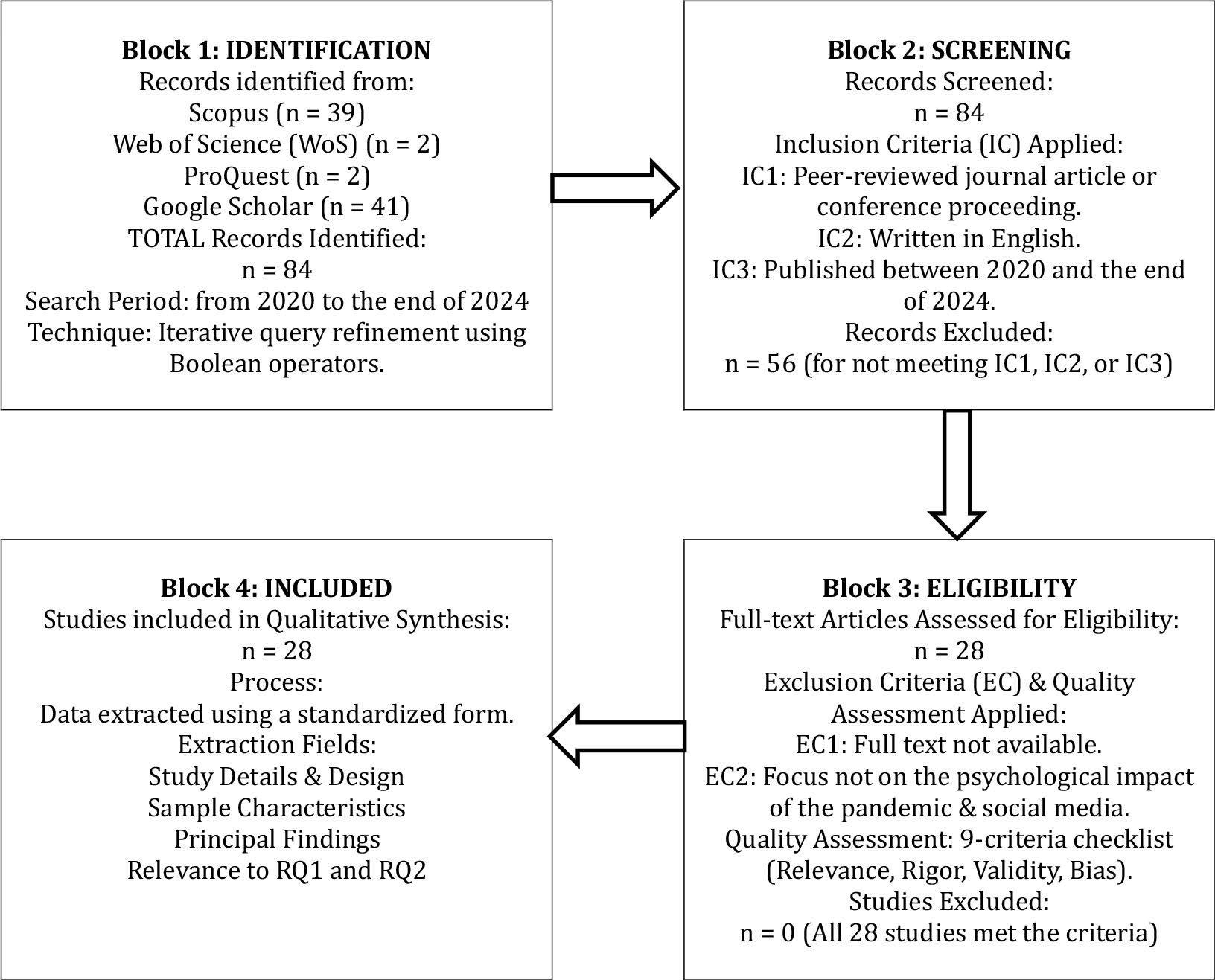
Figure 2.
(PRISMA 2020 Flow Diagram). PRISMA 2020 Procedure illustrating the reviewed papers’ choice based on Moher et al. (2010) and Alk et al. (2024)
The review was conducted during an online discussion among three members of the project team, with the remaining members responsible for detailed analysis and validation.
4. Results
Based on the research materials collected and their thorough analysis and synthesis, we have formulated the following responses to each research question.
RQ1: How did social media use affect psychological well-being during the pandemic?
To systematically address RQ1, we first divide the findings into two categories: negative and positive psychological effects. The negative emotions primarily include stress, anxiety, depression, loneliness, violence, and eating disorders. Conversely, the positive effects observed across studies include social engagement, emotional support, a sense of fellowship, assurance, advice-sharing, and creative expression (Latha et al., 2020; Liu et al., 2024).
The psychological impact of a pandemic on society encompasses a wide range of adverse effects, including
anxiety (Cao et al., 2020; Harth and Mitte, 2020; Pfefferbaum and North, 2020; Heitzman, 2020; Yang et al., 2020; Faruk et al., 2021; Hudimova et al., 2021; Prowse et al., 2021; Sampogna et al., 2023; Nazari et al., 2023; Maftei et al., 2023; Schoultz et al., 2023),
stress (Cao et al., 2020; Pfefferbaum and North, 2020; Heitzman, 2020; Harth and Mitte, 2020; Yang et al., 2020; Hudimova et al., 2021; Faruk et al., 2021; Prowse et al., 2021 Sampogna et al., 2023; Nazari et al., 2023; Schoultz et al., 2023),
depression (Cao et al., 2020; Pfefferbaum and North, 2020; Heitzman, 2020; Yang et al., 2020; Hudimova et al., 2021; Faruk et al., 2021; Prowse et al., 2021; Sampogna et al., 2023; Nazari et al., 2023),
loneliness (Hudimova et al., 2021; Nazari et al., 2023; Maftei et al., 2023),
increased domestic violence (Telles et al., 2020; Kourti et al., 2023), and
eating disorders (Faruk et al., 2021; Sampogna et al., 2023).
These effects may vary depending on factors such as age, gender, education level, living conditions, and location.
support (Latha et al., 2020; Zhou et al., 2020; Schreurs et al., 2023; Lutz et al., 2023),
advice (Latha et al., 2020; Zhou et al., 2020; Lutz et al., 2023).
assurance (Latha et al., 2020; Zhou et al., 2020),
fellowship (Schreurs et al., 2023; Lutz et al., 2023),
social engagement (Schreurs et al., 2023), and
creativity (Liu et al., 2024).
Conversely, social media provided significant benefits during the pandemic. Positive interactions on social media, particularly those focused on emotional support and community building, have been shown to improve psychological well-being by fostering social connections. In addition, social media enabled users to engage in global conversations, share creative content, and stay informed about the evolving situation, which for some people helped reduce feelings of isolation and anxiety. Social media helped people in home isolation cope with boredom, stress, and thus with long-term feelings of unease (Brooks et al., 2020). Some people coped with the pandemic by creatively using their sense of humour, creating a series of memes about the pandemic and sharing them online. One study suggests that this may mark the beginning of interest in online content within the context of creativity research (Glǎveanu & Laurent, 2021).
Figure 3 presents a summary of the emotions and feelings identified in the case of an individual engaged in social media activities during the COVID-19 pandemic. Six negative feelings and emotions are highlighted on the left: stress, anxiety, depression, loneliness, violence, and eating disorders. Meanwhile, six positive feelings and emotions are outlined on the right, including social engagement, fellowship, support, assurance, and advice (Figure 3).
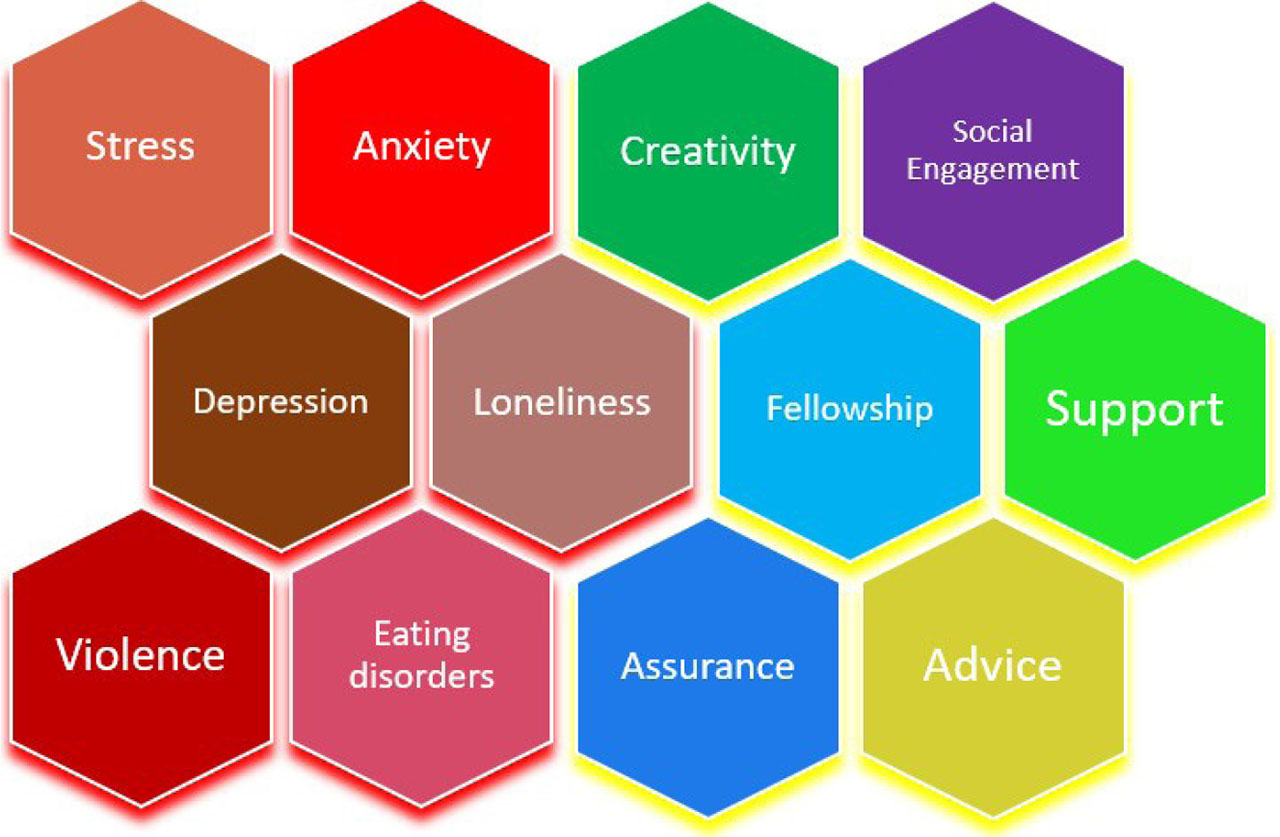
Figure 3.
Feelings and emotions related to using social media during the pandemic
Note that social media content can both alleviate and exacerbate psychological symptoms, depending on the type of information and the emotional regulation strategies that users employ. Misinformation and sensationalism on social media platforms contributed to stress and anxiety. On the other hand, social media also played a significant role in disseminating vital information and providing emotional support, highlighting the dual nature of its impact.
Undeniably, times of crisis have altered the way people use social media, including how they spend time, interact, obtain information, and communicate with others. We found out that the longer the duration of social media use, the more significant the increase in depressive symptoms. Although many previous studies have shown the adverse effects of social media on mood or quality of life, not all results are conclusive.
For interested readers, Table A1 provides a detailed analysis of the extracted studies, focusing on the psychological impact of a pandemic on society and social media use.
RQ2: What are the existing research gaps and possible future research directions?
We identified research trends and research gaps related to the psychological impact of the COVID-19 pandemic, and the use of social media was categorized into the following six areas:
Psychological effects on society (20 studies). This category includes research on the various psychological aspects of society affected by the pandemic, such as anxiety, stress, depression, loneliness, and other mental health issues resulting from the pandemic.
Social media use (15 studies). Research in this category examines how social media was used during the pandemic and its impact on individuals and society, particularly the positive and negative effects of social media use during the crisis.
Mental Health (25 studies). This category focuses on studies related to mental health issues that arose during the pandemic, including research on the prevalence of mental health problems such as anxiety, depression, and stress, and how the pandemic affected them.
Teletherapy and telepsychiatry (10 studies). Studies in this category explore the role of teletherapy and telepsychiatry in addressing mental health issues during the pandemic, examining the effectiveness and accessibility of remote mental health services.
Social support (15 studies). This category encompasses research on the significance of social support in mitigating the psychological effects of the pandemic, examining how social connections and support systems facilitated individuals’ coping with the crisis.
Research gaps (15 studies). Identified gaps in the existing literature and suggested directions for future research. This category highlights areas where more research is needed to fully understand the psychological impact of the pandemic and the role of social media.
Table A2 provides a detailed input in this extent, and one can conclude that while some of the papers accentuate the role of social media in contributing to psychological health (Amin, 2020; Lipschitz & Torous, 2020), then the others concentrate on the methodological opportunities offered by social media (Heitzman, 2020; Drazkowski et al., 2020; Takian et al., 2021).
Overall, they propose employing social media in various ways, tailored to the study topics and the conclusions drawn from the results. All presented research gaps and the possibility of future studies assume social media usage as a valuable tool in accessing study subjects and gathering data.
5. Discussion
Note that in this study, we define psychological influence as a process by which individuals and communities modify their behaviour, feelings, emotions, or opinions in response to what others think, feel, or do. However, information from other sources, including television, radio, and print newspapers, can also influence people’s attitudes (Latane, 1981). Therefore, the results discussed can be treated with considerable caution, as external factors may influence them, the influence of which, in our opinion, cannot be eliminated.
Moreover, although there is no agreement on a precise definition of a pandemic, including how to determine when it begins and ends, the one common denominator of all past outbreaks that have been called pandemics is widespread geographic spread (Morens et al., 2009).
The COVID-19 pandemic severely affected millions of people worldwide (Qureshi, 2020). Other features of a pandemic include rapid disease transmission and high attack rates (Akin & Gözel, 2020), while other criteria, such as immunity (Babich et al., 2020), novelty, infectiousness, contagiousness, and severity, all play an essential role.
Most international health organizations no longer use severity as a criterion for defining a pandemic. For example, until May 2009, the World Health Organization (WHO) defined a pandemic as an outbreak that causes ‘enormous numbers of deaths and illnesses’; however, after May 2009, the WHO removed this phrase from its definition of pandemics (Cohen & Carter, 2010). Using these criteria, the global COVID-19 outbreak can be accurately described as a pandemic.
5.1. Study Contributions
In general view, the elaborated and discussed review provides a framework for understanding the psychological impact of large-scale disruptions and the role of social media, which can be applied to future pandemics or other global crises. Additionally, the insights into the psychological effects of social media are valuable for ongoing mental health research and public health initiatives. Our conclusions align with other syntheses emphasizing the complex and sometimes contradictory impact of social technologies on well-being during the COVID-19 era (Aytekin et al., 2024; Kowal et al., 2024).
The impact of this review extends to various stakeholders, including mental health professionals, policymakers, educators, and developers of social media platforms. Mental health professionals can utilize the findings to gain a deeper understanding of the psychological challenges faced during the pandemic and tailor their interventions accordingly. Policymakers can develop informed policies to regulate social media content and provide mental health support. Educators can incorporate these insights into curricula to raise awareness about responsible social media use. Social media platform developers can design features that mitigate negative psychological impacts and promote well-being. Researchers studying creativity can explore new forms of creativity during a crisis, such as a pandemic (Glǎveanu & Laurent, 2021).
In our opinion, our study makes a significant contribution to the existing literature by focusing on the psychological effects of the pandemic on social media use. This area has not been extensively studied previously. By examining recent data from 2020 to 2024, this review offers a unique perspective on the ongoing impact of the pandemic. It also identifies research gaps and suggests potential directions for future research, contributing to a more comprehensive understanding of the topic.
Our contribution involves identifying research gaps and suggesting possibilities for future studies related to the psychological impact of the pandemic on society through social media. The results of our systematic literature review confirm that the COVID-19 pandemic dramatically contributed to the increased use of social media in general. Moreover, our research indicates that social media has become an effective recruitment tool for research projects. Additionally, our results indicate that social media is being increasingly utilized for information dissemination.
However, many authors are concerned that social media increasingly distributes false news. Overall, most research indicates that social media has a substantial impact on users’ psychological well-being and health. In addition, the innovation of our Review is its focus on social media use during times of crisis, which has not been previously captured in research. To the best of our knowledge, based on the literature review to date, there is very little research on similar topics (if any) in the context of the post-pandemic crisis.
5.2. Theoretical Implications
The review highlights the importance of understanding the psychological impact of the pandemic on social media use and its broader implications for mental health research. The findings underscore the importance of conducting further studies on the psychological effects of prolonged social media exposure during crises, as well as the dual role of social media as both a support mechanism and a source of stress.
5.3. Economic Implications and Policy Relevance
The insights gained from this review can inform public health strategies and interventions aimed at mitigating the adverse psychological effects of social media use during crises. Understanding the psychological impacts can help develop guidelines for responsible social media consumption and provide support mechanisms for those affected by its negative aspects.
While this study primarily focuses on psychological outcomes of social media use during the COVID-19 pandemic, it also has substantial economic implications, particularly regarding labour productivity, public health expenditures, and socio-economic inequality (Kotola, 2024).
In Poland, indirect costs related to mental health problems — such as absenteeism and disability benefits — amounted to approximately PLN 285.8 billion (∼€61.1 billion) in 2021. This represented a 6% increase compared to 2020, and mental disorders accounted for 16.7% of total incapacity benefit expenditures (Sobczyk et al., 2023). As Gabryelczyk (2020) argues, the pandemic served as a de facto stress test for digital transformation in public institutions. Similarly, our review shows that social media platforms have become central to psychological coping, communication, and institutional messaging, revealing not only behavioural shifts but also infrastructural and economic changes.
These outcomes underscore the necessity for integrated policy frameworks that bridge mental health, digital governance, and labour economics. Specifically, four policy dimensions require urgent attention:
Algorithmic transparency mandates: Regulatory measures (e.g., the EU’s Digital Services Act) requiring social platforms to disclose content amplification mechanisms, reducing harmful misinformation propagation during crises.
Public health communication systems: Government-led social media channels for real-time dissemination of validated health information (e.g., WHO is using AI-powered chatbots during COVID-19), countering infodemics.
Digital equity legislation: Subsidized broadband access and device distribution programs for vulnerable populations (e.g., FCC’s Affordable Connectivity Program), ensuring inclusive access to teletherapy.
Remote work protections: Legislative frameworks establishing ‘right to disconnect’ (e.g., France’s El Khomri Law) to mitigate digital burnout exacerbated by constant social media connectivity.
Failure to implement such policies risks amplifying socioeconomic disparities, with estimated productivity losses exceeding $1 trillion globally by 2030 (Knapp & Wong, 2020; Samnani, 2024).
The most notable increase was observed in depressive and anxiety disorders, especially among women. These conditions, exacerbated by the pandemic and social media exposure, contribute to productivity loss, absenteeism, and long-term public costs (Brenner & Bhugra, 2020; Wang et al., 2023).
These outcomes highlight the need to integrate mental health strategies with economic and digital policy. Preventive measures, early intervention, and digital literacy support can reduce both psychological harm and socioeconomic inequality (Knapp & Wong, 2020).
Recent meta-analyses have yielded mixed findings regarding the impact of social media on well-being. While no consistent average association was found (Hancock et al., 2022), problematic use is moderately linked to anxiety and depression symptoms among youth (Lynch, 2024). Such psychological distress has significant economic implications, particularly for vulnerable socio-economic groups that face digital exclusion, financial strain, and reduced labour participation (Syed et al., 2021; Samnani, 2024).
These findings suggest the need for integrated policies that combine mental health promotion, digital inclusion, and economic resilience (Saputra et al., 2022). Investment in early interventions, responsible media regulation, and workplace well-being programs can help mitigate long-term public costs and support sustainable development (Cheok et al., 2024; Fenton, 2024).
5.4. Study Limitations
A limitation of our research is the relatively small number of papers identified, compared to the extensive research devoted to COVID-19. Nonetheless, we strictly followed the established guidelines and maintained the methodological rigor required for qualitative research (Khan et al., 2003).
As qualitative research relies heavily on the researchers’ interpretations, personal biases, beliefs, or expectations may influence the data collection, analysis, and interpretation of results. A follow-up meeting was scheduled and carried out to discuss individual comments regarding identified discrepancies or uncertainties.
Additionally, 11 papers were excluded due to a lack of access to their full texts (Exclusion Criterion 1). This may introduce a selection bias, particularly if inaccessible studies included divergent or contradictory findings.
6. Conclusions
The results obtained from the current study enable us to conclude that the effects of the COVID-19 pandemic, as observed on online social media, are multifaceted, encompassing health, social, vocational, economic, and societal aspects. Not only do the infected suffer, but their families and care-providing staff also do. The pandemic gives rise to xenophobia, stigmatization, conspiracy theories, and mental disorders. The ways to mitigate adverse health effects include compliance with public health measures, framing restrictions correctly, addressing different types of restrictions separately, and targeting specific groups.
Most research in this field is preliminary and based on small samples and limited observations. Therefore, more research is needed on this topic. In particular, further research is needed on how social media can positively impact human health and well-being, as well as contribute to socioeconomic development. We also identified potential areas for future research, based on numerous research gaps related to social media regarding the aforementioned aspects.
The pandemic may be perceived as an opportunity to learn and care for prosocial resources more broadly. Cooperation and partnership in coping with the pandemic can be seen as a means to achieving a healthier and more just society. In future studies, we will emphasize exploring the relationship between social media use and the ability to develop knowledge workers. The results we obtain will help construct and implement appropriate interactions that are useful in developing organizations operating in the knowledge economy.
The COVID-19 pandemic has had a profound impact on society, significantly affecting social media use and psychological well-being. This systematic literature review examines the psychological effects of the pandemic on society and the role of social media from 2020 to 2024. The Review highlights the dual nature of social media as both a source of support and a contributor to psychological stress. The findings provide insights into trends and patterns in social media use and its impact on mental health, social relationships, and behaviour. The Review also identifies research gaps and proposes future research directions.
Future studies should quantify policy effectiveness gaps, including:
Comparative analysis of mental health outcomes in jurisdictions with/without digital wellbeing regulations (e.g., DSA-compliant vs. non-EU countries),
Cost-benefit assessments of public social media literacy programs,
Longitudinal tracking of labour productivity under ‘right to disconnect’ laws. Such research would inform evidence-based policymaking at the digital-health-labour nexus.
The primary purpose of our review is to analyse the psychological impact of the COVID-19 pandemic on society through the lens of social media use.
By conducting a systematic review of the scientific literature, the study aims to identify the psychological aspects influenced by the pandemic and to examine the role of social media in these changes. This review addresses critical research questions regarding the psychological effects of the pandemic, the content presented in media, and the specific impacts on social media usage.
In addition to shedding light on the psychological and social impact of the COVID-19 pandemic, this study highlights the critical role of social media in promoting sustainability through long-term behaviour change and resilient digital communication. We also argue that integrating social media into sustainability strategies, whether in mental health awareness, public health initiatives, or crisis communication, can significantly enhance global resilience and well-being, paving the way for future research on the intersection of digital media and sustainable societal development.
To conclude, we believe that our study provides a comprehensive synthesis of the psychological impact of the COVID-19 pandemic on society and social media use, offering valuable insights and identifying areas for future research. Our analysis further reveals that effective pandemic resilience requires policy harmonization across three domains:
digital governance (content moderation standards),
public health infrastructure (official crisis communication via verified social accounts),
labour protections (legislative safeguards against digital overwork).
Without this synergy, social media’s dual role as both crisis lifeline and mental health amplifier will remain unmanaged.
We also hope that the ongoing discussion will find followers who are committed to further exploring and modelling the complex interplay between mental health and social media.
Acknowledgments
Research activity funded by the University of Wrocław subvention 2019–2025 from the Ministry of Education and Science (MEiN), Poland.
Appendices
Appendixes
Kowal, J., Klebaniuk, J., Olejnik, K., & Weichbroth, P. (2025, October 6). Supplementary appendix for the paper: Psychological well-being and social media during the pandemic: Evidence, research gaps, and future research directions [Supplementary material]. SSRN. https://doi.org/10.2139/ssrn.5598131