

Table 1:
Summary of selected previous studies on vegetation-based window shading and their methodological implications for the present study
| Study | Experimental approach / main contribution | Relevant limitation / challenge | Implication for the present study |
|---|---|---|---|
| Ip et al. (2010) | Long-term experimental evaluation of a climbing-plant “Bioshader”; demonstrated the dependence of solar transmissivity on leaf-layer density and seasonal development. | Vegetation properties and shading performance varied dynamically over time; thermal response through the complete window–indoor system was not the main focus. | Supports the need to treat vegetation as a dynamic shading element and highlights the importance of future quantitative canopy characterization. |
| Zheng et al. (2020) | Developed a movable green window shading system and quantified shading coefficient, glazing heat flux, and cooling-energy effects for different vegetation coverage levels. | Comparison was performed for a different glazing system, orientation, and climatic context; the window construction differed substantially from the modern triple glazing used in the present study. | Demonstrates the value of movable vegetation shading and motivates controlled assessment of the same window under shaded and unshaded conditions. |
| Ren et al. (2024) | Full-scale in-situ assessment of window-integrated vegetation, including glazing heat flux and local microclimatic effects. | Results are strongly dependent on the specific glazing, climate, geometry, and vegetation configuration. | Supports simultaneous monitoring of radiative, thermal, and local microclimatic responses rather than evaluating shading through a single indicator. |
| Chabada et al. (2023) | Experimental assessment of a vegetated façade under Central European climatic conditions, including the influence of irrigation and façade orientation. | Focused primarily on opaque/vegetated façade components rather than transparent window systems. | Provides climatic and methodological background for evaluating vegetation systems under Central European conditions. |
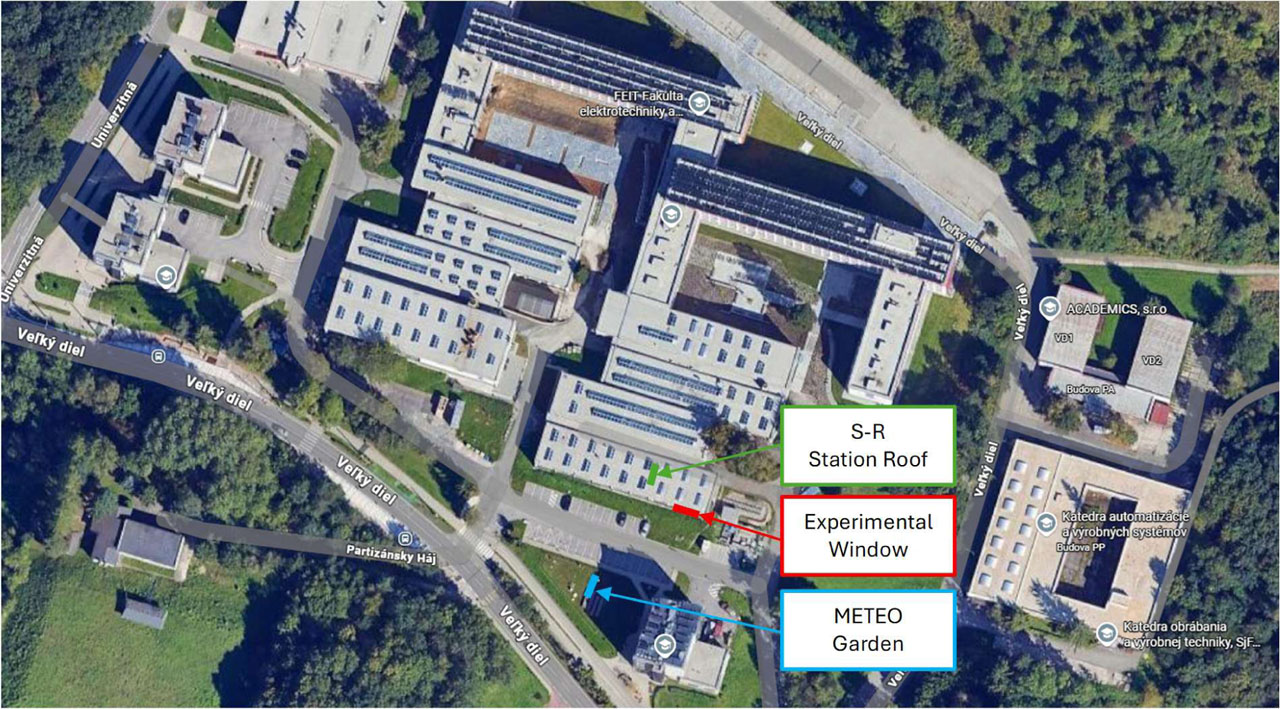
Figure 1:
Location of the experimental facility on the campus of the University of Žilina
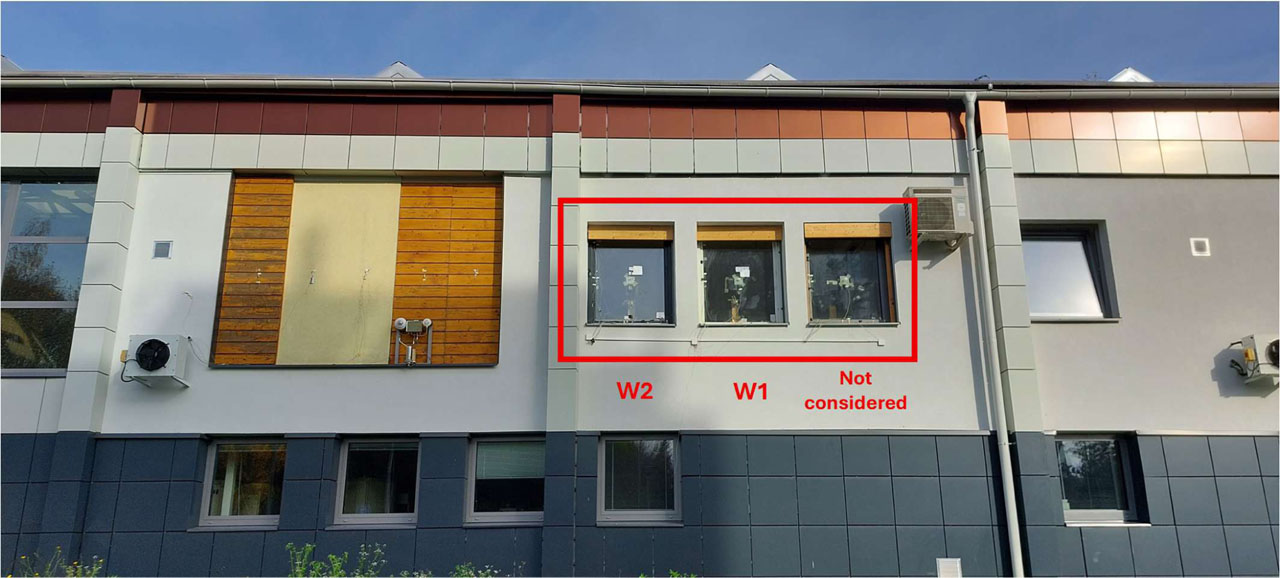
Figure 2:
Exterior view of the experimental window constructions of the pavilion laboratory. Window labels: from right to left – aluminium-framed window (not considered); PVC window (W1) in the centre; timber window (W2) on the left
Table 2:
Basic technical parameters of the evaluated window constructions
| Parameter | Timber-framed window W2 | PVC-framed window W1 |
| Frame material | Timber | PVC |
| Frame system / profile | 96 × 85, 500+ | Salamander bluEvolution 82 |
| Window dimensions [mm] | 1230 × 1480 | 1230 × 1480 |
| Glazing type | Insulating triple glazing | Insulating triple glazing |
| Glazing build-up [mm] | 4/18/4/18/4 | 4/18/4/18/4 |
| Cavity gas fill | Argon | Argon |
| Thermal transmittance of the window, UW [W/(m2·K)] | 0.64 | 0.74 |
| Solar factor of the glazing, g [-] | 0.53 | 0.54 |
| Construction status | New, installed 04/2026 | New, installed 04/2026 |
| Role in the experiment | Reference/control variant | Main VEGE/REF variant |
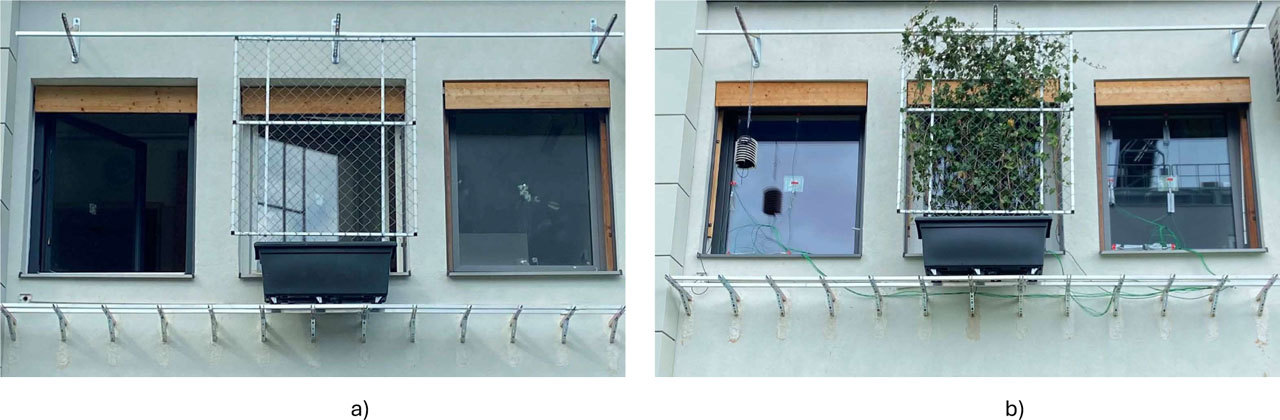
Figure 3:
Exterior view of experimental vegetation-based shading sample during the implementation process. Labels: a) construction of the exterior supporting structure enabling mobility of the vegetation sample; b) installation of the vegetation sample after planting and sensor placement
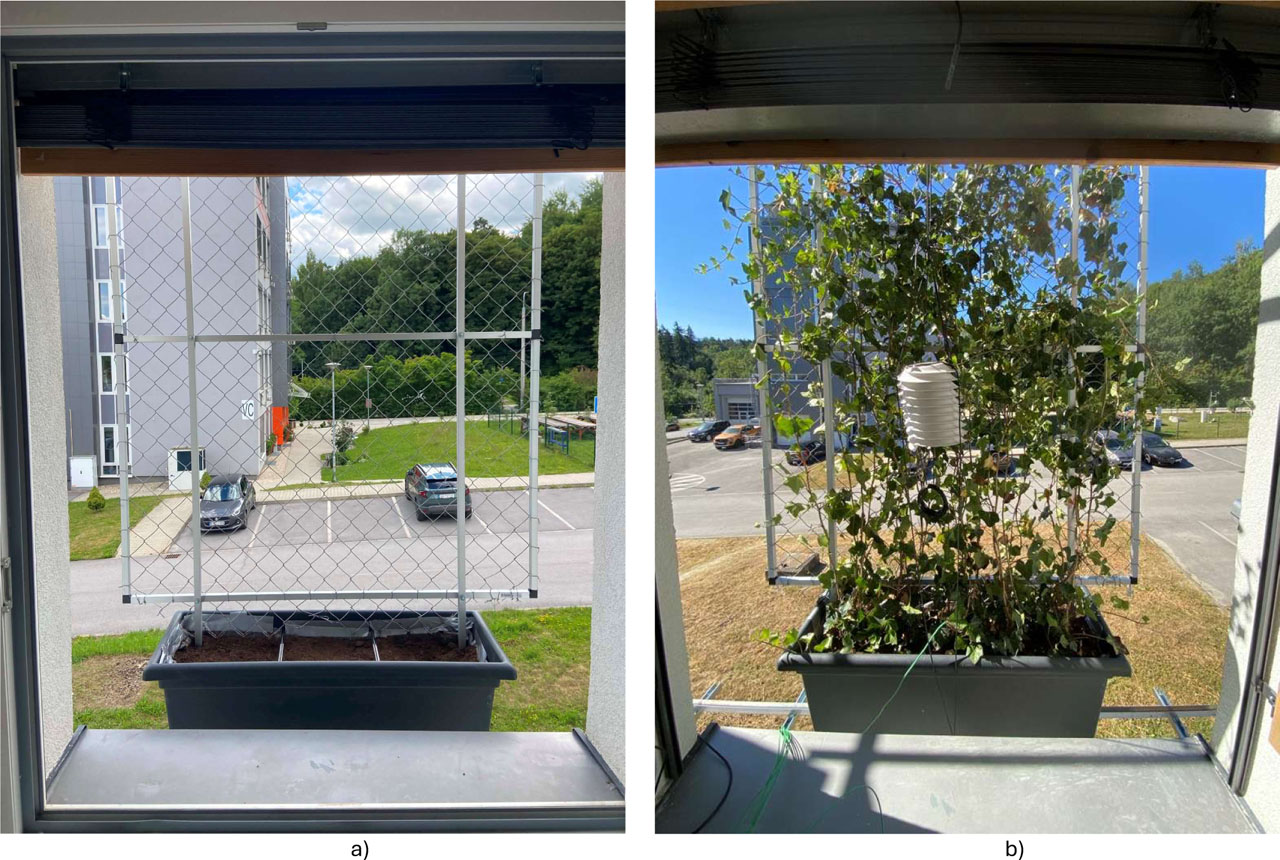
Figure 4:
Interior view of experimental vegetation-based shading sample during the implementation process. Labels: a) interior view of the installed sample; b) interior view of the final position and completed configuration of the vegetation-based shading sample
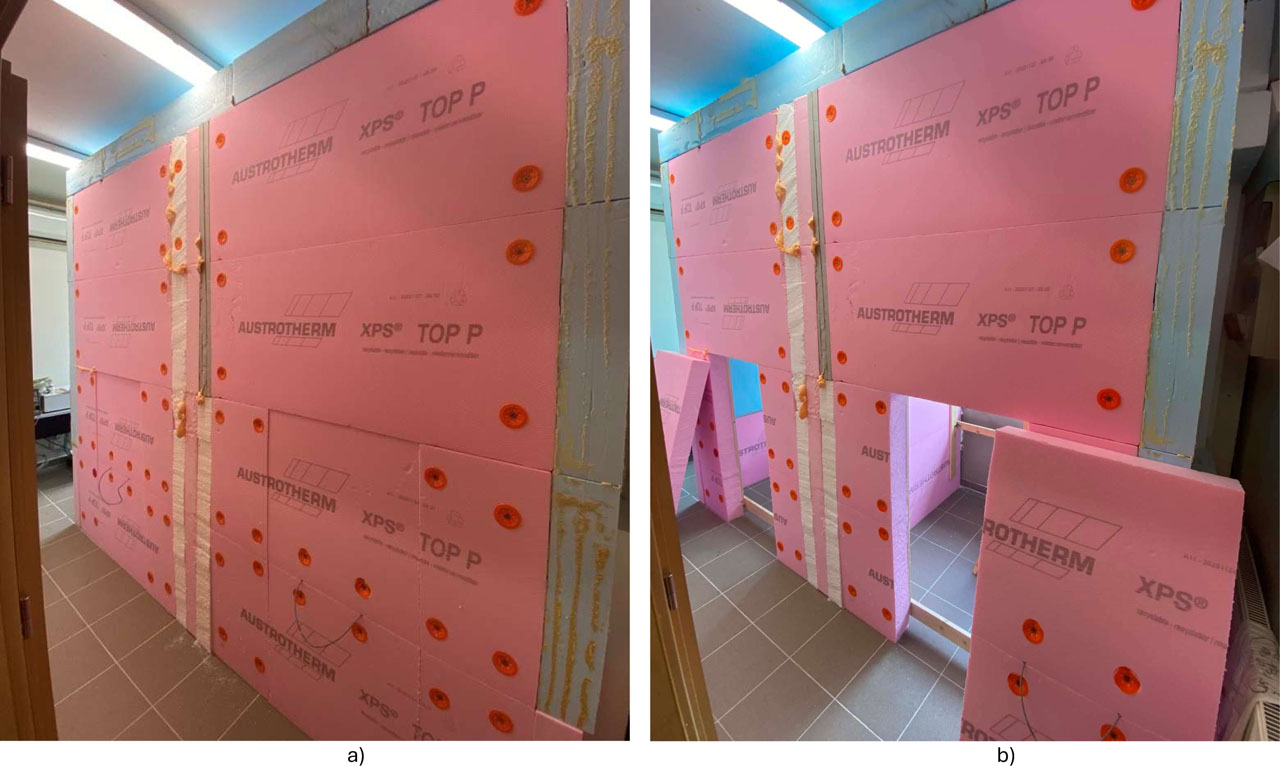
Figure 5:
Construction of the thermally insulated boxes used to separate the individual window configurations. Labels: a) with the openings to the TI boxes closed; b) with the openings to the TI boxes open
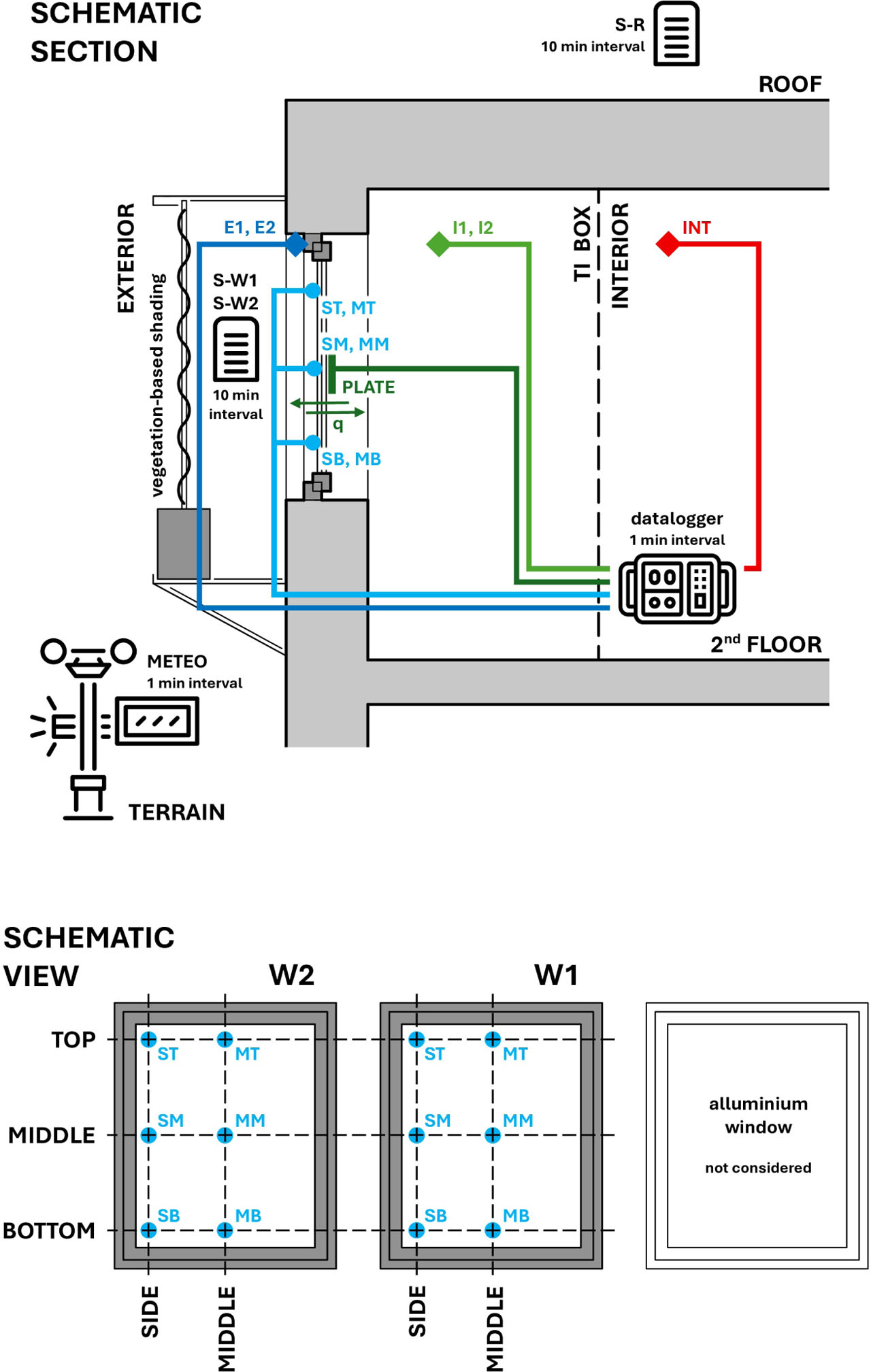
Figure 6:
Schematic arrangement of the experimental measurement system and sensor locations: schematic section through the experimental façade showing reference, local, indoor, and heat-flux measurements, and schematic front view of windows W1 and W2 showing the positions of the glazing surface temperature sensors. W1 represents the PVC-framed window and W2 the timber-framed window. TI Box had identical internal dimensions of 1300 × 1100 × 2400 mm
Table 3:
Technical specifications of the measuring equipment
| Device/Sensor | Parameters | Values |
|---|---|---|
| Datalogger | Overload | Max ± 12 V |
| Input current | 500 pA | |
| Measuring rate | 2.5/10/50/100 mops | |
| System accuracy | 0.02% ± 1 digit (at 2.5 and 10 mops) 0.05% ± 3 digits (at 50 mops) | |
| Heat Flow Plates FQAx | Temperature stability | −40 to +80 °C |
| Calibration accuracy | 5% | |
| Miniature multi-sensor module FHAD 46C0L10 | Temperature range | −20 to +80 °C |
| Relative humidity range | 5% to 98% | |
| Accuracy | −20 to 85 °C–max 0.7 °C ±3% Rh in range 10% ÷ 90% Rh ±5% Rh in range 5% ÷ 98% Rh | |
| Reproducibility | ±0.1 °C | |
| Thermocouples NiCR-Ni | Temperature range | −20 to 205 °C |
| Accuracy | Class 2 | |
| Station: Roof (S-R) Window 1 (S-W1) Window 2 (S-W2) | Temperature range | −40 to +105 °C |
| Solar irradiance | 0 to 2000 W/m2 | |
| Accuracy | ±0.2 °C 5% (W/m2) of daily total |
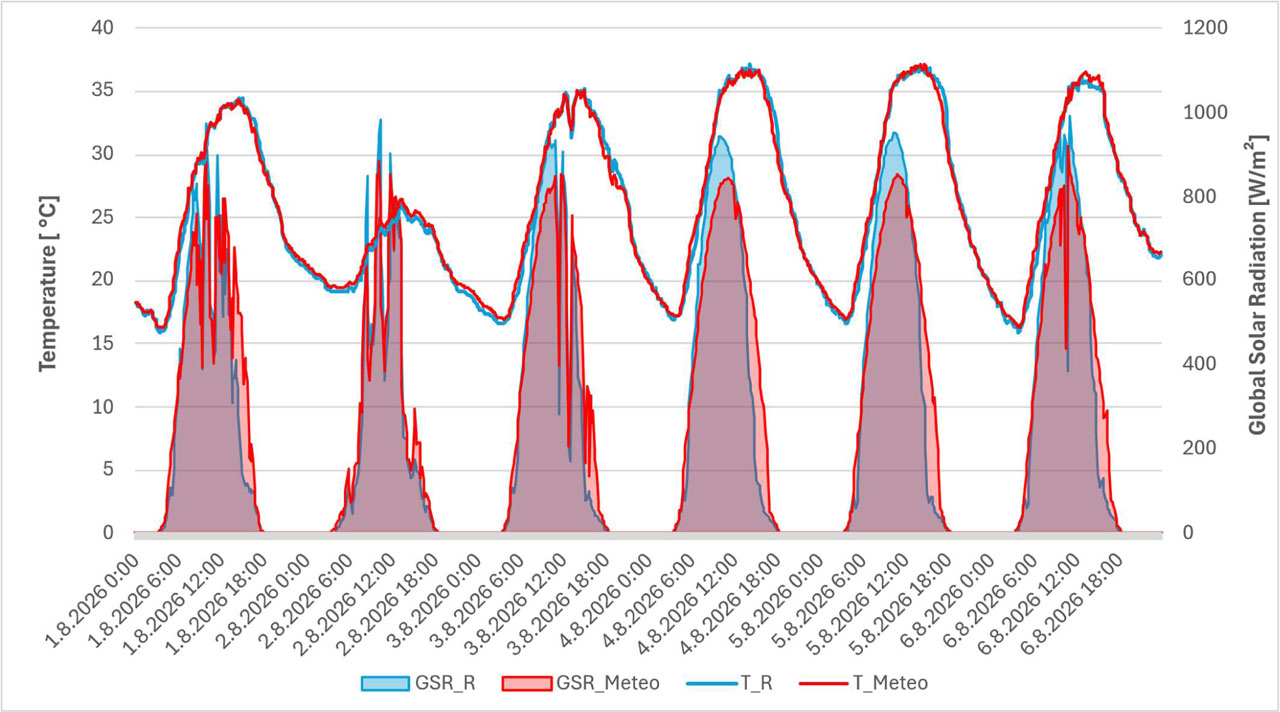
Figure 7:
The course of outdoor air temperature and global solar radiation recorded by the METEO and S-R reference systems between 1 and 6 August 2026
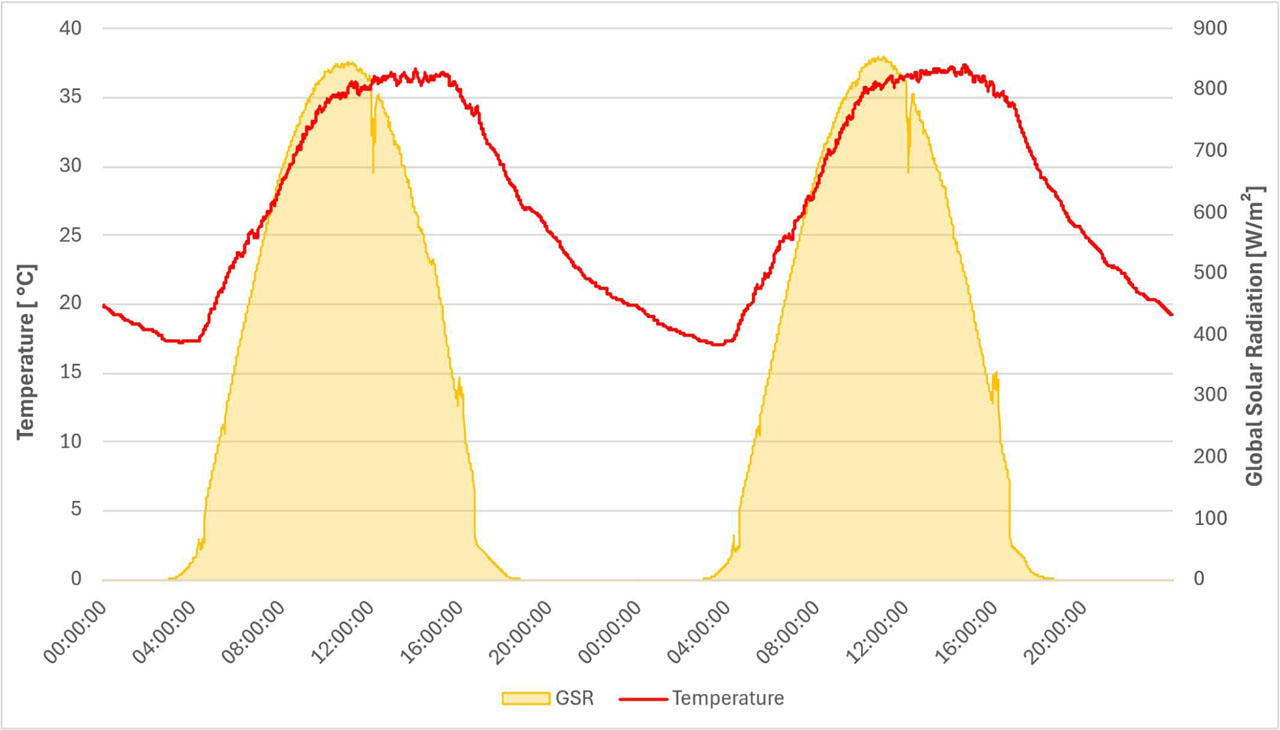
Figure 8:
The course of outdoor air temperature and global solar radiation recorded by the METEO weather station during the selected representative days, 4 and 5 August 2026
Table 4:
Summary characteristics of the local microclimatic and radiative conditions in front of the window W1 under the VEGE and REF conditions
| Outdoor conditions | ||
|---|---|---|
| S-W1 | Plastic Window – W1 | |
| 4 August | 5 August | |
| Te,avr [°C] | 27.73 | 27.90 |
| GSRsum [W/m2] | 6662.00 | 25406.00 |
| H [MJ/m2] | 4.00 | 15.24 |
| Difference Te,avr [K] | −0.17 | |
| Relative reduction in local cumulative solar energy RH [%] | 73.80 | |
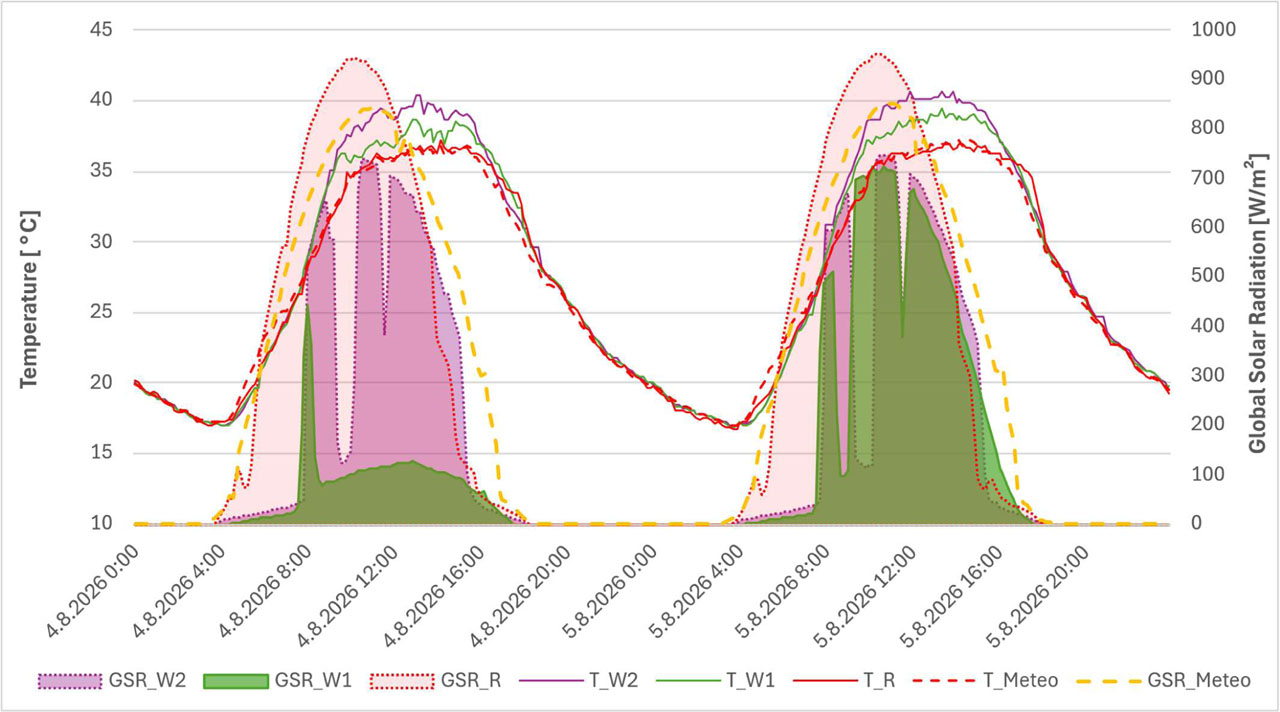
Figure 9:
Comparison of local thermal and radiative conditions at the monitored window constructions under the VEGE and REF conditions on 4 and 5 August 2026
Table 5:
Basic characteristics of the glazing surface temperature of W1 under the VEGE and REF conditions
| Temperature at the Glazing – Exterior | ||
|---|---|---|
| Thermocouples | Plastic Window – W1 | |
| 4 August | 5 August | |
| Ts,avr [°C] | 29.31 | 30.07 |
| Ts,max [°C] | 46.68 | 50.63 |
| Ts,ampl [K] | 28.57 | 32.65 |
| Difference Ts,avr [K] | −0.76 | |
| Difference Ts,max [K] | −3.95 | |
| Difference Ts,ampl [K] | −4.08 | |
Table 6:
Summary indicators of heat flux through the W1 glazing under the VEGE and REF conditions
| Parameter | VEGE: 4.8.2026 | REF: 5.8.2026 | Relative reduction in cumulative positive heat gain RQ |
|---|---|---|---|
| Cumulative positive heat gain, Q+ [MJ/m2] | 1.07 | 1.22 | −12.30% |
| Normalized heat-gain index, KQ [%] | 4.13 | 4.75 | − |
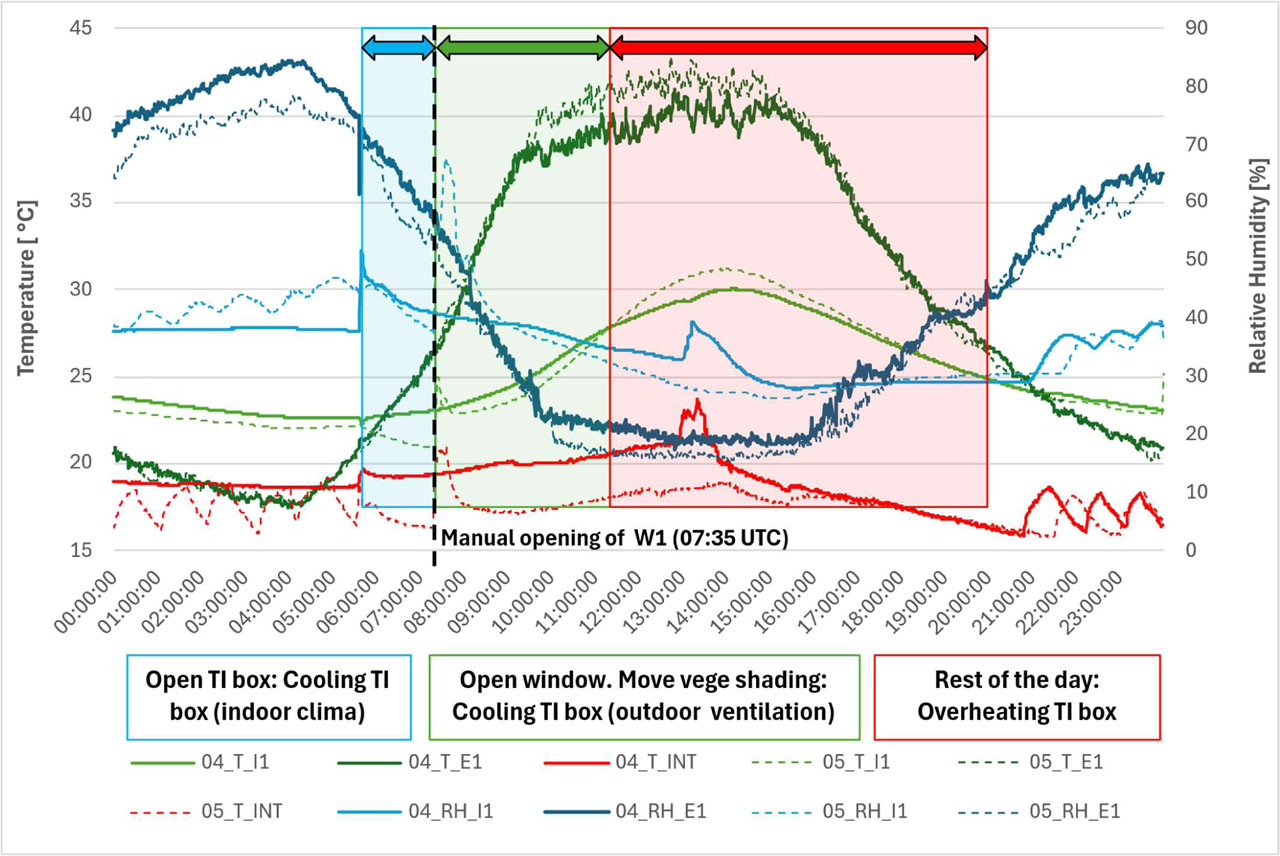
Figure 10:
Comparison of the temporal development of air temperature and relative humidity in TI Box 1, the local outdoor environment near W1, and the laboratory interior under the VEGE and REF conditions, with the individual phases of the experimental procedure indicated
Table 7:
Selected characteristics of the temperature response of TI Box 1 under the VEGE and REF conditions
| Parameter | VEGE: 4.8.2026 | REF: 5.8.2026 | Difference (VEGE-REF) |
|---|---|---|---|
| Maximum Temperature, Tmax [°C] | 30.05 | 31.18 | −1.13 K |
| Temperature Amplitude, ΔTamp [K] | 7.87 | 10.27 | −2.40 K |
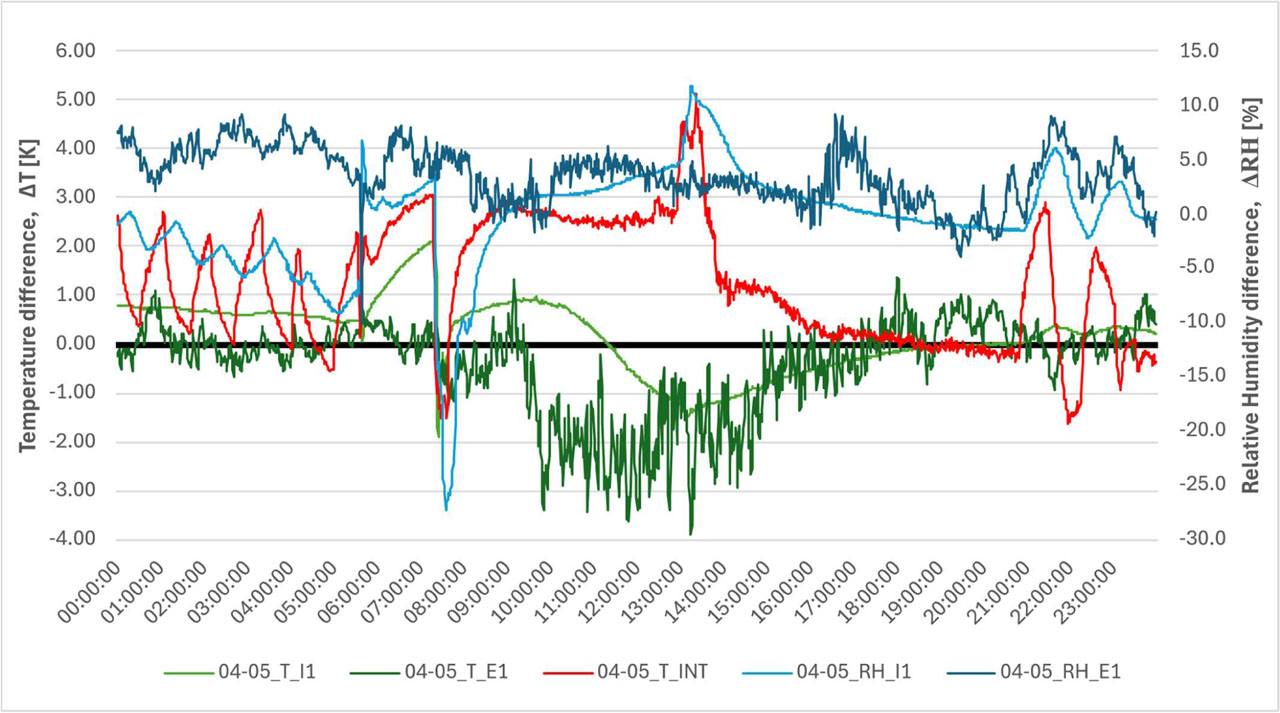
Figure 11:
Differential profiles of air temperature and relative humidity between the VEGE and REF conditions in TI Box 1, the local outdoor environment near W1, and the laboratory interior
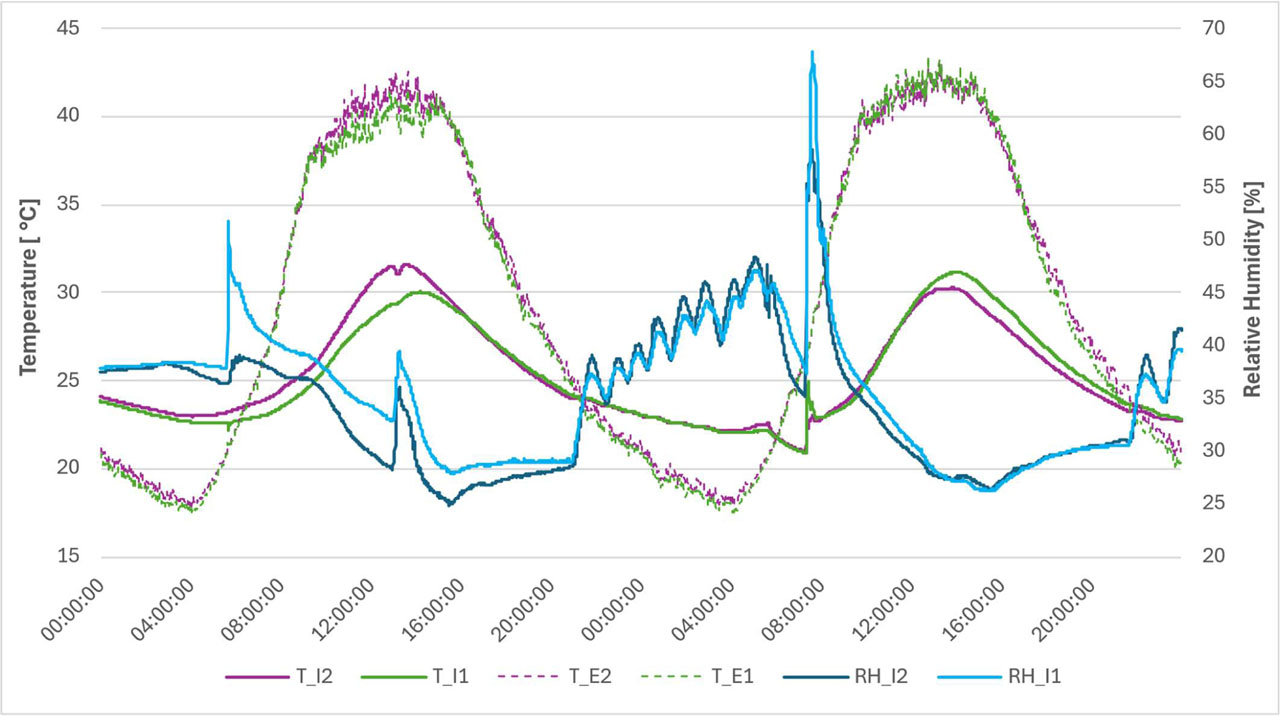
Figure 12:
Comparison of the temporal development of air temperature and relative humidity in TI Boxes 1 and 2, together with the local outdoor conditions at windows W1 and W2, on 4 and 5 August 2026
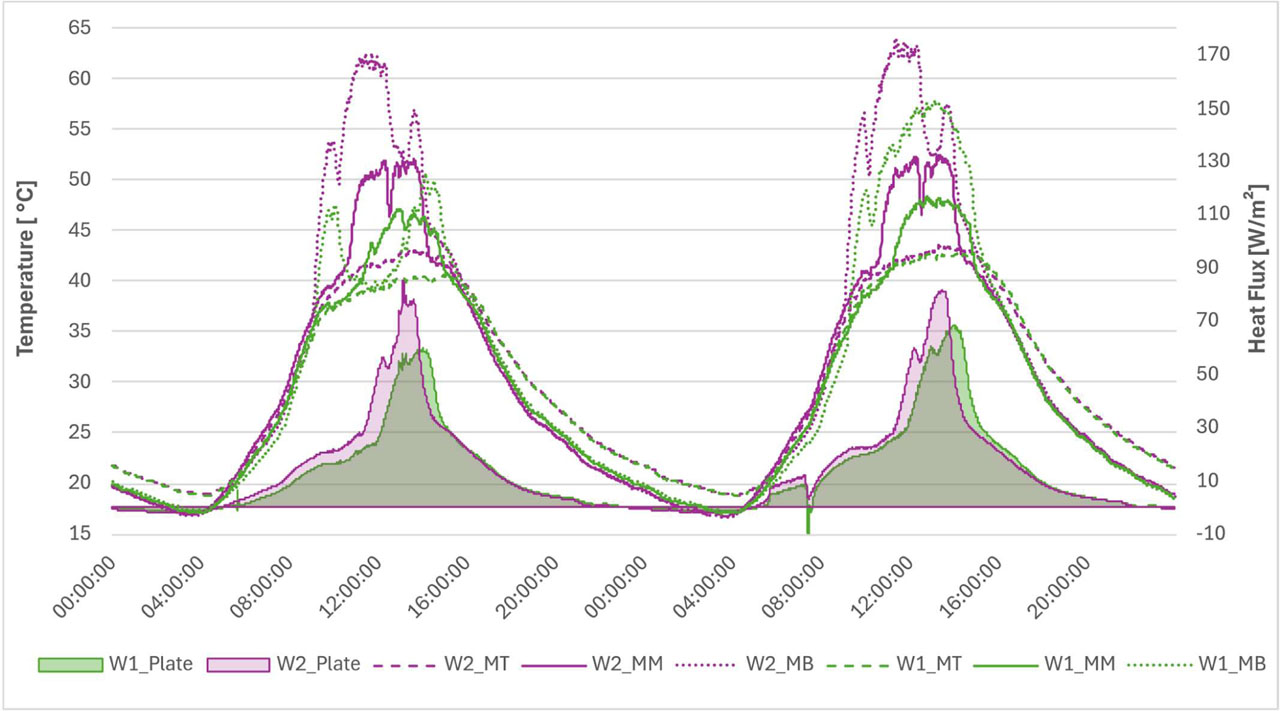
Figure 13:
A comparison of the time-dependent surface temperatures of the glazing and the heat flux density through windows W1 and W2 on 4 and 5 August 2026