

1. Introduction
In the past decade, global climate change has caused extreme weather conditions, such as more intense and frequent rainfall. This leads to flooding, which has been identified as the most frequent natural disaster. Flooding can occur when urban drainage capacity is insufficient to accommodate heavy rainfall. Intense rainfall and flooding can increase the exposure of pavement to water and moisture, which heightens the risk of moisture-induced damage and diminishes pavement performance.
Numerous researchers have explored the impact of global climate change on pavement performance. Miao et al. (2022) noted that increasing temperatures can lead to greater permanent deformation in asphalt pavements. Almeida & Picado-Santos (2022) reported that the infiltration of water into pavement layers can weaken the adhesive bond between the asphalt binder and aggregate, increasing the likelihood of moisture-induced damage. Extended water exposure may further exacerbate pavement deterioration. Consequently, enhancing the moisture resistance of asphalt mixtures is crucial for sustaining pavement performance under increasingly wet and extreme weather conditions.
Adaptation options include engineering and technological solutions, such as changing pavement mixes for roads using moisture-susceptible materials (Duque et al., 2024; Saleh & Hashemian, 2022; Swarna & Hossain, 2022). Efforts to mitigate the vulnerability of asphalt binders to damage also include the incorporation of polymers, as reported by several researchers (Han et al., 2022; Kim & Le, 2023; Mushtaq et al., 2022; Ye & Zhao, 2023). Polymer-modified asphalt binders exhibit excellent rigidity at elevated temperatures, enhanced resistance to cracking under cold conditions, superior moisture resistance, and an extended fatigue lifespan (Yang et al., 2024). However, they are relatively expensive. Therefore, alternative additives, such as zeolite, have been investigated to improve the properties of asphalt binders at a reduced expenses (Zhi et al., 2024).
Zeolites are microporous hydrated aluminosilicate minerals characterized by a three-dimensional crystal framework containing cations such as SiO4 and AlO4. Zeolites can be either natural or synthetic, and both forms are extensively used for environmental protection (Kordala & Wyszkowski, 2024). Improving the stiffness and enhancing the rutting resistance have been investigated as the effects of incorporating natural zeolites into asphalt binders (Indriyati et al., 2026). Sun et al. (2023) stated that zeolite improved the adhesion between aggregates and the asphalt, making the mixture less susceptible to moisture-induced stripping. Arabani et al. (2021) also reported that incorporating zeolite into asphalt binder enhanced the moisture resistance of asphalt mixtures, thereby decreasing their vulnerability to stripping and weakening due to water infiltration.
Despite their benefits, challenges associated with zeolite-modified asphalt include achieving uniform mixing. The structural configuration of zeolite creates polar and charged sites within the framework of the material. Consequently, zeolites generally exhibit hydrophilic characteristics which can interact readily with water molecules and other polar species. In contrast, asphalt binder is a complex mixture of hydrocarbons dominated by nonpolar molecules (saturated and aromatic compounds), although it also contains polar fractions (resins and asphaltenes).
When zeolite particles are incorporated into the asphalt binder, the relatively polar and hydrophilic surface character differs from the predominantly nonpolar nature of the bituminous phase and may influence the dispersion of zeolite particles within the asphalt binder. The polar sites on the zeolites tend to attract each other rather than disperse within the nonpolar asphalt medium. This triggers interparticle interactions that promote agglomeration. Instead of dispersing uniformly, the zeolites tend to cluster, which can affect the homogeneity of the asphalt matrix. As the percentage of zeolite increased, issues related to material properties emerged (Tan et al., 2025).
Previous research has explored the different dosage levels of zeolite as a modifier in asphalt binder. Sengoz et al. (2013) assessed the effectiveness of natural zeolite as an additive for warm mix asphalt and found that it performed well within the 3–7% range. Topal et al. (2014) investigated both natural and synthetic zeolite additives and used a 5% dosage to improve the mechanical properties. Hasan et al. (2024) analyzed warm-mix asphalt incorporating Sasobit and zeolite additives and tested dosages of 4% and 6%. They noted improvements in mechanical performance; however, higher dosages posed risks of agglomeration and incompatibility.
The issue of incompatibility between zeolite and conventional asphalt must be addressed to achieve the desired performance of modified-binder. This problem can be resolved by incorporating aromatic oil into the mixture. This is because aromatic oil is a good solvent for asphaltene molecules due to its strong solubilizing properties. Aromatic oil serves as a bridge between the saturate fraction and the mixed micelle, and its presence helps to effectively disperse the mixed micelles in the saturate (Yan et al., 2023).
During recent times, interest in exploring aromatic compounds derived from natural plant resins as potential modifiers for asphalt has grown (Refaat et al., 2025). Plant-derived oils, such as those from natural latex rubber, palm fibres, castor oil, rapeseed oil, cotton seed oil, canola oil, sunflower oil, peanut oil, and vegetable oils could be used as asphalt rejuvenators (da Costa et al., 2024; Nandal et al., 2023; Sadeghnejad et al., 2025; Yao et al., 2022; Yousif et al., 2023). Bio-oil-based additives can affect the adhesion between the binder and aggregate, as well as its resistance to moisture. Hassanjani et al. (2025) found that modifying waste edible oil through acid-value reduction treatment improved resistance to moisture-induced damage.
In addition, natural plant resins possess viscoelastic properties similar to those of conventional asphalt. This softens the modifier surface and enhances its wettability, allowing the modifier particles to disperse more evenly throughout the asphalt binder. This evidence makes them a potential solution as co-modifiers for compatibility issues that arise during the mixing process between asphalt and zeolite modifier.
In this study, the bio-oil extracted from Calophyllum inophyllum seeds was selected due to its potential aromatic compounds. Bio-oil extracted from Calophyllum inophyllum seeds has garnered significant interest because of its high oil content and versatile chemical makeup. These seeds are categorized as high-oil, non-edible biomass, with the oil content in the seed kernels typically around 70% on a dry weight basis (Atabani & César, 2014). The actual yield varies with the extraction method used; solvent-assisted techniques generally result in higher rates than mechanical pressing, whereas thermochemical processes produce bio-oil with a greater variety of chemical compounds (Kusumaningtyas et al., 2022).
As previously stated, incorporating natural zeolite into asphalt binder results in a stiffening effect. This effect can enhance the performance at high temperatures by decreasing rutting. However, this stiffening can also make the material more brittle, particularly if the zeolite is not well dispersed. Dispersion challenges and particle agglomeration arise due to the polarity mismatch between the hydrophilic surfaces of the zeolite and the predominantly nonpolar asphalt matrix. Such incompatibility may cause the particles to clump together, hindering their even distribution and potentially affecting the uniformity of the mixture.
Conversely, bio-oil has a softening effect on the binder. Its polar functional groups may improve dispersion of zeolite, which helps decrease agglomeration. Additionally, bio-oil may counterbalance the excessive rigidity caused by zeolites while enhancing moisture resistance through improved binder–aggregate interactions. The research gap lies in the limited number of studies evaluating the combination of zeolite and bio-oil extracted from Calophyllum inophyllum seeds as asphalt modifiers, particularly regarding the relationship between the properties of modified-asphalt binder and the moisture susceptibility of hot-mix asphalt.
According to the research conducted by Sanchez-Alonso et al. (2020), a 5% zeolite within an asphalt matrix demonstrated good dispersion. Sengoz et al. (2013) found that zeolite contents up to 7% are considered effective. However, exceeding this limit may lead to particle clustering. In this study, 7% zeolite was selected as the upper boundary of the application. To address the potential issue of agglomeration and non-uniformity at this concentration, bio-oil was used as a co-modifier. The purpose of adding bio-oil was to alleviate the drawbacks linked to a high zeolite content.
This study introduces a novel experimental framework through a systematic assessment of whether bio-oil can complement the stiffening effect of zeolite while maintaining the durability and improving the moisture resistance of the asphalt mixtures. A conventional 60/70 penetration grade asphalt was used as the basis for comparing the effects of zeolite and bio-oil on the asphalt mixtures.
2. Methodology
2.1. Research Design
This study employed a laboratory experimental design. The research was conducted through a series of sequential stages, including material characterisation, preparation of zeolite and bio-oil-modified asphalt, fabrication of hot mix asphalt specimens, and testing of hot mix asphalt using the modified binder. The experimental workflow was designed to investigate the effect of combining natural zeolite and bio-oil as modifiers on the moisture resistance of the asphalt mixture.
2.2. Materials and Procedures
2.2.1. Materials
The materials used in this study consisted of asphalt binder, natural zeolite, bio-oil, and aggregates. The asphalt binder was conventional asphalt, specifically a 60/70 penetration grade asphalt procured from Pertamina (the Indonesian state oil and natural gas corporation). The 60/70 penetration-grade asphalt was chosen as the base binder because it is commonly used for asphalt pavement applications in the study context. This selection serves as a practical reference for assessing the impact of modifications using zeolite and bio-oil. Meanwhile, natural zeolite was collected from Central Java, Indonesia. The bio-oil used was obtained from the extraction of mature Calophyllum inophyllum seeds, produced by a local small enterprise. The conventional asphalt binder, natural zeolite, bio-oil and mixing process of modified asphalt are shown in Figure 1.
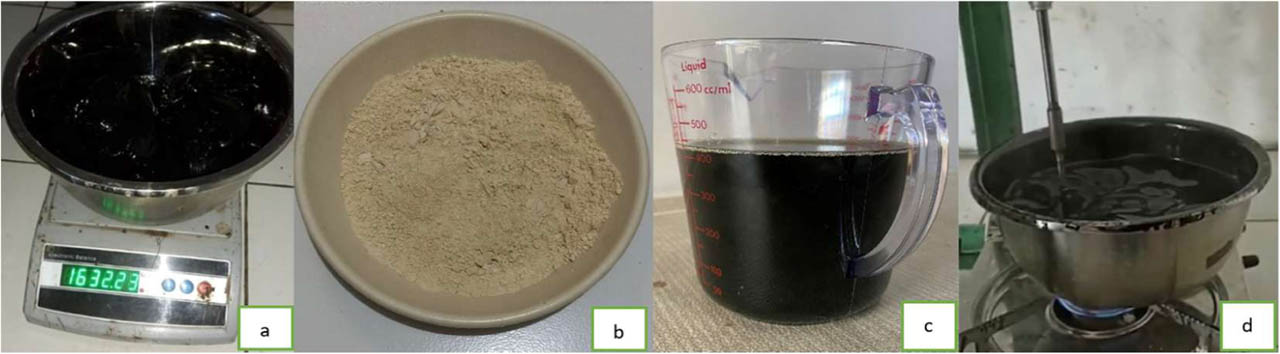
Figure 1:
a. conventional asphalt, b. natural zeolite, c. bio-oil, d. mixing process of modified asphalt
The coarse aggregate was coarse crushed volcanic aggregates obtained from East Lombok, Indonesia. The fine aggregate was natural sand sourced from the same location as that of the coarse aggregate. Portland cement was used as the mineral filler in this study. Tables 1–3 present the characterisations of the conventional asphalt binder, natural zeolite, and bio-oil. Table 4 lists the properties of the aggregates.
Table 1:
Properties of asphalt binder
| Properties of asphalt binder | Unit | Value |
|---|---|---|
| Penetration | [0.1 mm] | 64.5 |
| Softening point | [°C] | 48 |
| Ductility | [cm] | 160 |
| Specific gravity | [-] | 1.04 |
Table 2:
Compounds of natural zeolite
| Compounds of natural zeolite | Unit | Value |
|---|---|---|
| Silicon Dioxide (SiO2) | [%] | 70.2 |
| Aluminium Oxide (Al2O3) | [%] | 10.0 |
| Ferric Oxide (Fe2O3) | [%] | 9.52 |
| Others | [%] | 10.28 |
Table 3:
Properties of bio-oil
| Properties of bio-oil | Unit | Value |
|---|---|---|
| Specific gravity | [-] | 0.947 |
| Viscosity at 60°C | [cSt] | 35.2 |
| Flash point | [°C] | 210 |
| Solubility in CCl4 | [%] | 95.4 |
Table 4:
Properties of aggregates
| Aggregates | Properties | Unit | Value |
|---|---|---|---|
| Coarse aggregate | Aggregate impact value | [%] | 8.95 |
| Bulk specific gravity | [-] | 2.645 | |
| Apparent specific gravity | [-] | 2.771 | |
| Water absorption | [%] | 1.718 | |
| Affinity to asphalt binder | [%] | 100 | |
| Fine aggregate | Bulk specific gravity | [-] | 2.751 |
| Apparent specific gravity | [-] | 2.792 | |
| Water absorption | [%] | 0.543 | |
| Filler | Bulk specific gravity | [-] | 2.688 |
| Apparent specific gravity | [-] | 2.725 | |
| Water absorption | [%] | 0.503 |
The aggregate gradation was designed to meet the asphalt concrete-wearing course gradation criteria outlined in the Indonesian Bina Marga Specifications, as shown in Figure 2.
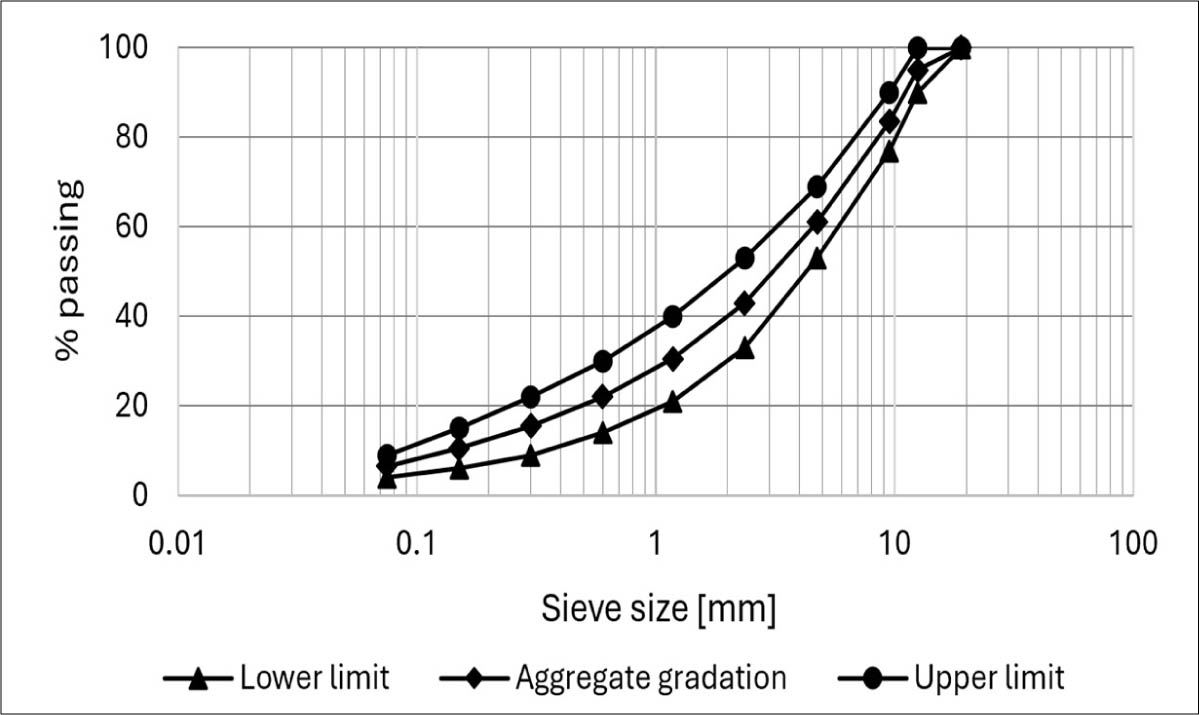
Figure 2:
Aggregate gradation
2.2.2. Sample preparation
Zeolite-modified asphalt (ZMA) was formulated by blending 93% conventional asphalt with 7% zeolite. Then, three percentages (1, 2, and 3% by weight of modified asphalt binder) of Calophyllum inophyllum oil were applied to the mixtures and labelled as B-ZMA-1, B-ZMA-2, and B-ZMA-3, respectively.
The zeolite-modified asphalt binder was prepared in two stages: the manual stirring stage and the mechanical mixing stage. At the early stage of 30 min, the binder was not fully melted and remained partially solid, making mechanical shear mixing impractical for this stage. After the asphalt binder became fully fluid, mechanical blending was applied at 1480 rpm for 30 min at the temperature of 160°C.
To prepare the asphalt mixtures, the aggregate and asphalt binder were mixed at a temperature of 165°C. The asphalt binder content was calculated from the aggregate gradation using the empirical formula presented in Equation (1).
Where:P - asphalt content,
CA - coarse aggregate, retained on 4.75 mm sieve (# 4),
FA - fine agregate, passing 4.75 mm sieve (# 4) and retained on 0.075 mm sieve (# 200),
F - filler, passing 0.075 mm sieve (# 200),
k - constant number; the value of 1.0 was chosen.
As shown in Figure 2, the proportions of coarse aggregate (CA), fine aggregate (FA), and filler (F) were 39%, 54.5%, and 6.5%, respectively. Using Equation (1), the asphalt binder content was determined to be 5.99%, which was then rounded to 6.0%. For all mixtures, the asphalt content was consistently set at 6%, as determined by the empirical asphalt content formula. By keeping the asphalt content unchanged, the influence of adding bio-oil on the performance of HMA could be assessed independently without the variable of binder dosage alteration.
Subsequently, the specimens were compacted with 75 blows of Marshall compaction on each side of the specimen based on ASTM D6926. Marshall stability and flow were determined in accordance with ASTM D6927.
2.3. Data Collection
2.3.1. Physical tests
A range of assessments, including penetration, softening point, and ductility, were undertaken to explore the influence of using natural zeolite and Calophyllum inophyllum oil on the physical properties of modified asphalt. By examining the penetration and softening point values, the temperature sensitivity of asphalt binders can be investigated using the penetration index. This index is thought to represent the rheological behaviour of asphalt binders in response to temperature (Anderson et al., 1983; McLeod, 1972). As stated by Koenders (2015), Pfeiffer and Van Doormaal's work revealed that the penetration index was determined using Equations 2 and 3.
Where:PI - Penetration index,
A - Penetration logarithm slope,
Pen at T1 - Penetration at the temperature T1 [0.1 mm],
SP - Softening point [°C].
2.3.2. Storage stability test
The test of storage stability was carried out based on ASTM D7173. After storing vertically in a tube of 25 mm diameter and 200 mm height in an oven at 163°C for 48 h, the sample was transferred into a refrigerator at −10 °C for another 4 h. Then, the asphalt binder sample was cut horizontally into three parts. The top and bottom sections of each sample were melted separately for softening point analysis. The upper and lower sections of the stored binder were analyzed separately because variations between these sections could reveal vertical segregation or phase separation of the modifier during storage. Consequently, a minor difference in the properties measured between the top and bottom sections suggests improved storage stability.
2.3.3. Fourier transform infrared (FTIR)
FTIR spectroscopy was used to characterize the functional groups in zeolite-modified asphalt, both without bio-oil and with various types incorporating bio-oil. To enable a direct comparison between the control and all modified binders, FTIR measurements were also performed on representative bulk samples from each formulation. Meanwhile, the difference in the absorbance peaks in the FTIR spectra between the top and bottom sections of the specimens in this study was used to assess the dispersion and compatibility between the zeolite and asphalt binder. Assessment the functional groups of the materials referring to the table of compound function groups by Coates (2006) and Skoog et al. (2007).
2.3.4. Scanning electron microscopy (SEM)
Scanning electron microscopy (SEM) was performed to investigate the morphology of the asphalt modified with zeolite and bio-oil.
2.3.5. Marshall properties
After preparation, as described previously, specimens of the asphalt mixture were examined for their resistance to degradation when exposed to water, following a 24-hour immersion at 60°C. The results of the Marshall test were determined by calculating the average of three specimens. Equation 4 is used to calculate the ratio between the Marshall immersion of the soaked specimen and that of the standard Marshall.
Where:RSI - retained stability index [%].
2.3.6. Indirect tensile strength (ITS)
The indirect tensile strength test was conducted to evaluate the asphalt mixture's performance under compressive loading. To determine the ITS, the following formula was applied:
Where:ITS - indirect tensile strength [kPa],
Pmax - maximum applied load [kN],
t - thickness of specimen [cm],
d - diameter of specimen [cm].
The ITS test was conducted according to the EN 12697-12 standard. It was performed under two conditions: unconditioned and conditioned. The unconditioned sample specimens were tested after being cured at 40°C for 72 hours, while the conditioned samples were obtained by submerging the unconditioned samples in water at 25°C for 24 hours. The moisture susceptibility of the mixtures was assessed by measuring the reduction in strength due to moisture, expressed as an indirect tensile strength ratio (ITSR). The results of the indirect tensile strength test were obtained by averaging the data from the three samples. ITSR was determined as follows:
Where:ITSR = indirect tensile strength ratio [%],
ITSwet = ITS of the conditioned specimen [kPa],
ITSdry = ITS of the unconditioned specimen [kPa].
Figure 3 outlines the step-by-step workflow of this study.
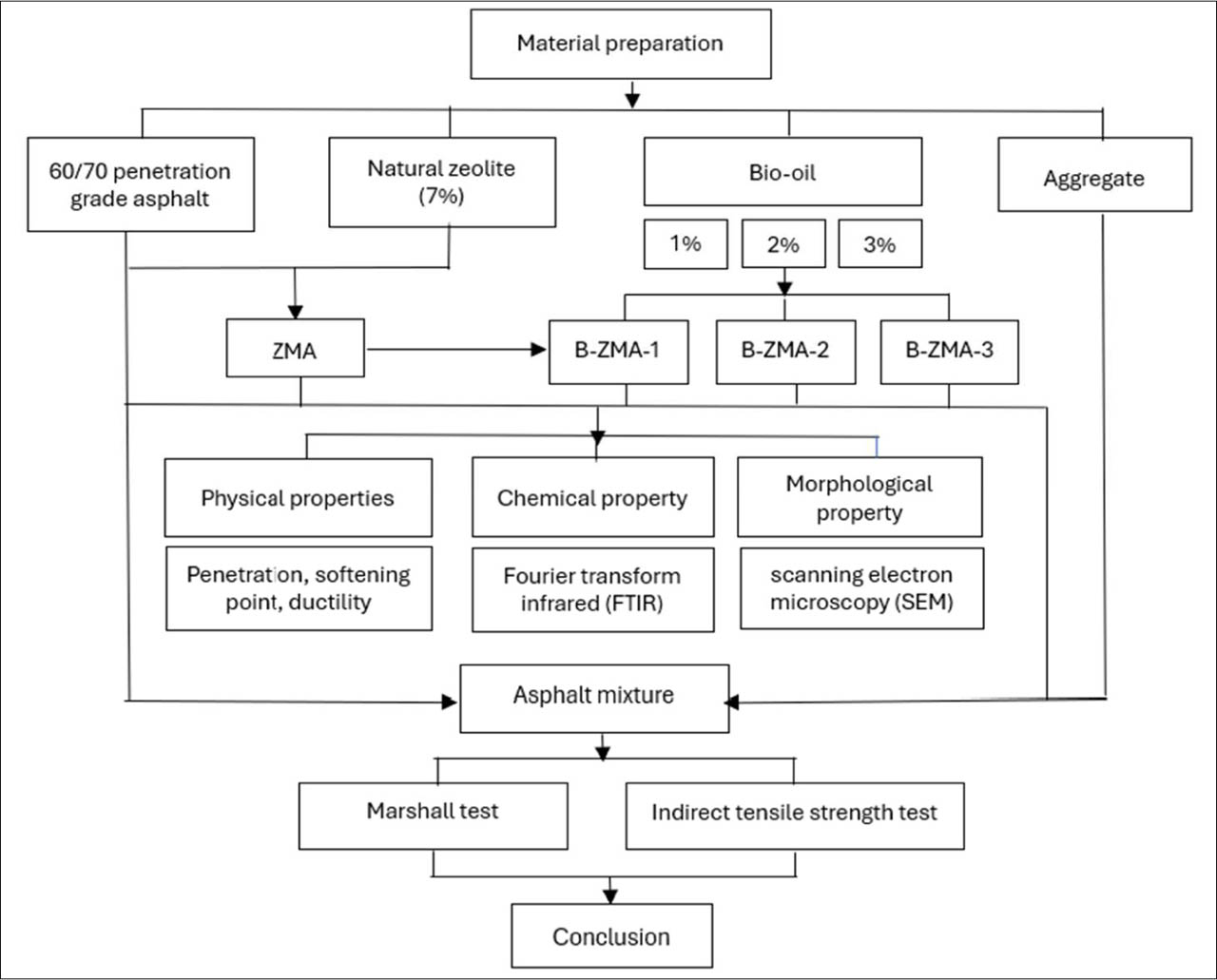
Figure 3:
Flowchart of the study
3. Results and Discussion
3.1. Properties of asphalt modified with zeolite and bio-oil
Table 5 presents the high penetration and low softening point values of the asphalts modified with zeolite and bio-oil compared to those of the asphalt modified with zeolite only. This phenomenon indicates that the bio-oil softens the asphalt because of its plasticizer effect. Based on the penetration and softening point test results, the penetration index tended to decrease as the percentage of bio-oil increased.
Table 5:
Properties of zeolite and bio-oil-modified asphalt
| Binder types | Softening point [°C] | Penetration [0.1 mm] | Ductility [cm] | The slope | Penetration index |
|---|---|---|---|---|---|
| ZMA (93% conventional asphalt + 7% zeolite) | 55.7 | 56.8 | 100.9 | 0.0374 | 0.450 |
| B-ZMA-1 (ZMA + 1% bio-oil) | 54.4 | 60.1 | 115.9 | 0.0382 | 0.302 |
| B-ZMA-2 (ZMA + 2% bio-oil) | 52.2 | 65.2 | 127.7 | 0.0401 | −0.017 |
| B-ZMA-3 (ZMA + 3% bio-oil) | 49.9 | 71 | 133.9 | 0.0422 | −0.360 |
Table 5 also displays the effects of incorporating bio-oil into zeolite-modified asphalt on the ductility values. The bio-oil percentage of 1%, 2% and 3% documented 115.9 cm, 127.7 cm and 133.9 cm ductility, respectively. These ductility values were higher than those of zeolite-modified asphalt (100.9 cm). The ductility test results confirm that bio-oil increases the flexibility of the asphalt matrix. The conventional binder properties exhibit nonlinear changes, likely owing to the opposing influences of zeolite and bio-oil. While zeolite generally enhances binder stiffness, bio-oil tends to soften it. Consequently, the properties are unlikely to change in a linear trend with varying amounts of bio-oil.
3.2. Softening point of asphalt modified with zeolite and bio-oil
Figure 4 shows that the softening point of the zeolite-modified asphalt was higher than that of the conventional 60/70 asphalt, which was 48°C, as previously mentioned in Table 1. This is because zeolite has a very crystalline structure with pores. When mixed with asphalt, these pores absorb some of the lighter components of asphalt, such as oil and resin. Consequently, the asphalt becomes denser, increasing its softening point. Zeolite is also composed of SiO4 and AlO4 units, which form a highly stable three-dimensional framework that provides high structural rigidity and strengthens the asphalt matrix.
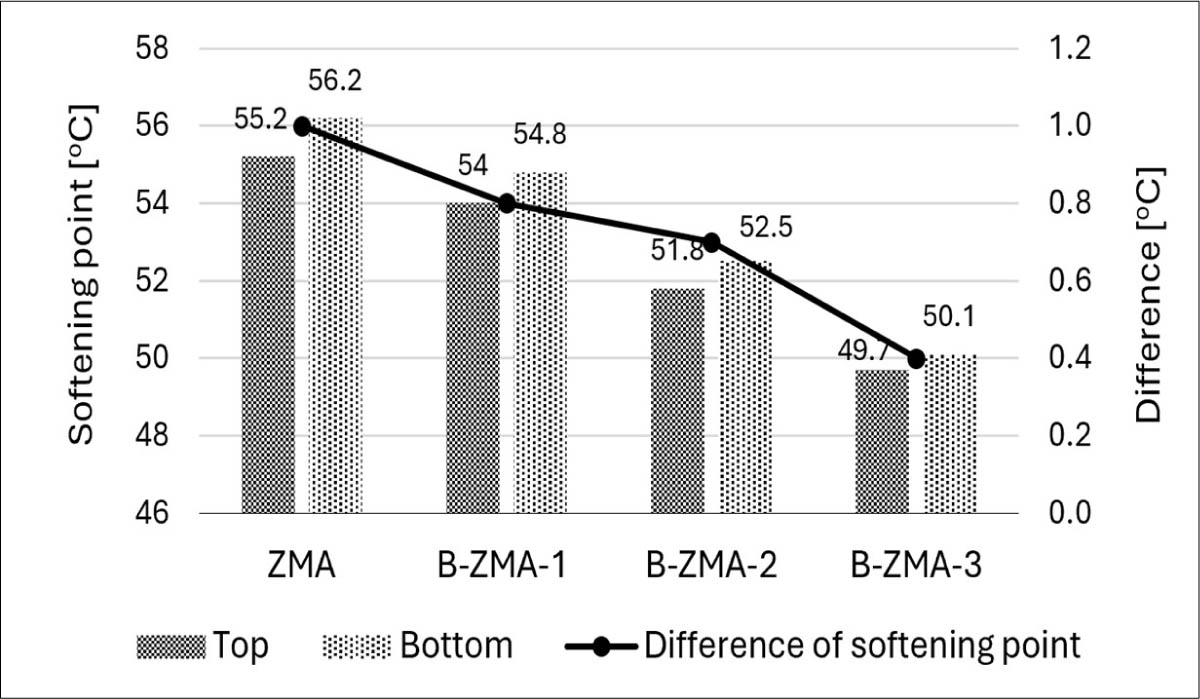
Figure 4:
Difference of softening point
The addition of bio-oil at concentrations of 1%, 2%, and 3% reduced the softening point in the zeolite-modified asphalt. With a lighter weight than asphalt, the addition of bio-oil tends to decrease the viscosity of the asphalt matrix, thereby softening the mixture. The natural plasticizer in bio-oil can also reduce the bond strength between the asphalt molecules, thereby lowering its softening point.
Figure 4 presents the softening point results before and after the storage procedure. This figure shows that the softening points at the bottom of the asphalt modified with zeolite and bio-oil were higher than those at the top. Although there were slight differences in the softening points of the upper and lower sections, these variations were insufficient to indicate substantial phase separation, suggesting that under the test storage conditions, significant segregation did not occur.
Figure 4 also shows that the use of bio-oil improved the storage stability of zeolite-modified asphalt. At 1%, 2%, and 3% bio-oil concentrations, the difference in the softening point decreased to 0.8°C, 0.7°C, and 0.4°C, respectively. A smaller difference indicates a lower degree of phase separation, which strengthens the evidence found by Fu et al. (2007) that the aromatic content in bio-oil acts as an effective solvent and enhances the homogeneity of the modified asphalt binder.
3.3. Analysis of FTIR
To facilitate a direct comparison, FTIR spectra of the 60/70 penetration-grade asphalt and all modified binder bulk samples are presented in Figure 5.
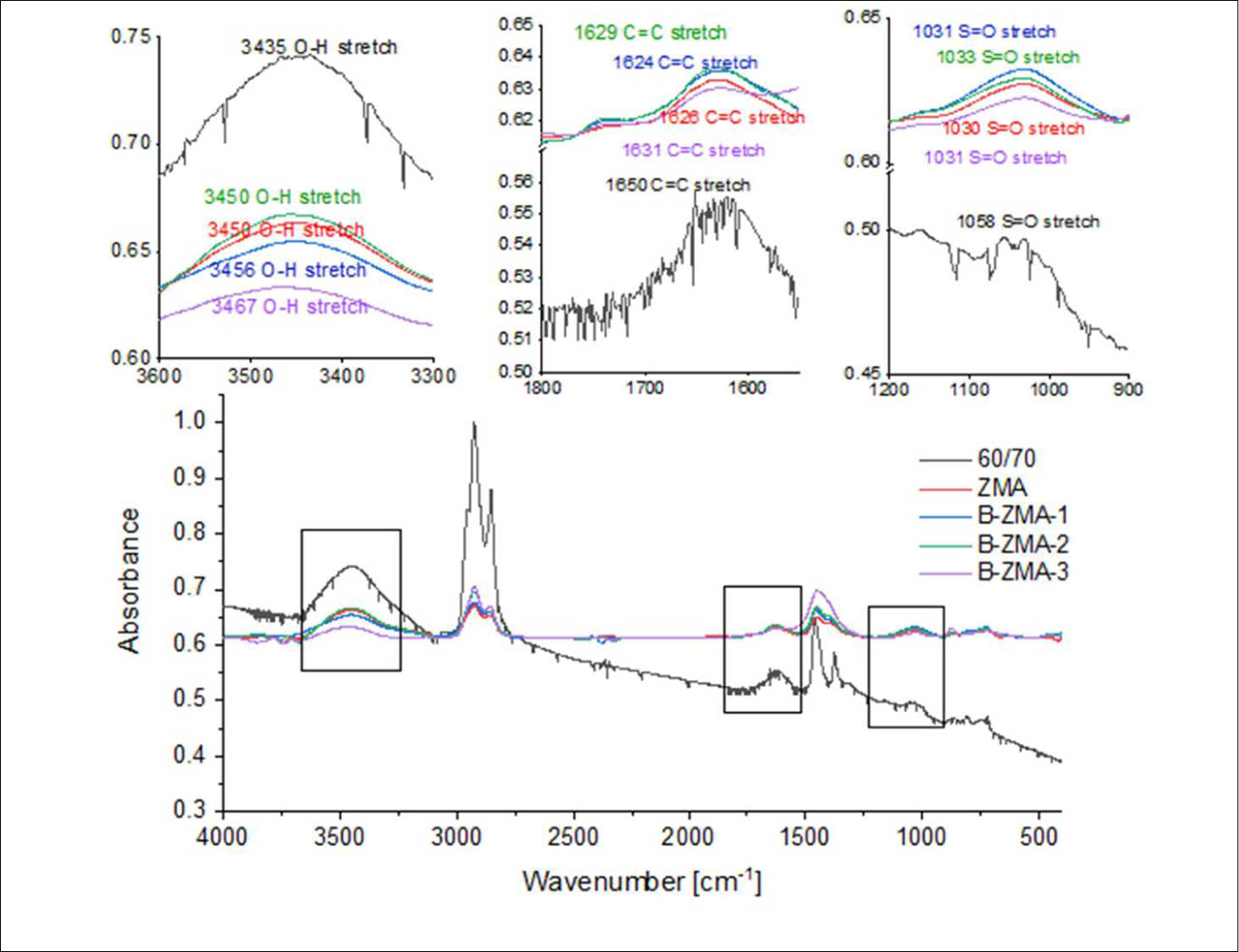
Figure 5:
FTIR spectra of bulk samples of each type of asphalt binder
The FTIR spectrum shows a broad band around 3400 cm−1, typical of O–H stretching vibrations, suggesting the presence of hydroxyl groups or hydrogen bonding. The pronounced peaks observed at 2923 cm−1 are associated with the stretching of C–H bonds in methylene.
The distinct peaks observed near 1600 cm−1 indicate aromatic C=C stretching, linked to aromatic functional groups. In the FTIR spectrum of the sample, an absorption band appears at approximately 1030 cm−1, which is indicative of the S=O stretching vibration found in sulfoxides, confirming the presence of sulfoxide functionality. The peaks at 1600 cm−1, associated with aromatic C=C, imply that the sulfoxide group is connected to an aromatic framework. The intensity of the S=O band serves as a reliable diagnostic marker for identifying sulfoxides in infrared spectroscopy.
Figure 5 illustrates that the peaks observed in the zeolite- and bio-oil-modified asphalts suggest that there was no major chemical reaction among the materials in the blend. The peaks associated with 60/70 penetration grade asphalt remained evident in the modified asphalts, signifying that the distinct chemical properties were partially preserved. Despite retaining their individual chemical compositions, the mixture was cohesively bound by physical forces such as dispersion. These physical interactions among the components led to a homogeneous and consistent blend. The FTIR analysis of the functional groups in the modified asphalt indicates that the materials were physically dispersed throughout the mixture.
The FTIR test results before and after storage in an oven for 48 h are presented in Figures 6–9. To analyse the phase separation of zeolite-modified asphalt with bio-oil, the differences in infrared absorbance between the upper and lower samples are presented in Tables 6–9. The peaks that occurred in both the top and bottom parts were chosen for this analysis.
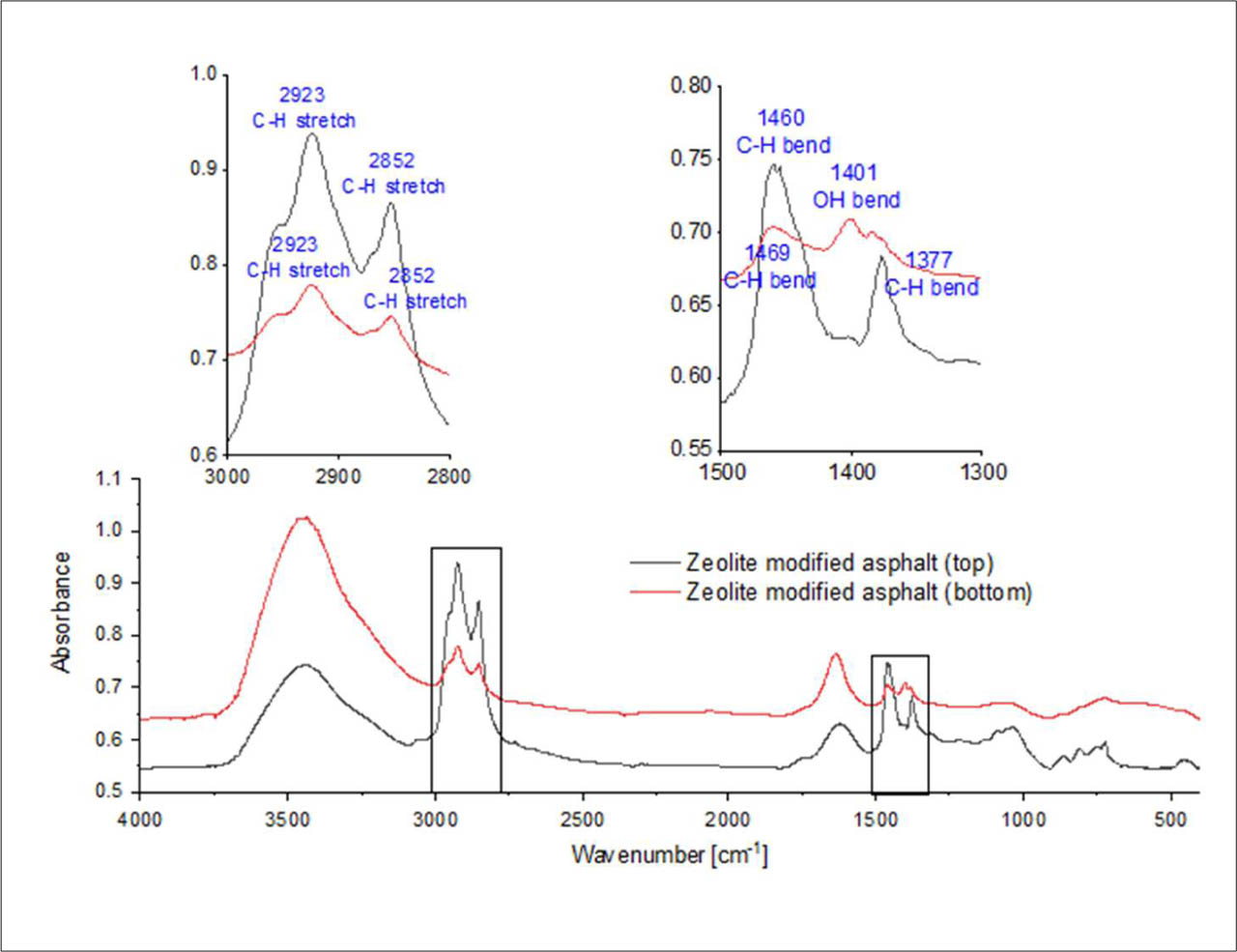
Figure 6:
FTIR spectra of zeolite-modified asphalt oil (top and bottom)
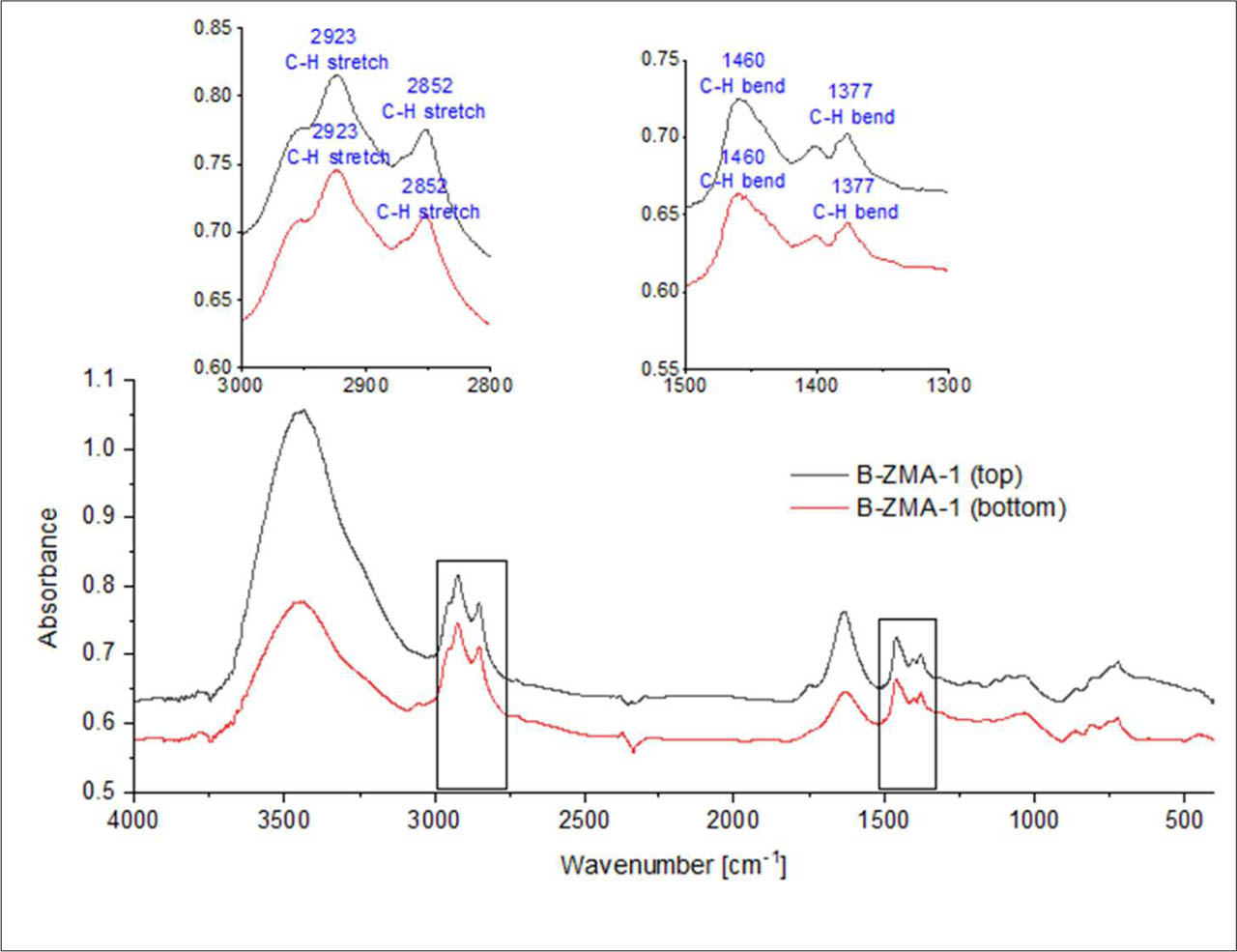
Figure 7:
FTIR spectra of zeolite-modified asphalt with 1% bio-oil (top and bottom)
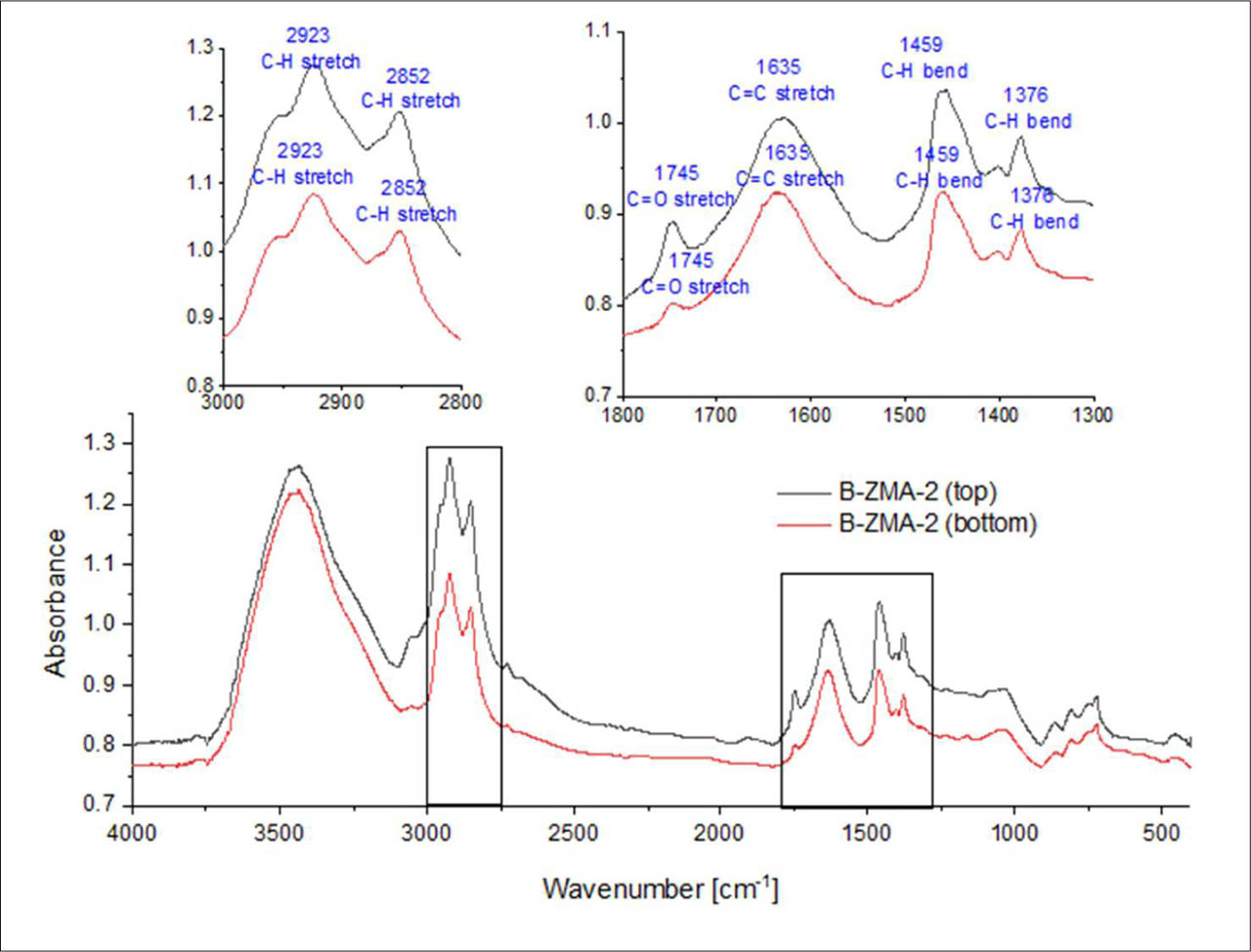
Figure 8:
FTIR spectra of zeolite-modified asphalt with 2% bio-oil (top and bottom)
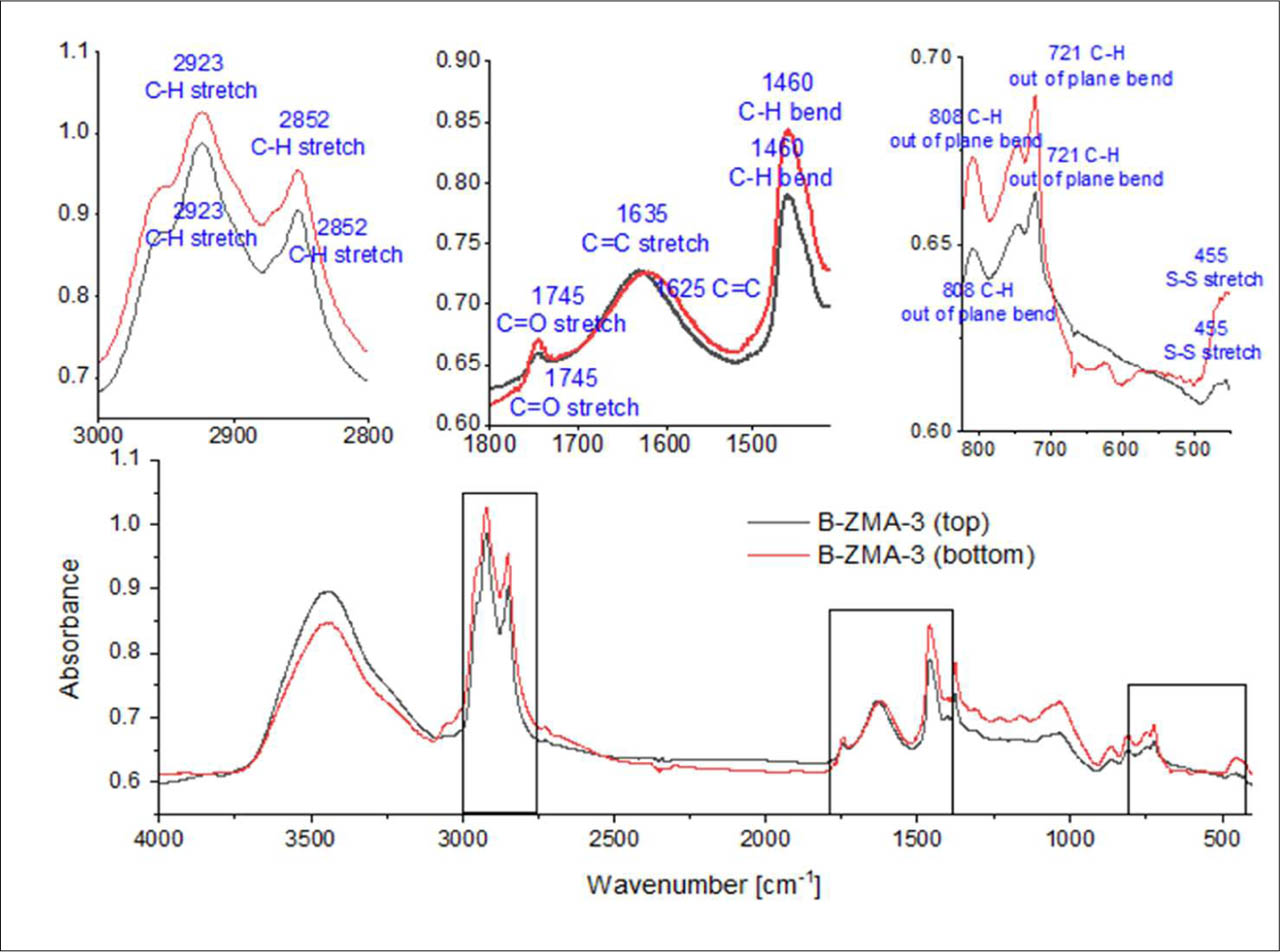
Figure 9:
FTIR spectra of zeolite-modified asphalt with 3% bio-oil (top and bottom)
Table 6:
FTIR absorbance of zeolite-modified asphalt
| Wavenumber [cm−1] | Functional groups | Compounds | Top | Bottom | Difference in IR absorbance |
|---|---|---|---|---|---|
| 3435 | O-H stretch | alcohol | 0.745 | 1.027 | −0.282 |
| 2923 | C-H stretch | methylene | 0.938 | 0.779 | 0.159 |
| 2852 | C-H stretch | methylene | 0.865 | 0.745 | 0.12 |
| 721 | C-H out-of-plane bend | aromatic | 0.597 | 0.682 | −0.085 |
Table 7:
FTIR absorbance of zeolite-modified asphalt with 1% bio-oil
| Wavenumber [cm−1] | Functional groups | Compounds | Top | Bottom | Difference in IR absorbance |
|---|---|---|---|---|---|
| 3425 | O-H stretch | alcohol | 1.049 | 0.773 | 0.276 |
| 2923 | C-H stretch | methylene | 0.815 | 0.745 | 0.07 |
| 2852 | C-H stretch | methylene | 0.775 | 0.712 | 0.063 |
| 1460 | C-H bend | methyl | 0.724 | 0.663 | 0.061 |
| 1377 | C-H bend | methyl | 0.702 | 0.645 | 0.057 |
| 771 | C-H out-of-plane bend | aromatic | 0.672 | 0.596 | 0.076 |
Table 8:
FTIR absorbance of zeolite-modified asphalt with 2% bio-oil
| Wavenumber [cm−1] | Functional groups | Compounds | Top | Bottom | Difference in IR absorbance |
|---|---|---|---|---|---|
| 3436 | O-H stretch | alcohol | 1.264 | 1.222 | 0.042 |
| 2923 | C-H stretch | methylene | 1.275 | 1.083 | 0.192 |
| 2852 | C-H stretch | methylene | 1.206 | 1.029 | 0.177 |
| 1745 | C=O stretch | ester | 0.891 | 0.802 | 0.089 |
| 1635 | C=C stretch | alkenyl | 1.005 | 0.922 | 0.083 |
| 1459 | C-H bend | methyl | 1.034 | 0.924 | 0.11 |
| 1376 | C-H bend | methyl | 0.985 | 0.883 | 0.102 |
| 861 | C-H out-of-plane bend | aromatic | 0.837 | 0.788 | 0.049 |
| 721 | C-H out-of-plane bend | aromatic | 0.882 | 0.835 | 0.047 |
Table 9:
FTIR absorbance of zeolite-modified asphalt with 3% bio-oil
| Wavenumber [cm−1] | Functional groups | Compounds | Top | Bottom | Difference in IR absorbance |
|---|---|---|---|---|---|
| 3435 | O-H stretch | alcohol | 0.897 | 0.848 | 0.049 |
| 2923 | C-H stretch | methylene | 0.987 | 1.025 | −0.038 |
| 2852 | C-H stretch | methylene | 0.904 | 0.954 | −0.05 |
| 1745 | C=O stretch | ester | 0.659 | 0.67 | −0.011 |
| 1460 | C-H bend | methyl | 0.79 | 0.843 | −0.053 |
| 808 | C-H out-of-plane bend | aromatic | 0.649 | 0.673 | −0.024 |
| 721 | C-H out-of-plane bend | aromatic | 0.664 | 0.69 | −0.026 |
| 455 | S-S stretch | aryl disulfides | 0.614 | 0.637 | −0.023 |
Tables 6–9 demonstrates that adding 2% and 3% bio-oil to the zeolite-modified asphalt resulted in a peak at 1745 cm−1, which was not previously present in the specimen without bio-oil and with 1% bio-oil. The peak at a wavenumber of 1745 cm−1 indicates a C=O stretch bond containing an ester. Without bio-oil addition and with the incorporation of 1% bio-oil, the carbonyl groups were still few and were mostly adsorbed on the zeolite surface or hydrogen-bonded to the resin/asphaltene. This indicates that there was not enough reactant to form an ester, thus the absence of a peak at 1745 cm−1.
The emergence of a new peak at 1745 cm−1 at 2% and 3% bio-oil concentration indicates that carbonyl ester species begin to dominate the maltene phase when the bio-oil dosage is sufficiently high. As the bio-oil content increased, more carbonyls were less hydrogen-bonded. The emergence of C=O ester indicates an increase in the oxygenate fraction, which tends to increase the compatibility between the resin/asphaltene and bio-oil components. When 2% and 3% were added, the esterification reaction that took place produced a sufficiently large ester fraction, such that the 1745 cm−1 peak was detected.
Spectroscopic analysis in Tables 6–9 revealed that the addition of bio-oil minimized the absorbance value within the zeolite-modified asphalt matrix. Ignoring the negative sign, the absorbance difference for zeolite-modified asphalt without bio-oil ranged from 0.085 to 0.282. With the use of 1% bio-oil, the absorbance difference ranged from 0.057 to 0.276. The addition of 2% and 3% bio-oil resulted in absorbance differences in the ranges of 0.042–0.192 and 0.011–0.053, respectively.
The difference in absorbance reflects the differences in functional groups or chemical components in the two layers. A smaller absorbance difference indicates that the chemical compositions of the upper and lower layers are similar, resulting in a more stable mixture. Aromatic components increase the aromaticity of maltenes, making asphaltenes more dispersible and less likely to separate during hot storage conditions. As previously stated, bio-oil with aromatic elements acts as a bridge between the polarities of asphalt and zeolite, thus minimizing phase separation and enhancing the compatibility of components.
In this study, the higher the bio-oil concentration, the less separation between the upper and lower samples. As more bio-oil is added, the FTIR peaks at the top become more similar to those at the bottom. A smaller difference in FTIR absorbance indicates that the use of bio-oil improved the storage stability.
3.4. SEM Results
The characteristics of the zeolite-modified asphalt with and without the addition of bio-oil, were analysed using scanning electron microscopy (SEM), as shown in Figures 10–14.

Figure 10:
SEM image of 60/70 asphalt
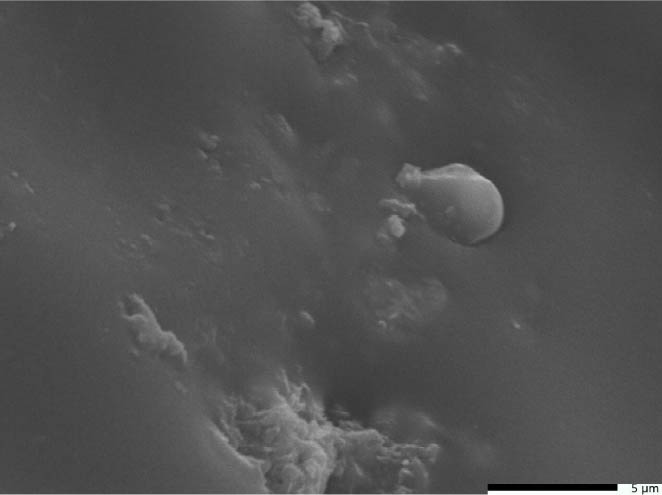
Figure 11:
SEM image of ZMA
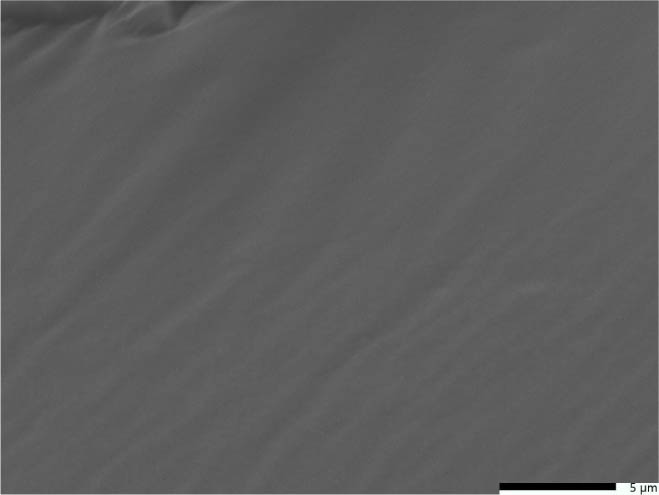
Figure 12:
SEM image of B-ZMA-1

Figure 13:
SEM image of B-ZMA-2
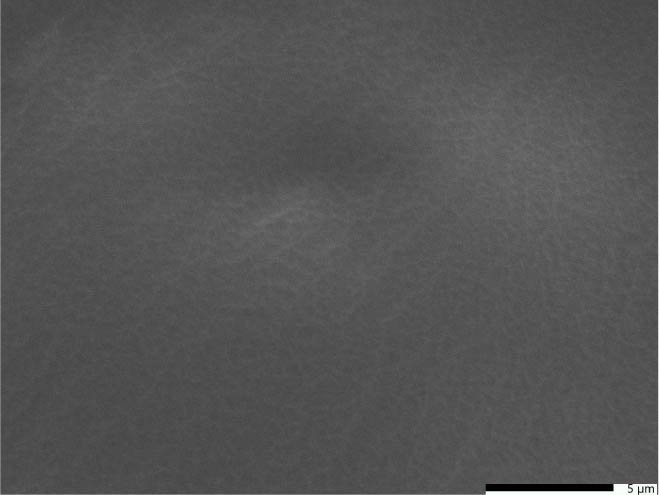
Figure 14:
SEM image of B-ZMA-3
As presented in Figures 10–14, morphological changes were detected as bio-oil was incrementally added. The zeolite-modified asphalt without bio-oil displayed an irregular and rough surface with numerous clustered agglomerates. When 1% bio-oil was introduced, a notable decrease in agglomeration was observed. The surface became more continuous, although some wrinkle-like patterns emerged. These wrinkles might be linked to localized shrinkage of the bituminous phase, probably caused by the partial volatilization of lighter bio-oil fractions. Despite this, it indicates that the bio-oil functioned as a compatibiliser, improving the dispersion of zeolite within the asphalt matrix.
The morphology was significantly smoother with only a few small protrusions visible when using 2% bio-oil. This microstructure is consistent with the improved dispersion and more homogeneous distribution of the zeolite. The aromatic compounds in the bio-oil are likely adsorbed onto the zeolite surface, promoting better phase compatibility with the asphalt matrix. At a bio-oil concentration of 3%, the surface appeared relatively smooth with a few minor indentations. This surface structure indicates that the system achieved good dispersion. The morphology could be linked to the enhanced wetting of zeolite particles by the asphalt matrix containing oil. The SEM results indicated a more uniform morphology and fewer visible agglomerated features within the asphalt matrix with bio-oil addition.
3.5. Marshall Properties
Marshall stability results were assessed in relation to the Indonesian pavement requirements, which outline the minimum stability criteria for both conventional and modified asphalt mixtures. For heavy traffic pavements, the minimum Marshall stability are ≥ 800 kg, and ≥ 1000 kg, for unmodified-asphalt mixture, and modified asphalt mixtures, respectively.
The stability characteristics of the asphalt mixtures are presented in Table 10 and Figure 15.
Table 10:
Marshall stability and Marshall immersion
| Binder types in asphalt mixture | Marshall stability [kg] | Mean | Marshall immersion [kg] | Mean | RSI [%] | ||||
|---|---|---|---|---|---|---|---|---|---|
| Sample 1 | Sample 2 | Sample 3 | Sample 1 | Sample 2 | Sample 3 | ||||
| 60/70 | 2415 | 2467 | 2387 | 2423 | 2125 | 2247 | 2193 | 2188 | 90.30 |
| ZMA | 2620 | 2620 | 2445 | 2562 | 2520 | 2345 | 2096 | 2320 | 90.55 |
| B-ZMA-1 | 2645 | 2470 | 2395 | 2503 | 2220 | 2372 | 2227 | 2273 | 90.81 |
| B-ZMA-2 | 2614 | 2495 | 2345 | 2485 | 2251 | 2178 | 2345 | 2258 | 90.87 |
| B-ZMA-3 | 2520 | 2444 | 2299 | 2421 | 2495 | 2096 | 2081 | 2224 | 91.86 |
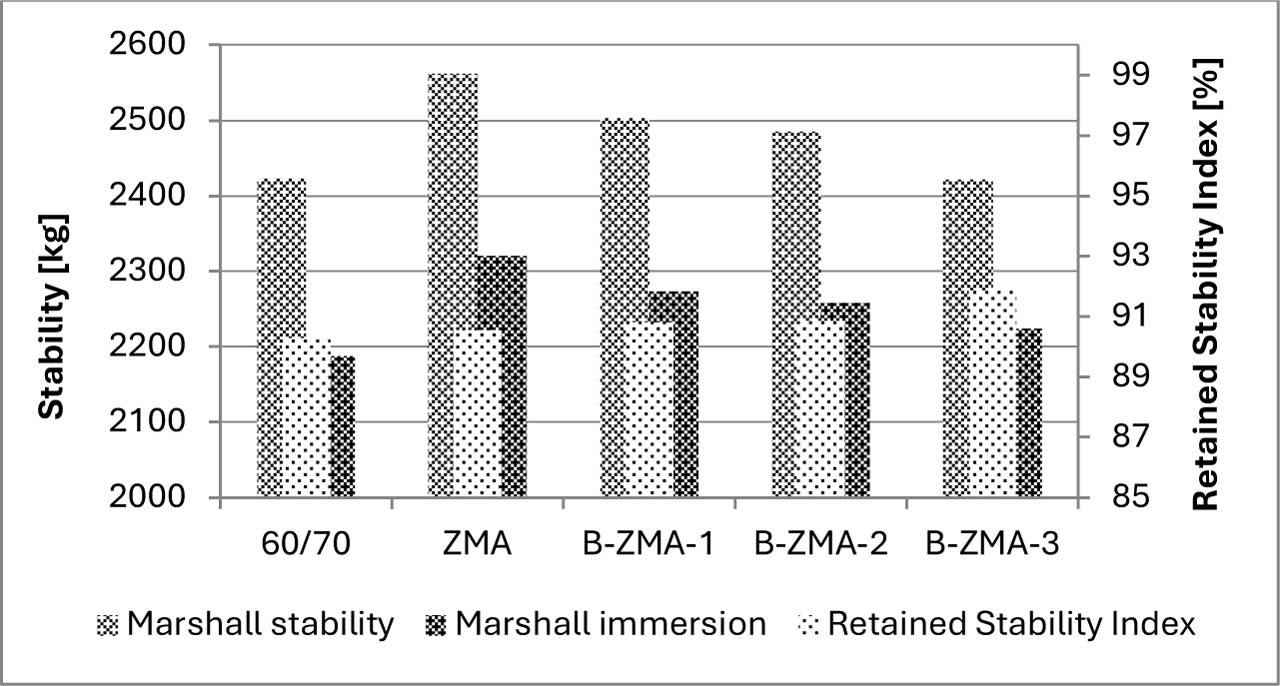
Figure 15:
Marshall properties of asphalt mixture
As presented in Figure 15, each mixture met the required minimum Marshall stability threshold. Despite the fact that the inclusion of bio-oil gradually decreased Marshall stability, the resulting figures were still well above the minimum specification, demonstrating that the decrease in stability did not affect the adherence to the Marshall stability standard. This modification aimed to explore whether bio-oil could influence other physicochemical and performance properties, with a particular focus on moisture-related performance.
The Marshall stability of the mixture that included both zeolite and bio-oil as co-modifiers was lower than that of the mixture modified solely with zeolite. This decrease was mainly due to the plasticising effect of bio-oil on the asphalt binder. The addition of bio-oil reduces the stiffness and viscosity of the binder, creating a softer matrix. The softened binder easily penetrates the aggregate pores, resulting in a thinner binder film within the aggregate structure. Thus, the asphalt binder cannot adequately coat the aggregate particles, leading to a decreased load-bearing capacity.
Although the Marshall stability of the mixture modified with zeolite and bio-oil was lower than that of the mixture containing only zeolite, the retained stability index showed an increasing trend. This inverse correlation suggests that the hybrid modifier enhanced the resistance of the mixture to moisture-related damage. The increase in RSI can be linked to the presence of aromatic components in the bio-oil, which enhance the chemical bond between the binder and aggregate, as mentioned by Hassanjani et al. (2025). This stronger adhesion helps prevent stripping or binder loss due to water exposure, thus enhancing the durability of the asphalt mixture in wet environments.
To analyze the relationship between the use of bio-oil and Marshall properties, ANOVA was performed. Normality and homogeneity of variance assumptions were verified prior to the analysis. The ANOVA results for the Marshall properties are presented in Tables 11–12.
Table 11:
ANOVA results for Marshall stability
| ANOVA summary | |||||
|---|---|---|---|---|---|
| Group | Count | Mean | Variance | Std deviation | Coefficient of variation |
| 60/70 | 3 | 2423 | 1648.0 | 40.6 | 1.68 |
| ZMA | 3 | 2562 | 10208.3 | 101.0 | 3.94 |
| B-ZMA-1 | 3 | 2503 | 16458.3 | 128.3 | 5.12 |
| B-ZMA-2 | 3 | 2485 | 18170.3 | 134.8 | 5.43 |
| B-ZMA-3 | 3 | 2421 | 12607.0 | 112.3 | 4.64 |
| ANOVA results | |||||
|---|---|---|---|---|---|
| Source of Variance | df | Sum of square (SS) | Mean square (MS) | F-Value | p-Value |
| Between group | 4 | 41873 | 10468 | 0.89 | 0.507 |
| Within group | 10 | 118184 | 11818 | ||
| Total | 14 | 160057 | |||
Table 12:
ANOVA results for Marshall immersion
| ANOVA summary | |||||
|---|---|---|---|---|---|
| Group | Count | Mean | Variance | Std deviation | Coefficient of variation |
| 60/70 | 3 | 2188 | 3737.3 | 61.1 | 2.79 |
| ZMA | 3 | 2320 | 45400.0 | 213.0 | 9.18 |
| B-ZMA-1 | 3 | 2273 | 7363.0 | 85.8 | 3.78 |
| B-ZMA-2 | 3 | 2258 | 7009.0 | 83.7 | 3.71 |
| B-ZMA-3 | 3 | 2224 | 55137.0 | 235.0 | 10.56 |
| ANOVA results | |||||
|---|---|---|---|---|---|
| Source of Variance | df | Sum of square (SS) | Mean square (MS) | F-Value | p-Value |
| Between group | 4 | 29944 | 7486 | 0.32 | 0.861 |
| Within group | 10 | 237293 | 23729 | ||
| Total | 14 | 267237 | |||
Low coefficients of variation in the range of 1.68–5.43% for Marshall stability and 2.79–10.56% for Marshall immersion indicated consistency and good repeatability of the test results. Compared with the asphalt mixture using conventional asphalt (60/70 penetration grade asphalt), Marshall stability of the asphalt mixture using zeolite-modified asphalt binder tend to increase. Moreover, the average Marshall stability tended to decrease from 2562 kg for the mixture without bio-oil to 2421 kg at 3% bio-oil.
Similar phenomena have been occurred in Marshall immersion. The average Marshall immersion of asphalt mixture containing zeolite-modified asphalt was higher than that of asphalt mixture using 60/70 penetration grade asphalt. Adding 3% bio-oil in zeolite modified asphalt reduced the Marshall immersion from 2320 to 2224 kg. However, these reductions were not statistically significant. The p-value of Marshall stability and Marshall immersion were 0.507 and 0.861, respectively; transcending the conventional significance threshold of 0.05, indicated no significant difference in Marshall properties. Therefore, post-hoc multiple comparison analysis was not further required.
3.6. Indirect Tensile Strength (ITS)
Table 13 presents the dimensions and voids in mix (VIM) of specimens used for the indirect tensile strength test, while Figure 16 shows the indirect tensile strength properties of the asphalt mixtures.
Table 13:
Dimension and voids in mix (VIM) of specimens used for indirect tensile strength test
| Types of ITS test | Binder types in asphalt mixture | Asphalt content [%] | Diameter [cm] | Height [cm] | Voids in Mix [%] |
|---|---|---|---|---|---|
| ITS dry | 60/70 | 6.0 | 10 ± 0.00 | 5.99 ± 0.03 | 4.21 ± 0.04 |
| ZMA | 6.0 | 10 ± 0.00 | 5.86 ± 0.04 | 4.17 ± 0.05 | |
| B-ZMA-1 | 6.0 | 10 ± 0.00 | 5.92 ± 0.06 | 4.22 ± 0.07 | |
| B-ZMA-2 | 6.0 | 10 ± 0.00 | 5.94 ± 0.09 | 4.23 ± 0.02 | |
| B-ZMA-3 | 6.0 | 10 ± 0.00 | 5.95 ± 0.02 | 4.36 ± 0.04 | |
| ITS wet | 60/70 | 6.0 | 10 ± 0.00 | 5.97 ± 0.05 | 4.20 ± 0.08 |
| ZMA | 6.0 | 10 ± 0.00 | 5.89 ± 0.05 | 4.19 ± 0.08 | |
| B-ZMA-1 | 6.0 | 10 ± 0.00 | 5.98 ± 0.03 | 4.24 ± 0.05 | |
| B-ZMA-2 | 6.0 | 10 ± 0.00 | 6.00 ± 0.02 | 4.27 ± 0.02 | |
| B-ZMA-3 | 6.0 | 10 ± 0.00 | 5.93 ± 0.05 | 4.40 ± 0.07 |
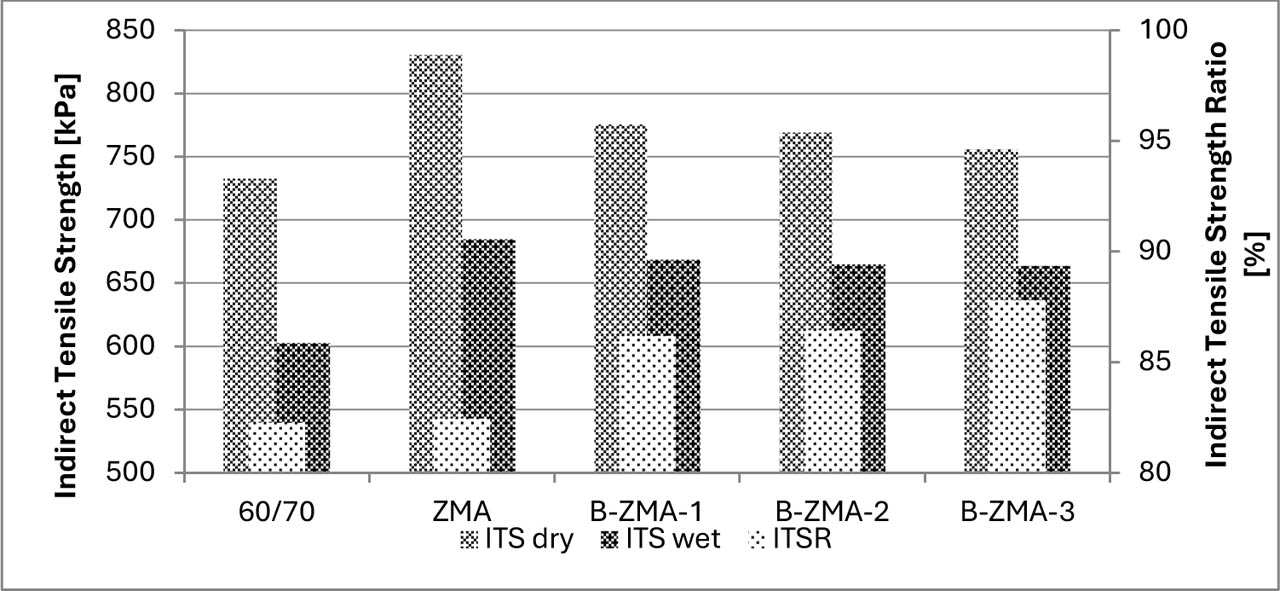
Figure 16:
Indirect tensile strength properties of asphalt mixture
Table 14:
Indirect tensile strength properties
| Binder types in asphalt mixture | ITS dry [kPa] | Mean | ITS wet [kPa] | Mean | ITSR [%] | ||||
|---|---|---|---|---|---|---|---|---|---|
| Sample 1 | Sample 2 | Sample 3 | Sample 1 | Sample 2 | Sample 3 | ||||
| 60/70 | 725.7 | 724.2 | 748.1 | 732.6 | 618.0 | 605.6 | 584.2 | 602.6 | 82.25 |
| ZMA | 857.8 | 813.5 | 819.5 | 830.3 | 629.1 | 746.5 | 678.2 | 684.6 | 82.45 |
| B-ZMA-1 | 737.2 | 846.1 | 742.9 | 775.4 | 701.8 | 648.7 | 654.6 | 668.4 | 86.20 |
| B-ZMA-2 | 733.1 | 745.2 | 828.8 | 769.0 | 668.1 | 677.1 | 652.3 | 664.7 | 86.44 |
| B-ZMA-3 | 753.1 | 758.5 | 756 | 755.9 | 654.5 | 695.5 | 640.7 | 663.6 | 87.79 |
As demonstrated in Figure 16, the indirect tensile strength value of the asphalt mixture using zeolite-modified asphalt binder increased compared with that of the asphalt mixture using 60/70 penetration grade asphalt. Furthermore, the use of bio-oil as a modifier of asphalt binder decreased the ITS properties of the asphalt mixture. In mixtures using zeolite-modified asphalt without bio-oil, the ITSdry and ITSwet values were 830.3 and 684.6 kPa, respectively. The use of bio-oil up to 3% reduced the ITSdry value by 8.96% and the ITSwet value by 3.07%. It is indicated that the modified asphalt bcomes softer and exhibits less stiffness. This softer matrix reduces the material's ability to endure tensile stresses under loading, thus leading to lower ITS values.
The observed decrease in stiffness may be linked to the interactions between the bio-oil components and the constituents of the asphalt binder. However, because this study did not directly analyse the saturate, aromatic, resin, and asphaltene (SARA) fractions of the asphalt binder, this mechanism should be viewed as a potential explanation rather than a confirmed chemical interaction.
The indirect tensile strength ratio (ITSR) serves as a measure of moisture susceptibility. The higher ITSR values indicating that an asphalt mixture is more resistant to moisture damage. Although there was a reduction in ITS, the ITSR increased with an increase in bio-oil content. Among the asphalt mixtures studied, B-ZMA-3 exhibited the highest ITSR value.
To analyze the relationship between each of these treatments and the ITS value, a statistical analysis was performed at a 95% confidence level. The results of the ANOVA for the ITSdry and ITSwet are presented in Tables 15 and 16, respectively.
Table 15:
ANOVA results for ITSdry
| ANOVA summary | |||||
|---|---|---|---|---|---|
| Group | Count | Mean | Variance | Std deviation | Coefficient of variation |
| 60/70 | 3 | 732.7 | 179.2 | 13.4 | 1.83 |
| ZMA | 3 | 830.3 | 577.6 | 24.0 | 2.89 |
| B-ZMA-1 | 3 | 775.4 | 3757.0 | 61.3 | 7.90 |
| B-ZMA-2 | 3 | 769.0 | 2715.6 | 52.1 | 6.78 |
| B-ZMA-3 | 3 | 755.9 | 7.3 | 2.7 | 0.36 |
| ANOVA results | |||||
|---|---|---|---|---|---|
| Source of Variance | df | Sum of square (SS) | Mean square (MS) | F-Value | p-Value |
| Between group | 4 | 15662 | 3916 | 2.71 | 0.092 |
| Within group | 10 | 14473 | 1447 | ||
| Total | 14 | 30135 | |||
Table 16:
ANOVA results for ITSwet
| ANOVA summary | |||||
|---|---|---|---|---|---|
| Group | Count | Mean | Variance | Std deviation | Coefficient of variation |
| 60/70 | 3 | 602.6 | 292.4 | 17.1 | 2.84 |
| ZMA | 3 | 684.6 | 3476.4 | 59.0 | 8.61 |
| B-ZMA-1 | 3 | 668.4 | 847.0 | 29.1 | 4.35 |
| B-ZMA-2 | 3 | 665.8 | 157.6 | 12.6 | 1.89 |
| B-ZMA-3 | 3 | 663.6 | 812.4 | 28.5 | 4.30 |
| ANOVA results | |||||
|---|---|---|---|---|---|
| Source of Variance | df | Sum of square (SS) | Mean square (MS) | F-Value | p-Value |
| Between group | 4 | 11914 | 2979 | 2.67 | 0.095 |
| Within group | 10 | 11172 | 1117 | ||
| Total | 14 | 23086 | |||
The coefficient of variation results ranged from 0.36 to 7.90% for ITSdry specimens and 1.89 to 8.61% for ITSwet specimens, indicating consistency in the mixing and compaction processes. However, with calculated p-values of 0.092 and 0.095, bio-oil proportions of 0%, 1%, 2%, and 3% did not show statistically significant differences.
Overall, the decline in Marshall properties and indirect tensile strength with increasing bio-oil content is primarily linked to the softening effect of bio-oil, which decreases the stiffness and thus its ability to withstand mechanical loads. In asphalt mixture, adhesion and stiffness characterise distinct performance mechanisms. Enhanced adhesion strengthens resistance to moisture-induced damage, whereas stiffness is mainly associated with resistance to deformation under loading. Therefore, improving moisture resistance through adhesion does not inherently correlate with increased stiffness. The improved retained stability index and indirect tensile strength ratio indicate that bio-oil may have enhanced resistance to moisture-induced damage, even though it reduces the overall stiffness and load-bearing capacity of the mixture.
3.7. Estimated cost and preliminary estimation of potential CO2 emission reduction
The cost implications of using zeolite-modified asphalt and bio-oil are also discussed. The costs of using zeolite and bio-oil as asphalt substitutes were assessed by calculating the prices of unmodified and modified asphalt. Because it is produced by Pertamina (the Indonesian state oil and natural gas corporation), the price of 60/70 penetration grade asphalt is relatively stable. Natural zeolites are also consistent in price, although mining locations can cause variations. Bio-oil is typically produced on a small scale by micro, small, and medium enterprises (MSMEs) or research laboratories; therefore, there is no industry-standard price, and prices tend to be high because of limited supply. Owing to these limitations, this analysis is more of a simulation than a definitive estimate for the project.
The cost simulation for 1000 kg of asphalt binder was as follows:
○ Cost of 60/70 penetration grade asphalt binder = USD 1.54/kg
○ Cost of natural zeolite = USD 0.40/kg
○ Cost of bio-oil = USD 13.75/kg
○ Cost of unmodified asphalt binder = 1000 kg x USD 1.54/kg = USD 1540
○ Cost of modified asphalt binder = (900 kg x USD 1.54/kg) + (70 kg x USD 0.40/kg) + (30 kg x USD 13.75/kg) = USD 1826.5
The first scenario used 60/70 penetration grade asphalt as the standard baseline. The cost of conventional asphalt is relatively lower, at approximately USD 1540 per ton, making it more economically competitive. Furthermore, the availability of asphalt from large suppliers makes prices more stable and easier to implement in large-scale projects.
In the second scenario, a portion of the asphalt was replaced with 7% zeolite and 3% bio-oil. Zeolites are relatively inexpensive and do not significantly affect the total cost. Furthermore, bio-oil is more expensive than asphalt; therefore, even though its proportion is only 3%, it contributes approximately 18.60% more to the cost of pure asphalt. However, a detailed techno-economic analysis is required for industrial-scale implementation.
Additionally, a preliminary estimate was performed to evaluate the potential decrease in CO2 emissions by substituting part of the petroleum-derived asphalt binder with natural zeolite and bio-oil. This estimate relied on basic assumptions and published emission factors and should not be considered a complete life cycle assessment (LCA). According to European Bitumen Association (2025), asphalt binder produces CO2 emissions of approximately 0.53 kg CO2e/kg bitumen. Meanwhile, an emission factor for zeolite powder production of approximately 0.05–0.07 kg CO2e/kg (Martinez-soto et al., 2023). In the absence of specific emission factors for Calophyllum inophyllum bio-oil, a proxy value of 0.116 kg CO2e/kg was adopted, sourced from databases containing emission factors for vegetable oils (climatiq.io, 2024). This figure was considered to reflect emissions mainly linked to the extraction and processing of oil, rather than encompassing the entire agricultural life cycle.
From these figures, the potential CO2 emission reduction was calculated as follows:
○ CO2 emission of 60/70 penetration grade asphalt binder = 0.53 kg CO2e/kg
○ CO2 emission of natural zeolite = 0.05 kg CO2e/kg
○ CO2 emission of bio-oil = 0.116 kg CO2e/kg
○ CO2 emission of unmodified asphalt binder = 1000 kg x 0.53 kg CO2e/kg = 530 kg CO2e/t
○ CO2 emission of modified asphalt binder = (900 kg x 0.53 kg CO2e/kg) + (70 kg x 0.05 kg CO2e/kg) + (30 kg x 0.116 kg CO2e/kg) = 483.98 kg CO2e/t
○ Emission reduction = 530 – 483.98 = 46.02 kg CO2e/t = 46.02 / 530 x 100 = 8.68%
This simplified calculation suggests that substituting part of the asphalt binder with natural zeolite and bio-oil could potentially lower CO2e emissions by approximately 46.02 kg per ton of binder, equating to an 8.68% decrease. This figure is a preliminary estimate derived solely from the selected emission factors and assumed material percentages. It does not consider other life cycle phases, such as raw material extraction, bio-oil feedstock cultivation, and transportation. Consequently, the estimated 8.68% reduction should not be considered as the definitive life-cycle carbon reduction for the modified asphalt binder. To precisely assess the environmental impacts, a detailed life-cycle assessment is required.
4. Conclusions
Based on the results, it can be inferred that:
○ Incorporating bio-oil derived from Calophyllum inophyllum seeds in a zeolite-modified asphalt binder softens the asphalt matrix owing to the plasticiser effect. As the percentage of bio-oil increases, both the penetration value and ductility rise, while the softening point declines.
○ The use of bio-oil improved the homogeneity and storage stability of zeolite-modified asphalt, as indicated by the decrease in the difference in the softening point and FTIR absorbance between the top and bottom samples.
○ The SEM test results revealed that incorporating bio-oil as a co-modifier significantly affected the uniformity of the zeolite-modified asphalt. With a higher bio-oil content, the morphology of the zeolite-modified asphalt became smoother, suggesting improved dispersion of the zeolite within the asphalt matrix.
○ The Marshall stability of the mixture incorporating asphalt modified with zeolite and bio-oil were lower than those of the mixture containing zeolite only. However, the retained stability index showed an increasing trend, suggesting that the hybrid modifier enhanced the resistance of the mixture to moisture-related damage.
○ Incorporating 1%, 2%, and 3% bio-oil into zeolite-modified asphalt increased the ITSR of the asphalt mixture. This indicates that the robustness against moisture damage of the mixtures with zeolite and bio-oil is higher than that of the mixtures using only zeolite.
○ Although there was a decreasing numerical trend in both Marshall properties and indirect tensile strength, the decrease attributed to the addition of bio-oil was not statistically significant.
○ Among the formulations investigated, B-ZMA-3 showed the most optimal results in terms of storage stability and moisture resistance, although its lower stiffness also needs to be considered.
○ The estimated cost showed that unmodified asphalt is more economically competitive than the modified asphalt binder. This figure is a trade-off the preliminary estimation of potential CO2 emission reduction from 0.53 to 0.484 kg CO2e/kg asphalt. However, a detailed techno-economic analysis and life cycle assessment are required to achieve precise figure.
The characterisation of the asphalt used in this study was based on conventional physical properties, whereas advanced rheological properties, such as DSR and BBR, were beyond the scope of this research. Furthermore, the moisture susceptibility of the asphalt mixture was assessed using the Marshall properties and indirect tensile strength ratio, whereas rutting resistance, fatigue performance, and long-term field durability were not investigated. Based on these limitations, it is recommended that these topics be explored further in future studies.
Acknowledgements
This study was funded by the University of Mataram under contract No. 3246/UN18.L1/PP/2025.
Notes
[2] Contributed by Author Contributions
R.Y. conceived the study and drafted the manuscript. M.M. conducted the experiments and collected the data. I.D.M.A.K. performed data interpretation and analysis. D.W. contributed to manuscript editing. F.F.S. contributed to the resources and project administration. All authors critically reviewed and approved the final version of the manuscript and agreed to be accountable for all aspects of the work.