

1. Introduction
Asphalt concrete (AC) pavements may prematurely fail due to a loss of adhesion between the aggregate and the asphalt binder. To deal with this problem, various additives can be incorporated into AC mixtures to enhance their mechanical properties. Recently, there has been growing interest in a wide range of potential additives, including hydrated lime (HL), Rubber, Styrene-Butadiene-Styrene (SBS), nanomaterials, and liquid anti-strip agents. Among various additives utilized to increase the resistance to moisture of asphalt mixtures, the hydrated lime has attracted considerable technical attention (Krami et al., 2024; Wei et al., 2022; Kareem et al., 2024). (Kami et al., 2024) investigated the effect of hydrated lime on the fracture toughness and water sensitivity of asphalt concrete (AC) mixtures and reported that the incorporation of hydrated lime significantly enhanced both fracture toughness and resistance to water-induced damage. Similarly, (Wei et al., 2022) demonstrated that replacing 2.5% of conventional limestone filler with hydrated lime could effectively improve the fatigue life of wearing course mixtures under different temperature conditions. Despite the widespread belief that hydrated lime improves the mechanical characteristics and moisture resistance of asphalt mixtures, some research has produced contradictory findings. In contrast to combinations including granite dust and cement, Kareem et al. (2024) found that the addition of hydrated lime as a filler resulted in reduced Marshall stability, indirect tensile strength (ITS), and stiffness. This disparity could be explained by variations in mixture design, especially the total substitution of hydrated lime for traditional filler, as well as the latter's greater bitumen absorption capacity and specific surface area. These characteristics can lead to a reduction in effective binder film thickness, thereby negatively affecting mixture performance. Therefore, the influence of hydrated lime on asphalt mixtures is highly dependent on its dosage, application method, and interaction with other mixture components. In addition to hydrated lime, Al-Gurah et al. (2021) demonstrated that rice husk ash (RHA) can be effectively utilized as a sustainable material in asphalt pavement applications. As a mineral filler, an optimal replacement level of 25% RHA was found to significantly enhance mechanical performance and moisture resistance of asphalt mixtures. Furthermore, RHA has also been successfully applied in semi-flexible pavement (SFP) systems as a partial replacement for ordinary Portland cement (OPC) in grout materials, combined with polymer-modified bitumen (PMB) in open-graded asphalt mixtures (AI-Humeidawi et al. 2021). The results showed substantial improvements in mechanical properties, with Marshall stability increasing by up to 100% and indirect tensile strength by up to 50%, while the retained Marshall stability reached approximately 90%, exceeding standard requirements. These findings highlight the versatility and potential of RHA as a sustainable additive for improving both strength and durability of asphalt-based pavement systems.
The application of crumb rubber as a modifier to enhance the performance of asphalt mixtures in challenging environmental circumstances has been studied in the past. The mechanical characteristics of crumb rubber modified binder (CRMB) in porous and dense-graded asphalt mixtures with crumb rubber levels varying from 12% to 18% by binder weight were assessed by (Esa et al., 2024). According to their findings, adding more crumb rubber improved the binder's stiffness and softening point, and porous asphalt mixtures performed best at about 16% crumb rubber. Similarly, (Al-Qudah et al., 2024) examined the influence of crumb rubber on the permeability and moisture resistance of 14 asphalt mixtures under severe climatic conditions. Their findings showed that incorporating crumb rubber up to about 10% significantly improved Marshall stability, stiffness, durability, and resistance to moisture damage, while maintaining low permeability of the mixture. Overall, these studies demonstrate that rubber modification can enhance the mechanical properties and moisture resistance of asphalt mixtures. However, most previous studies mainly focused on crumb rubber modification, whereas limited research has investigated the long-term moisture resistance of asphalt mixtures incorporating advanced anti-stripping additives under prolonged water immersion conditions.
Styrene–Butadiene–Styrene (SBS) and nanomaterials are widely regarded as some of the most advanced and effective modifiers for improving asphalt binder performance. (Shamami et al., 2025) investigated the effects of graphene nanoplatelets (GNPs) on the performance of hot-mix asphalt (HMA) and reported that the indirect tensile strength (ITS) of the modified mixture increased by 23% and 38% under dry and wet conditions, respectively, compared with the control mixture. Similarly, the study by (Al-Attar & Ismael, 2026) demonstrates that nanoclay significantly enhances the mechanical performance of hot mix asphalt, particularly in terms of strength and resilient modulus across different temperatures. (Albayati et al., 2024) examined the effects of three nanomaterials-nano-titanium dioxide (NT), nanoalumina (NA), and nano-silica (NS) on the rheological and physical properties of asphalt binders. Their findings showed that while individual nanomaterials enhanced performance at high temperatures, the combination of NT, NA, and NS greatly increased fatigue resistance at lower temperatures. (Albayati et al., 2025) assessed the effectiveness of binders modified with polymer modifiers like ethylene–vinyl acetate (EVA) and SBS, as well as inorganic nanomaterials like nano-silica (NS) and nano-hydrated lime (NHL). The findings demonstrated the superior rutting and fatigue resistance of SBS-modified binders, with 6% SBS offering the best high-temperature performance and 4% SBS producing the highest fatigue life. Furthermore, (Resentia et al., 2025) found that adding nano-silica and nano fly ash to asphalt binders increased their rheological characteristics and improved pavement performance overall. The majority of earlier research has mostly concentrated on improving high-temperature stability, fatigue resistance, or overall mechanical performance, even though polymer and nanomaterial modifiers have demonstrated significant potential in improving the rheological and mechanical properties of asphalt binders. Understanding how these additives affect the adhesion mechanisms between aggregates and asphalt binder, especially during extended moisture exposure, has received little study. Furthermore, a lot of these modifiers need expensive materials, complicated mixing processes, or rather high dosages, which may restrict their usefulness in large-scale pavement building. Therefore, it is still necessary to investigate substitute additives that can improve asphalt mixes' durability and moisture resistance while still being useful.
To increase the adhesion and moisture resistance of asphalt mixtures, several chemical additions have been studied. The efficacy of liquid anti-stripping compounds based on aliphatic amines in lowering moisture susceptibility in asphalt mixes was investigated by (Park et al., 2017). When compared to mixes with other traditional anti-stripping additives, the results showed that these compounds greatly increased resistance to stripping and rutting. In a similar vein, (Sarkar et al., 2024) assessed how warm-mix additives, anti-stripping agents, and graphene nanoplatelets affected the stone mastic asphalt's resistance to cracking and susceptibility to moisture. Graphene nanoplatelets performed better than the other modifiers under investigation in terms of wettability, binder–aggregate adhesion, and debonding resistance. In a different study, (Yalcin et al., 2025) evaluated the effectiveness of activated carbon made from waste materials vs traditional styrene–butadiene–styrene (SBS) modification. According to their research, asphalt mixtures with 15% activated carbon had fatigue performance that was on par with mixtures that had been altered with 3% SBS. Additionally, (Zhu et al., 2024) examined the addition of multi-scale nano-zinc oxide (nano-ZnO) particles to PG 64-22 asphalt binder and found that the nano-ZnO modification greatly increased the durability and resilience of asphalt binders against typical pavement distresses. While many additives have been shown to enhance the mechanical and rheological performance of asphalt mixtures, most of the research focuses on general performance enhancements including fatigue life, cracking resistance, and rutting resistance.
While many research activities have looked at the use of different additives to enhance the performance of asphalt mixtures, most of them mainly concentrate on conventional moisture susceptibility tests and short-term mechanical qualities. The long-term resilience of asphalt mixtures under prolonged moisture exposure has received little attention, especially when chemical anti-stripping additives are included. Furthermore, binder-level, interface-level, and mixture-level analyses are rarely combined into a single experimental framework in prior studies. To close this gap, the performance of asphalt mixtures treated with Tough Fix Hyper (TFH) will be assessed using a thorough multi-scale method. This work is novel because it evaluates rheological properties, adhesion characteristics, and mechanical performance in addition to implementing an extended moisture conditioning program that lasts up to 12 months. This allows for a more realistic assessment of pavement durability and long-term stripping resistance.
2. Experimental
2.1. Materials
2.1.1. Binder with TFH Additive
The 60/70 penetration grade bitumen was used as the control binder in this study. TFH was incorporated into the base binder at a dosage of 0.15% by weight, as shown in Figure 1, while its physical and chemical properties are presented in Table 1. Prior to modification, the base binder was heated to approximately 160°C to achieve a suitable fluid state. The TFH additive was then introduced at a temperature between 150°C and 165°C, which is within the typical mixing temperature range for asphalt binders, to ensure proper blending and compatibility.
The mixture was subjected to mechanical stirring using a laboratory mixer for approximately 1 minute at high speed to ensure uniform dispersion of the additive. This mixing duration was selected based on the low dosage and liquid form of TFH, as well as preliminary trials indicating that extended mixing was not necessary and could potentially accelerate binder aging at elevated temperatures. Therefore, the adopted procedure ensures adequate homogenization while minimizing thermal degradation of the binder.
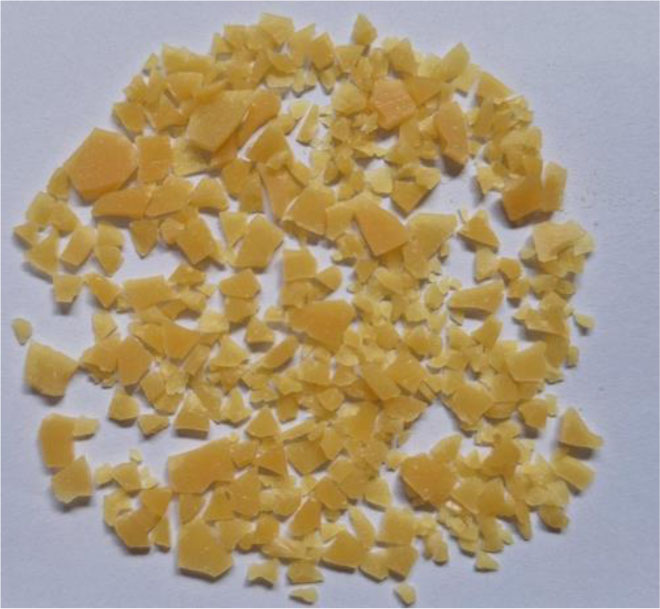
Figure 1:
Tough fix hyper
2.1.2. Aggregates
In this study, a dense gradation with mixed limestone aggregate was used, as shown in Figure 2.
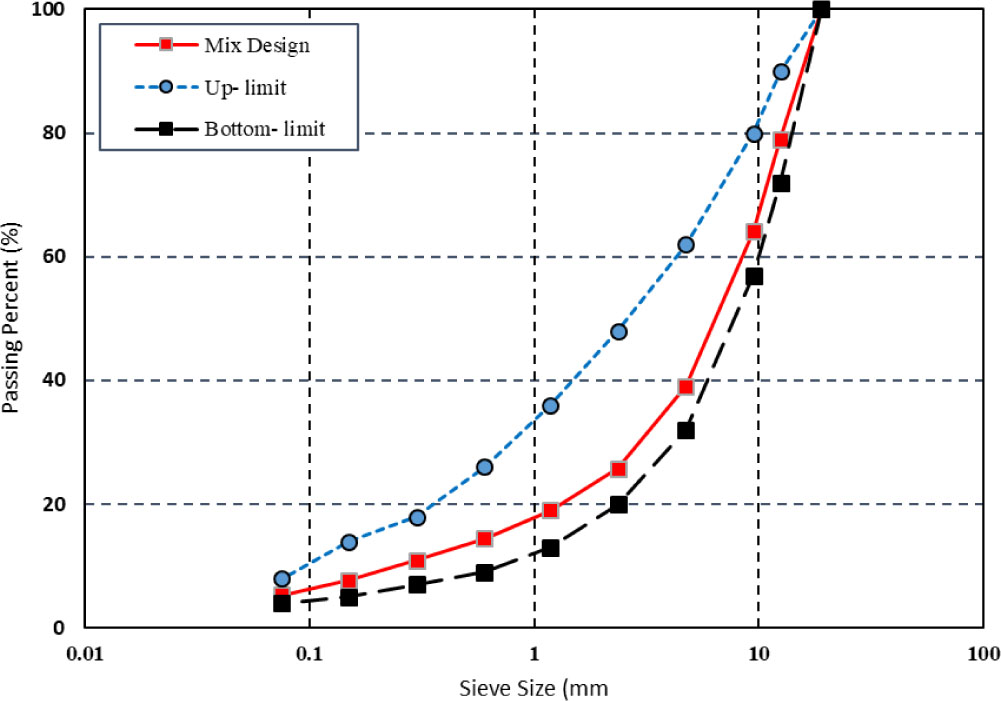
Figure 2:
The study's use of gradation and its limitations
2.1.3. Mix Design Procedure
Using the Marshall mix design method, asphalt mixtures were made. The ideal binder content for the standard AC combination was found to be 4.7% by weight of the whole mix, with a target air void content of 4.0% ± 0.5%. To determine this ideal value, compacted samples with different binder contents were created. For uniformity, a 4.7% binder percentage was used to manufacture and test all asphalt samples with the 0.15% TFH addition. To prepare the TFH modified mixtures, the base binder was first heated in a separate oven at 150°C to 160°C for two hours. To achieve thermal equilibrium, the blended aggregates were simultaneously heated for at least eight hours to a temperature between 180°C and 190°C. A well-homogenized asphalt mixture was created by blending this pre-mix with the heated base binder. After preparation, the loose mixes were kept at 155°C ± 2°C in a conditioning room for four hours before to compaction. In accordance with the conventional Marshall compaction process, each sample was compacted utilizing 75 blows on each side.
2.2. Program for Testing
Figure 3 presents a flowchart of the experimental program, illustrating the overall research design, including binder characterization, stripping evaluation, and mixture performance tests.
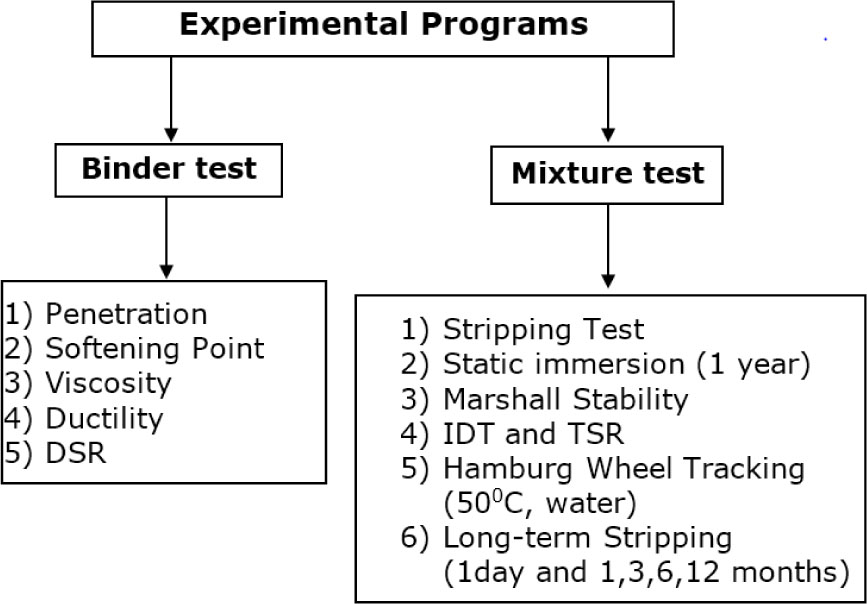
Figure 3:
Experimental program flowchart
Binder Tests Standard binder tests, including penetration, softening point, dynamic viscosity, and ductility, were performed on the asphalt binder that had been changed with 0.15% TFH. The penetration test evaluates asphalt consistency by measuring its penetration under specified conditions, in accordance with ASTM D5 (2013). According to ASTM D36 (2014), the softening point test determines the temperature at which the binder changes from a solid to a more malleable state. The viscosity and workability of the asphalt binders and mixes were assessed using these characteristics. The dynamic viscosity test was carried out in compliance with ASTM D2171 (2010) to evaluate the binder's resistance to permanent deformation at high temperatures. Ductility tests were also carried out in compliance with ASTM D113 (2007) to evaluate the binder's tensile and elongation properties.
The Dynamic Shear Rheometer (DSR) test was used to quantify the complex shear modulus (G*) and phase angle (δ) to describe the rheological properties of the asphalt binder. The ability of the binder to withstand deformation and regain its shape under shear loading is revealed by these metrics. In compliance with established rheological testing protocols, the tests were conducted under controlled-strain circumstances at a constant frequency of 10 rad/s.
2.2.1. Stripping Test of Binder and Aggregate
In compliance with AASHTO T182 (2002), the static immersion method was used to assess the bitumen-coated aggregate's susceptibility to stripping. To evaluate the long-term adhesion between the binder and aggregates during prolonged moisture exposure, loose asphalt mixtures were made and immersed in water for a whole year.
2.2.2. Mixture Tests
The MS test, WT test, and IDT test were among the tests used to assess the performance of AC mixtures containing the TFH addition. The MS test was used to assess how resistant compacted cylindrical asphalt samples were to plastic deformation. Specimens are loaded at a steady rate of 50 mm per minute during the test. The specimen's maximum load at the standard test temperature of 60°C is known as the MS value.
Additionally, the Tensile Strength Ratio (TSR) was calculated using the IDT test. Six compressed specimens with an air void content of roughly 7% were made for each type of mixture and split into two groups. After two hours of conditioning at 25°C in an environmental chamber, the first group's dry tensile strength was measured. Before testing, the second group was moisture conditioned by immersion in a water bath at 60°C for 24 hours and then another two hours at 25°C. All IDT tests were performed at 25°C using a loading rate of 50 mm/min. The TSR was calculated using Equation (1):
Where:σIDTwet = the indirect tensile strength value (kPa) of the wet samples,
σIDTdry = the indirect tensile strength value (kPa) of the dry samples.
A German-developed equipment called the Hamburg Wheel Tracker was used for the WT test. For submerged testing, steel wheels were utilized. Each wheel measured 50 mm in width and 203 mm in diameter. Slab specimens with dimensions of 320 × 260 × 50 mm were submerged in water and subjected to a constant wheel load of 0.7 MPa. The wheel made 50 passes per minute over the specimen's centre while it was being tested. The experiments were carried out at a controlled temperature of 50°C to evaluate the asphalt mixtures' permanent deformation (rutting) characteristics under moisture and heat stress.
Finally, the stripping resistance of asphalt mixtures was assessed using the decrease in IDT strength under conditions of prolonged water immersion. For every mixture, three compressed specimens with about 7% air gaps were created and divided into two groups. The first group was maintained at 25°C in an environmental room for one day, one month, three months, six months, and twelve months of dry conditioning. These samples were used to measure the dry tensile strength over time. The second group was immersed in water at 25°C for similar wet conditioning periods of 0.03 months (or one day), one month, three months, six months, and twelve months in order to determine the wet tensile strength. By comparing the IDT strengths of the wet and dry samples at each corresponding time interval, the IDT ratio was computed, giving information on the mixes' long-term stripping resistance.
3. Results and Discussion
3.1. Physical Characteristics of Binder
The physical characteristics of the 60/70 penetration grade binder modified with the TFH addition, and the control binder did not change significantly, as Table 2 illustrates. Additionally, every measured binder attribute satisfied the requirements outlined in the pertinent standards and specifications.
Table 2:
The base bitumen's physical characteristics with 0.15%TFH
| No. | Test Name | Unit | 60/70 binder | 60/70 binder + 0.15% TFH | Specifications |
|---|---|---|---|---|---|
| 1 | Penetration at 25°C, 0.1 mm | 1/10mm | 63 | 63 | 60÷70 |
| 2 | Softening point (Ring and Ball Method) | °C | 48.3 | 48.8 | ≥46 |
| 3 | Dynamic viscosity at 60°C | Pa.s | 259.2 | 269.3 | ≥180 |
| 4 | Ductility at 25°C - 5cm/min | cm | >100 | >100 | ≥100 |
| 5 | Paraffin content | % | 1.1 | 1.12 | ≤ 2.2 |
| 6 | Flash point (Cleveland open cup) | °C | 315 | 312 | ≥232 |
| 7 | Density at 25°C | g/cm3 | 1.028 | 1.027 | 1.0÷1.05 |
| TFOT (Thin Film Oven Test) | |||||
| 1 | Change of mass | % | 0.02 | 0.02 | ≤0.8 |
| 2 | Retained penetration | 1/10mm | 86.28 | 86.40 | ≥54 |
| 3 | Ductility at 25°C | cm | >100 | >100 | ≥50 |
3.2. DSR Test
The complex shear modulus (G*) and phase angle (δ) of asphalt binders under unaged (fresh), Rolling Thin-Film Oven test (RTFOT), and Pressure Aging Vessel (PAV) conditions were determined using the Dynamic Shear Rheometer (DSR) test. At a loading frequency of 10 rad/s, rutting resistance was measured at 64°C and fatigue resistance at 25°C. The parameter G*/sin δ was used to evaluate the binders' rutting capability. Superpave specifications by AASHTO (1993) state that for unaged binders, the minimum needed G*/sin δ value is 1.0 kPa, and for RTFOT-aged binders, it is 2.2 kPa. Figure 3 shows that in both fresh and RTFOT conditions, the G*/sinδ values for the 60/70 penetration grade binder and the binder modified with 0.15% TFH were comparable. Additionally, both binders met the Superpave rutting resistance requirements, suggesting that the addition of TFH had no negative effects on the asphalt binder's high-temperature performance.
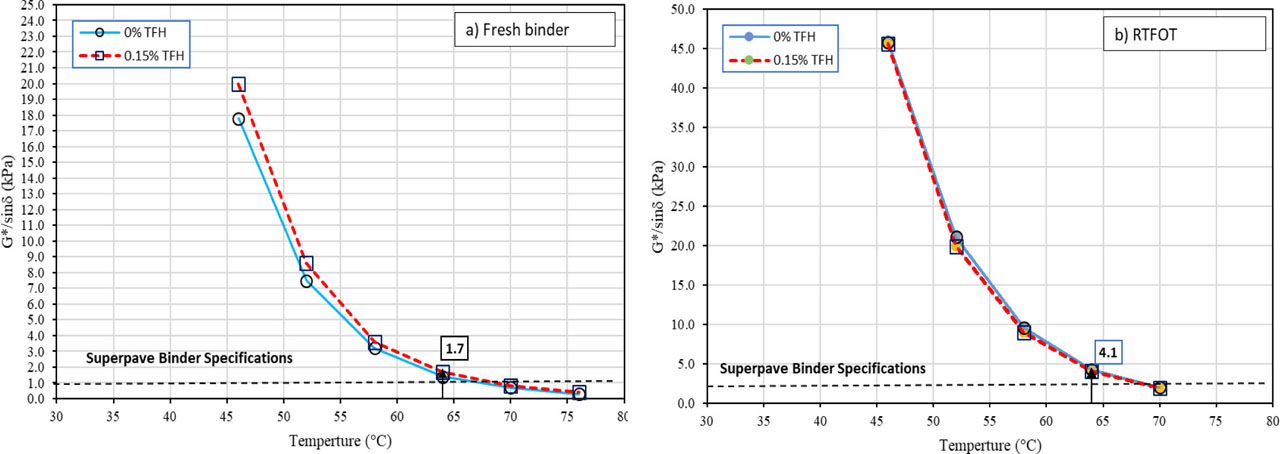
Figure 3:
G*/ sinδ versus temperatures for fresh and RTFOT conditions
Additionally, the fatigue resistance of the asphalt binder was assessed using the measure G*·sin δ. The Superpave guidelines (AASHTO (1993) state that for PAV-aged binders at a test temperature of 25°C, the G* sin δ value cannot be greater than 5,000 kPa. The unmodified 60/70 binder and the binder changed with 0.15% TFH under RTFOT + PAV-aged conditions did not significantly differ in G*·sin δ values, as Figure 4 illustrates. Thus, it can be said that the 60/70 asphalt binder's mechanical, rheological, and physical characteristics are not substantially changed by the addition of TFH.
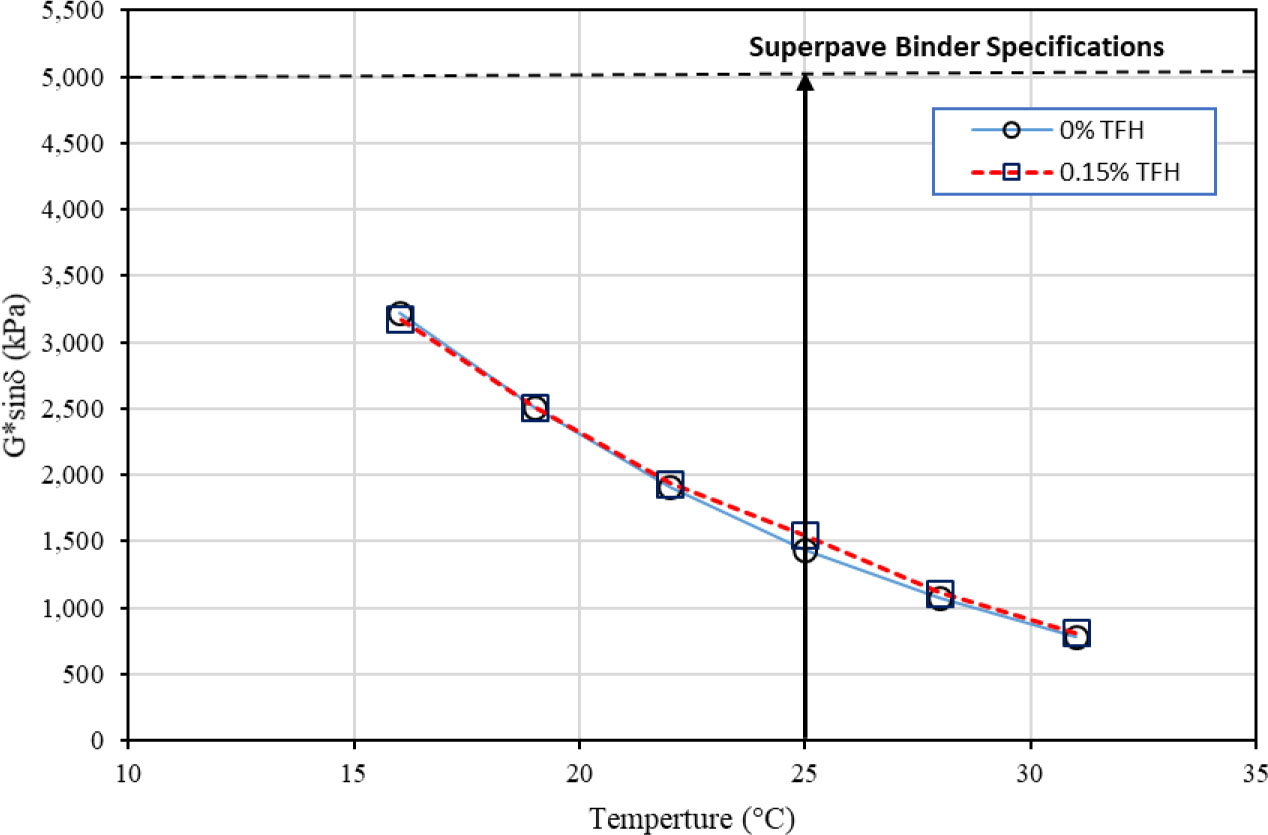
Figure 4:
G*sinδ for RTFOT plus (PAV-aged) conditions in relation to temperature
3.3. Static Immersion Test
The stripping test was first conducted on additive-free asphalt mixtures. The findings showed that less than 95% of the total visible aggregate surface was still covered with binder, indicating poor adhesion when exposed to moisture. The combination with the 0.15% TFH additive, on the other hand, showed a notable improvement, with the coated area surpassing 95%. Furthermore, even after 12 months of water immersion at 25°C, no discernible peeling was seen in the TFH-modified combination, as shown in Figure 5. This illustrates how well the TFH addition works to improve asphalt mixtures' long-term moisture resistance.
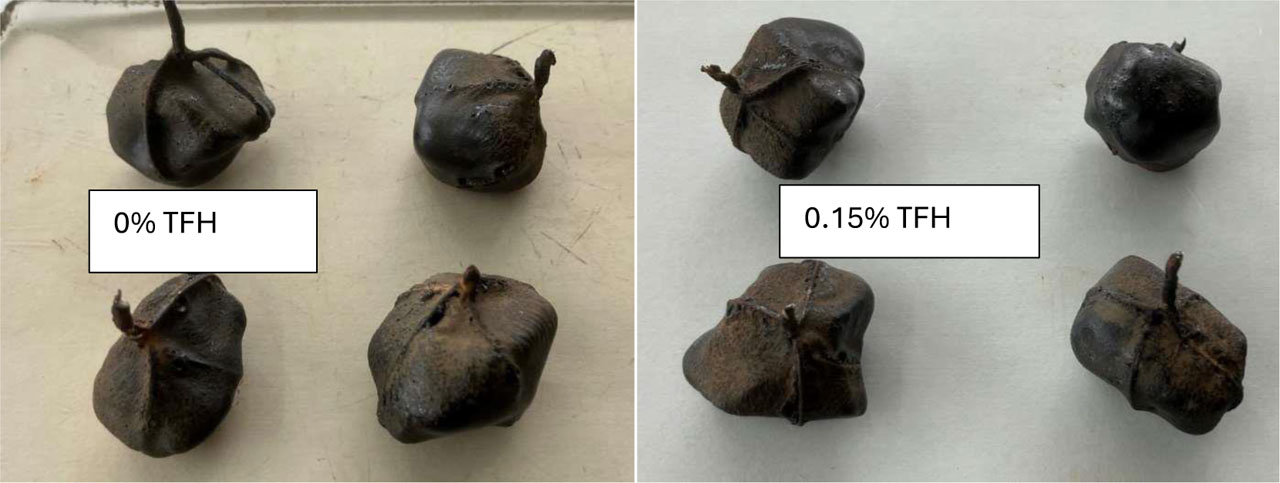
Figure 5:
Picture of the specimens after 12 months
3.4. MS Test
In this work, the performance characteristics of AC mixtures containing the TFH additive were evaluated using the MS test. In comparison to the control combination, which had a stability of 10.2 kN, the MS value for the AC mixture with 0.15% TFH addition reached 11.5 kN, as illustrated in Figure 6. This is a 12.7% increase. Additionally, the inclusion of TFH resulted in a 12% increase in the Marshall Quotient (MQ), a stiffness measure. These findings imply that adding TFH to the asphalt mixture can greatly improve its Marshall properties, such as strength and resilience to deformation.
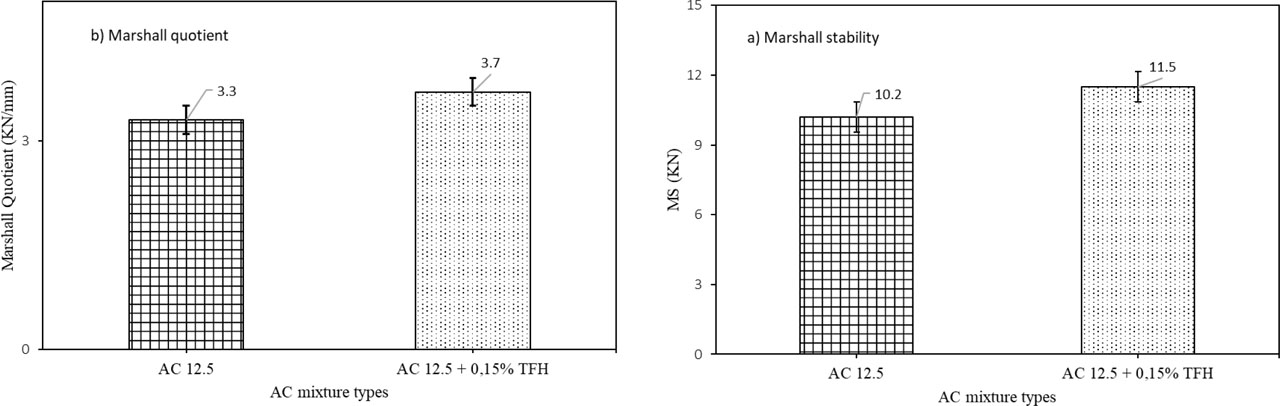
Figure 6:
Marshall characteristics of AC mixture: a) Marshall stability and b) Marshall quotient
3.5. IDT Test
Figure 7 displays the IDT test results in both dry and wet conditions. Under dry conditions, the TFH-modified asphalt concrete mixture had a maximum tensile strength of 1204 kPa, which is 27% greater than the control mixture. In wet conditions, the tensile strength of the TFH modified mixture was 33% higher than that of the control. These findings demonstrate that the addition of TFH significantly improves the binder-aggregate adhesive connection, enhancing the overall tensile performance and moisture resistance of the AC combination.
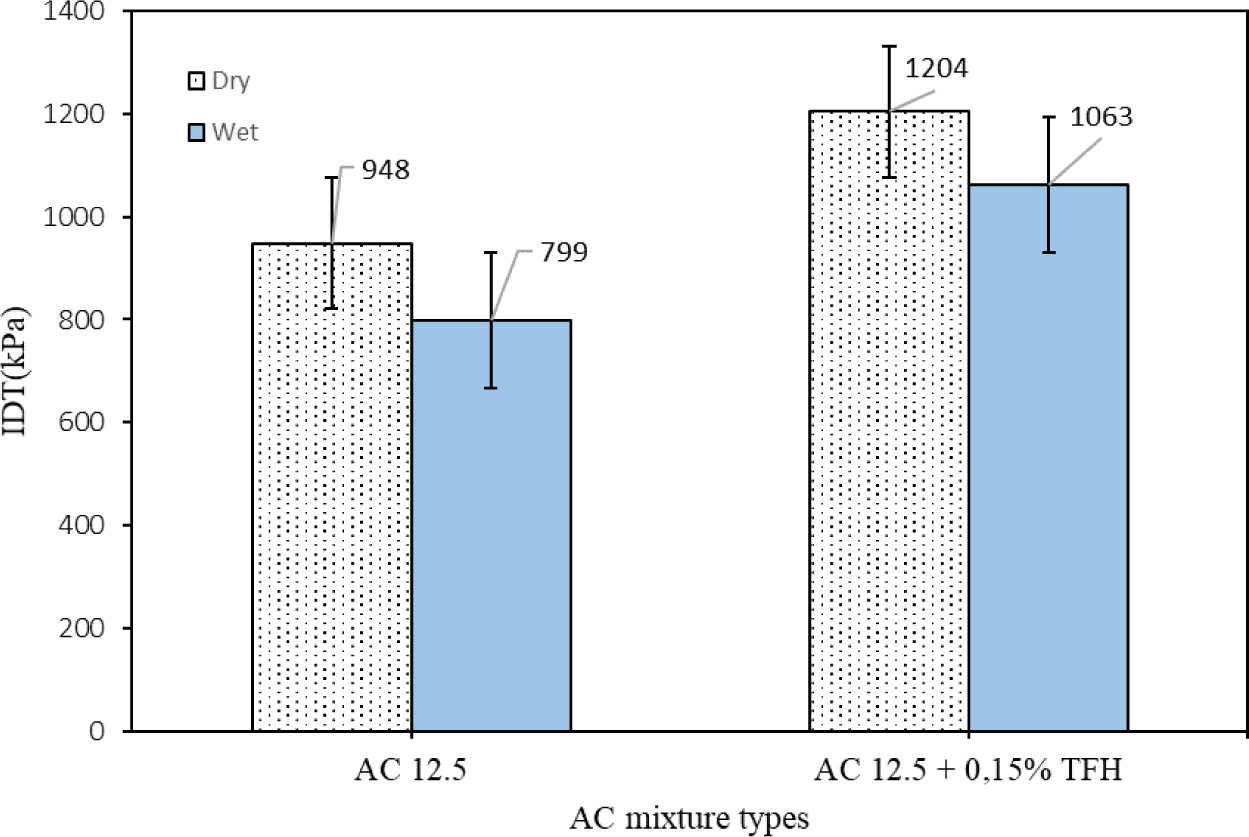
Figure 7:
The comparison of IDT strength
Additionally, Equation (1) was used to compute the TSR; the results are shown in Figure 8. As can be seen, the TSR value of the AC combination with the TFH additive is about 5% greater than that of the base mixture. This suggests that adding 0.15% TFH to the mixture increases its resistance to moisture-induced damage, making it a useful adjustment for enhancing the durability of asphalt pavement.
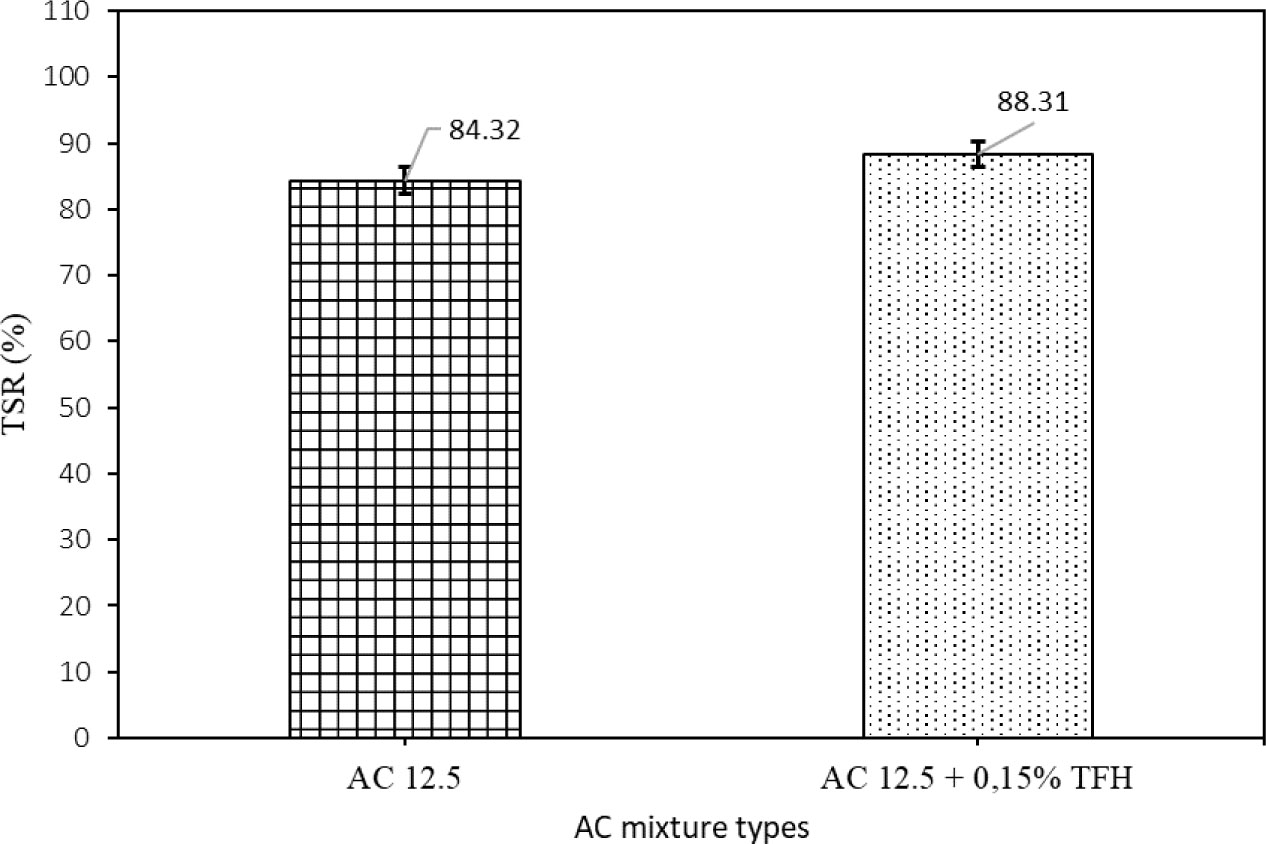
Figure 8:
The comparison of TSR value
3.6. Rutting Resistance
The WT test was used to evaluate the rutting resistance of the AC mixture with the TFH additive. Figure 9 illustrates the rut depths of both the base AC mixture and the TFH-modified mixture after 20000 loading cycles. At this point, the rut depth of the mixture containing the TFH additive is 6.48 mm approximately 28% less than that of the control mixture, which measures 9.1 mm. This improvement is attributed to the TFH additive enhancing the adhesive bond between the aggregate and binder. Therefore, incorporating 0.15% TFH additive into the AC mixture significantly improves its resistance to rutting.
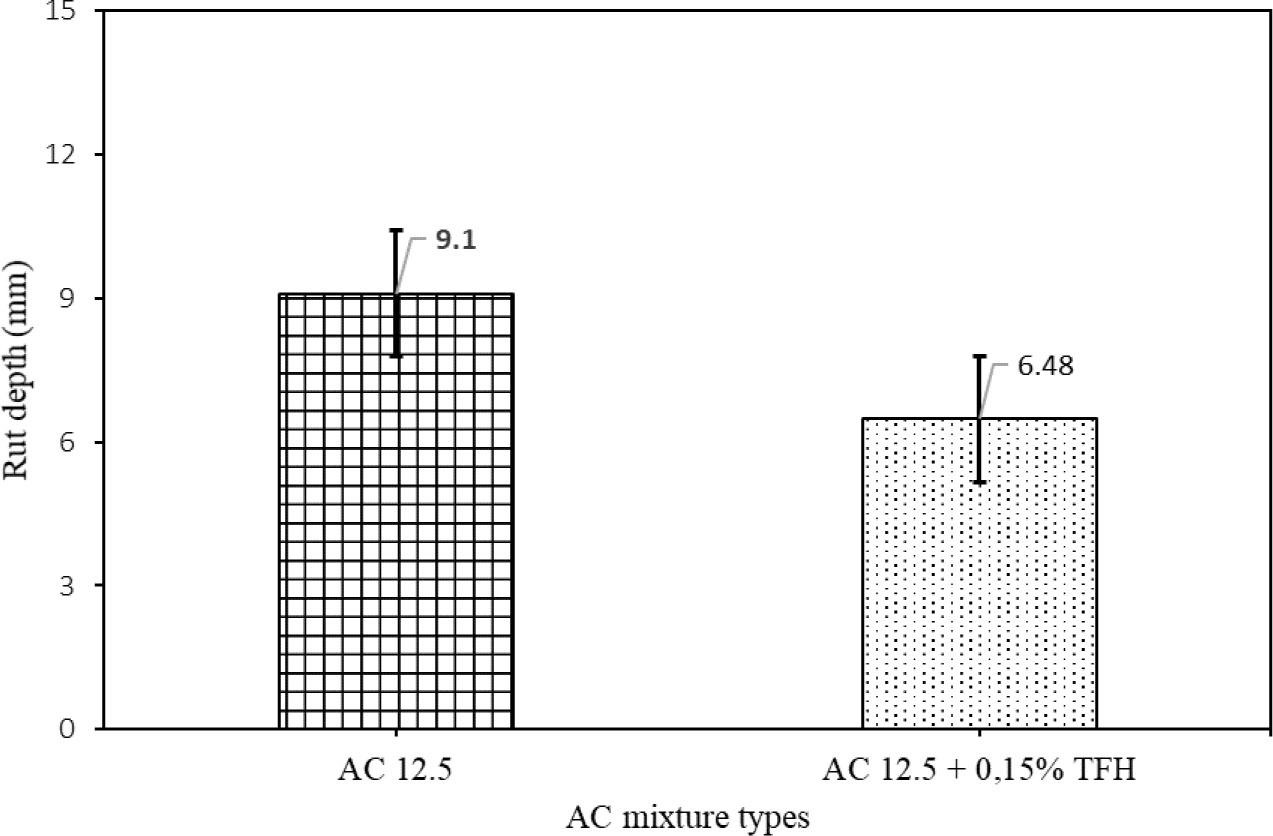
Figure 9:
The rut depth of AC mixture at 20000 loading cycles
3.7. IDT Strength Under Long-term Water Immersion
The deleterious impact of extended water exposure on the binder – aggregate adhesion is reflected in Figure 10, where the indirect tensile strength (IDT) gradually declines with increasing soaking time. The moisture susceptibility of the mixes was assessed by monitoring the IDT reduction at soaking times of one day, one month, three months, six months, and twelve months. The IDT dropped by roughly 59% for the control mixture (0% TFH) and 53% for the mixture with 0.15% TFH after a year. Regression analysis shows that the slopes of the fitted curves are almost equal, despite the fact that the TFH-modified mixture continuously showed higher IDT values throughout the testing period, remaining almost 22% higher than the control after a year. This implies that the TFH additive does not substantially change the long-term deterioration mechanism under water immersion, as the rate of IDT degradation over time is roughly the same for both mixes. Therefore, rather than a significant improvement in long-term moisture resistance, the observed gain can be mainly due to the higher initial tensile strength offered by TFH.
Figure 11 shows that during the 12-month conditioning period, the ratio of indirect tensile strength (RIDT) values decreased from roughly 89% to 41% for the control mixture and from roughly 97% to 50% for the mixture containing 0.15% TFH. This suggests that the TFH-modified mixture continuously maintained higher retained strength during the testing period. However, the regression analysis shows that the slopes of the fitted lines are nearly identical, suggesting that the rate of strength degradation with time is not significantly influenced by the presence of TFH. This implies that the additive does not fundamentally modify the long-term moisture damage mechanism. Instead, the improved RIDT performance of the TFH mixture can be primarily attributed to its higher initial strength retention, as evidenced by the larger intercept of the regression curve. Therefore, the role of TFH is better interpreted as enhancing the initial moisture resistance of the mixture rather than providing a substantial improvement in long-term durability under prolonged water conditioning.
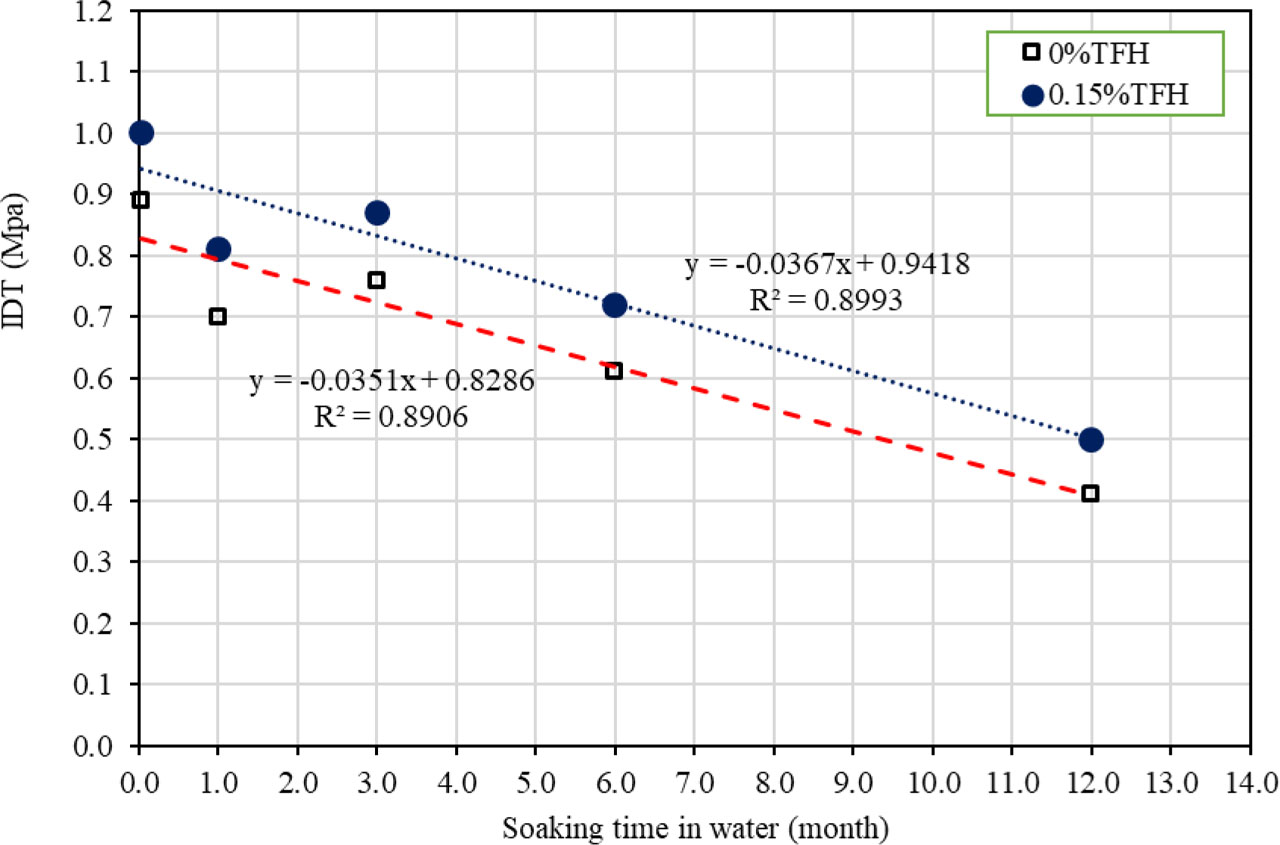
Figure 10:
Effect of condition period on IDT values
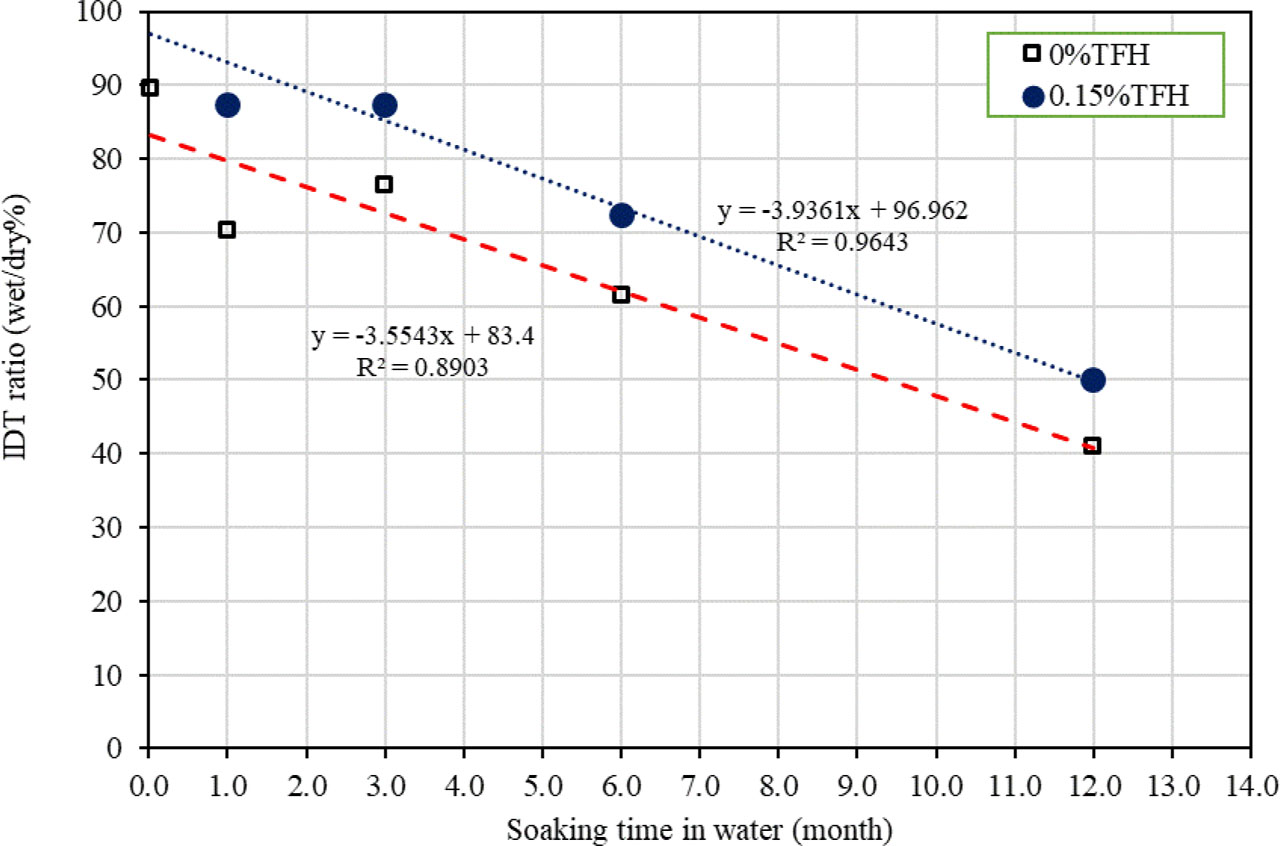
Figure 11:
Reduction ratios of tensile strength
4. Conclusions
The usage of TFH as an additive for asphalt mixtures was the primary focus of the current investigation. The results of the experimental testing led to the following conclusions:
The asphalt binder's mechanical, rheological, and physical characteristics are not appreciably changed by the addition of TFH additive.
After 12 months of water immersion at 25°C, the TFH-treated mix showed no discernible peeling, according to the results of static immersion testing, indicating its improved moisture resistance.
The results of the IDT test indicate that adding 0.15% TFH to the AC mixture helps initiate cracks. The IDT strength showed improved tensile performance, increasing by about 27% in dry conditions and 33% in wet situations.
The rut depth of the AC mixture with the TFH additive was 28% lower than that of the original mixture, showing increased rutting resistance, according to the wheel tracking test findings.
The TFH-modified mixture showed an IDT that was about 22% higher than the control mixture after a year of soaking, and it continuously maintained higher RIDT values (between 100% and 50%) than the control (between 89% and 41%). However, given that the rates of degradation are similar for both mixtures, these results indicate that the inclusion of TFH primarily enhances the initial tensile strength and moisture resistance, rather than significantly improving the long-term resistance to moisture-induced damage.
Future studies should investigate a broader range of TFH dosages to determine the optimum content and to better understand the sensitivity of asphalt mixture performance to dosage variations. In addition, further research is recommended to evaluate the rutting and cracking performance of TFH-modified asphalt concrete under actual field conditions. Moreover, future work should also consider the economic feasibility and cost-effectiveness of incorporating TFH into asphalt mixtures to support its practical implementation.