

1. Introduction
Load testing constitutes a fundamental component of railway bridge assessment, as it enables direct observation of structural response under actual service loading (Chacon, R., et al. 2024; Lantsoght, et al., 2024). Static and dynamic load tests remain indispensable for verifying safety, serviceability, and long-term structural performance, particularly for aging steel bridges subjected to material degradation and geometric imperfection (Cao, J., and An, L., 2023; Toporova, I., 2023).
This study is directed toward a comprehensive evaluation of the BH 25 steel truss railway bridge by integrating static and dynamic field testing with calibrated numerical modelling and strengthening assessment. The research focuses on quantifying serviceability performance, identifying stiffness degradation through measured dynamic characteristics, and evaluating structural capacity under current railway loading demands. In addition, the study examines the effectiveness of external prestressing combined with local plate reinforcement as a strengthening strategy for aging railway bridges.
Rather than formulating isolated research questions, this study adopts a performance-oriented perspective in which static deflection behaviour, dynamic vibration response, and member-level capacity are jointly interpreted to characterize the structural condition of an aging bridge system and to justify strengthening intervention. Regulatory provisions on railway bridge safety and load testing establish the governing acceptance criteria and performance thresholds adopted in this study, as stipulated in the Regulation of the Minister of Transportation of the Republic of Indonesia No. 69 of 2018 (Regulation of the Minister of Transportation of the Republic of Indonesia, 2018).
Innocenzi et al. (2022) demonstrated the combined use of static and dynamic testing together with finite element modelling for evaluating bridge performance during proof load testing, primarily focusing on validation of structural behaviour and testing procedures. Similarly, Bayraktar et al. (2017) conducted comprehensive static and dynamic field testing of a long-span cable-stayed bridge, emphasizing the identification of dynamic characteristics and validation of analytical models under operational conditions. While these studies successfully combine experimental and numerical approaches for structural assessment, they mainly focus on model validation and structural performance evaluation. In contrast, the present study extends this framework by explicitly linking field-measured static and dynamic responses to post-strengthening performance and member-level capacity verification. In particular, the effectiveness of external prestressing is quantified through changes in camber, natural frequencies, and demand-to-capacity ratios, providing a direct connection between measured structural behaviour and strengthening decision-making. This distinction has been clarified in the revised manuscript to emphasize that the contribution of this study lies not merely in combining testing and modelling techniques, but in establishing a field-validated, performance-based assessment and strengthening evaluation workflow for aging railway bridges under operational loading conditions.
The novelty of this research lies in its integrated use of full-scale static and dynamic load testing as a unified basis for both structural diagnosis and strengthening evaluation. Unlike previous studies that treat load testing, numerical modelling, and strengthening analysis as separate tasks, this study explicitly calibrates a three-dimensional finite element model using field-measured static and dynamic responses and employs the calibrated model to quantitatively assess the effectiveness of external prestressing. By linking changes in vibration characteristics and camber restoration directly to post-strengthening capacity improvement, this study provides empirical evidence on stiffness enhancement mechanisms in aging steel railway bridges.
To address the above research gap, this study employs an integrated methodology that combines full-scale static and dynamic load testing with calibrated three-dimensional finite element modelling. The proposed framework enables simultaneous evaluation of serviceability performance, stiffness degradation, and member-level structural capacity, and provides a rational basis for assessing the effectiveness of external prestressing as a strengthening intervention. The detailed methodology adopted to achieve these objectives is presented in Section 3.
Unlike conventional bridge load testing studies that focus solely on serviceability verification, this research adopts a capacity-oriented perspective in which static deflection behaviour, dynamic stiffness indicators, and member-level demand-to-capacity ratios are jointly interpreted within a unified framework. This approach reduces epistemic uncertainty in structural diagnosis and enables strengthening decisions to be supported by field-validated quantitative evidence rather than code-based assumptions alone.
Bridges play a critical role in transportation networks, and their failure or degradation can significantly disrupt traffic operations. Hlinka et al. (2024) emphasized the importance of advanced analytical methods and numerical modelling in evaluating structural stability and load-carrying capacity, particularly in situations where bridge performance must be assessed under constrained conditions. Their work highlights the necessity of reliable analytical approaches to support decision-making in bridge management and rehabilitation.
Research Contributions
This study makes the following contributions to the assessment and strengthening of existing railway bridges:
(1) It proposes an integrated, full-scale assessment framework combining static load testing, dynamic vibration testing, and calibrated three-dimensional finite element modelling for aging steel railway bridges.
(2) It provides empirical field evidence quantifying stiffness degradation and recovery through changes in natural frequencies, camber restoration, and member-level capacity ratios before and after external prestressing.
(3) It demonstrates the effectiveness of external prestressing as a performance-based strengthening strategy by explicitly linking measured static and dynamic responses to post-strengthening structural capacity improvement.
2. Literature Review
Recent studies have highlighted the importance of integrating diagnostic surveys, load testing, and long-term monitoring to evaluate the structural performance of aging bridge systems. For instance, Borzovič et al. (2025) demonstrated that combining detailed inspections with field measurements provides a reliable basis for assessing the condition and residual capacity of deteriorated prestressed concrete bridges. Their findings emphasize that continuous monitoring and field-based evaluation are essential for maintaining operational safety when structural degradation is present.
Performance-based assessment supported by field measurements has become a dominant paradigm in railway bridge evaluation, particularly for aging steel structures subjected to cumulative deterioration and construction imperfections (Gedam et al., 2020; Chacón et al., 2024; Lantsoght et al., 2024). Static load testing remains the primary method for serviceability verification through deflection control, whereas dynamic testing provides complementary insight into stiffness degradation via changes in natural frequencies and mode shapes (Kim et al., 2022; Bertolesi et al., 2021; Nhung et al., 2023; Cao & An, 2023; Topurova, 2023). However, several studies have emphasized that satisfactory serviceability performance does not necessarily ensure adequate structural capacity, particularly for aging truss systems affected by material degradation and geometric imperfections (Bacinskas et al., 2013; Qi et al., 2011; Duvnjak et al., 2019). The evaluation of load-carrying capacity remains a critical aspect in the assessment of existing railway bridges. Odrobiňák et al. (2025) proposed an analytical approach combining finite element modelling with advanced stress-based verification methods to assess the structural capacity of railway bridge components. Their study demonstrates that integrating global structural analysis with detailed member-level verification provides a more comprehensive understanding of structural performance under railway loading conditions.
To address these limitations, strengthening strategies such as external prestressing and local plate reinforcement have been proposed to enhance stiffness and load-carrying performance (Recupero et al., 2014; Lou et al., 2021; Karavasilis et al., 2021; Atta et al., 2024; Zhao et al., 2025). External prestressing is especially attractive because it enables camber restoration and internal force redistribution without major alteration of the structural system. Nevertheless, most available investigations focus on analytical simulations or laboratory-scale experiments, with comparatively limited full-scale field validation under operational railway loading (Ren et al., 2025; Fang et al., 2024; Guo et al., 2024).
In parallel, bridge assessment research has increasingly shifted toward integrated workflows combining load testing, vibration monitoring, and numerical model calibration to reduce epistemic uncertainty in structural diagnosis (Bien et al., 2020; Duvnjak et al., 2020; Hekic et al., 2024; He et al., 2023; Zhou et al., 2025). Advances in wireless sensing, non-contact measurement systems, and data-driven structural health monitoring have further enhanced the feasibility of vibration-based assessment under operational conditions (Li & Ohkubo, 2024; Qiao et al., 2025; Fawad et al., 2023; Rahman et al., 2024; Zou et al., 2024).
Despite these developments, existing studies often treat load testing, model calibration, and strengthening evaluation as sequential or loosely connected tasks rather than components of a unified, field-validated performance framework. Moreover, quantitative evidence explicitly correlating changes in vibration characteristics with measurable improvements in member-level demand-to-capacity ratios remains scarce. This gap motivates the integrated static–dynamic assessment and strengthening evaluation framework adopted in the present study.
Comprehensive diagnostic surveys are essential for understanding the condition and performance of aging bridge infrastructure. Rehacek et al. (2025) demonstrated that combining visual inspection, material testing, and structural assessment techniques enables a more accurate evaluation of bridge deterioration and load-carrying capacity. Such integrated diagnostic approaches are particularly important for aging prestressed structures subjected to long-term environmental and operational effects.
Research Gap and Contribution
Despite extensive research on static load testing, dynamic identification, numerical modelling and strengthening techniques for railway bridges, these components are frequently addressed as independent or sequential procedures. Comprehensive full-scale investigations that explicitly integrate static and dynamic field measurements with calibrated three-dimensional finite element modelling to support capacity-oriented decision-making remain limited. In particular, empirical evidence directly correlating changes in vibration characteristics and camber restoration with quantified improvements in member-level demand-to-capacity ratios is scarce.
The present study addresses this gap by implementing an integrated static–dynamic assessment framework in which field-measured responses are used to calibrate a numerical model and to quantitatively evaluate the effectiveness of external prestressing strengthening. By linking stiffness indicators, camber recovery, and structural capacity verification within a unified workflow, this research provides field-validated evidence supporting performance-based strengthening strategies for aging steel railway bridges.
3. Methodology
3.1. Bridge Description
The BH 25 railway bridge is located in Garut, West Java Province, Indonesia, and serves as part of an active railway corridor. It is a three-span steel truss bridge with a total length of 41.055 m, consisting of spans of span 1: 9.485 m, span 2: 21.930 m, and span 3: 9.635 m. Spans 1 and 3 consist of steel girder-type systems, in which the main load-bearing elements are longitudinal girders supported by transverse floor beams, forming the primary load transfer mechanism. The general geometric configuration, span arrangement, and structural layout of the bridge are summarized in Table 1. The bridge layout, elevation, and overall structural configuration are illustrated in Figure 1 – Figure 3.
Table 1:
Bridge data
| Bridge type | Girder and truss bridges |
| Located | Pasirjengkol – Wanaraja |
| Bridge length | 41.055 m |
| Bridge width | 1.30 m; 3.60 m; 1.30 m |
| Width between rails | 1.20 m |
| Number of spans | 3 spans |
| Span configuration | 9.485 m; 21.930 m; 9.635 m |
| Bottom structure type | Stone masonry |
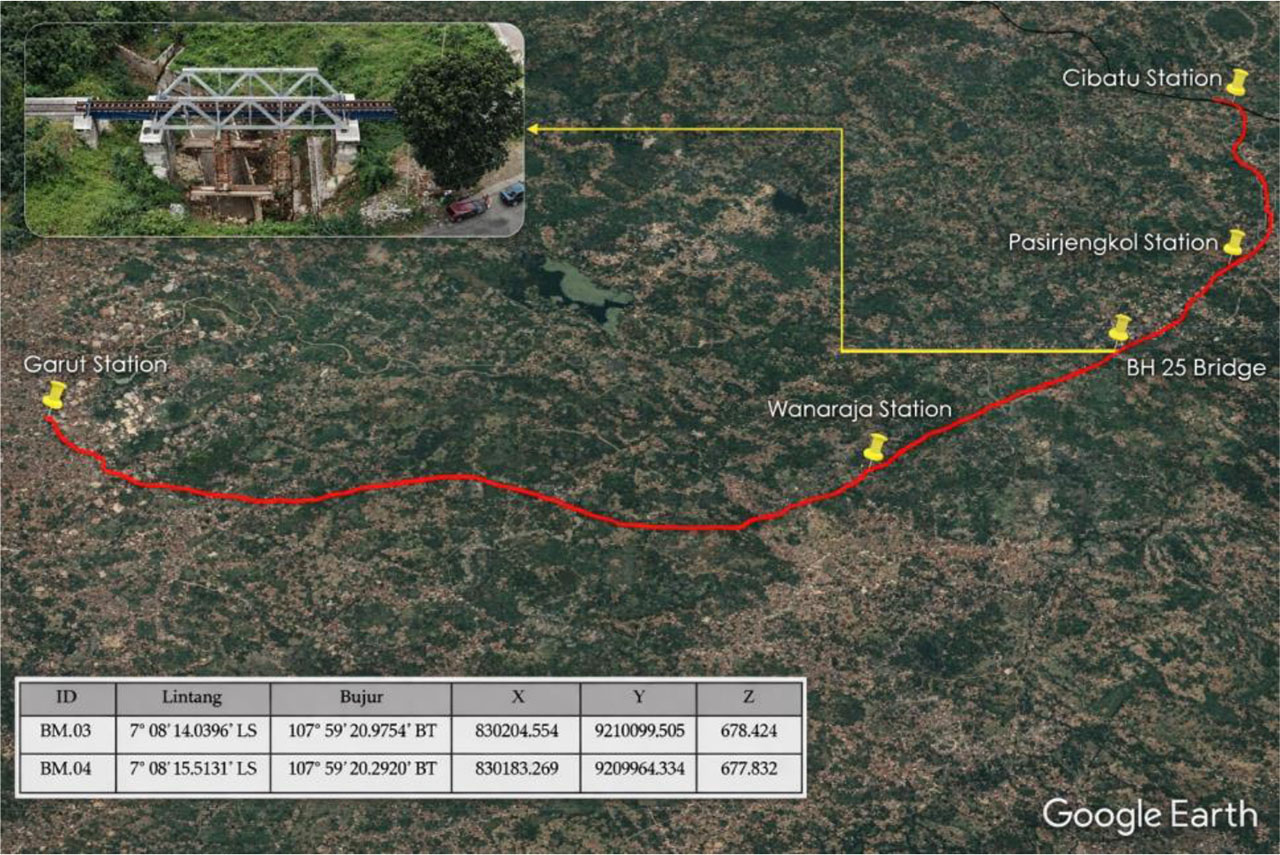
Figure 1:
Cibatu - Garut Railway Map
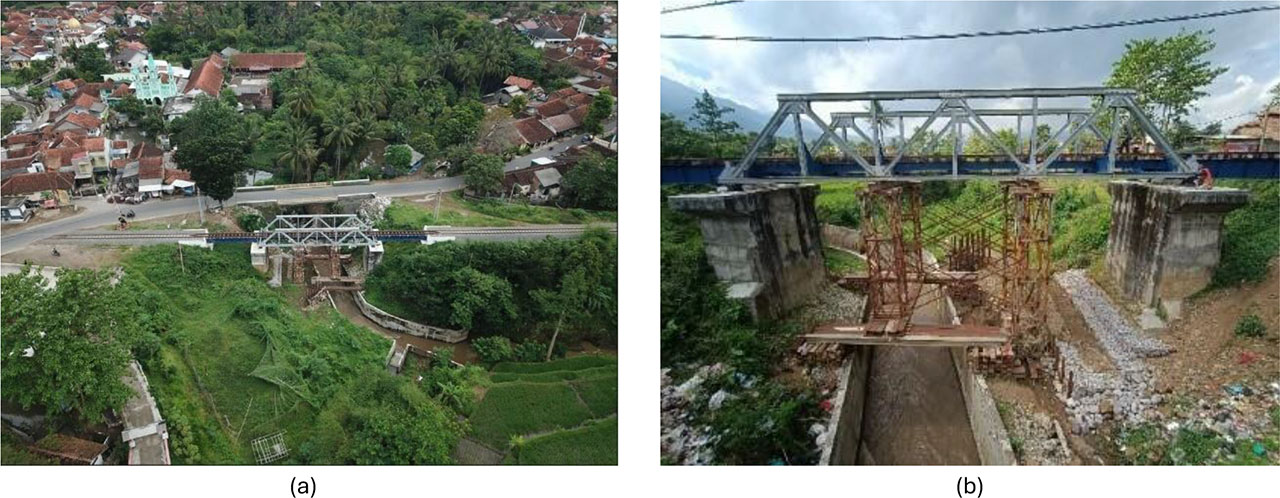
Figure 2:
(a) Aerial view of the bridge, (b) Steel structure of the bridge
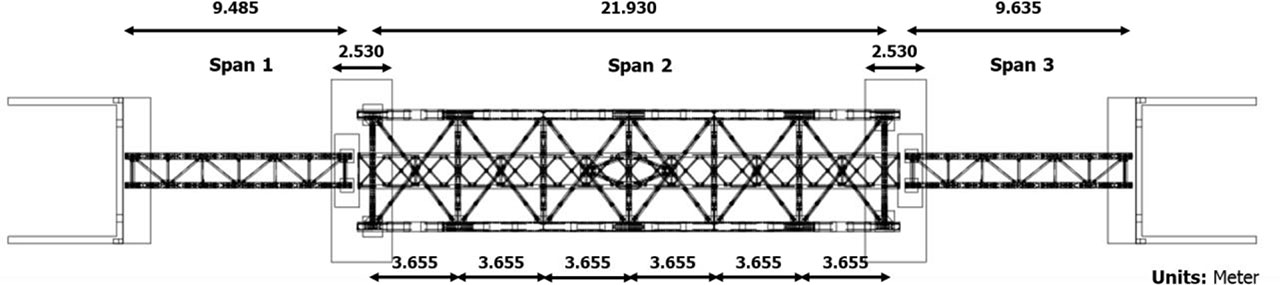
Figure 3:
Top view of the bridge
Span 2 was identified as the most critical segment due to observable camber deficiency and the presence of temporary supports. Although the bridge was originally designed with a positive camber to compensate for dead and live load effects, construction deviations resulted in a downward displacement, indicating reduced global stiffness and motivating further structural evaluation.
3.2. Load Testing Program
Static and dynamic load tests were conducted using a CC206 diesel-electric locomotive with a total weight of 90 tons and an axle load of 15 tons. The locomotive specifications, static loading configuration, and governing load combinations applied during the field test are listed in Table 2. The geometric properties and section characteristics of the bridge members, together with the adopted material properties of the existing steel components, are summarized in Table 3, respectively. The loading positions during testing are illustrated in Figure 4 and 5.
Table 2:
CC206 Locomotive specifications
| Technical data | |
| Locomotive | CC 206 13 21 |
| Power source | Diesel electric |
| Model | GE CM20EMP |
| Wheel specifications | |
| Whyte notation | 0-6-6-0 |
| AAR wheel setup | C-C |
| UIC classification | Co’Co’ |
| Dimensions | |
| Track width | 1.067 m (3 ft 6 in) |
| Length | 15.849 m (17 yd 1 ft 0 in) |
| Width | 2.743 m (3 yd 0 ft 0 in) |
| Maximum height | 3.695 m (4 yd 0 ft 0 in) |
| Axle load | 15 tons (15 tons length; 17 tons short) |
| Weight | |
| Empty weight | 88.2 tons (86.8 tons length; 97.2 tons short) |
| Ready weight | 90 tons (89 tons length; 99 tons short) |
| Performance | |
| Maximum speed | 160 km/h (44 m/s) Original Speed; 120 km/h (33 m/s) Operational Speed |
| Engine power | 1.680 kW (2.250 hp) |
| Tractive force | 248 kN (56.000 lbf) |
Table 3:
Dimension of bridge structure
| No. | Bridge Structure (A) | Span | Profil type | Truss Structure (B) | Profil type |
|---|---|---|---|---|---|
| 1 | Longitudinal girder | S1 & S3 | Steel joist 970.250.10.10 | Top & bottom chord | 2UNP 220.80.10 |
| 2 | Longitudinal girder | S2 | WF 425.170.18.10 | Vertical member | 2UNP 220.80.10 |
| 3 | Transverse girder (top) | S1 & S3 | 2L 75.75.8 | Diagonal 1 | 2UNP 220.80.10 |
| 4 | Transverse girder (bottom) | S1 & S3 | UNP 140.60.10 | Diagonal 2 | 2UNP 200.75.10.10 |
| 5 | Transverse girder (mid) | S1 & S3 | L 75.75.8 | Diagonal 3 | 2UNP 200.65.10.10 |
| 6 | Bracing (end) | S1 & S3 | 2L 75.75.8 | - | - |
| 7 | Bracing (bottom) | S1 & S3 | L 75.75.8 | - | - |
| 8 | Transverse girder | S2 | Steel joist 870.220.10.10 | - | - |
| 9 | Bracing (bottom) | S2 | 2L 60.60.8 | - | - |
| 10 | Bracing (top) | S2 | L 55.55.8 | - | - |
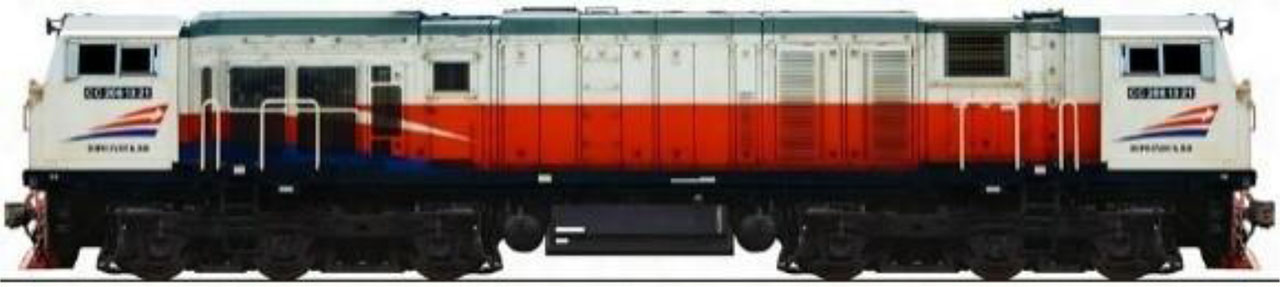
Figure 4:
CC206 locomotive used in the load testing program

Figure 5:
Static load scheme applied to Span 2 of the bridge
Static testing involved positioning the locomotive at predetermined locations along Span 2 to induce maximum deflection and internal forces. Dynamic testing was performed through controlled locomotive passage to capture vibration responses under moving loads, following Indonesian railway safety regulations and international testing guidelines. The evaluation procedures and acceptance criteria were further interpreted with reference to national structural design provisions to ensure consistency with prevailing code-based safety requirements.
3.3. Instrumentation and Measurement System
The structural response of the bridge was monitored using a combination of displacement, strain and acceleration measurement systems. Linear Variable Differential Transformers (LVDTs) and strain gauge were used to measure vertical deflections at critical locations, particularly at the midspan of Span 2 as shown in Figure 6 and 7. The LVDTs had a measurement range of ±50 mm with an accuracy of ±0.01 mm. Dynamic response measurements were obtained using uniaxial accelerometers installed at selected locations along the bridge deck. The acceleration response was measured using accelerometers with a sensitivity of approximately 400 mV/g and an effective frequency range of up to 200 Hz, making them suitable for capturing the dominant vibration modes of railway bridge structures. All sensors were connected to a centralized data acquisition system with a sampling frequency of 200 Hz, ensuring sufficient resolution for both static and dynamic response measurements in accordance with the Nyquist criterion. Signal conditioning modules were employed to filter noise and stabilize the recorded signals, thereby enhancing data quality and reliability for subsequent frequency-domain analysis.
The measurement chain consisted of sensor installation, signal transmission, data acquisition, and postprocessing. Sensors were carefully calibrated prior to installation, and their placement was selected to capture both global structural response and localized behaviour. The recorded data were processed using standard signal analysis techniques, including filtering and frequency domain analysis, to extract relevant structural parameters such as deflection and natural frequencies. This instrumentation setup ensures sufficient accuracy and reliability of the measurements, allowing for a robust evaluation of the structural performance under operational loading conditions. The adopted instrumentation and measurement procedure is consistent with commonly accepted practices in full-scale bridge load testing, ensuring the reliability and reproducibility of the results.
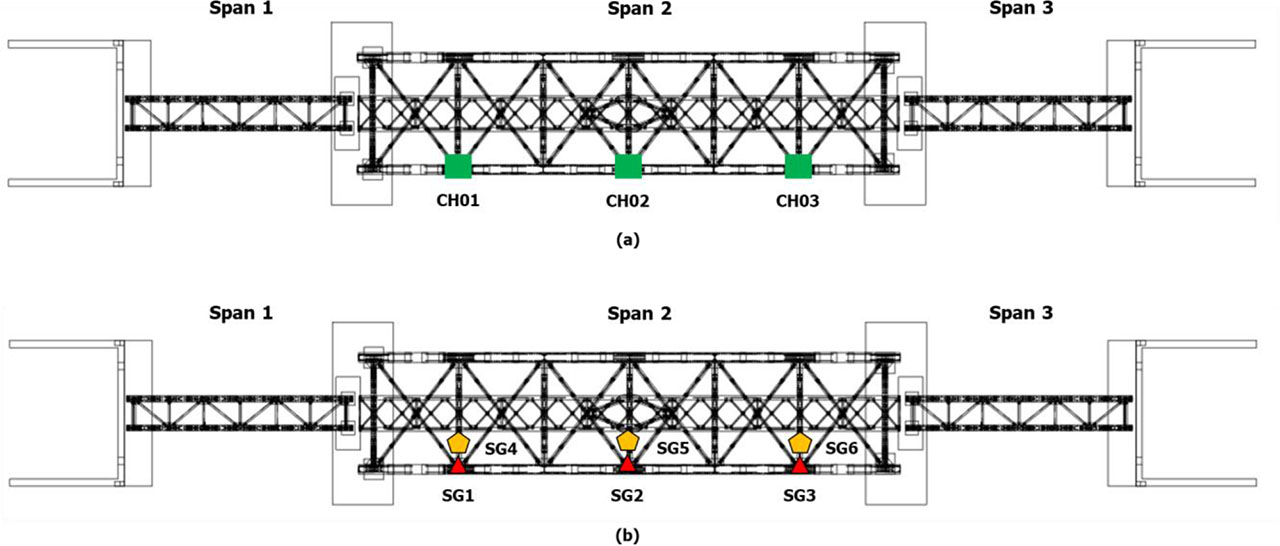
Figure 6:
(a) Installation of the LVDT sensor on the bridge superstructure; (b) Installation of the strain gauge sensor on the bridge superstructure

Figure 7:
Installation of accelerometer sensors on the bridge structure
Sensors were installed at 1/4L, 1/2L, and 3/4L of Span 2 to capture representative global and local behaviour. This configuration ensured reliable evaluation of serviceability, stiffness, and dynamic characteristics.
3.4. Numerical Modelling and Model Calibration
A three-dimensional finite element model of the BH 25 railway bridge was developed in SAP2000 to simulate its response under static and dynamic loading. The model accurately represents the bridge geometry and structural system, with main truss members idealized as frame elements capturing axial, flexural, and shear behaviour, and the deck and secondary components modelled using equivalent beam elements. All connections were assumed rigid, and boundary conditions were defined to reflect the actual support system. Material properties were assigned based on standard steel parameters, including elastic modulus and mass density. The modelling framework, including geometry, boundary conditions, and mesh discretization, is presented in Figure 8 and 9.
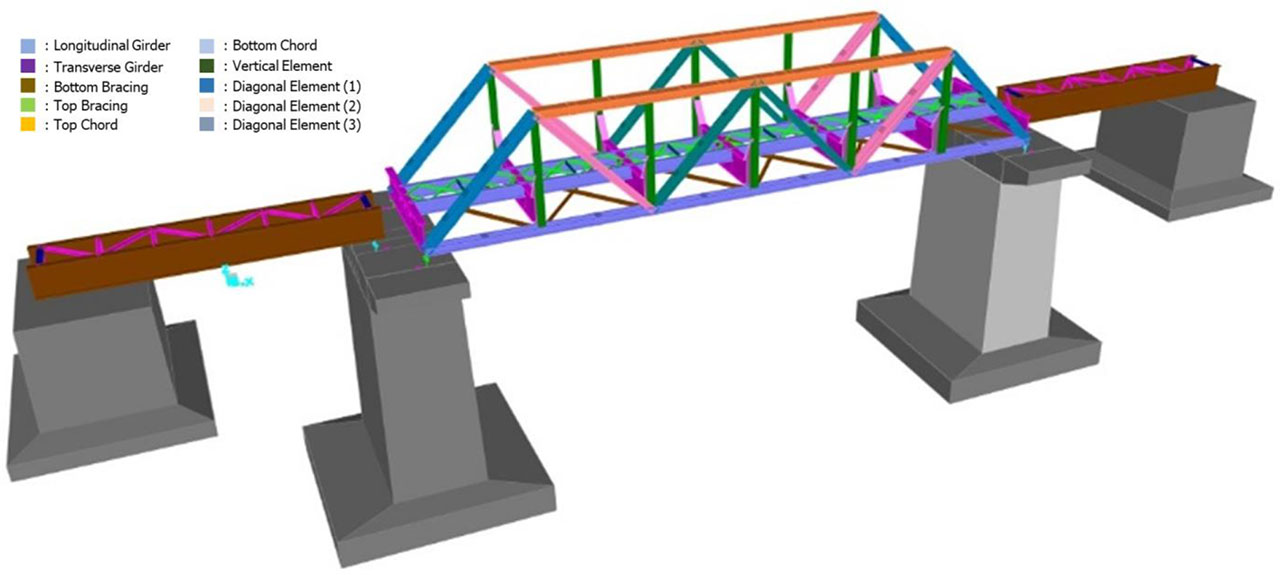
Figure 8:
Three-dimensional model of bridge structure
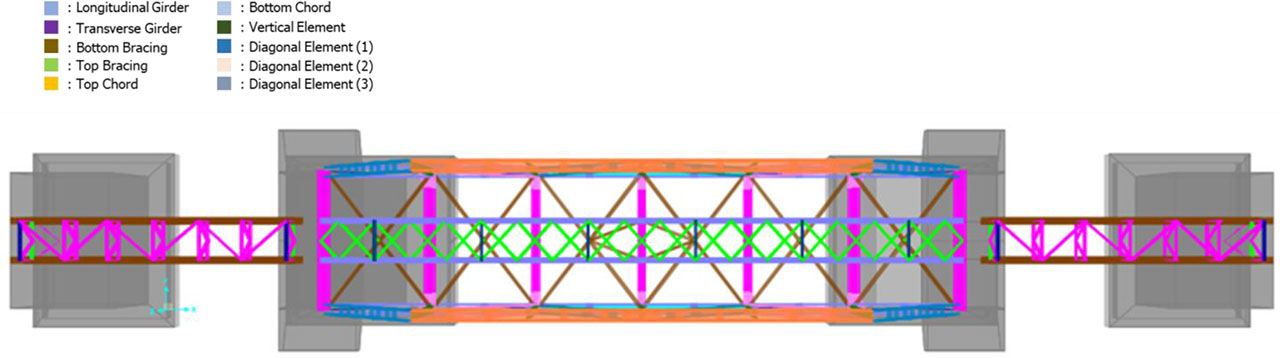
Figure 9:
Top view of the bridge structure model
Model calibration was conducted through an iterative adjustment of the effective elastic modulus of steel members and boundary stiffness parameters to achieve agreement between measured and analytical structural responses. Two quantitative indicators were selected as calibration targets: (i) midspan deflection under static loading and (ii) dominant vertical natural frequency obtained from dynamic testing. The relative difference between numerical prediction and field measurement was evaluated as:
Convergence was considered satisfactory when the frequency deviation was below 5% and the deflection deviation remained within acceptable engineering tolerance for conservative capacity evaluation.
4. Results and Discussion
4.1. Static Load Test Result
According to the Regulation of the Minister of Transportation of the Republic of Indonesia No. 69 of 2018, the allowable vertical deflection for railway bridges under service loading is typically limited to L/1000, where L denotes the span length. This limit is widely used as a serviceability criterion to ensure structural performance and operational safety under railway loading conditions.
The maximum measured mid-span deflection at Span 2 under static load was −11.30 mm, which is significantly lower than the allowable limit of L/1000 (21.93 mm). The measured deflection results and the corresponding allowable limits for the tested load cases are presented in Figure 10. A summary of the deflections at 1/4L, 1/2L, and 3/4L is shown in Figure 11.
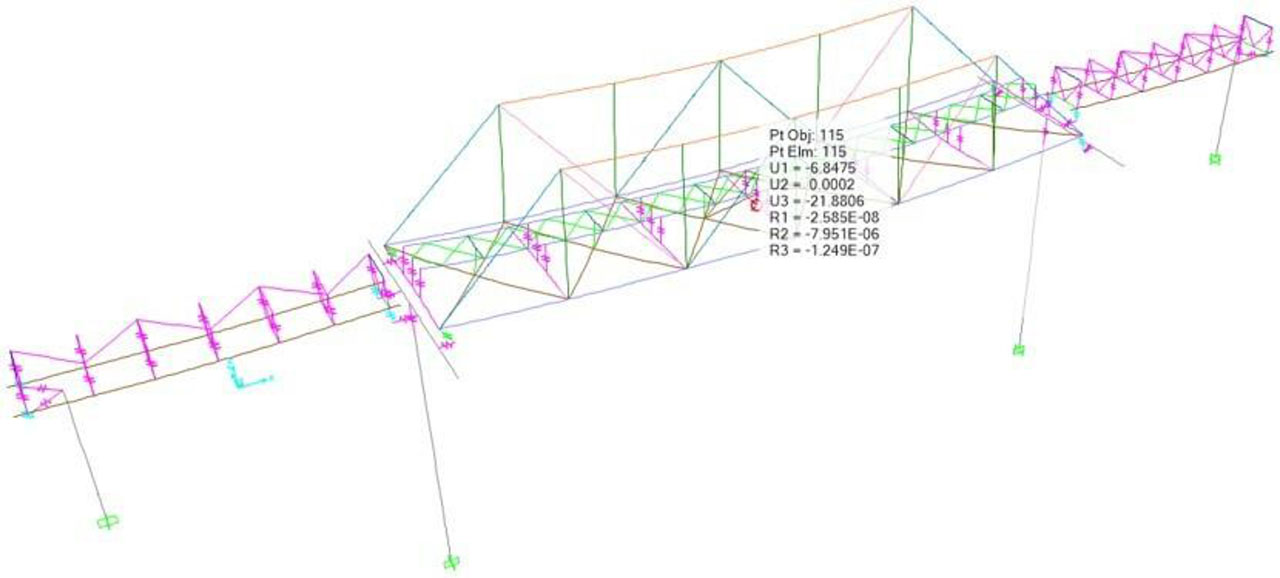
Figure 10:
Deflection at midspan (1/2L) of Span 2 under service load: ‒21.88 mm
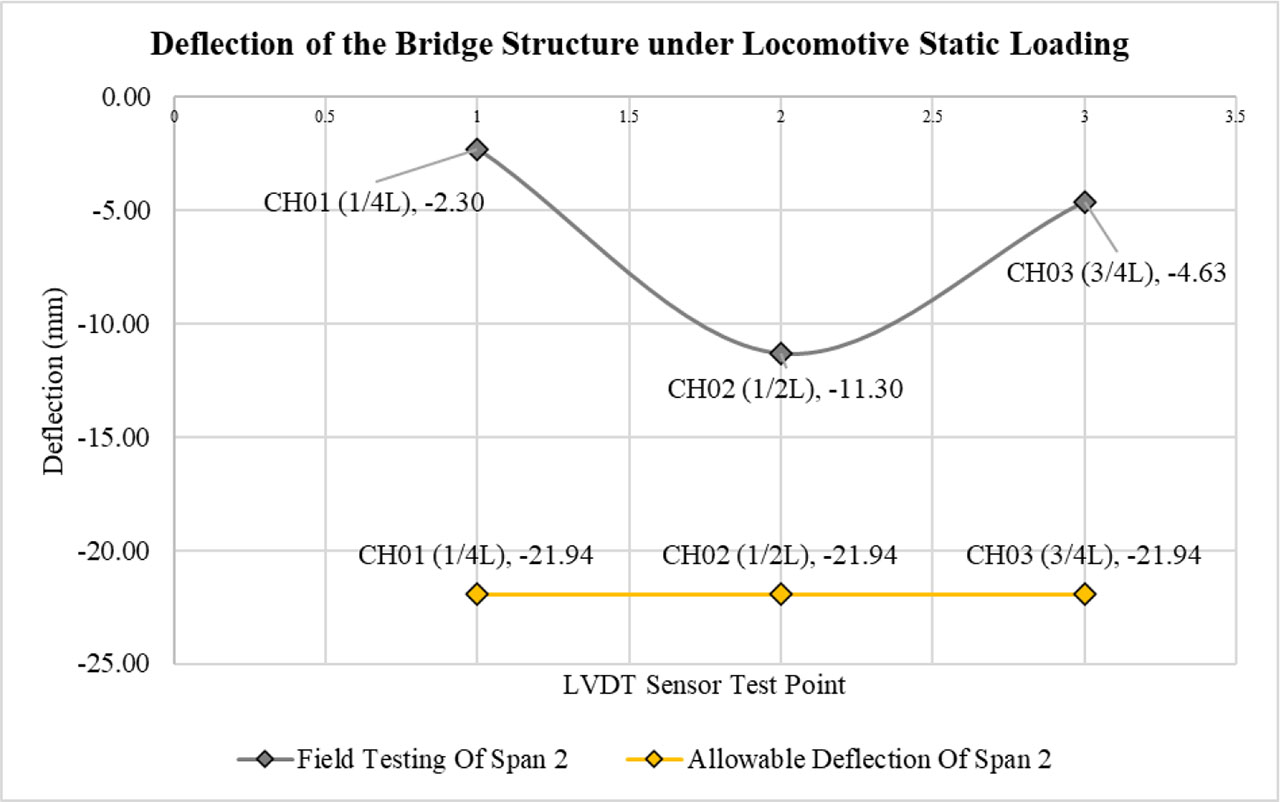
Figure 11:
Deflection of the bridge structure under locomotive static loading
It should be noted that two deflection values are discussed in this study. The value of −11.30 mm represents the maximum midspan deflection recorded during full-scale field testing under operational loading. Meanwhile, the value of −21.88 mm corresponds to the analytical prediction obtained from the finite element model under the governing load combination prior to strengthening. The difference between these values reflects the distinction between measured field response and model-based structural analysis.
Table 4:
Field vs. FEM comparison
| Parameter | Field measurement | FEM prediction | Difference [%] |
|---|---|---|---|
| Midspan deflection [mm] | −11.30 | −21.88 | 48.4% |
| Dominant frequency [Hz] | 14.65 | 14.98 | 2.25% |
The analytical prediction provides a conservative estimate relative to field measurements, supporting the reliability and safety-oriented applicability of the numerical model for subsequent structural capacity evaluation.
Although the calibrated model reproduced the dominant natural frequency within 2.25%, the predicted static midspan deflection remained larger than the field-measured value, resulting in a relative difference of approximately 48.4%. This deviation reflects a deliberate conservative modelling strategy adopted for capacity-oriented assessment. Rather than enforcing exact deflection matching, calibration prioritized accurate representation of global stiffness through dynamic response agreement, while maintaining conservative displacement predictions to avoid overestimation of structural capacity. Such an approach is considered acceptable in safety-critical infrastructure evaluation, where conservative demand estimation provides a defensible basis for strengthening decisions.
Elongation (ΔL) of the span-2 bridge girder was monitored using strain gauges installed at 1/4L, 1/2L, and 3/4L under static locomotive loading, where positive and negative values denote tension and compression, respectively. The bottom chord exhibited tensile elongation, while the top chord showed compressive elongation; strain was evaluated using ε = ΔL/L with a gauge length of 160 mm and subsequently converted to stress. The maximum tensile and compressive stresses were 111 MPa and – 124 MPa, respectively, both significantly lower than the steel yield strength (fy = 349 MPa), indicating adequate structural performance under the applied load.
Table 5:
Calculated strain values of the Span-2 bridge girder based on strain gauge measurements
| Field testing scheme | Static load [ton] | Testing points | Strain [mm/mm] |
|---|---|---|---|
| Static load B2 | 90,00 | SG1 (1/4L) B2 RB | 0.00026 |
| SG2 (1/2L) B2 RB | 0.00019 | ||
| SG3 (3/4L) B2 RB | 0.00056 | ||
| SG4 (1/4L) B2 RA | −0.00062 | ||
| SG5 (1/2L) B2 RA | −0.00051 | ||
| SG6 (3/4L) B2 RA | −0.00050 |
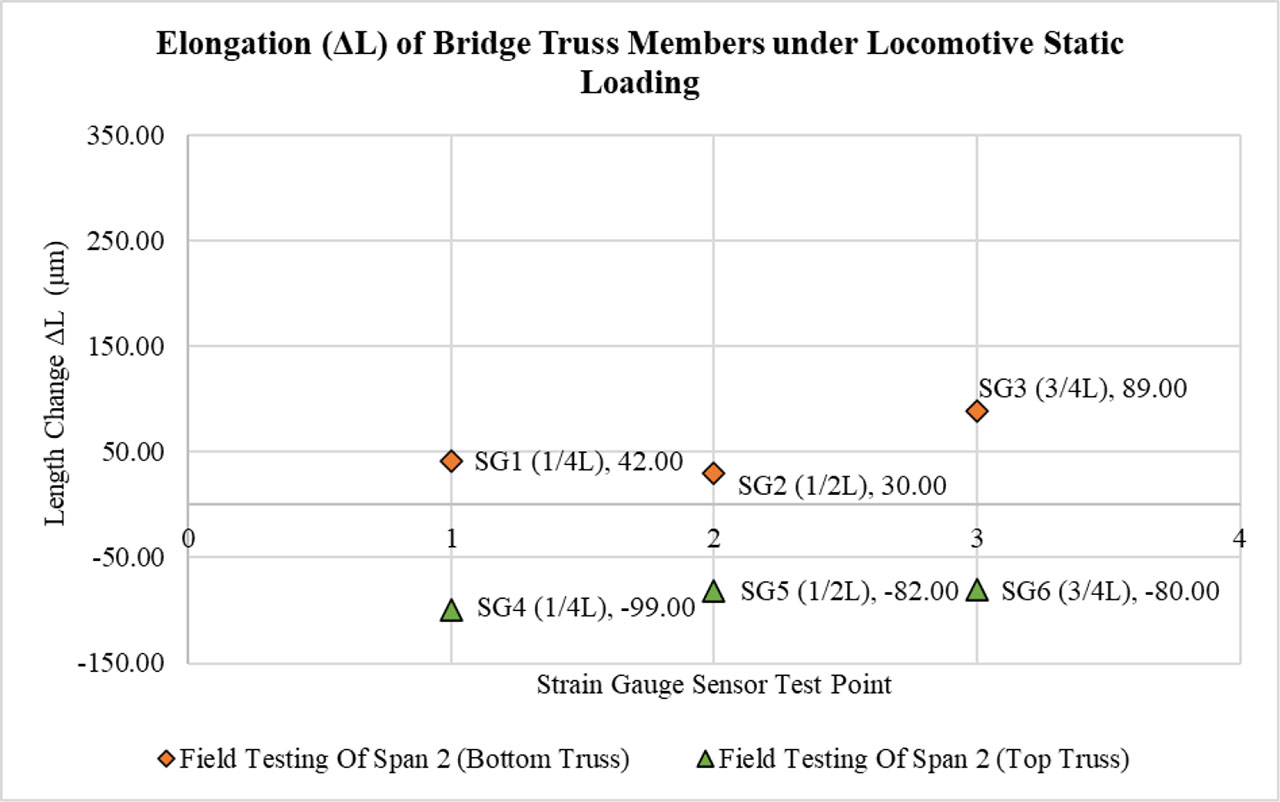
Figure 12:
Measured elongation (ΔL) distribution of the Span-2 bridge girder under static locomotive loading
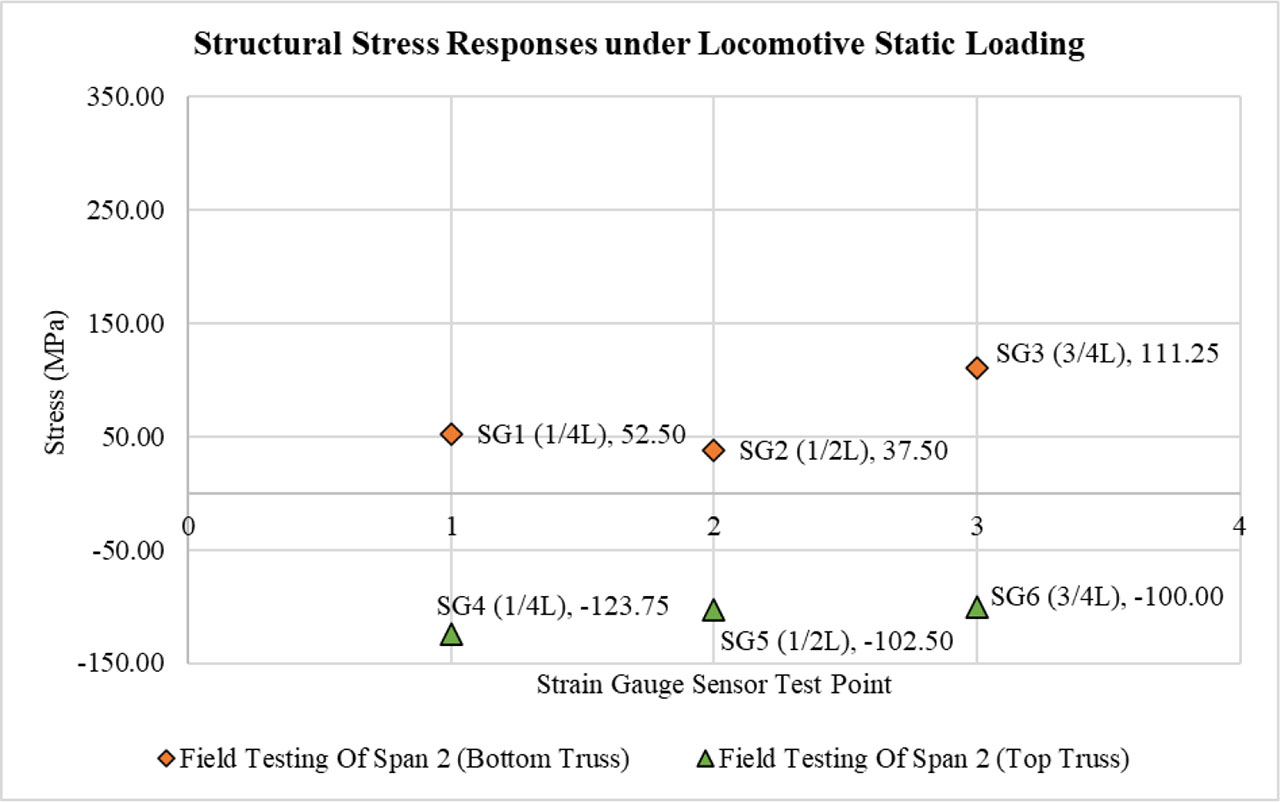
Figure 13:
Stress distribution of the Span-2 bridge girder derived from strain gauge measurements
The close agreement between different measurement techniques confirms the reliability of the recorded data and indicates elastic structural behaviour under service loading conditions.
4.2. Dynamic Load Test Result
Frequency-domain analysis was conducted using the Fast Fourier Transform (FFT) to transform time-domain signals into the frequency domain, from which the fundamental frequency was identified as the dominant peak corresponding to the global vibration mode, to ensure reliability, multiple measurements were analysed for consistency, and the resulting dominant vertical natural frequency of 14.65 Hz slightly lower than that predicted by the calibrated finite element model was subsequently compared with analytical results for validation, as illustrated in Figure 14 and 15.
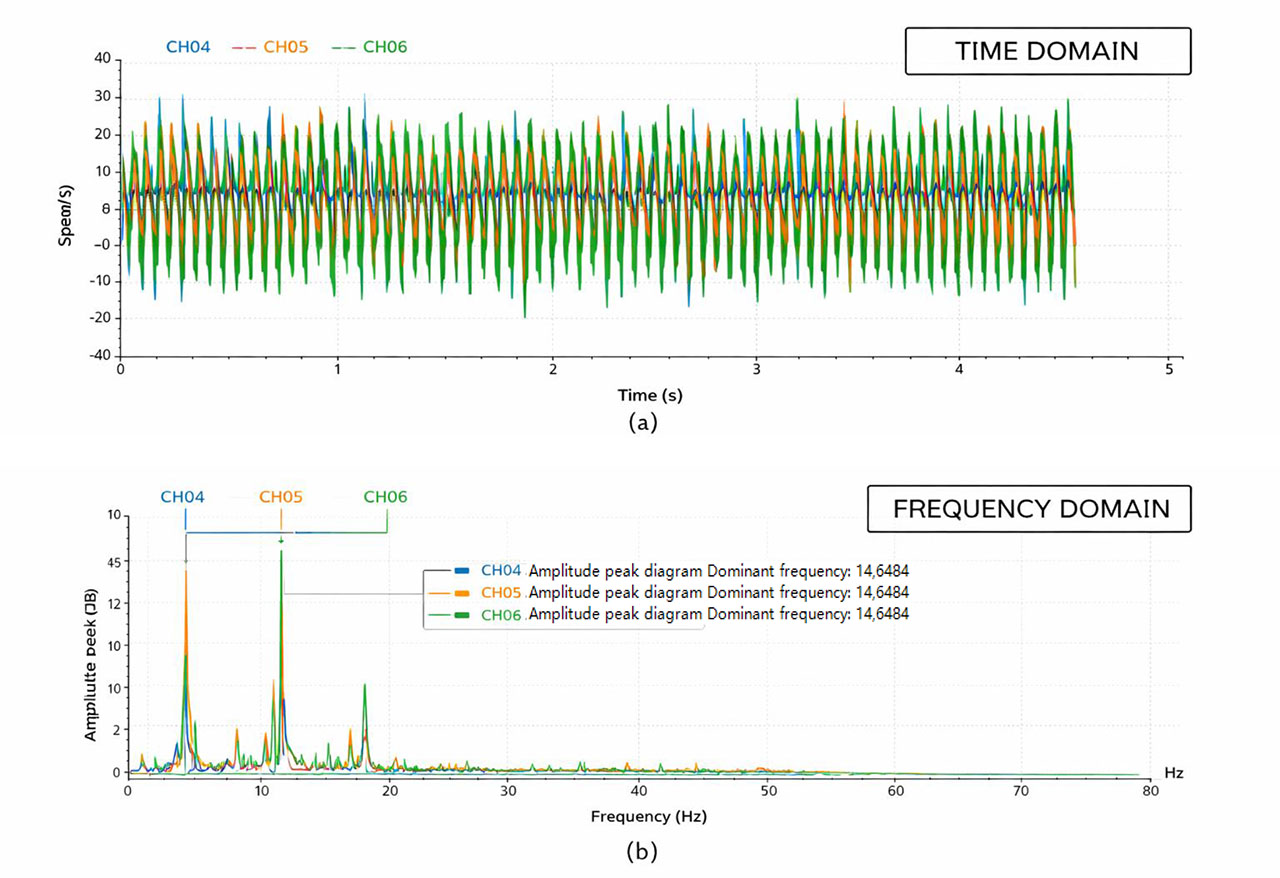
Figure 14:
Dominant vertical (z-Direction) frequency of the bridge girders: (a) Time-domain response; (b) Frequency-domain response
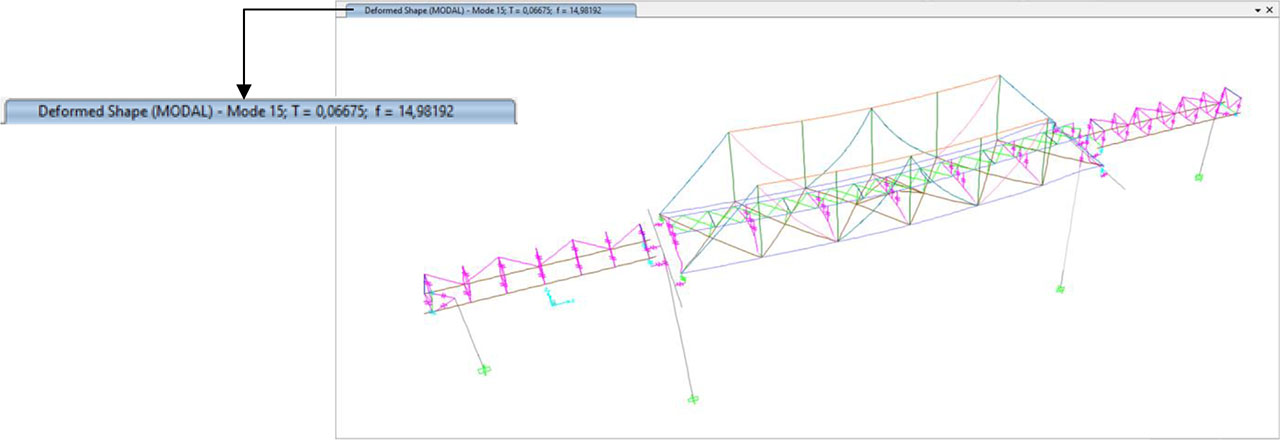
Figure 15:
Dominant vertical mode (Mode 15) of the bridge structure with a frequency of 14.98 Hz
The increase in dominant natural frequency after strengthening reflects a measurable enhancement in global structural stiffness, consistent with the theoretical relationship between stiffness and natural frequency (f = √k/m). This confirms that the strengthening intervention not only improved member-level capacity but also restored system-level structural rigidity.
4.3. Structural Capacity Evaluation
Although the bridge meets the serviceability requirements under static loads, the structural capacity evaluation indicates that strength-related deficiencies still exist in some critical elements of Span 2, indicating that acceptable deflection performance does not necessarily imply adequate structural safety. The calculated internal forces of the critical elements under the principal load cases provide quantitative evidence of this condition, as reflected by the demand-to-capacity ratios exceeding unity observed in some truss elements under the principal load combinations (Table 6). The overall distribution of member capacity ratios prior to strengthening further illustrates the extent of strength deficiency within the truss system (Figure 16).
Table 6:
Demand-to-capacity ratios of structural elements in Span 2 under governing load combinations
| No. | Structural elements | Profil type | Capacity ratio | Allowable capacity ratio | Description |
|---|---|---|---|---|---|
| 1 | Longitudinal girder | WF 425.170.18.10 | 0.597 | 1.0 | OK |
| 2 | Transverse girder | 870.220.10.10 | 1.683 | 1.0 | Not OK |
| 3 | Bottom bracing | 2L 60.60.8 | 1.045 | 1.0 | Not OK |
| 4 | Top bracing | L 55.55.8 | 0.579 | 1.0 | OK |
| 5 | Top chord | 2UNP 220.80.10 | 0.697 | 1.0 | OK |
| 6 | Bottom chord | 2UNP 220.80.10 | 2.856 | 1.0 | Not OK |
| 7 | Vertical element | 2UNP 220.80.10 | 0.620 | 1.0 | OK |
| 8 | Diagonal element 1 | 2UNP 220.80.10.10 | 0.571 | 1.0 | OK |
| 9 | Diagonal element 2 | 2UNP 220.75.10.10 | 0.476 | 1.0 | OK |
| 10 | Diagonal element 3 | 2UNP 220.65.10.10 | 0.122 | 1.0 | OK |
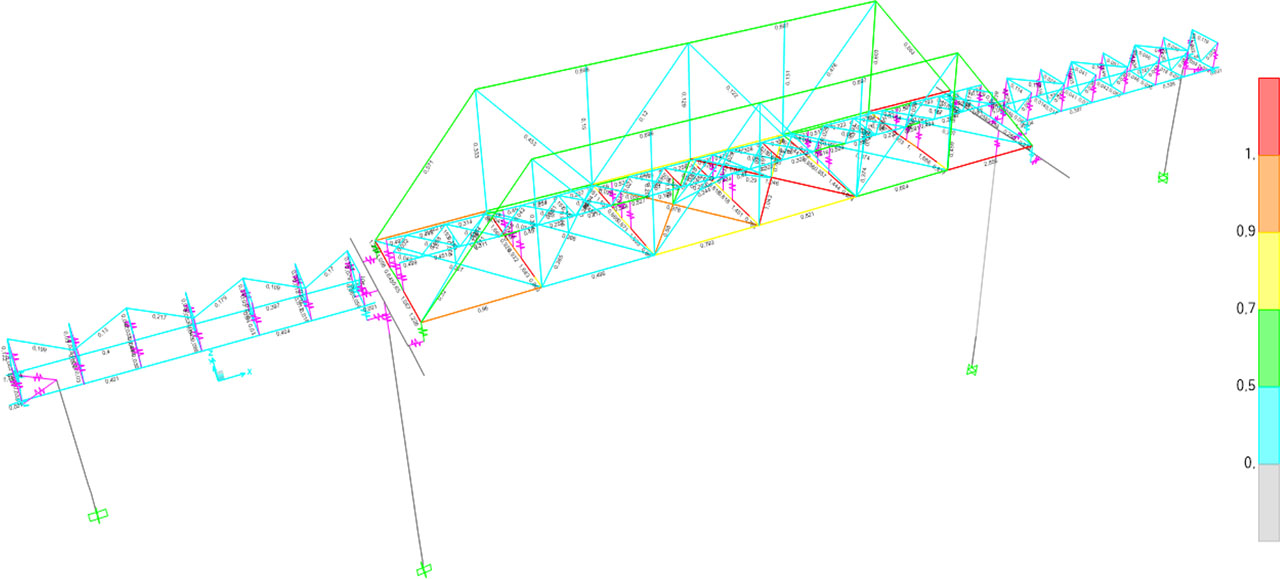
Figure 16:
Capacity ratios of the bridge structure elements
It is important to note that serviceability compliance prior to strengthening did not guarantee adequate structural safety, as several members exhibited demand-to-capacity ratios exceeding unity. This finding underscores a fundamental limitation of deflection-based assessment approaches when applied to aging truss systems, where localized overstress may remain undetected despite acceptable global displacement behaviour. The integrated workflow adopted in this study demonstrates that stiffness indicators alone are insufficient without concurrent capacity verification, particularly for bridges subjected to long-term deterioration and cumulative fatigue effects.
4.4. Strengthening by External Prestressing
To address the identified strength deficiencies, an external prestressing system was implemented in combination with local steel plate reinforcement. The adopted strengthening configuration, tendon profile, and anchorage system are illustrated in Figure 18 and 19. The introduction of prestressing forces modified the internal force distribution within the truss members, resulting in a systematic reduction in member utilization levels and an overall improvement in structural capacity.
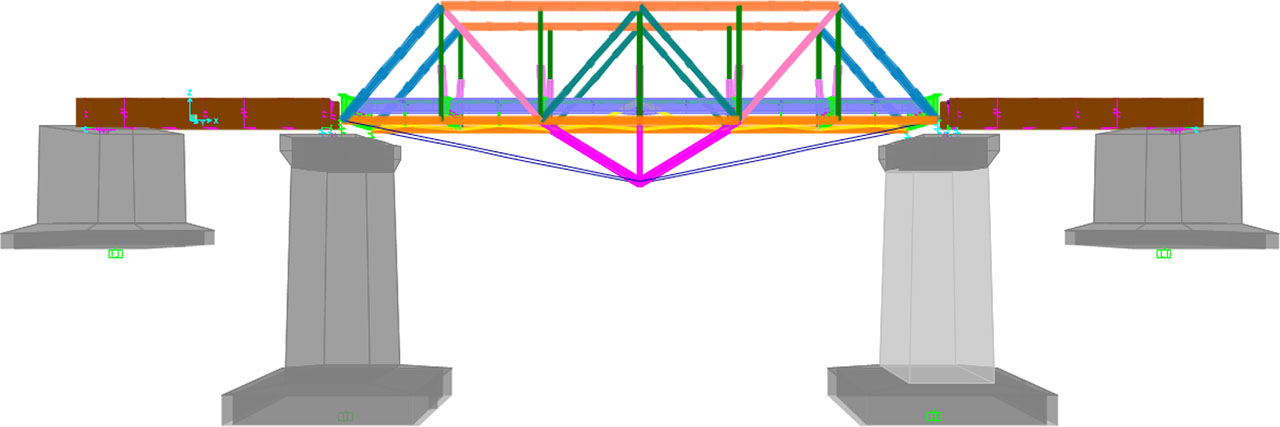
Figure 17:
Side view of the external prestressing reinforcement model of the bridge structure
Table 7:
Modelling criteria for bridge structure reinforcement
| Tendon diameter | 43.575 mm |
| Tendon area | 1491.334 mm2 |
| Strand type | 7-wire strand |
| Dimensions of deviator profile | H 200.200.8.12 |
| Prestressing force | 1942 kN |
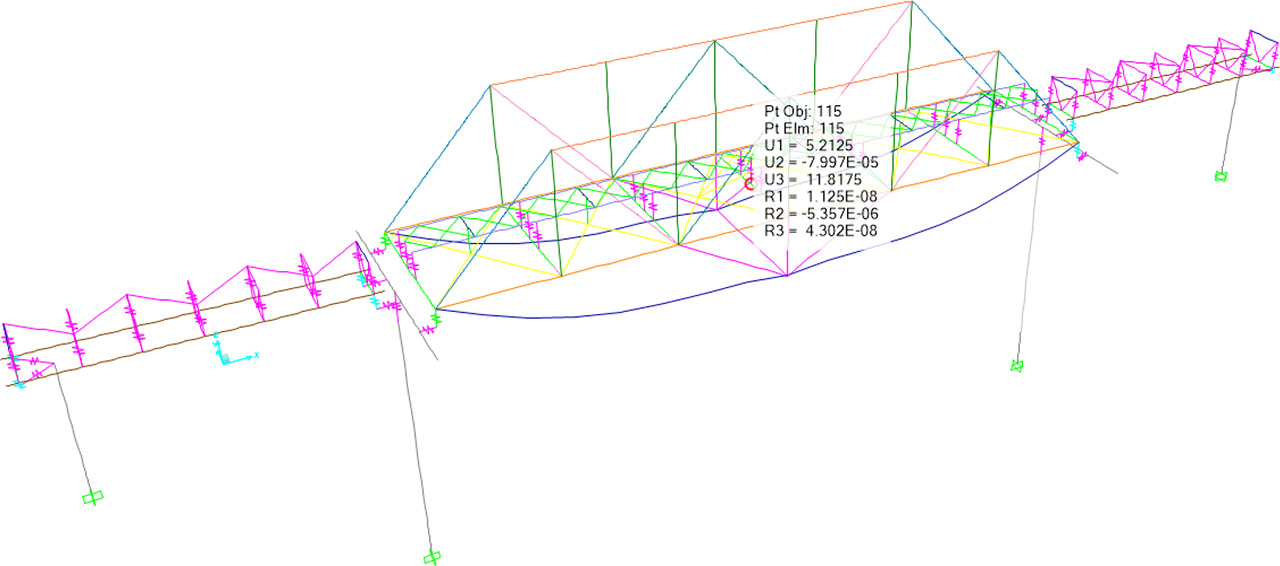
Figure 18:
Midspan (1/2L) deflection of the bridge structure after external prestressing under the load combination 1.0D + 1.0SD + 1.0PR
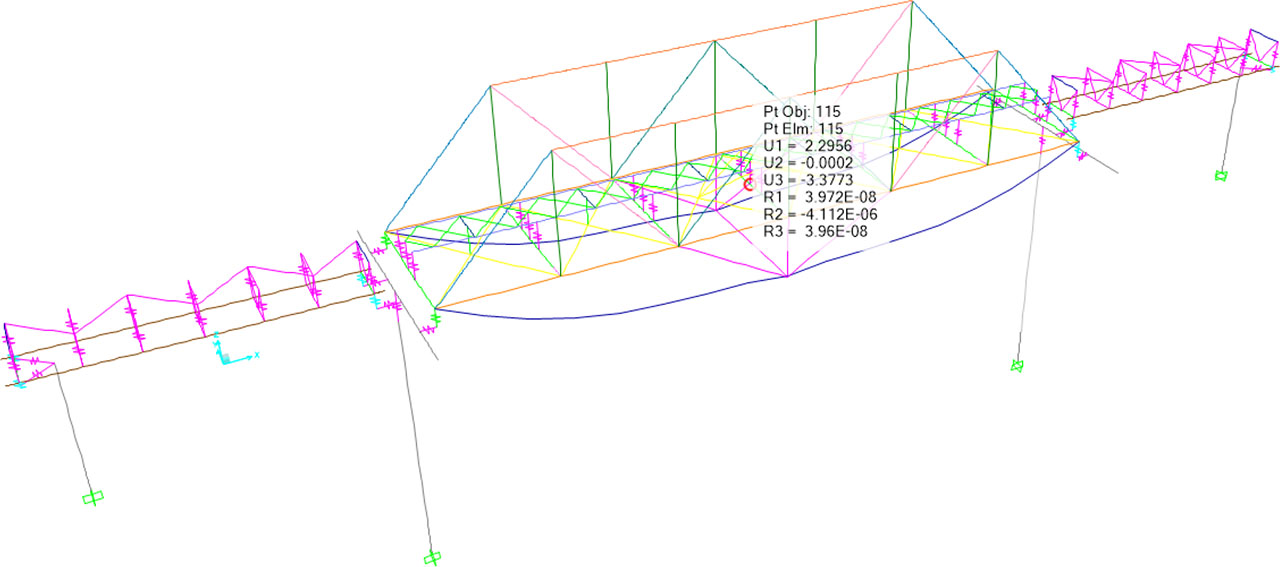
Figure 19:
Midspan (1/2L) deflection of the bridge structure after external prestressing under the load combination 1.0D + 1.0SD + 1.0LL + 1.0PR
The effectiveness of the strengthening intervention is evidenced by the post-strengthening capacity evaluation, which demonstrates a consistent decrease in demand-to-capacity ratios across critical members (Table 9). In addition to strength enhancement, the strengthening scheme also led to an improvement in global stiffness, as indicated by the increase in the dominant natural frequency to 17.07 Hz (Figure 20). Local plate reinforcement further contributed to reducing all member capacity ratios to acceptable limits, as confirmed by the final capacity assessment results (Table 9 and Figure 21).
Table 8:
Comparison of midspan deflections before and after external prestressing
| Description | Load combination | Deflection structure [mm] |
|---|---|---|
| 1/2L | ||
| Field testing | 1.0 D + 1.0 SD + 1.0 LL | −11.30 |
| External prestressing reinforcement | 1.0 D + 1.0 SD + 1.0 PR | 11.82 |
| 1.0 D + 1.0 SD + 1.0 LL + 1.0 PR | −3.38 |
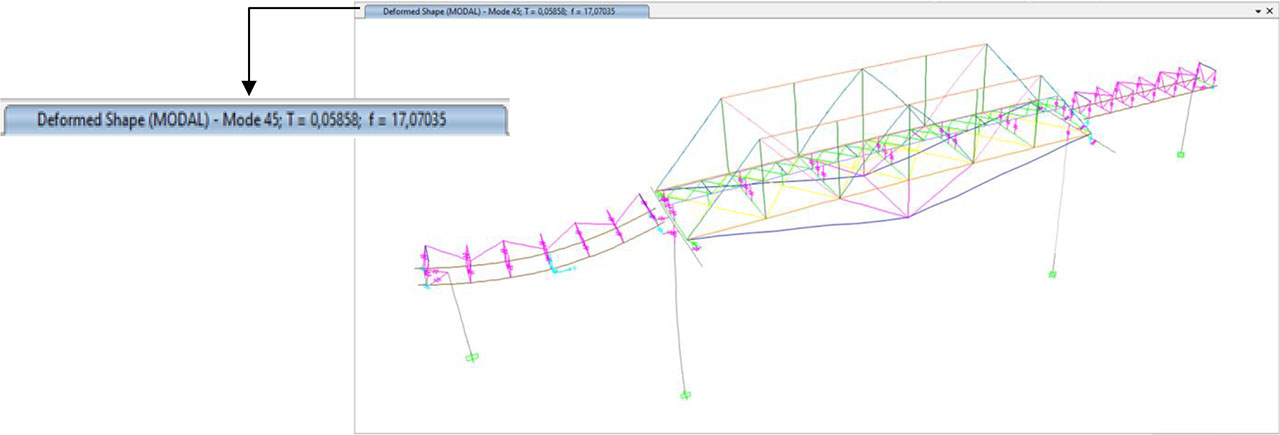
Figure 20:
Dominant vertical (z-Direction) vibration mode (Mode 45) of the bridge structure after external prestressing and plate reinforcement, with a frequency of 17.07 Hz
Table 9:
Capacity ratios of bridge elements after external prestressing and plate reinforcement
| No. | Structural elements | Profil type | Capacity ratio | Allowable capacity ratio | Description |
|---|---|---|---|---|---|
| 1 | Longitudinal girder | WF 425.170.18.10 | 0.570 | 1.0 | OK |
| 2 | Transverse girder | 870.220.10.10 | 0.975 | 1.0 | OK |
| 3 | Bottom bracing | 2L 60.60.8 | 0.677 | 1.0 | OK |
| 4 | Top Bracing | L 55.55.8 | 0.291 | 1.0 | OK |
| 5 | Top chord | 2UNP 220.80.10 | 0.334 | 1.0 | OK |
| 6 | Bottom chord | 2UNP 220.80.10 | 0.949 | 1.0 | OK |
| 7 | Vertical element | 2UNP 220.80.10 | 0.235 | 1.0 | OK |
| 8 | Diagonal element 1 | 2UNP 220.80.10.10 | 0.332 | 1.0 | OK |
| 9 | Diagonal element 2 | 2UNP 220.75.10.10 | 0.322 | 1.0 | OK |
| 10 | Diagonal element 3 | 2UNP 220.65.10.10 | 0.044 | 1.0 | OK |
| 11 | Deviator | H 200.200.8.12 | 0.542 | 1.0 | OK |
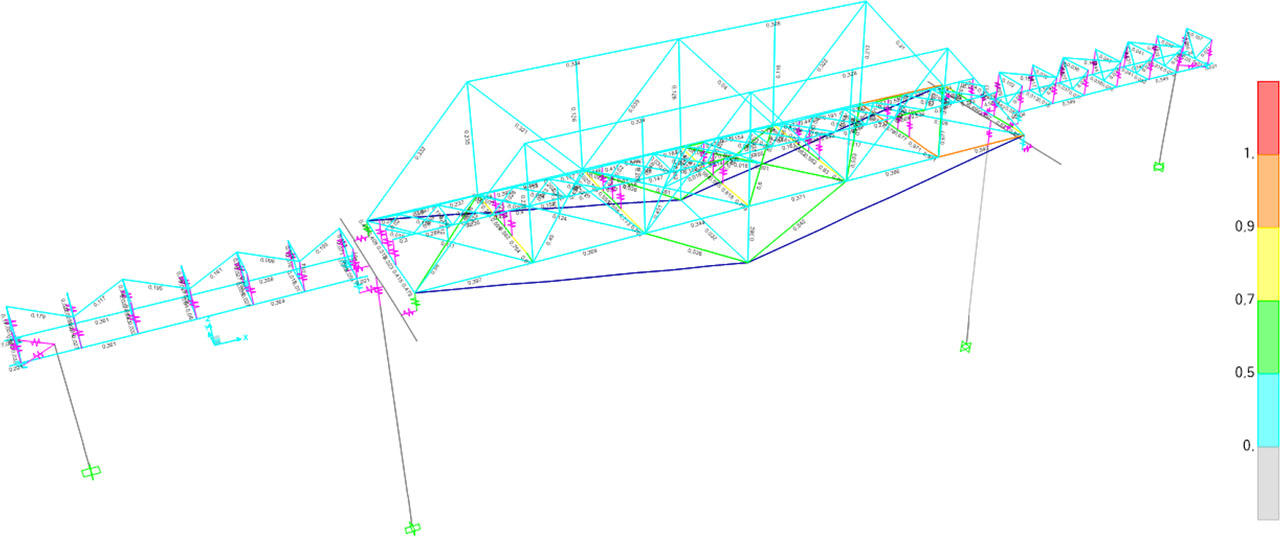
Figure 21:
Capacity ratios of bridge elements after external prestressing and plate reinforcement
These results confirm that externally prestressed strengthening, when properly integrated with localized reinforcement, constitutes an effective and rational strategy for restoring both stiffness and load-carrying capacity in aging steel railway bridges. Unlike previous studies that predominantly report analytical or laboratory-scale validations, the present study provides rare full-scale field evidence from an operational bridge. The observed increase in dominant natural frequency from 14.65 Hz to 17.07 Hz corresponding to a 16.5% increase demonstrates measurable global stiffness recovery. This level of enhancement indicates substantial stiffness improvement and aligns with stiffness recovery trends reported in recent strengthening and railway bridge assessment studies.
5. Conclusion
The BH 25 railway bridge satisfies serviceability requirements under operational loading but exhibits reduced global stiffness and localized capacity deficiencies due to aging and construction deviations. The integrated use of static and dynamic load testing, calibrated numerical modelling, and capacity evaluation provides a comprehensive assessment of the bridge’s structural condition.
Theoretically, the findings highlight the importance of combining static and dynamic indicators to capture stiffness degradation mechanisms. Practically, the results demonstrate that external prestressing, complemented by local reinforcement, offers an effective and minimally invasive solution for extending the service life of aging railway bridges.
Future research should focus on long-term monitoring of strengthened bridges to evaluate time-dependent behaviour, fatigue performance, and durability under repeated railway loading, as well as on applying the proposed framework to other bridge typologies. In particular, long-term monitoring is required to evaluate prestress loss, fatigue performance of strengthened members, and durability under repeated railway loading.
Beyond the specific case study, this research demonstrates a replicable integrated assessment methodology that links field-measured stiffness indicators to quantified structural capacity evaluation and strengthening verification. The framework contributes to reducing uncertainty in performance-based bridge management and provides a structured basis for decision-making in aging railway infrastructure systems.
Theoretical Implications
From a theoretical perspective, the results highlight the importance of combining static and dynamic indicators to capture stiffness degradation mechanisms that cannot be identified through serviceability-based evaluation alone. The integration of field measurements with calibrated numerical modelling improves the reliability of structural diagnosis for aging steel railway bridges.
Practical Implications
From a practical engineering perspective, the findings demonstrate that external prestressing, when properly integrated with local reinforcement, provides an effective and minimally invasive strengthening strategy for extending the service life of existing railway bridges under operational loading conditions.
Limitations and Applicability
While the proposed framework is demonstrated on a single steel truss railway bridge, the methodology is applicable to other existing railway bridges with similar structural typologies and loading characteristics. Nevertheless, the effectiveness of external prestressing may vary depending on bridge configuration, boundary conditions, and deterioration mechanisms. Therefore, future applications should be supported by bridge-specific assessment and model calibration.
Notes
[1] Statement and Declarations
Author Contributions: Sumargo led the conceptualization and drafting of the manuscript and contributed to the methodology, formal analysis, and review; Mardiana Oesman contributed to the methodology, formal analysis, review, and supervision; Fachmi Fadli conducted the investigation and data curation. All authors approved the final manuscript.
[2] Conflict of Interest Statement
The authors declare that there is no conflict of interest regarding the publication of this paper.
[3] Data Availability Statement
The data used to support the findings of this study are available from the corresponding author upon reasonable request.
[4] Financial disclosure Funding Statement
The authors declare that no funds, grants, or other financial support were received for the preparation of this study.
[5] AI Usage Statement
During the preparation of this manuscript, the authors used artificial intelligence tools (including ChatGPT, OpenAI) solely for language refinement, paraphrasing, and formatting assistance to improve clarity and readability. These tools were not used for data analysis, interpretation of results, methodological development, or the generation of scientific content. All outputs generated by AI tools were carefully reviewed, revised, and validated by the authors, who take full responsibility for the accuracy, integrity, and content of the published article.