

1. Introduction
To create a sustainable environment and contribute towards a circular economy, a major step forward is to produce concrete mixtures from recycled materials. While challenges may arise in the use of these materials, the impact their use will have on the environment and the economy make them a viable option for the future (Alshahwany, et al., 2020). Recycled aggregate, which is obtained by crushing old concrete waste and recycling it as a substitute for natural aggregate, is currently used most often as a sustainability factor in concrete production. The utilization of such waste materials lowers the amount of refuse caused by humans and diminishes the need for obtaining and using natural resources (Al - Luhybi, 2019). (Islam, et al., 2025), along with other researchers, studies the results of integrating recycled materials in the place of fine and coarse aggregates across varying substitution levels. In instances where recycled materials were substituted for 50% of the coarse aggregate, the 28-day compressive strength (CS) decreased by 8–12%, and the tensile strength (TS) dropped by 13–15% compared to normal aggregate concrete (NAC). At a full 100% replacement, CS declined by 24–27% and TS by 21–23%. As anticipated, a complete replacement of both fine and coarse aggregates led to a 35–38% decrease in CS and a 30–32% reduction in tensile strength. In other research recycled aggregates were substituted for natural materials at varying ratios to study the effect on the mechanical properties of normal and high-strength concrete and its resistance to salts. The results of these studies showed that the new formula using the recycled materials produced a high-strength concrete that performed within acceptable ranges as compared to those made with natural aggregates. Furthermore, the exchange of silica fume for cement augments the concrete’s resistance to (Sulphates, et al., 2023). As much as 1.61 million tons of eggshell waste are generated by the food industry. This creates a conundrum when it comes to disposal of the waste in a manner that does not create environmental pollution. Concurrently there is an increasing demand for materials with which to make concrete as the current reservoir of natural materials, such as limestone, are depleted. A dual benefit can be obtained by integrating eggshell waste into concrete production. Firstly, natural resources can be preserved and the production of carbon monoxide emissions from the manufacturing of cement can be curtailed globally. In addition, landfills will have less refuse as eggshell waste is diverted to use in concrete. Global egg production is on the rise, and it is expected that eggshell waste will reach 8 million tons annually. The third largest consumer of eggs globally is India. There is a substantial amount of poultry waste which requires proper management. Eggshells can be used to produce calcium phosphates for ceramics and for several different agricultural purposes. Still, much of the refuse is discarded and creates a need for disposal (Sathvik, et al., 2019; Food & Agriculture, 2018; Faridi & Arabhosseini, 2018). Recent studies have found that concrete produced with eggshells and cured in water produce a major increase in mechanical properties, with as much as a 51.1% increase in compressive strength and 57.8% in flexural strength. Moreover, since the eggshell particles are so fine, water penetration was reduced by approximately 50%. This is attributed to the fine eggshell particles filling existing voids within the concrete matrix, thereby enhancing its impermeability (Tan & Chin, 2018).
The principal objective of this was to address a scientific gap by using eggshell powder to explore the microstructural development of nano-modified, eco-friendly concrete. It encompasses the varying effects of eggshell powder on the strength of concrete. Some studies found improvement while others found deterioration. While some studies found little to no like between microstructural behaviours and their mechanical performance and even fewer studies examined long term durability. Moreover, the most effective sustainable alternative is still undetermined, as research directly comparing recycled aggregates to eggshell powder is minimal. The focus of the research is to produce a concrete mix that would perform to the standards of industrial-scale production. The altered concrete mixture demonstrated superior performance when tested next to conventional mixes. The optimal formulation proved to be the replacement of 10% of cement with eggshell powder. This modification led to strength gains ranging from 8% to 11%, an increase of 4% in the modulus of elasticity, and a reduction in axial compression and tensile deformation by 5% to 10% relative to control samples (Shcherban, et al. 2022). Gui-Yu Zhang et al. (2024) examined the macro- and micro-scale properties of cement-based materials incorporating eggshell powder (ESP) by (0, 7.5, 15%) from the weight of cement. Results of the experimentation revealed that increasing the ESP content results in a reduction in cumulative heat of hydration per gram of cementitious material, primarily due to the dilution effect. By contrast, the cumulative heat of hydration per gram of cement increases, attributed to the nucleation effect of ESP, which improves the precipitation of hydration products and accelerates cement hydration. Furthermore, at 28 days compressive strength measurements reveal a continuous decline with the use of ESP. The velocity of ultrasonic pulses decreased with increasing ESP content (Zhang, et al., 2024).
2. Practical Program
2.1. Cement
Locally produced cement from the Badush plant, which complies with Iraqi Specification No. 5 of the year 1984 (IQS, 1984). Tables 1 and 2 show the physical properties and chemical composition of the cement used.
Table 1:
The physical properties of the used cement
| Property | Test result (%) | Standard IQS, No.5 |
|---|---|---|
| Initial setting time [min.] | 105 | ≥45 [min.] |
| Final setting time [min.] | 285 | ≤600 [min.] |
| Compressive strength [MPa] | ||
| at 2 days | 20.3 | ≥15.0 [MPa] |
| at 7 days | 26.5 | ≥23.0 [MPa] |
Table 2:
The chemical composition of the used cement
| Property | Test result (%) | Standard IQS, No. 5 |
|---|---|---|
| Oxide composition | ||
| Alumina, Al2O3 | 4.16 | |
| Silica, Sio2 | 21 | |
| Ferric oxide, Fe2O3 | 2.01 | |
| Lime, CaO | 59.1 | |
| Sulphuric anhydride, SO3 | 1.57 | Max. 2.5 |
| Magnesium, MgO | 2.95 | Max. 5 |
| Compound composition | ||
| C3A | 7.64 | |
| C2S | 31.03 | |
| C3S | 38.68 | |
| C4AF | 6.10 | |
| Free lime | 1.27 | |
| Loss on ignition | 0.8 | Max. 4 |
| Solid solution | 12.16 | |
| Insoluble residue | 0.95 | |
2.2. Natural Fine Aggregate
Sand with a fineness modulus of 2.56 and a specific gravity of 2.64 was obtained from local rivers and incorporated. A sieve analysis was conducted and as shown in Table 3. The sand was found to conform to Specification (A. C33 2015). Table 4 presents the physical properties of the sand used.
2.3. Recycled Fine Aggregate
Construction and demolition waste from the Al-Adhba was collected, crushed and screened then used as a fine aggregate in the concrete. A No. 4 sieve was used to obtain a fineness modulus of 2.9. The sieve analysis is available in Tables 3 and 4 along with the physical properties of the recycled aggregate. The appearance of the recycled fine aggregate is illustrated in Figure 1.
Table 3:
The Sieve analysis of the used sand and the recycled fine aggregate
| Sieve size (mm) | % specification limits | NFA 0%FRA | FRA |
|---|---|---|---|
| 4.75 | 95–100 | 100 | 100 |
| 2.36 | 80–100 | 86.9 | 80.6 |
| 1.18 | 50–85 | 72.4 | 57.5 |
| 600μm | 25–60 | 55.5 | 40.3 |
| 300μm | 5–30 | 23.6 | 22 |
| 150μm | 0–10 | 5.8 | 8.2 |
Table 4:
The physical properties of the sand and the recycled fine aggregate
| Type of fine aggregate | NFA | FRA |
|---|---|---|
| Colour | Brown | Gray |
| Bulk specific gravity [SSD] | 2.64 | 2.35 |
| Absorption [%] | 2 | 8% |
| Compact unit weight [kg/m3] | 1858 | 1444 |
| Loose unit weight [kg/m3] | 1722 | 1349 |
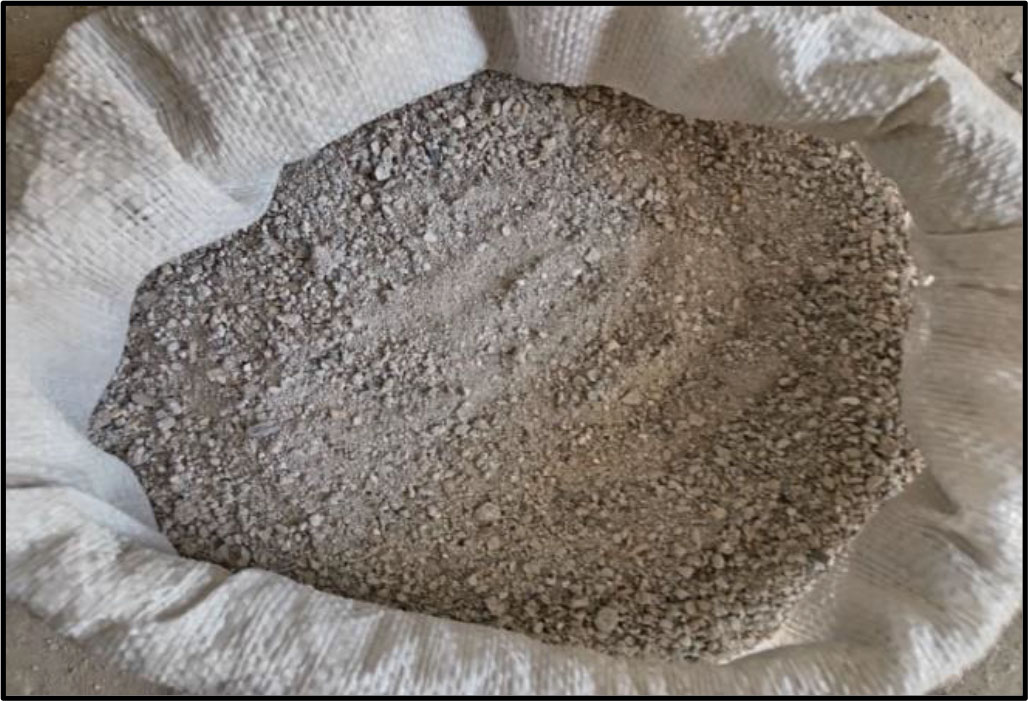
Figure 1:
The recycled fine aggregate
2.4. Coarse Aggregate (Gravel)
This study used only rounded river gravel in each of the concrete mixes shown in this research. The maximum gravel size is 19 mm, and it conforms to Specification (A. C33 2015). Tables 5 and 6 show the sieve analysis and physical properties of the gravel used.
2.5. Eggshells
Specific proportions of eggshell powder were used as a partial replacement for cement. As the eggshells were collected, they were thoroughly washed to remove organic materials and then dried by exposure to sunlight. Once cleaned and dry they were crushed into smaller sizes and placed in a specialized grinder. The powder produced from this procedure was passed through a 150 μm sieve to prepare it for use as a cement substitute. Table 7 shows the chemical composition of the eggshell powder used, and Figure 2 is an illustration of the preparation process.
Table 7:
Chemical composition of eggshell powder
| Property | Test result (%) |
|---|---|
| Oxide composition | |
| Alumina, Al2O3 | 1.19 |
| Silica, SiO2 | 1.77 |
| Ferric oxide, Fe2O3 | 0.91 |
| Lime, CaO | 97.70 |
| Sulphuric anhydride, SO3 | 0.53 |
| Magnesium, MgO | 0.07 |
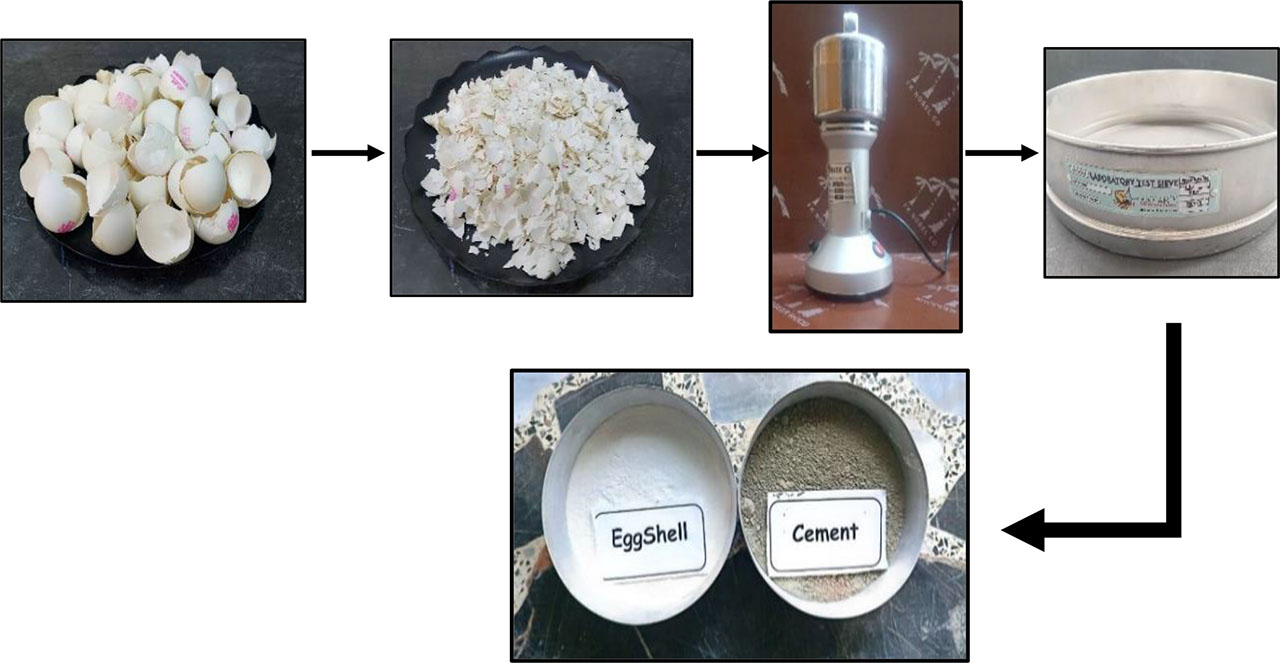
Figure 2:
The process of preparing eggshell powder
3. Concrete Mixes and Experimental Program
Twelve concrete twelve (12) concrete blends were prepared for the purposes of this study. The mixes was designed according to ACI 211. 1-9 (ACI, 1991) was compressive strength (30MPa). The adopted mix ratio (cement: sand: gravel: water) was (1:2:2.81:0.5). The mixes were divided into four groups, each consisting of three concrete mixes:
Group 1: The recycled fine aggregate content was kept constant at 0%, while the cement was partially replaced with eggshell powder (GP) at three weight percentages: 0%, 5%, and 10%.
Group 2: Natural fine aggregate was replaced with recycled fine aggregate at a fixed volume ratio of 10%, and the cement was replaced with GP at the same three weight percentages: 0%, 5%, and 10%.
Groups 3 and 4: The fine aggregate was replaced with recycled fine aggregate at volume ratios of 20% and 30%, respectively, with the same three GP replacement levels: 0%, 5%, and 10%.
The ratio of water-to-cement remained constant for all of the mixtures by design. Additional water was added to allow the recycled fine aggregate (FRA) to come to a saturated surface dry (SSD) condition, ensuring the effective water/cement ratio remained unchanged in order to maintain the afore-mentioned ratio in batches containing recycled fine aggregate (FRA).
All specimens were cured under standard conditions. For compressive strength testing the specimens included cubes of dimensions (100×100×100 mm), and cylinders of dimensions (100×200 mm) for split tensile strength testing. Several tests were conducted for the purpose of studying the combined effect of eggshell powder and recycled fine aggregate on concrete behaviour:
Fresh state tests: Slump test according to ASTM C143 (C143/C143M A, 2015), compacting factor test according to British Standard B.S. Part 103 (1993) (BS1881, 1993), and slump loss over time.
Hardened state tests: Compressive strength at ages 7, 28, and 56 days; split tensile strength at 28 days; water absorption according to ASTM C642 (AC 642, 2015); dry density; and ultrasonic pulse velocity according to ASTM C597 (ASTM, 2017).
Table 8 shows the parameters of the concrete mixes used herein, and Figure 3 illustrates the experimental plan and the tests conducted.
Table 8:
Concrete mix details (kg per cubic meter)
| Mix | FRA (%) | EGP (%) | Cement | Sand | Gravel | FRA | EGP | Water |
|---|---|---|---|---|---|---|---|---|
| M1 | 0 | 0 | 374 | 750 | 1054 | 0 | 0 | 187 |
| M2 | 0 | 5 | 355.3 | 750 | 1054 | 0 | 18.7 | 187 |
| M3 | 0 | 10 | 336.6 | 750 | 1054 | 0 | 37.4 | 187 |
| M4 | 10 | 0 | 374 | 688 | 1054 | 62 | 0 | 187 |
| M5 | 10 | 5 | 355.3 | 688 | 1054 | 62 | 18.7 | 187 |
| M6 | 10 | 10 | 336.6 | 688 | 1054 | 62 | 37.4 | 187 |
| M7 | 20 | 0 | 374 | 626 | 1054 | 124 | 0 | 187 |
| M8 | 20 | 5 | 355.3 | 626 | 1054 | 124 | 18.7 | 187 |
| M9 | 20 | 10 | 336.6 | 626 | 1054 | 124 | 37.4 | 187 |
| M10 | 30 | 0 | 374 | 564 | 1054 | 186 | 0 | 187 |
| M11 | 30 | 5 | 355.3 | 564 | 1054 | 186 | 18.7 | 187 |
| M12 | 30 | 10 | 336.6 | 564 | 1054 | 186 | 37.4 | 187 |
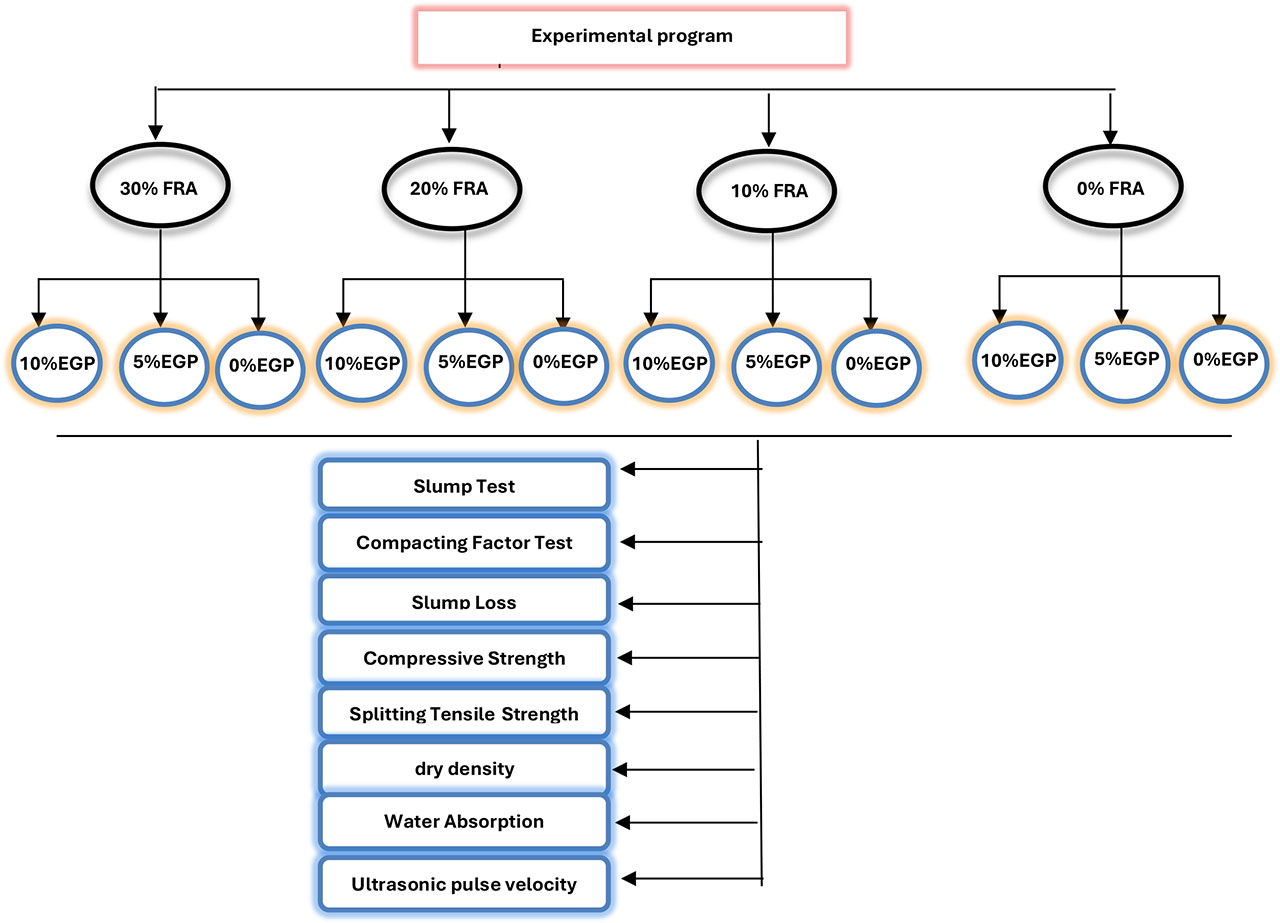
Figure 3:
Experimental program flowchart
4. Results and Discussion
4.1. Fresh State
4.1.1. Slump
In order to evaluate the workability of the concrete mix, slump tests were administered. Figure 4 shows the slump test outcomes for the various mixtures. Overall, the figure indicates a decrease in workability for all replacement ratios compared to the reference mix.
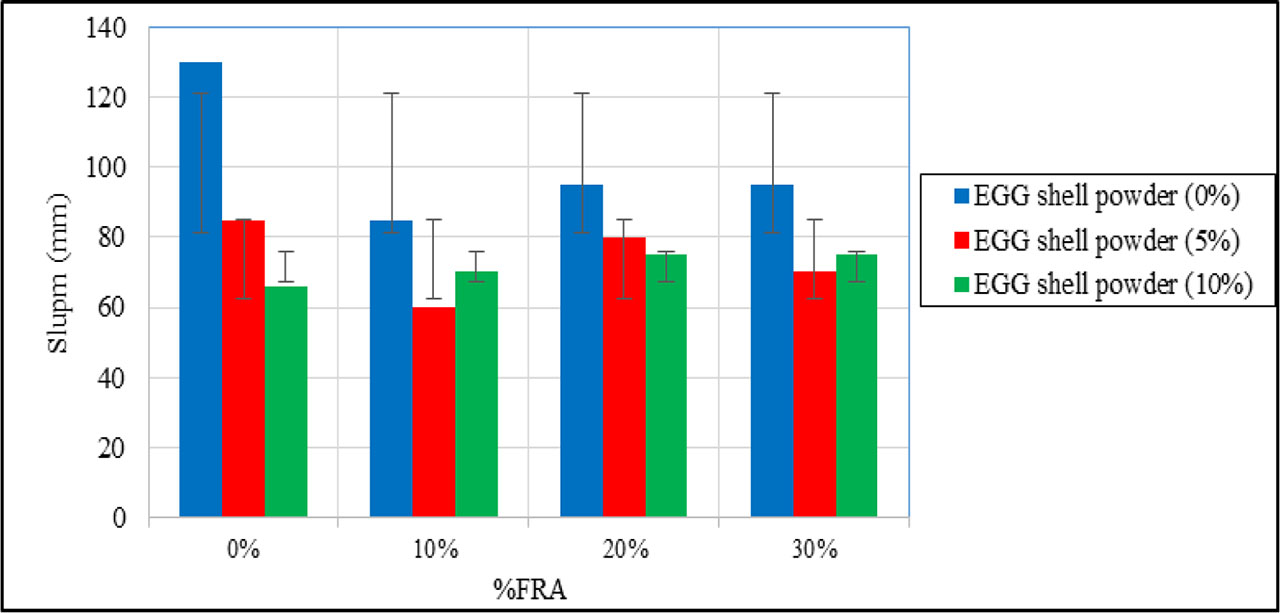
Figure 4:
The slump test results for all concrete mixes
A noticeable observation is that the concrete mixes containing 0% eggshell powder and varying percentages of recycled fine aggregate showed the highest slump value in the reference mix, which was 130 mm. Beyond that, there is a decrease in the slump of all of the replacement ratios of (FRA) being substituted for fine normal aggregate (FNA). In the three replacement levels reduction percentages were similar: 10%, 20%, and 30%, respectively. The slump ratios amounted to 34.6%, 26.9%, and 26.9% at the aforementioned replacement ratios. Notably, the water required by the recycled fine aggregate was added to avoid affecting the effective water-to-cement ratio (w/c).
At these previously reported replacement levels, the decrease in workability is attributed to several factors, which include the texture, shape, and surface characteristics of the recycled aggregate. The characteristics of recycled fine aggregate are: a rough texture, an angular shape, lower roundness, and greater elongation. These increases interlocking and negatively affects the concrete slump. Furthermore, the distribution and particle size cause friction, further reducing movement between particles and thus lowering workability (Fan, et al., 2015; Ismail, et al., 2024). When eggshell powder was used as a replacement a negative impact on slump was evident and increased with higher additive ratios. This result is due to the absorption rate of eggshells as compared to cement, which restricts flowability (Abdolkarim, 2020; Je, et al., 2019; Mohd & Muhammad, 2020; Hasanta, et al., 2025). Researchers have also indicated that finely ground particles have a larger specific surface area, which leads to higher water absorption (Onu & Egwu, 2000). Therefore, the combined effect of both materials (FRA + EGP) was detrimental to workability. Ultimately, workability diminishes due to the lack of free available water, causing less fluidity in the workability of the final product. While this is true it does not detract from the product falling within acceptable slump value ranges –between 70–95 mm –which falls within the acceptable range for workability.
4.1.2. Compaction Factor
The compaction factor test is defined as the ‘ratio of the weight of partially compacted concrete to the weight of fully compacted concrete using the same mold’ as shown in figure 5, and it was illustrated using equation (1). In this study, the compaction factor test was conducted on the various mixtures in alignment with the British Standard BS 1881: Part 103 (1993) (BS1881, 1993). Figure 6 illustrates the relationship of the compaction factor with varying percentages of recycled fine aggregate and eggshell powder across all concrete mixes.
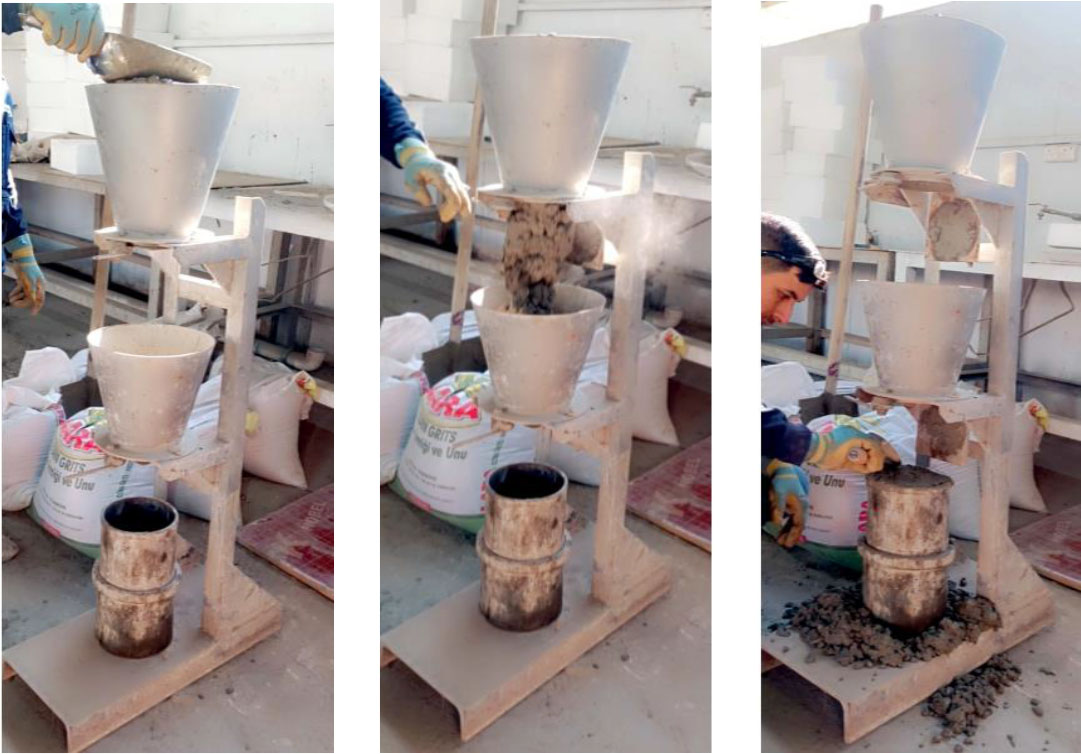
Figure 5:
Compaction factor test
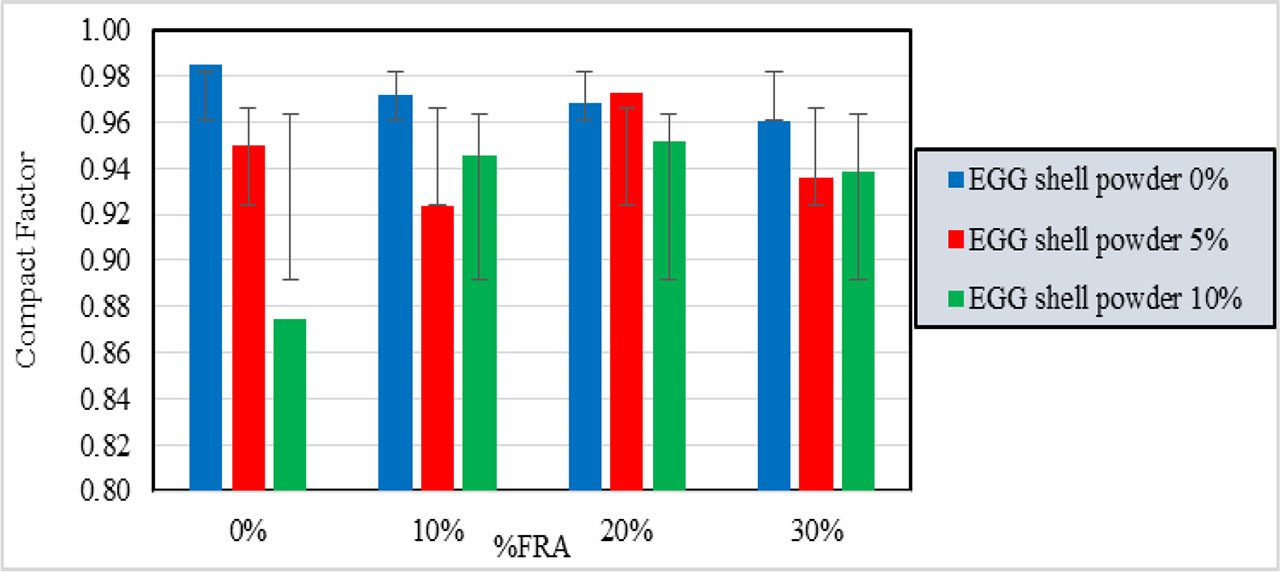
Figure 6:
Effect of adding varying percentages of recycled fine aggregate and eggshell powder on the compaction factor
As illustrated in Figure 6 the highest compaction factor value was recorded for the control mix, reaching 0.99. As natural fine aggregate was replaced with recycled fine aggregate (FRA), excluding eggshell powder (EGP), the compaction factor values began to decrease, registering 0.97, 0.97, and 0.96 for mixes containing FRA at replacement ratios of 10%, 20%, and 30%, respectively. Compaction factor values were also negative with the replacement of cement with eggshell powder at both 5% and 10% levels. The higher water absorption capacity of eggshell powder, mentioned earlier, adversely affects the test results. One notable observation is that when both types of waste materials (FRA and EGP) are present, the negative impact of EGP appears to be less severe. This may be attributed to the additional water included in the fresh concrete mixes to maintain the effective water-to-cement (w/c) ratio. In total, it can be concluded that the mixed can exhibit a medium degree of workability with compaction factor values for all mixes ranging between 0.99 and 0.87. Therefore, the result is that they are suitable for use in normal reinforced work without vibration and heavily reinforced sections with vibration, as referenced in (Neville & Brooks, 2003).
4.1.3. Loss in Slump
Loss in slump refers to the rapid stiffening of concrete, which can be attributed to several factors such as ongoing hydration, ambient temperature, and aggregate water absorption (Manu & Elson, 2020; Runova, et al., 2005). Rapid stiffening or slump loss is unavoidable in quick setting concrete mixes (Mohamad, 2023; Mahmood, 2022). Good workability and flow ability are necessary throughout the process of transportation where the mixture reaches the construction site from ready-mix plants, which may take between 45 to 90 minutes (Nrmna, 2017; Ibrahim & Mohamad, 2024). It is essential to monitor the workability of the concrete mix over this time, which is why slump values have been recorded over time, as illustrated in Figure 7.
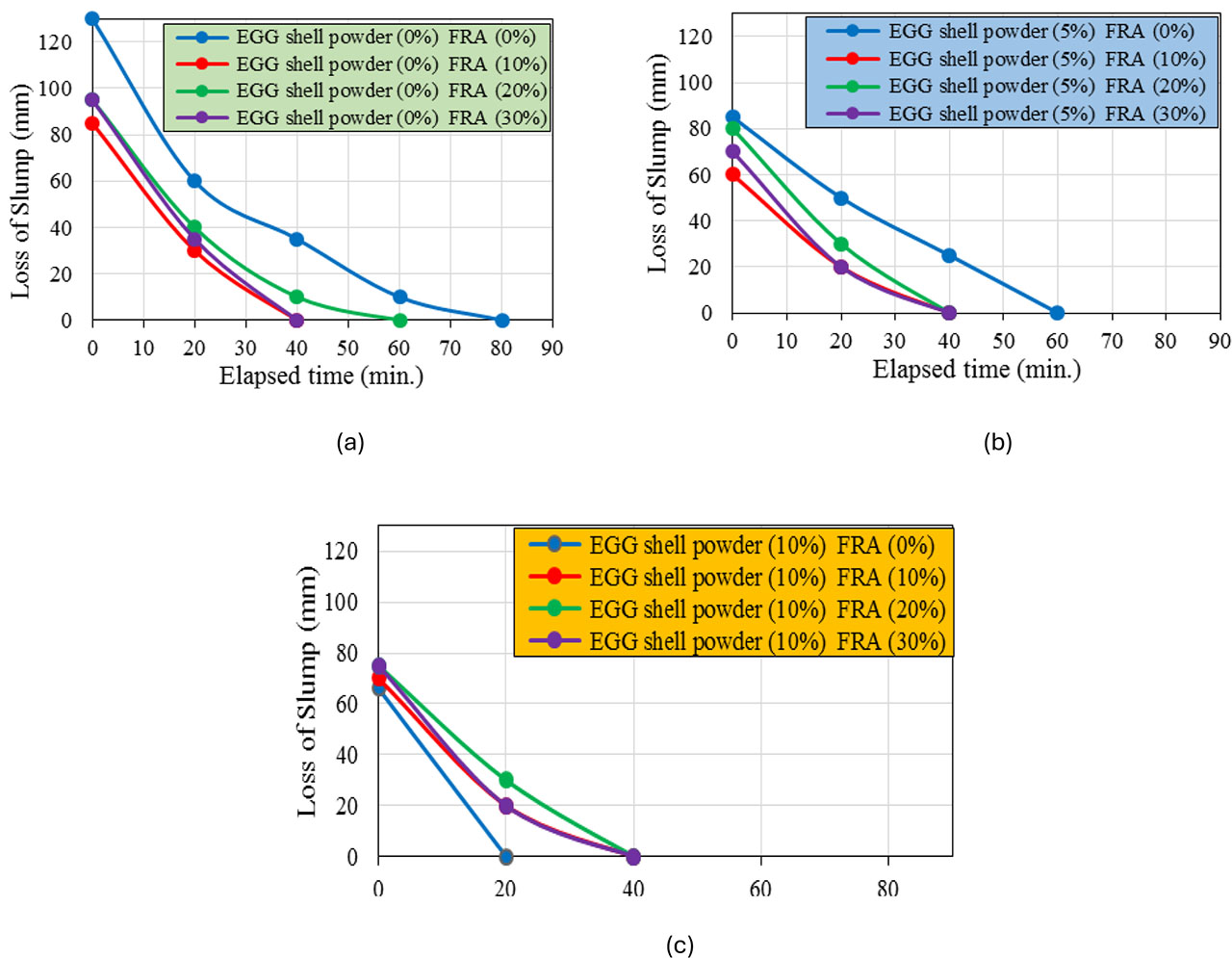
Figure 7:
The slump loss in concrete mixes containing recycled fine aggregate and eggshell powder
Even though the same amount of water was maintained, a slump in the concrete mixes containing additives were observed compared to the control batch. The effect of adding eggshell powder (EGP) on slump loss is more significant than that of using recycled fine aggregate (FRA). The results are clearly illustrated in Figures 7 (b) and 7 (c), where the addition of eggshell powder alongside recycled fine aggregate brought about greater slump loss compared to mixes containing only recycled fine aggregate. Another observation was that an increase in the percent of eggshells powder used caused a greater loss in slump over time. Other studies corroborate these results and report that (EGP) as a partial cement replacement reduces the setting time of concrete compared to reference mixes. In fact, other studies show the addition of (EGP) as acting as an accelerator throughout the entire investigation (Afolayan, 2017). Conversely, other studies have found that the use of eggshells powder resembles that of limestone during the setting period. In essence, the hydration reaction accelerates the formation of tricalcium silicate hydrates (Moon, 2017). Additional studies have shown that the addition of eggshell powder shortens both the initial and final setting times (Wei, 2021). In all cases, it was necessary to use chemical admixtures that can delay the setting time of concrete to ensure it reaches the casting site with adequate workability. This step is imperative for achieving seamless placement without significant slump loss.
4.1.4. Fresh Concrete Density
The relationship between the fresh density of all of the various mixes of concrete containing different levels of concrete waste (recycled fine aggregate) and eggshell powder can be seen in Figure 8. Density values obviously decrease as the levels of natural fine aggregate is increasingly replaced by recycled fine aggregate as well as the replacement of cement with eggshell powder.
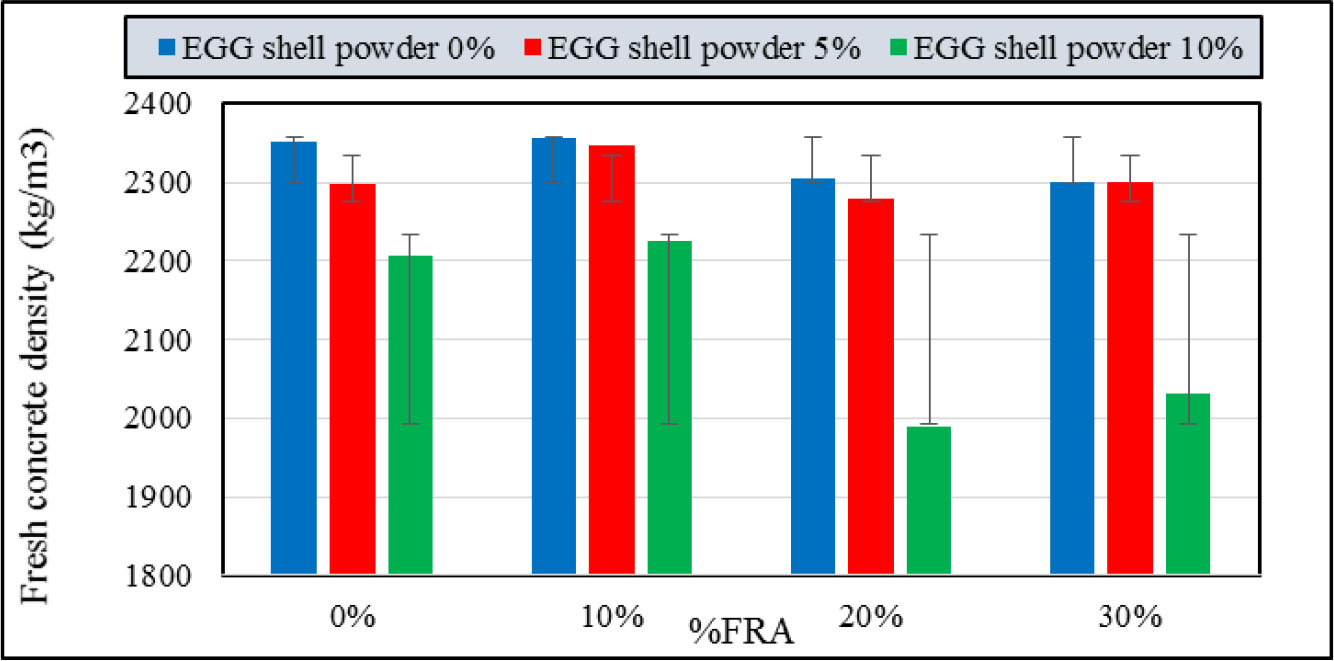
Figure 8:
The fresh density values of concrete mixes containing recycled fine aggregate and eggshell powder
From a positive perspective the density of concrete mixes containing 10% recycled fine aggregate (FRA) is comparable to mixes with 0% FRA, which makes this mixture a viable alternative to mixes containing natural fine aggregate. Unfortunately, the reduction in density becomes more noticeable at replacement levels of 20% and 30%. The decrease in fresh concrete density for mixes with 20% and 30% replacement of natural fine aggregate by recycled fine aggregate (with EGP = 0%) was 2% and 2.16%, respectively, compared to the reference mix (FRA = 0% and EGP = 0%). This decrease is ascribed to two main factors: firstly, the natural fine aggregate has a higher specific gravity than that of recycled fine aggregate, and secondly, recycled fine aggregate contains old cement mortar which has a lower density that of fresh concrete (ASTM, 2017; Katz, 2003). Mohamad et al. (2018) found out that the specific gravity of eggshell powder is 2.37, whereas that of cement is 3.15. The reduction in fresh concrete density becomes more significant in mixtures where eggshell powder is introduced to mixtures containing 20% and 30% recycled fine aggregate. This reduction is due to the difference in the specific gravity of the two substances (Mohamad, 2018).
4.1.5. Compressive Strength
The aim of the current study is to analyse and ascertain the impact on the properties of concrete containing recycled fine aggregate when eggshell powder is incorporated at various replacement levels. Figure 9 illustrates the compressive strength values of the concrete mixes used in the study. The average compressive strength of the reference concrete mix at 28 days was 47 MPa.
Compressive strength has been observed to increase with curing age for all mixes (with or without FRA and EGP). It is generally understood that this is due to the continued hydration process over time, resulting in an increase in hydration products (Nevill, 2012). Results in this study show a decrease in compressive strength when natural fine aggregate was replaced with recycled fine aggregate with different physical properties compared to river sand. This was the case particularly when the eggshell powder (EGP) content is 0%. The compressive strength values at 28 days were reduced by (8.2%, 18.8%, and 19.8%) for replacement levels of (10%, 20%, and 30%) of river sand, respectively. This reduction can be linked to increased voids in the concrete produced, as recycled fine aggregate is more porous than natural river sand due to the presence of old mortar (Evangelista & Guedes, 2019). There is the possibility that the strength reduction is due to the additional water added to compensate for the water absorbed by the recycled fine aggregate, in order to maintain a constant ratio of water-to-cement (w/c) (Kou & Poon, 2009; Wadie, et al., 2022). Significantly, the mix which contained 10% recycled fine aggregate showed tendencies closest to the reference concrete. While compressive strength lessens with an increase in recycled fine aggregate content, the strength at 28-days remained above 30 MPa for all three replacement levels, which is acceptable for construction applications. In Figure 10, it is evident that compressive strength decreases with the addition of eggshell powder when no recycled fine aggregate is present as compared to the reference mix. Several other studies produced the same findings (Asman, et al., 2017; Hilal, et al., 2024; Dezfouli, 2020; Mohamad & Mahmood, 2021). It is apparent that increasing the percentage of eggshell powder leads to a reduction in strength compared to the reference mix. The percentage decrease in compressive strength obtained at 28 days for replacement levels of (5% and 10%) was (17% and 27%), respectively, and at 56 days, the reduction was (10% and 31%), respectively. The high permeability of eggshell powder causes this decline and significantly affects the workability of the concrete mix. Subsequently, the compressive strength is negatively impacted. The effectiveness of the hydration process initiated by the high absorption capacity of this waste material has a direct effect and results in a lower amount of (C-S-H) gel and thereby more internal voids between concrete particles. These voids are prone to moisture infiltration. The performance of eggshell powder has been likened to that of limestone (Hasanta, et al. 2025). Researchers (Nandhini & Karthikeyan, 2022) also credited the reduction in concrete strength to the content of eggshell powder as a substitute for cement to the increased pore volume in cement-based composites. This stems from weak bonding in the microstructure of the concrete leading to poor adhesion between the cement matrix and the aggregate
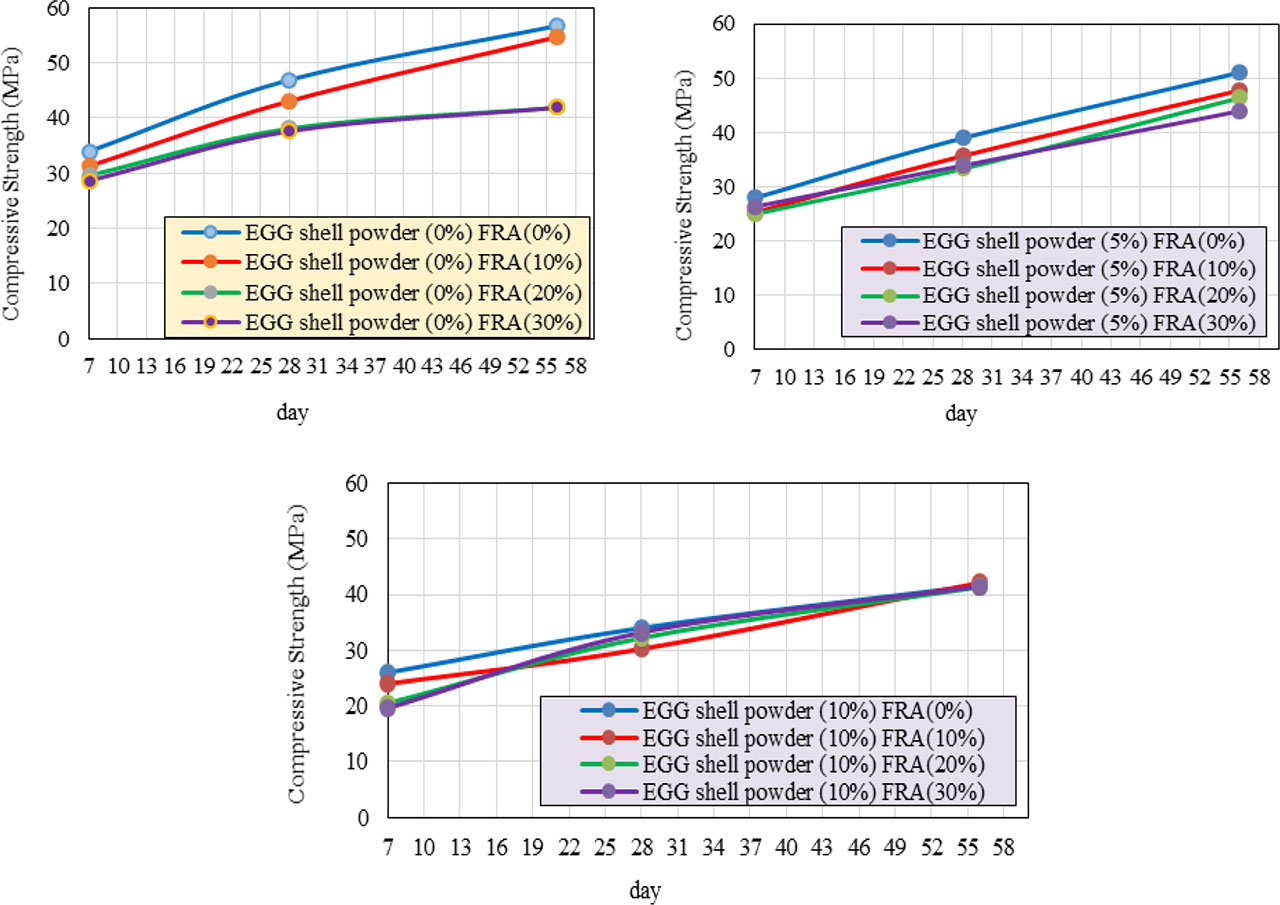
Figure 9:
The compressive strength values of the concrete mixes used at different ages (7, 28, and 56 days)
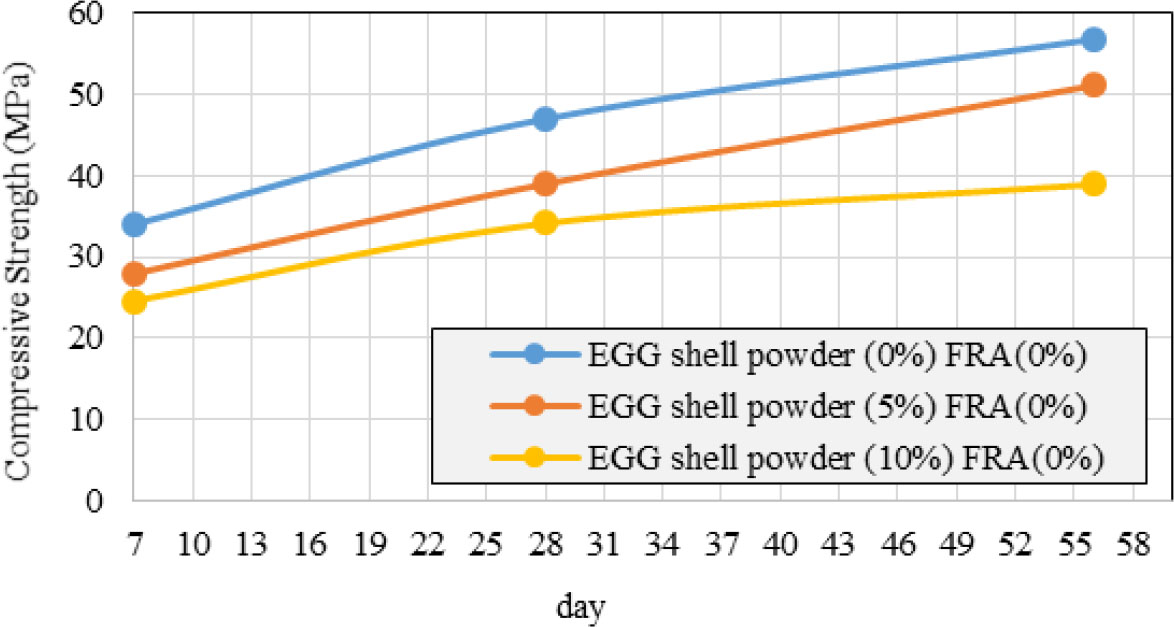
Figure 10:
The effect of adding eggshell powder on the compressive strength of concrete mixes that do not contain recycled aggregate
The behaviour of the mix which contained 10% recycled fine aggregate, but not eggshell powder is observed to be better than the mixes containing eggshell powder without recycled fine aggregate at replacement levels of both 5% and 10% across all curing ages. When analysing the addition of both types of waste materials, verifiable that the presence of recycled fine aggregate improved the performance of mixes containing eggshell powder. This is especially obvious in mixes with 10% eggshell powder, which initially displayed a noticeable reduction in strength compared to the reference mix. At the same time, when recycled fine aggregate was added, an increase in strength was observed. The resulting higher quality appears to be due to the increased amount of water added (compared to the reference mix) to compensate for the water absorbed by the recycled fine aggregate. The trend is mirrored in the slump values of these mixes. The mixes containing both recycled fine aggregate and eggshell powder exhibited better workability than those containing eggshell powder alone. On the whole, each of the concrete mixes demonstrated high compressive strength at all ages. At 28 days, strength ranged from 33 MPa to 47 MPa, and at 56 days ranging from 42 MPa to 57 MPa – values that are generally effective for the majority of structural concrete elements.
4.1.6. Splitting Tensile Strength
Figure 11 illustrates the splitting tensile strength of cylindrical specimens for all concrete mixes at 28 days of age.
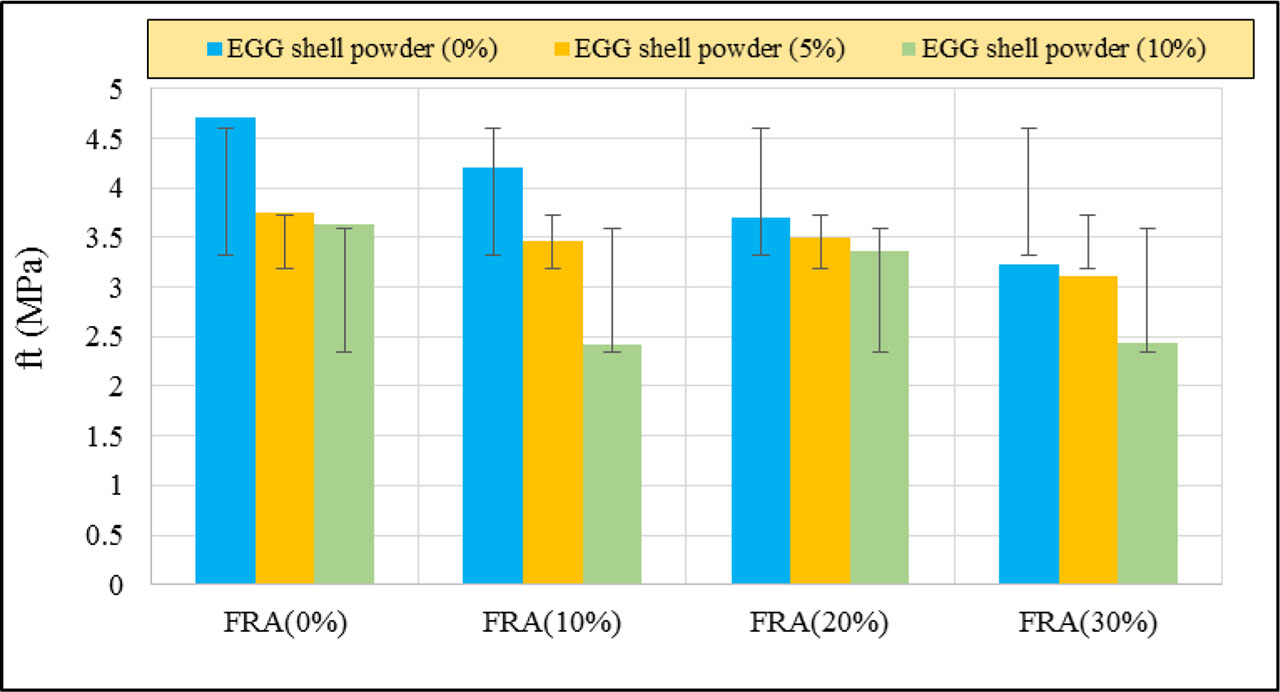
Figure 11:
The effect of adding eggshell powder and recycled aggregate on the tensile strength of the concrete mixes
As is apparent in Figure 11, the reference mix displays the highest tensile strength. However, the tensile strength begins to decrease when both types of waste materials are used. It is visible that concrete mixes which contain only recycled fine aggregate (FRA) undergo a reduction in tensile strength that increases as the replacement ratios of natural fine aggregate (NFA) with (FRA) increase. The percentage decrease for the three replacement levels (10%, 20%, and 30%) was 10.8%, 21.7%, and 31.4%, respectively, compared to the reference mix. This decline in tensile strength instigated using of recycled fine aggregate is attributed to damage to the internal structure of the concrete brought on by drying and shrinkage (Kumar, et al., 2013; Mohamad & Mahmood, 2023; Bilim, et al., 2013). In terms of the previous result that we observed by scanning electron microscope (SEM) in another work (Islam, et al., 2025), this drop in strength, and porosity is increased because old mortar remains attached to the recycled aggregate. The recycled fine aggregate has a larger surface area that creates a weakness in the bond between cement and aggregate in the Internal Transition Zone (ITZ) (Islam, et al., 2025). As pertains to the effect of using eggshell powder as a cement replacement, mixes that contain 0% recycled fine aggregate but includes eggshell powder displayed a more significant reduction in tensile strength than those with only recycled fine aggregate at 10%, as well as at the 20% replacement level. Mixtures that consist of 5% and 10% eggshell powder revealed tensile strength reduction at 20.2% and 23%, respectively, compared to the reference mix. These figures are in alignment with the study conducted by (Karthick & Petchiyammal, 2014). The lower strength of eggshell powder as compared with cement is the reason for this reduction. The bonding ability of the binding material declines as the replacement ratio of cement to eggshell powder increases (Ertug, 2024). (Mohd & Muhammad, 2020) also indicated the high porosity of this mixture is responsible for the decline in mechanical properties of hardened concrete, which is the result of the high absorption capacity of eggshell powder and the minimized cement content in the mixes. In addition, Figure 11 illustrates the combined effect of both recycled fine aggregate and eggshell powder caused an even greater reduction in tensile strength in the concrete mixes.
4.1.7. Ultrasonic Pulse Velocity (UPV)
Ultrasonic pulse velocity (UPV) testing is known to be a non-destructive method by which concrete quality may be evaluated. Ultrasonic pulse velocity is a function of the volumetric concentration of concrete (Jones & Facaoaru, 1969). UPV measures the time (T) required for a wave to travel a distance (L) through the concrete. Ultrasonic measurements were taken on specimens with dimensions of 100 × 100 × 100 mm, and the final values shown in Figure 12 represent the average of three specimens at 56 days of age.
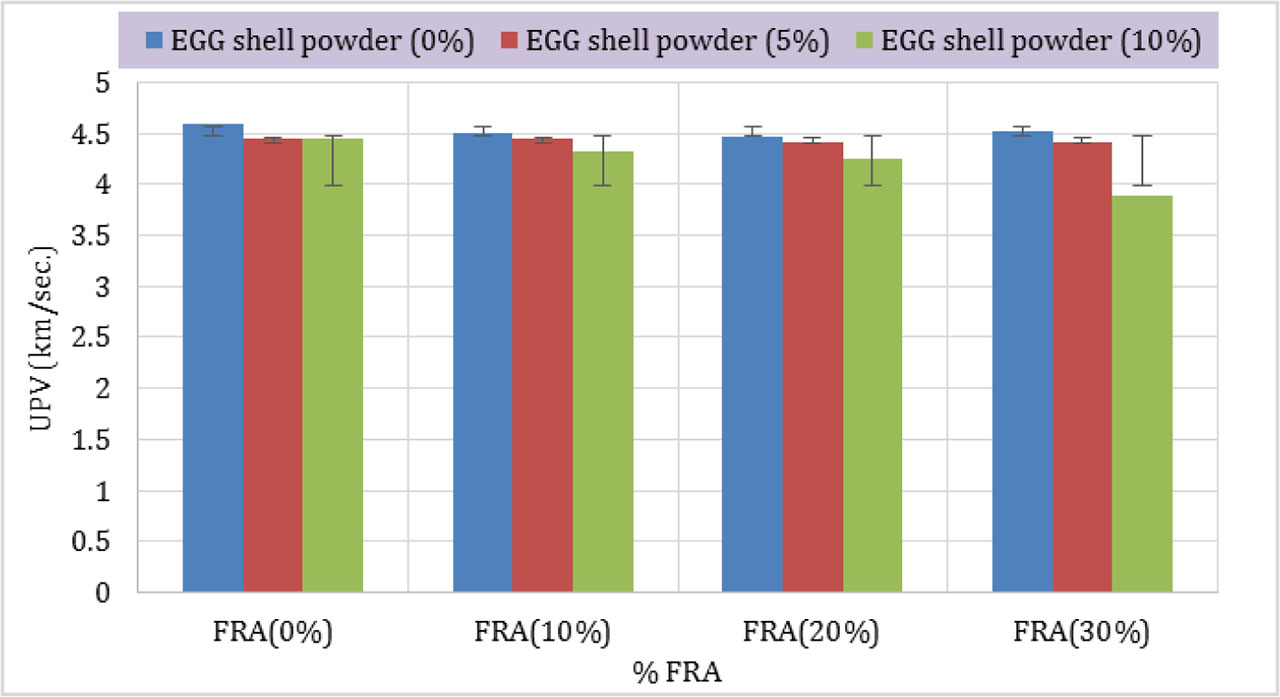
Figure 12:
The effect of adding eggshell powder and recycled aggregate on the ultrasonic pulse velocity values of the concrete mixes
The UPV test results of the reference mix confirms that the concrete quality is excellent. The remaining mixes were ranked as “good” according to the classification system (Evangelista & Guedes, 2019) outlined in Table 1 and reference (Albano, et al. 2009). A reduction in pulse velocity was observed and is attributed to a decrease in the volume of hydration products, resulting from the replacement of cement with eggshell powder. Eggshell powder absorbs mix water, which hinders complete hydration. Another reason for the reduction in velocity is the presence of voids in the concrete that are not filled with hydration products. Because of the angular and non-standard shape of the particles of recycled fine aggregate there is an increase in the concrete’s porosity. Despite this slight decrease in ultrasonic pulse velocity, the concrete still falls within the category of good-quality concrete.
Table 9:
Concrete classification (Evangelista & Guedes, 2019)
| Pulse velocity [km/s] | Concrete classification |
|---|---|
| V > 4.5 | Excellent |
| 4.5 > V > 3.5 | Good |
| 3.5 > V > 3.0 | Questionable |
| 3.0 > V > 2.0 | Poor |
| V <2.0 | Very poor |
4.1.8. Water Absorption Test
Figure 13 illustrates the results of the 28th day water absorption test conducted for all concrete mixes. A major observation from the figure is that the absorption rates of concrete mixes containing 0% eggshell powder and 10%, 20%, and 30% recycled fine aggregate have increased by 24.8%, 51.7%, and 58.6% above that of the reference mix, respectively. The high absorption capacity of old mortar found in concrete containing recycled fine aggregate explains the increase in water absorption (ASTM, 2017; Hasbi, et al., 2011). An overall increase of absorption is due to the porous structure of the recycled fine aggregate which contributes to the formation of open pores within the concrete matrix (Evangelista & De, 2010). The effect of adding eggshell powder and recycled aggregate on the absorption values of the concrete mixes is illustrated in Figure 13.
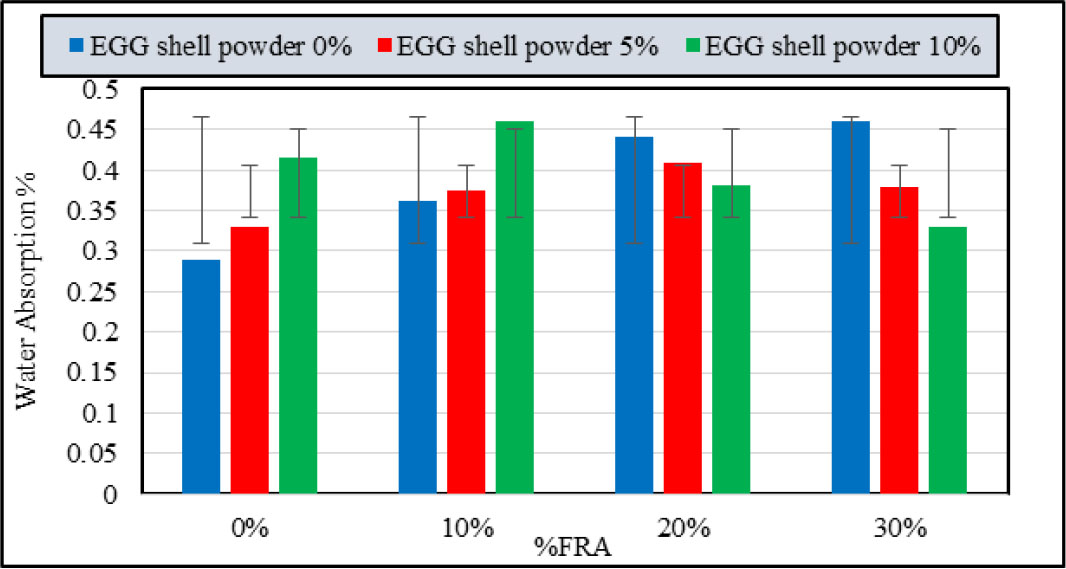
Figure 13:
Effect of adding eggshell powder and recycled aggregate on the absorption values of the concrete mixes
Regarding the substitution of cement with eggshell powder at both levels, findings showed that when the recycled fine aggregate content was 0%, the presence of eggshell powder led to higher water demand. As expected, the water demand increased with higher replacement ratios. The presence of highly permeable voids between concrete particles is the reason for this. The permeability of eggshell powder also contributes to increased water demand (Hasanta, et al. 2025). These results may be due to the high specific surface area of eggshell powder (ESP) particles than that of cement, which increases water demand and thus results in increased water absorption are also agreed with (Yerramala, 2014). The water absorption rates at 5% and 10% cement replacement reached 13.8% and 43.4%, respectively, compared to the reference mix. Even higher levels water absorption was noted when both types of waste materials were used in the concrete. The behaviour of the mixes tended toward increased water absorption at a 10% replacement level of natural aggregate with recycled aggregate. However, at 20% and 30% replacement levels, the effect changed: water absorption decreased in mixes containing both eggshell powder and recycled fine aggregate. This is due to the fineness of the eggshells, which acted as a filler to fill the capillary pores in the old mortar, reducing voids and making the concrete denser.
5. Conclusions
Based on the experimental tests conducted on concrete mixes containing recycled fine aggregate and eggshell powder, the following conclusions can be drawn:
The significant water absorption due to the small particle size further reduced flowability when 5–10% eggshell powder was substituted for cement. Slump measurements, however, remained within the permissible range of 70 to 95 mm. With 10–30% fine recycled aggregate replacement, the compaction factor reduced from 0.99 in the reference mix to 0.96–0.97. Eggshell powder-containing mixes displayed a slight additional decrease. All mixes, however, remained categorized as medium-workability concrete.
Compressive and tensile strengths decreased significantly when natural fine aggregate was replaced with recycled fine aggregate. It was also observed that the percentage decrease in both strengths increased when eggshell powder was included. This is due to the weakness of the interfacial transition zone between the cement matrix and the aggregate.
It is evident that the concrete with recycled fine aggregate and eggshell powder has a good level when the ultrasonic test results are compared to the regulations.
Water absorption increased with higher replacement levels at 24.8–58.6% when replacing natural aggregate with 10–30% FRA. The addition of eggshell powder also increased absorption at a ratio of recycled aggregate (0%). However, the results showed that when recycled fine aggregate was added at ratios of (20&30%) with the presence of eggshell powder, the absorption capacity of the mixtures decreased. This is due to the fineness of the eggshells, which acted as a filler to fill the capillary pores in the old mortar, reducing voids and making the concrete denser.
Overall, the best mechanical and structural performance was achieved with 10% recycled fine aggregate (FRA) and 5% eggshell powder (ESP). This combination maintains good workability as well as high compressive strength and it also reduces an environmental impact. A noticeable reduction in compressive and tensile strength as well as water absorption was observed when these levels were exceeded. Therefore, the resulting concrete can be classified as sustainable green concrete suitable for general structural applications.