

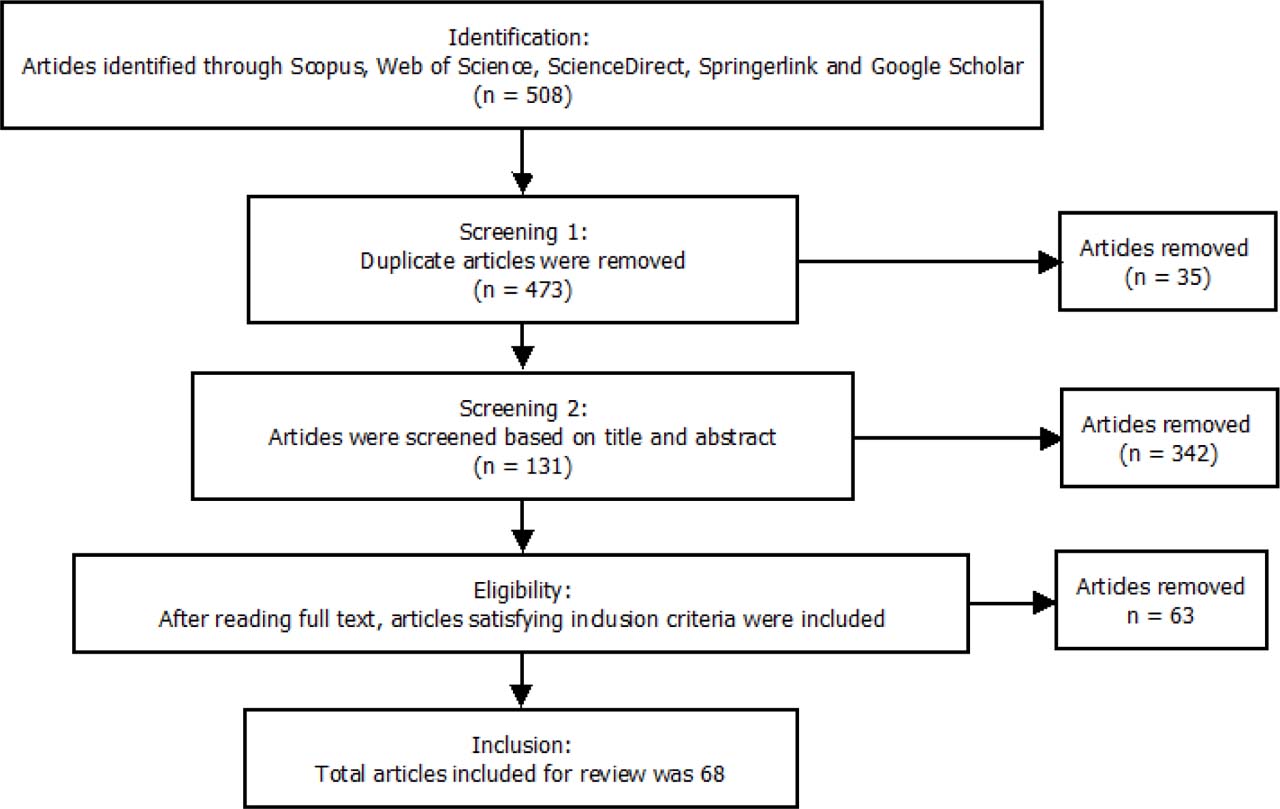
Figure 1:
Flow diagram of study selection
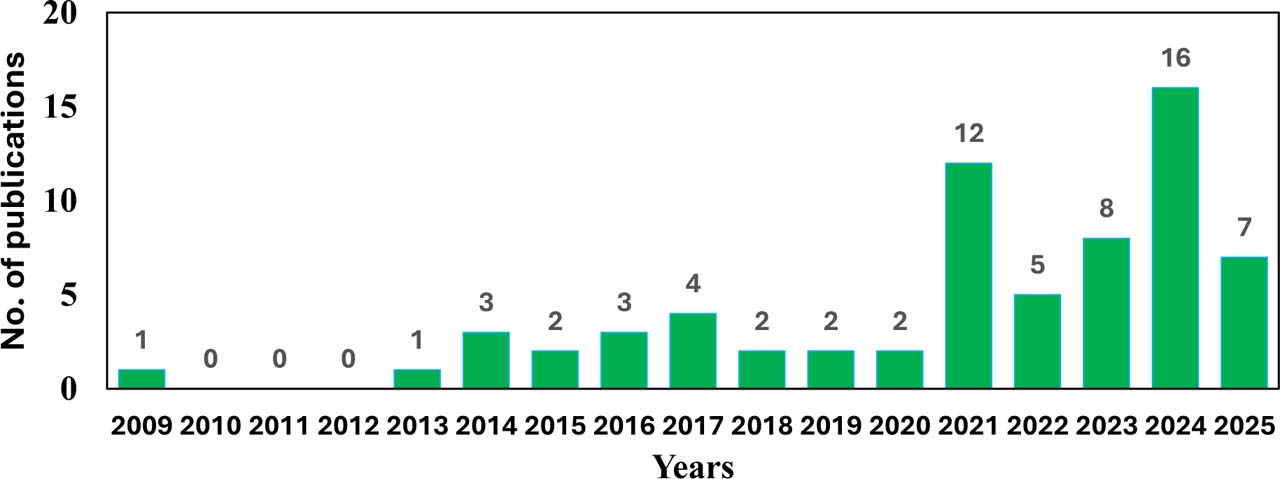
Figure 2:
Study distribution year-wise
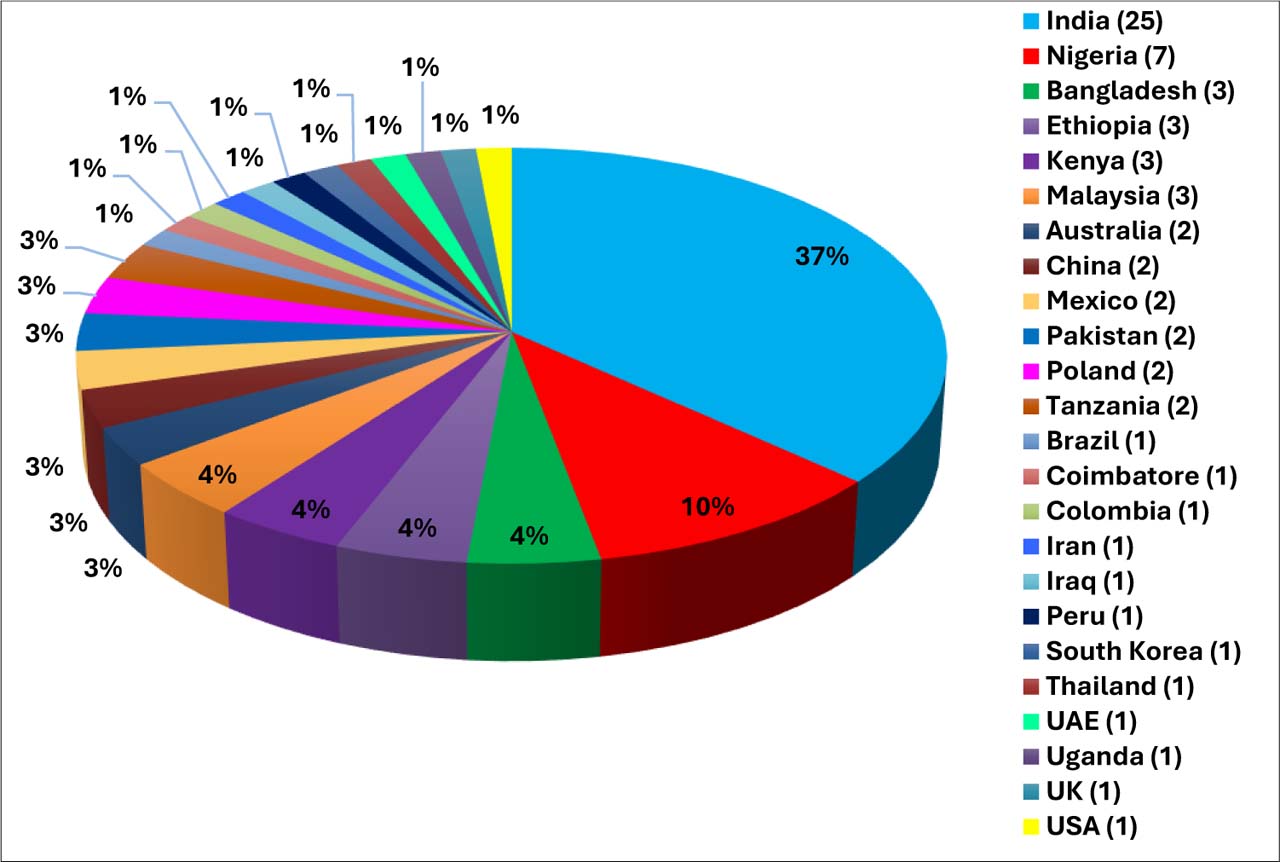
Figure 3:
Study distribution country-wise
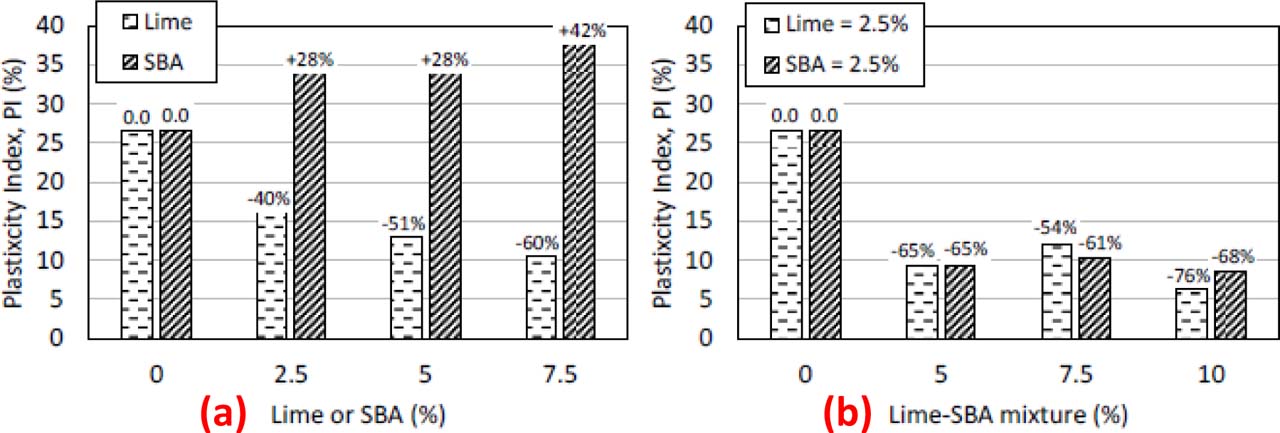
Figure 4:
Effect of (a) lime or SCBA and (b) the mixture of lime+SCBA on PI (Ahmed et al., 2024)
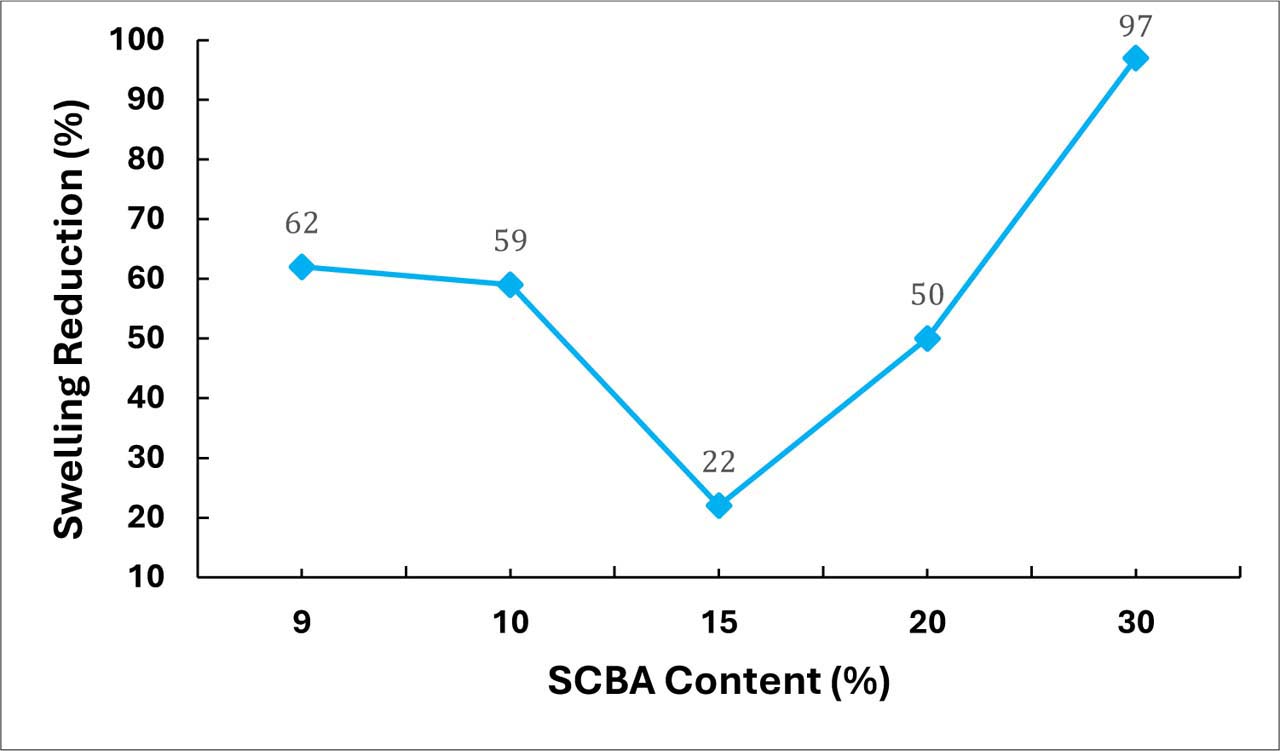
Figure 5:
Relationship between SCBA content and swelling reduction
Table 1:
Summary of SCBA-stabilization studies based on physicochemical properties
| Reference & Journal | Soil type | Role as | Properties | Key finding |
|---|---|---|---|---|
| Osinubi et al. (2009), Nigeria, CP | CL | Principal stabilizer (SCBA alone) | OMC, MDD | SCBA content reduced the soil's MDD and fine fractions while increasing the OMC. |
| Anupam et al. (2013), India, PSBS | CL | Principal stabilizer | OMC, MDD, PI | An increase in BA content resulted in higher OMC and lower MDD, while PI decreased. |
| Ochepo (2014), Nigeria, JER | CL | Enhancer (SCBA + RAP) | OMC, MDD | In the Soil+RAP mixture, MDD improved with SCBA addition up to 4%, beyond which it declined as OMC continued to increase. |
| Wubshet & Tadesse (2014), Ethiopia, JoE | CH | Enhancer (SCBA + lime) | PI, OMC, MDD | The PI declined from 78.1% to 32.5% in uncured specimens and to 31.6% after 7 days of curing with 3% lime and 15% SCBA. This combination resulted in a more pronounced decrease in MDD than when SCBA was used individually. |
| Barasa et al. (2015), Kenya, IISTE | CH | Enhancer (SCBA + Lime) | PI | Increasing the proportions and ratio of lime and SCBA in the mixtures led to a consistent reduction in the PI of the stabilized clay. |
| Hasan et al. (2016), Australia, CP | CH | Enhancer (SCBA + Hydrated lime) | Free swell ratio (FSR) | The FSR progressively decreased as the SCBA content increased from 0% to 25%. |
| Masued (2017), Iraq, JESD | CH | Principal stabilizer | LL, PL, OMC, MDD | At a 30% SCBA replacement level, the OMC rose significantly from 21.9% to 34.5% (an increase of about 57.6%) while the MDD declined from 1.59 to 1.11 g/cm3, representing a 30.2% reduction. In parallel, the LL, PL, and PI decreased by 4.9%, 2%, and 2.9%, respectively, indicating improved workability and reduced soil plasticity. |
| Yadav et al. (2017), India, IJPRT | CI | Principal stabilizer | PI | An increase in SCBA content from 2.5% to 12.5% led to a progressive decline in PI, reducing the soil’s plasticity by approximately 16.8% to 50%. |
| Edeh et al. (2019), Nigeria, IJPE | SP | Enhancer (SCBA + RAP) | OMC, MDD | Higher percentages of SCBA resulted in a higher OMC and a lower MDD. |
| Marathe et al. (2019), Poland, SGM | MH | Enhancer (SCBA + GGBS) | MDD | Maximum MDD was obtained at 15% SCBA and 10% GGBS with the geopolymer solution, yielding an 18% improvement over untreated mixes. |
| Devi & Chore (2020), India, MTP | CH | Enhancer (SCBA+ GBFS) | OMC, MDD | For the mix containing 60% BA and 40% GBFS, the MDD increased from 7.27 kN/m3 at 54% OMC to 10.12 kN/m3 at 43% OMC. |
| Hidalgo et al. (2020), Peru, CP | CL | Enhancer (SCBA+ RHA) | PI, MDD | As SCBA content increased from 0% to 10%, the PI declined from 11.94 to 6.23. The optimum mix, comprising 5% SCBA and 5% RHA, yielded the maximum MDD of 12.78%. |
| Basack et al. (2021), India, CEJ | CL | Enhancer (SCBA + Stone dust) | OMC, MDD | As the BA content increased from 2% to 10%, the OMC rose from 1.12 to 1.47, while the MDD decreased nearly linearly from 0.99 to 0.95. |
| Dang et al. (2021), South Korea, TG | CH | Enhancer (SCBA+ lime) | MDD, swelling potential | A reduction in MDD was accompanied by a significant decrease in swell potential, falling below 1% at 25% SCBA and below 0.5% with the SCBA+lime combination |
| Ewa & Ukpata (2021), Nigeria, JSET | CL | Principal stabilizer | LL, PL, PI, OMC, MDD | At 10% SCBA, soil plasticity decreased, MDD rose by 5.2% to 1.80 g/cm3, and OMC dropped by 4.9%. |
| Garg et al. (2021), India, BC | CH | Enhancer (SCBA + glass fiber (GF) + ceramic dust (CD)) | FSR, LL | An increase in SCBA content led to a marked decline in FSR, with a 22% reduction observed at 15% SBA. The optimum blend of 3% GF, 10% CD, and 15% SCBA further reduced LL. |
| Islam & Alam (2021), Bangladesh, CP | CL | Principal stabilizer | OMC, MDD | The initial OMC of 13.8% increased to 15.2% with up to 11% SCBA addition, while the MDD decreased to 1.862 g/cm3. |
| Jethwa et al. (2023), India, CP | CH | Principal stabilizer | OMC, MDD | The addition of 8% SCBA lowered the MDD from 1.5 g/cc to 1.4 g/cc (a 6.67% reduction) and increased the OMC from 19.5% to 23.6% (a 17.37% rise). |
| Kishor et al. (2022), India, IJPRT | CH | Enhancer (SCBA+ RHA + LAA | FSI (Free Swell Index) | The lowest FSI occurred in the 70% clay soil+30% (RHA + SCBA) mix with LAA, recording 97.92% and 93.27% reductions after 28 days of curing relative to the untreated clay soil. |
| Olowofoyeku et al. (2021), Nigeria, BC | SP | Principal stabilizer | LL, PL, PI OMC, MDD | Rising SCSA content increased the LL and PL but reduced the PI. Between 0% and 12% SCSA, OMC rose from 15.64% to 27.49%, and MDD declined from 1.46 to 1.23 g/cm3. |
| T. Sharma & Singh (2021), India, CP | CI | Enhancer (SCBA + Cement) | OMC, MDD | An MDD of 1.81 g/cc at an OMC of 11% was attained when the soil was stabilized with 6% cement and 2% SCBA. |
| Teddy et al. (2021), Uganda, JET | CH | Enhancer (SCBA + Lime) | PI, OMC, MDD | MDD progressively declined with increasing lime and SCBA, from 1.87 g/cm3 to about 1.58 g/cm3. The optimum mix containing 6% SCBA yielded an OMC of 1.7 g/cm3 and a PI of 20%. |
| Talekar & Joshi (2022), India, CP | CH | Principal stabilizer | MDD | The MDD increased by 5.7% at 6% SCBA content. |
| Tseganeh & Quezon (2022), Ethiopia, ACE | MH & OH | Enhancer (SCBA + CTCP) | FSI, PI | A blend containing 9% BA and 20% CTCP resulted in a 72.5% reduction in free swell index and an 85.75% decrease in PI. |
| Ewa et al. (2023), Nigeria, STE | CL | Enhancer (SCBA + LSD) | LL, PL, PI, OMC, MDD | Both stabilizers enhanced the soil’s MDD up to 15% SCBA, after which a decline was observed, while consistently reducing plasticity. |
| Ezema et al. (2023), Nigeria, NJT | CH | Enhancer (SCBA + PLA) | LL, PL, PI | Incorporating 3% BA with 7% PLA reduced the LL, PL, and PI from 47.0%, 32.0%, and 15.0% to 36.0%, 26.0%, and 10.0%, respectively. |
| Niraj & Sharma (2023), India, MTP | CI | Enhancer (SCBA + Marble dust) | OMC, MDD | The soil mix containing SCBA and marble dust reached its peak dry density of 1.53 g/cc at 12% bagasse ash, accompanied by an OMC increase to 26%. |
| Pradeep & Mayakrishnan (2023a), India, IJGGE | CH | Enhancer (SCBA + Lime) | PI, FSI | At 20% BA, the PI reduced from 45% to 27.5% and to 4% with 10% lime, while the FSI dropped from 130% to 70%, showing further improvement with 5% lime addition. |
| Ahmed et al. (2024), Pakistan, GS | MH | Enhancer (SCBA + lime) | LL, PL, PI | At 7.5% SCBA, the liquid limit rose by 28%, and with 2.5% lime + 7.5% SCBA, the plastic limit increased by 40%. The addition of 7.5% SCBA alone resulted in a 42% increase in PI. |
| Balanta et al. (2024), Colombia, IS | CH | Principal stabilizer | LL, PL, PI, OMC, MDD | SCBA incorporation significantly reduced soil plasticity beyond 15% content and caused a general decline in MDD. |
| Gouda et al. (2024), India, CP | CH | Enhancer (SCBA + CWP) | PI, FSI, OMC | Maximum reductions in PI, Free Swell Index, and OMC were achieved at 7.5% SBA and 15% CWP. |
| Haque et al., (2024), Bangladesh, BAUET | CL | Principal stabilizer | PI, MDD | SCBA incorporation lowered the Plasticity Index while enhancing MDD, with the peak value obtained at 15% SCBA content. |
| Kishor (2024), India, ST | CH | Enhancer (SCBA + LAA) | Expansion ratio (ER) | Clay soil treated with 30% SCBA and optimum LAA for 28 days showed an approximate 0.5% decrease in ER. |
| Marathe et al. (2024), Poland, JSDCP | SP-SM | Enhancer (SCBA + GGBS) | MDD | The lateritic soil achieved peak MDD at 10% SCBA and 10% GGBS with an alkaline activator, yielding a 9.2% improvement compared to untreated mixes. |
| Mohammed et al. (2024), Ethiopia, ACE | CH | Principal stabilizer | PI, MDD | With 4% SCBA, the PI decreased from 70.81% to 56.16% (Sample A) and from 61.72% to 46.38% (Sample B). MDD rose slightly to 1.48 g/cc and 1.45 g/cc, respectively, but declined at higher SCBA contents. |
| Moyo et al. (2024), Kenya, IJETT | CH | Enhancer (SCBA + Molasses) | LL, PI | With increasing SCBA content, the LL rose from 44.51% to 48.10% (0–10% SCBA) and the PL from 27.32% to 33.86% (0–20% SCBA). |
| Shah et al. (2025), India, GG | CH | Enhancer (SCBA + GGBS) | OMC, MDD | The addition of binders increased the MDD compared to the untreated soil, attaining the highest value at 21% SCBA and 9% GGBS, accompanied by a reduction in OMC. |
| Vengala et al. (2024), India, ACE | CH | Enhancer (SCBA + Lime) | OMC, MDD | The blend of 8% SCBA and 12% lime resulted in the most significant enhancements in MDD and OMC. |
| Zamora et al. (2024), Peru, CP | MH | Principal stabilizer | PI | The addition of SCBA reduced both the fines content and the plasticity of the soil. |
| Azhar et al. (2025), Pakistan, ASEJ | CH | Principal stabilizer | OMC, MDD | A 7.4% decline in MDD and a 17% rise in OMC imply a threshold effect beyond 6% SCBA content. |
| Chandak et al. (2025), India, BC | CH | Principal stabilizer | PI | The PI decreased with increasing ash content (2.5%–15%) when clay soil was partially replaced with ash. |
| Saidou et al. (2025), Kanya, ETASR | CH | Enhancer (SCBA + CKD) | FSI, PI | A notable improvement was observed with the CKD+SCBA composite, which lowered the FSI from 86% to 45% and the plasticity index from 26.18% to 15.26%. |
| R. Sharma & Malik (2025), India, BC | MH | Principal stabilizer | FSI, OMC, MDD | Increasing SCBA from 5% to 20% reduced the differential free swell from 25.4% to 3.41% and raised the OMC from 18.6% to 24.2%, while the MDD dropped from 1.649 to 1.486 g/cc. |
| Shukla & Sharma (2025), India, EJECE | CH | Enhancer (SCBA + fly ash) | LL, PI | Incorporating SCBA into the clay soil markedly lowered the LL and PI. |
[i] Note:-CP: Conference Proceedings, PSBS: Procedia Social and Behavioural Sciences, JER: Journal of Engineering Research, JoE: Journal of EEA, IISTE: International Institute for Science Technology and Education, JESD: Journal of Engineering and Sustainable Development, IJPRT: International Journal of Pavement Research and Technology, IJPE: International Journal of Pavement Engineering, SGM: Studia Geotechnica et Mechanica, MTP: Materials Today: Proceedings, CEJ: Civil Engineering Journal, TG: Transportation Geotechnics, JSET: Journal of Science, Engineering and Technology, BC: Book Chapter, JET: Journal of Engineering Technology, ACE: Advances in Civil Engineering, STE: Sustainable Technology and Entrepreneurship, NJT: Nigerian Journal of Technology, IJGGE: International Journal of Geosynthetics and Ground Engineering, GS: Geoscience, IS: Ingeniería Solidaria, BAUET: Bangladesh Army University of Engineering & Technology, ST: Sugar Tech, JSDCP: Journal of Structural Design and Construction Practice, IJETT: International Journal of Engineering Trends and Technology, GG: Geomechanics and Geoengineering, ASEJ: Ain Shams Engineering Journal, ETASR: Engineering, Technology & Applied Science Research, EJECE: European Journal of Environmental and Civil Engineering;
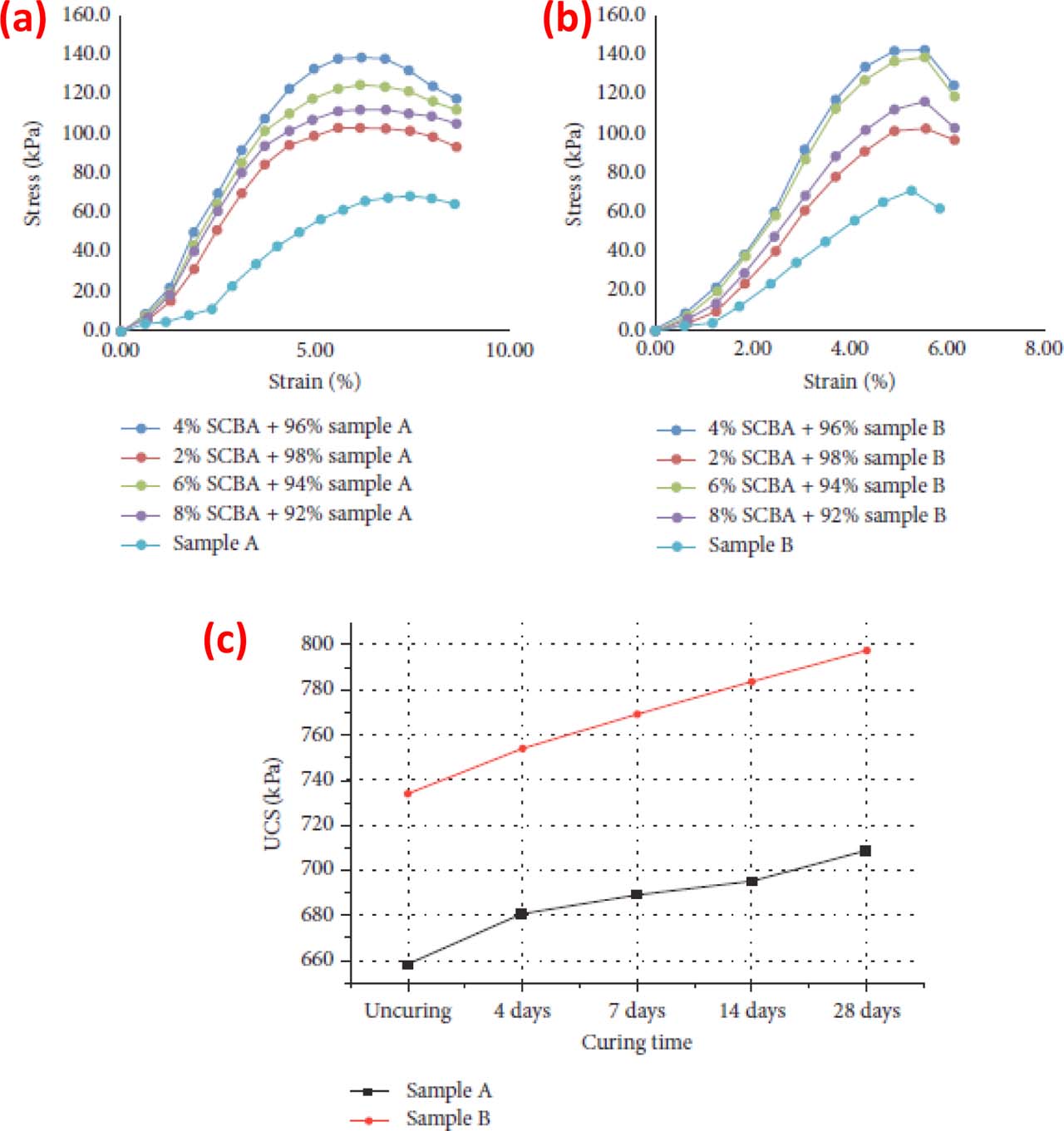
Figure 6:
Stress-strain curve (a) sample A, (b) sample B, and (c) Effect of cuing periods of UCS (Mohammed et al., 2024)
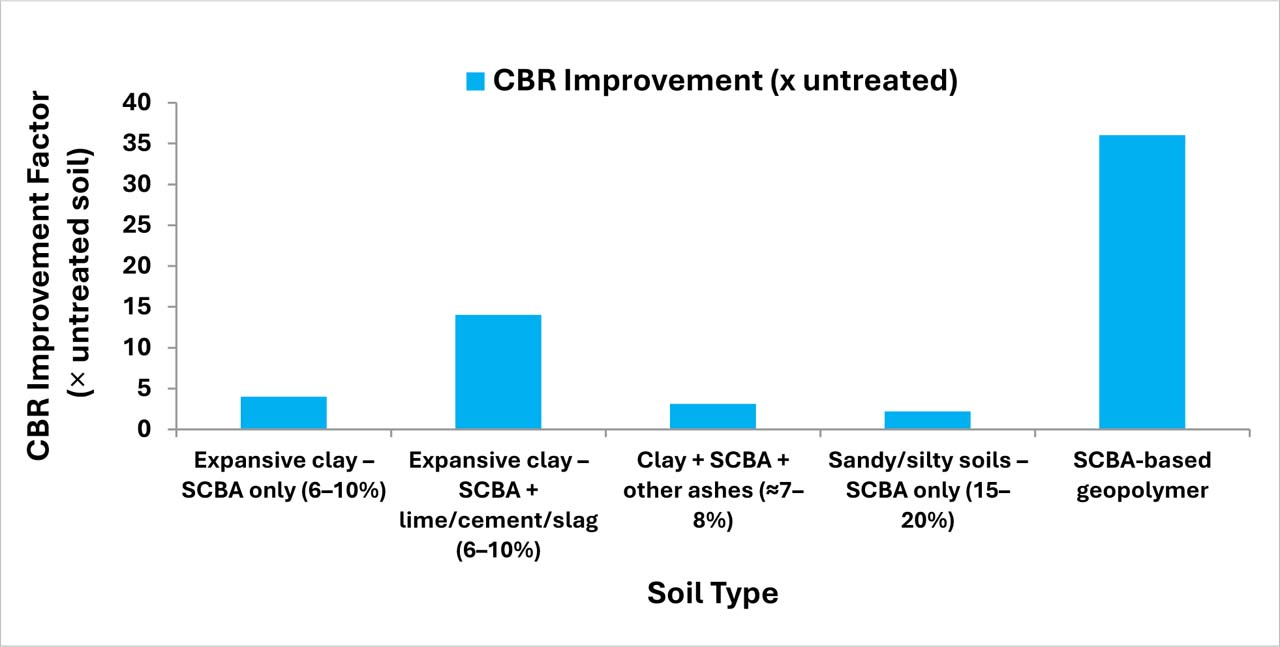
Figure 7:
Relationship between soil type and CBR Improvement for SCBA-stabilized mixtures
Table 2:
Summary of SCBA studies based on mechanical properties
| Reference and Journal | Soil type | Role as | Properties | Key finding |
|---|---|---|---|---|
| Osinubi et al. (2009), Nigeria, CP | CL | Principal stabilizer | CBR, UCS | 2% SCBA treatment achieved 7-day UCS and CBR values of 836 kN/m2 and 16%, both below the required thresholds (1,700 kN/m2 and 180%). |
| Anupam et al. (2013), India, PSBS | CL | Principal stabilizer | CBR | CBR increased progressively up to 25% SCBA content, after which it decreased with further addition. |
| (Ochepo (2014), Nigeria, JER | CL | Enhancer (SCBA + RAP) | CBR | 10% SCBA treatment of the soil-RAP mixture exhibited 82% CBR peak. |
| Rajakumar & Meenambal (2016), India, CP | CH | Enhancer (SCBA + CA, GSA) | CBR, UCS | Optimal strength was achieved with 16% CA + 16% SCBA and 16% SCBA + 16% GSA combinations, giving the highest UCS and CBR values. |
| Wubshet & Tadesse (2014), Ethiopia, JoE | CH | Enhancer (SCBA + lime) | CBR | After 7 days of air curing, CBR increased from 0.91% in untreated soil to 1.78% with 15% SCBA, and further to 32.9% with 3% lime + 15% SCBA. |
| Barasa et al. (2015), Kenya, IISTE | CH | Enhancer (SCBA + lime) | CBR | An optimal lime-SCBA (4:1) produced a CBR value of 36%, satisfying the required standard. |
| Sabat (2012), India, EJGC | CH | Enhancer (SCBA+ lime sludge) | CBR, UCS | Adding 16% lime sludge with 8% SCBA raised the soaked CBR to 6.1% (a 208% increase) and improved UCS to 117 kN/m2 |
| Dang et al. (2016), Australia, IJG | CH | Enhancer (SCBA + Hydrated lime) | CBR | Soaked CBR with 25% lime-bagasse ash mix was 23% higher than unsoaked, with greater gains beyond 10% additive content. |
| Hasan et al. (2016), Australia, CP | CH | Enhancer (SCBA + Hydrated lime) | CBR, UCS | UCS with 25% SCBA was 3.2 times higher than untreated soil and rose to 8× after 28 days; SCBA+lime addition markedly improved unsoaked CBR at 7 and 28 days. |
| Talib & Noriyuki (2017), Malaysia, CP | Peat soil | Enhancer (SCBA + OPC) | UCS | The highest UCS of 387 kPa was obtained with an 80% OPC: 20% SCBA blend, nearly 30 times greater than untreated peat and about 1.2 times higher than OPC alone. |
| Edeh et al. (2019), Nigeria, IJPE | SP | Enhancer (SCBA+ RAP) | CBR | The 50% RAP + 50% SCBA mix achieved maximum CBR values of 28% (unsoaked) and 14% (soaked, 24 hours). |
| Jamsawang et al. (2017), Thailand, CBM | CH | Enhancer (SCBA+ OPC) | UCS | The 80% OPC + 20% SCBA mix achieved the highest compressive strengths of 1.435 MPa, 2.011 MPa, and 2.533 MPa at 28, 90, and 120 days of curing, respectively. |
| Yadav et al. (2017), India, IJPRT | CI | Principal stabilizer | CBR, UCS | The optimum mix of 92.5% soil and 7.5% SCBA yielded a 79.8% increase in soaked CBR and a 27% rise in UCS compared to untreated soil. |
| James & Pandian (2018), India, ACE | CH | Enhancer (SCBA + Lime) | UCS | Peak UCS (2.2 MPa) was achieved at 7% Lime + 0.5% SCBA. |
| Ojeda-Farías et al. (2020), Mexico, RA | SP | Enhancer (SCBA + CPC) | CBR, UCS | Replacing 25% of cement with SCBA yielded optimal performance, achieving comparable CBR and UCS to a 100% cement mix while reducing CPC usage by approximately 25%. |
| Marathe et al. (2019), Poland, SGM | MH | Enhancer (SCBA + GBFS) | CBR, UCS | Adding 10% GGBS-based geopolymer with 15% SCBA to virgin soil increased CBR by 35.9 times and UCS by 5.47 times. |
| Harun-Or-Rashid et al. (2019), India, AJCE | CH | Principal stabilizer | CBR | CBR increased by 13.9% with up to 10% SCBA but declined to 13.4% at 12.5% SCBA. |
| Devi & Chore (2020), India, MTP | CH | Enhancer (SCBA + GBFS) | USC | The 60% BA + 40% GBFS mix delivered optimal performance, achieving a maximum UCS of 78.69 kN/m2. |
| Hidalgo et al. (2020), Peru, CP | CL | Enhancer (SCBA+ RHA) | CBR | The 5% SCBA + 5% RHA mix achieved the highest CBR value of 33.75%, showing the best performance among all samples. |
| Basack et al. (2021), India, CEJ | CL | Principal stabilizer | CBR | SCBA addition increased CBR by up to 120% (unsoaked) and 225% (soaked) compared to untreated soil. |
| Dang et al. (2021), Korea, TG | CH | Enhancer (SCBA + Lime) | CBR, UCS | Increasing additive content in the SCBA+lime mix enhanced compressive strength by 815% and CBR by 9.2 times. |
| Ewa & Ukpata (2021), Nigeria, JSET | CL | Principal stabilizer | Shear strength | Shear strength increased with SCBA content, peaking at 64.93 kN/m2 with 10% SCBA. |
| Garg et al. (2021), India, BC | CH | Enhancer (SCBA + GF + CD) | CBR, UCS | CBR increased up to 10% SCBA before declining in binary blends, while the highest UCS was obtained in the mix containing GF with SBA and CD. |
| Islam & Alam (2021), Bangladesh, CP | CL | Principal stabilizer | CBR | CBR rose from 6.47% to 13.85% with 9% SCBA, then slightly decreased to 13.28% at 11% SCBA. |
| Jethwa et al. (2023), India, CP | CH | Principal stabilizer | CBR | CBR increased from 1.4% (natural soil) to 11.2% with 8% SCBA, an 87.5% improvement. |
| Kishor et al. (2022), India, IJPRT | CH | Enhancer (SCBA+ RHA, LAA) | CBR, UCS | At 75–80% expansive soil with 20% SCBA and LAA, soaked CBR increased by 3397% and UCS by 143% after 28 days, marking the optimum mix. |
| Nor et al. (2021), Malaysia, JSUE | Peat soil | Enhancer (SCBA + Cement) | UCS | A 5% cement replacement with SCBA gave the optimum mix, reaching UCS values of 185, 233, and 278 kN/m2 at 7, 14, and 28 days, respectively. |
| Olowofoyeku et al. (2021), Nigeria, CP | SW | Principal stabilizer | Shear strength | Shear strength increased with SCBA up to 8%, but higher additions (10–12%) caused a decline, giving 173.12 and 225.42 kN/m2, respectively. |
| Teddy et al. (2021), Uganda, JET | CH | Enhancer (SCBA+Lime) | CBR | The CBR rose from 12% in unstabilized soil to 48% with the addition of 5% lime and 6% SCBA replacement. |
| Krishnan et al. (2022), India, BC | CH | Enhancer (SCBA + BA) | CBR, UCS | At 9% SCBA, the mix achieved maximum CBR under both soaked and unsoaked conditions, while UCS increased with curing time and higher SCBA content in 30% BA-stabilized soil. |
| Talekar & Joshi (2022), India, CP | CH | Principal stabilizer | CBR, UCS | With 6% SCBA, CBR increased by 42.4% and UCS by 43.6%. |
| Tseganeh & Quezon (2022), Ethiopia, ACE | MH&OH | Enhancer (SCBA + CTCP) | CBR | The CBR increased to 5.5 times its original value when stabilized with 11% SCBA and 25% CTCP. |
| Ewa et al. (2023), Nigeria, STE | CL | Enhancer (SCBA + LSD) | Shear strength | Shear strength peaked at 64.93 kN/m2 with 10% SCBA and 72.31 kN/m2 with 15% LSD+SCBA blend. |
| Ezema et al. (2023), Nigeria, NJT | CH | Enhancer (SCBA + PLA) | CBR | The 10% BA mix yielded soaked CBRs of 57.8% and 62.1%, while the 7% SCBA: 3% PLA blend achieved the best value of 51.3%. |
| Niraj & Sharma (2023), India, MTP | CI | Enhancer (SCBA + MD) | CBR | The peak CBR value was found to be 32% with the inclusion of 12% SCBA+ 17% MD. |
| Pradeep & Mayakrishna (2023a), India, IJGGE | CH | Enhancer (SCBA + lime) | UCS | At 5% lime, UCS increased up to 15% SCBA but declined when SCBA content exceeded this level. |
| Gallego-Quintana et al. (2023), Mexico, Materials | MH | Enhancer (SCBA + OPC) | CBR, UCS | CBR improved to 22.8%, 41.3%, and 46.8% with 3%, 5%, and 7% SCBA, while 25% OPC replacement with SCBA achieved UCS comparable to 100% OPC stabilization. |
| Roziah et al. (2023), Malaysia, TJST | MI | Enhancer (SCBA + Cement) | UCS | Incorporating 3% SCBA into 5% cement-treated soil was found to be the optimal dosage for achieving maximum UCS. |
| Ramezani et al. (2023), Iran, ASCE | SP | Enhancer (SCBA + GP, SF) | UCS | Replacing 10% SCBA with GP increased UCS in NaOH-activated mixes after 91 days but reduced it in KOH-activated ones; 20% GP caused minimal strength loss, while 20% SCBA + 30% SF replacement gave the highest strength gain. |
| Ahmed et al. (2024), Pakistan, GS | MH | Enhancer (SCBA + Lime) | CBR | The 2.5% SCBA + 5% lime blend gave the highest CBR, showing a 69% improvement over untreated soil. |
| Balanta et al. (2024), Colombia, IS | CH | Principal stabilizer | CBR, UCS | The optimal SCBA addition for maximum UCS was 5%, while for maximum CBR it was 15%. |
| Garcez et al. (2024), Brazil, CBM | SP-SM | Enhancer (SCBA + LC3) | UCS | At 28 days, the SCBA+LC3 blended mixtures showed an average UCS of approximately 5 MPa, which was significantly lower than the control mixtures (10-11 MPa). |
| Vengala et al. (2024), India, ACE | CH | Enhancer (SCBA + Lime) | UCS, CBR | At 8% SCBA + 12% lime, UCS increased by 300–400% over untreated soil, while soaked and unsoaked CBR rose by 61.3% and 50%, respectively. |
| Gouda et al. (2024), India, CP | CH | Enhancer (SCBA + CWP) | CBR, UCS | CBR and UCS increased with higher SBA and CWP contents, peaking at 7.5% SCBA + 15% CWP before declining at 10% SCBA + 20% CWP. |
| Haque et al. (2024), Bangladesh, BAUET | CL | Principal stabilizer | UCS | SCBA markedly enhanced UCS, peaking at 204.5 kPa with 15% SBA content. |
| Kishor (2024), India, ST | CH | Principal stabilizer | CBR | Max CBR reached at 20% SCBA and longer curing periods. |
| Marathe et al. (2024), Poland, JSDCP | SP-SM | Enhancer (SCBA+GBFS) | CBR, UCS | Adding 10% SCBA and 10% GBFS to lateritic soil increased CBR by 3.2 times and UCS by 618% compared to untreated soil. |
| Mohammed et al. (2024), Ethiopia, ACE | CH | Enhancer (SCBA + NWG) | CBR, UCS | At the optimum mix, soaked CBR increased by 215% with SCBA and by 805% with SCBA + NWG, while the maximum UCS occurred at 4% SCBA. |
| Moyo et al. (2024), Kenya, IJETT | CH | Enhancer (SCBA + molasses) | CBR, UCS | An optimal mix of 8% molasses and 10% SCBA achieved a 7-day soaked CBR of 12.5% and a UCS of 475 kPa. |
| Shah et al. (2025), India, GG | CH | Enhancer (SCBA + GBFS) | UCS | A 70:30% soil-binder ratio combined with a 70:30% SCBA-GBFS ratio yields higher UCS values. |
| Zamora et al. (2024), Peru, CP | MH | Principal stabilizer | CBR, UCS | With 20% SCBA, both CBR and UCS increased, with UCS improving by 13% after 30 days of curing. |
| Azhar et al. (2025), Pakistan, ASEJ | CH | Principal stabilizer | Shear strength | Cohesion and friction angle of clay improved by 58% and 32% at 8% SCBA, reaching 162 kPa and 21.1°, respectively. |
| Chandak et al. (2025), India, BC | CH | Principal stabilizer | CBR | The maximum CBR occurred at 7.5% SCBA substitution, with the SCBA+soil mix reaching a peak value of 5.68%. |
| Nangulama & Rimoy (2025), Tanzania, CWS | CH | Enhancer (SCBA+OPC+LC3) | UCS | Compared to SCBA+OPC blends, BA+LC3 samples consistently displayed higher compressive strength, especially beyond 28 days of curing. |
| Saidou et al. (2025), Kanya, ETASR | CH | Principal stabilizer | CBR, UCS | The CKD+SCBA blend raised CBR to 16.43% (S4 subgrade) and improved UCS from 97.5 kPa to 555.81 kPa, reducing pavement thickness and cost. |
| R. Sharma & Malik (2025), India, BC | MH | Principal stabilizer | CBR | CBR increased up to 15% SCBA, then declined at 20%. |
| Shukla & Sharma (2025), India, EJECE | CH | Principal stabilizer | Tensile strength | After 28 days of curing, the SCBA-treated mix achieved a tensile strength of 625 kPa (= 10 times of untreated mix). |
[i] Note: - EJGC: Electronic Journal of Geotechnical Engineering, IJG: International Journal of Geomate, CBM: Construction and Building Materials, RA: Revista Alconpat, AJCE: American Journal of Civil Engineering, JSUE: Journal of Sustainable Underground Exploration, STE: Sustainable Technology Entrepreneurship, TJST: The Journal of Science & Technology, ASCE: American Society of Civil Engineers, CWS: Cleaner Waste Systems.
Table 3:
Comparative and Critical Analysis of Mechanical Properties of SCBA-Stabilized Soils
| Parameter | Observed Trend | Optimum Range / Conditions | Performance Comparison | Critical Interpretation |
|---|---|---|---|---|
| Unconfined Compressive Strength (UCS) | UCS generally increases with SCBA addition up to an optimum dosage and decreases beyond that due to the dilution of reactive silica and incomplete bonding. |
|
|
|
| California Bearing Ratio (CBR) | CBR increases sharply up to 6–10% SCBA, then declines at higher levels due to weaker compaction and unreacted particles. |
|
|
|
| Shear Strength | Cohesion and internal friction angle increase significantly with SCBA addition, especially in combination with lime or CKD. |
|
|
|
| UCS-CBR Correlation | UCS and CBR exhibit parallel improvement with SCBA content up to optimum levels, typically showing high correlation (R2 ≈ 0.85–0.95). | Optimum: 8–10% SCBA + 4% Lime | Comparable to cement+lime systems, confirming mechanical consistency. | Correlation confirms that laboratory UCS translates effectively into field- bearing strength. Need for empirical correlation models to aid design optimization. |
| Effect of Curing Duration | Both UCS and CBR rise with longer curing due to ongoing pozzolanic reaction; shear strength also increases with curing. | 28 days → peak strength; gradual gains up to 90 days. | Similar curing response to cement/lime-treated soils. | Time-dependent strength gain validates progressive hydration-pozzolanic activity. Few studies exceed 28 days; long-term durability under field conditions still unverified. |
| Effect of Secondary Additives | Calcium- and alkali-rich additives (lime, GBFS, CKD, LC3, nano-silica) amplify pozzolanic reactivity and mechanical performance. | Optimum: 8–10% SCBA + 4–6% additive. | Blended systems yield 2–5× higher UCS/CBR and 50–100% higher shear strength than SCBA alone. | Highlights synergistic effects between SCBA’s amorphous silica/alumina and external Ca/alkali sources. Quantitative studies on gel composition (Ca/Si ratio) and micro-macro correlation are still limited. |
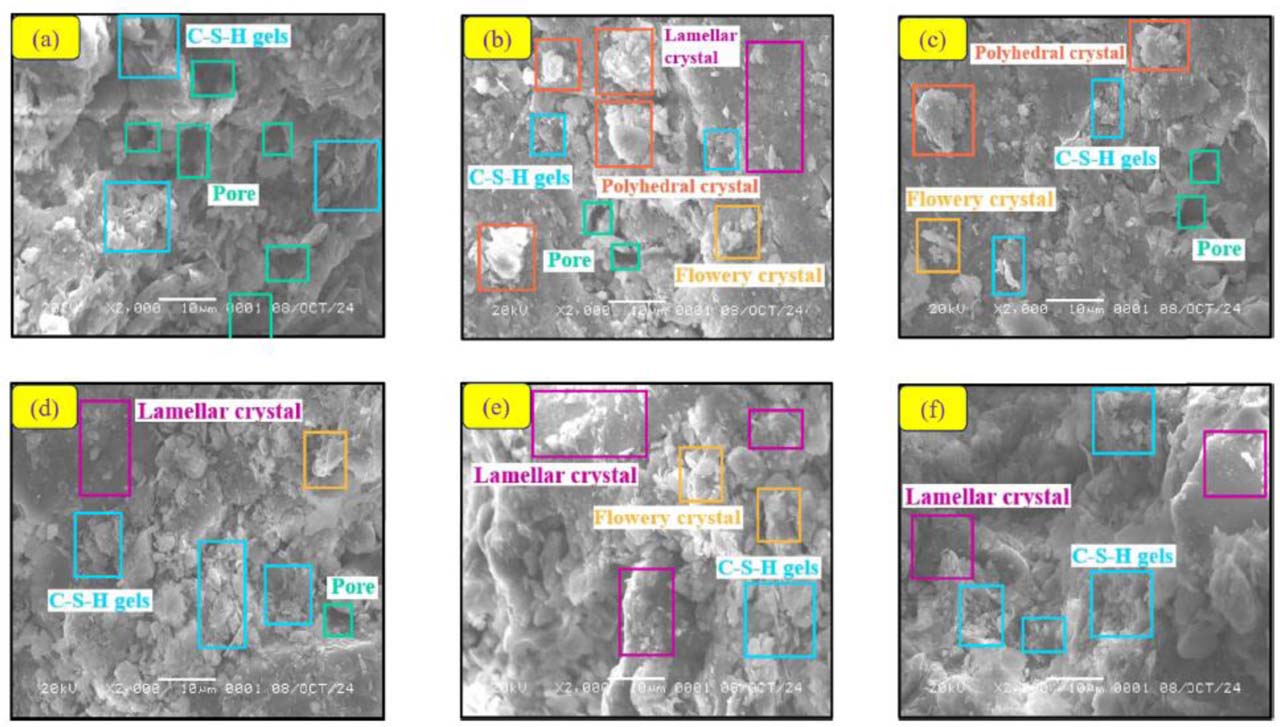
Figure 8:
SEM micrographs of soil samples containing varying SCBA contents: (a) 0%, (b) 1%, (c) 2%, (d) 3%, (e) 4%, and (f) 5% (Yao et al., 2024)
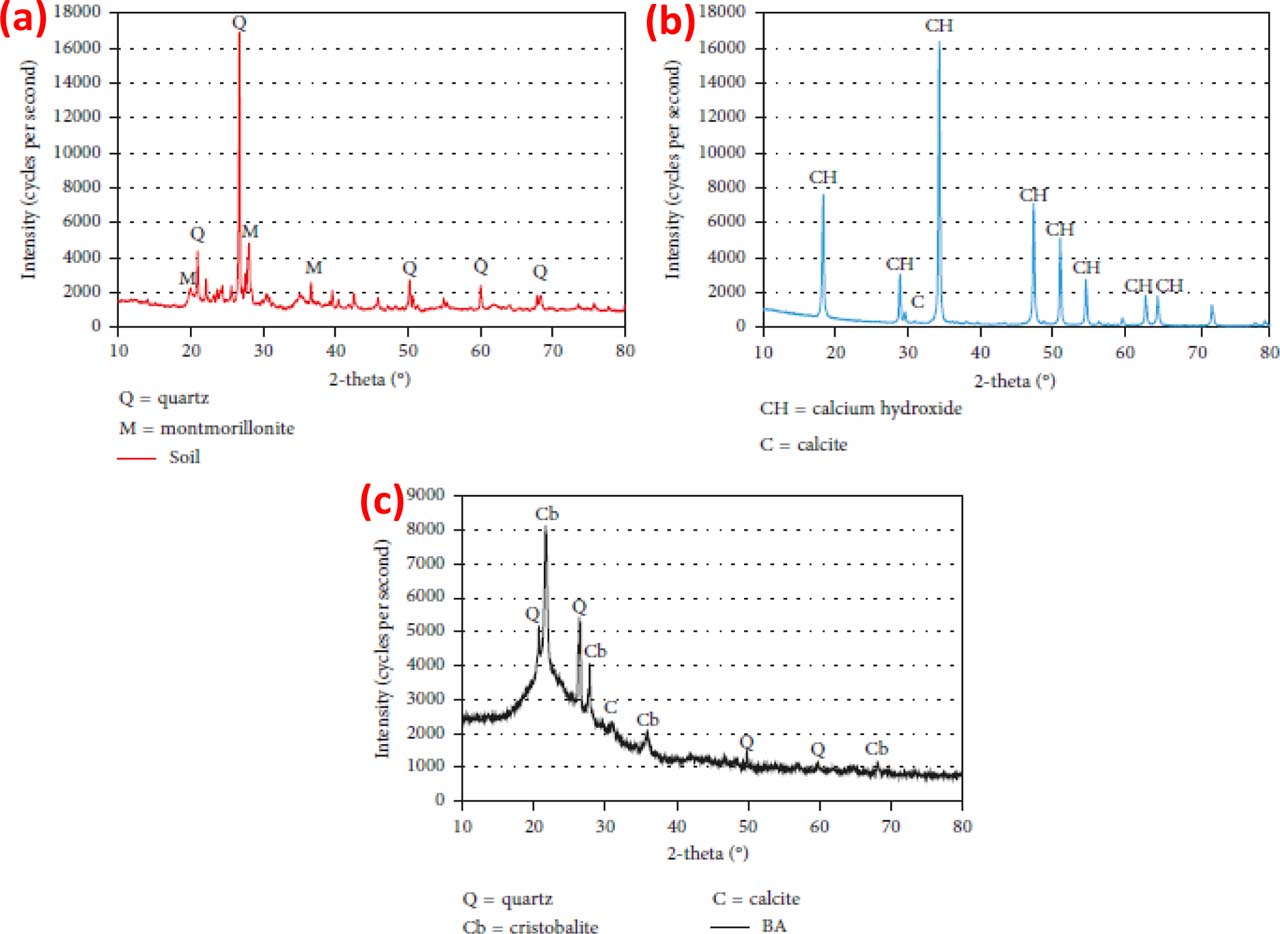
Figure 9:
XRD of (a) soil, (b) lime, and (c) SCBA (James & Pandian, 2018)
Table 4:
Summary of SCBA studies based on microstructural properties
| Study and journal | Soil type | Role as | Test | Key finding |
|---|---|---|---|---|
| Jamsawang et al. (2017), Thailand, CBM | CH | Enhancer (SCAB+ OPC) | SEM, XRD | The 80% OPC + 20% BA mix showed the lowest void ratio and highest strength from C-S-H gel and ettringite formation, whereas the 50% OPC + 50% BA mix had higher voids and lower strength. |
| James & Pandian (2018), India, ACE | CH | Enhancer (SCBA + Lime) | SEM | The addition of SCBA enhanced quartz utilization in lime–soil reactions, promoting C-S-H and C-A-H formation and resulting in a dense, compact stabilized matrix. |
| Marathe et al. (2019), Poland, SGM | MH | Enhancer (SCBA + GBFS) | SEM | SEM analysis of the optimized 10% GBFS + 15% SCBA mix (after one week of curing and compaction to Proctor density) revealed a gray, densely packed flake-like structure, indicating a strong alumino-silicate matrix formation. |
| Dang et al. (2021), Korea, TG | CH | Enhancer (SCBA + Lime) | SEM, FTIR | SEM and FTIR analyses revealed long-term pozzolanic reactions among SCBA, clay, and lime, forming new cementitious products responsible for enhanced soil strength. |
| Nor et al. (2021), Malaysia, JSUE | Peat soil | Enhancer (SCBA + Cement) | SEM | SEM analysis indicated that the 5% SCBA replacement mix effectively filled the voids within the peat soil structure. |
| Krishnan et al. (2022), India, BC | CH | Enhancer (SCBA + BA) | SEM, XRD | XRD analysis confirmed the presence of cementitious compounds like CSH and CASH, and SEM images reveal a compact, dense microstructure in the stabilized sample. |
| Tseganeh & Quezon (2022), Ethiopia, ACE | MH&OH | Enhancer (SCBA + CTCP) | SEM | SEM revealed that the morphology and fabric of the control specimen (raw soil) were significantly altered after stabilization with the optimal 9% BA + 20% CTCP mix. |
| Ezema et al. (2023), Nigeria, NJT | CH | Enhancer (SCBA + PLA) | X-ray fluoresc ence testing (XRF) | XRF characterization revealed that SCBA and PLA exhibited pozzolanic contents of 61.97 % and 28.27 %, respectively. |
| Pradeep & Mayakrishnan (2023a), India, IJGGE | CH | Enhancer (SCBA + Lime) | XRD, FE-SEM, EDS, FTIR. | SCBA improved particle adhesion, and pozzolanic reactions with lime formed a dense microstructure confirmed by FESEM; XRD of the 5% BA mix after 7 days showed stable SiO2 peaks, indicating an optimal admixture ratio. |
| Gallego-Quintana et al. (2023), Mexico, Materials | MH | Enhancer (SCBA +OPC) | XRD | XRD analysis confirmed that strength gains resulted from water–cement hydration and reactions between Ca (OH)2 and amorphous silica in SCBA. |
| Ramezani et al. (2023), Iran, ASCE | SP | Enhancer (SCBA + GP, SF) | SEM, XRD, FTIR | SEM, XRD, and FTIR analyses confirmed geopolymer gel formation; higher SCBA reduced porosity and increased strength, with NaOH-activated mixes showing stronger bonding than KOH-activated ones. |
| Kishor (2024), India, ST | CH | Enhancer (SCBA + LAA) | SEM | FESEM at 28 days showed leached silica and alumina reacting with Ca2+ and Na+ to form N-A-S-H, along with C-S-H and C-A-S-H geopolymerization products. |
| Marathe et al. (2024), Poland, JSDCP | SP-SM | Enhancer (SCBA + GBFS) | SEM | SEM analysis confirmed the formation of an aluminosilicate structure resulting from the reaction between GGBS and SCBA in the AAB mix. |
| Safdar et al. (2025), Pakistan, AJSE | SM | Principal stabilizer | SEM | SEM results confirmed the formation of cementitious gels from hydration and pozzolanic reactions, which created strong bonds among soil particles. |
| Shah et al. (2025), India, GG | CH | Enhancer (SCBA + GBFS) | XRD, EDS, SEM | XRD, SEM, EDS, and XRF analyses revealed that the mixture with 21% SCBA and 9% GBFS generated cementitious siliceous hydrate (C-S-H) compounds, resulting in improved strength. |
| Yao et al. (2024), China, RE | CH | Enhancer (SCAB+ OPC) | SEM | SEM analysis showed that adding bagasse ash enhanced cement hydration, forming hydrated calcium silicate and other compounds that filled pores and produced a denser microstructure in the modified cement soil. |
| Azhar et al. (2025), Pakistan, ASEJ | CH | Enhancer (SCBA + Lime) | SEM, XRD | At 8% BA, foil-like leafy structures formed, showing better bonding and clay aggregation; XRD confirmed pozzolanic reactions between ash silica–alumina and soil calcium, producing binding phases that enhance structural stability. |
| Saidou et al. (2025), Kanya, ETASR | CH | Enhancer (SCBA + GBFS) | SEM | SEM of untreated soil showed loose packing with visible voids, while the optimal 6% CKD + 10% SCBA mix exhibited fewer voids, confirming effective pore filling by the stabilizers. |
| Shukla & Sharma (2025), India, EJECE | CH | Enhancer (SCBA + Lime) | XRD, SEM | XRD confirmed new cementitious compounds from prolonged pozzolanic reactions between binder and soil, while SEM revealed a dense, cohesive matrix with reduced porosity, consistent with the strength improvement. |