

1. Introduction
Rapid industrialization, urbanization and population growth are increasing concerns worldwide for the accumulation of solid waste and deterioration of the environment. It is estimated that nearly 2.24 billion tonnes of municipal solid waste are generated every year, worldwide, and this amount is expected to increase by approximately 73% by 2050 (World Bank, 2022). A considerable part of this waste comes from agricultural and industrial by-products that, if poorly treated, can cause serious pollution to air, water and soil. A well-known waste material, such as sugarcane bagasse ash (SCBA), produced during sugar mill combustion, has become a matter of serious disposal and environmental concern. Uncontrolled deposit of SCBA leads to alkaline leachate generation, dust pollution and degradation of the local ecosystem (Hiranobe et al., 2024; Khandelwal et al., 2023).
Stabilization of soil is an important method in pavement engineering to improve the poor subgrade materials, including strength, stiffness and long-term stability (Firoozi et al., 2017; Zhou et al., 2024). Conventional stabilizers such as cement and lime have been commonly used for this matter; however, staggering amounts of energy and carbon emissions have been devoted to producing them. Cement production alone is responsible for 8% of the world’s CO2 releases, and 1 tonne of CO2 is emitted to produce one tonne of lime (Baral et al., 2025; Niu et al., 2025). As a result, there is a growing focus on sustainable low-carbon alternatives, especially in developing countries where both economic and environmental challenges are worse (Shinde et al., 2024). For example, Boudehene et al. (2025) showed that adding 1–1.5% luffa fibers to expansive clay notably reduced plasticity and swelling and enhanced shear strength without altering soil chemistry, demonstrating their potential as biodegradable stabilizers. Likewise, Wijaya et al. (2024) also showed that fly ash-bottom ash geopolymers significantly improved Unconfined Compressive Strength (UCS) and California Bearing Ratio (CBR) and lessened swelling, demonstrating their value as low-carbon solutions to conventional stabilizers.
SCBA is rich in amorphous silica and alumina and possesses good pozzolanic property that improves the soil quality with the development of Calcium Silicate Hydrate (C-S-H) and Calcium Aluminosilicate Hydrate (C-A-S-H) gels (Kolawole et al., 2021). It is a sustainable construction material, contributing to the reuse of waste, landfill lessening and emission prevention of carbon, which are main components of eco-friendly infrastructure development (Francioso et al., 2024). Many works have revealed favourable results; however, the existing study is relatively scattered, especially in mix proportioning, curing conditions and regulation of reactivity. Thus, a comprehensive synthesis is necessary to harness existing knowledge and direct future research.
1.1. Study Novelty and Research Significance
This paper conducts a systematic and PRISMA-guided review of SCBA application in soil treatment, drawing on data from varying aspects (geotechnical, microstructural, mechanical and environmental). Unlike earlier reviews, this review synthesizes and quantifies performance trends across various soil types and SCBA dosages, maps optimal dosage ranges, and relates observed improvements to the underlying chemical or mineralogical mechanisms. It also includes sustainability characteristics such as CO2 emission reduction and cost saving, which provides the SCBA as a real circular low-carbon material for subgrade stabilization.
The results of this review bring a lot to the table for researchers and practitioners in both geotechnical engineering, materials science, and policymakers. Spanning from inter-laboratory experiments to field-applicable design tools, it synthesizes the data available in the literature and presents it in a form that fulfils both academic and engineering needs. The results are used as a benchmark for finding the optimal SCBA dose, blend ratios and anticipated performance enhancement while also indicating the potential of such material as part of net-zero carbon infrastructure.
1.2. Motivation and Research Objectives
While SCBA represents an attractive and sustainable alternative to cement and lime as the traditional stabilizers, the available studies are still largely inconsistent due to the significant difference in the testing conditions, the characteristics of SCBA, the mix composition, cure times, and soil types. Because of the variability of this data, it is difficult to reach generalizations about its appropriate dose, stabilization effect, durability, or environmental benefits from engineering and research. Moreover, most current literature focuses on isolated geotechnical indicators, while there is still insufficient study on the combination of physicochemical, mechanical, microstructural, and sustainability variables. Furthermore, although SCBA is abundantly available, the reactivity and performance of SCBA are highly dependent on factors such as calcination temperature, amorphous silica content, and chemical activation, which are rarely reported or are not standardized in the literature. These gaps lead to uncertainties in its application at a large scale and impede its inclusion in pavement design protocols.
To overcome these shortcomings, a synthesis is necessary to systematically characterise the performance of SCBA across diverse soil systems, identify consistent behavioural trends, explain the underlying reaction mechanisms, and quantify its environmental advantages. This review thus seeks to close this knowledge gap by a Preferred Reporting Items for Systematic Reviews and Meta-Analyses (PRISMA)-guided assessment of 68 peer-reviewed studies (Moher et al., 2009), providing a consolidated framework to facilitate evidence-based design, optimal mix selection, and future research directions for SCBA-stabilized soils.
2. Study Method
This review was conducted based on the PRISMA 2009 framework in order to contribute with some transparency, consistency and reproducibility to fulfil both the literature selection and synthesis process. Although it was not registered as a systematic review protocol, the methodology applied has been designed to ensure a comprehensive collection and analysis of papers studying the effects of SCBA on the geotechnical, mechanical, microstructural, and environmental properties of subgrade soils.
2.1. Search Strategy and Data Sources
An explicit sensitive search strategy was developed according to the PRISMA 2009 guidelines to guarantee transparent and reproducible methods for study identification. The literature search encompassed five major scholarly databases: Scopus, Web of Science, ScienceDirect, SpringerLink, and Google Scholar, covering publications from 2009 to 2025. To avoid the lack of papers that could address the complete review, brief terms containing in well-known databases were searched and linked with Boolean operator like: (“sugarcane bagasse ash” OR “SCBA”) AND (“soil stabilization” OR “subgrade improvement” OR “pavement”) AND (“geotechnical properties” OR “mechanical properties” or “microstructure” or “durability”).
Additional keywords such as “pozzolanic material,” “waste ash,” “lime-bagasse blend,” “geopolymer”, and “pavement performance” were added to cover all possibly related studies. In addition, the reference lists of relevant articles and review papers were manually searched to identify additional sources that had not been obtained through the main database search.
2.2. Inclusion and Exclusion criteria
Eligible studies were selected if they met the following:
Explored the effect of SCBA alone or together with other binders on physicochemical, mechanical, microstructural, and durability properties of soils.
Used laboratory tests, field investigations or numerical modelling for soil testing.
Reported quantitative outcomes such as Atterberg limits, compaction characteristics, UCS, CBR, shear strength, or results from microstructural analyses (Scanning Electron Microscopy, X-ray Diffraction, Fourier Transform Infrared Spectroscopy).
Were peer-reviewed English language articles that appeared in journals, conference proceedings or book chapters from 2009 to 2025.
Exclusion criteria included the following:
Studies that were not related to soil stabilization or did not contain SCBA as a stabilizing agent.
Academic dissertations, papers or non-peer-reviewed publications.
Incomplete or full-text-unavailable publications.
2.3. Study Selection and Screening Process
The process of the review is aligned with the four successive PRISMA stages: identification, screening, eligibility and inclusion. A total of 508 articles were retrieved from the databases; out of which 35 duplicates were removed. The final 473 studies were subjected to title and abstract screening, with 131 full texts included for eligibility assessment. Finally, 68 studies were included in this review based on pertinence, completeness of information and methodological strength. Figure 1 displays the selection process, showing the flow of records through each stage of identification and screening.
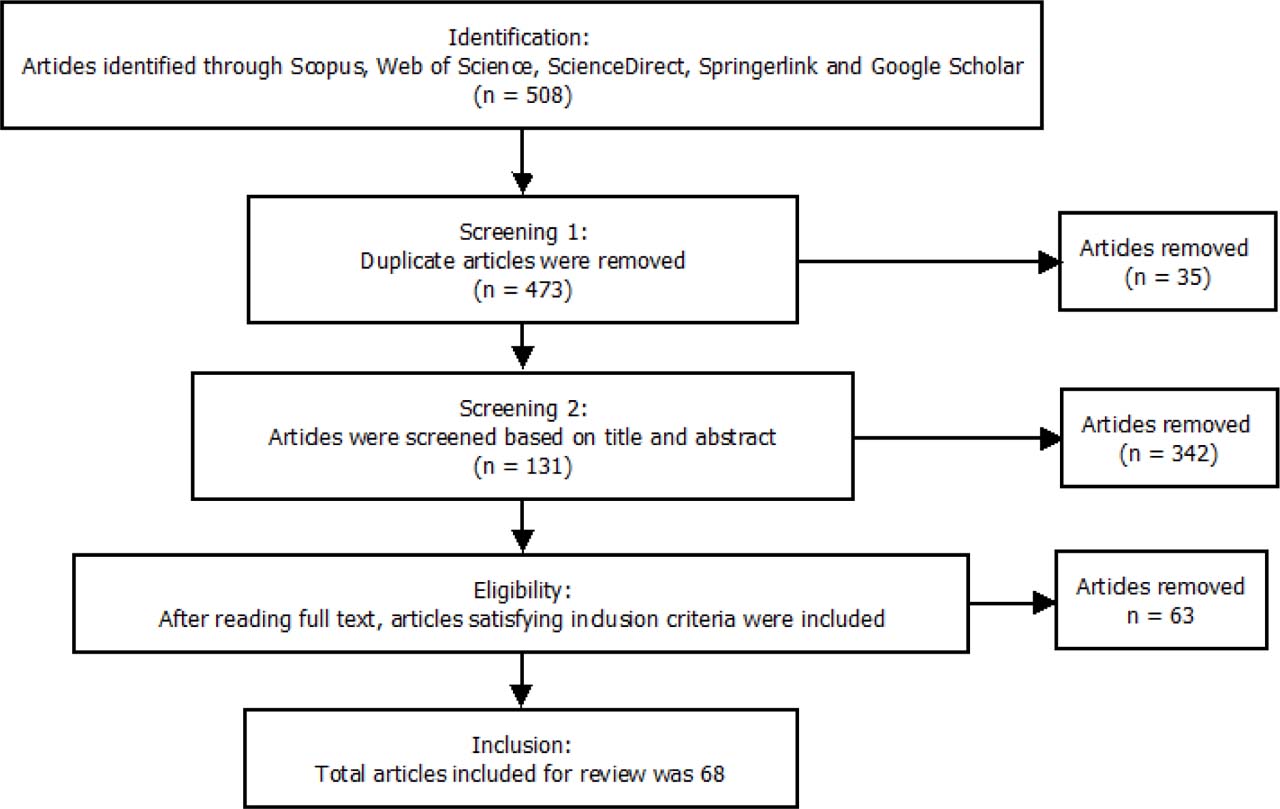
Figure 1:
Flow diagram of study selection
2.4. Data Extraction and Categorization
The extracted data were processed through a structured coding schema for consistency and meaningful comparisons across studies. Selected information of each publication was systematically recorded as described below:
Bibliographic details: authors, year and country of study, and type of source.
Soil properties: classification, plasticity index, and basic geotechnical parameters.
Stabilization parameters: SCBA percentage, inclusion of additional binders (such as lime, granulated blast furnace slag (GBFS), or cement kiln dust (CKD)), and curing period).
Measured parameters: physicochemical (Liquid Limit, Plastic Limit, Optimum Moisture Content, Maximum Dry Density), mechanical (UCS, CBR, shear strength), microstructural (Scanning Electron Microscopy, X-ray Diffraction, Fourier Transform Infrared Spectroscopy), and environmental (e.g., CO2 reduction, cost efficiency).
Results of experiments: the development in time, optimal charge and identified reaction mechanism.
For systematic synthesis, the reviewed studies were categorized into four main methodological groups:
Physicochemical investigations.
Mechanical performance analyses.
Microstructural and mineralogical evaluations.
Durability and environmental assessments.
2.5. Methodological Considerations
While no formal risk-of-bias assessment was performed, all included studies were carefully examined with respect to methodological quality, clarity in experimental protocols and consistency in data presentation. Large differences were found in SCBA contents and various study findings, leading to high variance in the data set. Consequently, a qualitative narrative synthesis was employed as opposed to quantitative meta-analysis to facilitate interpretations of the various findings. The integrated outcomes were analysed by methodological features to illustrate shared performance trends, dominant affecting parameters and present research limitations. This comprehensive synthesis provided the basis for identifying research gaps and proposing future research directions, presented in the following section.
3. Literature Search Results
This section provides a brief review of recent literature on the use of SCBA in soil stabilisation and subgrade improvement. A total of 68 scholarly publications between 2009 and 2025 were included in accordance with the PRISMA model. From the perspective of development, it is clear that scientific interest in the field of sustainable stabilization technologies has been growing over the past decade, with approximately 70% of the studies published after 2020, as illustrated in Figure 2. This upward trend corresponds to a worldwide drift for eco-friendly construction methods and valorisation of agro-industrial waste in enhancing the performance and sustainability of pavement subgrades.
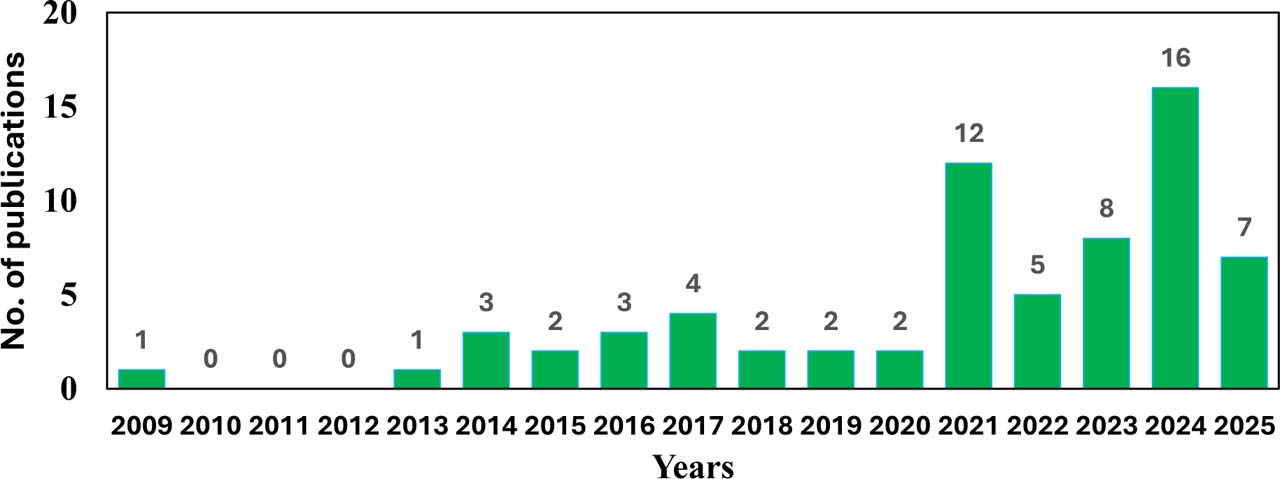
Figure 2:
Study distribution year-wise
The studies analysed show important geographical variability, most of which come from India, Nigeria, Ethiopia and Kenya that together represent almost 60% of the total reviewed, as shown in Figure 3. The biomass is very abundant in these regions where the sugarcane waste generated per unit area is high, and there exists an urgent requirement to control and alleviate the associated environmental problems. Significant research in relation to SCBA has also been conducted in Bangladesh, Pakistan and Malaysia, whereby SCBA has been gaining much attention as an economical and sustainable alternative material for conventional cement to improve the strength and performance of expansive weak subgrade soils. Developed countries, including Australia, Poland, and the United States, however, also produced a lesser quantity of highly technical research focused on geopolymerization mechanisms, durability modelling and microstructural characterization. Furthermore, recent studies from South American countries (such as Brazil, Colombia and Peru) demonstrate a growing international interest to valorise agricultural residues for geotechnical and environmental purposes.
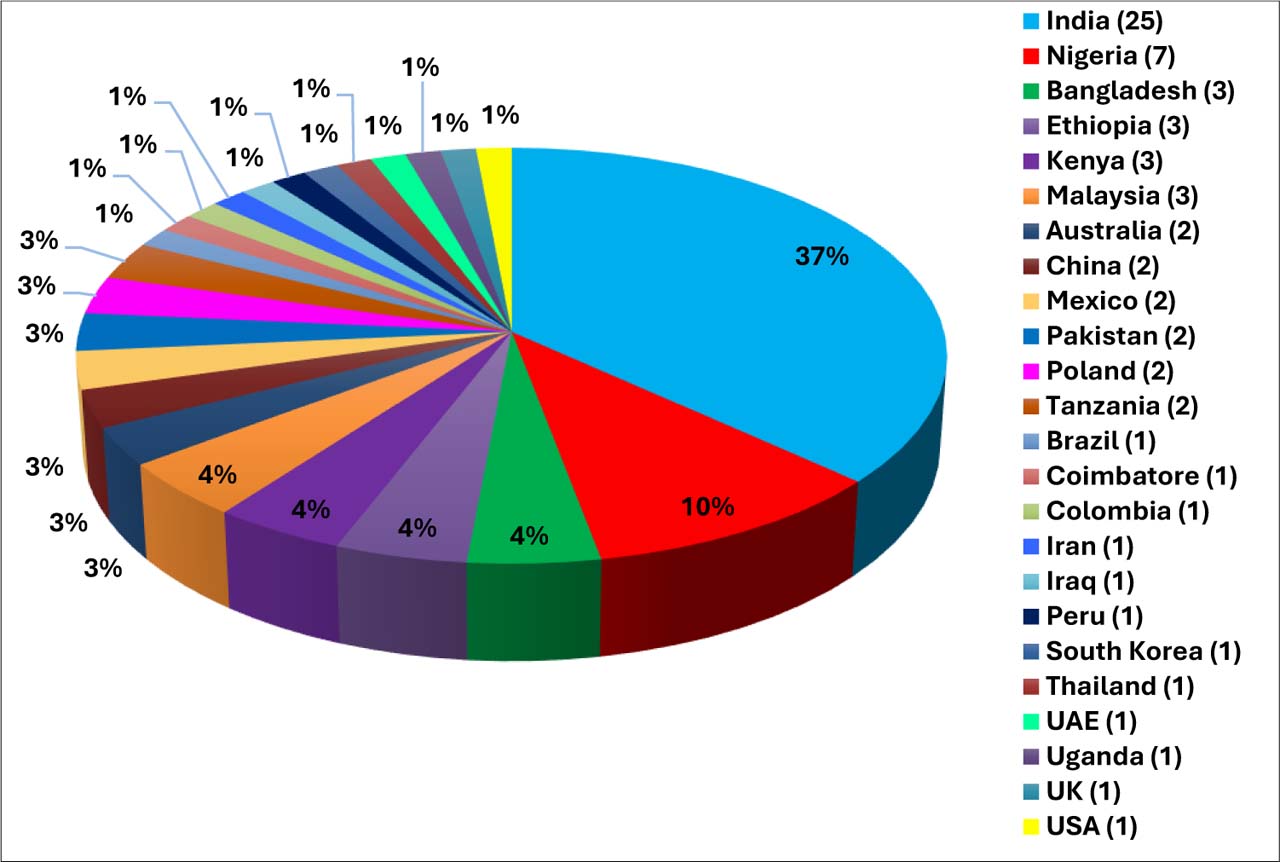
Figure 3:
Study distribution country-wise
The reviewed works were categorized into four main topics: physicochemical, mechanical, microstructural and durability/environmental, following the PRISMA-based classification.
Physical properties: Approximately 35% of the works (44 articles) dealt with physicochemical properties (plasticity index, compaction and swelling).
Mechanical performance, with a focus on the UCS, CBR, and shear strength, dominated in about 45% of all abovementioned studies (57 articles), which indicates the crucial role of increasing strength compared to other property improvements for SCBA-stabilized products.
Microstructural studies constituted roughly 15% of the research (19 articles), and SEM, XRD and FTIR were employed to elucidate the pozzolanic reactions and gel formation associated with the enhanced bonding between components and densification.
The other 5% (7 papers) focused on durability and environmental work, long-term strength development and reduction in carbon footprint relative to cementitious stabilizers.
Research trends on SCBA have developed in two stages in general. The first period (2009–2015) included experimental studies mostly focused on basic geotechnical properties, such as Atterberg limit, compaction behaviour and unconfined compressive strength (UCS). On the other hand, the succeeding era (2016–2025) saw a paradigm shift to multi-scale, mechanistic, and data-driven approaches using new technologies such as geopolymer technology, LC3 (Limestone Calcined Clay Cement) compounds, as well as nano-modification process (Marathe et al., 2024; Nangulama & Rimoy, 2025). Analytical methodologies have also been developed further over this time, ranging from traditional regression analysis and analysis of variance (ANOVA) through to more advanced tools such as Response Surface Methodology, mechanism-based modelling, or machine learning (ML)-based predictive models (Sorum et al., 2025). This evolution indicates a transformative step in the former from pure empirical-based studies to predictive-performative design strategies in SCBA-soil stabilization studies.
More than half of the reviewed studies were published in well-indexed international journals such as Construction and Building Materials, Transportation Geotechnics, Advances in Civil Engineering, Ain Shams Engineering Journal and Geomechanics and Geoengineering. This distribution highlights the growing concurrent interest amongst academia in sustainable methods of subgrade stabilization. Approximately 75% of the studies were predominantly based on laboratory testing, which concentrated mostly on short-term curing behaviour and strength gain. In contrast, only 15% used microstructural and/or mechanistic analysis to validate underlying mechanisms, while just 10% sought to extend their scope to field-scale based trials or longer-term durability studies. These findings underscore the urgency for increased applied and large-scale studies to further clarify the field performance and life cycle of SCBA-stabilized soils.
4. Influence of SCBA on Geotechnical Properties
This section is dedicated to addressing the influence of SCBA on geotechnical characteristics of subgrade soil, dealing with its effect on physicochemical, mechanical, microstructural and durability properties as well as general environmental concerns.
4.1. Physicochemical Properties
This section discusses the physicochemical response of SCBA-amended soils to understand the processes governing their engineering performance. The discussion is concerned with some changes in the plasticity, compaction and swelling, as well as some of the basic properties like specific gravity and particle size distribution. A consolidated summary of key outcomes from various studies on SCBA-based soil stabilization, emphasizing physicochemical properties, is presented in Table 1.
4.1.1. Consistency Limits/Index Properties
In the reviewed studies, the presence of SCBA influenced all index properties of fine-grained soils; however, the change in index properties varied depending on the original soil constituents and additional activators or additives. In most studies, a reduction of the liquid limit (LL) and plasticity index (PI) was observed, followed by a low or moderate increase of the plastic limit (PL). These parallel changes reflect a general decrease in soil plasticity and reduced activity of the clay minerals. For instance, Vengala et al. (2024) reported that the incorporation of 20% SCBA decreased the LL from 70.45 to 48.32%, and reduced the PI from 39.65 to 13.07%, but elevated the PL from 30.80% to 35.25%. Similarly, Yadav et al. (2017) observed a decrease in LL from 36.06% to 31.85% and PI from 12.36% to 5.88%, which was a reduction of an order of 52% with the addition of SCBA at the rate of 12.5%. Similar results were also reported by Azhar et al. (2025), Mohammed et al. (2024), Haque et al. (2024), and Chandak et al. (2025). They have suggested that these improvements are due to cation exchange and flocculation processes leading to clay particle agglomeration in the presence of calcium-silicate interaction.
Ezema et al. (2023) and Garg et al. (2021) reported that a mixed stabilization system with SCBA and additional materials such as plantain leaf ash (PLA) or ceramic waste powder (CWP) resulted in greater decreases in soil plasticity. Such improved behaviour was attributed to the calcium-rich nature of co-binders, improving the pozzolanic activity and generating C-S-H and C-A-H compounds. Similarly, Tseganeh & Quezon (2022) found that standalone 11% SCBA lowered their LL by 41.6%, their PI by 88.8%, while its combination with calcined termite clay powder (CTCP) further amplified these effects through synergistic pozzolanic reactions. Masued (2017) found similar results, with 9% decreases in LL and 5.7% plastics limit when up to 20% SCBA was added, whereas beyond this rate, a small increase was recorded because of un-reacted ash residue. Devi & Chore (2020) in a similar study showed that by adding SCBA of 70% with granulated blast furnace slag (GBFS) to marine clay, the LL was reduced from 80% to 47% and PI from 45 % to 20 and this testifies to silica-calcium synergy role in suppression of clay reactivity. Similarly, the addition of SCBA and GBFS in geopolymer mixes also exhibited a reduction in LL & PI, along with an increase in PL, which may be attributed to better microstructural bond development and compaction characteristics (Marathe et al., 2019, 2024).
However, few research studies have reported contrasting observations about the influence of SCBA on soil plasticity. Ahmed et al. (2024) and Barasa et al. (2015) observed that the total LL and PI should have increased with SCBA without cementitious strength development, given the landfill capacity constraints in some regions where the ground was too reactive to store volumes of surplus unreacted silica at high replacement levels (Figures 4(a) and (b)). Nevertheless, these negative effects were neutralized by the addition of lime or calcium-based activating agents, thus indicating that SCBA stabilization efficiency strongly depends on its chemical activation. According to Fig. 4(b), the study of Ahmed et al. (2024) revealed that lime-SBA/SCBA mixture significantly decreased PI values from about 54% to 76%, showing significant enhancement in plasticity property of soil. Similarly, Olowofoyeku et al. (2021) were approximately the same in both LL and PL, whereas the PI reduced from 21.7% to 16.8% indicating increased soil consistency, with inclusion of the SCBA. Other studies, such as Basack et al. (2021), Anupam et al. (2013), and Balanta et al. (2024), observed moderate declines in LL and PI, with diminishing returns beyond 10–15% SCBA content. Evidently, these observations indicate that SCBA has a beneficial effect on soil workability with a decrease in plasticity generally for moderate levels (7–15%) of addition or mixed with lime, molasses, GBFS or other alkaline activators. However, excessive dosages may have counterproductive effects, primarily due to the dilution of reactive components and incomplete pozzolanic bonding.
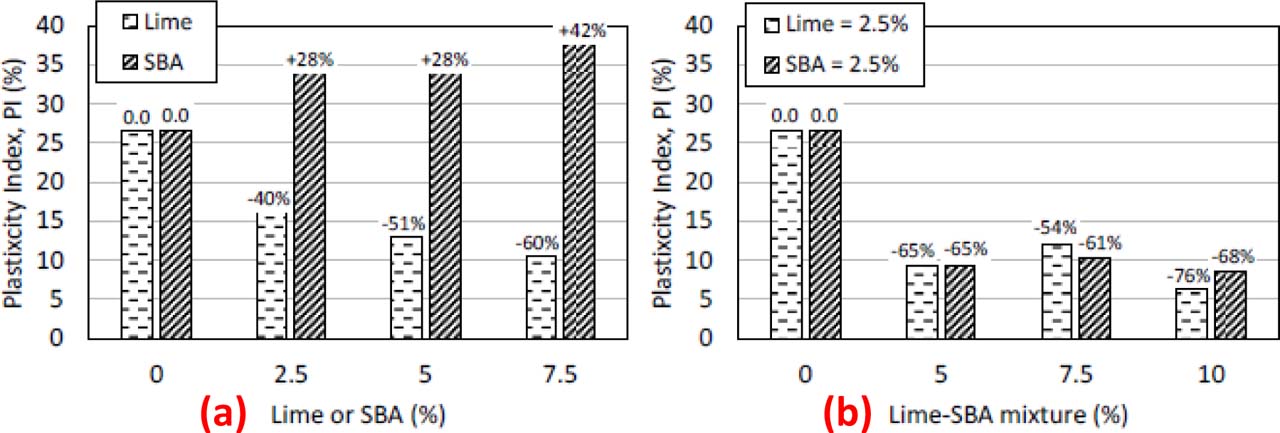
Figure 4:
Effect of (a) lime or SCBA and (b) the mixture of lime+SCBA on PI (Ahmed et al., 2024)
4.1.2. Compaction Characteristics
Generally, compaction behaviour of SCBA stabilized soils conformed to one of the two general trends, in which a rise in optimum moisture content (OMC) is associated with a fall in maximum dry density (MDD). These findings have been consistently observed in multiple studies (Anupam et al., 2013; Jethwa et al., 2023; Masued, 2017; Yadav et al., 2017). The main reason is that SCBA has low specific gravity and high-water absorption capacity compared to natural soil minerals. The specific surface area of the ash and its presence in a porous skeleton affect how much water will be needed for both lubricating between particles during compaction as well as sustaining hydration reactions that may occur with pozzolanic reactions, resulting in a lower dry density of the mixture. For instance, adding 30% SCBA enhanced the OMC from 21.9% to 34.5%, with a corresponding reduction in the MDD from 1.59 to 1.11 g/cc, which is approximately a value of about only 60% increment on the moisture need for that soil content (Masued, 2017). Yadav et al. (2017), Basack et al. (2021), and Tseganeh & Quezon (2022) presented similar findings and reported MDD decreases of 5–10% associated with an increase in OMC of 20–30%. Correspondingly, Vengala et al. (2024) found that the higher SCBA content resulted in high moisture demand and low compacted density, attributed to the good water-holding capacity of the ash as explained by its hydration-driven tendency.
Even though a general increase in the OMC and decrease in MDD can be generally observed in SCBA-stabilized soils, there are reports of non-monotonic responses depending on the dosages. This increase is present in almost all cases up to a certain optimal SCBA addition, after which soil density decreases upon further additions. Research conducted by Ewa & Ukpata (2021), Ewa et al. (2023), Ochepo (2014), Devi & Chore (2020), and Marathe et al. (2024) reported that for MDD value reached a peak with 10–15% SCBA contents, thereafter density decreased. The reason behind this was due to the dilution of reactive compounds and a reduction in interparticle bonding. The initial increase in density resulted from the effect of finer SCBA particles that fill the voids and improve packing tendency between particles through flocculation and aggregation mechanisms. Secondary stabilizers were found to enhance this effect. For instance, Chandak et al. (2025) noted that MDD of marble dust+SCBA composites decreased from 1.79 to 1.53 g/cm3 with up to 12% SCBA, and increased slightly to 1.61 g/cm3 at 14% because the densification resulting from the formation of cementitious gel is credited for such elevation.
Similar trends were noted by Ochepo (2014) on the lateritic soil+recycled asphalt pavement (RAP) blends, where MDD increased initially from 1.77 up to 1.82 g/cm3 at the 4% SCBA due to better-particle gradation and void filling before decreasing with increasing SCBA level. Analogous synergistic densification tendency was also proposed for fly ash- and GBFS-based geopolymer blends involving SCBA (Marathe et al., 2019, 2024) or even in composite binders such as ceramic waste powder (CWP) + SCBA (Gouda et al., 2024) and lime+SCBA (Ahmed et al., 2024), in which the role of C-S-H gel formation in improved compaction efficiency of the final matrix was identified.
4.1.3. Swelling Property
Studies carried out across different regions, such as India (Dang et al., 2021; Kishor, 2024; Kishor et al., 2022; Talekar & Joshi, 2022), Nigeria (Edeh et al., 2019; Ewa et al., 2023; Ezema et al., 2023), Ethiopia (Mohammed et al., 2024; Tseganeh & Quezon, 2022; Wubshet & Tadesse, 2014), Bangladesh (Haque et al., 2024), Kenya (Barasa et al., 2015; Moyo et al., 2024; Saidou et al., 2025), and Australia (Hasan et al., 2016), have shown that SCBA added alone or in combination with other agro-industrial by-products reduces the tendency of fine-grained and expansive soils to swell. Swelling reduction occurs through replacement of clay minerals by non-plastic ash, cation exchange (Na+ → Ca2+), and formation of cementitious, C-S-H and sodium aluminosilicate hydrate (N-A-S-H), gels that bind soil particles and limit water ingress (Garg et al., 2021; Tseganeh & Quezon, 2022). Figure 5 shows the relationship between SCBA content and swelling reduction. Research shows that SCBA can reduce free swell ratio (FSR), free swell index (FSI), and expansion ratio (ER) by more than 60%, while blended systems incorporating lime, GBFS, or ceramic waste powder (CWP) achieve even greater reductions, reaching up to 97% in some cases, as shown in Figure 5: 9% SCBA content used in Tseganeh & Quezon (2022) study; 10% from Gouda et al. (2024); 15% from Garg et al. (2021); 20% from Moyo et al. (2024); and 30% from Kishor et al. (2022). Conversely, Barasa et al. (2015) and Mohammed et al. (2024) found that the use of SCBA solely induced a moderate decrease in the soil swelling. But the soils with SCBA added along with lime or some other calcium-containing stabilizing agents showed hardly any heave. Overall, SCBA is an excellent stabilizer for expansive soils, particularly if chemically activated or mixed with industrial by-products.
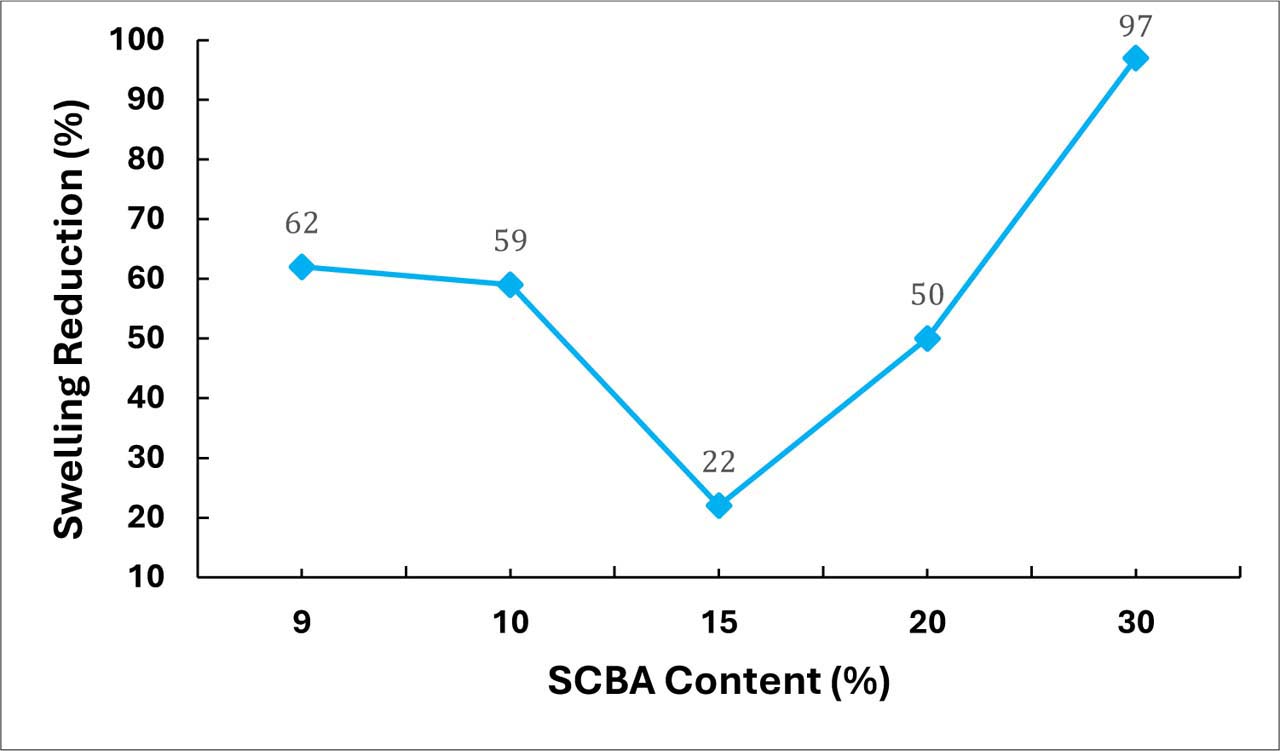
Figure 5:
Relationship between SCBA content and swelling reduction
4.1.4. Other Physicochemical Properties (Specific Gravity and Gradation)
Many studies have also considered additional physical parameters, like specific gravity, particle gradation and textural composition, to obtain a better understanding of the overall physicochemical performance of SCBA-stabilized soils. The decrease in specific gravity of the soil+ash mixtures has been observed by most studies, and is mainly due to the lightweight and porous characteristics of SCBA particles. For instance, Masued (2017) recorded a decline in specific gravity from 2.7 to 2.5, while Edeh et al. (2019) observed a more significant reduction from 2.35 to 1.52 when SCBA replaced the denser RAP aggregates. These observations are consistent with previous decreases in MDD and support the description of SCBA as a low-density stabilizer. In contrast, the addition of SCBA with higher specific gravity materials, such as GBFS (Devi & Chore, 2020) or marble dust (Niraj & Sharma, 2023), developed a more dense composite with better particle gradation. This enhancement was explained by the compensating role of denser and more angular filler particles. Similar improvements were observed in RAP+SCBA blends where fine ash particles filled voids between the coarse material grains, promoting interparticle contact and reducing porosity.
Table 1:
Summary of SCBA-stabilization studies based on physicochemical properties
| Reference & Journal | Soil type | Role as | Properties | Key finding |
|---|---|---|---|---|
| Osinubi et al. (2009), Nigeria, CP | CL | Principal stabilizer (SCBA alone) | OMC, MDD | SCBA content reduced the soil's MDD and fine fractions while increasing the OMC. |
| Anupam et al. (2013), India, PSBS | CL | Principal stabilizer | OMC, MDD, PI | An increase in BA content resulted in higher OMC and lower MDD, while PI decreased. |
| Ochepo (2014), Nigeria, JER | CL | Enhancer (SCBA + RAP) | OMC, MDD | In the Soil+RAP mixture, MDD improved with SCBA addition up to 4%, beyond which it declined as OMC continued to increase. |
| Wubshet & Tadesse (2014), Ethiopia, JoE | CH | Enhancer (SCBA + lime) | PI, OMC, MDD | The PI declined from 78.1% to 32.5% in uncured specimens and to 31.6% after 7 days of curing with 3% lime and 15% SCBA. This combination resulted in a more pronounced decrease in MDD than when SCBA was used individually. |
| Barasa et al. (2015), Kenya, IISTE | CH | Enhancer (SCBA + Lime) | PI | Increasing the proportions and ratio of lime and SCBA in the mixtures led to a consistent reduction in the PI of the stabilized clay. |
| Hasan et al. (2016), Australia, CP | CH | Enhancer (SCBA + Hydrated lime) | Free swell ratio (FSR) | The FSR progressively decreased as the SCBA content increased from 0% to 25%. |
| Masued (2017), Iraq, JESD | CH | Principal stabilizer | LL, PL, OMC, MDD | At a 30% SCBA replacement level, the OMC rose significantly from 21.9% to 34.5% (an increase of about 57.6%) while the MDD declined from 1.59 to 1.11 g/cm3, representing a 30.2% reduction. In parallel, the LL, PL, and PI decreased by 4.9%, 2%, and 2.9%, respectively, indicating improved workability and reduced soil plasticity. |
| Yadav et al. (2017), India, IJPRT | CI | Principal stabilizer | PI | An increase in SCBA content from 2.5% to 12.5% led to a progressive decline in PI, reducing the soil’s plasticity by approximately 16.8% to 50%. |
| Edeh et al. (2019), Nigeria, IJPE | SP | Enhancer (SCBA + RAP) | OMC, MDD | Higher percentages of SCBA resulted in a higher OMC and a lower MDD. |
| Marathe et al. (2019), Poland, SGM | MH | Enhancer (SCBA + GGBS) | MDD | Maximum MDD was obtained at 15% SCBA and 10% GGBS with the geopolymer solution, yielding an 18% improvement over untreated mixes. |
| Devi & Chore (2020), India, MTP | CH | Enhancer (SCBA+ GBFS) | OMC, MDD | For the mix containing 60% BA and 40% GBFS, the MDD increased from 7.27 kN/m3 at 54% OMC to 10.12 kN/m3 at 43% OMC. |
| Hidalgo et al. (2020), Peru, CP | CL | Enhancer (SCBA+ RHA) | PI, MDD | As SCBA content increased from 0% to 10%, the PI declined from 11.94 to 6.23. The optimum mix, comprising 5% SCBA and 5% RHA, yielded the maximum MDD of 12.78%. |
| Basack et al. (2021), India, CEJ | CL | Enhancer (SCBA + Stone dust) | OMC, MDD | As the BA content increased from 2% to 10%, the OMC rose from 1.12 to 1.47, while the MDD decreased nearly linearly from 0.99 to 0.95. |
| Dang et al. (2021), South Korea, TG | CH | Enhancer (SCBA+ lime) | MDD, swelling potential | A reduction in MDD was accompanied by a significant decrease in swell potential, falling below 1% at 25% SCBA and below 0.5% with the SCBA+lime combination |
| Ewa & Ukpata (2021), Nigeria, JSET | CL | Principal stabilizer | LL, PL, PI, OMC, MDD | At 10% SCBA, soil plasticity decreased, MDD rose by 5.2% to 1.80 g/cm3, and OMC dropped by 4.9%. |
| Garg et al. (2021), India, BC | CH | Enhancer (SCBA + glass fiber (GF) + ceramic dust (CD)) | FSR, LL | An increase in SCBA content led to a marked decline in FSR, with a 22% reduction observed at 15% SBA. The optimum blend of 3% GF, 10% CD, and 15% SCBA further reduced LL. |
| Islam & Alam (2021), Bangladesh, CP | CL | Principal stabilizer | OMC, MDD | The initial OMC of 13.8% increased to 15.2% with up to 11% SCBA addition, while the MDD decreased to 1.862 g/cm3. |
| Jethwa et al. (2023), India, CP | CH | Principal stabilizer | OMC, MDD | The addition of 8% SCBA lowered the MDD from 1.5 g/cc to 1.4 g/cc (a 6.67% reduction) and increased the OMC from 19.5% to 23.6% (a 17.37% rise). |
| Kishor et al. (2022), India, IJPRT | CH | Enhancer (SCBA+ RHA + LAA | FSI (Free Swell Index) | The lowest FSI occurred in the 70% clay soil+30% (RHA + SCBA) mix with LAA, recording 97.92% and 93.27% reductions after 28 days of curing relative to the untreated clay soil. |
| Olowofoyeku et al. (2021), Nigeria, BC | SP | Principal stabilizer | LL, PL, PI OMC, MDD | Rising SCSA content increased the LL and PL but reduced the PI. Between 0% and 12% SCSA, OMC rose from 15.64% to 27.49%, and MDD declined from 1.46 to 1.23 g/cm3. |
| T. Sharma & Singh (2021), India, CP | CI | Enhancer (SCBA + Cement) | OMC, MDD | An MDD of 1.81 g/cc at an OMC of 11% was attained when the soil was stabilized with 6% cement and 2% SCBA. |
| Teddy et al. (2021), Uganda, JET | CH | Enhancer (SCBA + Lime) | PI, OMC, MDD | MDD progressively declined with increasing lime and SCBA, from 1.87 g/cm3 to about 1.58 g/cm3. The optimum mix containing 6% SCBA yielded an OMC of 1.7 g/cm3 and a PI of 20%. |
| Talekar & Joshi (2022), India, CP | CH | Principal stabilizer | MDD | The MDD increased by 5.7% at 6% SCBA content. |
| Tseganeh & Quezon (2022), Ethiopia, ACE | MH & OH | Enhancer (SCBA + CTCP) | FSI, PI | A blend containing 9% BA and 20% CTCP resulted in a 72.5% reduction in free swell index and an 85.75% decrease in PI. |
| Ewa et al. (2023), Nigeria, STE | CL | Enhancer (SCBA + LSD) | LL, PL, PI, OMC, MDD | Both stabilizers enhanced the soil’s MDD up to 15% SCBA, after which a decline was observed, while consistently reducing plasticity. |
| Ezema et al. (2023), Nigeria, NJT | CH | Enhancer (SCBA + PLA) | LL, PL, PI | Incorporating 3% BA with 7% PLA reduced the LL, PL, and PI from 47.0%, 32.0%, and 15.0% to 36.0%, 26.0%, and 10.0%, respectively. |
| Niraj & Sharma (2023), India, MTP | CI | Enhancer (SCBA + Marble dust) | OMC, MDD | The soil mix containing SCBA and marble dust reached its peak dry density of 1.53 g/cc at 12% bagasse ash, accompanied by an OMC increase to 26%. |
| Pradeep & Mayakrishnan (2023a), India, IJGGE | CH | Enhancer (SCBA + Lime) | PI, FSI | At 20% BA, the PI reduced from 45% to 27.5% and to 4% with 10% lime, while the FSI dropped from 130% to 70%, showing further improvement with 5% lime addition. |
| Ahmed et al. (2024), Pakistan, GS | MH | Enhancer (SCBA + lime) | LL, PL, PI | At 7.5% SCBA, the liquid limit rose by 28%, and with 2.5% lime + 7.5% SCBA, the plastic limit increased by 40%. The addition of 7.5% SCBA alone resulted in a 42% increase in PI. |
| Balanta et al. (2024), Colombia, IS | CH | Principal stabilizer | LL, PL, PI, OMC, MDD | SCBA incorporation significantly reduced soil plasticity beyond 15% content and caused a general decline in MDD. |
| Gouda et al. (2024), India, CP | CH | Enhancer (SCBA + CWP) | PI, FSI, OMC | Maximum reductions in PI, Free Swell Index, and OMC were achieved at 7.5% SBA and 15% CWP. |
| Haque et al., (2024), Bangladesh, BAUET | CL | Principal stabilizer | PI, MDD | SCBA incorporation lowered the Plasticity Index while enhancing MDD, with the peak value obtained at 15% SCBA content. |
| Kishor (2024), India, ST | CH | Enhancer (SCBA + LAA) | Expansion ratio (ER) | Clay soil treated with 30% SCBA and optimum LAA for 28 days showed an approximate 0.5% decrease in ER. |
| Marathe et al. (2024), Poland, JSDCP | SP-SM | Enhancer (SCBA + GGBS) | MDD | The lateritic soil achieved peak MDD at 10% SCBA and 10% GGBS with an alkaline activator, yielding a 9.2% improvement compared to untreated mixes. |
| Mohammed et al. (2024), Ethiopia, ACE | CH | Principal stabilizer | PI, MDD | With 4% SCBA, the PI decreased from 70.81% to 56.16% (Sample A) and from 61.72% to 46.38% (Sample B). MDD rose slightly to 1.48 g/cc and 1.45 g/cc, respectively, but declined at higher SCBA contents. |
| Moyo et al. (2024), Kenya, IJETT | CH | Enhancer (SCBA + Molasses) | LL, PI | With increasing SCBA content, the LL rose from 44.51% to 48.10% (0–10% SCBA) and the PL from 27.32% to 33.86% (0–20% SCBA). |
| Shah et al. (2025), India, GG | CH | Enhancer (SCBA + GGBS) | OMC, MDD | The addition of binders increased the MDD compared to the untreated soil, attaining the highest value at 21% SCBA and 9% GGBS, accompanied by a reduction in OMC. |
| Vengala et al. (2024), India, ACE | CH | Enhancer (SCBA + Lime) | OMC, MDD | The blend of 8% SCBA and 12% lime resulted in the most significant enhancements in MDD and OMC. |
| Zamora et al. (2024), Peru, CP | MH | Principal stabilizer | PI | The addition of SCBA reduced both the fines content and the plasticity of the soil. |
| Azhar et al. (2025), Pakistan, ASEJ | CH | Principal stabilizer | OMC, MDD | A 7.4% decline in MDD and a 17% rise in OMC imply a threshold effect beyond 6% SCBA content. |
| Chandak et al. (2025), India, BC | CH | Principal stabilizer | PI | The PI decreased with increasing ash content (2.5%–15%) when clay soil was partially replaced with ash. |
| Saidou et al. (2025), Kanya, ETASR | CH | Enhancer (SCBA + CKD) | FSI, PI | A notable improvement was observed with the CKD+SCBA composite, which lowered the FSI from 86% to 45% and the plasticity index from 26.18% to 15.26%. |
| R. Sharma & Malik (2025), India, BC | MH | Principal stabilizer | FSI, OMC, MDD | Increasing SCBA from 5% to 20% reduced the differential free swell from 25.4% to 3.41% and raised the OMC from 18.6% to 24.2%, while the MDD dropped from 1.649 to 1.486 g/cc. |
| Shukla & Sharma (2025), India, EJECE | CH | Enhancer (SCBA + fly ash) | LL, PI | Incorporating SCBA into the clay soil markedly lowered the LL and PI. |
[i] Note:-CP: Conference Proceedings, PSBS: Procedia Social and Behavioural Sciences, JER: Journal of Engineering Research, JoE: Journal of EEA, IISTE: International Institute for Science Technology and Education, JESD: Journal of Engineering and Sustainable Development, IJPRT: International Journal of Pavement Research and Technology, IJPE: International Journal of Pavement Engineering, SGM: Studia Geotechnica et Mechanica, MTP: Materials Today: Proceedings, CEJ: Civil Engineering Journal, TG: Transportation Geotechnics, JSET: Journal of Science, Engineering and Technology, BC: Book Chapter, JET: Journal of Engineering Technology, ACE: Advances in Civil Engineering, STE: Sustainable Technology and Entrepreneurship, NJT: Nigerian Journal of Technology, IJGGE: International Journal of Geosynthetics and Ground Engineering, GS: Geoscience, IS: Ingeniería Solidaria, BAUET: Bangladesh Army University of Engineering & Technology, ST: Sugar Tech, JSDCP: Journal of Structural Design and Construction Practice, IJETT: International Journal of Engineering Trends and Technology, GG: Geomechanics and Geoengineering, ASEJ: Ain Shams Engineering Journal, ETASR: Engineering, Technology & Applied Science Research, EJECE: European Journal of Environmental and Civil Engineering;
4.2. Mechanical Properties
This section assesses the mechanical performance of the SCBA-treated soils for pavement and geotechnical applications. Essential strength parameters, including UCS, CBR and shear strength, that overall indicate the improvements on bearing capacity, stiffness and general structural soundness due to SCBA stabilization are discussed. A summary of previous studies of the mechanical properties of SCBA-stabilized soils can be seen in Table 2.
4.2.1. Unconfined Compressive Strength
Studies exploring the effect of SCBA on UCS have also focused on expansive clays (Dang et al., 2021; Saidou et al., 2025; Shukla & Sharma, 2025), lateritic soils, and organic or peat soils (Edeh et al., 2019; Nor et al., 2021; Talib & Noriyuki, 2017) using various curing periods and stabilizer mixtures. Most studies demonstrate that the addition of SCBA significantly increases UCS, generally increasing to a maximum of 4–12% SCBA for single isolations and 8–10% in combination with 4–6% lime in blended systems. The observed strength increase, ultimately, varied from 100% to 350%, but in some lime or cement-activated types, this figure was significantly raised, even to a level of between 400 and 900 % (Hasan et al., 2016; Pradeep & Mayakrishnan, 2023b; Vengala et al., 2024). Figure 6(a-c) shows the UCS of stabilized two types of soil with different percentages of SCBA and curing time (Mohammed et al., 2024). According to Figures 6(a) and 6(b), the peak value of UCS appeared with 4% SCBA, indicating it as the best dosage of mixing for soil treatment. Figure 6(c) also shows that the UCS gradually rose with longer age, achieving the peak value at an age of 28 days.
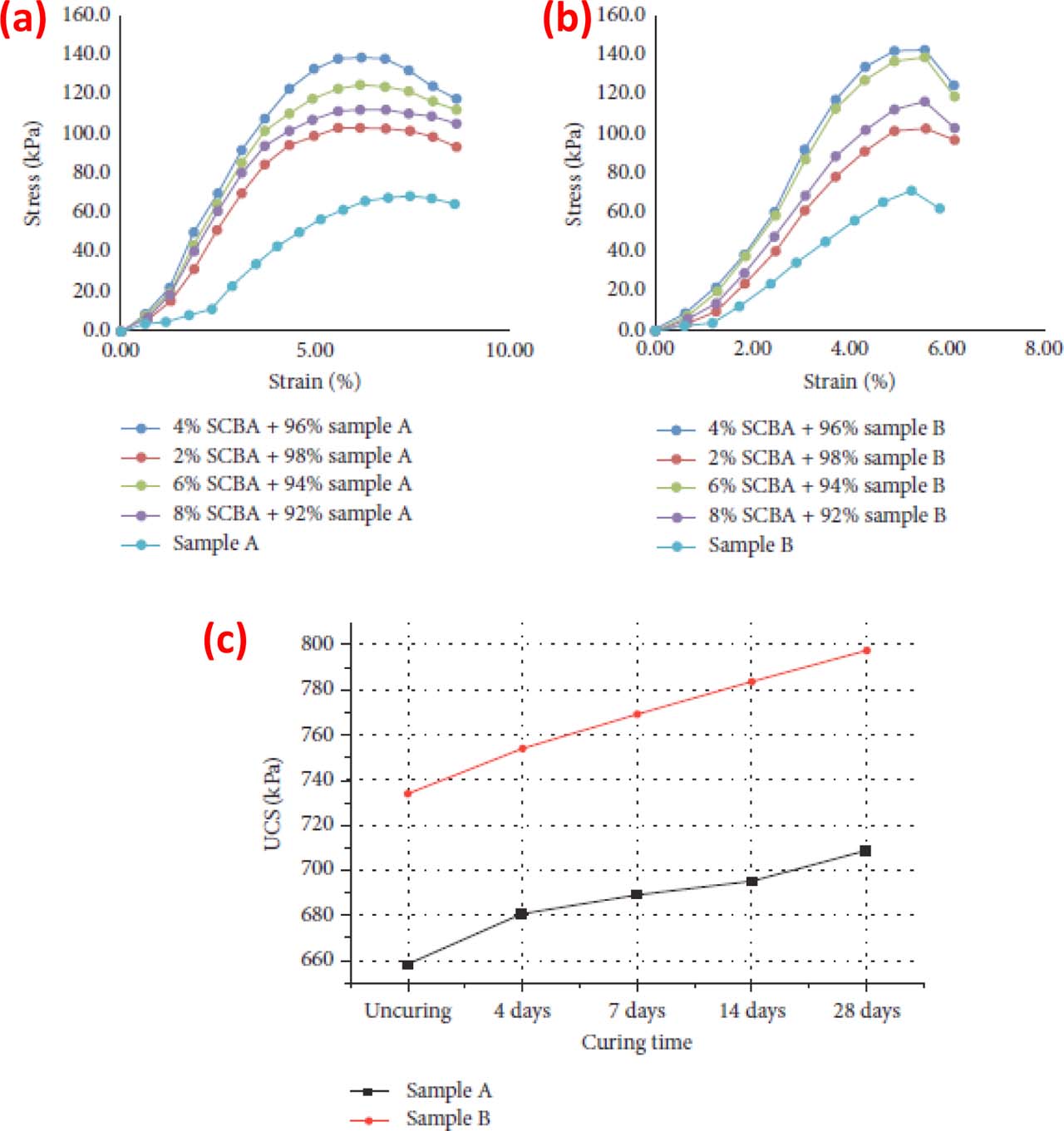
Figure 6:
Stress-strain curve (a) sample A, (b) sample B, and (c) Effect of cuing periods of UCS (Mohammed et al., 2024)
For expansive clays, 8% SCBA typically produced UCS values between 450–550 kPa (Barasa et al., 2015; Shukla & Sharma, 2025; Teddy et al., 2021), whereas lime+SCBA mixtures yielded 900–1000 kPa after 28 days of curing (Dang et al., 2021; Saidou et al., 2025; Tseganeh & Quezon, 2022). Additional performance improvements were observed in composite systems, such as SCBA+CKD (Shah et al., 2025), SCBA+nano-silica (Marathe et al., 2024), and SCBA+glass powder (Haque et al., 2024), where increases of 200–250% were linked to intensified pozzolanic activity and matrix densification through the formation of C-S-H and C-A-H gels. Notably, high-performing combinations, like 10% SCBA+5% CKD and 8% SCBA+1% nano-silica, achieved UCS levels of 600–900 kPa, comparable to conventional lime-treated soils (Marathe et al., 2024; Shah et al., 2025). Some moderate increments of strength were found in sandy and silty soils, reflecting the range from 50% to 100% (Sorum et al., 2025; Zamora et al., 2024). On the other hand, significant improvement in strength was realized on Peat and very high organic soil samples when SCBA was partially used as cement replacement, with strength increasing by 17 to 30 times (Nor et al., 2021; Talib & Noriyuki, 2017). Most studies showed a two-stage development of strength, an immediate increase during the first 7–14 curing days, followed by slower but steady strengthening until 28 days, which corresponds to the prolonging process of pozzolanic ones. However, if SCBA exceeded its optimum value, UCS tended to decrease. This decrement was due to the non-bonded ash particles, which weaken interparticle bonding and reduce compaction efficiency (Barasa et al., 2015; Teddy et al., 2021).
4.2.2. California Bearing Ratio (CBR)
Almost all investigated studies demonstrated that the inclusion of SCBA greatly improves the CBR for different kinds of soil, as shown in Figure 7. Reported enhancements were mostly in the range of 100–500% for soils modified with SCBA only (Barasa et al., 2015; Harun-Or-Rashid et al., 2019; Shukla & Sharma, 2025; Teddy et al., 2021). Larger improvements, normally ranging from 500% to 2000%, were also reported for mixtures activated with lime, cement or slag (Dang et al., 2016; Hasan et al., 2016; Saidou et al., 2025). A gradual trend was observed for CBR values to increase with SCBA content up to approximately 6–10% followed by a reduction as higher quantities of material were added, probably because of the decrease in compaction efficiency and incomplete pozzolanic reactions. For example, expansive clays stabilized with 8% SCBA developed soaked CBR values of between 8 and 12%, which was about five times the improvement as compared to untreated soils (Edeh et al., 2019; Shukla & Sharma, 2025; Teddy et al., 2021). For SCBA+lime mix, best performing blends at 8% SCBA + 4% lime were observed to have soaked CBR values of 13–15% (Dang et al., 2021; Tseganeh & Quezon, 2022). Significant increases were also observed by Hasan et al. (2016) and Dang et al. (2016).
Strength improvements in hybrid stabilisation systems using additives like CKD/nano-silica/waste glass powder increased the soaked CBR by 5–9 times (Haque et al., 2024; Marathe et al., 2024; Shah et al., 2025; Sorum et al., 2025). Research using mixtures of agricultural ashes confirmed these results. 7.5% SCBA and 10% cow dung ash mixture increased CBR from 1.8 to 5.6%, an increase of over 300% (Chandak et al., 2025; Ezema et al., 2023; Yadav et al., 2017). With the sandy and silty soil types, moderate enhancements of approximately 120% were observed at higher SCBA additions (15–20%) (Balanta et al., 2024; Zamora et al., 2024). For SCBA used in partial substitution of cement (20–30%), CBR values were kept or slightly improved and were around 60–70% compared with those for the cement control mixtures (Gallego-Quintana et al., 2023; Ojeda-Farías et al., 2020). Remarkably, in highly advanced geopolymer compositions, the CBR values increased from 2.4% to 86.4% (36 times), which showed excellent long-term stability and durability (Marathe et al., 2019). The common mechanisms associated with this strength gain are the pozzolanic reaction, the better compaction of particles and densification of matrix.
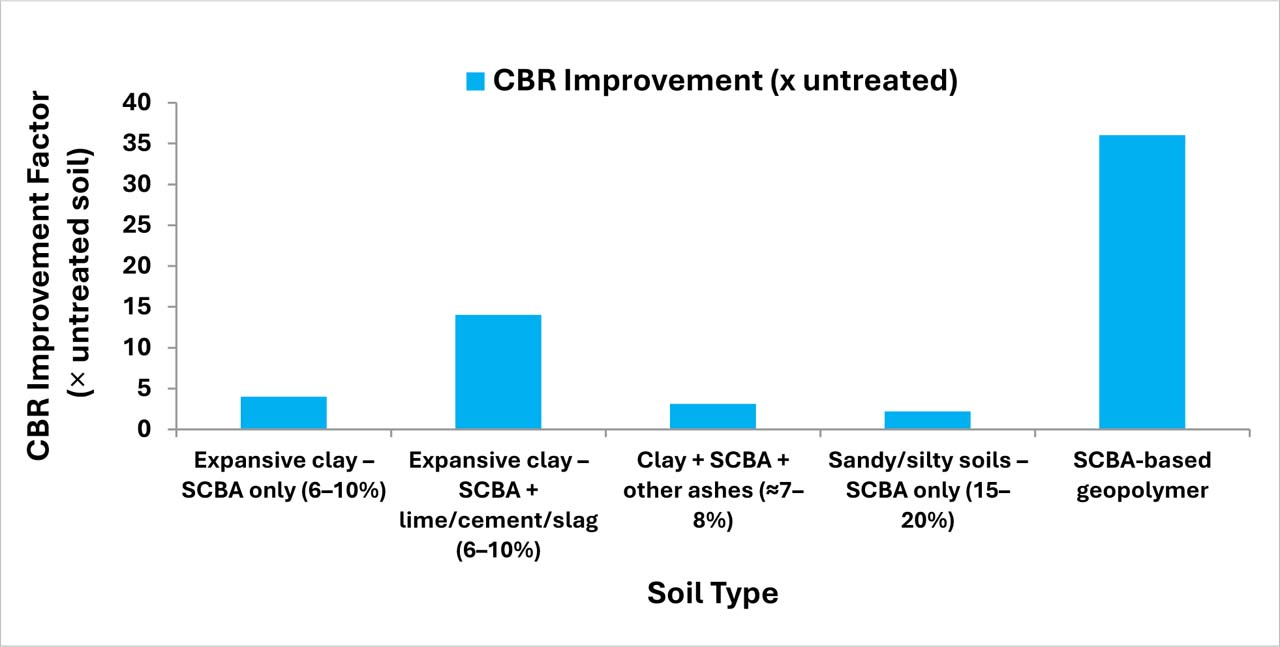
Figure 7:
Relationship between soil type and CBR Improvement for SCBA-stabilized mixtures
4.2.3. Shear Strength
A handful of studies have specifically looked at SCBA effects on shear strength, and all have generally reported significant increases in cohesion along with the internal friction angle (Dang et al., 2021; Ewa et al., 2023; Ewa & Ukpata, 2021; Saidou et al., 2025; Tseganeh & Quezon, 2022). Enhancements of cohesion were generally between 60% and 130%, on average, with the internal friction angle rising by 50–90% to indicate an overall change from the dominating cohesive behaviour into more frictional-cohesive behaviour. For instance, the maximum of both under-consolidated (18–38 kPa) and cohesive untreated soils was between 70–90 kPa when stabilized with SCBA+lime blends, while that of the internal angle was increased from 7 to 9°, reaching a value between 15 and 16°. These findings are attributed to increased interparticle connectivity, surface roughness and shear strength in general (Saidou et al., 2025; Tseganeh & Quezon, 2022).
Moderate increases in cohesion (20–30%) were recorded for stabilized soils with 8–10 % SCBA. However, in combination with calcium-rich materials like lime, limestone dust or CKD, the enhancements were much higher because of the higher pozzolanicity from the extra calcium content (Ewa et al., 2023; Shah et al., 2025). Microstructural tests through Scanning Electron Microscopy (SEM) substantiated that these blended systems developed denser partially interlocked particle assembly that minimize the spaces and increase shear resistance (James & Pandian, 2018; Krishnan et al., 2022). Soil stiffness was also raised with the moduli increasing up to 156% thus enhancing the obtained shear strength (Ewa et al., 2023). In addition, SCBA+lime blends provided resistance against the strength loss that prevailed upon soaking than lime-only stabilization due to SCBA contribution to a durable cementitious skeleton by persistent pozzolanic activities. Reduced brittleness and swelling have also been reported, suggesting enhanced ductility and deformation tolerance (Dang et al., 2016; Hasan et al., 2016). The key processes responsible for such improvements are said to be flocculation and agglomeration of clay particles, cation exchange (especially the substitution of Ca2+), production of cementitious compounds (e.g., C-S-H) and C-A-H.
In general, the investigated studies unambiguously demonstrate that the addition of SCBA imparts a considerable enhancement on the mechanical properties of soils, particularly in UCS, CBR and shear strength. These improved results are due to mechanisms such as pozzolanic gels forming, densification of the matrix and improvement in resistance to moisture penetration. A complete comparative summary of the mechanical properties (UCS, CBR and shear strength) of SCBA-treated soils is shown in Table 3. Generally, optimum performance was recorded at 6–10% SCBA application rates alone and with 8–10% SCBA either supplemented or replaced by 4–6% lime under blended systems. Above these optimum levels, the excessive SCBA retarded reactivity, which resulted in reduced strength as a result of unreacted ash particles. Mixes including the addition of lime, CKD, nano-silica or GBFS were found to consistently have higher strength, stiffness and durability.
Table 2:
Summary of SCBA studies based on mechanical properties
| Reference and Journal | Soil type | Role as | Properties | Key finding |
|---|---|---|---|---|
| Osinubi et al. (2009), Nigeria, CP | CL | Principal stabilizer | CBR, UCS | 2% SCBA treatment achieved 7-day UCS and CBR values of 836 kN/m2 and 16%, both below the required thresholds (1,700 kN/m2 and 180%). |
| Anupam et al. (2013), India, PSBS | CL | Principal stabilizer | CBR | CBR increased progressively up to 25% SCBA content, after which it decreased with further addition. |
| (Ochepo (2014), Nigeria, JER | CL | Enhancer (SCBA + RAP) | CBR | 10% SCBA treatment of the soil-RAP mixture exhibited 82% CBR peak. |
| Rajakumar & Meenambal (2016), India, CP | CH | Enhancer (SCBA + CA, GSA) | CBR, UCS | Optimal strength was achieved with 16% CA + 16% SCBA and 16% SCBA + 16% GSA combinations, giving the highest UCS and CBR values. |
| Wubshet & Tadesse (2014), Ethiopia, JoE | CH | Enhancer (SCBA + lime) | CBR | After 7 days of air curing, CBR increased from 0.91% in untreated soil to 1.78% with 15% SCBA, and further to 32.9% with 3% lime + 15% SCBA. |
| Barasa et al. (2015), Kenya, IISTE | CH | Enhancer (SCBA + lime) | CBR | An optimal lime-SCBA (4:1) produced a CBR value of 36%, satisfying the required standard. |
| Sabat (2012), India, EJGC | CH | Enhancer (SCBA+ lime sludge) | CBR, UCS | Adding 16% lime sludge with 8% SCBA raised the soaked CBR to 6.1% (a 208% increase) and improved UCS to 117 kN/m2 |
| Dang et al. (2016), Australia, IJG | CH | Enhancer (SCBA + Hydrated lime) | CBR | Soaked CBR with 25% lime-bagasse ash mix was 23% higher than unsoaked, with greater gains beyond 10% additive content. |
| Hasan et al. (2016), Australia, CP | CH | Enhancer (SCBA + Hydrated lime) | CBR, UCS | UCS with 25% SCBA was 3.2 times higher than untreated soil and rose to 8× after 28 days; SCBA+lime addition markedly improved unsoaked CBR at 7 and 28 days. |
| Talib & Noriyuki (2017), Malaysia, CP | Peat soil | Enhancer (SCBA + OPC) | UCS | The highest UCS of 387 kPa was obtained with an 80% OPC: 20% SCBA blend, nearly 30 times greater than untreated peat and about 1.2 times higher than OPC alone. |
| Edeh et al. (2019), Nigeria, IJPE | SP | Enhancer (SCBA+ RAP) | CBR | The 50% RAP + 50% SCBA mix achieved maximum CBR values of 28% (unsoaked) and 14% (soaked, 24 hours). |
| Jamsawang et al. (2017), Thailand, CBM | CH | Enhancer (SCBA+ OPC) | UCS | The 80% OPC + 20% SCBA mix achieved the highest compressive strengths of 1.435 MPa, 2.011 MPa, and 2.533 MPa at 28, 90, and 120 days of curing, respectively. |
| Yadav et al. (2017), India, IJPRT | CI | Principal stabilizer | CBR, UCS | The optimum mix of 92.5% soil and 7.5% SCBA yielded a 79.8% increase in soaked CBR and a 27% rise in UCS compared to untreated soil. |
| James & Pandian (2018), India, ACE | CH | Enhancer (SCBA + Lime) | UCS | Peak UCS (2.2 MPa) was achieved at 7% Lime + 0.5% SCBA. |
| Ojeda-Farías et al. (2020), Mexico, RA | SP | Enhancer (SCBA + CPC) | CBR, UCS | Replacing 25% of cement with SCBA yielded optimal performance, achieving comparable CBR and UCS to a 100% cement mix while reducing CPC usage by approximately 25%. |
| Marathe et al. (2019), Poland, SGM | MH | Enhancer (SCBA + GBFS) | CBR, UCS | Adding 10% GGBS-based geopolymer with 15% SCBA to virgin soil increased CBR by 35.9 times and UCS by 5.47 times. |
| Harun-Or-Rashid et al. (2019), India, AJCE | CH | Principal stabilizer | CBR | CBR increased by 13.9% with up to 10% SCBA but declined to 13.4% at 12.5% SCBA. |
| Devi & Chore (2020), India, MTP | CH | Enhancer (SCBA + GBFS) | USC | The 60% BA + 40% GBFS mix delivered optimal performance, achieving a maximum UCS of 78.69 kN/m2. |
| Hidalgo et al. (2020), Peru, CP | CL | Enhancer (SCBA+ RHA) | CBR | The 5% SCBA + 5% RHA mix achieved the highest CBR value of 33.75%, showing the best performance among all samples. |
| Basack et al. (2021), India, CEJ | CL | Principal stabilizer | CBR | SCBA addition increased CBR by up to 120% (unsoaked) and 225% (soaked) compared to untreated soil. |
| Dang et al. (2021), Korea, TG | CH | Enhancer (SCBA + Lime) | CBR, UCS | Increasing additive content in the SCBA+lime mix enhanced compressive strength by 815% and CBR by 9.2 times. |
| Ewa & Ukpata (2021), Nigeria, JSET | CL | Principal stabilizer | Shear strength | Shear strength increased with SCBA content, peaking at 64.93 kN/m2 with 10% SCBA. |
| Garg et al. (2021), India, BC | CH | Enhancer (SCBA + GF + CD) | CBR, UCS | CBR increased up to 10% SCBA before declining in binary blends, while the highest UCS was obtained in the mix containing GF with SBA and CD. |
| Islam & Alam (2021), Bangladesh, CP | CL | Principal stabilizer | CBR | CBR rose from 6.47% to 13.85% with 9% SCBA, then slightly decreased to 13.28% at 11% SCBA. |
| Jethwa et al. (2023), India, CP | CH | Principal stabilizer | CBR | CBR increased from 1.4% (natural soil) to 11.2% with 8% SCBA, an 87.5% improvement. |
| Kishor et al. (2022), India, IJPRT | CH | Enhancer (SCBA+ RHA, LAA) | CBR, UCS | At 75–80% expansive soil with 20% SCBA and LAA, soaked CBR increased by 3397% and UCS by 143% after 28 days, marking the optimum mix. |
| Nor et al. (2021), Malaysia, JSUE | Peat soil | Enhancer (SCBA + Cement) | UCS | A 5% cement replacement with SCBA gave the optimum mix, reaching UCS values of 185, 233, and 278 kN/m2 at 7, 14, and 28 days, respectively. |
| Olowofoyeku et al. (2021), Nigeria, CP | SW | Principal stabilizer | Shear strength | Shear strength increased with SCBA up to 8%, but higher additions (10–12%) caused a decline, giving 173.12 and 225.42 kN/m2, respectively. |
| Teddy et al. (2021), Uganda, JET | CH | Enhancer (SCBA+Lime) | CBR | The CBR rose from 12% in unstabilized soil to 48% with the addition of 5% lime and 6% SCBA replacement. |
| Krishnan et al. (2022), India, BC | CH | Enhancer (SCBA + BA) | CBR, UCS | At 9% SCBA, the mix achieved maximum CBR under both soaked and unsoaked conditions, while UCS increased with curing time and higher SCBA content in 30% BA-stabilized soil. |
| Talekar & Joshi (2022), India, CP | CH | Principal stabilizer | CBR, UCS | With 6% SCBA, CBR increased by 42.4% and UCS by 43.6%. |
| Tseganeh & Quezon (2022), Ethiopia, ACE | MH&OH | Enhancer (SCBA + CTCP) | CBR | The CBR increased to 5.5 times its original value when stabilized with 11% SCBA and 25% CTCP. |
| Ewa et al. (2023), Nigeria, STE | CL | Enhancer (SCBA + LSD) | Shear strength | Shear strength peaked at 64.93 kN/m2 with 10% SCBA and 72.31 kN/m2 with 15% LSD+SCBA blend. |
| Ezema et al. (2023), Nigeria, NJT | CH | Enhancer (SCBA + PLA) | CBR | The 10% BA mix yielded soaked CBRs of 57.8% and 62.1%, while the 7% SCBA: 3% PLA blend achieved the best value of 51.3%. |
| Niraj & Sharma (2023), India, MTP | CI | Enhancer (SCBA + MD) | CBR | The peak CBR value was found to be 32% with the inclusion of 12% SCBA+ 17% MD. |
| Pradeep & Mayakrishna (2023a), India, IJGGE | CH | Enhancer (SCBA + lime) | UCS | At 5% lime, UCS increased up to 15% SCBA but declined when SCBA content exceeded this level. |
| Gallego-Quintana et al. (2023), Mexico, Materials | MH | Enhancer (SCBA + OPC) | CBR, UCS | CBR improved to 22.8%, 41.3%, and 46.8% with 3%, 5%, and 7% SCBA, while 25% OPC replacement with SCBA achieved UCS comparable to 100% OPC stabilization. |
| Roziah et al. (2023), Malaysia, TJST | MI | Enhancer (SCBA + Cement) | UCS | Incorporating 3% SCBA into 5% cement-treated soil was found to be the optimal dosage for achieving maximum UCS. |
| Ramezani et al. (2023), Iran, ASCE | SP | Enhancer (SCBA + GP, SF) | UCS | Replacing 10% SCBA with GP increased UCS in NaOH-activated mixes after 91 days but reduced it in KOH-activated ones; 20% GP caused minimal strength loss, while 20% SCBA + 30% SF replacement gave the highest strength gain. |
| Ahmed et al. (2024), Pakistan, GS | MH | Enhancer (SCBA + Lime) | CBR | The 2.5% SCBA + 5% lime blend gave the highest CBR, showing a 69% improvement over untreated soil. |
| Balanta et al. (2024), Colombia, IS | CH | Principal stabilizer | CBR, UCS | The optimal SCBA addition for maximum UCS was 5%, while for maximum CBR it was 15%. |
| Garcez et al. (2024), Brazil, CBM | SP-SM | Enhancer (SCBA + LC3) | UCS | At 28 days, the SCBA+LC3 blended mixtures showed an average UCS of approximately 5 MPa, which was significantly lower than the control mixtures (10-11 MPa). |
| Vengala et al. (2024), India, ACE | CH | Enhancer (SCBA + Lime) | UCS, CBR | At 8% SCBA + 12% lime, UCS increased by 300–400% over untreated soil, while soaked and unsoaked CBR rose by 61.3% and 50%, respectively. |
| Gouda et al. (2024), India, CP | CH | Enhancer (SCBA + CWP) | CBR, UCS | CBR and UCS increased with higher SBA and CWP contents, peaking at 7.5% SCBA + 15% CWP before declining at 10% SCBA + 20% CWP. |
| Haque et al. (2024), Bangladesh, BAUET | CL | Principal stabilizer | UCS | SCBA markedly enhanced UCS, peaking at 204.5 kPa with 15% SBA content. |
| Kishor (2024), India, ST | CH | Principal stabilizer | CBR | Max CBR reached at 20% SCBA and longer curing periods. |
| Marathe et al. (2024), Poland, JSDCP | SP-SM | Enhancer (SCBA+GBFS) | CBR, UCS | Adding 10% SCBA and 10% GBFS to lateritic soil increased CBR by 3.2 times and UCS by 618% compared to untreated soil. |
| Mohammed et al. (2024), Ethiopia, ACE | CH | Enhancer (SCBA + NWG) | CBR, UCS | At the optimum mix, soaked CBR increased by 215% with SCBA and by 805% with SCBA + NWG, while the maximum UCS occurred at 4% SCBA. |
| Moyo et al. (2024), Kenya, IJETT | CH | Enhancer (SCBA + molasses) | CBR, UCS | An optimal mix of 8% molasses and 10% SCBA achieved a 7-day soaked CBR of 12.5% and a UCS of 475 kPa. |
| Shah et al. (2025), India, GG | CH | Enhancer (SCBA + GBFS) | UCS | A 70:30% soil-binder ratio combined with a 70:30% SCBA-GBFS ratio yields higher UCS values. |
| Zamora et al. (2024), Peru, CP | MH | Principal stabilizer | CBR, UCS | With 20% SCBA, both CBR and UCS increased, with UCS improving by 13% after 30 days of curing. |
| Azhar et al. (2025), Pakistan, ASEJ | CH | Principal stabilizer | Shear strength | Cohesion and friction angle of clay improved by 58% and 32% at 8% SCBA, reaching 162 kPa and 21.1°, respectively. |
| Chandak et al. (2025), India, BC | CH | Principal stabilizer | CBR | The maximum CBR occurred at 7.5% SCBA substitution, with the SCBA+soil mix reaching a peak value of 5.68%. |
| Nangulama & Rimoy (2025), Tanzania, CWS | CH | Enhancer (SCBA+OPC+LC3) | UCS | Compared to SCBA+OPC blends, BA+LC3 samples consistently displayed higher compressive strength, especially beyond 28 days of curing. |
| Saidou et al. (2025), Kanya, ETASR | CH | Principal stabilizer | CBR, UCS | The CKD+SCBA blend raised CBR to 16.43% (S4 subgrade) and improved UCS from 97.5 kPa to 555.81 kPa, reducing pavement thickness and cost. |
| R. Sharma & Malik (2025), India, BC | MH | Principal stabilizer | CBR | CBR increased up to 15% SCBA, then declined at 20%. |
| Shukla & Sharma (2025), India, EJECE | CH | Principal stabilizer | Tensile strength | After 28 days of curing, the SCBA-treated mix achieved a tensile strength of 625 kPa (= 10 times of untreated mix). |
[i] Note: - EJGC: Electronic Journal of Geotechnical Engineering, IJG: International Journal of Geomate, CBM: Construction and Building Materials, RA: Revista Alconpat, AJCE: American Journal of Civil Engineering, JSUE: Journal of Sustainable Underground Exploration, STE: Sustainable Technology Entrepreneurship, TJST: The Journal of Science & Technology, ASCE: American Society of Civil Engineers, CWS: Cleaner Waste Systems.
Table 3:
Comparative and Critical Analysis of Mechanical Properties of SCBA-Stabilized Soils
| Parameter | Observed Trend | Optimum Range / Conditions | Performance Comparison | Critical Interpretation |
|---|---|---|---|---|
| Unconfined Compressive Strength (UCS) | UCS generally increases with SCBA addition up to an optimum dosage and decreases beyond that due to the dilution of reactive silica and incomplete bonding. |
|
|
|
| California Bearing Ratio (CBR) | CBR increases sharply up to 6–10% SCBA, then declines at higher levels due to weaker compaction and unreacted particles. |
|
|
|
| Shear Strength | Cohesion and internal friction angle increase significantly with SCBA addition, especially in combination with lime or CKD. |
|
|
|
| UCS-CBR Correlation | UCS and CBR exhibit parallel improvement with SCBA content up to optimum levels, typically showing high correlation (R2 ≈ 0.85–0.95). | Optimum: 8–10% SCBA + 4% Lime | Comparable to cement+lime systems, confirming mechanical consistency. | Correlation confirms that laboratory UCS translates effectively into field- bearing strength. Need for empirical correlation models to aid design optimization. |
| Effect of Curing Duration | Both UCS and CBR rise with longer curing due to ongoing pozzolanic reaction; shear strength also increases with curing. | 28 days → peak strength; gradual gains up to 90 days. | Similar curing response to cement/lime-treated soils. | Time-dependent strength gain validates progressive hydration-pozzolanic activity. Few studies exceed 28 days; long-term durability under field conditions still unverified. |
| Effect of Secondary Additives | Calcium- and alkali-rich additives (lime, GBFS, CKD, LC3, nano-silica) amplify pozzolanic reactivity and mechanical performance. | Optimum: 8–10% SCBA + 4–6% additive. | Blended systems yield 2–5× higher UCS/CBR and 50–100% higher shear strength than SCBA alone. | Highlights synergistic effects between SCBA’s amorphous silica/alumina and external Ca/alkali sources. Quantitative studies on gel composition (Ca/Si ratio) and micro-macro correlation are still limited. |
4.3. Microstructural Properties
In this section, the microstructural and mineralogical characteristics of soils stabilized with SCBA are examined using a range of advanced analytical techniques. Methods such as SEM, X-ray Diffraction (XRD), Fourier Transform Infrared Spectroscopy (FTIR), and complementary tests including X-ray Fluorescence (XRF) and Energy-Dispersive Spectroscopy (EDS) were employed to investigate the morphological, chemical, and bonding transformations that occurred within SCBA-treated soils. Table 4 presents a summary of key findings of SCBA-stabilization studies based on microstructural properties.
4.3.1. Scanning Electron Microscopy (SEM)
In all the literature reviewed, SEM analyses illustrate a significant change in soil microstructure after SCBA incorporation. Natural soils in their untreated form typically have a flaky, porous bound system with weak inter-particle bonding; but the SCBA-modified samples display more flocculated and gel-bridged structures implying higher particle cohesion and bonding as shown in Figure 8 (Yao et al., 2024). With the presence of 1% SCBA (in addition to 5% cement), an abundance of lamellar and flower-like hydration products (predominantly C-S-H) and C-A-H were formed in cement-stabilized coastal soil, which covered soil particles physically and filled pore throats, enhancing the compactness of the specimen. Nevertheless, at SCBA content higher than 2–3%, the microscopic image showed particle agglomeration and a non-uniform, supposed gel as a result of decreased reactivity, leading to partial filler behaviour (Yao et al., 2024).
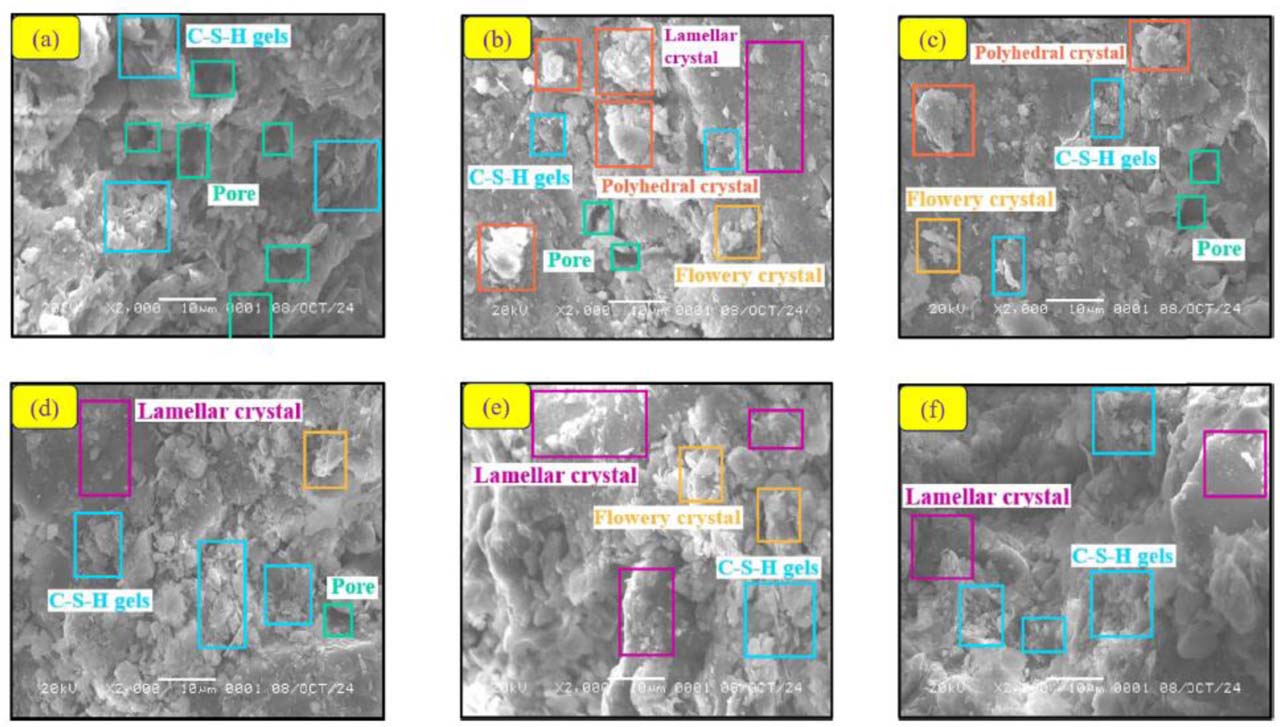
Figure 8:
SEM micrographs of soil samples containing varying SCBA contents: (a) 0%, (b) 1%, (c) 2%, (d) 3%, (e) 4%, and (f) 5% (Yao et al., 2024)
Similar microstructural compaction, evidenced by gel coats, flocculated particle structure, and a decrease in porosity, was also reported for lime- and cement-stabilised systems in different soil types (lateritic, black cotton, loess soil) (James & Pandian, 2018; Jamsawang et al., 2017; Marathe et al., 2024; Pradeep & Mayakrishnan, 2023b; Safdar et al., 2025). In alkali-activated blends, the combination of SCBA with GBFS and alkaline activators developed an interconnecting aluminosilicate gel network, which bonded together soil particles effectively and reduced pore spaces (Marathe et al., 2024; Shah et al., 2025). Similarly, in geopolymer-based stabilization systems, micrographs revealed a distinct transformation from granular, porous textures to dense, uniformly gel-bound matrices. The presence of silica fume and waste glass powder led to better gel interconnection and the absence of residual pores (Gallego-Quintana et al., 2023; Pradeep & Mayakrishnan, 2023b). In combination, these presented findings suggest a dose response system in which the optimal level of SCBA content facilitates maximum gel formation and bonding behaviour between the particles, whereas excessive amounts leave unreacted residues that primarily act as inert fillers and are therefore unable to encourage overall structural benefits (Dang et al., 2021; Kishor, 2024; Nor et al., 2021).
4.3.2. X-ray Diffraction (XRD)
XRD results consistently prove that SCBA additions will cause substantial mineralogical changes in stabilized soils. In the untreated sample, strong characteristic crystalline peaks for kaolinite, montmorillonite and quartz mostly prevail. After carbonation, the peaks become less coherent or disappear, and broad amorphous humps occur in the region of 25–33 (2θ), which indicates the formation of C-S-H gels, C-A-H and C-A-S-H. In lime- and cement-based systems, this transition towards amorphous phases can be attributed to the pozzolanic reaction, which involves the consumption of reactive silica and alumina to form secondary cementitious products (James & Pandian, 2018; Kishor, 2024; Marathe et al., 2019; Tseganeh & Quezon, 2022). XRD spectra for the clay soil, lime and SCBA used in their work are shown in Figure 9 (James & Pandian, 2018). The mineral analysis indicates that the soils are composed mainly of montmorillonite and quartz. A strong diffraction peak at about 14°A confirms montmorillonite. This transformation indicates strong pozzolanic reactivity of SCBA, resulting in the formation of amorphous cementitious gels and an increase in strength and stability of the soil (James & Pandian, 2018).
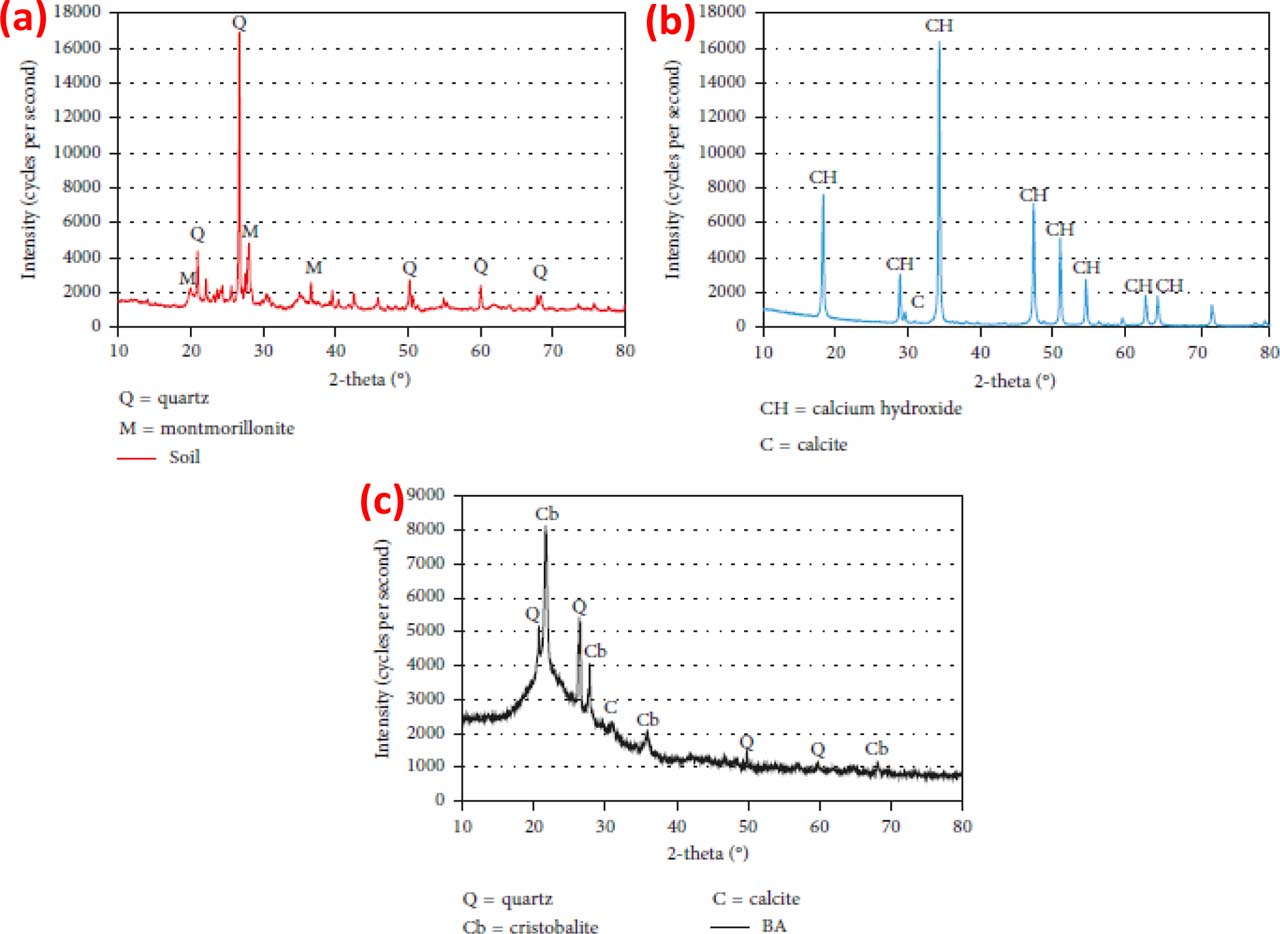
Figure 9:
XRD of (a) soil, (b) lime, and (c) SCBA (James & Pandian, 2018)
Amorphous peaks and the formation of ettringite, closely associated with peak strength, were most pronounced in clay stabilized by SCBA-cement blended at 20% BA content, whereas using 50% substitution level reintroduced unreacted crystalline phases, indicating the required calcium amount (Jamsawang et al., 2017). Similar trends were noticed in the cemented coastal soils, capable of finding reduced portlandite peaks and a new amorphous phase showing synergistic hydration-pozzolanic effect between SCBA and the calcium inherently present in cement (Yao et al., 2024). Crystalline to amorphous transformation was even more pronounced for the alkali-activated and geopolymer systems, with peaks assigned to original quartz and feldspar being replaced by a broad hump typical of C-A-S-H and N-A-S-H gel phases (Gallego-Quintana et al., 2023; Marathe et al., 2024; Ramezani et al., 2023). Amorphization was further facilitated after introducing silica sources such as SF or GP, which is because increased polymerization and more compact gel framework were realized. Indeed, XRD studies show that utilization of SCBA always leads to complete transformation crystalline minerals to amorphous binding gels, whose efficiency are solely dictated by the contents of available calcium and alkaline activation conditions (Dang et al., 2021; Krishnan et al., 2022).
4.3.3. Fourier Transform Infrared Spectroscopy (FTIR)
FTIR investigations confirmed mineralogical observations by showing chemical bonding changes due to pozzolanic and geopolymeric reactions. The Si-O-(Si/Al) asymmetric stretching in the untreated soil mainly emerged at 1080 cm−1. With SCBA inclusion, this peak moved consistently to about 995–1000 cm−1, indicating restructuring of silicate structure and the formation of new products like C-S-H, C-A-H, and C-A-S-H, which increase the soil strength as well as stability. In addition, the decrease/disappearance of OH-stretching bands (3616–3620 cm−1) indicated the consumption of bound hydroxyls and portlandite during product formation (Kishor, 2024; Marathe et al., 2019; Pradeep & Mayakrishnan, 2023b; Tseganeh & Quezon, 2022).
New absorption bands that appear at around 875–890 cm−1 confirmed the silicate-calcium bonding, which was associated with C-S-H gel formation. Results for the SiO stretching bands from 1000 to 400 cm−1 in the geopolymeric system confirmed the polymerization of aluminosilicate species into a cross-linked amorphous structure, as revealed by the resonance effects that broadened and shifted to low wavenumbers and additional bending modes appearing between 530-640 cm−1 (Gallego-Quintana et al., 2023; Ramezani et al., 2023). These spectral variations taken together illustrated that the supplied SCBA contained reactive silica and alumina, which were depolymerized and reprecipitated into a more amorphous gel-rich matrix with calcium or alkali activators through restructuring of soil texture. Overall, the FTIR results between studies provide molecular-level verification of microstructure compaction as seen in SEM and XRD (Dang et al., 2021; Nor et al., 2021).
4.3.4. Other Tests (XRF, EDS)
Supplementary analyses such as XRF and EDS supported microstructural studies by presenting detailed chemical and elemental characterization of the SCBA and stabilized soils. XRF characterization confirmed consistently that the SCBA is rich in silica (usually 58–72% SiO2), with considerable Al2O3 and Fe2O3 contents, placing it as a Class F pozzolan. In the presence of calcium-rich binder, such as lime, cement, or GBFS, this chemical compatibility allowed formation of CS-H and C-A-S-H gels (James & Pandian, 2018; Jamsawang et al., 2017; Kishor, 2024; Marathe et al., 2024; Shah et al., 2025).
EDS spectra and elemental mapping confirmed the enriched concentrations of Ca, Si and Al with a higher Ca/Si ratio on treated soils and this corresponds to C-S-H formation (James & Pandian, 2018; Pradeep & Mayakrishnan, 2023b; Shah et al., 2025). These chemical findings were confirmed by corresponding mechanical testing, and the non-linear, increasing strength trends could be observed with increasing SCBA content: moderate SCBA fillers had a significant positive effect on UCS, CBR, tensile strength and stiffness, while excessive dosages led to minor decreases due to incomplete reactions or filler effects (Dang et al., 2021; Krishnan et al., 2022; Nor et al., 2021; Safdar et al., 2025). For example, in coastal cemented soils, the addition of 5% cement + 1% SCBA increased UCS by 56%, stiffness by more than 100%, and shear parameters with respect to control mixtures (only cement) and showed performance similar to that of mixtures containing 7% cement (Yao et al., 2024). In geopolymeric systems, the NaOH activation was chosen over KOH due to its lower ionic radius and dissolution kinetics with other sources of silica, enhancing gel formation and long-term strength (Gallego-Quintana et al., 2023; Ramezani et al., 2023). All the evidence together shows that reactive silica, alumina of SCBA and enough amount of Ca and alkalinity support gel development, pore structure modification and mechanical increase, with maximum effects observed normally at 1–10% SCBA in the cement/lime system and 10–30% for geopolymer precursor.
Table 4:
Summary of SCBA studies based on microstructural properties
| Study and journal | Soil type | Role as | Test | Key finding |
|---|---|---|---|---|
| Jamsawang et al. (2017), Thailand, CBM | CH | Enhancer (SCAB+ OPC) | SEM, XRD | The 80% OPC + 20% BA mix showed the lowest void ratio and highest strength from C-S-H gel and ettringite formation, whereas the 50% OPC + 50% BA mix had higher voids and lower strength. |
| James & Pandian (2018), India, ACE | CH | Enhancer (SCBA + Lime) | SEM | The addition of SCBA enhanced quartz utilization in lime–soil reactions, promoting C-S-H and C-A-H formation and resulting in a dense, compact stabilized matrix. |
| Marathe et al. (2019), Poland, SGM | MH | Enhancer (SCBA + GBFS) | SEM | SEM analysis of the optimized 10% GBFS + 15% SCBA mix (after one week of curing and compaction to Proctor density) revealed a gray, densely packed flake-like structure, indicating a strong alumino-silicate matrix formation. |
| Dang et al. (2021), Korea, TG | CH | Enhancer (SCBA + Lime) | SEM, FTIR | SEM and FTIR analyses revealed long-term pozzolanic reactions among SCBA, clay, and lime, forming new cementitious products responsible for enhanced soil strength. |
| Nor et al. (2021), Malaysia, JSUE | Peat soil | Enhancer (SCBA + Cement) | SEM | SEM analysis indicated that the 5% SCBA replacement mix effectively filled the voids within the peat soil structure. |
| Krishnan et al. (2022), India, BC | CH | Enhancer (SCBA + BA) | SEM, XRD | XRD analysis confirmed the presence of cementitious compounds like CSH and CASH, and SEM images reveal a compact, dense microstructure in the stabilized sample. |
| Tseganeh & Quezon (2022), Ethiopia, ACE | MH&OH | Enhancer (SCBA + CTCP) | SEM | SEM revealed that the morphology and fabric of the control specimen (raw soil) were significantly altered after stabilization with the optimal 9% BA + 20% CTCP mix. |
| Ezema et al. (2023), Nigeria, NJT | CH | Enhancer (SCBA + PLA) | X-ray fluoresc ence testing (XRF) | XRF characterization revealed that SCBA and PLA exhibited pozzolanic contents of 61.97 % and 28.27 %, respectively. |
| Pradeep & Mayakrishnan (2023a), India, IJGGE | CH | Enhancer (SCBA + Lime) | XRD, FE-SEM, EDS, FTIR. | SCBA improved particle adhesion, and pozzolanic reactions with lime formed a dense microstructure confirmed by FESEM; XRD of the 5% BA mix after 7 days showed stable SiO2 peaks, indicating an optimal admixture ratio. |
| Gallego-Quintana et al. (2023), Mexico, Materials | MH | Enhancer (SCBA +OPC) | XRD | XRD analysis confirmed that strength gains resulted from water–cement hydration and reactions between Ca (OH)2 and amorphous silica in SCBA. |
| Ramezani et al. (2023), Iran, ASCE | SP | Enhancer (SCBA + GP, SF) | SEM, XRD, FTIR | SEM, XRD, and FTIR analyses confirmed geopolymer gel formation; higher SCBA reduced porosity and increased strength, with NaOH-activated mixes showing stronger bonding than KOH-activated ones. |
| Kishor (2024), India, ST | CH | Enhancer (SCBA + LAA) | SEM | FESEM at 28 days showed leached silica and alumina reacting with Ca2+ and Na+ to form N-A-S-H, along with C-S-H and C-A-S-H geopolymerization products. |
| Marathe et al. (2024), Poland, JSDCP | SP-SM | Enhancer (SCBA + GBFS) | SEM | SEM analysis confirmed the formation of an aluminosilicate structure resulting from the reaction between GGBS and SCBA in the AAB mix. |
| Safdar et al. (2025), Pakistan, AJSE | SM | Principal stabilizer | SEM | SEM results confirmed the formation of cementitious gels from hydration and pozzolanic reactions, which created strong bonds among soil particles. |
| Shah et al. (2025), India, GG | CH | Enhancer (SCBA + GBFS) | XRD, EDS, SEM | XRD, SEM, EDS, and XRF analyses revealed that the mixture with 21% SCBA and 9% GBFS generated cementitious siliceous hydrate (C-S-H) compounds, resulting in improved strength. |
| Yao et al. (2024), China, RE | CH | Enhancer (SCAB+ OPC) | SEM | SEM analysis showed that adding bagasse ash enhanced cement hydration, forming hydrated calcium silicate and other compounds that filled pores and produced a denser microstructure in the modified cement soil. |
| Azhar et al. (2025), Pakistan, ASEJ | CH | Enhancer (SCBA + Lime) | SEM, XRD | At 8% BA, foil-like leafy structures formed, showing better bonding and clay aggregation; XRD confirmed pozzolanic reactions between ash silica–alumina and soil calcium, producing binding phases that enhance structural stability. |
| Saidou et al. (2025), Kanya, ETASR | CH | Enhancer (SCBA + GBFS) | SEM | SEM of untreated soil showed loose packing with visible voids, while the optimal 6% CKD + 10% SCBA mix exhibited fewer voids, confirming effective pore filling by the stabilizers. |
| Shukla & Sharma (2025), India, EJECE | CH | Enhancer (SCBA + Lime) | XRD, SEM | XRD confirmed new cementitious compounds from prolonged pozzolanic reactions between binder and soil, while SEM revealed a dense, cohesive matrix with reduced porosity, consistent with the strength improvement. |
The observed microstructure evidence of the reviewed studies presents a good mechanistic basis to explain the engineering performance enhancements in this SCBA-stabilized soil. SEM measurements also consistently report the formation of dense gel-bound structures and decreased pore spaces, which are directly related to the increase in UCS, CBR, and shear strength observed in mechanical tests (James & Pandian, 2018; Marathe et al., 2019; Tseganeh & Quezon, 2022). XRD patterns demonstrating crystalline clay minerals as amorphous C-S-H and C-A-S-H phases match well the remarkable strength enhancement observed with the 6–10% SCBA or SCBA+lime compositions (Jamsawang et al., 2017; Kishor, 2024). FTIR shifts on the lower wavenumbers indicate silicate polymerization and gel formation (Pradeep & Mayakrishnan, 2023; Dang et al., 2021), a fact that accounts for swelling potential reduction and stiffening. These microstructure modifications, such as enhancement of gel formation and pore filling and interlocking (especially between particles), are well-understood as an explanation of macro-scale changes, such as higher cohesion and friction angle (Saidou et al., 2025; Ewa et al., 2023). In contrast, research indicating lower performance with the increase of SCBA concentration reported unreacted ash and non-uniform matrices (Yao et al., 2024), thus explaining why excessive SCBA acts as an inert filler rather than a reactive stabilizer. In summary, general microstructural evidence suggests that engineering performances are regulated by the quality and level of pozzolanic reactions and altered soil fabric.
4.4. Durability and Environmental Impacts
The durability property and environmental effects as a result of SCBA use for pavement engineering are presented in this section.
4.4.1. Durability Property
A review of the durability results from Nangulama & Rimoy (2024), Osinubi et al. (2009), and (Pradeep & Mayakrishnan, 2023a) reflects considerable advancement in the knowledge of the long-term behaviour of SCBA-stabilized soils. These works together reveal that the longevity of SCBA-treated soil is strongly influenced by the reactive binder content and SCBA dosage. Osinubi et al. (2009) have identified that using SCBA only led to poor results for the durability, since samples had a decrease in their strength of nearly 91% after water saturation, and this value is substantially higher than recommended. This indicated that even though the SCBA possessed valuable pozzolanic activity, it needed an external calcium source to generate a solidified-cemented matrix to moisture-induced degradation. In contrast, Pradeep & Mayakrishnan (Pradeep & Mayakrishnan, 2023a) reported that the combination of SCBA with 5% lime improved cyclic durability significantly and stabilized mixtures containing 15–20% SCBA after two to three wetting-drying cycles as a result of the formation of C-S-H, C-A-H, and M-S-H gels that increased interparticle bonding strengths and lowered swelling. Expanding on this aspect, the works of Nangulama & Rimoy (2024) studied SCBA+LC3 blends subject to up to sixteen wetting-drying cycles and found that mixes having 10–12% binder not only withstood degradation, but also gained strength in the long-term owing to continual hydration and pozzolanic reactions, which led to an improvement of interfacial bonding. Collectively, these results validate the lack of durability of SCBA by itself and establish that when coupled with calcium or alumina-rich materials such as lime or LC3, it provides a strong, stable matrix which can restore and sometimes enhance strength post multiple exposures to water.
4.4.2. Environmental Impacts
Although literature on SCBA's impacts on the environment is scarce, mounting evidence identifies its potential to reduce environmental pollution substantially in pavement construction (Garba et al., 2025; Kishor et al., 2022; Mishra et al., 2022). Mishra et al. (2022) reported that the inclusion of SCBA in construction methods has the potential to reduce carbon emissions by 80% compared to conventional stabilizers. The use of SCBA for subgrade stabilization contributes not only to decreasing the amount of industrial waste and promoting environmental preservation and community health through cleaner production systems, but also to the sustainability of the sugar industry as well as its surroundings. Similarly, Garba et al. (2025) have highlighted the financial savings of using SCBA over traditional stabilizers such as lime and cement, which can provide for cost savings in the range 45%, a finding that was validated by (Khandelwal et al., 2023). Furthermore, SCBA has a smaller environmental impact and can reduce CO2 emissions by around 48% compared to traditional techniques. Other studies also support the fact that the use of SCBA in pavement subgrade stabilization can save 28.2% more CO2 compared to lime or cement (Friedlingstein et al., 2020; Kishor et al., 2022). Collectively, these findings highlight the sustainability and environmentally friendly nature of SCBA when used as a low-carbon alternative for subgrade and pavement stabilization, contributing to worldwide objectives to undertake environment-friendly infrastructure construction.
5. Research Gaps and Future Directions
Although several studies have demonstrated the positive effect of SCBA on geotechnical properties, there are several key challenges preventing the industrial utilization of SCBA for pavement and soil stabilization. Filling these gaps through targeted research would help promote the utilization of SCBA as a sustainable alternative to conventional stabilizers.
5.1. Quantitative Modelling and Life-Cycle Carbon Assessment
Empirical testing is the main foundation of existing research, and quantification or mechanistic modelling of SCBA-soil interactions has not yet been fully developed. The correlation between microstructural alterations and pozzolanic reaction kinetics influencing the engineering properties is not clear at present (James & Pandian, 2018; Marathe et al., 2019; Pradeep & Mayakrishnan, 2023b). Further work should include the development of mechanistic-empirical models for linking compositional parameters (e.g., amorphous content, Ca/Si ratio, curing history) with strength and durability performance.
Detailed life cycle analyses are needed to completely realize SCBA’s environmental advantage. Although Mishra et al. (2022), Garba et al. (2025), and Kishor et al. (2022) found CO2 reductions of 28–80% relative to cement and lime modification, these assessments are at an early stage and do not consider transportation, processing as well as end-of-life effects. It is recommended that complete carbon and energy accounting for SCBA be conducted in the future to better quantify SCBA's net sustainability advantages over the entire pavement life.
5.2. Field-Scale Validation and Long-Term Performance
Although there has been abundant laboratory evidence verifying the enhancement in UCS and CBR, yet field verifications are limited. The previous studies have mainly concentrated on the short-term laboratory curing; and the loading conditions, drainage fluctuations, as well as climate variations that would affect all these aspects practice were not taken into consideration in terms of performance (Ewa et al., 2021; Nangulama & Rimoy, 2024; 2025; Sharma & Malik, 2025). This interval imposes a degree of uncertainty in predicting field durability and design reliability (Nor et al., 2021; Saidou et al., 2025).
It is suggested that future research to include instrumented field trials and long-term performance monitoring to measure stiffness evolution, moisture sensitivity and structural integrity of SCBA-stabilized layers in a real-world environment. Integrating field performance information with lab results will aid in the establishment of performance-based design criteria and eventually placement into pavement design codes for SCBA-treated subgrades.
5.3. Combined Binder Effects under Diverse Climatic Conditions
Ideal synergistic effects for SCBA have been recorded with lime, GBFS, fly ash and CKD but its potential as synergic binder at varied climatic extremities are less widely studied. Majority of the studies have been performed under laboratory conditions with little information on long-term response under field environmental constraints (Devi & Chore, 2020; Marathe et al., 2024; Saidou et al., 2025; Shah et al., 2025).
Future studies should analyse the effects of temperature, humidity and cyclic wetting-drying or freeze-thaw cycles on blended-stabilized systems (Nangulama & Rimoy, 2024). Evaluating these parameters in tropical, desert and ice-covered areas will assist in the development of climate-dependent stabilization strategies thereby establishing durability limits which are essential for a reliable performance of SCBA-based systems under different environmental conditions.
5.4. Machine Learning (ML) for Prediction and Optimization
With the growing accessibility of experimental data, ML has proven to be a useful technique to analyse and optimize the performances of SCBA-stabilized soils, particularly when conventional regression models do not account for complex nonlinear relationships among soil properties, chemical composition and curing parameters. Among the reviewed studies, one study, Sorum et al. (2025), used ML models to predict UCS of sandy soil enhanced by SCBA and nanomaterials, indicating a research deficiency and future research space.
Future studies could focus on applying advanced ML methods, Random Forests, Gradient Boosting, Support Vector Machines and Neural Networks to predict mechanical as well as durability properties more accurately. Embedding explainable artificial intelligence (XAI) frameworks additionally assist in identifying vital drivers of performance, for more effective mix optimization (Azhar et al., 2025; Marathe et al., 2024). The development of data-driven, all-inclusive predictive models built on big and standardized datasets will result in an improvement in the efficiency of material design and may reduce the need for extensive laboratory testing.
6. Summary and Conclusions
To summarize, the objective of this paper is to offer a comprehensive overview of the impacts of SCBA on the physicochemical, mechanical properties, microstructural characteristics and durability of subgrade soils by review findings from 68 peer-reviewed papers from 2009 to 2025. The review adhered to the PRISMA approach, providing a systematic nature and methodological coherence. In general, the available information describes SCBA as a green and economic alternative to traditional stabilization agents (cement/lime) because of its high pozzolanic activity, waste recycling potential, landfill saving, and CO2 emission reduction.
Key Findings:
Physicochemical Properties: Addition of SCBA reduced LL and PI, while increasing PL. These alterations enhanced the workability and volumetric stability of fine-grained materials. These effects are especially due to cation exchanges, flocculation and pozzolanic reactions. The compaction results generally revealed increased OMC, and decreased MDD. For expansive soils, swelling potential also had 70-90% decrease when SCBA was used together with lime or other alkaline agents.
Mechanical Performance: The UCS, CBR and shear strength of treated soils were significantly increased by the addition of 6–10% SCBA or 8–10% SCBA plus 4–6% lime. Strength gain varied from 100 to 350% using SCBA only and up to 900% for blend systems. The enhancement of the mechanical properties resulted from the formation of C-S-H and C-A-SH gels that reinforced interparticle bonding, stiffened structure, and enhanced resistance to moisture.
Microstructural and Mineralogical Changes: SEM, XRD, and FTIR analysis results confirmed that SCBA has led to a compacted soil matrix with good interlocking. The transformation of crystalline minerals into amorphous cementitious products verified the formation of resilient gel-like structures. Moreover, FTIR spectra with shifting Si-O-Si and Si-O-Al bands confirmed the polymerization and gel formation processes and also reflected micro- to nano-scale densification of the soil matrix.
Durability and Environmental Impact: SCBA alone displayed only moderate durability under wetting-drying cycles, but the matrix materials of lime, GBFS, or LC3 granted a higher short-term performance throughout extended hydration and pozzolanic reactions. From an environmental perspective, the partial substitution of SCBA could help to decrease 30–80% of CO2 emissions, whilst reducing construction material expenses by up to 45%, and align with circular economy principles to transform a high-volume agro-industrial residuum into a more valuable and sustainable construction material.
Overall Conclusions
SCBA is a viable and eco-efficient stabilizer for weak and expansive soils.
Optimum performance is achieved at 6–10% SCBA (alone) or 8–10% SCBA with 4–6% lime/activators.
The use of SCBA in soil stabilization supports green infrastructure and provides a low-carbon, waste-valorized pathway for sustainable pavement construction.
The coverage of SCBA as a soil stabilizer in this review is comprehensive; however, some limitations need to be considered. The findings are solely predicated on prior published research that varies widely in experimental configuration, length of curing and test investigations, limiting quantitative comparisons. Most of the studied tests were performed in a well-controlled laboratory environment, which may not provide sufficient details about field performance and long-term behaviour under realistic climatic or traffic load conditions. Very few numbers of studies have considered life-cycle assessment or carbon footprint to measure the sustainability advantage. These gaps indicate the necessity for standard and reliable testing procedures, comprehensive material characterization, as well as large-scale field validation to facilitate reliable and practical application of SCBA in sustainability pavement/ground improvement applications.
Notes
[6] Contributed by Author Contributions
Conceptualization: N.G.S., Data curation: NA, Formal analysis: P.Y. & H.K., Funding acquisition: NA, Investigation, Methodology, Project administration: NA, Resources: NA, Software: NA, Supervision: Validation: NA, Visualization: N.G.S., Writing - original draft: P.Y. & H.K. and Writing - review and editing: N.G.S.