

1. Introduction
High-strength concrete has a compressive strength of more than 42 MPa, which may be achieved by providing a low water/cement ratio with a proper use of pozzolanic materials that give adequate strength at early ages, such as silica fume, Nevilel et al (2010). Silica fume gives both physical and chemical effects on the concrete microstructure. The physical effect is introduced through its role in densifying the microstructure due to its high surface area, whereas the chemical role appears through its additional formation of portlandite, especially during the first seven days of the hydration process, Neville (2011). High-strength concrete shows high brittleness; hence, adding fibres to its mixes leads to enhancing its ductility and bendability, Mehta P. et al (2006). It is obvious that the concrete properties are affected by the cementitious paste, aggregate, and transition zone among these phases. Minifying water to water-to-cement ratio and the pozzolanic admixtures like silica fume addition may lead to enhancing the microstructure of the matrix and optimizing its transition zone. The water-to-cement ratio reduction leads to a reduction in porosity and capillary pores of the matrix. To increase concrete flowability, one may minimize the voids between particles of the mixture composition (cement, silica fume, and other fine components). Researchers study the high-strength concrete, which means decent abrasion and impact resistance, and provides economic advantages to the structures Vasusmitha R. et al, (2013). The addition of silica-fume at high replacement percentage obviously increased the autogenous shrinkage of concrete, due to the pore size distribution refinement, which leads to a further increase in capillary tension and more shrinkage of the cement paste Siddique R. et al, 2011). Autogenous shrinkage depends on the contents of cement compounds (C4AF and C3A) and on the hydration degree. Silica fume inclusion initiates an increase in autogenous shrinkage. Also, it increases as the water-to-cement ratio decreases; such a phenomenon has limits. Silica fume is responsible for the extent of the autogenous shrinkage, depending on the water-to-cement ratio. The start of autogenous shrinkage becomes earlier when the water-to-cement ratio decreases, Miyazawa et al (1995). Results explained that it is very important to measure adequately the early shrinkage that is developed in a high-performance concrete to determine its tendency to crack due to the development of self-desiccation in the early hours that follow the beginning of hydration. They reported that the 24-hour autogenous shrinkage represents about 63% of the 28-day actual autogenous shrinkage, Lepage et al (1999). High-performance concrete (HPC) in civil engineering is used widely due to its outstanding performance, such as high workability, high strength, high durability, and long-term behaviour. High-performance concrete Early-age volume change is basically composed of both autogenous and drying shrinkage, which are induced by the capillary porosity self-desiccation, by temperature, and moisture movement between the concrete and the surroundings. The rate and degree of hydration mainly depend on the exposed temperature history of concrete, Jiang C. et al (2014). The autogenous relative humidity alteration is due to the dissolved salts in the fluid pores. They stated that simulated shrinkage curves show fair promise with the higher relative humidity range of experiments. While they were underestimated for autogenous deformation measured due to the influence of the pozzolanic reaction of silica fume. The low water/binder ratio and the silica fume addition cause a significant drop in the internal water content of the cement paste throughout high-performance concrete sealed hydration. Relating to this, the cement paste experiences autogenous shrinkage. Autogenous shrinkage ought to be limited since it may develop microcracking or macrocracking and deteriorate the quality of concrete, Lura P. et al, (2003). The maximum time to measure autogenous shrinkage was decided as 48 hours till 7 days according to the international literature. Although the measuring is continuous for 672 hours (28 days). It was observed that the rate of shrinkage development was higher for the mix of ordinary cement than the mix of limestone cement due to the higher clinker-to-cement ratio in the first mix. For high-strength mixes, higher values of autogenous shrinkage are recorded (almost double) at 48 hours than those values recorded for normal-strength mixes. The comparison between the widening magnitude and the demec contraction strain gives confidence that the proposed method of measurement has reliability, Al-Rhimy A. S. (2018). Early autogenous shrinkage for a 0.3w/b ratio displays a minor swelling in the mixes between 2 hr to 6 hours, Lepage S. (1999). Water absorption may be considered a resource to porosity control, 5% of polymer balls supplementary by weight of cement to the fresh mixture, hence the polymer balls bleed their water, which led to volumetric change in the concrete samples, which were measured by an extensometer device, Ikram F. et al, (2017) and Al-Mulla I. F. et al (2024). Experimental work was adopted to select the optimum percentage of nanomaterials and fibres to attain the highest compressive strength and low cost. Concrete mixes were equipped with Nano silica and nano clay at 0, 1, 2, and 3 % by cement weight, and with corrugated steel fibre and polypropylene fibres of 0.5, 0.75, and 1.00 % by concrete volume. Results indicated that the compressive strength of high-strength concrete increases as the percentage of nanosilica increases up to 3 % and using 1 % steel fibre increases the strength meaningfully without considerably increasing the cost, Al-Hamad E.G et al, (2024). Explorers use recycled materials to endorse sustainable development, one of which is the use of WAPB, since there is a rising request for recycling materials in engineering. Therefore, they study the potential of recycled tire rubber; their mixes highlight the significance of utilizing local resources, aligning with the economy. Findings specify that higher proportions of rubber granulate not only influence mechanical properties but also significantly affect durability, Marcalikova, Z. et al (2024). Shrinkage and creep behaviour can be enhanced using many techniques, such as polymer fibres or meshes, or using an internal curing process, Al-Mulla I. F. et al, (2024) and Hoang D. et al (2025). Researchers investigate the efficiency of using an alternative to cement in concrete to report and mitigate environmental consequences, and how they can improve building sustainability. Density, workability, water absorption, ultrasonic pulse velocity, compressive strength, tensile strength, and thermal conductivity were inspected for nanoclay replaced at ratios 5%, 10%, and 15%. Substituting 5% nanoclay increases compressive strength, tensile strength, and heat conductivity; however, it decreases workability. Hence, nanoclay reduces the environmental impact of concrete and encourages sustainable building, Muntadher J., et al (2025) and Hameed O. et al (2025).
The novelty of the present work lies in studying the implementation of a new autogenous shrinkage technique to study their behaviour for high-strength mixes from 1 hour to 7 days, then studying the possibility of reducing the autogenous shrinkage strains through applying internal curing by using water absorption polymer balls.
2. Methodology
2.1. Research Design
This research is an experimental study applied to high-strength concrete mixes to investigate the possibility of reducing the Autogenous shrinkage strain by using water absorption polymer balls to provide internal curing that participates in providing humidity and reduces the capillary strains. The study also involves the polypropylene fibres to arrest the microcracks and enhance the shrinkage behaviour.
2.2. Materials and Procedures
High-Strength Concrete mixes prepared in this research were produced with a cement Type I with a content of 450 kg/m3, to reach a compressive strength of 65 MPa after 28 days in water curing. The chemical and physical properties of the used cement are specified with the ASTM C150 (2007). Fine aggregate (sand) and crushed coarse aggregate of 10mm maximum size have properties that conform to the ASTM C33 (2008). Silica fume has a strength activity index SAI of 120% which conforms to ASTM C1240 (2015). It was used as a 10% cement replacement by weight. The role of silica fume in the mix appears as it affects the arrangement of the cement paste microstructure and its interfacial transition zone; its replacement with the cement may reduce the shrinkage strain and increase the compressive strength, Mehta P. et al (2006). To restrain and lessen the mixes' shrinkage, ACI 209.1R-05, (2005). Pre-Saturated Water absorption polymer balls WAPB were added to the mixes by 5% by weight of cement to provide internal curing for the mixes [11]. The properties of the water absorption polymer balls are shown in Figure 1. Polypropylene fibres PP were added as 1% by weight of cement based on their satisfactory behaviour in this percentage Al-Mulla I. F et al, 2024), Al-Mulla Ikram F. et al (2024) and Hoang D., et al (2025), their characteristics are shown in Table 1.
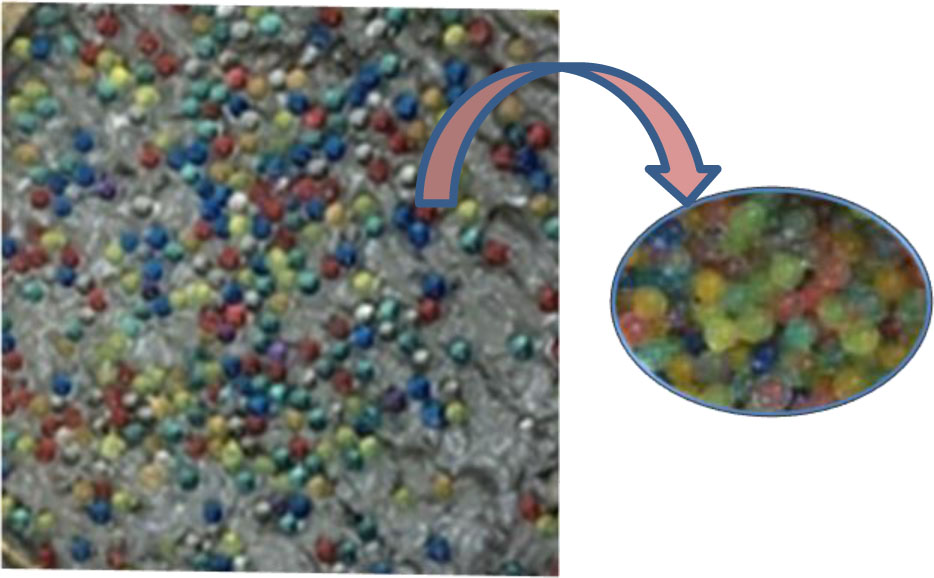
Figure 1:
Water absorption polymer balls (WAPB) in concrete mixes
Table 1:
Polypropylene fibre characteristics
| Characteristics | PP |
|---|---|
| Diameter [µm] | 0.032 |
| Length [mm] | 12 |
| Elongation [%] | 10 |
| Tensile strength [MPa] | 600 – 700 |
| Modulus of elasticity [GPa] | 36 |
| Shape | Straight |
| Density [kg/m3] | 910 |
| Colour | White |
A superplasticizer was added to the mix to enhance workability when the water-to-binder ratio was reduced. Superplasticizer was used at 1.5% by weight of binder to enhance the compressive strength and reach the high strength grade of 65 MPa; the properties of the used superplasticizer are tabulated in Table 2.
Table 2:
Properties of superplasticizer
| Properties | Description |
|---|---|
| Commercial name | ViscoCrete-180 GS |
| PH | 4–6 |
| Colour | Light brownish liquid |
| Chloride content | Nil |
| Specific gravity, [g/cm3] | 1.070 |
Table 3:
The mix proportions for 65 MPa
| Material | Ref. mix | 1% PP fibre mix | WAPB mix | Hybrid mix |
|---|---|---|---|---|
| Cement [kg/m3] | 450 | 450 | 450 | 450 |
| Sand [kg/m3] | 760 | 760 | 760 | 760 |
| Coarse aggregate [kg/m3] | 810 | 810 | 810 | 810 |
| Silica Fume [kg/m3] | 50 | 50 | 50 | 50 |
| w/b | 0.35 | 0.35 | 0.35 | 0.35 |
| Superplasticizer% | 1.5 | 1.5 | 1 | 1 |
| PP fibres% | - | 1.0 | - | 1.0 |
| WAPB% | - | - | 5 | 5 |
The high-strength samples were tested by using three cylinders of 100×200 mm for each age of curing according to ASTM C39 (2005) for compressive strength at ages of (7, 28, 60, and 90) MPa, to attain the target strength recorded by the mix design (65 MPa). For autogenous shrinkage, a modified testing method based on the work of Al-Rihimy 2018, was used to study autogenous crack formation in concrete.
An I-shaped mold was used, as presented in Figure 2. Each of the four used mixes tested three samples for the autogenous shrinkage strain test, and the average of the results was taken. A 3 mm central groove was made to create a controlled crack. Concrete was poured into the mold, and Demec points were fixed on the specimen surface for strain measurement. Extensometers were used to record strain at designated points along the specimen shown in Figure 2. Autogenous shrinkage was measured at two locations: 200 mm above the groove (expansion zone) and 100 mm away from the groove (contraction zone). All mixes exhibited positive strain near the groove and negative strain in the restrained regions, reflecting stress release versus restrained contraction.
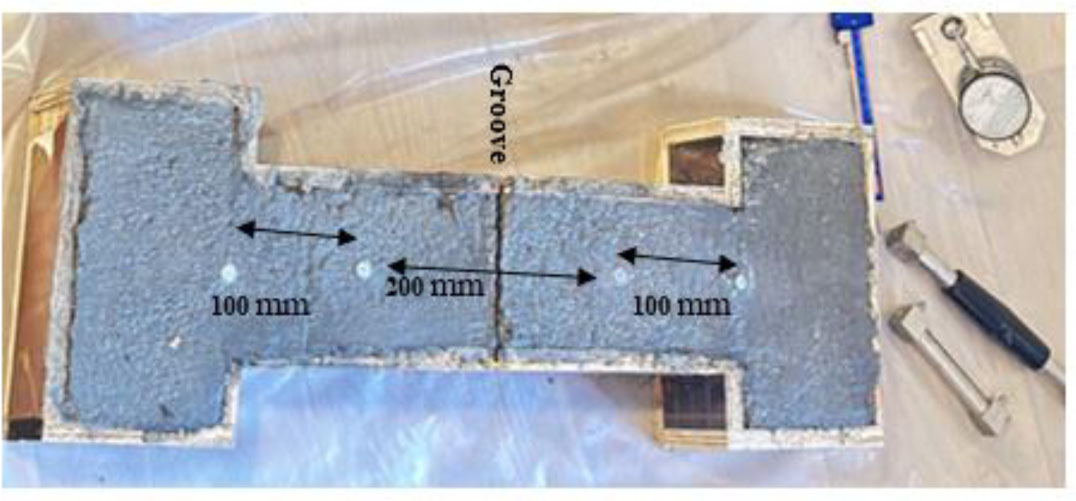
Figure 2:
Specimen for autogenous shrinkage testing
2.3. Data Collection
Data for materials testing and properties were collected either through lab testing or provided by the manufacturer. Sampling and testing of samples were conducted by the authors in the laboratories of the Civil Engineering Department, University of Baghdad.
3. Results
3.1. Compressive Strength
The compressive test for the four mixes was conducted after (7, 28, 60, and 90) days in water curing to study the effect of using polypropylene fibres or internal curing on the strength of the samples. The test results are presented in Figure 3, from which it can be seen that a mix of 1% PP fibres yields a slight difference in the compressive strength compared to the reference mix, due to the fibres’ limited role in the compression zone and to the arresting of microcracks by the fibres, which conforms, Ikram F. et al (2017) and Al-Mulla I. F. et al (2024). Whereas mixes involving water absorption polymer ball WAPB show higher compressive strength than the reference and fibre mixes, due to the internal curing provided by the WAPB that helps in the production of the hydration products, which are responsible for the strength development of the mixes. Hybrid mix shows the highest results because it combines the two techniques - fibres and WAPB - that enhance the development of compressive strength.
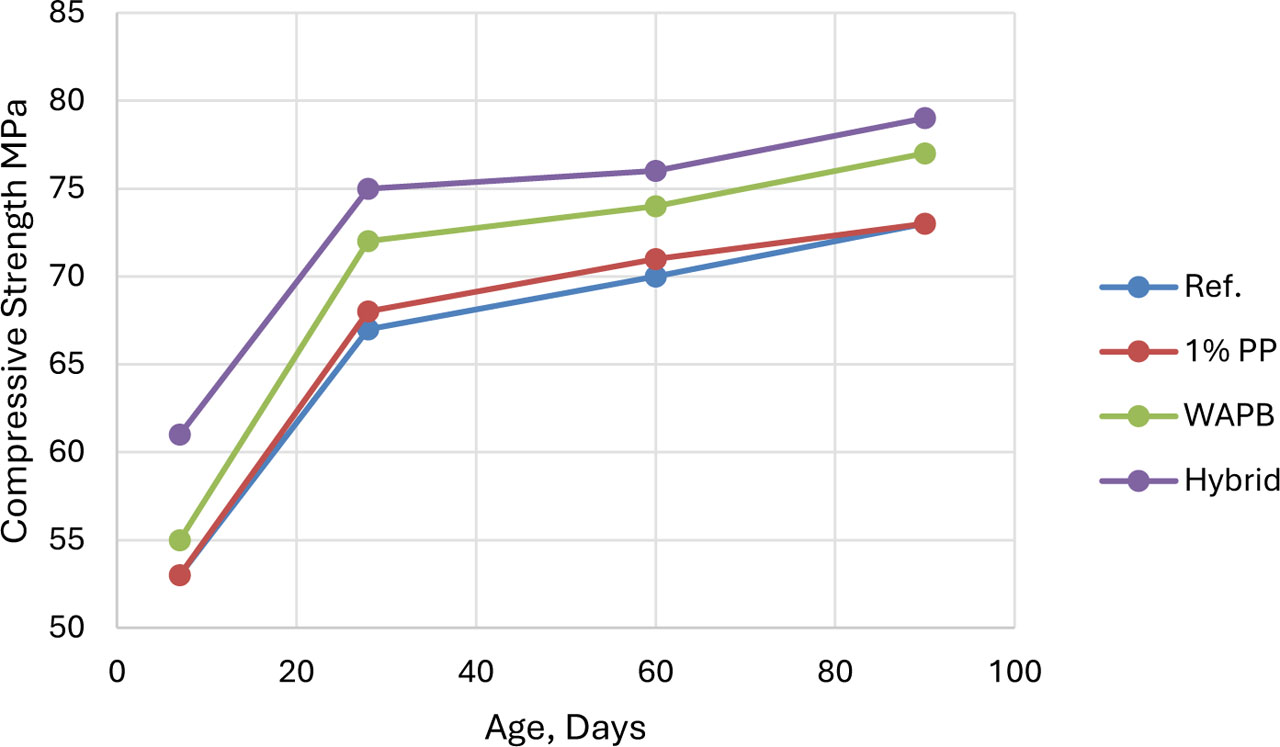
Figure 3:
Compressive strength development of different mixes with time
From Figure 4, which represents the %enhancement in compressive strength compared to the reference high-strength mix. From this Figure, the Hybrid mix gives about 15% enhancement in compressive strength at 7 days of curing, then it reaches about 8% enhancement in compressive strength at 90 days of curing compared to the reference mix.
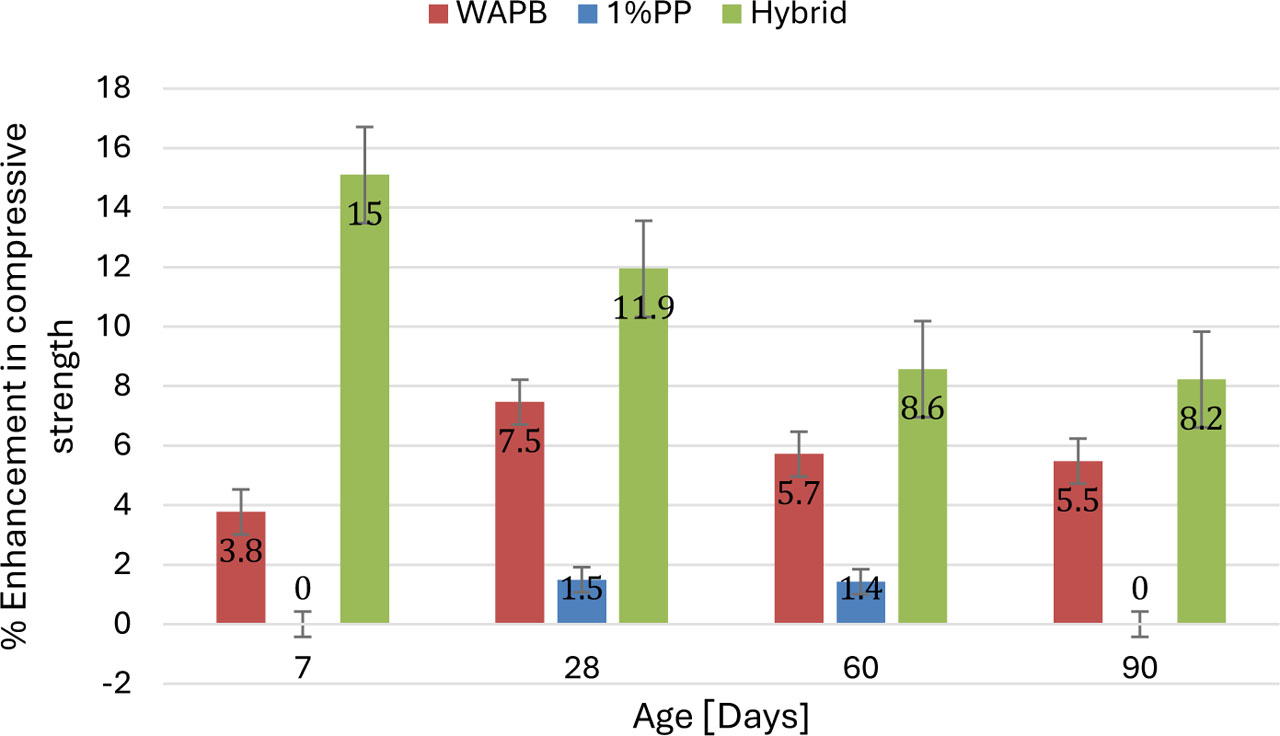
Figure 4:
% Enhancement and standard errors in compressive strength with age compared to the reference mix
Figure 4 presents the enhancements in the compressive strength when using polypropylene fibres and when adding water absorption polymer balls. The standard errors in the error bar figure usually indicate the accuracy and the reliability of the measurement.
3.2. Autogenous Shrinkage
The internal curing can expressively reduce autogenous shrinkage by providing a source of internal water that reduces the capillary stress, which causes shrinkage, especially in high-performance concrete. Water absorption polymer balls WAPB work as an internal reservoir of water, maintain humidity, and fill pores, hence reducing the contraction that leads to cracking. When the cement hydrates, it consumes the water and creates pores and negative capillary pressure. So, the internal water curing fills these voids and prevents the development of this tension, then it reduces autogenous shrinkage strains. The previous explanation is consistent with the results of the autogenous shrinkage in Figures 5, 6, and 7. The results show a contraction strain zone away from the groove (100 mm) and an expansion strain zone around the groove (200 mm).
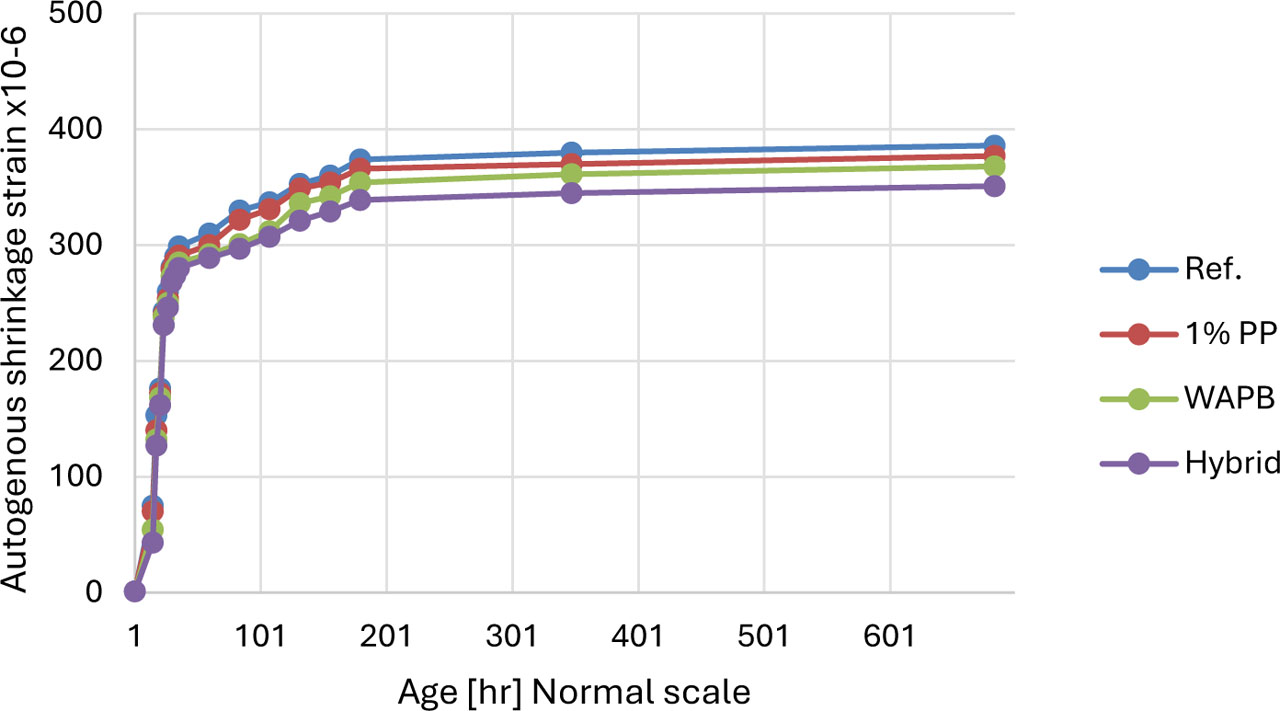
Figure 5:
The expansion zone [200 mm] of the autogenous shrinkage test
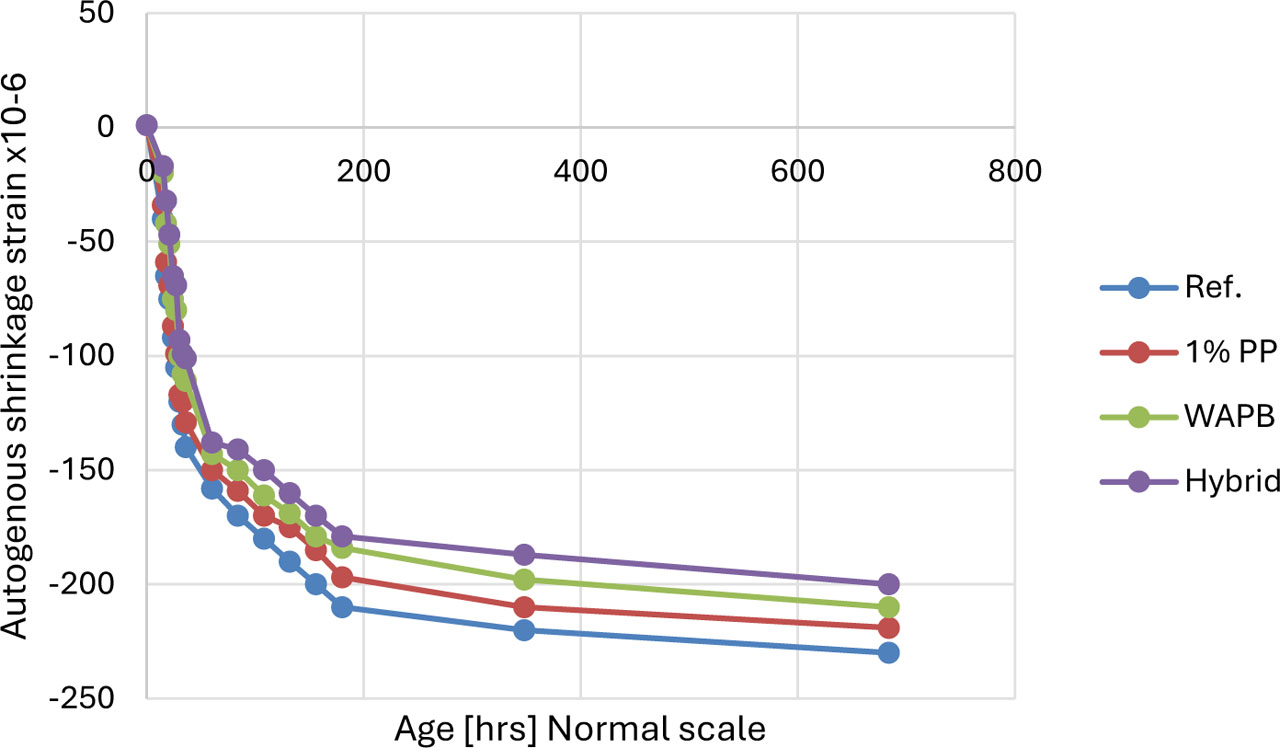
Figure 6:
The contraction zone [100mm] of the autogenous shrinkage test
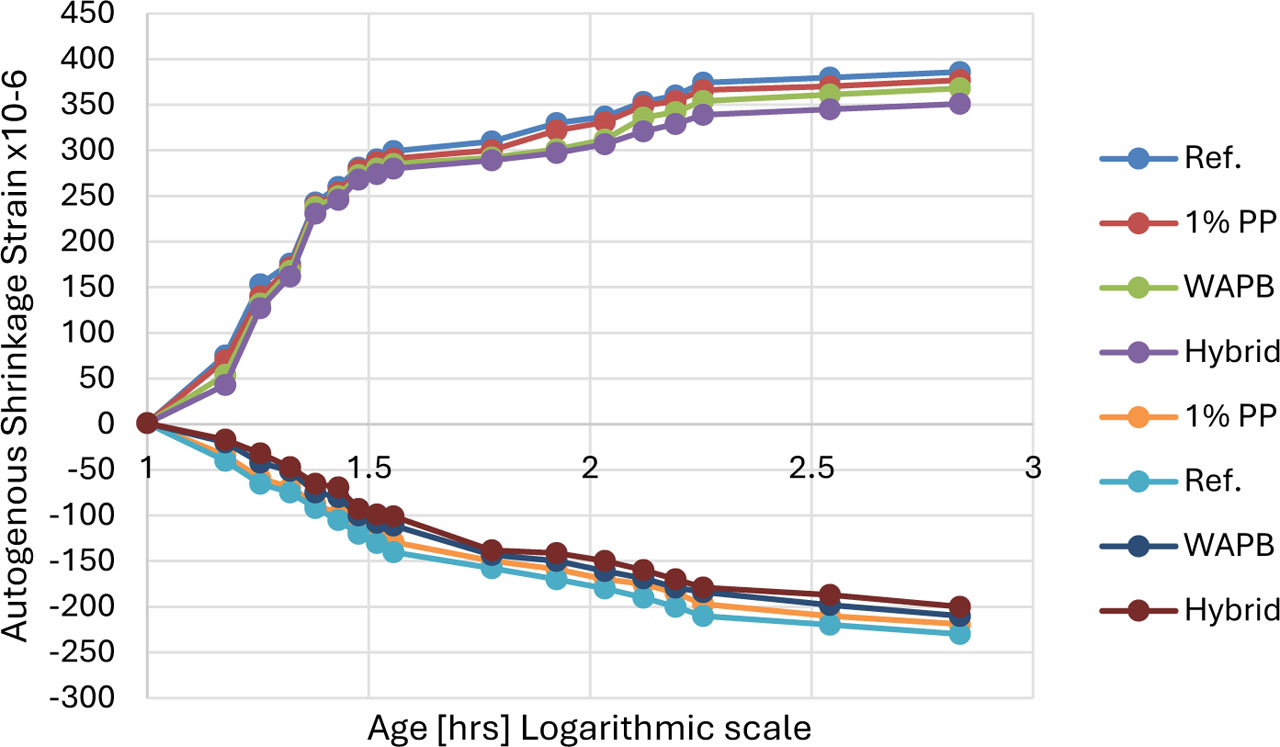
Figure 7:
Autogenous shrinkage of the mixes with Age for both expansion and contraction zones
From the above results, the hybrid mix shows the lowest autogenous shrinkage strain because it includes both fibres that restrict the shrinkage, and includes the WAPB that provides internal curing, leading to a reduction in the autogenous shrinkage.
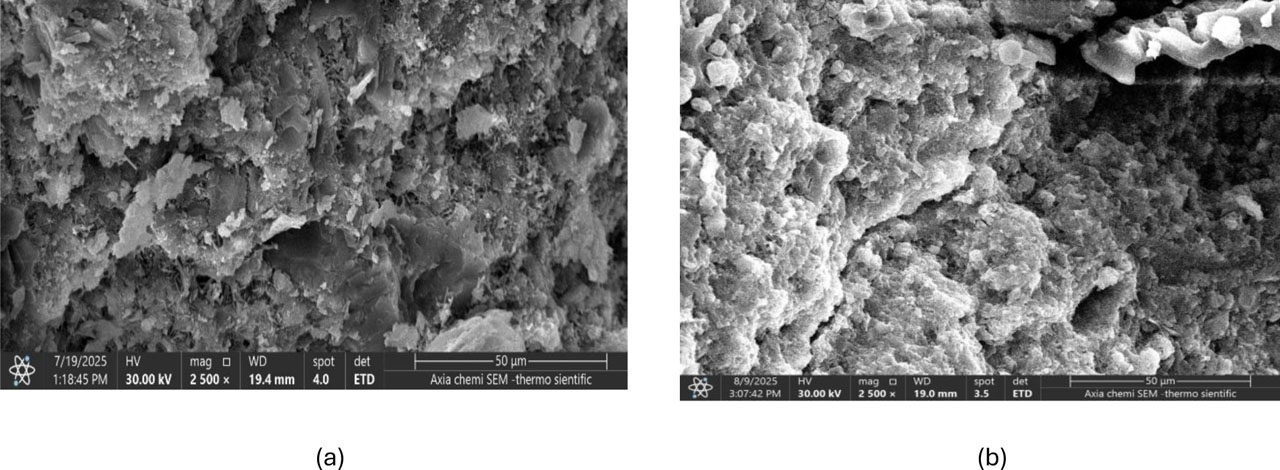
Figure 8:
SEM images declare the enhancement in the microstructure of concrete when using WAPB
From Figure 8, it can be noticed that the microstructure of the high-strength mixes was enhanced when using WAPB at 7 days (Figure 8a) and after 28 days (Figure 8b) due to their role in providing internal curing, which helps in enhancing the autogenous shrinkage behaviour because it allows adequate humidity for the formation of the hydration products. It also reduces the capillary pores and provides a denser matrix; hence, this leads to an increase in compressive strength.
4. Discussion
The previous results introduce a clear picture of the best technique to enhance the autogenous shrinkage behaviour of high-strength concrete. Figures 3 and 4 show that there is an enhancement in the development of the mix's compressive strength when using the WAPB, due to its role in providing internal curing; these results conform with Ikram et al (2017). The autogenous shrinkage strain is reduced in both expansion and contraction zones when using WAPB and hybrid (PP fibres and WAPB) techniques, as presented in Figures 5, 6 and 7. This behaviour is consistent with Lura et al (2003). The SEM image, Figure 8, supports the results extracted from this study. The autogenous shrinkage results shown in Figure 7 revealed a convergence between the behaviour of the different mixes despite the enhancement when using WAPB. This convergence may be attributed to the age of testing, which lasts from 1 hour to 7 days, from the time of sampling to the time of final readings. These outcomes are consistent with Al-Rihimy et al (2018).
4.1. Interpretation of Results
The hypothesis of this research regarding the compressive strength of the mixes was that mixes with internal curing give better strength development over time. This hypothesis was interpreted throughout the research, and the resulting records of the compressive test were consistent with the hypothesis as prescribed in Table 4. This behaviour is supported by the SEM test Figures 8a and 8b.
5. Conclusion
The use of polypropylene fibres in high-strength concrete mixes enhances the compressive strength and the autogenous shrinkage strains compared to the reference mix.
The inclusion of water absorption polymer balls provides internal curing, which enhances the mix's behaviour for compressive strength and reduces the autogenous shrinkage strains.
The hybrid mix gives better results in enhancing compressive strength and reducing Autogenous shrinkage strain. The hybrid mix reduced autogenous shrinkage by approximately 13% compared with the control mix, while enhancing compressive strength by 8–15 % over 7–90 days.
The use of a hybrid mix shows a reduction in the autogenous shrinkage of 1% fibre mix and WAPB mix of about 8% and 5%, respectively, compared to the reference mix.
Results revealed that the use of WAPB alone or in combination with fibres yields decent results in enhancing Autogenous shrinkage strain for high-strength concrete.
The SEM images support the enhancement in the microstructure of the high-strength concrete when using the WAPB, which reflects on enhancing the compressive strength and the autogenous shrinkage behaviour.
Acknowledgements
The authors gratefully appreciate the cooperation of the civil engineering laboratories at the University of Baghdad for their help in implementing this research. A special thanks is dedicated to Sika Iraq Co. For their help in providing the silica fume and polypropylene fibres. Gratitude is also extended to Al-Khora CO. for the implementation of the SEM test.
Notes
[1] Contributed by Author Contributions
I.F. conceived and designed the study. A.S. conducted the experiments and collected the data. All authors contributed to data interpretation and manuscript drafting. All authors critically reviewed and approved the final version of the manuscript and agreed to be accountable for all aspects of the work.