

1. Introduction
Materials engineering in the field of building materials is nowadays typically addressed to achieve the most efficient result in terms of design parameters (Collepardi, 2006; Sucharda et al., 2024) with maximum consideration of sustainability in construction (Long et al., 2015; Chiaia et al., 2014; Marcalikova et al., 2024a, 2024b). In particular, the current research areas include the issues of high-performance concrete (HPC) (Aïtcin, 1998; Mateckova et al., 2021) and fiber reinforced high-performance concrete (FRHPC) (Sivakumar & Santhanam, 2007). Within this area, the present paper deals with the design and modification of concrete mix, as a special variant of HPC and FRHPC, which will be suitable for value-added construction solutions (Marcalikova et al., 2020; Brandt, 2008; Katzer & Domski, 2012; Kraľovanec & Moravčík, 2022), considering the current opportunities for the use of available raw materials within the country. However, the knowledge alone within the local conditions of the country and the availability of raw materials is not sufficient for wider application and gives research scope for the present paper.
The advantages of HPC concrete include, among other things, exceptional durability, good workability, long-term stability and resistance to cracking (Mateckova et al., 2021; Feo et al., 2020; Li et al., 2019; Thomas, 2011; Vázquez-Rodríguez et al., 2020; Yoon & Kwon, 2018). It is known from concrete technology that increasing the water coefficient results in better workability but lower strength and vice versa. Nowadays, superplasticizers can reduce the water coefficient so significantly that hardened concrete exhibits higher than normal strengths. Thus, the reduction of water coefficient is a crucial step on which the technology of high-performance concrete depends (Aïtcin, 1998). Further, the use of mineral admixtures such as silica fume or finely ground granulated blast furnace slag is characteristic of HPC concrete (Mateckova et al., 2021; Thomas, 2011). At the same time, the production technology, and especially the treatment of fresh concrete, needs to be modified to prevent the development of shrinkage cracks. It is also necessary to use aggregates with high strength and cohesion with the cement matrix, for example crushed granite or basalt. As the strength properties of concrete increase, so does the requirement for the quality and proportions of the individual components of the raw materials, with some components having a more significant effect on the resulting properties than others, hence the choice of cement is mentioned first (Aïtcin, 1998). The fine powdered fractions can be inert, but also latent hydraulic, which are admixtures to the concrete that contribute to the final strength (latent hydraulicity) because they form a bonding system with the cement. Representatives of these admixtures are mainly silica fume, granulated blast furnace slag and fly ash (Mateckova et al., 2021; Thomas, 2011). The selection of a suitable superplasticizer is also crucial in the design of high-performance concrete. Not all plasticizers have the same effectiveness in dispersing cement agglomerates, in reducing the required water dosage, or in relation to rheology. The compatibility of plasticizing additives with cement is an important characteristic for selection (Aïtcin, 1998). The actual application potential of the solution is strongly influenced by the available information critical for the structural design.
Despite all the positive mechanical properties of plain HPC, one of the most characteristic weaknesses is its low tensile strength, which is compensated for in steel reinforced concrete. One of the options of tensile properties improvement is application of dispersed reinforcement (fibres) into the mix (FRHPC). Properties of FRHPC are determined not only by plain HPC, but also by material, shape and number of fibres (Figure 1).
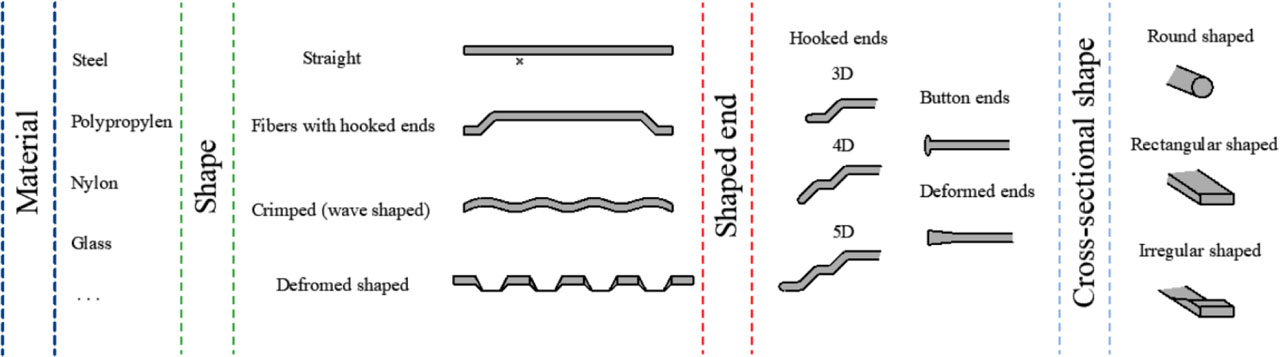
Figure 1:
Material and shape type of fibres (Sucharda et al., 2022)
From a technological standpoint, it is important for one to ensure the homogeneity of concrete and FRHPC to achieve consistent structural performance. The composition of concrete largely influences all its properties especially in high-performance concrete applications (Reddy & Ramadoss, 2022; Sengun et al., 2023; Zhang et al., 2020). A challenging scenario within FRHPC production involves high fibre dosages typically above 75 kg/m3. These high dosages complicate mixing, handling, and placement in application (Sivakumar & Santhanam, 2007). FRHPC is widely used in various structural applications such as foundations, ground-supported slabs and floors (Sorelli et al., 2006; Sucharda et al., 2017), beams (Zhao et al., 2018), and shear reinforcement-free beams (Sucharda et al., 2022). The design and application of FRHPC must be approached with a strong qualitative understanding, as fibres significantly influence both the mechanical and fracture properties of the material (Yas & Al-Hadithy, 2024; Sucharda et al., 2015). The primary goal for this paper was to examine influence of two different dosages of polymer and steel fibres on FRHPC. The experimental program was designed to evaluate mainly FRHPCs strength characteristics, chemical resistance (specifically resistance to frost and chemical de-icing agents) and load capacity of reinforced concrete beams without shear reinforcement.
Advances in concrete technology have been driven by the requirements for more smart multifunctional construction materials capable of resisting extreme loading and environmental conditions (Akbulut et al., 2025). The design of HPC and further development of FHPC evolved from that of high compressive strength concrete to include durability, ductility, resistance to chlorides, sulphates and freeze-thaw cycles (Yuan et al., 2012). Efforts into optimising the microstructure of the cementitious matrix through nano-modification and/or optimization of the spatial distribution of fibres within the composite has been investigated to improve the crack bridging efficiency of the cementitious matrix as well as reducing permeability (Lu et al., 2022). The usage of digital design tools and performance-based specifications in the design of the concrete composition to meet mechanical and sustainability outcomes has been explored (da Silva Neto et al., 2025). This broader technology framework can therefore provide the basis for the development of FHPC solutions for modern, high-demand structural applications.
2. Materials and Methodology
For the testing of FRHPC was designed single mixture, which was subsequently modified with different amounts and types of fibres. The chosen raw materials are mostly locally available in region of eastern Czech Republic. For the dispersed reinforcement two material types of fibres were used: steel and polymer (polyvinyl alcohol). The total amount of fibres used was calculated in proportion to the total volume (0,5% and 1%). Designed mixtures are highlighted in Table 1, and their origin described here:
Cement CEM I 52.5 R, cement plant Hranice nad Moravicí.
0/4 mined aggregate, sand and gravel pit Tovačov.
0/4 crushed aggregate, granite quarry Litice and Orlicí.
Powdered superplasticizer based on the polymerization product of glycol.
Highly pure silica fume, REMEI, Chomutov.
Finely ground limestone, limestone quarry Kotouč Štramberk.
Steel fibres, MasterFiber 482.
Polymer fibres, MasterFiber 400.
Table 1:
Mixtures
| Input materials | [kg/m3] | |||
|---|---|---|---|---|
| S1 | S2 | P1 | P2 | |
| Fibres (% of total volume) | 40 (0,5%) | 80 (1%) | 6.62 (0,5%) | 13.24 (1%) |
| Cement CEM I 52.5 R | 650 | |||
| 0/4 mined aggregate | 830 | |||
| 4/8 crushed aggregate | 530 | |||
| Super plasticizer | 19.5 | |||
| Silica fume | 70 | |||
| Limestone | 80 | |||
| Water | 155 | |||
All samples were prepared in laboratory conditions at temperatures of 21 ± 1 °C and humidity of 55 ± 5 % RH in an automatic mixer. A powdered superplasticizer (main reason for adding powdered superplasticizer is because of possibility of preprepared bagged mixture) was added to enhance the workability of the fresh mixture, which also allowed for a reduction in the required mixing water. However, as was revealed to us later, this superplasticizer (or more likely used amount) slowed down solidification of the mixture, which caused that demoulding of the test samples took after four days. To minimize the risk of surface cracking from plastic shrinkage due to rapid water evaporation, the test specimens in moulds were covered with plastic foil and after demoulding placed in the water path for curing.
Testing and preparation took place in the laboratory of VSB-Technical University of Ostrava – Faculty of Civil Engineering. Most of the strength characteristics were tested on laboratory hydraulic presses FORM+TEST MEGA 100-300-10DM1. Table 2 presents an overview of the laboratory tests carried out as part of the experimental program. Alongside the test parameters, the table also details the specimen types used. The specimens include prism fragments (halves) of 40×40×160 mm prisms remaining after flexural testing. Finally reinforced concrete beams of dimensions 100×190×1150 mm were used in static load tests of mixtures (but also containing steel reinforcement). In Figure 2 are presented images of prepared samples during testing.
Table 2:
Experimental methods (C. O. S. M. T. stands for The Czech Office for Standards, Metrology and Testing)
| Conducted tests | Type of sample | Number of samples for each series |
|---|---|---|
| Compressive strength (C. O. S. M. T., 2016, 2020) | Cube 150 mm | 3 |
| Cube 100 mm | 4 | |
| Prism fragments | 5×8 | |
| Tensile-splitting strength (C. O. S. M. T., 2024) | Cube 150 mm | 3 |
| Flexural strength (C. O. S. M. T., 2016) | Prism 40×40×160 mm | 5×4 |
| Resistance to water and chemical de-icing agents (C. O. S. M. T., 1985) | Cube 100 mm | 4 |
| Frost resistance (C. O. S. M. T., 1969) | Prism 40×40×160 mm | 6 |
| Load – deformation behaviour of beams | Beam 100×190×1150 mm | 2 |
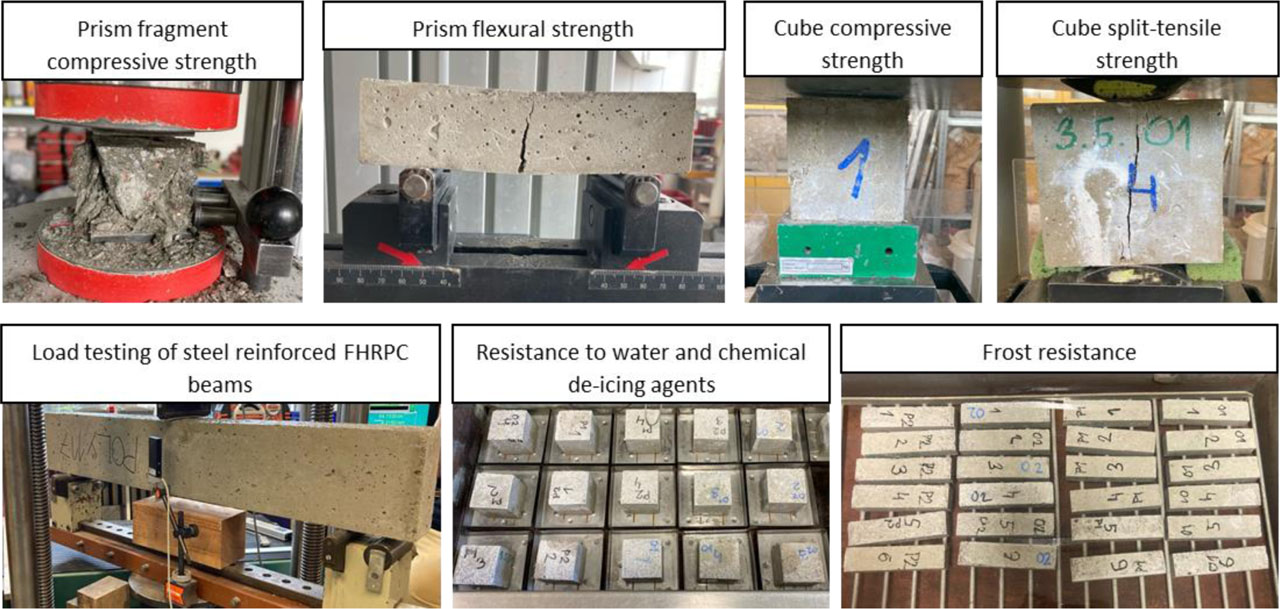
Figure 2:
Images of prepared samples during testing
3. Results
3.1. Compressive and Flexural Strength Development over 56 days
Since the day demoulding took place (4 days), four samples from each mixture and in every set interval (4, 7, 14, 28 and 28 days) were tested to determine the average flexural and compressive strengths increase in time.
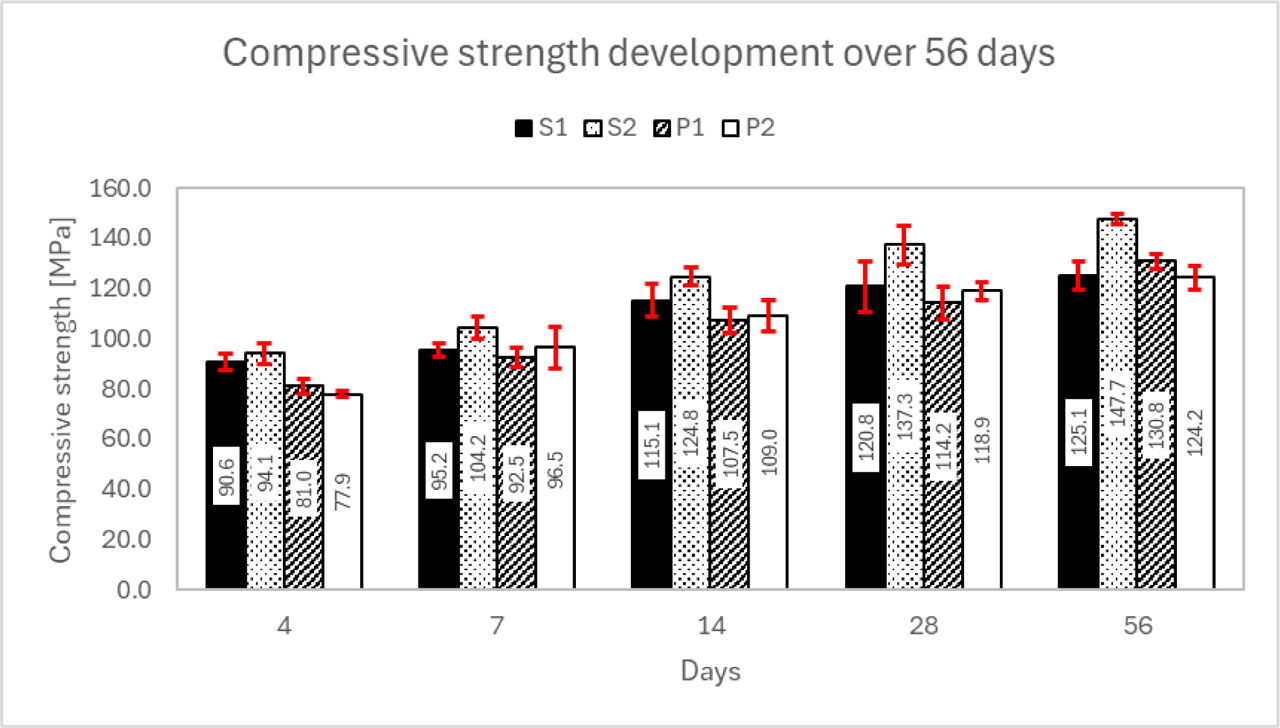
Figure 3:
Compressive strength development over 56 days
All mixtures exhibited with the passage of time a steady increase in their compressive strength (Figure 3). S2, due to the fact it contained the highest volume of steel fibres, did consistently achieve the highest compressive strength at all ages, reaching 147.7 MPa at 56 days. This performance highlights the positive contribution from steel fibres especially at higher dosages. Steel fibres likely improve crack bridging to thus develop higher compressive strength. P1 showed the lowest compressive strength values during the test period (e.g., 130.8 MPa at 56 days) then P2 (124.2 MPa) which had only halved dose of polymer fibres. While the increase in polymer fibre content (P2) led to moderate strength improvements at early ages, the overall effect remained less significant than that observed in steel fibre mixtures. It seems steel fibres contribute more to compressive strength, especially at higher volumes, but polymer fibres' impact on this characteristic is more limited.
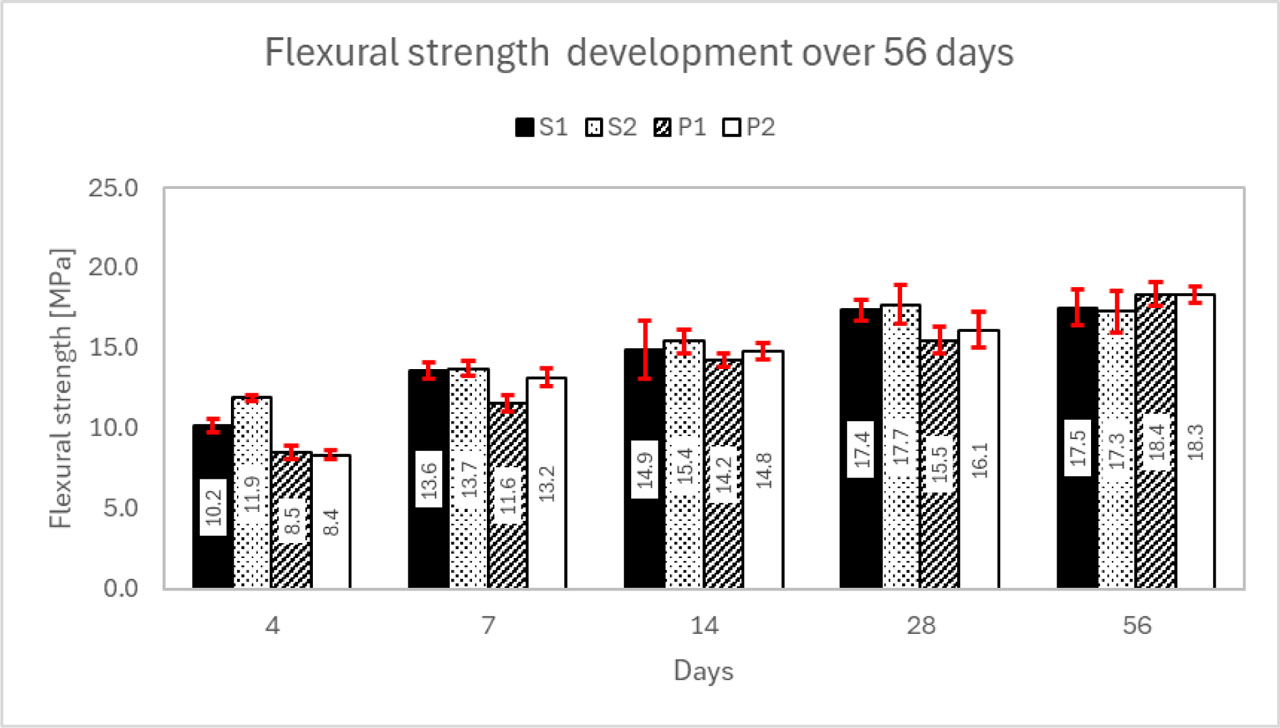
Figure 4:
Flexural strength development over 56 days
Compressive strength results tests were preceded by flexural strength testing which results followed a similar upward trend as can be seen in Figure 4. However, fibre type had more balanced impact in this case. All of the mixtures achieved a comparable flexural strength in a 17.3–18.4 MPa range at 56 days. Mixtures' differences were less pronounced than in compressive strength while S2 slightly outperformed the others. Steel-fibre mixtures (S1, S2) exhibited higher flexural strength compared to polymer-fibre mixtures at early ages (e.g., 4 as well as 7 days). S2 reached 11.9 MPa in 4 days, as opposed to P1's 6.5 MPa. However, at about 56 days, polymer-fibre mixes such as P1 and P2 had then largely caught up, and this suggests polymer fibres enhance flexural performance more gradually. Increased fibre content in S2 and P2 resulted in noticeable but diminishing gains in flexural strength over time. This implies that beyond a certain volume, the additional fibre content yields only marginal improvements in flexural behaviour.
3.2. Compressive Strength
Figure 5 shows the average compressive strength after 28 days for three types of test samples: 100 mm cubes (four specimens), 150 mm cubes (three specimens), and prism fragments (four specimens). S2 mixture consistently achieved the highest compressive strengths, with values ranging from 111.6 MPa (150 mm cube) to 137.3 MPa (prism fragment). This does indicate a performance benefit here from increasing the steel fibre content. In comparison, P1 did generally record the lowest compressive strengths. Notably, S1 and P2 exhibited intermediate performance, as well as this suggests that while polymer fibres can contribute positively to compressive strength, their effect is less pronounced compared to steel fibres. The results imply compressive strength was better when polymer fibre content doubled (P2 versus P1) across specimen types but less so than with steel fibres.
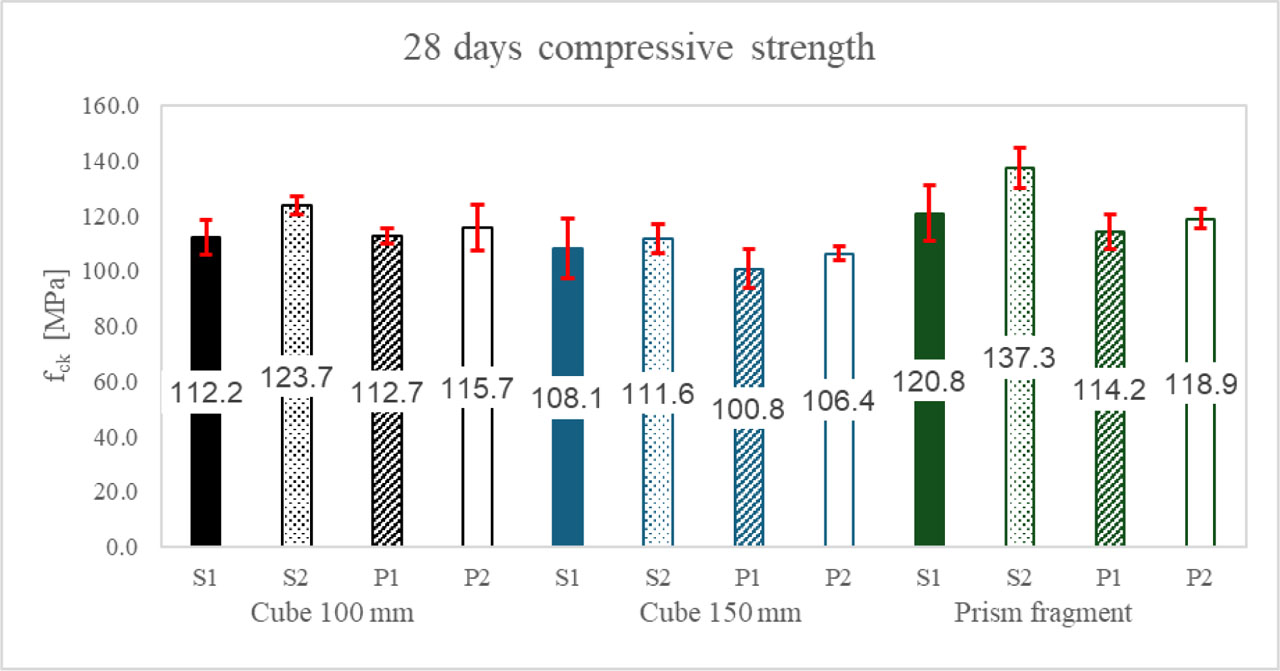
Figure 5:
28 days compressive strength
3.3. Tensile-splitting Strength
When speaking of fibre reinforced concrete, the tensile-splitting strength is arguably the most influenced characteristic. Figure 6 presents the average tensile-splitting strength performed on a set of 3 specimens of 150 mm cubes after a period of 28 days. S1 reached the highest tensile-splitting strength at 7.30 MPa. P1 as well as S2 followed with 6.90 MPa plus 6.40 MPa respectively. P2 recorded the lowest tensile strength of 4.35 MPa showing a significant drop in performance compared to the other three mixtures. Interestingly, P1 outperformed S2.
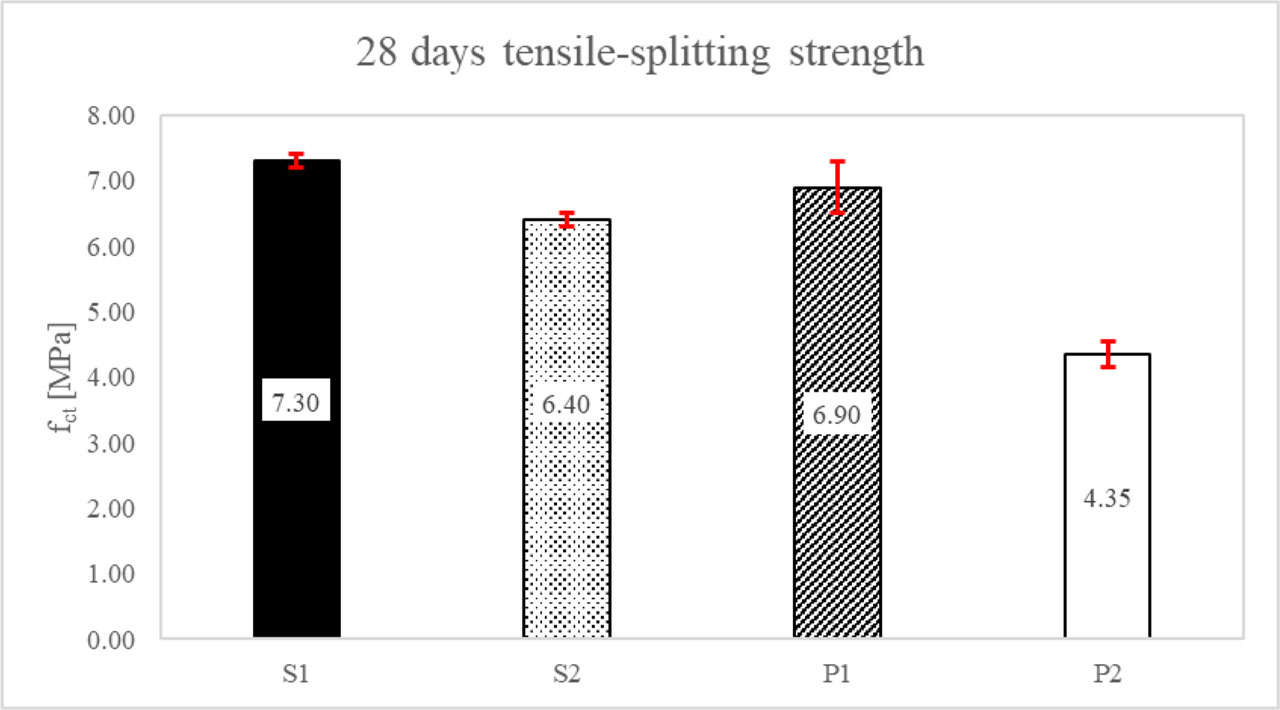
Figure 6:
Resistance to frost and chemical de-icing agents
3.4. Determination of Resistance to Frost and Chemical De-icing Agents
Figure 7 presents the average cumulative surface mass loss of tested fibre-reinforced concrete samples (four 100 mm cube specimens) mixtures subjected to up to 400 freeze–thaw cycles in the presence of chemical de-icing agents. A progressive increase in mass loss was observed in all mixture types with increasing exposure, as expected under cyclic freeze–thaw and salt attack conditions. However, the degree of degradation varied significantly between mixtures. Mixture S1 consistently exhibited the highest mass loss across all exposure intervals, indicating the lowest surface resistance to frost and de-icing chemicals among the fibre-reinforced variants. After 400 cycles, the cumulative mass loss of S1 reached 137.1 g/m2, compared to 104.4 g/m2 for S2, 107.1 g/m2 for P1, and 116.9 g/m2 for P2. These results demonstrate that fibre type and volume fraction play a key role in durability performance. The improved performance of S2, which contained a higher dosage of steel fibres, may suggest enhanced crack-bridging capacity and internal stress control, effectively mitigating surface deterioration. Similarly, both polymer fibre mixtures (P1 and P2) demonstrated improved performance relative to S1, with P1 outperforming P2 throughout the test.
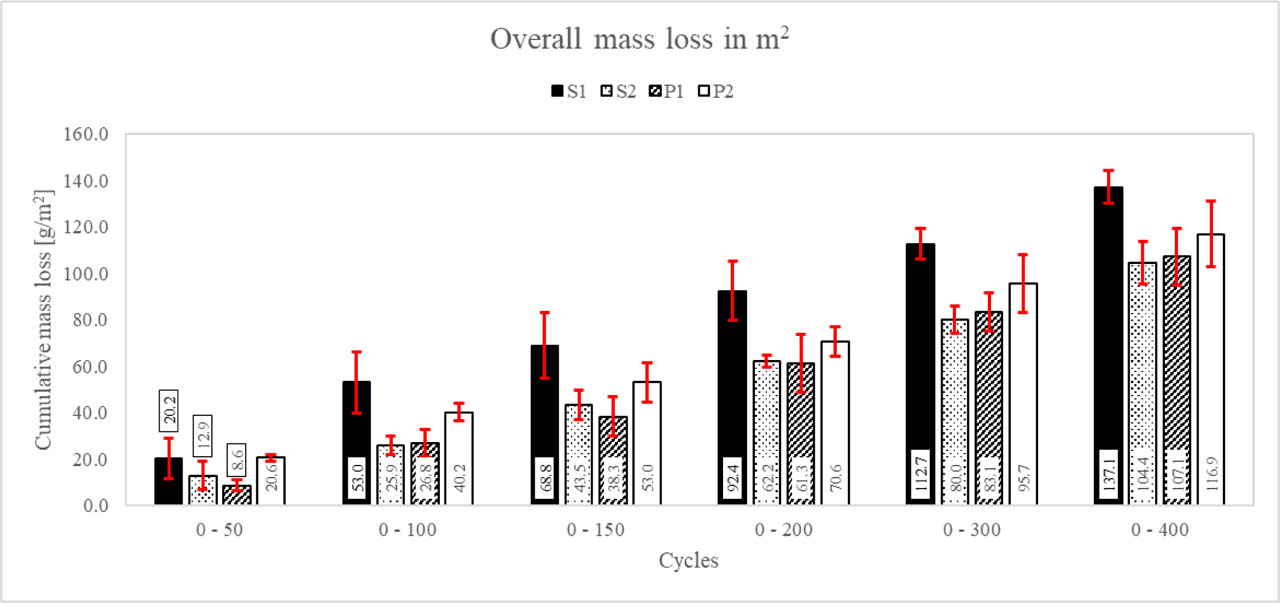
Figure 7:
Resistance to frost and chemical de-icing agents
3.5. Load Testing of Steel Reinforced FRHPC Beams
Figure 8 presents a scheme of reinforced concrete beam testing. The dimensions of the beams were 1150 mm in length with cross-section of 100×190 mm (the dimensions of the beams were chosen for comparison with other test results research conducted previously in the Department of building materials and diagnostics of structures of VŠB-TUO). Beams were also reinforced with three steel grade B500 longitudinal bars of 10 mm in diameter with concrete cover of 20 mm and no shear reinforcement. For each mixture were created two specimens, which were tested using three-point bending test with a span length of 900 mm between the supports. Figure 9 shows the mould for a concrete beam casting with the steel reinforcement.
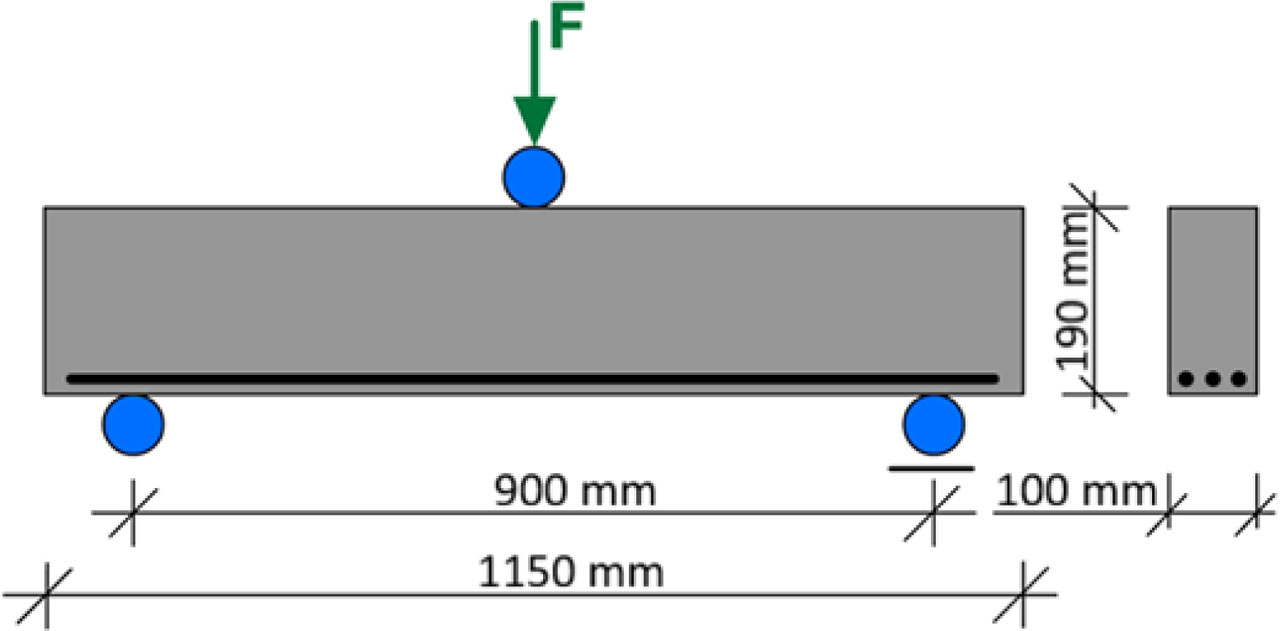
Figure 8:
Scheme of reinforced concrete beam
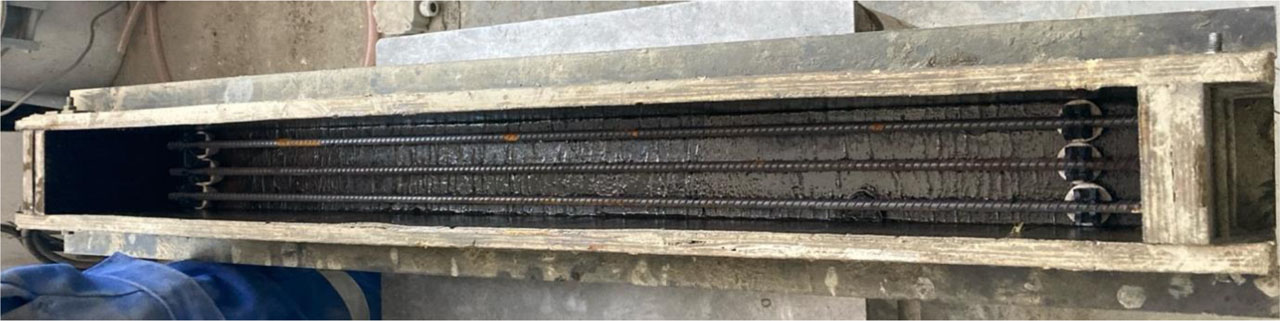
Figure 9:
Mold with inserted reinforcement prepared for beam casting
Figure 10 shows the load–deformation behaviour of reinforced concrete beams. The graph captures the load-bearing behaviour under static loading up to their failure. Peak load values are also included for each specimen. All beams exhibit a typical nonlinear response, characterized by an initial elastic phase, followed by yielding and progressive cracking until failure. However, both the peak load capacity and the post-peak deformation behaviour vary markedly depending on the fibre type and dosage. The S2 mixture, achieved the highest load-bearing capacity, with peak loads of 125.13 kN and 122.82 kN, and showed an extended post-peak decrease. This indicates both superior strength and ductility, assigned to the enhanced crack-bridging capacity provided by the increased steel fibre content. The S1 beams reached peak loads of 98.11 kN and 92.46 kN, given their lower steel fibre content. Although lower than S2, these values still reflect notable structural performance, with improved ductility in comparison with the polymer-based mixtures. Mixtures with polymer fibres (P1 and P2) exhibited lower peak loads overall. For P1, the peak loads were 93.91 kN and 93.29 kN, showing modest strength but sharper post-peak drops, indicating limited ductile behaviour. The P2 beams, reached the lowest peak loads at 84.32 kN and 80.07 kN. This result possibly suggests that excessive polymer fibre content may reduce structural load capacity. Generally, the load–deformation curves indicate steel fibre volumes (S2) greatly improve the strength and ductility of reinforced concrete beams. Polymer fibres provide less structural benefit as well as their overuse (P2) may even compromise on load capacity.
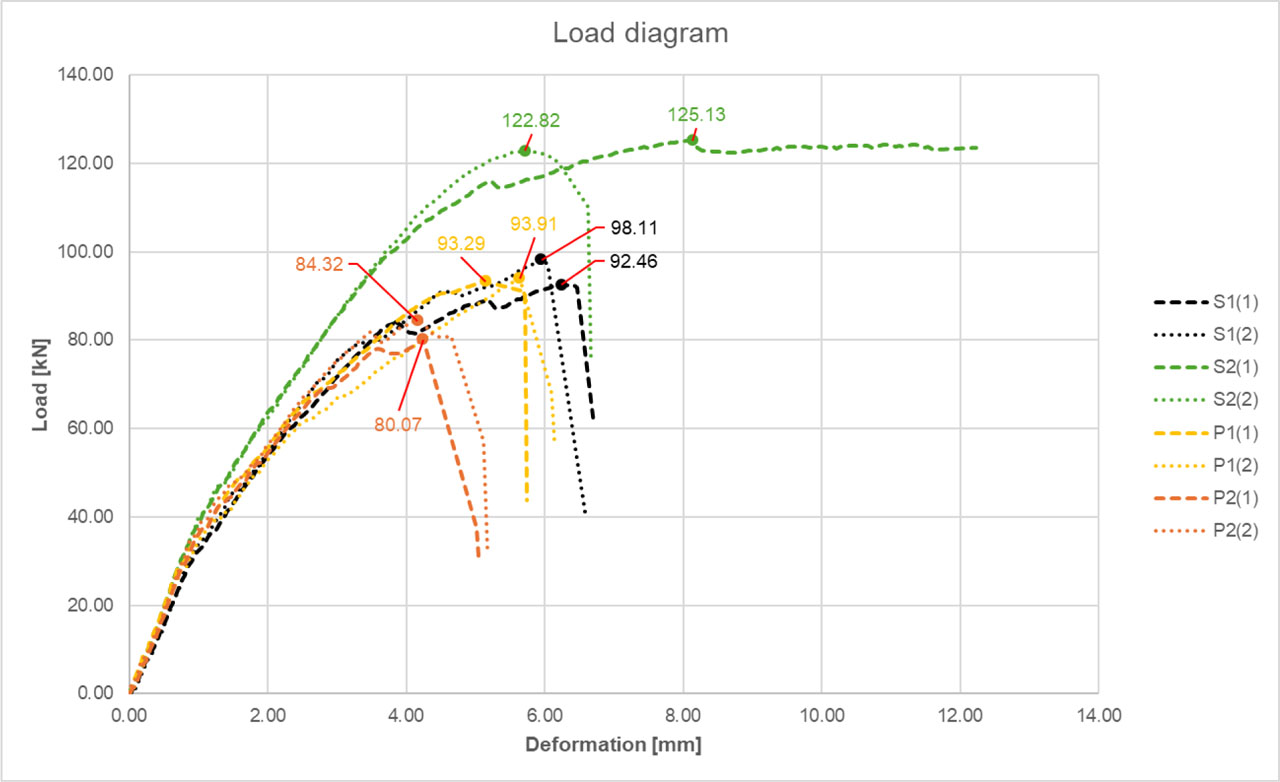
Figure 10:
Scheme of load/deformation of reinforced concrete beams
During the three-point bending test emerging cracks were monitored and later highlighted in the order of their occurrence. Cracks numbered 1 were the first to form during loading, followed by cracks numbered 2 and finally those with number 3. As can be seen from photographs on Figure 11 there was occurrence of mostly 2 shear cracks on both sides of the test specimens except for S2 mixture, where During the loading process and the development of shear cracks labelled 1 and 2, the maximum load-bearing capacity was reached, after which deformation increased and shear crack no. 3 was initiated and began to develop.
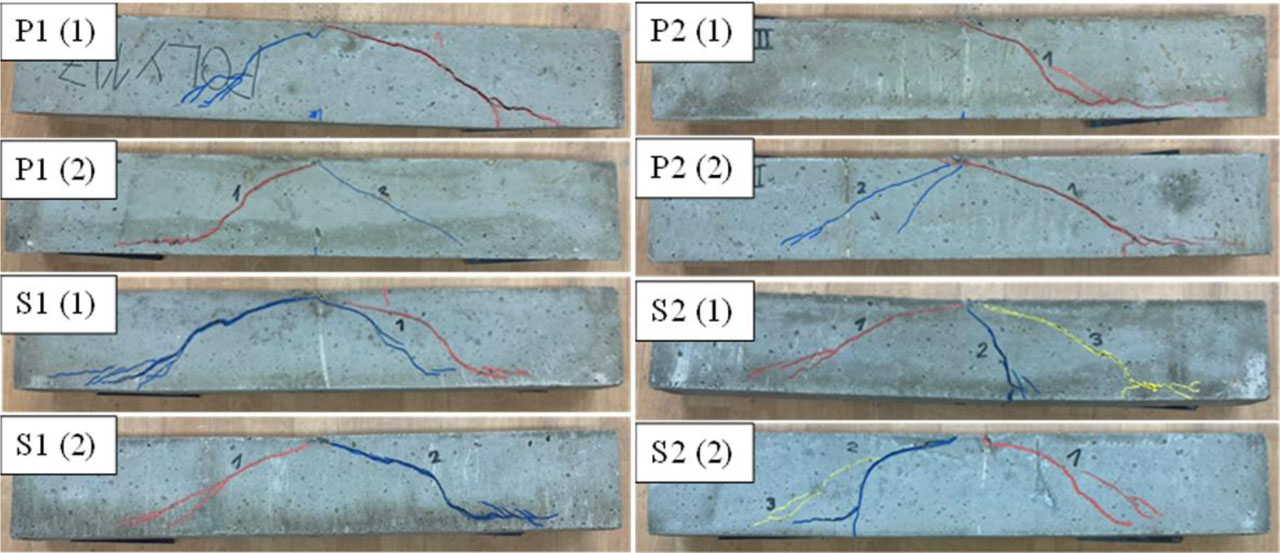
Figure 11:
Photographs of every tested beam, cracks are labelled as they appeared
4. Discussion
The experimental results highlight quite well the complex effect of fibre type as well as quantity on concrete's durability in addition to mechanical performance. Across all tests, we observe that steel fibres are more effective overall. They improve strength in particular and offer better resistance against environmental degradation at higher dosages (S2).
Regarding compressive and flexural strength, steel fibre mixtures consistently outperformed polymer fibre mixtures. Observed performance gain in S2 over S1 indicates that an increase in steel fibre content improves crack-bridging capacity as well as load distribution. However, the response to higher polymer fibre dosage was less consistent. P2 often exhibited decreased strength, specifically in flexural performance as well as tensile splitting, whilst P1 generally showed moderate improvements in general. This may suggest that higher contents of polymer fibres can disrupt the matrix, or they can cause poor fibre dispersion. This can lead toward reduced bonding with cement matrix and lower mechanical efficiency.
Tensile-splitting results further confirm this behaviour. S2 achieved higher strength than S1, whereas P2 showed a significant drop compared to P1. This could be attributed to a weaker fibre–matrix interface at higher polymer contents, which inhibits effective stress transfer.
In durability testing, increased fibre content generally improved resistance to freeze–thaw and de-icing salt exposure. S2 again showed the lowest cumulative mass loss, suggesting that steel fibres contribute to matrix integrity and reduce surface scaling. On the contrary, the poor performance of S1, despite containing steel fibres, implies that fibre amount must reach a critical threshold to be effective. P1 and P2 exhibited intermediate behaviour, although the performance of P2 again raises concerns about fibre interaction with the cement matrix at higher concentrations.
The load–deformation behaviour for reinforced beams offers further understanding. The significantly higher peak load and extended post-peak residual load observed in S2 beams indicate not only increased capacity but also improved ductility. In contrast, P2 beams did fail at lower load levels and with more abruptness, mirroring trends that emerged from mechanical tests and giving reinforcing idea that excessive polymer fibre content within the matrix may well be counterproductive in structural applications.
Although all mixtures incorporated fibres, and no fibre-free control was tested, the comparative data strongly suggest that fibre type and it’s amount could critically influence performance, with steel fibres (especially in higher volumes) providing seemingly the most consistent and beneficial effects.
The data strongly imply fibre type and volume crucially affect performance; steel fibres, particularly in higher volumes, give the steadiest and most useful effects though fibres were incorporated in all mixes and no fibre-free control was tested.
5. Conclusion
The experimental program focused on the influence of steel as well as polymer fibres on the mechanical and durability properties of fibre reinforced high-performance concrete. Four mixtures were tested, varying in type of fibres (steel “S” and polymer “P”) and dosage (standard “1” and double volume “2”). The results regularly showed a highly positive impact of steel fibres particularly at greater amounts (S2) on compressive strength (S1 – 120.8 MPa → S2 – 137.3 MPa for prism fragments) and reinforced beams' load-bearing behaviour. S2 beams reached up to the highest peak loads (P1 – 93.91 kN → P2 – 84.32 kN; S1 – 98.11 kN → S2 – 125.13 kN), while furthermore, exhibiting ductile failure modes along with extended post-peak behaviour, which indicated improved crack-bridging and energy dissipation. In contrast tensile-splitting strength (S1 – 7.3 MPa → S2 – 6.4 MPa) results showed noticeable decrease and flexural strength showed only very minor increase (within the margin of error) comparing fibre volume (S1 – 17.4 MPa → S2 – 17.7 MPa; P1 – 15.5 MPa → P2 – 16.1 MPa) for both types of fibre mixtures, while steel fibres reached slightly better results than their polymer counterparts. Polymer fibre mixtures performed with less consistency. P1 generally had satisfactory results yet, as polymer fibre volume doubled (P2), compressive strength (P1 – 114.2 MPa → P2 118.9 MPa) and distinct tensile-splitting strength decrease (P1 – 6.9; MPa → P2 – 4.35 MPa) which was more noticeable than in the case with stell fibre mixtures.
This may suggest that high polymer fibre content could in some cases weaken the matrix, lead to fibre clustering or have negative effect on the effectiveness of fibre–matrix bonding. These observations had further support in the results from frost and de-icing resistance tests: polymer fibre mixtures (P1 – 107.1 g/m2 → P2 – 116.9 g/m2) showed an increase in surface degradation over a period of time, while mixture S2 exhibited greater surface durability. On the other hand, S1 exhibited the worst surface durability (S1 – 137.1 g/m2 → S2 – 104.4 g/m2) out of all mixture types. This could be caused by insufficient volume of fibres in the mixture to have desired impact.
Although all the tested mixtures included fibres, and they did not include any plain concrete reference, the comparative trends clearly indicate that fibre type as well as dosage critically affect performance, and that steel fibres at optimized volumes improve both structural and environmental performance most reliably. These insights could be helpful in development of much more durable Fiber-reinforced concrete systems. Such systems would be mechanically efficient in structural also infrastructure applications.
Acknowledgements
This research was funded by the project CirkArena, number CZ.10.03.01/00/22_003/0000045, supported by the European Just Transition Fund as part of the Operational Programme Just Transition under the aegis of the Ministry of the Environment of the Czech Republic. This research also received support from the Ministry of Education, specifically from the Student Research Grant Competition of the Technical University of Ostrava under identification number SP2025/098.
Notes
[1] Contributed by Author Contributions
O.S. supervised the project. J.J. and J.N. designed the materials and conducted the experiment. J.J., J.N. and R.G. performed data analysis. J.J. and J.N. contributed to manuscript writing. All authors critically reviewed and approved the final version of the manuscript and agreed to be accountable for all aspects of the work.
[2] Financial disclosure Disclosure of Interest
The authors declare that they have no known competing financial interests or personal relationships that could have appeared to influence the work reported in this paper.
[3] Data Availability Statement
The data supporting the findings of this study are available from the corresponding author upon reasonable request.
Public Repository:
The datasets generated during and/or analysed during the current study are available in the [Zenodo] repository https://doi.org/10.5281/zenodo.17502634 and http://hdl.handle.net/10084/155550.