

1. Introduction
Soil stabilization is a process that enhances and improves the engineering properties of soil, including mechanical strength, permeability, compressibility, durability, and plasticity. Soil-stabilizing agents include lime, cement, industrial by-products (e.g., fly ash, slag), polymers, chemical additives, and recycled materials. However, depending on the soil type and application, certain treatments may be costly or ineffective. Portland cement and lime are commonly used for soil stabilization, particularly in expansive soils. Portland cement is generally considered more effective than lime due to its faster and greater strength development (Hossain, 2010; Xiao, 2017). Nevertheless, environmental concerns have been raised regarding the use of cement because of its substantial consumption of natural resources and energy, as well as the release of CO2 during its production. Consequently, recent studies have focused on identifying alternative binders that can reduce the carbon footprint of construction projects (Arulrajah et al., 2018). The study by AL-Adhadh et al. (2025) demonstrates that sandy soil can be effectively stabilized using a combination of cement and calcined shale, identifying 10% cement and a 30% CS replacement as the most effective proportions. The findings further underscore the promise of calcined shale as a sustainable stabilizing material, showing notable enhancements in consolidation performance across various curing periods.
In recent years, there has been growing interest in utilizing waste materials and industrial by-products such as steel slag, coal ash, and biomass ash as soil treatment stabilizers instead of conventional cement and lime (Oh et al., 2016; Kamei et al., 2013; Kim et al., 2016; Ahmad et al., 2024). Laboratory studies have been conducted to determine the unconfined compressive strength of local dredged soils combined with three different types of slag (Oh et al., 2016). The results revealed that a higher slag content in the soil–slag mixture led to greater strength enhancement. The use of recovered Bassanite, manufactured from gypsum waste, to stabilize soft clay soil demonstrated acceptable durability, improved strength performance, and enhanced the engineering properties of soft clay under wet conditions (Kamei et al., 2013).
A field test was conducted to evaluate the applicability of soil reclamation using coal ash–mixed soil (Kim et al., 2016). Coal ash was found to improve the mechanical properties of dredged soil. Similarly, adding varying amounts of fly ash to expansive soil enhanced plastic behavior, compressive and shear strength, penetration resistance, swelling, and compressibility (Ahmad et al., 2024). Moreover, the inclusion of nanoclay resulted in a reduction in collapse potential (CP), with 6% nanoclay yielding the greatest CP reduction (Hameed and Ganjian, 2024). Additionally, pre-test curing of soil specimens treated with nanoclay increased the CP compared to specimens without curing (Hameed and Ganjian, 2024).
According to Sahar Al-Khyat et al. (2024), electrochemical processes, bioremediation, and additive stabilization are effective methods for improving the engineering characteristics and performance of contaminated soils. Jama and Saeed (2023) reported that industrial by-products or geologically derived materials rich in silicon (Si) and aluminum (Al), such as clays, fly ash, metakaolin, slag, bottom ash, and rice husk ash, can be used to produce geopolymers. Because geopolymers emit fewer greenhouse gases than conventional Portland cement, they are considered a more environmentally sustainable binding material. Moreover, Wijaya et al. (2024) reported that treating subgrade soil with a fly ash–bottom ash geopolymer significantly improves its strength, elevating it beyond the standard performance requirements for road subgrades. Although several studies in Vietnam have examined the behavior and engineering characteristics of cement-stabilized soils, no published research has specifically investigated the engineering properties of cement-stabilized soil incorporating the TS Mika® VN additive, either in laboratory settings or in practice.
This study investigates the engineering properties of soil stabilized with varying amounts of cement in combination with the TS Mika® VN additive. Key engineering parameters, including unconfined compressive strength, splitting tensile strength, and elastic modulus, were evaluated after curing periods of 7, 14, and 28 days.
2. Materials and Methods
2.1. Materials
2.1.1. Cement
This study employed ordinary Portland cement (OPC), which is widely produced in Vietnam, as the primary binder. The fundamental physical properties of the OPC used in this investigation are summarized in Table 1.
2.1.2. TS Mika® VN
Soil Stabilizer TS Mika® VN is a high-performance, liquid, polymer-based additive designed to stabilize soil and aggregate materials for various ground improvement and construction applications. When combined with Portland cement, it markedly enhances the mechanical strength, durability, and water resistance of treated materials, making it suitable for infrastructure projects such as airport runways, unpaved roads, pedestrian pathways, storage yards, earthen embankments, and mining sites. Owing to its liquid form and high water solubility, the product is easy to handle and apply, allowing for direct on-site blending with construction materials.
The stabilizer has a density of 1.4 ± 0.03 g/mL, ensuring consistent performance across diverse applications. It reduces shrinkage, improves compaction and impermeability, and enhances resistance to environmental degradation such as erosion and chemical attack. When used in accordance with the manufacturer’s guidelines, the product is non-corrosive, portable, and environmentally friendly. To prepare a working solution, dissolve one part of Soil Stabilizer TS Mika® VN in twenty parts of water. For example, mix 1 m3 of soil with 3.75 liters of Soil Stabilizer TS Mika® VN and 75 liters of water.
2.1.3. Soil
As illustrated in Figure 1, locally available soil was collected from a channel in Dak Nong Province, Vietnam, for this investigation. After air drying, the soil clods were broken up using a wooden mallet, and the material was sieved through a 4.75 mm sieve. Basic parameters, including moisture content, specific gravity, grain size distribution, liquid limit, plastic limit, and compaction characteristics, were determined to characterize the soil passing the sieve. The physical properties and grain size distribution of the natural soil are presented in Table 2 and Figure 2, respectively.
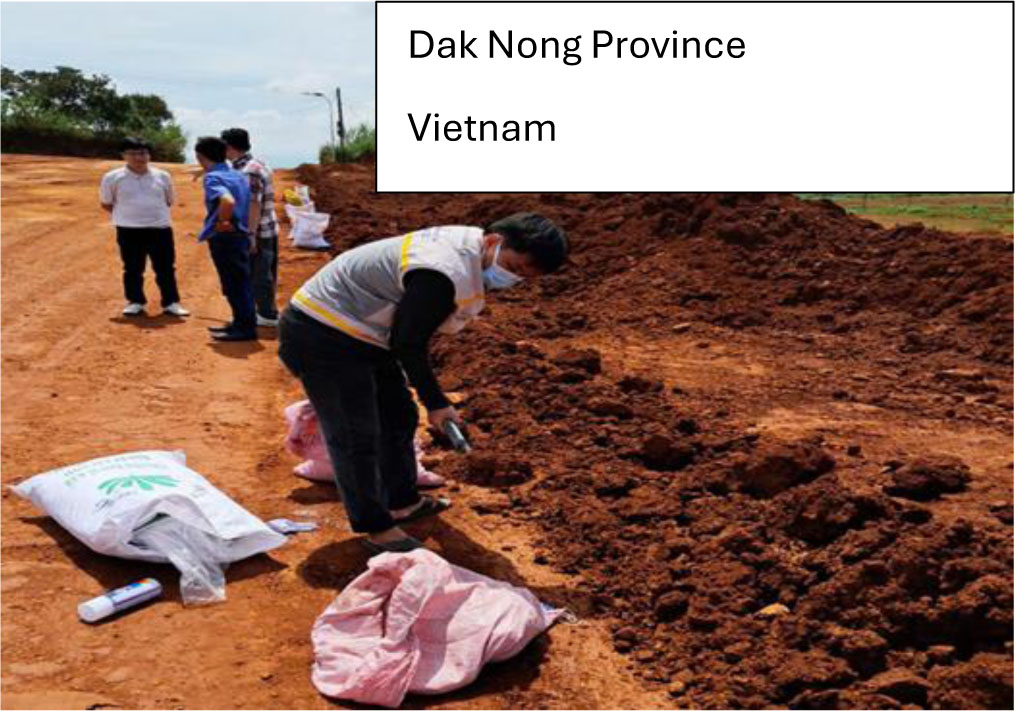
Figure 1:
Soil specimen
Table 2:
Physical properties of natural soil
| No. | Physical properties | Unit | Test results |
|---|---|---|---|
| 1 | Natural moisture content, W | % | 29.40 |
| 2 | Liquid limit, WL | % | 54.12 |
| 3 | Plastic limit, WP | % | 36.81 |
| 4 | Plasticity index, IP | % | 17.31 |
| 5 | Organic content | % | 19.3 |
| 6 | Specific gravity | g/cm3 | 2.774 |
| 7 | Compaction characteristics | ||
| 8 | Maximum dry unit weight, | g/cm3 | 1.650 |
| 9 | Optimum moisture content | % | 22.14 |
| 10 | AASHTO classification | A-7 |
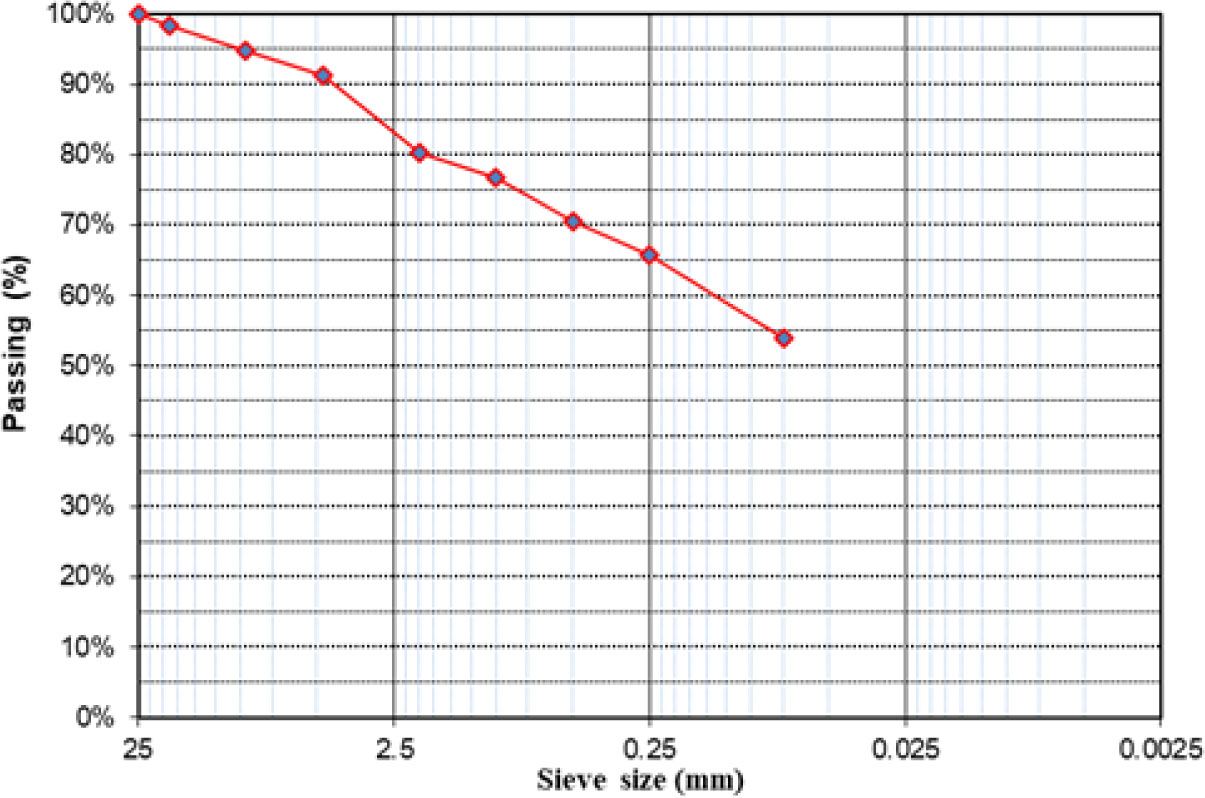
Figure 2:
Grain size distribution
Based on the physical properties of natural soil in table 2, the plasticity index of 17.31 exceeds 11, and the liquid limit of 54.42 is greater than 41. Based on these characteristics, the natural soil was classified as A-7 clayey soil according to the AASHTO M 145 (1995) classification system. Furthermore, since the group index of the soil is 17.09, the material is unsuitable for use as a subgrade layer in road construction as per AASHTO M 145 specifications.
2.2. Sample Preparation
In addition to 3.75 liters of TS additive per cubic meter of soil, the natural soil was mixed with 8%, 10%, and 12% cement. The cement contents of 8%, 10%, and 12% by dry soil mass were selected because they fall within the typical effective range for soil–cement stabilization recommended in practice and are consistent with TCVN 10379 (2014). The soil samples were dried in air, loosened without breaking the gravel particles, and combined with cement and the additive as specified for each mix. The prepared mixtures were subsequently conditioned at their optimum moisture content for roughly 2 hours. The specimens were prepared using the Proctor compaction method and then conditioned at room temperature with a relative humidity above 80%, as shown in Figure 3, before being tested under soaked conditions after curing periods of 7, 14, and 28 days.
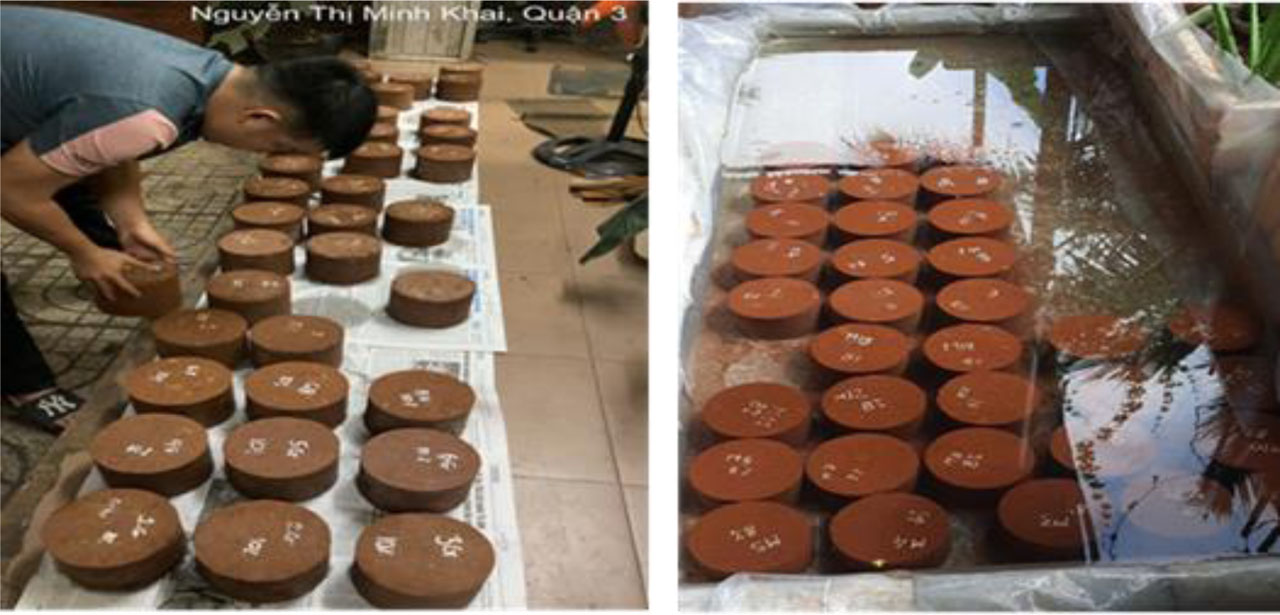
Figure 3:
Prepared samples
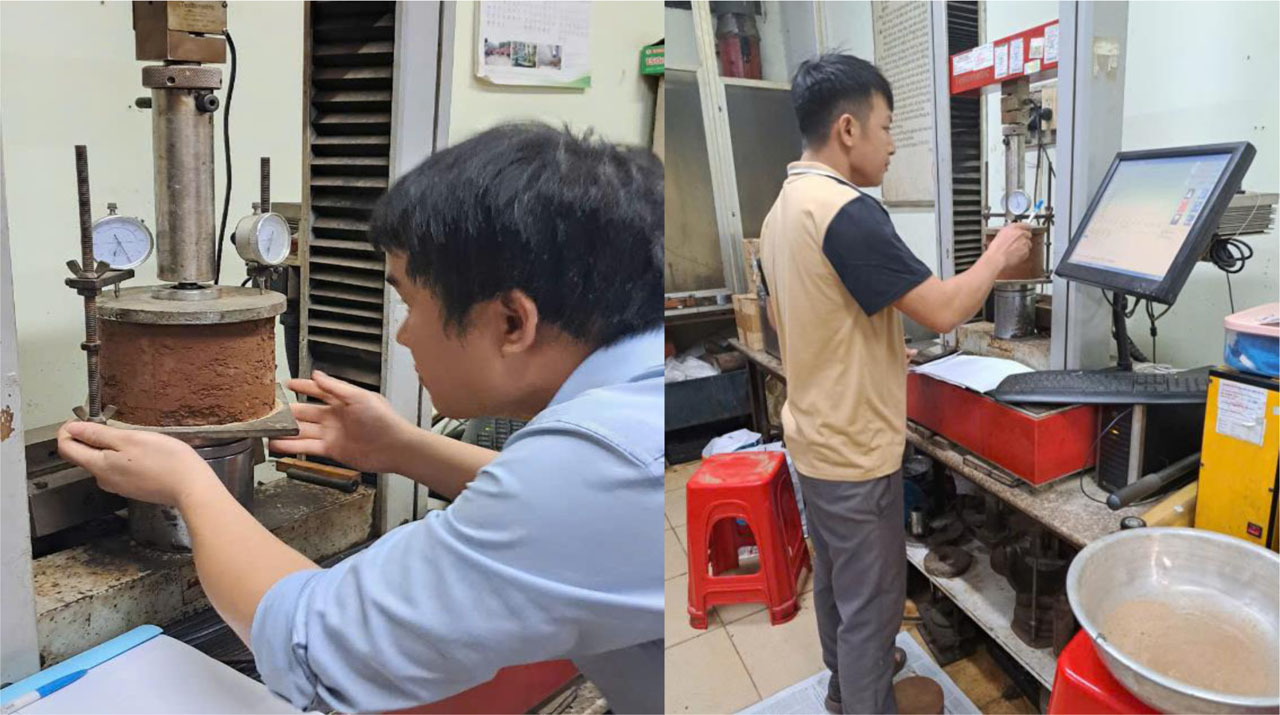
Figure 4:
Elastic modulus test
2.3. Testing Program
2.3.1. Unconfined compressive strength (UCS)
The UCS test of the stabilized soil was conducted in accordance with AASHTO T208 (1992). Cylindrical specimens measuring 50 mm in diameter and 100 mm in height were prepared in a metal mold at the maximum dry unit weight and optimum moisture content determined from the standard Proctor compaction test. After preparation, the stabilized soil specimens were immediately sealed in plastic bags and stored in a chamber at room temperature.
2.3.2. Splitting Tensile Strength (STS)
The splitting tensile strength of the stabilized soil was evaluated in accordance with ASTM C496 (2017). Each cylindrical specimen measured 116 mm in height and 101.6 mm in diameter. For each stabilized soil mixture, three replicate specimens were tested, and the average value of the results was used for analysis. The splitting tensile strength was calculated using Eq. (1) as follows:
Where:
H and D denote the height and diameter of the specimen, respectively,
T and P represent the splitting tensile strength and the applied load, respectively.
2.3.3. Elastic Modulus of Stabilized Soil (E)
In layered elastic analysis for pavement design, the elastic modulus of stabilized materials is a key parameter. Cylindrical specimens measuring 101.6 mm in diameter and 116 mm in height were prepared to determine the elastic modulus, as shown in Figure 4. In this study, the elastic modulus test was conducted in accordance with TCVN 9843 (2012). The elastic modulus of the stabilized soil was calculated using Eq. (2) as follows:
Where:
P - stands for compressive force,
H - specimen length
D - specimen diameter,
L - deformation,
E - elastic modulus.
3. Results and Discussions
3.1. Unconfined Compressive Strength (UCS)
The UCS is a commonly used parameter for evaluating the effectiveness of soil stabilization. The UCS values of stabilized soils containing 8%, 10%, and 12% cement with 3.75 liters of TS additive per cubic meter of soil after 7, 14, and 28 days of curing are presented in Figure 5. As shown, the UCS values range from 1.83–2.83 MPa, 5.26–6.11 MPa, and 7.31–8.03 MPa for 7, 14, and 28-day curing periods, respectively. The increase in UCS with curing time is attributed to time-dependent pozzolanic reactions that enhance the bonding between soil particles. Furthermore, Figure 5 indicates that the difference in UCS between 14 and 28 days is less pronounced than that between 7 and 14 days, suggesting that most strength development occurs within the first two weeks of curing. These observations are in agreement with previous studies, which also reported rapid strength gain during the first two weeks of curing due to accelerated pozzolanic activity in cement-treated soils (Nguyen and Phan, 2021). Based on the UCS results presented in Figure 5, the cement content of 10% combined with the TS additive is identified as the optimal dosage. Although increasing the cement content from 10% to 12% produces a slight gain in UCS, the improvement is marginal compared to the substantial strength increase observed when increasing the dosage from 8% to 10%. This indicates diminishing returns beyond 10% cement. Therefore, considering both strength performance and material efficiency, a cement content of approximately 10% provides the most effective and economic stabilization outcome. Overall, the results demonstrate the effectiveness of combining cement with the TS additive in enhancing the long-term strength of stabilized soils.
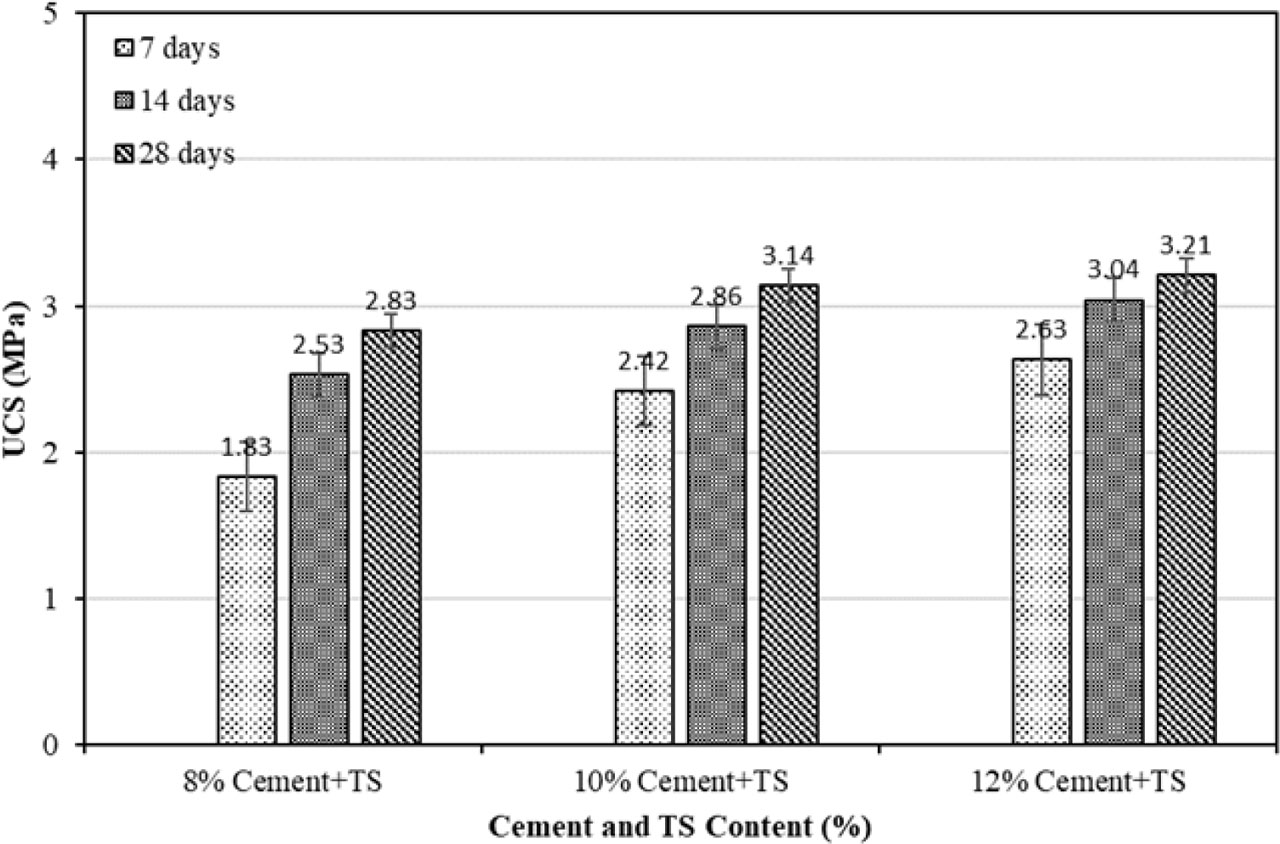
Figure 5:
Unconfined compressive strength of soil stabilization
3.2. Splitting Tensile Strength (STS)
Figure 5 presents the STS values of the stabilized soil after 7, 14, and 28 days of curing with different cement contents combined with the TS additive. It is evident that the strength increases with curing time, while the lowest values are observed at the early stages. For the mixture containing 8% cement with TS additive, the tensile strength increases from 0.16 MPa at 7 days to 0.24 MPa at 28 days. For the 10% cement mixture, the strength rises notably from 0.24 MPa at 14 days to 0.35 MPa at 28 days. The highest strength, 0.41 MPa, is achieved after 28 days of curing with 12% cement and TS additive. This demonstrates a clear trend in which increasing cement content with TS additive results in higher splitting tensile strength. For all mixtures, the 28-day strength is considerably greater than that at 7 days. For the 10% and 12% blends, the most significant increase occurs between 14 and 28 days of curing. Based on the STS results in Figure 6, the most appropriate cement dosage when used together with the TS additive is 10%. While the 12% mixture provides the highest UTS value overall, the additional strength gained beyond 10% is relatively minor compared with the clear improvement achieved when increasing the cement content from 8% to 10%. This trend reflects a diminishing benefit at higher cement levels. Consequently, a cement content of around 10% offers an optimal balance between strength enhancement and material efficiency in stabilized soils. Overall, the results confirm that both cement content and curing duration play vital roles in enhancing the tensile strength of the stabilized soil when used in combination with the TS additive.
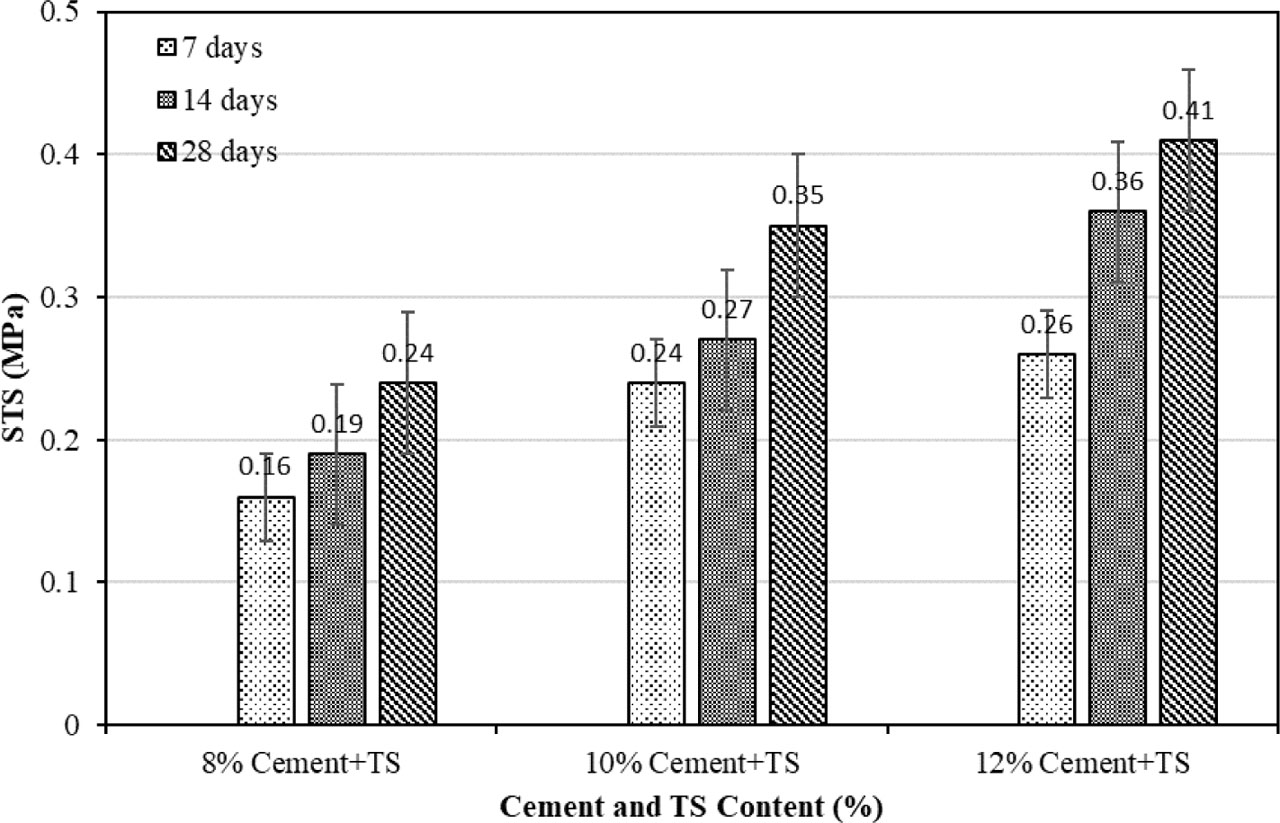
Figure 6:
The splitting tensile strength of soil stabilization
3.3. Elastic Modulus
Figure 7 illustrates the variation in the elastic modulus of soils stabilized with different cement contents and the TS additive. Similar to the trends observed in the UCS and STS tests, the resilient modulus increases with both curing duration and cement content. After 7 days of curing, the modulus rises by 16.8%, from 286 MPa (8% cement) to 334 MPa (10% cement), and by 22% to 349 MPa when the cement content is increased to 12%. At 14 days, the modulus increases by 16.3%, from 306 MPa to 356 MPa, and reaches 381 MPa at 12% cement, corresponding to an overall improvement of 24.5%. After 28 days, the elastic modulus further increases by 19.4%, from 314 MPa (8%) to 375 MPa (10%), and by an additional 25.8% to 395 MPa (12%). These results clearly indicate that increasing cement content in combination with the TS additive significantly enhances the stiffness and deformation resistance of the stabilized soil. Overall, the notable improvement in elastic modulus ranging from 22% to 26% as the cement content rises from 8% to 12% confirms the effectiveness of this stabilization approach.
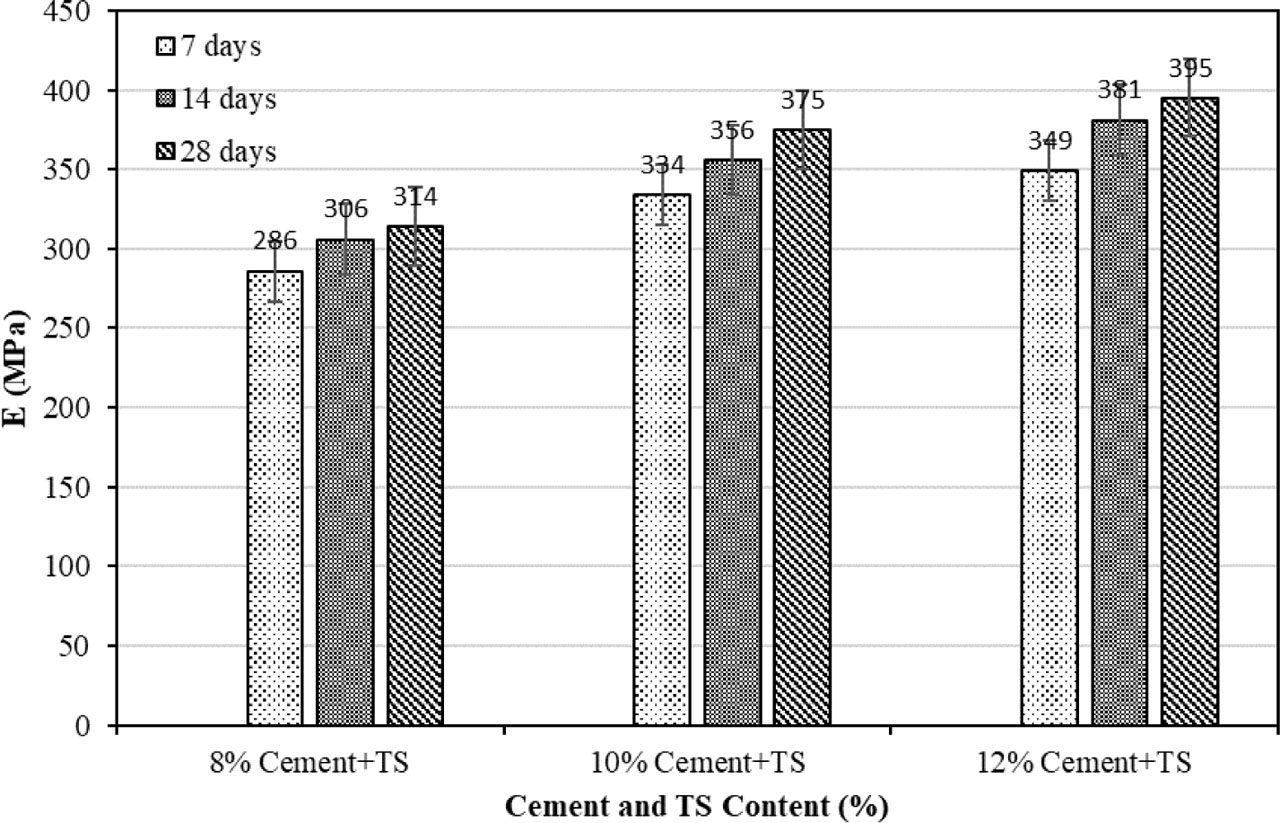
Figure 7:
The elastic modulus of soil stabilization
3.4. Correlation Among Obtained Data
Figures 8 and 9 present the relationships between STS and UCS, as well as between E and UCS, respectively. The results indicate that both STS and E increase with rising UCS values, demonstrating a strong positive correlation among these mechanical parameters. The relationships were best fitted using a high-relief exponential model, yielding coefficients of determination (R2 ≥ 0.86). This confirms that the elastic modulus and tensile strength of the stabilized soil are strongly dependent on its compressive strength. It should be noted that all curing periods, cement contents, and additive combinations were considered in establishing these correlations. Further laboratory and field investigations are recommended to validate and refine these empirical relationships under varied soil and environmental conditions.
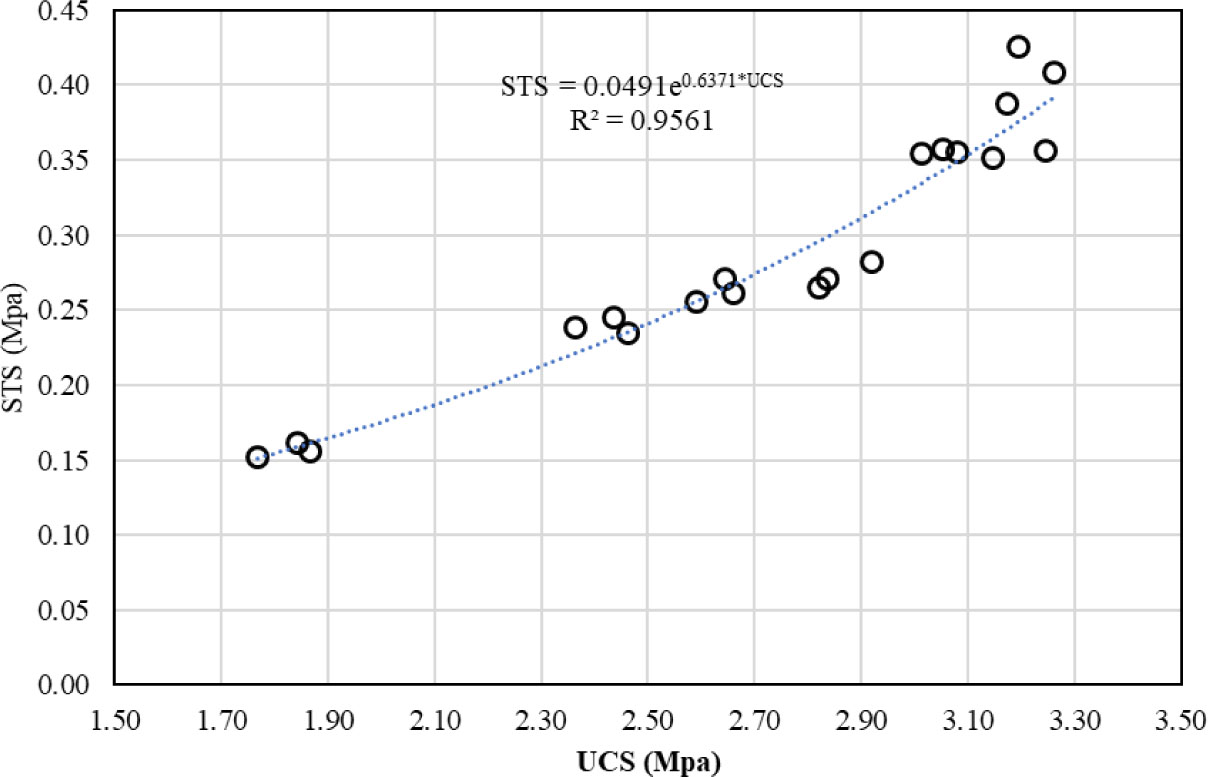
Figure 8:
Correlation between compressive strength and splitting tensile strength
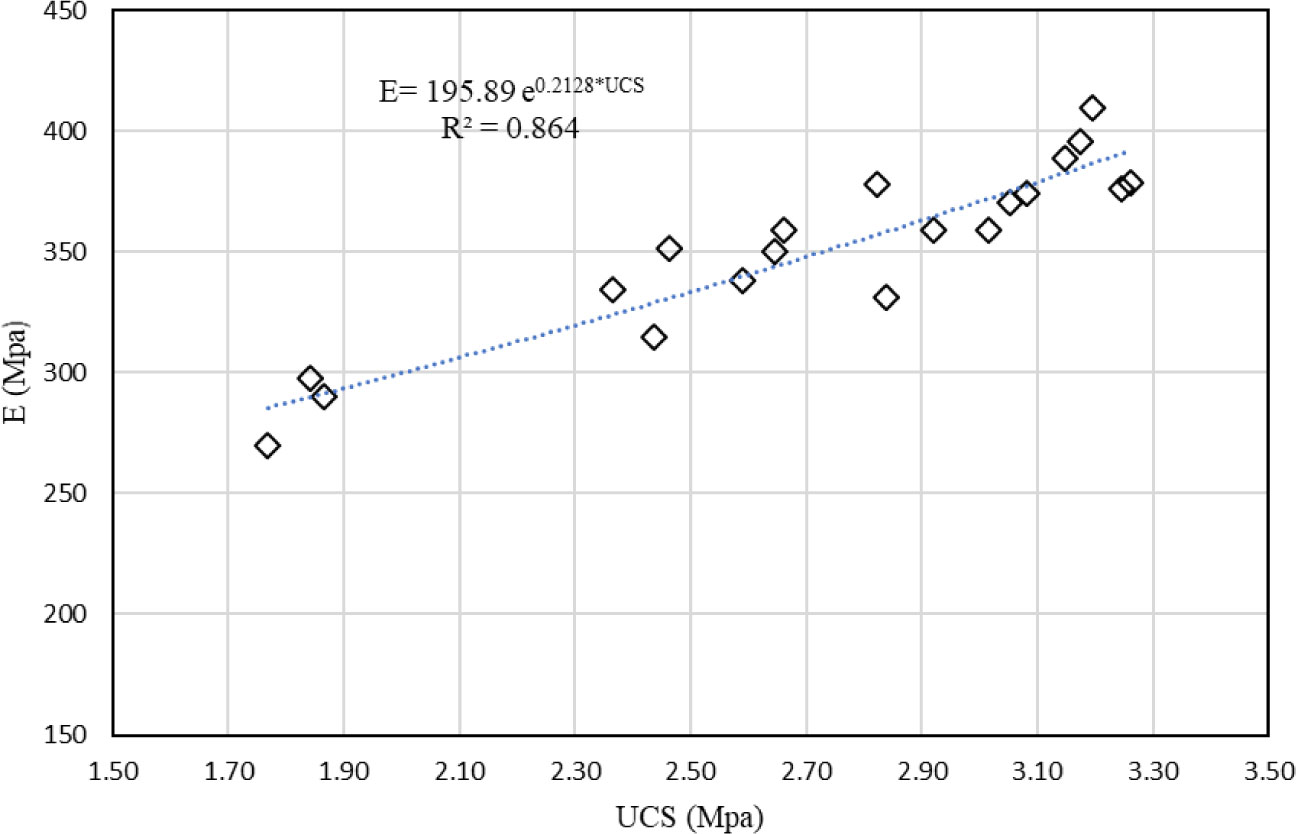
Figure 9:
Correlation between compressive strength and elastic modulus
3.5. Potential Application of the Material in Subbase and Base Courses for Road Construction
According to TCVN 10379 (2014), stabilized soils used in base and subbase layers of road pavements must satisfy specific geotechnical criteria corresponding to their designated durability levels. The standard classifies stabilized soils into three categories: Level I, Level II, and Level III, each with minimum strength and stiffness requirements. Under soaked conditions, the minimum 28-day unconfined compressive strengths are 3 MPa, 2 MPa, and 1 MPa for Levels I, II, and III, respectively, while the corresponding 7-day strengths are 2 MPa, 1 MPa, and 0.5 MPa. The minimum 28-day splitting tensile strengths are 1.2 MPa for Level I and 0.8 MPa for Level II, with no specified value for Level III. In addition, the elastic modulus should not be less than 400 MPa for Level I, 350 MPa for Level II, and 200 MPa for Level III. These criteria are intended to ensure the long-term structural integrity and durability of stabilized soils under realistic field moisture conditions. Table 3 summarizes the experimental results of the present study for cement-stabilized soil with the TS additive in relation to these standard requirements.
Table 3:
Selected value based on the data obtained from the present study
| Strength | Samples | Unit | Test values | ||
|---|---|---|---|---|---|
| 7 | 14 | 28 | |||
| UCS | 8% cement + TS | MPa | 1.83 | 2.53 | 2.83 |
| 10% cement + TS | MPa | 2.42 | 2.86 | 3.14 | |
| 12% cement + TS | MPa | 2.63 | 3.04 | 3.21 | |
| E | 8% cement + TS | MPa | 286 | 306 | 314 |
| 10% cement + TS | MPa | 334 | 356 | 375 | |
| 12% cement + TS | MPa | 349 | 381 | 395 | |
| STS | 8% cement + TS | MPa | 0.16 | 0.19 | 0.24 |
| 10% cement + TS | MPa | 0.24 | 0.27 | 0.35 | |
| 12% cement + TS | MPa | 0.26 | 0.36 | 0.41 | |
Table 3 indicates that all specimens meet the requirements for UCS, E, and STS corresponding to Durability Level III as defined by TCVN 10379 (2014). Therefore, the stabilized soils are suitable for use as subbase and base layers in road construction. However, the rate of improvement diminishes beyond 10% cement. For instance, the UCS at 28 days increases from 3.14 MPa at 10% cement to only 3.21 MPa at 12% cement, while the modulus of elasticity rises from 375 MPa to 395 MPa, and STS increases from 0.35 MPa to 0.41 MPa. These marginal gains indicate that adding more than 10% cement does not significantly enhance performance. Therefore, considering both strength development and material efficiency, the optimal cement content is 10%, which provides substantial improvement in soil strength while minimizing unnecessary material usage. Based on both mechanical performance and cost-effectiveness, the mixture containing 10% cement and 3.75 liters of TS additive per cubic meter of soil is recommended for road construction applications.
4. Conclusion
In this study, a series of laboratory tests were performed to evaluate the strength and resilient modulus of soils stabilized with cement and the TS Mika® VN additive. The results demonstrate that the incorporation of the TS additive in combination with cement significantly enhances the mechanical properties of stabilized soils, making it suitable for road construction applications. The main findings can be summarized as follows:
The stabilized soil shows significant improvement in UCS, STS, and E with increasing cement content and curing time. Most of the UCS gain occurs within the first 14 days, while STS and elastic modulus continue to increase up to 28 days, especially for the 10% and 12% cement mixtures.
Although higher cement contents provide slightly greater mechanical properties, the gains beyond 10% are marginal, indicating diminishing returns. Therefore, a cement content of 10% combined with the TS additive is identified as the optimal dosage, balancing both performance and material efficiency.
Therefore, considering both mechanical performance and cost-effectiveness, the mixture of 10% cement and 3.75 liters of TS additive per cubic meter of soil is recommended for road pavement construction.