

1. Introduction
Building Information Modelling (BIM) has progressively consolidated its status as a transformative digital paradigm within the Architecture, Engineering, Construction, and Operations (AECO) sector, fundamentally reconfiguring the modalities of collaboration, information exchange, and multidisciplinary coordination. The technology is increasingly acknowledged not merely as an auxiliary design tool but as a systemic enabler of digital construction workflows, with many governments and industry bodies mandating its adoption to leverage its capacity for productivity enhancement and project performance optimization (Abdulqader, et al., 2025; Widjaja et al., 2025).
Among the most prominent affordances of BIM is its capability for clash detection and subsequent conflict resolution within federated design environments. This functionality, grounded in the integration of discipline-specific three-dimensional models, facilitates the automated identification of geometric interferences or spatial overlaps between building elements well before physical construction commences. By enabling early-stage error localization and resolution in a simulated environment, BIM-based clash detection substantially diminishes epistemic uncertainty and mitigates the likelihood of costly site-based rework (Patil, 2016; Sidiq & Thamilselvi, 2018; Alone, 2020). Empirical investigations consistently emphasize that the pre-emptive resolution of clashes constitutes one of BIM’s most tangible contributions to enhanced project cost control and quality assurance. Projects that embed rigorous clash detection protocols frequently exhibit reduced volumes of change orders and Requests for Information (RFIs), thereby limiting schedule disruptions, minimizing waste, and reducing the probability of budgetary slippage (Bockstael & Issa, 2016). Industry-wide surveys have accordingly ranked clash detection as one of the most value-generative applications of BIM, primarily because the elimination of design conflicts during preconstruction obviates the need for disruptive and expensive field modifications (Chahrour et al., 2020). Early implementation studies similarly reveal that a substantial proportion of quantifiable savings in BIM-enabled projects can be attributed directly to clash detection interventions, which in turn foster higher levels of multidisciplinary collaboration, improved construction quality, and more reliable delivery outcomes (Sidiq & Thamilselvi, 2018; Alone, 2020).
Nevertheless, scaling clash detection across large and complex BIM models has proven far from unproblematic. The practical reality is that automated clash-detection engines frequently generate voluminous outputs, with a significant proportion comprising minor conflicts or spurious false positives (Lin & Huang, 2019; Akhmetzhanova et al., 2022). The ensuing “data deluge” complicates the task of isolating critical constructability issues from trivial conflicts, thereby requiring considerable manual triage and prioritization. Such information overload often transforms the coordination process into a labour-intensive endeavour, consuming substantial professional resources and undermining the presumed efficiencies of automation (Hasannejad et al., 2022). Moreover, the deployment of clash detection necessitates specialized software infrastructures, advanced modelling skills, and dedicated personnel, all of which escalate costs and present logistical hurdles in practice (Bockstael & Issa, 2016). Managing thousands of clash results across multiple models and disciplines further compounds the difficulty, as noted in studies that describe clash coordination as resource-demanding both technically and organizationally (Kermanshahi et al., 2020).
An additional layer of complexity derives from the absence of universally standardized procedures for recording, documenting, and institutionalizing clash resolution knowledge. Current practice rarely preserves critical metadata, such as the rationale behind clash-resolution decisions or the lessons learned for future preventive strategies, thereby forfeiting opportunities for organizational learning and continuous process improvement (Mehrbod et al., 2019). This systemic knowledge-management deficit means that while clashes may be resolved within the scope of a single project, the accumulated experiential know-how is seldom leveraged to reduce recurrence in subsequent endeavours.
It is thus evident that BIM-enabled clash detection embodies both a globally recognized source of demonstrable value and a locus of persistent methodological and practical challenges. The transition from traditional manual checking to highly digitized, algorithmically enhanced coordination workflows has undeniably advanced industry practice. Yet the full realization of clash detection’s potential remains constrained by technical, organizational, and procedural limitations. Addressing these deficits is essential not only for consolidating the economic rationale for BIM adoption but also for moving the construction sector towards the aspirational ideal of seamless, multi-disciplinary coordination. This study consolidates field evidence and prior research to expose barriers undermining BIM clash resolution. It proposes a comprehensive framework of advanced filtering, LOD/data standards, capacity building, cultural reorientation, and hybrid automation, shifting practice from reactive detection to proactive avoidance while offering robust directions for future scholarship and implementation.
2. Literature Review
The integration of Building Information Modelling (BIM) into construction project delivery has transformed traditional coordination paradigms by enabling the consolidation of discipline-specific models into a shared digital environment. This federated structure facilitates proactive detection of geometric, spatial, and functional inconsistencies before physical construction begins, thereby reducing the incidence of change orders and cost overruns. Theoretically, BIM embodies principles of systems integration and information transparency, bridging the informational asymmetries that historically fragmented communication between design and construction teams (Al-Kazee et al. 2024). Within this conceptual frame, clash detection represents not merely a technical function but a cognitive and organizational process through which collective sense-making about design intent and constructability occurs.
Early empirical evidence demonstrated the profound implications of such integration. A well-documented case from a large-scale hospital project revealed that BIM coordination uncovered over three million spatial interferences, 2.4 million of which were resolved prior to construction, substantially minimizing rework and delays (Khanzode, 2010). As design incongruities are among the main precursors of contract variations, the ability of BIM to anticipate conflicts at the preconstruction stage has been consistently recognized as a cornerstone of risk mitigation (Bockstael & Issa, 2016). From a theoretical standpoint, this aligns with Lean Construction and Error Management Theory, both emphasizing early detection and continuous feedback as means to reduce process variability.
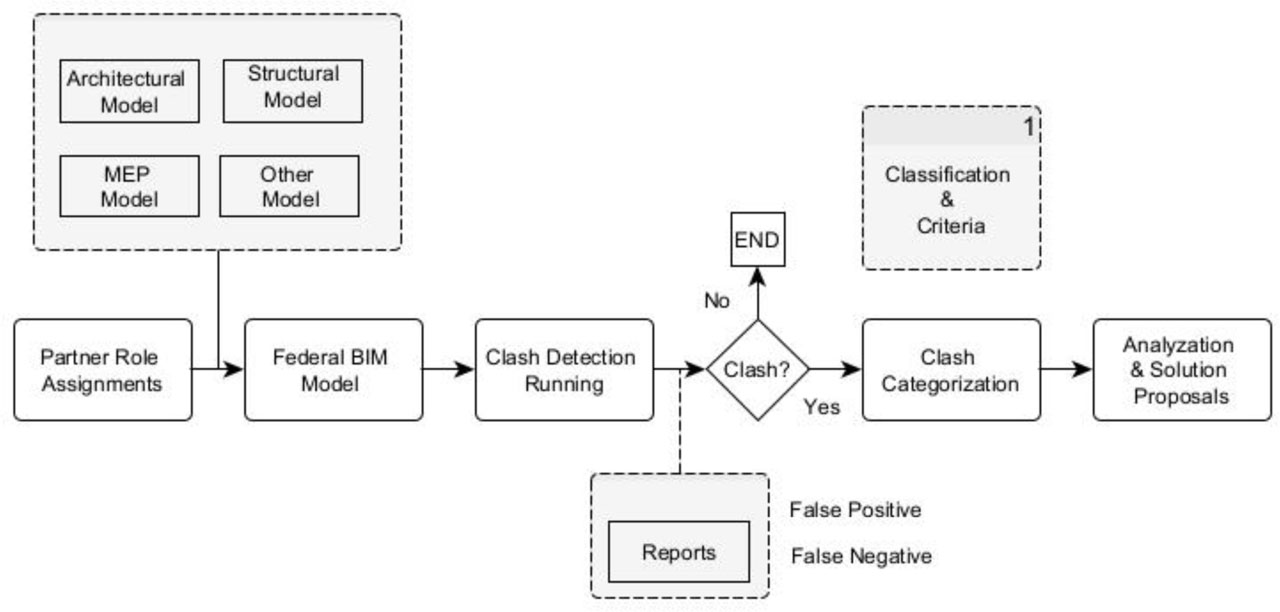
Figure 1:
Clash resolution flow demonstrated from the fieldwork
The evolution of clash detection research reflects a shift from deterministic rule-based models toward adaptive and knowledge-driven frameworks. In its earliest conceptualization, conflict management in BIM was grounded in rule-based reasoning, a manifestation of expert systems theory, where human domain knowledge was codified into logical structures that filtered non-critical clashes (Patil, 2016). However, such systems suffered from limited scalability, as extensive manual rule authoring could not accommodate project-specific nuances. Responding to this limitation, later studies embraced machine learning (ML) paradigms rooted in data-driven decision theory, leveraging annotated datasets to train classifiers capable of distinguishing meaningful conflicts from negligible overlaps (Lin & Huang, 2019). Ensemble models further extended predictive performance, achieving near-human judgment in cross-disciplinary classification (Shehadeh et al., 2024). Similar contributions by Liu et al. (2024) and Li et al. (2025) advanced transfer learning concepts, enabling experience from previous projects to inform predictive models for future applications.
The incorporation of semantic knowledge bases and ontological reasoning has deepened the theoretical sophistication of clash detection. By embedding ML algorithms within structured ontologies, scholars have sought to bridge the gap between quantitative prediction and qualitative understanding. Abdalhameed & Naimi (2023), for example, demonstrated how hybrid semantic–ML architectures can distinguish structural hard clashes from minor incongruities across thousands of records, aligning with the Knowledge-Based Systems (KBS) framework where reasoning and learning operate in tandem. The emerging consensus advocates hybrid models that combine human cognitive heuristics with computational intelligence, an instantiation of socio-technical systems theory, where human expertise and artificial reasoning mutually reinforce coordination efficiency (Hasannejad et al., 2022).
Recent theoretical advances conceptualize clashes not as isolated anomalies but as manifestations of systemic interdependence. Hu et al. (2019) reframed clash detection through graph theory, modelling BIM components as nodes within a relational network whose edges represent geometric and functional dependencies. This systemic perspective introduces the logic of network complexity theory into construction informatics, allowing for conflict prioritization and clustering based on relational centrality rather than individual occurrence. Such a paradigm shift transforms clash management from a micro-level inspection task into a macro-level system diagnostic tool, fostering holistic risk visualization across interconnected building systems.
Parallel developments in optimization and decision sciences have contributed algorithmic sophistication to clash resolution. Studies such as Pärn et al. (2018) and Liu et al. (2024) cast resolution sequencing as a multi-objective optimization problem, employing graph traversal and evolutionary algorithms to minimize both modification magnitude and interference recurrence. These approaches resonate with the Pareto efficiency principle from operations research, balancing competing objectives of cost, time, and model integrity. Complementary frameworks grounded in multi-criteria decision analysis (MCDA), including AHP, fuzzy AHP, and the Best–Worst Method, translate subjective professional judgment into structured evaluation matrices (Hasannejad et al., 2022; Bitaraf et al., 2024). Such frameworks institutionalize transparency and traceability in coordination decision-making, strengthening the normative foundation of BIM governance.
Emergent artificial intelligence (AI) models aim to transcend detection and evolve towards prescriptive and generative systems, capable of autonomously proposing or implementing clash-free configurations. Neural–heuristic hybrids, as exemplified by Hsu et al. (2020), employ reinforcement learning principles to iteratively refine model geometries until convergence on optimal solutions. Although these methods illustrate the trajectory toward self-organizing design systems, their practical implementation remains bounded by data limitations and contextual variability that necessitate continued human oversight.
Specialized subdomains, particularly reinforced-concrete detailing, reveal the boundaries of generic BIM platforms. High-density rebar configurations often produce spacing and cover violations that require domain-specific algorithms and compliance reasoning (Chidambaram, 2020; Mangal et al., 2021; Li et al., 2025). These studies substantiate the theoretical argument for domain ontologies and context-aware reasoning, emphasizing that automation in construction coordination must remain adaptable to regulatory and material specificities.
Finally, regional investigations highlight the social and institutional dimensions of BIM-based coordination. In Vietnam, Nguyen et al. (2020) demonstrated that although clash detection improved design reliability, skill gaps and procedural resistance delayed adoption. In Iraq, Abdalhameed and Naimi (2023) showed that pilot implementations served as institutional learning instruments, legitimizing BIM’s value among sceptical clients. Bashir et al. (2025) further situated BIM coordination within the socio-economic logic of the SMM2 cost framework, revealing that economic outcomes hinge not solely on software capability but on organizational routines and stakeholder collaboration. These findings reaffirm the socio-technical contingency of BIM innovation, its efficacy depends on the alignment of human, organizational, and technological subsystems.
In summary, the theoretical discourse around BIM clash detection has evolved from deterministic automation to hybrid intelligence, from atomized conflicts to networked systems, and from tool-centric experimentation to socially embedded practice. Yet, despite algorithmic progress, persistent challenges remain in integrating technical sophistication with the realities of project delivery. Uneven model maturity, interoperability deficits, and excessive clash notifications continue to constrain practical impact. The present study therefore situates clash detection within the lived experience of practitioners, emphasizing how organizational structure, communication dynamics, and cognitive workload mediate the translation of computational potential into actual project performance. By grounding technical solutions in theoretical and human-centred perspectives, this research seeks to advance a more holistic understanding of digital coordination in construction.
3. Methodology
This study adopts a mixed-method research design, integrating literature review with an in-depth discussion with BIM practitioners on the field. This multi-pronged approach mirrors prior clash detection studies. Such a design allows for both breadth and depth, ensuring that statistical patterns can be explained and validated by expert insights.
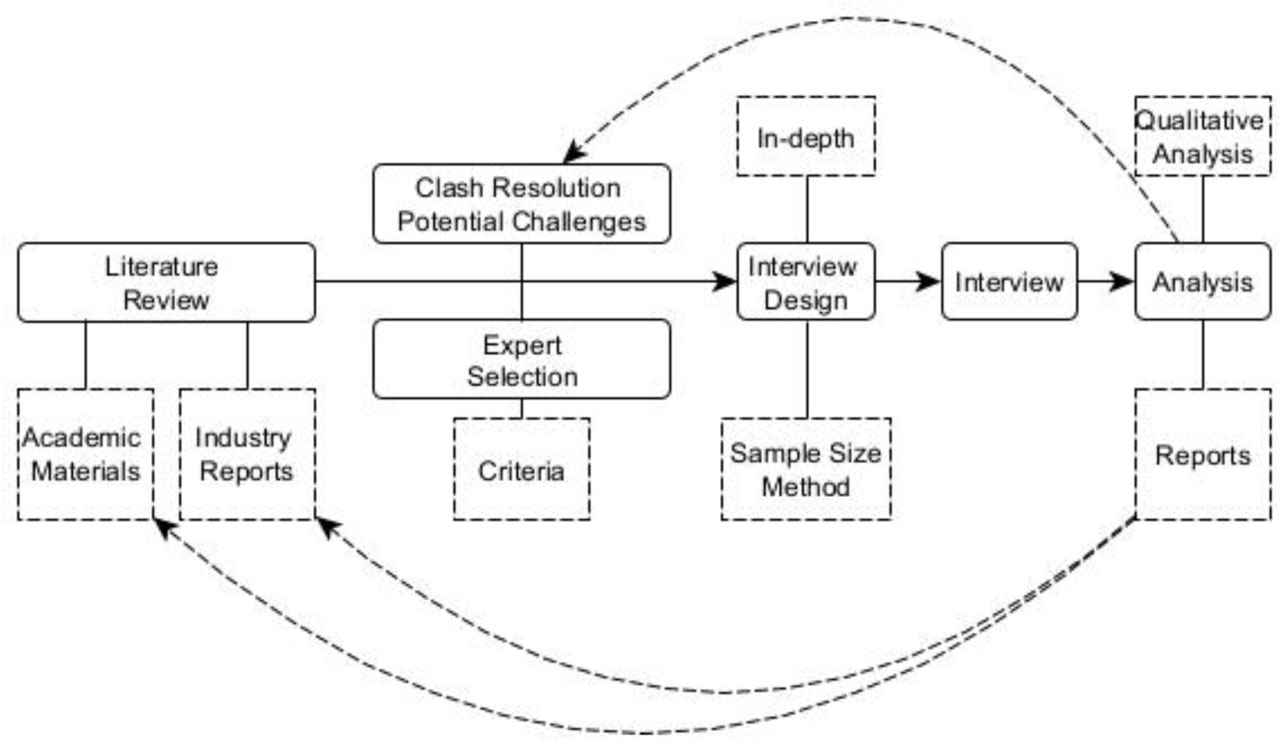
Figure 2:
Research framework
Data were collected diversity of participants who have different roles in projects. The study gathered data from both project artifacts and stakeholders. All data from the discussion and clash reports were analysed. Qualitative data were transcribed and examined using thematic analysis where recurring themes were coded and mapped.
By using this method, the research followed the analytical lens used in prior research that highlights how clash detection outcomes are influenced not only by technical issues but also by process workflows, organizational context, and human behaviour. The methodology ensures a rigorous and comprehensive examination of BIM-based clash detection, with careful consideration of technical, process, organizational, and human dimensions as recommended in the literature.
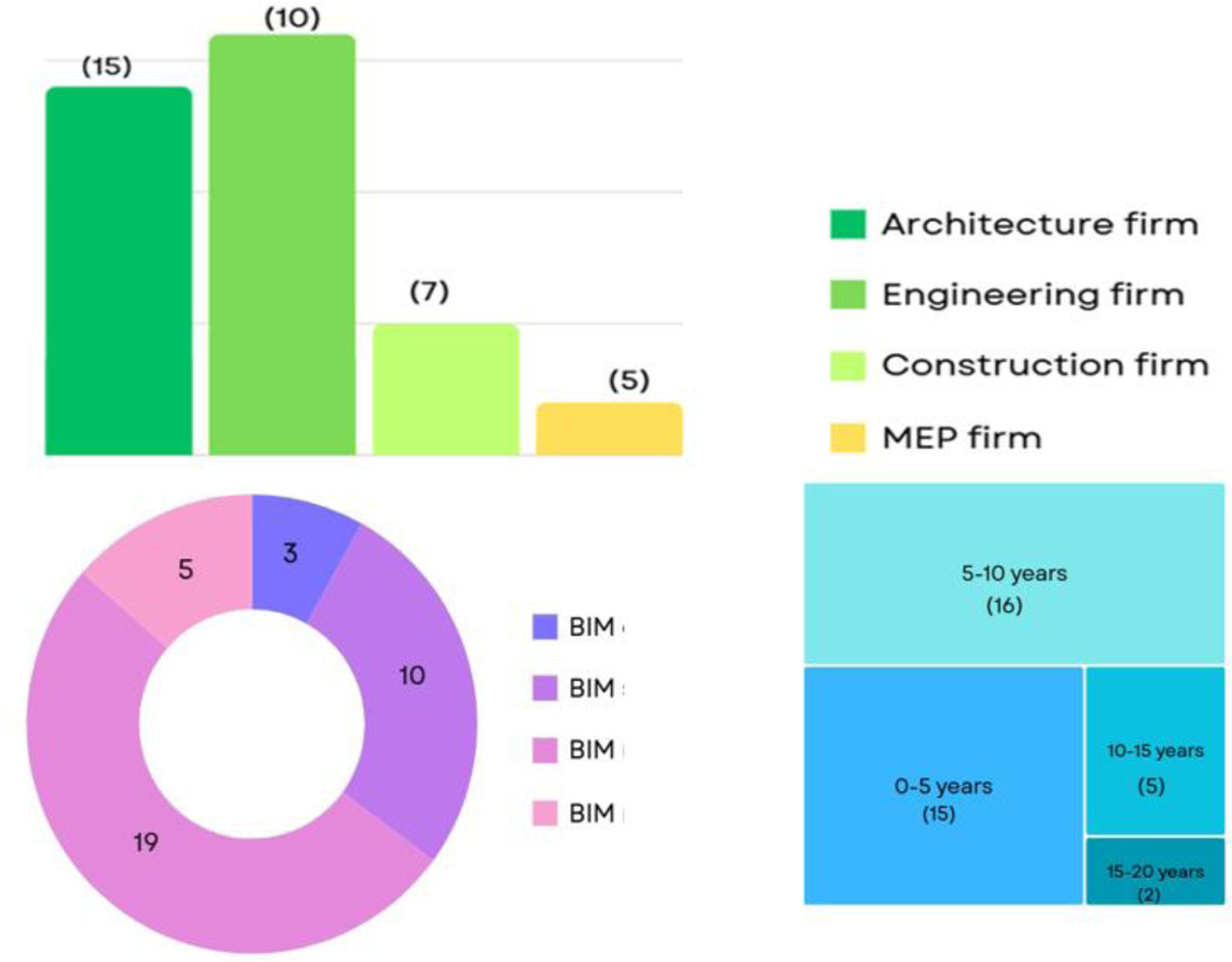
Figure 3:
Demographic and professional characteristics of the study participants
4. Results
4.1. Irrelevant / False-positive Clashes Overload
A persistent impediment to the effective deployment of Building Information Modelling (BIM) clash-detection systems is the overwhelming proliferation of flagged interferences that ultimately prove to be of negligible consequence. Contemporary clash-detection engines adopt a purely geometric logic, registering any instance of intersection or proximity between digital components as a potential conflict, irrespective of its actual constructability significance. This mechanistic approach invariably produces an inflation of detected clashes, even on comparatively modest projects, with empirical evidence indicating that more than half of the reported issues exert minimal or no influence on construction performance. Such “false alarms” often arise from minor penetrations, marginal clearances, or conditions readily resolved in situ without design modification. Moreover, a single underlying modelling inconsistency can cascade into multiple redundant alerts, for example, one pipe–beam intersection frequently generates dozens of discrete clash points, thereby distorting statistics and complicating downstream coordination processes (Luo et al., 2022; Yönder & Çavka, 2024).
The critical deficiency lies in the inability of existing platforms to discriminate between trivial and consequential conflicts. Clash reports typically present all identified items in a flat, undifferentiated register, obliging project teams to conduct exhaustive manual triage to isolate critical issues. This creates what practitioners have described as “clash overload,” wherein coordination managers confront datasets numbering in the tens or even hundreds of thousands of items. On megaprojects, unfiltered clash logs may extend into the millions, far exceeding the capacity of human reviewers to manage effectively (Hasannejad et al., 2022). The resultant information saturation frequently induces selective review strategies or outright disregard of large report segments, thereby undermining the reliability of clash detection as a decision-support tool. Beyond sheer inefficiency, the excessive volume of inconsequential clashes risks obscuring genuinely critical conflicts, fostering fatigue and eroding stakeholder trust in digital coordination processes.
Although a substantial body of research has explored algorithmic enhancements, ranging from tolerance calibration and semantic filtering to machine-learning classifiers, false positives stemming from modelling inconsistencies, incomplete object libraries, and human authoring errors remain resistant to elimination. Consequently, the discourse has increasingly shifted from simple detection toward the dual imperatives of relevance assessment and prioritization, underscoring that the value of clash detection is not defined by the quantity of issues identified, but by the system’s capacity to highlight those with meaningful implications for constructability, safety, and project delivery.
4.2. Clash Resolution Remains Manual and Time-consuming
While automated clash detection represents a crucial milestone in digital coordination, the subsequent task of resolving those conflicts constitutes a far more arduous and resource-intensive endeavour. Once interferences are identified, project teams must engage in detailed analysis, categorization, and the selection of corrective interventions. This phase is highly contingent upon the experiential knowledge and interpretive judgment of coordination specialists, with each clash typically necessitating multiple cycles of revision, redistribution, and re-validation of the model. Such iterative loops of update and retesting can lock projects into a protracted feedback cycle, consuming considerable time and effort (Harode & Thabet, 2023; Joshi & Fulse, 2025).
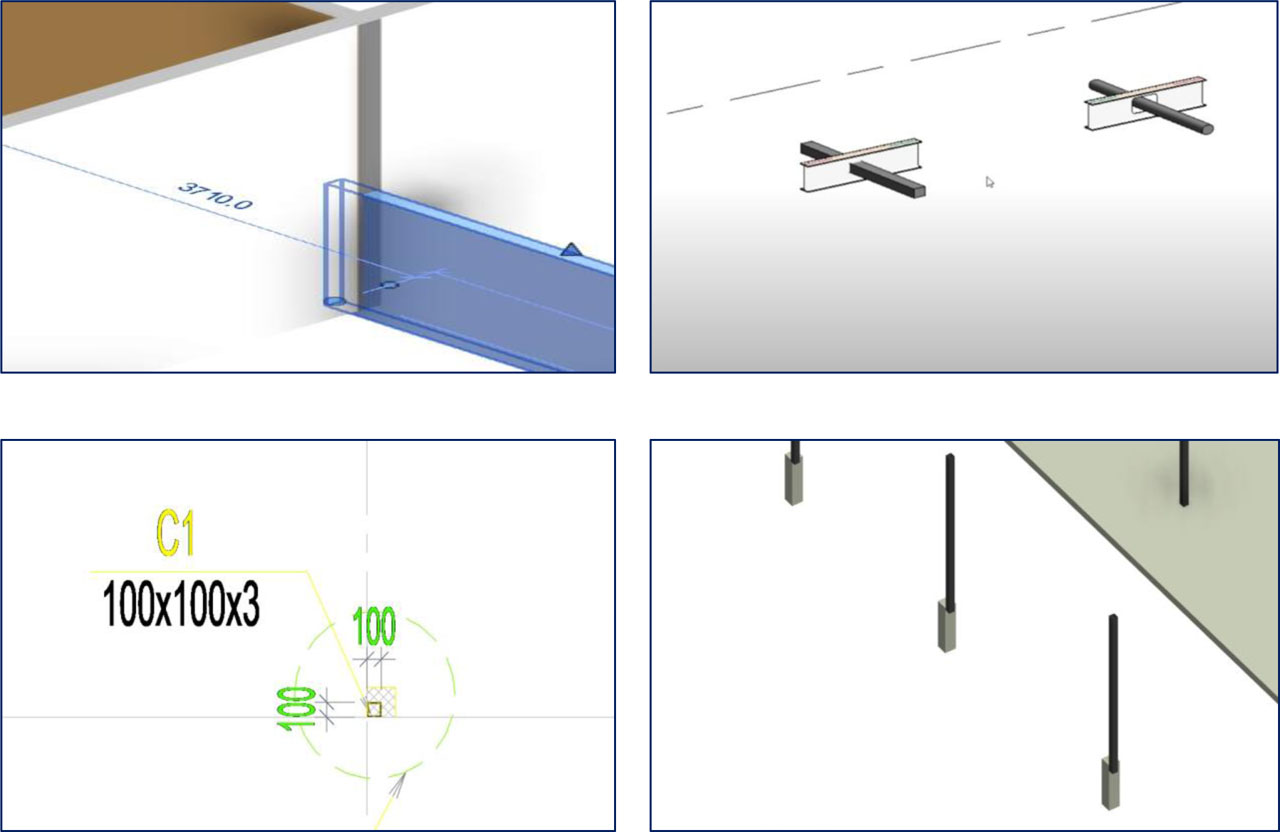
Figure 4:
Demonstration of irrelevant / false-positive clashes detection
The challenge escalates as the volume of detected clashes increases. In large-scale developments, where outputs may number in the hundreds or thousands, coordination meetings often degenerate into extended sessions in which clashes are scrutinized individually. These sessions demand granular decision-making across disciplines, frequently resulting in resource exhaustion and schedule slippage. Empirical accounts reveal that line-by-line review of clashes is not only operationally inefficient but also risks eroding stakeholder confidence in the BIM coordination process. Dependence on manual oversight further introduces a structural bottleneck: resolution progress is constrained by both the availability and expertise of key coordinators, rendering the entire workflow vulnerable to human capacity limitations.
Although a body of research has sought to mitigate these inefficiencies through semi-automated strategies, ranging from rule-based reasoning engines to machine-learning models capable of proposing candidate solutions, such approaches remain largely at the experimental stage and have yet to be widely operationalized at scale (Hsu et al., 2020). Moreover, the necessity of human validation persists even sophisticated algorithms cannot reliably guarantee that corrective measures will preserve the integrity of the design intent or avoid the inadvertent generation of secondary conflicts. Consequently, while automation offers incremental support, full autonomy remains elusive.
For these reasons, clash resolution is increasingly acknowledged as one of the most resource-demanding and coordination-intensive phases of BIM-enabled project delivery. It is within this stage that the promise of digital design integration encounters its most critical limitations, highlighting the need for approaches that not only accelerate detection but also systematically streamline and rationalize resolution workflows.
4.3. Fragmented Models and Deficient Interdisciplinary Coordination
Although Building Information Modelling (BIM) was originally conceptualized as an integrative platform designed to facilitate seamless multidisciplinary collaboration, empirical evidence demonstrates that fragmentation continues to pervade practice. In many instances, architectural, structural, and mechanical–electrical–plumbing (MEP) teams pursue parallel modelling trajectories, developing their digital artefacts in isolation and integrating them only at later project stages. This deferred convergence almost inevitably produces substantial volumes of conflicts, underscoring the persistence of siloed working cultures within the construction sector (Kermanshahi et al., 2020). Importantly, these interferences cannot be reduced to mere geometric anomalies; rather, they frequently signify more systemic coordination deficiencies rooted in institutional routines, contractual boundaries, and inconsistent communication channels.
Empirical studies reinforce this interpretation. Research in the United Kingdom revealed that entrenched disciplinary silos and weak collaboration protocols remain principal drivers of elevated clash counts and unresolved discrepancies, despite the formal adoption of BIM workflows (Pärn et al., 2018). Similarly, investigations in Kazakhstan identified a direct correlation between fragmented team structures and the recurrence of inter-model conflicts, further illustrating that technical detection tools alone are insufficient to overcome organizational disjunctions (Akhmetzhanova et al., 2022). These findings collectively indicate that clashes function as symptomatic markers of deeper governance and process-related misalignments.
Even after digital models are federated within a common environment, the degree of alignment often remains tenuous. Divergent modelling conventions, heterogeneous priorities, and unequal levels of development across disciplines create persistent incompatibilities. Mehrbod et al. (2019) report that in some projects, more than one-quarter of coordination issues remained unresolved despite multiple iterations of clash detection, pointing to the structural inability of prevailing workflows to fully reconcile disciplinary perspectives. The challenge is compounded by the simultaneous use of diverse authoring platforms. Interoperability across proprietary software environments frequently introduces misalignments, data losses, and semantic inconsistencies, thereby generating new discrepancies at the very point where integration is expected to yield cohesion.
Taken together, these observations suggest that while BIM provides a technical infrastructure for coordination, its promise of integrative collaboration is continually undermined by enduring organizational silos, uneven modelling practices, and interoperability barriers. The persistence of these limitations underscores the need for more holistic approaches that bridge not only the technical but also the cultural and procedural dimensions of multidisciplinary coordination.
4.4. Interoperability and Inconsistent Data Standards
Although neutral data standards such as the Industry Foundation Classes (IFC) were conceived to facilitate seamless interoperability across heterogeneous platforms, their practical implementation within clash detection workflows remains fraught with inconsistency. Practitioners consistently report that model exchanges between authoring environments are accompanied by degradation of information fidelity, including the loss of parametric properties, element misclassifications, and even the generation of duplicate objects. These shortcomings arise in part from divergent vendor interpretations of the IFC schema, which produce semantic mismatches that distort or overwrite attributes during the transfer process (Sampaio et al., 2022).
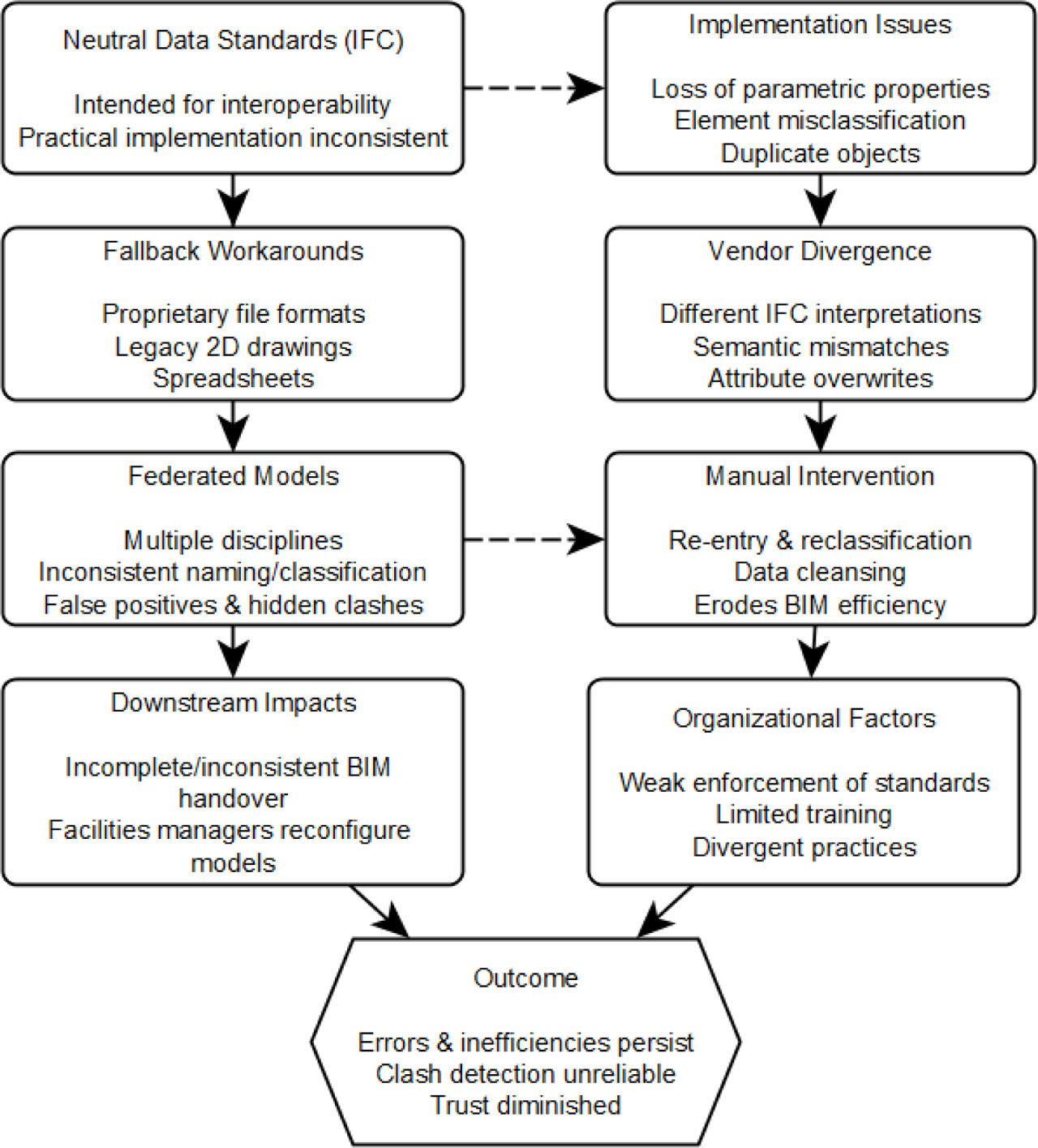
Figure 5:
Interoperability challenges of IFC in BIM clash detection workflows
Empirical case studies conducted across diverse contexts reinforce the persistence of this challenge. Investigations in Malaysia, Vietnam, and Kazakhstan reveal that when interoperability barriers are encountered, project teams frequently abandon prescribed open-standard workflows. Instead, they revert to proprietary file formats, or, in more extreme cases, to legacy 2D drawings and spreadsheet-based coordination, as a means of circumventing exchange failures (Bashir, Ahmad, Lee, Shah & Awang, 2025; Nguyen et al., 2020; Akhmetzhanova et al., 2022). Federated models, assembled from multiple discipline-specific sources, are particularly susceptible. The heterogeneity of naming conventions, classification systems, and object libraries across disciplines introduces inconsistencies that not only erode the reliability of detection outputs but also inflate the occurrence of false positives while simultaneously concealing genuine conflicts (Harode & Thabet, 2023).
Such interoperability deficiencies impose a significant burden of manual intervention. Project teams frequently expend substantial resources on re-entry, reclassification, and data cleansing prior to conducting clash analysis, thereby eroding the efficiency gains BIM purports to deliver. The downstream impacts extend into the operational phase: facilities managers routinely report receiving incomplete, inconsistent, or otherwise fragmented BIM deliverables at handover, necessitating additional effort to reconfigure models for practical use.
Ultimately, the persistence of these problems underscores that interoperability is not solely a technical issue but also a manifestation of organizational fragmentation and uneven standard adoption. Inconsistent enforcement of open standards, limited training, and divergent modelling practices collectively perpetuate inefficiency. Without stronger compliance mechanisms and harmonization of data-exchange protocols, the promise of IFC-driven interoperability will remain unfulfilled, leaving clash detection vulnerable to errors, inefficiencies, and diminished trust among stakeholders (Sampaio et al., 2022).
4.5. Lack of Skills and Low BIM Maturity
In contrast to the dominant focus of prior scholarship, the findings of this study foreground a recurrent and critical issue: construction professionals frequently lack the requisite technical expertise to configure clash-detection protocols effectively, interpret analytical outputs, or utilize advanced functionalities such as tolerance calibration, clash grouping, and rule-based filtering. In practice, it is not uncommon for practitioners to apply default tolerance values indiscriminately or to omit the definition of discipline-specific detection parameters altogether. Such oversights routinely generate an inflation of false positives while simultaneously allowing significant conflicts to remain undetected (Bhagwat & Shinde, 2016). Even where sophisticated filtering and automation features are embedded within commercial platforms, many project teams continue to rely primarily on exhaustive manual inspection, a tendency driven less by necessity than by unfamiliarity with the available toolset.
This skills gap extends beyond procedural tool operation to encompass a deeper conceptual deficit. In many regional contexts where BIM adoption is comparatively recent, designers frequently perceive the technology as a representational medium for three-dimensional visualization rather than as a process-oriented framework for integrated coordination. Consequently, models are often developed without adequate attention to information consistency, Level of Development (LoD) specifications, or proactive clash-avoidance strategies, thereby diminishing their efficacy as inputs for detection workflows. Empirical investigations confirm that formal training programs are underdeveloped in numerous contexts, with many professionals entering practice with limited exposure to BIM-enabled coordination methods (Nguyen et al., 2020; Akhmetzhanova et al., 2022).
At the organizational scale, low BIM maturity manifests in uneven and partial adoption practices. Within a single project, certain teams may operate at higher levels of maturity, guided by formalized BIM Execution Plans (BEPs) and well-defined clash-detection protocols, while others contribute schematic models deficient in metadata and interoperability standards. Such asymmetry weakens federated model integration, as the least developed contributions often dictate the overall reliability of the composite model. Evidence from Kazakhstan highlights that in the absence of regulatory mandates or robust client-driven requirements, firms lack sufficient incentives to invest in capability enhancement, thereby perpetuating fragmented adoption patterns and recurrent coordination failures (Akhmetzhanova et al., 2022).
Ultimately, limited professional competence and uneven maturity trajectories constrain the effectiveness of clash-detection processes, entrench high levels of rework, and prevent organizations from realizing the preventive potential of BIM. Even in more advanced markets, inadequate training provision often shifts the burden of responsibility disproportionately onto individual coordinators, whose personal expertise substitutes for institutionalized procedures.
4.6. Time Pressure and Project Complexity
A further impediment consistently observed across project stakeholders concerns the dual pressures of accelerated delivery schedules and escalating design complexity. Under fast-track procurement regimes, coordination phases are frequently compressed into unreasonably short durations, leaving insufficient scope for rigorous clash detection and iterative refinement. The contraction of design timelines compels project teams to priorities expediency over precision, with the result that substantial proportions of clashes remain unresolved at the commencement of construction, where their resolution becomes both more disruptive and more costly (Kermanshah et al., 2020). In many instances, clash coordination is deferred until the latter stages of design, paradoxically at the point when design modifications have the greatest potential to destabilize schedules and budgets.
The technical complexity of large-scale developments exacerbates these temporal constraints. High-density MEP systems in multi-storey buildings or infrastructure works routinely generate disproportionately high volumes of clashes. Congested ceiling voids, where HVAC, electrical, and plumbing services converge within severely constrained spatial envelopes, provide a typical example: thousands of interferences may be triggered, each requiring negotiation and reconfiguration. As interactions among subsystems increase in complexity, the resolution of one interference can initiate cascading conflicts elsewhere in the model, further extending coordination cycles and undermining efficiency (Kermanshahi et al., 2020).
The combined influence of schedule compression and systemic complexity produces what may be described as a vicious feedback loop: greater numbers of clashes require longer resolution cycles yet diminishing time allowances curtail the capacity to complete them. This dynamic often leads to coordination fatigue, with practitioners forced to abandon or defer significant portions of the clash log. Empirical studies indicate that even where clash detection is conducted routinely, as many as 28% of issues remain unresolved by the close of the coordination phase, owing simply to the exhaustion of available time and resources (Mehrbod et al., 2019). To mitigate such deficiencies, weekly or bi-weekly clash reviews during design have been advocated as a best-practice measure (Venkatesh et al., 2025). Nevertheless, field evidence suggests that such protocols are rarely implemented consistently in practice, reflecting the persistent tension between project delivery imperatives and the demands of effective digital coordination.
4.7. Improper Level of Detail (LOD)
The reliability and efficacy of clash detection are intrinsically linked to the Level of Detail (LOD) applied within discipline-specific models, and inconsistent or inappropriate use of LOD has repeatedly been identified as a fundamental source of coordination breakdowns. Models developed at insufficient granularity often fail to capture critical spatial conflicts, leaving significant discrepancies to surface only during construction. Conversely, models that are over-detailed at premature stages of design tend to generate an overwhelming volume of trivial clashes, producing noise that diverts attention from genuinely consequential conflicts (Savitri et al., 2020).
This challenge is amplified when cross-disciplinary models are authored at divergent levels of fidelity. For instance, if mechanical, electrical, and plumbing (MEP) specialists model insulation layers at fabrication-level precision while structural engineers contribute only schematic representations, the resultant spatial coordination becomes distorted. In such cases, clash-detection algorithms produce misleading results by exaggerating or concealing true space requirements. Similarly, the premature integration of reinforcement bars at shop-drawing detail during early design phases has been shown to trigger an avalanche of false positives, which are largely irrelevant to decision-making at that stage of project development.
The absence of rigorous adherence to BIM Execution Plans (BEPs) and phased LOD protocols further compounds the problem. While prevailing standards typically prescribe incremental detail progression, such as LOD 200 during concept design and LOD 300 for design development, evidence indicates that these benchmarks are often ignored in practice. As a result, federated models are assembled from inputs with heterogeneous levels of granularity, producing coordination environments that are simultaneously too coarse to capture critical interferences and too cluttered to filter out inconsequential ones.
Inconsistent or misapplied LOD not only reduces technical accuracy but also undermines stakeholder communication and trust. Overly detailed models burden participants with excessive and often meaningless information, while under-detailed models obscure essential design intent. This duality creates inefficiencies in decision-making and erodes confidence in the coordination process itself. Ultimately, without disciplined enforcement of LOD standards and maturity benchmarks, clash detection risks becoming less a tool for proactive error prevention than a generator of confusion, inefficiency, and mistrust among project stakeholders.
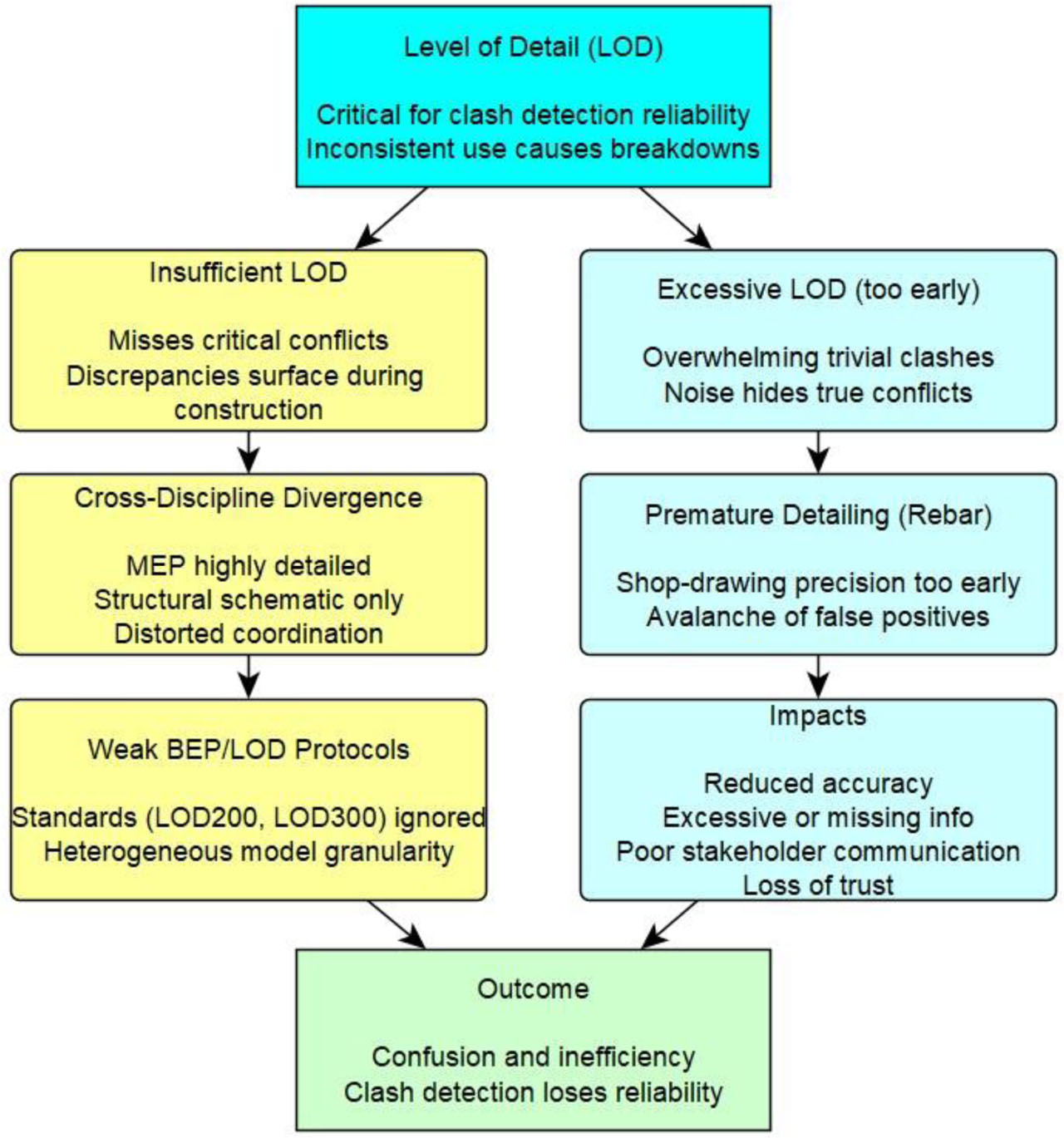
Figure 5:
Impacts of inconsistent LOD application on clash detection reliability
4.8. Organizational and Cultural Resistance
Technical difficulties in clash detection are frequently exacerbated by organizational and cultural impediments that hinder the effective institutionalization of BIM-enabled coordination. Even when digital platforms and software infrastructures are technically available, entrenched legacy practices, managerial hesitancy, and cultural inertia often curtail their meaningful utilization. A recurring observation is that corporate leadership tends to prioritize short-term considerations of cost containment and schedule adherence over long-term process optimization, thereby limiting investment in staff training and digital infrastructure. In the absence of strong managerial endorsement, clash detection risks degenerating into a perfunctory, compliance-oriented “box-ticking” exercise rather than a substantive mechanism for design integration and risk mitigation (Sampaio et al., 2022).
Cultural resistance is equally pervasive, manifesting most prominently in the persistence of siloed working practices and reluctance to share digital models across disciplinary boundaries. Concerns regarding intellectual property rights, professional liability, and accountability are frequently invoked to justify withholding information or resisting participation in collaborative environments. This protective stance undermines the trust and transparency essential for interdisciplinary coordination, often driving teams to revert to traditional two-dimensional documentation workflows, even when advanced BIM tools are available (Akponeware & Adamu, 2017).
The consequence of such resistance is the perpetuation of fragmented workflows in which clash detection is conceptualized not as an embedded and iterative component of the design culture, but as an episodic technical procedure. Empirical evidence from participatory action research in the United Kingdom highlights that entrenched knowledge hoarding practices and weak communication protocols perpetuate coordination failures, notwithstanding the presence of sophisticated BIM platforms (Pärn et al., 2018). In developing contexts, where BIM adoption remains at a nascent stage, these cultural barriers are further reinforced by the absence of regulatory mandates, limited market incentives, and an entrenched preference for familiar tools and processes.
Collectively, these findings underscore that the obstacles to effective clash detection are not exclusively technical but deeply rooted in organizational priorities and professional culture. Unless leadership commitment, cultural openness, and institutional trust are cultivated alongside technical innovation, the transformative potential of BIM-enabled coordination will remain only partially realized.
4.9. Limited Automation and AI/ML Lacks Quality Data
Although scholarly discourse increasingly emphasizes the transformative potential of artificial intelligence (AI) and machine learning (ML) in enhancing clash-detection processes, evidence from practice reveals that large-scale adoption remains constrained by persistent data-related limitations. Foremost among these is the scarcity of high-quality training datasets. In most projects, clash-detection outcomes and subsequent resolution strategies are neither systematically documented nor archived, resulting in an absence of structured data repositories that could be leveraged for algorithmic training. Consequently, ML models frequently exhibit tendencies toward overfitting and lack of generalizability, limiting their predictive robustness beyond the narrow contexts in which they were originally developed (Hu et al. (2019); Hasannejad et al., 2022; Hu et al., 2023).
Findings from earlier investigations corroborate this assessment. For example, hybrid approaches that integrated rule-based reasoning with supervised ML demonstrated high classification accuracy within specific case studies but were severely constrained by dataset size and contextual dependency (Lin & Huang, 2019). In the absence of larger, more heterogeneous datasets, such models are unable to extrapolate reliably across diverse project typologies and design environments. The construction of such datasets itself presents formidable challenges: expert annotation and labelling of clash instances demand extensive professional effort, rendering the process both resource-intensive and financially prohibitive (Harode & Thabet, 2023).
Compounding the problem, data inconsistency remains endemic across federated BIM models. As these models are derived from multiple authoring tools, discrepancies in naming conventions, classification taxonomies, and schema implementations introduce significant variability, complicating the extraction of coherent features for ML training. Even where ostensibly neutral standards such as Industry Foundation Classes (IFC) are adopted, semantic mismatches persist, often resulting in misinterpreted attributes or incomplete feature sets. These inconsistencies undermine both the accuracy and reliability of ML-driven clash analysis (Harode & Thabet, 2023).
Until the industry succeeds in establishing standardized, high-quality, and openly shared BIM datasets, complemented by consistent modelling protocols and semantic harmonization, the promise of AI-augmented clash detection will remain aspirational rather than operational. The path forward therefore necessitates not only technical innovation in algorithm design but also institutional commitments to data governance, standardization, and collaborative knowledge sharing across the AECO sector.
5. Strategies for Improvement and Discussion
5.1. Intelligent Clash Filtering and Prioritization
One of the most persistent impediments to effective Building Information Modelling (BIM) coordination is the excessive volume of clashes produced during automated detection, of which a substantial proportion, often half or more, are inconsequential or irrelevant to project performance. This phenomenon generates information overload, requiring teams to devote considerable time to manually reviewing issues that have little bearing on constructability. To address this, scholars and practitioners alike emphasize the necessity of intelligent clash filtering combined with systematic prioritization. Such strategies enable coordination workflows to focus on conflicts of genuine significance rather than being encumbered by trivial overlaps.
Recent research has demonstrated that advanced computational methods, integrating both rule-based heuristics and machine-learning (ML) algorithms, can serve as effective mechanisms for automated triage. Hybrid approaches that first apply deterministic rules, for instance, disregarding clashes below a specified tolerance threshold, and then employ supervised ML classifiers to predict the relevance of remaining clashes have been shown to markedly improve classification accuracy. Crucially, these models reduce reliance on prohibitively large datasets, thus addressing one of the primary barriers to the adoption of AI and ML in this domain (Hasannejad et al., 2022). By automating the initial phases of clash classification, such approaches alleviate the need for exhaustive manual review, thereby enabling engineers to allocate attention to issues that genuinely threaten project delivery.
Alongside filtering, prioritization of detected clashes by severity, criticality, and urgency is indispensable. As practitioners consistently note, not all interferences are of equal importance: a minor conduit misalignment is far less critical than a structural collision involving beams or columns. Implementing a risk-based ranking mechanism allows high-impact clashes to be surfaced first, ensuring that limited coordination resources are directed towards issues with the greatest potential for cost and schedule disruption (Lin & Huang, 2019). The absence of a standardized prioritization protocol has long constrained the value proposition of clash detection. Empirical studies confirm that when structured classification and ranking frameworks are applied, coordination becomes significantly more efficient, with case-based evidence indicating that no severe risks remain once clashes are systematically categorized (Luo et al., 2022).
An intelligent strategy that combines automated filtering with formalized prioritization not only accelerates clash management but also enhances stakeholder confidence in BIM processes. When clash reports are refined to highlight predominantly meaningful issues, teams are less likely to experience fatigue or revert to legacy 2D coordination methods. In effect, this approach harnesses algorithmic power and embedded domain expertise to separate signal from noise, advancing the prospect of a more reliable, semi-automated, and trust-enhancing clash-resolution pipeline.
An intelligent strategy that combines automated filtering with formalized prioritization not only accelerates clash management but also enhances stakeholder confidence in BIM processes. When clash reports are refined to highlight predominantly meaningful issues, teams are less likely to experience fatigue or revert to legacy 2D coordination methods. In effect, this approach harnesses algorithmic power and embedded domain expertise to separate signal from noise, advancing the prospect of a more reliable, semi-automated, and trust-enhancing clash-resolution pipeline.
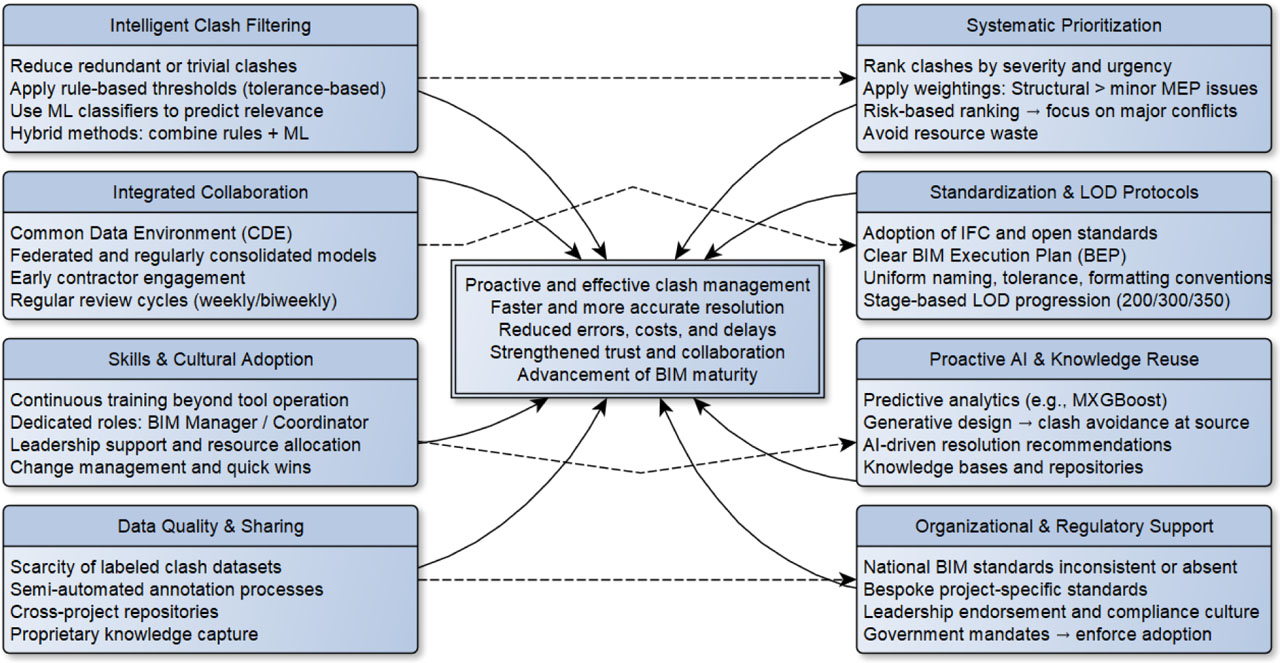
Figure 6:
Comprehensive framework for Intelligent and proactive BIM clash management
5.2. Integrated Collaboration and Early Coordination Processes
Fragmented disciplinary models and inadequate interdisciplinary coordination remain widely recognized as fundamental drivers of clashes in Building Information Modelling (BIM) environments. When architectural, structural, and mechanical–electrical–plumbing (MEP) teams pursue design development in isolation, with limited or irregular information exchange, conflict within federated models becomes inevitable. Addressing this dual challenge of model fragmentation and the compounding pressures of time-constrained, high-complexity projects requires both organizational and technological interventions aimed at fostering integrated collaboration and early-stage coordination.
Central to this approach is the deployment of a Shared or Common Data Environment (CDE), wherein all disciplines continuously upload, synchronize, and merge their evolving BIM models. By working with federated or regularly consolidated models rather than isolated files, design teams can detect interface issues at formative stages, ensuring that modifications propagate consistently across disciplines. Such environments disrupt siloed practices, creating visibility and accountability that enhance coordination efficiency. Industry practitioners consistently identify the establishment of shared data environments as one of the most effective strategies for mitigating clashes (Akponeware & Adamu, 2017). Regular cross-disciplinary integration compels latent conflicts to surface early, when they are less costly and disruptive to resolve, thereby alleviating schedule compression later in the project lifecycle.
On the procedural side, embedding routine coordination meetings and structured clash-resolution workshops into the project workflow has been shown to be critical. Leading organizations frequently institutionalize weekly or bi-weekly clash detection and review cycles, ensuring that coordination is treated as an iterative and continuous process rather than a one-off verification exercise. In the United Kingdom, for example, public-sector projects often mandate clash detection at one- to two-week intervals as a mechanism for achieving “complete coordination free of conflicts” (Pärn et al., 2018). This proactive cadence reduces the risk of cumulative undetected errors, as issues are addressed in real time rather than escalating into intractable late-stage conflicts.
Case-based evidence further illustrates the advantages of early and active stakeholder engagement. Xu et al. (2025) document complex projects where trade contractors were integrated into the design process from inception, with models developed to high Levels of Development (LOD 350–400) and supported by frequent on-site coordination workshops. Similarly, Yin et al., (2024) demonstrate that involving contractors and fabricators during design enables constructability considerations and system routing to be resolved digitally, thereby preventing costly on-site clashes. Practitioners increasingly affirm that the avoidance of conflicts through proactive joint planning is more valuable than their retrospective detection, underscoring the importance of integrated workflows that privilege early collaboration over late-stage remediation.
5.3. Standardizing BIM Data Exchange and Level of Detail (LOD)
Persistent challenges in clash detection are frequently traced to inconsistent data standards and inappropriate modelling granularity, both of which undermine the reliability of BIM-enabled coordination. Interoperability problems remain particularly acute: when project participants employ divergent authoring platforms or exchange models in incompatible file formats, the translation process often results in partial data loss, semantic misinterpretation, or duplication. These inconsistencies not only create spurious clashes but also, in some cases, prevent genuine conflicts from being detected at all. Equally problematic is the mismanagement of modelling detail. An inadequate Level of Detail (LOD) can obscure significant interferences until late in the project lifecycle, whereas premature over-modelling floods coordination environments with trivial issues of little practical relevance.
Addressing these deficiencies requires a coherent strategy of standardization in both data exchange and modelling practice. At the technical level, the adoption of neutral, open-standard formats, such as IFC, or alternatively the mandate of a uniform software platform across all stakeholders substantially improves interoperability. The cornerstone of such an approach is a project-wide BIM Execution Plan (BEP), which should explicitly prescribe data-sharing protocols, designate a single “source of truth” format, and establish consistent model-handling procedures. By enforcing adherence to a standardized schema, the risks associated with ad hoc conversions and data degradation are eliminated, ensuring that each discipline’s output remains compatible and accurate. Industry evidence underscores the urgency of such measures: surveys of construction organizations highlight strong demand for formalized regulations governing clash detection and resolution, given that existing guidelines are often inconsistent, inadequate, or altogether absent (Akhmetzhanova et al., 2022). A clear framework, whether industry-wide or project-specific, can standardize the processes for identifying, logging, categorizing, and resolving clashes. Essential components might include uniform tolerance thresholds, element-naming conventions, and model versioning protocols, thereby ensuring that all stakeholders coordinate within a common rulebook.
A parallel priority is the disciplined management of LOD across project phases. Both extremes of modelling fidelity carry risks: excessively schematic models omit or misplace critical components, leading to latent conflicts when more precise details are introduced later; conversely, premature fabrication-level modelling introduces small fittings or supports that can trigger thousands of spurious detections. Documented cases illustrate that low LODs produce inflated volumes of irrelevant clashes, whereas requiring a minimum of LOD 300 for coordination markedly improves detection reliability (Savitri et al., 2020). Best practice dictates aligning LOD expectations with project stages: structural penetrations, for example, may need to achieve LOD 350 by the design-coordination phase to ensure reliable interfacing with MEP systems, while secondary elements such as furnishings can remain at LOD 200 to avoid unnecessary model clutter. Embedding these requirements into the BEP and auditing deliverables accordingly reduces both false positives, caused by abstract geometry, and false negatives, caused by missing detail.
Finally, standardization must be recognized not only as a technical adjustment but also as an organizational transformation. Successful implementation requires stakeholder commitment, adequate training, and, above all, strong managerial support. Where regulatory or national BIM standards are absent, project consortia may need to develop bespoke standards to fill the gap. Leadership endorsement of a unified platform and modelling protocol significantly increases compliance, ensuring that standardization efforts translate into tangible reductions in coordination inefficiencies and clash-detection errors.
5.4. Enhancing BIM Skills, Training, and Cultural Adoption
Even when advanced tools and structured processes are available, a Building Information Modelling (BIM) clash-detection programmer will falter without competent personnel and an enabling organizational culture. The dual challenge of limited professional competence and institutional resistance to change often manifests concurrently, reducing clash detection to a superficial compliance exercise rather than an effective coordination mechanism. To mitigate these barriers, organizations must pursue a deliberate strategy of human-capital investment and cultural transformation aimed at raising BIM maturity across all levels. Such a strategy encompasses continuous education and training, the establishment of new roles and responsibilities, active managerial support, and a broader shift in mindset.
The foundational element of this transformation is the development of comprehensive training programmers to address skills deficits. Many practitioners, particularly those accustomed to traditional 2D workflows, lack the technical proficiency to fully exploit clash-detection software or to interpret outputs effectively. Structured training workshops should therefore extend beyond tool operation to encompass principles of spatial reasoning, multidisciplinary system interactions, and the interpretation of clash reports. Moreover, training should not be treated as a one-off intervention but as a continuous process to ensure staff remain aligned with evolving technologies and industry practices (Sidiq & Thamilselvi, 2018).
In parallel, firms should institutionalize dedicated roles to oversee digital coordination. The appointment of BIM Managers or Coordinators provides a central authority to maintain standards, guide clash-detection processes, and mentor less experienced staff. These roles serve as internal champions for BIM adoption, ensuring knowledge is disseminated and that project teams consistently adhere to best practices. Empirical evidence indicates that early adopters with in-house BIM specialists achieve superior collaboration and more effective problem-solving. However, such roles can only succeed when supported by senior management. Leadership must allocate sufficient resources, budget for training, access to tools, and time for coordination, while also embedding BIM requirements into company policy and publicly recognizing achievements in clash avoidance (Sampaio et al., 2022).
Beyond skills and management support, cultural resistance remains a pervasive obstacle. Professionals often cling to familiar methods, motivated by risk aversion and scepticism towards unproven workflows. Effective change management therefore requires organizations to cultivate a culture of openness and innovation. Techniques such as participatory process design, the communication of early “quick wins,” and the dissemination of internal success stories can shift entrenched attitudes. Furthermore, interpersonal dynamics must be addressed: interdisciplinary workshops, open communication channels, and even co-location of teams help dismantle siloed mentalities. When stakeholders from multiple trades collaborate directly in clash-detection sessions, conflicts are resolved more efficiently, while mutual respect and shared accountability are reinforced.
A further lever against resistance is the demonstration of tangible benefits. Persuading sceptical stakeholders often requires presenting empirical evidence of reduced Requests for Information (RFIs), fewer change orders, and measurable cost savings attributable to clash detection. These reframing counters the short-term managerial focus on upfront costs and highlights long-term project performance gains. Governmental mandates in various jurisdictions have accelerated this cultural shift, illustrating that external regulatory pressures can reinforce internal organizational change. Ultimately, only by investing simultaneously in skills, leadership commitment, and cultural adaptation can organizations unlock the full preventive potential of BIM-enabled clash detection.
5.5. Proactive and Data-Driven Clash Management with AI and Knowledge Reuse
The final strategic orientation for advancing BIM-enabled coordination lies in addressing future-facing challenges through a paradigm shift towards proactive, data-driven clash management. Instead of conceptualizing clash detection as a defensive, post hoc verification exercise, this approach embeds predictive intelligence, preventive design optimization, and structured knowledge feedback loops directly into the coordination workflow. By combining emergent technologies such as artificial intelligence (AI), machine learning (ML), and advanced analytics with progressive project-management practices, the aim is to anticipate potential conflicts before they materialize and to streamline their resolution once identified.
A central pillar of this approach is the adoption of predictive analytics to transition from reactive clash identification to proactive clash avoidance. Conventional clash detection identifies problems only after conflicting design elements have already been modelled, often at late stages when corrections are costly and disruptive. In contrast, predictive models trained on historical clash data can forecast the likelihood of conflicts much earlier in the design process. For example, Shehadeh et al., (2024) demonstrated the use of a Modified XGBoost algorithm capable of predicting design conflicts with high accuracy, flagging “hot spot” regions of models where interferences are statistically more probable. By integrating such predictive mechanisms into BIM platforms, project teams can pre-emptively adjust layouts or revise design alternatives before clashes emerge in full form. The benefits are twofold: substantial time savings through early error prevention and the avoidance of cascading rework that frequently destabilizes schedules. Complementary advances, such as generative design algorithms, further extend this logic by embedding clash avoidance into the design-generation process itself, ensuring many conflicts are eliminated at source.
Beyond prediction, enhancing automation in clash resolution constitutes another critical trajectory. Current workflows remain heavily reliant on manual iteration, where designers must painstakingly negotiate solutions for each detected conflict. AI-driven assistants, however, offer the potential to recommend resolution strategies based on precedent. For instance, when a duct conflicts with a beam, the system might propose rerouting options or resizing strategies informed by prior solutions to similar problems. Realizing this vision requires systematic knowledge capture and reuse. Harode & Thabet (2023) highlight the opportunity for BIM to evolve beyond a geometric repository into a knowledge-rich system that formalizes standard resolution strategies. Earlier studies, such as Wang & Leite (2016), have already shown the feasibility of encoding expert decision-making into rules or case libraries. The integration of such knowledge bases could transform clash-detection platforms into full-fledged clash-management systems, capable not only of identifying conflicts but also recommending viable solutions, thereby reducing reliance on individual expertise and accelerating resolution cycles.
The enabling condition for these AI-driven methodologies is high-quality, large-scale data. Yet the scarcity of labelled datasets, clashes paired with documented resolutions, remains a critical barrier. The success of predictive and prescriptive models “depends on the quantum of data gathered or generated,” with poor-quality inputs undermining accuracy (Harode & Thabet, 2023). Current practices, where expert teams manually label clashes for ML training, are prohibitively resource-intensive. To address this, the industry must adopt data-sharing and augmentation strategies. Collaborative repositories of anonymized clash reports across projects could provide the scale necessary for robust model training. Semi-automated labelling processes, where algorithms generate preliminary classifications verified by human experts, can also accelerate dataset creation. Hybrid approaches that combine rule-based filters with ML classifiers have already demonstrated improved accuracy without requiring extensive datasets, suggesting a pragmatic pathway to bridge the data gap in the interim (Hasannejad et al., 2022). Over successive project cycles, systematic data capture could enable organizations to build proprietary knowledge bases, fuelling increasingly sophisticated predictive and prescriptive models and creating a self-reinforcing cycle of continuous improvement.
6. Conclusion
Among the most widely acknowledged affordances of Building Information Modelling (BIM) is its functionality for clash detection and resolution, which has become a cornerstone of digital design coordination. Yet the scaling of clash detection in practice demonstrates that the mere application of automated software tools does not, in itself, guarantee effective coordination. This study set out to interrogate the persistent limitations of clash detection by synthesizing insights from the academic literature and extending the analysis through field-based inquiry. Across diverse project contexts, nine recurring challenges were consistently identified: excessive volumes of irrelevant or false-positive clashes; the slow and manual pace of resolution; fragmented models and weak interdisciplinary collaboration; interoperability gaps and inconsistent data standards; insufficient skills and low levels of BIM maturity; schedule compression coupled with rising project complexity; inappropriate or inconsistent application of Level of Detail; organizational and cultural resistance; and the limited advancement of automation, largely attributable to inadequate and poor-quality datasets. Importantly, these findings are not abstract theoretical claims but are grounded in empirical evidence from real-world projects, practitioner surveys, and participatory research.
In response, the study highlights a set of strategic directions. These include the development of intelligent filtering and prioritization mechanisms; the institutionalization of collaborative workflows and shared work-in-progress environments; the enforcement of standardized interoperability protocols and LOD benchmarks; capacity-building initiatives to strengthen organizational readiness through training and cultural transformation; and the progression of hybrid automation that integrates optimization techniques, rule-based reasoning, and artificial intelligence.
Future research should seek to operationalize and empirically validate these proposed strategies within comprehensive frameworks that align technological innovation with organizational transformation. Large-scale empirical studies conducted across diverse sectors, building typologies, and regional contexts are essential to evaluate the generalizability and transferability of the findings. Moreover, longitudinal investigations could provide valuable insights into the industry’s gradual transition from reactive clash detection toward proactive clash avoidance, an evolution that is critical for achieving more reliable, efficient, and clash-free project delivery. Further research may also explore in-depth case studies at both local and international levels to enable comparative analyses and to contextualize the findings of the present study within a broader evidence base.
Acknowledgements
The authors would like to acknowledge the support of Hanoi Architectural University for providing the facilities and resources necessary to complete this research. We are also grateful to Institute of International Training and Cooperation for their support. Special thanks are extended to colleagues and peers who provided valuable feedback throughout the study.
Notes
[1] Contributed by Author Contributions
N.M.N. conceived and designed the study, collected and analysed the data, prepared and revised the manuscript for submission.