

1. Introduction
Concrete has been a cornerstone of construction since ancient times, with early forms of the material used in Roman aqueducts and structures like the Pantheon. The development of Portland cement in the 19th century marked a significant milestone in the evolution of concrete, allowing it to become the primary material used in modern construction worldwide. Over time, concrete has demonstrated its versatility and resilience, becoming essential for infrastructure and high-rise buildings. As urbanization progressed, especially during the 20th century, concrete role in global construction grew, with its usage extending to a variety of sectors, from residential buildings to massive infrastructure projects (Xu et al., 2015). In Chinese construction, concrete was introduced in the early 20th century, but its widespread adoption accelerated significantly after the mid-century, as the country embarked on ambitious industrialization and urbanization projects (Tang et al., 2015). By the late 20th and early 21st centuries, concrete had become a central material in the Chinese architectural landscape, particularly for large-scale projects and high-rise buildings, significantly influencing Chinese architectural identity (Du & Qiu, 2021).
Despite its widespread use, the longevity and durability of concrete have become increasingly important topics in civil engineering. Researchers have found that the durability of concrete can be enhanced through material modifications (Elwi et al., 2024) and advanced mix designs (Hameed et al., 2024), yet durability concerns continue to challenge engineers and architects, especially as infrastructure ages and the need for maintenance intensifies. Moreover, concrete microstructure plays a critical role in understanding the mechanisms behind deterioration, with studies indicating that improved mix designs and supplementary materials can help to enhance performance (Biernacki et al., 2017).
In addition to these durability concerns, the conservation of historic concrete buildings presents a significant challenge. Many of these structures, particularly those built before modern construction techniques were developed, lack detailed documentation on their original material composition and construction methods. This lack of knowledge complicates efforts to restore and preserve these buildings using contemporary materials and techniques. For engineers, the challenge lies in maintaining the structural integrity and historical value of these buildings while ensuring their continued usability in modern society. Studies have shown that the preservation of historic concrete requires not only advanced materials (Borg, 2017), but also an understanding of historic practices that shaped their original construction (Li et al., 2023). Current research on concrete materials focuses on evaluating and preserving both modern and historical structures. Non-destructive testing techniques, including thermography, ultrasonic testing, and ground-penetrating radar, are essential for assessing concrete conditions. For example, thermography is sensitive to surface discoloration, which necessitates alternative methods in some cases (Ishikawa et al., 2021). Ultrasonic pulse velocity, porosity, and capillary absorption are applied to deepen understanding of concrete durability (Lopez-Miguel et al., 2024). Integrating random forest and artificial neural network models with non-destructive testing techniques enable accurate, interpretable, and efficient prediction of key concrete properties, optimizing sensor deployment and supporting sustainable infrastructure maintenance (Baudrit et al., 2025). Electrical resistivity is also quantitatively established as a reliable non-destructive indicator for evaluating long-term strength and chloride resistance in modified concrete (Kim et al., 2025). Advances in crack detection and corrosion monitoring, particularly for reinforced concrete (Flores-Nicolás et al., 2024), have led to electrochemical and physical methods to detect degradation (Flores-Nicolás et al., 2024). Structural health monitoring (SHM) systems, which integrate data collection and real-time analysis, are increasingly used for continuous monitoring to ensure timely interventions (Hussain, 2017). For heritage structures, SHM combined with sensor-based and remote sensing methods offers innovative solutions for damage detection and preservation (Hu et al., 2022). Machine learning is emerging as a powerful tool in concrete technology, enabling accurate prediction of material properties, optimization of mix design, durability assessment, and crack detection (Gamil, 2023). When integrated with physical laws, it allows for accurate and reliable prediction of material behavior even under limited data conditions (Varghese et al., 2024). These techniques enhance the durability and safety of concrete structures, ensuring their long-term performance and conservation (Soleymani et al., 2023).
Furthermore, existing engineering standards, such as those outlined by ASTM C1084 and BS 1881-14, provide guidance on material performance and testing but fail to adequately address the specific needs of historic concrete structures or the complex durability problems posed by modern-day environmental conditions. Therefore, there is a pressing need for engineered solutions that can provide both accurate durability predictions (Alexander & Beushausen, 2019), effective conservation techniques for concrete structures (Grazuleviciute-Vileniske et al., 2021), both modern and historic.
Meanwhile, many existing historical concrete buildings lack comprehensive historical records and detailed information, resulting in an unclear understanding of their performance. Therefore, a systematic methodology is needed to investigate the characteristics of historical concrete materials for research and preservation.
2. Methodology
This study tried to investigate the material composition and construction techniques of a cultural concrete heritage, with the goal of developing a methodology for tracing historical concrete information under limited conditions (Figure 1). It included local history, environmental characteristics, carbonation depth, materials composition and construction technology, to trace historical concrete information.
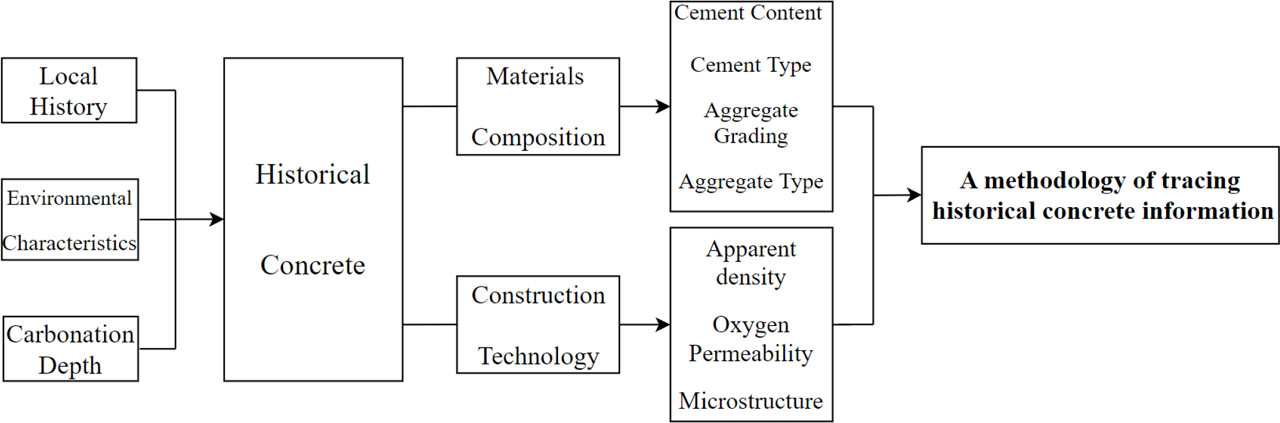
Figure 1:
Flowchart of methodology of tracing historical concrete information
2.1. Local History
This study focused on a historic concrete structure, the University Road Building of the Zhejiang Library, located in Hangzhou (Figure 2), Zhejiang Province. A two-story structure had a history of approximately 100 years, featuring elements of classical Roman architecture. The structural framework of this building primarily consisted of reinforced concrete. In August 1997, it was designated as a provincial-level cultural relic and protected area, and by October 2019, it was recognized as a national cultural relic protection unit in China. While the overall layout, architectural form, and style have been largely preserved, various parts of the building, particularly the basement, floors, concrete beams, columns, and roof, have experienced deterioration to varying degrees.
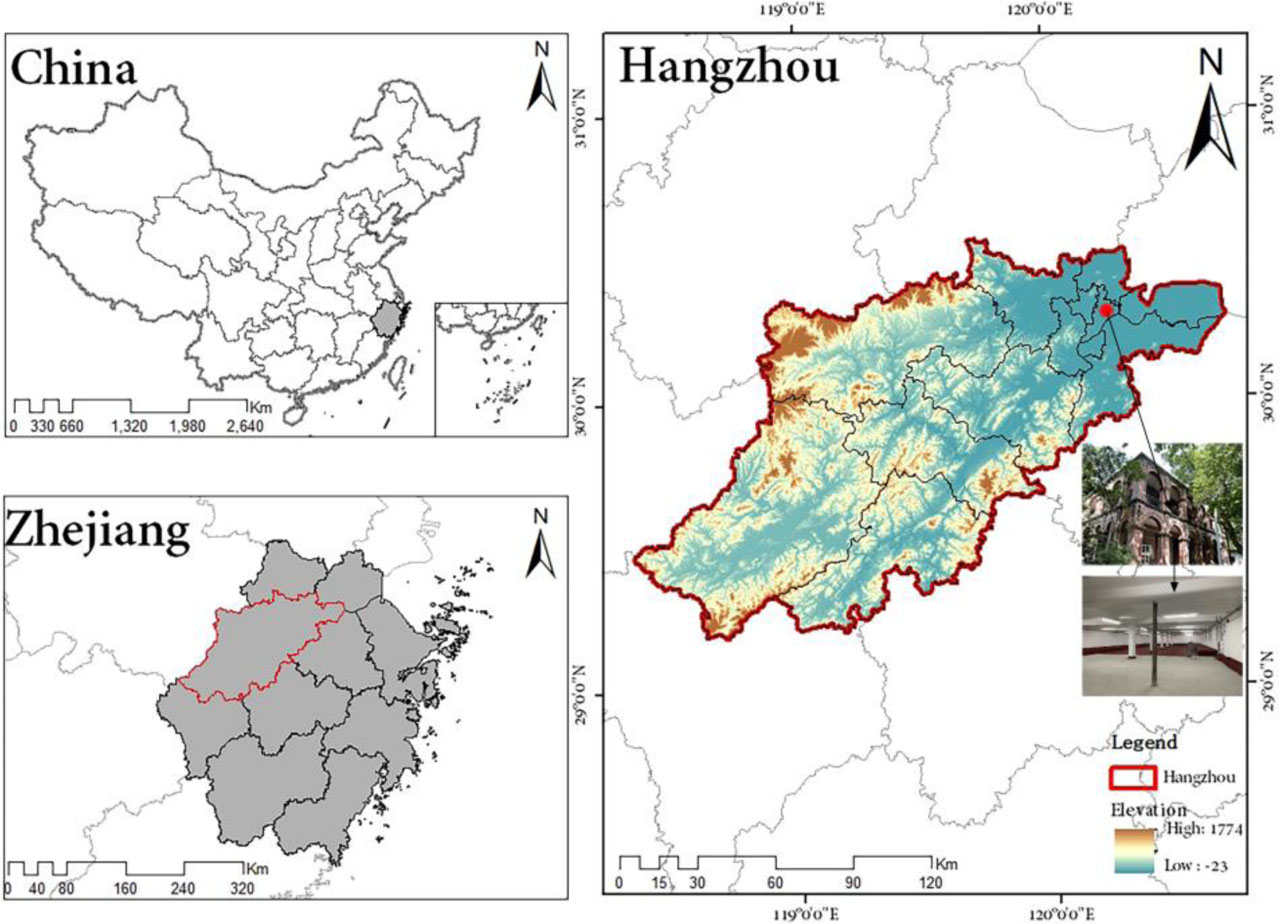
Figure 2:
Geographical location
Zhejiang Province, located on the southeastern coast of China, has long been a hub of cultural and technological exchange between the East and the West. The architecture from various historical periods vividly reflects the fusion, innovation, and transformation of architectural styles, blending traditional Chinese and Western elements, construction materials, and techniques. Therefore, historic concrete buildings in the region not only stand as testaments to technological advancements and cultural shifts but also represent a valuable part of the regional urban landscape and cultural heritage.
2.2. Environmental Characteristics
Zhejiang experiences a subtropical monsoon climate: winters are generally cold, while summers are hot and humid (Lou et al., 2017). Based on data from the China Meteorological Administration and the Zhejiang Statistical Yearbook, from 2013 to 2023, this paper outlined key climatic parameters, including an average monthly temperature ranging from 5°C to 30°C, monthly precipitation between 79mm and 279mm, and an average monthly relative humidity of 66% to 78%, as shown in Figure 3:
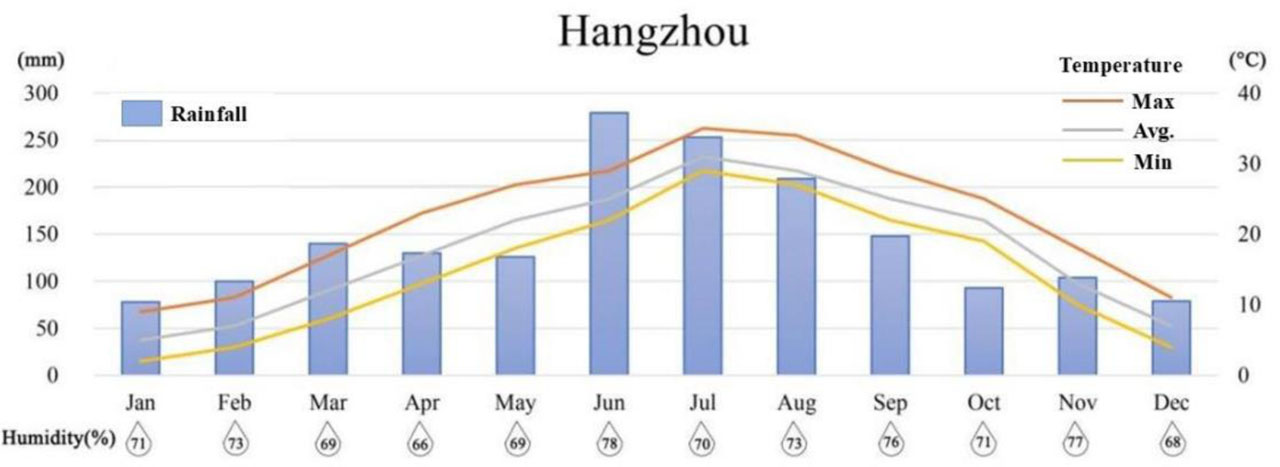
Figure 3:
Changes in Precipitation, Temperature, and Humidity in Hangzhou
2.3. Sampling
The concrete analysed in this project originated from one beam of the basement in the University Road Building of the Zhejiang Library. The positions of steel bars were identified and marked using a PM-6 steel bar detector to avoid interference during drilling. Three cylindrical samples were then extracted from carbonation area, concrete slabs and beams, using a HZ-18 corer, ensuring minimal damage to the structure, as it is a cultural heritage site. The core diameter and height of samples were 50mm and 100mm. Therefore, the diameter-height ratio was 1:2. Figure 4 illustrates the sampling process and one sample.
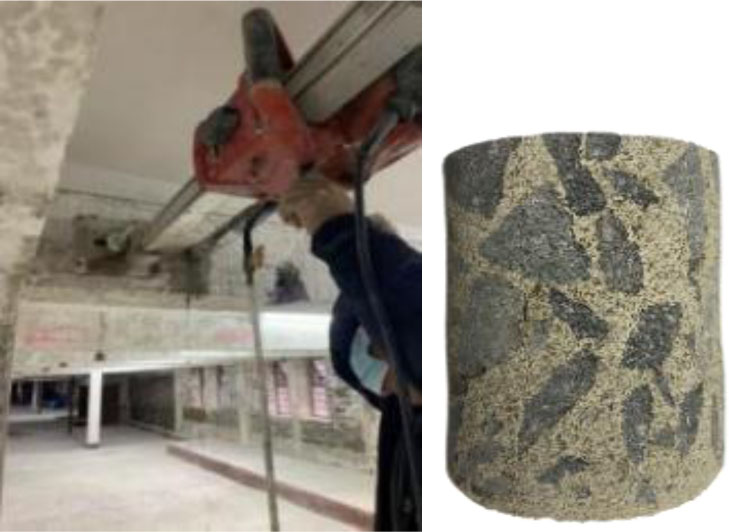
Figure 4:
Sampling process and sample
2.4. Carbonation Depth
Carbonation, a significant issue for concrete durability, occurs when carbon dioxide reacts with calcium hydroxide, reducing the pH and increasing the likelihood of steel reinforcement corrosion. In this study, carbonation depth was measured using the phenolphthalein method, as outlined in EN 14630. The non-carbonated areas turn pink due to higher pH, while carbonated zones remain colourless, allowing for a straightforward assessment of carbonation depth (Jedidi et al., 2020). Therefore, the carbonation depth in this area was approximately 90mm.
2.5. Compressive Strength
Compressive strength is widely recognized as the most crucial mechanical property of concrete, serving as a key indicator of its quality, due to its direct relationship with the internal structure of the hydrated cement paste (Vu et al., 2020). This study utilized the HT-225A rebound hammer to perform on-site rebound testing in accordance with the ‘Technical Specification for Testing Concrete Compressive Strength by Rebound Method’ (JGJ/T23-2011). The rebound values of the concrete samples were obtained through these tests. By correlating these values with the carbonation depth, the average compressive strength of the material was calculated to be 19.6MPa.
3. Experiments
3.1. Cement Content and Type
X-ray was employed to analyse the cement slurry, focusing on identifying its material composition and phase characteristics (Sugiyama & Promentilla, 2021). Concrete samples were first cut to a thickness of 10mm using a cutting machine. After cutting, aggregates were removed by a hammer, leaving only the hardened cement mortar. Then the mortar was dried in an electric constant temperature oven until its mass stabilized. Once dried, the mortar was ground for 1 minute using a grinder. The ground material was subsequently sieved through a 200-mesh sieve to achieve the required particle size. Finally, the prepared sample underwent X-ray analysis to determine its composition and proportion. The instrument operating conditions were: a copper target was used with Kα radiation (λ=1.541836 Å); the system operated at a voltage of 40kV and a current of 40mA; a 2θ − θ scanning mode was employed, with continuous scanning conducted at a step size of 0.02°.
In this study, preliminary experiments revealed that dilute hydrochloric acid reacts minimally with aggregates, so an acid dissolution method was selected to determine the cement content in hardened concrete, and the HCl dissolving technique yielded a relatively accurate estimation of content (Sisomphon, 2009). The experiment involved placing the concrete sample in a 60°C electric constant-temperature drying oven for 72 hours, followed by weighing and an additional 6 hours of drying. Once the mass change was less than 1%, the sample was considered stable. The coarse aggregate was then separated from the hardened cement mortar, which was crushed. Both were soaked in a 15% hydrochloric acid solution for 24 hours to ensure complete dissolution. Afterward, the mixture was diluted, filtered through a 200-mesh sieve, rinsed, and dried at 100°C for 48 hours. After the quality stops changing, remove the dissolved sample, allowed it to cool naturally, then weigh it and calculated the percentage content of the hardened cement paste by:
where:C - the unit cement content,
S - the percentage of dissolved hardened cement paste,
ρ - the apparent density.
3.2. Aggregate Grading and Type
The characteristics of aggregates include the particle gradation of fine aggregates and the particle size distribution of coarse aggregates (Guan et al., 2021). The experiment involved placing aggregates, which were after testing the cement content, in a 60°C electric constant-temperature drying oven for 72 hours, followed by weighing and an additional 6 hours of drying. Once the mass change was less than 1%, the sample was considered stable. After drying the material, allowed it to cool naturally and then sieved it using a standard sieve. The coarse and fine aggregates were separated using a 4.75mm sieve, followed by sieving for 1 minute with a standard sieve and classified by particle size using the sieving method to determine their respective characteristics.
3.3. Apparent Density
Concrete is classified into lightweight, ordinary, and heavy types, based on its apparent density (Li et al., 2024). The concrete sample should first be prepared by using a precision cutting machine to remove any surface irregularities, ensuring the accuracy of the sample dimensions. Each core sample was then cut to a depth of 25mm, with three specimens taken from each group. After cutting, the surface of the sample was polished until flat for testing purposes. The samples were placed in an electric constant-temperature drying oven set at 60°C for 72 hours. Following this, the samples were weighed, then dried further for an additional 6 hours. If the mass change between the two weighings was less than 1%, it could be considered that the sample's mass has stabilized. The apparent density of concrete was given by:
where:ρ - the apparent density,
M - the mass of the dried concrete sample,
r - the radius of the sample,
h - the height of the sample.
3.4. Oxygen Permeability
Gas permeability is one of the fundamental properties of structural concrete, significantly impacting its quality and performance (Zhang & Li, 2019). The gas permeability coefficient describes the rate at which gas passes through concrete under a pressure gradient, reflecting the pore structure and density of the concrete. Due to material limitations, oxygen was used as the permeating gas. Based on the oxygen diffusion testing apparatus (Figure 5) developed by Zhou Luquan (Zhou et al., 2018), experimental equipment was assembled, and its sealing performance was evaluated.
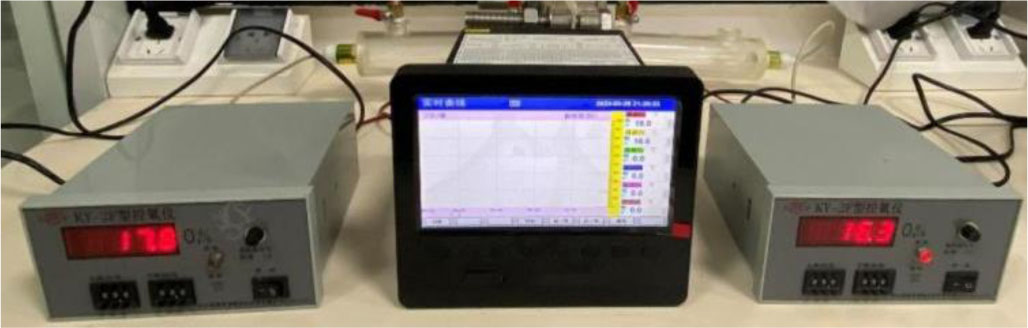
Figure 5:
Oxygen diffusion testing apparatus
Oxygen diffusion was a non-steady-state diffusion process, and as such, the first law of Fick's diffusion cannot be directly applied for calculations. However, within sufficiently small-time intervals, the non-steady-state conditions could be approximated as steady-state conditions, assuming that the concentration distribution remains effectively constant during that period. Under these circumstances, the first law of Fick's diffusion could still be used to describe the diffusion behaviour of oxygen in the material (Sercombe et al., 2007). The oxygen diffusion coefficient could be calculated by:
where:N - the amount of oxygen that passes through the specimen,
Df - the effective diffusion coefficient of oxygen,
- the concentration gradient of oxygen in the x-direction,
S - the effective diffusion area for oxygen,
dt- a time interval.
The key to calculating the oxygen diffusion coefficient, according to the above equation, lay in obtaining the oxygen concentration gradient function as a function of time. By recording the oxygen volume fraction at different time intervals in both chambers, along with the chamber volumes and the ideal gas law, the oxygen concentration in each chamber at various time points could be determined. These concentration values were then used to compute the diffusion coefficient. In this testing method, it was assumed that the oxygen concentration within the specimen followed a linear distribution, and oxygen diffusion was simplified as one-dimensional. Under these conditions, at a given moment, it could be derived by:
where:C1- the oxygen concentration in the low-oxygen chamber,
C2 - the oxygen concentration in the high-oxygen chamber,
d - the thickness of the specimen.
The experimental procedure for oxygen diffusion coefficient measurement: the concrete sample, with a known apparent density, was first placed in a thermostatic oven and dried at 60°C for 48 hours, then allowed to cool to room temperature. The sample was then sealed in a PVC tube using epoxy resin. After curing, it was dried again at 60°C for 72 hours, then cooled and weighed. The drying process was repeated for 6 hours, and the sample was weighed periodically until the weight stabilized, with a variation of less than 1%. Petroleum jelly was applied to the diffusion measurement apparatus to ensure an airtight seal. Oxygen was introduced into one chamber, and nitrogen into the other. The oxygen concentration change was monitored to calculate the diffusion rate. The concrete samples were positioned on both sides of the apparatus under dry conditions, as shown in Figure 6. The system operated at standard atmospheric pressure and maintained an environmental temperature of 298K.
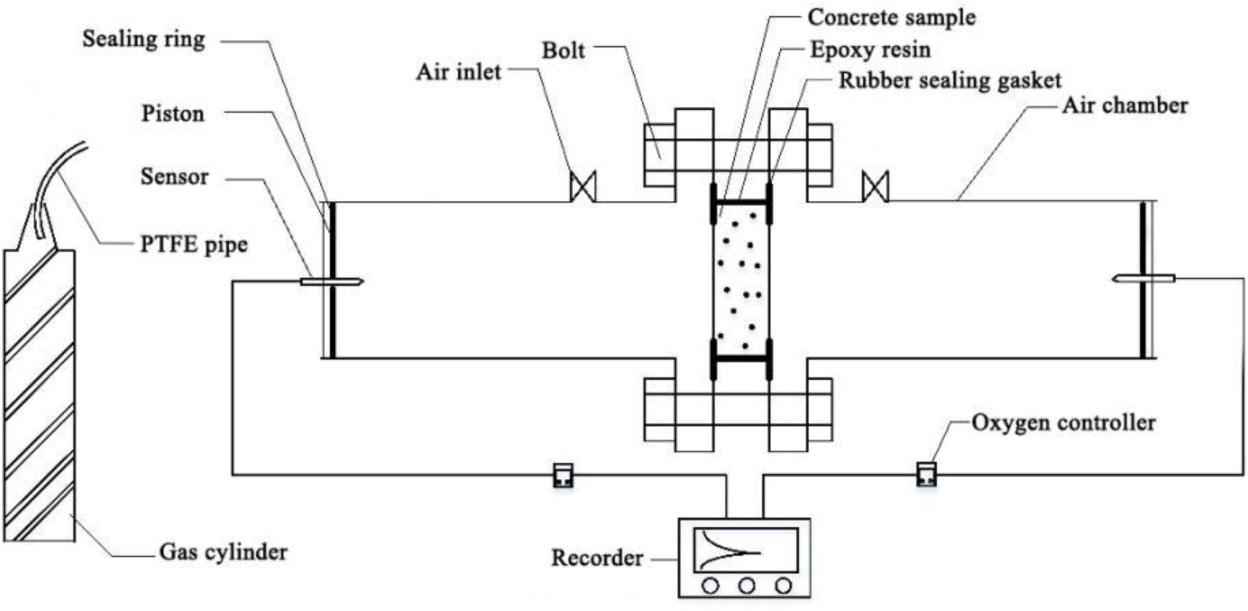
Figure 6:
Oxygen diffusion coefficient testing apparatus
3.5. Microstructure Observation
The microstructure of concrete, particularly its pore characteristics such as porosity, pore size distribution, and connectivity, plays a critical role in determining both durability and mechanical properties (Monteiro et al., 2019). A well-refined pore structure leads to reduced permeability, which is essential for enhancing the durability of concrete (Chen et al., 2023). The experimental process began by cutting concrete test blocks into 1cm3 cubic samples, which were dried in an electric constant-temperature oven at 60°C for 48 hours. Following this, mercury intrusion tests were performed with applied pressures ranging from 20PSI to 60,000PSI. Additionally, the pore aperture tortuosity served as an indicator of the internal complexity of the concrete (Sun et al., 2015). It could be calculated by:
Where:τ - the tortuosity of the pore structure,
αen - the residual mercury content after depletion.
Internal curing, as a method to modify microstructure, particularly affects the interfacial transition zone (ITZ), which is typically a weaker area due to higher porosity. By introducing internal curing, ITZ becomes denser, with reduced porosity and increased homogeneity (Xiao et al., 2023). For further analysis, other concrete samples were sliced to a thickness of 5mm are dried at 60°C for 24 hours. Once cooled, the microstructure of ITZ was examined using SEM at ‘500×’ magnification, which allowed for detailed observation of the transition zone’s microstructural features. Three obtained samples were all observed, with six regions selected from each.
4. Results and Discussion
4.1. Material Composition
4.1.1. Cement Content and Type
The samples selected were carbonated concrete, primarily composed of calcium carbonate, with negligible contributions from other components. This study employed a standard-free full-pattern fitting method to determine the mass fraction ratios of all constituents and used Jade6.5 for analysis and compared phase identification using PDF cards. The results were as shown in Figure 7.
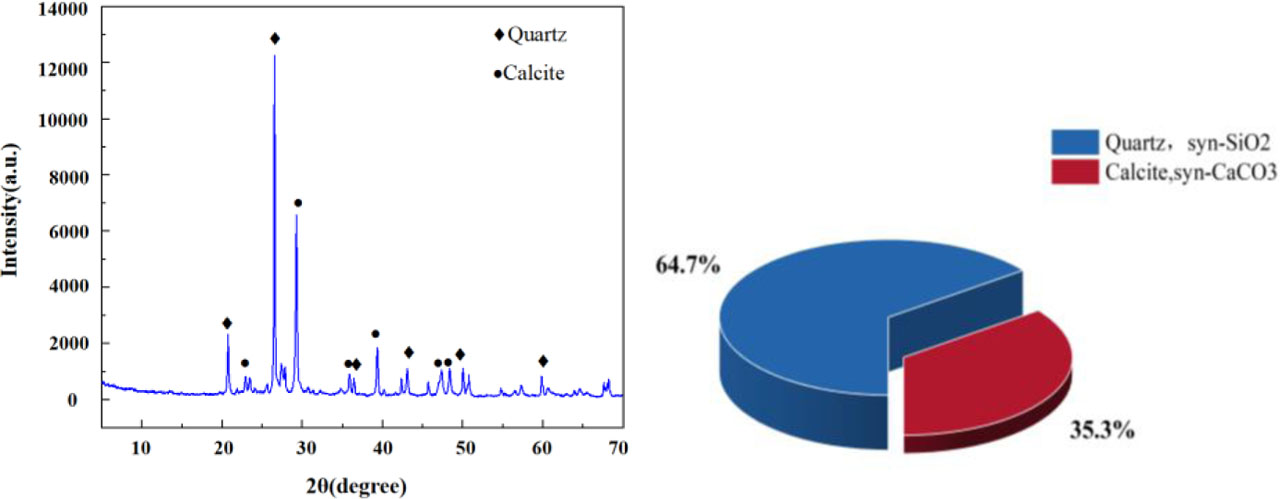
Figure 7:
Historical concrete samples composition and mass proportion
Based on the phase analysis results of the concrete specimen, it was found to consist solely of quartz (64.7%) and calcium carbonate (35.3%). Even with the modification of concrete by adding graphite powder, no new crystalline phases were detected other than quartz and calcium-bearing hydration products (Flores-Nicolás et al., 2021). Therefore, it could be concluded that the cement used in the University Road Building of the Zhejiang Library was Ordinary Portland Cement. And the content of hardened cement paste in the concrete was calculated to be 22.3%, with the cement content in the concrete being 482kg/m3.
4.1.2. Aggregate grading and type
After dissolving concrete samples in dilute hydrochloric acid, the solid residue was separated, washed, and dried to obtain the stone and sand (Figure 8). Due to the limited sample size, 100g of dried sand was sieved using a standard sieve, and the mass of the sand retained on each sieve layer was measured. A gradation curve for the sand was shown in Figure 7, based on the results. The stone predominantly exhibited large and elongated shapes, with an average particle size of 20mm and the sand had the highest proportion of particles, which fell within the 0.315mm to 1.25mm size range. And the fineness modulus of the sand was calculated to be 3.08.
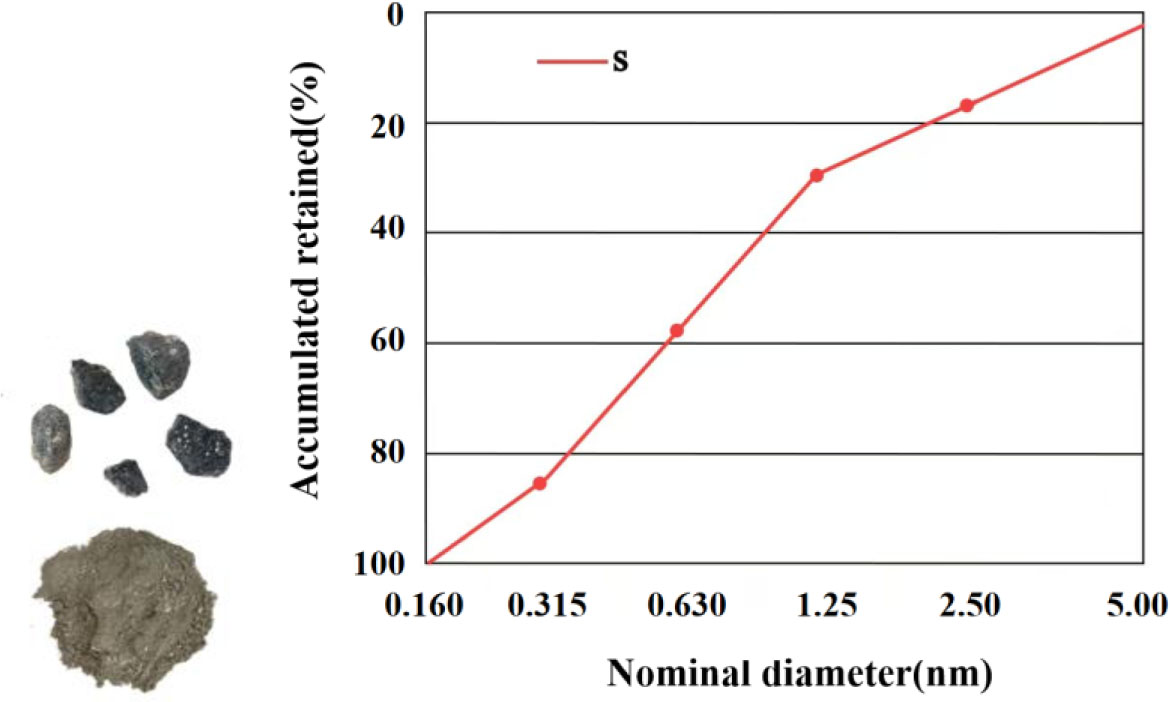
Figure 8:
Aggregates and Result of sand sieving
4.2. Construction technology
4.2.1. Apparent Density
The average density of concrete was 2160kg/m3, which fell within the range typically associated with normal weight concrete.
4.2.2. Oxygen Permeability
The calculation of the oxygen diffusion coefficient required the determination of the oxygen concentration gradient versus time relationship. The oxygen concentration gradient-time curve was fitted using OriginPro software. Exponential fitting, Linear fitting and Logistic fitting, could be employed to model the concentration gradient-time relationship. The fitting results were presented in Table 1.
Table 1:
Regression models, curves and results of their fitting performances.
| Regression Model | Specimen | Regression curve | R2 | SSR |
|---|---|---|---|---|
| Exponential fitting | S1 | y=3245.9×exp(−x/25396.3)+479.9 | 0.99998 | 56.48 |
| S2 | y=3334.9×exp(−x/31777.5)+515.1 | 0.99996 | 12.98 | |
| S3 | y=2766.7×exp(−x/38286.4)+893.6 | 0.99997 | 23.74 | |
| Linear fitting | S1 | y=−0.07976x+3543.4 | 0.98401 | −0.99 |
| S2 | y=−07171x+3721.2 | 0.98966 | −0.99 | |
| S3 | y=−0.0526x+3582.9 | 0.99283 | −0.99 | |
| Logistic fitting | S1 | y=6473.6/[1+(x/56027.2)0.92] −2709.8 | 0.99998 | 7.77 |
| S2 | y=6582.8/[1+(x/67427.9)0.95] −2712.7 | 0.99996 | 10.78 | |
| S3 | y=5984.7/[1+(x/92594.8)0.94] −2309.8 | 0.99997 | 5.10 |
Based on the comprehensive fitting results of R2 and SSR, the Logistic fitting yielded the best fitting performance. Therefore, it was employed to calculate the oxygen diffusion coefficient. The oxygen diffusion coefficient in the dry state was calculated, using equation (3). The mean value was 9.27×10⁻⁸m2/s. However, according to JC/T 2758-2023, the permeability coefficient of ordinary concrete typically ranges from 5×10⁻¹⁷m2/s to 3×10⁻¹⁶m2/s. However, the specimens tested in this study exhibited values far exceeding this range, indicating significant carbonation. The oxygen diffusion coefficient reflects the compactness of the internal structure of concrete; a higher value indicates lower resistance to acidic gas corrosion and a greater degree of internal carbonation (Tong et al., 2022).
4.2.3. Microstructure
The porosity of concrete is strongly correlated with its mechanical performance; an increase in porosity generally leads to a reduction in compressive strength and overall durability (Flores-Nicolás et al., 2025). A mercury intrusion experiment conducted on a 1cm3 concrete sample under both low and high-pressure stations revealed an average porosity of approximately 19.32%, which had negative effect on concrete. The pores are classified into four categories based on size: gel pores (<4.5nm), small capillary pores (4.5–50nm), medium capillary pores (50–100nm), and large capillary pores (>100nm). Pores larger than 132nm significantly affect the permeability of concrete, thereby influencing its carbonation resistance. By calculating the mercury intrusion at different pressures, the volume of pores of various sizes could be determined. In the concrete of the University Road Building of the Zhejiang Library, the volume of large capillary pores accounted for a significant proportion (about 90%) (Figure 9). Furthermore, through mercury intrusion porosimetry, the concrete was found to have an average pore diameter of 183.1nm. Based on the residual mercury withdrawal of 55.6%, the tortuosity of the pores was calculated to be 5.0.
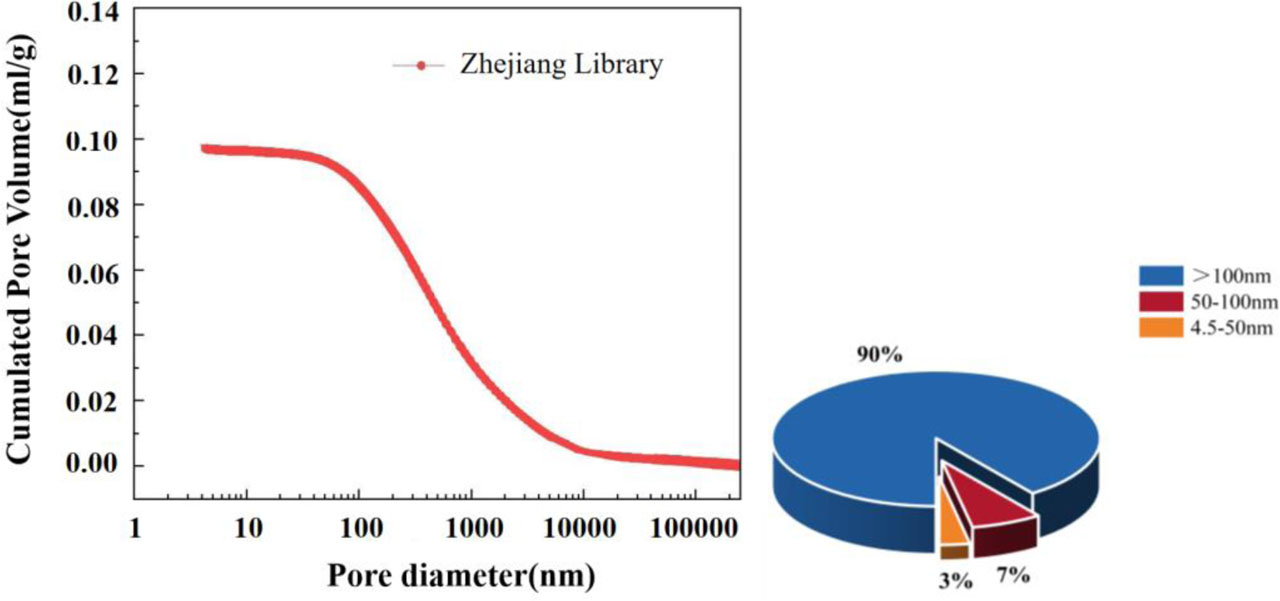
Figure 9:
Pore diameter of historical concrete samples and Ratio of corresponding dimensions
The interfacial transition zone was examined, and the results, as shown in Figure 10, revealed the presence of distinct distribution gaps in the concrete interface transition zone of the University Road Building of the Zhejiang Library. On the right side, in the hardened cement mortar section, significant large pores were observed, indicating poor densification. The cracks could also be clearly observed in both figures, which indicated that mechanical and durability performance of concrete samples had been deteriorated.
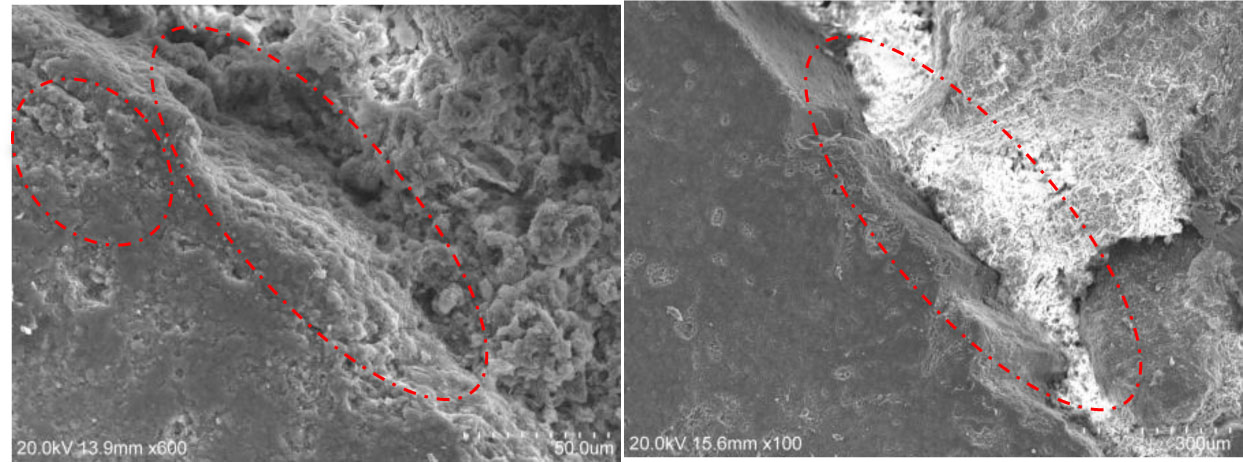
Figure 10:
Pores and cracks in interface transition zone
4.3. Discussion
Based on the background and results above, it is evident that the University Road Building of the Zhejiang Library, influenced by local environmental factors, has experienced prolonged exposure to rainwater erosion, resulting in a decrease in durability. This is corroborated by the results of carbonation depth. The historical concrete used in this cultural heritage structure contained ordinary Portland cement with a dosage of 482kg/m3. The cement dosage for C20 concrete is generally between 200–250kg/m3. Although the cement content was relatively high, the production techniques used at the time might have been inadequate, leading to suboptimal concrete strength. From a modern perspective, the porosity of the concrete failed to meet current standards (about 10–15%). The aggregate used in the concrete were larger and longer gravel particles and medium sand classified according to contemporary standards. This composition contributed to a higher oxygen permeability coefficient, which is usually in the range of 10−12 to 10−13m2/s, indicating an insufficiently compact internal structure. Microscopic examination further revealed a high proportion of large pores, which adversely affected the durability of the concrete.
These results indicated the presence of large pores, which likely arose from flaws in the production process, affected the concrete overall quality and durability. Simultaneously, the uneven aggregate size distribution, increased porosity, relatively low cement content contributed to the poor carbonation resistance. And the construction technology employed resulted in insufficient compaction. These factors also compromised the durability. The limited number and type of samples collected from historical buildings represents a significant constraint. Therefore, the future research could be focused on expanding the sample size and refining testing methods for concrete containing additives.
5. Conclusions
To date, there has been no systematic approach existing for tracing historical concrete materials information. Therefore, using the historical project, the University Road Building of the Zhejiang Library, as a case study, this research considered various factors and had developed a contemporary, relatively comprehensive, and applicable methodological framework for concrete information.
First, local history, environmental factors and carbonation depth were considered. Next, the analysis of the concrete material constituents and construction techniques was conducted to trace information from existing concrete heritage. Results of this study revealed that the compromised durability of historical concrete stemmed from intrinsic microstructural and compositional deficiencies. Key factors included large pores from flawed production, uneven aggregate distribution, high porosity, and low cement content, which collectively impaired carbonation resistance. Insufficient compaction, typical of the era, further diminished long-term performance.
This methodology extracts valuable concrete material information from limited samples, which confirms the feasibility of the methodology for evaluating historical concrete and guides future preservation efforts.
Acknowledgments
This study was supported by Cultural Relics Conservation Science and Technology Program of Zhejiang (No. 2025013) and State Key Laboratory of High-Performance Civil Engineering Materials (No. 2023CEM005).
Notes
[1] Contributed by Author Contributions
Y. Tong designed the study and supervised the project. Z. Li conducted the experiments. Q. Wang performed the data analysis. W. Chen contributed to manuscript writing. All authors critically reviewed and approved the final version of the manuscript and agreed to be accountable for all aspects of the work.