

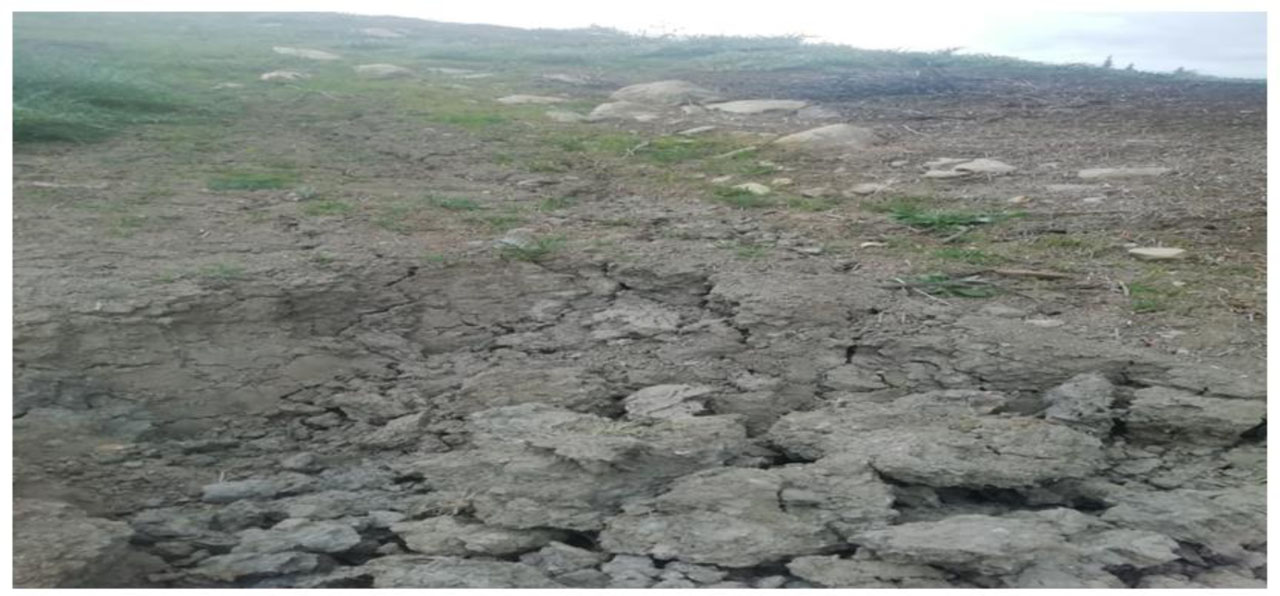
Figure 1:
Surface shrinkage cracks in clay soil
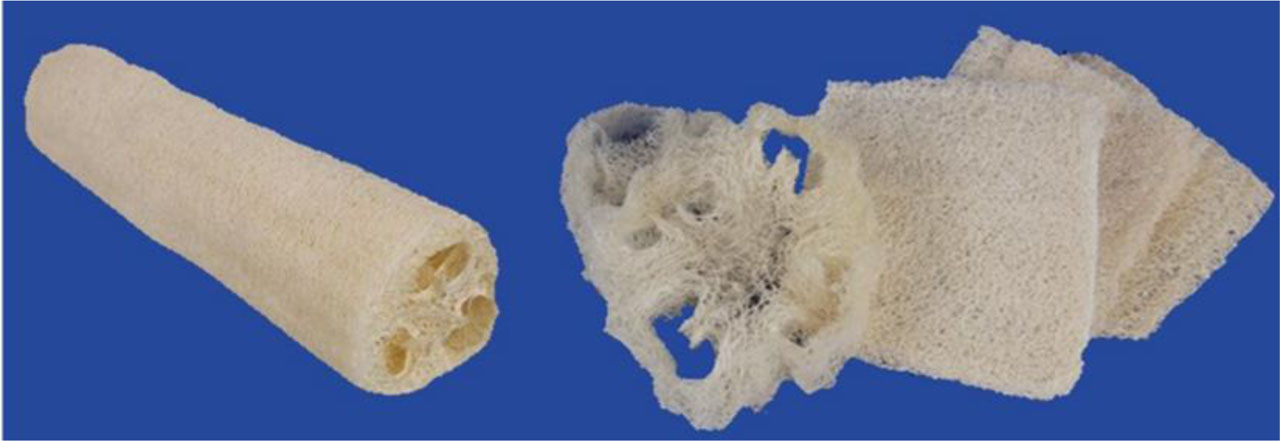
Figure 2:
Luffa and its internal structure
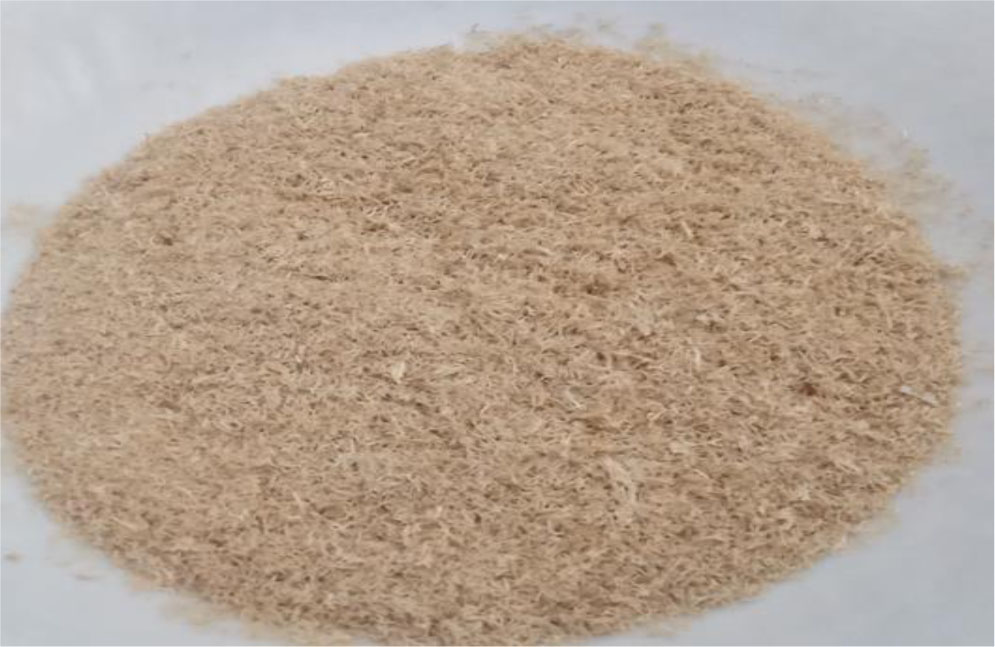
Figure 3:
Luffa fiber used in this study
Table 1:
Physical properties of the used soil
| Property | Value | Property | Value |
|---|---|---|---|
| Liquid Limit, LL [%] | 63.342 | Water content at saturation, Wsat (%) | 24.02 |
| Plastic Limit, PL [%] | 27.74 | Degree of saturation, Sr (%) | 79.12 |
| Plasticity Index, IP [%] | 35.602 | unit weight of water γw [kN/m3] | 9.81 |
| Consistency Index, IC [%] | 1.245 | Moist unit weight, γh, [kN/m3] | 19. 30 |
| Liquidity Index, IL [%] | − 0.245 | Unit weight of soil solids, γs, [kN/m3] | 26.78 |
| Specific Gravity (Gs) | 2.73 | ||
| Void ratio, e | 0.656 | dry unit weight, γd [kN/m3] | 16.22 |
| Porosity, n | 0.396 | Saturated unit weight, γSat [kN/m3] | 20.105 |
| specific surface area [m2/g] | 109 | Soil classification (USCS) | CH |
| Natural water content, WN [%] | 19.01 | Soil classification (GTR) | A3m |
Table 2:
The main mechanical properties of the soil used
| Property | Value |
|---|---|
| Free swell [%] | 10.32 |
| Swelling pressure [kN/m2] | 164 |
| Pre-consolidation stress [kN/m2] | 2.58 |
| Swelling index Cg | 0.0897 |
| Compression index Cc | 28.06 |
| Over-consolidation ratio (OCR) | 12.59 |
| Maximum dry unit weight, γdmax [kN/m3] | 16.33 |
| Optimum moisture content, OMC [%] | 19.21 |
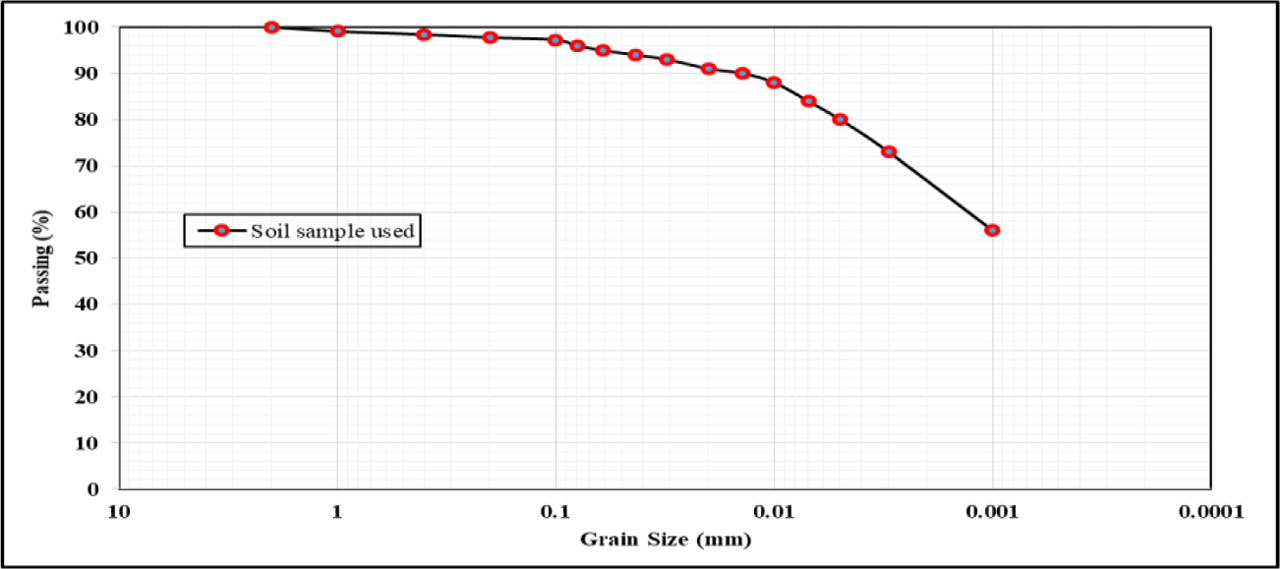
Figure 4:
Particle size distribution of the soil sample used in this study
Table 3:
Chemical properties of the soil used
| Property | Value |
|---|---|
| pH | 7.5 |
| Cation exchange capacity (CEC) [meq /100g] | 16.8 |
| Methylene Blue Value, [VBS g/100g] | 5.19 |
Table 4:
Chemical composition of the soil used (X-ray fluorescence analysis)
| Compound | Soil used [%] |
|---|---|
| SiO2 | 45.4 |
| Al2O3 | 15.8 |
| Fe2O3 | 4.74 |
| CaO | 17.198 |
| MgO | 2.3 |
| SO3 | 0.664 |
| K2O | 2.035 |
| Na2O | 0.3 |
| Cl | 0.021 |
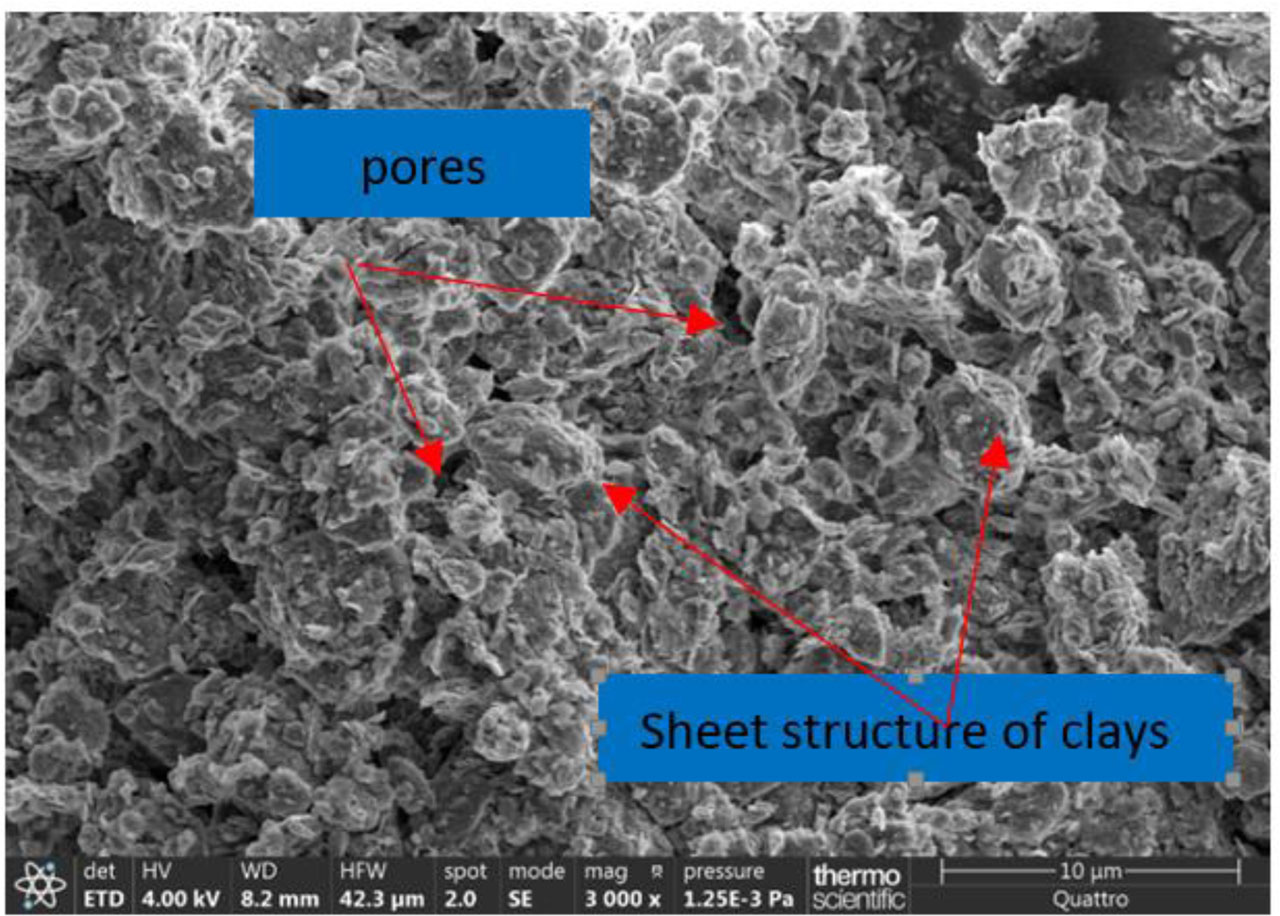
Figure 5:
A micrograph of the untreated expansive soil sample
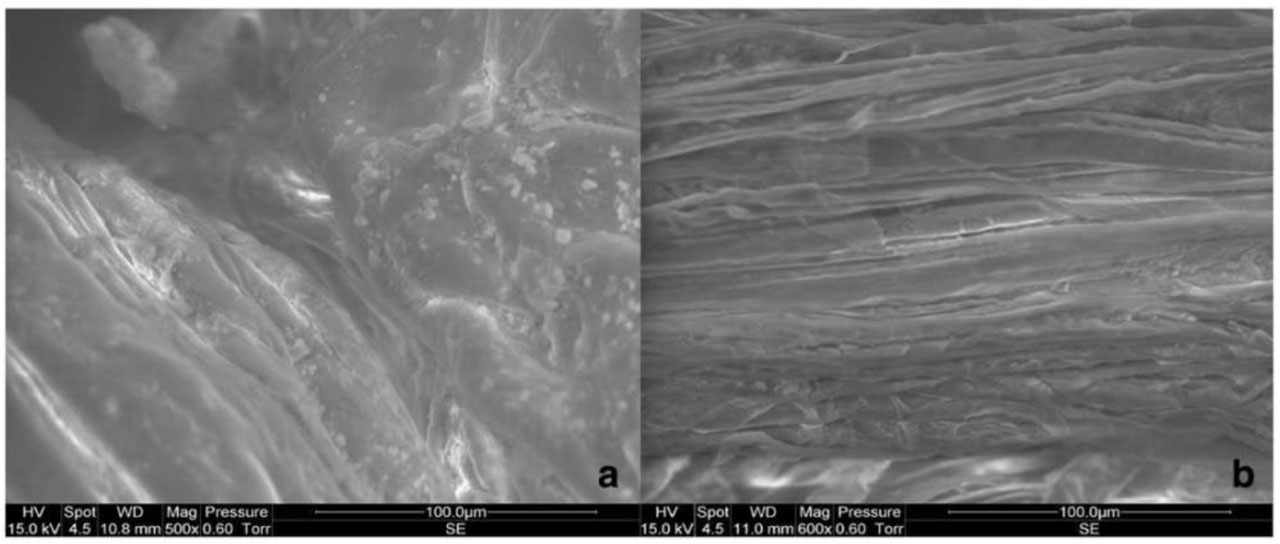
Figure 6:
SEM micrographs of a) untreated luffa fibers; b) treated luffa fibers
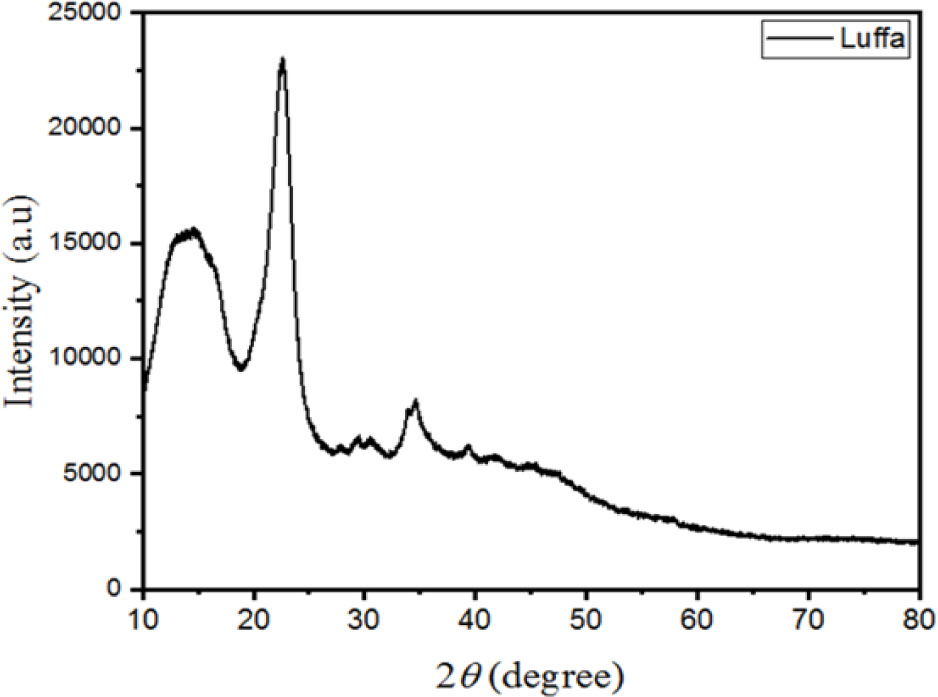
Figure 7:
XRD of luffa fiber
Table 5:
Atterberg limits of untreated soil and soil treated with different percentages of luffa fiber
| Luffa fibers [%] | Liquid Limit, LL [%] | Plastic Limit, PL [%] | Plasticity Index, PI [%] |
|---|---|---|---|
| 0 | 63.342 | 27.74 | 35.602 |
| 0.5 | 62.860 | 30.580 | 32.28 |
| 1 | 62.600 | 32.825 | 29.775 |
| 1.5 | 62.861 | 32.47 | 30.391 |
| 2 | 63.149 | 31.8 | 31.349 |
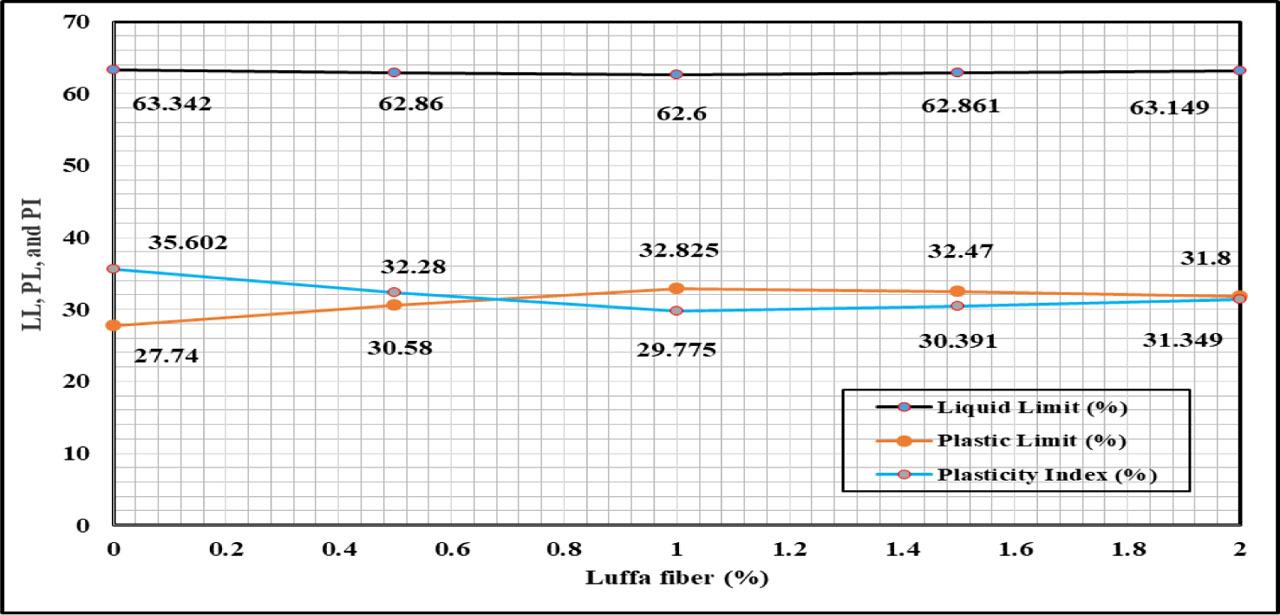
Figure 8:
LL, PL, and PI versus percentage of lime and luffa fiber
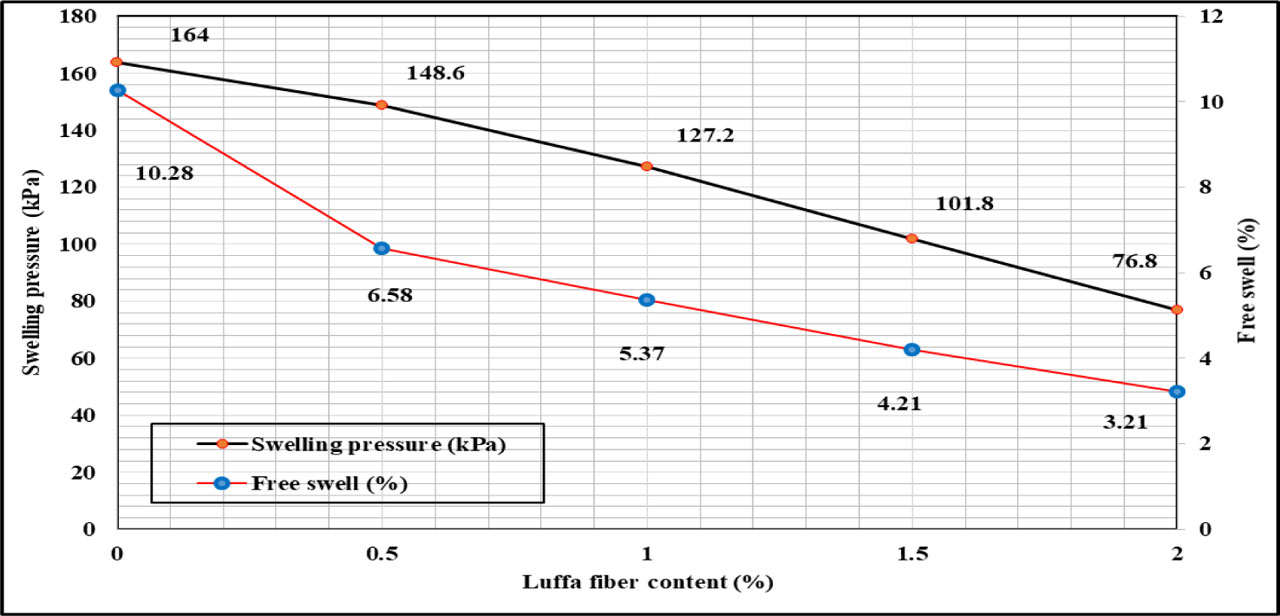
Figure 9:
Variation of free swell and swelling pressure vs. luffa fiber content
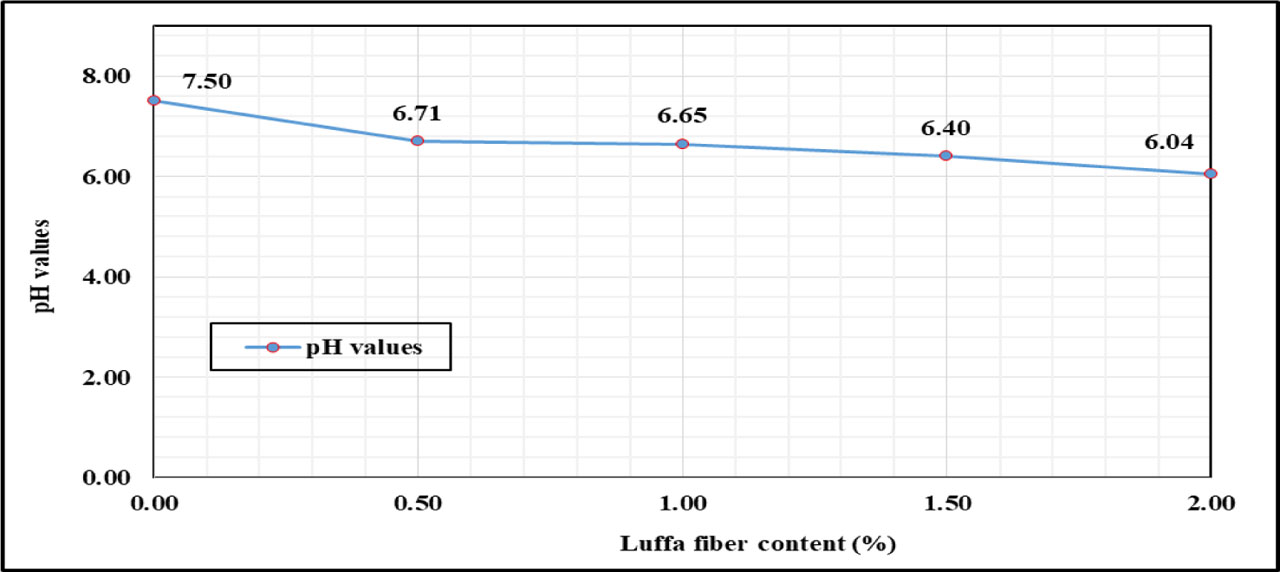
Figure 10:
pH variation versus luffa fiber content
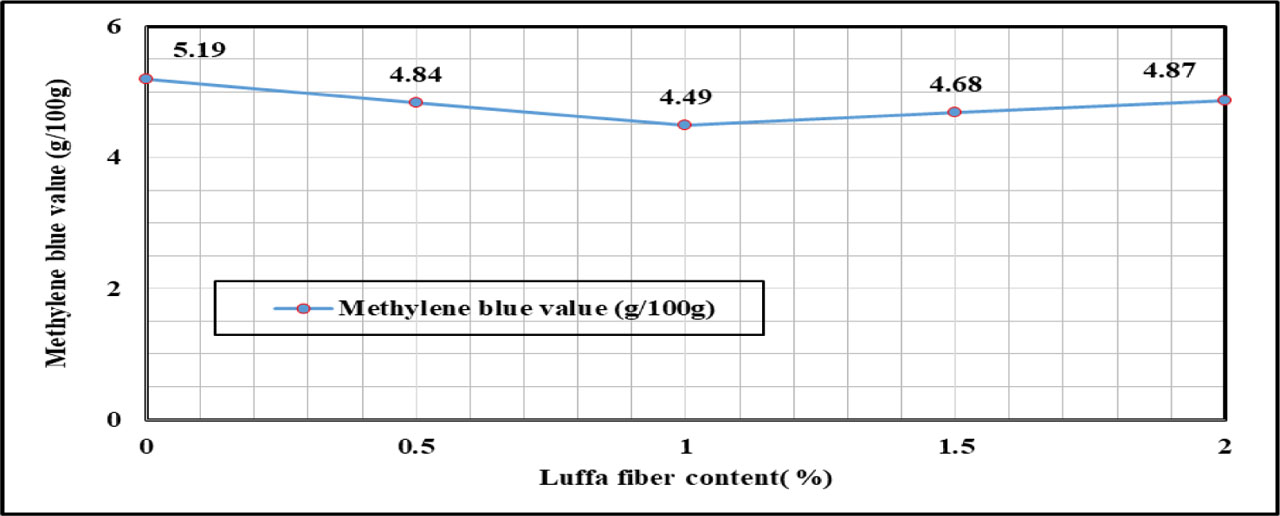
Figure 11:
Variation of the methylene blue value (MBV) of treated and untreated soil as a function of luffa fiber content
Table 6:
Results of compaction proctor test according to NF P94-093
| Luffa fibers [%] | γdmax [kN/m3] | OMC [%] |
|---|---|---|
| 0 | 16.33 | 19.21 |
| 0.5 | 16.18 | 20.306 |
| 1 | 15.778 | 21.13 |
| 1.5 | 15.37 | 21.88 |
| 2 | 15.09 | 22.46 |
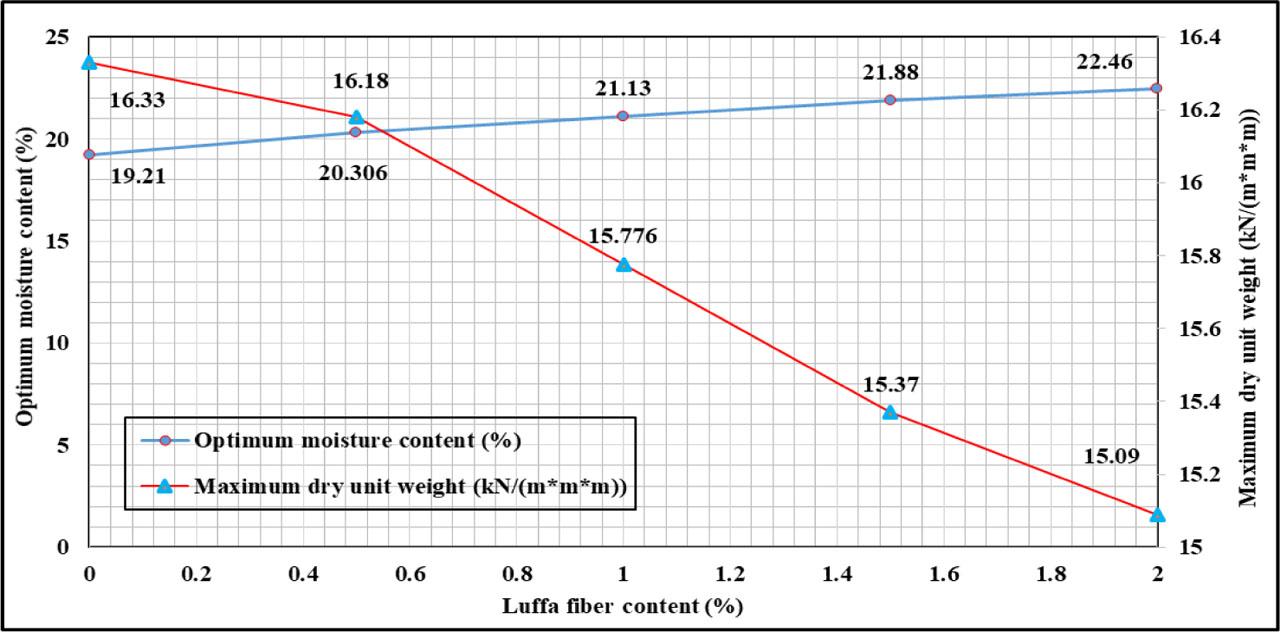
Figure 12:
Variation of optimum moisture content (%) and maximum dry unit weight (kN/m3) with increasing Luffa fiber content
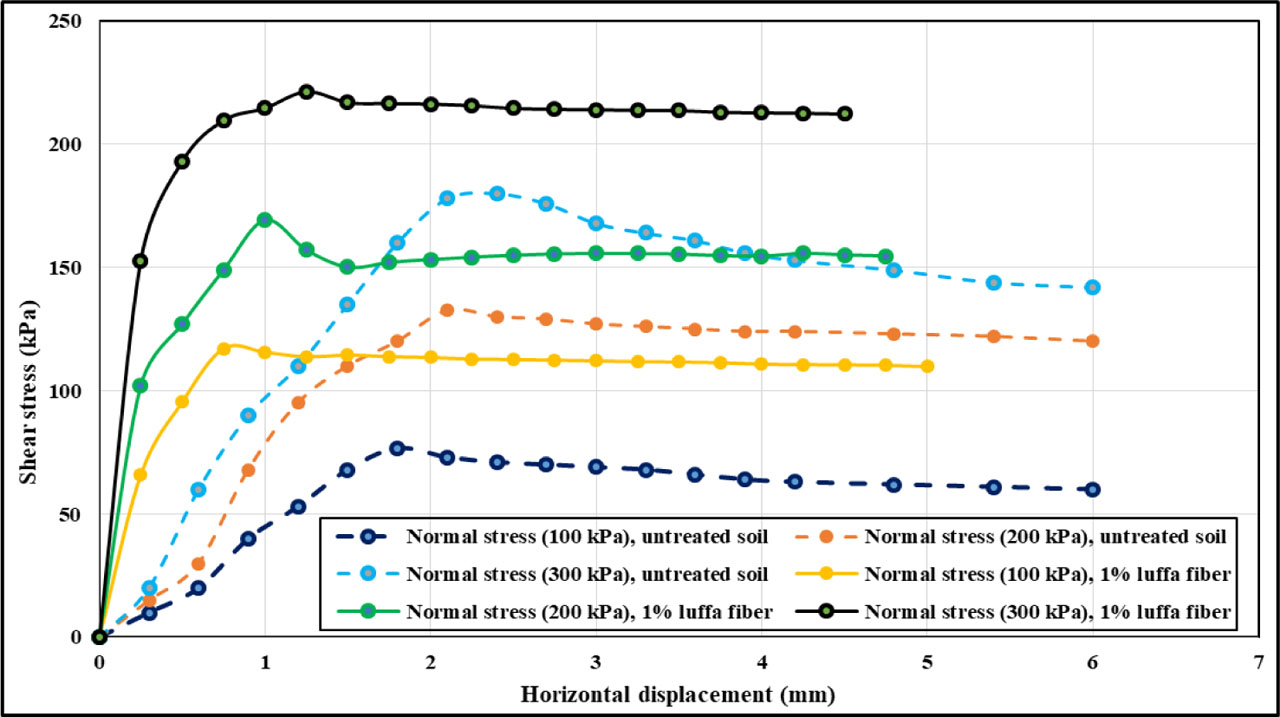
Figure 13:
Shear stress vs. horizontal displacement curves for untreated soil and 1% luffa fiber
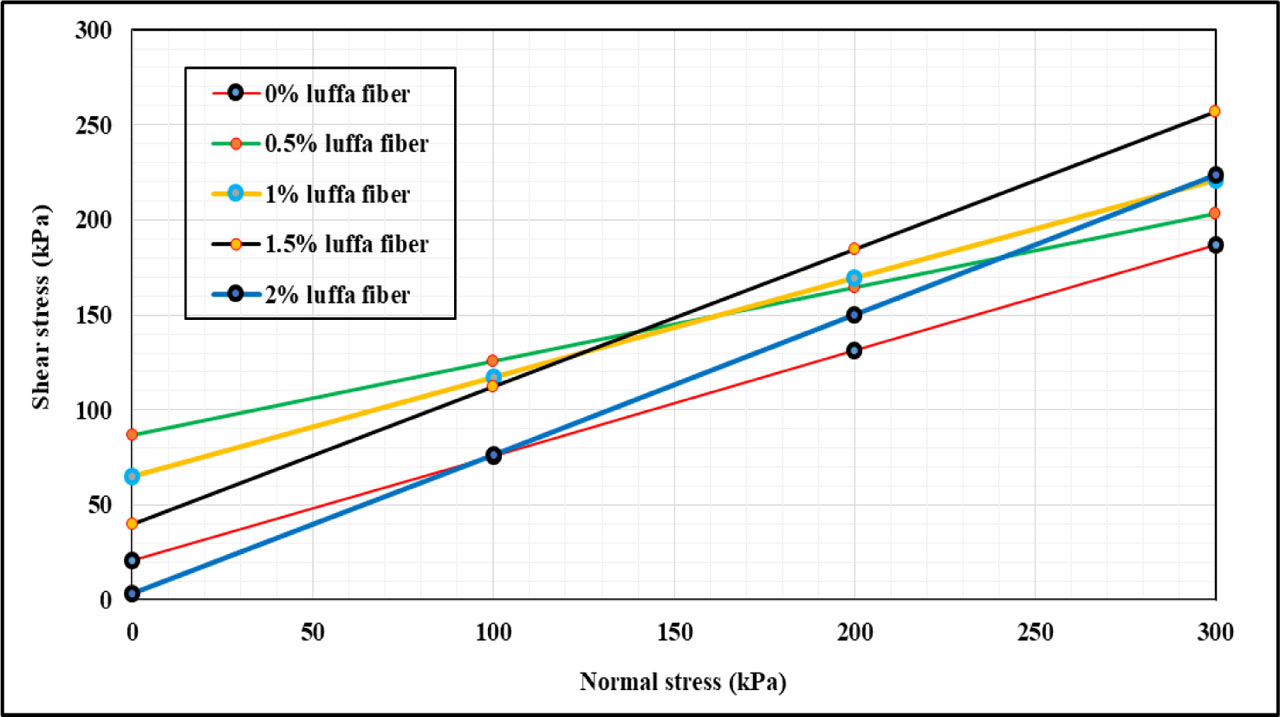
Figure 14:
Variation of shear stress with normal stress for various luffa fiber contents
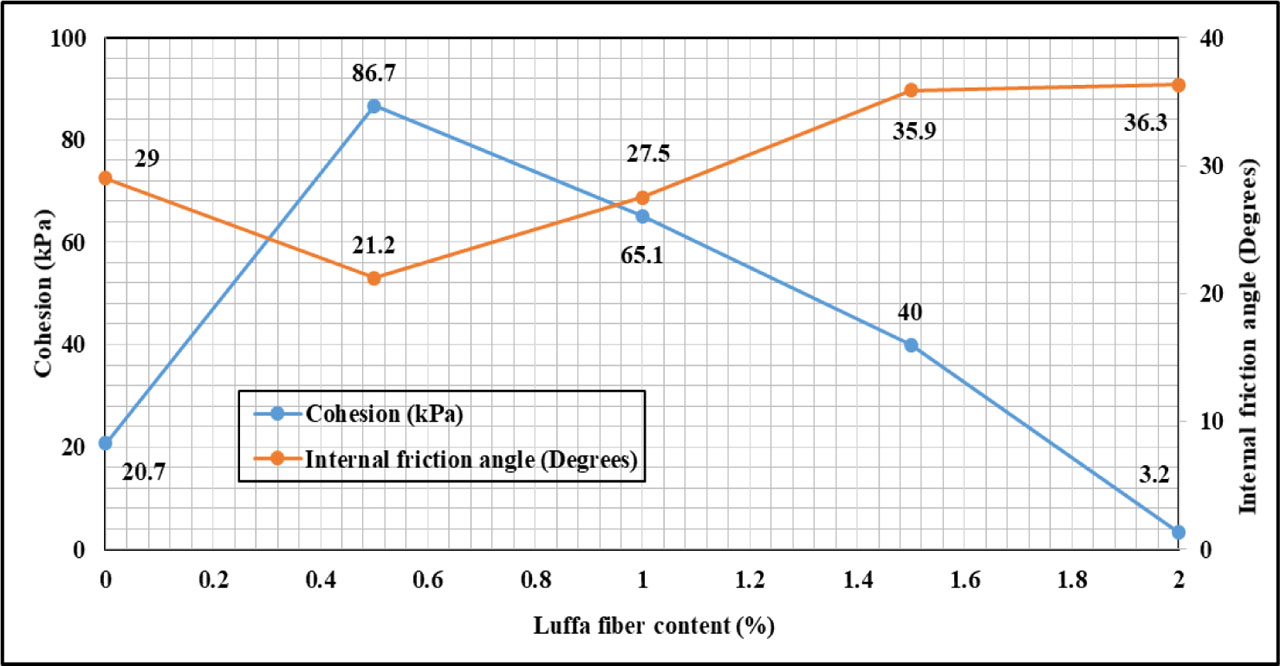
Figure 15:
Variation of cohesion and internal friction angle with luffa fiber content
Table 7:
Chemical composition of untreated soil and soil treated with 1% luffa fiber after 1, 7, and 28 days of air-drying curing
| Type of soil | Curing duration | SiO2 | Al2O3 | Fe2O3 | CaO | MgO | SO3 | K2O | Na2O | Cl |
|---|---|---|---|---|---|---|---|---|---|---|
| Untreated soil | 1 day | 45.4 | 15.8 | 4.74 | 17.198 | 2.3 | 0.664 | 2.035 | 0.3 | 0.021 |
| Treated soil with 1% luffa | 1 day | 45.5 | 16.1 | 4.756 | 17.147 | 2.346 | 0.576 | 2.039 | 0.3 | 0.018 |
| Treated soil with 1% luffa | 7 days | 44.3 | 15.1 | 4.749 | 17.14 | 2.207 | 0.672 | 2.005 | 0.3 | 0.022 |
| Treated soil with 1% luffa | 28 days | 44.2 | 15.3 | 4.69 | 17.125 | 2.243 | 0.673 | 2.024 | 0.3 | 0.025 |
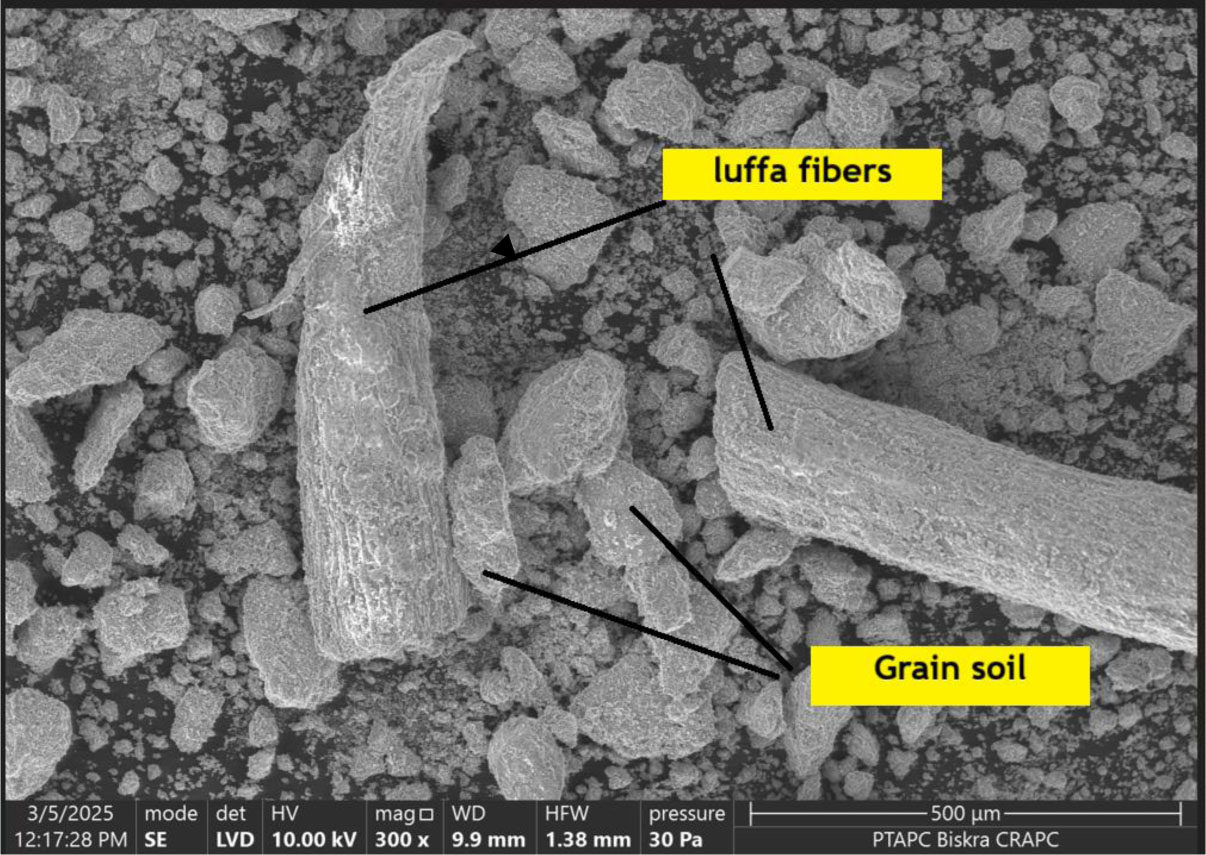
Figure 16:
Scanning Electron Microscopy (SEM) micrograph of soil treated with 1% luffa fiber