

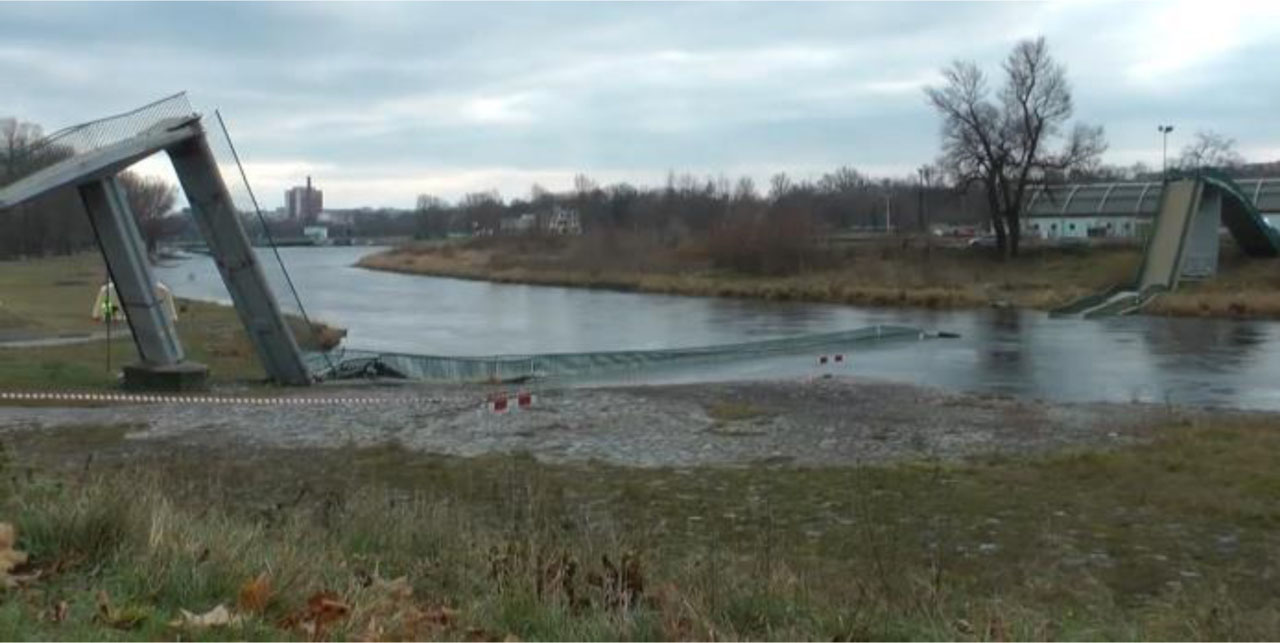
Figure 1:
Collapsed footbridge in Prague, Czechia (2017) (WEBVIZE.cz, 2017)
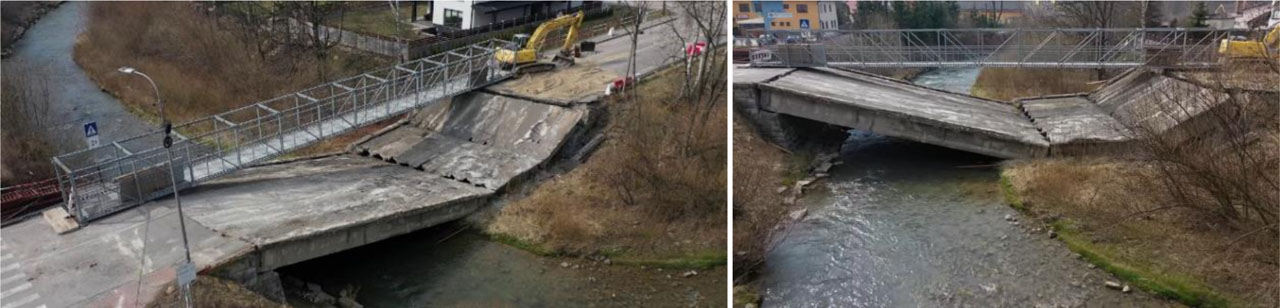
Figure 2:
Collapsed bridge in Trstena, Slovakia (2020) (Pallo, 2020)
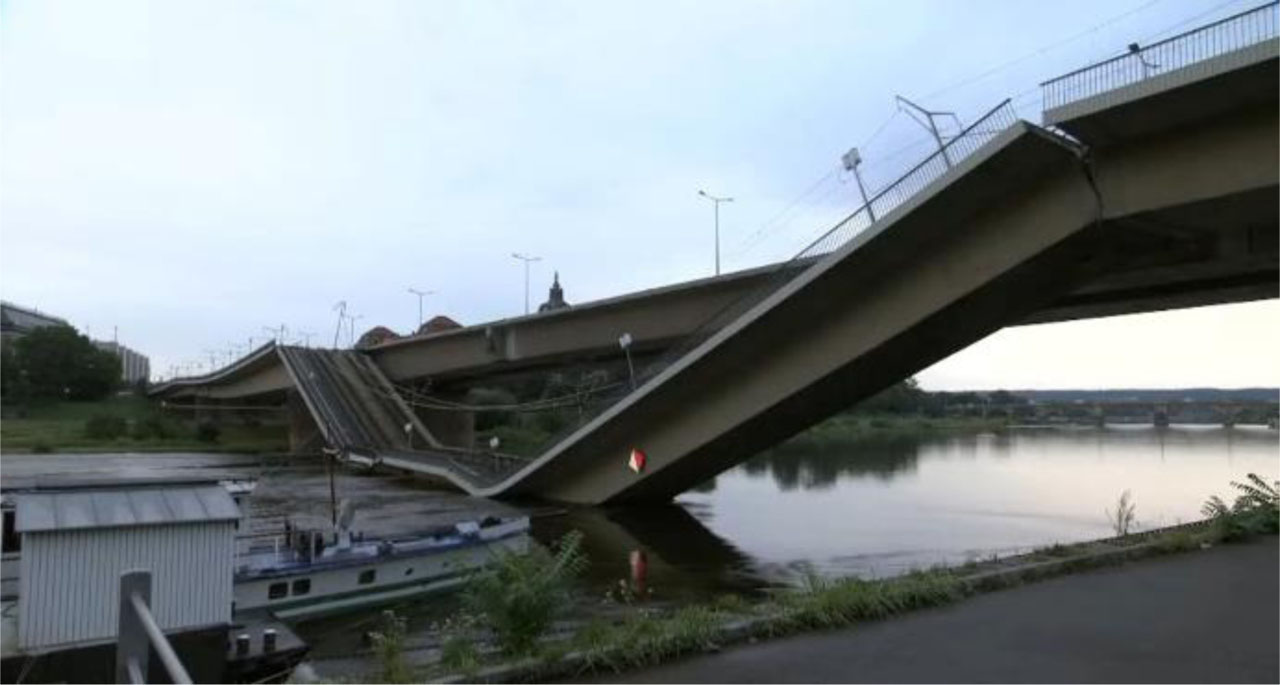
Figure 3:
Collapsed bridge in Dresden, Germany (2024) (Iamcivilengineer, 2024)
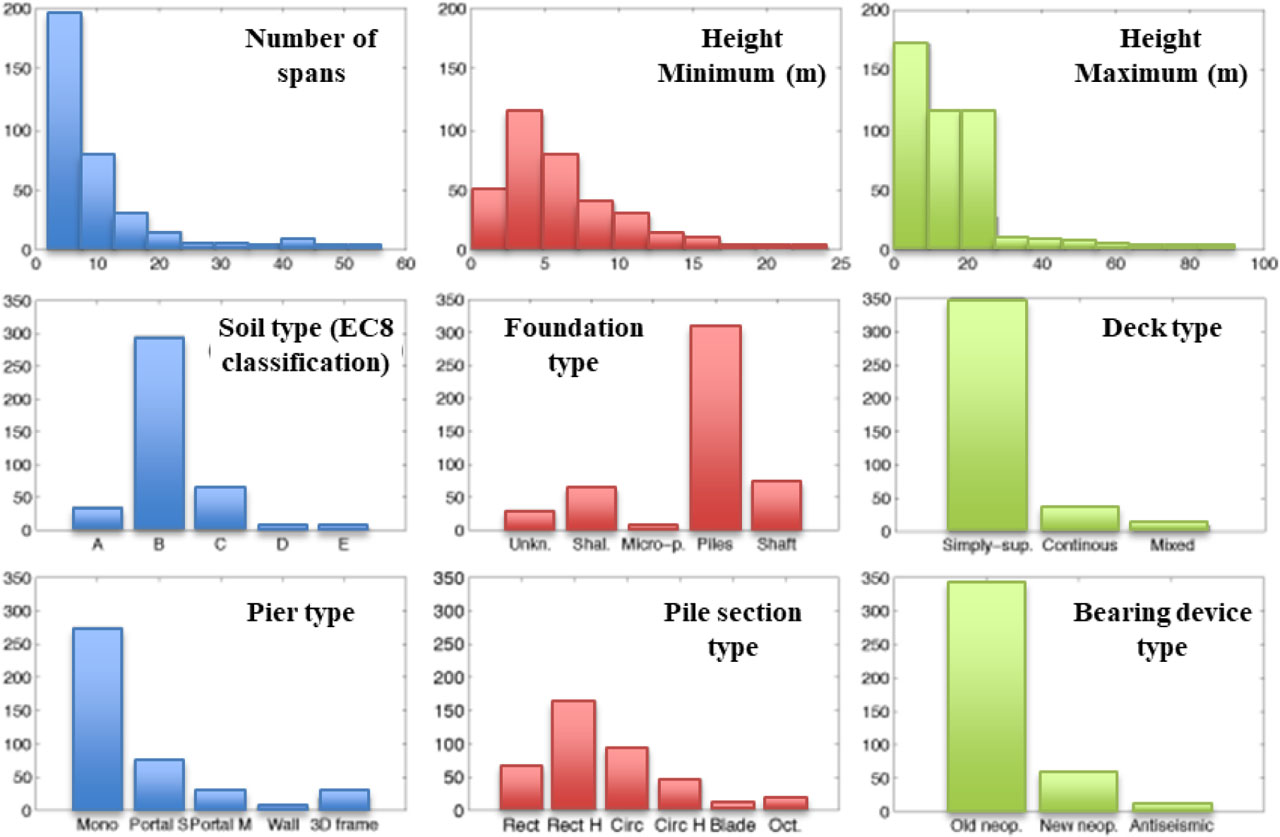
Figure 4:
Results of the study of Borzi et al., 2015: distribution of features of the 485 bridges
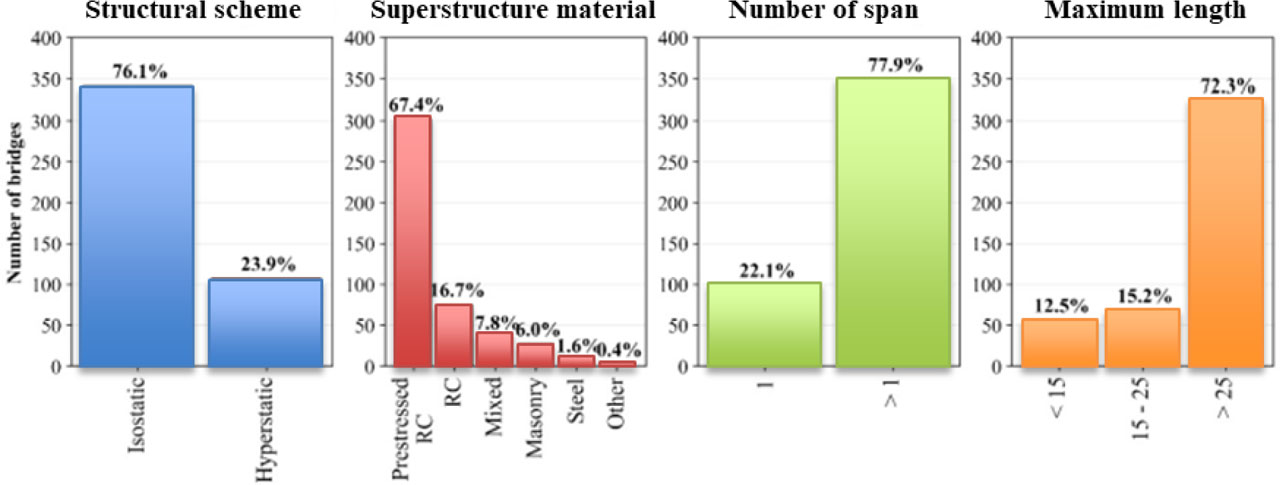
Figure 5:
Results of the Italian national census on 447 bridges
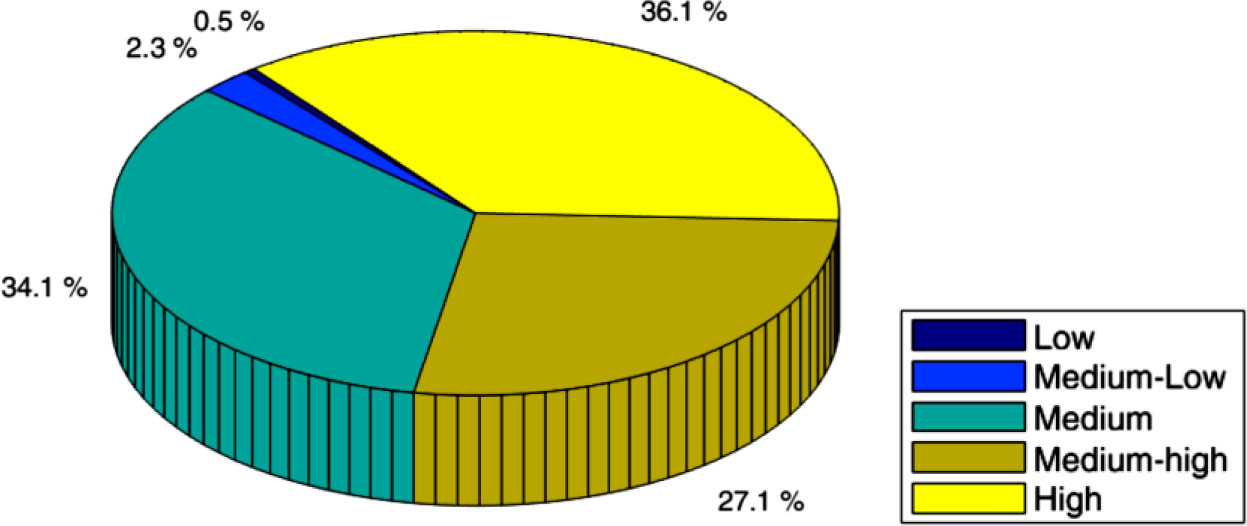
Figure 6:
Results of the Italian national census on 447 bridges: final class of attention
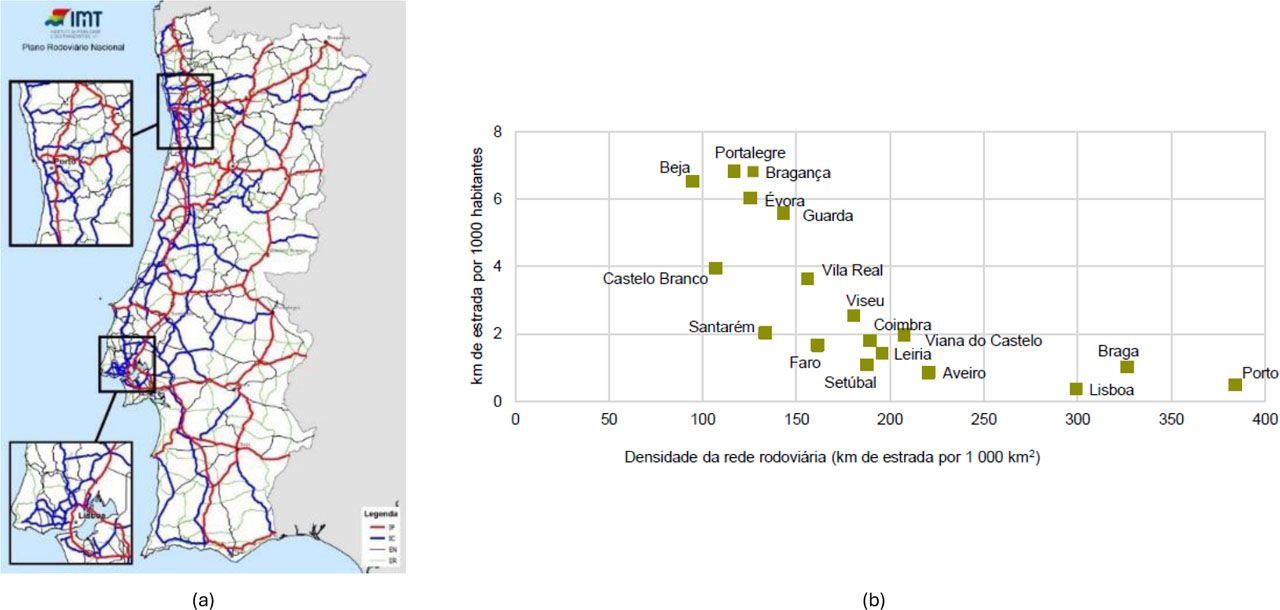
Figure 7:
a.) National Road network (Instituto da Mobilidade e dos Transportes, I.P.); b.) Indicators of the National Road network extension in 2023 (Instituto Nacional de Estatística, I.P., 2024)
Table 1:
Number and extension of the national and municipality road networks (PORDATA, PORDATA, (Instituto da Mobilidade e dos Transportes, I.P.)
| Typology of roads | Number of roads (quantity) | Extension in 2023 (km) | |||
|---|---|---|---|---|---|
| 1 | National Road Network | 478 | 14,339 | ||
| i | Primary Road network | 9 | 2,350 | ||
| a | Main routes (IP) | 9 | 2,350 | ||
| ii | Complementary Road network | 237 | 7,198 | ||
| a | Complementary roads (IC) | 37 | 1,893 | ||
| b | National roads (EN) | 200 | 5,305 | ||
| iii | Regional roads (ER) | 188 | 4,791 | ||
| iv | Highways (A) | 44 | 3,113 | ||
| 2 | Municipality Road Network | Unknow | Unknow | ||
| i | Declassified roads (EM) | 3,143 | Unknow | ||
| ii | Municipality roads per district | Unknow | Unknow | ||
| iii | Municipality paths per district (CM) | 8,043 | Unknow | ||
| iv | Urban roads per municipality | Unknow | Unknow |
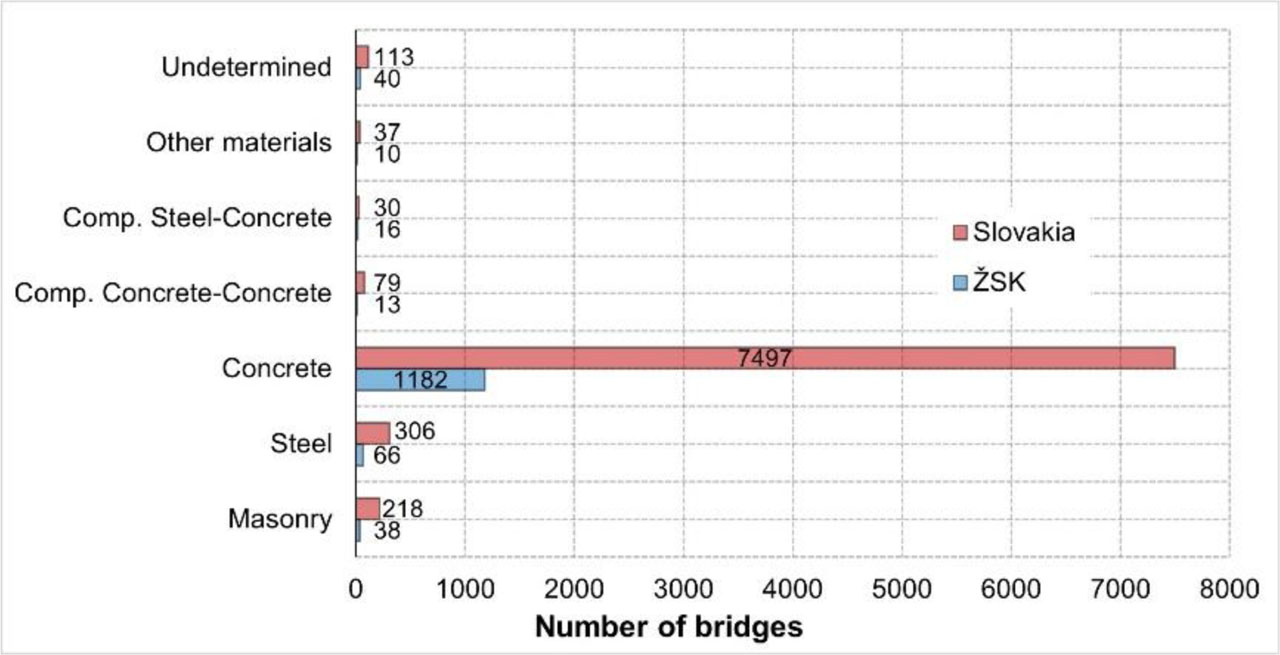
Figure 8:
Classification of Slovak Road Bridges by Construction Material (Slovak Road Administration, 2025)
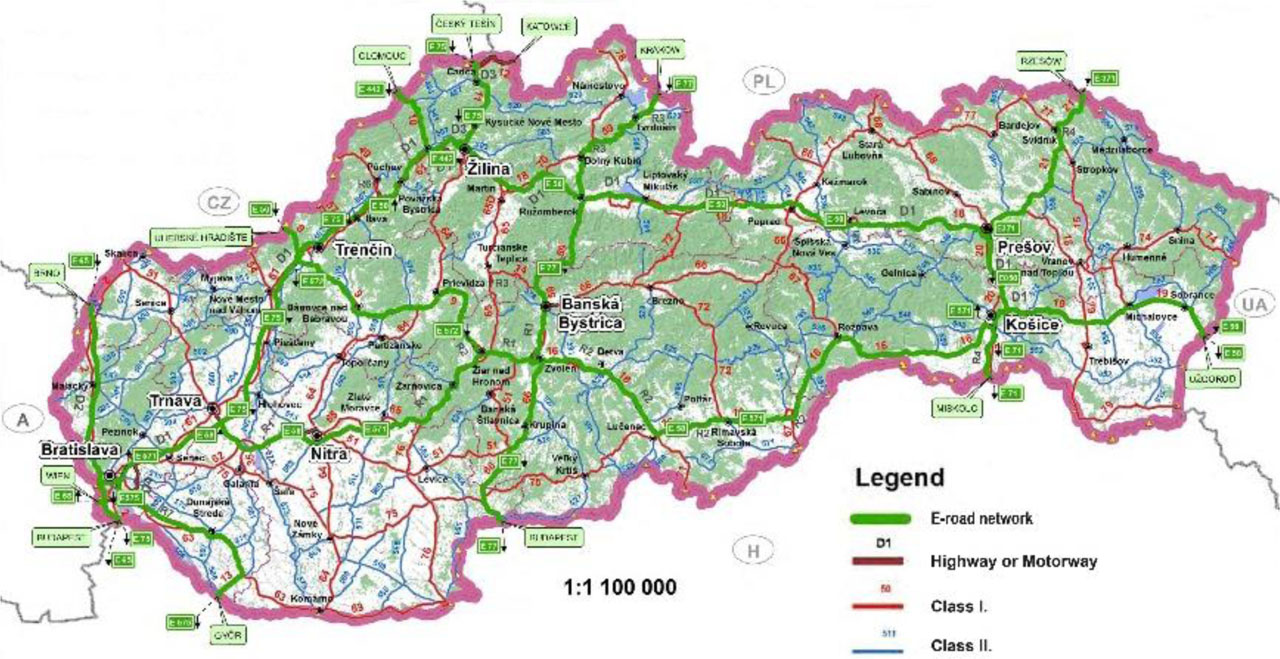
Figure 9:
E-Road network in the territory of Slovak Republic (Slovak Road Administration, 2025)

Figure 10:
Summarization of Slovak condition rating system for road bridges (Ministry of Transport, Construction and Regional Development of the Slovak Republic, 2013)
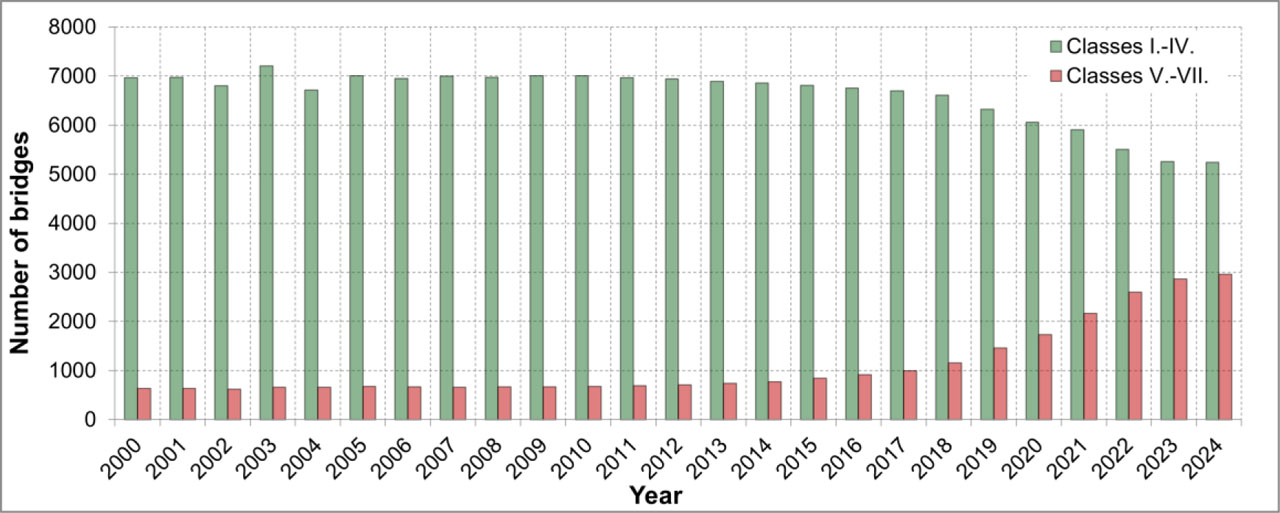
Figure 11:
State of Slovak road bridges (2000–2024) (Slovak Road Administration, 2025)
Table 2:
Comparison of the State of Bridge Infrastructure in Individual Countries
| Aspect | Italy | Portugal | Slovakia |
|---|---|---|---|
| Estimated number of bridges | ~120,000+ (incl. small spans <6m) | IP manages ~5,800 assets | ~8,200+ road bridges (7,497 are concrete) |
| Main managing authorities | ANAS (~13,000 bridges), AISCAT companies (e.g. Autostrade per l’Italia: ~1,200 km of bridges), municipalities, provinces; 1,400 bridges have no owner | Infraestruturas de Portugal (IP) for national network; municipalities for local roads | National Highway Company (highways/motorways), Slovak Road Administration (Class I), self-governing regions (Classes II and III) |
| Database status | No complete national register; partial datasets (e.g. 17,000 bridges in studies, 485 with full data) | No unified national database; multiple separate databases (IP, some municipalities, heritage registry) | Full classification system in use; bridges tracked by condition classes I–VII |
| Condition assessment method | Ministry guidelines for risk classification; defectiveness levels (HIGH → LOW); considers structural-foundational and seismic risk; also hydraulic/landslide | IP method: condition = worst-rated component; scored 0–5; includes damage extent, severity, evolution, consequences; uses UAVs/tests | Condition classes I–VII; based on structural reliability and load-carrying capacity (new 2024 methodology) |
| Latest condition data | 34% HIGH or MEDIUM-HIGH (structural-foundational); 29% HIGH or MEDIUM-HIGH (seismic); 36% in HIGH attention class | 2020: ~90% of IP assets in reasonable to good state; details not public | 2024: 36% Class V–VII (poor); up from 8.3% in 2000 |
| Key concerns | Ageing stock; fragmented management; 1,400 ownerless bridges | Lack of unified database; limited public access to condition data | Rapid deterioration since 2015; significant proportion in poor condition |
| COST Action TU1406 relevance | Would help standardize risk/performance assessment across fragmented systems | Could unify scattered municipal and national inspection systems | Could integrate LCC and condition classes into harmonized EU framework |