

1. Introduction
Bar soil, a ferralitic material of sandy and/or clayey composition, is widely distributed across the plateau regions of southern Benin (Gbaguidi et al., 2018). Traditionally associated with agricultural use, this locally abundant resource presents an economically attractive alternative for road construction, particularly in rural and peri-urban areas. However, its unfavorable geotechnical characteristics—especially low bearing capacity and high-water sensitivity—significantly hinder its direct application in pavement layers.
To overcome these limitations, chemical stabilization methods, such as the incorporation of cement or lime, are commonly employed to improve strength and durability. Nevertheless, these conventional approaches are often cost-prohibitive and environmentally taxing, especially in contexts where financial and ecological constraints prevail. This has spurred interest in alternative strategies that promote the reuse of locally available or industrial waste materials. Recent research supports the use of industrial waste in civil engineering materials. (Al-Dulaimi and Mohammed; 2023), showed that recycled glass powder can enhance concrete performance when used as partial sand replacement. Likewise, Shabeeb and (Al-Khafaji; 2024) demonstrated the potential of construction waste aggregates in road materials. These findings align with the current study’s objective to valorize pulverized ceramic waste for improving lateritic soil in road base applications.
Among such alternatives, the valorization of ceramic waste in construction materials has emerged as a promising avenue at the intersection of technical feasibility, economic affordability, and environmental sustainability. According to (Pompo; 2021), global ceramic tile production reached 18.2 billion m2 in 2021—up from 12.6 billion m2 in 2019—generating substantial amounts of solid waste. Several studies (e.g., Mohit M. et al., 2021; Aly et al., 2018; Kanaan & El-Dieb, 2016; Umar et al., 2021) have reported that up to 30% of ceramic production leads to non-biodegradable waste, which is commonly disposed of in landfills. This practice presents serious environmental concerns, including potential contamination of soil, water, and air quality.
In this context, the reuse of discarded ceramic tiles—either as crushed aggregates or in powdered form—emerges as a sustainable and eco-friendly waste management strategy. A growing body of experimental evidence highlights its technical viability. For example, (Cabalar et al.; 2016 demonstrated that the addition of ceramic particles to a low-plasticity clay enhanced the California Bearing Ratio (CBR) from 8% to 14% and reduced the plasticity index from 24% to 19% at a 30% replacement level. Similarly, (Shareef ZA et al.; 2023) reported significant improvements in the splitting tensile strength of concrete when ceramic waste was used as fine aggregate. (Anderson et al.; 2016) also observed a 26.9% increase in the elastic modulus with complete substitution of natural aggregates by ceramic waste. In addition, (Huda et al.; 2025) also observed that it is possible to use ceramic waste as fine and coarse aggregates in high-strength concrete (HSC). This use has many advantages: it improves the fire resistance of HRC, allowing for the construction of safer buildings than traditional buildings by reducing and preventing the collapse, spalling, or explosion of concrete; it protects the environment by reducing solid waste in nature and decreasing the depletion of natural resources; it reduces construction costs; and it decreases the density of concrete, which leads to a reduction in permanent loads for lighter and more economical buildings.
From a chemical standpoint, pulverized ceramic waste generally comprises more than 70% of silica, alumina, and iron oxides combined—meeting the ASTM C618 specifications for pozzolanic materials. Recent studies indicate that partial replacement of cement with ceramic waste can lead to tensile strength improvements while also reducing CO2 emissions (Sondarva et al., 2022; Lim et al., 2022). In the context of road geotechnics, (Adeboje et al.; 2020) showed that the addition of 12.5% ceramic powder to A-2 type lateritic soil significantly enhanced its bearing capacity, meeting the performance criteria required for sub-base layers.
Collectively, these results highlight the dual benefits of ceramic waste in road engineering: it enhances the mechanical behavior of marginal soils and contributes to waste valorization within a circular economy framework. The present study aims to evaluate the effect of pulverized ceramic tile waste on the geotechnical performance of bar soil, with the goal of promoting its use in pavement base layers. Specifically, the study seeks to identify optimal formulations to improve maximum dry density, reduce plasticity, and enhance bearing capacity, while advancing sustainable infrastructure development.
2. Materials and methods
2.1. Materials
Bar soil (Figure 2(a)) was sourced from Tori-Dokanmey, a locality within the commune of Tori-Bossito in southern Benin. Tori-Bossito is situated in the Atlantic Department, approximately 40 kilometers northwest of Cotonou. Geographically, the commune is bounded by Allada to the north, Ouidah to the south, Zè and Abomey-Calavi to the east, and Kpomassè to the west. It lies between latitudes 6°25′ and 6°37′ N and longitudes 2°01′ and 2°17′ E.
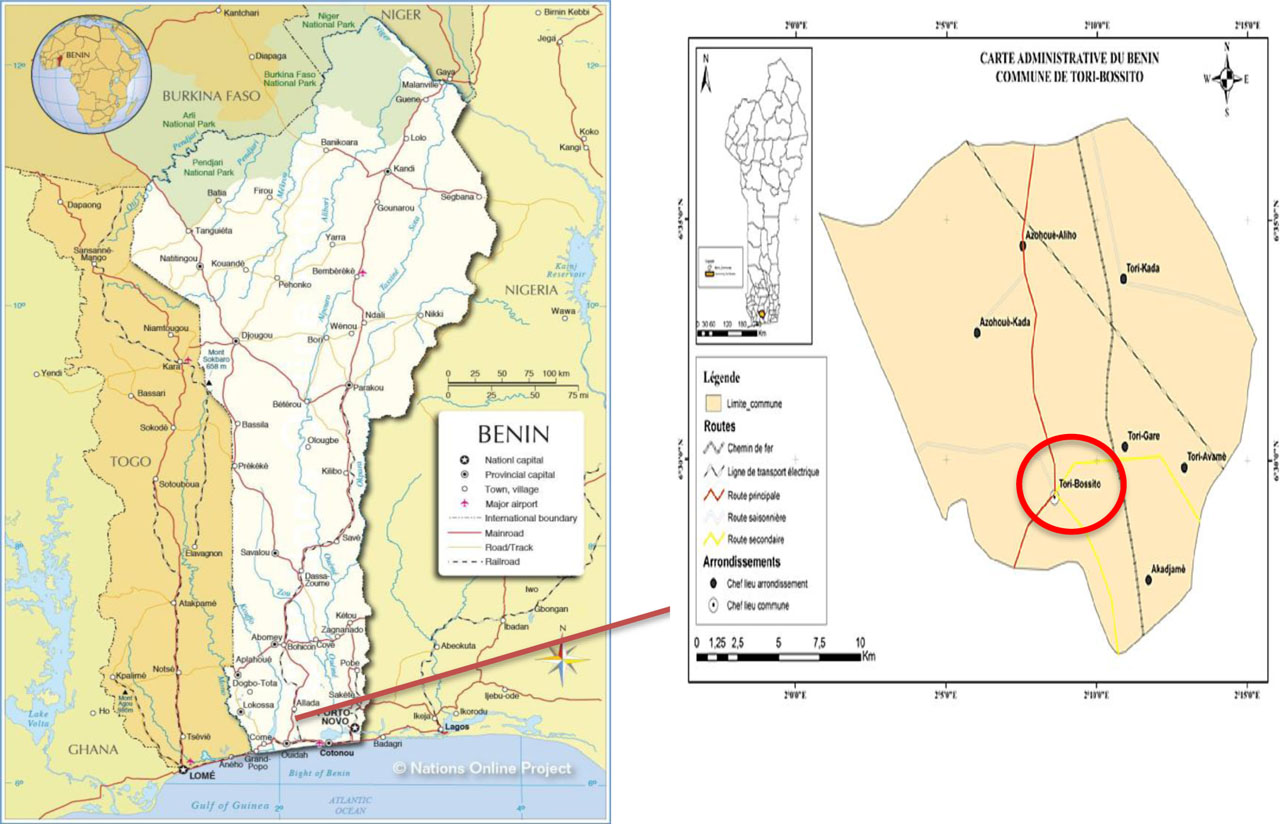
Figure 1:
Location of the sampling site
The ceramic waste (Figure 2(b)) used in this study was prepared through a controlled, multi-stage pulverization process. Initially, broken ceramic tile residues were collected from construction sites and waste disposal areas, followed by a sorting phase to eliminate non-ceramic impurities and retain only clean, homogeneous fragments. These fragments were first crushed using a jaw crusher to reduce them to medium-sized particles. Subsequently, the material was finely pulverized using a hammer mill. The resulting powder was then sieved through a 0.08 mm mesh to isolate the fine fraction suitable for the experiments. Coarser particles retained on the sieve were reintroduced into the milling process to ensure uniform granulometry and consistency of the final product (Figure 2(c)).
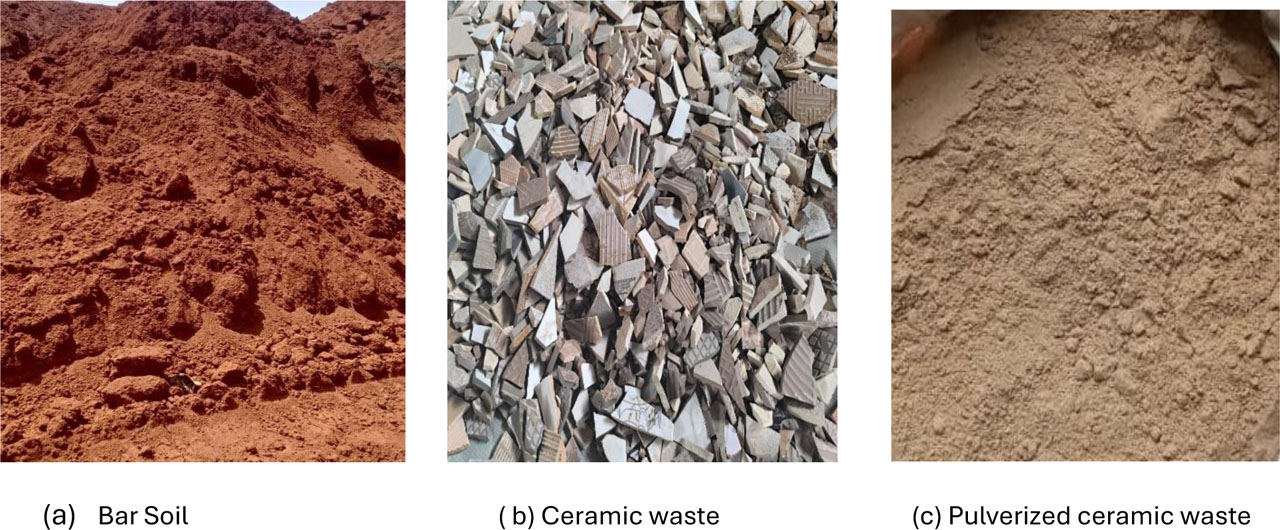
Figure 2:
Study materials
2.2. Methods
2.2.1. Bar soil sampling method
Bar soil samples were collected in accordance with the procedure outlined in ISO 22475-1:2021. After sampling, the soil was air-dried under laboratory conditions to preserve its natural structure and ensure consistent moisture equilibrium before testing.
2.2.2. Formulation method
The preparation of the soil–ceramic mixtures followed a structured seven-step procedure:
Step 1: Bar soil samples were either oven-dried at 50 °C for two hours or air-dried at ambient temperature until a stable moisture content was achieved.
Step 2: Various dosages of pulverized ceramic waste were empirically defined, typically ranging from 2.5% to 15.0% by weight (i.e., 2.5%, 5.0%, 7.5%, 10.0%, 12.5%, and 15.0%). Higher proportions may be considered depending on the specific experimental objectives.
Step 3: The exact quantities of bar soil and ceramic waste were calculated for each formulation, based on the type and number of geotechnical tests to be performed.
Step 4: The water content for each mixture was then determined to match compaction and consistency requirements.
Step 5: The required amounts of each component were weighed and prepared accordingly.
Step 6: Manual mixing was carried out to ensure uniform distribution of the ceramic waste and to avoid particle size alterations that could occur during mechanical mixing.
Step 7: The prepared mixtures were sealed in airtight plastic or self-locking polyethylene bags to maintain moisture equilibrium prior to testing.
2.2.3. Chemical test method
X-ray diffraction (XRD) analyses were performed using a PANalytical EMPYREAN diffractometer, a high-precision instrument designed for structural characterization of solid-phase materials. The system was configured in Bragg–Brentano θ–2θ geometry, which is well-suited for analyzing powdered minerals such as soils and finely ground ceramic waste. Diffractograms were digitally recorded via the instrument's control software and subsequently analyzed using HighScore Plus (PANalytical).
The data processing workflow included: (i) peak identification based on 2θ position and relative intensity; (ii) automatic phase identification by matching patterns against the ICDD PDF-4+ database embedded in the software; (iii) estimation of relative mineral proportions from corrected peak intensities; (iv) detection of amorphous or vitrified phases based on the absence of sharp peaks or the presence of diffuse halos; and (v) semi-quantitative assessment of chemical composition derived from the stoichiometric properties of the identified crystalline phases.
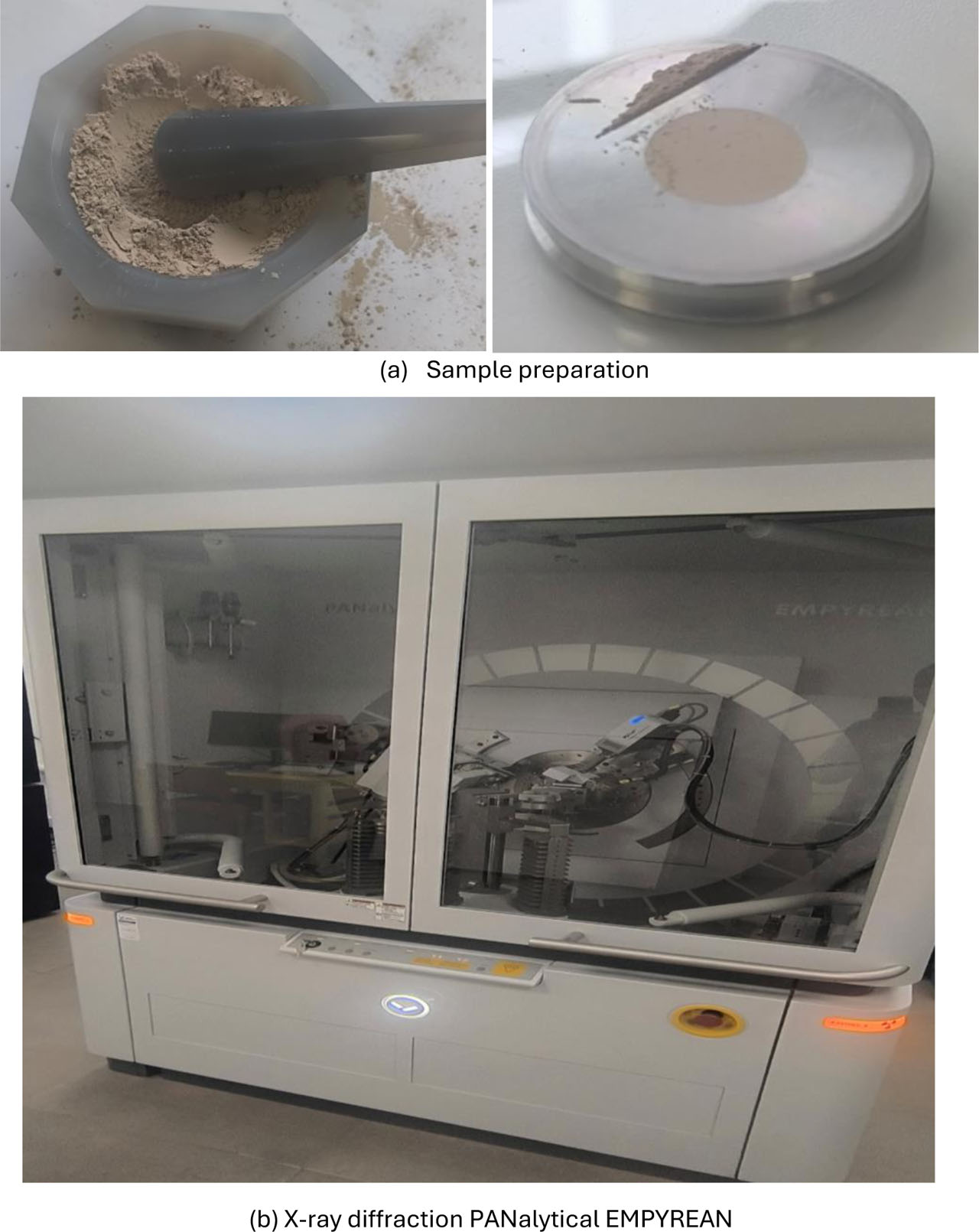
Figure 3:
Mineralogical characterization device
2.2.4. Geotechnical Testing Protocols
A comprehensive series of laboratory tests was conducted in accordance with French and international geotechnical standards. The overall testing sequence is illustrated in Figure 4, which outlines the logical progression from sample preparation to the assessment of mechanical properties.
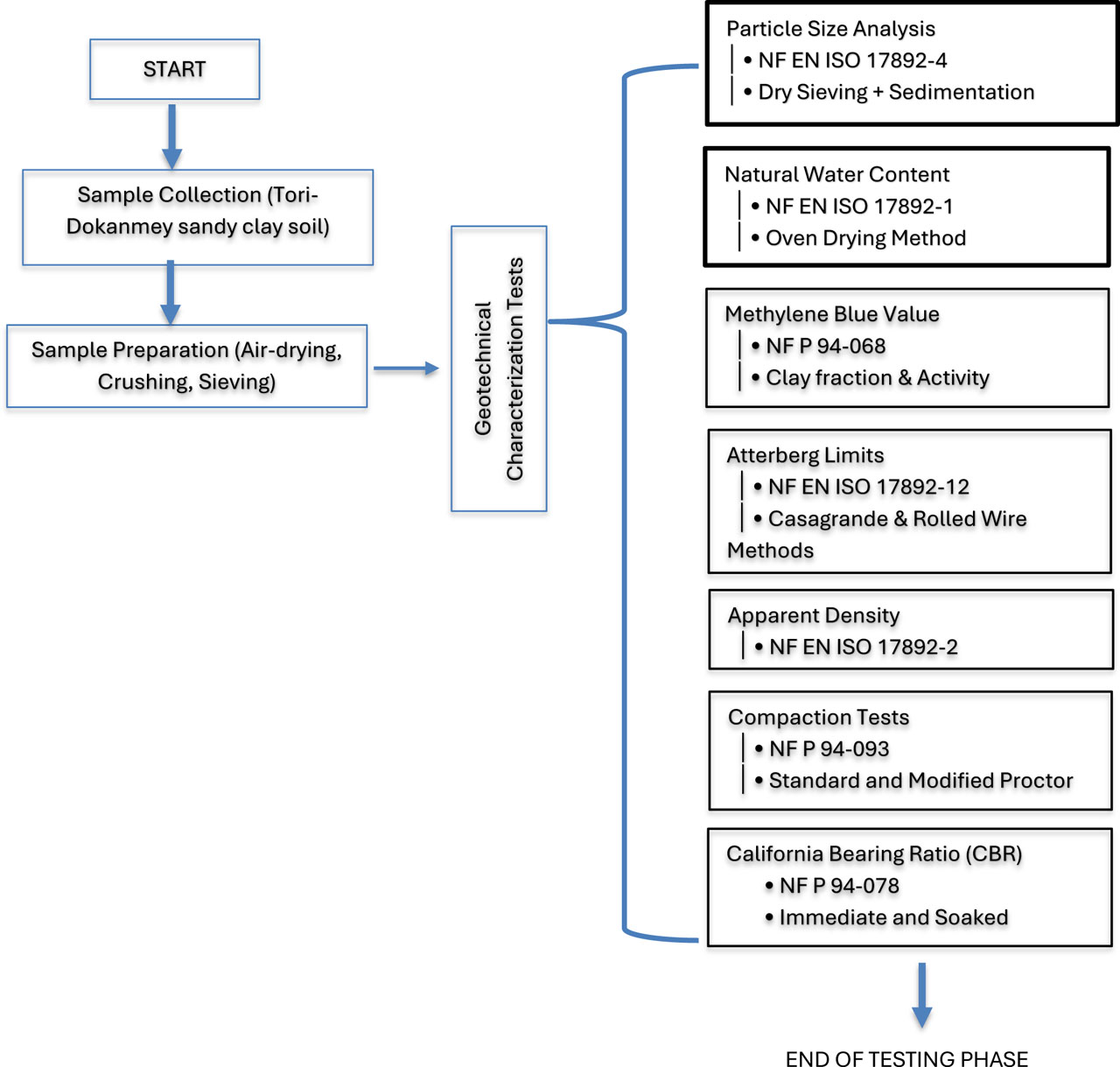
Figure 4:
Testing program flowchart
3. Results and discussion
3.1. Geotechnical Characterization of Bar Soil
3.1.1. Particle Size Distribution and Sedimentation Analysis
The results of the particle size distribution and sedimentation tests are presented in Figure 5 and Table 1. The analysis revealed that the soil sample contains approximately 48% fine particles (silt and clay) and 52% sand. Based on these proportions, the soil can be classified as sandy clayey soil, indicating a dual nature combining both cohesionless and cohesive characteristics.
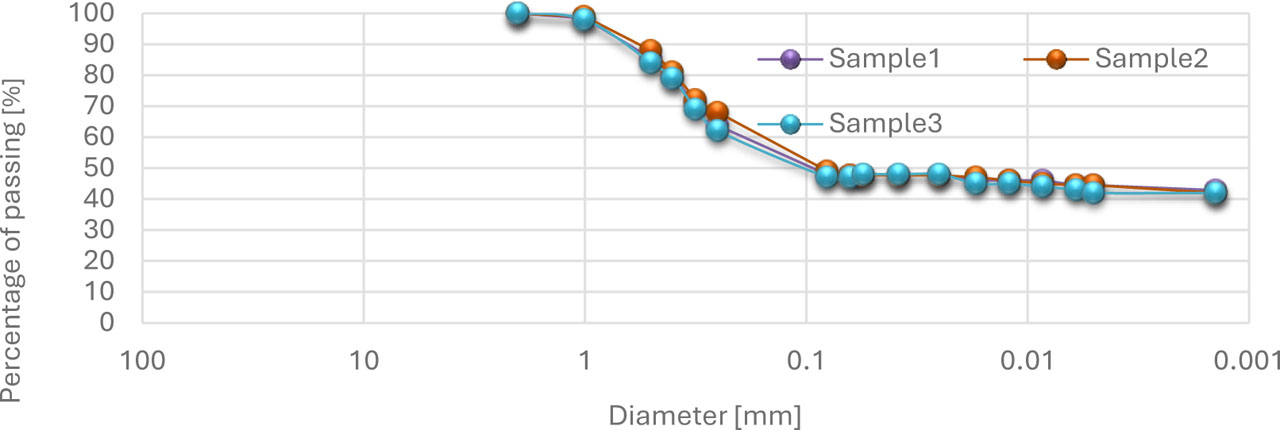
Figure 5:
Particle size distribution curve of the bar soil sample
3.1.2. Methylene blue value and Atterberg limits
The methylene blue value recorded for the bar soil is 1.0 (Table 2), which is close to the threshold value of 1.5 used to differentiate between sandy-loam and sandy-clay soils, as defined in “Laboratoire Central des Ponts et Chaussées (LCPC), 2000”. Accordingly, the material can be classified as sandy clay, a finding that is consistent with the results of the particle size distribution analysis.
The plasticity index (PI) of the soil falls within the range of 12 to 25, which, based on the classification system outlined in “Laboratoire Central des Ponts et Chaussées (LCPC), 2000”. (Table 3), indicates a moderately clayey soil. This further confirms the cohesive nature of the material and supports its overall classification as sandy clayey soil.
Based on the physical characterization tests, the material can be classified as sandy-clayey sand.
3.1.3. Mineralogical and chemical composition
The sample is primarily composed of quartz and kaolinite, with minor amounts of illite or muscovite, and no detectable presence of smectite or montmorillonite (Table 4). This mineralogical profile is characteristic of a ferralitic sandy-clay soil, which is non-expansive and rich in siliceous phases. Such a composition suggests good volumetric stability under moisture variation, low clay activity, and moderate pozzolanic potential due to the presence of aluminosilicate minerals.
Table 4:
Mineralogical characterization of bar soil
| Mineral | Chemical formula | Estimated proportion [%] |
|---|---|---|
| Quartz | SiO2 | 58 |
| Kaolinite | Al2Si2O5(OH)4 | 28 |
| Illite/muscovite | KAl2(AlSi3O10)(OH)2 | 12 |
| Others / amorphous | (Fe-oxydes, résidus) | 2 |
Chemically, this mineralogical composition is characterized by a high content of silicon dioxide (SiO2), accompanied by a significant proportion of aluminum oxide (Al2O3) and iron oxide (Fe2O3). We also found traces of potassium oxide (K2O), probably from illite, sodium oxide (Na2O), calcium oxide (CaO), and magnesium oxide (MgO). In addition, structural water is present within the hydrated clay minerals. The overall chemical composition can be estimated as follows:
Table 5:
Chemical composition of bar soil
| Oxide | SiO2 | Al2O3 | Fe2O3 | K2O | Na2O | CaO | MgO | H2O structural |
|---|---|---|---|---|---|---|---|---|
| Estimated proportion (%) | 62 | 24 | 2 | 1 | 0.5 | 0.3 | 0.2 | 10 |
Table 6 presents a summary of the geotechnical characteristics of the Tori-Dokanmey sandy clayey soil in comparison with the specifications outlined in the CEBTP manuals. According to CEBTP guidelines, the acceptable percentage passing through the 80 µm sieve for road base and sub-base materials ranges between 10% and 30%. However, the soil sample analyzed shows a passing percentage of 48%, which exceeds this threshold and therefore fails to meet the granulometric requirements.
In terms of plasticity, the Atterberg limits for suitable materials should range from 5 to 20. The plasticity index of the raw bar soil is outside this recommended range, rendering it unsuitable for use in pavement base or sub-base layers. Additionally, the California Bearing Ratio (CBR) value recorded is below the minimum threshold required by the CEBTP standards for these applications, further confirming the inadequacy of the material in its natural state.
On the other hand, the maximum dry density of the soil meets the CEBTP criteria for use in sub-base layers. Nonetheless, considering the excessive fines content, suboptimal plasticity, and insufficient bearing capacity, the untreated sandy-clayey bar soil cannot be recommended for direct use in road pavement base or sub-base layers.
Consequently, it is essential to enhance its geotechnical properties—particularly its plasticity and load-bearing capacity—through appropriate stabilization techniques to render it compliant with the performance requirements of pavement construction materials (Sekloka HGR et al., 2022).
Table 6:
Geotechnical characterization of sandy-clayey sand (foundation layer)
| Geotechnical characteristics | Sandy-clay sand (bar soil) | CEBTP specification | Comment |
|---|---|---|---|
| - grain size [mm] | 0/2 | 0/2 à 0/10 | suitable |
| - passing to 80 µm [%] | 48 | 10 à 30 % | unfit |
| - IP (Plasticity index) [%] | 22 | 5 à 20 | unfit |
| - f × IP [-] | 1056 | 100 à 500 | unfit |
| - ɣd OPM (the optimal dry density) [T/m3] | 2 | 1.9 à 2.1 | suitable |
| - Wopm (optimal water content) [%] | 12.1 | 7 à 13% | suitable |
| - Swelling [%] | 0.17 | 2.50% | suitable |
| ICBR (CBR Index) à 95% OPM (optimum) [%] | 23 | ≥30 (25 for T1 et 35 pr T4 and T5) | unfit |
3.2. Mineralogical characterization of pulverized ceramic waste
The pulverized ceramic waste exhibits a crystalline structure predominantly composed of quartz, along with traces of recrystallized or amorphous clay phases (Table 7). The corresponding chemical analysis (Table 8) reveals a high content of silicon dioxide (SiO2) and aluminum oxide (Al2O3), indicating a significant potential for reactivity in alkaline environments, particularly in the presence of lime. These properties suggest that the material is suitable for use as a pozzolanic additive in the stabilization of clay-rich soils such as bar soil.
Table 7:
Mineralogical characterization of pulverized ceramic waste
| Mineral | Chemical formula | Estimated proportion [%] |
|---|---|---|
| Quartz | SiO2 | 70 |
| Feldspaths (Na/K) | NaAlSi3O8 / KAlSi3O8 | 15 |
| Glass / mullite / amorphous | (Al–Si / amorphous) | 15 |
Table 8:
Chemical composition of pulverized ceramic waste
| Oxide | SiO2 | Al2O3 | Fe2O3 | K2O | Na2O | CaO | MgO |
|---|---|---|---|---|---|---|---|
| Estimated [%] | 70 | 20 | 2 | 3 | 2 | 1.2 | 0.8 |
In summary, pulverized ceramic waste exhibits moderate pozzolanic activity combined with a beneficial micro-filler effect, making it a promising material for soil stabilization. This dual functionality enhances its value in sustainable road construction applications through the effective recycling of industrial waste.
3.3. Geotechnical characterization of sandy-clayey sand treated with pulverized ceramic waste (PCW)
3.3.1. Particle size distribution
The results of the particle size analysis are shown in the following curves (Figure 6).
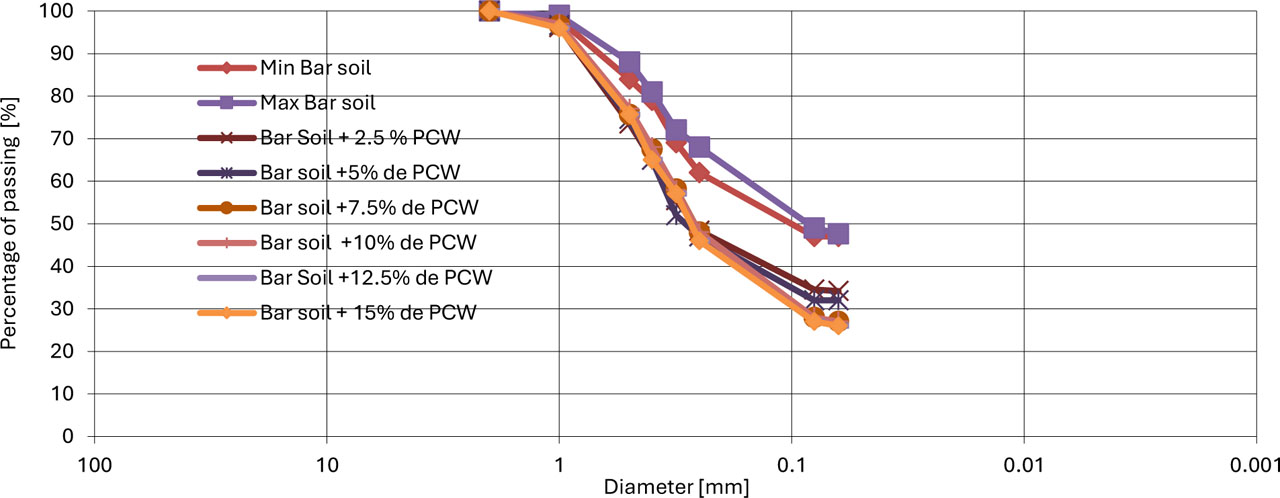
Figure 6:
Particle size distribution curves for ceramic waste-treated mixtures
These particle size distribution results confirm that the pulverized ceramic waste functions primarily as a filler, occupying the voids between sand and clay particles in the matrix. This contributes to a more favorable gradation and reduces the overall porosity of the treated soil (Adeboje AO et al., 2020) According to CEBTP specifications, the acceptable percentage passing the 80 µm sieve should fall within the range of 10% to 30%. This requirement is met for mixtures containing 7.5%, 10%, 12.5%, and 15% ceramic waste (Figure 7), indicating their suitability for use in sub-base layers. Furthermore, the 100% passing rate through the 2 mm sieve confirms the material’s classification as sandy soil.
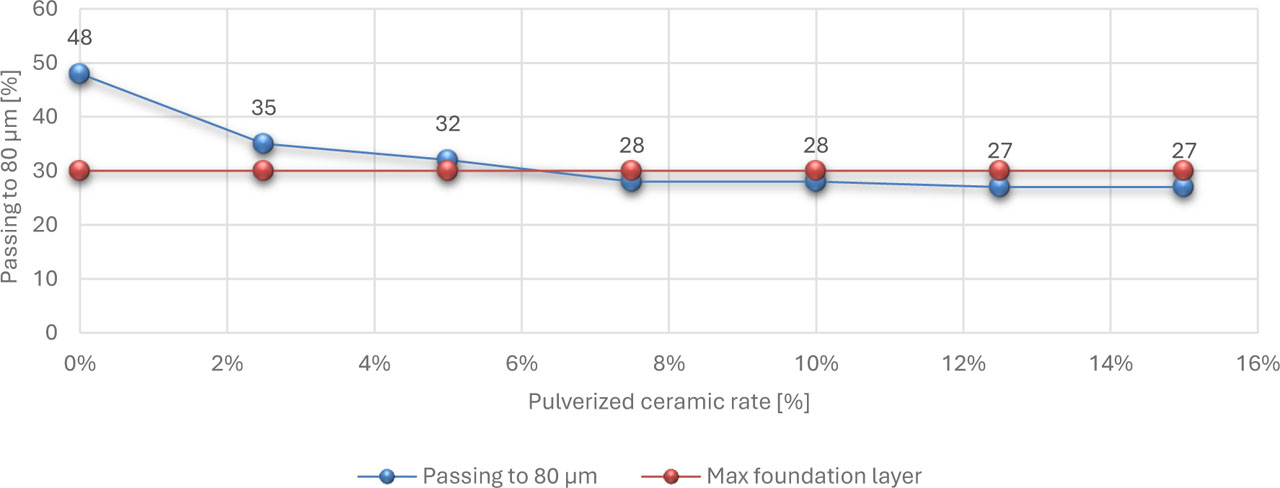
Figure 7:
Percentage passing through the 80 µm sieve for bar soil treated with ceramic waste
3.3.2. Atterberg limits
The results of the Atterberg limits test are presented in Figure 8. The plasticity index (PI) shows a decreasing trend with increasing additions of pulverized ceramic waste, reaching its minimum at 12.5%, before slightly increasing at 15%. The PI decreases from 22% for untreated soil to 13% at 12.5% ceramic addition, then rises marginally to 14.3% at 15%. As shown in Figure 9, all values remain below the maximum threshold recommended by the CEBTP for sub-base applications.
This reduction in plasticity is attributed to the dilution of fine clay particles by the non-plastic ceramic filler, which leads to reduced water affinity and improved dimensional stability. These results are consistent with prior findings in the literature on ceramic waste stabilization (Adeboje AO et al., 2020; Sabat AK, 2017; Al-Bared MAM et al., 2018).
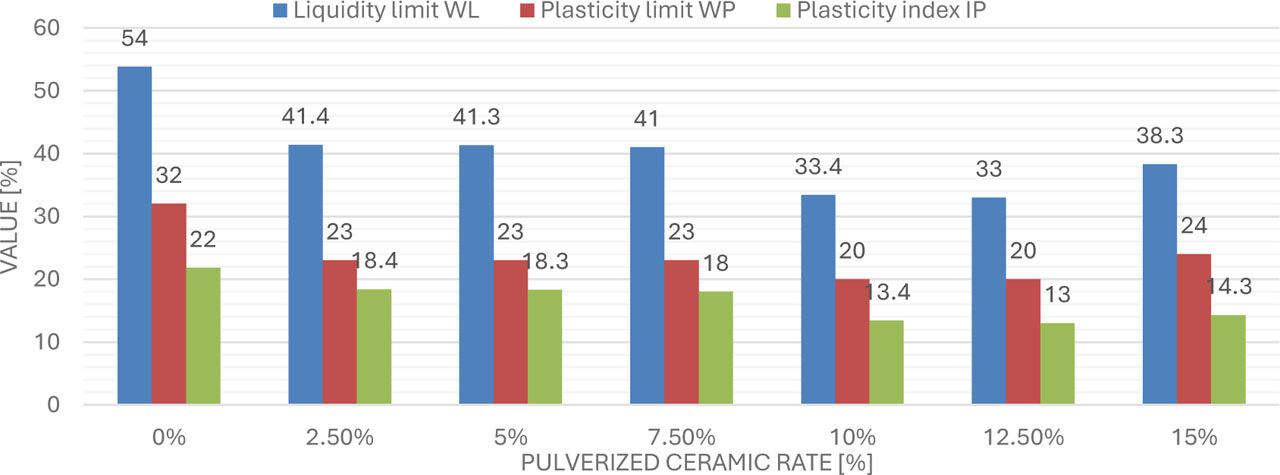
Figure 8:
Variation of the plasticity index of bar soil with ceramic waste content
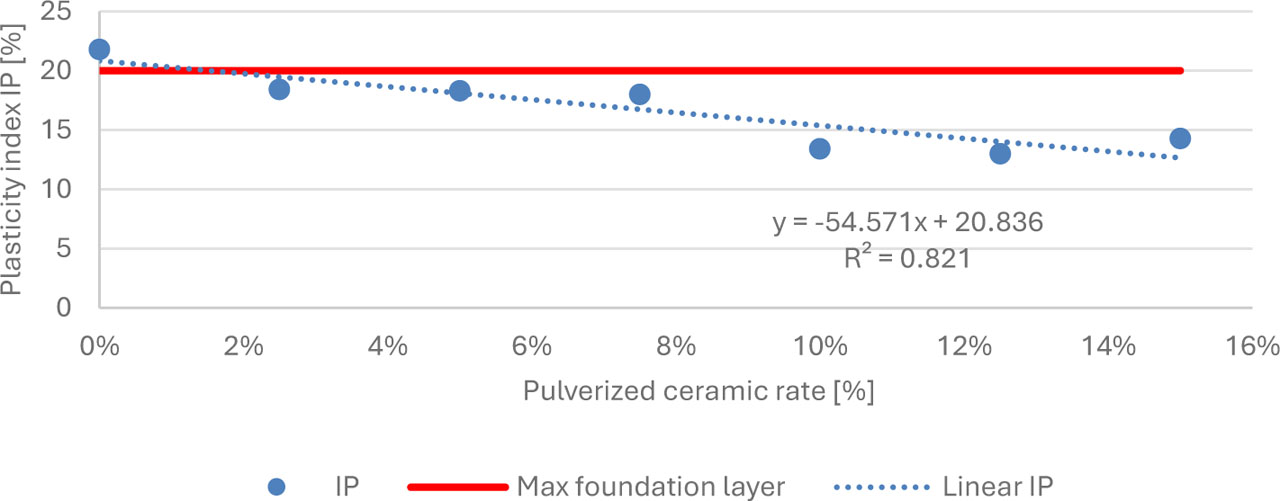
Figure 9:
Comparison of the plasticity index of treated bar soil with CEBTP specification limits for sub-base materials
3.3.3. Modified Proctor test
The results of the Modified Proctor compaction tests performed on untreated and ceramic-treated sandy-clayey soil are presented in Figure 10. The data indicate a consistent increase in optimum dry density with the addition of pulverized ceramic waste. Specifically, the dry density (Yopm) increases from 2.00 t/m3 for the raw soil to 2.10 t/m3 at 15% ceramic waste content, representing a 5% improvement. These values exceed the minimum requirement of 1.9 t/m3 for sub-base materials, as defined in CEBTP specification (1984) and revised in 2019.
This enhancement is attributed to the micro-filler effect of the fine ceramic particles, which improve packing density within the soil matrix. The trend is further confirmed in Figure 11. These findings are consistent with those reported in previous studies (Adeboje AO et al., 2020; Onyelowe KC, 2016; Koranne, S.S. and Valunjkar, S.S, 2015; Jimoh, Y.A., Apampa, O.A, 2014).
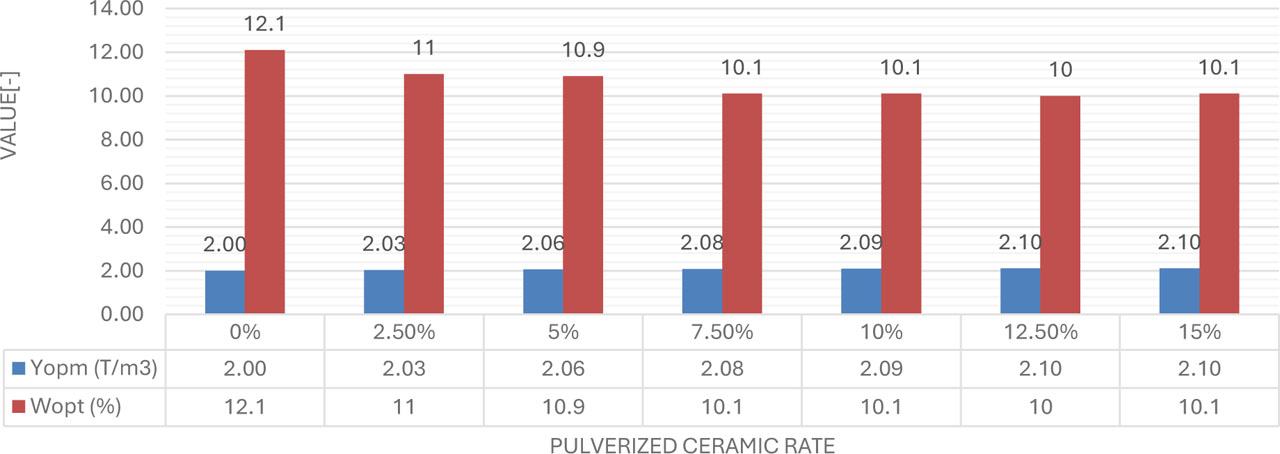
Figure 10:
Variation of maximum dry density and optimum moisture content of sandy-clayey soil treated with ceramic waste
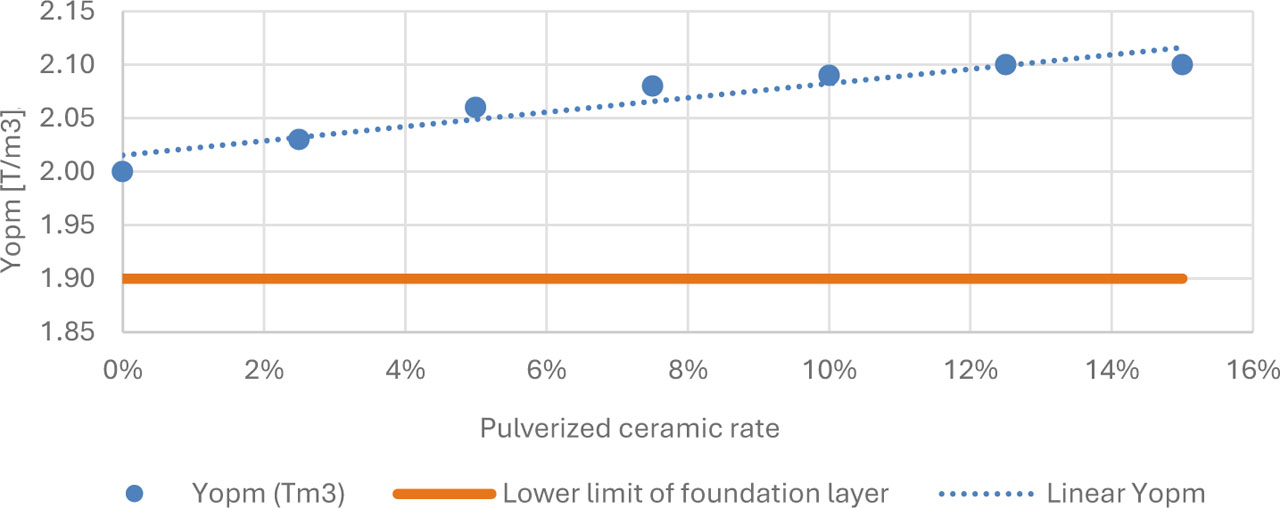
Figure 11.
Influence of ceramic waste content on the maximum dry density of treated sandy-clayey soil
3.3.4. California Bearing Ratio (CBR) Test
The results of the CBR test on both untreated and ceramic-stabilized sandy-clayey soil are presented in Figure 12. The data show a progressive increase in the soaked CBR index with rising ceramic waste content. For instance, the CBR value of the untreated soil is 23.00%, which increases to 48.00% when 15% pulverized ceramic waste is incorporated—representing an improvement factor of 2.087.
As shown in Figure 13, the treated soil becomes suitable for use as a sub-base layer under T1 traffic (traffic less than 300 vehicles per day) conditions at a minimum dosage of 5%, while dosages of 10% to 15% are required to meet the sub-base criteria for T4 (traffic of 3,000 to 6,000 vehicles per day) and T5 (traffic of 6,000 to 12,000 vehicles per day) traffic classes. These results are consistent with previous studies (Sabat AK, 2012; Geeta Rani T, 2014; Raghda KK and Aljumaili MA, 2020; Albino de Sousa A, 2021) and align with the sub-base performance criteria outlined in the CEBTP guidelines.
This confirms that stabilizing Tori-Dokanmey sandy-clayey soil with pulverized ceramic waste is an effective method to enhance load-bearing capacity for pavement sub-layers.
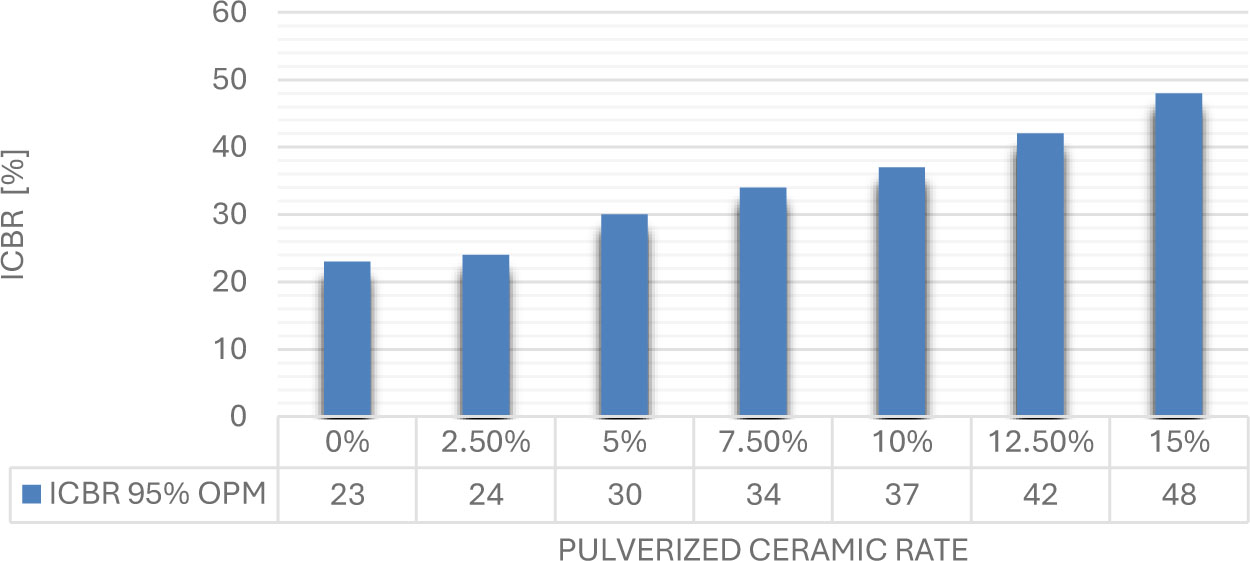
Figure 12:
Variation of soaked CBR index at 95% MDD of sandy-clayey soil treated with ceramic waste
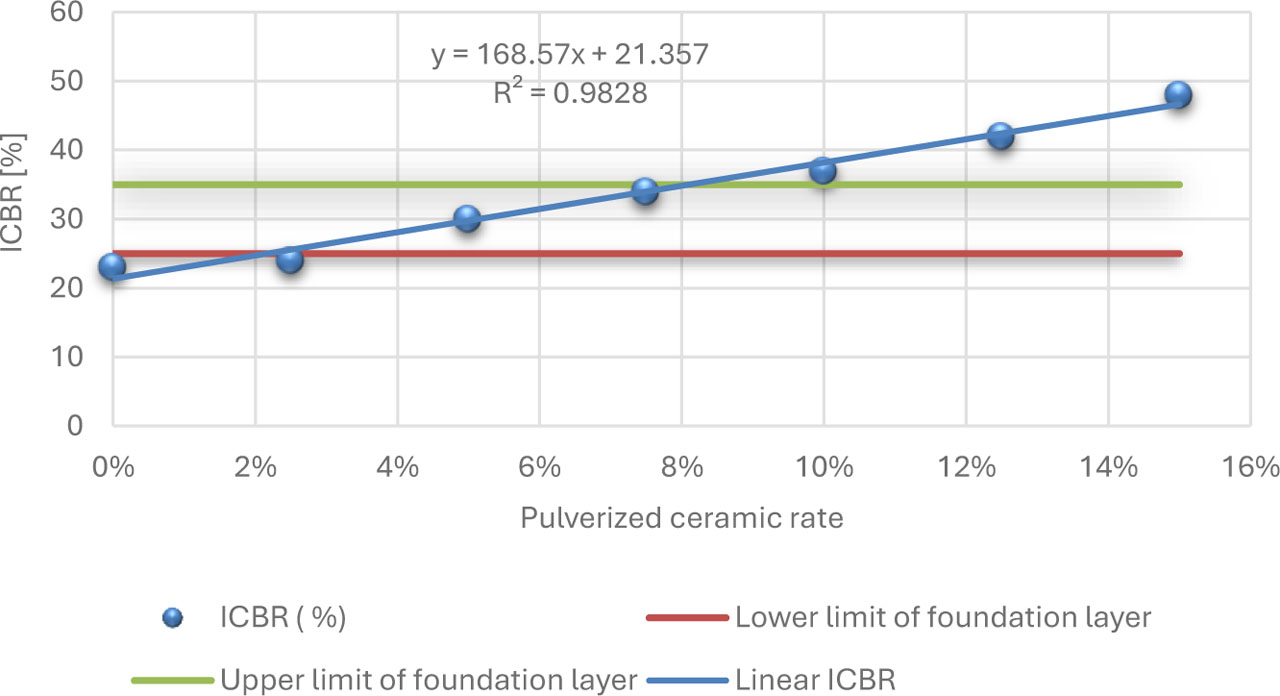
Figure 13:
Influence of ceramic waste content on soaked CBR index at 95% MDD for treated sandy-clayey soil
Table 9 presents a synthesis of the geotechnical performance of Tori-Dokanmey sandy-clayey soil stabilized with increasing dosages of pulverized ceramic waste. The results are evaluated against the sub-base material specifications defined in the CEBTP (1984) guide and its updated version in (2019). The table summarizes the evolution of key parameters—namely particle size distribution, plasticity index, maximum dry density, and soaked CBR index—as a function of ceramic waste content.
Table 9:
Summary of geotechnical properties of treated sandy-clayey soil compared to CEBTP sub-base requirements (1984 and 2019 editions)
| PCW rate | Passing to 80 µm [%] | ɣd OPM [T/m3] | Wopm [%] | IP [%] | ICBR à 95% OPM [%] | Swelling | Comment | ||||||
|---|---|---|---|---|---|---|---|---|---|---|---|---|---|
| obtained | desired | obtained | desired | obtained | desired | obtained | desired | obtained | desired | obtained | desired | ||
| - 0.0% | 48 | 10 à 30 % | 2 | 1.9 à 2.1 | 12.1 | 7 à 13% | 22 | 5 à 20 | 23 | ≥30 (25 pr T1 et 35 pr T4 and T5) | 0.17 | 2.50% | unfit |
| - 2.5% | 35 | 10 à 30 % | 2.03 | 1.9 à 2.1 | 11 | 7 à 13% | 18.4 | 5 à 20 | 24 | ≥30 (25 pr T1 et 35 pr T4 and T5) | 0.26 | 2.50% | unfit |
| - 5% | 32 | 10 à 30 % | 2.06 | 1.9 à 2.1 | 10.9 | 7 à 13% | 18.3 | 5 à 20 | 30 | ≥30 (25 pr T1 et 35 pr T4 and T5) | 0.2 | 2.50% | unfit |
| - 7.5% | 28 | 10 à 30 % | 2.08 | 1.9 à 2.1 | 10.1 | 7 à 13% | 18 | 5 à 20 | 34 | ≥30 (25 pr T1 et 35 pr T4 and T5) | 0.19 | 2.50% | suitable |
| - 10% | 28 | 10 à 30 % | 2.09 | 1.9 à 2.1 | 10.1 | 7 à 13% | 13.4 | 5 à 20 | 37 | ≥30 (25 pr T1 et 35 pr T4 and T5) | 0.19 | 2.50% | suitable |
| - 12.5% | 27 | 10 à 30 % | 2.1 | 1.9 à 2.1 | 10 | 7 à 13% | 13 | 5 à 20 | 42 | ≥30 (25 pr T1 et 35 pr T4 and T5) | 0.18 | 2.50% | suitable |
| - 15% | 27 | 10 à 30 % | 2.1 | 1.9 à 2.1 | 10.1 | 7 à 13% | 14.3 | 5 à 20 | 48 | ≥30 (25 pr T1 et 35 pr T4 and T5) | 0.19 | 2.50% | suitable |
Analysis of Table 9 indicates that, according to the criteria set forth in the CEBTP (1984) guide and its revision in 2019, Tori-Dokanmey sandy-clayey soil treated with pulverized ceramic waste is suitable for sub-base applications only at dosages equal to or greater than 7.5%.
4. Conclusions
This study was undertaken to investigate the potential use of pulverized ceramic waste as a stabilizing agent for the sandy clay soil from Tori-Dokanmey, with the objective of enhancing its suitability for use as a subbase layer in flexible pavement structures. A series of formulations were developed by incorporating ceramic waste at varying dosages: 2.5%, 5.0%, 7.5%, 10%, 12.5%, and 15% by dry weight of soil.
Laboratory characterization and mechanical tests yielded the following key findings:
The plasticity index of the untreated soil decreased progressively with increasing ceramic waste content, indicating improved soil workability and reduced susceptibility to moisture variations.
The maximum dry density of the soil increased with higher ceramic waste content, suggesting enhanced compaction characteristics and particle interlocking.
The California Bearing Ratio (CBR) showed a proportional increase with the addition of ceramic waste, reflecting a significant improvement in load-bearing capacity.
Based on the results, it is concluded that the Tori-Dokanmey sandy clay soil, when stabilized with a minimum of 7.5% pulverized ceramic waste, meets the subbase layer specifications outlined in the CEBTP guide (1984, revised 2019) for flexible pavements.
This study highlights the dual benefit of improving geotechnical properties of marginal soils and promoting sustainable waste management through the valorization of industrial ceramic residues. For broader implementation, further research is recommended under field conditions to validate the laboratory findings and assess the long-term performance of the stabilized layers in real traffic and environmental conditions.
Acknowledgements
The authors would like to thank all the laboratory technicians at the Laboratory of Applied Energy and Mechanics (LEMA), University of Abomey-Calavi (UAC), Benin; at SNERTP (National Society for Testing and Research in Public Works); and at X-TECHLAB, Sèmè City, Benin, for their consistent support and technical assistance in performing the geotechnical, mineralogical, and mechanical tests.
Notes
[1] Contributed by Author Contributions
C.R.T.A.: Writing – original draft, Methodology, Investigation, Formal analysis, Conceptualization. V.k.D.: Writing – review & editing, Supervision, Resources, Methodology. E.C.: Writing – review & editing. B.G.: Writing – review & editing. M.G.: Writing – review & editing, Supervision, Methodology.