
INTRODUCTION
In Poland, biomass is one of the most promising renewable energy sources. Energy crops, which can be used for direct combustion or converted into liquid and gaseous biofuels, are of particular importance in energy production (Jajor et al., 2019). Maize and rapeseed are especially significant in this context. The high yield potential of maize has led to growing interest in its use for biogas and bioethanol production, as well as for the direct combustion of maize straw (COBORU, 2024c; Grzybek, 2003; Piechocki et al., 2010).
In the energy industry, maize plays a key role in bioethanol production, where fermentation of sugars contained in the grain leads to the production of an economically and environmentally advantageous biofuel. This process is attractive due to the lack of necessity for grain drying, which significantly reduces processing costs (Kaszkowiak, Kaszkowiak, 2011). Maize is also used for biogas production, mainly in the form of whole-plant silage, as well as for the direct combustion of straw (Niedziółka et al., 2007). All these applications make maize an important industrial and energy raw material and a key element of the agricultural economy in many countries worldwide. Nevertheless, the primary use of maize remains animal feed production and other industrial applications. Approximately two-thirds of global maize production is used as feed, making it a crucial component of livestock diets (KOWR, 2022). Maize is also widely applied in various branches of industry, both food and non-food. Milled maize products, such as grits, semolina, and flours, are essential ingredients in the food industry, where they are used in the production of breakfast cereals, snack foods, and gluten-free products (Michalski, 1997). In the chemical and paper industries, maize starch is commonly utilized. Alongside potatoes and wheat, maize is one of the most important sources of starch, with processing that is more economical and environmentally friendly compared to competing crops. Interest in maize cultivation is further supported by its moderate soil requirements. However, challenges include its high water and thermal demands. Maize (Zea mays) is a C4 crop characterized by high photosynthetic efficiency and rapid biomass accumulation under conditions of elevated temperatures and intense solar radiation, which is associated with substantial water demand. Water uptake increases with plant development and peaks during vegetative growth and reproductive stages. Water deficits during these critical stages significantly reduce grain formation, biomass accumulation, and overall yield quality (Osman et al., 2026). Consequently, achieving high yields requires not only appropriate cultivar selection adapted to local conditions, but also the application of modern cultivation technologies. Climatic conditions strongly influence maize cultivation in Poland. The most favorable conditions occur in the south-western and south-eastern regions of the country, where maize can be grown both for grain and silage production (COBORU, 2024b). In northern regions, traditionally less suitable for maize, cultivation has become increasingly common due to climate change and the possibility of earlier sowing dates. Advances in maize breeding have enabled the introduction of varieties with lower thermal requirements in these areas. In cooler regions, maize is primarily grown for silage, as it provides stable and high-quality yields, particularly when early and medium-early varieties are used. This is also associated with higher livestock density in these regions. Grain maize cultivation in northern Poland remains less common, although it is possible (COBORU, 2024d).
Rapeseed is one of the most popular energy crops, and oil obtained from its seeds is characterized by a calorific value comparable to that of conventional liquid fuels (Grzybek, 2003; Jackowska, Sachadyn-Król, 2012). For this reason, rapeseed – especially winter rapeseed – is the primary crop used for biofuel production in Europe. The energy value of fat obtained from 1 ha of winter rapeseed is approximately 45% higher than that of spring rapeseed. The cumulative energy yield contained in oil, oilseed cake, and straw from 1 ha of oilseed crops corresponds to the energy value of approximately 3.4 t of diesel oil for winter rapeseed and 2.1–2.3 t for spring rapeseed (COBORU, 2023d; COBORU, 2024b, 2024c). As a result, rapeseed is widely used in the technical industry. Rapeseed oil is mainly applied in the production of esters used as biocomponents added to motor fuels (Kapusta, 2022). It is also utilized in the food industry, where its health-promoting properties – such as a high content of omega-3 fatty acids – make it beneficial for human health. Rapeseed processing yields oilseed cakes and meals rich in protein and fat, which constitute valuable feed components for livestock, as well as raw materials for the food and pharmaceutical industries (Budzyński, Bielski, 2004; IOR-PIB, 2020). Furthermore, rapeseed contains erucic acid, which, although undesirable in edible oils, is widely used in the production of detergents, plasticizers, surfactants, and in the paper, textile, and cosmetic industries (Kapusta, 2022). The versatility of rapeseed applications contributes to its status as one of the most popular oilseed crops. In the case of winter rapeseed, its major advantage is a high yield potential, making it more popular than spring rapeseed. Spring rapeseed is more susceptible to diseases, pests, and adverse weather conditions, which makes its cultivation more demanding. Both rapeseed varieties require high-quality soils, but their yield levels are also strongly dependent on the growing region and weather conditions (COBORU, 2021; COBORU, 2023b, 2023c) In Poland, the largest areas of rapeseed cultivation are located in the voivodeships of Dolnośląskie, Lubelskie, Zachodniopomorskie, Warmińsko-mazurskie, and Kujawsko-Pomorskie. In these regions, rapeseed is a key component of crop rotation systems, particularly in cereal-dominated farms (COBORU, 2023a). Its deep root system enables nutrient uptake from deeper soil layers, while post-harvest residues enrich the soil with organic matter (COBORU, 2023c). Consequently, rapeseed cultivation enhances agricultural production efficiency, improves the balance of plant and protein product trade, and has a positive impact on farmers’ incomes due to its high profitability and the provision of stable revenue before cereal harvests (Kapusta, 2022).
The aim of the present study was to develop an algorithm for estimating maize and rapeseed yields and to assess the energy potential of their biomass for biofuel production. Such information enables effective management and planning of future activities related to supply logistics and the utilization of agricultural raw materials, which is crucial for optimizing production processes and the sustainable development of the biofuel sector.
MATERIALS AND METHODS
Modelling of maize and rapeseed yields in Poland
The modelling of maize and rapeseed yields in Poland is a complex process that integrates database resources with computational algorithms. The purpose of the algorithms is to perform an individual analysis of each crop, taking into account factors affecting yield performance. This approach enables more accurate yield forecasting. During the estimation of maize and rapeseed yields, the algorithms used the following database datasets:
Data from the Agency for Restructuring and Modernisation of Agriculture (ARiMR)
The Agency for Restructuring and Modernisation of Agriculture collects and archives the boundaries of agricultural parcels along with information on the crops cultivated. These data are collected for the purpose of granting direct payments to farmers under the Common Agricultural Policy. The ARiMR data used in this study concerned the 2022/2023 growing season and were obtained in SHP format for each voivodeship. The dataset included information only on farms with agricultural land equal to or greater than 10 ha.
Map of soil drought susceptibility categories.
The map of soil drought susceptibility categories presents classifications determined for agricultural soils developed from mineral parent materials, based on information contained in the Polish soil-agricultural map at a scale of 1:25,000 (Jadczyszyn, Smreczak, 2017). The primary factor determining soil classification is particle size distribution and its variation within the soil profile down to a depth of 1.5 m. The map distinguishes four categories of soil drought susceptibility (Table 1).
Climatic Water Balance (CWB)
The Climatic Water Balance (CWB) contains information on the difference between precipitation input and evapotranspiration, as well as soil moisture conditions across Poland. The CWB is divided into fourteen reporting periods (Doroszewski et al., 2012). Depending on the reporting period, soil type, and crop group, it is possible to determine the occurrence of agricultural drought in specific areas. Potential evapotranspiration was calculated using the Penman method based on a network of meteorological stations distributed across the country (Doroszewski et al., 2014). The data were obtained from the POLRAD network managed by the Institute of Meteorology and Water Management – National Research Institute (IMGW-PIB). The datasets were provided in TIF format, referred to the year 2023, and had a spatial resolution of 500 m.
Algorithms for potential yield losses according to the Agricultural Drought Monitoring System (ADMS)
The algorithms were developed at the Institute of Soil Science and Plant Cultivation – State Research Institute (IUNG-PIB) and are used to estimate potential yield losses of crops monitored within the ADMS framework. The algorithms utilize CWB maps and soil drought susceptibility categories to estimate potential yield reductions. In this study, algorithms were applied for maize (grain maize and silage maize) and rapeseed (winter and spring).
Data from Post-Registration Variety Trials (PRT) conducted by the Research Centre for Cultivar Testing (COBORU)
PRT is a system for evaluating the economic value of crop varieties registered in the national register or EU catalogues. It includes both variety trials and variety-agrotechnical experiments. The results provide yield benchmarks. For rapeseed, average yields of reference varieties were used, determined on the basis of trials qualified for annual synthesis (COBORU, 2024e). For maize, yield benchmarks were adopted for individual maturity groups and usage types, in accordance with the PRT methodology (COBORU, 2024d).
The modelling of maize yields (grain and silage) and rapeseed yields (winter and spring) was based on the cereal production potential formula (Formula 1). The equation does not account for harvest losses resulting from the use of outdated agricultural machinery affecting harvesting efficiency (Harasim, 2011). The omission of these losses is due to the lack of reliable data that would not bias results by underestimating or overestimating yields.
where:P – crop production potential,
A – area of the i-th plant species,
Y – yield of the i-th plant species,
S – soil category coefficient,
D – drought loss coefficient,
i = 1 – winter/spring rapeseeds index
i = 2 – maize for grain index
i = 3 – maize for silage index
Table 1.
Classification of soils according to their susceptibility to drought.
| Category | Soil textural groups |
|---|---|
| I. Very light – Highly sensitive to drought | loose sand |
| loose silty sand | |
| slightly loamy sand | |
| slightly loamy silty sand | |
| II. Light – Sensitive to drought | loamy light sand |
| loamy silty light sand | |
| loamy heavy sand | |
| loamy silty heavy sand | |
| III. Medium – Moderately sensitive to drought | light loam |
| light silty loam | |
| loamy silt | |
| silt | |
| sandy silt | |
| IV. Heavy – Slightly sensitive to drought | medium loam |
| medium silty loam | |
| heavy loam | |
| heavy silty loam | |
| clayey silt | |
| clay | |
| silty clay |
[i] SMSR, https://susza.iung.pulawy.pl/kategorie/ 1
Potential crop production (P) refers to the yield of a given crop on an individual field and is expressed in decitonnes. The cultivated area of a given crop (A) was obtained from the ARiMR database containing information on field sizes declared by farmers, expressed in hectares. Crop yield (Y) was derived from PRT data, based on 2023 results, and expressed in dt·ha−1. The soil yield differentiation coefficient (S) was obtained from the Polish soil-agricultural map. The drought loss coefficient (D) was derived from SMSR algorithms, which use CWB data to estimate potential yield losses.
Given the detailed scope and nationwide scale of the research, a dedicated Python script was developed. Its primary function was to analyze each individual field and estimate crop yield. The script was based on Formula 1 and focused on assigning appropriate data to each individual agricultural parcel in Poland. The script operation began with the integration of database datasets, using functions designed to harmonize all layers into a common coordinate reference system, identify intersections, generate new layers containing shared geometric elements, and perform statistical analyses on raster layers. These integrated datasets formed the basis for further analyses. In the resulting database, each record contained information on crop type, arable land area, soil category, and the percentage of drought affecting the area. Crop type was divided into a main category (maize or rapeseed) and a subcategory (grain maize, silage maize, spring rapeseed, winter rapeseed). The drought loss algorithms (Doroszewski et al., 2012) were implemented in the script so that each formula was individually adapted to the crop type and soil category present in the area. Due to the possibility of multiple soil categories occurring within a single field, the script subdivided each parcel according to soil categories and applied appropriate variables. The estimated yield for each subdivided area was then summed to obtain the potential crop production for the entire field. Additionally, the script assigned a TERYT code to each record in the database, enabling subsequent analyses of crop yields at the municipality, county, or voivodeship level.
The modelling of the energy potential of maize (grain and silage) and rapeseed (winter and spring) in Poland was based on the estimation of total national yields. The high level of detail in yield data played a crucial role in accurate determination of the potential, as it allowed for precise forecasting and regional analyses.
Data on crop calorific values, expressed as lower heating value (LHV), were obtained from Commission Implementing Regulation (EU) 2022/996 of 14 June 2022, which establishes rules for verifying sustainability and greenhouse gas emission reduction criteria, as well as criteria for low risk of indirect land-use change.
The Regulation defines verification procedures for compliance with sustainability and greenhouse gas emission reduction criteria applicable for biofuels, bioliquids, and biomass fuels. The analysis was based on Annex IX of the Regulation, which specifies the calorific values of various biomaterials.
The energy potential of maize and rapeseed cultivation was calculated using the following values: grain maize – 17.3 MJ kg−1 of grain; silage maize – 16.9 MJ kg−1 of dry weight; rapeseed – 27.0 MJ kg−1 of seeds. In the calculations, MJ kg−1 units were converted to TJ t−1, and the energy values were multiplied by the estimated yields of grain maize, silage maize, winter rapeseed, and spring rapeseed. This approach allowed the determination of energy potential at the municipality and county levels.
RESULTS
The estimated volume of maize grown for grain in Poland amounted to 9.5 million tonnes while the modelled volume of maize cultivated for silage reached 5.8 million tonnes of dry weight. The Dolnośląskie Voivodeship had the largest area of land sown with maize for grain, with 1,187.8 thousand tonnes of grain harvested. The Mazowieckie Voivodeship recorded the largest area of land sown with maize for silage. In this region, maize for silage yielding 1,081.3 thousand tonnes of dry weight maize. The smallest area of arable land sown with maize for grain was recorded in the Lubuskie Voivodeship (171.0 thousand tons of grain harvested) and the Pomorskie Voivodeship (170.1 thousand tons of grain harvested).
A similar situation was observed for silage corn in the Lubuskie Voivodeship. 56,900 tons of dry weight were harvested in this voivodeship. The lowest figure was recorded in the Podkarpackie Voivodeship, with 54,800 tons of dry weight. The results by voivodeship are presented in Table 2.
Table 2.
Calculated maize harvests for silage or grain by voivodeship.
| Voivodeship | Maize for grain (grain, thousand tonnes) | Maize for silage (dry weight, thousand tonnes) |
|---|---|---|
| Dolnośląskie | 1,187.76 | 128.48 |
| Kujawsko-pomorskie | 886.58 | 507.31 |
| Lubelskie | 831.10 | 349.58 |
| Lubuskie | 170.97 | 56.92 |
| Łódzkie | 558.83 | 325.26 |
| Małopolskie | 465.94 | 89.79 |
| Mazowieckie | 938.10 | 1,081.33 |
| Opolskie | 847.08 | 187.65 |
| Podkarpackie | 708.67 | 54.83 |
| Podlaskie | 530.72 | 1,063.11 |
| Pomorskie | 170.09 | 210.86 |
| Śląskie | 396.01 | 178.86 |
| Świętokrzyskie | 213.94 | 121.98 |
| Warmińsko-mazurskie | 427.57 | 409.53 |
| Wielkopolskie | 934.55 | 889.78 |
| Zachodniopomorskie | 272.56 | 105.48 |
| POLAND | 9,540.47 | 5,760.73 |
The largest areas of arable land sown with grain maize were recorded in Wrocław County, located in the Dolnośląskie Voivodeship. From this county, 227.0 thousand tonnes of grain were harvested. The rural municipality of Kobierzyce, where 49.6 thousand tonnes of grain were harvested, and the rural municipality of Żórawina, with a yield of 48.3 thousand tonnes, played a major role in the county’s total production. Based on CWB data, drought was diagnosed on a small number of fields and had a limited impact on crops, with a median yield reduction of 2.4%. This value represents the median percentage decrease in yield due to drought, calculated across all agricultural fields within the municipality. Similarly, most of the cultivated land in this municipality was classified as fourth-category soil. The results by county are presented in Figure 1, while those by municipality are shown in Figure 2.
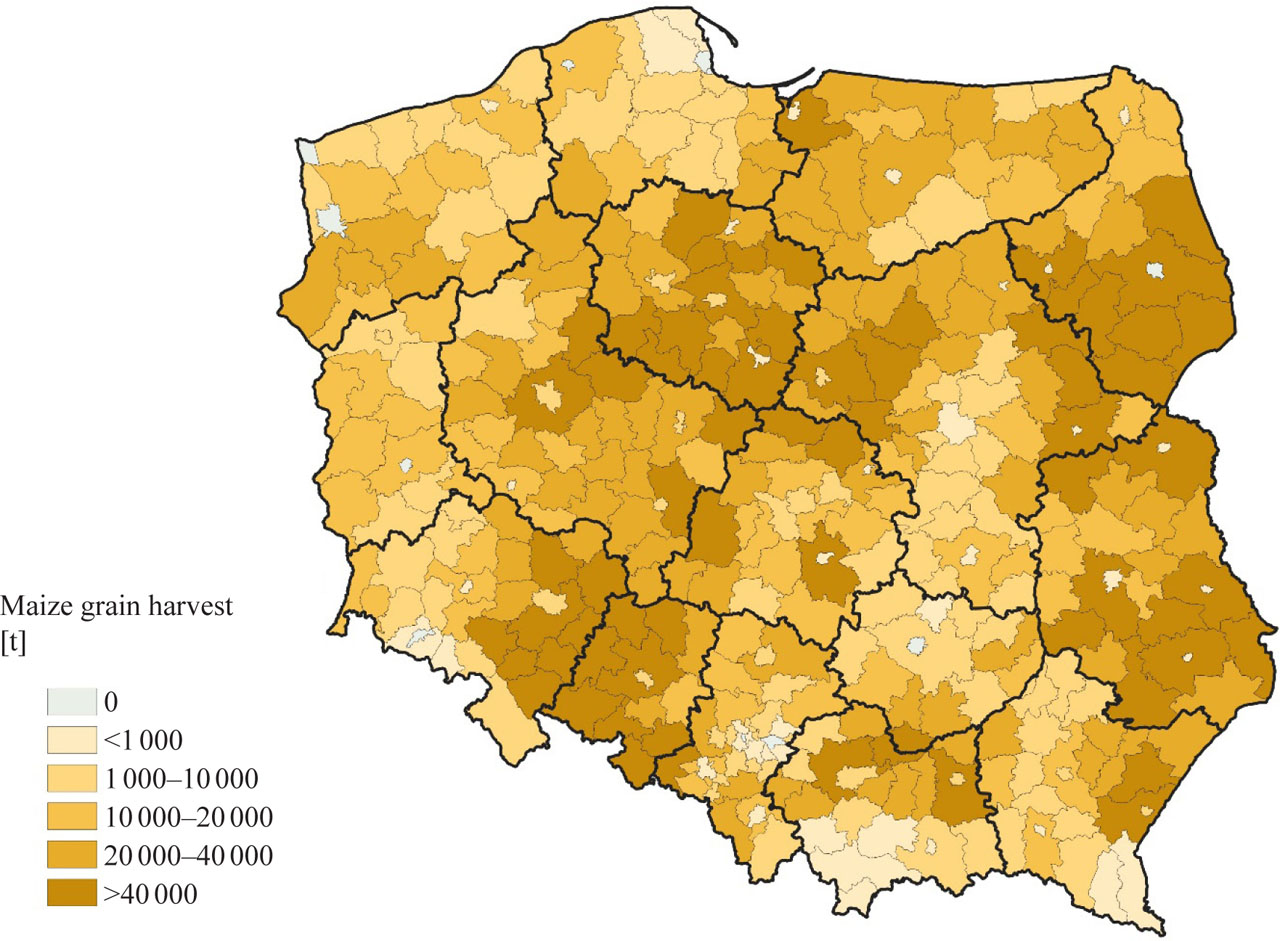
Figure 1.
Calculated harvest of maize grain in 2023 (by county).
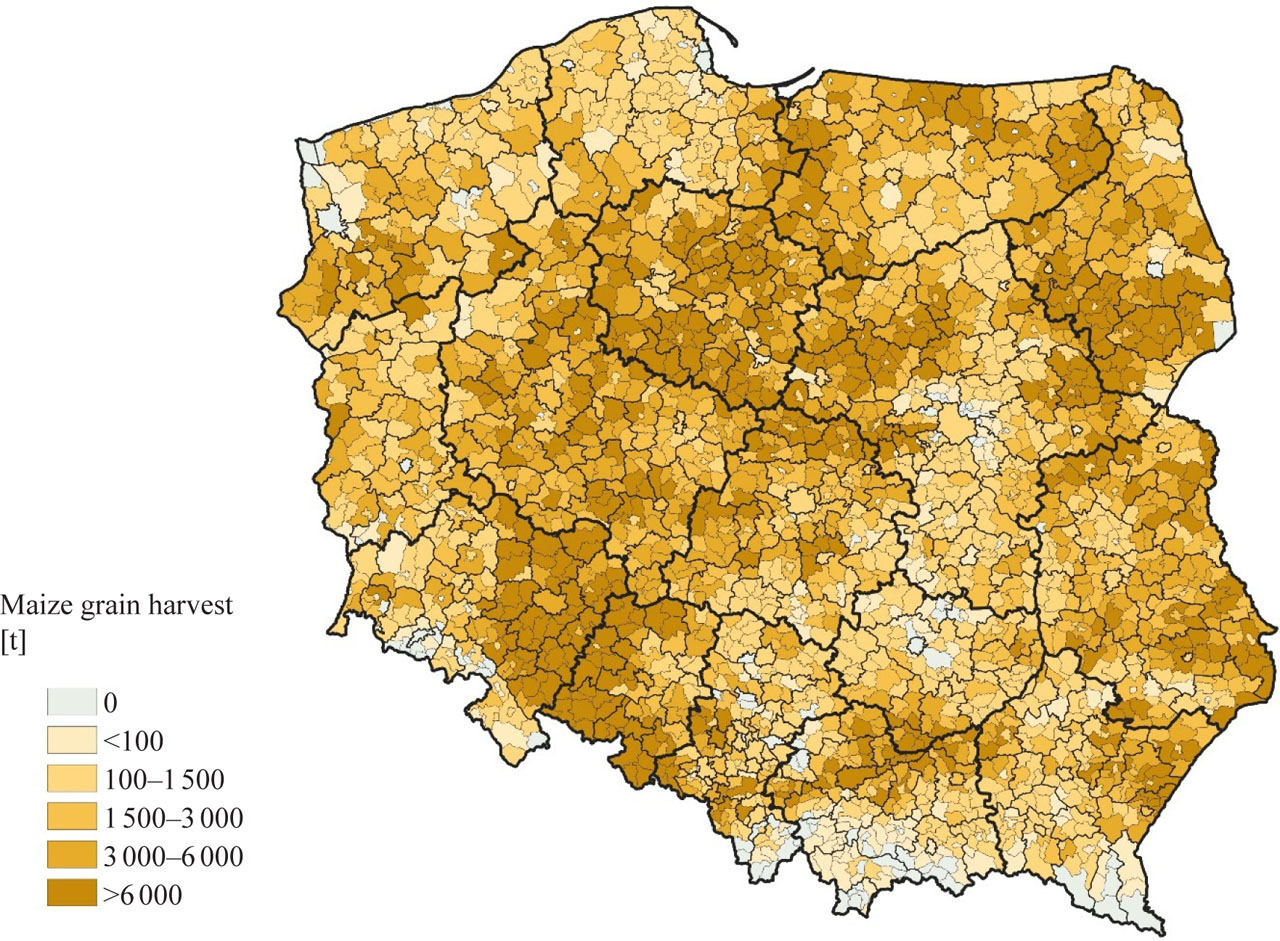
Figure 2.
Calculated harvest of maize grain in 2023 (by municipality).
The largest area of arable land sown with maize for silage was recorded in Wysokie Mazowieckie County, located in the Podlaskie Voivodeship, from which 187.7 thousand tonnes of dry weight maize for silage were harvested. Within this county, the rural municipality of Czyżew had the highest production of maize for silage with 31.1 thousand tonnes of dry weight mass harvested. According to CWB data, the median drought affecting crops in this municipality was 2.1%, and most of the cultivated land belonged to the third soil category. In Wysokie Mazowieckie County, the estimated production of maize for silage exceeded 10 thousand tonnes of dry weight mass in most municipalities. There were, however, one exception: the municipality of Wysokie Mazowieckie, where production was estimated at 829.4 tonnes of dry weight mass were obtained. In the municipality of Wysokie Mazowieckie, most of the cultivated land was classified as third-category soil, with a median drought level of 11.7%. The results by county are presented in Figure 3, while those by municipality are shown in Figure 4.
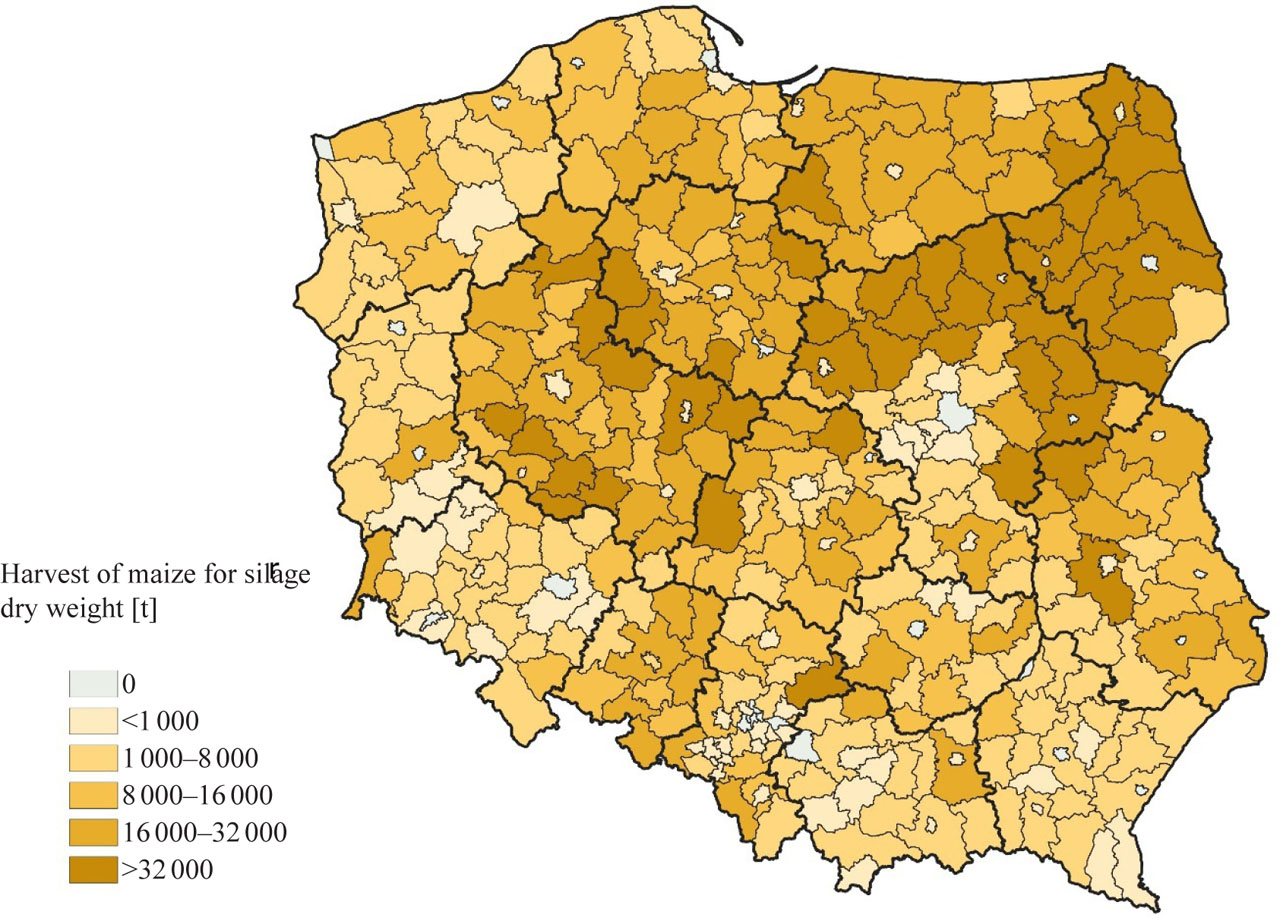
Figure 3.
Calculated harvest of maize for silage in 2023 (by county).
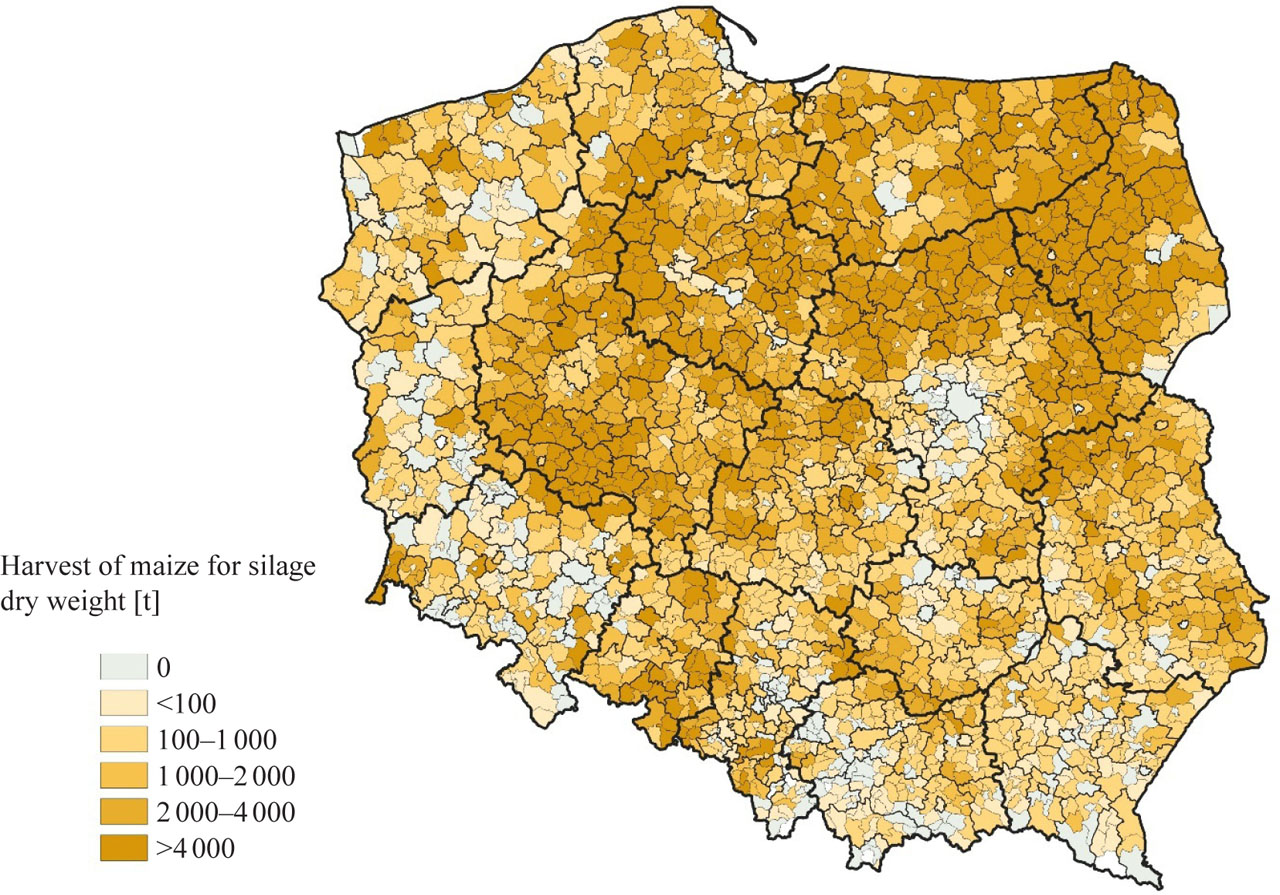
Figure 4.
Calculated harvest of maize for silage in 2023 (by municipality).
Similar to maize, the analysis of rapeseed cultivation was conducted using 2023 data obtained from the ARiMR database. The total rapeseed harvest in Poland amounted to 3.4 million tonnes, consisting almost entirely of winter rapeseed; spring rapeseed accounted for only a negligible share of the total production. The winter rapeseed harvest reached 3,368.4 thousand tonnes, while the spring rapeseed harvest amounted to 23.0 thousand tonnes. The Dolnośląskie Voivodeship had the largest area of land sown with winter rapeseed from which 542.8 thousand tonnes of seeds were harvested. Comparable figures were recorded in the Lubelskie Voivodeship, where winter rapeseed was cultivated, yielding 530.7 thousand tonnes. The Małopolskie Voivodeship recorded the smallest area sown with winter rapeseed, from which 65.1 thousand tonnes were harvested. As for spring rapeseed, yields were much lower. The average harvest per voivodeship was approximately 1.6 thousand tonnes. The Lubelskie Voivodeship stood out markedly from other regions, producing 6.0 thousand tonnes of seeds. In contrast, the smallest area of land devoted to spring rapeseed was found in the Śląskie Voivodeship, yielding 266.0 tonnes of seeds. The results by voivodeship are presented in Table 3.
Table 3.
Calculated harvest of spring and winter rapeseed by voivodeship.
| Voivodeship | Spring rapeseed [thousand tonnes] | Winter rapeseed [thousand tonnes] |
|---|---|---|
| Dolnośląskie | 1.51 | 542.77 |
| Kujawsko-pomorskie | 1.82 | 216.43 |
| Lubelskie | 6.02 | 530.72 |
| Lubuskie | 0.37 | 90.78 |
| Łódzkie | 0.54 | 78.30 |
| Małopolskie | 0.76 | 65.12 |
| Mazowieckie | 2.06 | 176.26 |
| Opolskie | 0.78 | 324.16 |
| Podkarpackie | 0.90 | 109.57 |
| Podlaskie | 1.37 | 78.97 |
| Pomorskie | 1.84 | 226.95 |
| Śląskie | 0.27 | 94.13 |
| Świętokrzyskie | 1.10 | 113.17 |
| Warmińsko-mazurskie | 1.79 | 286.77 |
| Wielkopolskie | 1.12 | 189.94 |
| Zachodniopomorskie | 0.71 | 244.33 |
| POLAND | 22.96 | 3,368.38 |
In terms of counties, the Nysa County in the Opolskie Voivodeship had the largest area of arable land sown with winter rapeseed, from which 69.6 thousand tonnes of seeds were harvested. Within Nysa County, several municipalities recorded winter rapeseed harvests of approximately 10 thousand tonnes. These included the rural municipality of Nysa – rural area (12.5 thousand tonnes), Głuchołazy (9.9 thousand tonnes), Korfantów (9.2 thousand tonnes), and Otmuchów (8.5 thousand tonnes). The municipality with the lowest winter rapeseed harvest was Pakosławice, where production amounted to 4.8 thousand tonnes. In this municipality, the median drought-induced yield reduction was 1.2%, and most of the cultivated land belonged to the fourth soil category. The results by county are presented in Figure 5, while those by municipality are shown in Figure 6.
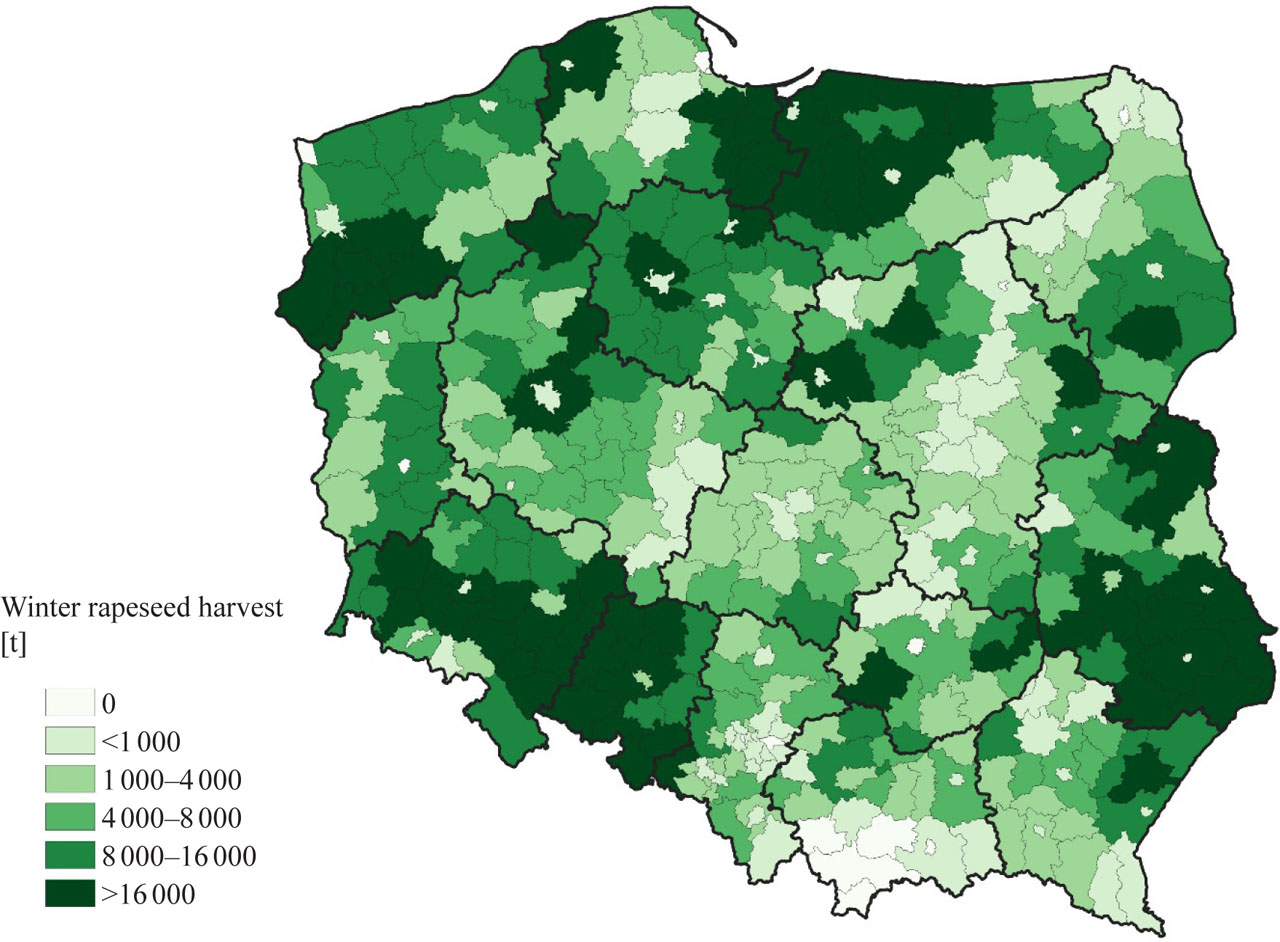
Figure 5.
Calculated winter rapeseed harvest in 2023 (by county).
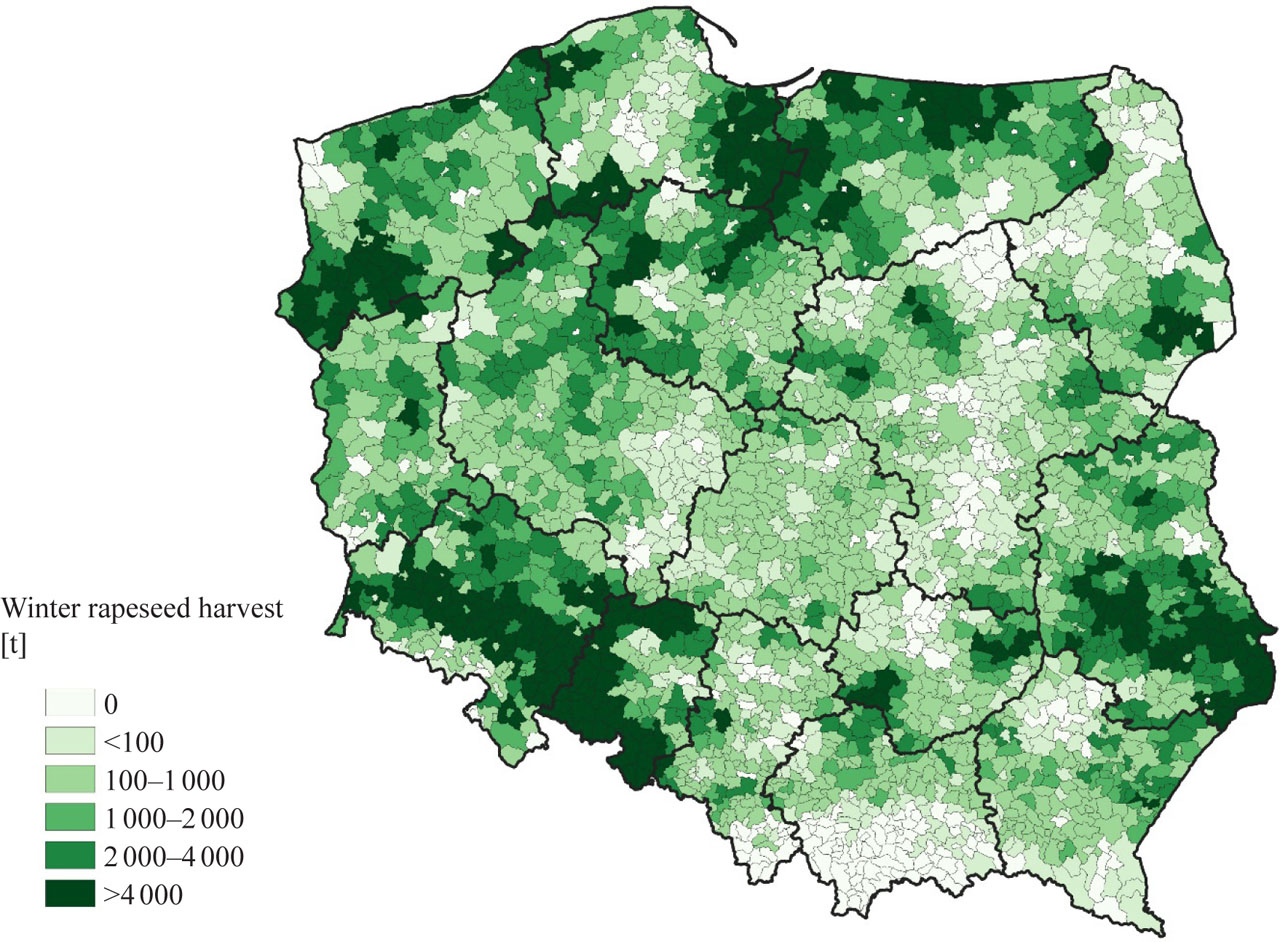
Figure 6.
Calculated winter rapeseed harvest in 2023 (by municipality).
The largest area of arable land sown with spring rapeseed was recorded in the Hrubieszów county in the Lubelskie Voivodeship, from which 922.4 tonnes of seeds were harvested. Two municipalities within this county stood out in terms of harvest volume: the municipality of Dołhobyczów, where 429.2 tonnes of seeds were harvested, and the municipality of Mircze, where 252.4 tonnes were obtained. In the remaining municipalities, spring rapeseed harvests did not exceed 100 tonnes. According to the CWB data, crops in these municipalities were not significantly affected by drought. Similarly, in the Mircze municipality, drought effects were also minimal. Only a small proportion of land experienced drought conditions with a maximum drought-induced yield reduction of 8.1%, while no drought was diagnosed on most fields. In both municipalities, the majority of crops were located on fourth-category soils. The results by county are presented in Figure 7, and those by municipality are shown in Figure 8.
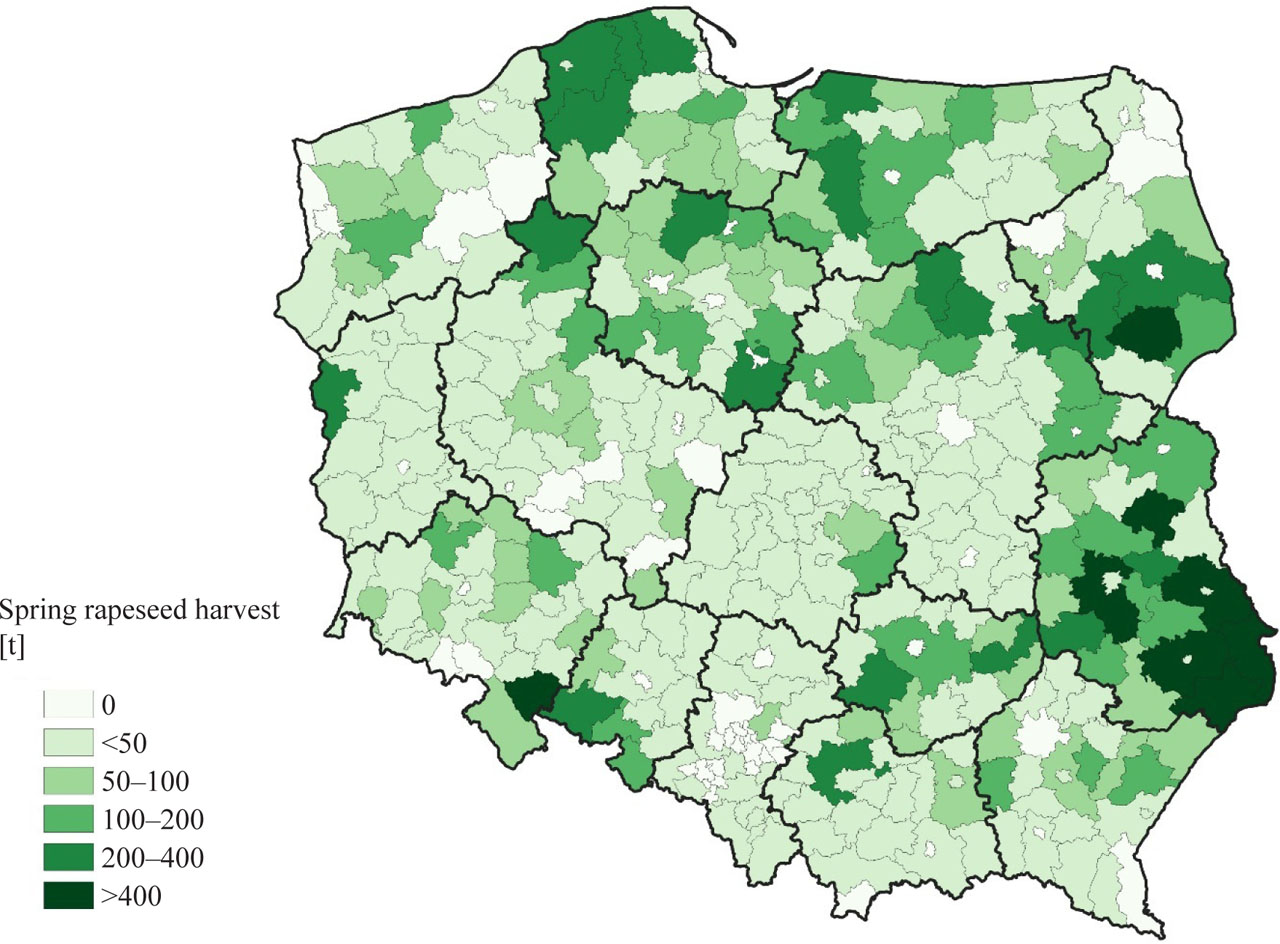
Figure 7.
Calculated spring rapeseed harvest in 2023 (by county).
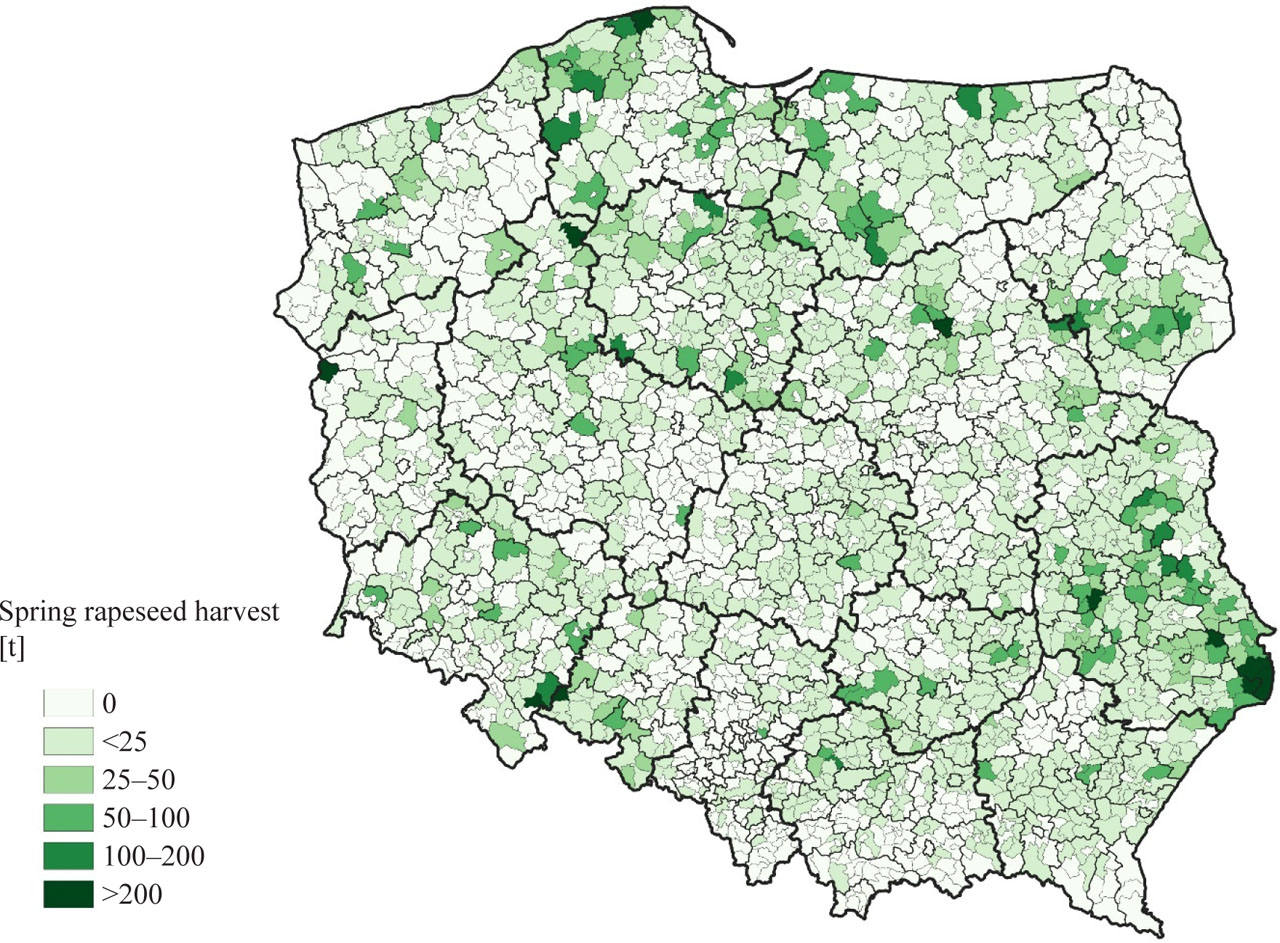
Figure 8.
Calculated spring rapeseed harvest in 2023 (by municipality).
The drought data indicate that this phenomenon had a varied impact on crop yields across different regions. In municipalities such as Kobierzyce and Żórawina, the median drought-induced yield reduction was 4.8% and 2.4%, respectively, indicating a relatively limited impact of crops. In contrast, in the municipalities of Wysokie Mazowieckie and Ciechanowiec, drought had a more significant effect, with median drought-induced yield reduction values of 11.7% and 16.2%, respectively. The analysis indicates that soil conditions and drought play a key role in shaping crop yields. Regions characterised by higher drought indices exhibit lower yields, which highlights the need to implement effective water management strategies and to select appropriate drought-resistant crop varieties.
The volume of maize (grain maize and silage maize) and rapeseed (winter and spring) harvested in Poland is largely determined by the regionalisation of cultivation, resulting from climatic conditions, soil properties, and the structure of agricultural holdings. Climatic factors such as the length of the growing season, average temperatures, and the frequency of drought occurrence are crucial for crop development. Maize, which requires a warm climate and a long growing season, achieves the highest yields in regions with favourable thermal conditions, whereas winter rapeseed is more tolerant of cooler conditions but requires adequate soil moisture. Soils with high nutrient content and good water retention capacity favour higher yields, while sandy soils prone to drying may limit production efficiency. The increasingly frequent occurrence of drought, particularly in central and western parts of the country, constrains yield potential and encourages farmers to apply methods aimed at mitigating the effects of water deficits. As a result, maize and rapeseed yields are strongly dependent on regional factors prevailing in different parts of the country.
Harvest volume is a key determinant in assessing the energy potential of a given region. Energy potential varies across regions depending on crop species and the level of production achieved. The analysis considered the total volume of maize and rapeseed harvests potentially obtainable in regions of Poland. The estimated harvest volume was not reduced by quantities allocated to food production, feed use, or other purposes. Poland exhibits substantial energy potential, with more than 70 counties characterised by an energy potential exceeding 1,500 TJ. In this respect, the eastern and south-western regions of the country stand out. Within the south-western part, two counties recorded the highest energy potential from maize and rapeseed cultivation: Wrocław County in the Dolnośląskie Voivodeship and Nysa County in the Opolskie Voivodeship. In both counties, grain maize contributed most significantly to the overall energy potential. In Wrocław County, the municipality of Kobierzyce exhibited the highest energy potential with the following estimating values: maize for grain – 858.0 TJ, maize for silage – 258.8 TJ, winter rapeseed – 144.0 TJ, and spring rapeseed – 0 TJ. In the Nysa County, the municipality of Otmuchów achieved the highest potential estimated at 674.1 TJ from maize for grain, 277.8 TJ from maize for silage, 228.8 TJ from winter rapeseed, 0.1 TJ from spring rapeseed. The results by county are presented in Figure 9, while the outcomes categorized by municipality are shown in Figure 10.
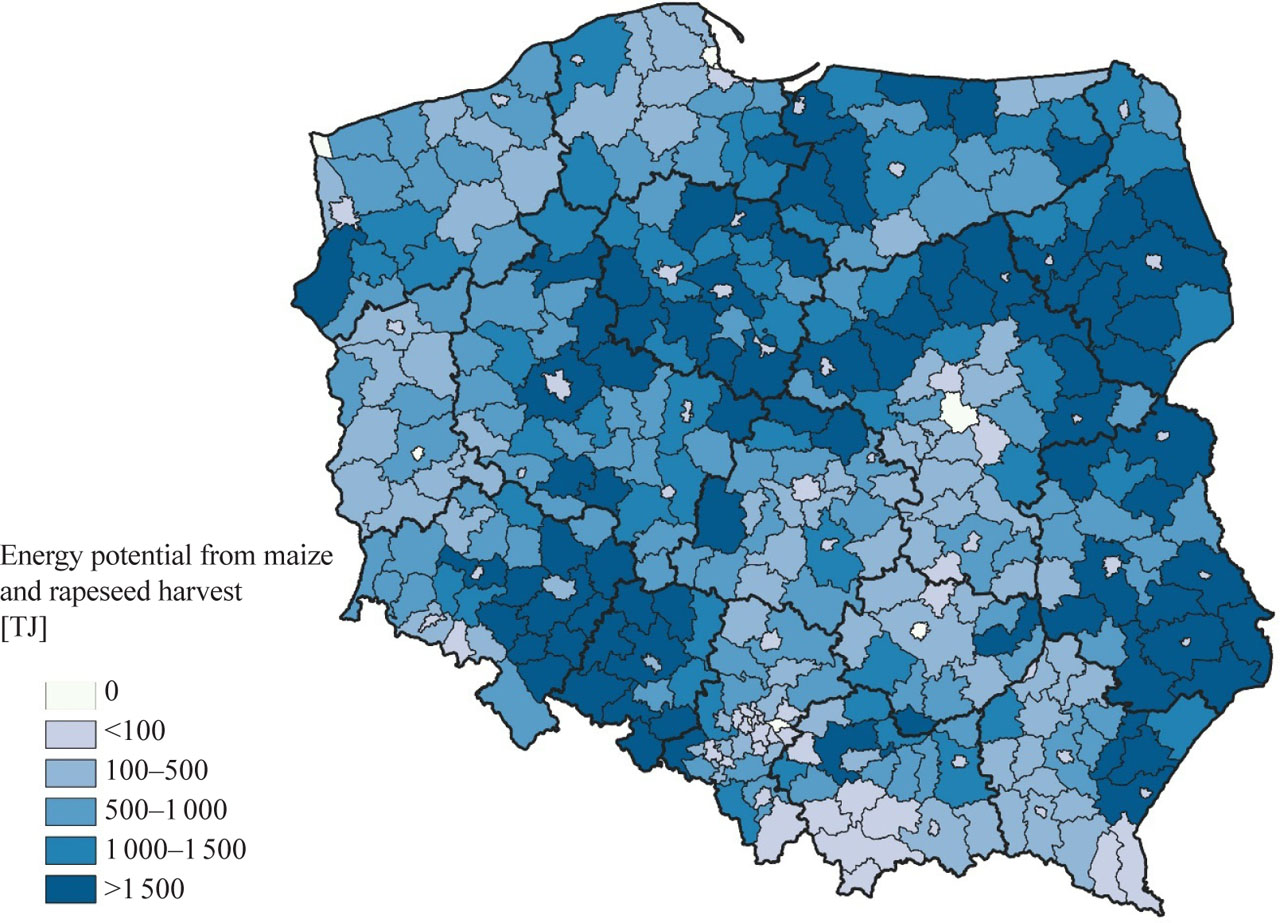
Figure 9.
Energy potential from maize and rapeseed harvest in 2023 (by county).
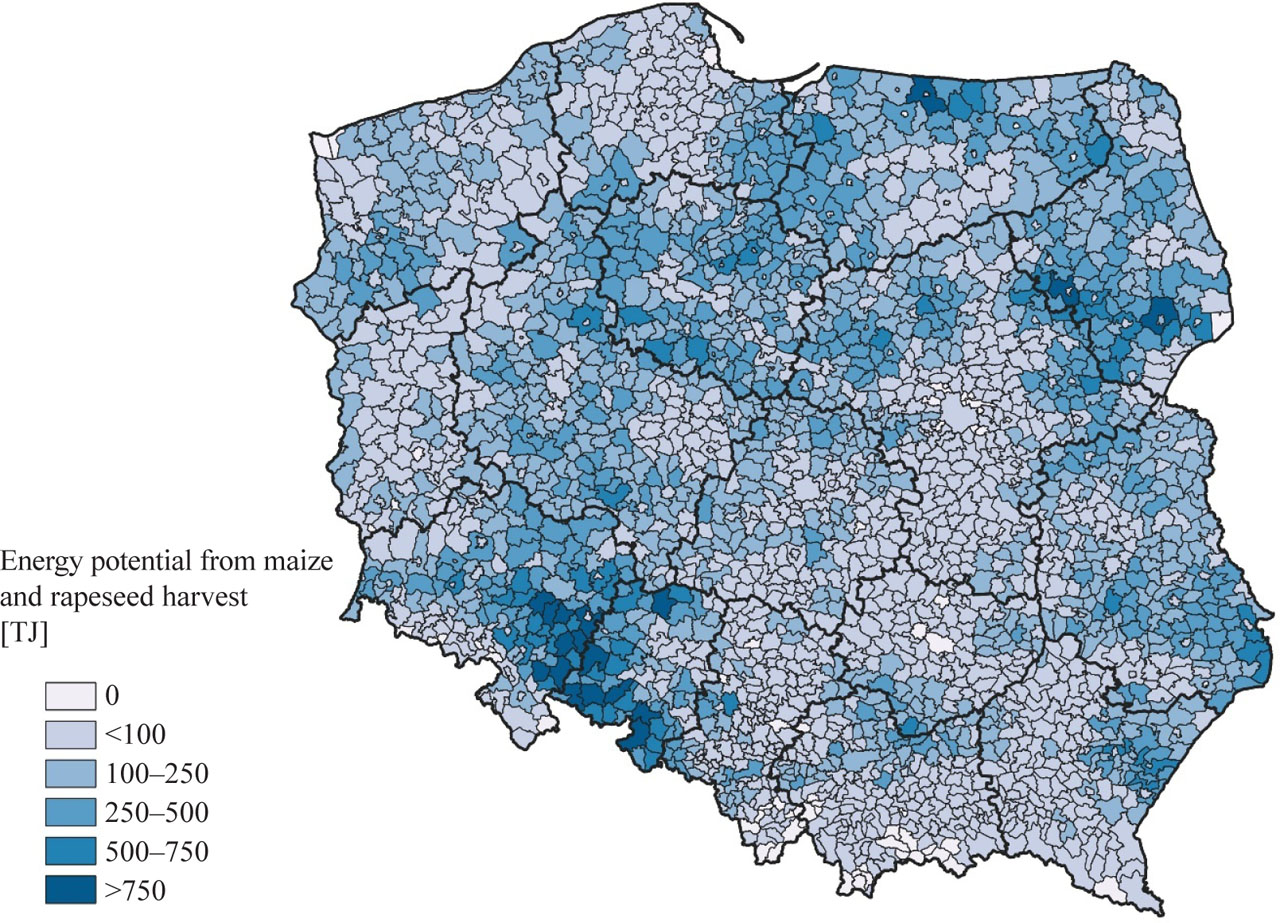
Figure 10.
Energy potential from maize and rapeseed harvest in 2023 (by municipality).
DISCUSSION
In most previous studies, the primary source of information on agricultural production in Poland has been data provided by the Central Statistical Office (GUS). However, the present study is based on an independent estimation approach, which allows for the verification and potential supplementation of official statistics. The methodology used – taking into account crop area, soil categories, and local drought losses – refers to local drought risk under specific soil and phenological conditions, in accordance with the definition of agricultural drought. This methodology does not double-count drought impacts but rather spatially refines them – allowing for the creation of precise estimates of maize and rapeseed yields, thus enabling a more accurate assessment of the biomass potential for energy production.
The importance of developing predictive models for agriculture is also emphasized by Okupska et al. (2025), who demonstrated that the application of machine learning algorithms combined with classical statistical methods significantly improves the accuracy of yield forecasts. The authors highlight the necessity of integrating meteorological, soil, and satellite data – an approach consistent with the assumptions of the present study, in which estimation accuracy results from accounting for spatial variability and local drought conditions. Our analyses, based on ARiMR data from 2023, confirm this relationship: the highest maize and rapeseed yields were recorded in voivodeships characterized by more favourable soil and climatic conditions, whereas regions exposed to precipitation deficits exhibited significantly lower harvest volumes. Similar conclusions were drawn by Panek-Chwastyk et al. (2024), who showed that their model achieved a high level of agreement between predicted and observed yields across multiple growing seasons. These findings confirm that a comprehensive approach combining meteorological data with information on soil structure and vegetation is crucial for reliable modelling, thereby directly supporting the methodology presented in this study.
When comparing the results obtained in this study with GUS data, a clear relationship between the two datasets can be observed. The analysis revealed a very strong positive linear relationship between the results obtained in this study and the values reported by GUS. This indicates that crop harvest volumes increase proportionally in both datasets across individual voivodeships. Such results may confirm the credibility of both data sources and suggest similarities in calculation approaches. Differences between the datasets may result from the overly generalized data used by GUS. In the present study, emphasis was placed on the precise analysis of each field with declared rapeseed or maize cultivation, taking into account drought-related yield losses and soil conditions, which have a significant impact on yield levels. In GUS data – particularly in the case of silage maize – reported values are often higher, which may suggest that these variables were not fully considered. Despite the strong correlation between the study results and GUS data, the precision of the estimates obtained in this study is higher. Therefore, the results of this research can be used to generate more accurate forecasts and analyses of rapeseed and maize harvests in Poland. By incorporating additional variables and applying a more detailed methodology, the present study provides more reliable data, making it a valuable tool for analytical and decision-support purposes.
CONCLUSIONS
Accurate information on crop harvest volumes enables the forecasting of the economic viability of biomass-based energy production, as well as the assessment of environmental impacts. This is of key importance for planning the sustainable development of the energy sector across different regions of Poland.
Maize and rapeseed, as key feedstocks for biofuel production, require precise yield data.
Maize, due to the high efficiency of bioethanol production from its grain and its importance in biogas generation, is particularly significant for efficient energy production.
Rapeseed is a valued feedstock for biodiesel production, which makes detailed monitoring of its harvest volumes essential for assessing feedstock availability.
In Poland, there are regions with high energy potential resulting from maize and rapeseed cultivation, particularly in the eastern and south-western parts of the country. In the context of energy and agricultural policy, this creates opportunities to focus support measures on the development of biofuels and local renewable energy systems.
In 2023, the total energy potential of biomass derived from maize and rapeseed in Poland amounted to approximately 353,972 TJ·year−1.
Maize for grain accounted for the largest share of this potential (165,050 TJ), while winter rapeseed contributed approximately 90,946.3 TJ.
Notes
[4] Financial disclosure Funding
The study was carried out as part of task 6.1 entitled „Analysis of the biomass supply potential in 2024 at the national and regional level” from budget subsidies intended for the implementation of the tasks of the Ministry of Agriculture and Rural Development in 2024.