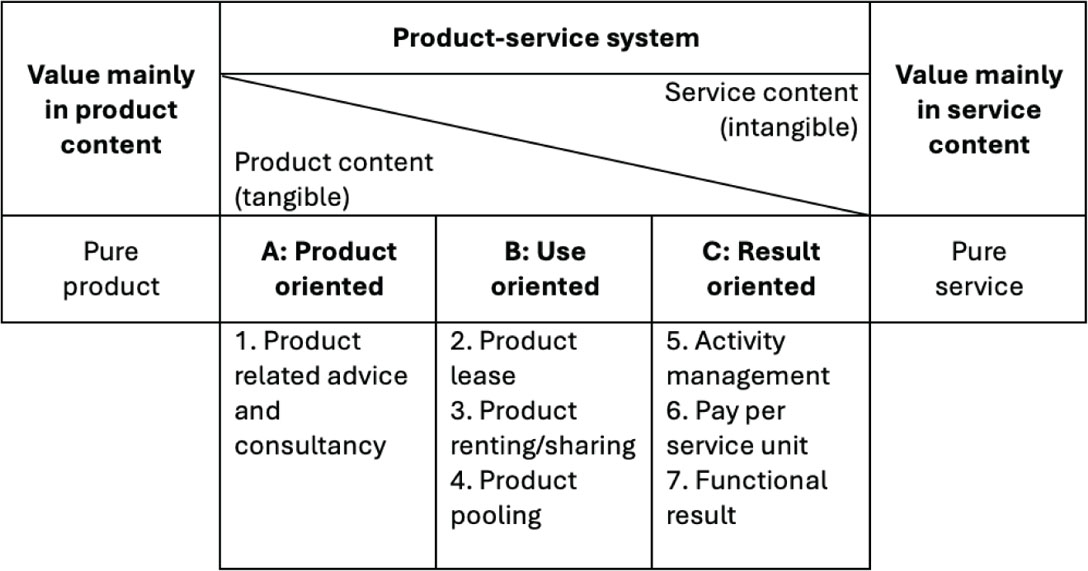
Figure 1.
Classification of product-service systems (adopted from Tukker, 2004)
Abbildung 1. Klassifikation von Produkt-Service Systemen (In Anlehnung an Tukker, 2004)

Figure 2.
Graphic representation of the research model
Abbildung 2. Grafische Darstellung des Forschungsmodells
Table 1.
Demographic characteristics of the survey participants
Tabelle 1. Demografische Merkmale der Teilnehmenden an der Umfrage
| Demographic variable | N = 204 | |
|---|---|---|
| Gender | Female | 130 |
| Male | 68 | |
| Others | 6 | |
| Age (years) | <18 | 2 |
| 18–25 | 126 | |
| 26–35 | 24 | |
| 36–50 | 17 | |
| >50 | 35 | |
| City population (inhabitants) | <1000 | 15 |
| 1000–10,000 | 43 | |
| 10,000–50,000 | 17 | |
| 50,000–100,000 | 5 | |
| 100,000–1 million | 15 | |
| >1 million | 109 | |
| Educational level | Statutory education | 7 |
| Vocational training | 33 | |
| A-levels | 109 | |
| University degree | 55 |
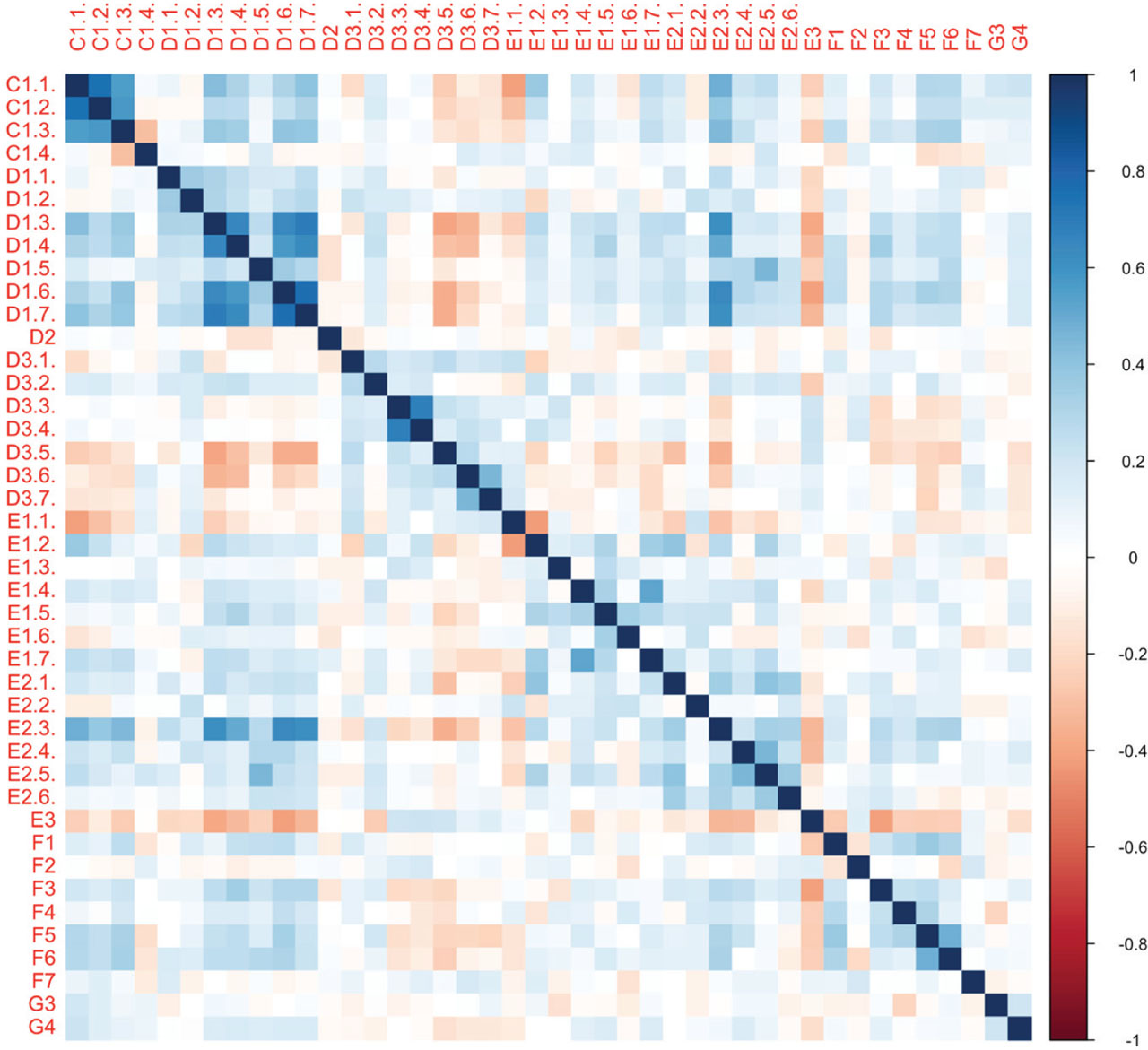
Table 2.
Correlation between factors of acceptance and willingness to adopt u-PSS
Tabelle 2. Korrelation zwischen Akzeptanzfaktoren und der Bereitschaft zur Einführung von u-PSS
Table 3.
Hypothesis testing: multiple regression analysis
Tabelle 3. Hypothesenprüfung: Multiple Regressionsanalyse
| D1. Factors of acceptance | Scale item |
|---|---|
| Flexibility (adapted from D’Agostin et al., 2020) | Possibility of testing a product before purchasing |
| Peer influence (adapted from D’Agostin et al., 2020) | Social prestige for using new and green technology |
| Environmental awareness (adapted from D’Agostin et al., 2020) | Less solid waste generation and greenhouse gas emissions and familiarity with sustainability as a lifestyle |
| Compatibility (adapted from D’Agostin et al., 2020) | Compatibility and consistency with values and beliefs, experiences, and needs of potential users |
| Economic value (adapted from Sattari et al., 2020) | Renting the product is cheaper than buying it |
| Information (adapted from D’Agostin et al., 2020) | Perceived need for a lifestyle change into a more sustainable option |