
1. Introduction
Autism spectrum disorders (ASDs) are complex neurobiological conditions characterized by social deficits, repetitive and stereotypical behaviors, and communication difficulties (American Psychiatric Association, 1994, 2000). ASD is marked by a primary impairment in social functioning, which in turn affect cognitive, behavioral, and everyday adaptive functioning (American Psychiatric Association, 2013). Autism typically emerges within the early stages of development (American Psychiatric Association, 2013) and is linked to atypical neurodevelopmental and neurobiological processes that influence brain development and functioning (Lai et al., 2014). Individuals with ASD frequently present deficits in language development (Tager-Flusberg & Kasari., 2013), social skills, and behavior (Ehleringer, 2010). Furthermore, they exhibit heterogeneity in skill performance (Lord et al., 2020) and display impairments that contribute to a wide range of symptom severity (Schroeder et al., 2010). Children with ASD may demonstrate strong verbal abilities (Lord et al., 2020; Tager-Flusberg & Kasari., 2013) but struggle with social interaction (Lai et al., 2014; Lord et al., 2020) and the processing of sensory information received from their environment (Lai et al., 2014). Effective intervention requires individualization (Lord et al., 2020; French & Kennedy, 2018), as it is unlikely that a single method can adequately address the diverse needs of all children with ASD (Ehleringer, 2010).
Physical activity interventions are becoming more common in children with ASD. The promotion of physical activity participation among individuals with ASD aims, among others, to foster empowerment, self-determination, the development of critical thinking and decision-making processes (Sherrill, 2004). Most studies to date have focused on adaptations within a variety of educational environments, often applying diverse pedagogical frameworks. Sherrill (2004) and Hutzler (2007) highlighted the theory of adaptations as a fundamental theoretical framework to guide individuals in managing environmental challenges, depending on their available resources and capacities (Hutzler, 2007). Each task requires a specific relationship between stimulus, individual, and environment, and the outcomes may represent a unique response pattern depending on the nature of the challenge (Hutzler, 2007).
The most frequently used interventions for children with ASD include sensory integration (SI) therapy (Lyu et al., 2025), the Treatment and Education of Autistic and Related Communication Handicapped Children program (Shi et al., 2025; Virues-Ortega et al., 2013), the Son-Rise program (Houghton et al., 2013), hippotherapy (Sissons et al., 2022), occupational therapy (Schaaf et al., 2014), psychomotor therapy (Caliendo et al., 2021; Liu & ElGarhy, 2014), psychosocial interventions (Lord et al., 2022), behavioral approaches (Dawson et al., 2010), dance and movement based interventions (Blažević, 2023; Moo et al., 2023), virtual reality motor interventions (Moraes et al., 2022), swimming (Mische et al., 2019), physical activity interventions (Harbin et al., 2022; Healy et al., 2018), and the Sherborne developmental movement (SDM) method (Morgulec-Adamowicz, 2020; Zawadzka et al., 2014). These approaches have reported a holistic perspective on human development with promising findings in the motor, cognitive, and psychosocial domains (e.g., enhanced motor skills, social functioning, social relationships, academic engagement, enhanced emotional expression, verbal skills, cognitive skills, social learning, reduced maladaptive, and stereotypic behaviors). Within a broader developmental framework, the motor skills are crucial for psychosocial development, peer relationships, and adaptive behavior of ASD children (Krombholz, 2006; Sherrill, 2004).
Regarding SDM, Weston (2012) emphasized the integration of body and mind through sensory experiences, highlighting the intrinsic connection between bodily movement and the sensory systems of the nervous system. Additionally, the principles of neuroplasticity suggesting that the repeated, meaningful motor and relational experiences can strengthen neural networks involved in social communication and emotional regulation (Kolb & Gibb, 2011), are providing further support for the relevance of structured movement practices such as the SDM. Sherborne’s work was developed over a 30-year period and focused on movement-based practice for both adults and children with diverse needs across varied contexts. As a student of Rudolf Laban, Sherborne explored the view that human movement and activity are deeply connected to innate impulses for survival, exploration, and learning through sensory and bodily experiences. In Laban’s analysis of human movement, the concept of “effort” is fundamental, allowing observation of an individual’s internal state in relation to movements involving weight, time, space, and flow. Emphasis is placed on movement quality, particularly the effort elements such as strong/light, quick/slow/sudden/sustained, direct/flexible, and bound/free responses to external stimuli (Laban, 1998). Through “effort,” the physical and psychological aspects of movement are unified in their embodied expression. Furthermore, models of self-regulation through sensorimotor integration propose that the coordinated movement and sensory processing may support children to modulate arousal, attention, and social responsiveness (Schaaf & Mailloux, 2015), offering an additional theoretical basis for the potential benefits of SDM.
The SDM has been shown to yield improvements and positive outcomes in children’s cognitive, emotional, social, and motor skills (Bogdanowicz, 2003; Mousouraki et al., 2018). From the perspective of embodied cognition, such gains may arise because cognitive and emotional processes are shaped through bodily action and sensorimotor engagement (Barsalou, 2008; Shapiro, 2011). It is also considered an effective therapeutic approach for children with ASD (Zawadzka et al., 2014). Furthermore, SDM influences various elements of psychomotor development, addressing both motor and psychosocial deficits. The SDM allows the children to explore and develop awareness of their own body in relation to space, and enhances bodily awareness and motor coordination. All sessions are tailored to the individual needs and it appears that through the motor experiences offered in the program, the children improve their motor abilities and emotional expression (Zawadzka et al., 2014). Moreover, the SDM provides a means for communication, enabling parents to engage in unrestricted play with their children and to build meaningful and reciprocal relationships (Weston, 2012). Through these shared movement experiences, parents also gain physical awareness, enhancing their understanding of both the limitations and potential of their children (Weston, 2012).
The research findings presented above, with respect to the Sherborne method, are limited but promising. It is also evident that children with ASD face numerous challenges across multiple areas of development. To date, no published studies have been found, either in Greece or internationally, that comprehensively evaluated the impact of SDM on motor and psychosocial development and behavior of children and adolescents with ASD. Therefore, the present study is designed to investigate the effect of the SDM method on the motor, psychosocial, and behavioral development of children and adolescents with ASD. The research evaluated the effects of the intervention program on motor and psychosocial development and behavioral outcomes.
2. Material and methods
2.1. Participants
An experimental design was employed involving 15 participants, aged between 7.5 and 16.1 years, who were recruited from therapy and creative activity centers in the Attica region of Greece. The participants were diagnosed with ASD under Diagnostic and Statistical Manual of Mental Disorders (DSM)-IV or DSM-5 criteria, according to their respective files and confirmation from their personal psychiatrist. The sample consisted of children who exhibited sufficient adaptive and behavioral capacities to engage meaningfully in the intervention, without using functioning-based labels that are absent from DSM-5. Children and adolescents with ASD who exhibited comorbidities (e.g., intellectual disability) were excluded from the study.
Sample size analysis (power analysis) was conducted based on Grimm (1993) and Cohen’s (1988) criterion for a large effect size (0.80), using a power (1 − β) of 0.80 and an alpha level of 0.05. For a large effect size, the required sample size to detect a significant program effect was 12 for two-tailed and 10 for one-tailed tests (Grimm, 1993; Cohen, 1988).
A total of 15 individuals with ASD participated in the main study (10 boys and 5 girls). Participants were allocated, with concealed envelopes, to the experimental group (EG, N = 7) and control group (CG, N = 8). Their age on the day of baseline assessment ranged from 7.50 to 16.08 years, with a mean age of 11.25 years (±3.13). Demographic data were primarily reported by parents (N = 26; 54.2%) and secondarily by teachers (N = 22; 45.9%).
2.2. Measurement tools
2.2.1. Following measures were used for the purposes of the study
(A) To evaluate motor development, the short form of the Bruininks–Oseretsky Test of Motor Proficiency, Second Edition (BOT-2), was employed (Bruininks & Bruininks, 2005). The BOT-2 includes 14 tasks that assess both gross and fine motor skills in a total score (positive scale). The assessment typically takes 15–20 min to administer and encompasses eight distinct domains: fine motor precision, fine motor integration, manual dexterity, bilateral coordination, balance, running speed and agility, upper-limb coordination, and strength. These subdomains correspond directly to the motor competencies targeted through SDM activities, such as balance, coordination, body control, and functional movement patterns. The test’s validity covering content, concurrent, and construct aspects has been confirmed by Bruininks and Bruininks (2005).
(B) Behavior was assessed using the Behavioral Summarized Evaluation (BSE) questionnaire (Barthelemy et al., 1990). The BSE consists of 20 items designed to assess autism-related behavioral characteristics (negative scale, with higher scores representing more behavioral difficulties). Items are rated on a scale from 0 (never) to 4 (always) and total scores are calculated by summing the item scores. In the present study, parents were provided with detailed explanations and a glossary to assist in completing the questionnaire based on the observed frequency of behaviors. The BSE has demonstrated strong validity and reliability, with a reported reliability index of 0.96 (Barthelemy et al., 1990). The BSE was selected because the incorporated items capture core behavioral dimensions relevant to autism – such as social interaction, emotional expression, adaptability to change, and stereotyped behaviors – which correspond to the behavioral and psychosocial outcomes targeted by the SDM intervention. The BSE was specifically developed for use in therapeutic and educational programs for autistic children and is well-suited for detecting changes in behavior that may emerge through participation in the SDM intervention.
(C) Psychosocial development was assessed using the Greek version of the Strengths and Difficulties Questionnaire (SDQ-Hel) (Goodman, 1997; Bibou-Nakou, et al., 2002). The questionnaire evaluates students’ behavioral and adjustment issues in school and social contexts. The short form for teachers, appropriate for children aged 4–17 years old, was used in the present study. The SDQ-Hel incorporates 25 items classified in 5 subscales: conduct problems, emotional problems, hyperactivity/inattention, peer relationship problems, and prosocial behavior (PB). Teachers rate each behavior on a three-point scale (1 = Not True, 2 = Somewhat True, 3 = Certainly True). Subscales are grouped into broader categories of internalizing and externalizing problems, with total difficulties score comprising the first four subscales (negative scale) and PB (positive scale) being reported separately. Certain items are reverse scored per standard guidelines. According to Dammeyer (2009), test-retest reliability was 0.783, supporting the SDQ as a reliable assessment tool. The SDQ was selected because it assesses key psychosocial domains – such as emotional difficulties, behavioral regulation, peer relationships, and prosocial skills – that are directly relevant to the social, emotional, and relational outcomes targeted by the SDM intervention. Thus, the measure was perceived to be suitable for capturing potential changes in psychosocial functioning resulting from participation in the SDM program.
A demographic questionnaire was also developed for the study to collect data on participants’ age, gender, functional level, IQ, communication ability, participation in individual or group programs and parental education and family status.
2.3. Procedure
The study was approved by the university’s internal ethics and bioethics committee (Approval No. 1602/16-01-2024) and conducted in accordance with the principles of the Declaration of Helsinki. Participation was voluntary and required written informed consent from parents. All assessments and questionnaires were coded and anonymized. Data collection was conducted by the primary researcher in the presence of staff members from the selected therapy centers and centers of creative activities for children.
Prior to the main study, the test-retest reliability of the instruments was assessed by administering them to a sample of 10 children over a period of 10–15 days. In addition, preliminary procedures were carried out to ensure the smooth implementation of the research protocol, including familiarization of the primary researcher with the data collection process, the setting, the staff, and the participating children and adolescents, as well as to identify and address any potential practical challenges.
Each Sherborne session consisted of three sections, aligned with the core philosophy of the method and its theoretical foundations and emphasizing the child’s initiative and creativity. The initial section focused on body awareness (e.g., understanding bodily functions and coordination), the second section on spatial awareness (personal and general space), and the third section on relationships (e.g., with others, against others, through others). Sessions integrated movement qualities (i.e., weight, flow, space, and time) and support from the floor, partner, and gravity.
The three SDM sections were included in every session following a structured yet flexible format, according to the Sherborne’s principals (1990, 2001). Authentic SDM activities used throughout included body awareness tasks (e.g., back-to-back sitting, sliding on hips) centered on activating the body’s center (core), exploring weight-bearing parts (of the knees, shoulders, elbows, e.g., rowing, move through the tunnel) and expressive movements of the peripheral body parts (e.g., mirror activities, touching elbows in pairs, high five). Spatial awareness tasks engaged participants in navigating personal and general space through changes in levels (high, low) and directions, while relational tasks involved interactional modes such as working with oneself, with a partner, and in shared or opposing movement dynamics. Although the foundational sequence remained stable across the program, activities were progressively adapted in complexity in response to the group’s engagement and abilities, consistent with SDM principles in which the practitioner attunes to the group’s energy within an open framework.
The sessions began with a 3-min introductory segment where participants formed a circle, followed by body activation exercises such as stretching. Sessions lasted 55–60 min and were held once a week for 10 weeks. ASD diagnoses were confirmed by psychiatrists using the DSM-IV or DSM-V criteria. Fidelity of implementation was maintained through comprehensive session documentation by the instructor, who was formally certified in SDM at an advanced level. The instructor completed both parts of the SDM training program that authorize practitioners to apply the method in professional practice.
Motor assessments were conducted in the occupational therapy rooms, according to the BOT-2 manual (Bruininks & Bruininks, 2005). Testing followed the manual’s sequence, conducted individually and lasting approximately 20 min per child, depending on age and cooperation. To enhance consistency, the primary researcher collaborated with two specialized professionals (e.g., special educator, therapist, psychologist), aiming for a high level of agreement in the scoring process (>80%) (Thomas & Nelson, 1990). The respective therapists in the therapy centers and centers of creative activities were responsible for responding to the SDQ-Hel and the parents provided data for the BSE. All assessments were administered pre- and post-intervention.
Throughout the intervention period, the primary researcher systematically maintained a reflective diary to record observations and gather qualitative insights into both student and parental experiences at home. Attendance was consistent, with all participants attending each session; the only exception was one student who, due to illness, completed the missed session 2 days later. Parents did not attend or observe the sessions, allowing the children to participate independently. The sessions were facilitated by the principal investigator, who held official certification in the implementation of the SDM approach, alongside a qualified colleague (5 years of experience with ASD children and adolescents), within a supportive and structured environment conducive to child engagement and development.
2.4. Statistical analysis
The IBM SPSS version 29.0 (IBM SPSS Corp., Armonk, NY, USA) was used for statistical analysis. The analysis initially included descriptive statistics (mean values ± standard deviations) to classify children based on motor development norms and to provide a general summary of the dataset. Pearson’s r coefficient was used to examine correlations between motor and psychosocial development and behavior. According to Cohen (1988), the following thresholds were used to interpret the strength of intercorrelations: 0–0.20 = low, 0.21–0.30 = low to moderate, 0.31–0.50 = moderate, and ≥0.51 = moderate to high intercorrelation. A significance level of 0.05 was adopted for all statistical tests.
Two-way factorial ANOVAs (2 × 2) were performed to evaluate the interaction between intervention and time on the dependent variables (Pedhazur & Pedhazur-Schmelkin, 1991). The independent observations, homogeneity of variance, and continuous and categorical data for the dependent and independent variables respectively were confirmed as basic assumptions for the valid application of factorial ANOVA (Field, 2018; Tabachnick & Fidell, 2019). The eta squared (η 2) was used as an effect size index. According to Richardson (2011), the η 2 represents the proportion of variability explained by the interaction or main effects. The t-parameter estimates were examined as post hoc comparisons to detect differences between participants who followed or did not follow the SDM method at the beginning and at the end of the program. The Bonferroni correction was applied to repeated comparisons (Grimm, 1993).
Pearson’s r and multiple regression were also used to explore association among variables. The variance inflation factor (VIF) and Tolerance >10 indexes were used to assess multicollinearity among variables in multiple regression (Pedhazur & Pedhazur-Schmelkin, 1991; Krishnamoorthy & Mondal, 2008). The alpha level for statistical significance was set at p < 0.05.
3. Results
A total of 15 individuals with ASD were assessed in motor development. Parents completed the BSE scale and teachers assessed the strengths and difficulties (SD) of their students with ASD using the SDQ-Hel scale. The results are presented in Table 1.
Table 1
Descriptive characteristics of individuals with ASD in the EG and the CG
| Variable | Pre-EG N = 7 | Post-EG N = 7 | Pre-CG N = 8 | Post-CG N = 8 |
|---|---|---|---|---|
| M ± SD | M ± SD | M ± SD | M ± SD | |
| SD emotional problems | 3.71 ± 1.70 | 1.28 ± 0.95 | 3.50 ± 0.92 | 3.75 ± 1.03 |
| Conduct problems | 3.00 ± 2.31 | 1.43 ± 1.81 | 2.37 ± 2.72 | 2.62 ± 2.82 |
| Hyperactivity-inattention | 7.43 ± 1.62 | 4.85 ± 1.77 | 5.50 ± 3.07 | 6.75 ± 2.05 |
| Peer problems | 3.71 ± 0.49 | 2.28 ± 1.11 | 2.25 ± 0.71 | 2.75 ± 1.49 |
Source: Author’s contribution
3.1. Reliability analysis
The reliability of the measurements was initially assessed using internal consistency analysis (Cronbach’s alpha coefficient). The overall results are presented in Table 2.
Table 2
Cronbach alpha reliability coefficients for individuals with ASD
| Variable | Cronbach a |
|---|---|
| SD | 0.791 |
| PB | 0.912 |
| BSE | 0.863 |
| BOT-2 | 0.897 |
Source: Author’s contribution
Next the test-retest reliability of the measurements was evaluated using the Intraclass reliability coefficient (IRC) method. The results are presented in Table 3.
Table 3
Test-retest reliability of the measurements of individuals with ASD
| Variable | IRC |
|---|---|
| SD | 0.646 |
| PB | 0.678 |
| BSE | 0.765 |
| BOT-2 | 0.710 |
Intraclass Reliability Coefficient (IRC).
Source: Author’s contribution
Regarding the relationships examined within the sample of children and adolescents with ASD, a negative correlation was observed between motor development and behavior (r = –0.587, p = 0.021).
The effect of the SDM program on the motor development of children and adolescents with ASD was examined afterwards. A repeated-measures factorial analysis of variance was conducted with two independent variables: group (EG, CG) and time point (pre-post intervention). The dependent variable was the total short form BOT-2 score (Bruininks–Oseretsky Test of Motor Proficiency-2). The results indicated a significant interaction effect (F = 36.845, p = 0.001, η 2 = 0.739). Post hoc analyses using t parameter estimates with Bonferroni correction revealed that group differences shifted from the initial measurement (t = –1.931, p = 0.076) to the final measurement (t = 1.274, p = 0.225), with the EG improving significantly their overall motor development.
A 2 × 2 factorial analysis was subsequently conducted to examine the interaction between group (experimental vs control) and time point (pre- and post-test) on behavior, SD, and PB. The multivariate results revealed a significant interaction effect (Λ = 0.036, F = 97.367, p = 0.001, η 2 = 0.964) and the univariate post hoc analyses indicated significant interaction effects for each of the behavioral factors: behavior (F = 137.054, p = 0.001, η 2 = 0.913), SD (F = 51.247, p = 0.001, η 2 = 0.798), and PB (F = 35.977, p = 0.001, η 2 = 0.735). Regarding the behavior, post hoc examination using t parameter estimates showed that the interaction was due to a reversal of group differences between the first (t = 1.694, p = 0.114) and second (t = –1.613, p = 0.131) measurements. For SD (SDQ total), the post hoc analyses and t parameter estimates indicated that the significance was due to a reversal of group differences from the first (t = 1.499, p = 0.158) to the second measurement (t = –2.235, p = 0.044). Regarding PB, the t parameter estimates showed that the interaction was due to a reversal of group differences between the first (t = –3.320, p = 0.077) and the second (t = 0.308, p = 0.763) measurements. The significant findings are illustrated in Figures 1–4.
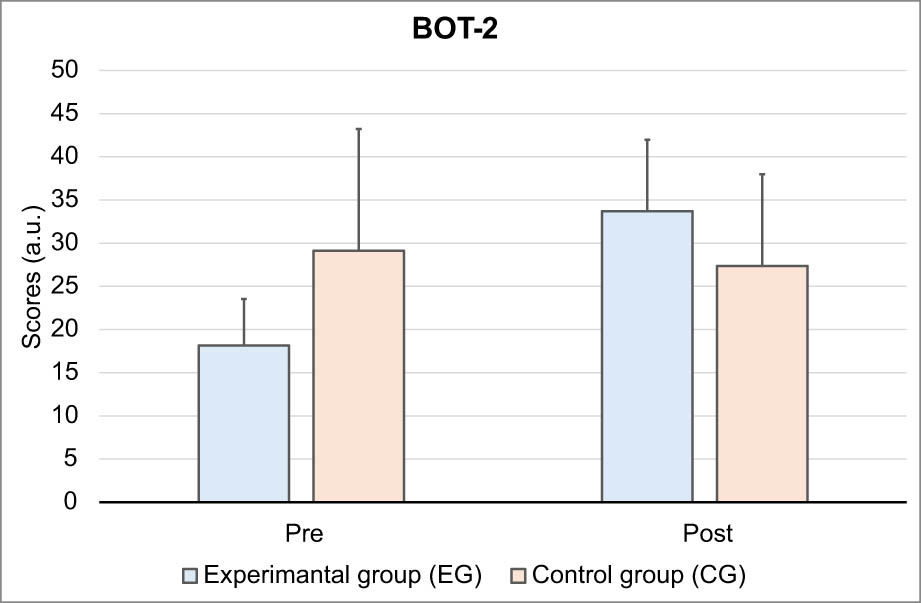
Figure 1
Impact of the SDM on BOT-2 of individuals with ASD
Source: Author’s contribution
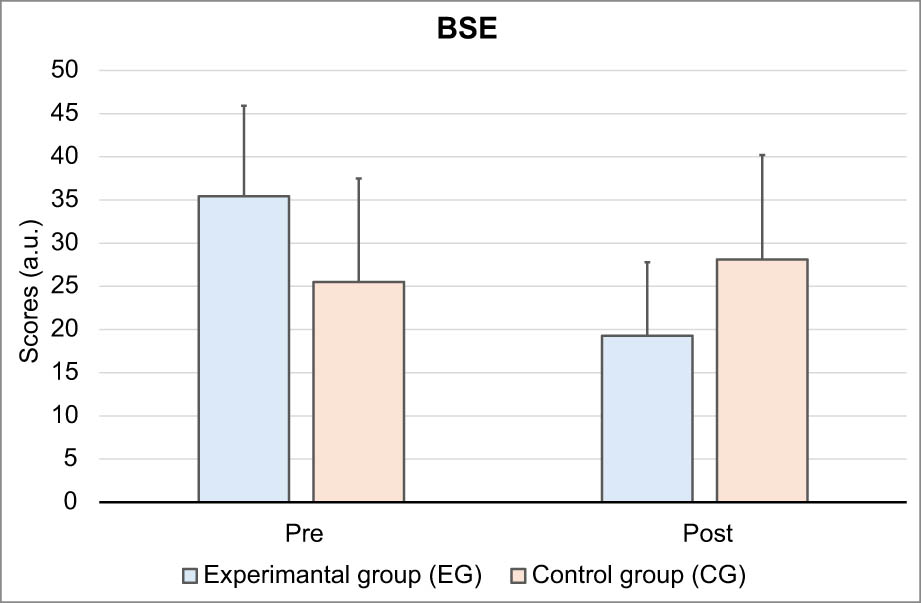
Figure 2
Impact of the SDM on BSE of individuals with ASD
Source: Author’s contribution
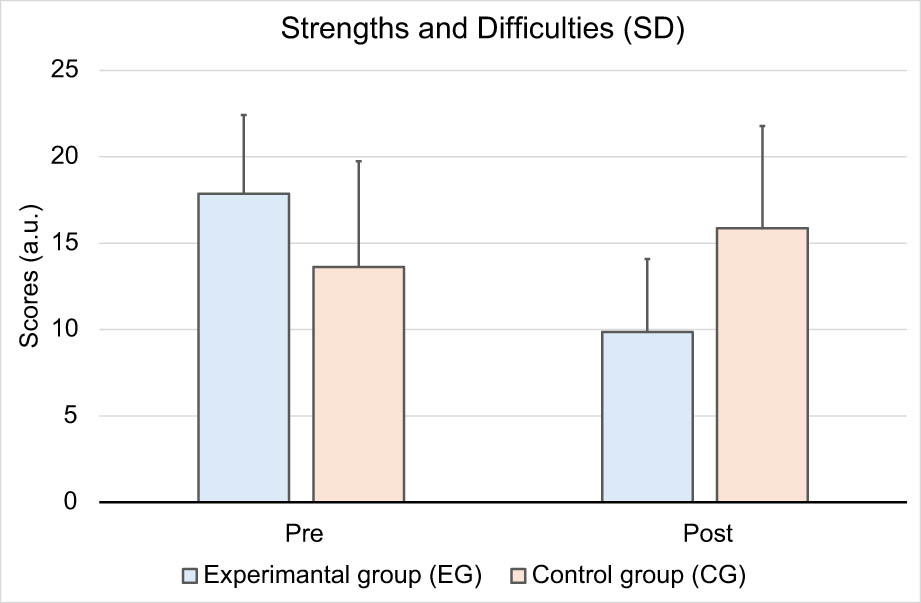
Figure 3
Impact of the SDM on SD of individuals with ASD
Source: Author’s contribution
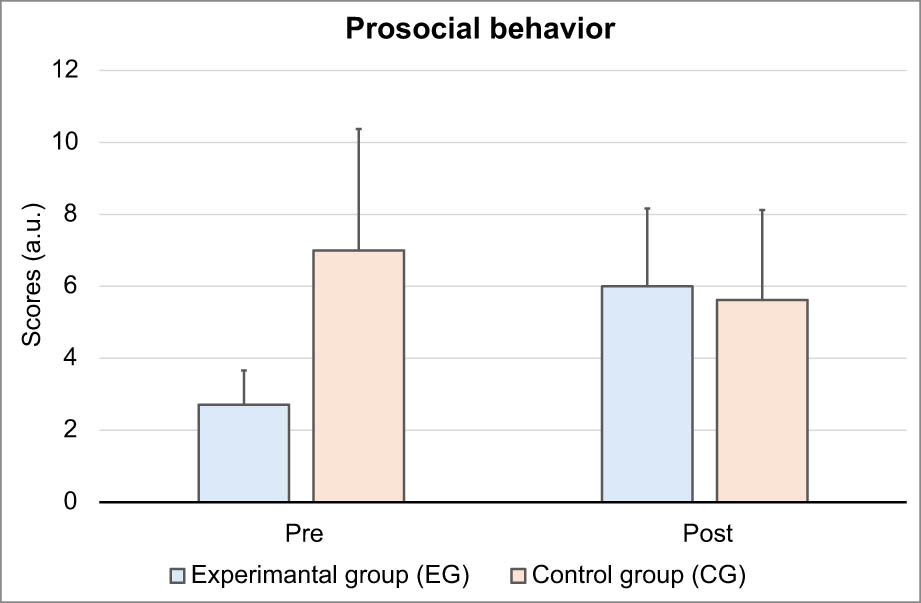
Figure 4
Impact of the SDM on PB of individuals with ASD
Source: Author’s contribution
The prediction of motor development (dependent variable) for the sample of children and adolescents with ASD was conducted separately for the initial and final measurements using behavioral variables (SDQ, PB, and BSE) (independent variables), through multiple regression analysis. The tolerance and VIF diagnostic indices were within acceptable ranges in both analyses, supporting the appropriateness of applying multiple regression separately for the pre- and post-test measurements.
For the initial measurement (pre), the results were statistically significant, with R 2 = 0.525 (F = 14.350, p = 0.002), and one significant predictor variable (PB), with B = 0.724. The corresponding regression equation was: Motor Development (BOT-2) = 10.883 + 2.623 × X 1 (PB). For the final measurement (post), the results were also significant, with R 2 = 0.417 (F = 9.301, p = 0.009), with one significant predictor (PB), with B = 0.646. The regression equation for the post measurement was: Motor Development (BOT-2) = 14.151 + 2.790 × X 1 (PB). Overall, in both pre and post measurements, PB was positively associated with motor development.
4. Discussion
The aim of the present study was to examine the effects of the SDM intervention program on behavior, motor and psychosocial development, and the SD of children and adolescents with ASD. Additionally, the reliability of the measurements was assessed. The findings indicated that participation in the SDM program resulted in improvements in motor skills as well as behavioral indicators, including scores on the BSE, SDQ, and PB measures. These outcomes suggest that the SDM intervention may serve as an effective complementary approach for enhancing core developmental domains in individuals with ASD. Furthermore, the association between behavioral and motor variables remained stable throughout the duration of the intervention, indicating a consistent interaction between these domains.
Although the present findings primarily demonstrate improvements in motor performance and overall behavioral functioning, they also indicate positive psychosocial changes. Improvements in emotional regulation were reflected in reductions in the SDQ total difficulties score, encompassing emotional symptoms and attentional control. Enhanced peer interaction was evidenced by decreased peer-related difficulties and increased PB, suggesting greater social engagement and responsiveness. Furthermore, the improvements in the global BSE score point to a broader behavioral organization and adaptive functioning, which may indirectly reflect gains in self-awareness, as children demonstrated more purposeful engagement and regulated responses during activities. However, as self-awareness was not directly measured, these findings should be interpreted as indicative rather than domain specific.
The present findings are consistent with previous literature highlighting the role of motor and behavioral interventions in children and adolescents with ASD. Improvements observed in motor coordination and gross motor skills following the SDM intervention are aligned with earlier research utilizing the BOT-2, which has been widely applied in ASD populations to evaluate motor performance (Kashi et al., 2021; Srinivasan et al., 2015). Similarly, behavioral outcomes assessed through the BSE and SDQ-Hel support the potential of structured movement programs to promote emotional regulation and PBs. The BSE, in particular, has been shown to provide a reliable framework for monitoring behavioral changes in children with ASD (Reeb et al., 2009), while MacDonald et al. (2014) demonstrated that deficits in motor functioning are closely linked to impairments in socialization and communication. Additional evidence from sensory-integration and rhythm-based movement interventions further support the above relationship, demonstrating meaningful improvements in sensory processing, motor coordination, and social responsiveness in children with ASD (Lyu et al., 2025; Wen & Wu, 2025). These converging findings emphasize the relevance of body-based interventions, such as the SDM, in addressing both motor and psychosocial domains of development for individuals with ASD.
Several studies have examined the effectiveness of the SDM approach across different populations, such as individuals with ASD, Down syndrome, adult learners, intellectual disabilities, etc. Zawadzka et al. (2014) reported that SI and SDM positively influence children with ASD across multiple developmental domains. Similarly, Konieczna et al. (2010) noted that the SDM is increasingly utilized in interventions for individuals with ASD, emphasizing movement, emotional engagement, spatial awareness and interpersonal connection. Their findings suggested that SDM has a particularly strong impact on social development, with additional positive effects on motor abilities (Konieczna et al., 2010). Mousouraki et al. (2018) found that SDM contributed to emotional regulation and self-control in preadolescent girls. Zwolińska et al. (2014) described the SDM role in enhancing cognitive, emotional, and social functioning in children with moderate intellectual disabilities, while Wieczorek (2009) observed gains in physical, emotional, and social development among children with Down Syndrome. Weston (2012) further highlighted the potential of SDM-based movement and play interventions to strengthen parent-child relationships in families facing emotional and behavioral challenges. Hen and Walter (2012) extended these findings to higher education, showing that SDM can foster emotional awareness and interpersonal understanding in adult learners.
The present findings contribute to the above growing body of evidence, confirming the interdependence of motor development and behavior in children and adolescents with ASD. Although various intervention programs have been studied in the context of autism so far, few have specifically examined the combined impact of SDM and its association with motor, behavioral, and psychosocial variables combined. The above argument aligns with research showing that motor impairments are associated with social functioning difficulties in ASD (Hilton et al. 2012; MacDonald et al., 2014; Chen et al., 2022). Improved motor abilities may facilitate greater social participation, emotional regulation, and peer interactions – areas directly targeted by the SDM program (Morgulec-Adamowicz, 2020).
The observed association between motor skills and PB may be examined through established neuropsychological mechanisms (e.g., mirror neuron and motor empathy). Mirror neuron theory suggests that motor execution and action observation share common neural substrates, facilitating imitation, action understanding, and social engagement (Rizzolatti & Craighero, 2004). Motor empathy in turn suggests that motor experiences may enhance children’s capacity to interpret and respond to others’ actions and highlights the role of bodily action in emotional regulation and interpersonal responsiveness (Gallese, 2007). Previous evidence supporting the above speculations have been conducted by Wen and Wu (2025) who implemented a 12-week SI-based sports training program and observed large effect sizes in motor coordination and social responsiveness among children with ASD. Similarly, Ding et al. (2024) demonstrated that rhythm-based movement interventions yielded promising improvements in both social interaction and motor coordination. Collectively, these findings provide a plausible neuropsychological explanation for the observed association between enhanced motor functioning and increased PB. The above theories may therefore, explain how the motor deficits experienced from ASD children are consistently linked to their broader social and communicative challenges (Fournier et al., 2010), while specialized motor interventions may support their adaptive social engagement (Whyatt & Craig, 2013).
Throughout the present intervention period, the primary researcher maintained a reflective log to document observations related to student participation and informal feedback from parents. Notably, participant attendance was consistently high, with only one student rescheduling a session due to illness. Preliminary meetings were conducted approximately 2 weeks prior to the start of the program and included introductory interactions with students and parents, as well as baseline assessments. Although parents did not attend the sessions, participants displayed calm and cooperative behavior with no incidents of dysregulation on non-functional stereotypes. The sessions were co-facilitated by the primary researcher and an experienced colleague, within a supportive and adaptive environment. In line with Sherborne’s principles of flexibility, students were allowed to pause participation and return to the session at their own pace. Verbal encouragement and positive reinforcement strategies were employed to promote sustained engagement. Informal feedback from parents was positive, including reports of increased emotional regulation, repetition of movement patterns at home, and anticipation for future sessions. While these observations were not systematically measured, they may reflect meaningful changes in participants’ daily functioning and emotional well-being.
4.1. Limitations
Certain limitations do not allow generalization of the present findings without caution. The absence of assessor’s blinding during data collection is the first limitation to report. The research team attempted to overcome the above limitation during the motor assessment through the engagement of two specialized professionals. The specialized teachers and parents, however, who completed the SDQ-Hel and BSE, respectively, may have been aware of the children’s group allocation (intervention vs control), potentially introducing expectancy or observer bias into the assessments. Second, the study’s relatively small sample size, drawn from two specialized centers in the Attica region, limits the representativeness to the respective ASD population. Moreover, the study neither included a longitudinal component to track developmental changes over time, nor the examination of children and adolescents with co-occurring disabilities. Third, the participants were limited to diagnostic status (children and adolescents with a formal diagnosis of ASD), while potentially influential variables such as medication use, communication mode (verbal vs non-verbal), parental socioeconomic and marital status, and prior participation in physical activities were not systematically recorded. Fourth, although families were asked to minimize concurrent afternoon therapeutic activities, adherence to this request could not be verified. While parental interviews and family histories provided contextual information, these data were not statistically analyzed as covariates.
4.2. Recommendations for future studies
Building upon the current findings and recognizing the study’s limitations, future research should aim to include larger, more diverse samples drawn from multiple educational and therapeutic settings across Greece. Longitudinal designs would allow for the tracking of developmental trajectories over time, while the integration of qualitative methodologies – such as structured interviews and direct observations – could provide a richer understanding of individual differences among children and adolescents with ASD. Such approaches may help elucidate the complex interplay between motor, emotional, and social development, offering further clarification on how these domains evolve across age and diagnostic status for individuals with ASD. Additionally, follow-up assessments conducted at defined intervals would be valuable in evaluating the sustainability of observed outcomes.
5. Conclusion
The findings of the present study indicate that the SDM is a promising movement-based intervention for supporting motor and psychosocial development in children and adolescents with ASD. All research hypotheses were supported, and the findings offer meaningful insights that contribute to the existing body of literature. The SDM was associated with improvements in motor and psychosocial development, reductions in behavior difficulties, and enhanced parent–child relationships as reported by parents. Although the evidence base remains limited by small sample size, the present findings consistently suggest that the SDM may serve as a valuable developmental and therapeutic intervention. From a practical standpoint, the SDM may be implemented in educational and therapeutic settings as a structured, group-based movement program, either embedded within school routines or delivered in therapy centers, offering an adaptive framework to support holistic development. Overall, the SDM offered a meaningful framework for promoting holistic development and may serve in the future as a useful mean for practitioners working with children and adolescents with ASD.
Acknowledgments
The authors are grateful to the participating children and adolescents with autism spectrum disorder, their families, and the staff of the special therapy centers and creative activity centers for their valuable contribution to this study.
Funding information
No funding was received for this research.
Author contributions
All authors contributed to the manuscript and approved the final version.
Conflict of interest statement
The authors declare no conflicts of interest. This research received no specific grant from any funding agency in the public, commercial, or not-for-profit sectors. All authors contributed to the conceptualization, methodology, analysis, and writing of the manuscript.
Ethics statement
This study was approved by the University’s Internal Ethics and Bioethics Committee (Approval No. 1602/16-01-2024). Participation was voluntary, and written informed consent was obtained from the parents or legal guardians of all participants. All assessments and questionnaires were anonymized and coded to ensure confidentiality. The study was conducted in accordance with the principles of the Declaration of Helsinki.
Data availability statement
The data that support the findings of this study are not publicly available due to privacy and ethical restrictions involving children and adolescents with autism spectrum disorder. Data are available from the corresponding author upon reasonable request.