
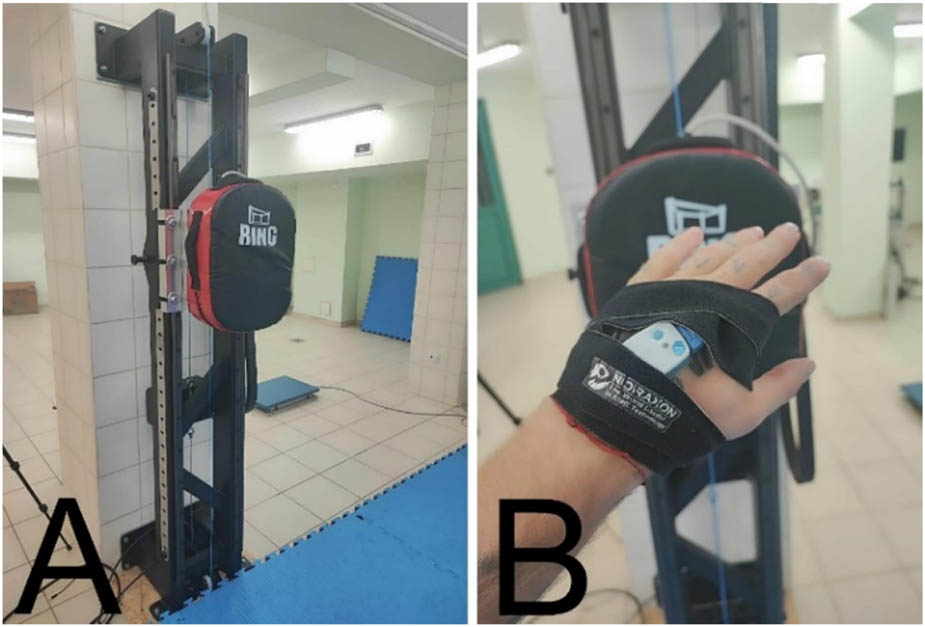
Figure 1
Research equipment: (A) force plate AMTI MC12-2K with a strike pad; (B) EMU sensor on upper limb
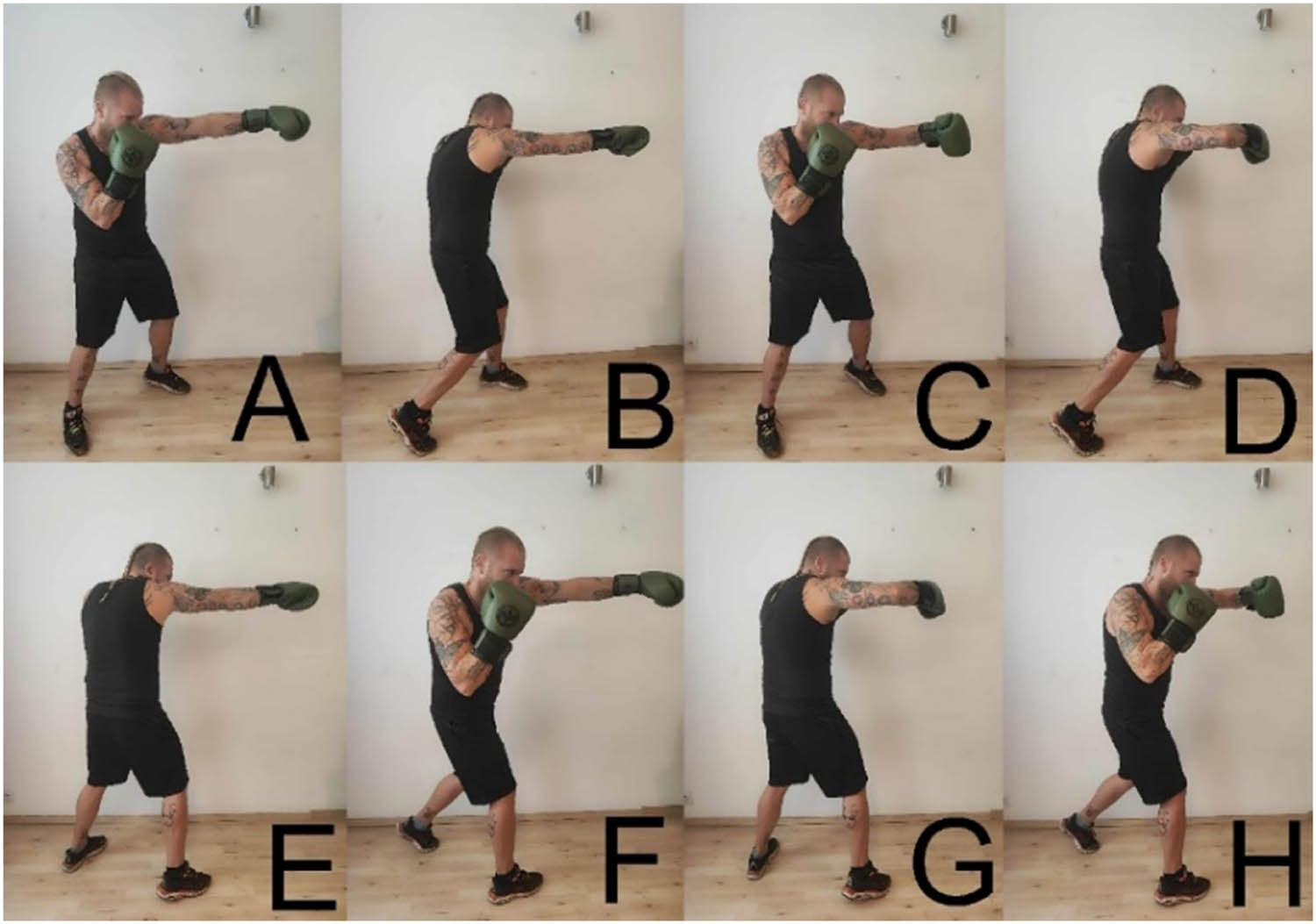
Figure 2
Illustration of recorded boxing techniques in orthodox stance: (A) jab, (B) cross, (C) lead hook, (D) rear hook and southpaw stance: (E) jab, (F) cross, (G) lead hook, and (H) rear hook
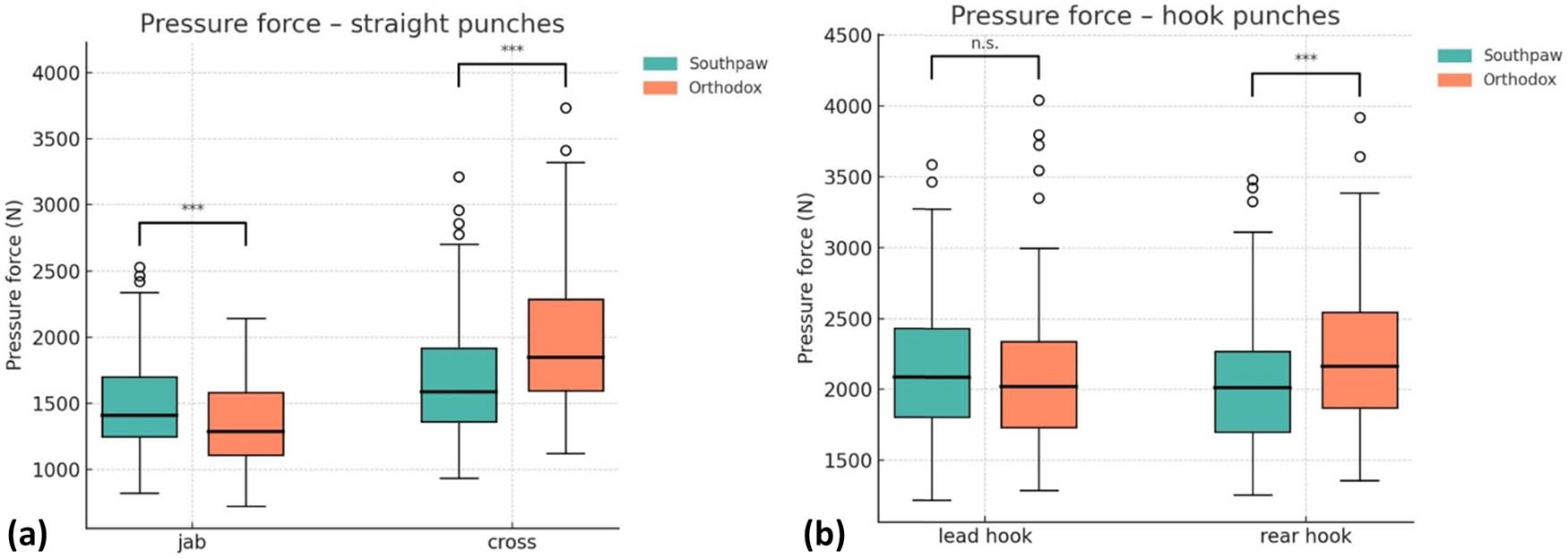
Figure 3
Pressure force across straight punches (Panel a: jab, cross) and hook punches (Panel b: lead hook, rear hook) performed in orthodox and southpaw stances. Boxplots display medians and interquartile ranges (IQR). Horizontal brackets and asterisks denote significant stance differences after Benjamini–Hochberg correction (*p < 0.05, **p < 0.01, ***p < 0.001; n.s. = non-significant)
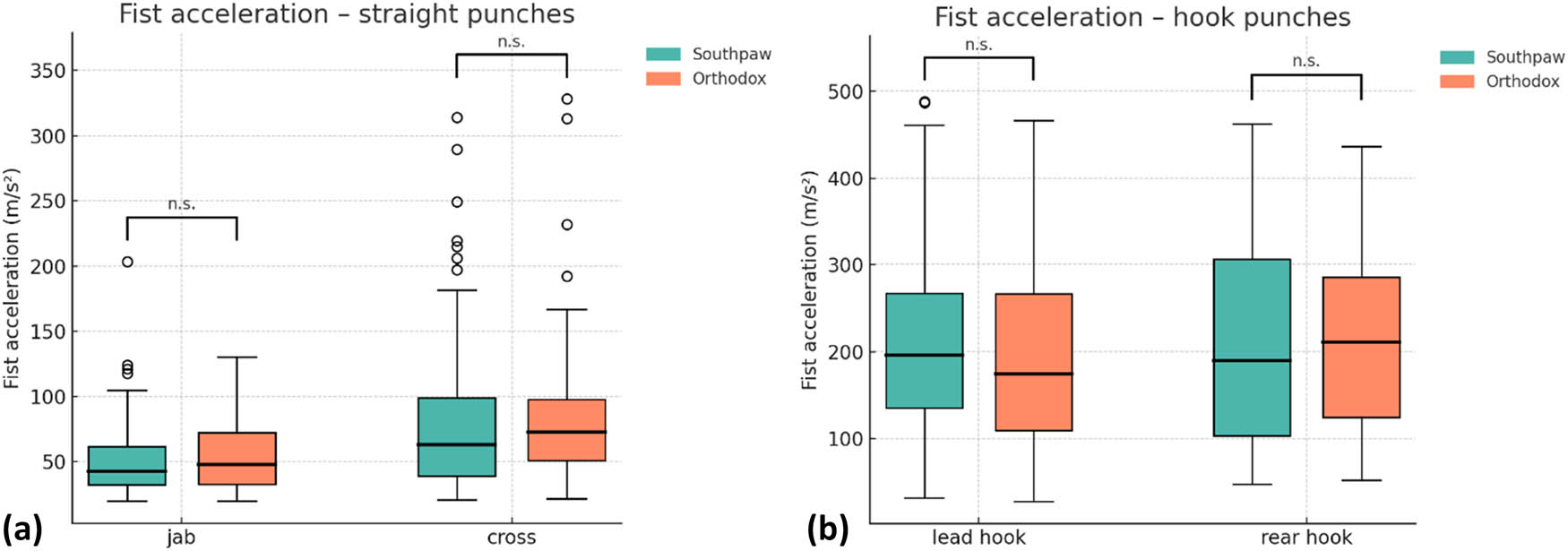
Figure 4
Fist acceleration across four boxing punches (jab, cross, lead hook, and rear hook) performed in orthodox and southpaw stances. Panel a shows straight punches (jab and cross), and Panel b shows hook punches (lead and rear). Boxplots present median and interquartile ranges, with whiskers representing 1.5 × IQR and points indicating outliers. Asterisks denote significant stance differences based on Benjamini–Hochberg-corrected Wilcoxon tests (*p < 0.05; **p < 0.01; ***p < 0.001; n.s. = non-significant)
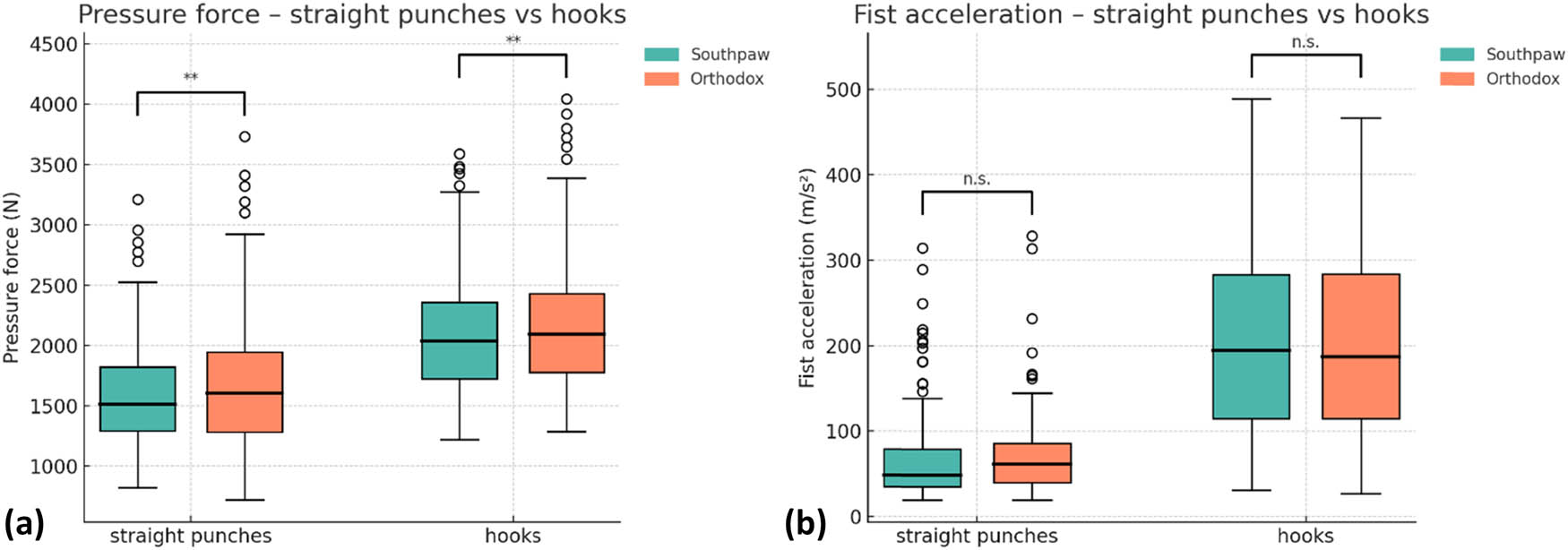
Figure 5
Combined boxplots illustrating aggregated comparisons of straight punches (jab + cross) and hook punches (lead + rear) across orthodox and southpaw stances. Panel a presents the pressure force, and Panel b shows fist acceleration. Boxplots display medians and interquartile ranges (IQR), with whiskers representing 1.5 × IQR and outliers shown as individual points. Horizontal brackets denote stance comparisons within each punch category, with significance levels based on Benjamini–Hochberg–corrected Wilcoxon tests (*p < 0.05; **p < 0.01; ***p < 0.001; n.s. = non-significant)