
Introduction
The gut microbiota is defined as a complex ecosystem of microorganisms inhabiting the human gastrointestinal tract. It plays a pivotal role in maintaining host homeostasis. Recent years have seen an accumulation of evidence indicating the involvement of the gut microbiota in a number of functions. These include digestion and nutrient metabolism, as well as the regulation of immune function, inflammatory processes, and bidirectional communication between the gastrointestinal tract and the central nervous system (CNS) [1,2,3]. Alterations in the composition and activity of the gut microbiota, commonly referred to as dysbiosis, have been associated with the development of numerous chronic diseases, including obesity, type 2 diabetes mellitus, inflammatory bowel diseases, neurodegenerative disorders, and psychiatric conditions [1,4–5] (Fig. 1).
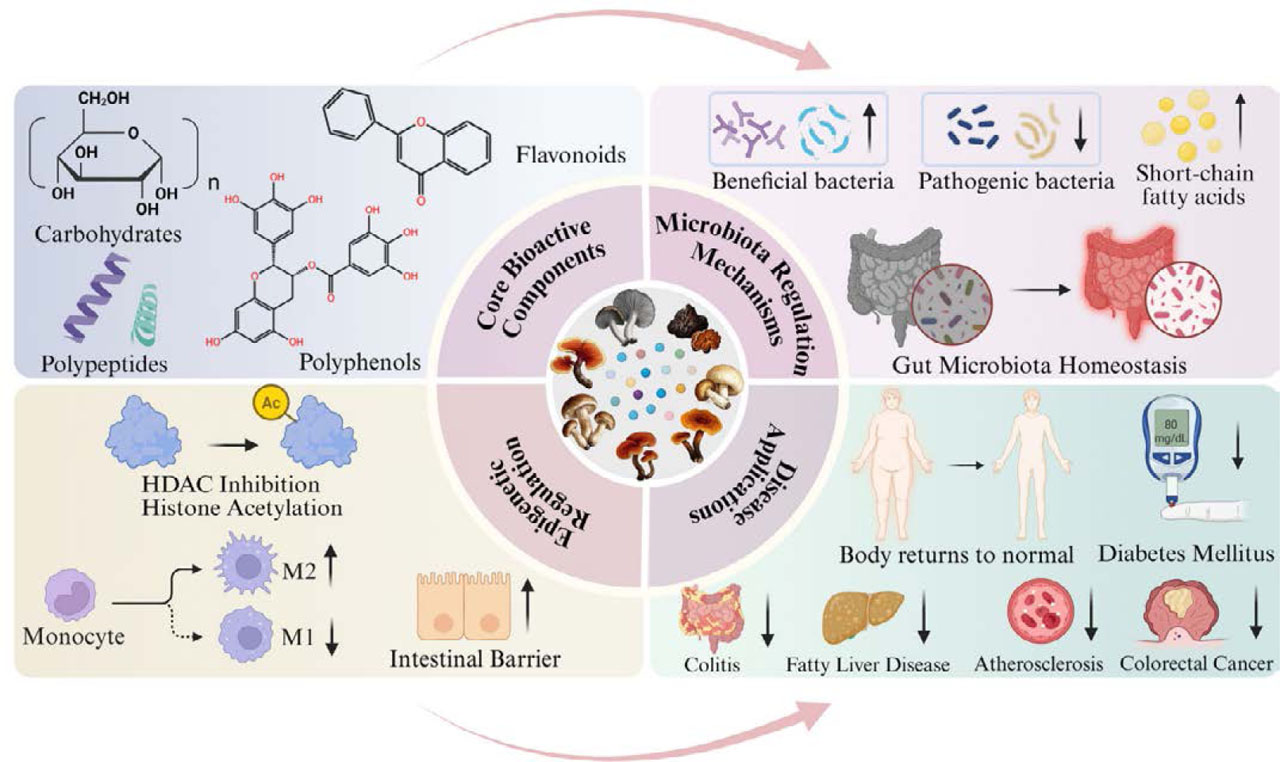
Figure 1.
The proposed effects of the bioactive compounds found in medicinal mushrooms on the composition of the gut microbiota, the production of microbial metabolites, the integrity of the intestinal barrier, immune regulation, and gut-brain axis signalling. [1]
Current research indicates that one of the principal mechanisms underlying communication between the gastrointestinal tract and the brain is the gut–brain axis, which encompasses complex neuronal, hormonal, immunological, and metabolic interactions. A significant role in this process is played by microbial metabolites, SCFAs, which influence intestinal barrier integrity, immune cell activity, and central nervous system function [1,2]. A growing body of evidence indicates that modulation of the gut microbiota may constitute a promising strategy for the prevention and treatment of disorders associated with gut–brain axis dysfunction [1,3].
Among the natural compounds capable of modulating the composition and activity of the gut microbiota, medicinal mushrooms have attracted considerable scientific interest. These organisms are a rich source of polysaccharides, β-glucans, dietary fibre, immunomodulatory proteins, and other biologically active compounds exhibiting anti-inflammatory, antioxidant, and immunoregulatory properties [1,2,3,6]. In contrast to conventional probiotics, medicinal mushrooms do not provide live microorganisms; rather, they exert their effects primarily by supplying substrates that promote the growth of beneficial gut bacteria and by modulating host immune responses [2–3].
The most extensively studied medicinal mushrooms are Hericium erinaceus (lion’s mane mushroom), Ganoderma lucidum (reishi), Cordyceps militaris, and Phellinus linteus. Despite the presence of distinct bioactive compounds in each species, a common characteristic is their ability to influence the gut microbiota and the biological processes involved in maintaining host homeostasis [1,3]. Particular attention has been directed towards their potential application as natural modulators of the gut–brain axis, especially in the context of neurodegenerative diseases and chronic inflammatory conditions [7–8].
The available evidence suggests that mushroom-derived polysaccharides have the capacity to increase the abundance of bacterial genera considered beneficial to human health, including Bifidobacterium, Lactobacillus, and Akkermansia, while simultaneously suppressing the growth of potentially pathogenic microorganisms [1,4–5,9,10,11,12,13,14,15,16]. These microbiota-associated changes have been demonstrated to contribute to enhanced intestinal barrier function, increased SCFA production, and attenuation of chronic low-grade inflammation, which is widely recognised as a key factor linking gut dysbiosis to the pathogenesis of chronic diseases [2,3,4,5].
The objective of the present review is to provide a comprehensive summary of the current state of knowledge regarding the effects of selected medicinal mushrooms—Hericium erinaceus, Ganoderma lucidum, Cordyceps militaris, and Phellinus linteus—on the gut microbiota and the gut–brain axis, with particular emphasis on the biological mechanisms underlying their observed health-promoting effects.
Materials and Methods
The present study was conducted as a narrative literature review, focusing on the effects of selected medicinal mushrooms on the gut microbiota and the gut–brain axis. The analysis was grounded in scientific publications retrieved from the PubMed, Scopus, and Web of Science databases.
The literature search was conducted between January and April 2026. The following English-language keywords and their combinations were utilised: Hericium erinaceus, Ganoderma lucidum, Cordyceps militaris, Phellinus linteus, gut microbiota and microbiome, gut–brain axis, microbiota–gut–brain axis, intestinal barrier, SCFA, neuroinflammation, prebiotic effects, intestinal inflammation, and medicinal mushrooms.
Original research articles and review papers published in peer-reviewed scientific journals were considered eligible for inclusion if they addressed the effects of the selected mushroom species or their bioactive compounds on gut microbiota composition, microbial metabolic activity, intestinal barrier integrity, immune responses, or gut–brain axis function. The analysis encompassed clinical studies involving human participants, preclinical studies conducted in animal models, and in vitro studies investigating the fermentation of mushroom-derived polysaccharides and their interactions with the gut microbiota.
Due to the limited number of clinical studies investigating the effects of medicinal mushrooms on the gut microbiota and the gut–brain axis, preclinical studies conducted in mammalian models were also included. This methodological approach facilitated the evaluation of biological mechanisms under conditions that more closely resemble human physiology. In order to reduce experimental heterogeneity and enhance the comparability of findings, studies performed on invertebrates, fish, amphibians, and birds were excluded.
In the context of preclinical studies, a preference was given to investigations employing gut microbiota profiling based on 16S rRNA gene sequencing and analyses of microbial metabolites, with a particular emphasis on SCFAs. These are recognised as key mediators of communication between the gut microbiota and the host organism.
Publications unrelated to the analysed species of mushrooms, studies that lacked data on the gut microbiota or the gut-brain axis, conference abstracts, letters to the editor, and articles without accessible full texts were excluded from the analysis. In instances where multiple publications reported results from the same experiment, the most comprehensive version of the study was incorporated.
In total, 13 original studies met the inclusion criteria and formed the basis for this analysis of Hericium erinaceus, Ganoderma lucidum, Cordyceps militaris, and Phellinus linteus. Additionally, 6 articles were included to provide background information on the gut microbiota, the gut–brain axis, and the biological properties of medicinal mushrooms.
Hericium erinaceus: Analysis of Available Evidence
One of the few human studies evaluating the effects of Hericium erinaceus on the gut microbiota was conducted by Xie et al. (2021). Healthy volunteers received H. erinaceus powder for seven days, and changes in gut microbiota composition were assessed using 16S rRNA sequencing. Supplementation increased microbial diversity and promoted the growth of several SCFA-producing bacteria while reducing the abundance of taxa associated with dysbiosis. No clinically relevant adverse effects were observed. These findings suggest that H. erinaceus may beneficially influence gut microbial composition while demonstrating good short-term tolerability [15]. Yang et al. (2021) investigated the effects of H. erinaceus polysaccharides in young and middle-aged mice. Animals received polysaccharide supplementation for four weeks, after which gut microbiota composition and immune-related parameters were evaluated. Treatment increased the abundance of beneficial bacterial groups, including members of the Lachnospiraceae and Akkermansiaceae families, and was associated with reduced body weight gain. In addition, several signaling pathways involved in immune regulation were activated. The authors concluded that H. erinaceus polysaccharides may exert both prebiotic and immunomodulatory effects. It is important to note that the transient increase in the cytokines IL-6, TNF-α, IFN-γ, and NO reported by Yang et al. occurred in healthy animals and reflected physiological immune activation rather than pathological inflammation. Therefore, these findings should not be interpreted as evidence of a pro-inflammatory effect [16]. Ren et al. (2023) evaluated a mycelium-derived H. erinaceus polysaccharide in cynomolgus macaques with spontaneous ulcerative colitis. Following four weeks of supplementation, improvements in clinical and histopathological markers of colitis were observed together with significant alterations in gut microbiota composition. Beneficial microbial taxa increased, whereas microorganisms associated with intestinal inflammation decreased. These findings suggest that H. erinaceus may alleviate intestinal inflammation through the modulation of the gut microbiota and host immune responses [12]. Bei et al. (2026) examined the effects of H. erinaceus extracts in a rat model of ethanol-induced gastric mucosal injury. Animals received either aqueous or ethanolic extracts, and microbiota composition, metabolite production, and gastric tissue integrity were subsequently evaluated. Both preparations reduced gastric damage and promoted the growth of SCFA-producing bacteria, accompanied by increased propionate production and a reduction in pro-inflammatory metabolites. The results indicate that microbiota-mediated metabolic changes may contribute to the gastroprotective properties of H. erinaceus [9]. Priori et al. (2024) evaluated the effects of H. erinaceus supplementation in aged mice, focusing on the relationship between the gut microbiota, neuroinflammation, and cognitive function. Supplementation was associated with beneficial microbial changes, reduced neuroinflammatory activity, and improved cognitive performance. These observations support the potential role of H. erinaceus in preserving cognitive function during aging through mechanisms involving the gut–brain axis [8].
Summary
Among the medicinal mushrooms analysed in this review, Hericium erinaceus is supported by the most extensive body of evidence. Available studies consistently demonstrate its ability to modulate gut microbiota composition, particularly by promoting bacterial taxa associated with SCFA production and intestinal health. These microbial changes are accompanied by improvements in intestinal barrier function and reductions in inflammatory activity, while some studies also indicate potential beneficial effects on cognitive function. Collectively, the available data suggest that H. erinaceus represents a promising natural modulator of both the gut microbiota and the gut–brain axis. However, most evidence currently originates from preclinical studies, highlighting the need for larger and well-designed clinical trials.
Ganoderma lucidum: Analysis of Available Evidence
The most comprehensive evidence regarding the effects of Ganoderma lucidum (Reishi) on the gut microbiota, obesity, and metabolic endotoxemia was provided by Chang et al. (2015). In a mouse model of diet-induced obesity, animals received a water extract of G. lucidum mycelium following prolonged exposure to a high-fat diet. Supplementation reduced body weight gain, adipose tissue accumulation, and hepatic lipid deposition, while reducing the expression of pro-inflammatory cytokines and increasing anti-inflammatory mediators. The same study also demonstrated significant alterations in gut microbiota composition, where supplementation partially reversed high-fat diet-induced dysbiosis, reducing the abundance of bacteria associated with metabolic dysfunction while restoring several beneficial microbial taxa. Importantly, fecal microbiota transplantation (FMT) from G. lucidum-treated donors reproduced many of the metabolic benefits observed in treated animals, including reduced adiposity, lower inflammatory activity, and improved intestinal barrier integrity. These findings demonstrate that the metabolic effects of G. lucidum are mediated, at least in part, through the modulation of the gut microbiota [4]. Guo et al. (2021) investigated the effects of G. lucidum polysaccharides in a murine model of inflammation-associated colorectal cancer. Animals received polysaccharide supplementation during the development of chronic intestinal inflammation and tumour formation. Treatment reduced disease severity, improved histological markers of intestinal injury, and significantly decreased tumour burden. In addition, supplementation increased microbial diversity and enhanced the production of SCFAs, particularly propionate and butyrate. The authors also demonstrated improvements in intestinal barrier integrity and reductions in circulating LPS levels. These changes were accompanied by inhibition of the TLR4/MyD88/NF-κB signaling pathway and reduced expression of pro-inflammatory mediators. Furthermore, in vitro experiments confirmed anti-inflammatory effects in both immune and intestinal epithelial cells, indicating that the beneficial effects of G. lucidum involve both microbiota-dependent mechanisms and direct regulation of inflammatory pathways [5]. Following this line of research, Li et al. (2022) evaluated the effects of ethanolic G. lucidum extracts in a mouse model of dextran sodium sulfate (DSS)-induced colitis. Following treatment, animals exhibited improved recovery, reduced disease activity, and preservation of colon morphology. Supplementation also decreased the expression of key inflammatory mediators while increasing anti-inflammatory factors associated with mucosal healing. The extract additionally influenced gut microbiota composition, partially restoring DSS-induced microbial alterations; beneficial bacterial taxa increased, whereas microorganisms associated with dysbiosis decreased. Concurrently, marked improvements in intestinal barrier-related proteins were observed. The authors concluded that the therapeutic effects of G. lucidum involve simultaneous modulation of the gut microbiota, intestinal barrier function, and inflammatory signaling pathways [17].
Summary
Current evidence indicates that Ganoderma lucidum exerts its biological effects primarily through the modulation of the gut microbiota, improvement of intestinal barrier integrity, and attenuation of chronic inflammation [4–5, 17]. Across obesity, colorectal cancer, and colitis models, supplementation was consistently associated with favourable changes in microbial composition, reduced inflammatory activity, lower endotoxin levels, and improved metabolic outcomes [4–5, 17]. Among the available studies, the work of Chang et al. (2015) provides the strongest mechanistic evidence due to the inclusion of fecal microbiota transplantation experiments, which demonstrated a causal role of the gut microbiota in mediating the observed metabolic benefits [4]. Nevertheless, the current evidence is derived almost exclusively from animal and in vitro studies [4–5, 17]. Therefore, well-designed clinical trials are needed to determine whether these findings can be successfully translated into human health benefits.
Cordyceps militaris: Analysis of Available Evidence
Lee et al. (2021) investigated the effects of different Cordyceps militaris preparations, including the fruiting body, polysaccharide fraction, and cordycepin-rich fraction, in a mouse model of high-fat/high-sucrose diet-induced metabolic disturbances. Supplementation improved glucose metabolism, reduced triglyceride concentrations, and favourably influenced gut microbiota composition. The most pronounced effects were observed for the whole fruiting body and polysaccharide fraction, which also promoted the growth of beneficial bacterial taxa, particularly Akkermansia. The authors concluded that C. militaris may improve metabolic homeostasis through simultaneous modulation of the gut microbiota and intestinal barrier function [10]. Wu et al. (2023) evaluated the effects of preventive C. militaris supplementation in a DSS-induced colitis model. Treatment reduced disease severity, attenuated intestinal inflammation, and improved histological markers of colonic injury while restoring the expression of key intestinal barrier proteins, including MUC2, ZO-1, claudin-1, and occludin, which indicates improved mucosal integrity. In parallel, favourable alterations in microbial composition were observed, including an increased abundance of beneficial bacterial taxa, such as Lactobacillus. Metabolomic analyses further suggested interactions between microbial changes and metabolic pathways involved in inflammation [14]. The same study additionally included in vitro fermentation experiments using fecal samples from patients with active ulcerative colitis. Supplementation with C. militaris-derived peptides and polysaccharides altered microbial composition and promoted the growth of beneficial bacteria, particularly Lactobacillus. Although the number of donors was limited, these findings suggest that C. militaris components may directly influence the human gut microbiota [14]. Jing et al. (2023) investigated cordycepin, one of the major bioactive compounds of C. militaris, in a mouse model of chronic stress. Supplementation improved anxiety- and depression-like behaviours, reduced stress-associated hormonal and inflammatory responses, and altered gut microbiota composition. The observed effects were accompanied by changes in metabolites associated with the microbiota–gut–brain axis, suggesting a potential role of cordycepin in mediating communication between the gut, brain, and metabolic tissues. These findings provide preliminary evidence that selected compounds derived from C. militaris may influence neurobehavioral outcomes through microbiota-related mechanisms [6].
Summary
Current evidence suggests that Cordyceps militaris primarily influences four interconnected domains: metabolic regulation, intestinal barrier integrity, gut microbiota composition, and the microbiota–gut–brain axis. Across experimental models, supplementation was associated with improved glucose and lipid metabolism, reduced inflammatory activity, enhanced intestinal barrier function, and favourable shifts in microbial composition. In addition, cordycepin demonstrated potential effects on the microbiota–gut–brain axis, including modulation of stress-related behaviors and inflammatory pathways. Despite these promising findings, the available evidence remains limited almost exclusively to animal and in vitro studies. Furthermore, most studies involved relatively small sample sizes, and clinical data in humans are currently lacking. Therefore, well-designed clinical trials are required to confirm the therapeutic potential of C. militaris in human health.
Phellinus linteus: Analysis of Available Evidence
Liu et al. (2020) investigated the effects of a Phellinus linteus polysaccharide extract (PLPE) in a rat model of type 2 diabetes mellitus. Supplementation improved glycemic control and insulin sensitivity while reducing circulating markers of inflammation and endotoxemia. These effects were accompanied by increased production of SCFAs, particularly propionate and butyrate, improved expression of intestinal barrier proteins, and favourable alterations in gut microbiota composition. Notably, PLPE promoted the growth of several SCFA-producing bacterial taxa while reducing microorganisms associated with inflammation and metabolic dysfunction. The authors concluded that the beneficial metabolic effects of P. linteus are mediated through interactions between the gut microbiota, intestinal barrier integrity, and host inflammatory pathways [18]. In a subsequent study, Liu et al. (2023) evaluated the prebiotic properties of a P. linteus polysaccharide (PLP) using an in vitro fermentation model. The polysaccharide underwent gradual microbial fermentation and significantly altered gut microbiota composition, increasing bacterial richness and promoting the growth of beneficial genera, including Bacteroides, Parabacteroides, Prevotella, and Butyricimonas. These microbial changes were accompanied by enhanced production of short-chain fatty acids, particularly butyrate, and the modulation of metabolic pathways related to bile acids, amino acids, and purine metabolism. The findings indicate that P. linteus polysaccharides possess substantial prebiotic potential and may influence host metabolism through microbiota-dependent mechanisms [11].
Summary
Current evidence suggests that Phellinus linteus exerts its biological effects primarily through modulation of gut microbiota composition, stimulation of SCFA production, improvement of intestinal barrier integrity, and attenuation of inflammation [11, 18]. In both in vivo and in vitro models, polysaccharide preparations consistently promoted the growth of beneficial microbial taxa and enhanced the production of metabolites associated with metabolic health, particularly propionate and butyrate [11, 18]. However, the available evidence remains limited to a small number of preclinical studies conducted by a single research group. Moreover, no clinical studies have evaluated the effects of P. linteus on gut microbiota composition or gut-related health outcomes in humans. Therefore, further research, particularly well-designed clinical trials, is required to confirm its therapeutic potential.
Table 1.
Summary of studies investigating the effects of medicinal mushrooms on gut microbiota composition, intestinal barrier integrity, inflammation, and gut–brain axis-related outcomes.
| Mushroom / Reference | Study Model | Intervention / Dosage | Key Gut Microbiota Changes | Key Metabolic & Inflammatory Outcomes |
|---|---|---|---|---|
| Hericium erinaceus | ||||
| Xie et al. (2021) [15] | Human pilot study; healthy adults (n=13) | H. erinaceus powder, 3 g/day, 7 days | ↑ alpha diversity; ↑ Faecalibacterium prausnitzii, Eubacterium rectale, Fusicatenibacter saccharivorans, Gemmiger formicilis, Kineothrix alysoides; ↓ Streptococcus thermophilus, Bacteroides caccae, Romboutsia timonensis | No adverse effects; correlations with LDL, uric acid, creatinine, and ALP |
| Yang et al. (2021) [16] | Mice; young and middle-aged Kunming mice (n=42) | Polysaccharides, 500 or 1000 mg/kg, 28 days | ↑ Lachnospiraceae, Akkermansiaceae; ↓ Rikenellaceae, Bacteroidaceae | ↓ body weight gain; ↑ NO, IL-6, IL-10, TNF-α, IFN-γ; activation of NF-κB, MAPK, and PI3K/Akt pathways |
| Ren et al. (2023) [12] | Cynomolgus macaques with ulcerative colitis (n=15) | Mycelial polysaccharide, ∼500 mg/kg/day, 4 weeks | ↑ richness and diversity; ↑ Methanobrevibacter smithii, Lactobacillus reuteri; ↓ Streptococcus lutetiensis | ↓ diarrhea; improved histopathology and nutritional status |
| Bei et al. (2026) [9] | Rats; ethanol-induced gastric injury (n=42) | Aqueous or ethanolic extract, 150–250 mg/kg | ↑ SCFA-producing bacteria (Blautia, Fusicatenibacter, Acetitomaculum) | ↑ propionate; ↓ 12(S)-HETE; protection against gastric mucosal injury |
| Priori et al. (2024) [8] | Aged mice | Extract 1 mg/mouse/day, 2 months | Beneficial microbiota modulation | ↓ neuroinflammation; improved cognitive performance |
| Ganoderma lucidum (Reishi) | ||||
| Chang et al. (2015) [4] | HFD-induced obese mice | Water extract of mycelium (WEGL), 2–8%, 8 weeks | ↓ Firmicutes/Bacteroidetes ratio; ↓ Mucispirillum schaedleri, Escherichia fergusonii, Enterococcus faecalis; ↑ Parabacteroides goldsteinii, Roseburia hominis, Bacteroides spp. | ↓ adiposity, hepatic steatosis, endotoxemia; ↓ TLR4/JNK/NF-κB signaling; FMT reproduced metabolic benefits |
| Guo et al. (2021) [5] | AOM/DSS-induced colorectal cancer in mice | Polysaccharide (GLP), 200–300 mg/kg | ↑ diversity; ↑ SCFA producing taxa | ↓ tumour burden; ↑ propionate and butyrate; ↑ ZO-1, occludin, GPR43; ↓ LPS and TLR4/MyD88/NF-κB signaling |
| Li et al. (2022) [17] | DSS-induced colitis in mice | Ethanolic extract (GLE), 50–100 mg/kg | ↑ Bifidobacterium, Turicibacter; ↓ Staphylococcus, Romboutsia | ↓ TNF-α, IL-1β, IL-6, IL-17, iNOS, COX-2; ↑ IL-10, PPAR-γ; ↑ MUC2, ZO-1, occludin |
| Cordyceps militaris | ||||
| Lee et al. (2021) [10] | HFSD-induced metabolic dysfunction in mice | Fruiting body, polysaccharides, cordycepin-rich fraction, 8 weeks | ↑ Akkermansia; ↓ HFSD-associated dysbiosis | ↓ glucose; ↓ triglycerides; ↑ intestinal mucus production |
| Wu et al. (2023) [14] | DSS-induced colitis in mice (n=32) | Powder, 100 or 300 mg/kg/day, 14 days | ↑ Lactobacillus, Limosilactobacillus, Ligilactobacillus, Odoribacter | ↓ DAI, TNF-α, IL-1β; ↑ MUC2, ZO-1, claudin-1, occludin; improved histology |
| Jing et al. (2023) [6] | Chronic stress model in mice | Cordycepin, 12.5–25 mg/kg, 4 weeks | Reversal of stress-induced dysbiosis; modulation of NK4A214 group, Prevotellaceae_UCG-001, Desulfovibrio | ↓ corticosterone, IFN-γ, IL-1β; improved anxiety and depression-like behaviors |
| Phellinus linteus | ||||
| Liu et al. (2020) [18] | Type 2 diabetic rats | PLPE, 600 mg/kg/day, 8 weeks | ↑ Roseburia, Prevotella_9, Blautia, Oscillibacter; ↓ Escherichia-Shigella, Clostridium sensu stricto 1 | ↓ glucose, HOMA IR, LPS, TNF-α, IL-6, CRP; ↑ propionate, butyrate; ↑ ZO-1, occludin, claudin-1 |
| Liu et al. (2023) [11] | In vitro fecal fermentation model | PLP, 50 mg/mL, 48 h fermentation | ↑ richness; ↑ Bacteroides, Parabacteroides, Prevotella, Butyricimonas; ↓ Escherichia-Shigella, Morganella | ↑ acetate, propionate, butyrate; modulation of bile acid, amino acid, and purine metabolism |
[i] Abbreviations: ↑ increase; ↓ decrease; AOM, azoxymethane; ALP, alkaline phosphatase; CRP, C-reactive protein; DSS, dextran sulfate sodium; FMT, fecal microbiota transplantation; GLE, Ganoderma lucidum ethanolic extract; GLP, Ganoderma lucidum polysaccharide; HFD, high-fat diet; HFSD, high-fat/high-sucrose diet; HOMA-IR, homeostatic model assessment of insulin resistance; IL, interleukin; LDL, low-density lipoprotein; LPS, lipopolysaccharide; PLP, Phellinus linteus polysaccharide; PLPE, Phellinus linteus polysaccharide extract; SCFA, short-chain fatty acid; TNF-α, tumour necrosis factor-α; WEGL, water extract of Ganoderma lucidum mycelium; In Yang et al. (2021), the increase in IL-6, TNF-α, IFN-γ, and NO reflects physiological immunostimulation in healthy animals rather than a pro-inflammatory state.
Discussion
Critical Evaluation of the Available Evidence
Despite the growing body of literature investigating the effects of medicinal mushrooms on the gut microbiota and the gut–brain axis, several methodological limitations must be acknowledged. The most prominent limitation is the overwhelming reliance on preclinical animal models and in vitro fermentation systems, while human clinical evidence remains scarce. This gap is particularly evident for Ganoderma lucidum, Cordyceps militaris, and Phellinus linteus, for which the therapeutic potential is inferred almost exclusively from experimental models. Furthermore, as summarized in Table 1, substantial disparities exist in the depth of evidence among the reviewed species. Whereas Hericium erinaceus is supported by both preclinical and preliminary clinical studies, research on P. linteus remains limited to a small number of investigations conducted by a single research group.
Interpretation and direct comparison of the available findings are further complicated by considerable heterogeneity in mushroom preparations, ranging from whole fruiting bodies and crude extracts to purified polysaccharides and isolated compounds, such as cordycepin. Variability in dosage, intervention duration, and experimental design also limits cross-study comparisons. In addition, many studies employed relatively small sample sizes, while microbiota analyses relied predominantly on 16S rRNA sequencing, which provides only limited insight into microbial functionality and metabolic activity.
Challenges in the Standardization of Medicinal Mushroom Preparations
Another important limitation in the translation of research into practice concerns the lack of standardisation of commercially available mushroom preparations. There is considerable variability in extraction methods, β-glucan and other polysaccharide concentrations, and the proportion of fruiting body versus mycelium used in different products. As biological activity largely depends on the composition of these bioactive compounds, it is difficult to make direct comparisons between studies and clinical extrapolation remains limited. Therefore, future clinical trials should employ chemically standardised preparations with clearly quantified bioactive constituents.
Safety Considerations
Despite a general consensus that medicinal mushrooms are safe, the available data on safety in humans remains limited. A review of clinical trials indicates that supplementation with Hericium erinaceus is generally well tolerated. However, in a recent systematic review conducted by Menon et al. (2025) [7], attention was drawn to several potential adverse effects associated with the use of H. erinaceus, primarily including mild gastrointestinal symptoms (such as abdominal discomfort, nausea, and diarrhoea), headaches, skin rashes, and mild allergic reactions. Furthermore, isolated case reports have linked the use of H. erinaceus to severe hypersensitivity reactions, including acute respiratory distress syndrome (ARDS). Regarding other medicinal mushrooms, Ganoderma lucidum has been reported to exhibit mild antiplatelet activity; therefore, caution should be exercised in patients receiving anticoagulant or antiplatelet therapy [19]. Although the incidence of serious adverse events appears to be low, large-scale, long-term clinical trials are necessary to definitively determine the safety profile and potential drug interactions associated with the use of supplements containing medicinal mushrooms.
Interspecies Differences and Distinct Biomarker Profiles
Although all four medicinal mushrooms demonstrated the ability to modulate the intestinal ecosystem, distinct biological profiles emerged across the reviewed studies.
Hericium erinaceus exhibited the broadest spectrum of activity, encompassing modulation of gut microbiota composition, attenuation of neuroinflammation, and improvements in cognitive performance. Importantly, it remains the only mushroom currently supported by preliminary human evidence, strengthening its translational relevance.
Ganoderma lucidum demonstrated the strongest evidence for metabolic and immunomodulatory effects. Supplementation consistently reduced endotoxemia, inflammatory signaling, and obesity-associated dysbiosis while improving intestinal barrier integrity. Notably, fecal microbiota transplantation experiments provided evidence that these benefits are, at least in part, mediated by microbiota-dependent mechanisms.
Cordyceps militaris was primarily associated with improvements in intestinal barrier integrity and attenuation of colonic inflammation. In addition, cordycepin, one of its major bioactive compounds, showed potential to influence microbiota–gut–brain axis signalling through modulation of stress-related and neurobehavioral responses.
Phellinus linteus, despite being the least extensively studied species, demonstrated substantial prebiotic potential. Its polysaccharides promoted SCFA production and beneficial microbial taxa while improving metabolic parameters associated with insulin resistance and glucose homeostasis.
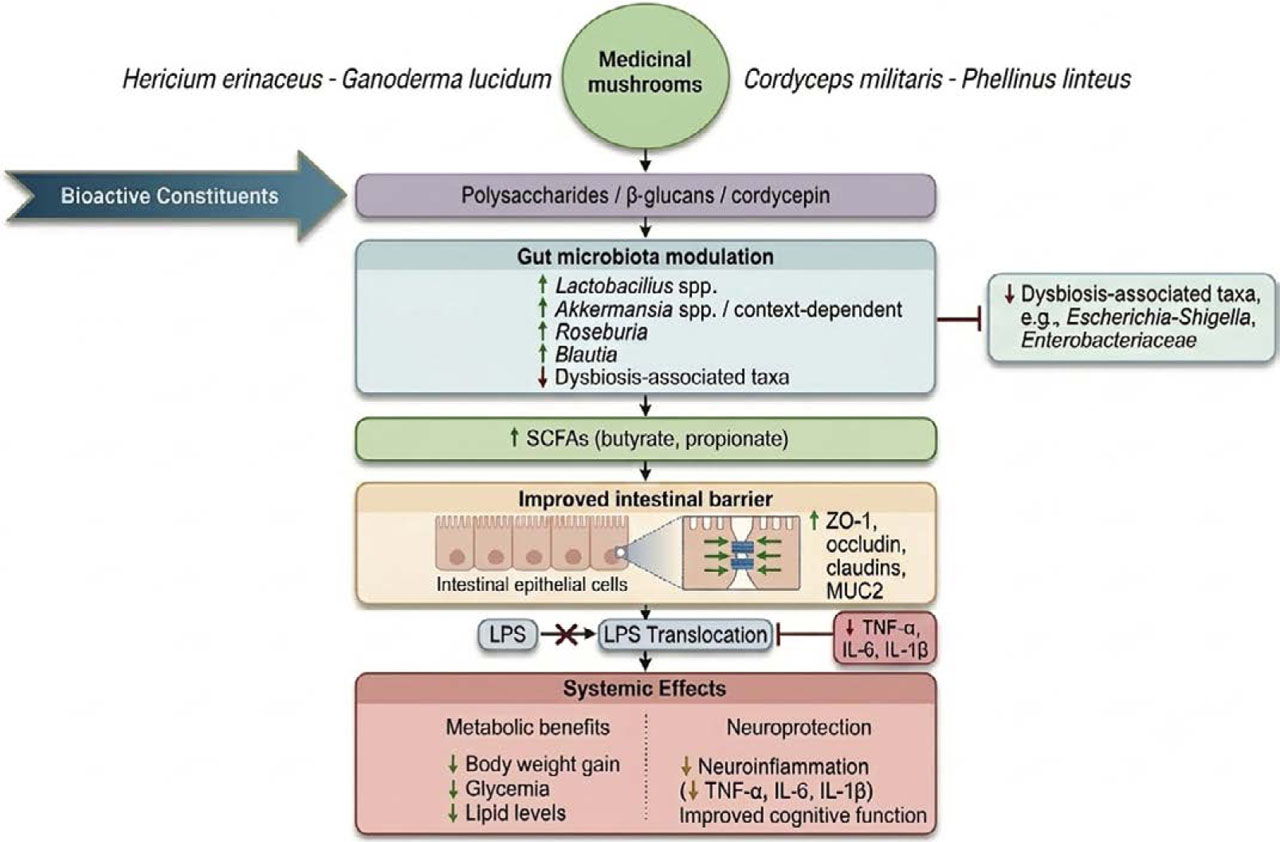
Figure 2.
Proposed mechanisms of action of medicinal mushrooms on the gut microbiota–gut–brain axis. (SCFA – short-chain fatty acids; LPS – lipopolysaccharide; ZO-1 – zonula occludens-1; TNF-α – tumour necrosis factor-α; IL – interleukin; MUC2 – mucin 2)
Shared Convergent Mechanisms and Gut–Brain Axis Relevance
Figure 2 summarizes the proposed common mechanisms through which medicinal mushrooms may influence the microbiota–gut–brain axis. Despite differences in their primary bioactive constituents, the reviewed medicinal mushrooms exhibited remarkable convergence in their biological effects. Across diverse disease models—including obesity, diabetes, colitis, chronic stress, and neurodegeneration—supplementation consistently promoted the growth of beneficial microbial taxa, including Lactobacillus, Bacteroides, Roseburia, Blautia, and Akkermansia, while reducing microorganisms commonly associated with dysbiosis and inflammation.
A recurring finding across studies was the stimulation of short-chain fatty acid production, particularly butyrate and propionate. These metabolites appear to represent a key mechanistic link between microbiota modulation and host physiological responses. By supporting intestinal barrier integrity and limiting the systemic translocation of inflammatory mediators, such as LPS, SCFAs may contribute not only to improved metabolic health, but also to attenuation of chronic inflammation and modulation of the gut–brain axis.
Collectively, the available evidence suggests that medicinal mushrooms act not through a single pathway, but through coordinated interactions involving gut microbial communities, microbial metabolites, intestinal barrier function, immune regulation, and host metabolism. These interconnected mechanisms may explain their beneficial effects across a wide range of gastrointestinal, metabolic, and neuroinflammatory conditions.
Conclusions
The available evidence suggests that medicinal mushrooms represent a promising group of natural agents capable of modulating gut microbiota composition and influencing gut–brain axis-related pathways. Despite differences in their primary bioactive constituents, Hericium erinaceus, Ganoderma lucidum, Cordyceps militaris, and Phellinus linteus exhibit several shared biological effects, including the enrichment of beneficial SCFA-producing bacteria, improvement of intestinal barrier integrity, and attenuation of inflammatory processes.
Among the reviewed species, H. erinaceus demonstrated the strongest evidence for microbiota–gut–brain axis modulation and cognitive benefits, whereas G. lucidum showed the most consistent effects on metabolic regulation, endotoxemia, and obesity-associated dysbiosis. In contrast, C. militaris and P. linteus were primarily associated with improvements in intestinal barrier function, inflammatory regulation, and prebiotic activity.
Collectively, these findings support the concept that the modulation of gut microbial communities and their metabolites may represent a common mechanism underlying the beneficial effects of medicinal mushrooms across metabolic, gastrointestinal, and neuroinflammatory conditions.
However, the current evidence base remains largely derived from animal and in vitro studies, and human clinical data remain limited. Therefore, well-designed randomized controlled trials employing standardized mushroom preparations, together with functional microbiome and metabolomic analyses, are required to clarify optimal dosing strategies and establish the clinical relevance of these findings in human health and disease.