
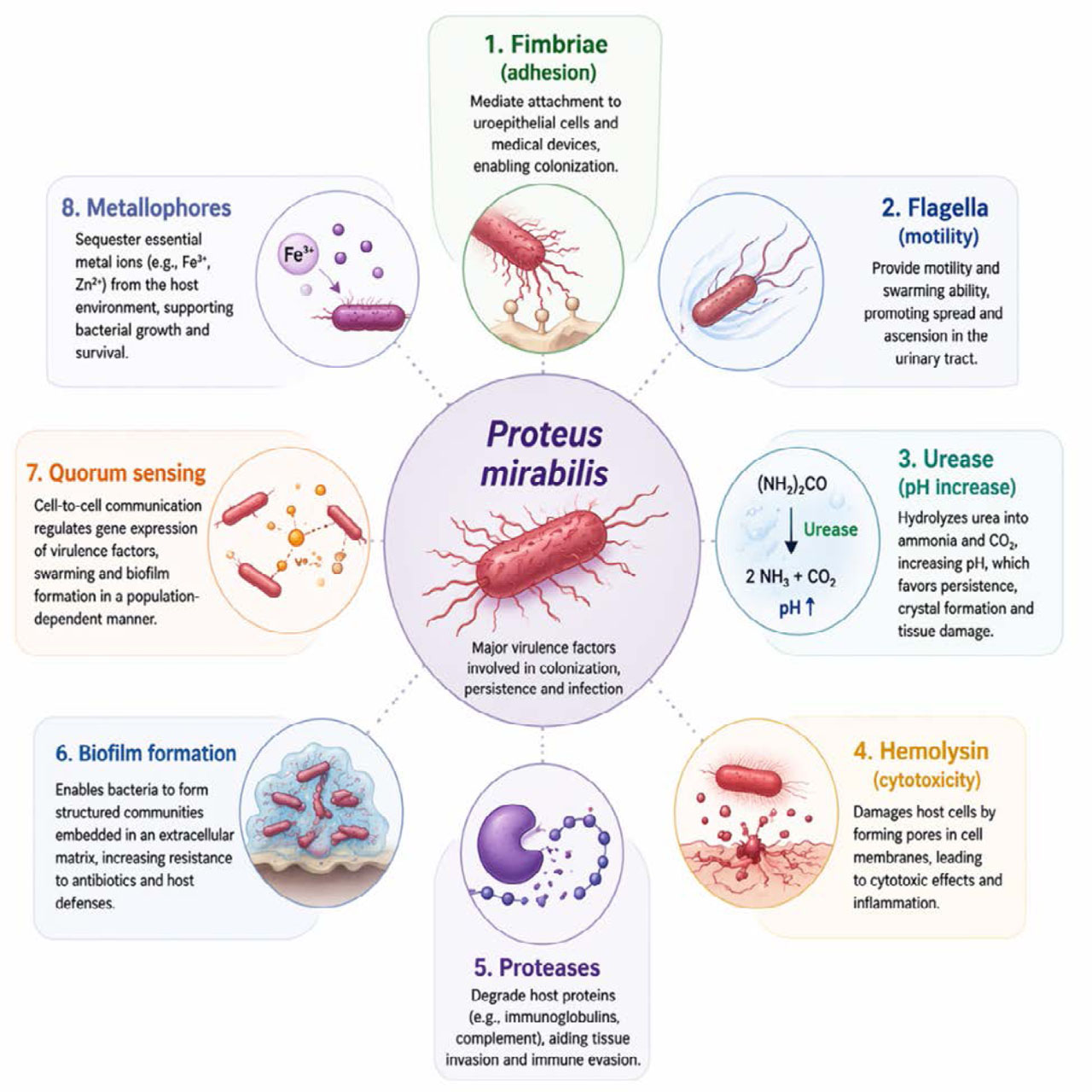
Figure 1.
Major virulence factors of Proteus mirabilis involved in colonization and infection (author’s own work; the figure was created with the assistance of artificial intelligence tools) [4, 9,10,11].
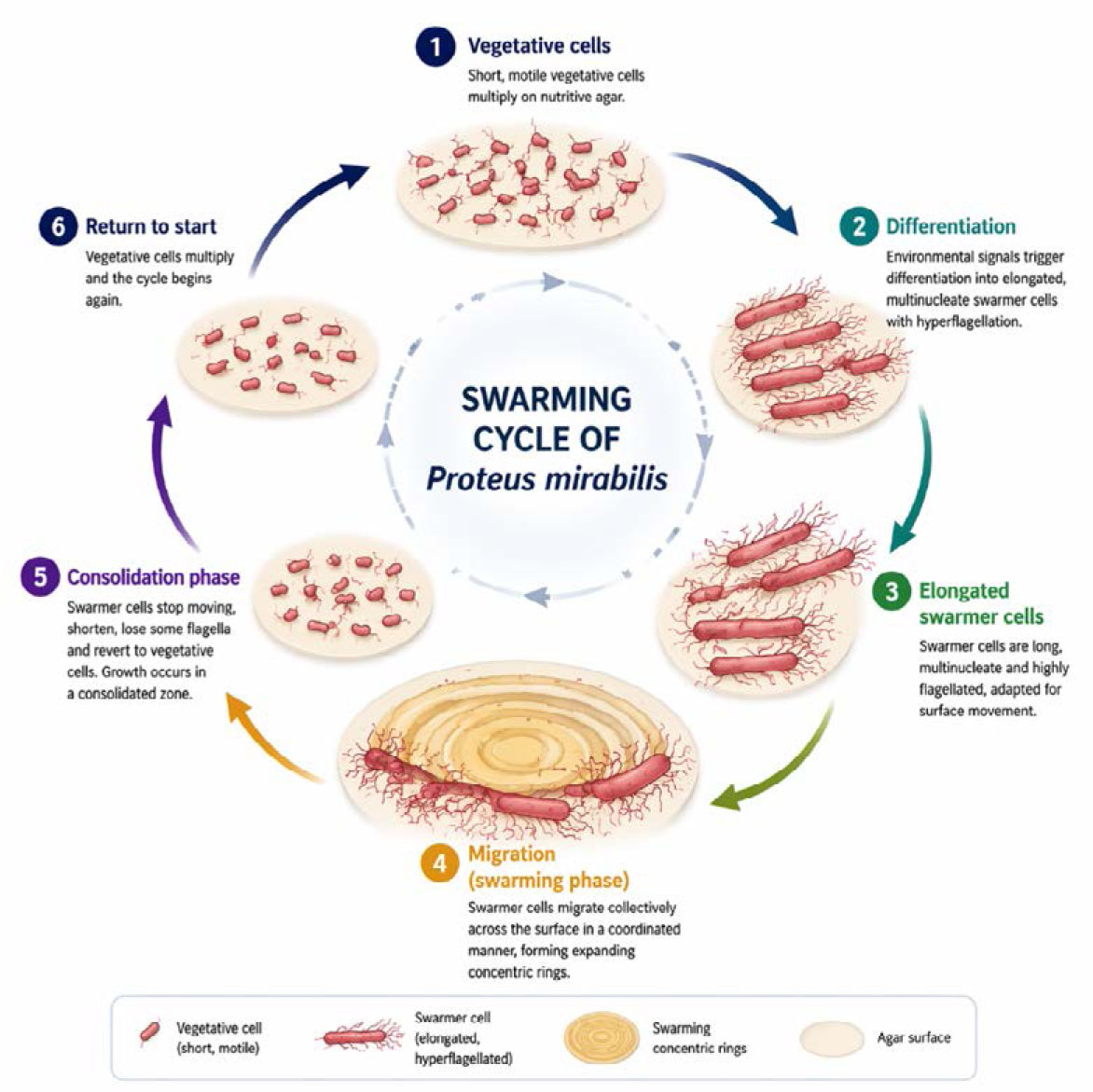
Figure 2.
Swarming cycle of Proteus mirabilis, showing differentiation, migration, and consolidation phases (author’s own work; the figure was created with the assistance of artificial intelligence tools) [4–5, 12,13,14].
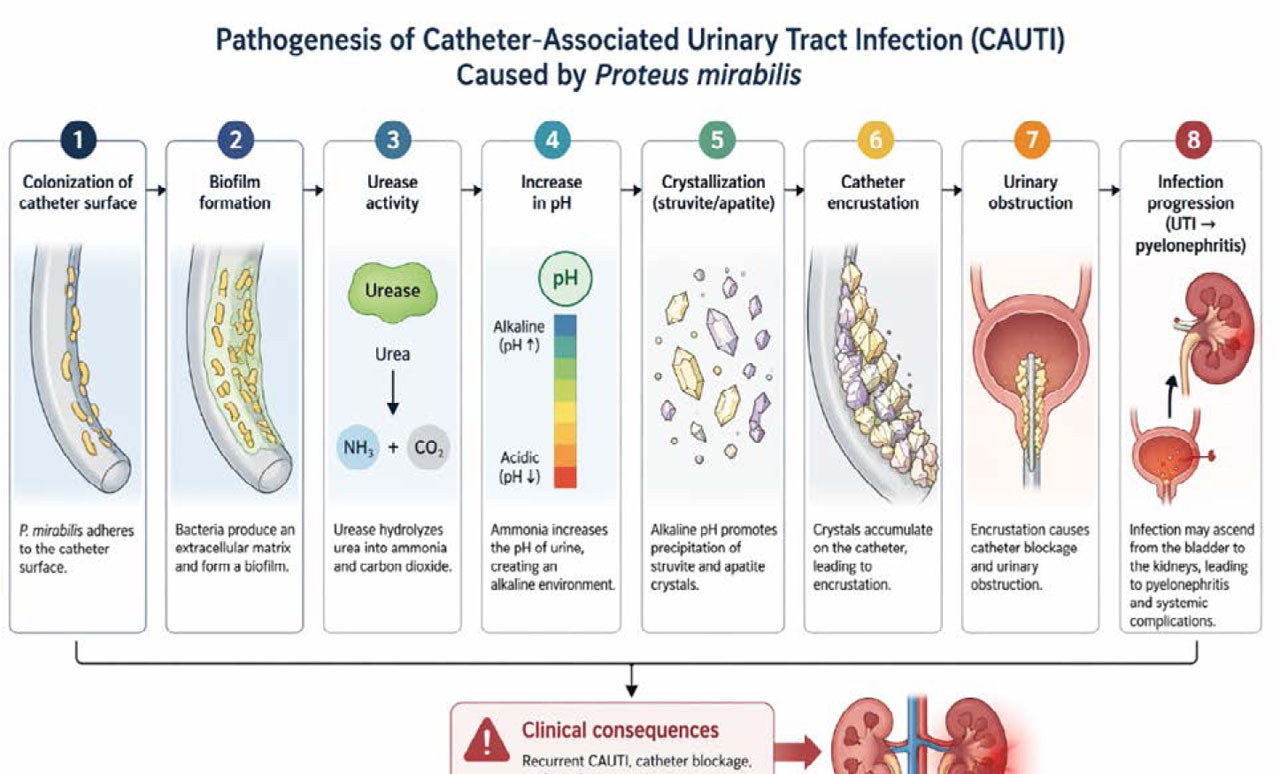
Figure 3.
Pathogenesis of catheter-associated urinary tract infection (CAUTI) caused by Proteus mirabilis (author’s own work; the figure was created with the assistance of artificial intelligence tools) [5–6, 9,10,11, 15–16].
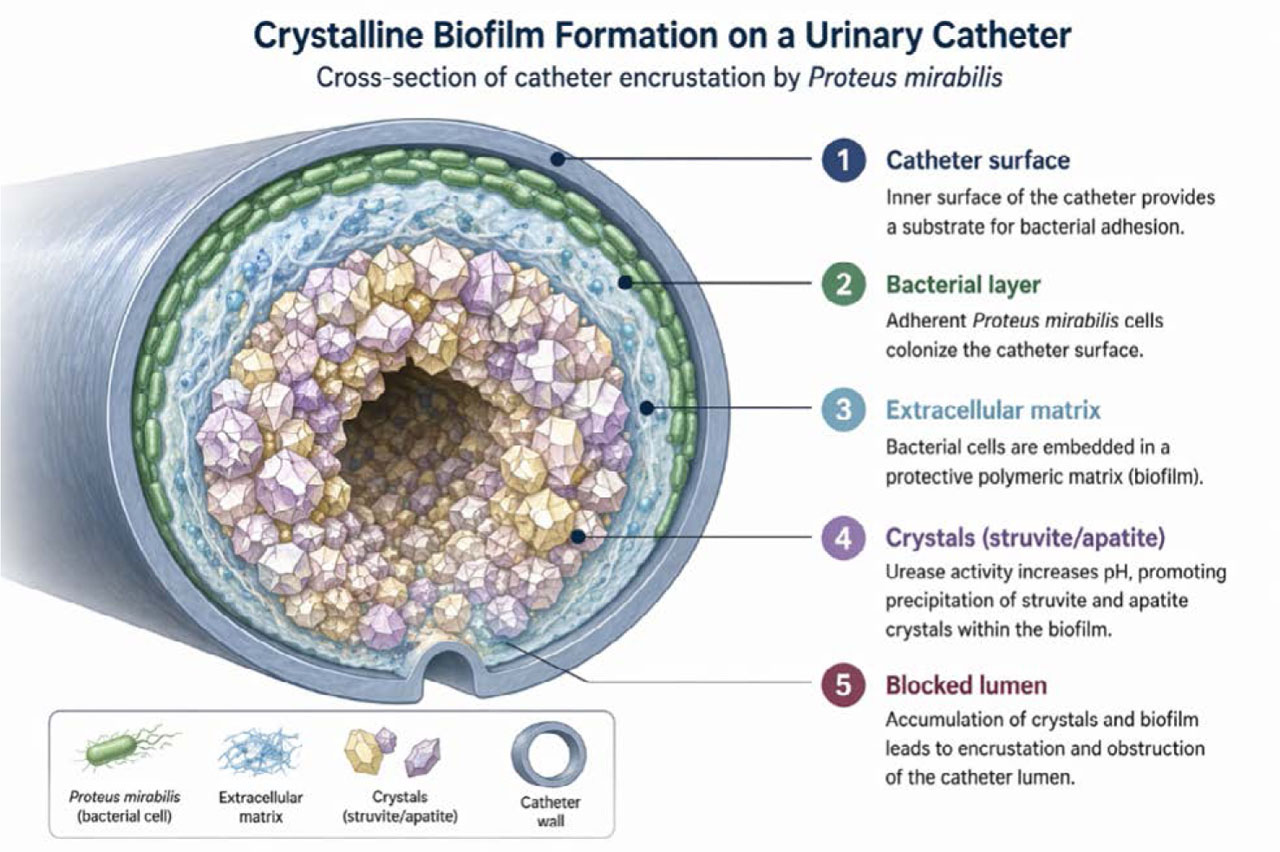
Figure 4.
Crystalline biofilm formed by Proteus mirabilis on a urinary catheter leading to obstruction (author’s own work; the figure was created with the assistance of artificial intelligence tools) [6, 11, 17,18,19].
Table 1.
| Virulence mechanism | Biological significance | Clinical significance |
|---|---|---|
| Urease | Urea hydrolysis and urine alkalization | Struvite urolithiasis, catheter encrustation and obstruction |
| Swarming motility | Active bacterial migration across solid surfaces | Spread of infection within the urinary tract |
| MR/P, PMF, UCA/NAF fimbriae | Adhesion to uroepithelium and biomaterials | Catheter colonization and CAUTI development |
| Biofilm formation | Protection of bacteria against antibiotics and immune response | Chronic and recurrent infections |
| Crystalline biofilm | Precipitation of mineral crystals within the biofilm | Catheter obstruction and chronic colonization |
| Hemolysins | Host cell damage | Increased inflammation and tissue damage |
| ZapA metalloprotease | Degradation of immunoglobulins and modulation of the immune response | Maintenance of chronic infection |
| Quorum sensing | Regulation of virulence and biofilm gene expression | Bacterial adaptation to chronic infection |
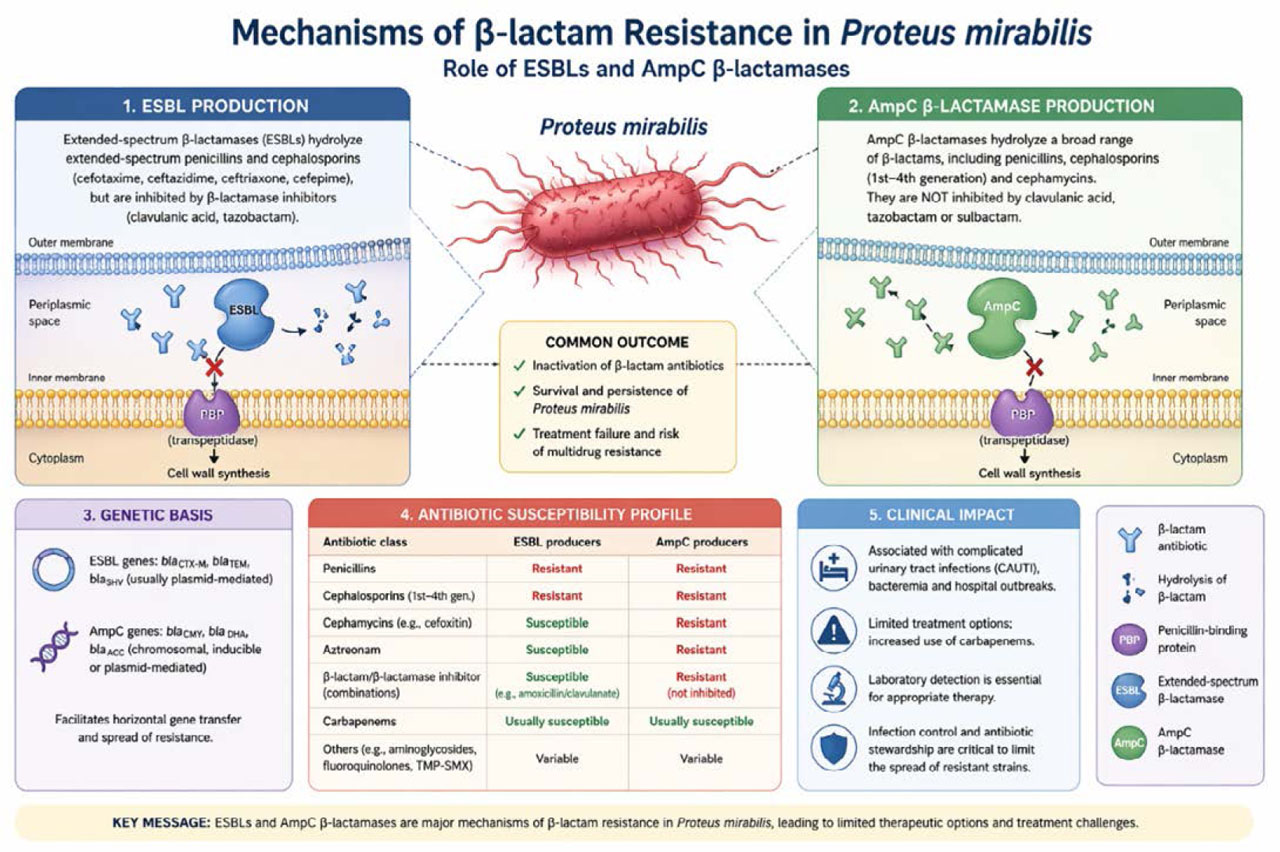
Figure 5.
Mechanisms of β-lactam resistance in Proteus mirabilis, including ESBL and AmpC β-lactamase production (author’s own work; the figure was created with the assistance of artificial intelligence tools) [6,7,8, 25].
Table 2.
Global trends in antimicrobial susceptibility and resistance of Proteus mirabilis in selected regions of the world [7–8, 19, 25, 27,28,29,30,31,32].
| World region | Dominant epidemiological problems | Most frequently observed resistance | Key clinical trends |
|---|---|---|---|
| Asia | High percentage of MDR and ESBL strains and infections associated with urolithiasis | Fluoroquinolones, third-generation cephalosporins, trimethoprim/sulfamethoxazole | Increase in CAUTI-related infections and ESBL-producing strains |
| Middle East | Rapid spread of MDR and AmpC strains in nosocomial infections | β-lactams, fluoroquinolones, aminoglycosides | Increase in infections among hospitalized and long-term catheterized patients |
| Europe | Increasing frequency of infections associated with medical biomaterials and biofilm | Fluoroquinolones, cephalosporins, trimethoprim/sulfamethoxazole | Growing significance of AmpC strains and chronic CAUTI |
| South America | Regional differences in antimicrobial susceptibility, increase in nosocomial infections | Third-generation cephalosporins, fluoroquinolones | Maintaining high efficacy of carbapenems and amikacin |
| North America | Increase in infections associated with long-term care and biomateriale | Fluoroquinolones, trimethoprim/sulfamethoxazole | Greater importance of antimicrobial stewardship and targeted therapy |
| Poland | Increase in nosocomial infections caused by ESBL and AmpC strains | Fluoroquinolones, β-lactams, aminoglycosides | Rising frequency of MDR strains in catheter-associated infections |