
Introduction
Urinary tract infections (UTIs) are among the most common bacterial infections encountered in both community and hospital settings, constituting a significant clinical, epidemiological, and economic burden in modern medicine [1–2]. Of particular importance are complicated UTIs and catheter-associated urinary tract infections (CAUTIs), which account for a substantial proportion of healthcare-associated infections [3]. In recent years, Proteus mirabilis has emerged as an increasingly important etiological agent of UTIs, especially among hospitalized patients, chronically catheterized individuals, geriatric patients, and those with multiple comorbidities [4–5].
Compared with other uropathogens, P. mirabilis possesses numerous virulence mechanisms that facilitate effective colonization of the urinary tract, biofilm formation, and the development of chronic and recurrent infections [4–5]. Urease activity plays a central role in the pathogenesis of infection by inducing urine alkalization, precipitation of magnesium ammonium phosphate crystals, and formation of struvite calculi [4, 6]. This process promotes the development of crystalline biofilms on the surfaces of urinary catheters and other medical biomaterials, thereby hindering bacterial eradication and increasing the risk of recurrent infections [5–6]. Another factor contributing to the pathogenicity of P. mirabilis is its swarming motility, which facilitates the colonization of solid surfaces and dissemination within the urinary tract [4–5].
An important challenge in contemporary therapy is the increasing antimicrobial resistance of P. mirabilis [7–8]. Multidrug-resistant (MDR) strains producing extended-spectrum β-lactamases (ESBLs), AmpC cephalosporinases, and carbapenemases are being identified with increasing frequency, often demonstrating concurrent resistance to fluoroquinolones, aminoglycosides, and trimethoprim/sulfamethoxazole [7–8]. Of particular clinical relevance is the intrinsic resistance of P. mirabilis to nitrofurantoin and polymyxins, which further limits therapeutic options for UTIs [1–2]. Another major therapeutic challenge is the ability of this pathogen to chronically colonize medical biomaterials and persist within biofilm-associated infections [5–6].
Despite numerous studies, there remains a limited number of comprehensive reviews analyzing the relationships between the epidemiology, virulence mechanisms, biofilm formation, and the increasing antimicrobial resistance of P. mirabilis in UTIs. Particular attention should be paid to contemporary epidemiological trends and therapeutic challenges associated with complicated infections and CAUTIs.
The aim of the present review is to analyze current data regarding the epidemiology, virulence mechanisms, antimicrobial susceptibility, and contemporary treatment strategies for UTIs caused by P. mirabilis, with particular emphasis on catheter-associated infections and the increasing antimicrobial resistance among hospital-acquired strains.
Epidemiology of Proteus mirabilis
Proteus mirabilis is an important opportunistic pathogen responsible for urinary tract infections, wound infections, biomaterial-associated infections, and healthcare-associated infections [4–5]. Although uropathogenic Escherichia coli remains the predominant etiological agent of UTIs, accounting for approximately 70–90% of uncomplicated infections, the epidemiological significance of P. mirabilis has been steadily increasing, particularly in complicated and healthcare-associated infections [2, 7].
Current data indicate that P. mirabilis accounts for approximately 1–10% of all UTIs; however, the prevalence of this pathogen varies considerably depending on geographic region, type of infection, patient age, and the presence of risk factors such as chronic catheterization, hospitalization, urinary outflow obstruction, and urolithiasis [7–8]. Particularly high isolation rates have been reported among geriatric patients, chronically hospitalized individuals, and residents of long-term care facilities [2–3].
Catheter-associated urinary tract infections remain a major clinical concern and represent one of the most common forms of healthcare-associated infections [2,3]. According to some epidemiological analyses, P. mirabilis may be responsible for up to 10–44% of infections associated with long-term urinary catheterization [3, 5–6]. Of particular importance are chronic and recurrent infections related to crystalline biofilm formation, which leads to catheter encrustation and obstruction, as well as an increased risk of struvite stone formation and urological complications [5–6].
Multidrug-resistant (MDR) strains, including isolates producing extended-spectrum β-lactamases (ESBLs) and AmpC β-lactamases, are being identified with increasing frequency [7–8]. The highest prevalence of resistant strains has been reported in countries across Asia, the Middle East, and parts of Southern Europe, and Africa [7–8]. This phenomenon is associated with excessive antibiotic use, the transmission of hospital-acquired strains, and the dissemination of mobile genetic elements responsible for the horizontal transfer of antimicrobial resistance genes [8].
Increasing attention has recently been directed toward the genomic epidemiology of P. mirabilis, which enables the identification of clonal dissemination of high-risk strains and facilitates monitoring of global antimicrobial resistance trends [8]. Infections caused by P. mirabilis continue to represent a significant diagnostic and therapeutic challenge, particularly among chronically hospitalized and catheterized patients [2, 7].
Pathogenicity of Proteus mirabilis
The pathogenicity of P. mirabilis results from the interplay of numerous virulence factors that enable effective colonization of the urinary tract, biofilm formation, evasion of the host immune response, and the development of chronic and recurrent infections [9–10]. The most important pathogenic mechanisms include the ability to adhere to epithelial cells and medical biomaterials, swarming motility, urease activity, toxin production, and crystalline biofilm formation [4, 9, 11]. The coordinated action of these mechanisms enhances bacterial persistence within the urinary tract and significantly impairs effective eradication of the infection.
The major virulence factors of P. mirabilis involved in urinary tract colonization and infection development are presented in Figure 1.
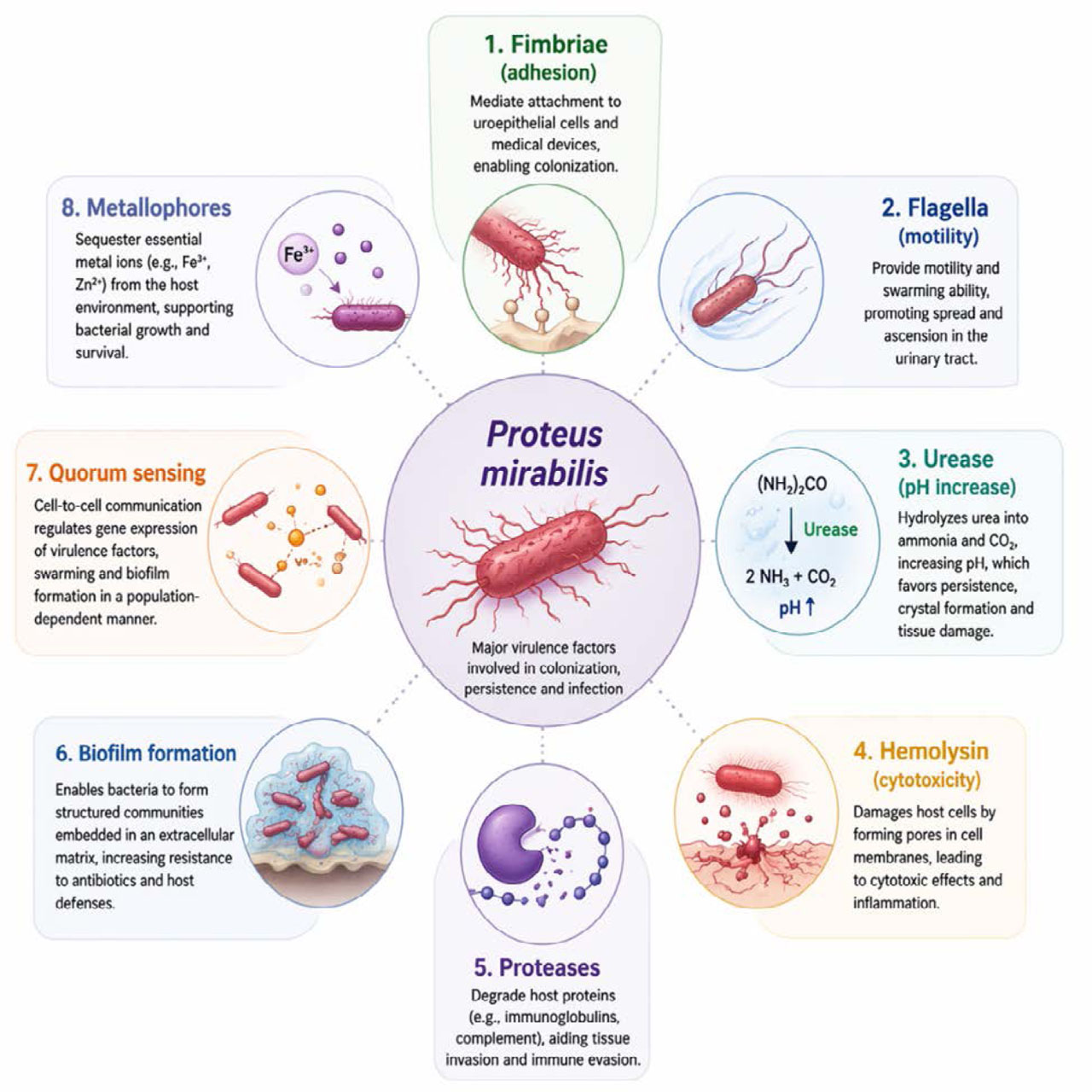
Figure 1.
Major virulence factors of Proteus mirabilis involved in colonization and infection (author’s own work; the figure was created with the assistance of artificial intelligence tools) [4, 9,10,11].
Adhesion and Colonization Mechanisms
An important stage in the development of P. mirabilis infection is bacterial adhesion to urinary tract epithelial cells and the surfaces of medical biomaterials [4–5, 12]. This process is mediated by numerous surface structures, primarily fimbriae, which are involved in uroepithelial colonization and biofilm formation [4, 12]. The best-characterized adhesive structures include MR/P fimbriae (mannose-resistant Proteus-like fimbriae), PMF (P. mirabilis fimbriae), and UCA/NAF (uroepithelial cell adhesin/non-agglutinating fimbriae), all of which play a significant role in the pathogenesis of urinary tract infections and catheter-associated infections [4, 12].
Fimbriae also participate in bacterial binding to extracellular matrix proteins such as collagen and fibronectin, thereby enhancing the ability of the microorganism to colonize damaged tissues and biomaterial surfaces [4]. As a result, P. mirabilis can effectively persist on the surfaces of urinary catheters and other medical devices, promoting the development of healthcare-associated infections [5].
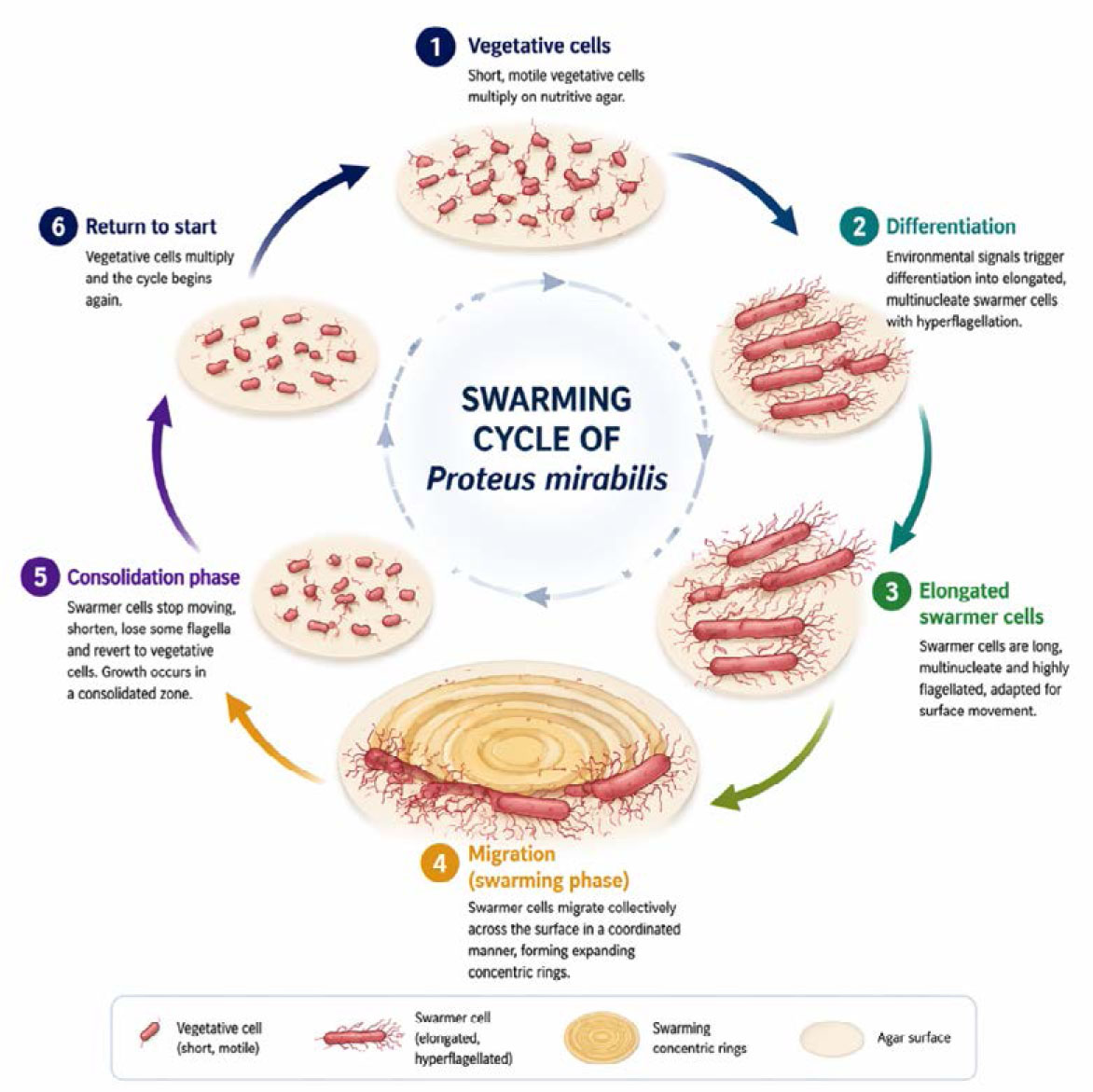
Figure 2.
Swarming cycle of Proteus mirabilis, showing differentiation, migration, and consolidation phases (author’s own work; the figure was created with the assistance of artificial intelligence tools) [4–5, 12,13,14].
Another important element of pathogenesis is the presence of flagella, which enable active bacterial migration within the urinary tract [4–5, 13]. Motility increases the ability of the pathogen to ascend into the upper urinary tract, thereby facilitating the development of pyelonephritis [13].
A characteristic feature of P. mirabilis is its ability to exhibit swarming motility, a process involving the cyclic differentiation of vegetative cells into elongated, hyperflagellated swarmer cells capable of intensive migration across solid surfaces [4–5]. This mechanism plays a crucial role in urinary tract colonization, the dissemination of infection, and the regulation of genes associated with virulence and biofilm formation [4–5, 14]. Alternating phases of migration and consolidation result in the characteristic concentric growth pattern referred to as “swarming” [4–5].
Figure 2 presents a schematic representation of the swarming motility cycle characteristic of P. mirabilis.
Urease and Struvite Urolithiasis
One of the most important virulence factors of P. mirabilis is urease [4–5]. This enzyme catalyzes the hydrolysis of urea into ammonia and carbon dioxide, leading to urine alkalization [9–10]. Elevated urinary pH promotes the precipitation of mineral salts, primarily magnesium ammonium phosphate (struvite) and calcium apatite, resulting in the formation of infection-related urinary calculi [9, 12].
The resulting deposits may develop into large staghorn calculi that occupy the renal collecting system, causing damage to the urinary tract epithelium, urinary outflow obstruction, and chronic inflammation [6, 10]. Urease activity also plays a key role in the formation of crystalline biofilm on the surfaces of urinary catheters [5–6]. This process contributes to biomaterial encrustation, catheter obstruction, and the persistence of chronic and recurrent urinary tract infections [9, 11, 15].
Mechanisms of Tissue Damage and Immune Evasion
P. mirabilis produces numerous factors that contribute to host tissue damage and enable evasion of the immune response [4–5]. Hemolysins play a particularly important role by forming pores in host cell membranes, thereby exerting cytotoxic effects and causing cellular damage [4–5]. These mechanisms enhance the ability of the bacterium to disseminate within the urinary tract and sustain the inflammatory process.
Another important pathogenic factor is the metalloprotease ZapA, which is involved in the degradation of immunoglobulins and modulation of the host immune response [4, 14]. This enzyme may impair the effectiveness of local defense mechanisms and promote the chronic persistence of infection [14]. The combined activity of toxins, proteases, and adaptive mechanisms increases the ability of P. mirabilis to survive under unfavorable environmental conditions and maintain chronic inflammation [5–6, 14].
Biofilm Formation and Biomaterial-Associated Infections
The ability to form biofilm constitutes one of the most important pathogenic features of P. mirabilis [5–6, 16]. Biofilms are structured communities of bacterial cells embedded within an extracellular matrix that provides protection against antimicrobial agents and host defense mechanisms [6, 10–11]. Of particular clinical importance are biofilms developing on the surfaces of urinary catheters and other medical biomaterials [9–10, 16].
A characteristic feature of P. mirabilis is its ability to produce crystalline biofilms associated with urease activity and urine alkalization [5–6, 10]. Mineral deposition within the biofilm leads to catheter encrustation and lumen obstruction, impaired urinary drainage, and an increased risk of recurrent infections and pyelonephritis [10, 15].
Figure 3 illustrates the mechanism of catheter-associated urinary tract infection (CAUTI) caused by P. mirabilis.
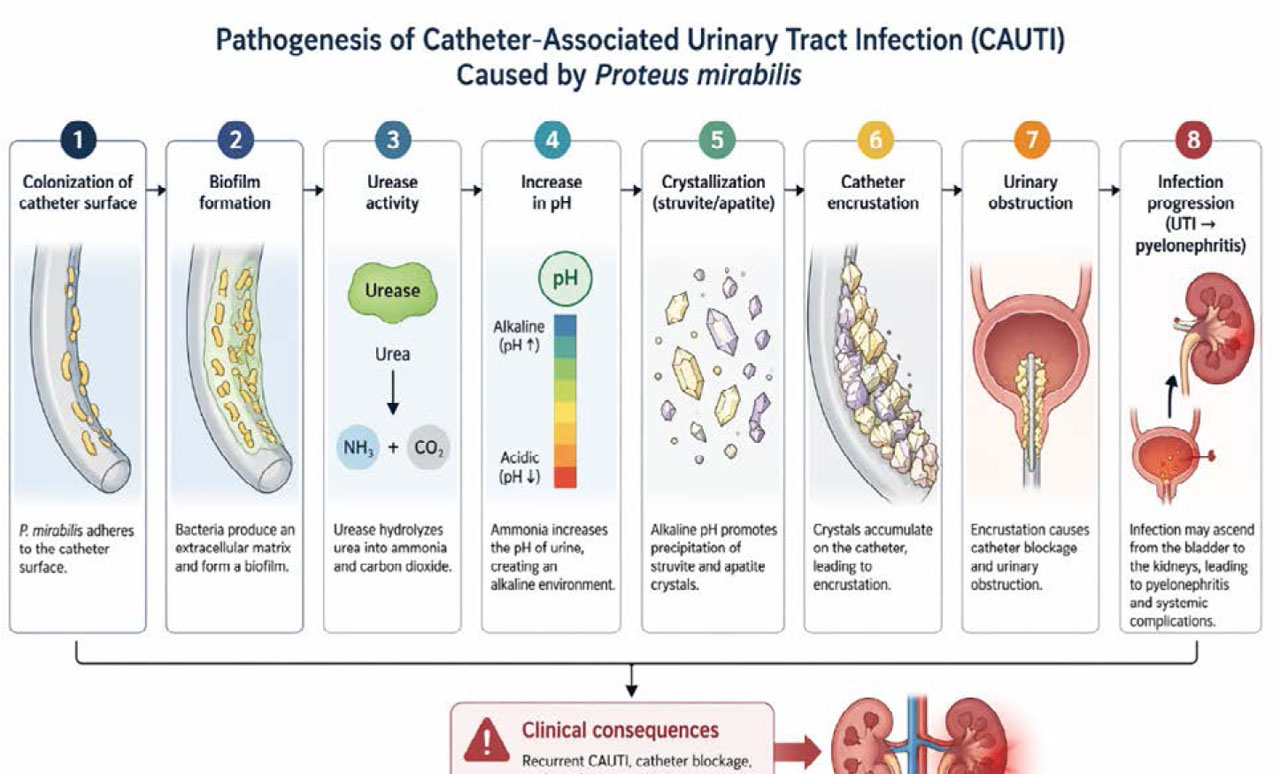
Figure 3.
Pathogenesis of catheter-associated urinary tract infection (CAUTI) caused by Proteus mirabilis (author’s own work; the figure was created with the assistance of artificial intelligence tools) [5–6, 9,10,11, 15–16].
Chronic colonization of the urinary tract may result in vesicoureteral reflux, bladder distension, and, in severe cases, bacteremia, sepsis, and endotoxic shock [10]. Biofilm formation limits antibiotic penetration and protects bacteria from host immune mechanisms, thereby promoting the persistence of chronic infections [6, 11].
Microorganisms residing within biofilms exhibit substantially lower susceptibility to antimicrobial agents than their planktonic counterparts [6, 17–18]. This phenomenon results both from the limited penetration of antimicrobial substances through the biofilm matrix and from the presence of persister cells [17–18]. Consequently, biofilm formation represents one of the major survival mechanisms of P. mirabilis and a significant factor complicating the effective treatment of infections [6, 11,19].
Figure 4 presents a schematic representation of crystalline biofilm formation leading to urinary catheter encrustation and obstruction.
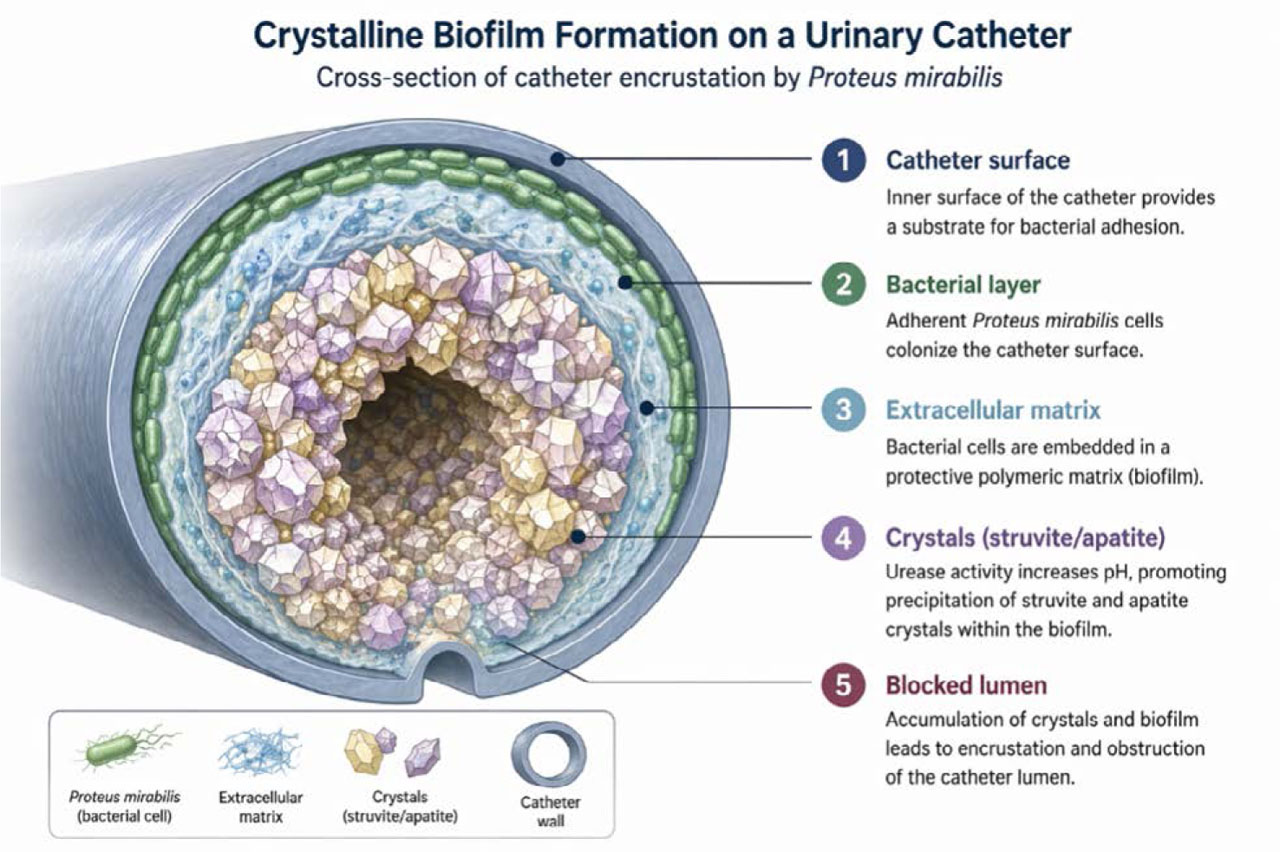
Figure 4.
Crystalline biofilm formed by Proteus mirabilis on a urinary catheter leading to obstruction (author’s own work; the figure was created with the assistance of artificial intelligence tools) [6, 11, 17,18,19].
Quorum Sensing and Adaptive Mechanisms
An important component of virulence regulation in P. mirabilis is the quorum sensing (QS) system, a cell-to-cell communication mechanism dependent on bacterial population density [5, 14]. This system is involved in the regulation of genes associated with biofilm formation, swarming motility, adhesion to medical biomaterials, and the production of virulence factors [5–6, 14].
In P. mirabilis, quorum sensing systems based on the AI-1 and AI-2 autoinducers have been described, involving LuxR-type regulators and the luxS gene [14, 20]. These mechanisms play a significant role in bacterial adaptation to the urinary tract environment and in the persistence of chronic catheter-associated infections [14].
Increasing attention has also been directed toward the role of metallophores, molecules responsible for metal ion binding and transport [4–5]. These mechanisms enable bacterial survival under conditions of limited micronutrient availability within the host organism, thereby enhancing adaptive capacity, biofilm survival, and pathogenic potential [4, 6].
Contemporary studies further suggest that quorum sensing systems may represent potential targets for novel therapeutic strategies based on quorum quenching approaches aimed at inhibiting biofilm formation and reducing the expression of virulence factors [6, 21].
Table 1 summarizes the major virulence mechanisms of P. mirabilis and their role in the pathogenesis of urinary tract infections.
Table 1.
| Virulence mechanism | Biological significance | Clinical significance |
|---|---|---|
| Urease | Urea hydrolysis and urine alkalization | Struvite urolithiasis, catheter encrustation and obstruction |
| Swarming motility | Active bacterial migration across solid surfaces | Spread of infection within the urinary tract |
| MR/P, PMF, UCA/NAF fimbriae | Adhesion to uroepithelium and biomaterials | Catheter colonization and CAUTI development |
| Biofilm formation | Protection of bacteria against antibiotics and immune response | Chronic and recurrent infections |
| Crystalline biofilm | Precipitation of mineral crystals within the biofilm | Catheter obstruction and chronic colonization |
| Hemolysins | Host cell damage | Increased inflammation and tissue damage |
| ZapA metalloprotease | Degradation of immunoglobulins and modulation of the immune response | Maintenance of chronic infection |
| Quorum sensing | Regulation of virulence and biofilm gene expression | Bacterial adaptation to chronic infection |
Urinary tract infections caused by Proteus mirabilis
Proteus mirabilis is a significant etiological agent of urinary tract infections (UTIs), particularly complicated, recurrent, and catheter-associated urinary tract infections (CAUTIs) [2, 4–5]. Although uropathogenic Escherichia coli (UPEC) remains the predominant uropathogen, the clinical relevance of P. mirabilis is escalating, specifically within hospitalized, geriatric, and chronically catheterized patient populations. Furthermore, its prevalence is higher among patients with comorbidities, such as diabetes mellitus, neurological disorders, urolithiasis, or urinary tract obstruction [2, 4–5]. Contemporary epidemiological data indicate that UTIs are among the most prevalent bacterial infections globally, with their incidence rising notably among the elderly and patients requiring long-term medical care [22].
The human gastrointestinal tract is considered the natural reservoir of P. mirabilis, from which the bacteria can periodically colonize the area around the urethral meatus and subsequently migrate to the urinary bladder via the ascending route [4–5]. This mechanism is particularly significant in catheterized patients, as the presence of a biomaterial promotes bacterial adhesion and initiates biofilm formation [5, 10]. The risk of bacteriuria increases with the duration of catheterization; in long-term catheterized individuals, chronic colonization of the urinary tract and recurrent episodes of CAUTIs are very common [23].
The significance of P. mirabilis in catheter-associated infections stems primarily from its ability to produce urease and form crystalline biofilms [6, 10]. According to the current guidelines of the European Association of Urology (EAU), the presence of urease-positive bacteria, such as P. mirabilis, should prompt a diagnostic investigation for urolithiasis [2].
The clinical presentation of infections caused by P. mirabilis is diverse and includes cystitis, pyelonephritis, catheter-associated infections, and severe invasive infections such as bacteremia and urosepsis. Asymptomatic bacteriuria caused by P. mirabilis is also frequently diagnosed [4, 10]. The highest risk of a severe clinical course applies to elderly, chronically hospitalized, and immunocompromised patients, as well as to those with long-term indwelling urinary catheters [10]. Moreover, CAUTI remains one of the most common forms of healthcare-associated infections and a significant cause of secondary nosocomial bloodstream infections [3, 23].
In recent years, the increasing antimicrobial resistance of P. mirabilis strains has gained clinical importance [7–8]. An increase in the frequency of multidrug-resistant (MDR) strains is observed, including those producing ESBL beta-lactamases, AmpC-type cephalosporinases, and enzymes associated with carbapenem resistance [7–8]. Genomic analyses indicate that the spread of resistance is linked to both the clonal transmission of hospital strains and the presence of mobile genetic elements responsible for the transfer of resistance genes [8]. This phenomenon limits the effectiveness of empirical therapy and increases the importance of monitoring local susceptibility profiles and rationalizing antibiotic therapy [2, 7–8].
In addition to urinary tract infections, P. mirabilis can also cause infections of wounds, skin, soft tissues, the respiratory system, and the eyes, as well as invasive infections [5, 24]. However, from the perspective of modern clinical epidemiology, the greatest significance of this microorganism is associated with complicated urinary tract infections, infections related to the presence of medical biomaterials, and nosocomial infections [5, 24]. Particular therapeutic challenges arise from the co-occurrence of biofilm-forming ability and the increasing antimicrobial resistance of P. mirabilis strains [6,7,8].
Contemporary epidemiological trends indicate that infections caused by P. mirabilis remain a significant diagnostic and therapeutic challenge, requiring continuous monitoring of local susceptibility trends, rationalization of antibiotic therapy, and more effective prevention strategies for healthcare-associated infections [2, 7–8].
Antimicrobial susceptibility and resistance mechanisms of Proteus mirabilis
The increasing antimicrobial resistance of clinical P. mirabilis strains represents one of the most significant challenges in treating urinary tract infections and healthcare-associated infections [7–8, 25]. Multidrug-resistant (MDR) strains are of particular importance, especially those isolated from hospitalized and long-term catheterized patients [7, 10]. The most critical resistance mechanisms include the production of extended-spectrum β-lactamases (ESBLs), AmpC-type cephalosporinases, and carbapenemases [7–8, 25].
The resistance mechanisms of P. mirabilis include, among others, the presence of efflux pumps, reduced permeability of cell envelopes, and the transfer of resistance genes via plasmids and other mobile genetic elements [6, 8, 25]. ESBL – and AmpC-producing strains frequently exhibit multidrug resistance that also encompasses fluoroquinolones, trimethoprim/sulfamethoxazole, and aminoglycosides [7, 25].
The key mechanisms of P. mirabilis resistance to β-lactam antibiotics are presented in Figure 5.
Antimicrobial susceptibility profiles of P. mirabilis show significant regional differences. Higher percentages of MDR strains are reported, among others, in countries of Asia, the Middle East, and parts of Southern Europe, and Africa [7–8]. This phenomenon is linked to antibiotic selection pressure, the transmission of hospital strains, and the global dissemination of mobile resistance determinants [8, 25].
Biofilm remains a significant factor complicating effective therapy, as it reduces bacterial sensitivity to antibiotics and promotes the persistence of infection [6, 11]. Therefore, the interpretation of antimicrobial susceptibility should also take into account the presence of catheters and other medical biomaterials [6, 10].
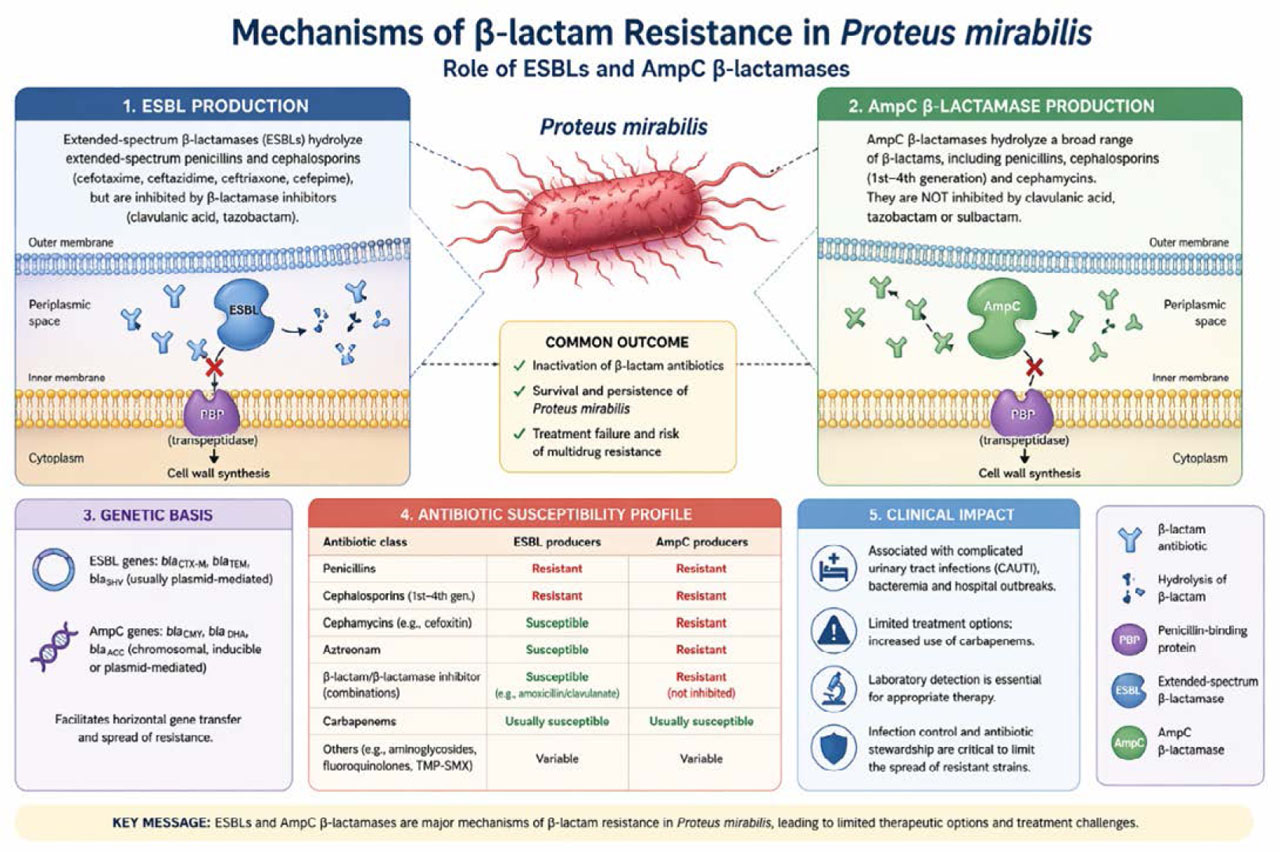
Figure 5.
Mechanisms of β-lactam resistance in Proteus mirabilis, including ESBL and AmpC β-lactamase production (author’s own work; the figure was created with the assistance of artificial intelligence tools) [6,7,8, 25].
Contemporary therapeutic trends and treatment of infections caused by Proteus mirabilis
The treatment of infections caused by P. mirabilis requires consideration of the nature of the infection, local antimicrobial susceptibility profiles, the presence of MDR risk factors, and the potential for biofilm formation [2, 6–7, 10]. It is particularly important to distinguish between uncomplicated and complicated infections, especially those associated with catheterization, urolithiasis, hospitalization, or prior antibiotic therapy [2, 7, 10]. In such cases, targeted therapy based on culture and antimicrobial susceptibility testing (AST) results is of key importance [2, 7].
Empirical therapy of urinary tract infections caused by Proteus mirabilis
The selection of empirical therapy for urinary tract infections caused by P. mirabilis should take into account local antimicrobial susceptibility profiles, the nature of the infection, and the presence of risk factors for infections with resistant strains [2, 7–8]. Previous antibiotic therapy, hospitalization, catheterization, and urolithiasis are of particular importance [2, 26].
In the case of uncomplicated lower urinary tract infections, second – and third-generation cephalosporins, aminopenicillins with beta-lactamase inhibitors, and fluoroquinolones may remain effective; however, their empirical use should be limited in regions with a high percentage of resistant strains [7, 25]. P. mirabilis exhibits intrinsic resistance to nitrofurantoin and polymyxins; therefore, these drugs should not be used in the therapy of infections caused by this microorganism [10, 25].
In a study conducted in China among patients with urolithiasis, carbapenems, cefoperazone with sulbactam, and amikacin showed the highest activity against P. mirabilis strains. The percentage of susceptible strains was approximately 94–100% for meropenem and cefoperazone with sulbactam, and approximately 98% for amikacin [27]. Lower susceptibility was observed for ciprofloxacin, ampicillin, and trimethoprim/sulfamethoxazole [27]. Similar trends were observed in studies conducted in Middle Eastern countries, where the increasing frequency of MDR strains was associated with high resistance to fluoroquinolones and third-generation cephalosporins [7].
In epidemiological analyses conducted in Brazil, P. mirabilis strains isolated from community-acquired urinary tract infections showed high susceptibility to carbapenems, piperacillin with tazobactam, amikacin, and amoxicillin with clavulanic acid [28]. At the same time, regional differences regarding resistance to fluoroquinolones and trimethoprim/sulfamethoxazole were observed, highlighting the need to monitor local epidemiological trends [7–8, 28].
The data in Table 2 were compiled based on current epidemiological studies and regional analyses of P. mirabilis antimicrobial susceptibility and resistance.
In Poland, the problem of P. mirabilis antimicrobial resistance primarily concerns healthcare-associated infections and catheter-associated infections [19, 31]. Studies conducted at the Masovian Specialist Hospital in Radom showed the susceptibility of P. mirabilis strains to aminoglycosides at approximately 59%, to β-lactams at approximately 70%, and to fluoroquinolones at approximately 50% [32]. Strains producing ESBL, AmpC, and carbapenemases are also identified in Polish centers, which may significantly limit the effectiveness of empirical therapy [32–33].
Table 2.
Global trends in antimicrobial susceptibility and resistance of Proteus mirabilis in selected regions of the world [7–8, 19, 25, 27,28,29,30,31,32].
| World region | Dominant epidemiological problems | Most frequently observed resistance | Key clinical trends |
|---|---|---|---|
| Asia | High percentage of MDR and ESBL strains and infections associated with urolithiasis | Fluoroquinolones, third-generation cephalosporins, trimethoprim/sulfamethoxazole | Increase in CAUTI-related infections and ESBL-producing strains |
| Middle East | Rapid spread of MDR and AmpC strains in nosocomial infections | β-lactams, fluoroquinolones, aminoglycosides | Increase in infections among hospitalized and long-term catheterized patients |
| Europe | Increasing frequency of infections associated with medical biomaterials and biofilm | Fluoroquinolones, cephalosporins, trimethoprim/sulfamethoxazole | Growing significance of AmpC strains and chronic CAUTI |
| South America | Regional differences in antimicrobial susceptibility, increase in nosocomial infections | Third-generation cephalosporins, fluoroquinolones | Maintaining high efficacy of carbapenems and amikacin |
| North America | Increase in infections associated with long-term care and biomateriale | Fluoroquinolones, trimethoprim/sulfamethoxazole | Greater importance of antimicrobial stewardship and targeted therapy |
| Poland | Increase in nosocomial infections caused by ESBL and AmpC strains | Fluoroquinolones, β-lactams, aminoglycosides | Rising frequency of MDR strains in catheter-associated infections |
In complicated infections, particularly those associated with the presence of urinary catheters, infectious urolithiasis, or hospitalization, targeted treatment based on antimicrobial susceptibility testing (AST) results is preferred [2, 7, 26]. Depending on the susceptibility profile, carbapenems, piperacillin with tazobactam, aminoglycosides, or other β-lactams active against the specific isolate may be used [2, 7, 26]. In cases of infections associated with long-term catheterization, an essential element of management remains the removal or replacement of the catheter and the elimination of factors obstructing urinary flow [2, 10].
Rational antibiotic therapy based on AST results and clinical assessment of the patient is crucial in limiting the selection of MDR strains [2, 25]. The interpretation of antimicrobial susceptibility should take into account, among other factors, the presence of a catheter, biofilm, urolithiasis, and prior exposure to antibiotics [2, 6, 10].
New therapeutic directions and the future of treating infections caused by Proteus mirabilis
The increasing frequency of MDR strains and the limited effectiveness of antibiotic therapy in biofilm-associated infections have intensified interest in strategies targeting virulence mechanisms and the colonization of medical biomaterials [6, 8, 25]. Contemporary research also focuses on limiting mechanisms that promote the chronic and recurrent course of infections [6, 21].
One of the developing fields is quorum quenching strategies, which involve inhibiting the quorum sensing mechanisms responsible for regulating biofilm formation, swarming motility, and the expression of virulence factors [5, 14, 21]. Experimental studies indicate that quorum sensing inhibitors can limit the bacteria’s ability to colonize the urinary tract and potentially increase the effectiveness of conventional antibiotic therapy [14, 21].
Another significant research direction involves urease inhibitors, which aim to reduce urine alkalization, the formation of struvite stones, and the development of crystalline biofilms [4, 6]. Inhibiting urease activity may decrease the risk of catheter encrustation and limit the chronic colonization of the urinary tract by P. mirabilis [6].
Increasing attention is also being paid to phage therapy as a potential method supporting the treatment of infections caused by MDR strains [6, 34,35,36]. Bacteriophages demonstrate the ability to selectively destroy bacterial cells, including those within biofilms, which may be significant in treating infections associated with medical biomaterials [6]. However, phage therapy still requires further clinical trials and the standardization of therapeutic procedures [34,35,36].
Modern CAUTI prevention strategies also include the development of biomaterials that limit bacterial adhesion and biofilm formation [10, 23]. Research covers, among others, hydrogel coatings, silver ion-impregnated surfaces, metal nanoparticles, and materials releasing antimicrobial substances [10, 23]. Particularly promising are solutions that modulate the urinary tract microenvironment and limit the encrustation of biomaterials [23].
Adjunctive therapies, including phytotherapy, anti-biofilm compounds, and immunomodulatory strategies, remain subjects of experimental and clinical research [6, 37]. Currently, they should not replace standard antibiotic therapy; however, in the future, they may become an element of combination therapy for chronic and recurrent infections [6].
The future of treating infections caused by P. mirabilis will likely be based on a combination of targeted therapy with methods limiting biofilm formation, urease activity, quorum sensing communication, and the colonization of medical biomaterials [6, 8, 21]. Limiting the selection of MDR strains and more effective control of healthcare-associated infections will also be of key importance [2, 10, 25].
Discussion
The growing importance of Proteus mirabilis as a nosocomial pathogen
Analysis of available data indicates that the clinical significance of P. mirabilis extends beyond classic urinary tract infections. This microorganism should increasingly be considered in the context of healthcare-associated infections, particularly in long-term catheterized, hospitalized, geriatric patients, and those with comorbidities [2, 5, 10]. From the perspective of clinical practice, the combination of three phenomena is especially significant: the presence of a biomaterial, the bacteria’s ability for chronic colonization, and increasing antibiotic resistance. The convergence of these mechanisms promotes the chronic course of infections and increases the risk of treatment failure [5–6, 10].
Global trends in antimicrobial resistance
The rise of resistance among Enterobacterales constitutes one of the most significant challenges in modern medicine and public health [29–30]. In the case of P. mirabilis, the increasing frequency of MDR strains is of particular importance, especially among hospital isolates and strains derived from patients with long-term indwelling urinary catheters [7–8]. Strains producing ESBLs, AmpC, and carbapenemases, which often exhibit simultaneous resistance to multiple antibiotic classes, are of particular clinical significance [7–8, 25].
Data from various regions of the world indicate significant heterogeneity in antimicrobial susceptibility profiles, which limits the possibility of creating universal empirical therapy regimens [7–8]. Crucially, global genomic analyses confirm the involvement of both clonal transmission and mobile genetic elements in the spread of resistance [8]. In practice, this necessitates combining classic microbiological diagnostics with the monitoring of local epidemiological trends and, in selected situations, molecular methods [2, 8].
The significance of biofilm in the chronic course of infections
Biofilm remains one of the key factors determining the chronic and recurrent nature of infections caused by P. mirabilis [6, 11]. In contrast to many other uropathogens, a crystalline biofilm is of particular importance, as its formation is linked to urease activity and urine alkalization [6, 10]. The consequences of this process include catheter encrustation, the obstruction of urinary flow, the risk of infectious urolithiasis, and the reduced effectiveness of antibiotic therapy itself [2, 10].
In clinical practice, the presence of a biofilm can limit treatment efficacy despite the apparent susceptibility of the strain in in vitro testing [6, 11, 38]. This phenomenon is associated with impaired antibiotic penetration and the presence of persister cells [6, 11]. Therefore, the treatment of catheter-associated infections should include not only the selection of an antibiotic but also an assessment of the necessity to replace or remove the catheter and the exclusion of urinary flow obstruction [2, 10].
Therapeutic implications and the importance of diagnostics
Modern treatment of infections caused by P. mirabilis should be based on clinical risk assessment and the current antimicrobial susceptibility profiles of local strains [2, 7, 25]. Particular caution is required when using fluoroquinolones and trimethoprim/sulfamethoxazole in regions with a high percentage of resistant strains [2, 7]. It is equally important to consider the intrinsic resistance of P. mirabilis to nitrofurantoin and polymyxins to avoid ineffective empirical therapy [10, 25].
From the perspective of laboratory diagnostics, it is crucial not only to identify the species but also to detect resistance mechanisms and properly interpret culture results in a clinical context [2, 8]. A particular diagnostic challenge remains the differentiation between colonization and infection in long-term catheterized patients. The interpretation of microbiological results should take into account clinical symptoms, the duration of catheterization, the presence of biomaterials, and prior antibiotic therapy [2, 10].
Directions for further research and therapy development
In recent years, strategies aimed not only at eliminating bacteria but also at limiting the mechanisms responsible for the chronic nature of infection have gained increasing importance [6, 21, 23]. Particularly promising is research on quorum sensing inhibitors, urease inhibitors, phage therapy, nanomaterials, and biomaterials that limit bacterial adhesion and biofilm formation. While these methods do not currently replace standard antibiotic therapy, they may become an essential component of combination therapy for chronic and recurrent infections in the future [6, 21, 23]. Another crucial direction is the development of genomic epidemiology, which enables the identification of clonal spread of strains and the monitoring of mobile resistance determinants [8]. The integration of clinical, microbiological, and molecular data can improve the effectiveness of epidemiological surveillance and enable a more precise selection of therapy [2, 8].
In summary, P. mirabilis remains a pathogen of growing clinical significance, whose complexity arises from the coexistence of several phenomena: the ability to form crystalline biofilms, its involvement in healthcare-associated infections, and increasing antimicrobial resistance. Among the most important challenges for modern medicine are the reduction of catheter-associated infections, the monitoring of MDR strains, and the development of more effective therapeutic and preventive strategies [2, 6,7,8, 10].
Conclusions
Proteus mirabilis remains a significant etiological factor in complicated urinary tract infections, particularly those associated with the presence of urinary catheters and healthcare-associated infections. The clinical significance of this microorganism is increasing, especially among hospitalized, geriatric, and long-term catheterized patients. Mechanisms related to urease activity, biofilm formation, and the colonization of medical biomaterials play a vital role in the pathogenesis of these infections, promoting a chronic course and disease recurrence [5–6, 10].
The increasing antimicrobial resistance of P. mirabilis strains, including MDR strains producing ESBL, AmpC, and carbapenemases, remains a significant problem in modern therapy [7–8]. Effective treatment of infections requires considering local susceptibility trends, antimicrobial susceptibility testing results, and the rationalization of antibiotic therapy. In biofilm – and catheter-associated infections, antibiotic therapy alone may be insufficient without the simultaneous elimination of factors promoting the persistence of the infection [2, 10]. Increasing importance is also being attributed to new therapeutic strategies targeting the biofilm, quorum sensing, and urease, as well as the reduction of medical biomaterial colonization [6, 21, 23].
In summary, infections caused by P. mirabilis remain a major diagnostic and therapeutic challenge in modern medicine. Reducing the incidence of these infections requires close clinical-laboratory cooperation, the monitoring of local susceptibility trends, and the development of more effective therapeutic and preventive strategies.
Limitations of the study
This work is a narrative literature review and does not constitute a meta-analysis or a systematic review of studies. The analyzed data originate from studies conducted in various regions of the world, utilizing different diagnostic methods and susceptibility assessment criteria, which may hinder direct comparison of the results. Additionally, some of the available epidemiological data concerning P. mirabilis are regional in nature and may not fully reflect the global situation.