
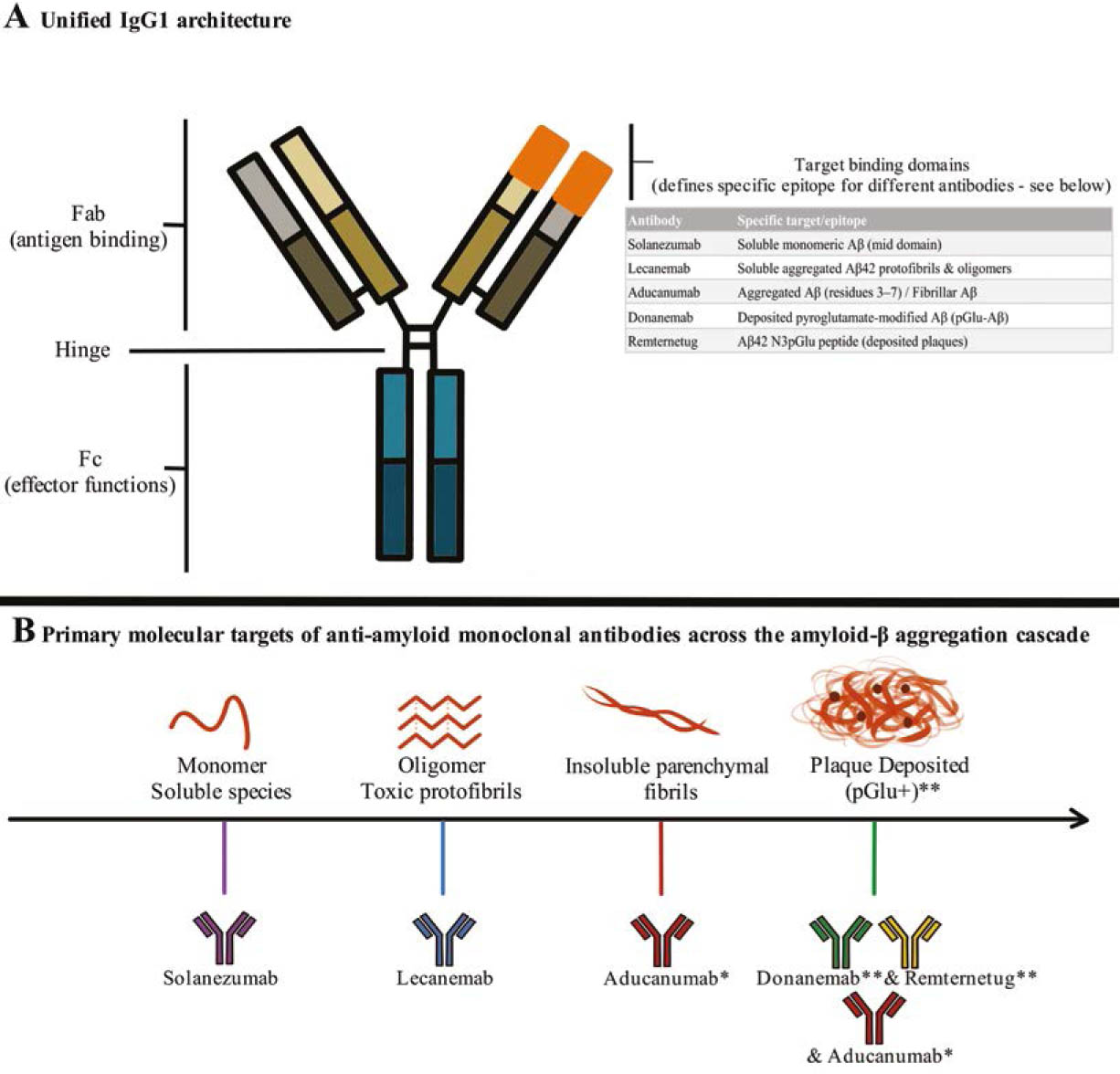
Figure 1.
Unified IgG1 antibody structure and therapeutic targets across the amyloid-β aggregation cascade. Panel A shows the general structure of an IgG1 antibody. The variable regions (antigen-binding domains) determine the unique specificity of these therapeutics for different amyloid-β species, as detailed in the accompanying table. In contrast, the Fc region mediates effector functions, such as microglia-mediated phagocytosis, which is essential for the clearance of established plaques (e.g., by donanemab). Panel B illustrates the progression from soluble monomers to deposited plaques, with specific binding sites for approved and investigational agents.
* Binds both fibrils and established plaques (residues 3-7).
** pGlu+ specific antibodies.
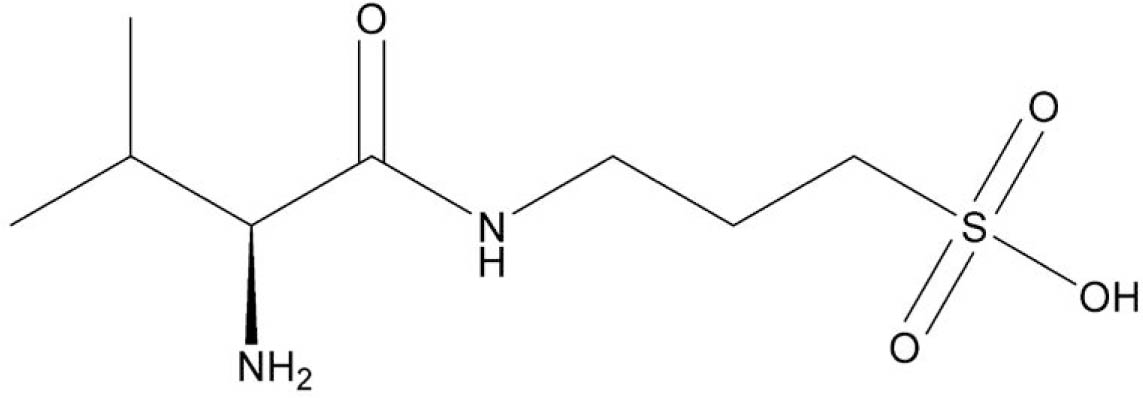
Figure 2.
Structural formula of valiltramiprosate (ALZ-801). An oral small-molecule prodrug of tramiprosate designed to inhibit the formation of neurotoxic amyloid-beta oligomers. The structure was generated in ChemDraw based on the SMILES string from the PubChem database.