
Introduction
Alzheimer's disease (AD) is the leading cause of dementia globally, affecting an estimated 55 million people, with numbers expected to triple by 2050. The amyloid cascade hypothesis—postulating that cerebral accumulation of amyloid-β (Aβ) initiates a pathological sequence culminating in tau propagation, neuroinflammation, and neuronal loss-has guided therapeutic development for three decades. After a prolonged series of clinical failures, recent regulatory approvals of anti-amyloid monoclonal antibodies have validated this target, establishing biomarker-confirmed early-stage disease as the optimal therapeutic window. This review presents six agents targeting the amyloid pathway, ordered from approved therapies to those in advanced development (Figure 1, Figure 2).
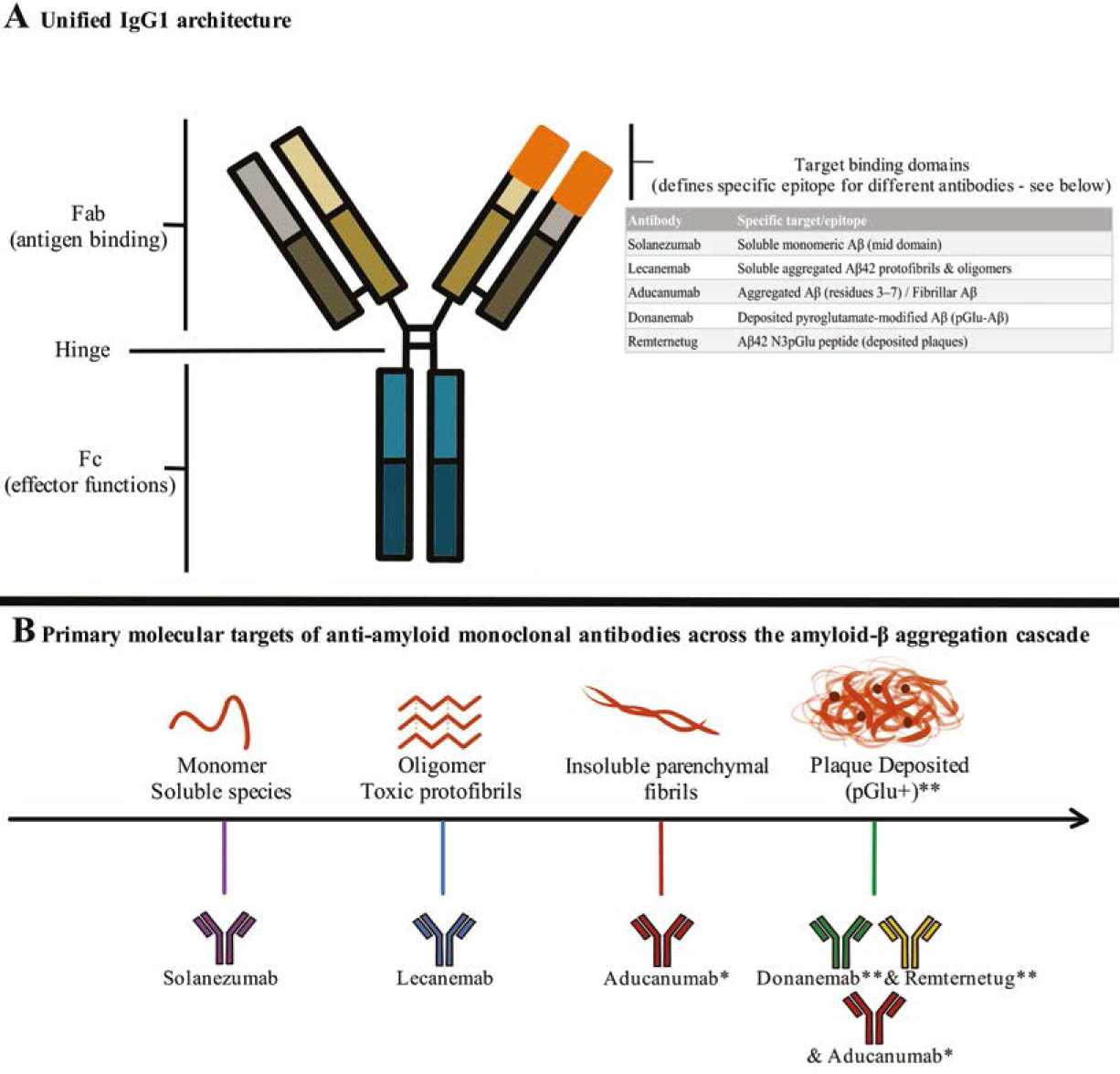
Figure 1.
Unified IgG1 antibody structure and therapeutic targets across the amyloid-β aggregation cascade. Panel A shows the general structure of an IgG1 antibody. The variable regions (antigen-binding domains) determine the unique specificity of these therapeutics for different amyloid-β species, as detailed in the accompanying table. In contrast, the Fc region mediates effector functions, such as microglia-mediated phagocytosis, which is essential for the clearance of established plaques (e.g., by donanemab). Panel B illustrates the progression from soluble monomers to deposited plaques, with specific binding sites for approved and investigational agents.
* Binds both fibrils and established plaques (residues 3-7).
** pGlu+ specific antibodies.
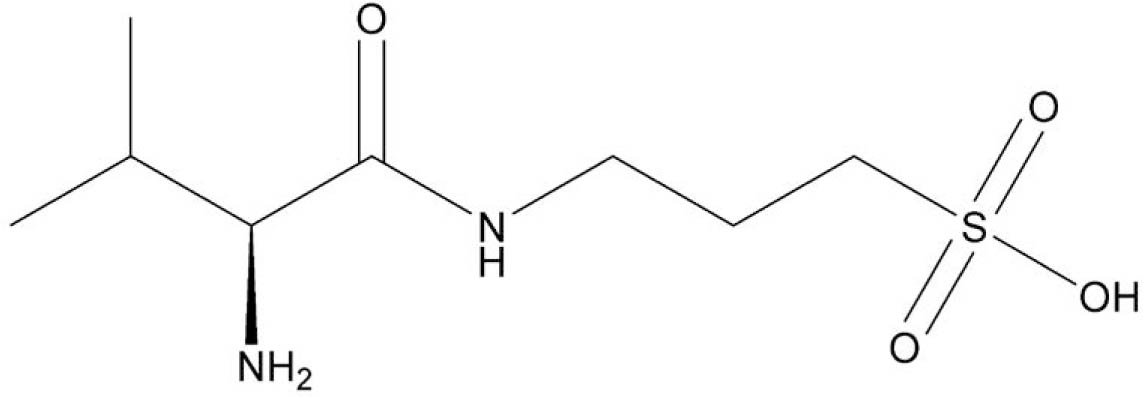
Figure 2.
Structural formula of valiltramiprosate (ALZ-801). An oral small-molecule prodrug of tramiprosate designed to inhibit the formation of neurotoxic amyloid-beta oligomers. The structure was generated in ChemDraw based on the SMILES string from the PubChem database.
Lecanemab (LEQEMBI)
Mechanism of Action
Lecanemab is a humanized IgG1 monoclonal antibody (IV) that selectively targets soluble aggregated Aβ42 protofibrils and oligomers, with limited affinity for insoluble fibrillar plaques and Aβ40-rich vascular amyloid (CAA) (Figure 1) [1]. By engaging upstream, neurotoxic soluble species, it achieves robust plaque clearance on amyloid PET and reduces downstream phosphorylated tau, while its reduced binding to vascular amyloid is associated with lower ARIA-H rates than those seen with some other anti-Aβ antibodies [1].
Clinical Efficacy
In the pivotal Phase 3 CLARITY-AD trial (N = 1795, early AD, amyloid-confirmed, 18 months), lecanemab met its primary endpoint: a 0.45-point difference on the CDR-SB versus placebo, representing a 27% slowing of clinical decline [2]. All major secondary endpoints were met, including ADAS-Cog, ADCS-MCI-ADL, and ADCOMS, alongside marked amyloid PET clearance and favourable CSF/plasma biomarker changes. Benefit was greatest in participants with lower baseline tau burden, consistent with the mechanism of interrupting amyloid-driven pathology before widespread tau propagation. Lecanemab received accelerated FDA approval in January 2023, full approval in July 2023, and conditional EMA authorisation in April 2025, restricted to patients with zero or one ApoE4 allele.
Safety and Tolerability
The primary safety signal is amyloid-related imaging abnormalities (ARIA)—ARIA-E (oedema, 12.6%) and ARIA-H (microhaemorrhages, 17.3%)—predominantly asymptomatic and self-resolving. Infusion-related reactions (21.4%) are the most frequent adverse event [1]. ARIA incidence is substantially higher in ApoE4 carriers, particularly ɛ4/ɛ4 homozygotes. Mandatory MRI surveillance is required throughout treatment.
Donanemab (Kisunla)
Mechanism of Action
Donanemab is a humanized IgG1 monoclonal antibody (IV) directed against the N-terminally truncated, pyroglutamate-modified form of amyloid-β (pGlu-Aβ)—an epitope exclusive to deposited plaques (Figure 1) [3–4]. Binding promotes plaque clearance via microglia-mediated phagocytosis. The pGlu-Aβ target enables treatment discontinuation once amyloid negativity is achieved, limiting cumulative ARIA exposure; its tau-stratified trial design confirmed that earlier intervention (low/medium tau) yields substantially greater clinical benefit.
Clinical Efficacy
In the Phase 3 TRAILBLAZER-ALZ 2 trial (N = 1736, early symptomatic AD, amyloid and tau PET-confirmed, 76 weeks), donanemab met its primary endpoint on the iADRS composite scale [4–5]. In participants with low/medium tau pathology, disease progression was reduced by approximately 35% versus placebo. CDR-SB, ADAS-Cog13, and ADCS-iADL were significantly improved in this pre-specified stratum. Amyloid clearance was achieved in 84% of participants by week 76; plasma p-tau217 was significantly reduced, indicating a downstream tau impact. FDA approval was granted on July 2, 2024; EMA approval followed on September 24, 2024, both restricting use to patients with zero or one ApoE4 allele and confirmed amyloid pathology [6].
Safety and Tolerability
ARIA-E (24%) and ARIA-H (31.4%) represent the primary safety concerns. Three deaths were possibly treatment-related (ARIA-associated intracranial haemorrhage). Infusion reactions occurred in approximately 8% of patients. ApoE4 carriers, particularly homo-zygotes, face significantly higher ARIA risk. Pre-existing microhaemorrhages or siderosis are exclusion criteria; regular MRI monitoring is mandatory throughout treatment [3, 6].
Aducanumab (Aduhelm) — Withdrawn 2024
Mechanism of Action
Aducanumab is a human IgG1 monoclonal antibody (IV) targeting aggregated Aβ at residues 3–7, with preferential affinity for insoluble parenchymal fibrils and amyloid plaques (Figure 1)[7]. Unlike agents engaging soluble species, it acts on established deposits—producing robust biomarker effects but, as its development showed, inconsistent clinical benefit.
Clinical Efficacy
The Phase 3 EMERGE study (N = 1643, MCI or mild AD, amyloid-confirmed, 78 weeks) met its primary CDR-SB endpoint in the high-dose arm, demonstrating a 22% reduction in clinical decline [8]. Secondary endpoints (ADAS-Cog13: 27%; MMSE: 18%; ADCSADL-MCI: 40%) were also met. Amyloid PET showed dose – and time-dependent plaque reduction, with 48% of high-dose patients reaching below-threshold levels. However, the identically designed ENGAGE trial failed to meet its primary endpoint (CDR-SB: +2% vs. placebo, high-dose), with no significant changes in secondary endpoints. The discordant outcomes between the two Phase 3 trials became the central point of controversy [8–9]. The FDA granted accelerated approval in June 2021 on the basis of amyloid reduction as a surrogate; Biogen voluntarily withdrew the drug globally in January 2024 following widespread coverage denials and inconclusive clinical evidence.
Safety and Tolerability
ARIA-E occurred in 35% (EMERGE) and 36% (ENGAGE) of high-dose patients; symptomatic ARIA was observed in 20% and 29%, respectively; serious ARIA occurred in approximately 1.5% in both trials, with 98% of events resolving. A dose-titration protocol was used to mitigate risk. ApoE4 carriers represent the primary high-risk group [8].
Solanezumab (LY2062430)
Mechanism of Action
Solanezumab is a humanized IgG1 monoclonal antibody (IV) binding the mid-domain of soluble monomeric Aβ, preventing aggregation into oligomers and fibrils (Figure 1) [10]. It does not bind fibrillar plaque Aβ, acting upstream of plaque deposition—at the earliest identifiable stage of the amyloid cascade, where neuronal dysfunction may still be reversible.
Clinical Efficacy
The Phase 3 A4 trial (NCT02008357) enrolled cognitively unimpaired adults aged 65–85 with elevated amyloid on 18F-florbetapir PET, CDR 0, MMSE 25–30, with no clinical dementia (N = 1169, 240 weeks) [10–11]. The primary endpoint—change in the Preclinical Alzheimer Cognitive Composite (PACC)—was not met. No statistically significant difference in cognitive decline was observed after 4.5 years. The secondary Cognitive Function Index (CFI) score was also non-significant. Target engagement was confirmed by amyloid PET (modest attenuation of amyloid accumulation), but tau PET showed comparable progression in both arms. Notably, more than one-third of participants progressed to a CDR score >0 during follow-up, reinforcing amyloid PET as an early AD biomarker.
Safety and Tolerability
Solanezumab showed an excellent safety profile over 4.5 years [10]. ARIA-E occurred in less than 1% of participants in both arms; ARIA-H was 29.2% (solanezumab) versus 32.8% (placebo), indicating no treatment-related increase. No new safety signals emerged over the full follow-up period.
Remternetug (LY3372993)
Mechanism of Action
Remternetug is a human IgG1-κ monoclonal antibody (IV/SC) targeting the Aβ42 N3pGlu peptide—a pyroglutamate-modified, highly aggregation-prone Aβ species central to plaque nucleation (Figure 1) [12–13]. In Phase 1b/2 MAD studies, patients receiving the highest dose (2800 mg) achieved amyloid levels below 24 centiloids within three months, demonstrating a capacity for rapid and deep plaque clearance unmatched by earlier-generation antibodies.
Clinical Efficacy
Phase 3 results are not yet available. Remternetug is currently being evaluated in TRAIL-RUNNER-ALZ 1 (NCT05463731; MCI or mild AD, amyloid PET-confirmed, MMSE 20–30, ages 60–85; primary endpoint: change in amyloid PET burden) [14], TRAILRUNNER-ALZ 3 (NCT06653153; P-tau-positive, minimal impairment, ages 50–85; primary endpoint: time to clinically meaningful progression on the CDR) [15], and the DIAN-TU Phase II/III study (NCT05552157) in autosomal dominant AD mutation carriers 11–25 years before estimated symptom onset [16].
Safety and Tolerability
No formal Phase 3 safety data have been disclosed. Early reports indicate an ARIA profile consistent with the anti-Aβ antibody class. All Phase 3 programmes include rigorous MRI monitoring. ApoE4 carrier status is the presumed primary risk modifier.
Valiltramiprosate (ALZ-801)
Mechanism of Action
Valiltramiprosate is an oral small-molecule prodrug converted to tramiprosate and 3-sulfopropanoic acid (3-SPA), both with high blood–brain barrier permeability (Figure 2). Acting via multiligand, enveloping conformational stabilisation of Aβ monomers into a semicyclic state, the compounds synergistically prevent assembly into neurotoxic oligomers–without direct interaction with plaques or vascular amyloid [17–18]. An approximately tenfold higher affinity for GABA_A receptors compared with GABA itself confers additional anti-inflammatory effects via microglia and astrocytes [19]. Unlike antibodies, the mechanism does not involve Fc-mediated plaque clearance, accounting for the absence of ARIA-E.
Clinical Efficacy
The Phase 3 APOLLOE4 trial (NCT04770220) enrolled 325 APOE4/4 homozygotes aged 50–80 with MCI or mild AD (MMSE 22–30, CDR 0.5 or 1, 78 weeks) [20]. The primary endpoint (ADAS-Cog13) was not met in the overall population (11% improvement, non-significant). In the pre-specified MCI subgroup (MMSE >26), the primary endpoint was met: a 52% slowing of cognitive decline on ADAS-Cog13 [21]. Key secondary endpoints in MCI patients were equally compelling: CDR-SB showed a 102% improvement relative to placebo (net improvement versus baseline in treated patients); the DAD showed a 96% reduction in decline; and the A-IADLw slowed by 70%. MRI volumetrics demonstrated an 18% reduction in hippocampal volume loss and a 22% reduction in whole-brain atrophy over 78 weeks in the MCI group. Strong correlations between hippocampal volume preservation and ADAS-Cog13 (r = −0.40) and CDR-SB (r = −0.44) scores provide a mechanistic link between structural neuroprotection and clinical outcome [21].
Safety and Tolerability
Adverse events were approximately twofold more frequent than with placebo, driven by gastrointestinal effects: nausea (25.8% vs. 4.9%), weight loss (14.1% vs. 7.4%), vomiting (9.8%), and decreased appetite (9.8%). Neuroimaging safety was favourable: ARIA-H 30% vs. 36% placebo; superficial siderosis 13% vs. 17% placebo; ARIA-E 3.4% in both groups–lower than those of antibody comparators, consistent with the absence of plaque/vascular amyloid binding [21]. A long-term extension study (NCT06304883) is ongoing [22].
Summary
The regulatory approvals of anti-amyloid monoclonal antibodies represent a pivotal milestone in Alzheimer's disease pharmacotherapy. They provide strong clinical support for the amyloid cascade hypothesis. Taken together, these findings highlight a consistent therapeutic pattern. The magnitude of clinical benefit is intrinsically linked to early intervention in biomarker-confirmed populations. This is particularly evident in patients with low-to-medium tau burden. However, the translation of profound biological efficacy—evidenced by rapid and deep amyloid clearance—into clinical outcomes remains modest. Furthermore, for immunotherapy, continuous neuroimaging is required. The risk of amyloid-related imaging abnormalities (ARIA) associated with plaque-clearing antibodies, strongly modulated by APOE4 genotype, further limits widespread clinical utility. Consequently, while targeting amyloid pathology establishes a critical new standard of care, optimal and comprehensive disease modification will likely require complementary, non-amyloid and multimodal therapies. These approaches are to be evaluated in Part 2 of this review.
List of Abbreviations
- Aβ
— amyloid-β
- AD
— Alzheimer's disease
- ADAS-Cog
— Alzheimer's Disease Assessment Scale–Cognitive Subscale
- ADCS-ADL
— Alzheimer's Disease Cooperative Study–Activities of Daily Living
- ApoE4
— apolipoprotein E ɛ4 allele
- ARIA
— amyloid-related imaging abnormalities
- ARIA-E
— ARIA with oedema
- ARIA-H
— ARIA with haemorrhage/haemosiderosis
- CAA
— cerebral amyloid angiopathy
- CDR
— Clinical Dementia Rating
- CDR-SB
— CDR–Sum of Boxes
- CSF
— cerebrospinal fluid
- DMT
— disease-modifying therapy
- EMA
— European Medicines Agency
- FDA
— Food and Drug Administration
- GABA_A
— gamma-aminobutyric acid type A receptor
- iADRS
— integrated Alzheimer's Disease Rating Scale
- IgG1
— immunoglobulin G subclass 1
- IV
— intravenous
- MCI
— mild cognitive impairment
- MMSE
— Mini-Mental State Examination
- MRI
— magnetic resonance imaging
- PACC
— Preclinical Alzheimer Cognitive Composite
- PET
— positron emission tomography
- pGlu-Aβ
— pyroglutamate-modified amyloid-β
- p-tau
— phosphorylated tau
- SC
— subcutaneous
Acknowledgements
Not applicable.