
1. Introduction
Alzheimer’s disease (AD) is the most common form of dementia, and its prevalence is rapidly increasing due to the aging of populations. Currently, it is estimated that over 50 million people worldwide suffer from AD, and this number may triple by 2050 [1]. AD is a neurodegenerative brain disorder characterized by the accumulation of extracellular β-amyloid (Aβ) plaques and intracellular neurofibrillary tangles composed of hyperphosphorylated tau protein. These pathological changes lead to progressive neuronal loss, synaptic dysfunction, and disruption of neural connectivity, resulting in a worsening cognitive deficit and dementia [2].
The pathogenesis of AD begins long before the onset of clinical symptoms—processes such as Aβ and tau deposition can start even several decades before a patient experiences the first signs of memory impairment. Research has shown that a decrease in cerebrospinal fluid levels of β-amyloid 42 (Aβ42) may be observed up to 18 years before diagnosis, while an increase in phosphorylated tau 181 levels may occur approximately 11 years prior to clinical recognition of the disease [3]. Unfortunately, currently available treatments– donepezil, rivastigmine, galantamine, and memantine–are only symptomatic, alleviating the symptoms without significantly altering disease progression [4]. Despite intensive research efforts, an effective disease-modifying therapy has not yet been developed.
In response to these challenges, current research in AD is focused on three key areas: early diagnosis, molecularly targeted therapies, and the identification of new, more specific biomarkers that can be detected in bodily fluids and through neuroimaging techniques. Additionally, modern genetic techniques allow for the identification of individuals at increased risk of developing AD, opening opportunities for therapeutic intervention even before the onset of symptoms [2].
The aim of this article is to present the current state of knowledge regarding diagnostic biomarkers and biological therapies used in AD. This review focuses on the potential for early detection of neurodegenerative pathology using fluid-based, imaging, and genetic biomarkers, as well as on the therapeutic potential of monoclonal antibodies, antisense therapies, and advanced drug delivery systems. Furthermore, clinical limitations, practical considerations, and ethical issues related to the implementation of new diagnostic and therapeutic strategies are discussed.
2. Methodology
This narrative literature review was conducted in accordance with the SANRA (Scale for the Assessment of Narrative Review Articles) guidelines. A literature search was performed between March 15 and May 20, 2025, using two databases: MEDLINE (via PubMed) and Scopus. The search included English-language publications published between 2018 and 2025.
The following combination of keywords was applied: (“Alzheimer’s disease” OR “Alzheimer disease”) AND ((“biomarkers” OR “fluid biomarkers” OR “blood biomarkers” OR “CSF” OR “cerebrospinal fluid” OR “PET” OR “MRI” OR “neuroimaging”) OR (“monoclonal antibodies” OR “anti-amyloid” OR “lecanemab” OR “donanemab” OR “aducanumab” OR “immunotherapy” OR “tau protein” OR “antisense oligonucleotides” OR “ASO”)). Eligible studies included original review papers, clinical trials, and original research articles focusing on diagnostic biomarkers or biological therapies in AD. Exclusion criteria comprised non-English articles, preclinical studies (animal or in vitro), conference abstracts, non–full-text publications, and those not directly related to the review topic. One exception was made for a 2014 study—EXPEDITION 1 and 2—in the context of discussing the 2018 EXPEDITION 3 trial.
After full-text screening, a total of 53 publications were selected based on relevance and recency. A formal risk of bias assessment was not conducted, as narrative reviews do not require tools such as ROBIS or GRADE. Nonetheless, special attention was given to source credibility, data currency, and the representativeness of reported findings.
3. Diagnostic Biomarkers
Early and accurate diagnosis of AD remains one of the major challenges in modern neurology. Advances in research on neurodegenerative mechanisms have enabled researchers to identify biomarkers that allow the detection of AD-specific pathology even before clinical symptoms of dementia appear. These biomarkers, detectable in body fluids, brain imaging, and genetic analyses, now form the foundation of modern biological diagnostics for AD.
In 2018, the National Institute on Aging and Alzheimer’s Association (NIA-AA) proposed the AT(N) classification system, which was updated in 2024. This approach evaluates three main categories of biomarkers:
A (amyloid): the presence of β-amyloid deposition pathology,
T (tau): the presence of phosphorylated tau protein,
N (neurodegeneration): neuronal injury and brain structural damage. [5]
Using the AT(N) framework, we can accurately define the biological stage of AD and stratify patients regardless of the severity of clinical symptoms. The sequence of biomarker changes follows a specific order: β-amyloid abnormalities appear first, followed by tau pathology, and finally, signs of neurodegeneration.
The 2024 revision expanded the diagnostic framework to include fluid biomarkers measurable not only in cerebrospinal fluid (CSF) but also in blood. In plasma, key biomarkers include the Aβ42:Aβ40 ratio, p-tau217, neurofilament light chain (NfL), and glial fibrillary acidic protein (GFAP). In CSF, commonly used markers include Aβ42, the Aβ42:Aβ40 ratio, p-tau181, and NfL. Although some of these markers—such as Aβ42:Aβ40 and NfL—are measurable in both compartments, they were originally validated in CSF. Recent advances have shown that blood-based assays can achieve comparable sensitivity and specificity. Nonetheless, most available data are derived from research cohorts in specialized settings, often with limited population diversity, which restricts the generalizability of findings.
Significant challenges remain in standardizing plasma-based tests. The absence of unified reference ranges and variability across analytical platforms continues to affect the reproducibility and reliability of results in routine clinical practice.
The updated classification also emphasizes the complementary role of imaging and fluid biomarkers, recognizing their equal importance in diagnosis, monitoring disease progression, and qualifying patients for biological therapies (Table 1). [6]
Table 1.
Updated AT(N) Classification According to NIA-AA (2024)
| Category | Symbol | Biomarker Type | Example Markers | Detection Method |
|---|---|---|---|---|
| A | A+/A– | β-amyloid | ↓ Aβ42 (CSF), ↓ Aβ42/Aβ40 (plasma), Positive amyloid PET | CSF (ELISA, mass spectrometry), Plasma (Simoa), PET |
| T | T+/T– | Phosphorylated tau | ↑ p-tau181, ↑ p-tau217 (CSF, plasma), Positive tau PET | CSF, Plasma (Simoa), PET (e.g., flortaucipir) |
| N | N+/N– | Neurodegeneration | ↑ t-tau (CSF), ↑ NfL, ↑ GFAP (plasma), brain atrophy on MRI, ↓ FDG-PET | CSF, Plasma, MRI, FDG-PET |
| (G) | G+/G– | Gliosis / Neuroinflammation | ↑ GFAP, ↑ YKL-40, ↑ TREM2 | CSF, Plasma (Simoa, ELISA) |
3.1. Fluid Biomarkers
Researchers can analyze biomarkers in both blood plasma and CSF. Traditionally, CSF analysis focuses on three key indicators: levels of Aβ42 (and the Aβ42/Aβ40 ratio), total tau (t-tau), and phosphorylated tau (p-tau). In AD, Aβ42 levels decrease while t-tau and p-tau levels increase—these changes currently form the biological foundation for AD diagnosis [7].
In recent years, researchers have focused particular attention on blood-based biomarkers, as they are less invasive, more cost-effective, and easier to monitor repeatedly than CSF biomarkers. Among these, phosphorylated forms of tau—especially p-tau181 and p-tau217—stand out. Studies have shown that blood levels of p-tau181 correlate with tau and β-amyloid pathology in the brain, making it possible to distinguish AD from other neurodegenerative disorders. Additionally, higher p-tau181 levels are associated with faster cognitive decline and hippocampal atrophy, suggesting its potential prognostic value [8]. p-tau217 demonstrates even higher diagnostic accuracy. Its plasma concentration strongly correlates with tau pathology in both CSF and brain imaging, and its sensitivity and specificity outperform other phosphorylated tau isoforms [9]. Notably, individuals with elevated p-tau181 and p-tau217 levels show a significantly increased risk of developing dementia, particularly before the age of 78, which highlights their potential utility in early diagnosis before clinical symptoms appear [10].
In May 2025, the FDA approved Lumipulse G pTau217/β-Amyloid 1-42, the first commercial blood test for preliminary AD diagnosis. In a clinical study (n = 499), it achieved an AUC of 0.963–0.966, a positive predictive value (PPV) of 91.7%, and a negative predictive value (NPV) of 97.3%, compared to positron emission tomography (PET) or CSF results [11]. Similarly, the Quest AD-Detect™ test (LC-MS/MS) reported an AUC of approximately 0.90, with 100% sensitivity and about 79% specificity relative to amyloid PET imaging (Aβ42/40 cutoff < 0.16) [12–13].
Despite these promising results, clinicians do not yet routinely use blood biomarkers in everyday practice. This is partly due to the absence of standardized pre-analytical protocols and variability in immunoassay methods across laboratories. Moreover, most available data come from highly selected, often homogeneous populations, which limits their generalizability to broader clinical settings.
In addition to established biomarkers, researchers are actively exploring novel indicators to support AD diagnosis. One example is NfL, a marker of axonal damage. Elevated NfL levels in blood correlate with the extent of neurodegeneration. Other emerging candidates include GFAP—a marker of astrocyte activation—as well as YKL-40 and TDP-43, which are linked to neuroinflammation and neuronal degeneration.
For instance, studies have found that patients who later developed dementia had, at baseline, lower Aβ42/40 ratios and higher levels of p-tau181, p-tau217, t-tau, NfL, and GFAP, compared to individuals who remained cognitively stable, including those without AD [10].
However, for most of these biomarkers, clearly defined cutoff values and sufficient data confirming their ability to distinguish AD from other types of dementia are still lacking. Further validation studies are needed in clinically and demographically diverse populations.
3.2. Neuroimaging Biomarkers
Magnetic resonance imaging (MRI), particularly T1-weighted imaging, enables detection of hippocampal and cortical atrophy, changes strongly correlated with the progression of AD. Even in the early stages, such as mild cognitive impairment (MCI), reduced hippocampal and temporal lobe volume can be observed and may serve as a predictor of progression to full-blown dementia. As the disease advances, cortical atrophy extends to additional brain regions, which becomes clearly visible on MRI scans [14–15].
Researchers use advanced MRI analysis techniques, such as volumetry and quantitative volume analysis, not only to monitor the progression of atrophy but also to calculate biometric indicators that support early diagnosis. This approach enables detection of subtle structural brain changes before clinical symptoms become apparent [2].
Another important neuroimaging tool in AD diagnostics is PET, which provides information about cerebral metabolism and the presence of pathological proteins. The most commonly used modality is FDG-PET, which measures glucose uptake. In advanced stages of the disease, reduced glucose metabolism is typically observed, particularly in the temporoparietal and occipital regions [16].
Amyloid PET imaging, which uses labeled ligands (e.g., florbetapir, flutemetamol), allows us to detect β-amyloid plaques. A positive amyloid PET result confirms the presence of amyloid pathology—one of the hallmark features of AD [17].
A newer imaging modality is tau PET, which enables visualization of intracellular neurofibrillary tangles composed of hyperphosphorylated tau protein. By using ligands such as [18F]flortaucipir, researchers can precisely identify affected brain regions, which correlate with the clinical stage of the disease [17–18].
Despite their high diagnostic value, neuroimaging biomarkers are not yet widely used in routine clinical practice due to high costs, limited access to advanced imaging technologies, and the need for expert interpretation. PET imaging also involves exposure to ionizing radiation. Most data come from academic settings, limiting clinical applicability; real-world and cost-effectiveness studies are still needed.
Table 2.
Comparison of Sensitivity and Specificity of Selected Biomarkers in the Diagnosis of Alzheimer’s Disease
| Biomarker | Sample Type / Method | Sensitivity (%) | Specificity (%) | Notes |
|---|---|---|---|---|
| Aβ42 / Aβ42:Aβ40 | CSF | 85–95 | 80–90 | Decreased Aβ42 correlates with β-amyloid deposition |
| Aβ42:Aβ40 | Blood (plasma) | 80–88 | 70–85 | Strong correlation with amyloid PET; easily accessible, but not standardized |
| p-tau181 | CSF | 85–90 | 85–90 | Correlates with tau pathology and clinical progression |
| p-tau217 | Blood (plasma) | 89–94 | 90–96 | Highest specificity for differentiating AD from other dementias |
| NfL | Blood (plasma)/CSF | 75–85 | 60–70 | Nonspecific – elevated in many neurodegenerative diseases |
| GFAP | Blood (plasma) | 80–85 | 75–85 | Correlates with astroglial activation and amyloid pathology |
| Amyloid PET | Imaging | 90–95 | 85–95 | High accuracy; expensive and limited availability |
| Tau PET | Imaging | 85–90 | 85–90 | Accurate for assessing spread of tau pathology; limited availability |
3.3. Genetic Biomarkers
Among known genetic markers, the ε4 allele of the apolipoprotein E (APOE) gene remains the strongest risk factor for late-onset Alzheimer’s disease (LOAD). The APOE gene encodes a protein involved in lipid metabolism and cholesterol transport, and its ε4 variant significantly increases the risk of developing AD. Researchers estimate that 15– 20% of the general population carries at least one copy of the ε4 allele, while its prevalence is much higher among patients with Alzheimer’s disease. Carrying one ε4 allele increases the risk of AD approximately threefold, while homozygosity may raise the risk to 12-fold and is associated with earlier symptom onset [19–21].
Although researchers have not fully clarified the exact mechanism through which APOE ε4 contributes to disease development, studies suggest that it impairs β-amyloid clearance from the brain’s interstitial space, leading to accumulation and plaque formation characteristic of AD. In addition, the ε4 variant enhances inflammatory responses and oxidative stress, thereby accelerating neurodegenerative processes.
In the case of familial Alzheimer’s disease (FAD), which is hereditary, the primary etiological factors include mutations in genes encoding the amyloid precursor protein (APP), presenilin 1 (PSEN1), and presenilin 2 (PSEN2). These mutations lead to excessive production of β-amyloid and increase its neurotoxicity. Although they account for only a small percentage of all AD cases, their presence typically results in very early disease onset, often before the age of 60 [22]. APP mutations directly affect Aβ production, while PSEN1 and PSEN2 mutations impair γ-secretase function, the enzyme responsible for APP proteolysis, thereby favoring production of the highly aggregative Aβ42 form.
Modern genetic research increasingly uses polygenic risk scores (PRS), which combine the effects of multiple genetic variants to estimate an individual’s risk of developing AD. PRS allows scientists to integrate both known and newly identified polymorphisms, offering more accurate risk prediction than any single mutation alone. Studies have demonstrated that higher PRS values correlate with increased likelihood of disease development and with biomarker levels such as Aβ and tau in CSF [22].
Despite their growing diagnostic potential, clinicians have not yet adopted PRS in routine practice. Key challenges include inconsistent methods, limited ethnic diversity in studies, and unclear interpretation at the individual level; further validation and ethical considerations are essential.
4. Biological Therapies
Recent research on AD has focused on developing biological therapies that target the molecular mechanisms underlying neurodegeneration. Scientists are actively exploring new therapeutic strategies, including passive immunotherapy with monoclonal antibodies, antisense oligonucleotide therapies, vaccines, and drugs that target tau protein and β-amyloid.
4.1. Monoclonal Antibodies Targeting β-Amyloid
To date, most therapeutic strategies evaluated in clinical trials have focused on monoclonal antibodies directed against β-amyloid. Figure 1 illustrates the stages of Aβ aggregation and the binding sites of the antibodies discussed below.
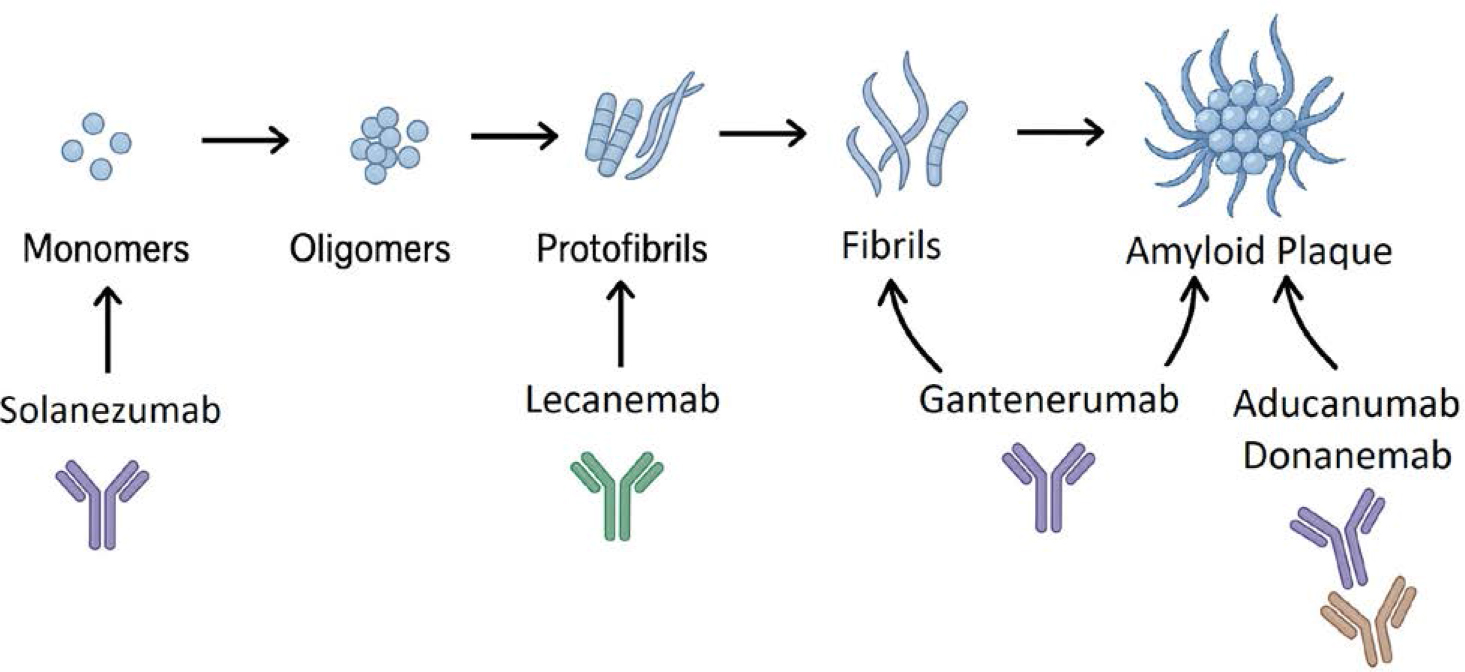
Figure 1.
Mechanisms of Action of Selected Monoclonal Antibodies Against β-Amyloid at Different Stages of Aggregation.
Solanezumab binds Aβ monomers, lecanemab targets protofibrils, gantenerumab binds fibrils and plaques, while aducanumab and donanemab target mature amyloid deposits.
Disclaimer: The diagram provides a conceptual overview; actual binding mechanisms of monoclonal antibodies may involve multiple or variable epitopes not depicted here.
Source: Author’s own elaboration.
Aducanumab was the first antibody to receive accelerated approval from the FDA. This humanized IgG1 monoclonal antibody selectively binds aggregated β-amyloid in the brain. The FDA approved aducanumab in June 2021 based on its ability to target amyloid pathology rather than clinical symptoms alone. Clinical trials showed that aducanumab reduced amyloid plaque burden visible in PET imaging; however, its effects on cognitive function remained inconclusive, sparking widespread scientific debate. Another major concern is its safety profile–aducanumab is associated with a risk of amyloid-related imaging abnormalities (ARIA), including cerebral edema (ARIA-E) and microhemorrhages (ARIA-H), particularly in carriers of the APOE ε4 allele [23–24].
Lecanemab, which targets soluble β-amyloid protofibrils, received FDA approval in January 2023. In February 2025, the European Medicines Agency (EMA) and the Committee for Medicinal Products for Human Use (CHMP) issued a positive opinion, and the European Commission granted formal authorization in April 2025, restricting use to patients carrying no more than one APOE ε4 allele. In the phase III Clarity AD trial (n = 1795), researchers demonstrated that lecanemab moderately slowed cognitive decline— patients showed a –0.45 point difference on the CDR-SB scale after 18 months compared to placebo (95% CI: –0.67 to –0.23; P < 0.001), corresponding to an approximate 27% reduction in progression rate. Treatment also significantly reduced amyloid load as seen on PET imaging. Although ARIA side effects (mainly ARIA-E and ARIA-H) did occur, the frequency was lower than with aducanumab. ARIA-E was observed in 12.6% of patients (symptomatic in 2.8%) [25–29].
Donanemab, one of the most recent anti-amyloid monoclonal antibodies, was evaluated in the large, multicenter TRAILBLAZER-ALZ 2 trial (n = 1736) over 76 weeks. In participants with “intermediate” levels of brain tau, researchers found a 3.25-point reduction in cognitive decline (measured using iADRS) compared to placebo (–6.02 vs. –9.27; 95% CI: 1.88–4.62; P < 0.001), corresponding to a ~35% reduction in decline. In the overall study population, the difference was 2.92 points (95% CI: 1.51–4.33; P < 0.001). Donanemab also showed a significant benefit in functional outcomes, with a 0.67-point improvement on the CDR-SB scale in the low/medium tau group (95% CI: 0.40–0.95; P < 0.001) and a 0.70-point benefit in the full cohort (95% CI: 0.45–0.95; P < 0.001). ARIA-E occurred in 24% of patients receiving donanemab and ARIA-H in 31.3%, compared to 1.9% and 13.0%, respectively, in the placebo group. Symptomatic ARIA-E was reported in 5.8% of treated patients [30–32].
In contrast to aducanumab and lecanemab, which received regulatory approval, other monoclonal antibodies failed to meet clinical expectations. Gantenerumab, designed to bind Aβ aggregates, was tested in two large phase III trials—GRADUATE 1 and GRADUATE 2. Both trials demonstrated significant reductions in amyloid plaque burden (average decrease of 59–63 centiloids; p < 0.001) and favorable changes in fluid biomarkers, including decreased plasma and CSF levels of p-tau217, GFAP, and NfL. However, the clinical impact was statistically insignificant. CDR-SB score changes compared to placebo were –0.14 points in GRADUATE 1 (95% CI: –0.49 to 0.20) and –0.26 in GRADUATE 2 (95% CI: –0.60 to 0.08), both failing to reach statistical significance [33–35].
Solanezumab, which targets monomeric forms of Aβ, showed even weaker effects on amyloid pathology, with PET findings showing no significant changes. In the EXPEDITION 3 trial (n = 2129), the difference in ADAS-Cog14 scores between treatment and placebo groups was just –0.80 points (95% CI: –1.73 to 0.14; P = 0.10), and –0.49 points for MMSE—neither reaching statistical significance. As a result, developers discontinued the drug’s clinical program. Earlier data from EXPEDITION 1 and 2 similarly failed to show cognitive benefits [35–36].
Both solanezumab and gantenerumab were also tested in the DIAN-TU-001 study, the first randomized clinical trial involving patients with dominantly inherited Alzheimer’s disease (DIAD). In this 4-year study (n = 194), neither antibody improved cognitive function or biomarker profiles compared to placebo. While gantenerumab did reduce amyloid burden, this effect did not translate into clinical benefit [33, 37].
These disappointing results emphasize that even substantial reductions in Aβ biomarkers do not necessarily lead to clinical improvement. Factors such as timing of treatment initiation, CNS penetration, mechanistic heterogeneity, and coexisting tau pathology likely influence therapeutic efficacy.
A common limitation of anti-amyloid therapies remains their modest clinical benefit, which, although statistically significant, may be imperceptible to patients and caregivers. Additionally, these treatments are costly, require intravenous administration, and depend on advanced diagnostics such as PET and MRI, limiting their accessibility. Table 3 summarizes the results of the key clinical trials discussed above.
Table 3.
Comparison of Anti-Aß Antibody Trials: Efficacy, Safety, and Clinical Significance Sources: [24,29, 32, 35–37, 53]
| Study (Year) | Antibody | Number of Patients | Mean Effect (vs Placebo) | p-value | 95% Cl | ARIA-E/ARIA-H (%) | Effect (%) | Duration (months) | Clinical Significance |
|---|---|---|---|---|---|---|---|---|---|
| EMERGE (2022) | Aducanumab (high dose) | 1638 | –0,39 | 0,012 | –0,69 to –0,09 | – | 22% (slowing) | 18 | Yes (moderate slowing) |
| ENGAGE (2022) | Aducanumab (high dose) | 1647 | 0,03 | 0,833 | –0,26 to +0,33 | – | –2% (no effect) | 18 | No significant effect |
| Clarity AD (2022) | Lecanemab | 1795 | –0,45 | <0,001 | –0,67 to –0,23 | 12,6/– | ~27% (slowing) | 18 | Yes (moderate slowing) |
| TRAILBLAZ-ER-ALZ2 (2023) | Donanemab | 1736 | 3,25 (¡ADRS) | <0,001 | 1,88 to 4,62 | 24,0/31,4 | 35% (slowing) | 18 | Yes (substantial slowing) |
| GRADUATE 1 (2023) | Gantenerumab | 985 | –0,31 | 0,1 | –0,66 to 0,05 | 24,9/– | ~8% (not significant) | 27 | No significant effect |
| GRADUATE II (2023) | Gantenerumab | 980 | –0,19 | 0,3 | –0,55 to 0,17 | 24,9/– | ~6% (not significant) | 27 | No significant effect |
| EXPEDITION 1/2 (2014) | Solanezumab | 2052 | –0,8 (ADAS-cog) | 0,24 | –2,1 to 0,5 | 0,9/4,9 | ~O% (no effect) | 18 | No clinical effect |
| EXPEDITION 3 (2018) | Solanezumab | 2129 | –0,8 (ADAS-cog 14) | 0,1 | –1,73 to 0,14 | ~0,1/– | ~11% (no effect) | 19 | No clinical effect |
| DIAN-TU-001 (2024) | Gantenerumab/Solanezumab | 142 | – (b¡omarker-only study) | – | – | – | – | 48 | No clinical effect |
4.2. Immunotherapies Targeting Tau Protein and β-Amyloid
Another direction in the development of Alzheimer’s disease therapies involves immunological strategies targeting tau protein and β-amyloid. In the case of tau, immunotherapy aims to neutralize its pathological forms and inhibit their spread throughout the central nervous system, which could potentially slow neurodegeneration. Several monoclonal antibodies, such as gosuranemab, tilavonemab, and semorinemab, have progressed to clinical trials. These antibodies bind phosphorylated tau and are designed to prevent the formation of neurofibrillary tangles. However, clinical trial results have not demonstrated efficacy in slowing AD progression. Researchers suggest that this may be due to late initiation of treatment, when neurodegeneration is already advanced, or to challenges in appropriately selecting patients, highlighting the need for more precise therapeutic criteria [38–40].
An alternative approach involves active immunization against tau and Aβ using therapeutic vaccines that stimulate the body’s immune response against pathological forms of these proteins. One of the first such candidates was AN1792, a vaccine based on a synthetic Aβ42 peptide. Although early-phase clinical results appeared promising, researchers halted further development after serious adverse events occurred, including encephalitis in approximately 6% of participants [41]. This incident underscored the need for cautious vaccine design and rigorous safety monitoring.
Currently, researchers are developing next-generation vaccines such as ACI-24, UB-311, and ABvac40, which aim to activate the immune system to eliminate amyloid plaques and pathological tau. These candidates are currently undergoing phase II and III trials in larger patient populations. Preliminary data suggest that they may reduce pathological deposits, but their clinical efficacy, especially regarding cognitive improvement, remains uncertain. Furthermore, these vaccines carry a potential risk of inducing neuroinflamma-tory responses, which requires further optimization and thorough evaluation of long-term safety [42–43].
4.3. Targeted Therapies and Emerging Strategies
Among novel approaches to AD treatment, several promising strategies are being explored, including ASOs targeting tau mRNA (e.g., MAPTRx/BIIB080) [41], microglial modulation via TREM2 signaling pathways [45–46], and innovative drug delivery systems that bypass the blood–brain barrier, such as intranasal nanocarriers and microneedles [47]. While these methods remain largely experimental, they reflect a growing interest in targeting gene expression, immune processes, and drug delivery challenges in AD therapy. A detailed discussion of these approaches exceeds the scope of this article, but ongoing research will determine their future role in clinical practice.
5. Discussion
In recent years, researchers have made progress in both biomarkers used for diagnosing AD and biological therapies. Non-invasive blood-based diagnostics are evolving rapidly. Plasma tests using p-tau217, p-tau181, and the Aβ42/40 ratio have shown high diagnostic accuracy, potentially enabling early detection of AD before symptom onset. In 2025, the FDA approved the Lumipulse G pTau217/Aβ42 test as the first commercial blood test for AD diagnosis, achieving sensitivity and specificity rates between 92–97% and a negative predictive value above 95%. The AD-Detect test showed similar performance [7–13]. However, full clinical adoption is still hindered by a lack of standardization, inter-laboratory variability, and insufficient validation across diverse populations.
Ethical concerns also emerge with the development of predictive genetic testing. Identifying increased AD risk based on APOE genotype or PRS can lead to unintended consequences such as anxiety, stigma, or even discrimination, for example, in insurance eligibility. Given the lack of effective preventive strategies, researchers recommend cautious application of predictive testing, limiting it to clinically justified cases and ensuring ethical, legal, and psychological support frameworks are in place.
Improved diagnostics have shifted attention toward early-stage disease-modifying therapies. Phase III clinical trials such as Clarity AD (lecanemab) and TRAILBLAZER-ALZ 2 (donanemab) have confirmed that monoclonal antibody treatments can affect the rate of disease progression, especially in early-stage patients with specific biomarker profiles. Donanemab demonstrated the greatest efficacy in patients with intermediate levels of tau, emphasizing the importance of precise patient stratification and personalized therapy selection based on the extent of neurodegenerative changes.
Despite these advances, the clinical impact of these therapies remains modest. Although PET imaging clearly shows amyloid reduction, the translation of this effect into cognitive benefit is limited. Measures like CDR-SB indicate slowed decline, but the absolute differences are small and may not be perceptible to patients or caregivers. Furthermore, treatments carry risks such as ARIA-E and ARIA-H, particularly in APOE ε4 carriers, which may limit routine clinical application [19–20, 26–32].
The failure of other monoclonal antibodies, such as gantenerumab and solanezumab, despite their effects on biomarkers, has demonstrated that simply targeting β-amyloid does not guarantee clinical improvement. In GRADUATE and EXPEDITION trials, the cognitive outcomes were statistically insignificant. These results may reflect the heterogeneity of AD pathophysiology, coexisting mechanisms like tau pathology, and insufficient brain penetration of the drugs. The timing of intervention also appears crucial—late-stage treatments may be ineffective regardless of pharmacological potency. Furthermore, the stage of amyloid aggregation targeted by each antibody may play a critical role; for instance, solanezumab primarily binds monomeric Aβ, which is considered less toxic than aggregated forms [33–38, 53].
In response, researchers have begun developing alternative strategies such as ASOs, tau-directed immunotherapies, and microglial modulation via TREM2, though most of these are still in early-stage research and require further validation of both safety and efficacy [41–47].
From an implementation standpoint, cost remains one of the biggest barriers. The current price of lecanemab (Leqembi) and donanemab (Kisunla) makes them among the most expensive biological therapies in neurology. Additional costs include diagnostic workup (PET imaging, CSF analysis, APOE genotyping) and ongoing safety monitoring, such as routine MRI scans to screen for ARIA [48–49].
In Europe, including Poland, access to these treatments remains limited. Although the EMA issued a positive opinion on lecanemab, reimbursement decisions are still pending in many countries [50–52]. These challenges raise important questions not only about cost-effectiveness and health value, but also about equity and fairness in access to advanced treatments, depending on geography, healthcare systems, and patients’ socioeconomic status.
In summary, plasma biomarkers and biological therapies represent promising innovations in the diagnosis and treatment of AD. However, their true clinical value and widespread implementation depend on further research, procedural standardization, and overcoming systemic and organizational barriers. Researchers and policymakers must invest in real-world evidence, diagnostic guidelines, cost-effectiveness evaluations, and ethical frameworks to minimize risks and maximize benefits. Only a comprehensive, multidisciplinary approach can lead to meaningful improvements in the care and outcomes of patients with AD.
6. Conclusions
The development of biological therapies for AD, together with increasingly precise diagnostic biomarkers, reflects a fundamental transformation in the approach to this condition. Recent evidence indicates that although some therapeutic interventions produce meaningful biological effects, their clinical value remains limited, and potential benefits must be evaluated in the context of cost, safety, and feasibility at the population level.
Integrating modern diagnostic tools with targeted biological therapies may reshape the future management of AD—provided that such integration is grounded in robust evidence, a realistic assessment of efficacy, and thoughtful consideration of practical and ethical implications.
Notes
[1] Conflicts of interest Conflict of Interest Statement: The author declares no conflict of interest.
List of Abbreviations
- Aβ
β-amyloid (beta-amyloid)
- AD
Alzheimer’s disease
- APOE
Apolipoprotein E
- APP
Amyloid precursor protein
- ARIA-E
Amyloid-related imaging abnormalities – Edema
- ARIA-H
Amyloid-related imaging abnormalities – Hemorrhage
- ASO
Antisense oligonucleotide
- BBB
Blood-brain barrier
- CSF
Cerebrospinal fluid
- FAD
Familial Alzheimer’s disease
- FDG
Fluorodeoxyglucose (used in PET imaging)
- GFAP
Glial fibrillary acidic protein
- IgG
Immunoglobulin G
- LOAD
Late-onset Alzheimer’s disease
- MCI
Mild cognitive impairment
- MRI
Magnetic resonance imaging
- NfL
Neurofilament light chain
- PET
Positron emission tomography
- PRS
Polygenic risk score
- PSEN1
Presenilin 1
- PSEN2
Presenilin 2
- p-tau
Phosphorylated tau
- t-tau
Total tau