Have a personal or library account? Click to login
Disturbances in the Ionosphere Registered by Demeter and Swarm Satellites during Geomagnetic Storms and Thunderstorms – Similarities and Differences Cover

Disturbances in the Ionosphere Registered by Demeter and Swarm Satellites during Geomagnetic Storms and Thunderstorms – Similarities and Differences

Open Access
|Oct 2025

Figures & Tables

Figure 1.

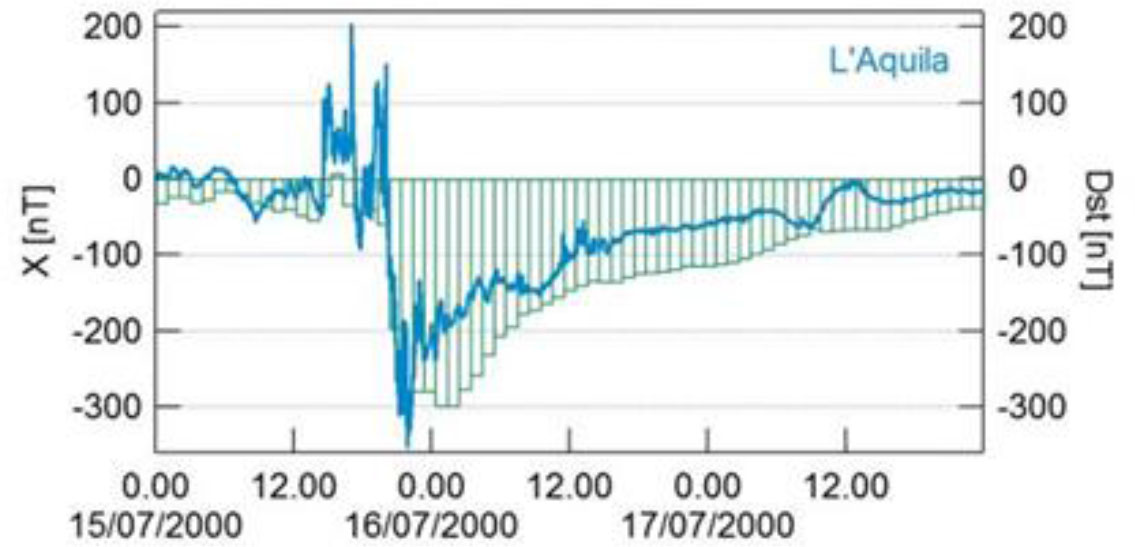
Example of the typical time dependence of the Dst index during a geomagnetic superstorm
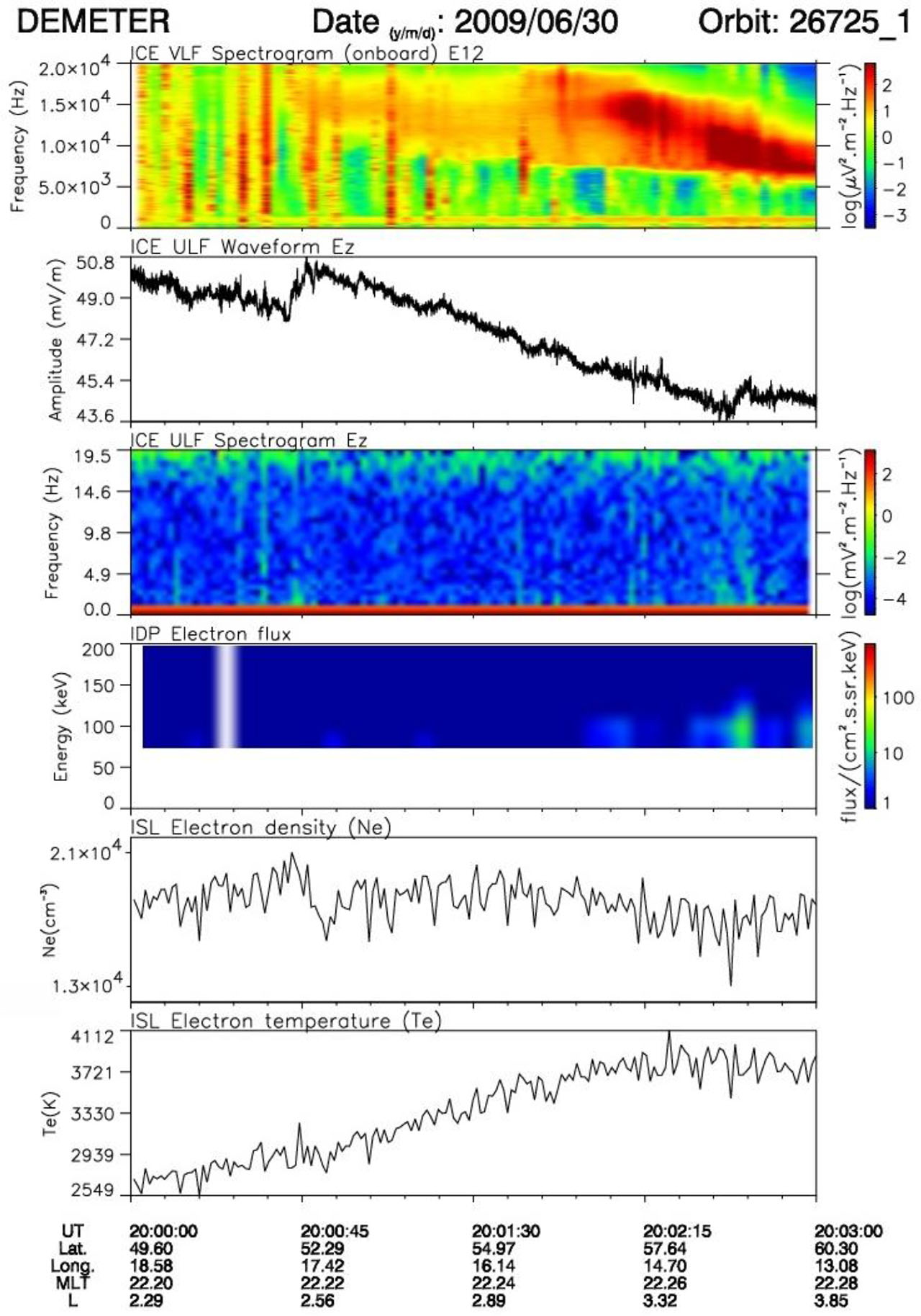

Figure 2.

DEMETER’s registrations of: electric field fluctuations spectrogram in the VLF range (first panel from the top), waveform (second panel) and spectrogram (third panel) in the ULF range spectrogram of electrons energy (fourth panel). The last two panels present electron density and temperature, respectively. The registrations were done during a thunderstorm over Poland on 30 June 2009.

Figure 3.

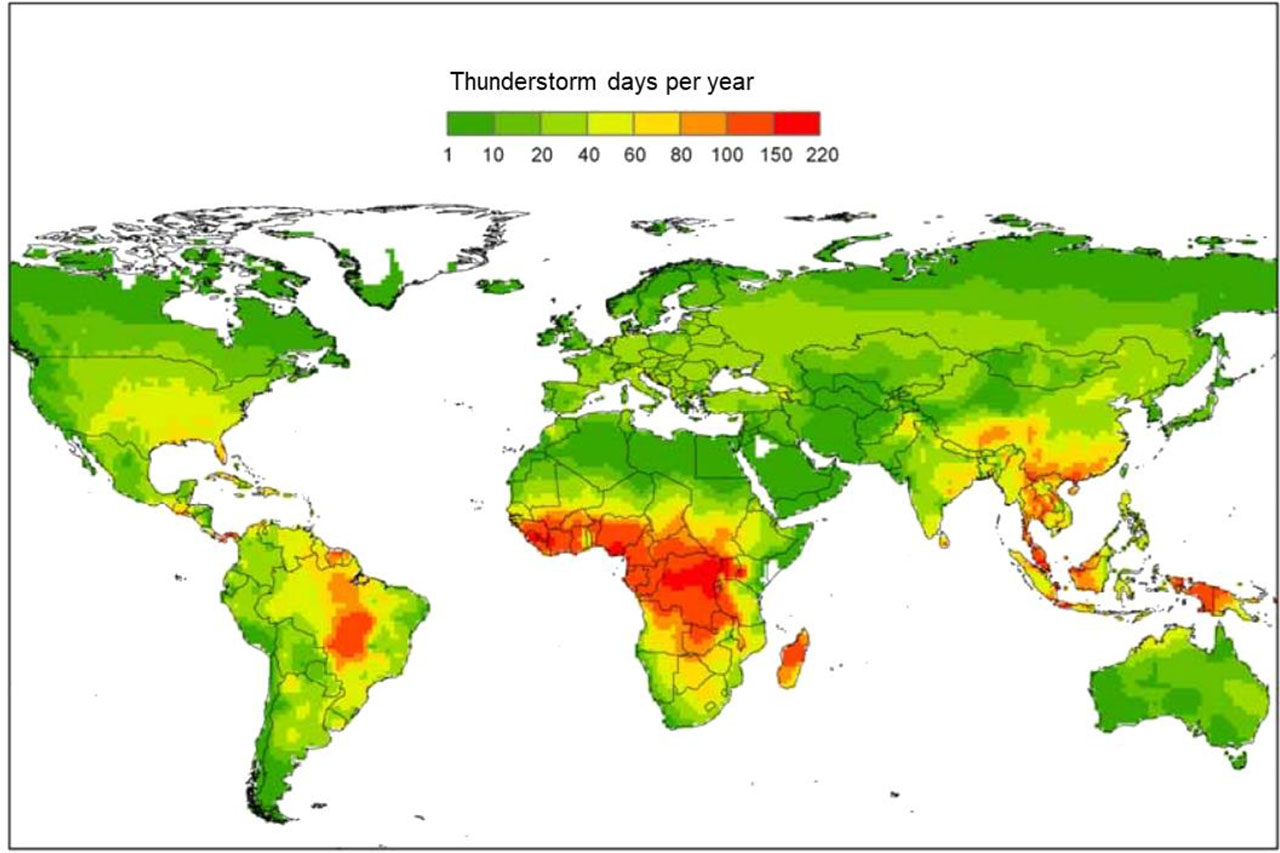
Map of the global distribution of thunderstorm days/year (Isaksson and Wern, 2010)
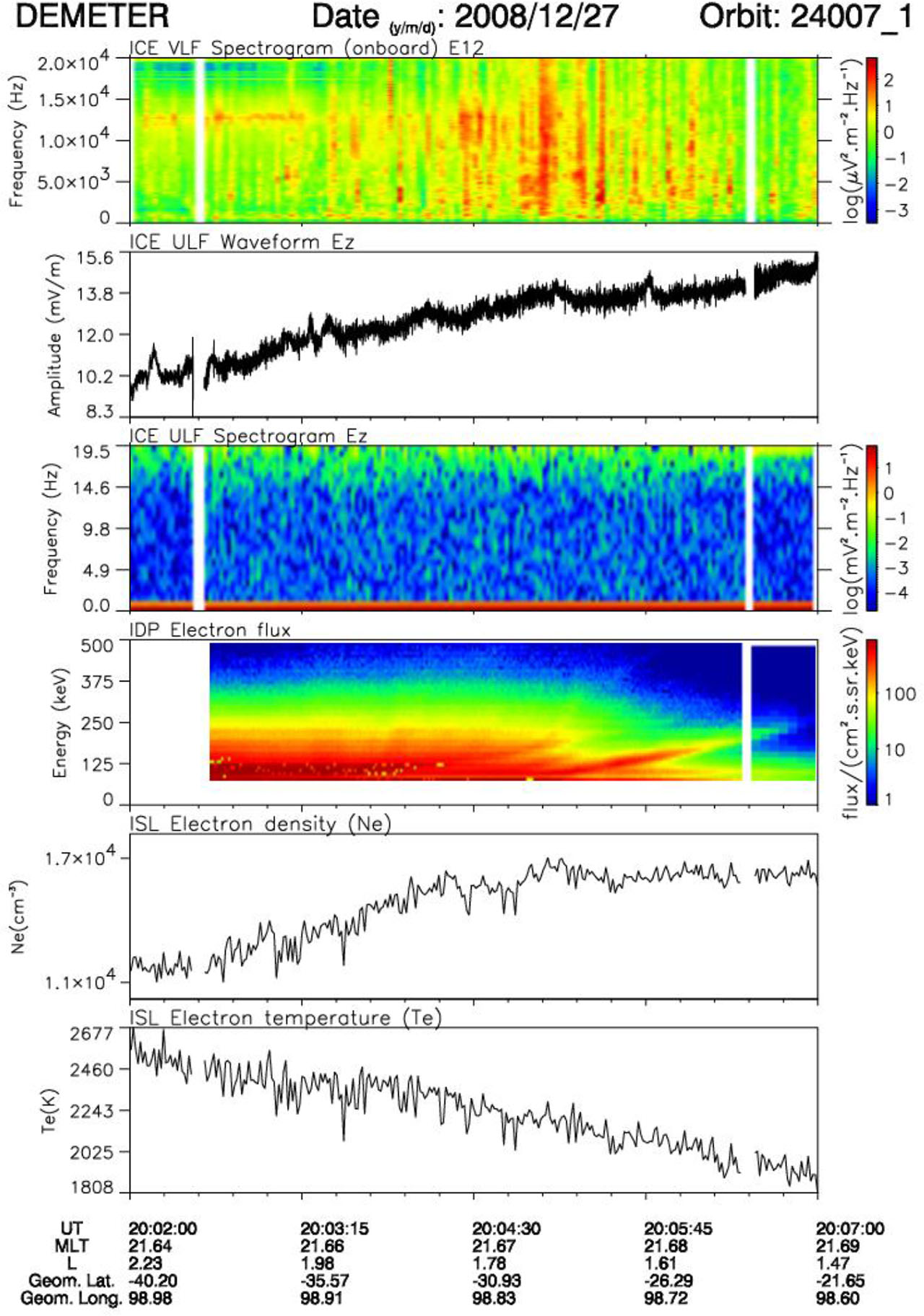

Figure 4.

Same as Figure 2, but taken during the DEMETER flight over the African thunderstorm centre on 27 December 2008
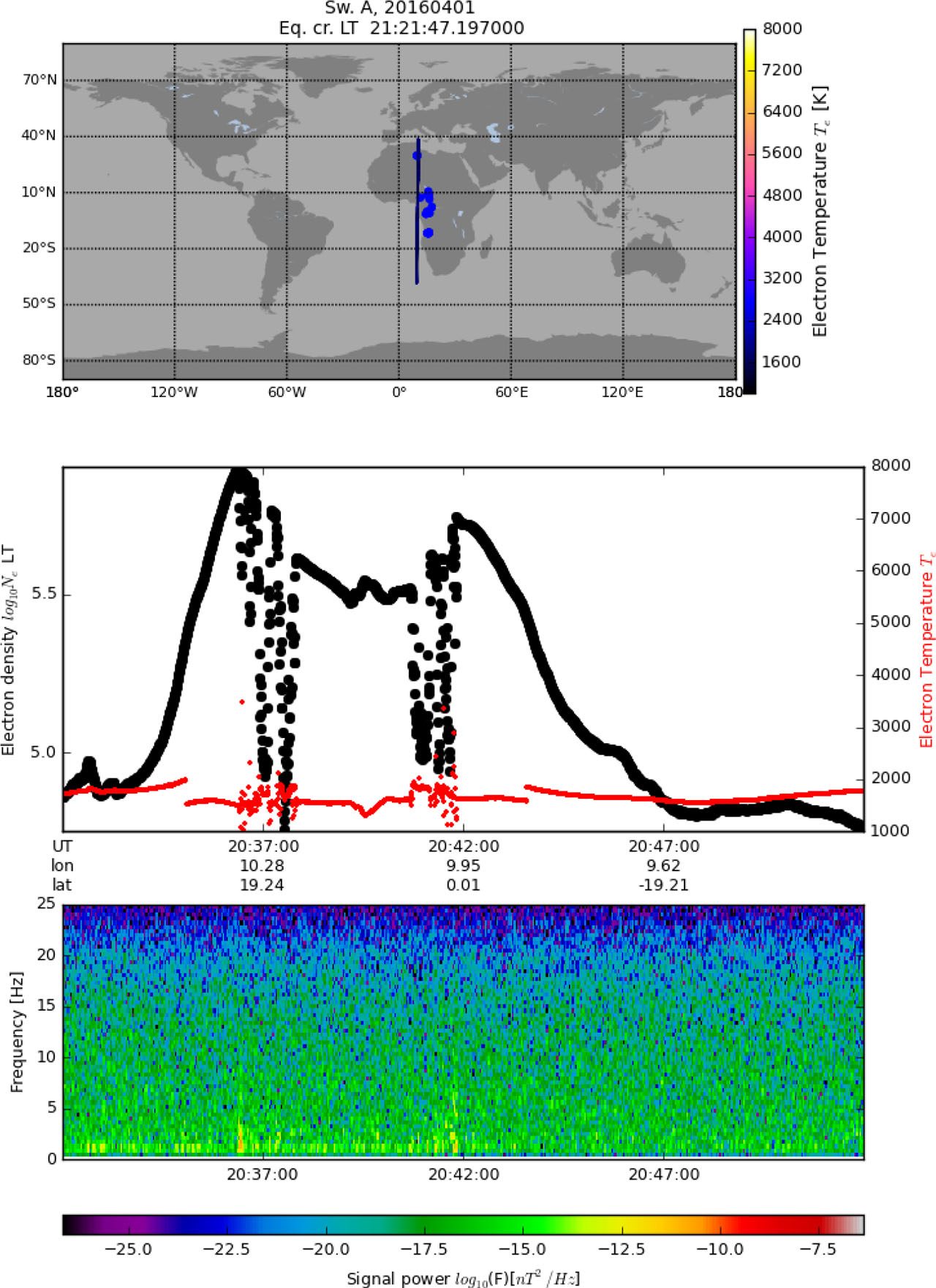

Figure 5.

Upper panel depicts a section of Swarm A satellite orbit marked with points denoting electron temperature measurements along the path on 1 April 2016. Satellite data overlay registrations of the lightning discharges (scattered blue points) derived from the ground-based stations. Measurements of the electron temperature (red line) and concentration (black line) are presented in the middle panel. The bottom panel shows the dynamic spectrogram of the magnetic field variations.
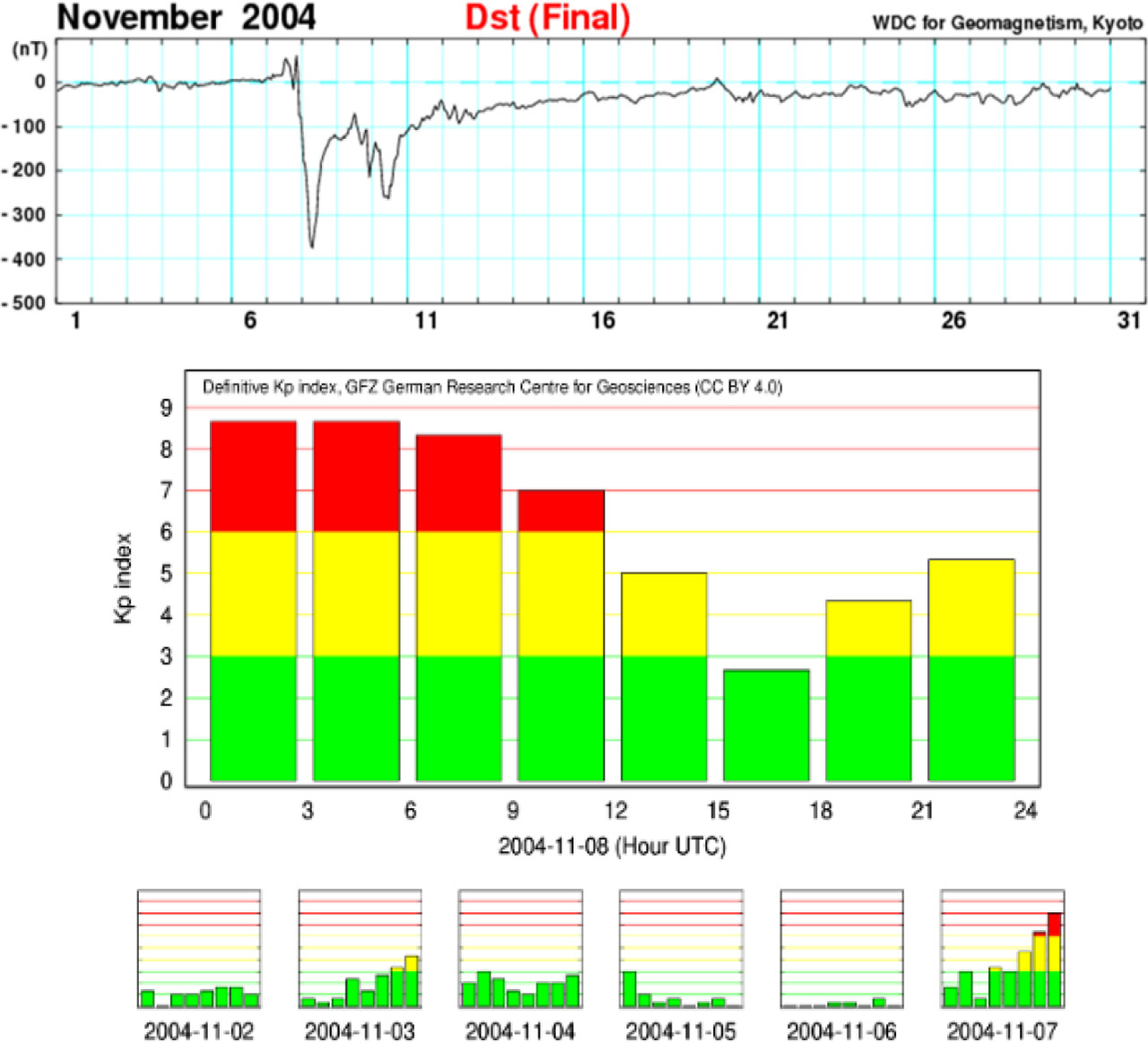

Figure 6.

Magnetic indexes Dst (top panel) and Kp (bottom panel) for geomagnetic superstorm on 8 November 2004 (courtesy Kyoto World Data Center (WDC))
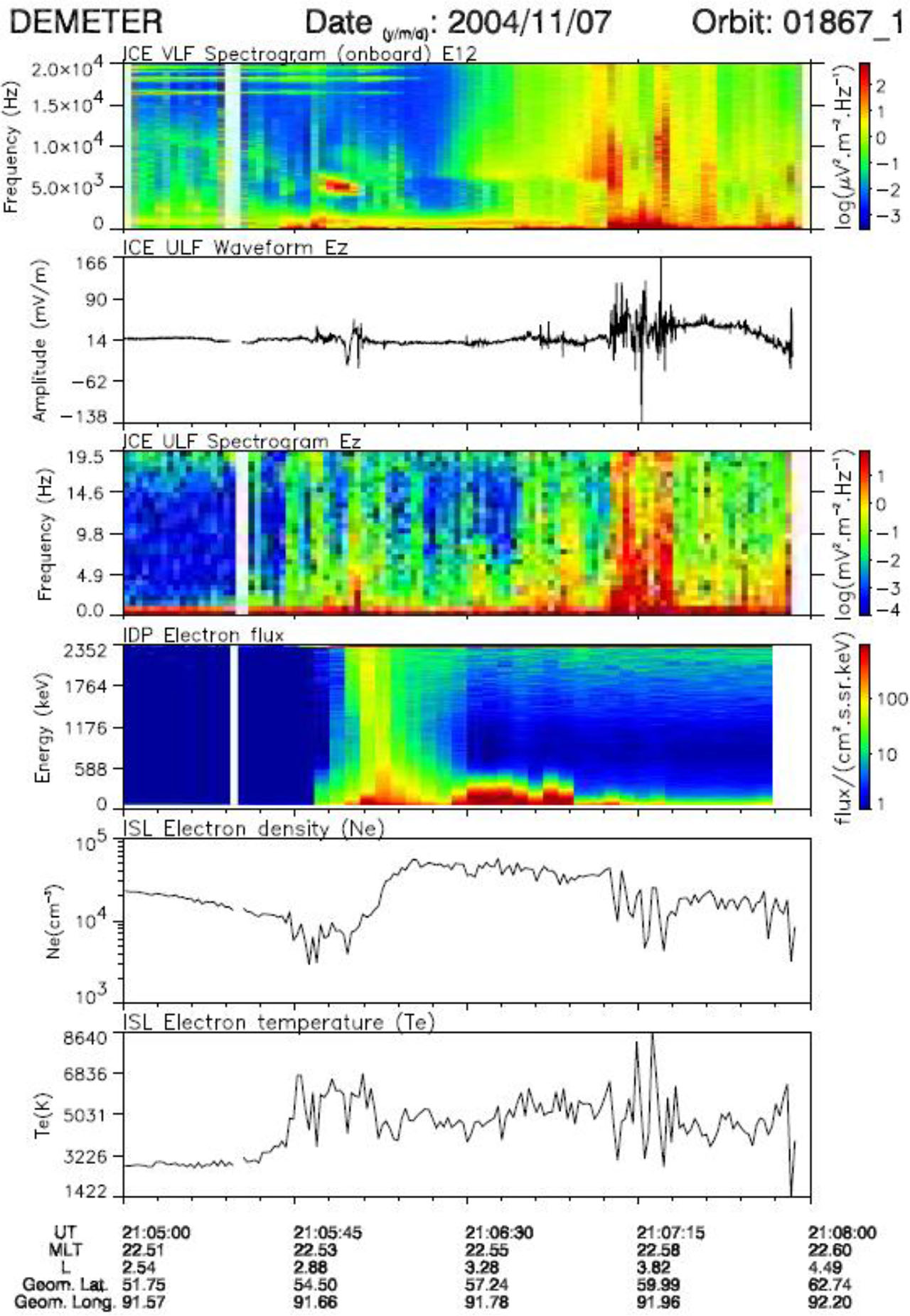

Figure 7.

Same as Figure 4, but during the sudden commencement phase of the magnetic storm on 8 November 2004
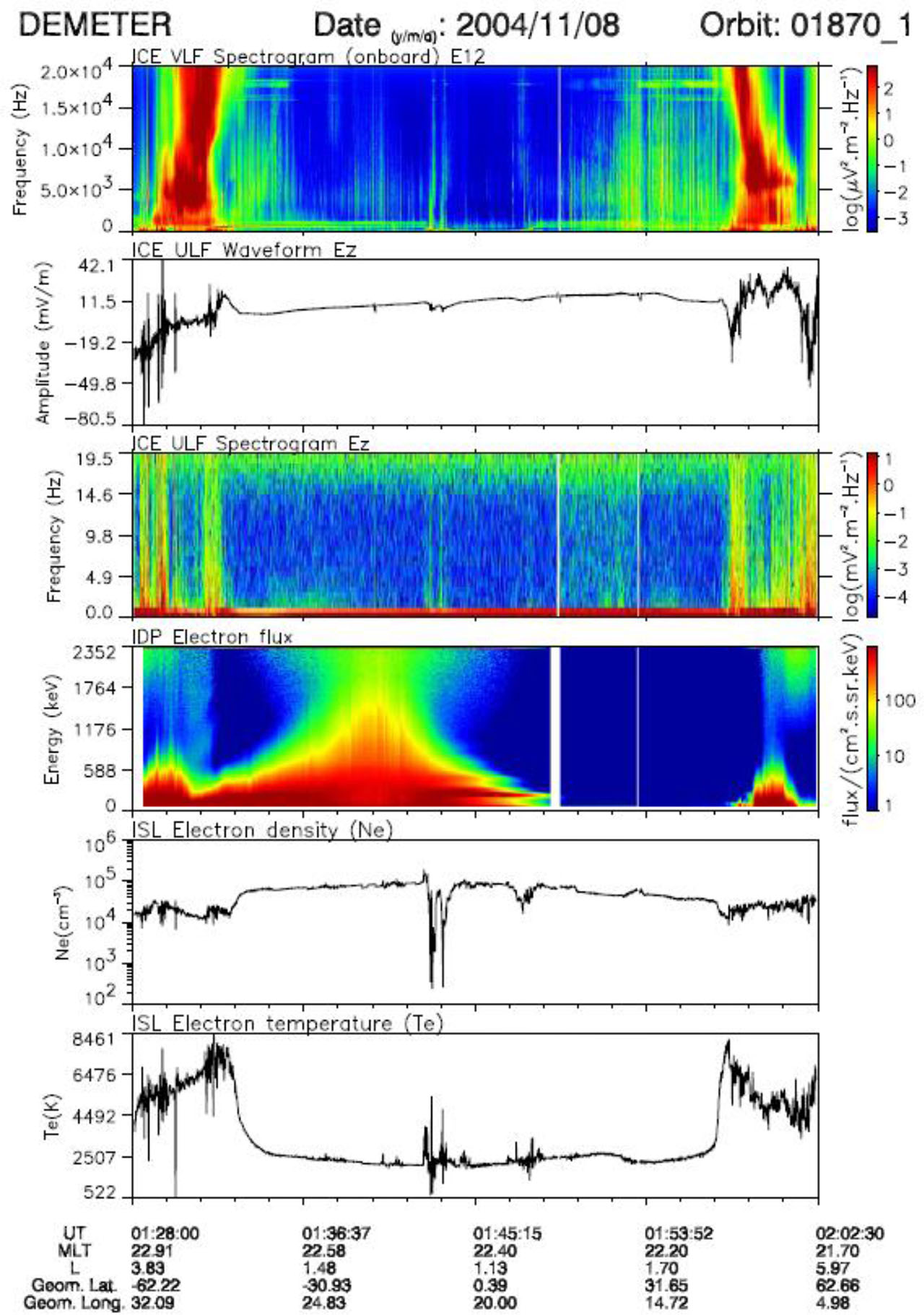

Figure 8.

Same as Figure 4, but during the main phase of the magnetic storm on 8 November 2010
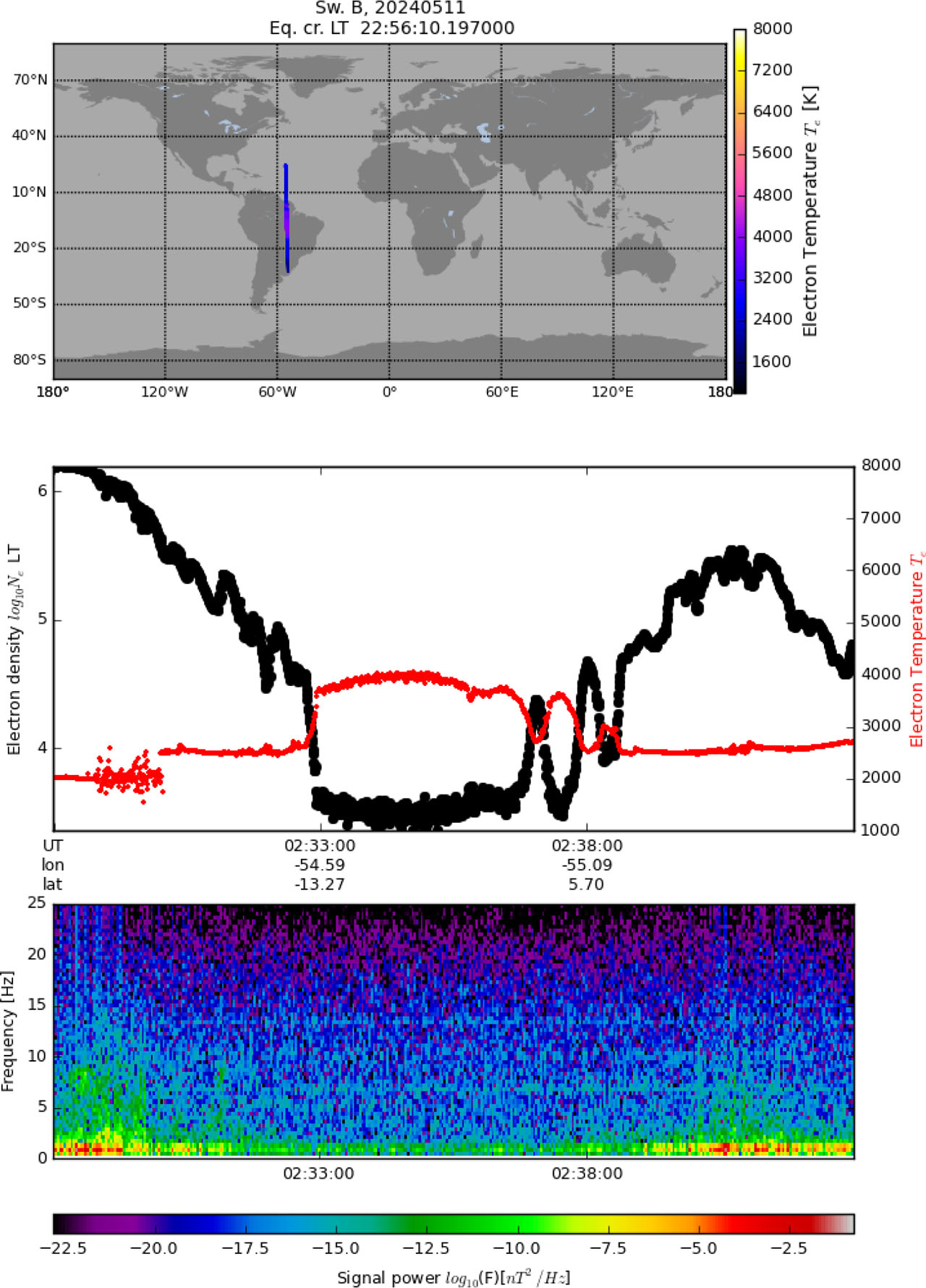

Figure 9.

A plot of electron temperature and concentration as well as spectrogram of ULF variations of scalar magnetic field measured by Swarm B satellite in equatorial anomaly on 11 May 2024 during the main phase of the storm. The upper panel shows the satellite orbit. The values of the temperature and concentration are shown by dots with different colours. Measurements of the electron temperature (red line) and concentration (black line) are presented in the middle panel. The bottom panel shows the dynamic spectrogram of the magnetic field variations.
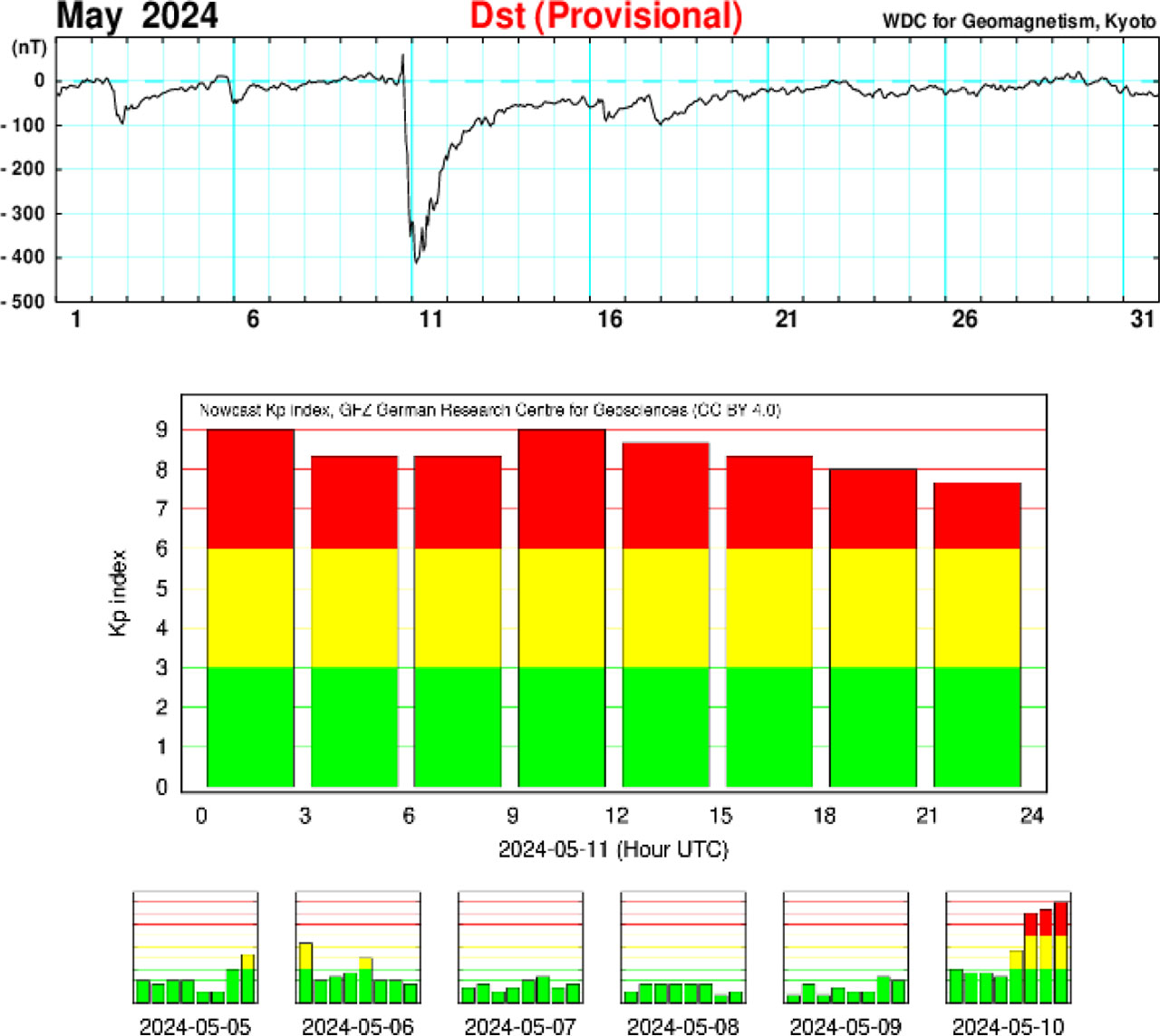

Figure 10.

Same as in Figure 6 for superstorm on 11 May 2024
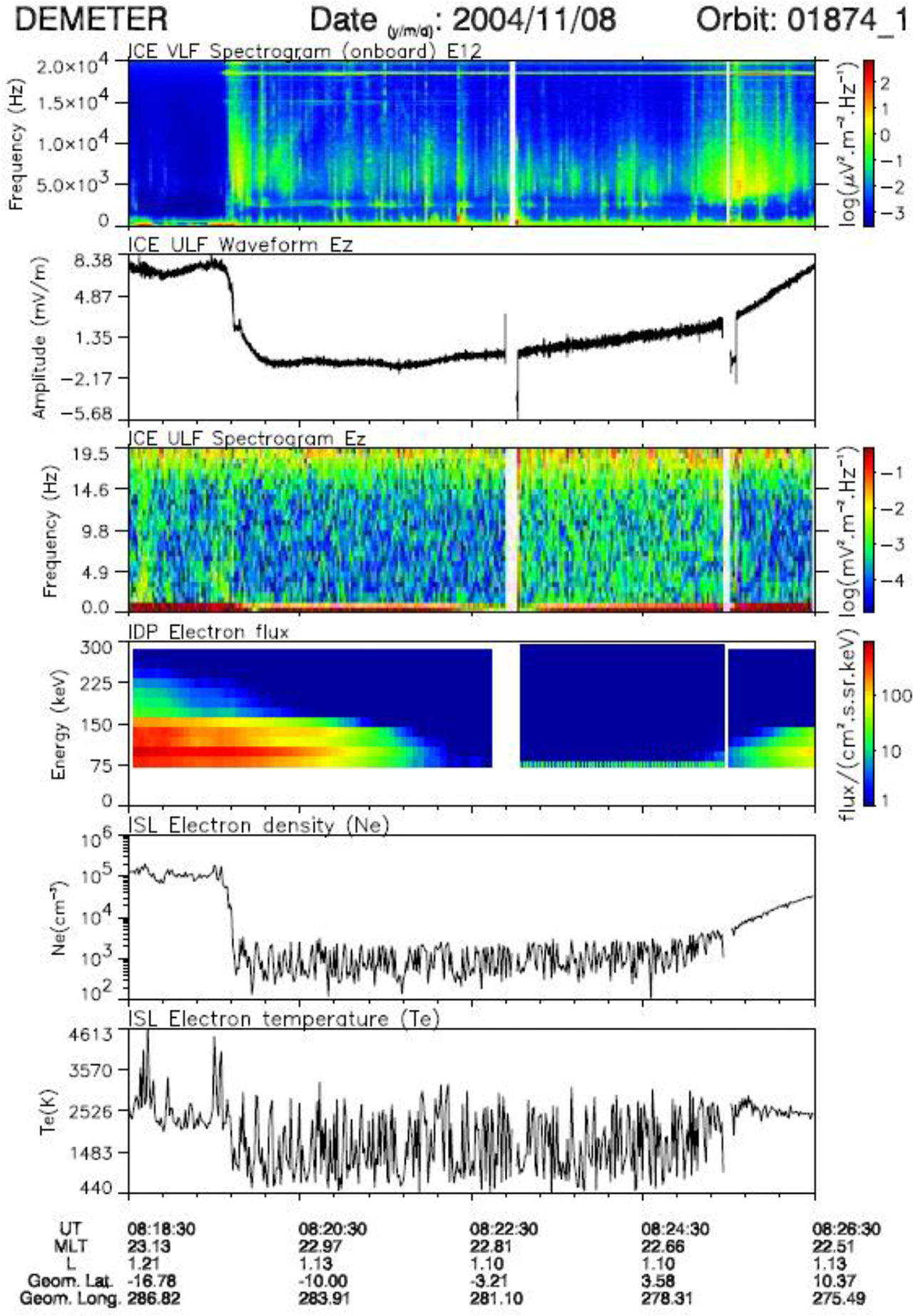

Figure 11.

Same as in Figure 4, but for equatorial anomaly during the end of main phase of the magnetic storm on 8 November 2010
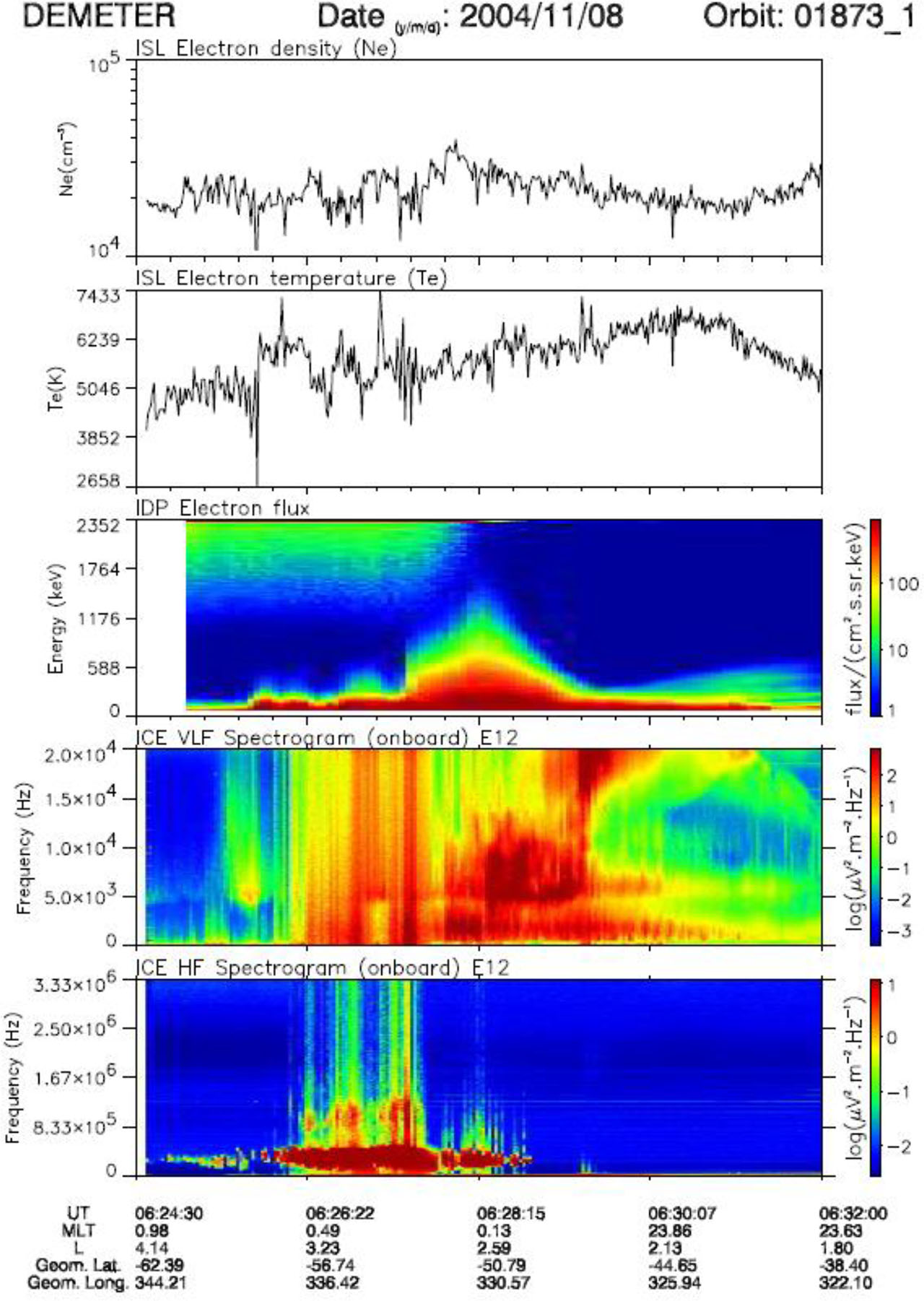

Figure 12.

DEMETER registrations of the electron density and temperature variations (upper panels), spectrogram of energetic electrons (middle panel) and spectrograms of electric field variations in VLF and HF ranges in the auroral zone and its vicinity during the main phase of the magnetic storm on 8 November 2010
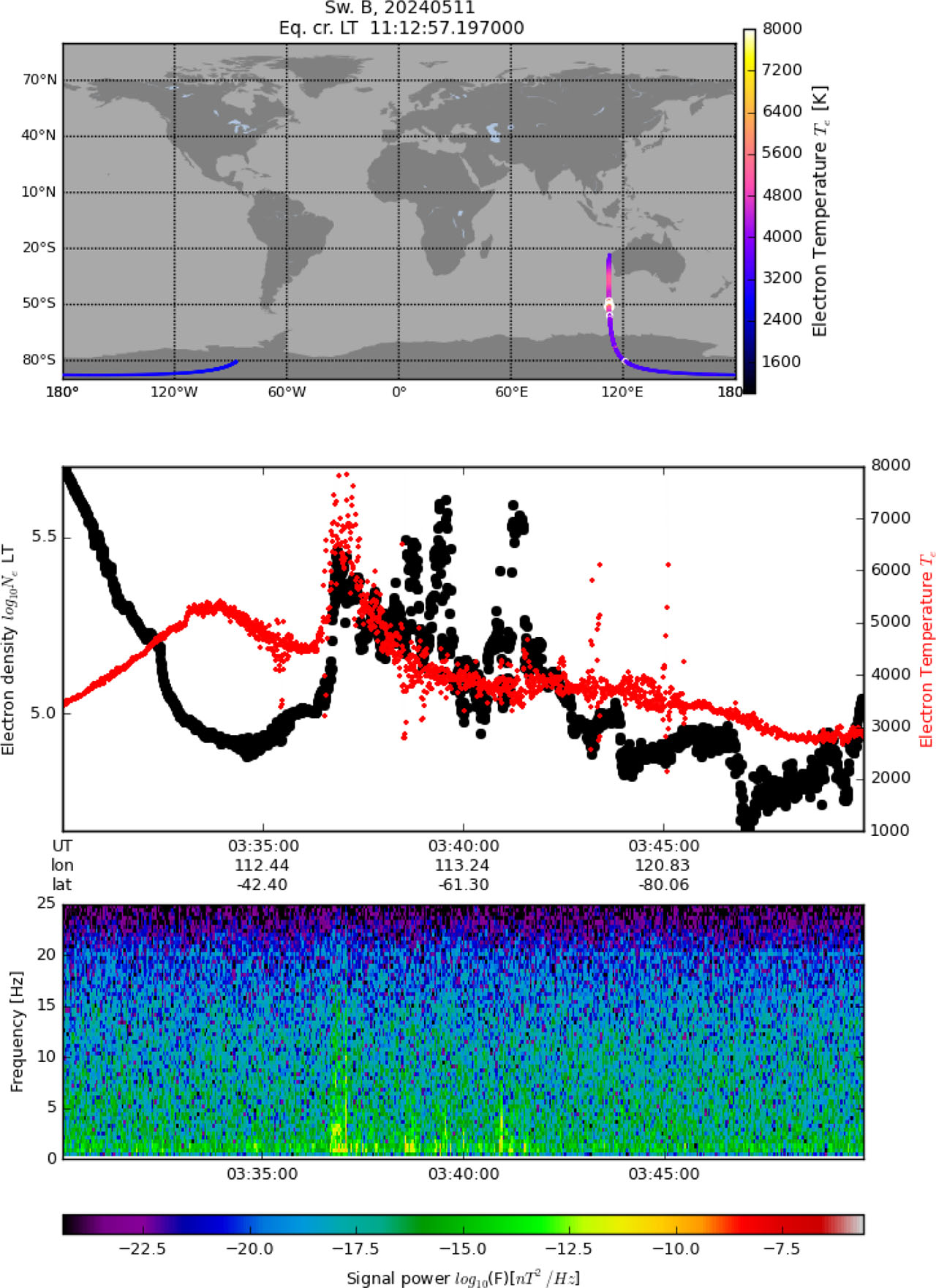

Figure 13.

Same as Figure 9, but measurements are done in the auroral oval and at the edge of polar cusp

Parameters of strokes on 30 June 2009

DayTime (UT)LatitudeLongitudeCurent (kA)
30/06/200920:00:4753.054623.4310−107.170
30/06/200920:02:0751.955421.0176−63.700
30/06/200920:02:3252.467315.3552−60.980
DOI: https://doi.org/10.2478/arsa-2025-0005 | Journal eISSN: 2083-6104 | Journal ISSN: 1509-3859
Language: English
Page range: 91 - 108
Submitted on: Mar 30, 2025
Accepted on: Jul 2, 2025
Published on: Oct 6, 2025
Published by: Polish Academy of Sciences, Space Research Centre
In partnership with: Paradigm Publishing Services
Publication frequency: 4 issues per year

© 2025 Jan Błęcki, Roman Wronowski, Jan Słomiński, Paweł Jujeczko, Ewa Słomińska, published by Polish Academy of Sciences, Space Research Centre
This work is licensed under the Creative Commons Attribution 4.0 License.