
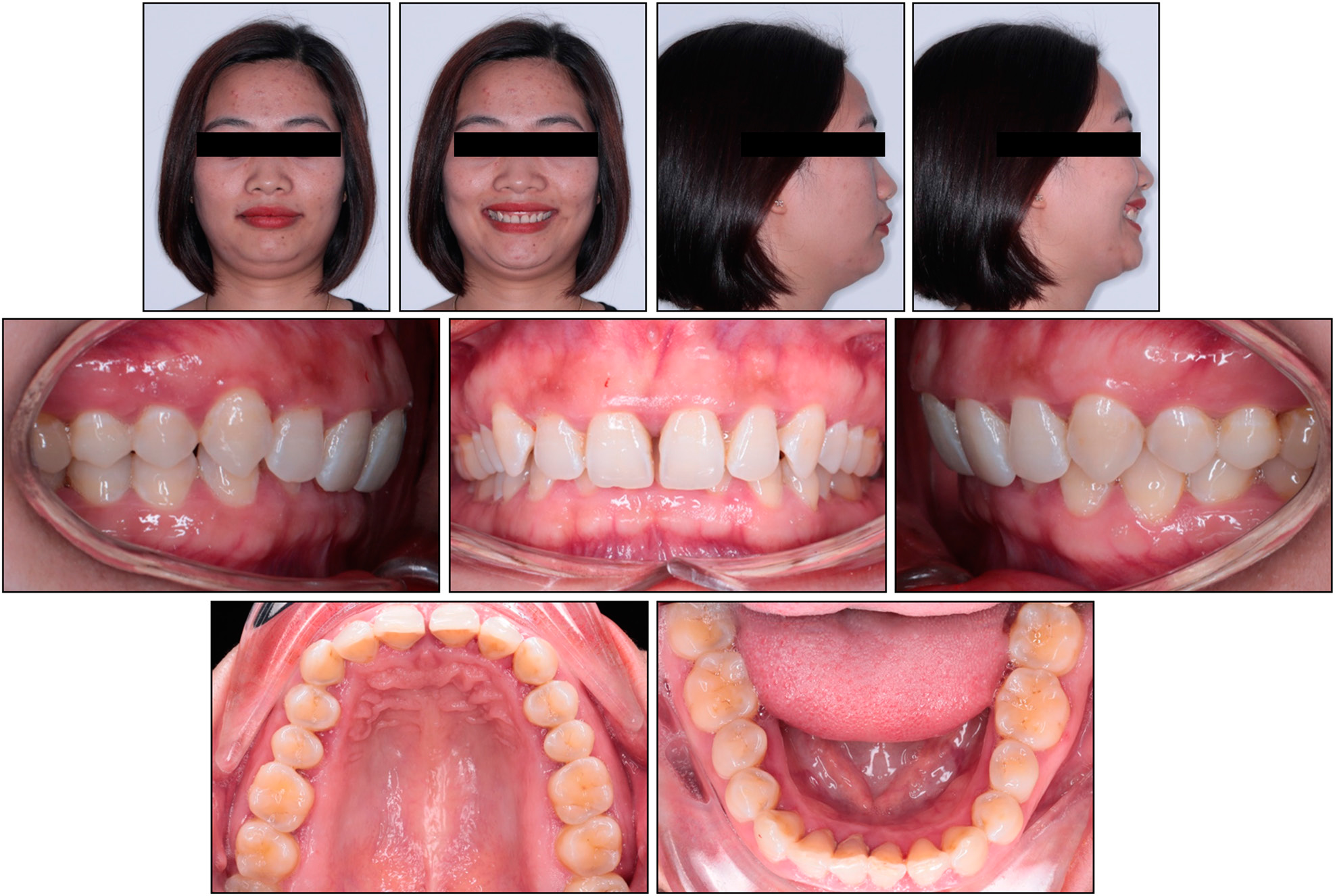
Figure 1.
Case 1: initial extraoral and intraoral photographs.
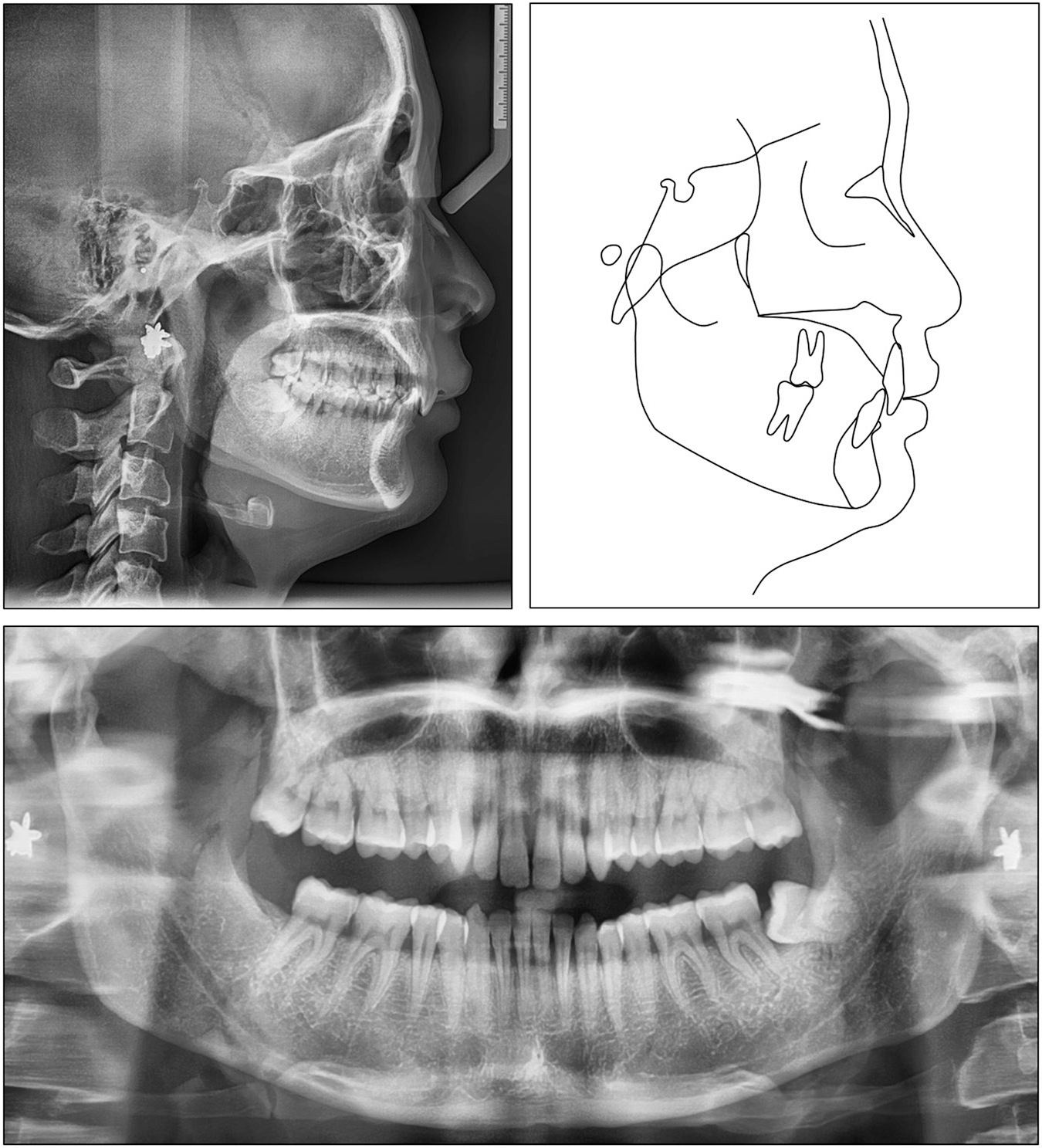
Figure 2.
Case 1: initial panoramic and cephalometric radiographs and tracing.
Table I.
Cephalometric measurements
| Pretreatment | Posttreatment | |
|---|---|---|
| Skeletal | ||
| SNA (°) | 85.7 | 84.8 |
| SNB (°) | 79.6 | 80.1 |
| ANB (°) | 6.1 | 4.7 |
| FMA (°) | 20.0 | 20.5 |
| Dental | ||
| U1-SN (°) | 80.3 | 92.4 |
| U1-PP (°) | 89.2 | 101.1 |
| U1-NA (°) | -5.5 | 7.6 |
| U1-NA (mm) | -3.4 | -1.2 |
| IMPA (°) | 94.2 | 95.1 |
| L1-NB (°) | 22.1 | 22.7 |
| L1-NB (mm) | 2.8 | 3.1 |
| Interincisal angle (°) | 157.3 | 144.9 |
| Upper incisal display (mm) | 5.8 | 3.8 |
| Soft tissue | ||
| E-line/UL (mm) | -0.7 | -0.9 |
| E-line/LL (mm) | -1.2 | -1.2 |
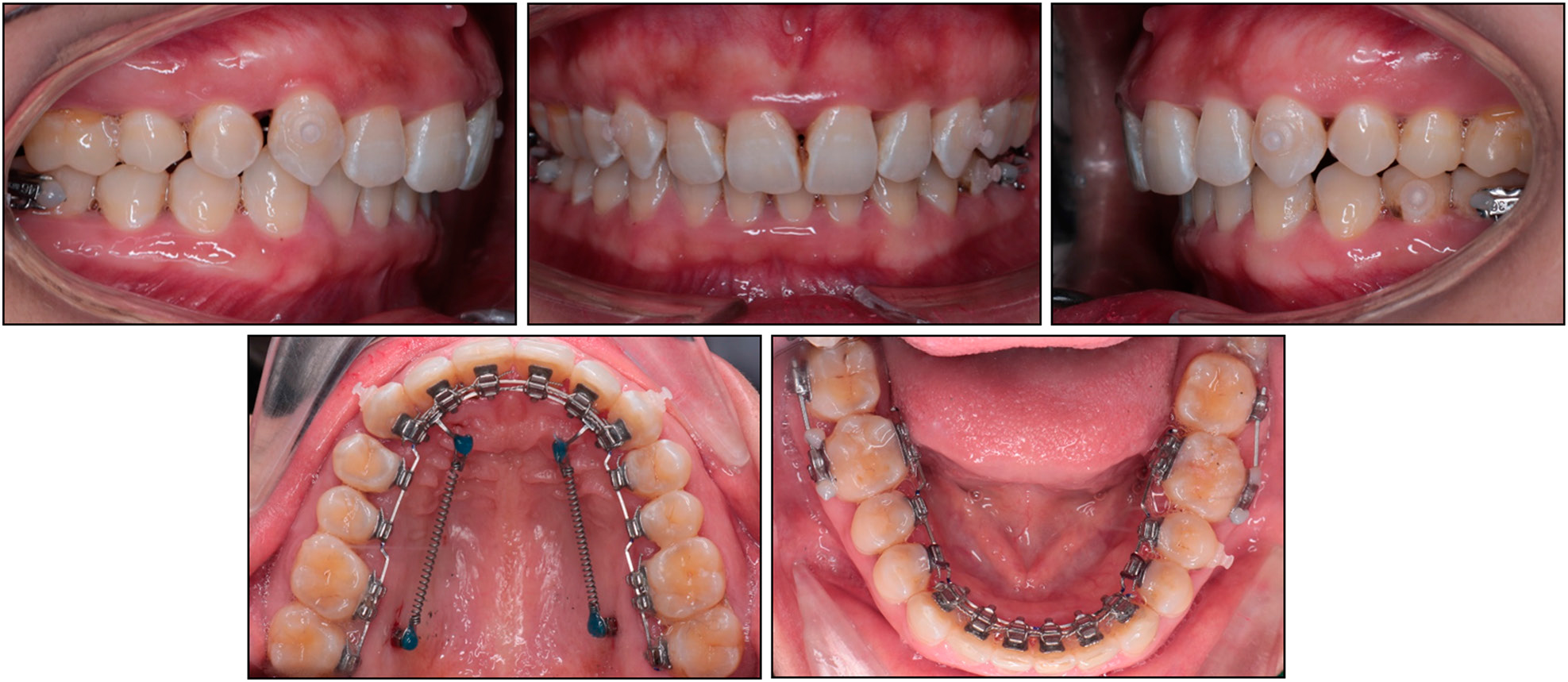
Figure 3.
Entire upper arch distalisation using mini-screws, crimpable hooks, and coil springs.
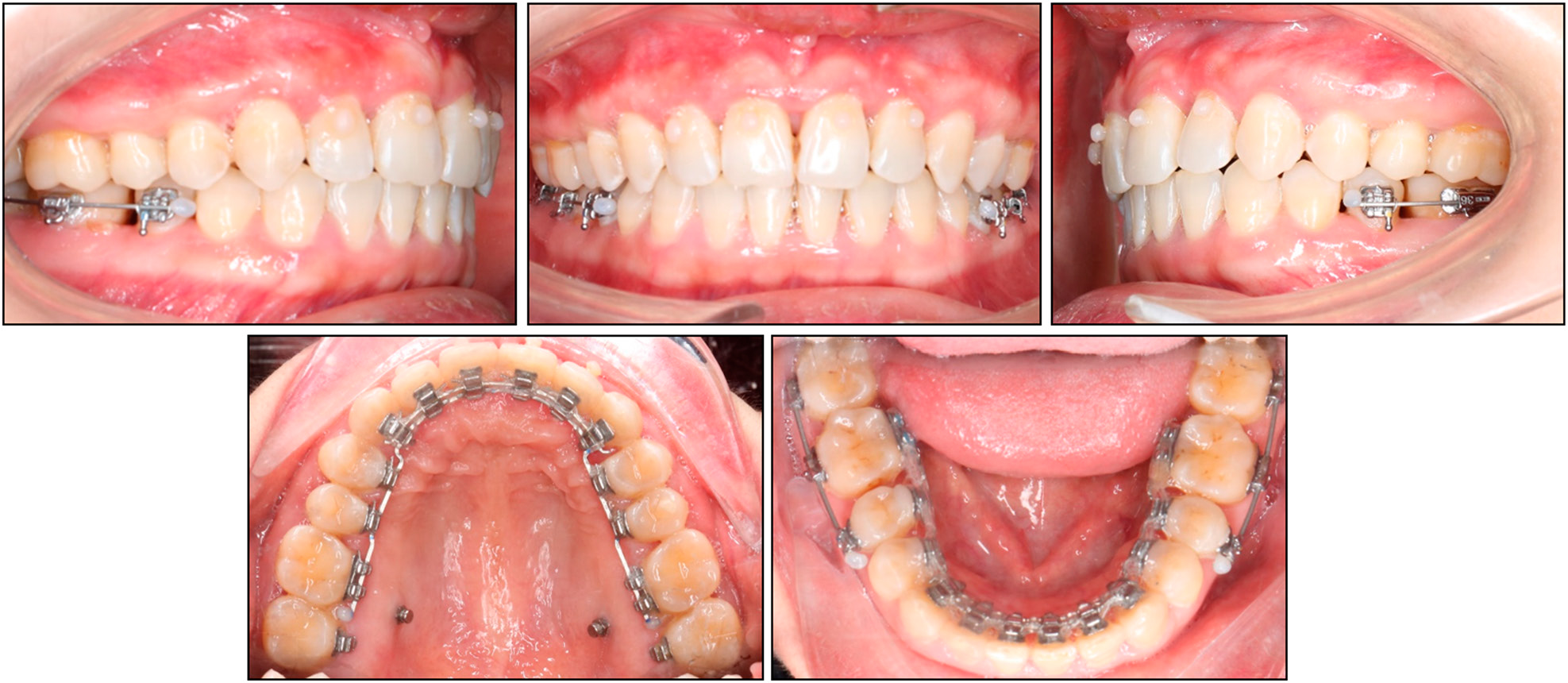
Figure 4.
Finishing and detailing stage. Gingival black triangles before interproximal stripping.
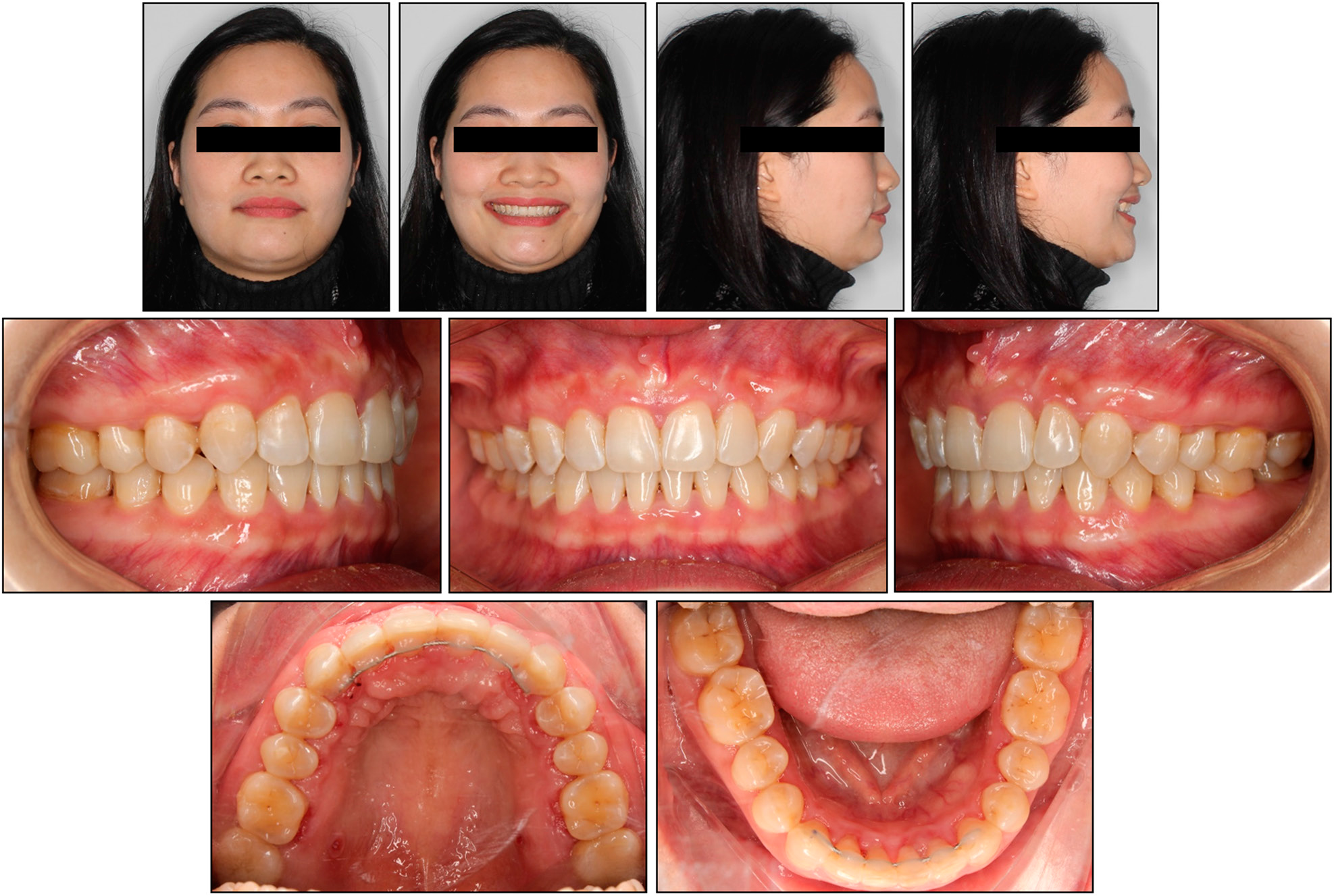
Figure 5.
Case 1: post-treatment extraoral and intraoral photographs.
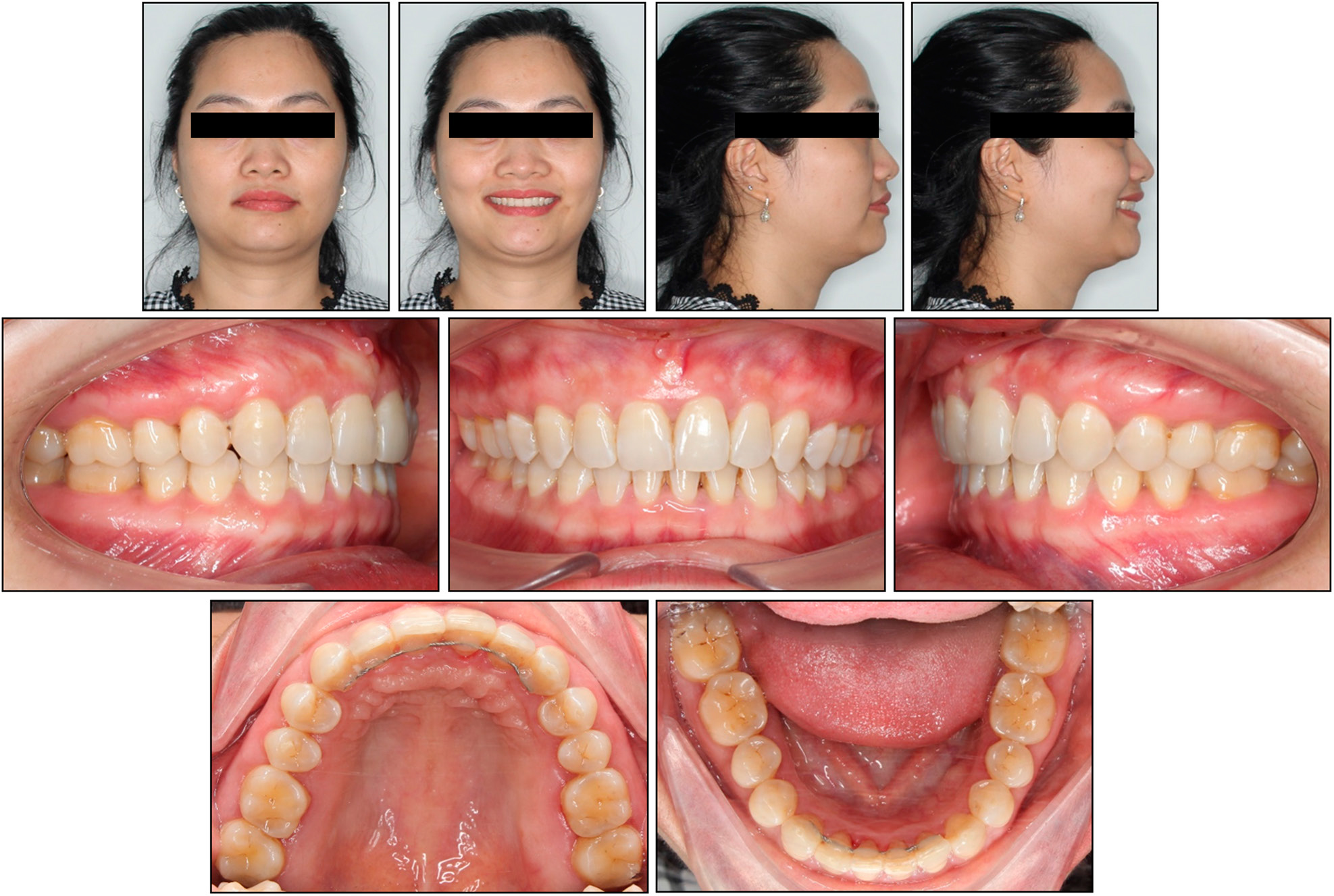
Figure 6.
Case 1: two-year post-retention extraoral and intraoral photographs.
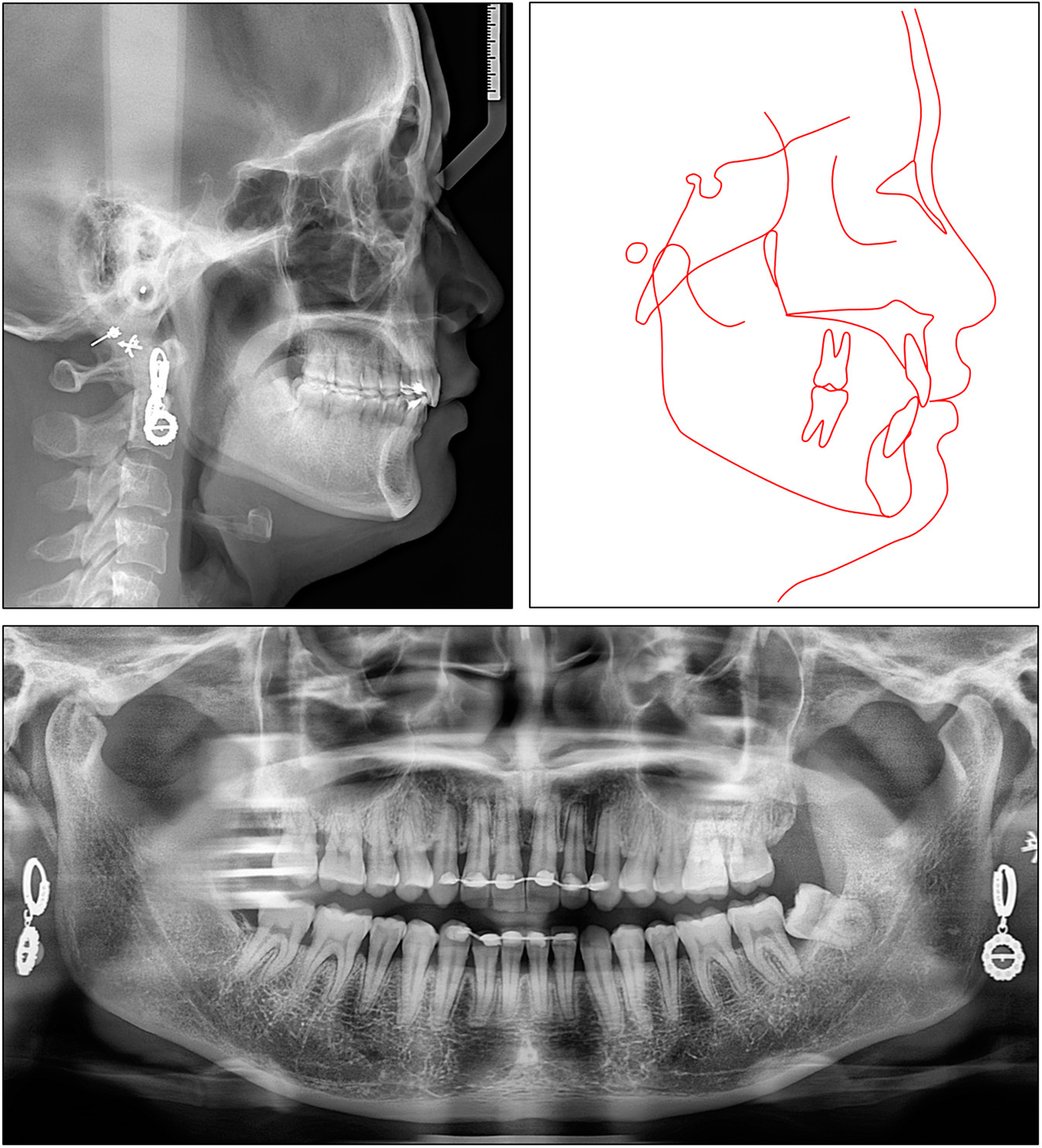
Figure 7.
Case 1: post-retention panoramic and cephalometric radiographs and tracing.
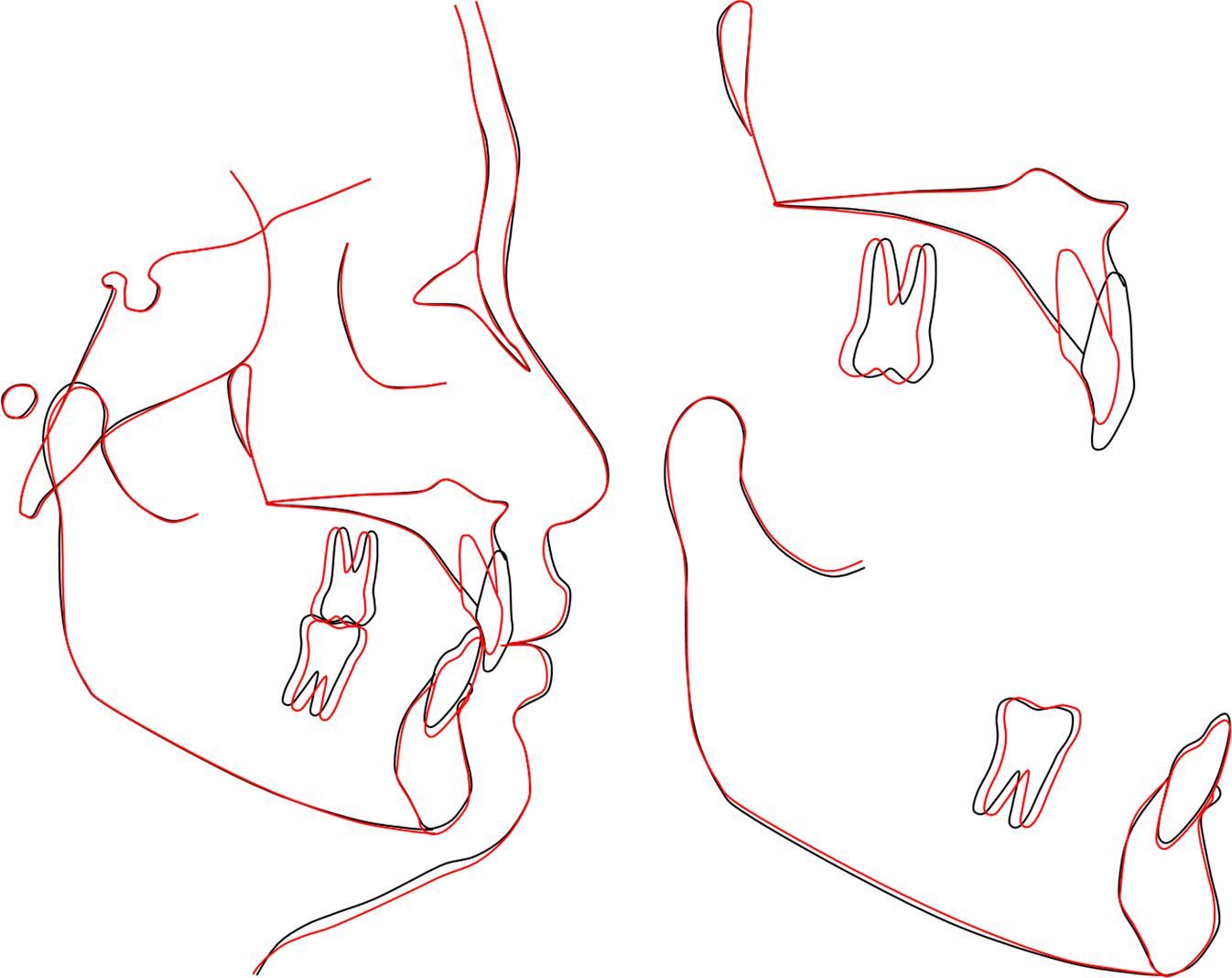
Figure 8.
Case 1: general and regional superimpositions of pretreatment and post-retention cephalometric tracings.
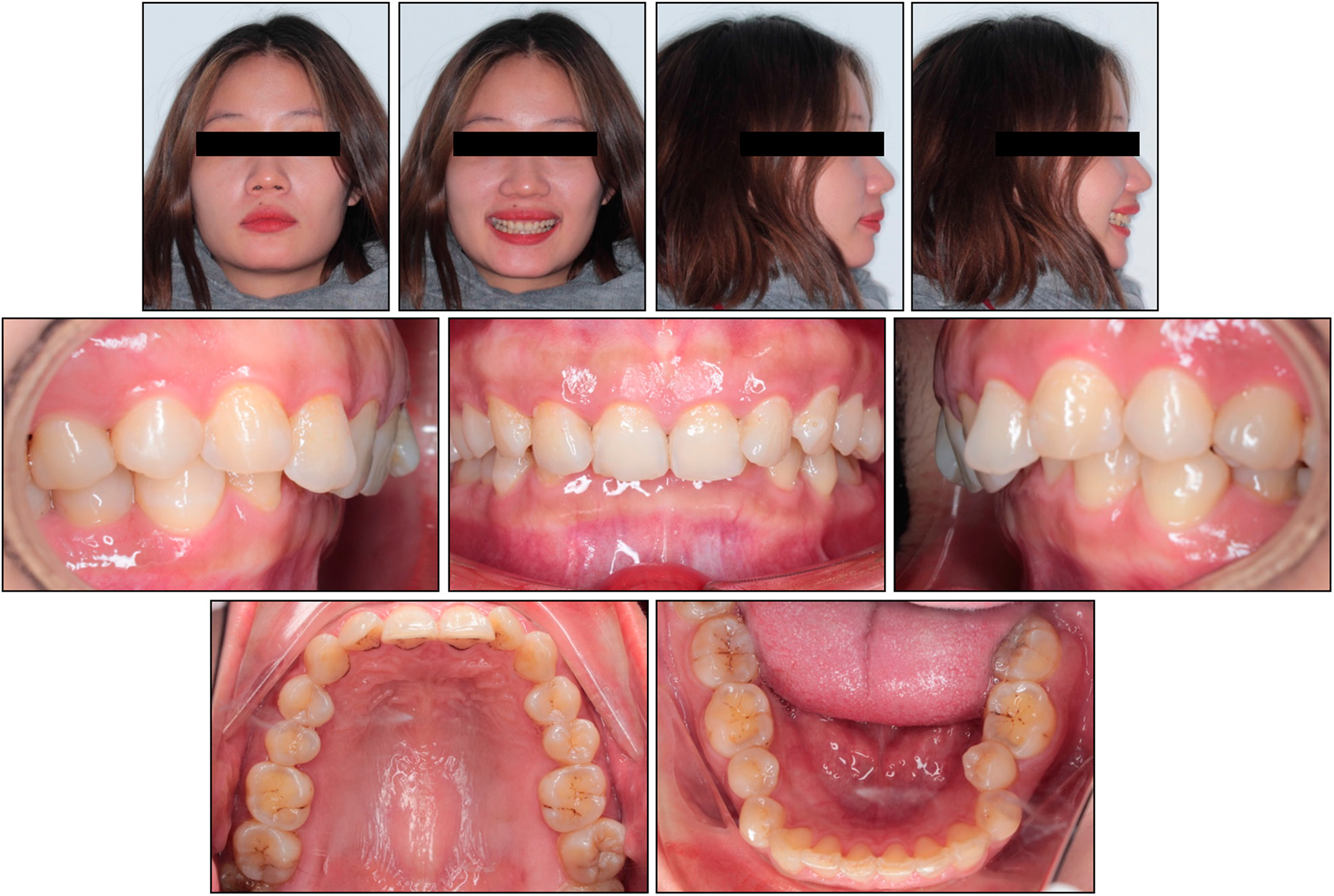
Figure 9.
Case 2: initial extraoral and intraoral photographs.
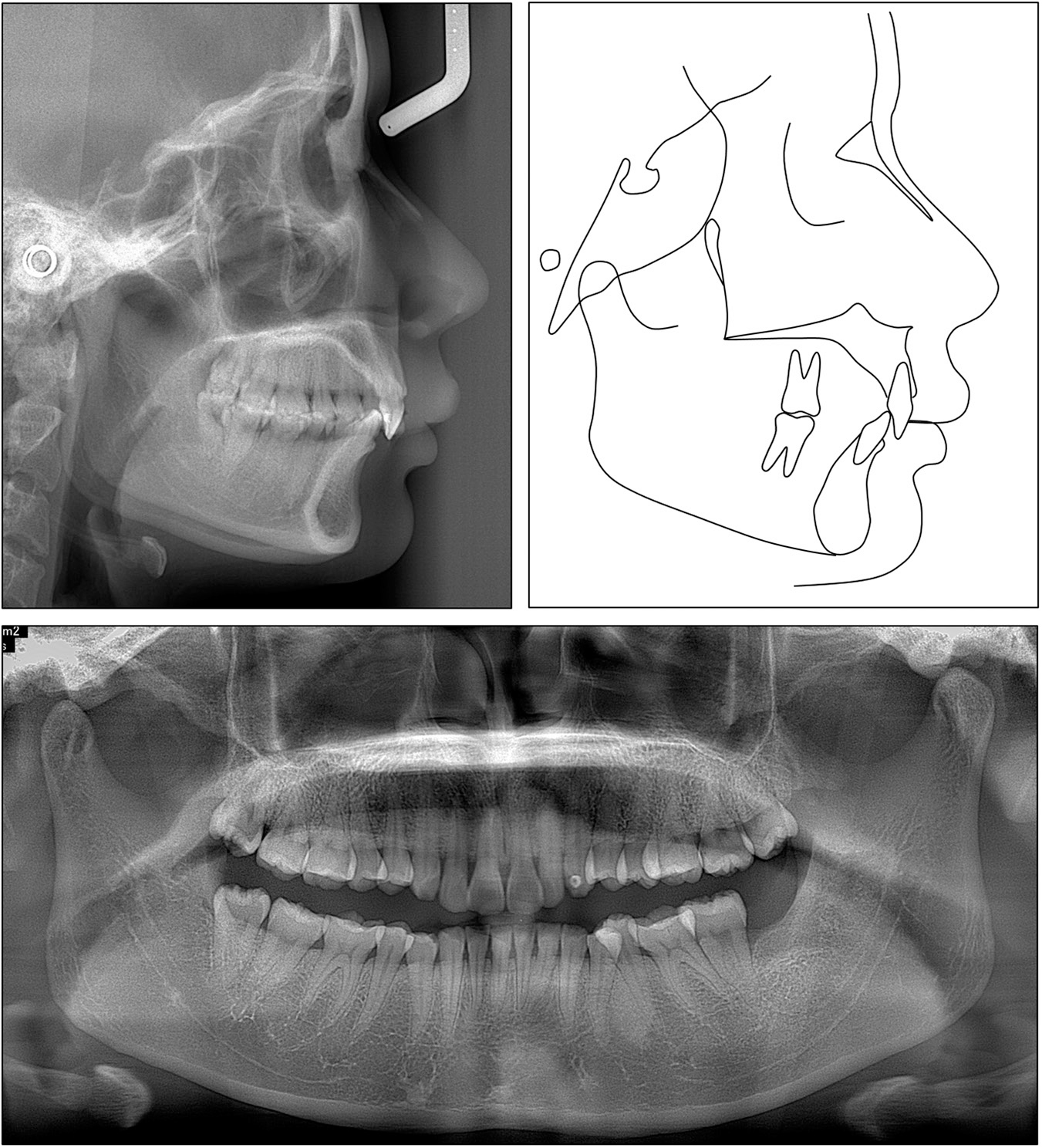
Figure 10.
Case 2: initial panoramic and cephalometric radiographs and tracing.
Table II.
Cephalometric measurements of case 2
| Pretreatment | Posttreatment | |
|---|---|---|
| Skeletal | ||
| SNA (°) | 85.5 | 83.0 |
| SNB (°) | 75.8 | 75.0 |
| ANB (°) | 9.7 | 8.0 |
| FMA (°) | 21.4 | 22.1 |
| Dental | ||
| U1-SN (°) | 73.9 | 94.1 |
| U1-PP (°) | 83.1 | 104.3 |
| U1-NA (°) | -11.7 | 11.1 |
| U1-NA (mm) | -5.7 | -2.2 |
| IMPA (°) | 103.4 | 106.0 |
| L1-NB (°) | 29.4 | 33.0 |
| L1-NB (mm) | 5.3 | 6.8 |
| Interincisal angle (°) | 152.5 | 127.9 |
| Upper incisal display (mm) | 3.7 | 2.3 |
| Soft tissue | ||
| E-line/UL (mm) | 1.9 | -1.5 |
| E-line/LL (mm) | 0.2 | -0.9 |
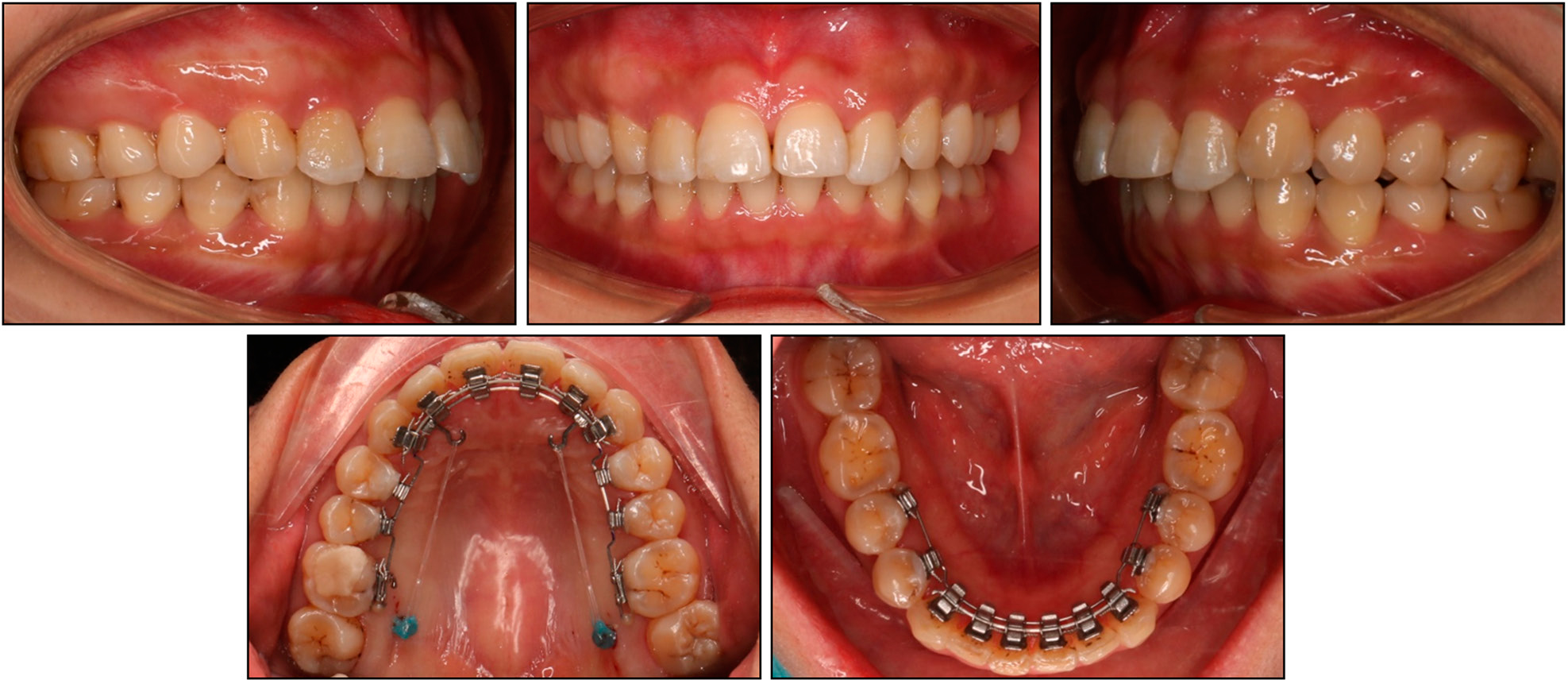
Figure 11.
Entire upper arch distalisation using mini-screws, crimpable hooks, and power chains.
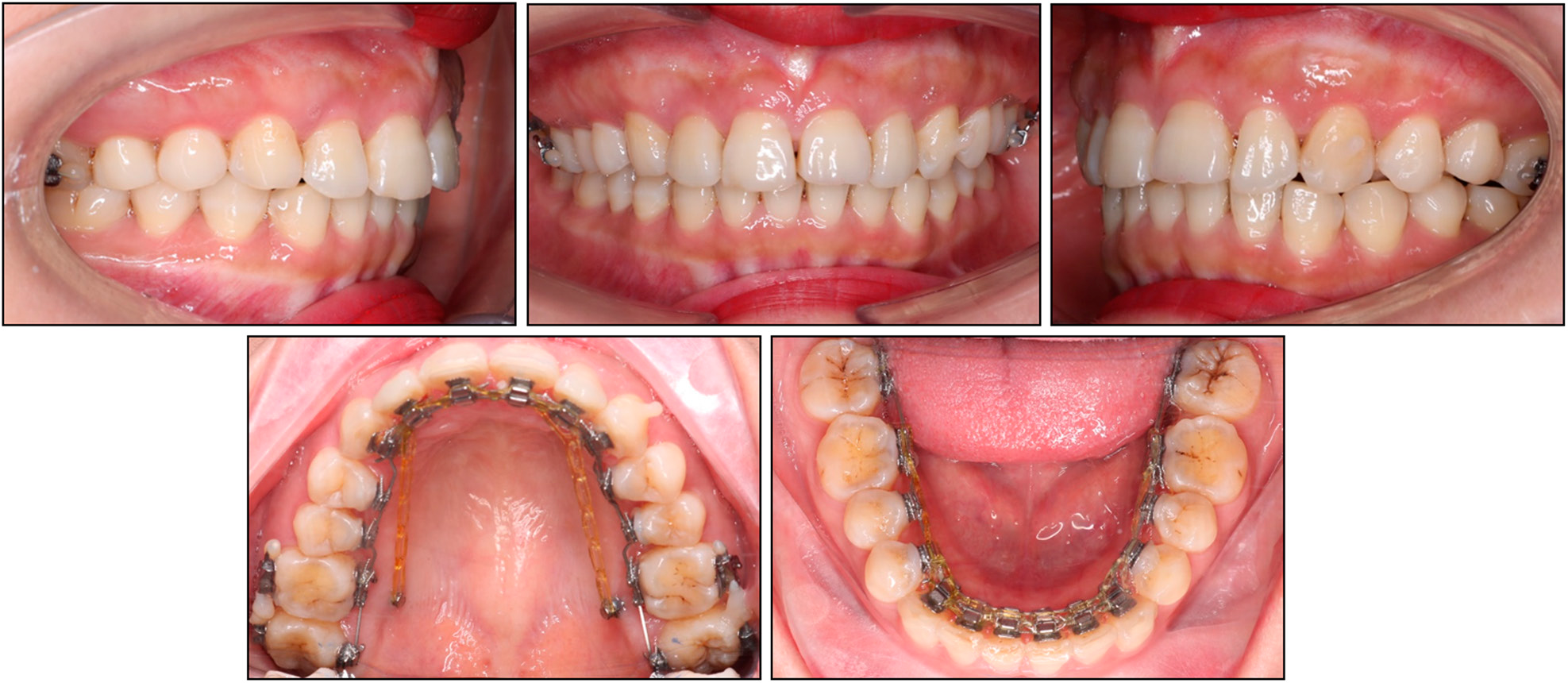
Figure 12.
Re-levelling stage after bonding the upper second molar brackets.
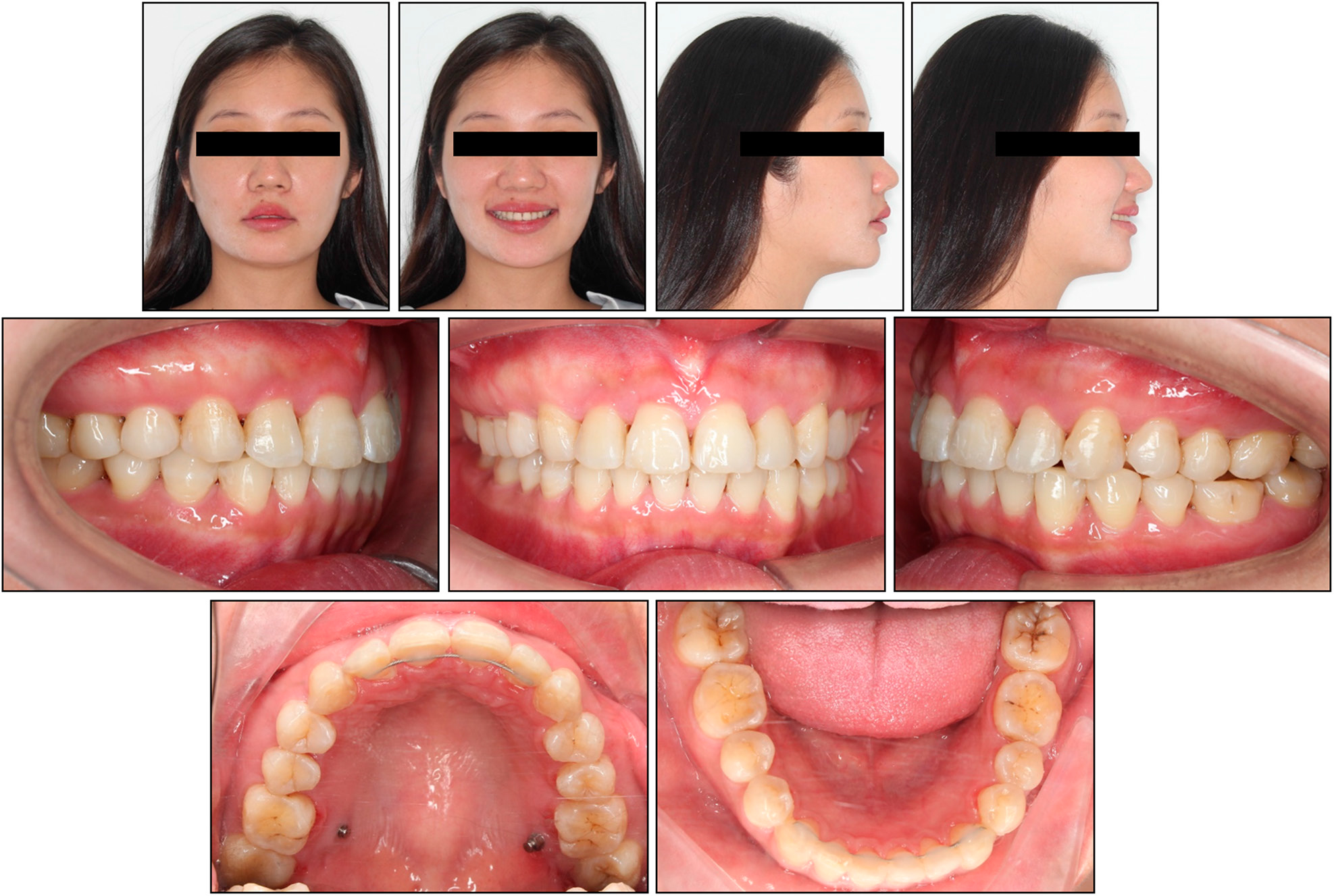
Figure 13.
Case 2: post-treatment extraoral and intraoral photographs.
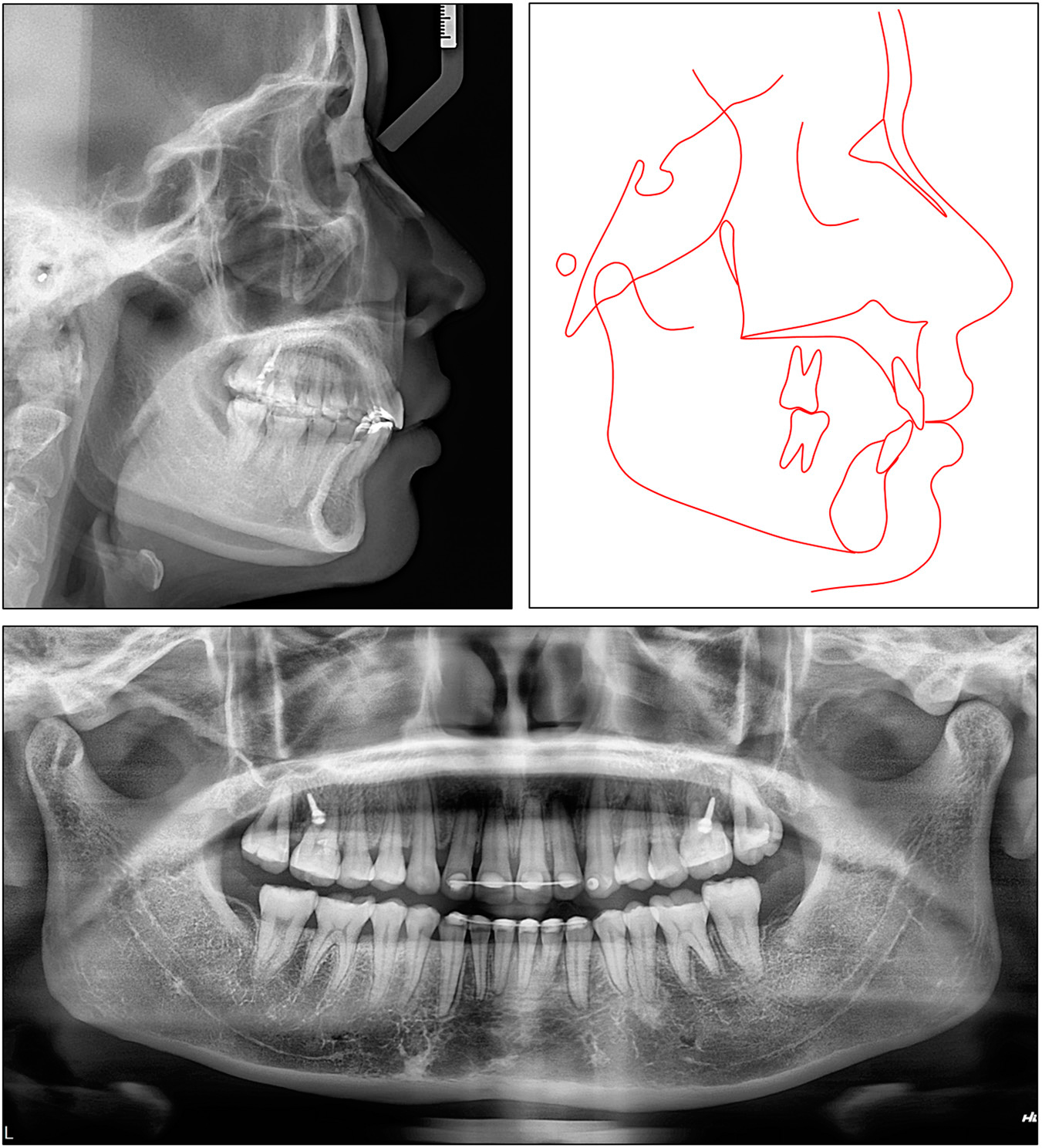
Figure 14.
Case 2: post-treatment panoramic and cephalometric radiographs and tracing.
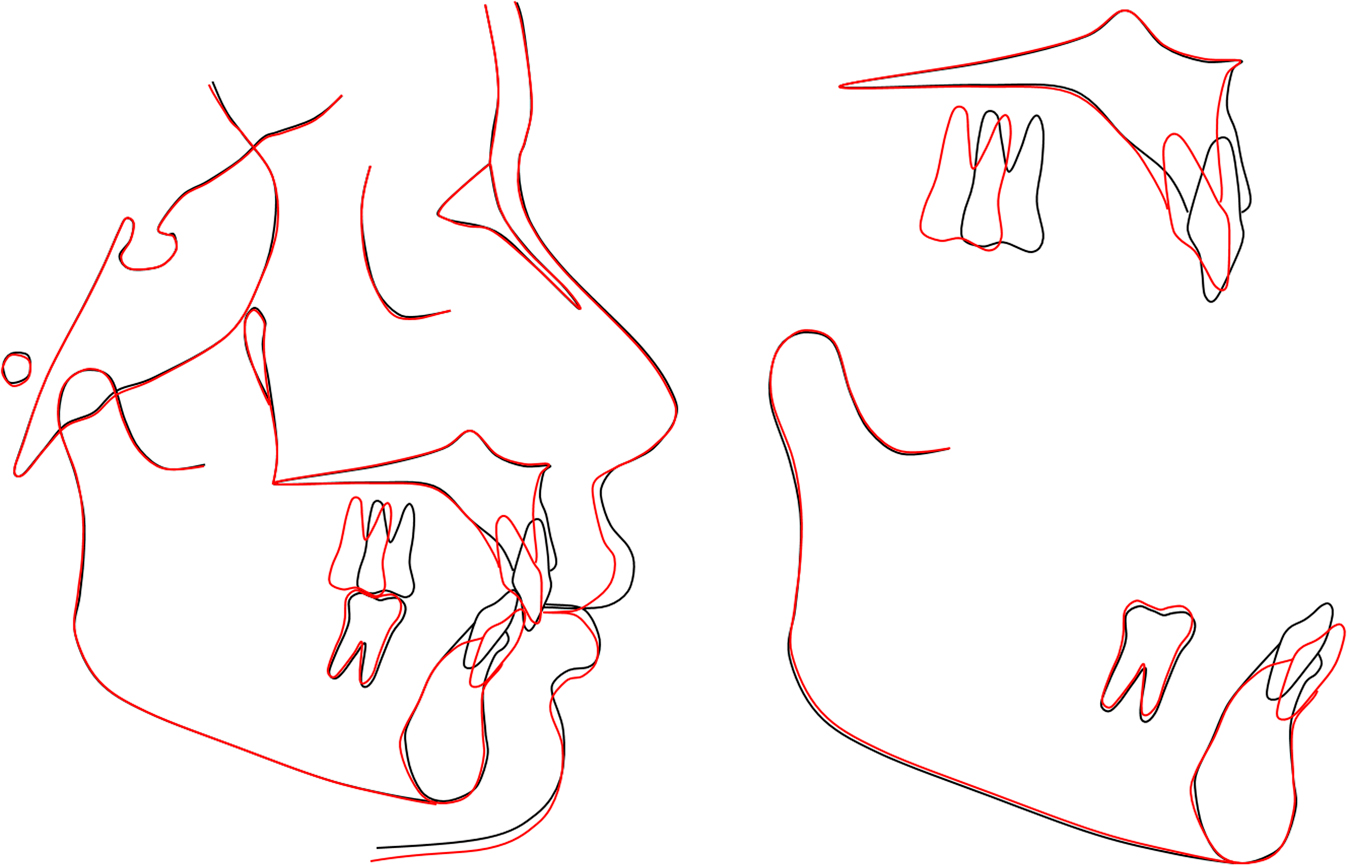
Figure 15.
Case 2: general and regional superimpositions of pretreatment and post-treatment cephalometric tracings.
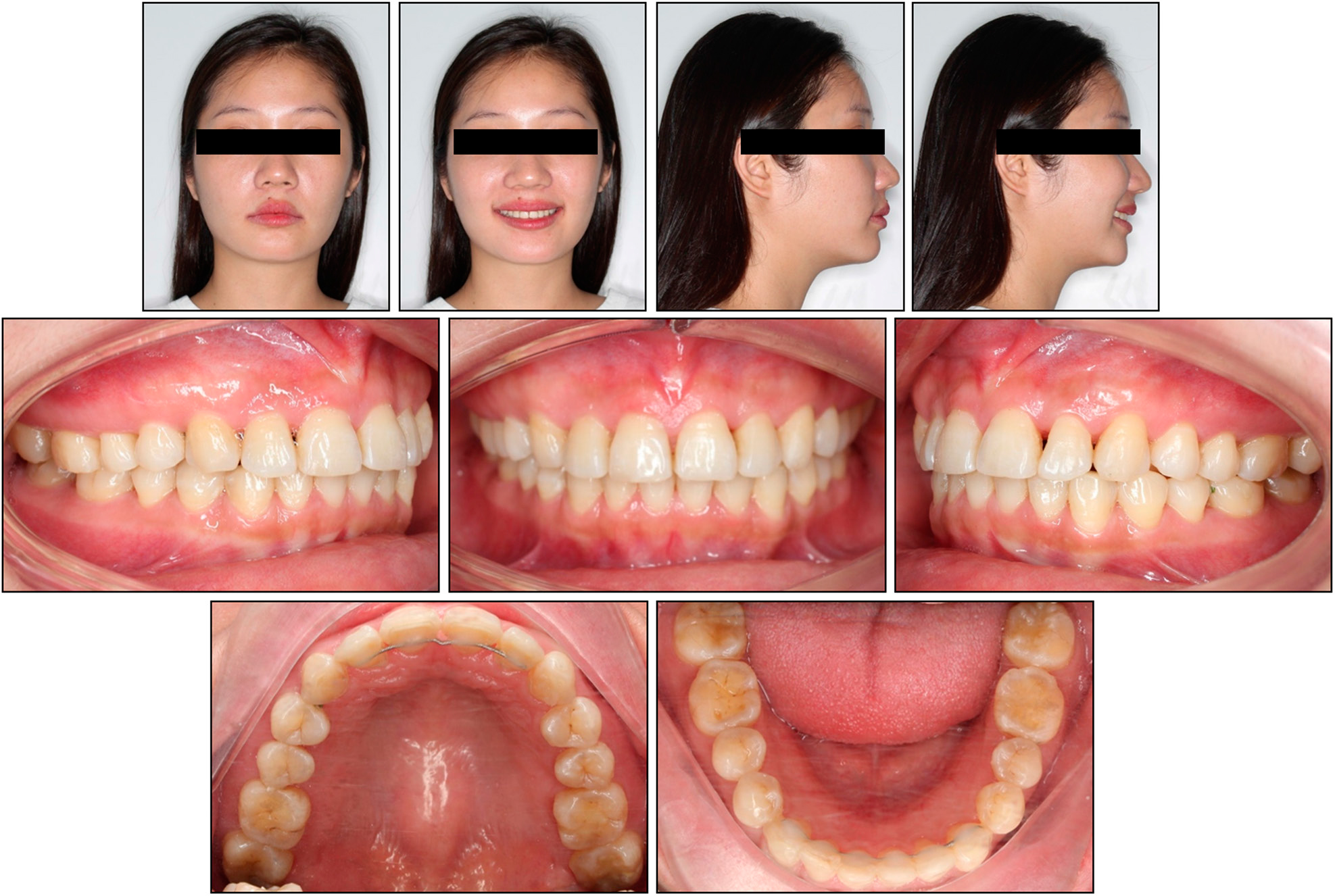
Figure 16.
Case 2: one-year post-retention extraoral and intraoral photographs.
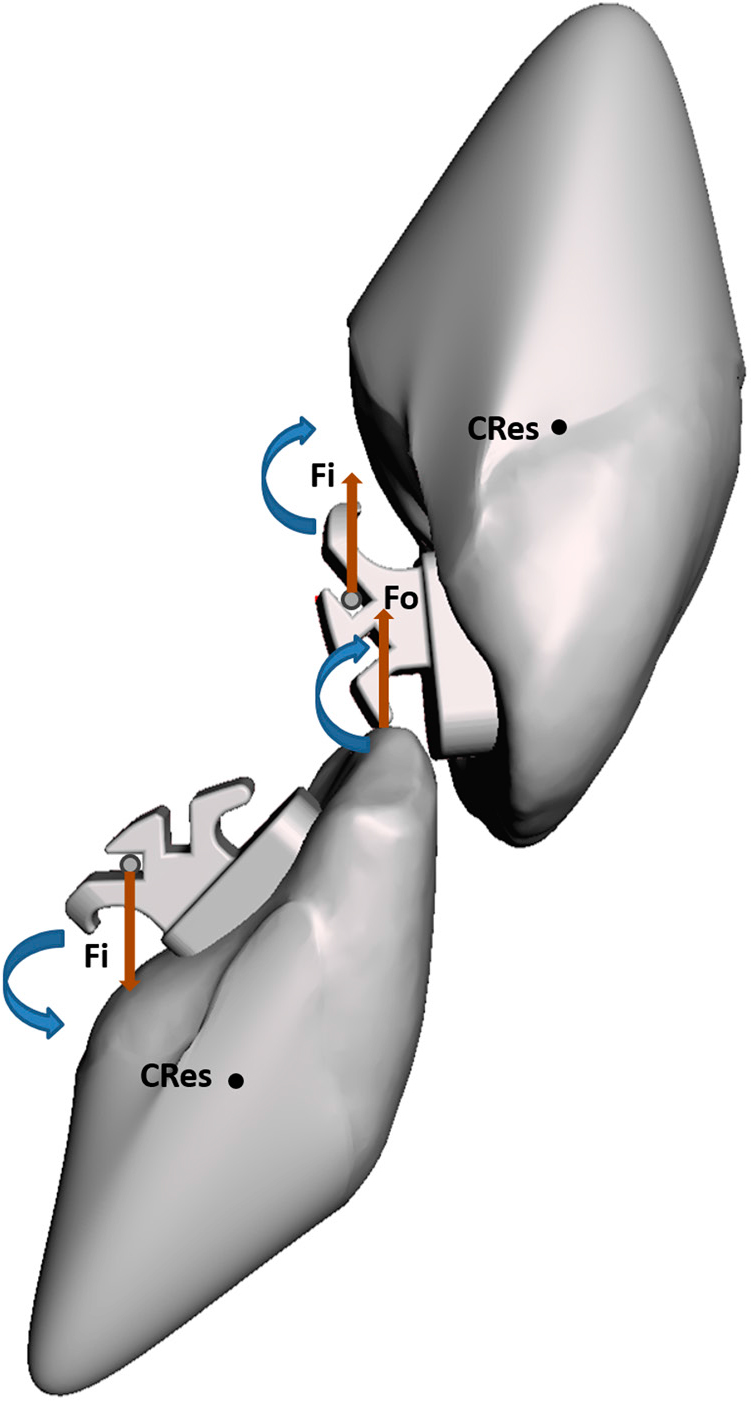
Figure 17.
Counter-clockwise moments created by the arch wire intrusion force and occlusal force make the upper incisor further retroclined. Fi: intrusion forces applied by arch wires. Fo: occlusal forces applied by lower incisors.
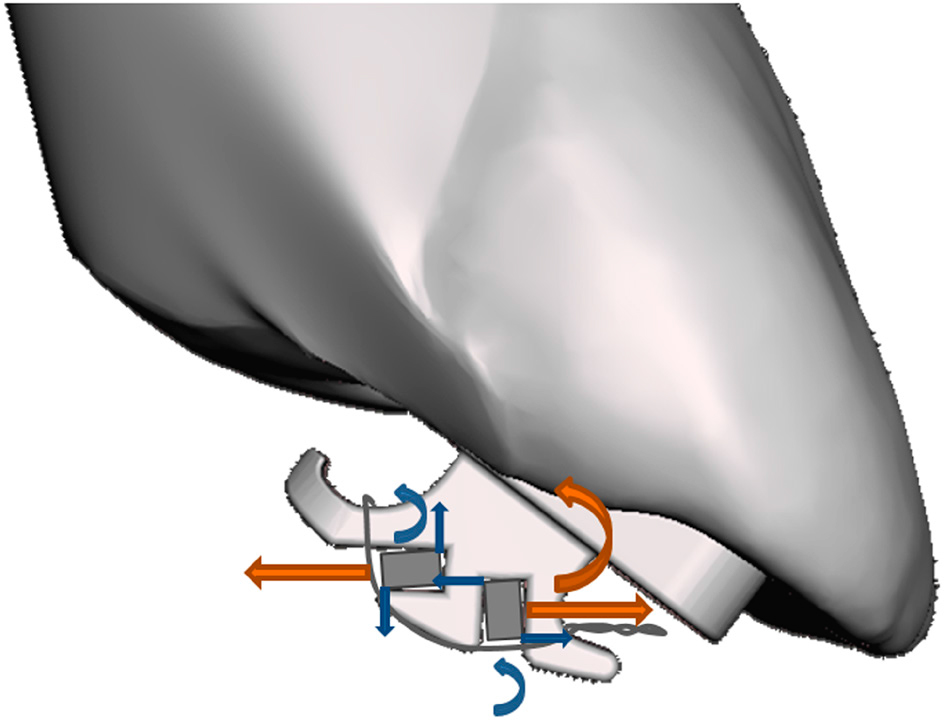
Figure 18.
Torque control using the double-slotted bracket. Blue arrows: couples generated by rectangular arch wires. Orange arrows: couples generated by relative positions of the two arch wires.
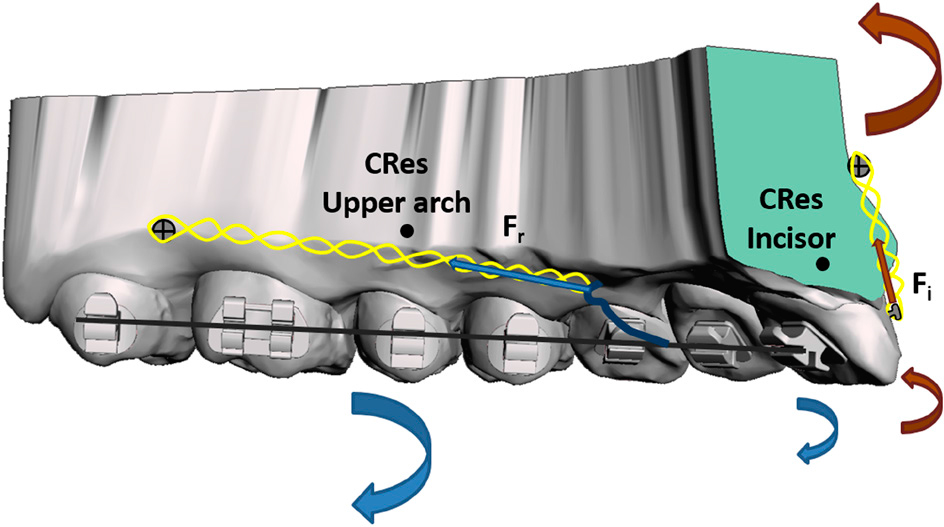
Figure 19.
An incisor intrusion force (Fi) generates counter-clockwise moments (orange arrows) to increase incisor torque and counteract the clockwise moment (blue arrows) created by the entire arch retraction force (Fr).