
1. Introduction
Fish and other seafood products are important components of human nutrition because they provide high-quality protein, long-chain omega-3 fatty acids, vitamins, minerals, phospholipids, and other bioactive compounds. These nutrients contribute to cardiovascular, neurological, developmental, and overall nutritional health, and seafood consumption is widely encouraged by international health authorities as part of a balanced diet (EFSA Panel on Dietetic Products, Nutrition and Allergies [NDA], 2014; Noreen et al., 2025). Beyond their nutritional relevance, seafood products also have substantial socioeconomic importance due to their role in global trade, food security, and the livelihoods of communities involved in harvesting, processing, distribution, and retail (Food and Agriculture Organization of the United Nations, 2024).
Despite these benefits, seafood is among the most perishable food commodities. Its high water activity, near-neutral pH, high content of polyunsaturated fatty acids, and the presence of endogenous enzymes and spoilage microorganisms make it highly susceptible to rapid deterioration (Rathod et al., 2021; Tavares et al., 2021). Seafood spoilage is driven by the combined action of microbial growth, enzymatic autolysis, and oxidative reactions, which progressively impair texture, odour, flavour, appearance, and overall acceptability. Specific spoilage organisms generate volatile metabolites such as ammonia, trimethylamine, dimethylamine, and hydrogen sulphide, while endogenous enzymes contribute to post-mortem degradation of proteins, lipids, carbohydrates, and nucleotides. In parallel, lipid and protein oxidation further accelerates quality deterioration and may compromise the product’s sensory and nutritional value (Rathod et al., 2021).
Seafood safety represents an equally important concern. Fish and shellfish may become contaminated with pathogenic microorganisms during harvesting, processing, transportation, storage, or retail, particularly when hygiene practices and temperature control are inadequate (Mol & Coşansu, 2022; Rathod et al., 2021). Unlike spoilage microorganisms, pathogens may not produce visible or sensory signs of deterioration, which makes their presence difficult to detect before consumption. Consequently, seafood-associated contamination can pose significant public health risks and may also disrupt international trade, reduce consumer confidence, increase product recalls, and generate substantial economic losses (Mol & Coşansu, 2022).
Conventional preservation strategies, including refrigeration, freezing, thermal processing, chemical preservatives, and packaging-based approaches, remain essential for seafood preservation. However, each of these methods has important limitations. Refrigeration only delays microbial growth and biochemical deterioration; freezing may induce structural and sensory damage; heat treatments can negatively affect fresh-like quality; chemical preservatives are increasingly challenged by clean-label expectations; and packaging systems generally require strict cold-chain control and additional safety hurdles (Tavares et al., 2021; Nie et al., 2025). These limitations have increased interest in non-thermal, residue-free preservation technologies that improve microbial safety while better preserving quality attributes.
Cold plasma (CP) has emerged as a promising non-thermal technology for seafood preservation because it generates reactive oxygen and nitrogen species that can inactivate microorganisms at near-ambient temperatures (Olatunde et al., 2021; Rathod et al., 2021). Its surface-oriented mode of action, potential compatibility with in-package processing, and limited thermal impact make it particularly relevant for fresh and minimally processed seafood products. Nevertheless, standalone CP treatment may be constrained by limited penetration depth, matrix-dependent efficacy, microbial recovery, and possible oxidative effects on lipids and proteins (Olatunde et al., 2021; Shiekh & Benjakul, 2020). Therefore, recent research has increasingly focused on combining CP with complementary preservation hurdles, such as natural antioxidants, UV-based treatments, modified atmosphere packaging (MAP), edible coatings, plasma-activated water (PAW), and other non-thermal technologies.
This review critically discusses the potential of CP in seafood preservation, with particular emphasis on synergistic and multi-hurdle strategies. It first outlines the limitations of conventional seafood preservation methods and the fundamental mechanisms of CP-mediated microbial inactivation. It then evaluates the quality-related challenges of CP application and proposes a functional classification of CP-based combinations according to their primary roles in oxidation mitigation, microbial inactivation enhancement, and shelf-life stabilization. Finally, industrial applicability, current limitations, and future research needs are discussed to support the development of effective, quality-preserving, and scalable CP strategies for seafood systems. Figure 1 provides a schematic overview of CP technology for seafood preservation, including its generation principles, key antimicrobial and quality-related interactions, major strengths and limitations, and future implementation requirements.
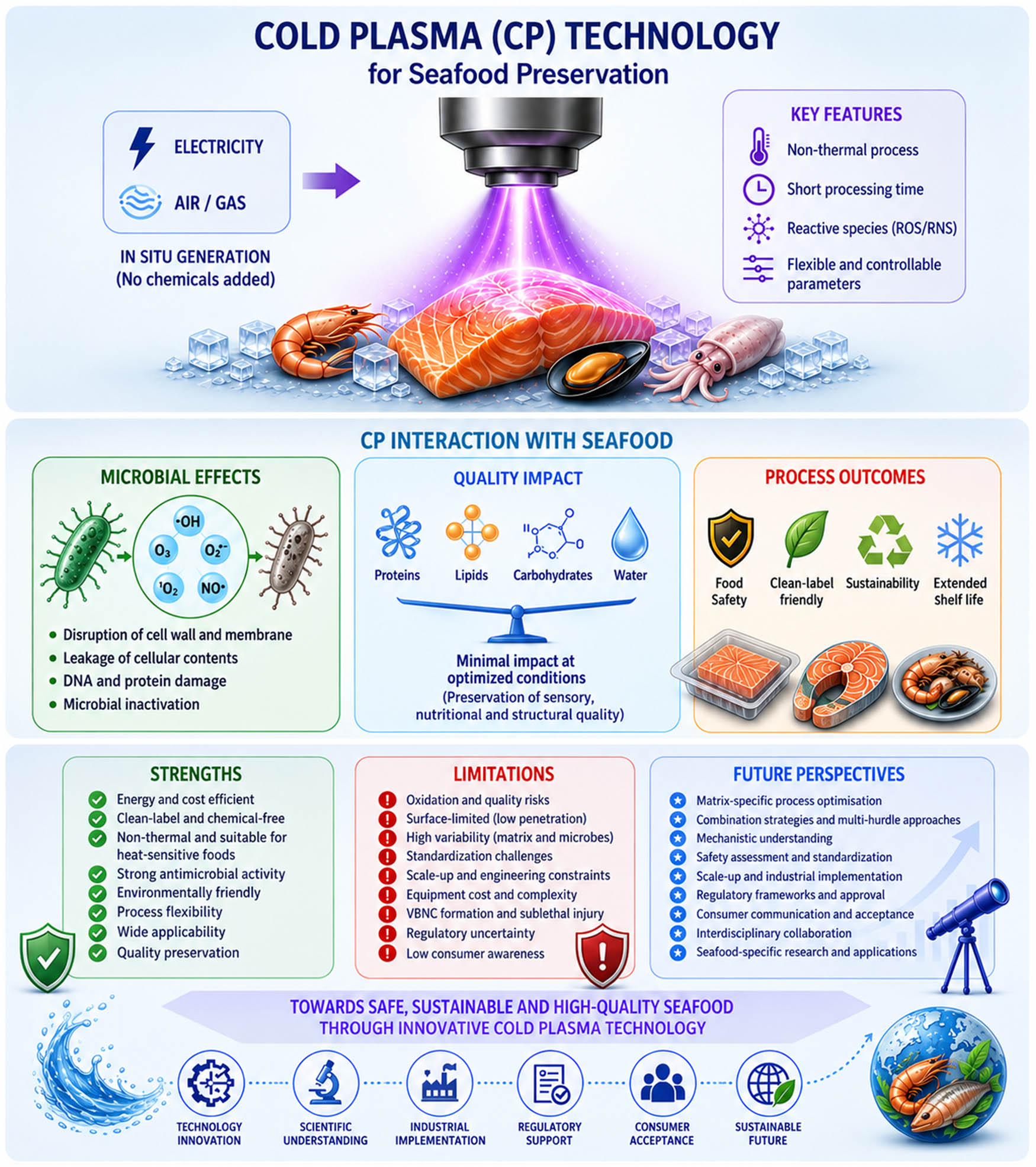
Figure 1
Schematic overview of CP technology for seafood preservation.
Source: Authors’ contribution, based on the literature cited in the manuscript.
2. Limitations of conventional preservation
2.1. Thermal preservation
Heat treatment is one of the most widely used conventional preservation strategies to ensure microbial safety and extend the shelf life of seafood products. Depending on the desired shelf life, microbial risk profile, and intended mode of consumption, different heat-based approaches, such as cook–chill processing, pasteurization, and retort sterilization, are used in seafood systems.
Cook–chill processing involves cooking seafood products, rapidly cooling them within a defined time frame, storing them under refrigerated conditions, and reheating them prior to consumption. This approach is particularly relevant for ready-to-eat seafood products, as it provides convenience while delaying microbial spoilage and extending refrigerated shelf life (Pramandari et al., 2023). Pasteurization is another important thermal process used for products such as crab meat, surimi, and caviar. It commonly involves mild heat treatments below 100°C and aims to suppress microbial activity while maintaining product acceptability. However, pasteurization may not fully inactivate endogenous enzymes, and thermal load may adversely affect colour, texture, and flavour, particularly in delicate seafood matrices (Rosnes et al., 2011; Ravi et al., 2025). More intensive treatments, such as sterilization and retort processing, are used to produce shelf-stable seafood products and to control risks associated with spore-forming pathogens, particularly Clostridium botulinum. Although these treatments provide wide microbiological safety margins, the high temperatures and prolonged processing times required may result in sensory deterioration, nutrient losses, and pronounced textural changes in canned or retorted seafood products (Jimenez et al., 2024).
The major limitation of heat-based preservation is the unavoidable trade-off between microbial safety and product quality. Thermal processing can alter texture, colour, water-holding capacity, protein structure, lipid stability, and nutritional quality in fish and other seafood products, depending on the intensity and duration of heating (Hassoun et al., 2020a). Seafood muscle is highly sensitive to thermal processing because heat-induced denaturation and aggregation of myofibrillar proteins can reduce water-holding capacity and lead to undesirable textural changes such as firmness, dryness, or structural breakdown. These effects are especially critical in delicate fish species, where even moderate thermal loads may reduce juiciness, chewiness, and consumer acceptability (Strzelczak et al., 2021; Tan et al., 2024). In addition, seafood products are rich in polyunsaturated fatty acids and are therefore susceptible to heat-induced lipid oxidation. Elevated temperatures may accelerate the formation of secondary oxidation products, including aldehydes and ketones, which contribute to rancid flavours, off-odours, and overall sensory quality loss (Aubourg, 2023).
Thermal processing may also compromise the nutritional value of seafood. Long-chain omega-3 fatty acids, particularly eicosapentaenoic acid (EPA) and docosahexaenoic acid (DHA), are sensitive to heat and oxygen, and their degradation during high-temperature or long-duration processing can reduce one of the main health-promoting attributes of seafood products (Suryati et al., 2022, 2025). Heat-sensitive vitamins, bioactive compounds, and some amino acids may also be partially degraded during intensive treatments such as sterilization, potentially reducing nutritional quality and bioavailability (Jimenez et al., 2024). In crustaceans, heat-induced denaturation of carotenoprotein complexes releases astaxanthin, producing the characteristic red colouration of cooked shrimp; however, excessive or uncontrolled heating can lead to pigment degradation, uneven colour development, aroma loss, and reduced visual appeal (Yang et al., 2015).
Overall, thermal preservation methods remain reliable, cost-effective, and widely used tools for microbial inactivation in seafood products. However, because they inevitably cook the product and may cause texture deterioration, lipid oxidation, nutrient loss, pigment degradation, and undesirable sensory changes, they are not suitable for maintaining the fresh-like characteristics of raw or minimally processed seafood. These limitations highlight the need for non-thermal or minimally intensive preservation technologies that can improve microbial safety while better preserving the sensory and nutritional quality of seafood.
2.2. Traditional preservation methods
Traditional preservation methods, including salting, drying, smoking, marinating, and fermenting, have long been used to extend the shelf life of fish and other seafood products. These approaches have been applied for centuries and continue to be used in both traditional production systems and modern processing facilities, with improved process control and standardization. Their long-standing use reflects their accessibility, relatively low cost, cultural acceptance, and effectiveness in delaying spoilage under conditions where advanced preservation infrastructure or continuous cold-chain systems may be limited.
The preservative effect of these methods is mainly due to reduced water activity, lowered pH, inhibited microbial growth, and slowed biochemical spoilage reactions. Salting and drying restrict microbial proliferation by decreasing the availability of free water in the product (Rani et al., 2022), whereas smoking contributes to preservation through dehydration and the antimicrobial and antioxidant effects of smoke-derived compounds (Messina et al., 2021). Marination inhibits microbial growth and delays spoilage by combining organic acids and salt, lowering product pH and reducing microbial activity (Aguilar & Pengson, 2024). Fermentation improves product stability through acidification, the activity of competitive or starter microflora, and the production of antimicrobial metabolites, thereby contributing to microbial control and shelf-life extension (Li et al., 2024).
Despite these advantages, traditional preservation methods have important limitations. Because they often rely on substantial changes in water activity, salt concentration, acidity, smoke exposure, or microbial fermentation, they may considerably alter the original sensory and nutritional characteristics of seafood. Salting and drying may result in excessive saltiness, texture hardening, dehydration-related quality loss, and reduced consumer acceptance among individuals seeking fresh-like products. Smoking can provide desirable flavour, colour, and antioxidant effects; however, excessive or poorly controlled smoking can lead to significant sensory changes and the accumulation of smoke-derived contaminants, such as polycyclic aromatic hydrocarbons, which require careful process control in smoked seafood products (Tongo et al., 2017). Marinated and fermented seafood products may also differ substantially from fresh seafood in terms of acidity, flavour profile, texture, and appearance. Therefore, although these approaches remain accessible, economical, and culturally important, they are generally less suitable for preserving the fresh-like attributes of raw or minimally processed seafood products.
Modern consumers increasingly demand seafood products that are safe, minimally processed, nutritious, and close to their original fresh characteristics. In this context, traditional preservation methods may not fully meet current expectations because they extend shelf life largely by transforming the product rather than maintaining its fresh state. These limitations highlight the need for alternative or complementary technologies that can improve microbial safety and shelf life while better preserving the intrinsic sensory and nutritional qualities of seafood (Abel et al., 2021).
2.3. Chilled and frozen storage
Low-temperature storage is one of the most widely used strategies for delaying seafood spoilage and maintaining product quality. Chilled and frozen storage are extensively applied in the seafood industry because they reduce microbial proliferation and slow enzymatic and oxidative reactions associated with quality deterioration (Rezende et al., 2022; Bejaoui et al., 2021; Tavares et al., 2021). However, their effectiveness depends strongly on the initial quality of the raw material, rapid postharvest cooling, hygienic handling, and strict temperature control throughout the supply chain.
Chilled storage generally maintains seafood at low temperatures, typically near 0°C, although refrigeration conditions may vary depending on the product and distribution system. At these temperatures, the activity of endogenous enzymes and spoilage microorganisms is reduced, thereby delaying the onset of quality deterioration (Sharifian et al., 2014). However, refrigeration does not completely arrest microbial growth or enzymatic activity. Psychrotrophic spoilage bacteria and some cold-tolerant pathogens may continue to grow slowly during refrigerated storage, limiting the effectiveness of chilling as a long-term preservation strategy (Sharifian et al., 2014; Mao et al., 2023; Kontominas et al., 2021). Therefore, chilled storage is mainly suitable for short-term preservation and often requires complementary hurdles to improve microbial safety and shelf-life stability.
Frozen storage, typically at temperatures at or below −18°C, is used for long-term preservation of seafood. Freezing immobilizes a large proportion of water as ice, reduces water availability, and prevents microbial growth during storage, although it does not necessarily inactivate all microorganisms. It also markedly slows enzymatic and oxidative reactions, thereby helping to preserve the quality and nutritional value of seafood over extended periods (Rezende et al., 2022; Bejaoui et al., 2021; Syanya et al., 2023). Nevertheless, frozen storage does not completely prevent quality deterioration, particularly when storage temperatures fluctuate or when products are rich in polyunsaturated fatty acids (Tavares et al., 2021; Dawson et al., 2018).
A critical factor in frozen storage is the formation and control of ice crystals. Rapid freezing produces smaller ice crystals, causing less structural damage and better preserving texture, flavour, and overall product integrity (Brown & Dave, 2021; Sommers et al., 2011). In contrast, slow freezing promotes the formation of larger ice crystals, which may rupture cell membranes, increase drip loss during thawing, and negatively affect texture and juiciness (Brown & Dave, 2021; Bejaoui et al., 2021; Hassoun et al., 2020b). In addition, temperature fluctuations during storage and distribution can promote ice recrystallization, moisture migration, protein denaturation, lipid oxidation, freezer burn, and sensory deterioration, including changes in texture, colour, odour, and flavour (Dawson et al., 2018; Hassoun et al., 2020b; Fadiji et al., 2021).
Despite their widespread use, chilled and frozen storage have several limitations. Refrigeration only delays spoilage and cannot fully prevent psychrotrophic growth, enzymatic degradation, formation of volatile spoilage compounds, or lipid oxidation during extended storage (Tavares et al., 2021; Kontominas et al., 2021). Frozen storage provides longer shelf life but may still compromise fresh-like quality through ice crystal damage, drip loss after thawing, protein denaturation, lipid oxidation, and cold-chain-related quality losses. Moreover, both methods depend on an uninterrupted cold chain, which increases energy demand, operational costs, and vulnerability to temperature abuse during transportation, storage, and retail (Fadiji et al., 2021; Heard & Miller, 2016). Therefore, although chilled and frozen storage remain essential preservation strategies, they are not sufficient as stand-alone approaches to ensure microbial safety and fresh-like quality throughout the seafood supply chain. These limitations support the use of complementary preservation technologies, including non-thermal approaches such as CP.
2.4. Chemical preservatives
Chemical preservatives are substances, either synthetic or naturally derived, that are intentionally added to foods to delay spoilage, inhibit microbial growth, prevent undesirable biochemical reactions, and extend shelf life while maintaining product safety and quality (Gökoğlu, 2019). In seafood products, their application is particularly relevant because fish and shellfish are highly susceptible to rapid quality loss caused by microbial growth, endogenous enzymatic activity, and chemical oxidation, with microbial spoilage generally representing the dominant deterioration mechanism in fresh and lightly preserved products (DeWitt & Oliveira, 2016; Tavares et al., 2021; Huang et al., 2021). Chemical preservatives have therefore been widely used in seafood systems because they are generally cost-effective, easy to incorporate into existing processing operations, and effective in controlling microbial growth, delaying oxidation, suppressing enzymatic reactions, and reducing losses during storage and distribution (Gökoğlu, 2019; Giannakourou & Tsironi, 2021; Huang et al., 2021).
The most widely used chemical preservatives in seafood products include weak organic acids and their salts, sulphiting agents, nitrites/nitrates, and antioxidants (Syamdidi, 2012). Organic acids such as sorbic, benzoic, acetic, lactic, and citric acids inhibit microorganisms mainly by entering microbial cells in their undissociated form, lowering intracellular pH, and disrupting enzyme activity and energy metabolism. Sulphites are commonly applied in crustaceans to prevent melanosis through the inhibition of polyphenol oxidase, whereas nitrites and nitrates are used in certain processed seafood products to suppress anaerobic pathogens, particularly Clostridium botulinum. Antioxidants such as ascorbic acid, citric acid, tocopherols, butylated hydroxyanisole (BHA) and butylated hydroxytoluene (BHT) are used to retard lipid oxidation and preserve sensory quality, especially in fatty fish species. Therefore, the preservative action of these compounds is based on multiple mechanisms, including antimicrobial activity, enzyme inhibition, pH reduction, and oxidative stability improvement (Kontominas et al., 2021; Smyth et al., 2018; Wińska et al., 2019).
Despite their technological advantages, chemical preservatives are increasingly limited by consumer, regulatory, and efficacy-related concerns. The perception of synthetic preservatives as “chemical” or “artificial” has reduced consumer acceptance and increased demand for minimally processed and clean-label seafood products (Gökoğlu, 2019; Mei et al., 2019; Kontominas et al., 2021). In addition, some preservatives, particularly sulphiting agents, may be associated with hypersensitivity reactions and potential toxicity, leading to strict regulatory limits on their use (D’Amore et al., 2020). The efficacy of chemical preservatives may also be limited by the complex seafood matrix, the persistence of psychrotrophic spoilage microorganisms during refrigerated storage, and the product-dependent performance of organic acids and other antimicrobial treatments in fish systems (Smyth et al., 2018; Leyva Salas et al., 2017; DeWitt & Oliveira, 2016). Therefore, chemical preservatives alone may not fully satisfy current requirements for seafood safety, quality preservation, and consumer-driven clean-label expectations.
Growing consumer concerns regarding synthetic preservatives have shifted interest towards natural antimicrobial compounds as alternative or complementary strategies for seafood preservation. Plant extracts, essential oils, bacteriocins, organic acids, chitosan, and algae- or mushroom-derived compounds have been investigated for their antimicrobial and antioxidant potential in fish and shellfish products (Gökoğlu, 2019; Mei et al., 2019; Kontominas et al., 2021). Nevertheless, their practical application remains challenging because their composition and activity may vary depending on source, extraction method, purity, and processing conditions. In addition, many natural antimicrobials, particularly essential oils and plant extracts, may cause undesirable changes in odour, flavour, colour, or texture, which is a critical limitation for seafood products with delicate sensory characteristics (Tongnuanchan & Benjakul, 2014; Nieto, 2020; Kontominas et al., 2021). Their antimicrobial performance may also be reduced in complex seafood matrices compared with in vitro systems, and meaningful pathogen reduction often requires relatively high concentrations or combination with other preservation hurdles (Mei et al., 2019; Huang et al., 2021). Therefore, although natural preservatives align well with clean-label expectations, their limitations in terms of standardization, sensory acceptability, matrix-dependent efficacy, and limited microbial inactivation have driven the development of non-thermal, residue-free technologies such as CP.
2.5. Packaging
Packaging is an integral component of seafood preservation because it modulates the storage environment and influences both product quality and safety during shelf life. Packaging systems range from simple protective materials that limit exposure to oxygen, light, moisture, odours, microorganisms, and physical damage to more advanced technologies designed to extend shelf life through product-specific atmospheric conditions. This function is particularly important for highly perishable seafood products, which are susceptible to rapid microbial spoilage, lipid oxidation, moisture loss, and sensory deterioration (Kontominas et al., 2021). Although various active, intelligent, and functional packaging concepts have been developed, this section focuses on vacuum packaging, MAP, and sous-vide processing because these approaches are widely used in seafood preservation and provide a relevant framework for discussing the limitations of packaging-based strategies.
For most fish and seafood products, packaging strategies aim to reduce oxygen availability in order to slow aerobic spoilage and lipid oxidation. In vacuum packaging, air is removed from the package, and the low-oxygen environment is maintained using packaging materials with low gas permeability. This approach can delay the growth of aerobic spoilage microorganisms and reduce oxidative reactions. However, its effectiveness depends strongly on the product’s initial microbial quality, hygienic processing, appropriate packaging materials, and uninterrupted refrigeration. Moreover, reduced-oxygen environments may support the growth of facultative or obligate anaerobic microorganisms when temperature control is inadequate or additional hurdles are absent (Abel et al., 2021).
MAP involves replacing air in the package with a product-specific gas mixture, typically containing elevated CO2 levels, reduced O2, and, in some cases, N2 as a filler gas. In seafood systems, CO2 is the primary antimicrobial component because it dissolves into the product’s aqueous and lipid phases, forming carbonic acid, lowering pH, and inhibiting microbial growth, thereby extending shelf life (Gökoğlu, 2020). Nevertheless, MAP also has limitations. Excessive CO2 absorption into the product may cause package collapse, drip formation, or undesirable visual changes, while insufficient gas control may reduce preservative effectiveness (Silbande et al., 2016). Therefore, gas composition, gas-to-product ratio, packaging material permeability, product fat content, and storage temperature must be carefully optimized for each seafood product.
A major safety concern associated with vacuum- and MAP-packaged seafood is the potential growth and toxin production of non-proteolytic Clostridium botulinum types B, E, and F under reduced-oxygen conditions, particularly when refrigeration is inadequate (Koukou et al., 2022). This risk is critical because botulinum toxin may be produced before obvious sensory spoilage becomes detectable. Reduced-oxygen packaging has also been associated with concerns related to Yersinia enterocolitica, Listeria monocytogenes, and histamine formation in susceptible fish products (European Food Safety Authority [EFSA], 2015). These risks indicate that packaging systems should not be considered standalone lethal treatments. Instead, their safe use requires high-quality raw materials, validated processing conditions, Hazard Analysis and Critical Control Point (HACCP)-based control, strict cold-chain management, and additional hurdles where necessary (Kontominas et al., 2021). Similarly, Gökoğlu (2020) emphasized that packaging techniques are generally insufficient when applied alone and should be combined with other preservation methods.
Sous-vide is a packaging-based preservation and preparation method that combines vacuum packaging with controlled, low-temperature heat treatment. This method is suitable for ready-to-eat seafood products because it provides convenience, reduces post-processing contamination, and helps maintain sensory quality during refrigerated storage. However, sous-vide converts the product into a cooked state and is therefore not applicable to the preservation of raw or fresh seafood. Moreover, because sous-vide involves a mild heat treatment combined with anaerobic packaging, careful control of time–temperature parameters and refrigerated storage is essential to ensure safety. For this reason, sous-vide products may require additional hurdles or complementary non-thermal technologies to improve pathogen control and enhance shelf-life stability (Mol et al., 2026; Coşansu et al., 2022; Onyeaka et al., 2022).
Overall, packaging-based preservation strategies play an important role in extending the shelf life and maintaining the quality of seafood products. However, they primarily modify the product environment rather than directly eliminating microorganisms. Their effectiveness depends strongly on raw material quality, packaging design, gas composition, storage temperature, and cold-chain integrity. Therefore, although vacuum packaging, MAP, and sous-vide processing are valuable tools in seafood preservation, they should be integrated with additional preservation hurdles to achieve effective pathogen control, minimize spoilage, and maintain fresh-like quality. This need for complementary strategies supports the application of non-thermal technologies such as CP, particularly in combination with packaging systems.
2.6. Innovative preservation technologies
A variety of innovative preservation technologies have been investigated to improve microbial safety and extend the shelf life of seafood products while minimizing the quality losses associated with conventional processing. These approaches include light-based treatments, ionizing irradiation, pulsed electric field (PEF), ohmic heating, ultrasound, high-pressure processing, ozone, and other non-thermal or minimally intensive technologies (Chacha et al., 2021). Although they differ in their mechanisms of action, these technologies share a common objective: achieving microbial control while preserving the sensory and nutritional quality of seafood products.
Light-based applications, such as ultraviolet-C (UV-C) and pulsed light, are attractive because of their short treatment times and ability to achieve surface decontamination. However, their effectiveness is often limited by low penetration depth, shadowing effects, treatment non-uniformity, and reduced performance on irregular, wet, or rough seafood surfaces. Ionizing irradiation technologies, including gamma rays, electron beams, and X-rays, provide deeper penetration and have demonstrated strong antimicrobial effectiveness. Nevertheless, their application may be constrained by consumer acceptance, regulatory requirements, specialized facility infrastructure, operational complexity, and cost (Monteiro et al., 2023).
PEF technology is another promising approach capable of microbial inactivation with relatively limited thermal impact, particularly in liquid or pumpable products. However, its performance is strongly influenced by product conductivity, matrix composition, electrode configuration, treatment chamber design, and process parameters, which may limit its consistent application across diverse seafood matrices (Ahmed et al., 2025). Ohmic heating provides rapid, relatively uniform volumetric heating compared with conventional methods; however, because it remains a heat-based process, it may still induce thermal quality changes. Moreover, variations in electrical conductivity among seafood products and the complexity of equipment design can restrict its practical implementation (Abel et al., 2021).
Ultrasound has been widely investigated because of its cavitation-induced mechanical effects and potential to enhance microbial inactivation or improve mass transfer. However, excessive ultrasound treatment may negatively affect product quality, and effective pathogen reduction often requires its combination with other hurdle technologies (Rathnayake et al., 2025). Similarly, other electrical discharge systems, including arc discharge, have been explored for microbial control, but their high energy requirements, limited process control, and possible thermal effects may restrict their suitability for delicate seafood products.
Overall, innovative preservation technologies offer valuable opportunities to improve seafood safety and quality. However, their limitations, including limited penetration, matrix dependency, treatment non-uniformity, equipment complexity, regulatory barriers, cost, and potential quality effects, indicate that no single technology can fully address the preservation challenges of seafood products. Within this context, CP represents a promising non-thermal approach because it enables microbial decontamination through reactive species generated at near-ambient temperatures and can be integrated into multi-hurdle preservation concepts, particularly in combination with packaging, natural antioxidants, plasma-activated liquids, or other non-thermal treatments (Kontominas et al., 2021).
3. CP as an emerging non-thermal preservation technology for seafood
3.1. Fundamentals and key advantages of CP
The term “plasma” was first introduced by Langmuir in 1928 to describe ionized gases, which are often referred to as the fourth state of matter (Rathod et al., 2021). Plasma is generated when sufficient energy is supplied to a gas, resulting in partial ionization and the formation of a reactive mixture containing electrons, ions, radicals, excited atoms and molecules, photons, and short- and long-lived reactive species. In CP, the system operates under non-equilibrium conditions, where electrons possess high kinetic energy while the overall gas temperature remains close to ambient levels. This feature enables the generation of chemically reactive species without substantial bulk heating, making CP particularly attractive for heat-sensitive food matrices such as seafood. As illustrated in Figure 1, CP can be generated in situ from electricity and working gases, producing reactive species under non-thermal conditions without the direct addition of conventional chemical preservatives.
In food applications, CP can be generated using various electrical discharge systems, including dielectric barrier discharge (DBD), corona discharge, radiofrequency discharge, microwave discharge, gliding arc discharge, and atmospheric-pressure plasma jets. These systems differ in energy input, plasma chemistry, reactive species generation, treatment configuration, and scalability. Among them, DBD and plasma jet systems are among the most widely investigated for food applications because of their operational flexibility, relatively simple configuration, and compatibility with direct, indirect, and in-package treatments (Aaliya et al., 2021; Bigi et al., 2023; Ojha et al., 2021).
The antimicrobial activity of CP is mainly attributed to the generation of reactive oxygen species (ROS) and reactive nitrogen species (RNS), together with other plasma-associated components such as charged particles, ultraviolet photons, and ozone. These agents can act individually or synergistically to damage microbial cell envelopes, intracellular proteins, nucleic acids, and other essential cellular structures, leading to microbial inactivation (Shintani et al., 2010). The effectiveness of CP depends on multiple process and product factors, including applied voltage, frequency, treatment time, gas composition, humidity, distance from the plasma source, post-treatment exposure time, package atmosphere, sample geometry, and surface characteristics (Olatunde et al., 2021).
One of the major advantages of CP is its application versatility. It can be applied directly to food surfaces, indirectly through plasma-treated gases or liquids, or inside sealed packages as in-package plasma treatment. Direct exposure can provide strong microbial inactivation because reactive species are generated close to the target surface; however, its effectiveness may be limited by surface irregularities and the short lifetime of some reactive species. Indirect approaches, including plasma-treated gases or plasma-activated liquids, may offer more uniform exposure for complex geometries but may exhibit reduced reactivity depending on the stability and transport of active species. In-package plasma is particularly attractive for seafood because it can reduce post-treatment recontamination risk and enables microbial control within the final package, thereby supporting integration with existing cold-chain and packaging systems (Zhang et al., 2017; Olatunde et al., 2021).
For seafood preservation, CP is especially relevant because it can be applied under near-ambient temperature conditions and therefore has the potential to improve microbial safety while better preserving fresh-like characteristics than conventional heat-based treatments. Under optimized conditions, CP may avoid cooking effects and minimize undesirable changes in sensory and nutritional quality. In addition, it does not require conventional chemical preservatives and can be generated using air or other low-cost gases, which supports its compatibility with clean-label and sustainability-oriented processing concepts (Ojha et al., 2021; Aaliya et al., 2021; Sarangapani et al., 2018). However, these advantages depend strongly on appropriate process optimization, since excessive treatment intensity or unsuitable plasma chemistry may promote lipid oxidation, protein modification, or sensory changes in sensitive seafood matrices.
The adjustability of key process parameters, such as voltage, frequency, treatment duration, gas composition, humidity, source-to-sample distance, and package atmosphere, allows CP treatments to be tailored to specific seafood products and target microorganisms. This process flexibility provides a basis for combining CP with other preservation technologies to achieve synergistic effects within multi-hurdle processing strategies. Therefore, CP should not be viewed only as a standalone decontamination method, but also as a platform technology that can be integrated with packaging, natural antimicrobials, antioxidants, PAW, or other non-thermal treatments to improve seafood safety and shelf-life stability (Olatunde et al., 2021).
3.2. Microbial inactivation mechanisms of CP in seafood matrices
Microbial contamination in seafood is frequently concentrated on external and exposed surfaces, including the skin, gills, shells, and cut muscle surfaces, due to post-harvest handling, processing, and storage conditions (Sheng & Wang, 2021). This surface-dominated contamination profile is particularly relevant for CP applications because plasma-generated reactive species act primarily at or near the treated surface. Therefore, despite its limited penetration depth, CP can be well matched to seafood decontamination when microbial targets are located on accessible surfaces. However, the irregular topography, high moisture content, mucus layer, organic residues, and tissue heterogeneity of seafood matrices may influence the transport, lifetime, and reactivity of plasma-generated species, thereby affecting antimicrobial performance.
The antimicrobial activity of CP is mainly attributed to the combined action of ROS, RNS, charged particles, electric fields, ultraviolet photons, and ozone. These components may act individually or synergistically to induce oxidative and structural damage in microbial cells (Shintani et al., 2010; Rathod et al., 2021). ROS such as atomic oxygen, hydroxyl radicals, singlet oxygen, superoxide, hydrogen peroxide, and ozone can oxidize membrane lipids, proteins, enzymes, and nucleic acids, leading to membrane permeabilization, leakage of intracellular components, metabolic disruption, and loss of viability (Rathod et al., 2021; Bourke et al., 2017). RNS, including nitric oxide and nitrogen oxides, may further contribute to microbial inactivation through nitrosative stress, intracellular acidification, protein modification, and nucleic acid damage (Rathod et al., 2021).
In seafood matrices, high surface moisture and water activity play an important role in plasma–microbe interactions. Moist surfaces can promote the formation and transfer of secondary reactive species through plasma–liquid interactions, including hydrogen peroxide, nitrite, nitrate, peroxynitrite-related species, and acidic products. These species may extend antimicrobial activity beyond the immediate plasma exposure period, particularly in indirect treatments or plasma-activated liquids. At the same time, organic matter, proteins, lipids, salts, and mucus may consume or quench reactive species, reducing their availability for microbial inactivation. Therefore, the seafood matrix can both support and limit plasma efficacy depending on product composition, surface condition, and treatment configuration.
Atmospheric CP inactivates microorganisms through multiple, interconnected mechanisms involving oxidative stress, UV-induced effects, electrostatic disruption, and biofilm matrix damage. The accumulation of charged particles can weaken cell integrity through electroporation, while the synergistic interaction of reactive species enhances cell membrane erosion and lesion formation, thereby increasing overall inactivation efficiency (Bigi et al., 2023; Chen et al., 2019; Coutinho et al., 2021). CP may also contribute to the disruption of microbial biofilms, which are important in seafood processing environments and on product-contact surfaces. Biofilm-associated cells are typically more resistant to conventional decontamination strategies because extracellular polymeric substances, reduced metabolic activity, biofilm architecture, and matrix composition can limit antimicrobial penetration. Plasma-generated reactive species, UV photons, and charged particles may damage both microbial cells and the extracellular biofilm matrix, thereby reducing biofilm viability and attachment (Nwabor et al., 2022; Puligundla & Mok, 2017; Rao et al., 2020). However, biofilm architecture, thickness, species composition, and matrix composition may still limit the penetration of reactive species and reduce treatment efficacy.
The extent of microbial inactivation is strongly influenced by process-related parameters, microbial characteristics, and product factors. Process variables such as applied voltage, frequency, treatment duration, working gas composition, humidity, source-to-sample distance, exposure mode, and package atmosphere directly influence the type and concentration of reactive species generated during treatment (Olatunde et al., 2021; Bigi et al., 2023). Microbial factors, including species, strain variability, Gram type, spore formation, physiological state, and biofilm formation, also determine susceptibility to plasma exposure. Gram-positive bacteria and bacterial spores are often more resistant than Gram-negative vegetative cells because of their thicker cell wall structures and protective layers (Bigi et al., 2023).
Product-related factors are particularly important in seafood applications. Surface roughness, tissue porosity, surface moisture, fat content, protein level, salt concentration, and the presence of skin, shell, mucus, or exudates may alter plasma distribution and reactive species availability. Rough, folded, or porous surfaces can shield microorganisms from direct plasma exposure, whereas high organic load may reduce antimicrobial efficiency by reacting with plasma-generated species before they reach microbial targets (Bourke et al., 2017; Olatunde et al., 2021). Consequently, microbial inactivation in seafood matrices is highly product-specific and requires careful optimization for each species, product format, and processing objective.
Overall, CP inactivates microorganisms in seafood through multiple, interconnected mechanisms involving oxidative stress, nitrosative stress, membrane disruption, intracellular damage, UV-associated effects, and biofilm matrix disruption. Its surface-oriented action makes it especially relevant for seafood products where contamination is predominantly located on exposed surfaces (Sheng & Wang, 2021; Olatunde et al., 2021). Nevertheless, treatment efficacy is governed by the interaction between plasma parameters, microbial resistance, and seafood matrix properties. Therefore, successful application requires product-specific optimization to achieve microbial safety while minimizing undesirable quality changes.
3.3. Impact of CP on quality attributes and oxidative stability of seafood
ROS and RNS generated during CP treatment may induce oxidative modifications in fish proteins. These reactive species can oxidize the protein backbone and amino acid side chains, leading to the formation of protein–protein cross-links or protein fragmentation. Such structural alterations may affect protein solubility, water-holding capacity, gel-forming ability, and digestibility, thereby inducing changes in the technological and sensory quality of seafood products. Moderate protein modification may improve some functional properties, such as gel formation and texture stability; however, excessive oxidation can result in protein degradation and reduced nutritional value. The extent of CP-induced protein oxidation depends on processing parameters such as treatment time, gas composition, applied voltage, and plasma type (Olatunde et al., 2021). Therefore, product-specific optimization of CP parameters is essential to minimize adverse quality changes while maximizing potential functional benefits. Under optimized conditions, quality deterioration may remain limited, whereas uncontrolled treatments may lead to increased protein oxidation.
In addition to protein oxidation, plasma-generated reactive species can induce various physicochemical changes in seafood products, potentially limiting the practical applicability of this technology if not properly controlled. Ozone, one of the reactive species produced during CP treatment with oxygen-containing gas mixtures, exhibits a high oxidation potential. This reactive species can initiate reactions that negatively affect meat quality, particularly colour attributes. Treatment time has been identified as a major factor influencing colour changes in CP-treated seafood, attributed to increased ROS and RNS generation with prolonged exposure (Olatunde et al., 2021). Accordingly, increased total colour difference (ΔE) values have been reported with longer treatment durations (Choi et al., 2016). Furthermore, protein modifications induced by plasma-generated reactive species may influence the water-holding capacity of treated seafood products. However, the effects of CP on water-holding capacity in seafood remain incompletely understood, highlighting the need for further investigation (Olatunde et al., 2021). For example, low-field proton nuclear magnetic resonance analysis showed that in-package DBD plasma treatment reduced “trapped water” within the myofibrillar network, suggesting that plasma treatment may influence water distribution and texture-related quality attributes in fish muscle (Paulsen et al., 2022).
During CP treatment, ROS and RNS may also promote oxidative conversion and structural modification of unsaturated fatty acids into lipid peroxides (Olatunde & Benjakul, 2022). Fish lipids are rich in polyunsaturated fatty acids, and their oxidation can adversely affect sensory properties (Gavahian et al., 2018). Therefore, lipid oxidation should be carefully considered during prolonged CP treatments, particularly in fatty fish species (Paulsen et al., 2022). As CP applications may accelerate lipid oxidation under certain conditions, process parameters must be optimized to ensure effective microbial inactivation while preserving quality and sensory attributes. In this context, natural antimicrobial or antioxidant compounds, such as plant extracts and essential oils, have been suggested as complementary strategies to mitigate oxidative and sensory deterioration (Olatunde et al., 2021).
Various reactions, particularly lipid oxidation, may negatively affect the sensory characteristics of CP-treated seafood products. Therefore, appropriate processing parameters and application conditions that induce minimal or negligible sensory changes must be selected to ensure microbial safety and extend shelf life. CP treatment may lead to the development of undesirable odours and flavours, such as rancid, oxidized, or overly fishy, especially in high-fat fish species, which can result in consumer rejection. Fishy odour is one of the primary sensory attributes leading to consumer disapproval and may be intensified by plasma-generated reactive species. Sensory properties of CP-treated seafood may be significantly affected under harsh processing conditions or when high concentrations of active species are generated, a phenomenon largely associated with accelerated lipid oxidation in seafood matrices (Olatunde & Benjakul, 2018).
A wide variety of CP systems have been developed, and most studies evaluate custom-designed experimental setups. Significant variability in treatment distance, exposure time, discharge configuration, gas composition, and energy input may lead to different quality outcomes across seafood matrices (Hajhoseini et al., 2020). Consequently, the effects of CP on seafood quality should be interpreted in relation to both processing conditions and product characteristics.
Overall, the effects of CP on the quality attributes and oxidative stability of seafood are directly linked to the intensity of reactive species, exposure duration, and the processing conditions used for microbial inactivation. Observed changes in protein oxidation, lipid oxidation, colour attributes, water distribution, and sensory quality indicate a delicate balance between effective microbial control and quality preservation. When process parameters are appropriately optimized, microbial safety can be improved while maintaining acceptable quality; however, uncontrolled or overly intensive treatments may adversely affect product acceptance. Therefore, CP should not be evaluated solely on the basis of antimicrobial efficacy but also on the controllability of its oxidative and sensory effects. These considerations support the use of CP as part of integrated preservation and multi-hurdle strategies rather than as a standalone intervention, particularly for oxidation-sensitive seafood products.
4. Limitations of CP in seafood processing
Despite these advantages, the practical application of CP in seafood processing is limited by several product-, process-, and technology-related constraints, including oxidation risks, surface-limited action, process variability, standardization challenges, and regulatory uncertainty, as summarized in Figure 1.
4.1. Chemical and quality-related limitations
Although CP is generally considered a non-thermal and residue-minimizing technology, its antimicrobial action is based on reactive oxygen and nitrogen species, which may also interact with seafood components. This represents one of the major limitations of CP in seafood processing, because fish and shellfish are highly susceptible to oxidative quality deterioration due to their high contents of polyunsaturated fatty acids and oxidation-sensitive proteins (Tavares et al., 2021). In particular, plasma-generated reactive species may accelerate lipid oxidation, leading to rancidity and the development of undesirable off-flavours and off-odours, especially in fatty fish species (Coutinho et al., 2018; Liao et al., 2020).
In addition to lipid oxidation, CP treatment may induce protein oxidation, colour changes, texture modification, and alterations in water-holding capacity, depending on the treatment intensity and seafood matrix. Such effects are influenced by processing parameters, including gas composition, applied voltage, treatment time, distance from the plasma source, and package atmosphere. Therefore, microbial inactivation and quality preservation must be carefully balanced, as conditions that improve antimicrobial efficacy may simultaneously increase oxidative or sensory deterioration.
Another important limitation is the limited predictability of chemical reactions occurring in complex seafood matrices. Interactions among reactive species, lipids, proteins, pigments, salts, endogenous enzymes, and surface exudates are not yet fully understood, which may complicate the interpretation and standardization of treatment outcomes (Bigi et al., 2023). Consequently, the chemical and quality-related effects of CP are highly product- and process-dependent. These limitations highlight the need for product-specific optimization and the use of complementary strategies, such as antioxidants, protective packaging, or combined hurdle approaches, to minimize oxidative damage while maintaining microbial safety.
4.2. Physical and technological limitations
CP technology is primarily effective at or near the treated surface because of the limited penetration capacity of plasma-generated reactive species. This restricts its ability to inactivate microorganisms embedded within internal tissue structures, protected by surface irregularities, or located beneath multi-layered microbial aggregates. This limitation becomes particularly important under high microbial load conditions, where overlapping cells, organic residues, or biofilm-like structures may shield underlying microorganisms, reducing overall decontamination efficiency (Coutinho et al., 2018; Speranza et al., 2021).
The physical characteristics of seafood products further complicate treatment uniformity. Porous, irregular, folded, or complex surfaces can hinder the homogeneous distribution of reactive species and create shadowing or shielding effects. In seafood systems, structural diversity such as scales, skin, shells, exoskeletons, gills, and differences among whole, filleted, sliced, or minced products may substantially influence plasma exposure and antimicrobial efficacy. Therefore, the effectiveness of CP applications depends heavily on product geometry, surface topography, matrix composition, microbial species, and environmental conditions.
From a technological perspective, CP may be less suitable for large-volume, thick, irregularly shaped, or structurally complex products when uniform treatment of all contaminated sites is required. Substantial variability among plasma generation systems, discharge configurations, operating gases, treatment distances, exposure times, and energy inputs also makes comparison across studies difficult and complicates process standardization (Speranza et al., 2021). These issues are particularly relevant for industrial-scale seafood applications, where reproducible treatment intensity, product throughput, operator safety, equipment design, and integration with packaging or cold-chain systems must be considered (Priyadarshini et al., 2019).
Although CP has shown promising antimicrobial effects across various food systems, its application in fish and seafood is less well validated than in other food matrices. Further seafood-specific studies are therefore needed to evaluate process scalability, treatment uniformity, equipment feasibility, and product-dependent efficacy under realistic processing and storage conditions. These physical and technological limitations indicate that CP should be optimized for each seafood product and, where necessary, combined with complementary preservation hurdles to achieve consistent microbial safety.
4.3. Process and industrial limitations
One of the major barriers to the industrial implementation of CP technology is scale-up. Although CP systems have shown promising results in laboratory conditions, developing equipment suitable for continuous, large-scale, and reproducible food processing remains challenging. Scale-up requires not only increasing treatment capacity but also maintaining uniform plasma distribution, consistent reactive species generation, and comparable antimicrobial efficacy across larger product surfaces or volumes (Andoni et al., 2021). This issue is particularly relevant for large or irregular seafood products, where achieving homogeneous plasma exposure across broad, uneven, or moist surfaces can be difficult.
System stability during long-term operation is another important technological limitation. Factors such as electrode degradation, gas contamination, component wear, reactor geometry, gas-flow dynamics, and fluctuations in operating conditions may affect plasma chemistry and process performance. As a result, treatment outcomes may vary among systems or even within the same system over prolonged operation. Although various reactor designs and process configurations have been proposed to improve scalability and treatment consistency, practical implementation in industrial seafood processing remains limited. Further research is therefore needed to improve system robustness, process monitoring, and reproducibility under realistic production conditions (Sasikumar et al., 2025).
Energy use, equipment complexity, and cost also influence industrial feasibility. Plasma generation requires controlled power input, gas handling, reactor design, and monitoring systems; therefore, industrial adoption depends on achieving an acceptable balance between microbial reduction, treatment time, energy efficiency, throughput, and product quality. The need for advanced power supplies, optimized reactor configurations, and precise control of voltage, frequency, gas composition, flow rate, humidity, and treatment distance may increase installation and operational costs. These requirements may be particularly challenging for small- and medium-sized seafood processors, limiting broader adoption unless simpler, robust, and cost-effective systems are developed (Tagrida et al., 2024; Sasikumar et al., 2025).
Beyond engineering and economic constraints, microbiological limitations should also be considered. CP may cause sublethal injury in some microorganisms, and exposure to non-thermal processes may induce a viable but non-culturable (VBNC) state under certain conditions. VBNC cells remain viable and metabolically active but may not be detected by conventional culture-based methods, leading to an underestimation of microbial risk in treated foods (Schottroff et al., 2018; Chakka et al., 2021). In addition, plasma susceptibility varies among microorganisms depending on species, strain, cell structure, physiological state, and biofilm formation; therefore, some spoilage or stress-adapted organisms may exhibit greater resistance than expected (Tagrida et al., 2024).
Overall, the industrial application of CP in seafood processing is limited not only by antimicrobial efficacy but also by scalability, system stability, energy efficiency, equipment cost, process monitoring, and microbiological validation. These limitations highlight the need for standardized reporting of plasma parameters, product-specific validation studies, and pilot-scale trials under realistic seafood processing and cold-chain conditions.
5. Constraints of standalone CP in seafood preservation
CP has shown strong potential for reducing foodborne pathogens and spoilage microorganisms in seafood systems. However, its use as a standalone preservation strategy remains limited by the intrinsic characteristics of seafood matrices and by the dual role of plasma-generated reactive species. Seafood products are structurally complex, highly moist, oxidation-sensitive, and often contaminated primarily on irregular external surfaces. These characteristics may restrict uniform plasma exposure and make it difficult to achieve consistent microbial stability throughout the product without affecting quality.
A key limitation of standalone CP is the trade-off between microbial inactivation and oxidative deterioration of quality. The antimicrobial action of CP is mainly associated with reactive oxygen and nitrogen species, charged particles, UV photons, and electric field effects. However, the same reactive species responsible for microbial inactivation may also interact with seafood lipids and proteins. In lipid-rich seafood, this may accelerate lipid oxidation, resulting in rancidity and undesirable changes in colour, taste, and odour. Protein oxidation may also contribute to texture modification and quality deterioration in products with delicate muscle structures (Aaliya et al., 2021; Olatunde et al., 2021). Therefore, increasing treatment intensity to achieve higher microbial reductions may simultaneously increase the risk of sensory and nutritional quality losses.
From a microbiological perspective, CP treatments may not always achieve complete inactivation. Surviving microorganisms may be sublethally injured or may enter a VBNC state (Schottroff et al., 2018; Chakka et al., 2021). This is particularly relevant for refrigerated seafood, where injured cells may recover during storage if conditions become favourable. In addition, because CP is primarily a surface-oriented technology, its efficacy may be limited against microorganisms located in internal tissues, protected niches, biofilms, shell structures, or multilayered microbial aggregates (Olatunde et al., 2021).
These limitations indicate that simply increasing the CP dose or treatment duration is not always an appropriate solution. Higher treatment intensity may improve microbial inactivation, but it can also promote oxidative deterioration, off-odour formation, colour changes, and loss of freshness-related sensory attributes. As a result, standalone CP may have difficulty achieving strong pathogen control, shelf-life extension, and preservation of fresh-like seafood quality simultaneously.
In this context, hurdle technology provides a more realistic framework for seafood preservation. Combining CP with complementary mild preservation strategies, such as antioxidants, natural antimicrobials, edible coatings, MAP, plasma-activated liquids, UV-based treatments, or refrigerated storage, may improve microbial safety without relying on excessively intensive plasma treatments. Therefore, CP should be considered not only as an individual decontamination method but as a component of integrated preservation systems designed to balance microbial inactivation, oxidative stability, and sensory quality in seafood products (Aaliya et al., 2021; Olatunde et al., 2021).
6. Hurdle technology: Definition and basic principles
Hurdle technology refers to the combined use of multiple preservation factors to ensure microbial safety, extend shelf life, and maintain product quality. Instead of relying on a single high-intensity treatment, this approach applies several preservation hurdles at lower intensities, either simultaneously or sequentially. These hurdles may include temperature control, pH reduction, reduced water activity, MAP, antimicrobial compounds, bioprotective cultures, and emerging non-thermal technologies. By distributing preservative pressure across multiple mechanisms, hurdle technology can improve microbial control while reducing the quality losses associated with intensive single treatments (Gómez et al., 2011; Putnik et al., 2020).
The basic principle of hurdle technology is to disrupt microbial homeostasis by simultaneously or sequentially applying multiple stress factors. Each hurdle may target different cellular functions, such as membrane integrity, enzyme activity, intracellular pH regulation, osmotic balance, redox homeostasis, energy metabolism, or DNA repair. When multiple hurdles are combined appropriately, microorganisms may be unable to mount effective adaptive responses, leading to additive or synergistic antimicrobial effects. This multi-target action allows the desired level of microbial inhibition or inactivation to be achieved using milder treatment conditions than would be required for a single preservation method (Putnik et al., 2020; Obileke et al., 2022).
This concept is particularly relevant for fresh and minimally processed seafood products, which are highly susceptible to microbial spoilage, pathogen contamination, lipid oxidation, and sensory deterioration. In such products, preservation strategies must balance microbial safety with the retention of fresh-like quality attributes. The strategic combination of mild hurdles can therefore provide a more suitable preservation framework than intensive single treatments, especially for seafood matrices that are structurally delicate and oxidation-sensitive.
In the context of CP, hurdle technology is especially important because the same reactive species responsible for microbial inactivation may also promote oxidative changes in seafood components. CP generates reactive oxygen and nitrogen species, charged particles, and other active components that can damage microbial cells, but excessive exposure may also accelerate lipid or protein oxidation in fish and shellfish products (Aaliya et al., 2021; Martin et al., 2023). Therefore, combining CP with complementary hurdles, such as antioxidants, natural antimicrobials, edible coatings, MAP, plasma-activated liquids, or refrigerated storage, may help reduce the intensity of plasma treatment required while maintaining microbial control and product quality.
The effectiveness of hurdle-based preservation depends on the appropriate selection, intensity, sequence, and compatibility of the selected hurdles. In some cases, combinations may produce additive or synergistic antimicrobial effects, whereas poorly selected or improperly sequenced treatments may cause quality deterioration or induce microbial stress adaptation. Therefore, CP-based hurdle strategies should be evaluated not only in terms of microbial reduction but also with respect to oxidative stability, sensory quality, shelf-life performance, and the potential recovery of injured cells during storage (Liao et al., 2020; Obileke et al., 2022).
7. Need for combining CP with other preservation methods
Although CP has shown promising antimicrobial effects in seafood systems, its standalone application may not always provide sufficient microbial stability, shelf-life extension, and quality preservation. This limitation is mainly related to the surface-oriented action of plasma, the structural complexity of seafood matrices, the possible survival or recovery of injured microorganisms, and the oxidative effects of plasma-generated reactive species on seafood lipids and proteins. Therefore, increasing interest has focused on CP-based combination strategies that integrate plasma treatment with complementary preservation hurdles (Aaliya et al., 2021; Tagrida et al., 2024).
The flexibility of CP enables its use before, after, or simultaneously with other preservation methods, including natural antioxidants, antimicrobial compounds, edible coatings, MAP, plasma-activated liquids, refrigeration, and other non-thermal technologies. Such combinations may enable plasma treatment at lower intensities while maintaining or enhancing microbial inactivation. At the same time, complementary hurdles may help reduce lipid oxidation, limit sensory deterioration, prevent microbial recovery during storage, and improve the overall robustness of the preservation system (Bigi et al., 2023).
Evidence from seafood studies supports this need for combination strategies. Standalone CP treatments have been associated with limited microbial inactivation, increased lipid oxidation during prolonged exposure, or reductions in sensory quality. Accordingly, several authors have recommended combining CP with antioxidants, packaging systems, additional physical treatments, or storage-related hurdles to improve microbial efficacy while reducing quality deterioration. For example, Albertos et al. (2017) proposed antioxidant-supported hurdle approaches to mitigate plasma-induced oxidative changes in fatty fish, whereas Tosun et al. (2024) highlighted the potential of natural antioxidants to control lipid oxidation during prolonged plasma exposure. Choi et al. (2020) proposed the use of additional physical or sterilization techniques to improve microbial inactivation, while Campbell et al. (2023) indicated that plasma-activated seawater depuration may benefit from complementary storage hurdles such as low temperature. Similarly, Üçok et al. (2024) emphasized the need to integrate CP with other protective technologies to enhance decontamination efficacy and support industrial applicability. Representative standalone CP studies in seafood systems and their implications for hurdle-based applications are summarized in Table 1.
Table 1
Standalone CP applications in seafood and their implications for hurdle-based preservation strategies
| Seafood matrix | Treatment | Main results | Rationale for hurdle applications | Reference |
|---|---|---|---|---|
| Mackerel | CP (70 and 80 kV) and treatment times of 1, 3 and 5 min | CP maintained quality while reducing spoilage bacteria associated with fatty fish deterioration. | Antioxidant-supported hurdle strategies are needed to mitigate potential plasma-induced oxidation in fatty fish while maintaining microbial control. | Albertos et al. (2017) |
| Sea bass | Air CP | Air CP achieved significant reductions in Salmonella Enteritidis (2.71 log CFU/g) and L. monocytogenes (2.98 log CFU/g) after 4 min treatment. | Combination with natural antioxidants is recommended to limit TBARS increase during prolonged CP exposure while preserving antimicrobial efficacy | Tosun et al. (2024) |
| Dried blackmouth angler (Lophiomus setigerus) | CP (1−30 min) | CP achieved limited to moderate microbial reduction while maintaining colour, pH, and overall sensory quality; longer treatments slightly increased thiobarbituric acid (TBA) and reduced texture. | Additional physical or non-thermal hurdles may enhance microbial inactivation, as standalone CP produced only limited to moderate reductions despite acceptable quality retention. | Choi et al. (2020) |
| Live oysters | Plasma-activated simulated seawater (PASW) for depuration | PASW reduced total coliforms and E. coli during oyster depuration without affecting oyster quality or viability. | Low-temperature depuration may act as an additional hurdle to improve bacterial reduction in live bivalves treated with PASW. | Campbell et al. (2023) |
| Sea bass | Air and helium CP | CP using air or helium achieved limited (∼0.90–1.13 log CFU/g at 10 min) Salmonella reduction on sea bass; sensory quality was maintained at ≤ 10 min, whereas longer treatments did not improve inactivation and reduced sensory scores. | Combination with complementary preservation techniques should be evaluated to improve antimicrobial efficacy, since longer CP exposure did not further enhance Salmonella reduction and reduced sensory scores. | Üçok et al. (2024) |
Source: Authors’ compilation based on the literature cited in the table.
Overall, combining CP with other preservation methods is a more balanced approach than relying solely on plasma treatment. Such approaches can help distribute preservative pressure across multiple mechanisms, reduce the need for severe plasma exposure, and better align microbial safety with oxidative stability, sensory acceptability, and industrial feasibility. Therefore, CP-based combination strategies provide a logical basis for the functional classification discussed in the following section, including oxidation-mitigating, microbial inactivation-enhancing, and shelf-life/stability-enhancing combinations.
8. Synergistic and quality benefits of CP-based combinations
One of the major advantages of CP-based combination strategies is their potential to achieve additive or synergistic antimicrobial effects. When CP is combined with complementary preservation methods, microorganisms may be exposed to multiple stress mechanisms targeting different cellular structures and functions, including membrane integrity, intracellular components, enzyme systems, redox balance, and repair mechanisms. This multi-target action can enhance microbial inactivation compared with single treatments and may allow the desired level of microbial control to be achieved using lower plasma intensity or shorter exposure times (Aaliya et al., 2021; Obileke et al., 2022).
Beyond microbial inactivation, CP-based combinations can also improve the preservation of quality. This is particularly important for seafood products, which are highly susceptible to lipid oxidation, protein modification, texture changes, and sensory deterioration. By reducing the need for intensive plasma exposure, combined treatments may help limit oxidative damage while maintaining freshness-related attributes such as colour, odour, texture, and overall acceptability. Therefore, the main benefit of these strategies is not simply stronger microbial inactivation, but a more favourable balance between safety and quality.
The incorporation of antioxidant compounds is especially relevant in oxidation-sensitive seafood matrices. Natural extracts, essential oils, phenolic compounds, and antioxidant packaging systems may help scavenge reactive species, retard lipid oxidation, and reduce the formation of rancid or oxidized off-flavours during storage. Such approaches are particularly useful for fatty fish species, where plasma-induced oxidation may otherwise limit product acceptance (Rathod et al., 2021; Wu et al., 2024). In this sense, antioxidant-supported CP treatments can convert a major limitation of plasma processing into a controllable quality-management strategy.
CP-based combinations may also improve shelf-life stability by integrating microbial inhibition with oxidation control and storage-related protection. For example, combining plasma treatment with MAP, edible coatings, plasma-activated liquids, natural antimicrobials, or refrigerated storage may provide complementary effects on spoilage microorganisms, oxidative reactions, moisture loss, and sensory stability. However, the benefits of such combinations depend strongly on the compatibility of the selected hurdles, the treatment sequence, the intensity, and the seafood matrix. Poorly optimized combinations may still cause undesirable changes in texture, volatile compounds, or sensory quality.
Overall, CP-based combination strategies offer a more balanced preservation approach than standalone plasma treatment. Their main value lies in distributing preservative pressure across multiple mechanisms, improving microbial control, reducing the need for harsh treatment conditions, and better preserving the sensory and nutritional quality of seafood. These benefits provide the rationale for classifying CP-based combinations by their primary functional roles: oxidation mitigation, enhanced microbial inactivation, and shelf-life or stability improvement.
9. Mechanism of synergy
The synergistic effects observed in CP-based combinations mainly arise from the cumulative and multi-target stress imposed on microbial cells. During CP treatment, reactive oxygen and nitrogen species, charged particles, UV photons, and electric field effects may induce sublethal damage to microbial membranes, proteins, enzymes, and nucleic acids. Although this damage may not always be sufficient to cause complete inactivation when plasma is applied alone, it can weaken cellular structures and make microorganisms more susceptible to subsequent or simultaneous preservation hurdles (Van Impe et al., 2018; Schottroff et al., 2018).
A central mechanism underlying synergy is the simultaneous disruption of different cellular targets by CP and the complementary hurdle. While CP-induced reactive species, charged particles, UV photons, and electric field effects can damage microbial membranes, proteins, enzymes, and nucleic acids, other hurdles may impose additional stresses through distinct mechanisms. Organic acids can reduce intracellular pH and disrupt cellular homeostasis, natural antimicrobials may compromise membrane integrity and interfere with essential cellular functions, and UV-based treatments primarily induce nucleic acid damage. Other hurdles, such as modified atmospheres and low temperature, can restrict microbial growth and recovery during storage, whereas plasma-activated liquids can extend microbial exposure to reactive species in the liquid phase. By acting on different cellular targets and physiological functions, these combinations can increase the overall stress imposed on microbial cells, impair their ability to maintain homeostasis and recover from sublethal injury, and thereby enhance microbial control (Van Impe et al., 2018; Schottroff et al., 2018).
The sequence of treatments is also important. A first hurdle may increase membrane permeability, damage protective surface structures, disrupt biofilm matrices, or impair stress-response systems, thereby increasing the effectiveness of a subsequent treatment. Conversely, an inappropriate sequence or suboptimal intensity may induce stress adaptation, repair responses, or cross-protection, reducing the effectiveness of the combined process. Therefore, synergy is not an automatic outcome of combining treatments; it depends on the compatibility, intensity, timing, and order of the selected hurdles (Liao et al., 2020; Schottroff et al., 2018).
In seafood preservation, these mechanisms are particularly relevant because the product matrix can both support and limit treatment efficacy. Surface moisture, organic matter, proteins, lipids, salts, mucus, shells, and tissue heterogeneity may influence the generation, diffusion, and consumption of reactive species. Therefore, CP-based synergy should be evaluated not only by immediate microbial reduction but also by preventing recovery during storage, controlling spoilage development, and preserving oxidative and sensory quality.
10. Functional and mechanistic classification of CP combination strategies
10.1. Oxidation-mitigating combinations
One major limitation of CP applications in seafood is that ROS and RNS, while contributing to microbial inactivation, may also induce lipid and protein oxidation. This issue is particularly critical in fish and shellfish rich in polyunsaturated fatty acids, where oxidative reactions may lead to discoloration, texture deterioration, sensory degradation, nutritional losses, and reduced shelf life. Therefore, combining CP with natural antioxidants, plant extracts, pigments, oligosaccharides, or other bioactive compounds has emerged as a key strategy to preserve antimicrobial efficacy while minimizing oxidative quality losses (Figure 2). As summarized in Table 2, antioxidant-supported CP combinations have mainly been designed to limit lipid and protein oxidation while maintaining microbial control and sensory quality in seafood products.
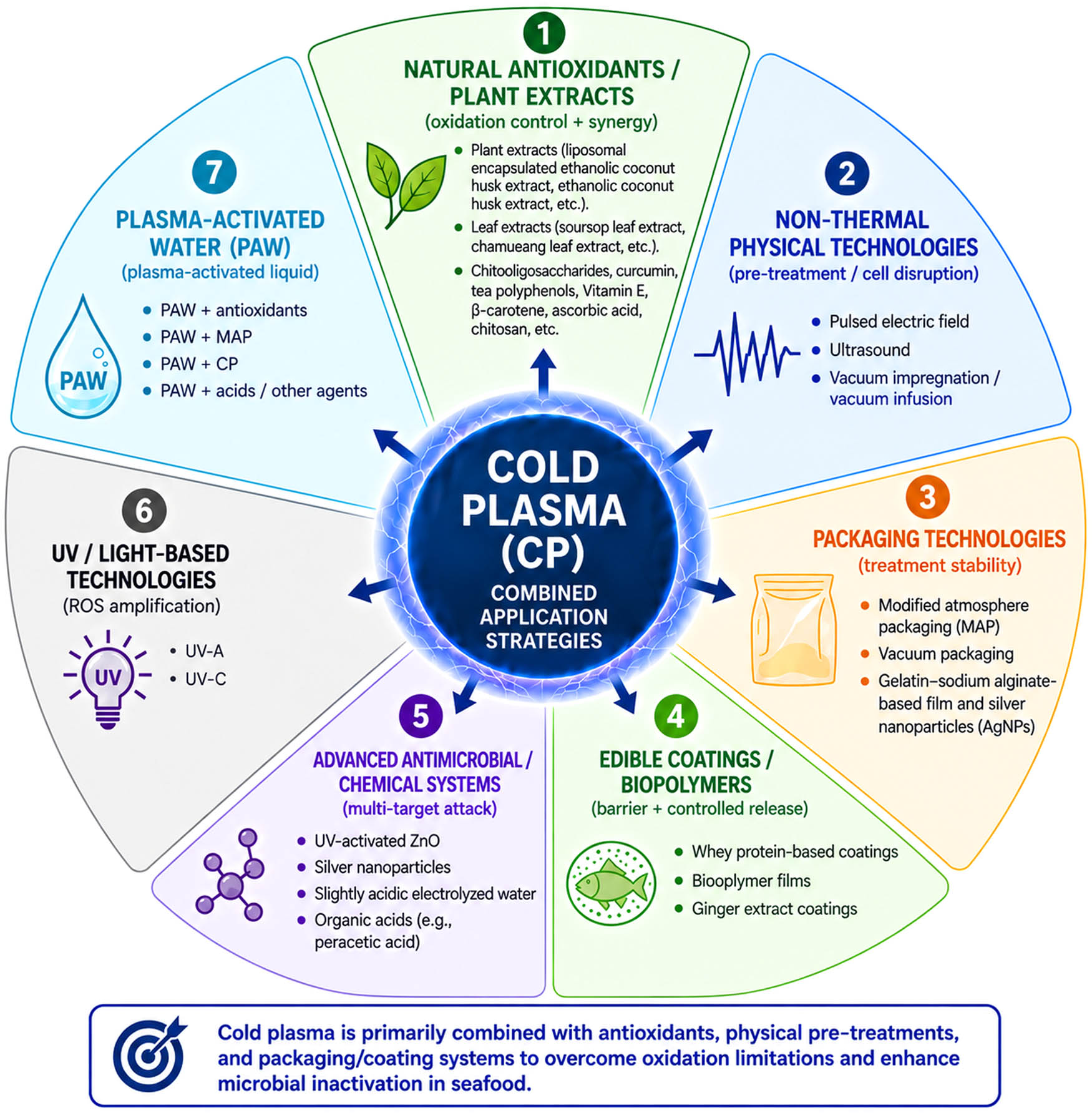
Figure 2
Functional and mechanistic classification of CP-based combination strategies for seafood preservation.
Source: Authors’ contribution, based on the literature cited in the manuscript.
Table 2
Oxidation-mitigating CP-based combination strategies applied in seafood systems
| Seafood matrix | Treatment | Main results | Implications/recommendations | Reference |
|---|---|---|---|---|
| Golden pompano | PAW, CF | PAW + CF delayed microbial spoilage, lipid oxidation, and TVB-N increase; improved colour and texture stability. CF pre-treatment followed by PAW was more effective. | Treatment sequence is critical. Natural antioxidants can complement PAW to improve microbial and oxidative stability. | Gao et al. (2024) |
| Rainbow trout | CP, phycocyanin | CP + phycocyanin inhibited microbial growth, delayed TVB-N and TMA-N formation, improved antioxidant activity, preserved fatty acids, and extended shelf life beyond 15 days at 4°C. | Phycocyanin can act as an antioxidant hurdle with CP; process conditions should be optimized for quality and safety. | Seyedalangi et al. (2024) |
| Pacific white shrimp | CP, CLE | CP + CLE reduced microbial load, melanosis, TVB, pH, TBARS, peroxide value (PV), and protein carbonyls; mitigated EPA and DHA oxidation and extended shelf life to ∼15 days at 4°C. | Natural antioxidant extracts can reduce plasma-induced oxidation while supporting microbial control and sensory quality. | Shiekh and Benjakul (2020) |
| Asian sea bass | Squid pen, COS, CP | CP + COS reduced microbial load, spoilage/pathogenic bacteria, TBARS, PV, carbonyl content, and PUFA oxidation; maintained sensory acceptability and extended shelf life to ≥ 12 days at 4°C. | COS provides dual antimicrobial and antioxidant protection; concentration should be optimized to maintain sensory quality. | Singh and Benjakul (2020) |
| Sea bass | CP, COS (0.05–0.2%) | CP + COS enhanced Pseudomonas reduction and decreased PV, TBARS, carbonyl content, TVB-N, and plasma-induced oxidation. | COS can improve microbial inactivation and oxidation control; gas composition and COS concentration should be optimized. | Singh et al. (2020) |
| White shrimp (Litopenaeus vannamei) | CP, chitosan oligosaccharide | CP + chitosan oligosaccharide inhibited microbial growth, reduced total viable count (TVC), TVB-N, and pH increase, delayed spoilage, maintained moisture and water activity, and extended shelf life. | Chitosan oligosaccharide can enhance microbial stability and shelf life while supporting physicochemical quality. | Yu et al. (2023) |
| Asian sea bass | CP, antioxidant (ascorbic acid), ECHE | CP + antioxidants, especially ECHE at 200 ppm, enhanced microbial reduction, delayed protein oxidation and degradation, preserved fatty acid profile, and extended shelf life to ≥ 15 days at 4°C. | Coconut husk extract can mitigate plasma-induced oxidation; antioxidant type and concentration require optimization. | Olatunde et al. (2019) |
| Asian sea bass | Liposomal encapsulated ECHE, CP | Liposome-encapsulated ECHE + CP reduced microbial load, lowered lipid oxidation compared with CP alone, maintained sensory quality, and extended shelf life. | Encapsulated plant extracts can improve oxidative stability and shelf life while preserving sensory quality. | Olatunde et al. (2020b) |
| Asian sea bass | Liposomal encapsulated ECHE, CP generated from O2/CO2/Ar gas mixture | Liposome-encapsulated ECHE + CP reduced microbial load, extended shelf life, reduced protein and lipid oxidation, and prevented discolouration compared with CP alone. | Liposomal encapsulation can enhance antioxidant efficacy and limit plasma-related quality defects. | Olatunde et al. (2020b) |
| Fish oil | Antioxidants (curcumin, tea polyphenols, vitamin E, β-carotene), CP | CP increased peroxide value, malondialdehyde (MDA), singlet oxygen formation, and unsaturated fatty acid loss in fish oil; antioxidants mitigated oxidation, with vitamin E showing the strongest protection. | Antioxidants, particularly vitamin E, can reduce CP-induced oxidation in lipid-rich systems; voltage and treatment time should be controlled. | Wang et al. (2024a) |
Source: Authors’ compilation based on the literature cited in the table.
The main objective of oxidation-mitigating combinations is to counterbalance plasma-induced oxidative stress without compromising microbial control. Several studies have demonstrated that antioxidant-supported plasma treatments can simultaneously delay microbial spoilage and chemical quality deterioration. For example, Gao et al. (2024) reported that PAW combined with coconut exocarp flavonoids (CF) delayed microbial spoilage, lipid oxidation, and total volatile basic nitrogen (TVB-N) accumulation, while improving colour and texture stability. Importantly, this study also emphasized the role of treatment sequence, showing that flavonoid pre-treatment followed by PAW application was more effective. Similarly, Seyedalangi et al. (2024) showed that CP combined with phycocyanin suppressed microbial growth, delayed the formation of TVB-N and trimethylamine nitrogen (TMA-N), enhanced antioxidant activity, and helped preserve fatty acids.
Natural antioxidant extracts have also been successfully used to reduce oxidation-related quality losses in crustaceans and fish. In Pacific white shrimp, Shiekh & Benjakul (2020) reported that Chamuang leaf extract (CLE) combined with CP reduced microbial load and melanosis, delayed increases in TVB-N, pH, thiobarbituric acid reactive substances (TBARS), and peroxide value, limited the oxidation of sensitive fatty acids such as EPA and DHA, preserved sensory quality, and extended shelf life to approximately 15 days. Similarly, in Asian sea bass, Olatunde et al. (2019) showed that CP combined with ascorbic acid and ethanolic coconut husk extract (ECHE) reduced microbial load while delaying protein oxidation and degradation, thereby preserving fatty acid profiles and extending shelf life. These findings indicate that natural antioxidants do not function merely as supportive additives but as critical quality-protective hurdles that counteract oxidative stress generated during plasma treatment.
Oligosaccharide-based combinations represent another important group of strategies to mitigate oxidation. Singh & Benjakul (2020) and Singh et al. (2020) demonstrated that CP combined with chitooligosaccharides (COS) reduced microbial load while decreasing TBARS, peroxide value, carbonyl content, and polyunsaturated fatty acids (PUFA) oxidation, thereby maintaining sensory acceptability. Similarly, Yu et al. (2023) reported that CP combined with chitosan oligosaccharide delayed increases in total viable counts, TVB-N, and pH while preserving moisture, water activity, and shelf life. These results suggest that chitooligosaccharides (COS) may provide dual antimicrobial and antioxidant activity, making them particularly suitable for seafood matrices that are vulnerable to oxidative deterioration.
Encapsulation-based strategies may further enhance the performance of antioxidant-plasma combinations. Olatunde et al. (2020a, 2020b) demonstrated that pre-treatment with liposome-encapsulated coconut husk extract reduced lipid and protein oxidation compared with plasma alone, prevented discoloration, and maintained sensory quality. In this context, liposomal encapsulation may improve the stability, dispersion, and effectiveness of bioactive compounds, thereby minimizing undesirable quality changes during plasma exposure.
The mechanistic basis of oxidation mitigation is supported by findings from model lipid systems. Wang et al. (2024a), using a fish oil model, showed that CP increased peroxide value, malondialdehyde formation, singlet oxygen generation, and unsaturated fatty acid loss. However, incorporating antioxidants such as curcumin, tea polyphenols, vitamin E, and β-carotene effectively reduced these oxidative changes, with vitamin E showing the strongest protective effect. These findings confirm that antioxidant systems can directly interfere with plasma-induced lipid oxidation pathways, particularly in PUFA-rich matrices.
Overall, oxidation-mitigating combinations demonstrate that the quality limitations of CP can be managed through the strategic use of antioxidants, plant extracts, phycocyanin, COS, and encapsulated bioactives. As summarized in Figure 2, these strategies primarily rely on natural antioxidants and bioactive compounds to scavenge reactive species, delay lipid and protein oxidation, preserve sensitive fatty acids, reduce discolouration, and maintain sensory acceptability. PAW systems may also contribute to oxidative stability depending on treatment conditions and application sequence. However, the success of these combinations depends strongly on matrix composition, antioxidant type, concentration, delivery system, and treatment order. Therefore, oxidation-mitigating combinations are particularly relevant for high-fat fish species, shrimp, and other PUFA-rich seafood products, where microbial safety must be achieved without accelerating oxidative quality loss.
10.2. Microbial inactivation-enhancing combinations
One of the major advantages of CP is its strong antimicrobial activity; however, a standalone application may not always achieve the desired level of microbial inactivation or may require prolonged treatment times. This can reduce process efficiency and increase the risk of oxidative or sensory deterioration. Therefore, combining CP with pre-treatment methods, non-thermal physical technologies, photonic applications, and chemically active agents has emerged as an important strategy to enhance microbial inactivation efficiency while limiting excessive plasma exposure. As shown in Table 3, combinations involving PEF, UV-based treatments, ultrasound, PAW, peracetic acid, and photocatalytic systems have been used to improve microbial inactivation through complementary stress mechanisms.
Table 3
Microbial inactivation-enhancing CP-based combination strategies applied in seafood systems
| Seafood matrix | Treatment | Main results | Implications/Recommendations | Reference |
|---|---|---|---|---|
| Pacific white shrimp | PEF, VI with CLE (2%), CP | Reduced melanosis, microbial load, TVB, lipid oxidation, and protein carbonyls; preserved sensory quality and extended shelf life to ∼18 days at 4°C. | PEF and VI can enhance CP with natural extracts; PEF intensity, VI time, and extract concentration should be optimized. | Shiekh et al. (2021a) |
| Litopenaeus vannamei | PEF, CLE, CP | Reduced melanosis and microbial load; delayed PV, TBARS, TVB, and protein carbonyl content (PCC) formation; improved sensory quality and shelf life. | PEF-assisted CLE pre-treatment can improve microbial control and oxidation stability before CP. | Shiekh et al. (2021b) |
| Pacific white shrimp | Soursop leaf extract, CP, PEF, VI, MAP | Reduced pH, TVB-N, and microbial growth; improved quality preservation compared with less complex treatments. | Multi-hurdle systems integrating non-thermal technologies, plant extracts, and packaging can improve stability and shelf life. | Ahmad et al. (2025) |
| Smoked salmon and brain heart infusion (BHI) agar | UV-C light (UV-C), CP | UV-C or CP alone gave limited reductions on smoked salmon; UV-C + CP improved inactivation, but high intensity increased lipid oxidation and antagonism. | UV-C + CP may enhance decontamination, but intensity should be optimized to avoid oxidation and antagonism. | Colejo et al. (2018) |
| Fish processing water | ultraviolet A (UV-A), CP | UV-A + CP improved microbial inactivation and compound degradation compared with CP alone through enhanced reactive species formation. | UV-A-assisted CP is promising for seafood processing water decontamination; efficacy should be validated under industrial conditions. | Zorzi et al. (2023) |
| Steamed fish cake | UV-activated ZnO, in-pack CP | UV-A + CP improved microbial inactivation and compound degradation compared with CP alone through enhanced reactive species formation. | Treatment sequence is critical; photocatalytic pre-treatment followed by CP can improve ready-to-eat (RTE) seafood safety. | Lee et al. (2022) |
| Mackerel | Ultrasound, PAW, and peracetic acid | Increased reactive species generation and microbial inactivation, although reductions on fish were not always greater than individual treatments. | Combined chemical/non-thermal treatments require optimization as higher reactive species do not always increase inactivation on seafood. | Zhao et al. (2021) |
Source: Authors’ compilation based on the literature cited in the table.
The primary objective of studies within this group is to increase microbial susceptibility to plasma-generated reactive species by weakening cellular structures or imposing additional stress. Pre-treatment technologies such as PEF are particularly relevant in this context because they can induce membrane permeabilization and structural damage, thereby facilitating the action of subsequent plasma treatment. Shiekh et al. (2021a, b) demonstrated that PEF pre-treatment enhanced the antimicrobial efficacy of CP in seafood systems by increasing microbial cell membrane permeability. In these studies, the inclusion of CLE also contributed to oxidative stability, delayed melanosis, reduced microbial load, and extended shelf life while maintaining product quality. Similarly, Ahmad et al. (2025) showed that a multi-hurdle strategy combining PEF, vacuum impregnation (VI), plant extracts, MAP, and CP provided superior preservation performance by suppressing microbial growth and supporting product stability.
Combinations with light-based or photonic technologies represent another important group of microbial inactivation-enhancing strategies. Colejo et al. (2018) reported that combined UV-C and CP treatment resulted in greater microbial inactivation than either treatment alone, suggesting that UV-induced cellular damage and plasma-generated reactive species can act in a complementary manner. However, high-intensity applications may lead to antagonistic effects or increased lipid oxidation, indicating that treatment intensity must be carefully optimized. Similarly, Zorzi et al. (2023) showed that UV-A, combined with plasma-enhanced reactive species, improved microbial inactivation, particularly in liquid systems.
Advanced antimicrobial and chemically active systems can further enhance plasma-based microbial inactivation through multi-target mechanisms. Lee et al. (2022) demonstrated that sequential UV-activated ZnO treatment followed by in-package CP significantly improved microbial inactivation compared with either treatment alone, highlighting the synergistic potential of combining photocatalytic and plasma-based mechanisms. Similarly, Zhao et al. (2021) reported that ultrasound, PAW, and peracetic acid increased the generation of reactive oxygen and nitrogen species and improved microbial inactivation. However, the authors also emphasized that combined treatments do not always produce proportional increases in microbial reduction, confirming the need for process optimization.
Overall, microbial inactivation-enhancing combinations improve CP performance by increasing cell membrane permeability, promoting reactive species generation, and imposing multi-target cellular damage. As summarized in Figure 2, these strategies primarily rely on non-thermal physical technologies, UV- and light-assisted treatments, and advanced antimicrobial or chemical systems. Although these approaches can improve decontamination efficiency and reduce the need for prolonged plasma exposure, their effectiveness depends on treatment sequence, intensity, matrix characteristics, and microbial resistance. Therefore, microbial inactivation-enhancing combinations should be optimized not only for maximum log reduction, but also for oxidative stability, sensory acceptability, and shelf-life performance in seafood systems.
10.3. Shelf-life-oriented and stability-enhancing strategies
In CP applications, achieving microbial inactivation alone is not sufficient; maintaining product stability after treatment, preventing recontamination, and minimizing quality deterioration during storage are also critical. For this reason, the combination of CP with MAP, biodegradable packaging films, edible coatings, and PAW has emerged as a promising strategy for extending the shelf life of seafood products. Shelf-life-oriented and stability-enhancing CP-based hurdle strategies reported for seafood products are summarized in Table 4.
Table 4
Shelf-life-oriented and stability-enhancing CP-based combination strategies applied in seafood systems
| Seafood matrix | Treatment | Main results | Implications/recommendations | Reference |
|---|---|---|---|---|
| Nile tilapia (Oreochromis niloticus) | Liposome loaded with Betel leaf ethanolic extract (L/BLEE), MAP (CO2 60%, Ar 30%, O2 10%), CP (80 KV-RMS, 5 min) | L/BLEE + MAP + CP inhibited microbial growth, induced bacterial cell damage, and extended shelf life to ∼12 days at 4°C. | Encapsulated plant extracts with MAP and CP can enhance antibacterial efficacy; process conditions should be optimized. | Tagrida and Benjakul (2022) |
| Nile tilapia (Oreochromis niloticus) | L/BLEE or unencapsulated BLEE (U/BLEE), MAP (CO2 60%, Ar 30%, O2 10%), CP (80 KV-RMS, 5 min) | L/BLEE or U/BLEE with MAP + CP extended shelf life and maintained sensory acceptability for ∼12 days at 4°C. | BLEE-based MAP + CP combinations can be used as hurdle strategies to extend fish shelf life. | Tagrida et al. (2021) |
| Steamed fish paste | Whey protein coating containing malic acid (MA-WPI), CP | MA-WPI coating + in-package CP enhanced Salmonella and Listeria monocytogenes inhibition during storage; CP promoted malic acid diffusion from the coating. | CP-enhanced diffusion from active coatings can improve microbial safety and storage stability of RTE seafood. | Jeon et al. (2022) |
| Asian sea bass (Lates calcarifer) | Prior PAW, WPI–ginger extract coating | PAW + WPI–ginger extract coating reduced discolouration, drip loss, texture softening, off-flavour compounds, and lipid/protein/myoglobin oxidation. | PAW + WPI–ginger extract coating reduced discolouration, drip loss, texture softening, off-flavour compounds, and lipid/protein/myoglobin oxidation. | Chaijan et al. (2022) |
| Half-smooth tongue sole (Cynoglossus semilaevis) | PAW, packaging (vacuum/air/various MAP combinations), superchilling | PAW followed by MAP, especially 75% CO2/5% O2/20% N2, reduced microbial growth and TVB-N increase and improved protein stability. | Optimized MAP after PAW can enhance preservation, but high CO2 may cause packaging and sensory defects. | Qiu et al. (2026) |
| Asian sea bass (Lates calcarifer) | CP, PAW | PAW + CP delayed microbial growth, reduced Pseudomonas, pH, and TBARS, improved sensory quality and water-holding capacity, and extended shelf life. | PAW–CP can enhance disinfection and shelf-life extension; industrial application requires process optimization. | Wang et al. (2024c) |
| Asian sea bass (Lates calcarifer) | CP, PAW | PAW + CP increased volatile flavour compounds but promoted lipid oxidation by increasing saturated and decreasing unsaturated fatty acids. | PAW–CP may modify flavour, but lipid changes should be controlled through optimized treatment conditions. | Wang et al. (2024b) |
| Atlantic salmon | PAW, SAEW | PAW + SAEW enhanced antimicrobial efficacy and cell damage while maintaining colour and texture and limiting lipid oxidation. | Plasma-activated SAEW is a promising green approach for microbial control without major quality loss. | Zhu et al. (2023) |
| Trout | Gelatin and sodium alginate (GSA) based packaging film, AgNPs, CP | CP-treated GSA-AgNP films improved barrier properties and antimicrobial activity and reduced TBARS, TVN, and microbial load. | AgNP-incorporated biodegradable films with CP can improve fish preservation; AgNP level and CP conditions require optimization. | Tahmouzi et al. (2025) |
Source: Authors’ compilation based on the literature cited in the table.
The main objective of studies within this group is to preserve physicochemical and sensory stability after plasma treatment, slow microbial regrowth, and maintain product quality throughout storage. In particular, combinations involving MAP have attracted considerable attention. Tagrida and Benjakul (2022) and Tagrida et al. (2021) reported that CP combined with liposome-encapsulated plant extracts under MAP effectively suppressed microbial growth, maintained sensory acceptability, and extended the shelf life of tilapia samples to approximately 12 days. These studies demonstrate that packaging systems function not only as physical barriers but also as important components of multi-hurdle preservation strategies when integrated with plasma and bioactive compounds.
Edible coating and biopolymer-based systems also play an important role in maintaining storage stability. Jeon et al. (2022) demonstrated that in-package CP combined with whey protein isolate (WPI) coatings containing malic acid enhanced the inactivation and growth inhibition of Salmonella and Listeria monocytogenes during refrigerated storage. The study further showed that CP accelerated the diffusion of malic acid from the coating matrix, thereby improving antimicrobial efficacy. Similarly, Chaijan et al. (2022) reported that WPI–ginger extract coating combined with PAW reduced discolouration, drip loss, and textural deterioration while limiting lipid, protein, and myoglobin oxidation. These findings suggest that coating systems act not merely as passive barriers but as active quality-preserving systems.
Studies focusing on the optimization of packaging and storage conditions have also been reported. Qiu et al. (2026) evaluated different packaging systems following PAW pre-treatment and showed that MAP combinations with high CO2 concentrations effectively slowed microbial growth, reduced TVB-N accumulation, and improved protein stability. However, excessively high CO2 levels were also associated with package deformation and potential sensory defects. These findings highlight that shelf-life-oriented combination strategies should consider not only microbial safety but also packaging stability and consumer acceptability.
PAW systems have likewise gained attention in this context. Wang et al. (2024c) reported that the combination of PAW and CP delayed microbial growth, reduced Pseudomonas levels, improved water-holding capacity, and significantly extended shelf life. In contrast, Wang et al. (2024b) showed that PAW + CP treatment could increase certain volatile aroma compounds while simultaneously promoting lipid oxidation. These findings suggest that although PAW-based systems show considerable promise for improving storage stability, treatment conditions must be carefully optimized.
Chemically assisted storage systems also significantly enhance shelf life and product stability. Zhu et al. (2023) demonstrated that plasma-activated slightly acidic electrolyzed water (SAEW) enhanced antimicrobial efficacy while preserving colour and texture and limiting lipid oxidation. Likewise, Tahmouzi et al. (2025) reported that biodegradable films containing silver nanoparticles (AgNPs) improved barrier properties, reduced microbial load, and delayed the formation of TBARS and total volatile nitrogen (TVN) when combined with CP treatment. Such systems demonstrate the considerable potential of integrating active packaging technologies with plasma applications for future industrial seafood preservation.
Collectively, shelf-life-oriented and stability-enhancing combinations demonstrate that CP can be more effective when integrated with systems that continue to protect the product after treatment. As summarized in Figure 2, these strategies are predominantly associated with packaging technologies, edible coating/biopolymer systems, and PAW applications. Packaging systems and biodegradable films contribute to post-treatment stability by reducing recontamination and slowing microbial regrowth, while edible coatings act as both physical barriers and carriers of active antimicrobial or antioxidant compounds. Plasma treatment may further enhance the diffusion and effectiveness of these active agents, whereas PAW-based systems can support storage stability by improving microbial control and preserving physicochemical quality. Therefore, shelf-life-oriented CP combinations rely on complementary preservation mechanisms to maintain product quality and extend storage stability in seafood systems.
11. Limitations of hurdle technology
Although CP-based hurdle approaches offer important advantages in terms of microbial safety and quality preservation, they also present several practical and scientific limitations. One important concern is the possibility of stress adaptation or cross-tolerance. When microorganisms are exposed to sublethal stress factors, including reactive species generated during CP treatment, they may activate cellular defence mechanisms that increase tolerance to subsequent preservation stresses. Such interactions between stress responses can complicate the design of effective hurdle combinations and highlight the need for a better understanding of microbial adaptation mechanisms (Tsironi et al., 2020).
Another limitation is that combining CP with other preservation methods does not necessarily guarantee synergistic or even additive effects. In some cases, interactions between treatments may lead to antagonistic outcomes, reducing the expected benefits of the combined process. For example, plasma-induced changes in the food matrix may alter the effectiveness of subsequent treatments, or one hurdle may reduce the activity of another. Therefore, potential interactions among different hurdles should be systematically evaluated when designing CP-based preservation systems (Aaliya et al., 2021).
A further challenge is balancing microbial inactivation with quality preservation. Increasing treatment intensity or exposure duration may improve microbial reduction, but it can also accelerate undesirable changes in texture, colour, oxidative stability, and consumer acceptability. In seafood, this balance is particularly critical because freshness-related sensory attributes strongly influence product acceptance. For instance, Mol et al. (2023) reported that extended plasma treatment improved microbial reduction in sea bass, but 10 min exposure resulted in drier and harder sensory characteristics and lower purchase preference, whereas 7 min treatment provided a more balanced outcome in terms of sensory acceptability and microbial effectiveness. These findings indicate that more intensive treatment does not necessarily result in better overall preservation performance.
From an economic and operational perspective, CP-based hurdle systems may be constrained by high initial investment costs, complex equipment, and the need for skilled personnel. Integrating plasma systems with additional technologies, such as packaging, coatings, non-thermal treatments, or active compounds, may further increase process complexity and operational costs. These factors may restrict large-scale industrial implementation, particularly for small- and medium-sized seafood processors. Therefore, future developments should focus not only on microbial effectiveness but also on cost-efficiency, process simplicity, operator safety, and practical feasibility (Aaliya et al., 2021).
Finally, the lack of standardization remains a major barrier. Variability in plasma generation systems, treatment conditions, seafood matrices, microbial targets, and combined preservation methods makes it difficult to compare results across studies. This limits reproducibility, process validation, and broader industrial applicability. Establishing standardized reporting protocols for plasma parameters, treatment sequence, product characteristics, microbial endpoints, and quality indicators would support the evaluation of research findings and facilitate the commercialization of CP-based hurdle technologies.
12. Regulatory framework and legal status
In the European Union, Regulation (EU) 2015/2283 defines a novel food as any food that was not consumed to a significant degree within the Union before 15 May 1997 (European Parliament & Council of the European Union, 2015). This framework includes newly developed foods, foods produced using new technologies, and foods obtained through novel production processes. For a novel food to be placed on the EU market, it must be demonstrated to be safe, not nutritionally disadvantageous to consumers, and not misleading in its intended use. Although CP itself is a processing technology rather than a food ingredient, its application to food products may require case-by-case regulatory evaluation when the process is considered novel or when it may induce relevant chemical, nutritional, or safety-related changes in the treated product.
CP technology has attracted increasing attention because it can operate at low or near-ambient temperatures, provide short processing times, and achieve antimicrobial effects with limited thermal impact on food quality. These characteristics make it promising for application at different stages of food production and have increased interest in its safety assessment and regulatory evaluation (Bourke et al., 2018). However, like other emerging food processing technologies, CP must be evaluated in relation to the specific product, treatment configuration, processing conditions, and intended technological purpose.
One of the main factors complicating the regulatory assessment of CP is the high variability in process parameters. Gas composition, treatment time, discharge configuration, applied voltage, humidity, distance from the plasma source, package atmosphere, and environmental conditions can all influence the type and concentration of reactive species generated during treatment. These reactive species may interact with food components and cause chemical modifications within the matrix. Therefore, the variability of plasma chemistry and its interaction with lipids, proteins, pigments, vitamins, additives, packaging materials, and surface exudates must be carefully considered in safety assessments (Keener & Misra, 2016).
The complexity of plasma–food interactions also limits the standardization of safety evaluation. Unlike conventional treatments with more clearly defined processing parameters, CP systems may differ substantially in design, energy input, gas flow, electrode geometry, and exposure mode. This makes it difficult to compare studies, define equivalent treatment doses, and establish broadly applicable safety thresholds. Consequently, regulatory evaluation should include clear definition of processing conditions, characterization of reactive species where feasible, assessment of chemical by-products, toxicological relevance, nutritional impact, microbial efficacy, and product-specific quality changes.
At national and international levels, regulatory authorities and scientific organizations continue to monitor developments in CP and other emerging processing technologies. However, approval pathways may differ among countries, creating uncertainty for food producers and equipment manufacturers. Greater harmonization in terminology, reporting requirements, validation protocols, and safety assessment criteria would support the evaluation and eventual commercialization of CP-based applications in food systems (Keener & Misra, 2016; Varilla et al., 2020).
As CP moves from laboratory studies towards pilot-scale and industrial applications, regulatory considerations become increasingly important not only for food producers but also for equipment manufacturers developing plasma-based systems. Benefit–risk assessment should consider microbial safety, potential chemical changes, nutritional quality, consumer acceptance, occupational safety, economic feasibility, and environmental impact. Interdisciplinary collaboration among academia, industry, equipment developers, toxicologists, and regulatory authorities will therefore be essential to support responsible implementation of this technology (Bourke et al., 2018; Sasikumar et al., 2025).
Taken together, the successful implementation of CP in the food industry depends on strengthening scientific evidence, defining standardized processing parameters, generating product-specific safety data, and developing harmonized regulatory frameworks. The complexity and time-intensive nature of regulatory approval processes remain important barriers to widespread adoption, particularly for applications involving complex matrices such as seafood.
13. Future directions
Future research on CP-based preservation of seafood should move beyond demonstrating immediate microbial reductions and focus on the design of validated, product-specific, and industrially feasible preservation systems. Predictive microbiology can play an important role in this process by estimating microbial behaviour under different plasma treatment conditions, hurdle combinations, packaging atmospheres, and storage temperatures. Such model-based approaches can support process design, optimization, and risk assessment; however, they should be validated through challenge testing, shelf-life studies, and process verification in real seafood matrices before practical application (Aaliya et al., 2021).
A major future priority is integrating CP with complementary preservation technologies. Combining CP with natural antimicrobials, antioxidants, PAW, edible coatings, biodegradable or active packaging, MAP, and other non-thermal technologies may help reduce the intensity of plasma treatment required while improving microbial control and limiting quality deterioration. Such multi-hurdle approaches are particularly relevant for seafood products because they must simultaneously address microbial spoilage, pathogen control, lipid oxidation, protein modification, moisture loss, and sensory acceptability (Speranza et al., 2021; Sasikumar et al., 2025).
Packaging-based integration represents one of the most promising directions for future applications. MAP, vacuum packaging, active films, antimicrobial packaging, and intelligent packaging systems can provide post-treatment protection by reducing recontamination, controlling oxygen availability, slowing microbial regrowth, and extending shelf life. When combined with CP, these systems may provide synergistic or complementary benefits, particularly for fresh, minimally processed, and ready-to-eat seafood products (Kontominas et al., 2021). However, gas composition, package permeability, headspace-to-product ratio, antioxidant or antimicrobial release, and cold-chain conditions should be optimized for each seafood matrix.
Future studies should also prioritize product-specific optimization. The effectiveness of CP-based treatments depends strongly on seafood species, product form, surface structure, fat content, water activity, microbial ecology, storage conditions, and packaging environment. Therefore, results obtained in one seafood matrix should not be directly generalized to others. More systematic comparisons among fish fillets, whole fish, shrimp, molluscs, ready-to-eat seafood, and minimally processed products are needed to define suitable treatment windows that balance microbial safety, oxidative stability, nutritional quality, and sensory acceptance.
Another important direction is the transition from laboratory-scale experiments to pilot-scale and industrial validation. Many studies still rely on small-scale plasma systems, controlled inoculation conditions, and short storage periods. Future work should evaluate continuous or semi-continuous processing systems, treatment uniformity, equipment robustness, operator safety, energy efficiency, cost-effectiveness, and integration with existing seafood processing lines. Standardized reporting of plasma parameters, product characteristics, microbial endpoints, and quality indicators will be essential for improving reproducibility and comparing results across studies.
Regulatory and consumer-related aspects should also be addressed more explicitly. As CP-based systems move towards industrial applications, safety assessment should include not only microbial efficacy but also potential chemical changes, oxidation products, nutritional effects, packaging interactions, and toxicological relevance. Broader acceptance will depend on transparent risk–benefit evaluation, regulatory clarity, and consumer understanding of CP as a non-thermal processing technology. Collaboration among academic researchers, seafood processors, equipment manufacturers, regulatory authorities, and consumer scientists will therefore be essential for responsible implementation (Bourke et al., 2018; Sasikumar et al., 2025).
Taken together, future progress in CP-based seafood preservation will depend on shifting from proof-of-concept studies towards validated multi-hurdle systems. The most promising research directions include predictive modelling supported by challenge testing, product-specific optimization, integration with packaging and antioxidant systems, pilot-scale validation, standardized reporting, regulatory evaluation, and consumer acceptance studies. Achieving an optimal balance among shelf-life extension, microbial safety, oxidative stability, sensory quality, and industrial feasibility remains the central challenge for future research. These future priorities, including matrix-specific process optimization, mechanistic understanding, standardization, regulatory support, consumer acceptance, and industrial implementation, are conceptually summarized in Figure 1.
14. Conclusion and future outlook
CP is a promising non-thermal technology for improving microbial safety and extending the shelf life of seafood products. However, its standalone application is limited by low penetration depth, surface-dependent antimicrobial action, possible oxidative effects, and variability associated with processing conditions. These limitations are particularly important in seafood matrices, which are structurally complex, rich in oxidation-sensitive components, and highly dependent on freshness-related sensory attributes for consumer acceptance.
CP-based hurdle strategies offer a more balanced preservation approach by combining plasma treatment with complementary methods such as antioxidants, natural antimicrobials, edible coatings, MAP, PAW, or other non-thermal technologies. Such combinations can enhance microbial inactivation, reduce the need for severe plasma exposure, mitigate lipid and protein oxidation, and better preserve sensory and nutritional quality. Therefore, the main value of combined approaches lies not only in improving decontamination efficacy but also in supporting the balance between microbial safety and product quality.
The effectiveness of these strategies depends on the careful selection and optimization of hurdle combinations. Treatment sequence, plasma intensity, product composition, target microorganisms, packaging conditions, and storage environment all influence the final outcome. In this respect, empirical trial-based optimization should be complemented by a mechanistic understanding of microbial stress responses, sublethal injury, recovery, oxidative reactions, and matrix-dependent effects. Predictive microbiology, challenge testing, and process validation will be essential for developing more rational, reproducible, and product-specific CP applications.
For industrial implementation, several issues remain to be addressed, including process standardization, equipment scalability, regulatory assessment, consumer acceptance, and stronger safety and quality data. Future research should therefore move from proof-of-concept studies towards validated multi-hurdle systems that can be integrated into real seafood processing and packaging chains. With appropriate optimization and validation, CP-based combination strategies have strong potential to become effective tools for seafood preservation, particularly for improving microbial safety without compromising fresh-like quality.
Funding information
Author state that no funding information.
Author contributions
Writing – original draft, preparation of figures: S.M.; Conceptualization, literature review, preparation of tables, writing – review and editing, and final approval of the manuscript: S.C. and S.M.
Conflict of interest
Authors state no conflict of interest.