
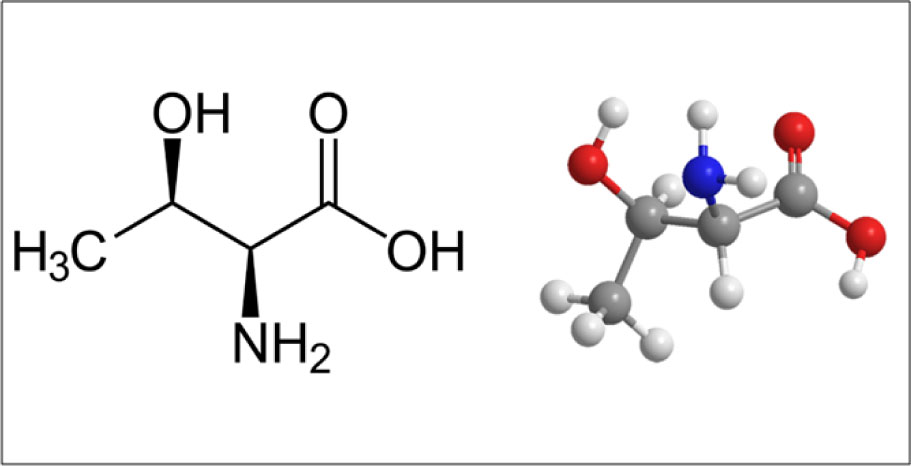
Figure 1.
Threonine structure.
Long description: Chemical structure of threonine shown as a structural formula and a three-dimensional ball-and-stick molecular model.
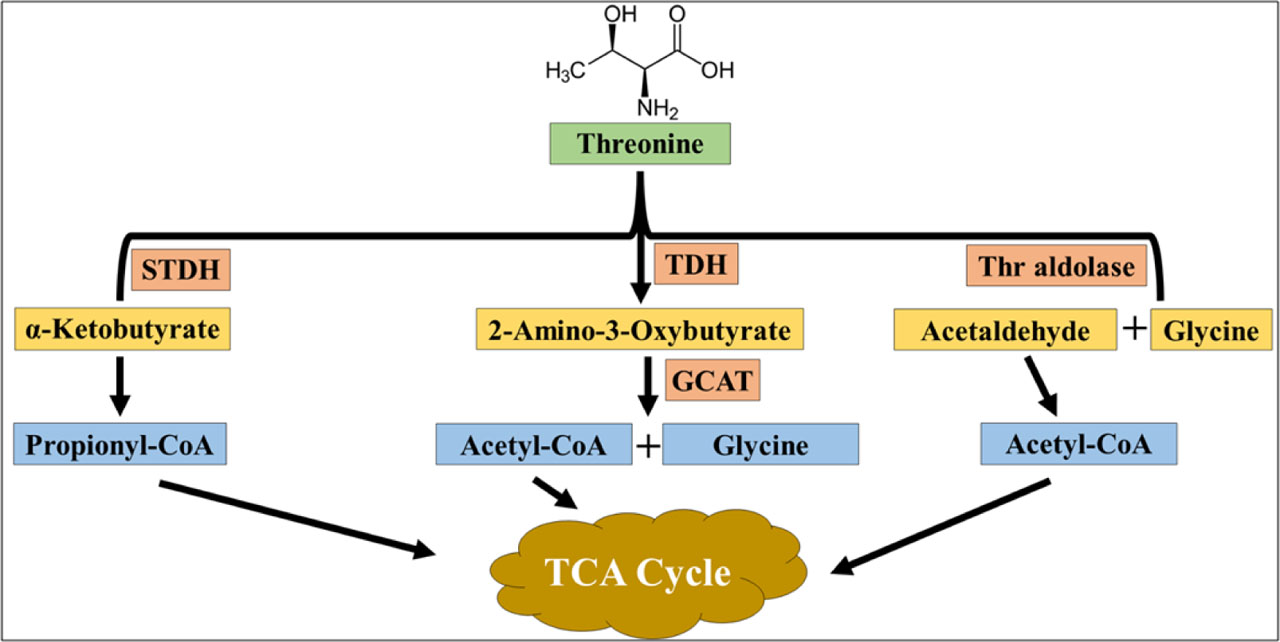
Figure 2.
The threonine metabolic pathway. Three enzymes break down Thr into several intermediate and final products. GCAT: 2-amino-3-oxobutyrate CoA ligase; STDH: threonine dehydratase; TCA: tricarboxylic acid cycle; TDH: threonine dehydrogenase.
Long description: The diagram places threonine at the top and shows three metabolic routes. STDH produces α-ketobutyrate and then propionyl-CoA. TDH produces 2-amino-3-oxybutyrate, which GCAT converts to acetyl-CoA and glycine. Thr aldolase produces acetaldehyde and glycine, with acetaldehyde converted to acetyl-CoA. Products feed into the TCA cycle.
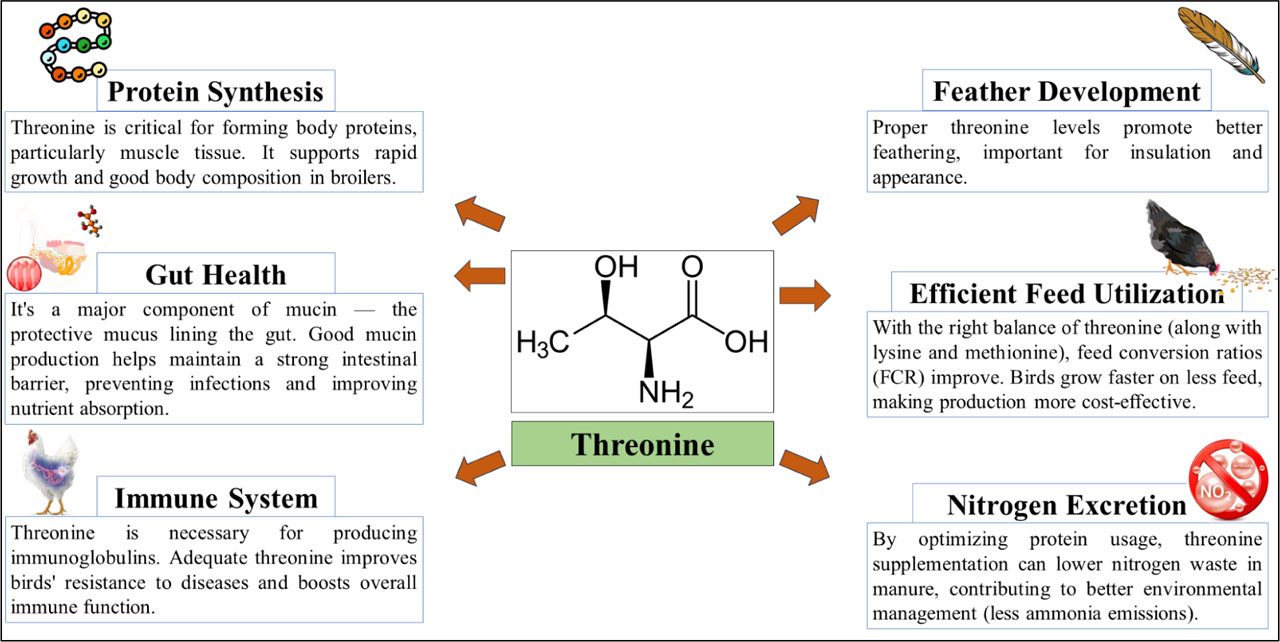
Figure 3.
Key biological activities of threonine in poultry diets
Long description: The diagram places threonine centrally and connects it to six biological functions: protein synthesis, gut health, immune system support, feather development, efficient feed utilization, and reduced nitrogen excretion.
Table 1.
Effects of threonine on growth performance in poultry
| Author and year | Threonine dose (%/g kg) | Observed effects on growth performance | Diet type / Broiler strain / Duration |
|---|---|---|---|
| Kidd et al., 2003 | Females 0.60–0.67%; Males 0.63–0.68% (6–6.8 g/kg) | Optimal growth during finishing stage (42–45 d) | Corn–peanut–soybean diet / Cobb 500 / 45 days |
| Corzo et al., 2003 | 0.69% (6.9 g/kg) | Improved growth and FCR during finisher period (30–42 d) | Corn–soybean diet / Ross 308 / 42 days |
| Kidd et al., 2004 | 0.74% grower; 0.71% finisher (7.1–7.4 g/kg) | Improved BWG and breast meat yield (21–42 d) | Corn–soybean diet / Cobb 500 / 42 days |
| Jiang et al., 2017 | 0–2.8 g/kg (0–0.28%) | Increased breast muscle and growth in Pekin ducks | Corn–wheat–peanut-based diet / Pekin ducks / 1–21 days |
| Ghanima et al., 2023 | 110–130% of requirement (≈0.82–0.96%; 8.2–9.6 g/kg) | Higher BWG and improved FCR under feed restriction | Corn–soybean diet / Ross 308 / 42 days |
Table 2.
Effects of threonine on carcass yield
| Author and year | Threonine dose (%/g kg) | Observed effects on carcass traits | Diet type / Broiler strain / Duration |
|---|---|---|---|
| Rezaeipour and Gazani, 2014 | 0.74 vs 0.77% (7.4 vs 7.7 g/kg) | Higher breast meat, liver, and pancreas weight at 0.77% | Corn–soybean diet / Ross 308 / 42 days |
| Shirzadegan et al., 2015 | 0.74–0.84% (7.4–8.4 g/kg) | Increased meat, liver, and pancreas weights | Corn–soybean diet / Ross 308 / 42 days |
| Al-Hayani, 2017 | 0.3%, 0.6%, 0.9% (3–9 g/kg) | Improved carcass, breast, and thigh yield, maximum at 0.9% | Wheat–soybean diet / Arbor Acres / 35 days |
| Jiang et al., 2017 | Up to 0.28% (2.8 g/kg) | Increased breast muscle percentage in Pekin ducks | Corn–wheat–peanut-based diet / Pekin ducks / 21 days |
Table 3.
Effects of threonine on hematology, immunity, gut health, and antioxidant status
| Author and year | Threonine dose (%/g kg) | Potential impacts | Diet type / Broiler strain / Duration |
|---|---|---|---|
| Corzo et al., 2007 | 0.71–0.74% (7.1–7.4 g/kg) | Improved immune organ growth, antibody response, and FCR | Corn–soybean diet / Ross 308 / 42 days |
| Chen et al., 2017 | 0.88% (8.8 g/kg) | Heavier spleen and bursa; greater villus height and shallower crypts | Corn–soybean diet / Cobb 500 / 21 days |
| Jiang et al., 2019 | 0.67–0.90% (6.7–9.0 g/kg) | Modulated mucin (MUC2) and tight-junction gene expression | Corn–soybean diet / Ross 308 / 35 days |
| Zarrin-Kavyani et al., 2020 | 0.8–1.0% (8–10 g/kg) | Enhanced humoral and cellular immune responses (↑ T-cells) | Corn–soybean diet / Cobb 500 / 42 days |
| Ghanima et al., 2023 | 100–130% of requirement (≈0.74–0.96%; 7.4–9.6 g/kg) | Improved hematological and biochemical profiles under restriction | Corn–soybean diet / Ross 308 / 42 days |
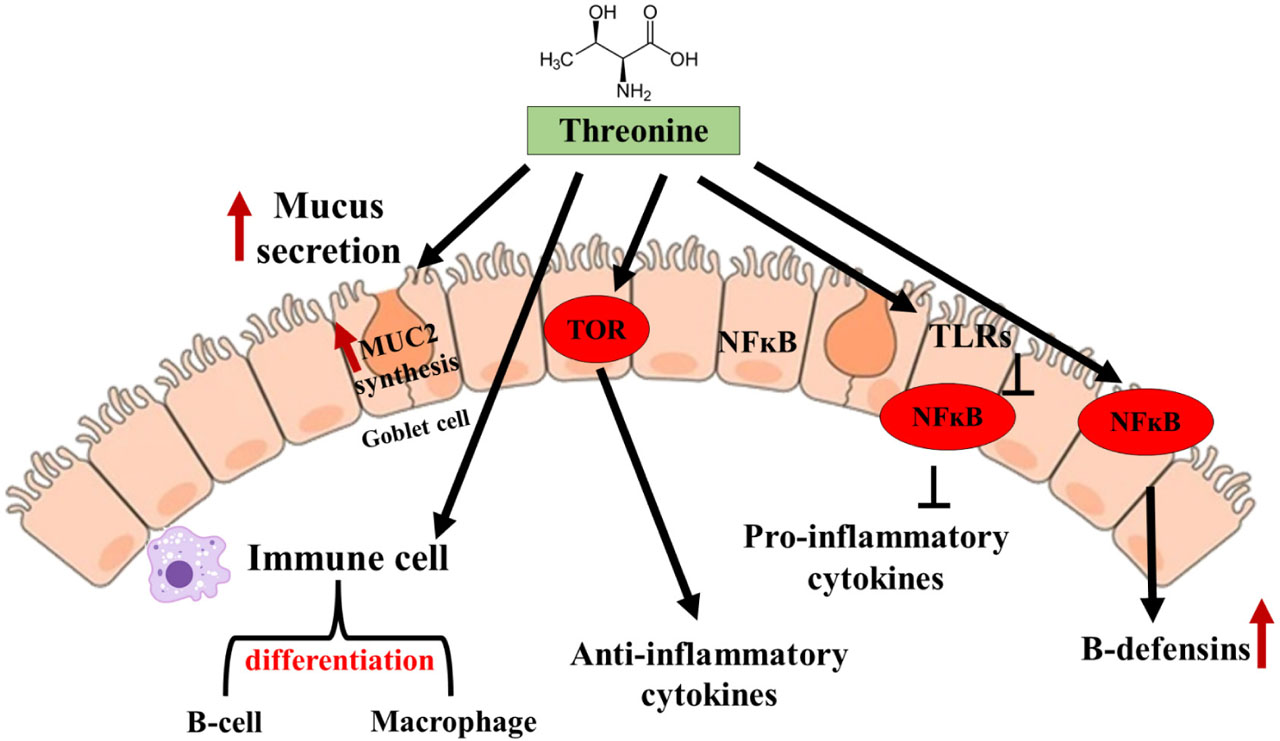
Figure 4.
The gut immune system is modulated by dietary factors. Dietary threonine influences the development of goblet cells, which in turn promotes the synthesis of MUC2. Thr controls the development of immune cells. In the meantime, Thr can control cytokine release through the TOR and NF-ĸB pathways. MUC2: mucin-2; TLRs: toll-like receptors; TOR: the target of rapamycin; NF-ĸB: nuclear factor ĸ-light-chain-enhancer of activated B cells.
Long description: The diagram shows threonine acting on intestinal epithelial and immune cells. It promotes mucus secretion and MUC2 synthesis through goblet cells, influences immune-cell differentiation, and affects TOR and NF-κB pathways. NF-κB and TLR-related signaling regulates pro-inflammatory cytokines, while threonine is associated with increased anti-inflammatory cytokines and β-defensin production.
Table 4.
Effects of threonine on gene expression in broilers
| Author and year | Threonine dose (%/ g kg−1; mg/egg) | Target genes / Pathways | Main findings | Diet type / Broiler strain / Duration |
|---|---|---|---|---|
| Bhanja et al., 2014 | In ovo amino acid mix incl. Thr (4–6 mg egg) | Growth and immune genes | Enhanced expression of GH and Ig-related genes post-hatch | In ovo / Vencobb-400 / 0–21 days |
| Kermanshahi et al., 2015 | In ovo 5 mg mL−1 Thr (0.05 mL injected under air sac; ≈0.25 mg egg) | MUC2 (mucin gene) | ↑ MUC2 mRNA expression, suggesting enhanced intestinal mucus barrier; no change in digestive enzymes | In ovo injection / Ross 308 / 0–10 days post-hatch |
| Chen et al., 2018 | 0.88% (8.8 g kg) | ZO-1, OCLN, CLDN1, TNF-α, IL-1β | The reversed LPS-induced down-regulation of tight-junction genes ↓ and inflammatory cytokines | Corn–soybean diet / Cobb 500 / 1–21 days |
| Jiang et al., 2019 | 0.67–0.90% (6.7–9.0 g kg) | MUC2, ZO-1, OCLN (tight junction) | ↑ MUC2 and ZO-1 expression → improved intestinal integrity | Corn–soybean diet / Ross 308 / 35 days |
| Ji et al., 2019 | 0.60–1.0% (6–10 g kg) | Tight junction and oxidative genes | Both deficiency and excess Thr altered the expression of barrier-related genes | Corn–soybean diet / Arbor Acres / 42 days |
| Zarrin-Kavyani et al., 2020 | 0.8–1.0% (8–10 g kg) | Cytokine and T-cell genes | ↑ IL-2, IFN-γ expression; improved immune signaling | Corn–soybean diet / Cobb 500 / 42 days |
| Andrade et al., 2022 | In ovo 3.5% Thr solution (~35 mg egg) | SGLT1, GLUT2, PepT1, ASCT1 | ↑ SGLT1 & GLUT2 in ileum (enhanced nutrient absorption); interaction with Salmonella enteritidis challenge | In ovo (amniotic) / Cobb 500 / 0–9 days of age |