
Aquaculture has emerged as a cornerstone of global food production, contributing significantly to nutritional security and economic development (Khan et al., 2025). Within this sector, Nile tilapia (Oreochromis niloticus) is one of the most widely cultured finfish due to its omnivorous feeding habits, rapid growth rate, environmental adaptability, and high consumer demand (El Basuini et al., 2022; El-Sayed and Fitzsimmons, 2023). As global demand for aquaculture products continues to rise, feed manufacturers have increasingly incorporated plant-derived ingredients into aquafeed formulations in an effort to reduce reliance on fishmeal and lower production costs (Hossain et al., 2024; Shehata et al., 2024). However, this shift has concomitantly increased the risk of contamination by mycotoxins secondary metabolites produced by filamentous fungi such as Fusarium, Aspergillus, and Penicillium species, which pose serious health risks to aquatic species and threaten the sustainability of aquaculture operations (Mirza Alizadeh et al., 2022).
Mycotoxins are toxic fungal metabolites commonly found in fish feed ingredients. Contamination can occur during crop cultivation, storage, or feed processing. These toxins, including aflatoxins, fumonisins, and zearalenone (ZEA), pose significant risks to fish by impairing growth, immunity, and health. Monitoring and mitigation strategies are essential to ensure safe and productive aquaculture (Rodrigues Acosta et al., 2025; Ghobish et al., 2025). The problem is especially pronounced in tropical and subtropical regions, where high humidity and inadequate storage conditions promote fungal proliferation in feed components such as corn, wheat, and soybean meal (Zinedine et al., 2007; Pietsch et al., 2020).
ZEN, a mycotoxin produced by Fusarium spp., is increasingly reported as a contaminant in animal feed and has been detected with high prevalence in aquafeed ingredients and complete diets (Pietsch et al., 2013). Concentrations of ZEN in grains and feedstuffs can reach up to 1500 µg/kg in Europe, levels that are relevant for aqua-culture investigations (Mankeviciene et al., 2007; Pietsch et al., 2015). In mammals, ZEN and its metabolites exert hepatotoxic (Maaroufi et al., 1996; Čonková et al., 2001), immunotoxic (Berek et al., 2001), and genotoxic effects (Abid-Essefi et al., 2004). While ZEN has been shown to affect growth in some fish species, responses appear to be species- and age-dependent. For instance, dietary ZEN exposure did not impair weight gain in Atlantic salmon (Salmo salar) at concentrations up to 0.77 mg/kg for 15 weeks (Döll et al., 2011), yet carp (Cyprinus carpio) and other freshwater species may exhibit greater sensitivity due to differences in physiology, metabolism, and ecological adaptations (Pietsch, 2015). Moreover, alterations in biochemical blood parameters have been reported in rainbow trout following ZEN exposure (Wozny et al., 2012), underscoring the need to assess both growth performance and hematological indices in carp subjected to dietary ZEN.
In addition to its estrogenic properties, ZEA exerts cytotoxic effects through the induction of oxidative stress. It promotes the formation of reactive oxygen species (ROS), which can surpass the antioxidative capacity of fish tissues, culminating in lipid peroxidation, genomic instability, and apoptotic cell death, particularly in the liver and spleen (Pietsch et al., 2014, 2015; Zhou et al., 2017). Analytical surveillance of plant-based feed ingredients has revealed substantial levels of contamination. Documented concentrations include 85.54 µg/kg in soybean meal, 120.89 µg/kg in cottonseed meal, and 145.30 µg/kg in wheat derivatives, with corresponding mean levels of approximately 18.90, 14.12, and 18.64 µg/kg, respectively. Importantly, commercial fish feeds have been reported to contain ZEA concentrations as high as 511 µg/kg (Grenier and Oswald, 2011; Smith et al., 2016). Notably, commercial fish feeds have exhibited ZEA concentrations reaching up to 511 µg/kg (Pietsch et al., 2013; Iqbal et al., 2016).
While the toxicological profile of ZEA has been extensively investigated in mammalian models, with a predominant emphasis on reproductive toxicity (Kanora and Maes, 2009; Oliver et al., 2012), analogous studies in fish remain comparatively limited. Existing research primarily highlights its teratogenic effects, such as skeletal deformities in fathead minnow (Pimephales promelas), and reproductive impairment in zebrafish (Danio rerio) (Schwartz et al., 2010; Johns et al., 2011). Additional investigations have explored the impacts of ZEA on somatic growth, blood biochemistry, and hepatic and renal integrity (Pietsch et al., 2015, 2017). Importantly, the gastrointestinal tract, which serves as the initial interface between ingested feed and systemic physiology, has received insufficient attention in the context of ZEA toxicity. To date, only three studies have evaluated its intestinal effects: two reported ZEA bioaccumulation in the intestinal tissues of rainbow trout (Oncorhynchus mykiss), whereas another found no evidence of lipid peroxidation in the intestines of common carp (Cyprinus carpio L.) (Woźny et al., 2015, 2019; Pietsch and Junge, 2016). A previous study in juvenile grass carp demonstrated that ZEA impairs growth and intestinal integrity by inducing oxidative stress, enhancing apoptosis, and disrupting tight junctions, potentially via the nuclear factor erythroid 2–related factor 2 (Nrf2), c-Jun N-terminal kinase (JNK), and myosin light-chain kinase (MLCK) pathways. However, its influence on specific gene expressions was region-dependent or minimal, warranting further investigation (Wang et al., 2019).
Despite mounting evidence of ZEA’s deleterious effects on fish physiology, practical interventions for mitigating its presence in aquafeeds remain inadequately developed. Although several mycotoxin-binding agents, including clay-based minerals and yeast cell wall derivatives, have demonstrated efficacy in terrestrial animal husbandry, their effectiveness in aquatic systems is inconsistent. In particular, studies employing aluminosilicate-based binders in ZEA-contaminated diets for fish have yielded variable outcomes (Jard et al., 2011; Hoseyni et al., 2024). The cumulative effect of these molecular and cellular disruptions can significantly compromise fish health, making ZEA contamination a critical concern in aquaculture nutrition.
In light of these risks, considerable research has focused on identifying effective strategies to mitigate the adverse effects of mycotoxins in aquafeeds. Among these, mineral adsorbents, particularly silicate-based materials such as bentonite, zeolite, and montmorillonite have garnered attention due to their high adsorption capacity, cation exchange properties, and ability to bind mycotoxins in the gastrointestinal tract, thereby limiting their systemic absorption and toxicity (Huwig et al., 2001; Kolosova and Stroka, 2011; Sholikin et al., 2023). These aluminosilicates are chemically inert, non-toxic, and economically viable, making them attractive feed additives in both terrestrial and aquatic animal production (El-Naby et al., 2025). Previous studies have reported the efficacy of silicates in mitigating the deleterious effects of aflatoxins, fumonisins, and ochratoxin A in poultry and swine (Elliott et al., 2020; Attia et al., 2025). In aquaculture, silicate supplementation has been associated with improved growth performance, enhanced antioxidant enzyme activity, and restoration of intestinal barrier function in fish exposed to various environmental and dietary stressors (Makled et al., 2022; Shi et al., 2022; El-Naby et al., 2025). Despite this promising evidence, data regarding the protective role of silicates against ZEA-induced toxicity in Nile tilapia remain sparse.
The limited understanding of the pathophysiological effects of zearalenone (ZEA) in Nile tilapia, combined with insufficient mechanistic insight into the protective potential of silicate-based adsorbents, highlights a critical research gap. Despite evidence of ZEA toxicity in aquaculture species, few studies have comprehensively evaluated its impacts across growth, biochemical, immunological, and molecular parameters. Likewise, the efficacy of silicate supplementation as a dietary intervention to mitigate these effects remains poorly characterized. Therefore, there is a pressing need for integrative studies that elucidate both the adverse effects of dietary ZEA exposure and the protective mechanisms of silicate supplementation at multiple biological levels (Zahran et al., 2020; Abbas et al., 2021). This study was designed to investigate the toxicological effects of dietary zearalenone (ZEA) in Nile tilapia (O. niloticus) and to evaluate the ameliorative potential of sodium metasilicate supplementation. An integrative assessment was conducted, encompassing growth performance, feed utilization, biometric indices, intestinal and liver histomorphology, blood biochemical and immunological parameters, oxidative stress biomarkers, and the expression of genes related to antioxidant defense and inflammation. By addressing these endpoints, the study provides comprehensive insights into the impact of ZEA and highlights sodium metasilicate as a promising dietary intervention to mitigate mycotoxicosis and enhance the resilience of aquaculture systems.
Material and methods
Experimental design and ethical compliance
The feeding trial was conducted at the Baltim Research Unit of the National Institute of Oceanography and Fisheries (NIOF), located at 31°33′08.2″N, 31°05′29.6″E. Nile tilapia (O. niloticus) monosex juveniles were procured from a certified aquaculture producer in Kafr El-Sheikh Governorate, Egypt. Prior to experimentation, fish were acclimatized for 14 days in a 5,000-L circular concrete tank equipped with continuous aeration. The experimental system consisted of twelve 1,000-L fiber-glass tanks that underwent rigorous disinfection protocol involving initial treatment with 100 mg/kg chlorine solution, followed by sequential washing with laboratory-grade detergent, freshwater, and finally triple rinsing with dechlorinated water. The study protocol received formal approval from the Institutional Animal Care and Use Committee of Desert Agriculture College, King Salman International University (Approval No. KSIU/2025/DA-7), with strict adherence to ARRIVE guidelines version 2.0 for animal research reporting.
Husbandry conditions and water quality management
Following acclimatization, 300 uniform-sized monosex tilapia (initial weight 19.98 ± 0.19 g) were randomly allocated into twelve experimental tanks (25 fish per tank) representing four treatment groups in triplicate. The 75-day culture period maintained controlled environmental conditions including photoperiod (12-h light: 12-h dark cycle), continuous aeration (dissolved oxygen maintained at 6.71 ± 0.41 mg/L), and optimal water temperature (25.89 ± 0.33°C). Water quality parameters were monitored daily using multiparameter probes (YSI ProDSS), with total ammonia nitrogen kept below 0.03 ± 0.001 mg/L through biological filtration and pH stabilized at 7.65 ± 0.22 through controlled bicarbonate buffering.
Experimental diets and feeding regimen
Four isonitrogenous (32.12 ± 0.14% crude protein) and isolipidic (8.25 ± 0.11% ether extract) experimental diets were formulated using locally sourced ingredients. The dietary treatments included: (1) basal control diet (D1), (2) basal diet supplemented with 1 mg/kg zearalenone [Z2125-25MG, Sigma-Aldrich Co., St. Louis, MO, USA] (D2), (3) basal diet supplemented with 0.5 g/kg sodium metasilicate (D3), and (4) basal diet containing both 1 mg/kg zearalenone and 0.5 g/kg sodium metasilicate (D4). The dietary level of 1 mg/kg ZEA was selected based on previous reports on livestock and monogastric animals (Liu and Applegate, 2020), where this concentration, although higher than regulatory limits, was used to induce measurable toxicological and physiological responses and to reliably evaluate the biological and protective effects of dietary interventions. The dietary inclusion level of 0.5 g/kg sodium metasilicate was selected based on previous studies employing silicate-based compounds as protective feed additives. Specifically, Zaineldin et al. (2025) demonstrated that incorporating a silicate-based detoxifier (Fylax®) at 0.5 g/kg feed in Nile tilapia diets effectively mitigated aflatoxin B1-induced growth impairment and hepatic stress.
All diets were processed through a laboratory pellet mill (California Pellet Mill) to produce 3-mm diameter pellets, which were subsequently air-dried to <10% moisture content and stored at 4°C in vacuum-sealed bags until use. Proximate composition analysis followed standard AOAC (2000) procedures: moisture content by oven drying at 105°C to constant weight, crude ash by muffle furnace incineration at 550°C for 6 h, crude protein via Kjeldahl nitrogen determination (N × 6.25), and crude fat by Soxhlet extraction with petroleum ether. Neutral detergent fiber was determined according to Van Soest et al. (1991) methodology. The ingredient formulation and nutritional composition of the basal diet are summarized in Table 1. Fish were hand-fed to apparent satiation three times daily (07:30, 13:30, and 19:30) with careful monitoring to ensure complete consumption.
Table 1.
Nutrient composition of experimental diets
| Ingredients | % |
|---|---|
| Fish meal (65% CP) | 15 |
| Soybean meal (44% CP) | 35 |
| Yellow corn | 20 |
| Wheat bran | 7 |
| Wheat flour | 6 |
| Rice bran | 5 |
| Gluten | 5 |
| Fish oil | 3 |
| Soybean oil | 2 |
| Dicalcium phosphate | 1 |
| Vitamin and mineral premix 1 | 1 |
| Proximate profile | |
| Crude protein (%) | 32.12±0.14 |
| Crude lipids (%) | 8.2±0.11 |
| Fiber (%) | 3.42±0.16 |
| Ash (%) | 6.63±0.20 |
1 The feed was supplemented with essential minerals (325 mg Mn, 200 mg Fe, 25 mg Cu, 5 mg I, 5 mg Co/kg) and vitamins (3300 IU A, 410 IU D3, 2660 mg E, B-complex vitamins including 133 mg B1, 580 mg B2, 410 mg B6, 50 mg B12, 26.6 mg niacin, 2000 mg pantothenic acid, 9330 mg biotin, plus 4000 mg choline chloride, 330 mg inositol, and 9330 mg PABA per kg).
Growth performance assessment and sampling protocol
Growth performance was evaluated through comprehensive biometric measurements taken at the beginning (day 0) and termination (day 75) of the feeding trial. Following 24-h fasting to evacuate gut contents, individual fish were anesthetized using 100 mg/L tricaine methanesulfonate (MS-222, Sigma-Aldrich) buffered with sodium bicarbonate. Total body weight (nearest 0.01 g) and standard length (nearest 0.1 cm) were recorded using digital balance and ichthyometer, respectively. Viscera, liver, and intestines were carefully excised and weighed for subsequent index calculations. Growth parameters were computed as follows:
Abbreviations: W0 day = initial body weight; W75 day = final body weight (day 75); VW = viscera weight; LW = liver weight; IW = intestine weight; FI = feed intake.
Blood samples were collected from the caudal vasculature using plain sterile syringes (without anticoagulant) and allowed to clot at room temperature (approximately 25°C) for 30–60 min. Samples were then centrifuged at 3,000 × g for 10 min at 4°C to obtain serum. The resulting serum was aliquoted and stored at −80 °C until biochemical, antioxidant, and immune analyses.
Histopathological and morphometric examinations
For histological evaluation, liver and intestinal tissues from three fish per tank (n = 9 per treatment) were fixed in 10% neutral buffered formalin (pH 7.4) for 48 h at room temperature. Fixed tissues were processed through graded ethanol series (70%, 80%, 90%, and 100%), cleared in xylene, and embedded in paraffin wax. Tissue sections of 5 μm thickness were cut using a rotary microtome (Leica RM2035), mounted on glass slides, and stained with hematoxylin and eosin following Bancroft and Gamble (2008) protocols. Slides were examined under light microscopy (Leica DM500) at 100–400× magnification, with digital images captured using Leica EC3 camera system. Intestinal morphometry was performed using ImageJ software (NIH, USA) to quantify villus height (from crypt base to villus tip), villus width (at midpoint), and muscularis thickness according to Schneider et al. (2012) methodology. Hepatic histopathology was assessed semi-quantitatively for degenerative changes, inflammatory infiltration, and necrotic foci using standardized scoring criteria.
Serum biochemical and oxidative stress analyses
Serum biochemical parameters were determined using commercial diagnostic kits (Nanjing Jiancheng Bioengineering Institute, China) following manufacturer’s protocols. Total protein concentration was measured at 562 nm via the biuret method, while albumin was quantified at 628 nm using bromocresol green binding. Globulin levels were calculated by difference between total protein and albumin concentrations. Lipid profile assessment included enzymatic determination of triglycerides (510 nm), total cholesterol (450 nm), and high-density lipoprotein cholesterol (546 nm) concentrations. Hepatic function was evaluated through spectrophotometric measurement of alanine aminotransferase (ALT, 510 nm) and aspartate aminotransferase (AST, 505 nm) activities. Oxidative stress markers were analyzed using established methods: total antioxidant capacity (TAC) was determined via the ferric reducing antioxidant power (FRAP) assay at 520 nm as described by Tang et al. (2005); glutathione peroxidase (GPx) activity was measured at 412 nm by monitoring NADPH oxidation in the coupled enzyme system (Flohé and Günzler, 1984); and lipid peroxidation was assessed through malondialdehyde (MDA) quantification using the thiobarbituric acid reactive substances (TBARS) method at 532 nm (Buege and Aust, 1978).
Gene expression analysis
Liver samples from five fish per treatment were collected, with RNA extractions performed separately for each of the three replicate tanks (biological replicates). Total RNA was isolated using TRIzol reagent (Invitrogen) and Geneaid RNA isolation kits. RNA concentration and purity were verified spectrophotometrically (BioDrop μLITE), with acceptance criteria of A260/A280 ratio of 1.8–2.0 and A260/A230 > 2.0. RNA integrity was additionally checked by agarose gel electrophoresis. First-strand cDNA synthesis was performed using 1 μg total RNA with oligo(dT) primers and reverse transcriptase (Enzymomics One-Step RT-qPCR Kit). Quantitative real-time PCR reactions were conducted in triplicate using SYBR Green chemistry on a CFX-3110 thermocycler (Bio-Rad) with the following cycling parameters: reverse transcription at 50°C for 30 min, initial denaturation at 95°C for 10 min, followed by 45 cycles of 95°C for 5 sec and 60°C for 30 sec. Primer sequences for target genes (Table 2) were designed using Primer-BLAST with amplicon lengths of 80–150 bp. Amplification specificity and absence of primer-dimers were confirmed by melting curve analysis and agarose gel electrophoresis. Primer efficiencies (90–110%) were determined from standard curves. Melting curve analysis confirmed amplification specificity, and relative gene expression was calculated via the 2−ΔΔCt method using β-actin as the reference gene (Livak and Schmittgen, 2001). Log transformation was applied only when Shapiro–Wilk testing indicated deviation from normality. All procedures were performed in accordance with the MIQE guidelines (Bustin et al., 2009).
Table 2.
Sequences of primers used for quantitative real-time PCR (qRT-PCR) analysis
| Gene | Sequences (5′-3′) | Reference | Accession number |
|---|---|---|---|
| EF1A | F: TCAACGCTCAGGTCATCATC | Con et al. (2019) | XM_003458541 |
| R: ACGGTCGATCTTCTCAACCA | |||
| GHR1 | F: CAGACTTCTACGCTCAGGTC | El-Naggar et al. (2021) | AY973232.1 |
| R: CTGGATTCTGAGTTGCTGTC | |||
| IGF-1 | F: GTTTGTCTGTGGAGAGCGAGG | Y10830.1 | |
| R: GAAGCAGCACTCGTCCACG | |||
| GPx | F: CCAAGAGAACTGCAAGAACGA | El-Kassas et al. (2022) | DQ355022.1 |
| R: CAGGACACGTCATTCCTACAC | |||
| CAT | F: CCCAGCTCTTCATCCAGAAAC | Abdo et al. (2021) | JF801726.1 |
| R: GCCTCCGCATTGTACTTCTT | |||
| LYZ | F: AAGGGAAGCAGCAGCAGTTGTG | Esam et al. (2022) | XM_003460550.2 |
| R: CGTCCATGCCGTTAGCCTTGAG | |||
| C3 | F: GGTGTGGATGCACCTGAGAA | XM_013274267.2 | |
| R: GGGAAATCGGTACTTGGCCT |
Statistical analysis
All data were tested for normality using Shapiro–Wilk test (α = 0.05) and homogeneity of variances with Levene’s test prior to parametric analysis. Results are presented as mean ± standard error (SE) of three biological replicates. Treatment effects were analyzed by one-way analysis of variance (ANOVA) followed by Duncan’s multiple range test for post hoc comparisons at P<0.05 significance level using SPSS Statistics 26.0 (IBM Corp., Armonk, NY, USA). For gene expression data, log transformation was applied when necessary to meet ANOVA assumptions.
Results
Performance metrics
Table 3 presents the key performance indicators of Nile tilapia following 75 days of feeding with different dietary treatments. Significant differences (P<0.05) were observed in final body weight, weight gain, specific growth rate (SGR), and feed conversion ratio (FCR) among the treatments. Fish fed the diet supplemented with sodium metasilicate alone (D3) exhibited the highest final body weight, weight gain, SGR, and FI, alongside the most efficient FCR, outperforming all other groups. Conversely, exposure to zearalenone (D2) significantly impaired growth, as evidenced by the lowest final body weight, weight gain, SGR, and FI, along with the poorest FCR. Interestingly, co-supplementation with sodium metasilicate in the D4 group partially ameliorated the adverse effects of zearalenone, resulting in intermediate values that were significantly improved compared to D2 but did not reach the performance observed in D3. Survival rates remained high across all treatments with no significant differences, indicating that neither zearale-none nor sodium metasilicate supplementation adversely affected fish survival.
Table 3.
Key growth performance indicators of Nile tilapia following a 75-day dietary trial
| Parameters | D1 | D2 | D3 | D4 | P-value |
|---|---|---|---|---|---|
| Initial body weight, g | 20±0.14 | 20±0.01 | 19.96±0.21 | 19.94±0.07 | 0.985 |
| Final body weight, g | 81.29±2.75 b | 65.27±2.53 c | 97.04±2.01 a | 78.56±2.75 b | 0.000 |
| Weight gain, g | 61.29±2.83 b | 45.28±2.53 c | 77.08±1.82 a | 58.62±2.77 b | 0.000 |
| Specific growth rate (SGR, %/day) | 1.87±0.05 b | 1.57±0.05 c | 2.11±0.02 a | 1.83±0.05 b | 0.000 |
| Feed intake, g (FI) | 122.86±1.13 b | 112.56±3.21 c | 138.79±1.99 a | 123.54±2.2 b | 0.000 |
| Feed conversion ratio (FCR) | 2.01±0.08 b | 2.5±0.15 a | 1.8±0.05 b | 2.12±0.13 b | 0.012 |
| Survival rate (SR, %) | 96.67±1.67 | 98.33±1.67 | 98.33±1.67 | 96.67±3.33 | 0.900 |
Biometric indices and intestinal morphometry
Table 4 illustrates the biometric indices and intestinal morphometric measurements of Nile tilapia after 75 days of dietary treatments. No significant differences were observed among groups for hepatosomatic index (HSI), intestino-somatic index (ISI), visceral somatic index (VSI), or Fulton’s condition factor (K). In contrast, significant differences were evident in intestinal histomorphological features. Fish fed the sodium metasilicate-supplemented diet (D3) showed a pronounced improvement in gut structure, with the highest villus length, villus width, and goblet cell density, significantly surpassing all other groups (P<0.05). The D2 group, exposed to zearalenone, displayed the most impaired intestinal architecture, with the shortest villi, narrowest width, and lowest goblet cell count. Interestingly, co-administration of sodium meta-silicate with zearalenone (D4) partially mitigated these adverse effects, as reflected by moderate villus length and goblet cell numbers, although not to the same extent as in the sodium metasilicate-only group.
Table 4.
Biometric indices and intestinal morphology of Nile tilapia following a 75-day feeding trial
| Items | D1 | D2 | D3 | D4 | P-value |
|---|---|---|---|---|---|
| Hepatosomatic index (HSI, %) | 1.07±0.08 | 1.02±0.03 | 1.02±0.03 | 1.02±0.04 | 0.877 |
| Intestino-somatic index (ISI, %) | 2.53±0.13 | 2.68±0.18 | 2.37±0.03 | 2.39±0.09 | 0.306 |
| Visceral somatic index (VSI, %) | 3.82±0.16 | 3.93±0.21 | 3.57±0.05 | 3.61±0.13 | 0.344 |
| Fulton’s condition factor (K factor) | 2.16±0.11 | 2.11±0.07 | 2.02±0.03 | 2.12±0.04 | 0.569 |
| Villus length (µm) | 450.1±11.91 b | 225.4±4.4 c | 647.96±18.03 a | 416.27±5.38 b | 0.000 |
| Villus width (µm) | 153.41±4.17 b | 119.44±3.21 c | 224.91±6.36 a | 120.98±6.67 c | 0.000 |
| Goblet cells (cell/mm2) | 267±7 b | 146.33±10.81 c | 350.33±21.84 a | 233±7.64 b | 0.000 |
Intestine and liver histomorphology
Figure 1 displays the histological structure of the intestine in Nile tilapia after 75 days of dietary treatment. In the control group (D1), the intestinal villi appeared normal, with well-organized architecture and a typical distribution of goblet cells. In contrast, fish in the zearalenone-exposed group (D2) exhibited pronounced intestinal damage, characterized by necrosis of the villi and extensive sloughing of the mucosal lining. The D3 group, which received sodium metasilicate supplementation alone, showed a marked increase in villi length accompanied by a noticeable rise in goblet cell density. Interestingly, the D4 group (zearalenone + sodium meta-silicate) displayed partial improvement compared to D2, with a visible increase in villi length and an enhanced presence of goblet cells within the mucosa, suggesting a protective and restorative role of sodium metasilicate against zearalenone-induced intestinal injury.
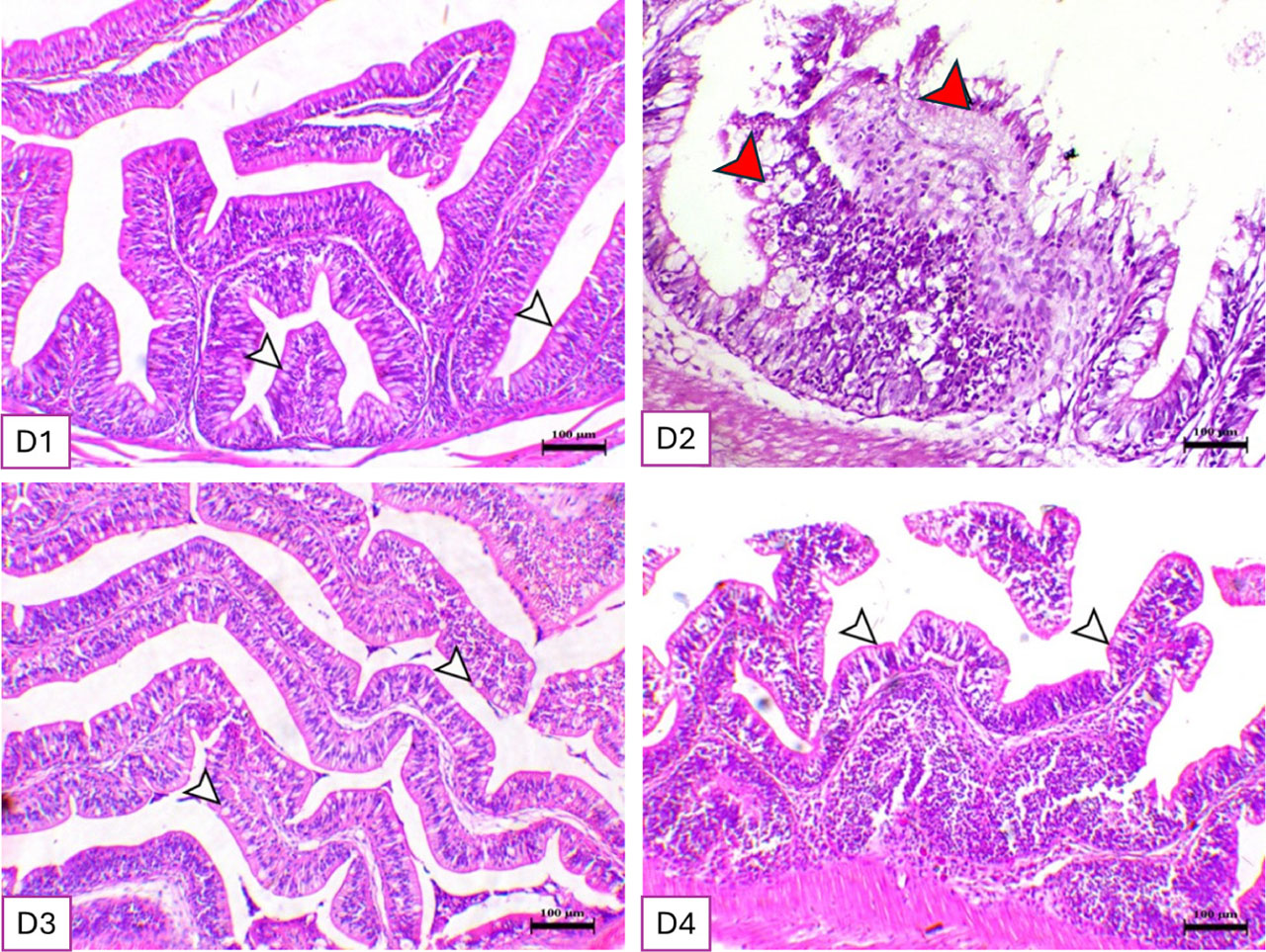
Figure 1.
The histomorphology of Nile tilapia intestine after a 75-day feeding experiment. Stain H&E. Bar = 100 µm. D1: basal diet free of supplements; D2: basal diet + zearalenone (1 mg/kg diet); D3: basal diet + sodium metasilicate (0.5 g/kg diet); D4: basal diet + zearalenone (1 mg/kg diet) + sodium metasilicate (0.5 g/kg diet). White arrow: normal villi and goblet cells. Red arrow: necrosis of the intestinal villi with marked sloughing of the mucosal lining.
Figure 2 displays the histological structure of the liver in Nile tilapia after 75 days of dietary treatment. In the control group (D1), the hepatic tissue and pancreatic acini appear structurally intact, with normal hepatocyte morphology and only mild vacuolar changes (green arrow). In stark contrast, fish in the zearalenone-exposed group (D2) exhibited pronounced histopathological alterations, including marked necrosis of pancreatic tissue, severe vacuolation of hepatocytes (yellow arrow), and evident congestion in the portal vein and blood sinusoids (red arrow), indicating substantial hepatotoxicity. The D3 group, which received sodium metasilicate supplementation alone, maintained a well-organized liver structure, with normal hepatocytes showing prominent cytoplasmic eosinophilia (white arrow) and intact pancreatic acini. Interestingly, the D4 group (zearalenone + sodium metasilicate) displayed partial improvement, with reduced hepatocyte vacuolation (yellow arrow) and less pronounced congestion of hepatic sinusoids (red arrow), indicating a mitigating effect of sodium metasilicate against zearalenone-induced liver damage.
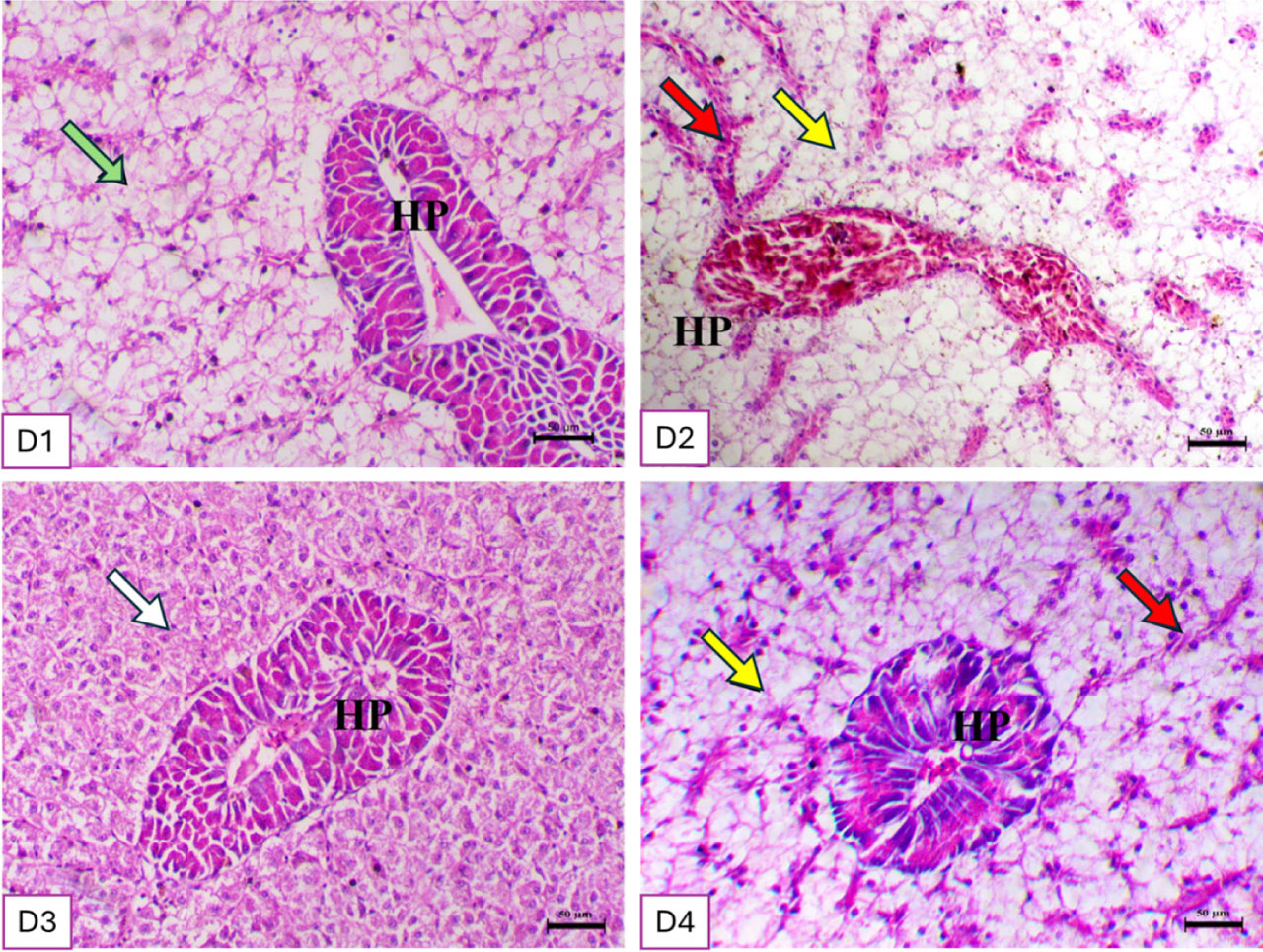
Figure 2.
The histomorphology of Nile tilapia liver after a 75-day feeding experiment. Stain H&E. Bar = 50 µm. D1: basal diet free of supplements; D2: basal diet + zearalenone (1 mg/kg diet); D3: basal diet + sodium metasilicate (0.5 g/kg diet); D4: basal diet + zearalenone (1 mg/kg diet) + sodium metasilicate (0.5 g/kg diet). Green arrow: normal pancreatic tissue (HP) and hepatocytes. Red arrow: congestion of the portal vein and blood sinusoids. White arrow: cytoplasmic eosinophilia. Yellow arrow: vacuolation of the hepatocytes.
Blood biochemical profiles
Table 5 presents the blood biochemical parameters of Nile tilapia following 75 days of dietary treatment. Zearalenone exposure (D2) resulted in significant impairments in several serum biomarkers, indicating systemic stress and hepatic dysfunction. Total protein and globulin levels were markedly reduced in D2, compared to D1, D3, and D4. In contrast, fish in the sodium metasilicate-supplemented group (D3) exhibited significantly elevated levels of total protein and globulin. Albumin levels did not differ significantly among the groups. Lipid metabolism indicators were also affected. Zearalenone-fed fish (D2) had the highest total cholesterol and lowest triglyceride concentrations. These adverse effects were alleviated in D4 (zearalenone + sodium metasilicate) and especially in D3, where cholesterol and triglyceride levels remained within a more favorable physiological range. High-density lipoprotein (HDL) levels showed no significant variation among the groups. Hepatic enzyme activities were severely elevated in the zearalenone group, with alanine aminotransferase (ALT) and aspartate aminotransferase (AST) activities. In contrast, D3 maintained enzyme levels comparable to the control, while D4 showed partial amelioration with moderate reductions in ALT and AST.
Table 5.
Blood biomarker profiles of Nile tilapia following a 75-day feeding trial
| Items | D1 | D2 | D3 | D4 | P-value |
|---|---|---|---|---|---|
| Total protein (g/dL) | 4.29±0.25 a | 2.74±0.24 b | 4.64±0.12 a | 4.14±0.51 a | 0.013 |
| Albumin (g/dL) | 1.7±0.34 | 1.45±0.27 | 1.81±0.24 | 1.65±0.39 | 0.873 |
| Globulin (g/dL) | 2.59±0.16 a | 1.29±0.1 b | 2.82±0.19 a | 2.5±0.16 a | 0.000 |
| Total cholesterol (mg/dL) | 157.67±6.36 b | 211±10.02 a | 140±10.44 b | 158±10.12 b | 0.004 |
| Triglyceride (mg/dL) | 124.33±6.17 a | 72±5.51 c | 106.33±6.69 b | 98±2.65 b | 0.001 |
| High-density lipoprotein (mg/dL) | 45.13±6.92 | 43.65±4.39 | 48.02±3.78 | 41±5.59 | 0.822 |
| Alanine aminotransferase (IU/L) | 10.33±0.88 c | 70.33±1.76 a | 10.33±1.45 c | 22±1.15 b | 0.000 |
| Aspartate aminotransferase (IU/L) | 32±1.53 c | 113±3.21 a | 32.33±2.03 c | 48.67±1.45 b | 0.000 |
Immunological and antioxidant biomarkers
Figure 3 illustrates the immunoglobulin M (IgM) levels and antioxidant biomarker responses in Nile tilapia after 75 days of experimental feeding. Zearalenone exposure (D2) significantly reduced IgM concentrations compared to D1, D3, and D4. In contrast, the sodium metasilicate-supplemented group (D3) showed elevated IgM levels while the D4 group exhibited partial recovery. Total antioxidant capacity (TAC) and glutathione peroxidase (GPx) activity were both markedly suppressed in the D2 group. Conversely, fish fed sodium metasilicate (D3) showed the highest TAC and GPx levels. The combined treatment group (D4) also displayed improved antioxidant responses compared to D2, though not as high as D3. Malondialdehyde (MDA) was significantly elevated in the D2 group. This was substantially lowered in the D3 group, while the D4 group showed intermediate levels.
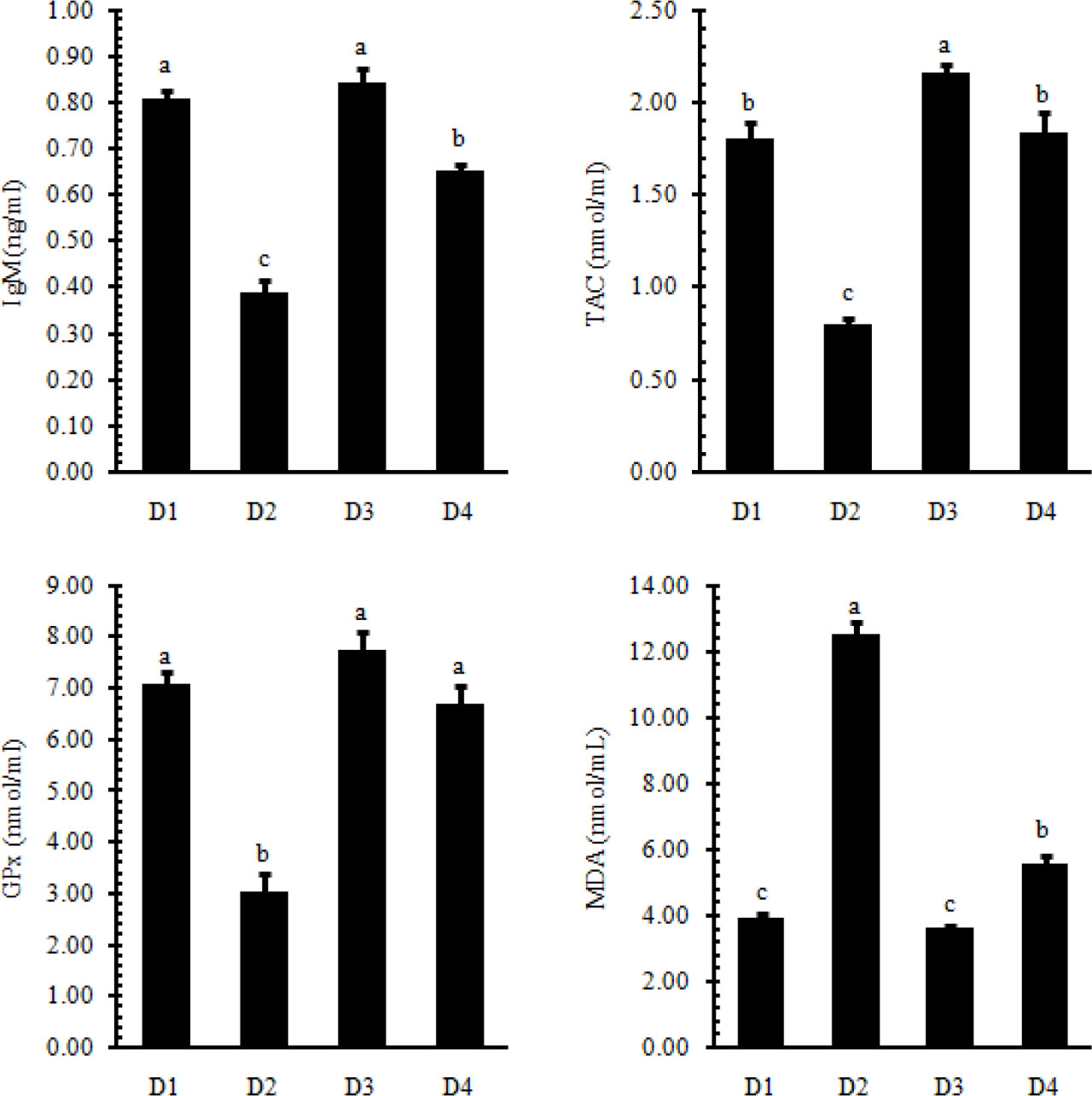
Figure 3.
Immunoglobulin M (IgM) and antioxidant biomarkers in Nile tilapia following 75 days of feeding.
Gene expression analysis
Figure 4 presents the relative mRNA expression levels of selected growth, antioxidant, and immune-related genes in the liver of Nile tilapia after 75 days of dietary treatments. Zearalenone exposure (D2) significantly downregulated the expression of all analyzed genes (GHR, IGF, LYZ, C3, GPx, and CAT) compared to the control (D1). Fish in the sodium metasilicate-supplemented group (D3) showed significantly enhanced expression levels of all genes compared to both the D1 and D2 groups. The combination group (D4) also showed improved gene expression levels relative to D2, though generally lower than the D3 group.
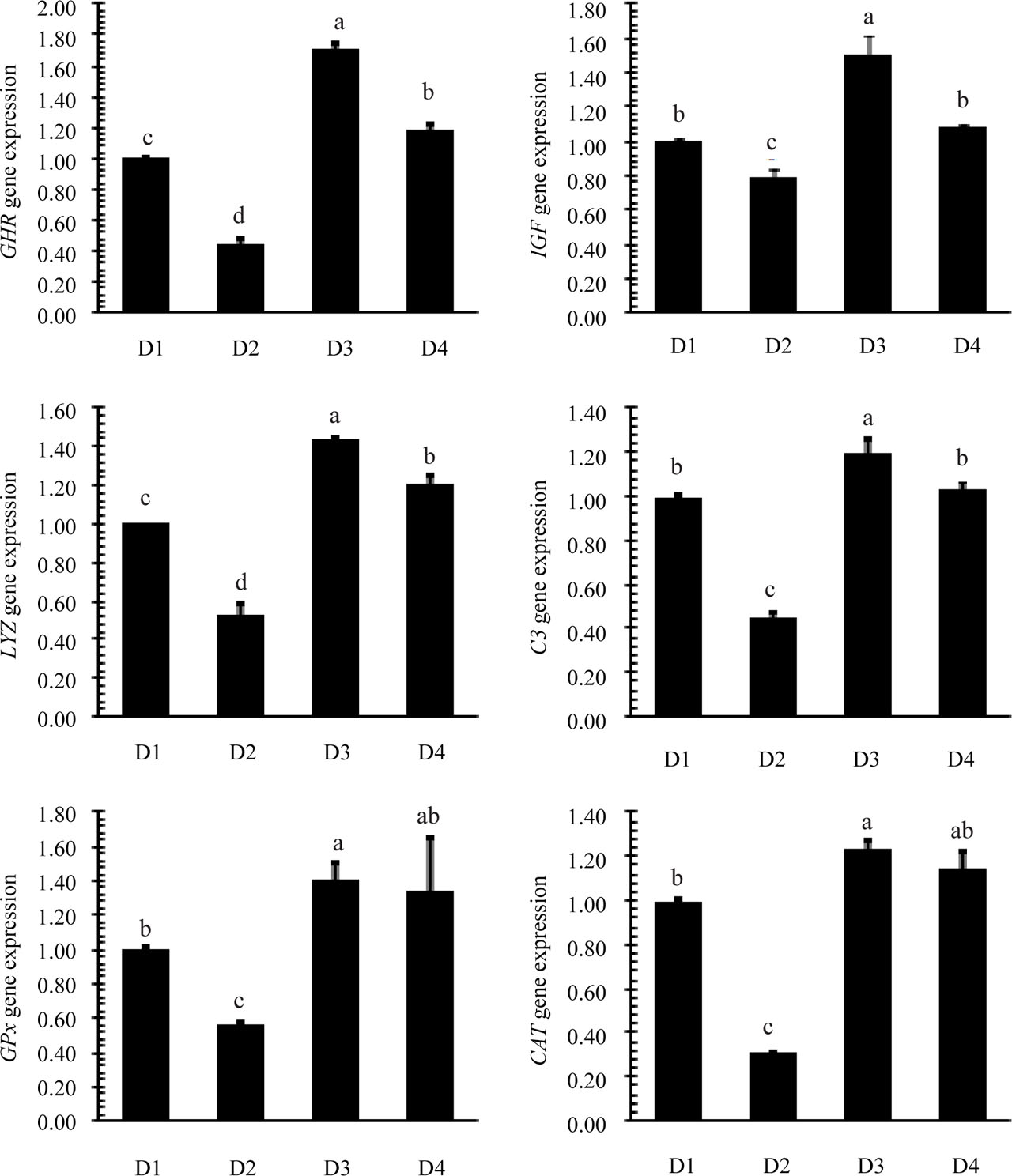
Figure 4.
Relative mRNA expression levels of growth hormone receptor (GHR), insulin-like growth factor (IGF), glutathione peroxidase (GPx), lysozyme (LYZ), catalase (CAT), and complement component 3 (C3) in the liver of Nile tilapia (Oreochromis niloticus) after a 75-day feeding trial. Data are expressed as mean ± standard error (SE). Different letters indicate statistically significant differences among treatment groups (P<0.05).
Discussion
Mycotoxin contamination in aquafeeds, particularly zearalenone (ZEA), poses a significant threat to aquaculture productivity by compromising growth, metabolic functions, and immune responses in fish (Zhou et al., 2017; Gonçalves et al., 2020; Rong et al., 2023). The hepatotoxic, immunosuppressive, and oxidative stress-inducing effects of ZEA have been extensively documented in animals (Islam et al., 2017; Kulcsár et al., 2024), yet its impact on aquatic species and potential mitigation strategies remain less explored (Pietsch, 2017; Wang et al., 2019). In this study, dietary ZEA exposure in Nile tilapia (O. niloticus) elicited pronounced detrimental effects, including growth retardation, dysregulated lipid metabolism, oxidative stress, and immunosuppression, corroborating its role as a potent mycotoxin in aquatic systems (Oliveira and Vasconcelos, 2020; Gruber-Dorninger et al., 2025).
However, the novel inclusion of silicate as a detoxifying agent demonstrated remarkable efficacy in counteracting these adverse effects. Our findings reveal that silicate not only restored growth performance and metabolic homeostasis but also enhanced antioxidant capacity and immune gene expression, suggesting its potential as a sustainable dietary intervention (Di Gregorio et al., 2014; Alvarado et al., 2017). These results align with recent studies highlighting sodium metasilicate’s ability to adsorb mycotoxins and improve gut health in animals (Zahran et al., 2020; Zaineldin et al., 2025). By integrating physiological, biochemical, and molecular insights, this discussion elucidates the mechanisms underlying ZEA toxicity and sodium metasilicate’s ameliorative role, offering actionable solutions for mycotoxin management in aquaculture.
The significant differences observed in growth performance parameters among the experimental groups provide compelling evidence of ZEA’s detrimental effects and sodium metasilicate’s protective role in Nile tilapia. The marked reduction in final body weight, weight gain, SGR, and FI in ZEA-exposed fish (D2) aligns with previous findings in aquatic species, where ZEA has been shown to disrupt endocrine function and nutrient metabolism (Zhou et al., 2017; Han et al., 2022). The substantially higher FCR in this group further confirms ZEA’s negative impact on feed utilization efficiency, likely through interference with digestive enzyme activity and nutrient absorption in the gastrointestinal tract (Gao et al., 2022; Gruber-Dorninger et al., 2023). These results collectively demonstrate that even at relatively low dietary levels (1 mg/kg), ZEA can significantly compromise growth performance in Nile tilapia.
The superior growth performance observed in the sodium metasilicate-supplemented group (D3), characterized by the highest final weight, weight gain, SGR, FI, and most efficient FCR, suggests that sodium metasilicate may enhance growth through multiple mechanisms. Previous studies have documented silicate’s ability to improve mineral bioavailability, support gut health, and enhance nutrient digestibility in aquatic species (Bashar et al., 2021; Méndez-Martínez et al., 2024). The intermediate growth performance in the ZEA + sodium meta-silicate group (D4) indicates silicate’s partial protective effect against ZEA toxicity, likely through adsorption of the mycotoxin in the digestive tract and reduction of its systemic bioavailability (Elliott et al., 2020; Berillo and Ermukhambetova, 2024). However, the incomplete recovery suggests that either the sodium metasilicate dose was insufficient for complete ZEA detoxification or that some ZEA effects occur through mechanisms not mitigated by sodium metasilicate.
The maintenance of high survival rates across all treatments, including the ZEA-exposed group, indicates that the observed effects were sublethal rather than acutely toxic. This finding is consistent with other studies showing that ZEA primarily affects growth and physiological parameters rather than survival in fish (Pietsch and Junge, 2016). The absence of negative effects from sodium metasilicate supplementation alone confirms its safety as a feed additive at the tested concentration (0.5 g/kg), supporting its potential practical application in aqua-culture. From a mechanistic perspective, the growth impairment caused by ZEA likely results from its estrogenic activity interfering with the growth hormone/insulin-like growth factor (GH/IGF) axis, combined with oxidative stress and metabolic disruption (Scarth, 2006; Ropejko and Twarużek, 2021). Silicate’s protective effects may involve both physical adsorption of ZEA in the gut and biological activities such as antioxidant protection and maintenance of intestinal barrier integrity (Nadziakiewicz et al., 2019; Méndez-Martínez et al., 2024). The partial mitigation observed in the D4 group suggests that while sodium metasilicate can effectively reduce ZEA bioavailability, some toxic effects may persist through alternative pathways or require higher sodium metasilicate doses for complete neutralization.
The absence of significant differences in HSI, ISI, VSI, and K among groups suggests that while ZEA exposure caused substantial tissue-level damage, it did not significantly alter the relative organ weights or overall body condition of Nile tilapia. This finding contrasts with some terrestrial animal studies where mycotoxins typically reduce condition factors (Yiannikouris and Jouany, 2002; Gallo et al., 2015), possibly indicating fish have different compensatory mechanisms for maintaining organ mass ratios despite histological damage.
The pronounced improvement in intestinal morphology in sodium metasilicate-supplemented fish (D3), characterized by significantly taller villi, wider villus width, and higher goblet cell density, provides compelling evidence of sodium metasilicate’s gut-enhancing properties. These structural improvements likely contributed to the superior growth performance in this group, as enhanced villus surface area facilitates greater nutrient absorption (Méndez-Martínez et al., 2024; Zaineldin et al., 2025). The goblet cell proliferation suggests sodium metasilicate may stimulate mucosal protection, consistent with findings in aquatic animals where silicate increased mucin production and pathogen resistance (Méndez-Martínez et al., 2024; El-Naby et al., 2025). In contrast, the severely compromised intestinal architecture in ZEA-exposed fish (D2), with villi 65% shorter and goblet cells 58% fewer than controls, mirrors the gut damage reported in ZEA-fed carp (Wang et al., 2019). This intestinal atrophy explains the poor feed conversion observed in D2, as damaged mucosa impairs digestive efficiency. The partial restoration of intestinal morphology in the ZEA + sodium metasilicate group (D4) demonstrates sodium metasilicate’s protective capacity, likely through two mechanisms: (1) physical adsorption of ZEA in the gut lumen, reducing epithelial exposure (Zhang et al., 2020), and (2) stimulation of mucosal repair pathways. However, the incomplete recovery suggests either persistent low-level ZEA effects or that some damage occurs before sodium metasilicate can act. This aligns with poultry studies showing aluminosilicates prevent about 60–70% of ZEA-induced gut damage (Chkuaseli et al., 2016).
At the hepatic level, the severe histopathological changes in ZEA-exposed fish, including hepatocyte necrosis, vacuolation, and vascular congestion, confirm ZEA’s potent hepatotoxicity in aquatic species. These findings expand on previous reports in animals showing ZEA increases liver enzymes (Stadnik and Borzecki, 2009; Pietsch and Junge, 2016), now demonstrating the underlying structural damage. The well-preserved liver histology in sodium metasilicate-only fish (D3) suggests sodium metasilicate may have hepatoprotective properties beyond mycotoxin adsorption, possibly by enhancing antioxidant defenses as shown in tilapia (El-Naby et al., 2025). The intermediate improvement in the ZEA + sodium metasilicate group (D4), with reduced but not eliminated vacuolation, indicates sodium metasilicate partially shields hepatocytes from ZEA’s effects, likely by reducing systemic ZEA absorption through gut binding. The dissociation between gross organ indices (HSI, ISI, VSI) and microscopic pathology is noteworthy. While common in subacute toxicity studies, it underscores that organ weight ratios alone may miss significant toxicity. This has important implications for aquaculture monitoring, suggesting histological assessment should complement production metrics when evaluating feed safety.
The marked reduction in total protein and globulin levels in ZEA-exposed fish (D2) reflects significant hepatic dysfunction and impaired protein synthesis, consistent with the observed histopathological liver damage. This hypoproteinemia has been previously reported in mycotoxin-exposed fish and is attributed to ZEA’s inhibition of hepatic protein synthesis and increased protein catabolism (Mandalian et al., 2022; Yadavalli et al., 2023; Hussein et al., 2024). The significantly elevated protein and globulin levels in sodium metasilicate-supplemented fish (D3) suggest enhanced hepatic function and possibly stimulated immune protein production, as globulins include immunoglobulins and acute-phase proteins (Bashar et al., 2021; Zaineldin et al., 2025). The unchanged albumin levels across groups indicate ZEA primarily affects non-albumin proteins, potentially targeting the immune-related globulin fraction.
The dyslipidemia observed in ZEA-fed fish characterized by elevated total cholesterol and depressed triglycerides, suggests profound disruption of lipid metabolism. This pattern resembles estrogenic effects seen in mammals, where ZEA interferes with hepatic lipid processing (Wang et al., 2022; Zhang et al., 2023; Han et al., 2025). The normalized lipid profile in sodium meta-silicate-supplemented groups (D3 and D4) implies sodium metasilicate may help maintain lipid homeostasis, possibly by protecting hepatocyte function or enhancing lipid clearance mechanisms. The absence of HDL variation suggests ZEA’s lipid effects are mediated through pathways independent of reverse cholesterol transport. The dramatic elevation of hepatic enzymes (ALT, AST) in ZEA-exposed fish confirms substantial hepatocellular damage, correlating with the observed necrosis and vacuolation. These enzyme levels exceed those reported in other fish mycotoxin studies (Mendes dos Reis et al., 2024; Zaineldin et al., 2025), indicating particular hepatic vulnerability to ZEA in tilapia. The near-normal enzyme activities in sodium metasilicate-fed fish (D3) and partial recovery in D4 demonstrate sodium metasilicate’s hepatoprotective capacity, likely through both reducing ZEA absorption and supporting hepatocyte integrity.
The immunological findings reveal ZEA’s multifaceted immunosuppressive effects. The reduced IgM levels in D2 align with studies showing mycotoxins impair B-cell function and antibody production in fish (Alvarado et al., 2017; Zeng et al., 2019; He et al., 2022). The enhanced IgM in sodium metasilicate-fed fish (D3) suggests immunostimulatory properties beyond ZEA protection, possibly through modulating gut-associated lymphoid tissue given silicate’s intestinal benefits (Alinezhad et al., 2017; Hassaan et al., 2020). The partial recovery in D4 indicates sodium metasilicate can partially counteract ZEA’s immunotoxicity, though complete restoration may require higher doses or longer supplementation. The oxidative stress parameters paint a coherent picture of ZEA-induced redox imbalance. The suppressed TAC and GPx activity in D2, coupled with elevated MDA, demonstrate ZEA’s pro-oxidant effects through both depleting antioxidants and promoting lipid peroxidation (Borutova et al., 2008; Zahran et al., 2020; Bacou et al., 2021). Sodium metasilicate’s remarkable antioxidant effects in D3 – showing the highest TAC and GPx with lowest MDA – suggest direct free radical scavenging and/or upregulation of endogenous antioxidant systems (Makled et al., 2022). The intermediate improvement in D4 supports sodium metasilicate’s role in mitigating oxidative damage even when ZEA is present.
At the molecular level, the downregulation of growth (GHR, IGF), immune (LYZ, C3), and antioxidant (GPx, CAT) genes in ZEA-exposed fish provides mechanistic explanations for the observed physiological impairments. This coordinated suppression of crucial metabolic pathways highlights ZEA’s broad disruptive potential (Wang et al., 2019; Lv et al., 2025). The enhanced gene expression in sodium metasilicate-fed fish (D3) across all categories is particularly striking, suggesting sodium metasilicate may act as a transcriptional modulator (Karimi et al., 2020; Alandiyjany et al., 2022; Makled et al., 2022; Pourjam et al., 2024). The partial gene expression recovery in D4 demonstrates that while sodium metasilicate can alleviate ZEA’s molecular effects, some transcriptional repression persists, possibly due to residual ZEA or epigenetic modifications.
Conclusion
This study demonstrates that dietary zearalenone contamination severely impairs growth, liver and intestinal health, immunity, and antioxidant status in Nile tilapia, while downregulating key defense-related genes. Sodium metasilicate supplementation at 0.5 g/kg provided partial protective effects, improving growth and mitigating several toxic outcomes, although full recovery was not achieved. These findings suggest that silicate may hold promise as a dietary intervention, but its protective mechanisms remain to be clarified and its efficacy at different inclusion levels is unknown. Practical implementation will require dose–response studies, evaluation of long-term safety (e.g., mineral balance, gut microbiota, environmental accumulation), and cost-effectiveness relative to established mycotoxin binders. Furthermore, validation across species and integration of omics-based analyses are needed before broad application can be recommended.
Notes
[12] CRediT authorship contribution statement
Mohamed A. Gomaa: methodology, data analysis, formal analysis, writing – review and editing. Ibrahim M.A.: conceptualization, methodology, writing – review and editing. Bassiouni M.I.: conceptualization, methodology, resources, data analysis, writing – review and editing. Mahmoud A.O. Dawood: conceptualization, methodology, data curation, writing – review and editing. Mona Assas: methodology, data analysis, writing – review and editing. Rasha A. Alwakeel: conceptualization, resources, methodology, writing – review and editing. Amr I. Zaineldin: methodology, data curation, writing – review and editing. Mahmoud S. Gewaily: methodology, data analysis, writing – review and editing. Ali A. Soliman: methodology, resources, writing – review and editing. Akram Ismael Shehata: methodology, data cu-ration, data analysis, data interpretation, investigation, visualization, validation, original draft preparation, writing – review and editing, supervision. Mohammed F. El Basuini: conceptualization, methodology, formal analysis, data analysis, investigation, visualization, validation, original draft preparation, writing – review and editing, supervision.