
The mortality of calves, especially in the first few weeks after birth, results in serious economic losses in dairy cattle enterprises (Alemu et al., 2022; Sedó et al., 2023). Inadequate colostrum intake, poor microclimate hygiene, poor immune development, environmental stressors and infectious diseases are the main causes of these losses (Hordofa et al., 2021; Figure 1). As calves’ immune systems are not fully developed in their early life, calves are unable to fight off the pathogens. Colostrum feeding is essential to provide immunological protection, which is known as passive immunity, to calves during the first weeks of life (Lopez and Heinrichs, 2022). The development of active immunity through exposure to pathogens is a gradual process. Calves rely primarily on the successful passive transfer of immunity from colostrum until their active immune system is fully developed. (Cangiano et al., 2024). There are two critical risk factors during this transition period. The first is failure of passive transfer, which is reported to be responsible for 31% of calf losses in the USA in the first 3 weeks after birth (Godden, 2008). The second risk factor is the poor improvement of active immunity which can result from the environmental stress factors, inadequate care and hygiene conditions, etc. As a result of unsuccessful management of this process, the highest morbidity and mortality are observed in the pre-weaned period (Urie et al., 2018; Goh et al., 2024). Hence, implementing the measures to support immune system function in calf rearing is essential in preventive veterinary medicine and can significantly reduce calf losses (Ozdemir and Yanar, 2024). In this critical period diarrhea and respiratory diseases are the leading problems in calf rearing resulting in high calf mortality (Roland et al, 2016; Reddy et al., 2020). Diarrhea causes rapid fluid and electrolyte loss in calves, which can lead to dehydration, growth retardation and even death in a short time (Dratwa-Chałupnik et al., 2012). In infectious diarrhea cases, factors such as Rotavirus, Coronavirus, Escherichia coli and Cryptosporidium spp. are frequently seen (Brunauer et al., 2021). Various studies and reports published in different countries indicate that diarrhea accounts for over 50% of calf losses (NAHMS, 2008; Hur et al., 2013; Cho and Yoon, 2014; Reddy et al., 2020). Calves often face a number of consequences, including reduced weight gain, even if they successfully survive diarrhea (Schinwald et al., 2022).
Antibiotics have been the most widely used treatment to prevent and control diarrhea in calves (Wang et al., 2022; Allam et al., 2024). However, in recent years, antibiotics, traditionally used to protect calf health, have been restricted in many countries due to the global rise in antimicrobial resistance and food safety concerns (Manyi-Loh et al., 2018; Kaur et al., 2024). This has led to the need to find natural and sustainable alternatives for rearing animals. In this context, due to their antimicrobial (Falleh et al., 2020; Masyita et al., 2022), antiviral (Asif et al., 2020; Mieres-Castro et al., 2021), antioxidant (Falleh et al., 2020; Chen et al., 2023), anti-inflammatory (Pereira et al., 2023; Subudhi et al., 2025) and immune-supporting (Peterfalvi et al., 2019; Grazul et al., 2023; Hernández-García et al., 2024) properties, EOs of plant origin are among the most prominent natural feed additives in calf nutrition.
EOs are complex mixtures of volatile secondary metabolites obtained from different parts of aromatic plants (Mohammed et al., 2024). Nearly all parts of a plant, especially flowers, buds, leaves, seeds, stems, and fruits, are capable of producing EOs (Dhifi et al., 2016; Falleh et al., 2020). These components are rich in phenolic compounds such as terpenes, terpenoids, and phenolics (Voon et al., 2012). Terpenes are known to have antimicrobial activity against both antibiotic sensitive and antibiotic resistant strains of bacteria, primarily through mechanisms such as disrupting cell membranes and hindering the synthesis of proteins and DNA (Álvarez-Martínez et al., 2021). The antimicrobial effects of these components are effective against both Gram-positive and Gram-negative bacteria and play important roles in the regulation of intestinal flora (Khwaza and Aderibigbe, 2025), protection of digestive health and modulation of immune responses (Masyita et al., 2022; Papada, 2025).
EOs from different plants were found to be particularly effective against pathogenic bacteria such as E. coli, Salmonella spp. and Staphylococcus aureus (Bibow and Oleszek, 2024), which are commonly associated with calf diarrhea (Cho and Yoon, 2014). They also help protect tissues by reducing oxidative stress (Chen et al., 2023). Furthermore, EOs have been reported to have strong immune stimulating effects (Grazul et al., 2023). Considering all above-mentioned properties, EOs stand out as an important alternative in terms of not only increasing growth performance in calves, but also improving animal health by reducing the incidence of infectious diseases and reducing dependency on antibiotic use. Although the use of EOs in animal nutrition has been widely studied, research focusing specifically on calves remains relatively limited. The objective of this paper is to examine recent studies that investigated the effects of EOs in pre-weaned calves, emphasizing their impact on growth, immune function, health, and ruminal parameters, and to consider their potential role in calf rearing practices.
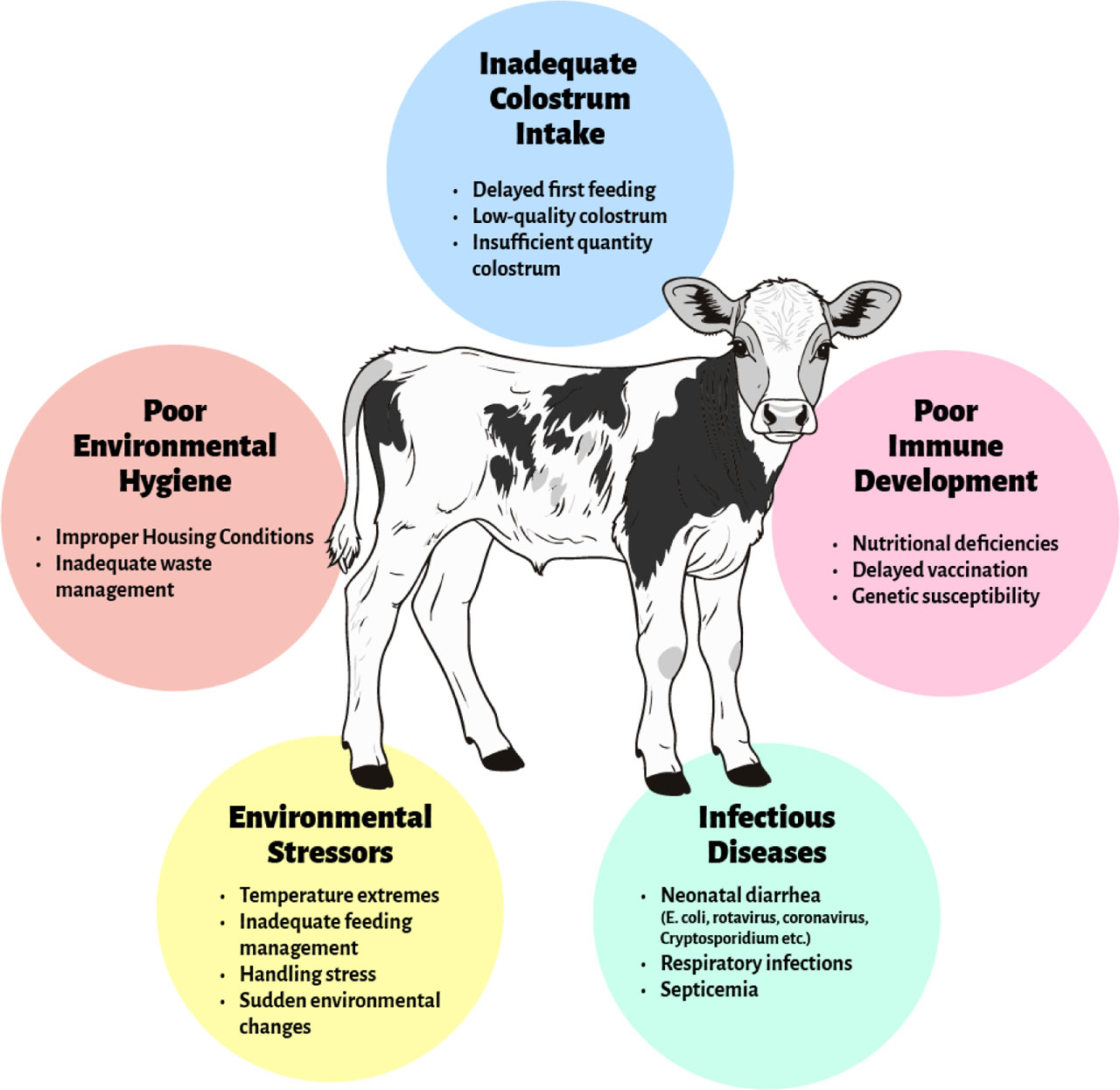
Figure 1.
Major risk factors for calves in early life.
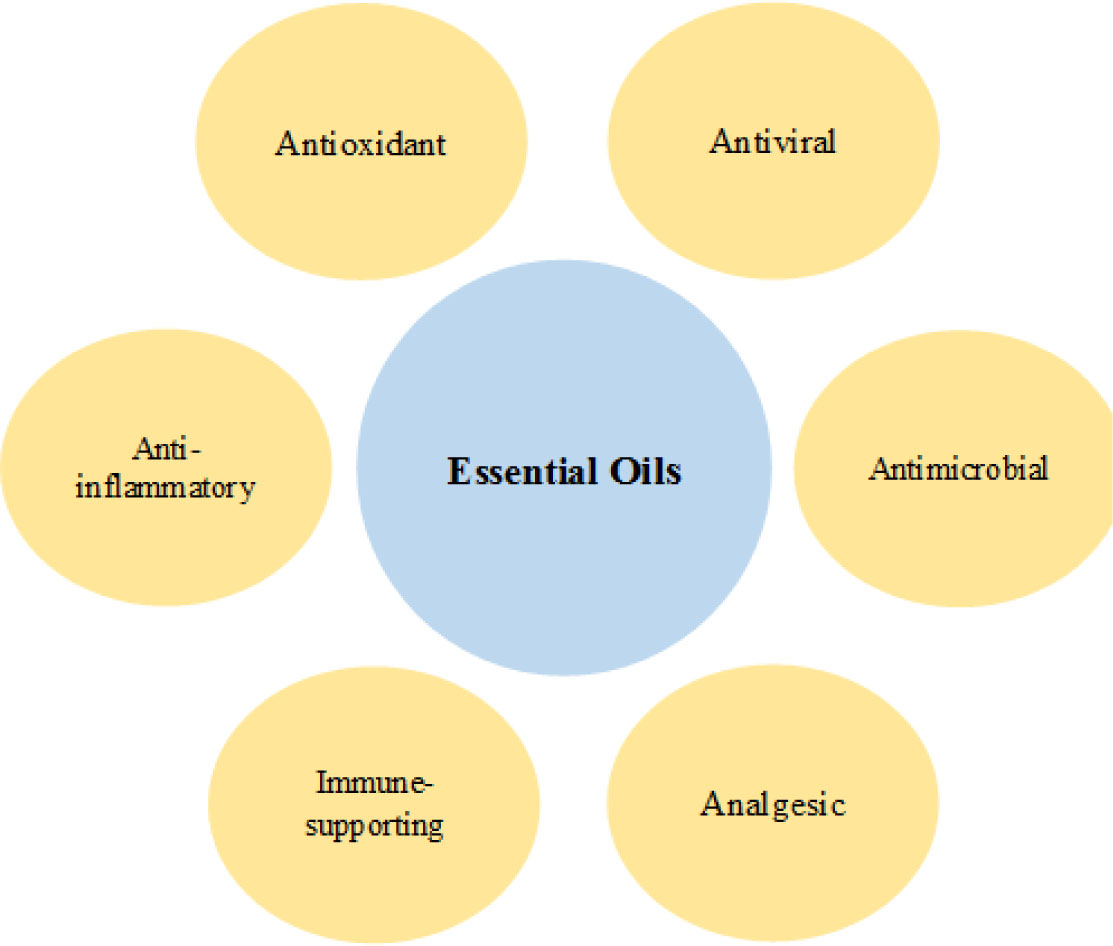
Figure 2.
Main therapeutic properties of essential oils.
Main bioactive components of essential oils
Essential oils are complex and volatile mixtures composed of plant secondary metabolites, often comprising hundreds of individual constituents, with some containing more than 500 distinct chemical substances (Liang et al., 2023). These oils are usually extracted from different parts of plants such as flowers, leaves, bark, roots, seeds, or resins. Hydrodistillation, steam distillation, and cold pressing are the most widely used processing methods (Pandey et al., 2023).
EOs contain various groups of compounds such as terpenes and terpenoids, aromatic compounds, phenols, aliphatic alcohols, aliphatic ketones and aliphatic acid esters (Żukowska and Durczyńska, 2024). Main therapeutic properties of EOs are presented in Figure 2. Terpenes and terpenoids are the main components of EOs. They make up about 90% of their composition (Kar et al., 2018). Terpenes are the main components of EOs and have carbon skeletons containing 2-methylbuta-1,3-diene (isoprene units) in their molecular structure (Masyita et al., 2022). Terpenes are simple hydrocarbons consisting of only carbon and hydrogen atoms. Monoterpenes, which represent a major class of EO constituents, are composed of two isoprene units (C10), whereas sesquiterpenes are formed from three isoprene units (C15), resulting in more structurally complex and functionally diverse molecules (Bakó et al., 2024). Some examples of monoterpenes include α-pinene, limonene, camphene, myrcene and p-cymene (Zuzarte et al., 2024).
Recent studies have revealed that monoterpenes have various biological properties such as antimicrobial, antioxidant, anti-inflammatory and cardioprotective effects (Salakhutdinov et al., 2017). On the other hand, plant-derived sesquiterpenes have shown highly specific biological activity in several diseases (Katiyar et al., 2022). Some of the examples of sesquiterpenes are α-zingiberene, α-farnesene, β-sesquiphellandrene (Gunasena et al., 2022). Common EOs and their main active compounds have been presented in Table 1.
Terpenoids are derivatives of terpenes that are modified by oxygen-containing functional groups. They represent one of the largest classes of plant-derived compounds (Câmara et al., 2024). Terpenoids are conveniently classified based on the number of carbon atoms they contain; some of the most common types include monoterpenoids (C10), sesquiterpenoids (C15), diterpenoids (C20), and triterpenoids (C30), each with distinct structural features and biological functions (Boncan et al., 2020). They play a crucial role in disease resistance. Monoterpenoids exhibit antibacterial properties by hindering microbial development and disrupting essential physiological processes within the pathogens (Siddiqui et al., 2024). Menthol, thymol, geraniol, linalool and carvone are among the most popular monoterpenoids, while some examples of sesquiterpenoids are farnesol, nerolidol bisabolol, humulene, caryophyllene and costunolide.
These components are the main elements responsible for the biological activity of EOs. Especially the phenolic compounds thymol and carvacrol stand out with their high antimicrobial effects (Kachur and Suntres, 2020). Moreover, monoterpenoid alcohols such as linalool and geraniol can support digestive system health with antimicrobial properties (dos Santos et al., 2022; Fajdek-Bieda et al., 2024). Limonene and eugenol are known for their antioxidant, analgesic and anti-inflammatory properties (Ulanowska and Olas, 2021; Chen et al., 2024). Furthermore, limonene is reported to be effective in the inhibition of Gram-negative bacteria such as E. coli and Gram-positive bacteria such as S. aureus (Costa et al., 2019).
Table 1.
Common essential oils and their main active compounds
| Essential oils | Source plants | Main compounds | Reference |
|---|---|---|---|
| Lavender oil | Lavandula angustifolia | Linalool, linalyl acetate, lavandulol, geraniol | Białoń et al. (2019) |
| Peppermint oil | Mentha × piperita | Menthol, menthone, limonene, 1,8-cineole, menthofuran | Beigi et al. (2018) |
| Tea tree oil | Melaleuca alternifolia | Terpinen-4-ol, γ-terpinene, α-terpinene, 1,8-cineole | Benchaar et al. (2007) |
| Eucalyptus oil | Eucalyptus globulus | 1,8-cineole, α-pinene, p-cymene, β-myrcene | Almas et al. (2021) |
| Lemon oil | Citrus limon | Limonene, β-pinene, γ-terpinene | Kačániová et al. (2024) |
| Thyme oil | Thymus vulgaris | Thymol, γ-terpinene, p-cymene, 1,8-cineole, γ-cadinene | Nguyen et al. (2024) |
| Rosemary oil | Rosmarinus officinalis | 1,8-cineole, α-pinene, camphor, verbenone | Verma et al. (2020) |
| Chamomile oil | Matricaria chamomilla | Bisabolol, chamazulene, coumarins, umbelliferone | Sharafzadeh and Alizadeh (2011) |
| Clove oil | Syzygium aromaticum | Eugenol, eugenyl acetate, β-caryophyllene, α-humulene | Haro-González et al. (2021) |
| Oregano oil | Origanum vulgare | Carvacrol, thymol, p-cymene, γ-terpinene | Zamuner et al. (2023) |
The isomers of the monoterpene terpineol is reported to show strong inhibitory effect on several Gram-negative bacteria (Huang et al., 2021). Thymol and thyme oil have been used in folk medicine for many years for their anti-inflammatory, antiviral, antibacterial and antiseptic properties, particularly in the treatment of the upper respiratory tract (Kowalczyk et al., 2020). The synergistic effects of these chemical components form the basis of the antioxidant, anti-inflammatory, antimicrobial and immunomodulatory properties of EOs. Therefore, EOs attract attention as natural and functional additives in animal nutrition and are considered as an alternative to antibiotics (Movahedi et al., 2024). Molecular structures of some of the most common compounds in EOs are displayed in Figure 3.
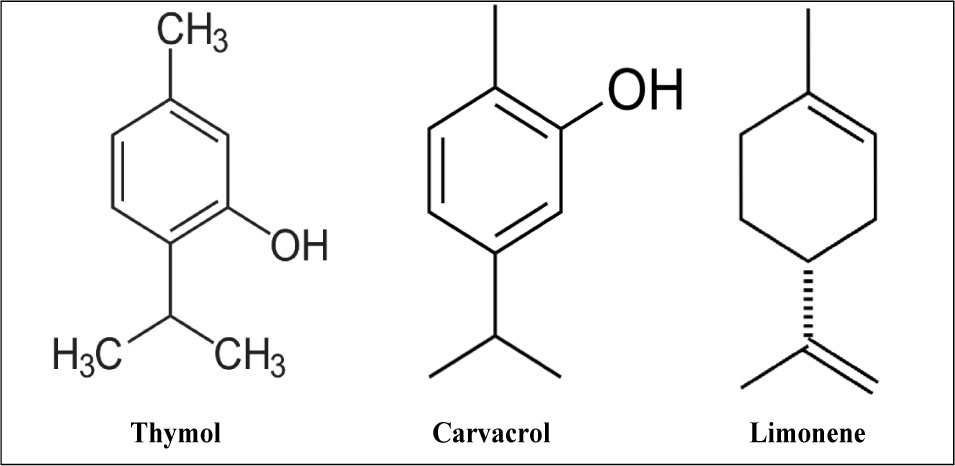
Figure 3.
Molecular structures of some of the most common compounds in essential oils.
Effects of plant-derived essential oils on immune system function of calves
The calf acquires its initial immunity through the vital antibodies found in colostrum. Passive immunity provided by colostrum gradually declines over time and significantly decreases after approximately four weeks of age (Murphy et al., 2014). However, during this period, active immunity, which the calves will develop through contact with pathogens, has not yet been fully established (Chase et al., 2008). For this reason, calf losses are quite high during this period. Thus, immune-enhancing practices in calves are highly important in terms of preventive medicine.
The findings of the studies conducted on the effects of different EO sources on the immune system function of calves have been presented in Table 2. Studies carried out in pre-weaned calves suggest that EOs have an immunomodulatory effect and that they increase the serum Ig level of calves. Biyik et al. (2023) reported that rosemary oil supplementation in MR at 500, 1000 and 2000 mg/d doses significantly increased serum IgG levels in calves in the pre-weaning period. Similarly, EO supplementation to milk at 100 and 200 μL/d doses significantly increased serum IgG levels of calves in the pre-weaning period, however there was no difference in IgM and IgE levels (Kara and Pirci, 2024). On the other hand, Jahani-Azizabadi et al. (2022) reported that the EO mixture obtained from Echinacea angustifolia, Achillea millefolium, and Mentha piperita plants had no significant effect on IgG level. Comparably, Liu et al. (2020) noted that EO and prebiotic mixture supplementation to starter increased IgG and IgM levels in calves at 14 days and IgA levels at 28 days of ages. However, Li et al. (2020) reported no differences in serum Ig levels of calves with 1000 g/1 t attapulgite + oregano supplementation to starter feed. Nora et al. (2024) reported that the EO mixture obtained from cinnamon, oregano, and eucalyptus plants significantly increased serum IgA level at 45 and 60 days when supplemented in MR. Similar results have also been reported by Jahani-Azizabadi et al. (2022) as a result of the application of E. angustifolia, A. millefolium, and M. piperita oils.
The immunomodulatory effects of EOs result from several mechanisms, including regulation of cytokine production, activation of immune cells and reduction of oxidative stress (Sandner et al., 2020). For example, Peterfalvi et al. (2020) reported that Eucalyptus globulus EO increase macrophage phagocytosis and thus supports the innate immunity. In addition, some EOs from different plants have been reported to have powerful antioxidant properties that help mitigate oxidative stress in immune cells and support overall immune system function (Miguel, 2010). Yilmaz and Gul (2024) reported that the antioxidant components of EOs readily react with peroxyl radicals and are neutralized via formal hydrogen atom transfer, while the phenolic hydroxyl groups present in EOs inhibit the early formation of hydroperoxides by scavenging peroxy radicals produced during the initial stages of lipid oxidation. IgA, IgM and IgG are secreted by the plasma cells and are the most important immunoglobulins in animals that are resistant to infections and diseases caused by germs (Bragg et al., 2023; Li et al., 2024).
Compounds like thymol and carvacrol contain phenolic hydroxlyl groups which is believed to interact with the immune cells and modulate signaling pathways that are involved in immune response. The immunomodulatory effects of EOs are largely attributed to their bioactive constituents such as monoterpenes (e.g., 1,8-cineole), phenolic compounds (e.g., eugenol, thymol), and alcohols (e.g., terpinen-4-ol, linalool) (Sandner et al., 2020). These compounds, through their characteristic functional groups – particularly hydroxyl, ether, and phenolic groups – interact with key immune signaling pathways. For example, 1,8-cineole has been shown to inhibit NF-κB and p38 MAPK pathways, thereby reducing the production of proinflammatory cytokines such as TNF-α, IL-1β, and IL-6. Similarly, eugenol modulates macrophage and lymphocyte function by regulating cytokine synthesis and cellular immunity. These mechanisms not only suppress excessive inflammation but also enhance the functional capacity of innate and adaptive immune cells (Sandner et al., 2020). Consequently, the presence of such compounds in EO blends administered to calves may contribute to improved immune defense, better vaccine responses, and reduced susceptibility to infectious diseases.
Table 2.
Summary of studies on the effects of essential oils on calf immune system function
| Breed | N | Essential oil | Feeding period | Route | Dose | Outcomes | Reference |
|---|---|---|---|---|---|---|---|
| Holstein | 30 | Rosemary | 4–56 | MR | 500–2000 mg/d | IgG (+), Total protein (0) | Biyik et al. (2023) |
| Holstein | 36 | Blend of EO (coneflower, yarrow, peppermint, citrus) | 3–60 | Milk | 4–12 ml/d | IgG (0), Total protein (+), globulin (0) | Jahani-Azizabadi et al. (2022) |
| Holstein | 14 | Blend (anise, cinnamon, garlic, rosemary, and thyme) | 4–60 | MR | 1 g/d | Bas (0), Eos (−), Lym (0), Mon (0), Leu (0) | Campolina et al. (2021) |
| Holstein | 20 | Blend (peppermint, eucalyptus, menthol) | 1–28 | MR | 4 mL/d | Total protein (0), Eos (−) | Coelho et al. (2023) |
| Holstein | 24 | Attapulgite + oregano | 7–67 | Starter | 1000 g/1 t | IgG (0), IgM (0), IgA (0) | Li et al. (2024) |
| Holstein | 20 | Prebiotic + blend (carvacrol, caryophyllene, p-cymete, cineole, terpinene, thymol) | 3–70 | Starter | 44.1 ppm/d | IgG (+), IgM (+), IgA (+), Total protein (+) | Liu et al. (2020) |
| Holstein | 16 | Sage oil | 14–70 | Milk | 100–200 μL/d | IgG (+), IgE (0), IgM (0), IL-1β (−), IL-6 (−), TNF-α (−) | Kara and Pirci (2024) |
| Brown Swiss | 48 | Ajwain or thyme | 7–67 | Milk | 1–2 ml/d | Total protein (0) | Ebrahimi et al. (2018 b) |
| Holstein | 16 | Sage oil | 3–56 | Milk | 100–200 μL/d | IgG (0), IgM (0), IgA (+), TNF-α (−), IFN-ɣ (−) | Kara et al. (2025) |
| Holstein | 8 | Blend (cinnamon, oregano, and eucalyptus) | 10–60 | MR | 5 g/kg MR | IgA (+), Total protein (0), Globulin (0), Leu (−), Lym (−) | Nora et al. (2024) |
| Holstein | 75 | Blend (NA) | 14–70 | MR | 94,281 mg /d | Total protein (+), Globulin (+) | Soltan (2009) |
[i] EO: essential oil, MR: milk replacer, NA: not available, Ig: immunoglobulin, ml: milliliter, g: gram, mg: milligram, μL: microliter, t: ton, ppm: parts per million, lym: lymphocytes, leu: leukocytes, mon: monocytes, eos: eosinophils, bas: basophils, +: increased, −: decreased, 0: did not change.
Table 3.
Summary of studies on the effects of essential oils in diarrhea status of calves
| Breed | N | Essential oil | Feeding period | Route | Dose | Outcomes | Reference |
|---|---|---|---|---|---|---|---|
| Holstein | 20 | Blend (peppermint, eucalyptus, menthol) | 1–28 | MR | 4 mL/d | Fecal score (0) | Coelho et al. (2023) |
| Jersey | 15 | Green tea or oregano oil | 1–60 | N/A | 60 mg | Fecal score (0) | Heisler et al. (2020) |
| Holstein | 36 | Blend of EO (coneflower, yarrow, peppermint, citrus) | 3–60 | Milk | 4–12 ml/d/milk | Fecal score (−) | Jahani-Azizabadi et al. (2022) |
| Holstein × Gyr | 14 | Blend (anise, cinnamon, garlic, rosemary, and thyme) | 4–60 | MR | 1 g/d | Fecal score (0) | Campolina et al. (2021) |
| Holstein | 10 | Oregano | 3–53 | Top-dressed in starter | 60 mg/kg BW/d | Streptococcus (−), Escherichia (−) | Ritt et al. (2023) |
| Holstein | 30 | Blend (thyme, lavender, sage, caper) | 7–42 | Milk | 100–300 mg/d | Fecal E. coli (−), Lactobacillus (−) | Asghari et al. (2021) |
| Holstein | 20 | Prebiotic + blend (carvacrol, caryophyllene, p-cymete, cineole, terpinene, thymol) | 3–70 | Starter | 44.1 ppm/d | Fecal score (−) | Liu et al. (2020) |
| Holstein | 16 | Sage oil | 14–70 | Milk | 100–200 μL/d/MR | Fecal score (0) | Kara and Pirci (2024) |
| Holstein | 21 | Oregano | 4-W | MR | 893 mg/d | Fecal score (0) | Selvi and Tapki (2019) |
| Holstein | 48 | Attapulgite + oregano | 10 g/1000 g | Diarrhea rate (−) | Li et al. (2024) | ||
| Holstein | 18 | Oregano | 4-W | Milk | 100–150 mg/l | Fecal score (−) | Tapki et al. (2020) |
| Holstein | 24 | Mint or thyme | Birth – 2 weeks post-weaning | Starter | 0.2%/BW/d | Fecal score (0) | Ebrahimi et al. (2018 a) |
| Holstein | 46 | Oregano | 0–10 | Syringe-fed | 12.5 mg/kg BW/d | Fecal score (−), days with diarrhea (−) | Katsoulos et al. (2017) |
| Holstein | 23 | Oregano | 0–10 | Syringe-fed | 12.5 mg/kg BW/d | Fecal score (−) | Katsoulos et al. (2022) |
As total protein in the blood comprises immunoglobulins, activation of the immune system may result in elevated total protein concentrations. An increase in the serum total protein level of calves after EO supplementation to milk has been reported by Jahani-Azizabadi et al. (2022). Similar results have also been reported for EOs supplemented in starter by Liu et al. (2020). In addition, higher total protein and globulin levels have been stated with the supplementation of a mixture of menthol crystal, eucalyptus, mint to MR of pre-weaned calves by Soltan (2009). However, Ebrahimi et al. (2018 a) reported no significant difference in the total protein level of pre-weaned Brown Swiss calves with 1–2 ml/d ajwain or thyme supplementation to milk. Grazul et al. (2023) found that EOs can stimulate the immune system through the utilization of components such as antibodies, cytokines and dendritic cells and some EO species can stimulate the proliferation of immune-related cells such as polymorphonuclear leukocytes, macrophages, dendritic cells, natural killer cells and B and T lymphocytes. Furthermore, Kara and Pirci (2024) and Kara et al. (2025) observed a significant reduction in pro-inflammatory cytokines when sage oil was supplemented into the milk fed to pre-weaned Holstein calves. A significant decrease in leukocytes, lymphocytes (Nora et al., 2024) and eosinophils (Campolina et al., 2021; Coelho et al., 2023) counts of pre-weaned calves has also been reported with different EO blend supplementations in MR. EO supplementation has shown variable effects on immune parameters in calves, with some studies indicating increased immunoglobulin levels and decreased pro-inflammatory cytokines and leukocytes, suggesting a possible immunomodulatory role. Studies have shown that supplementation with a blend of EOs from various sources is particularly effective in enhancing immunity, likely due to the synergistic effects of the different bioactive compounds present in these oils. Since the methods for determining dosage vary significantly between studies, it is challenging to recommend a specific dosage. However, studies demonstrating the effectiveness of EOs have reported positive effects across both low and high dosage levels.
Effects of plant-derived essential oils on diarrhea of calves
Calf diarrhea is one of the most common diseases and is a major cause of economic loss in cattle farming (Cho and Yoon, 2014; Reddy et al., 2020; Ozdemir and Yanar, 2024). Even if diarrhea is treated, calves generally show decreased weight gain and increased susceptibility to other diseases in the subsequent phase of life (Schinwald et al., 2022). Antibiotics have been the most widely used treatment method to prevent diarrhea in calves (Eibl et al., 2021; Wang et al., 2022; Allam et al., 2024). However, due to the global rise in antimicrobial resistance and raising concerns, antibiotics have been restricted in many countries (Manyi-Loh et al., 2018; Kaur et al., 2024). EOs stand out as a safe and promising natural supplement with their diverse bioactive compounds. Antimicrobial activity of EOs has been emphasized by many researchers (Mo and Os, 2017; Brochot et al., 2017; Man et al., 2019; Mehidi et al., 2024).
The findings of the studies conducted on the effects of EOs on some diarrhea indicators of calves are displayed in Table 3. EOs are reported to be effective even against multi-drug resistant microorganisms and show a promising potential to replace antibiotics (Soliman et al., 2017; Mo and Os, 2017). Rotavirus, Coronavirus, E. coli and Cryptosporidium spp. are the most common microorganisms found in cases of infectious diarrhea in calves (Brunauer et al., 2021). E. coli in particular is one of the most common causes of diarrhea and septicemia in calves (Kolenda et al., 2015). E. coli was found to be highly sensitive to oregano, thyme, rosemary, tea tree and clove oils by Pîrlițeanu et al. (2020). Furthermore, Katsoulos et al. (2017, 2022) found that 12.5 mg/kg BW/d of thyme oil supplementation was highly effective in the reduction of fecal scores in calves in the study on pre-weaned Holstein calves. Comparable results have also been reported by Tapki et al. (2020) after supplementing 100–150 mg/L/day of thyme oil into the milk fed to calves. In contrast, mint and thyme oils supplementation to starter had no significant effect on fecal scores in Holstein calves during the pre-weaning period (Ebrahimi et al., 2018 a). In addition, Heisler et al. (2020) stated that the effects of oregano and green tea extracts on fecal scores were not significant in a study conducted in pre-weaned Jersey cows. Comparable findings have also been noted by Kara and Pirci (2024) with sage oil supplementation to milk. On the other hand, Campolina et al. (2021) revealed that there was a significant decline in fecal scores in Holstein × Gyr crossbred calves with the inclusion of 1 g/d mixture of EOs from different plants to the MR. Furthermore, Ritt et al. (2023) found that supplementation of 60 mg/kg/BW/d of oregano oil in starter feed was highly effective in the reduction of Streptococcus and Escherichia levels in the intestinal microbiota. Similarly, Asghari et al. (2021) found a linear reduction in fecal E. coli counts with EO blend supplementation to milk at 100, 200 and 300 mg/d doses. However, there was also a linear reduction in Lactobacillus counts, probably due to the strong and broad-spectrum antimicrobial effects of EOs, which are known to disrupt bacterial cell membranes by altering membrane permeability, causing leakage of intracellular contents, and ultimately leading to cell death. This mechanism, while effective against pathogenic bacteria, may also affect beneficial microbiota such as Lactobacillus spp., particularly at higher concentrations. Also, Li et al. (2024) fed the calves with starter supplemented with attapulgite + oregano and noted that the rate of diarrhea was decreased significantly. Although some studies have reported no effect of EOs on diarrhea in calves, research specifically focusing on oregano oil suggests that it is effective in preventing diarrhea in pre-weaned calves. Out of seven studies using oregano EO solely or in blend, five of them reported positive results in terms of fecal score or diarrhea. This beneficial effect may be related to carvacrol, the main active compound in oregano oil, which exhibits antimicrobial activity. Since doses are adjusted according to very different criteria it becomes difficult to compare the results of different studies and determine the optimal effective dose range. Therefore, comprehensive research is needed to provide a clearer understanding of the mechanisms and activities of EOs using different sources and various dosage levels. Additionally, some studies (Campolina et al., 2021; Ritt et al., 2023) have been conducted with a limited number of animals, which poses a challenge for drawing a definitive conclusion.
Effects of essential oils on average daily gain and feed efficiency of calves
ADG and feed intake are the most important indicators of health and welfare in calves. Diseases and other conditions that impair welfare negatively affect feed in-take, FE, and live weight gain in calves. The effects of EOs on daily weight gain, feed intake as well as FE (kg of weight gain/kg of dry matter intake) and feed conversion ratio (FCR; dry matter intake/kg of weight gain) in calves in the pre-weaning period have been investigated in several studies. Higher daily weight gain in calves accelerates early sexual maturity and brings the breeding age forward, which increases milk yield and economic efficiency (Akins, 2016). Several studies have reported that EO supplementation may improve ADG in calves, although the results are not consistent across all studies.
Table 4 illustrates the summaries of the studies conducted on the effects of EO supplementation in ADG, feed intake and FE of calves. Biyik et al. (2023) determined that rosemary oil supplementation in MR increased ADG in calves in the pre-weaning period in all applied doses. A similar result was reported by Kara and Pirci (2024) as a result of sage oil supplementation to milk for Holstein calves. Tapki et al. (2020) also noted that 100 and 150 mg/l of oregano oil in milk had a positive effect on live weight gain in pre-weaned calves. Similarly, Ebrahimi et al. (2018 a) found that 0.2%/BW/d of mint or thyme supplementation to starter resulted in a significant increase of ADG. Comparably, 100–300 mg/d of EO blend (thyme, lavender, sage, caper) supplementation to milk increased ADG in the pre-weaning period (Asghari et al., 2021). Also, Nora et al. (2024) reported a significant increase in ADG of Holstein calves with 5 g/kg MR of EO blend (cinnamon, oregano, and eucalyptus) supplementation. Similar results have also been revealed by Li et al. (2024), and Liu et al. (2020) by EO supplementation to starter. In contrast, some researchers observed no significant increase in ADG with EO supplementation in MR or milk in the pre-weaning period (Soltan, 2009; Santos et al., 2015; Selvi and Tapki et al., 2019; Heisler et al., 2020; Campolina et al., 2021; Jahani-Azizabadi et al., 2022; Coelho et al., 2023; Ritt et al., 2023). A wide range of EO sources have been used in previous studies. Among these, four studies included thymol as an additive, with three reporting significant increases in ADG. In contrast, out of five studies utilizing oregano, only two reported improvements in ADG.
Table 4.
Summary of the studies on the effects of essential oils in average daily weight gain, feed intake and feed efficiency of calves
| Breed | N | Essential oil | Feeding period | Route | Dose | Outcomes | Reference |
|---|---|---|---|---|---|---|---|
| Holstein | 30 | Rosemary | 4–56 | MR | 500–2000 mg/d/MR | ADG (+), FE (+), FI (+) | Biyik et al. (2023) |
| Holstein | 36 | Blend (coneflower, yarrow, peppermint, citrus) | 3–60 | Milk | 4–12 ml/d/milk | ADG (0), FI (0) | Jahani-Azizabadi et al. (2022) |
| Holstein | 40 | Blend (peppermint, eucalyptus, menthol) | 1–28 | MR | 4 mL/d | ADG (0), FE (0), FI (+) | Coelho et al. (2023) |
| Holstein | 20 | Prebiotic + blend (carvacrol, caryophyllene, p-cymete, cineole, terpinene, thymol) | 3–70 | Starter | 44.1 ppm/d | ADG (+), FE (+), DMI (+) | Liu et al. (2020) |
| Holstein | 16 | Sage oil | 14–70 | Milk | 100–200 μL/d | ADG (+), DMI (+) | Kara and Pirci (2024) |
| Holstein× Gyr | 14 | Blend (anise, cinnamon, garlic, rosemary, thyme) | 4–60 | MR | 1 g/d | ADG (0), FE (0) | Campolina et al. (2021) |
| Holstein | 24 | Attapulgite + oregano | 7–67 | Starter | 1000 g/1 t | ADG (+), FCR (−) | Li et al. (2024) |
| Holstein | 8 | Blend (cinnamon, oregano, eucalyptus) | 10–60 | MR | 5 g/kg | ADG (+), FE (+) | Nora et al. (2024) |
| Holstein | 75 | Blend (NA) | 14–70 | MR | 94–281 mg /d | ADG (0) | Soltan (2009) |
| Holstein | 10 | Oregano | 3–53 | Top-dressed in starter | 60 mg/kg BW/day | ADG (0), FE (0), FI (0) | Ritt et al. (2023) |
| Jersey | 15 | Green tea or oregano oil | 1–60 | N/A | 60 mg/kg BW/day | ADG (0) | Heisler et al. (2020) |
| Brown Swiss | 48 | Ajwain or thyme | 7–67 | Milk | 1–2 ml/d | ADG (0), FCR (0), DMI (0) | Ebrahimi et al. (2018 b) |
| Holstein | 30 | Blend (thyme, lavender, sage, caper) | 7–42 | Milk | 100–300 mg/d | ADG (+), FCR (−) | Asghari et al. (2021) |
| Holstein | 21 | Oregano | 4–W | MR | 839 mg/d/MR | ADG (0), FE (0) | Selvi and Tapki (2019) |
| Holstein | 18 | Oregano | 4–W | Milk | 100–150 mg/l milk | ADG (+), FCR (0) | Tapki et al. (2020) |
| Holstein | 24 | Mint or thyme | 0–74 | Starter | 0.2%/BW/d | ADG (+), FE (+), DMI (+) | Ebrahimi et al. (2018 a) |
| Holstein | 20 | Blend (carvacrol, cinnamaldehyde, cineole, pepper) | B–56 | MR | 200–400 mg/kg BW/MR | ADG (0) | Santos et al. (2015) |
Table 5.
Summary of studies on the effects of essential oils on ruminal parameters of calves
| Breed | N | Essential oil | Feeding period | Route | Dose | Outcomes | Reference |
|---|---|---|---|---|---|---|---|
| Holstein | 20 | Blend (carvacrol, cinnamaldehyde, cineole, pepper) | B–56 | MR | 200–400 mg/kg BW/MR | AA (0), BA (0), PA (0) | Santos et al. (2015) |
| Holstein × Gyr | 14 | Blend (anise, cinnamon, garlic, rosemary, thyme) | 4–60 | MR | 1 g/d | AA (0), BA (0), PA (0), NH3-N (0) | Campolina et al. (2021) |
| Holstein | 20 | Prebiotic + blend (carvacrol, caryophyllene, p-cymete, cineole, terpinene, thymol) | 3–70 | Starter | 44.1 ppm/d | AA (+), BA (+), PA (+), IVA (0), TVFA (0), pH (0) | Liu et al. (2020) |
| Holstein × Gyr | 8 | Blend (anise, cinnamon, garlic, rosemary, thyme) | 4–60 | MR | 1 g/d | AA (0), BA (0), PA (0), NH3-N (0) | Campolina et al. (2023) |
| Holstein | 10 | Oregano | 3–53 | Top-dressed in starter | 60 mg/kg BW/d | AA (0), BA (0), PA (0), TVFA (0) | Ritt et al. (2023) |
| Holstein | 24 | Attapulgite + oregano | 7–67 | Starter | 1000 g/1 t | AA (0), BA (0), PA (0), VA (0), IVA (0), TVFA (0), pH (0) | Li et al. (2024) |
| Holstein | 30 | Rosemary | 4–56 | MR | 500–2000 mg/d/MR | AA (+), BA (0), PA (+), VA (+), IVA (+), TVFA (+), pH (0), NH3-N (−) | Biyik et al. (2023) |
| Holstein | 10 | Blend (carvacrol, caryophyllene, p-cymene, cineole, terpinene, thymol) | 3–42 | MR | 3.75 g/d/MR | AA (0), BA (0), PA (+), VA (+), IVA (+), TVFA (+) | Poudel et al. (2019) |
| Holstein | 36 | Blend (coneflower, yarrow, peppermint, citrus) | 3–60 | Milk | 4–12 ml/d/milk | AA (+), BA (0), PA (+), TVFA (0), NH3-N (−) | Jahani-Azizabadi et al. (2022) |
[i] EO: essential oil, MR: milk replacer, AA: acetic acid, BA: butyric acid, BW: body weight, PA: propionic acid, IVA: isovaleric acid, VA: valeric acid: TVFA: total volatile fatty acids, kg: kilogram, ml: milliliter, g: gram, t: ton, ppm: parts per million, mg: milligram, +: increased, −: decreased, 0: did not change.
Feed intake is among the first indicators of well-being and health of calves and is highly effective in increasing the early life performance of calves. Some studies on EO supplementation in milk or MR in calves have reported increased feed intake. Ebrahimi et al. (2018 a) noted that FI of calves was significantly higher with 0.2%/BW/d of mint or thyme oils supplementation to starter. This increase might be attributed to the increased flavor and palatability after EO supplementation as reported by Mucha and Witkowska (2021). Moreover, Biyik et al. (2023) found that 500, 1000 and 2000 mg/d/MR of rosemary oil increased daily FE of pre-weaned Holstein calves. Similar results have also been reported by Coelho et al. (2023) who supplemented 4 mL/d blend (coneflower, yarrow, peppermint, citrus) in MR of calves. However, Jahani-Azizabadi et al. (2022) and Ritt et al. (2023) found no significant increase. Increased feed intake with EO supplementation in MR may result from improved calf health, including reduced diarrhea and better gut function, leading to enhanced appetite and nutrient absorption. In addition, Liu et al. (2020) reported that EOs added to solid feed also increased feed intake.
In various studies on the subject, it was indicated that EOs have no effect on FCR in pre-weaned calves (Selvi and Tapki, 2019; Asghari et al., 2021; Campolina et al., 2021; Ritt et al., 2023). Ebrahimi et al. (2018 b) reported that 1–2 ml/d of mint or thyme oil supplementation to milk had no effect on the ADG, FCR and feed intake of Brown Swiss calves in the pre-weaning period. However, Nora et al. (2024) noted that supplementation with 5 g/kg/MR of EO blend (cinnamon, oregano, and eucalyptus) significantly increased the FE in Holstein calves. Similarly, Biyik et al. (2023), Liu et al. (2020) and Ebrahimi et al. (2018 a) emphasized that the addition of EO significantly increased the FE of calves. The positive effects of EOs on calf performance have been supported by various studies. However, more research is needed to fully understand these effects. Factors such as the type, dose and duration of application of EOs may affect the results obtained. EOs can promote better digestion of feed by stimulating digestive enzymes and balancing the gut microbiota in calves. They may also support immune system function with their antioxidant and anti-inflammatory effects, increase appetite and thus improve FE.
Ruminal parameters
The adaptation from liquid to solid feed in calves is a critical period when rumen development begins. During this period, microbial colonization of the rumen increases and VFAs (acetate, propionate and butyrate), formed as a result of microbial fermentation of carbohydrates, become one of the main energy sources for ruminants (Gleason et al., 2022). These acids both provide metabolic energy and play an important role in maturing ruminant physiology by supporting the development of rumen epithelial tissue (Górka et al., 2018). For example, butyrate plays a key role in the growth and development of the rumen papillae (Górka et al., 2018), while propionate contributes to glucose production, which is very important for the energy metabolism (Wang et al., 2023) and acetate is involved in fat synthesis (Urrutia and Harvatine, 2017). Although EOs possess strong antimicrobial properties that may influence rumen microbiota and fermentation (McIntosh et al., 2003), such effects are unlikely when EOs are administered via liquid feed, as milk and MR typically bypass the rumen through the esophageal groove. In most studies where EOs were provided in liquid form, direct ruminal effects are therefore not expected. Various studies have demonstrated that EO supplementation increases rumen VFAs in calves. Summary of studies on the effects of EOs on calf ruminal parameters is presented in Table 5.
The addition of carvacrol, caryophyllene, p-cymene, cineole, terpinene and thymol EOs to MR of calves has been reported to significantly increase rumen propionate level, there were also numerical increases in the acetate and total VFA but had no effect on butyrate level (Poudel et al., 2019). Similarly, Biyik et al. (2023) stated that rosemary oil supplementation to MR increased rumen total VFA, acetate, propionate, valerate and isovalerate levels but had no effect on butyrate level in pre-weaned Holstein calves. Comparably, Jahani-Azizabadi et al. (2022) found that acetate and propionate levels increased with 4–8 ml/d of EO blend supplementation to milk of pre-weaned calves. On the contrary, Ritt et al. (2023), Santos et al. (2015), and Campolina et al. (2021, 2023) indicated that there was no significant difference in rumen VFA levels of calves in the pre-weaning period in response to blend of anise, cinnamon, rosemary, garlic, and thyme oils supplementation to MR. Although EOs supplemented in liquid feed bypass the rumen, increased ruminal VFA levels reported by some researchers may result from higher starter intake due to better health or appetite.
Biyik et al. (2023) found that EOs decreased rumen NH3-N in calves fed MR supplemented with 2000 mg/d rosemary oil. Similarly, Jahani-Azizabadi et al. (2022) found that 8 ml/d of EO blend supplementation to milk resulted in a significant decrease in rumen NH3-N concentration. Campolina et al. (2021, 2023) reported no difference in rumen NH3-N level by the administration of 1 g/d of EO blend in MR. In addition, studies on the subject show that different EO sources have no significant effect on rumen pH in calves (Biyik et al., 2023; Akbarian-Tefaghi et al., 2018; Campolina et al., 2021; Santos et al., 2015), although a slight decreasing trend was reported by Akbarian-Tefaghi et al. (2018) and Campolina et al. (2021). Increase in rumen VFAs with EO supplementation in calves may contribute to the functional maturity of the digestive system by showing that rumen development is accelerated and solid feed consumption is increased. Furthermore, the decrease in NH3-N level in calves administered EO may indicate that nitrogen is used more efficiently by rumen microorganisms and microbial protein synthesis increases (Calsamiglia et al., 2007). However, there is no consensus on the literature about the effects of EO supplementation on the rumen parameters of calves as some studies reflect conflicting results. Moreover, the limited sample sizes in some studies (Campolina et al., 2021, 2023; Ritt et al., 2023; Poudel et al., 2019) restrict the ability to reach firm conclusions.
Conclusion
The findings of this study indicate that EOs may provide potential positive effects on immune system function, feed intake and performance in calves. It has been reported in the literature that EOs obtained from different plant sources can increase immunoglobulin levels in blood, reduce pro-inflammatory gene expression and serum leukocyte levels. In some studies, EOs such as oregano oil have shown antimicrobial effects and are associated with improvements in fecal scores. However, the findings regarding their effectiveness in reducing diarrhea incidence are not consistent. Although there are some positive findings regarding increased feed intake and subsequent improvements in ADG and FE, more data are needed regarding the mechanisms and sustainability of these effects. A decrease in rumen NH3-N levels and an increase in VFA production were observed, indicating a potential benefit in terms of microbial protein synthesis; however, these findings need to be confirmed.
There are significant differences among studies in the dose, form, and method of EO administration. Doses are determined based on fixed daily amounts, body weight, or milk consumption, making it difficult to compare results and determine the effective dose. Therefore, more controlled, comparative, and long-term studies are needed to determine the safe and effective doses of EOs in calf feeding. Furthermore, considering the costs of these additives, their potential benefits should be evaluated from an economic perspective. Future studies should focus on the use of larger animal populations, consistent supplementation methods, and deeper investigation into the mechanisms of action of EOs in calves. More scientific evidence is needed regarding the synergistic or antagonistic effects that may occur when EOs are used in different combinations and their long-term effects on the microbiota, overall health, and performance of calves.