
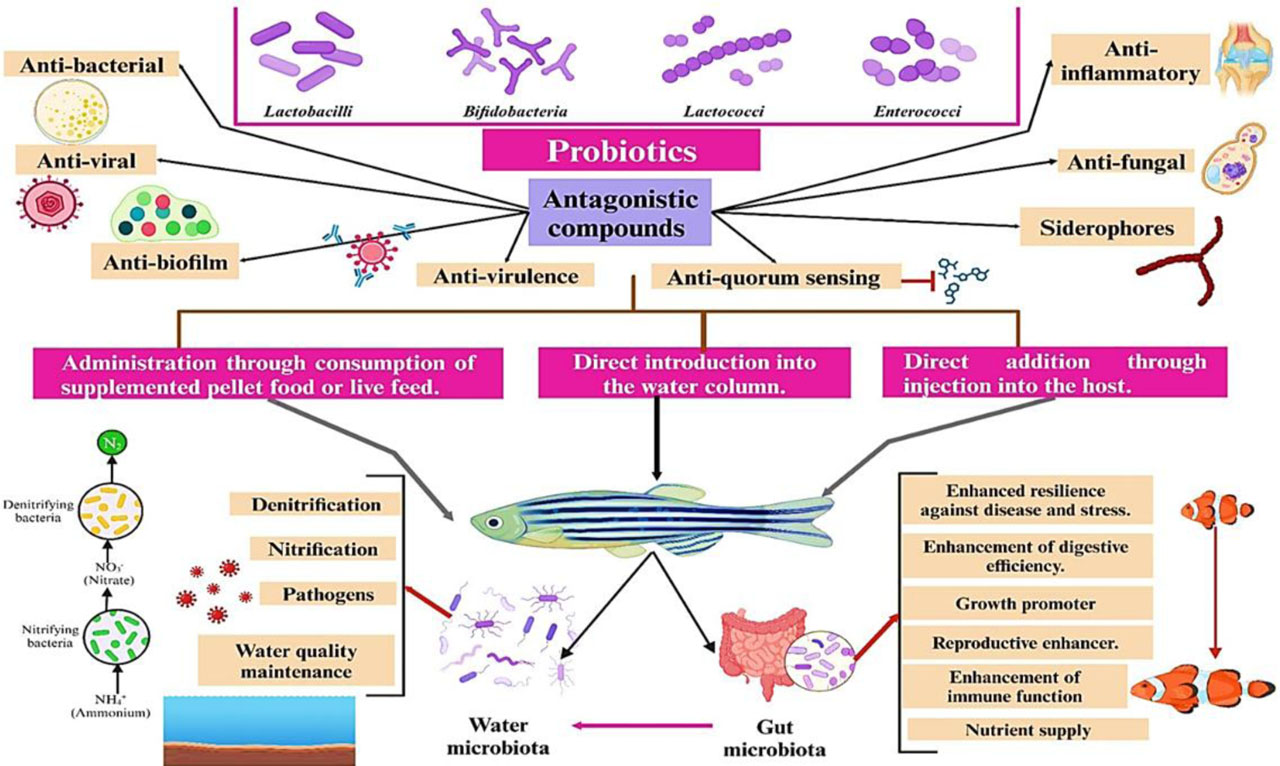
Figure 1.
The biological basis and action of probiotics in aquaculture: improving environmental conditions and fish performance. The image explores the application of various probiotic microorganisms in aquaculture systems. It delves into the specific biological characteristics of these beneficial microbes and meticulously describes the diverse mechanisms by which they improve the aquaculture environment. Furthermore, it examines how these probiotic actions translate into enhanced fish performance, encompassing growth rate, disease resistance, feed utilization, and overall health. Understanding these biological features and modes of action is crucial for effectively implementing probiotics in sustainable aquaculture practices.
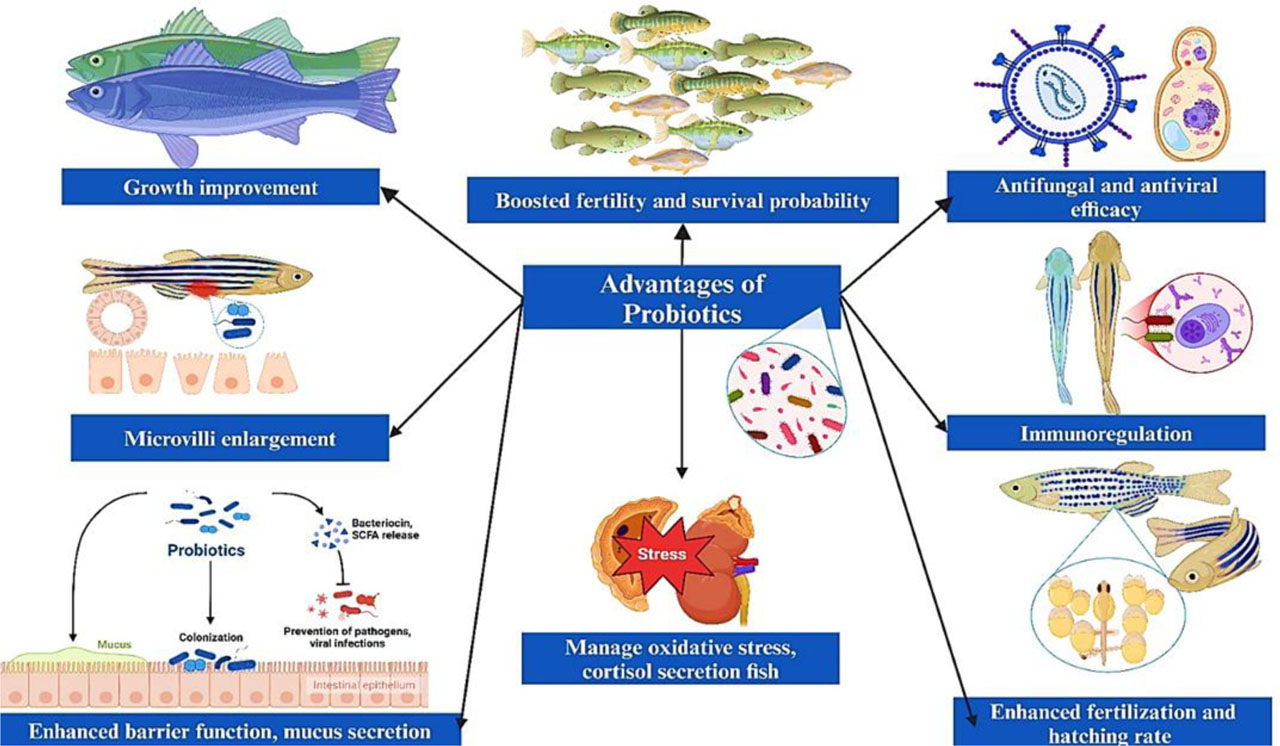
Figure 2.
Schematic representation of how probiotics benefit aquaculture. Probiotics enhance body weight and digestion by increasing microvillar surface area. They boost stress tolerance by secreting antioxidative enzymes and stimulate immunity by increasing immunoglobulin production. Furthermore, probiotics contribute to better fecundity rates and improve water quality. Crucially, they downregulate the colonization of pathogenic bacteria in the gastrointestinal tract and exhibit antiviral and antifungal activities, promoting a healthier aquatic environment and improved organism performance.
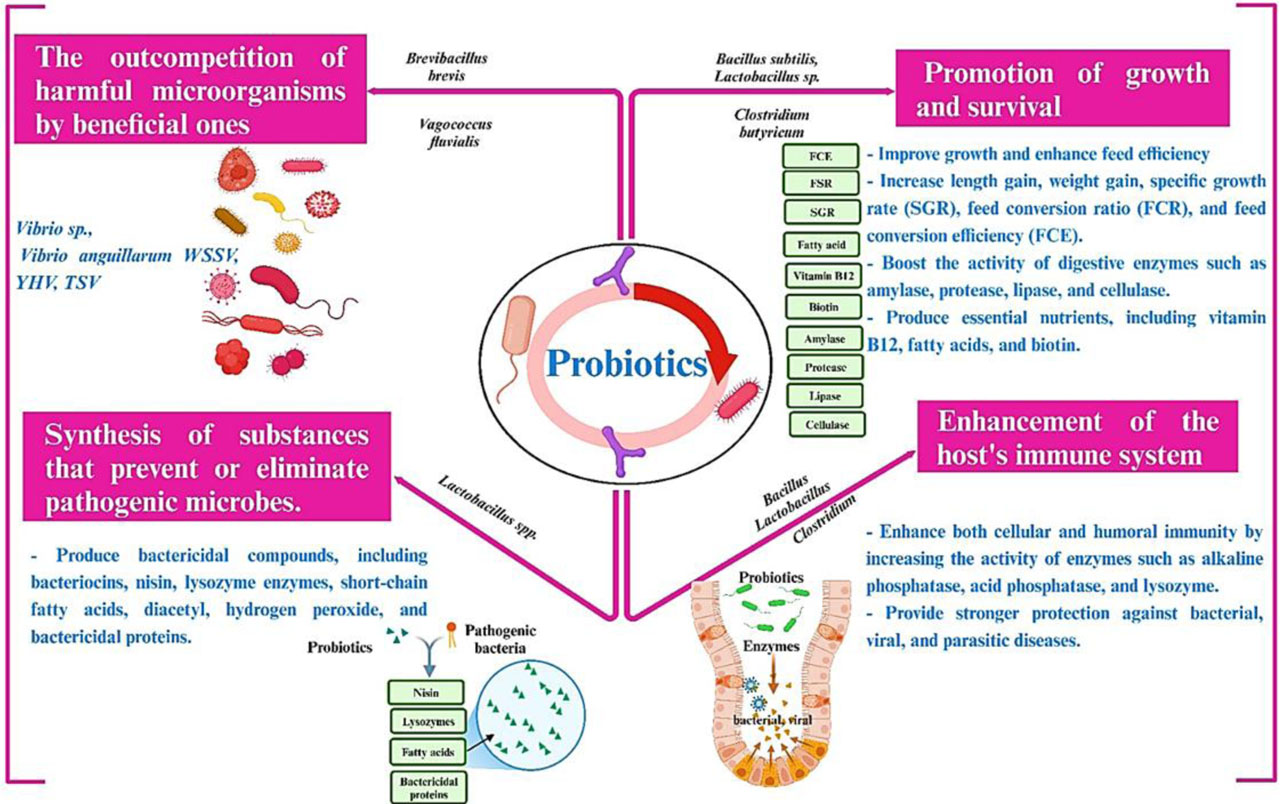
Figure 3.
Probiotic microorganisms benefit shellfish through several key mechanisms. Firstly, they competitively exclude pathogens such as Vibrio species and viruses (white spot syndrome virus, yellow head virus, Taura syndrome virus). Secondly, probiotics play a crucial role in developing the shellfish immune system, enhancing alkaline and acid phosphatase activities, and providing broad protection against bacterial, viral, and parasitic infections. Furthermore, probiotics produce antimicrobial substances, including bacteriocins, nisin, lysozyme enzymes, and bactericidal proteins. Lastly, genera like Bacillus, Lactobacillus, and Clostridium improve shellfish growth and survival by enhancing feed utilization, increasing digestive enzyme activity, and producing essential nutrients.
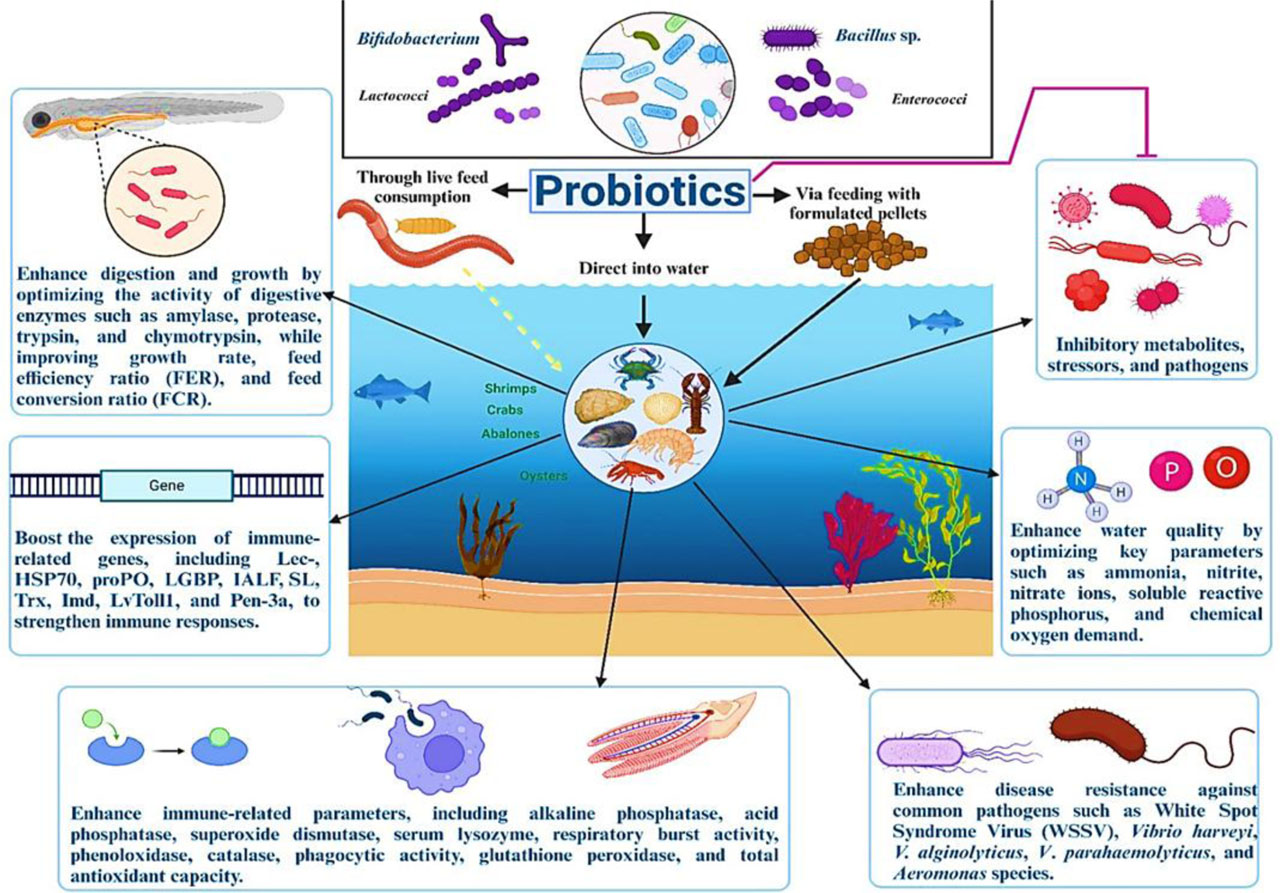
Figure 4.
Probiotic application, either via feed or direct water introduction, positively influences cultured shellfish. Various probiotic genera, including Aeromonas, Bacillus, Lactobacillus, and Clostridium, enhance shellfish digestion and growth. Furthermore, probiotic administration upregulates immune-related genes and improves overall immune parameters in shellfish. Beyond direct effects on the host, probiotics contribute to improved water quality by facilitating the removal of toxic substances and bolstering shellfish resistance against numerous bacterial and viral pathogens.