
Aquaculture is regarded as the targeted and controlled rearing of aquatic animals for human consumption (Song and Dixon, 2020; Mizuta et al., 2023). Due to the increasing rate of population growth worldwide and the lack of a consistent and dependable food supply (Pratheepa and Sukumaran, 2014; Eyo and Ivon, 2017; Eyo and Akanse, 2018), aquaculture has become a significant and rapidly expanding industry, supplying most of the world’s demand for animal protein (Ahmad et al., 2021; FAO, 2024), creating new job opportunities and improving a community’s socioeconomic standings (Araújo et al., 2015). On the other hand, along with a growing population the need for maintaining food security and long-term sustainability of livelihoods in aquaculture also acquires great relevance. In this sense, aquaculture methods that encourage expansion, divergence, and amplification must be used to attain higher yields, decrease animals’ illnesses rate and increase productivity (Martínez Cruz et al., 2012). Despite the upward trend, aquaculture expansion has faced numerous challenges, with disease as the main limiting factor (Kari et al., 2023). Both wild and farmed fish, indeed, are yearly decimated by bacterial illnesses (mainly caused by Aeromonas, Flavobacterium, Pseudomonas, Vibrio and Yersinia species) (Chauhan and Singh, 2019 a; Farag et al., 2022, 2023; Mawed et al., 2022), thus negatively impacting the local population’s economic and social circumstances as well as the economies of other countries (Hai, 2015). In this sense, antimicrobials, commonly used to treat or prevent such issues, have faced setbacks due to the increasing rate of resistance and residue accumulation, prompting stricter controls in many countries to counter this trend and protect public health (Martínez Cruz et al., 2012; Anand et al., 2023; Milijasevic et al., 2024).
Therefore, according also to One Health concept, environmentally friendly approaches, such as the use of probiotics, are extremely important to prevent or maintain aquatic animals’ health, reduce the spread of antimicrobial resistance and, at the same time, improve aqua-culture production (Verschuere et al., 2000; El-Saadony et al., 2021; Alagawany et al., 2020; Milijasevic et al., 2024). Probiotics are widely acknowledged as powerful microorganisms that significantly impact gut health by positively modulating gut microbiome and consequently immune system and disease outcome in humans and animals (Fuller, 1989; Nayak, 2010; Di Cerbo et al., 2013 a, b, 2016; Di Cerbo and Palmieri, 2013, 2015; Mangiaterra et al., 2022). Their beneficial effects range from lowering stress and illness, to controlling intestinal flora, to improving immunity and digestion, to promoting nutrition, and aiding in bioremediation (Helmy et al., 2019). For this reason, probiotics have been recently introduced in aquaculture with satisfactory results in terms of infection control (e.g. vibriosis, furunculosis, edwardsiellosis, coldwater disease or enteric redmouth disease), improved animal development, nutritional value, rate of spawning and hatching (Chauhan and Singh, 2019 b, Hasan et al., 2020).
According to the literature, the main positive effects ascribed to the use of probiotics in the aquaculture (Hussain et al., 2018, 2021; Shahzad et al., 2023; Riaz et al., 2024, 2025; Mukhtar et al., 2025) are: 1) water quality enhancement, by promoting the breakdown of organic waste and lowering dangerous ammonia and nitrate levels (Manam, 2023); 2) disease prevention, by suppressing the harmful on fall of bacteria, fungi, invertebrates and other fish (Chattaraj et al., 2022); 3) improvement of digestion and nutrient absorption, by mitigating the adverse effects of stress through the modulation of gut microbiota and the enhancement of proteases, amylases and lipases performance (Amenyogbe et al., 2024); 4) beneficial biofilm development, by creating healthy biofilms on any kind of surfaces of the aquatic environment able to displace dangerous microorganisms and maintain a healthy ecology (Tomé et al., 2023); 5) growth promotion, by improving hematobiochemical parameters and production of hormones (insulin-like growth factor 1 and growth hormone) (Ferdous et al., 2025), and are summarized in Figure 1.
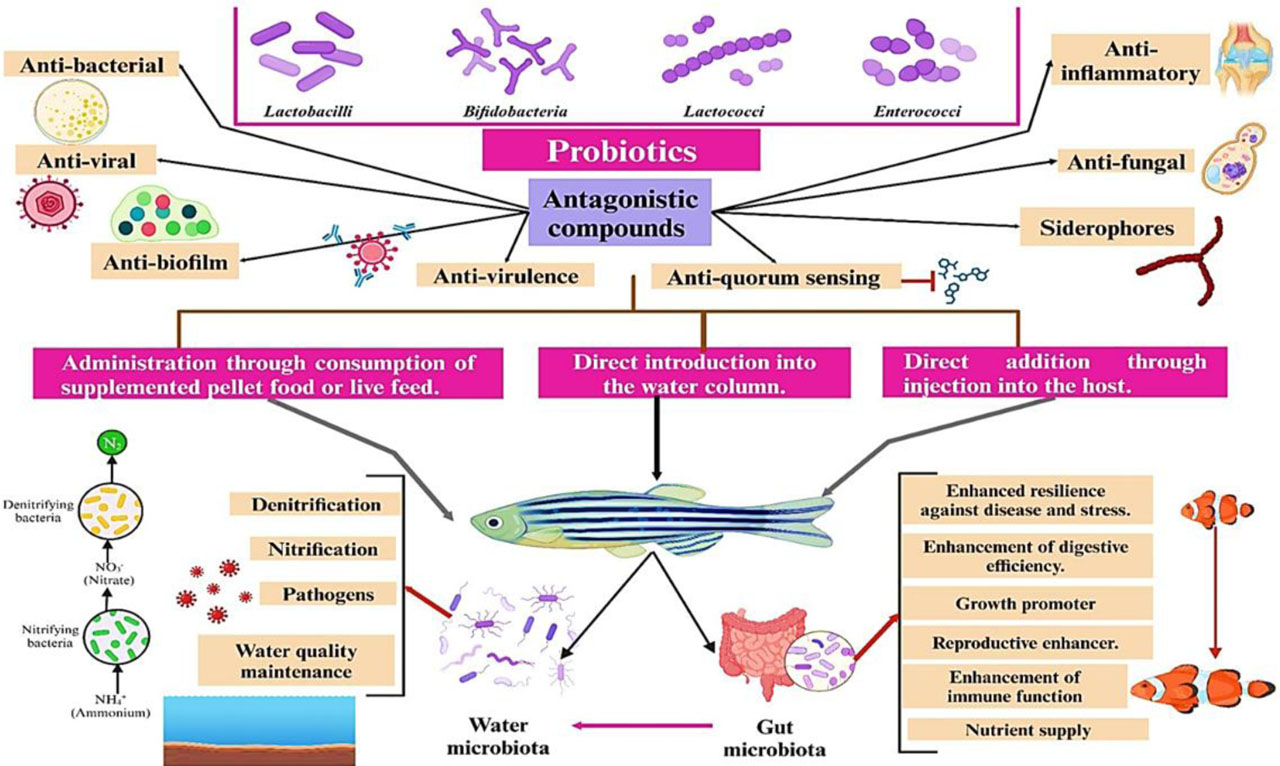
Figure 1.
The biological basis and action of probiotics in aquaculture: improving environmental conditions and fish performance. The image explores the application of various probiotic microorganisms in aquaculture systems. It delves into the specific biological characteristics of these beneficial microbes and meticulously describes the diverse mechanisms by which they improve the aquaculture environment. Furthermore, it examines how these probiotic actions translate into enhanced fish performance, encompassing growth rate, disease resistance, feed utilization, and overall health. Understanding these biological features and modes of action is crucial for effectively implementing probiotics in sustainable aquaculture practices.
Aim and searching criteria
As stated in the introduction, this review aims to offer important data about the importance of probiotics, the selection principles, the extensively known probiotics, their possible mode of action, how to administer them to aquatic life, the aquaculture production sector’s worth, and their future trends.
We searched Pubmed/Medline using the keywords “probiotics, action mechanisms, beneficial role, health benefits, novel applications of beneficial bacteria, immunity, fishes, growth, production, and gut health”. Papers selected from 1974 to 2025 were chosen based on their relevance to the topic.
Probiotic definition
In 1907, Dr. Elie Metchnikoff started to recognize the advantageous impact of microbes on farmers who consumed milk containing bacteria, noting that dependence on bacteria was a crucial element. In 1965, Lilly and Stillwell introduced the word ‘probiotic’ as a modification of the original term ‘probiotika’ derived from the Greek words ‘pro’, which means “favor”, and ‘bios’, which means “life” (Gismondo et al., 1999). Later, in 1974, Parker used the term probiotics to describe “microbial feed”, referring to probiotics as “microorganisms as well as chemicals that help preserving a healthy equilibrium of microbes in the gut” (Parker, 1974). The concept was then widened to animals by Fuller (1989), who defined probiotics as “live microbial food supply” able to enhance the balance of organisms in the intestines of host animals, resulting in benefits for them (Fuller, 1989). More than a decade later, Schrezenmeir and de Vrese (2001) specified that a probiotic was “a substance that contained a specific type of living microorganism in large enough quantity to have a good impact on the microorganisms in a specific part of the body, leading to useful properties on the health of the individual” (Schrezenmeir and de Vrese, 2001), thus firstly ascribing a selective role of each strain for each body district. The concept was resumed by Merrifield et al. (2010), who translated it to the aquaculture as “microbial cells” ingested through the diet or water used in fish farming and that benefit the fish farmer, host fish, or fish consumer, via enhancing the microbial equilibrium of the fish (Merrifield et al., 2010). Conclusively, in 2022, the FAO confirmed the definition of probiotics as “living microorganisms that can enhance the host’s health when given correctly”, but restricted the circle to Lactobacillus and Bifidobacterium strains that, besides being administered in an adequate dose, were able to survive the passage through the digestive tract and grow in the presence of bile in the intestines (FAO/WHO 2022).
Encapsulated and feed-added probiotics
Probiotics intended for use in the gastrointestinal tract (GIT) can improve the composition of the GIT-favorable bacteria community and can be administered orally or in conjunction with dietary changes (Ferdous et al., 2025). In aquaculture, when regularly added to fish diets, probiotics demonstrated increased digestion, proper nutrient uptake into tissues, augmented growth, enhanced immune response, and higher survival rates (Bazar et al., 2021).
Provided that it is vital to check their viability before administration, probiotics can be administered directly via water routine or feed additives, either singularly or in combination (Hai, 2015; Jahangiri and Esteban, 2018). The open question is only related to their best “form”, i.e. live, killed or inactivated. Although heat-inactivated probiotics have been proposed as a valid alternative to live probiotics for stimulating innate immune parameters in fish, their use and persistence may cause unforeseen changes in the aquatic environment (Fachri et al., 2024). On the contrary, heat-killed probiotics demonstrated to confer less protection. For this reason, live probiotic encapsulation and mixing with feeding pellets is the most used delivery approach in modern aquaculture (Nageswara and Babu, 2006). Nevertheless, encapsulated microorganisms must be capable of withstanding storage conditions and continue to be viable and stable in aquatic animals’ gut (Irianto and Austin, 2002). According to Hasan et al (2020), there are at least 17 commercially available products which exploit the encapsulation technique of probiotics or herbal extracts in aquaculture (Hasan et al., 2020).
Probiotics in water
Probiotics added to water may be utilized in 2 equally effective forms, solid (e.g. powder) or liquid (e.g. suspensions or solutions), although solid forms have shown advantages in handling, storage, and transportation (Skjermo and Vadstein, 1999; Atmomarsono et al., 2022). Also, probiotics added to water can flourish in water because of their lower density, which allows them to use all the resources present, displace harmful bacteria and toxic phytoplankton (Prasad et al., 2003), bioremediate organic waste products (Bazar et al., 2021), and eventually improve the environment of fish species (Dawood et al., 2019; Ghosh, 2025). Beyond organic contaminants and toxins reduction, probiotics can even improve the larvae’s growth and survival in culture ponds, simplifying the water exchange and cleaning operations (Moriarty, 1998). Among acknowledged strains there are Gram-positive microbes (Lactobacillus, Lactococcus, Bacillus, and Streptomyces), Gram-negative microbes (Alteromonas, Enterobacter, Nitrosomonas, Nitrobacter, Pseudomonas, and Phaeobacter), bacteriophages (Podoviridae and Myoviridae) and yeasts (Saccharomyces, Debaryomyces, and Yarrowia) (Robertson et al., 2000; Hasan and Banerjee, 2020).
A thorough understanding of the best way to administer probiotics is essential for their use in aquaculture to increase their beneficial effects (Dawood and Koshio, 2016).
A study by Aly et al. (2008 a, b) found that Nile tilapia exhibited more bactericidal activity when given a combination of Bacillus subtilis and Lactobacillus acidophilus strains, compared to when only one strain was employed (Aly et al., 2008 a, b). Probiotics, usually in freeze-dried culture, are occasionally included in animal rations as a supplement. Occasionally, they might be mixed with fats (Ringø et al., 2020). Thermal-inactivated microorganisms were sometimes administered by oral route. Two instances of bacteria are Lactobacillus delbrueckii subsp. lactis and Bacillus subtilis (Salinas et al., 2005). In several studies, probiotics in capsule form were added to the live feed. One significant advantage of this approach is that the probiotic bacteria thrive and proliferate on the live feed. Consequently, delivering probiotics to the host through live feed is an effective method of administering probiotics (Hai, 2015). Various instances of live feed using encapsulated probiotics, such as rotifer, copepods, and Artemia spp. (Chauhan and Singh, 2019 a), were documented. Spore-producing probiotic bacteria are used in some circumstances because they can aid microbes survive in harsh circumstances such as extreme UV light, heat, drought, and inadequate nourishment (Elisashvili et al., 2019). To change the microbial configuration and enhance the quality of the water and sediments, probiotic bacteria could be added straight to the culture water. For instance, adding probiotic (Aerobacter spp., Nitrobacter spp., S. cerevisiae, and Bacillus species) to the water in ponds and tanks enhanced water quality and improved the health of the cultured organisms while maintaining the sustainability of aquaculture ecosystems (Venkateswara, 2007; Elchelwar et al., 2020). Cultured organisms’ health was also achieved via intramuscular or intraperitoneal injection, where the application of Enterobacter sp. strain C6-6, either formalin killed or live, significantly increased antibody titers against F. psychrophilum (LaPatra et al., 2014).
When probiotic M. luteus was introduced into O. niloticus fish, the death rate was approximately 25%, but when Pseudomonas was injected, the mortality rate increased up to 90% (Yassir et al., 2002).
Apart from the form (live, killed or attenuated), modality (singularly or combined), the strains, the route of administration (encapsulated or free), the factors that can heavily affect their efficacy are the dosage, duration and frequency of treatment. In fact, probiotic use for a long period has been demonstrated to reduce immunity (Chauhan and Singh, 2019 b), while their intake for a short time resulted in a transient beneficial effect for the gut micro-biota in Atlantic cod larvae Gadus morhua L (Skjermo et al., 2015). Another research from Guo et al. (2009), has demonstrated that applying probiotics daily is more effective than using them only 3 times 7 days throughout the culture duration (Elisashvili et al., 2019).
In Figure 2, a schematic representation of how probiotics can benefit aquaculture is reported.
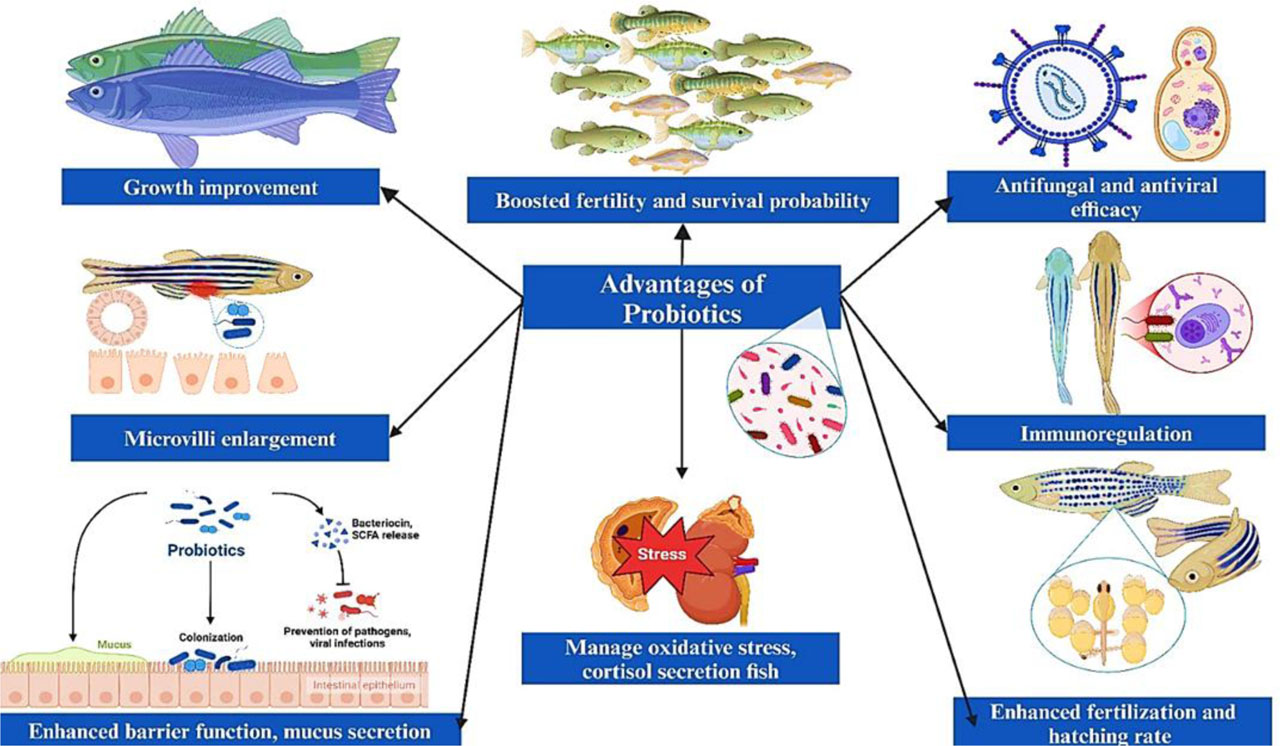
Figure 2.
Schematic representation of how probiotics benefit aquaculture. Probiotics enhance body weight and digestion by increasing microvillar surface area. They boost stress tolerance by secreting antioxidative enzymes and stimulate immunity by increasing immunoglobulin production. Furthermore, probiotics contribute to better fecundity rates and improve water quality. Crucially, they downregulate the colonization of pathogenic bacteria in the gastrointestinal tract and exhibit antiviral and antifungal activities, promoting a healthier aquatic environment and improved organism performance.
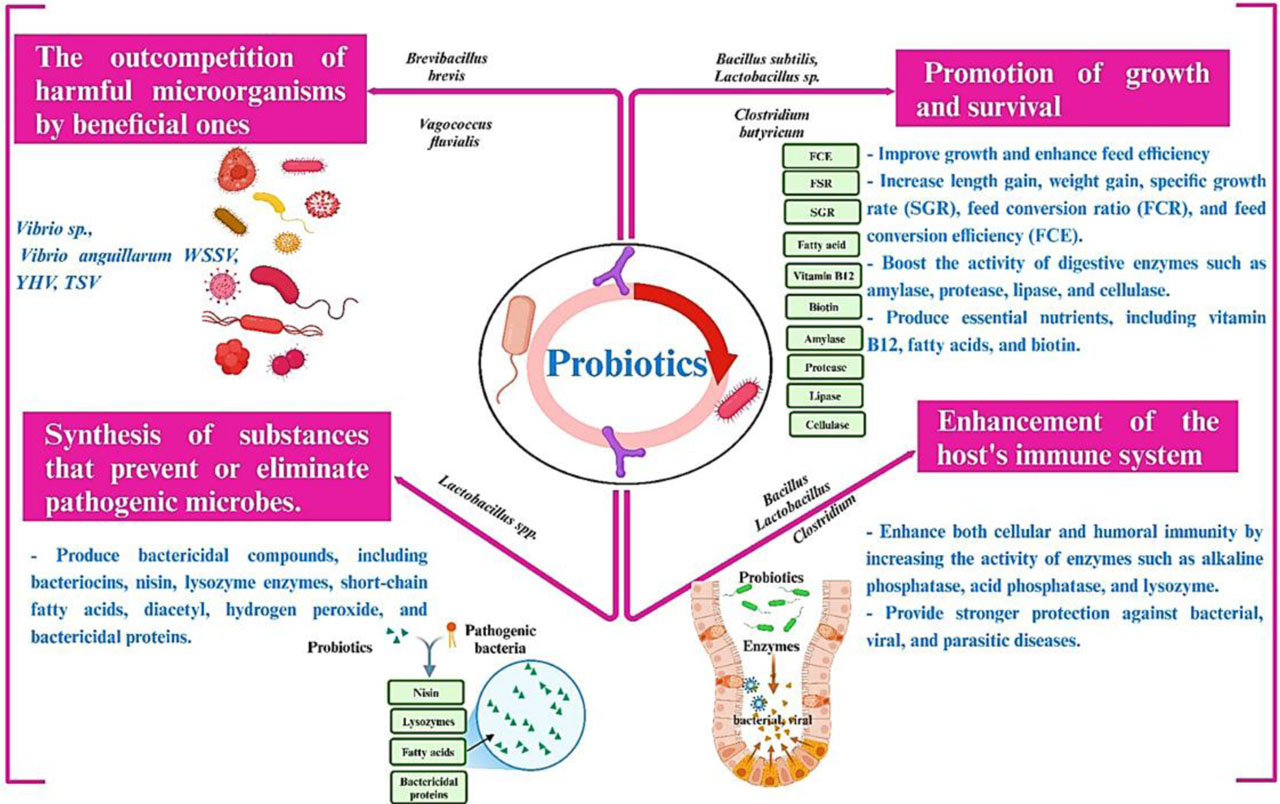
Figure 3.
Probiotic microorganisms benefit shellfish through several key mechanisms. Firstly, they competitively exclude pathogens such as Vibrio species and viruses (white spot syndrome virus, yellow head virus, Taura syndrome virus). Secondly, probiotics play a crucial role in developing the shellfish immune system, enhancing alkaline and acid phosphatase activities, and providing broad protection against bacterial, viral, and parasitic infections. Furthermore, probiotics produce antimicrobial substances, including bacteriocins, nisin, lysozyme enzymes, and bactericidal proteins. Lastly, genera like Bacillus, Lactobacillus, and Clostridium improve shellfish growth and survival by enhancing feed utilization, increasing digestive enzyme activity, and producing essential nutrients.
Probiotics’ action mechanisms
As described in Figure 3, probiotics have different modes of action. Probiotics’ efficacy relies heavily on their mechanism of action (Mazziotta et al., 2023). Probiotics have several ways by which they protect the host in the aquatic surroundings, as discussed in reviews by Simón et al. (2021). Oelschlaeger et al. (2010) classified these procedures into 3 primary kinds: (a) mechanisms that safeguard the host via regulating its immunity, (b) mechanisms that hinder the multiplication of harmful pathogens by releasing different inhibitory antimicrobial impacts, and (c) mechanisms that neutralize the poisonous byproducts of the pathogen, thus detoxifying the host.
Pathogens’ competitive exclusion
Disease is caused by pathogenic bacteria that mainly attach to the intestinal mucosa to establish and spread within the host (Adams, 2010). By competing with dangerous microorganisms for adhesion regions, probiotics may be able to stop their colonization. A frequent term for this phenomenon is competitive exclusion. Probiotics form a physical barrier that prevents infections from sticking to the host’s gastrointestinal system when they bind to the adhesion sites (Javanshir et al., 2021). Sparus aurata isolates, which may have probiotic properties, were shown to interfere with Listonella anguillarum, the pathogen’s ability to adhere to the mucosa. The scientists noted a reduction in the mortalities of fish ingesting a probiotic-supplemented diet (Chabrillón et al., 2006). Puntius conchonius fish, when fed a diet supplemented with probiotic bacteria Bifidobacterium infantis, B. coagulans, and B. mesentericus, had a decrease in harmful bacteria in their digestive system (Divya et al., 2012). The bacteria’s ability to adhere to mucous membranes is improved by the production of MUB, or mucus-binding proteins, by Lactobacillus. Bermudez-Brito et al. (2012) found that lipoteichoic acids, hydrophobic and electrostatic interactions, and other factors may affect how probiotics bind to adhesion structures. A new study by Fonseca et al. (2021) demonstrated that various strains of Lactobacillus effectively prevented the attachment of harmful bacteria, like Salmonella and E. coli, to HT-29 and Caco-2 cells (Fonseca et al., 2021).
Antimicrobial activity
Numerous antimicrobial materials are formed by probiotics, such as bacteriocin, antibiotics, siderophores, lysozymes, organic acids, proteases that alter pH, and volatile fatty acids (FAs) (Ahansaz et al., 2023). Because probiotics produce compounds that destroy dangerous bacteria, they can hinder their growth and spread (Chauhan and Singh, 2019 b).
The researchers discovered that a bacteriocin obtained from L. murinus (AU06) can hinder the growth of fish pathogens such as Micrococcus spp., S. aureus, and E. coli (Elayaraja et al., 2014). According to another study by Ringø et al. (2018), numerous strains of lactic acid bacteria (LAB) taken from finfish showed the ability to kill bacteria that cause diseases in fin-fish. The B. velezensis strain JW exhibited bacteriocin activities versus many harmful bacteria, including A. hydrophila, L. garvieae, and V. parahemolyticus, commonly challenging fish (Yi et al., 2018). Likewise, the bacterium B. velezensis (LF01) has been discovered to suppress the growth of S. agalactiae, which causes the disease streptococcosis, in the fish species O. niloticus. A longer shelf life, resistance to proteolytic enzymes, thermostability, pH and UV stability, and antibacterial activity against a range of fish illnesses were all seen in the released antagonistic compounds (Zhang et al., 2019).
Various strategies were investigated, and Bacillus probiotics were used to impart disease resistance against fish illnesses, including lytic enzyme secretion, antibiotic secretion, bacteriocin synthesis, and competitive inhibition (Kuebutornye et al., 2020). The antiviral and antifungal mechanisms of probiotics are poorly documented in research investigations. Paralichthys olivaceus, using Lactobacil, either by itself or in conjunction with Sporolac, can boost immunity or offer defense against the virus that causes lymphocyte illness (Harikrishnan et al., 2010). Liu et al. (2012) noted that the introduction of B. subtilis E20 into Epinephelus coioides enhanced infection resistance and immunization against iridovirus. Lakshmi et al. (2013) proposed that probiotics help shrimp become more disease-resistant and boost their immune system. Using Bacillus sp. enhanced the immunity and tolerance of Oreochromis species to tilapia lake virus disease (Waiyamitra et al., 2020).
The study conducted by Nurhajati et al. (2012) has shown that Pangasius hypophthalmus (Sauvage) infection by the oomycete pathogen Saprolegnia parasitica A3 is successfully reduced by L. plantarum FNCC 226 (Nurhajati et al., 2012). In aquaculture, Bacillus species can control fungal fish infections by producing antibiotics with antifungal characteristics and emitting lytic enzymes (Santos et al., 2021). Water is ideal for the rapid growth of dangerous bacteria in aquatic organisms. Uncontrolled consumption and a large concentration of cultural activities make the problem worse. Hemorrhagic septicemia, edwardsiellosis, gill infection, renal disease, pop eye, dropsy, vibriosis, fin rot, and tail rot were among the frequent fish illnesses caused by pathogenic bacteria. Vibrio spp. and Aeromonas spp. are gram-negative fish pathogens known to cause vibriosis and furunculosis. Globally, these illnesses cause notable mortality rates in farmed and wild fish species. Disease-related mortality prevents ornamental fish farming from growing (Allameh et al., 2017). Probiotics offer a dependable and effective way to get good bacteria that do not damage the host species. Fish digestive system infections have been effectively fought by probiotics derived from various freshwater-farmed fish. They accomplish this by creating compounds that either eradicate or stop the spread of infections (Sihag and Sharma, 2012). In addition, they can generate H2O2, lysozymes, proteases, and bacteriocins.
Furthermore, by increasing the gastrointestinal tract’s acidity by generating organic acids involving propionic acid, lactic acid, and butyric acid, many probiotics prevent the growth of dangerous microbes (Zorriehzahra et al., 2016). The study by Zhou et al. (2010) demonstrated that L. lactis and Leuconostoc mesenteroides can prevent the growth of pathogenic bacteria in tilapia, specifically Aeromonas salmonicida and Y. ruckeri. The total coliforms, motile aeromonads, and pseudomonads decreased after the delivery of Bacillus subtilis (Newaj-Fyzul and Austin, 2015). Moosavi-Nasab et al. (2014) discovered that several types of lactobacilli found in Scomberomorus commerson could inhibit the growth of Listeria innocua. Lactobacillus P21 reduced the number of pseudomonads, aeromonads, lactose non-fermenters, and lactose fermenters, as well as the total plate counts and total MRS agar numbers in GIT when it was added to swordtail culture (Xiphophorus helleri) incubation. This was noted by Abraham et al. (2007) when compared to the control group.
Pathogens’ inhibition
An ongoing source of nutrients is essential for probiotics and fish pathogens to survive, thrive, and proliferate (Kalita et al., 2023). By exploiting the resources and energy available in the aquaculture habitat, probiotics have demonstrated the ability to outcompete these harmful microorganisms. Ferric-iron chelators, known as siderophores, solubilize or remove iron from various complexes to facilitate microbial nutrition (Khan et al., 2018). Consequently, probiotics synthesizing siderophores may be probiotics for iron sequestration. P. fluorescens suppressed the proliferation of A. salmonicida through competition for iron resources (Smith and Davey, 1993). P. fluorescens were shown to competitively suppress V. anguillarum multiplication under diminished iron availability conditions (Gram et al., 1999). It was posited that B. pseudolongum and B. kashiwanohense may serve as viable probiotics. By competing for iron, these bacteria can impede the proliferation of intestinal pathogens like S. typhimurium and E. coli (Vazquez-Gutierrez et al., 2016).
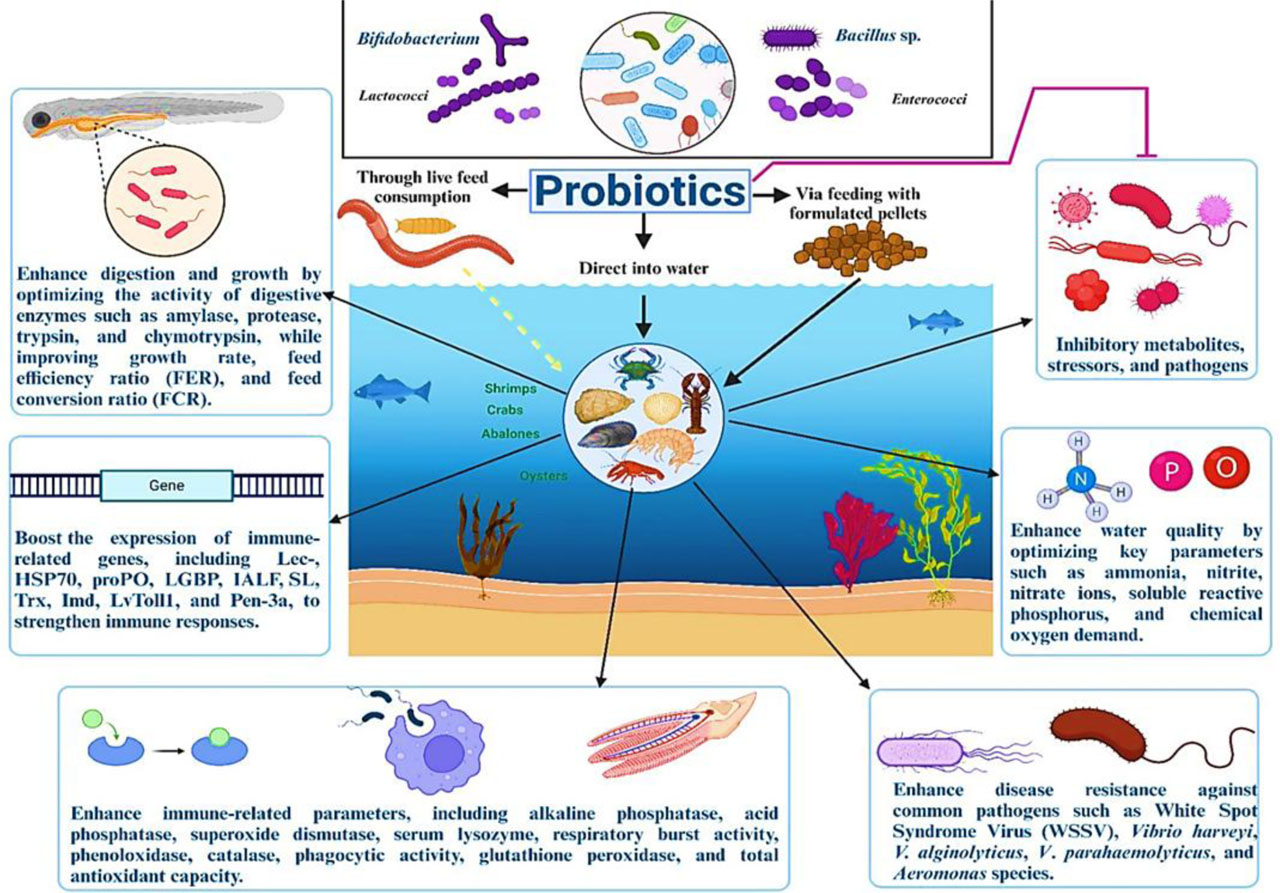
Figure 4.
Probiotic application, either via feed or direct water introduction, positively influences cultured shellfish. Various probiotic genera, including Aeromonas, Bacillus, Lactobacillus, and Clostridium, enhance shellfish digestion and growth. Furthermore, probiotic administration upregulates immune-related genes and improves overall immune parameters in shellfish. Beyond direct effects on the host, probiotics contribute to improved water quality by facilitating the removal of toxic substances and bolstering shellfish resistance against numerous bacterial and viral pathogens.
Water quality improvement
Probiotics have a significant effect on improving the quality of water (Figure 4). Conditions abundant in organic waste from fish feed and excrement in aquaculture systems are ideal for the growth control of aquatic diseases. Pathogen growth is aided by the accumulation of nitrogenous waste (nitrite, nitrate, and ammonia) produced during the nitrogen cycle because of the breakdown of organic molecules (Hagenbuch, 2007). Maintaining the water quality is essential to stop the spread of illnesses since fish are constantly subjected to aquatic circumstances. Probiotics offer a viable and environmentally friendly substitute for chemical treatments in regulating agricultural water quality (Amenyogbe, 2023). Applying an augmenter during incubation had an impact on the nitrification as well as denitrification methods in the cultured tanks of live-bearing fish and caused a noticeable drop in the concentration of dissolved organic matter. This process decreased the overall coliform count and the number of motile aeromonads (Ghosh et al., 2008).
Adding photosynthetic microbes improves water quality by eliminating toxic metabolites and byproducts (Liu et al., 2022). The breakdown of organic debris, dead plankton, and food waste into inorganic salts such as CO2, phosphates, and nitrates is aided by heterotrophic probiotic bacteria. In addition, this inactivates the pathogens’ multiplication and assists the sustainable development of photosynthetic microbes’ microalgae, and aquaculture fish (Ibrahem, 2015). Incorporating commercially accessible probiotics from B. subtilis and B. licheniformis into Nile tilapia feed enhances dissolved oxygen, reduces ammonia content, and stabilizes pH levels (El-Haroun et al., 2006). Cyprinus carpio was the source of several Bacillus strains that inhibited the multiplication of A. hydrophila, reducing the levels of phosphate, ammonia, and nitrite in cultured ornamental fish and improving the water quality (Lalloo et al., 2007). It was found that 27 bacterial strains, through analysis, can improve the water quality in fishponds by lowering nitrate and nitrite. By removing pollutants and pathogens, probiotics are crucial for maintaining water quality (Wang et al., 2008).
Among the harmful pollutants that threaten the aquatic ecosystem are suspended matter, organic chemicals, nitrogen compounds, phosphates, heavy metals, and other substances found in aquaculture effluents (Hlordzi et al., 2020). Using probiotics in aquarium enhances water status. Zhang et al. (2011) demonstrated that B. licheniformis (X3914) considerably decreased waste-water’s ammonia, wasted proteins, and starch levels. In fishponds supplied with Nitrobactern and Nitrosomonas spp., Padmavathi et al. (2012) showed decreased levels of phosphate and nitrogenous chemicals. Elsabagh et al. (2018) found that using the commercial combination of various Bacillus species Sano-life PRO-F probiotic, improved the water quality in tilapia (O. niloticus) aqua-culture systems. Ammonia concentrations were lowered, and pH levels were raised to achieve this. Ammonia concentrations were reduced when B. subtilis AHAHBS001 was added to water (Kewcharoen et al., 2019). Numerous factors, such as pH, transparency, dissolved O2, chemical O2 requirement, alkalinity, and heavy metals, have been demonstrated to be regulated by Bacillus species in aquaculture to preserve water quality (Hlordzi et al., 2020).
Quorum sensing interruption
Based on cell density, bacteria can alter gene expression thanks to quorum sensing (QS). Chemical signaling molecules, described as auto-inducers, are synthesized and secreted by bacteria to communicate with one another (Miller and Bassler, 2001). Quorum sensing regulates the emission of virulence factors, biofilm development, and sporulation, all of which significantly impact the pathogenicity of aquaculture diseases. Quorum sensing disruption is, therefore, a successful method for avoiding bacterial infections in aquariums (Zhao et al., 2015). Gram-negative bacteria secrete the most common type of auto-inducers, N-acyl homoserine lactones (AHLs). Fish illness management can employ the breakdown of AHLs as an anti-infective tactic since it has been shown to disrupt quorum sensing (Chu et al., 2014). The QSI-1 quorum quencher derived from Bacillus spp. inhibited biofilm production and reduced the virulence of the zebrafish infection with A. hydrophila (Chu et al., 2014). Zhou et al. (2016) found that by breaking down AHLs, the quorum quenching enzyme QSI-1 decreased A. hydrophila. They considerably altered the gut microbiota of goldfish. Several Bacillus species’ QQ enzymes were discovered and demonstrated efficacy against various bacterial illnesses in aquaculture (Ghanei-Motlagh et al., 2019). In a separate study, E. faecium QQ12, isolated from O. niloticus, destroyed AHLs and inhibited the virulence of A. hydrophila (Vadassery and Pillai, 2020).
Host immunity immunomodulation
Safeguarding medical care is one of the best methods for controlling aquaculture operations sustainably, which is to consider dietary considerations (Aly and Fathi, 2024). Many studies have demonstrated the impact of rationing on regulating fish immunity (Lazado et al., 2015). Probiotics, prebiotics, and immunostimulants have all been studied for their potential to improve health in aquaculture. Feed additives affect fish immune systems in multiple ways. To increase disease resistance during pathogenic infections in fish, they are essential for boosting mucosal immunity and both specific and non-specific immune responses (Ibrahem, 2015). Gatesoupe (2008) revealed that probiotics stimulate the piscine complement system and improve cellular and humoral immunity measures. Probiotics can boost immunity in the digestive tract by dramatically boosting the growth of immunoglobulin and acidophilic granulocytes (Vásquez-Piñeros et al., 2012). Adding probiotic P. aeruginosa VSG-2 to fish feed significantly increases lysozymes, IgM, other complement pathway activity, and macrophage function levels. Additionally, it leads to improved illness survival (Chauhan and Singh, 2019 a). In Scophthalmus maximus, the probiotic bacterium L. lactis enhanced immunological activities (Villamil et al., 2002). L. delbrueckii ssp. delbrueckii, when supplied with live carriers such as rotifers and Artemia, elevated the T cell levels in the stomach of sea bass (Picchietti et al., 2009). In Oncorhynchus mykiss, increased activities of GIT mucosal lysozymes, as well as phagocytic activities of mucosal leukocytes were noted with C. maltaromaticum, and C. divergens, as well as L. lactis, L. mesenteroides and L. sakei, respectively (Ibrahem, 2015).
Probiotics increase the immunity of fish by promoting the release of TNF, interleukins, cytokines, chemokines, and interferons from various immune cells (Mokhtar et al., 2023). Probiotics have been shown to improve the immune response by increasing natural killer cell cytotoxicity, phagocytosing macrophages, and interacting with various immune cells, such as Treg, enterocytes, Th1, and dendritic Th2 cells (Simón et al., 2021). Keeping the host from several infectious digestive disorders induced by infectious agents in aquaculture is crucial. Innate and adaptive immunity in fish have been demonstrated to be enhanced via probiotics. Probiotic additions to O. niloticus aquaculture, such as Rhodopseudomonas palustris G06 and B. coagulans strain B16, enhanced growth and respiratory burst immunity (Zhou et al., 2010). The amalgamation of L. plantarum and L. lactis increased the innate immunity of Paralichthys olivaceus (Beck et al., 2015).
Javanese carp, or Puntius gonionotus, showed increased antibody levels after exposure to the pathogen A. hydrophila and fed a diet containing E. faecalis (Allameh et al., 2017). Immunoglobulin levels were considerably raised, and resistance to infections by A. hydrophila and P. aeruginosa was enhanced when young common carp were supplied with a diet high in L. acidophilus (Adeshina, 2018). Sewaka et al. (2019) showed that red tilapia fish provided a feed of synbiotics (Helianthus tuberosus and L. rhamnosus) had a higher count of goblet cells when subjected to A. veronii. Tachibana et al. (2020) reported that probiotics might contribute to increased mucosal immunity. Immunity was enhanced in tilapia by giving them E. faecium probiotics at intervals of 14 days.
Significant improvement in the nonspecific enzymatic activities (e.g., lysozyme and myeloperoxidase) was detected from fish fed the B. subtilis (0.0, 0.5, and 1.0 × 10⁷ CFU/g diet) compared to the control diet (P<0.05). Since, IgM expressions were recorded significantly higher for fish fed the B. subtilis diets compared to those of fish fed the other diets (P<0.05) (Lee et al., 2018). In the same context, dietary B. subtilis with fructooligosaccharide and B. licheniformis with mannan oligosaccharide could have beneficial impacts on intestinal morphology, and immune-related gene expression in Japanese eel (Park et al., 2020). On the other hand, dietary B. subtilis and fructooligosaccharide had no synergistic effect on improving specific growth rate and disease resistance of sea cucumber (Sun et al., 2012).
Probiotics and aquaculture
A crucial area of the food industry, aquaculture is expanding rapidly. Its susceptibility to many diseases, however, limits its productivity. A rising concern is the use of pesticides and antibiotics to treat these diseases, which harm aquatic life and its environment. As an alternative method of disease prevention, the usage of probiotics in aquaculture has grown significantly (Ai et al., 2011). They may also help fish and other aquatic animals grow more efficiently and improve their health (Torrecillas et al., 2018; Shehzad et al., 2022, 2023; Pawar et al., 2023; Riaz, 2023). The usage of probiotics in aquaculture has several advantages, which will be examined in the subsequent sections.
Water quality preservation
In aquaculture, improving water quality is essential to successfully cultivating shrimp and fish (Verma et al., 2022). Aquatic diseases proliferate when there are a lot of organic components in the water, which come from phytoplankton, feed, and waste (Figure 4). The decomposition of organic substances is natural. Nevertheless, a surplus of organic matter that exceeds the capacity of natural decomposition may exist in aquaculture production systems. Because they are essential to the breakdown of organic compounds in aquaculture, probiotics are described as being used to improve water quality (Qiu et al., 2023). Farming ponds include large amounts of probiotics because they are especially good at turning organic material into CO2. Fish and other aquatic life benefit from this process, which also lowers the amount of organic carbon and raises water quality (Cao et al., 2024).
Survival and growth rate increase
Numerous research studies have documented the use of probiotics in aquariums to support the multiplication of different species. In an experiment from Planas et al. (2004), it was found that the rotifer Brachionus plicatilis development is enhanced by adding LAB. Furthermore, it was noted that the greatest results are obtained when L. casei ssp. casei, L. lactis ssp. lactis, and P. acidilactici were added. Allameh et al. (2016) discovered that using E. faecalis resulted in a greater weight gain in Javanese carp than in the control group. A study by Hamdan et al. (2016) discovered that Nile tilapia, when fed with Lactobacillus sp., saw an elevation in body weight as well as total protein and crude lipid contents. The growth and survival rates of X. maculates, X. helleri, and Poecilia reticulata were enhanced when their feed was supplied with Streptomyces spp. and B. subtilis (Tan et al., 2016; Banerjee and Ray, 2017).
Nutrient utilization, digestion, and feed proficiency upgrading
Probiotics have long been known to benefit aquatic creatures’ digestion processes since they may generate external enzymes like lipases, amylases, and proteases. They also provide growth factors and energy (Hasan et al., 2020). Lactic acid bacteria are commonly utilized within probiotic formulations (Ringø et al., 2018). Healthy animals’ gastrointestinal tracts are teeming with them. These drugs are considered safe and have been classified by the Food and Drug Administration as generally recognized as safe (GRAS) (Giri et al., 2013).
Effects on phytoplankton
Probiotics have been shown to significantly affect phytoplankton, especially the microalgae species of red tide (El-Sayed et al., 2024). In a hatchery setup, bacteria are unwanted because they negatively affect algae. Nevertheless, this is favorable when useless algal spp. multiplies in the cultured pond (Sahu et al., 2008). Multiple studies have documented the impact of probiotics on phytoplankton, as reported by de Paiva-Maia et al. (2013). In addition, Martínez Cruz et al. (2012) assessed the effects of probiotics on microalgae, particularly Chaetoceros spp. diatoms. These diatoms are considered a more nutrient-dense live food choice; nevertheless, certain nutritional requirements limit their production. A notable increase in population density resulted from co-cultivating the probiotics V. alginolyticus C7b and Chaetoceros muelleri and shrimps (Gomez-Gil et al., 2002).
Improving immunity
It is well known that probiotics can boost the host’s systemic and local immunity. Tumor necrosis factor (TNF), interleukin (IL), interferon (IF), and chemokines are among the cytokines that cause this condition (Simón et al., 2021). When rainbow trout were given together with L. sakei, L. lactis subsp. lactis with L. mesenteroides, there was a significant enhancement in the phagocytic activities of the trout’s gut leukocytes (Balcázar et al., 2007 a, b). IL-1β, TNF-α, and lysozyme-C levels were elevated in fish with a diet including A. veronii, V. lentus, and F. sasangense supplements (Dawood and Koshio, 2016). There are numerous instances of probiotics having immunostimulant impacts. For instance, when L. rhamnosus was given to Nile tilapia, it increased the count of acidophilic granulocytes and lymphocytes (Pirarat et al., 2011). Different research found that fish administered LAB produced more anti-inflammatory cytokines like TGF-β and IL-10 and more inflammatory cytokines like IL-1, IL-6, IL-2, TNF-α, and IFN-γ. Although there were more mucin-secreting goblet cells, there were fewer overall Ig cells (Ringø et al., 2020).
Bacteriostatic activity of probiotics
In addition to antibiotics, probiotics also release lysozyme, bacteriocin, proteases, H2O2, ammonia, siderophores, and diacetyl (Chen et al., 2024). Both bactericidal and bacteriostatic properties are present in them. Numerous bacteria are also capable of producing organic acids and volatile FAs. These substances prevent dangerous bacteria from growing and multiplying by lowering the pH in the gut lumen (Giri et al., 2013). In bacteria, scientists have found a new molecule known as indole (s,3-benzopyrrole). This substance contains antibacterial and antifungal properties and can stop the growth of dangerous microbes (Zorriehzahra et al., 2016).
Antibacterial activities of probiotics
Multiple studies provide evidence of the antibacterial activities exhibited by probiotics. The study conducted by Balcázar et al. (2007 b) discovered that L. lactis exhibits antibacterial properties against Y. ruckeri and A. salmonicida. In a separate investigation (Dhanasekaran et al., 2010), various types of lactobacilli exhibited an antibacterial impact on Vibrio and Aeromonas spp. Additionally, it was discovered that L. plantarum (LP1, LP2), L. lactis subsp. lactis (LL2), Staphylococcus arlettae, S. cerevisiae (SC3), and Candida glabrata (CG2) exhibit significant repressive effects against L. monocytogenes and S. aureus. Moosavi-Nasab et al. (2014) registered that variant spp. of LAB, such as L. fermentum, L. acidophilus, L. lactis, L. buchneri, and S. salivarius, were discovered to inhibit the growth of L. innocua. Subsequently, it was observed that using B. subtilis significantly reduced fish’s total coliforms, pseudomonads, and aeromonads (Ghosh et al., 2008; Newaj-Fyzul and Austin, 2015). Some instances of Lactobacillus spp., such as L. fermentum, L. acidophilus, L. pentosus, and L. casei, were potential probiotics for improving defense against bacterial infections. It was noted that adding Lactococcus spp. to the carp diet improved its resistance to A. hydrophila (Zhou et al., 2010). Additional instances include enhanced resilience of olive flounder against E. tarda, rainbow trout versus A. salmonicida, Nile tilapia against S. aureus, and tilapia anti A. hydrophila (Sun et al., 2018; Feng et al., 2019). Uses of probiotics (Bifidobacterium sp., Lactobacillus acidophilus and Enterococcus faecium), prebiotics (MOS and chitosan) and synbiotics improve the protection against A. hydrophila infection (Cavalcante et al., 2020).
Antifungal features of probiotics
Research on the fungicidal characteristics of probiotics is scarce. Lategan et al. (2004) found that the Aeromonas (A199) isolated from eel exhibited a suppressive impact on Saprolegnia species; while the probiotic L. plantarum (FNCC 226) was shown to effectively inhibit the growth of S. parasitica (A3) in catfish (Zhou et al., 2010). In another study, it was observed that the utilization of Pseudomonas M162, M174, and some Janthinobacterium spp. (M169) enhanced the resistance of Oncorhynchus mykiss to Saprolegniales (Kalita et al., 2023).
Antiviral activities of probiotics
Probiotics were discovered to provide an antipathogen impact on specific viral infections. Kamei et al. (1988) discovered that Vibrio, Pseudomonas, coryneform bacteria, and Aeromonas spp. possessed antiviral properties against the hematopoietic necrosis virus; while bacteria from the Bacillus and Vibrio genera improved white spot syndrome virus (WSSV) tolerance in shrimp (Balcazar et al., 2006). According to Li et al. (2009), shrimps supplied with B. megaterium exhibited increased tolerance to WSSV-induced sickness. On the other hand, using Lactobacillus, either alone or in conjunction with Sporolac pills, increased Paralichthys olivaceus’s resistance to lymphocystis (Santos et al., 2021). The introduction of L. plantarum into the fish diet improved growth and increased natural immunological responses (Son et al., 2009). The introduction of S. cerevisiae P13 enhanced the ability of E. coioides to withstand grouper iridovirus (GIV). Chiu et al (2007) used GIV to heal fish previously given B. subtilis E20 reporting reduced mortality rates. The innate immune responses and survival ratio of the fish were also enhanced. The mechanism by which probiotics produce their antiviral effects is still unknown, even though their effects on viral infections have been thoroughly investigated.
Improvement in stress tolerance
It has been discovered that aquatic species are dangerously affected by various stressors, including temperature, anoxic, hypoxic, oxidative, toxic, nutritional, chemical, and high density (Zorriehzahra et al., 2016). Whether given in water or as a feed supplement, probiotics help strengthen the host’s immune system and lessen the negative effects of stress (Zorriehzahra et al., 2016). The first proof of probiotics’ ability to reduce stress came from a study where L. delbrueckii ssp. delbrueckii was added to the diet of Dicentrarchus labrax. Fish treated with cortisol had a level that was noticeably less than control (Carnevali et al., 2006). Stress was applied to flounder (Paralichthys olivaceus) in a different study. Probiotic-fed fish had considerably higher plasma lysozyme activity than the control group. When exposed to thermal shock, flounder administered probiotics demonstrated improved thermal stress tolerance (Taoka et al., 2006). Also, Varela et al. (2010) discovered that when exposed to high stocking density, Sparus aurata’s resistance to stress was enhanced by taking probiotics. Adding L. plantarum to shrimp enhanced their antioxidant status, strengthening their resistance against V. alginolyticus (Chiu et al., 2007).
Aquaculture puts cultured species under more stress overall since it demands high output levels quickly and at a low cost (Verdegem et al., 2023). Fish species frequently exhibit lethargy, decreased food intake, and sluggish movement as symptoms of stress or disease. Conditions of culture, high population density, and constrained space can all lead to oxidative or pathogenic stress. Protein loss and apoptosis in farmed fish are made worse by elevated oxidative stress levels (Rashwan et al., 2024). The overall reduction in muscle protein production in zebrafish, specifically Danio rerio, due to extended stress was examined in a study. Cortisol hormone is a stressor, and fish with higher stress levels have higher levels of it (Vianello et al., 2003). After administering probiotic supplements, the researchers compared the cortisol levels of European Dicentrarchus labrax supplied with L. delbrueckii with a control group to evaluate the improvement in stress tolerance. The study discovered that the sea bass getting probiotic feed had reduced cortisol levels (Carnevali et al., 2006). An investigation conducted by Gomes et al. (2009) observed that feeding cardinal tetra fish indigenous to the Amazon jungle, L. plantarum and L. fructivorans reduced their cortisol levels. When acute transportation stress conditions were applied to the fish, cortisol levels were dropped. Iranto et al. (2003) found that using formalin-inhibited cells of A. hydrophila A3-51 as a dietary supply was beneficial in controlling A. salmonicida disease in goldfish. Likewise, the utilization of B. subtilis and B. licheniformis (BioPlus2B) has improved the ability of normal trout to resist disease caused by Y. ruckeri (Raida et al., 2003).
Probiotics and fish metabolism
Probiotics have several positive effects on the operation of the digestive system when taken as dietary supplements (Mohammadian et al., 2022). Natural enzymes and their capacity to produce exogenous enzymes such as lipases, amylases, and proteases are mostly responsible for this. Aquatic animals’ stomach enzymes are improved by probiotics, which also provide growth factors such as vitamins, FAs, and amino acids (Goh et al., 2023). They, therefore, improve the fish’s digestive environment, which aids in improved digestion and increases the food’s nutritional content. Moreover, they promote efficient nutrition absorption (Martínez Cruz et al., 2012). Probiotics’ benefits have impacted body composition in terms of FCR and protein efficiency ratio (Allameh et al., 2017). Furthermore, the initial application of probiotics in 1986 resulted in better hydrobiont proliferation. Reducing bacterial infections and enhancing water quality were the primary means of achieving this (Martínez Cruz et al., 2012). Nutrient digestibility was improved by food supplementation with B. subtilis, a probiotic obtained from the gut of Cirrhinus mrigala, according to a study on live-bearing fish, specifically Xiphophorus and Poecilia spp. (Ismail et al., 2022). Prior results have demonstrated that Oreochromis niloticus showed improved nutrient digestibility when supplemented with commercial probiotics Biogen (which contains Bifidobacterium bifidum, Aspergillus oryzae extract, Bifidobacterium subtilis, ginseng extract, and allicin along with high unit hydrolytic enzymes) and Premalac (a mixture of vegetable oil, skim milk, and calcium carbonate containing Aspergillus oryzae extract, Torula yeast, Bifidobacterium bifidum, L. acidophilus, and S. faecium) (Ali et al., 2010). Chromobacterium aquaticum notably improved the activation of liver genes found with glucose metabolism in the ornamental fish (Yi et al., 2019). L. acidophilus with Bifidobacteria enhances gut health by alleviating inflammation, managing irritable bowel syndrome, and improving lactose tolerance. Along with strengthening the stomach mucosal barrier, they help prevent colon cancer, excessive cholesterol, digestive issues, and diarrheal diseases (Chauhan et al., 2024). Probiotics increase the number of beneficial bacteria and boost their enzymatic activity, positively affecting metabolism. Improved nutrient utilization, absorption, and digestion are the end outcomes.
Probiotics impact on the fish growth performance
The principal aim of cultured ornamental fish is to guarantee the best possible development of the cultured fish, but the exact means of attaining this are not well understood (Novák et al., 2025). Divergent views exist on the impact of probiotics on fish. Probiotics may enhance fish appetite, according to some research, while they may also improve nutritional absorption (Nami et al., 2025). Many studies have considered these factors when evaluating their findings (Martínez Cruz et al., 2012). Probiotic bacteria, such as B. subtilis and Streptomyces, are believed to reproduce more frequently than they expel. As a result, they can effectively settle within their host’s digestive tract. Consequently, they adhere to the intestinal mucosa of the host organisms and initiate generating big molecules and vitamins when added to fish aquaculture (Dharmaraj and Dhevendaran, 2010). The genetic composition and enzyme structure of the host spp., along with the culture environment, are the main factors affecting the viability and uptake of probiotics.
The addition of B. subtilis resulted in increased levels of protein and body ash and increased activity of the enzymes amylase and protease in all fish (Ismail et al., 2022). Bacillus is a common probiotic used in water therapy because of its capability to convert materials into CO2. Aeromonads, pseudomonads, and total coliforms are among the pathogens that are less prevalent in fish fed probiotics. Standardizing the probiotic level is essential to guaranteeing optimum performance and growth, avoiding the negative consequences of both low and high levels (Anuar et al., 2017). According to Cupi et al. (2022) consuming 0.02–0.3% Bacillus licheniformis per kg body weight increased enzymatic activities and development in allogygenetic crucian carp. Growth-related genes, such as the insulin-like growth factor-1 and growth hormone receptor, were more highly expressed in zebrafish fed Chromobacterium aquaticum (Yi et al., 2019). Lara-Flores et al. (2003) showed that by successfully lessening the effects of stressors, all diets including probiotics increased tilapia development. Bacillus bacteria have been shown in studies to lower the amounts of ammonium, nitrite, and nitrate in water that ornamental fish live in (Chauhan and Singh, 2019 a).
Survival rate increase
In aquaculture, probiotics are live, helpful bacteria that can help aquatic species maintain optimal health, desirable growth, robust immunity, and a greater survival rate (Kalita et al., 2023). In aquaculture, adding probiotics to the fish’s diet is a well-known strategy for achieving desired growth and a greater survival rate. Enough probiotics in fish can improve the gut microbiota, suppress infections, and boost the host’s immunity. Omenwa et al. (2015) reported that adding Lactobacillus plantarum and Pseudomonas fluorescent in the pond water of C. gariepinus juveniles increases the survival rate by 96.22%. Likewise, Tarnecki et al. (2019) evaluated three distinct methods to feed the larval common snook (Centropomus undecimalis) with a mixture of Bacillus species (B. licheniformis and B. amyloliquefaciens): 1) adding probiotics to live feed and raising water; 2) just raising water combined with a probiotic; and 3) no control using probiotics. They documented the outcomes of each treatment after a few days. After adding the probiotic, they found that snook survival increased by 2.5 times from these two different trial regimens.
Additionally, survivability increased by 20% seven days following a transit occurrence. Mocanu et al. (2022) demonstrated how probiotics can improve the aquatic creatures’ chances of surviving in a rearing pond. They used a recirculating system to test Siberian sturgeon (Acipenser baerii). Separate and combination Saccharomyces boulardii (FSB) and Lactobacillus acidophilus (Fla) were added to the diet of A. baerii. Two thousand fish were fed four different diets during eight weeks: 1) a diet devoid of probiotics; 2) a diet with Lactobacillus acidophilus; 3) a diet with Saccharomyces boulardii; and 4) a diet that contains an equal amount of both bacteria and yeast. In the A. baerii, the Fla+Fsb diet led to better growth performance, a higher feed conversion ratio, robust immunity, and higher survival than the control diet.
Reproductive cycle improvement
The nutritive value of ration directly impacts several aspects of the reproductive cycle, involving fertilization, fertility, birth rate, and larval growth (Lopes et al., 2022). A balanced diet that includes enough macromolecules, like proteins, lipids, fats, and vitamins and minerals, is essential, as is maintaining the quality of brood stock. Fish byproducts and live creatures are common brood stock diets that are inadequate in nutrients and usually raise the risk of pathogenic multiplication and transmission to both progenitors and progeny (Abasali and Mohamad, 2010) Probiotics improve the quality of diet and reduce the risk of harmful infections, which improves reproductive outcomes. Four different spp. of ornamental fish, Poecilia sphenops, Xiphophorus maculatus, P. reticulata, and X. helleri, exhibited enhanced reproductive performance when supplied with the probiotic B. subtilis, isolated from Cirrhinus mrigala. There were fewer fry that were dead or deformed (Chitra and Krishnaveni, 2013). PrimaLac, a commercial probiotic having E. faecium, Lactobacillus acidophilus, B. thermophilum, and L. casei, was added to swordtails to boost their reproductive efficiency in female brood stock. This was demonstrated by increased fertility and offspring quantity. Zebrafish ovulation rate is increased in vivo by feed supplemented with L. rhamnosus, which also positively affects the reproductive system’s long-term physiology (Aydın and Çek-Yalnız, 2019).
Numerous effects of probiotics on aquatic organisms’ reproductive systems have been noted, including effects on fecundity, fertilization, gonad somatic indices, and fry production in female species (Eissa et al., 2024). Nonetheless, little research has been done on these issues, and more empirical data is necessary (Hasan et al., 2020). Probiotics’ impact on aquatic animals’ reproductive rate has been investigated using different strains such as B. subtilis, L. acidophilus, and L. casei (Abasali and Mohamad, 2011). In a particular study, at varying concentrations, B. subtilis was added to the feed of various fish species, such as Poecilia sphenops, X. maculatus, P. reticulata, and X. helleri. Ghosh et al. (2007) found that in all species, it improved females’ reproductive potential, gonad somatic index, offspring production, and survival rate. Probiotics have been found to enhance ovulated egg production in zebrafish relative to the control group, which led to a greater hatching rate and faster embryonic growth (Gioacchini et al., 2013).
Novel applications of beneficial bacteria
Beneficial bacteria have been extensively studied and used in aquaculture, along with several new uses, due to their positive impacts on aquatic organisms (Pereira et al., 2022). The innovative kinds, processes, and usage of these therapies currently under investigation have the potential to improve their nutritional and therapeutic applications. As the environment for implementation across the regulatory, prescriber, policy, and consumer sectors changes, related domains of microbiome-targeted medicines are expanding, signaling the start of a new age of significant change. In addition to shedding light on the intricate interactions between these bacteria and the hosts they live in, widespread advancements in data collection and analytical techniques enable the identification of new probiotic and prebiotic candidates (Fentie et al., 2024). More attention is being paid to finding new applications for probiotics and prebiotics in different medical settings, anatomical sites, demographic groups, and modes of administration. The evolution of clinical recommendations, regulatory frameworks, and market trends all impact how probiotics and prebiotics are incorporated into nutrition and healthcare (Misra and Raghuwanshi, 2022). Probiotics and prebiotics may be part of future healthcare solutions to tackle microbial infections and other disorders. Both probiotics and prebiotics have been suggested as possible elements of acute care and protective strategies to treat and prevent COVID-19 infection (Villena and Kitazawa, 2020).
Safety concerns and limitations of probiotic usage in aquaculture
Aquatic life is increasingly using probiotics as an economical and environmentally friendly way to control the growth of dangerous microbes (Hancz, 2022). A suggested probiotic safety profile and mechanism of action must be thoroughly assessed and confirmed to evade any negative effects on cultivated species. Before contemplating a potential probiotic, it is crucial to investigate its resistance to many antibiotics and thoroughly consider the hazard of initiating antibiotic resistance (Muteeb et al., 2023). Selecting incorrect probiotics could have detrimental effects by fostering the growth and resistance of dangerous microbes. Probiotics act more slowly than antibiotics, and most of the research focuses on how they affect the digestive system. More information about how probiotics are administered is required to achieve the best outcomes. A high-quality probiotic helps manage infections and promotes the sustainable growth of ornamental fish farming, so it is critical to follow quality control guidelines while making and consuming them (Torres-Maravilla et al., 2024). It is possible to use contemporary molecular technologies to identify beneficial bacteria, examine their molecular mechanisms and genetic makeup, and ensure safety. Although probiotics may be advantageous for aquarium inhabitants, there are a few possible drawbacks to take into account: 1) microbial community imbalance (excessive probiotic use might upset the aquarium’s natural microbial balance, possibly causing some strains to become dominant that may not be good for you); 2) inefficiency (certain aquatic species are not suited for all probiotic strains and others might not thrive or survive in the particular aquarium conditions); 3) costs (investing in high-quality probiotics can be costly, which may not be affordable for all hobbyists, particularly for bigger setups); 4) over-reliance (using probiotics exclusively may cause one to overlook other important facets of aquarium maintenance, like routine water changes and appropriate filtration); 5) risk (if given in high amounts, certain probiotic strains may create chemicals that could damage delicate species or upset the tank’s environment); 6) results may take a while to materialize, which could cause some users to underestimate their efficacy and become frustrated; 7) compatibility issues (the usage of probiotics in some circumstances may be restricted since not all of them are compatible with specific drugs or therapies). Being aware of these drawbacks, aquarium owners can make well-informed choices about adding probiotics to their tanks. Probiotics are well recognized as an important disease-controlling strategy when added to aquariums. Nonetheless, it is crucial to remember that this method has some restrictions and challenges (Amenyogbe et al., 2020). The main purpose of probiotics is to prevent illness rather than treat it.
One of the main disadvantages of probiotics is that they can be harmed by some drugs used to treat bacterial or mycological illnesses in aquariums or those essential for developing good bacteria. As a result, it is advised that these probiotics be taken in microbial-free water (Sahu et al., 2008). Before incorporating these probiotic strains into the diet, a comprehensive evaluation of their efficacy, dosage, mode of administration, and environmental impact is required. The aquaculture company must pay more as a result of this review process. Additionally, businesses that produce these probiotics for commercial use advanced technology to guarantee quality and safety, which raises manufacturing costs (Wang and Wang, 2008). One of the most important challenges in producing probiotics is ensuring viability and storage (Wang et al., 2008).
Furthermore, a theoretical theory about how probiotics harm vulnerable microbes has also been proposed (Kari et al., 2023). On the other hand, probiotics can contribute to the spread of drug-resistant genes in sensitive species, cause excessive immune activation, adversely affect the metabolism of susceptible people, and cause systemic infections. Solid actual data must back up these hypothetical prerogatives. Evaluating the effects of residual probiotics on the health of humans is necessary when consuming some aquaculture products raw or partially cooked (Martínez Cruz et al., 2012). To determine if probiotics in food items are suitable for human consumption, the Food and Agriculture Organization (FAO) and the World Health Organization (WHO) have created recommendations for a methodical and scientific assessment of these products. The Department of Biotechnology and the Indian Council of Medical Research have worked together to create regulations that will oversee probiotic manufacturing in India and guarantee the products’ efficacy and safety (Ganguly et al., 2011). A comprehensive assessment of probiotics is needed to avoid or lessen their detrimental impacts on good bacteria. Enforcement of rules is necessary for the marketing of aquaculture probiotics.
Conclusion and perspectives
Aquaculture is a rapidly growing business that provides over half of the fish produced for human consumption globally. However, the expansion and productivity of aquaculture are hampered by the frequent occurrence of disease outbreaks brought on by dangerous microbes. Initially thought to be a helpful strategy, antibiotics were found to have numerous negative impacts on fish, other aquatic animals, and the environment. Some disadvantages were increased antibiotic resistance in fish pathogenic bacteria, resistant gene transmission, weakened immunity, increased toxicity from antibiotic residue accumulation, and decreased necessity for drug-treated aquatic creatures. In aquaculture, probiotics have lessened the need for antibiotics and solved several issues associated with them. Probiotics are an excellent source of good bacteria that can fight against harmful diseases with antimycotic, antibacterial, and antiviral properties. They enhance fish health and performance, improve water quality, strengthen the immune system, and increase infection resistance, lowering disease transmission and lessening the negative and undesired effects of stress. However, much more must be done to tailor the probiotics already on the market for their unique modes of action. Cultivating unique strains that can accurately target various fish species is also required. Developing more affordable, efficient, and ecologically friendly probiotics is also necessary. The performance of these probiotics in terms of multiplication, survival, and proliferation must be improved through in vivo research.
Additionally, effective implementation strategies need to be developed. Understanding and determining these probiotic microbes’ future is essential. Other probiotics that need consideration include how long they affect the host’s health and vitality, their viability, effectiveness, mode of action, antibiotic resistance, and the optimal circumstances for probiotic-host interactions. Progresses in molecular techniques could be utilized to recognize and identify the variety of microorganisms found in aquaculture. Furthermore, by examining the molecular processes via which probiotic organisms operate, these methods can help identify their genes and their novel applications. New applications and relevant mechanistic studies will be needed to enhance existing practices and prevent risks. Maintaining an aquaculture system with probiotics and prebiotics can result in healthier fish, better water quality, and a more robust ecosystem. Choosing the right strains and varieties is crucial to getting the greatest effects.
Acknowledgement
The authors extend their appreciation to the Deanship of Research and Graduate Studies at King Khalid University for funding this work through Large Research Project under grant number RGP2/162/47.