
Animal-derived foods play a critical role in ensuring the nutritional well-being and health of the growing global population. These foods are indispensable in addressing global protein demands, with aquatic animals making a significant contribution. The EAT-Lancet Commission has emphasized fish as a vital source of essential micro-nutrients, recommending its inclusion in food security initiatives to improve health outcomes. Fish consumption is recognized as an effective strategy to combat nutritional deficiencies, particularly in regions with limited access to other sources of animal protein (Willett et al., 2019; Golden et al., 2021). However, global capture fisheries production is experiencing a decline, and aquaculture is expected to bridge the gap in meeting the increasing demand for aquatic animal protein. As a rapidly expanding sector in the food industry, aquaculture exhibits an impressive annual growth rate exceeding 10%, contributing over 30% of global fish consumption and highlighting its pivotal role in meeting global seafood demand while driving innovation in sustainable food production systems (Garza, 2024).
The health of aquatic animals is a cornerstone for the sustainable development of aquaculture and global food security. Disease outbreaks and health-related challenges significantly hinder industry growth, with economic losses estimated between $6 and $15 billion annually (Narayan et al., 2023). These losses arise from reduced production, increased treatment costs, and diminished market value. For example, disease management and prevention typically account for approximately 10% of production costs, while severe outbreaks can result in production losses exceeding 50% (Shrivastava, 2024). Additionally, such outbreaks often disrupt markets, causing price volatility and eroding consumer confidence. A notable case is the shrimp industry crisis in Asia during the 1990s, where viral diseases led to dramatic reductions in production, substantial economic losses, market disruptions, and strained trade relations (Flegel, 2012). These challenges underscore the necessity of adopting efficient health management strategies to prevent disease outbreaks, enhance productivity, and support the aquaculture industry’s future growth.
Recent analyses of global aquaculture trends highlight that maintaining aquatic animal health remains a major challenge to sustainable industry growth (Naylor et al., 2021). Diseases are projected to significantly impact the future of aquaculture production, with potential consequences for global nutritional security and livelihoods (Stentiford et al., 2012). Consequently, the integration of advanced technologies is imperative for achieving sustainable growth, managing diseases, and securing the long-term viability of the sector.
Nanotechnology is one such technology with significant potential for effective implementation in managing aquatic diseases. This technology involves manipulating matter at the nanoscale, typically within the range of 1 to 100 nm, encompassing structural elements such as crystallites, molecules, and clusters in nanomaterials (Mitchell et al., 2021). Nanomaterials are broadly classified into zero-dimensional particles (e.g., nanoparticles, nanoclusters, quantum dots), one-dimensional structures (e.g., carbon nanotubes, multiwalled nanotubes), two-dimensional materials (e.g., graphene layers, ultrathin films), and three-dimensional nanostructures (Fajardo et al., 2022). The unique properties of nanomaterials provide innovative solutions for diagnosing, treating, and preventing diseases in aquatic animals. Applications include vaccine administration, water purification, and nutrient delivery, offering novel approaches to improve aquaculture sustainability and productivity (Shah and Mraz, 2020). Between 2019 and 2023, the nanotechnology market within the food sector exhibited a growth rate exceeding 24%, primarily driven by its applications in nutraceuticals (Technavio, 2022).
In aquaculture, nanotechnology has demonstrated an extensive range of applications to enhance sustainability, productivity, and efficiency. For instance, pond sterilization utilizes nanoparticles such as nanoscale titanium dioxide and silver nanoparticles to effectively eliminate fish pathogens (Cheng et al., 2009; Shan et al., 2023). Additionally, nanomaterials have revolutionized the identification and management of aquatic diseases. Functionalized nanoparticles, such as gold nanoparticles conjugated with antibodies, can detect bacteria and viruses through colorimetric changes, providing rapid and precise diagnostics (Kusuma et al., 2023; Kim et al., 2024). Furthermore, silver (Ag) and copper (Cu) nanoparticles (NPs) are well-documented for their antimicrobial properties, offering promising solutions for disease control. Nanotechnology also facilitates the effective delivery of nutrients, hormones, and medications in aquaculture. Nanocarriers, including liposomes, polymeric nanoparticles, and nanoemulsions, encapsulate active compounds, protecting them from environmental degradation. This encapsulation ensures stability and controlled release of the compounds at targeted sites, significantly enhancing their effectiveness (Crintea et al., 2022; Oliveira et al., 2022).
Beyond disease management and nutrient delivery, nanotechnology has advanced fish packaging techniques, preserving the flavor, texture, odor, appearance, and nutritional quality of fish. These innovations not only improve consumer appeal but also contribute to better nutrient absorption (Kolupula et al., 2024). The integration of nanotechnology into aquaculture presents transformative opportunities across multiple domains, including disease detection and control, nutrient and drug delivery, and water purification. By creating healthier aquatic environments, enhancing productivity, and supporting sustainability, nanotechnology is poised to revolutionize the aquaculture industry (Ahmad et al., 2023; Batool et al., 2025).
This review explores the current applications of nanotechnology in aquatic animal health and examines the role of nanomaterials in revolutionizing the sector. Additionally, it evaluates future opportunities for nanotechnology while addressing critical challenges and limitations associated with its implementation in aquatic disease management.
Brief history and development of nanotechnology in aquatic animal health
Nanotechnology has profoundly impacted various fields, including aquatic animal health, by introducing innovative solutions for disease management, water quality monitoring, and enhancing productivity (Pisano and Durlo, 2023). The evolution of nanotechnology began in the early 1970s, focusing on understanding the properties and behaviors of materials at the nanoscale. By the 1980s, scientists achieved the ability to observe and manipulate individual atoms for the first time, marking a significant milestone (Weyland et al., 2023). However, the practical implementation of nanotechnology and its real-world applications remained limited at that time.
In the late 2000s, nanosensors were developed for environmental monitoring, healthcare diagnostics, and industrial processes. Concurrently, researchers began investigating the use of nanoparticles for disease management in aquaculture. Silver nanoparticles, known for their antimicrobial properties, were among the first nanomaterials utilized to combat bacterial infections in fish and shrimp (McLean and Craig, 2003; Soltani et al., 2009; Vaseeharan et al., 2010). In the early 2010s, advancements expanded to include liposomes and polymeric nanoparticles for targeted drug delivery systems, offering precision and improved efficacy in treatment (Jiménez-Fernández et al., 2014; Ji et al., 2015; Aklakur et al., 2016). Simultaneously, nanosensors capable of real-time monitoring of critical water quality parameters, such as pH, temperature, dissolved oxygen, and toxin detection, were introduced, significantly improving aquaculture management practices (Swain et al., 2016; Defe and Antonio, 2018; Udo et al., 2018; Nezhadheydari et al., 2019; Su et al., 2020). Figure 1 presents a timeline depicting the developmental milestones in the field of nanotechnology.
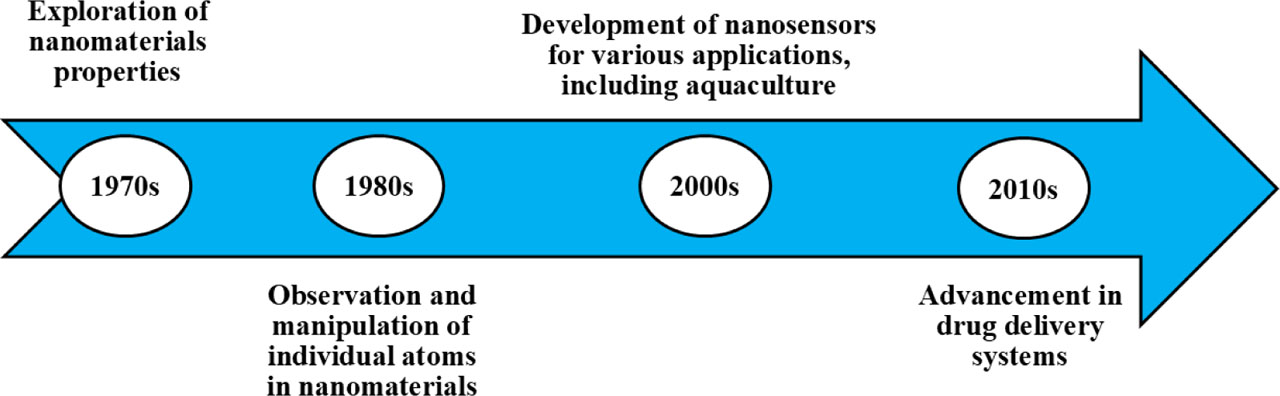
Figure 1.
Timeline showing the evolution of nanotechnology
The progression of nanotechnology in aquatic animal health has transitioned from theoretical concepts to practical applications that address key challenges in aquaculture. Despite these advancements, many of these technologies require further standardization to ensure their broad and sustainable implementation.
Types of nanostructured materials used in aquatic health management
Nanomaterials possess unique physical, chemical, and biological properties that make them highly effective in addressing challenges in aquaculture (Shrestha et al., 2020; Mitchell et al., 2021). Based on morphology and size, nanomaterials are classified into several types, including nanoparticles (e.g., fullerenes with a globular shape, 1–100 nm in diameter), nanotubes (tube-shaped with a diameter of 1–2 nm), and nanofibers (e.g., polymeric nanoparticles). Chemically, nanoparticles are categorized as carbon-based, metal-based, ceramic, semiconductor, polymeric, or lipid-based nanoparticles (Khan et al., 2019; Moges et al., 2020). Furthermore, they can be grouped into organic (e.g., liposomes, nanocapsules, and nanoemulsions) and inorganic (e.g., quantum dots, metallic nanoparticles) nanoparticles, depending on their composition.
Nanoparticles such as silver nanoparticles (Ag-NPs), gold nanoparticles (Au-NPs), zinc nanoparticles (Zn-NPs), iron nanoparticles (Fe-NPs), selenium nanoparticles (Se-NPs), and silica nanoparticles (Si-NPs) are commonly employed in aquatic health management. Among these, Ag-NPs are widely utilized due to their exceptional properties, including high conductivity, chemical stability, catalytic activity, and nonlinear optical performance (Ogunfowora et al., 2021). In aquaculture, Ag-NPs are primarily used to control microbial growth and reduce water pollution, playing a crucial role in maintaining water quality and aquatic health (Liu et al., 2023).
Nanocomposites, which integrate nanoparticles into a bulk matrix such as polymers, metals, or ceramics, further expand the utility of nanotechnology in aquaculture. These materials enhance the properties of the base matrix, offering improved antimicrobial activity, durability, and functionality. For instance, exopolysaccharides (EPSs) combined with Bacillus licheniformis and Zn-NPs form EPS-ZnO NPs, which exhibit enhanced antimicrobial properties (Escárcega-González et al., 2018). Similarly, chitosan-based nanocomposites have shown promise in aquaculture. Chitosan-Ag-NPs, for example, have demonstrated effective antimicrobial activity and bioavailability, particularly in combating aquatic parasites (Abu-Elala et al., 2018). The application of nanotechnology in aquaculture, through the use of nanoparticles and nanocomposites, continues to drive innovation in aquatic health management, offering novel solutions to long-standing challenges in the industry (Hussain et al., 2019; Kirubakaran et al., 2024; Thomas et al., 2024).
Nanocapsules are a specific type of nanoparticle characterized by a core-shell structure. The core is capable of encapsulating various compounds, such as medications, nutrients, or other active agents, while the shell serves as a protective barrier. This design enables targeted and controlled delivery of drugs, vaccines, and nutrients, thereby enhancing treatment efficiency by minimizing in vivo degradation of active substances. A notable application is the nano-encapsulation of double-stranded RNA for combating shrimp viral pathogens in aquaculture (Rangesh et al., 2024). Nanoemulsions, on the other hand, are fine dispersions of oil-in-water or water-in-oil, with droplet sizes ranging from 20 to 200 nm. Their small droplet size results in a high surface area and improved bioavailability, making them highly effective for delivering nutrients, vaccines, and feed supplements in aquaculture (Solans et al., 2005).
Carbon nanotubes (CNTs) are another category of nanomaterials, consisting of carbon atoms arranged in nanoscale tubular structures (Anzar et al., 2020). Due to their large surface area and ability to penetrate cell membranes, CNTs are particularly promising for water purification. Additionally, graphene oxide, a derivative of CNTs, exhibits antimicrobial properties and holds potential for applications in biosensors and water purification systems (Teixeira-Santos et al., 2021). Liposome nanoparticles are spherical vesicles composed of phospholipid bilayers surrounding an aqueous core (Nsairat et al., 2022). These nanoparticles are widely used to protect water-soluble antibiotics, drugs, and other agents from degradation before reaching target tissues, enhancing their stability and effectiveness (Nakhaei et al., 2021). Lastly, quantum dots (QDs) are nanoscale semiconductor particles ranging from 2 to 10 nm in diameter (Neethu et al., 2025). Their unique optical and electronic properties make them highly valuable in disease diagnostics. QDs are frequently utilized for pathogen detection and as markers for identifying diseases, offering high sensitivity and precision in diagnostic applications. These nanomaterials collectively represent significant advancements in aquaculture, addressing critical challenges in disease management, nutrient delivery, and environmental monitoring (Silva et al., 2023; Neethu et al., 2025).
Current applications of nanotechnology in aquatic health management
The integration of nanotechnology into aquatic health management is revolutionizing the field, offering a wide array of innovative applications (Khan et al., 2024). Nanoparticles are utilized to enhance fish growth, facilitate efficient nutrient delivery, and enable targeted drug administration. These technologies allow precise delivery of compounds such as antibiotics and vaccines, improving therapeutic efficacy while minimizing side effects. Nanotechnology has been increasingly applied in the aquaculture sector, where nanosensors enable real-time monitoring of critical water quality parameters to ensure optimal conditions for aquatic species (Hairom et al., 2021). In addition, nanomaterials contribute to environmental sustainability through their use in eco-friendly antifouling coatings that prevent biofouling on equipment and in advanced waste treatment processes (Wang et al., 2024). Collectively, these applications highlight the transformative potential of nanotechnology in promoting sustainable and efficient aquaculture practices. Figure 2 presents a schematic representation highlighting the primary applications of nanotechnology in aquaculture.
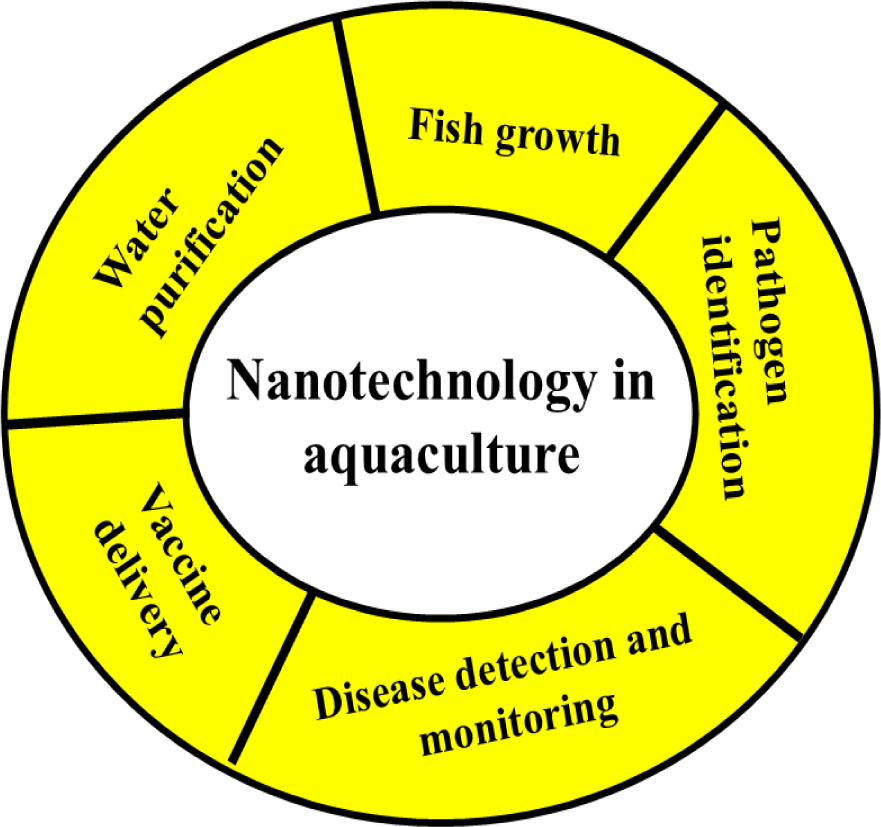
Figure 2.
Schematic representation of major applications of nanotechnology in aquaculture
Nanotechnology for fish growth
The development of nanoencapsulated nutrients and feed additives has significantly enhanced fish growth, improved feed conversion ratios, and promoted overall health. Nanoencapsulation techniques have also been implemented to improve the bioavailability of nutrients and feed additives, promoting better absorption and utilization in aquatic organisms (Misra et al., 2023). In addition to macronutrients, micronutrients such as trace minerals, including selenium, zinc, and iron, are vital for the growth and development of aquatic organisms. For instance, Kumar et al. (2023) reported that incorporating Se-NPs and Zn-NPs into feed helps fish mitigate multiple environmental stressors. Similarly, studies have shown that carp and sturgeon exhibit accelerated growth when fed with Fe-NPs as feed additives (Ebrahimi et al., 2020; Thangapandiyan et al., 2020; Ziaei-Nejad et al., 2021). The supplementation of nano-selenium at 1 mg/kg in common carp (Cyprinus carpio) diets not only significantly enhanced growth but also improved their antioxidant defense systems (Ashouri et al., 2015). Additionally, incorporating zinc, manganese, and selenium into the diets of juvenile gilthead seabream (Sparus aurata) during the weaning stage enhanced stress resistance and bone mineralization (Izquierdo et al., 2017). Other nanomaterials, including Cu-NPs, manganese oxide nanoparticles (MnO-NPs), Au-NPs, and Aloe vera nanoparticles, have demonstrated positive effects on antioxidant defense mechanisms (Asaikkutti et al., 2016), digestive enzyme activities (El Basuini et al., 2017), hepatic health (Kunjiappan et al., 2015), survival rates, and growth in various species, including freshwater prawns (Bazari Moghaddam et al., 2021). Notably, dietary supplementation with chitosan nanoparticles has improved feed utilization and growth in Nile tilapia by stimulating lipase and amyl-ase activity (Abd El-Naby et al., 2019). These findings suggest that advancing research and standardizing these technologies could yield targeted benefits for aquaculture species. However, while nanotechnology offers significant promise, it is critical to address its limitations and potential adverse implications. For example, Fe3O4 nanoparticles have been shown to accumulate in common carp, migrating to the microvilli of intestinal enterocytes and potentially causing intestinal damage (Hajiyeva et al., 2023). Similarly, zinc oxide nanoparticles (ZnO-NPs) are known to generate reactive oxygen species (ROS), leading to oxidative stress (Zhao et al., 2016; Abdelazim et al., 2018), cellular damage, and inflammation, which can impair physiological functions in fish (Cazenave et al., 2019). ZnO-NPs have also been associated with lipotoxicity in aquatic organisms (Chen et al., 2022). Moreover, excessive Ag-NPs concentrations have been shown to induce DNA damage in fish erythrocytes (Bacchetta et al., 2017). To ensure the safe and effective use of these technologies, standardization across applications is essential to achieve consistency, reliability, and safety. Table 1 provides an overview of various nanomaterials used as feed additives or supplements to enhance growth and other parameters in different cultured species.
Table 1.
Application of different nanomaterials used as feed additives during aquaculture of different organisms
| Nanomaterial | Application | Aquatic organism | References |
|---|---|---|---|
| Iron | Improve growth and immune response | Carp | Behera et al. (2014); Thangapandiyan et al. (2020); Ziaei-Nejad et al. (2021) |
| Sturgeon | Ebrahimi et al. (2020) | ||
| Selenium | Enhance antioxidant defense system | Common carp | Ashouri et al. (2015); Saffari et al. (2017) |
| Disease resistance | Mullet | Dawood et al. (2020 a) | |
| Improve immune response | Catfish | Chris et al. (2018) | |
| Improve growth, blood health | Seabream | Dawood et al. (2019) | |
| Selenium-enriched fish | Grass carp | Zhu et al. (2024) | |
| Zinc | Improve growth and bone mineralization | Seabream | Izquierdo et al. (2017) |
| Improve immunity | Freshwater prawn | Muralisankar et al. (2014) | |
| Grass carp | Faiz et al. (2015) | ||
| Manganese | Improve bone mineralization | Seabream | Izquierdo et al. (2017) |
| Enhance muscle composition | Freshwater prawn | Asaikkutti et al. (2016); Rajeshkumar et al. (2009) | |
| Increase digestive enzyme activity | Catfish | Xu et al. (2023) | |
| Improve metabolism, stress resistance | |||
| Improve growth | |||
| Chitosan | Improve growth, FCR | Nile tilapia | Abd El-Naby et al. (2019); El-Naggar et al. (2021) |
| Health booster | Cat fish | Udo et al. (2018) | |
| Disease resistance | |||
| Copper | Improve stress resistance and immune response | Seabream | El Basuini et al. (2017) |
| Freshwater prawn | Muralisankar et al. (2016) | ||
| Feed intake and survival | Common carp | Dawood et al. (2020 b) | |
| Gold | Against hepatic injury | Common carp | Kunjiappan et al. (2015) |
| Aloe vera | Hematological parameters | Sturgeon | Bazari Moghaddam et al. (2021) |
| Liver enzyme activity | |||
| Improve immune response | |||
| Chromium | Improve growth and digestibility | Mrigal | Ahmad et al. (2024) |
| Freshwater prawn | Satgurunathan et al. (2019) |
Nanotechnology for water purification
Water purification represents a critical application of nanotechnology, leveraging the unique properties of nanomaterials for filtration and adsorption processes. Nanomaterials such as CNTs, graphene oxide, and various metal oxides exhibit high surface areas and distinctive physicochemical properties, enabling the efficient removal of pollutants, including heavy metals, pathogens, and organic contaminants, from water. For instance, recent studies demonstrated the use of magnetic konjac glucomannan (KGM) aerogels cross-linked with chitosan to remove heavy metal ions (Mao et al., 2019). Similarly, a KGM matrix containing magnetic Fe and Mn oxides was effective in removing arsenite from contaminated water (Ye et al., 2016).
Graphene oxide and graphene oxide-titanium oxide nanocomposites have also proven highly effective for adsorbing and removing heavy metals and organic pollutants from wastewater (Motamedi et al., 2014; Liu et al., 2016; Perumal et al., 2020). Moreover, nanoscale zero-valent iron (nZVI), a highly reactive nanoparticle, has been applied to degrade organic contaminants and reduce heavy metals in aquatic systems (Huang et al., 2013). Despite the potential of these technologies, most remain at the experimental stage, with ongoing investigations into their applications during aquaculture operations.
Nanotechnology is also being gradually adopted for treating aquaculture effluents, contributing to normalized physicochemical parameters and reduced microbial loads. However, its use in water filtration is not without challenges. Concerns about the potential toxicity of nanoparticles to aquatic organisms and their environmental accumulation present significant barriers. The long-term impact of nanoparticles on ecosystems and human health remains uncertain. Previous in vitro and in vivo studies have raised concerns about potential negative effects, including immune system suppression, oxidative stress-related disorders, and inflammation (Handy and Shaw, 2007). For instance, widely used Ag-NPs have been identified as risk factors for human health and have been shown to disrupt water and soil microbial communities upon exposure (Tortella et al., 2020). Evidence from studies on human cell lines, such as human umbilical vein endothelial cells (HUVEC) and hepatocellular liver carcinoma cells (HepG2), highlights potential health risks. These investigations revealed significant reductions in cell viability following exposure to silver nanoparticles (Tortella et al., 2020). Such findings emphasize the necessity of comprehensive risk assessments before implementing nanotechnology in routine applications. Furthermore, regulatory frameworks to ensure the safe and standardized use of nanotechnology in water purification are currently lacking or underdeveloped. Addressing these regulatory and safety challenges is essential to fully realize the potential of nanotechnology for sustainable aquaculture practices.
Nanotechnology for disease identification, pathogen detection, and monitoring
Disease poses a significant threat to aquaculture systems, necessitating effective health management strategies to prevent pathogen infestations in cultured species. Nanotechnology-based diagnostic tools and methodologies offer enhanced sensitivity, specificity, and speed, enabling early disease detection and efficient monitoring. Figure 3 provides a graphical representation of various nanomaterials and their potential applications in the management of fish diseases. Nanoparticles, due to their unique properties, can act as receptors and scaffolds for nucleic acids, facilitating the development of genetic polymorphism analyses, differential gene expression studies, and biomarker identification – essential tools for diagnosing diseases in aquatic organisms. Nanomaterials also possess novel properties that enhance small interfering RNA (siRNA)-based drug delivery systems. For instance, the nanoparticle aptamer LYGV1c was utilized to deliver functional siRNAs into cells infected with Singapore grouper iridovirus (SGIV). This approach demonstrated efficient delivery of therapeutic molecules and successfully inhibited SGIV infection, showcasing the potential of nanotechnology in antiviral treatments (Yu et al., 2021). Additionally, quantum dots (QDs) have revolutionized fluorescence and colorimetric imaging techniques for identifying specific biomarkers in fish. Recent studies demonstrated the use of carbon dot-embedded photonic crystals to detect sulfadimethoxine, an antimicrobial agent used in aquaculture (Zhang et al., 2023). Similarly, QDs loaded with specific compounds have shown promise in bacterial deactivation (Alexpandi et al., 2020).
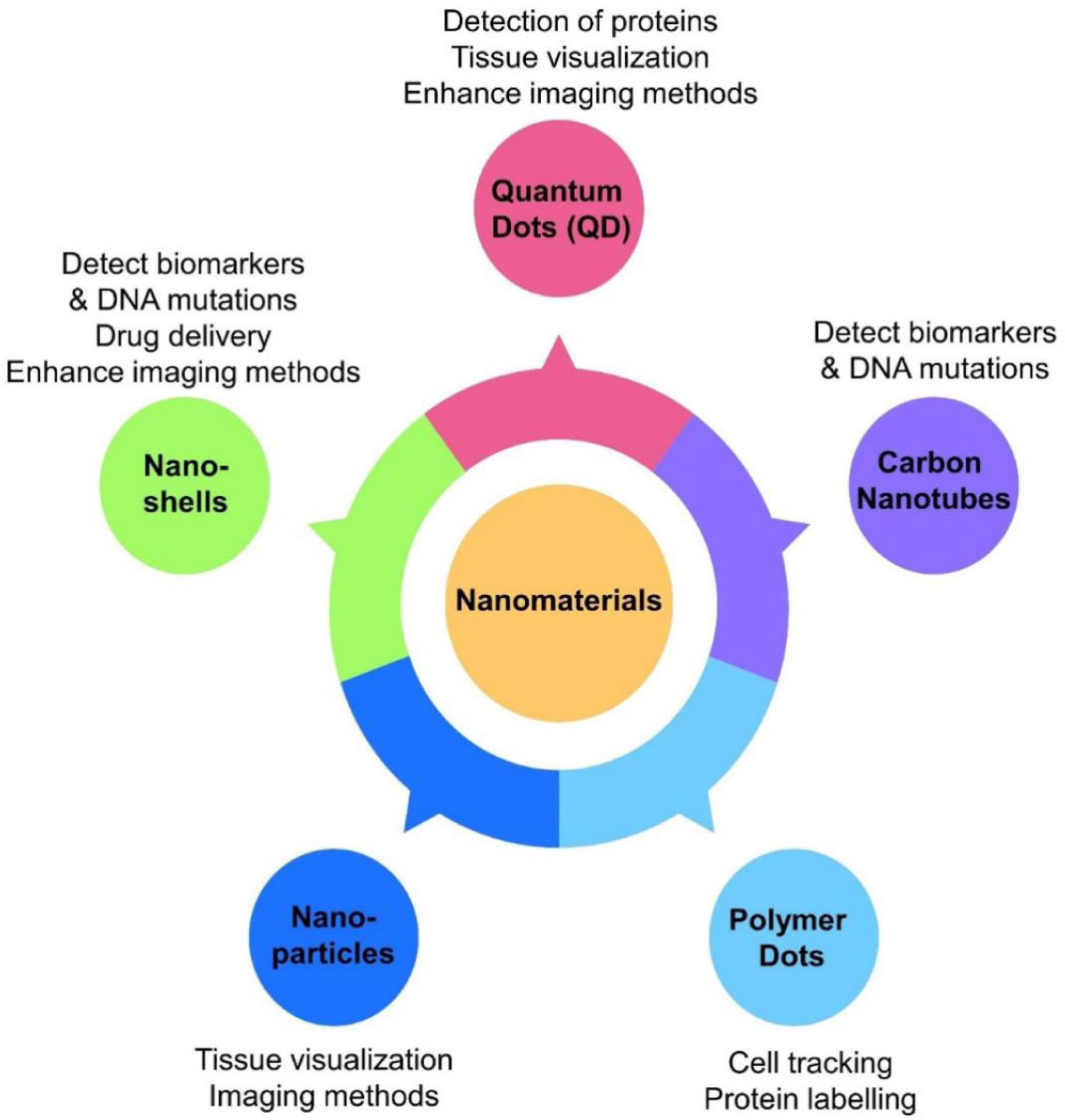
Figure 3.
A graphical representation of various nanomaterials and their potential applications in fish disease management
Nanotechnology has also been employed to enhance established diagnostic methods, such as enzyme-linked immunosorbent assay (ELISA) and polymerase chain reaction (PCR). Nanoparticle-enhanced techniques improve sensitivity and specificity, thereby increasing diagnostic accuracy. For instance, an antibody-based immunodiagnostic protocol for detecting white spot syndrome virus (WSSV) in shrimp utilized Au-NPs conjugated with alkaline phosphatase (ALP) in secondary antibodies, achieving superior detection performance (Thiruppathiraja et al., 2011; Tabatabaei et al., 2021). Additionally, graphene oxide (GO)-based electrochemical biosensors were developed for WSSV detection, demonstrating high specificity and rapid response (Natarajan et al., 2017). These advancements have significantly improved disease diagnosis and monitoring in aquaculture. Functionalized nanomaterials, such as Au-NPs, QDs, and CNTs, offer targeted binding to pathogens, enabling early detection. For example, electrical nanosensors have been designed to detect single virus particles, enhancing diagnostic precision (Patolsky et al., 2006; Jin et al., 2020; Shand et al., 2022). Immuno-targeted Au-NPs, functionalized with specific antibodies, have also been employed to bind pathogens like Staphylococcus pyogenes and S. aureus (Sarkar et al., 2023; Pires et al., 2021). Similarly, CNTs have shown great potential in detecting various pathogens, including viruses, parasites, and bacteria, as well as heavy metals in aquatic environments (Upadhyayula et al., 2009; Arora and Attri, 2020). These developments underscore the transformative role of nanotechnology in advancing disease diagnostics and monitoring within aquaculture systems, contributing to improved health management and sustainable practices.
Nanotechnology for vaccine delivery
Nanotechnology presents innovative approaches to enhance vaccine efficacy and delivery in aquatic animals. Traditional vaccination methods often encounter challenges, including stress on fish, inconsistent dosing, and the requirement for multiple injections. Nanotechnology addresses these issues by employing nanoparticles to encapsulate vaccines, enabling controlled release and targeted delivery. Nanoparticles facilitate the sustained release of vaccine materials with minimal dosing and offer the ability to target specific tissues. Historically, vaccine formulations relied on oil-in-water emulsions, which often caused adverse effects such as mortality in aquatic organisms (Ji et al., 2015). Advancements in nanotechnology have since led to the development of diverse encapsulation strategies for vaccine delivery. Alginate, a naturally occurring polymer, was among the earliest materials utilized to enhance fish survival and growth (Fujiki et al., 1994). Alginate nanoparticles were reportedly the first to be used for oral vaccination in aquatic animals (Joosten et al., 1997; Romalde et al., 2004). Subsequently, chitosan-alginate nanoparticle combinations were developed to deliver oral immunizations against Lactococcus garvieae and Streptococcus iniae infections in rainbow trout. These nanoparticles demonstrated superior survival rates and elicited robust immune responses in treated fish (Halimi et al., 2019).
Recent innovations include mannosylated nanoparticles, which significantly enhance vaccine efficacy against viral infections (Zhu et al., 2020). Similarly, chitosan-based polymer nanovaccines have shown protective effects in red tilapia against Aeromonas veronii infections (Sukkarun et al., 2022). These advancements highlight the potential of nanotechnology to revolutionize fish immunization by providing more effective, streamlined, and stress-free methods to prevent diseases in aquaculture. Table 2 outlines key developments and investigations relevant to the application of nanoparticles in vaccine delivery, showcasing their transformative potential in aquatic health management.
Table 2.
List of nanoparticles used for vaccine delivery
| Nanoparticle | Species | Type/Route | Remarks | References |
|---|---|---|---|---|
| Chitosan | Seabass | DNA vaccine | Moderate protection against experimental V. anguillarum infection | Kumar et al. (2008) |
| Alginate microspheres | Common carp and Seabream | Oral vaccine | Induce immunosuppression, instead of immunization | Joosten et al. (1995) |
| Alginate microspheres | Japanese flounders | DNA vaccine | Significant immune effect | Tian et al. (2008 a) |
| Alginate | Trout | Oral vaccine | Moderate to significant immunization | Romalde et al. (2004); Altun et al. (2010) |
| Alginate | Nile tilapia | Intraperitoneal Intramuscular | Imprecise results | Leal et al. (2010) |
| Chitosan-PLGA | Olive flounder | Incorporated in feed | Promising results | Kole et al. (2022) |
| PLGA | Turbot | Injection | Safe alternative adjuvant | León-Rodríguez et al. (2012) |
| PLGA | Japanese flounder | Plasmid vaccine | Notable immunization efficacy | Tian et al. (2008 b) |
| PLGA | Grouper | Encapsulated vaccine | Useful for further studies | Harikrishnan et al. (2012) |
| Chitosan microsphere | Rohu | Oral vaccine | Enhanced immune response | Behera and Swain (2014) |
| PLGA | Rohu | Intra-peritoneal | Suitable carrier | Behera et al. (2010) |
| Chitosan microsphere | Japanese flounder | Oral | Better immunization efficacy | Tian et al. (2008 c) |
The findings suggest that nanoparticles hold significant potential for vaccine delivery in aquatic health management. However, their development has not yet advanced to the stage of commercial readiness (Hobson, 2009). While preliminary research highlights advantages such as improved vaccine stability and targeted distribution, several critical challenges remain unresolved. These include ensuring nanoparticle safety and biocompatibility, refining delivery mechanisms, and comprehensively understanding the long-term effects on aquatic organisms and ecosystems. Before widespread adoption, it is imperative to establish standardized production protocols and develop robust regulatory frameworks to ensure consistency, safety, and efficacy. Although substantial progress has been made, transitioning from experimental studies to practical, commercially viable applications in aquaculture will require extensive testing, refinement, and the establishment of clear standards (Fajardo et al., 2022).
Emerging trends in application of nanotechnology in aquatic health management
With ongoing advancements, research in nanomaterials is anticipated to yield significant breakthroughs, fostering the development of novel and improved nanotechnologies. This progress is expected to drive the widespread application of nanotechnology, with standardization of existing methods poised to have substantial commercial implications. In particular, research and applications of nanosensors for disease detection and water quality monitoring are projected to increase considerably in the coming decade. Among these, bacteriophage nanosensors and immunosensors are in the early stages of development compared to other biorecognition elements. However, their exceptional target specificity presents promising opportunities for pathogen detection. Notably, nanoparticles integrated with quartz crystal microbalance (QCM) sensors have demonstrated the ability to convert the mass of target analytes, such as pathogens, into electrical signals, offering a potential standard method for pathogen detection in aquaculture systems (Priyadarshi and Singhal, 2023).
Further advancements are anticipated in surface plasmon resonance (SPR)-based sensors (Thawany et al., 2023), lithographic-processed nano-biochips and nanobiosensors (Fruncillo et al., 2021; Stokes et al., 2023), microRNA-based sensors (Wu et al., 2022), and electrochemical sensors. These technologies are expected to enhance the detection of pathogens, particularly viruses, with improved sensitivity and specificity. Additionally, nanotechnology-enabled sensors for water quality monitoring, widely used in industrial sectors, are gradually being adapted for aquaculture applications. Challenges such as high production costs, extensive maintenance requirements, and integration with existing systems currently limit their adoption. Furthermore, data generated by these sensors often requires advanced algorithms and expertise for accurate interpretation. Despite these challenges, the real-time monitoring capabilities, along with the sensitivity and precision of nanosensors in assessing water quality parameters, underscore the promising future of this technology in aquaculture. For instance, plasmonic sensors like SPR and fiber-optic SPR have shown great potential for quality control in aquaculture (Quintanilla-Villanueva et al., 2023). Continued development and cost reduction strategies are likely to enable broader adoption of nanosensor technologies in aquaculture systems.
The application of nanoparticles for drug delivery has emerged as a focal point in research due to their enhanced therapeutic efficacy, reduced side effects, and capability for targeted delivery (De Jong and Borm, 2008; Yetisgin et al., 2020). Precision medicine, in particular, has gained significant attention as it allows for reduced dosages, leading to lower costs and decreased labor requirements. Nanoparticles facilitate sustained drug release over time, ensuring a prolonged therapeutic effect and improved treatment outcomes (Bai et al., 2022). In aquaculture, nano-vaccines are being developed to enhance immunogenicity, particularly for oral administration, which simplifies vaccination protocols for aquatic organisms (Angulo et al., 2021). This method holds great promise as a scalable and adaptable system for aquaculture health management.
Several nanoparticle-based techniques have been developed and show considerable potential due to their unique characteristics. For instance, solid lipid nanoparticles (SLNs) can carry high drug payloads, making them efficient carriers for therapeutic compounds (German-Cortés et al., 2023). Chitosan nanoparticles exhibit mucoadhesive properties, improving their ability to adhere to biological membranes and enhancing drug absorption (Collado-Gonzalez and Esteban, 2022). Hydrogel nanoparticles are particularly suited for delivering hydrophilic drugs, offering compatibility with water-soluble compounds (Sarkar et al., 2022). CNTs and polylacticco-glycolic acid (PLGA) nanoparticles are also notable for their versatility and efficiency in drug delivery applications. These techniques collectively demonstrate the essential characteristics required for delivering a diverse range of therapeutic compounds. As research progresses, these nanoparticle systems are poised to evolve into next-generation tools for drug delivery in aquatic health management, significantly advancing the field of aquaculture.
Areas of concern in adoption of nanotechnology in aquatic health management
Nanotechnology has emerged as a transformative tool for enhancing the health and productivity of aquatic organisms, yet significant challenges must be addressed to unlock its full potential. To develop reliable, effective, and safe nanotechnology applications in aquaculture, a concerted effort is required to address existing technical gaps, deficiencies in developed methodologies, and industry management aspects, including regulatory compliance. A critical area of investigation is the long-term impact of nanoparticles on aquatic ecosystems. This includes studying their bioaccumulation, potential toxicity, and interactions with diverse aquatic species. Understanding the mechanisms of nanoparticle interaction with biological systems, encompassing cellular uptake, distribution, metabolism, and excretion, is particularly crucial to ensure safe and effective applications (Augustine et al., 2020). Additionally, challenges such as production costs and scalability must be resolved to facilitate seamless integration with existing aquaculture systems. Nanosensors, while promising for applications such as water quality monitoring and disease detection, face issues related to stability and cross-sensitivity (Nie et al., 2018; Zhu et al., 2018). Similarly, biocompatibility remains a primary concern in the use of nanoparticles for drug delivery systems (Vinay et al., 2018). In other domains, such as antimicrobial nanocoatings, challenges include ensuring longevity and optimizing reusability to reduce costs. For nano-biosensors, enhancing data transmission capabilities and minimizing maintenance requirements are essential for broader adoption. Addressing these concerns should be a primary focus of ongoing research, with an emphasis on developing robust solutions to mitigate drawbacks.
As a solution, more sustainable and eco-friendly nanotechnology can be developed. Green synthesis, which utilizes plant-based methods for nanoparticle production, offers an eco-friendly, simple, and cost-effective approach that can be actively promoted (Bhattacharyya et al., 2015). For instance, several eco-friendly nanoparticles have been synthesized using green methods, such as metal oxide nanoparticles from Parthenium hysterophorous leaves (Datta et al., 2017; Rauf et al., 2024) and Tabernae montana (Raja et al., 2018; Manasa et al., 2021), Ag-NPs from Boerhaavia diffusa (Narayanan and Sakthivel, 2008) and Ficus sycomorus (Kumar et al., 2014) and Au-NPs from different plants (Sharma et al., 2007; Narayanan and Sakthivel, 2008).
Furthermore, precautionary measures, such as proactive risk assessment, risk management, and consideration of the entire life cycle of nanomaterials and their products, can be implemented at every stage of nanotechnology development to ensure safe and responsible use (Sweet and Strohm, 2006). These approaches aim to protect developers, individuals, and the environment while promoting innovation (Tyshenko et al., 2010). Nevertheless, continuous research is crucial to explore the potential of nanotechnology while minimizing threats to human health, the environment, and ecological balance (Prasad and Mahawer, 2023).
Potential risks and safety concerns in using nano-particles for aquatic health management
The application of nanoparticles in aquatic health management presents various risks and safety concerns that must be addressed before their widespread adoption to ensure the well-being of fish, maintenance of water quality, and protection of human health. Among these challenges, the potential toxicity of nanoparticles to aquatic organisms and associated human health risks are paramount. Sub-lethal effects such as growth inhibition, behavioral alterations, and reproductive dysfunctions have been reported in aquatic species exposed to nanoparticles (Estrela et al., 2021). Additionally, the bio-accumulation of nanoparticles in cultured species poses significant risks to human health if these materials enter the food chain (Lekamge et al., 2020; Parsai and Kumar, 2020; Estrela et al., 2021; Mona et al., 2023). Therefore, thorough toxicological studies are imperative to establish safe dosage limits.
To mitigate risks, it is essential that nanoparticles used in aquaculture are biocompatible and ideally derived from natural sources, minimizing adverse effects on aquatic organisms and human health. Nanoparticles may also influence water quality by altering chemical parameters such as pH and dissolved oxygen, which are critical for the growth and survival of aquatic organisms. Thus, nanoparticles should be carefully evaluated to ensure they target specific contaminants without disrupting the overall chemical balance of the aquatic environment. The development of biodegradable nanoparticles is particularly important to address ecological and toxicity concerns associated with their use. Furthermore, the rapid pace of nanotechnology development often surpasses the establishment of adequate regulatory and ethical frameworks, resulting in gaps in the oversight and monitoring of its applications in aquaculture (Allan et al., 2021). To ensure safe integration, comprehensive research is needed to assess the long-term impacts of nanoparticles. Additionally, registering newly developed nano-products, implementing good manufacturing practices (GMP) in aquaculture, and drafting relevant regulatory frameworks are essential steps. These measures will help promote the responsible and safe use of nanotechnology in aquatic health management.
Commercial viability of nanoparticle utilization in aquatic health management
Currently, several nanoparticle-based technologies, such as chemical vapor deposition (CVD) (Tang et al., 2020; Hou et al., 2022) and sol-gel processes (Ayesha et al., 2020; Periyasamy et al., 2020), have achieved scalability, enabling large-scale manufacturing. However, these methods require significant capital investment due to the high costs associated with specialized equipment, including reactors, gas distribution systems, and vacuum systems. Moreover, the CVD process often involves the use of potentially hazardous chemicals (García-Ruiz et al., 2021), raising safety and regulatory concerns. The substrate compatibility of CVD is also limited, which restricts the diversity of nanoparticles that can be synthesized. Additionally, both CVD and sol-gel methods generate substantial chemical waste, necessitating advanced waste management systems that further increase production costs.
By contrast, coating-based approaches such as dip coating and spin coating offer a cost-effective alternative for producing biosensors, as they do not rely on expensive equipment (Escorcia-Díaz et al., 2023). Nonetheless, many other techniques face similar challenges regarding initial investment and waste disposal requirements. Encouragingly, regulatory frameworks are being developed globally to promote the safe and sustainable utilization of nanoparticles in aquaculture, fostering commercial adoption by addressing safety and efficiency concerns.
In line with these advancements, several companies have pioneered the application of nanotechnology in water treatment and aquaculture. For instance, NanoH2O, Inc. employs thin-film nanocomposite (TFN) Quantum Flux membranes to improve the energy efficiency and productivity of desalination processes, significantly reducing operational costs (Ali and Ahmad, 2020; Nambi Krishnan et al., 2022). Similarly, AgION Technologies has developed antimicrobial coatings using silver nanoparticles to prevent biofouling and associated infections in aquatic organisms (Negi, 2024). Furthermore, AquaRead Ltd. produces water testing kits capable of detecting contaminants such as heavy metals, facilitating water quality monitoring (Mohammadi et al., 2024).
However, access to commercial nanotechnology by small-scale farmers and entrepreneurs remains limited due to weak regulatory frameworks, high development and production costs, limited R&D investment, inadequate infrastructure and education, low private sector involvement, poor collaboration, lack of industrialization, minimal international support, and concerns over health and environmental risks (Ezema et al., 2014). Comprehensive techno-economic evaluations, pilot demonstration projects, and coordinated collaboration among governments, industry stakeholders, and research institutions are essential to enable the affordable transfer of nanotechnology from innovators to the market, thereby improving its accessibility for farmers and entrepreneurs. Overall, the application of nanoparticles in aquatic health management offers numerous advantages, including enhanced water quality and improved disease control in aquaculture systems. However, their widespread adoption and sustainable implementation will depend on addressing challenges related to cost, waste management, and efficiency.
Recommendations for development of nanoparticles for use in aquatic health management
The development of nanoparticles for aquatic health management involves multiple critical factors, with research objectives often dictating the focus of initial investigations. Beyond the initial development phase, it is essential to consider the cost-effectiveness and scalability of nanoparticle production to facilitate industrial adoption. However, achieving broader goals requires targeted research efforts alongside streamlined integration into aquaculture practices. A robust regulatory framework, akin to those governing drug development for human consumption, is crucial to ensure the safety, efficacy, and sustainability of nanoparticles. Such regulatory frameworks should not only guide the development and approval processes but also continue to oversee the product’s post-commercial deployment. For instance, after the initial development phase, nanoparticles should be registered with relevant regulatory authorities to document and categorize their applications across various sectors. This registration serves as the foundation for rigorous evaluations, including comprehensive toxicity assessments and efficacy studies. These investigations must account for the nanoparticles’ effects on aquatic organisms under diverse environmental conditions to ensure their safety and environmental compatibility. This systematic approach mirrors the established procedures for drug development and ensures that nanoparticles are thoroughly evaluated before widespread implementation. By prioritizing safety, efficacy, and sustainability, such frameworks can enable the successful integration of nanoparticles into aquaculture and other fields, maximizing their benefits while minimizing potential risks.
Role of artificial intelligence (AI) in adopting nanotechnology in aquatic health
Limitations of nanotechnology, such as toxicity, bioaccumulation, the need for real-time monitoring, and scalability, can be addressed by integrating predictive algorithms into machines capable of monitoring and managing these challenges. Artificial intelligence (AI) plays a key role in solving these challenges by offering advanced tools for data analysis, prediction, and automated control. AI techniques such as machine learning and neural networks enhance the efficiency and precision of nanotechnology applications and their combination presents creative approaches to sustainability, remediation, and monitoring in environmental applications (Naik and Jagtap, 2024). AI-powered nanomedicine platforms make it possible to develop targeted drug delivery systems that deliver drugs directly to specific tissues or cells, while minimizing side effects and overall toxicity (Visan and Negut, 2024). AI-driven computational modeling and simulation, combined with nanotechnology, enables the optimal design of nanomaterials by predicting properties, analyzing complex data, and accelerating material discovery through virtual experimentation, enhancing the nanomaterials design (Naik and Jagtap, 2024). Moreover, AI revolutionizes nanofabrication by enabling real-time process monitoring, predictive modeling, automation, and quality control, thereby enhancing scalability, precision, and efficiency in the production of nanoscale materials and devices (Nandipati et al., 2024). Furthermore, AI-driven optimization of nanomaterials accelerates the development of clean energy solutions and environmental monitoring tools, such as nanosensors, by enhancing material design, device performance, and real-time detection of pollutants with high sensitivity and efficiency (Parihar et al., 2024; Arellano Vidal and Govan, 2024).
Conclusion
Nanotechnology has introduced transformative advancements in aquatic animal health, significantly improving water purification, disease management, and environmental monitoring. Innovations such as nanoparticle-based antimicrobial agents, targeted drug delivery systems, and advanced water treatment technologies have demonstrated remarkable potential to enhance the sustainability and productivity of aquaculture systems. These developments contribute to improved health and growth of aquatic organisms while ensuring the safety and quality of aquaculture products. The commercial integration of nanotechnology in aquaculture is steadily advancing, with several nanoparticle-based products already entering the market. However, widespread adoption is hindered by challenges such as high production costs, scalability limitations, and potential environmental and health risks. Addressing these issues requires the establishment of robust regulatory frameworks encompassing the registration, comprehensive testing, and continuous monitoring of nanoparticle applications to ensure their safety, efficacy, and ecological sustainability. Future research and development efforts are expected to yield more cost-effective and scalable solutions. Additionally, interdisciplinary collaborations and advancements in nanomaterial science will drive the creation of technologies specifically tailored to the unique requirements of aqua-culture. Prioritizing sustainable practices and stringent regulatory compliance will be critical in fully harnessing the potential of nanotechnology, paving the way for healthier aquatic ecosystems and a more resilient aqua-culture industry.
Notes
[2] Contributed by Author contributions
Pabitra Barik: conceptualization, literature search, writing – original draft. Madhulika: writing – review and editing. Maibam Malemngamba Meitei: writing – review and editing. Soibam Ngasotter: writing – review and editing. Martina Meinam: writing – review and editing. Rupam Sharma: writing – review and editing, supervision, validation. Kishore Kumar Krishnani: writing – review and editing, supervision, validation.