
Nanotechnology, the modification of substances on an atomic or molecular scale, holds immense potential across various fields due to its ability to create materials and devices with novel properties and functions. Nanotechnology replaces old methods and sparks fresh ideas in various fields, including medicine (Malik et al., 2023). In medicine, nanotechnology is revolutionizing diagnostics, therapy and drug transportation (Malik et al., 2023). Treatment efficacy can be increased and negative effects can be decreased by developing nanoscale particles to target particular cells. Moreover, nanodevices like quantum dots and nanosensors enhance imaging and diagnostic accuracy, enabling early disease detection and personalized treatment plans (Khazaei et al., 2023). Nanotechnology is increasingly investigated in the livestock industry, offering promising solutions for improving animal health, productivity, and welfare. Although still in its nascent stages, the integration of nanotechnology in livestock management practices is gaining attraction, driven by the demand for more efficient and sustainable agricultural practices. Nanoparticles are being developed for usage in targeted drug delivery and vaccines, ensuring precise and controlled release of therapeutics (Mitchell et al., 2021). For instance, nanoencapsulation of vaccines can protect the active ingredients from degradation, enhancing their stability and effectiveness. This approach not only improves immunization outcomes but also reduces the frequency of dosing, minimizing stress in animals. Moreover, nanosensors are being utilized for real-time monitoring of livestock health. These sensors can detect biomarkers in bodily fluids, providing early warning signs of diseases or metabolic disorders (Broza et al., 2019). Additionally, nanosensors can monitor environmental conditions such as temperature and humidity, ensuring optimal living conditions for livestock (Younis et al., 2022). Nanotechnology enhances feed efficiency and nutrition by improving nutrient absorption and preventing spoilage through nano-additives and coatings (Prasad et al., 2022). In reproduction, it boosts artificial insemination and embryo transfer success by preserving sperm and embryos, aiding breeding programs in livestock (Mukherjee et al., 2022). Despite these promising developments, the implementation of nanotechnology in livestock also raises concerns regarding safety, regulatory frameworks, and public acceptance. To assess the long-term impacts of nanoparticles on the animal health and environment, extensive research is required. The use of nanotechnology in livestock activities is anticipated to advance and contribute to more sustainable and effective agricultural systems as research and regulatory frameworks are implemented.
Types, synthesis and characterization of nanomaterials
Nanoparticles are the amazing gift provided from nanomedicines for the diagnosis, treatment, target drug delivery, better animal reproduction, production as well as value added animal products. A wide range of nanoparticles are being employed in veterinary medicine (Table 1), including liposomes, lipid micelles, polymeric nanoparticles, metallic nanoparticles such as iron oxide, zinc oxide, silver, and gold, as well as carbon-based nanoparticles, dendrimers, quantum dots, and nanosensors (Chettupalli at al., 2024; Bai et al., 2018). For the synthesis of nanoparticles, top-down and bottom-up techniques have been used commercially (Figure 1). Bottom–up technique implies the synthesis of nanomaterial from a state of molecular or atomic species via chemical reaction that facilitates the creation of assemblies of complex structure from smaller components (Khan et al., 2022). The materials that are produced by this technique are extremely basic. Chemical vapor deposition, the sol-gel method, pyrolysis, spinning, and biological synthesis are a few methods of bottom-up technique used for the synthesis of polymeric nanoparticles (Khan et al., 2022). However, top-down technique is less commonly utilized which starts with large particles breaking down into tiny molecules. Because the synthetic nanoparticles are composed of extremely basic elements, this technique is sometimes referred to as the building up method. Ball-milling processes, thermal decomposition techniques, lithography techniques, laser ablation, and physical vapor deposition are a few methods of top-down synthesis (Khan et al., 2022). In general, the choice of method for nanoparticle preparation is dependent upon the therapeutic agent and drug delivery carrier molecules (Usman et al., 2020). The nanoparticles containing thermosensitive and less stable therapeutic substances can be prepared by cross linking, drying and reverse micellar techniques (Bashir et al., 2022). In addition, other methods of preparation include high pressure emulsification, emulsion-diffusion method and solvent displacement and precipitation (Table 2). Advanced microscopic technique can be employed to characterize the shape, surface charges and particle size of nanoparticles (Figure 2). Particle size is an important parameter for characterization of nanoparticles. In general, smaller particle size provides larger surface area for most of drug loading and its faster release (Jain and Thareja, 2019). The methods for the nanoparticle size detection are dynamic light scattering (DLS) or photon correlation spectroscopy (PCS) (Ashizawa, 2019). Surface characteristics of newly synthesized nanoparticles such as roughness, porosity and smoothness are usually studied using scanning electron microscopy (SEM) and transmission electron microscopy (TEM) (Falsafi et al., 2020). Doppler anemometry and zetameter (based on electrophoresis principle) are utilized to calculate the zeta potential or electric charges on micro-nanoparticles (Veclin et al., 2022). The specific surface property and drug content of nanomaterials are determined by using X-ray photoelectron spectroscopy (XPS) or time-of-flight secondary ion mass spectrometry (TOF-SIMS) and high-pressure liquid chromatography (HPLC), respectively (Chaupard et al., 2021). XPS and TOF-SIMS are the methods which provide details related to molecular structure, origin of particles and chemical bonding. The drug loading efficiency (% = ratio of amount of drug to total mass of particles) and encapsulation efficiency (% = amount of drug to theoretical amount of drug in same masses) are determined after the drug contents have been analyzed through HPLC.
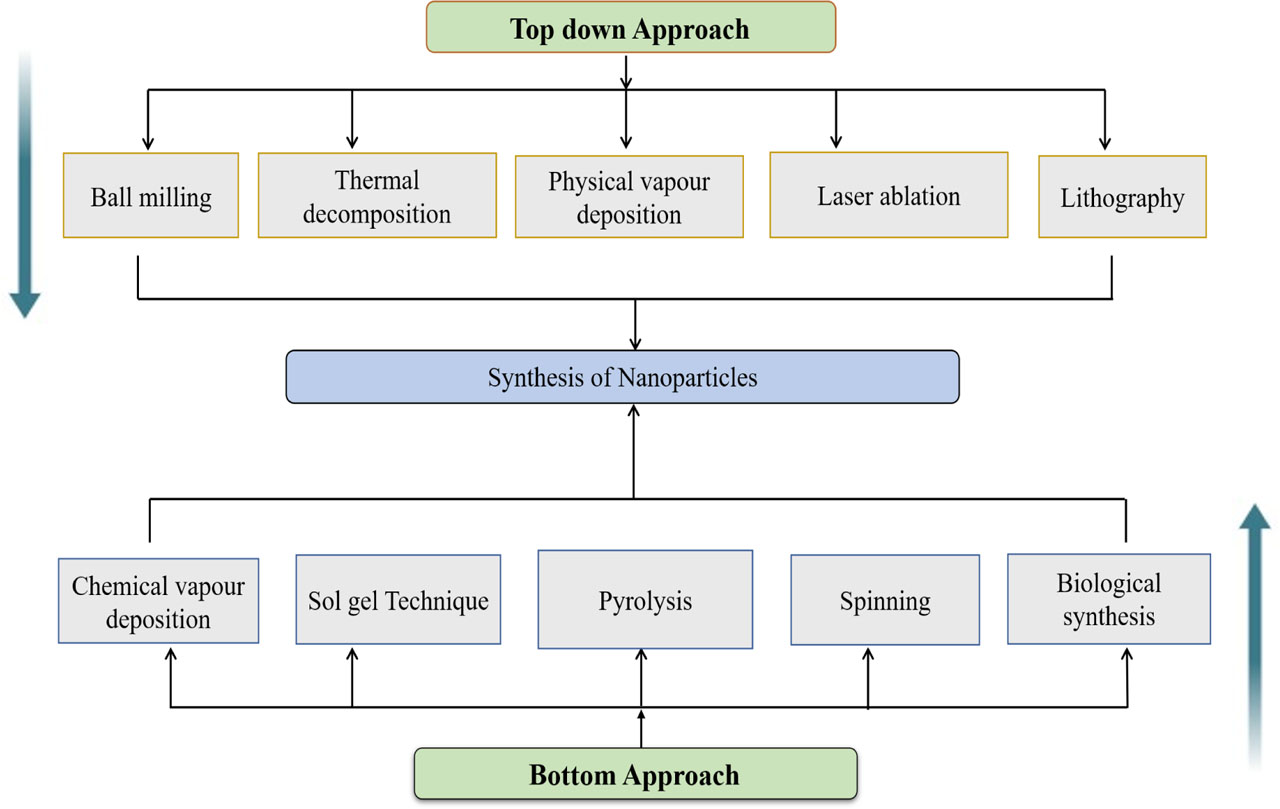
Figure 1.
Techniques used in top-down and bottom-up approaches for the nanoparticle synthesis
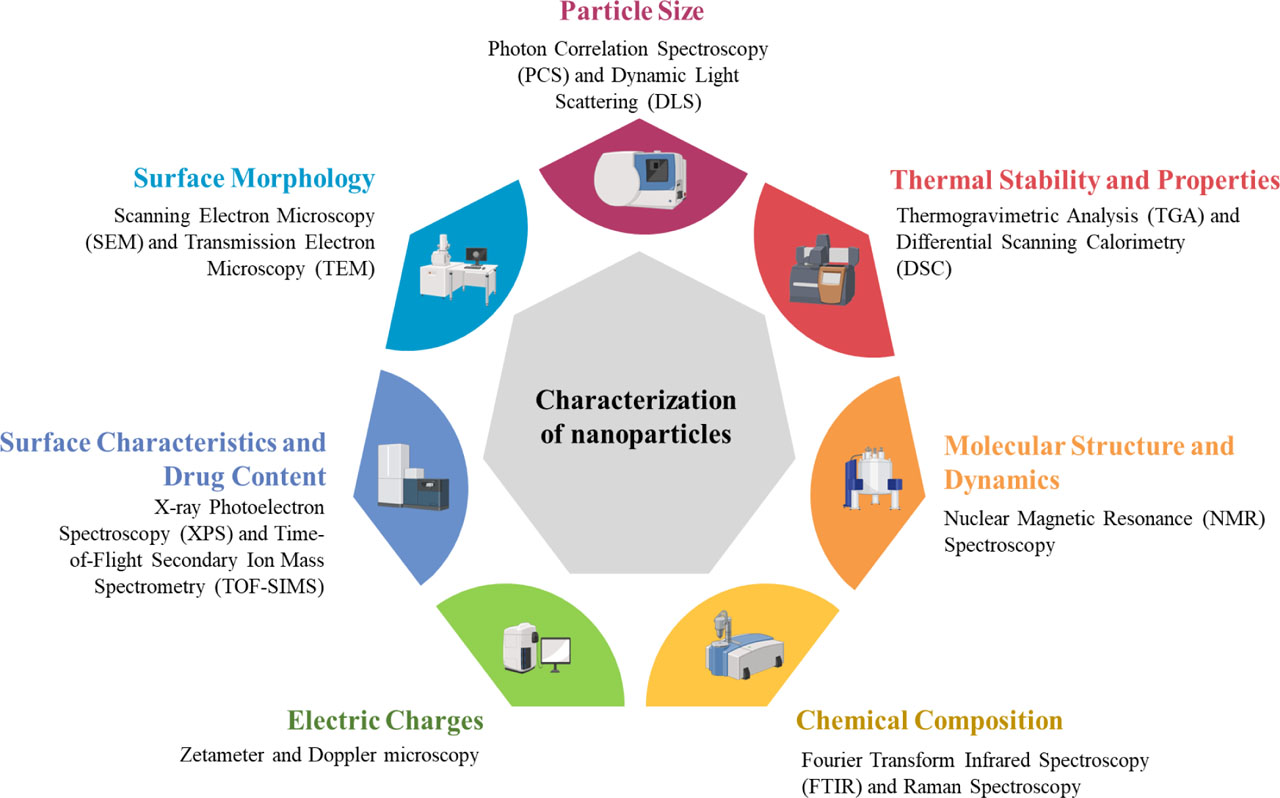
Figure 2.
Methods of na noparticle characterization
Table 1.
List of different methods for preparing nanoparticles loaded with thermosensitive therapeutic agents
| Method | Description | Therapeutic agents | References |
|---|---|---|---|
| 1 | 2 | 3 | 4 |
| 1. Cross-linking techniques | |||
| a. Physical cross linking | This method allows ionic cross-linking between nanoparticles and cross-linking agent. | Insulin, tetanus toxoid | Chen et al., 2023; Kabiri et al., 2021 |
| b. Chemical cross-linking | Chemical cross-linking with the help of glutaraldehyde or ascorbyl palmitate and p-phthalaldehyde. | NSAIDS (non-steroidal anti-inflammatory drugs), antineoplastic, opioids, antifungal drugs | Dey et al., 2022 |
| 2. Drying methods | The process of removal of water or solvent by evaporation from liquid, solid or semisolids. The common methods of drying are spray, freeze and supercritical drying | BSA (bovine serum albumin), salmon calcitonin | Abdelkader et al., 2018 |
| 3. Reverse micellar method | Organic solvent mixture containing nanoparticles along with therapeutic agent has been kept overnight after adding the cross-linking agent. Further, drug loaded nanoparticles have removed by centrifugation. | Anticancer drugs | Liao et al., 2021 |
| 4. High pressure emulsification | This procedure implies high pressure emulsification of polymer solution into an aqueous solution then removal of organic solvent is done by continuous stirring or by evaporation. | Lipid soluble drugs | Mehanna and Mneimneh, 2021 |
| 5. Emulsion-diffusion method | The encapsulated polymer is mixed with water-miscible solvent such as benzyl alcohol, propylene carbonate. Further, emulsification of polymer-water saturated solvent phase is performed in aqueous solution containing stabilizer and then formation of nanoparticles has occurred according to oil : polymer ratio. | Doxorubicin, cyclosporine | Chaudhary et al., 2021; Pandey et al., 2022 |
| 6. Solvent displacement and precipitation | This method includes precipitation of preformed polymer from organic solution and diffusion of organic solvent in presence and absence of surfactant. | Poor soluble drugs | Khan et al., 2022 |
Table 2.
Different types of nanoparticles and their therapeutic applications
| Nanoparticles | Application | References |
|---|---|---|
| Silica based | Drug delivery, bioimaging, biosensors, delivery of vaccine against Anaplasma marginale in cattle | Bruckmann et al., 2022; Kumar et al., 2024 |
| Selenium based | Enhance nutrient absorption and boost immunity in animals | Malyugina et al., 2021 |
| Silver | As antimicrobial and anticancer agents, drug delivery, as imaging probes and as diagnostics | Harish et al., 2022 |
| Zinc oxide | As antiviral and anticancer agents, drug delivery carriers, as a growth promotor in pigs | Krishnan et al., 2021; Baholet et al., 2022 |
| Gold | Tumor detection, drug and vaccine delivery, photodermal and photodynamic therapy | Reddy et al., 2023; Danchuk et al., 2023 |
| Iron oxide | Magnetic resonance imaging, cancer diagnosis and treatment | Wu et al., 2022 |
| Polymeric NPs | Delivery of anthrax and tetanus toxoid vaccines, and used as drug carrier | Al-Nemrawi et al., 2022 |
| Carbon and grapheme quantum dots | Bioimaging, cancer therapy, gene and drug delivery | Osorio et al., 2024 |
| Liposomes | Cancer therapy (paclitaxel and vincristine) in dogs, Toxoplasma gondii vaccine in sheep, avian colibacillosis vaccine in chickens | Ahmad et al., 2021 |
| Dendrimers | Drug delivery, therapeutics against viral and parasitic diseases and cancer | Folliero et al., 2021; Filipczak et al., 2021 |
Application of nanotechnology in the livestock sector
Nanotechnology in the livestock sector offers innovative solutions for improving animal health, productivity, and sustainability. It enables precision delivery of drugs and vaccines, enhances feed efficiency, and provides advanced diagnostic tools. Additionally, nanotechnology aids in detecting and controlling diseases, leading to safer and more efficient livestock management. Various applications of different nanoparticles are summarized in Table 3 and Figure 3.
Table 3.
Various therapeutic applications of nanoparticles in veterinary sector
| Categories | Nanoparticles | Species of animals | Application | References |
|---|---|---|---|---|
| 1 | 2 | 3 | 4 | 5 |
| Drug delivery and therapeutics | Doxorubicin, paclitaxel and vincristine loaded liposomes | Canine | Canine metastatic osteosarcoma | Walewska et al., 2023; Ahmad et al., 2021 |
| Curcumin loaded silver nanoparticles | Bovine mastitis causing bacteria | Bovine mastitis | Vo-van et al., 2023 | |
| Gold nanoparticles | Canine tumors | Gold NP-mediated photothermal therapy for canine osteosarcoma | Malik et al., 2023 | |
| Polymeric chitosan nanoparticles | Chicken, cow | Colibacillosis, metritis | Carvalho et al., 2021 | |
| Zinc oxide nanoparticles | Canine, equines and other animal species | Neoplastic diseases, mastitis and wound healing | Rahman et al., 2022 | |
| Graphene oxide | Cow | Bovine mastitis | Neculai-valeanu et al., 2021 | |
| Vaccines | Gold nanoparticles | Poultry and bovines | Vaccines for influenza, foot-and-mouth disease and listeriosis | Ingrole et al., 2021; Teng et al., 2021; Dykman, 2020 |
| Silica based NPs | Cattle | Vaccine for Anaplasma marginale infection | Kumar et al., 2024 | |
| Oxidized carbon NPs | Mice | Subunit vaccine for Mycobacterium tuberculosis | Sawutdeechaikul et al., 2019 | |
| Polymeric NPs | Mice | Anthrax and tetanus toxoid vaccine | Al-Nemrawi et al., 2022 | |
| Liposomes and chitosan polymer | Chicken | Influenza, Newcastle disease, and avian colibacillosis | Yang et al., 2020; Attia et al., 2021; Ahmad et al., 2021 | |
| Dendrimers | Mice | Ebola virus, Toxoplasma gondii and H1N1 influenza | Kisakova et al., 2023 | |
| Disease diagnosis | Nanosensor of gold nanoparticle quantum dots | Cattle | Bovine tuberculosis, foot-and-mouth disease and bovine mastitis | Tewari et al., 2021; Rios et al., 2024 |
| Nucleic based nanodiagnostic | Livestock | Viral, bacterial and parasitic infection | Kumar et al., 2024 | |
| Wearable nanosensor | Livestock | Diseases monitoring, behavior tracking, pregnancy detection and nutritional monitoring | Alipio and Villena, 2024 | |
| Nutrition | Lipid nanoparticles | Dairy cow | Enhance the rumen bypass efficiency of amino acids | Albuquerque et al., 2020 |
| Hydroxyapatite nanoparticles | Equine | Reduces release of urea | Reddy et al., 2020 | |
| Selenium NPs | Ruminants | Better growth and enhance immune function | Malyugina et al., 2021 | |
| ZnO NPs | Pig | Improve nutrients absorption as feed additives | Baholet et al., 2022 | |
| Alginate chitosan glycerol NPs | Ruminants | Encapsulating glycerol to bypass rumen fermentation | Hashem and Ganzalez Bulnes, 2021 | |
| Reproduction | Propylene glycol | Sheep | Estrous synchronization | Santos-Jimenez et al., 2020; Saadeldin et al., 2020 |
| GnRH | Enhanced follicle growth and ovulation | |||
| GnRH chitosan TPP Nps | Rabbit | |||
| SeNPs | Camel | Enhance the cryoresistance of camel epididymal spermatozoa | Shahin et al., 2020 | |
| ZnONPs | Goat | Enhance post-thaw semen quality | Abedin et al., 2023 | |
| Gamma-oryzanol nanoparticles | Rooster | Enhance the post-thaw quality of rooster sperm | Najafi et al., 2022 | |
| Biochips | Ruminants | Fetus gender determination | Wang et al., 2022 | |
| Milk production | ZnNPs | Guanzhong dairy goats | Improve lactation and metabolism by modulating the rumen microbiota | Xie at al., 2024 |
| ZnNPs | Barbari goats | Effectively reduced somatic cell count, indicating improved udder health | Shafi et al., 2020 | |
| ZnNPs | Baladi goats | Increase in milk yield and upregulation of genes associated with milk production | Mansour et al., 2025 | |
| SeNPs | Dairy goats | Increased milk yield, milk fat, and lactose content | Ying et al., 2025 | |
| CuNPs | In vitro (bovine mastitis pathogens) | Biofilms from S. aureus, E. coli, others nearly fully inhibited | Lange et al., 2021 | |
| Meat production | Curcumin nanospheres | Pigs | Enhanced growth performance, improved meat quality, better intestinal health | Moniruzzaman et al., 2023 |
| Green zinc oxide nanoparticles | Bonsmara steers | Negative effects on growth and meat quality due to potential toxicity | Gamedze et al., 2024 | |
| ZnO/Pectin bionanocomposite films | Poultry | Extended shelf life, reduced microbial growth | Przybyszewska et al., 2023 | |
| Chitosan/Starch films with cellulose nanofibers and cinnamon oil | Beef | Significant microbial load reduction, improved preservation | Sreekanth et al., 2024 | |
| Nanostructured lipid carriers with savory essential oil | Beef | Reduced microbial growth, lower pH and spoilage indicators | Ghasemi et al., 2024 | |
| Chitosan nanoparticles | Pigs | Improved skeletal muscle mass, enhanced meat quality | Gelaye, 2024 | |
| Stem cell research | Magnetic nanoparticles | Human lung stem cells | Stem cell level and sorting | Liu et al., 2020 |
| Gold nanorods | Human and animals | Stem cell imaging and tracking | Dong et al., 2021 | |
| Quantum rods | ||||
| Polymeric nanoparticles | ||||
| Iron oxide |
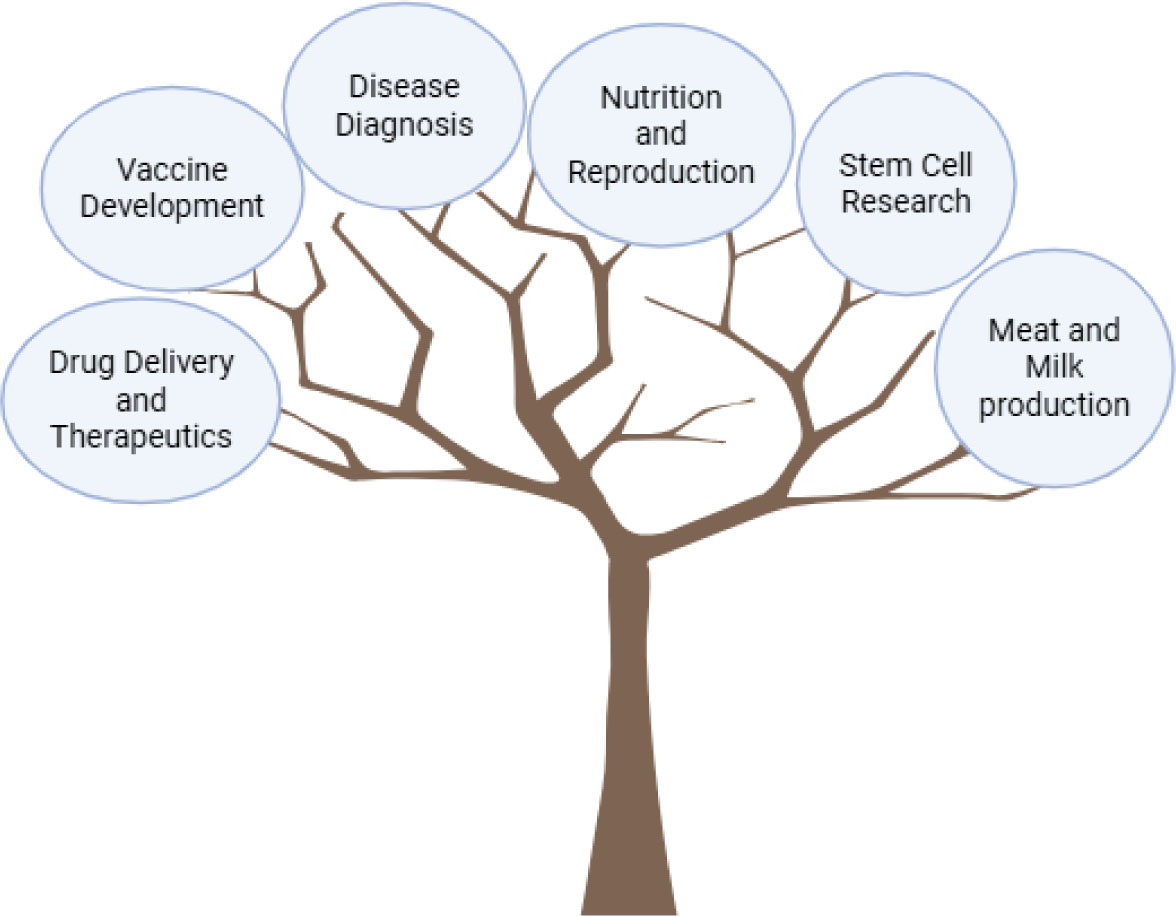
Figure 3.
Diverse applications of nanotechnology in the veterinary sector
Drug delivery and therapeutics
Numerous nanocarriers are being utilized for the supply of medicines towards the target site in the body system. Effective concentration at desired site and extended period of retention in bloodstream serves the main purpose of targeted drug delivery of nanoparticles to achieve good efficacy of drugs. Additionally, these nanocarriers have the ability to deliver different water-soluble medications into the brain since they can pass through impermeable barriers like the blood-brain barrier (Zorkina et al., 2020). Moreover, animal antibiotic usage can be decreased and drug residues in animal tissues can be decreased by using nanoparticles for targeted drug delivery (Hanafy, 2018). Drugs used for tumors have been delivered through lipid-based nanomaterials for their efficient delivery towards the target sites (Walewska et al., 2023). Previous research has shown the applicability of various nanoparticles (Nps) like Ag-Nps employed for giving rabies vaccine in dogs (Hassan et al., 2020) and carbon nanoparticles applied in cancer treatment (Zhao et al., 2019). Animal diseases of many kinds are being treated with micronanoparticle-based medicines. Among these nanomaterials, silica based nanoparticles have been easily conjugated with other medicinal compounds and employed as an effective target drug carrier in diseased animals (Hassan et al., 2020). Metallic nanoparticles are frequently utilized in animal medicine, especially against a variety of pathogenic organisms, arthropods, and malignant disorders. Many literatures report that silver nanoparticles exhibit strong bactericidal action against resistant bacterial strains. The antibacterial activity of silver nanoparticles (AgNPs) against S. aureus and P. aeruginosa proved to be effective in curing mastitis in goats (Yuan et al., 2017). Green AgNPs and their eco-friendly phyto-preparation with neem, 2, 3-dehydrosalanol and quercetin were found effective against arthropods of livestock (Avinash et al., 2017). These green silver nanoparticles were also used in cancerous diseases because they produce selective toxic effects on cancer cells but exhibit less toxic effects on normal cells (Avinash et al., 2017). Frequently occurring neoplastic conditions in animals such as venereal tumor, blood cancer and equine sarcoid could be effectively treated with the ZnO Nps (Rahman et al., 2022; Hozyen et al., 2019). Apart from neoplastic conditions, the other application of ZnO Nps is in subclinical mastitis where they can reduce somatic cell count and enhance milk production in cattle (Rahman et al., 2022; Hozyen et al., 2019). Similarly, a radioactive gold nanoparticle with gum arabic was found effective against prostate cancer in canines (Ambrosio et al., 2022). Iron oxide and platinum containing nanoparticles have shown therapeutic effects in cancerous diseases and also delivered conjugated medicines to the target cancer cells (Hernández et al., 2023). Natural and synthetic polymeric nanoparticles like PEG (polyethylene glycol), PLGA (poly lactic-co-glycolic acid), and PLA (poly lactic acid) are being used in veterinary medicine for their biological properties that include enhanced perfusion, long retaining effects, low toxicity and high solubility in biological fluids (Carvalho et al., 2021). These nanoparticles of polymeric material are applied for many animal diseases caused by different bacteria, viruses and protozoa (Carvalho et al., 2021). Nanoparticles of carbon composite are utilized for a variety of applications including diagnostic and therapeutic in veterinary science. Graphene based single walled nano tubes used as antiviral drug carrier and graphine oxide nanoparticles are found effective against mastitis in cow (Neculai-Valeanu et al., 2021). Liposomes are lipid vesicles with particle size ranging from 50 to 700 nm, and have potential to be used as diagnostic agent in MRI and drug delivery carrier especially in treatment of malignancy (Shivanna et al., 2019). Nanoparticle based nanosensors have been applied for diagnosis of animal diseases in livestock such as anthrax, avian influenza, foot-and-mouth disease, mastitis and bovine tuberculosis (Rios et al., 2024).
Vaccine development
In order to prevent and treat a variety of infectious diseases in cattle, vaccination is a crucial strategy. Nanoparticle based vaccines may increase vaccine efficacy, immune response and make it easier for the vaccine to reach the intended site of action (Pati et al., 2018). Nanocarriers protect the active substances or antigens from destruction and help in their delivery, processing and release (Pati et al., 2018). Generally, nanoparticles have enhanced synthesis of genes involved in defense mechanism and inflammation and are thereby able to induce immune responses in the body (Liu et al., 2022). Among metallic nanoparticles, gold nanoparticle encapsulated antigen of bacteria and virus have been applied to induce immune responses against infectious diseases like influenza (Ingrole et al., 2021), foot-and-mouth disease (Teng et al., 2021), listeriosis (Dykman, 2020). Kumar et al. (2024) demonstrated the application of novel silica-based nanoparticle vaccine against Anaplasma marginale, which has been responsible for major threat to cattle industry. Recently, oxidized carbon nanoparticles were applied to deliver recombinant Mycobacterium tuberculosis protein effectively and produced robust T-cell responses in mice (Sawutdeechaikul et al., 2019). Natural polymers such as chitosan nanoparticles have been extensively used for vaccine antigen and delivery of drugs because of its lesser toxic load and good adhesive property (Li et al., 2017). Studies show that polymeric nanoparticles such as PLGA (poly lactic-co-glycolic acid) and PLA-PEG (polylactic acid–polyethylene glycol) had been utilized for the delivery of anthrax and tetanus toxoid vaccine antigen, respectively (Al-Nemrawi et al., 2022)). Furthermore, chickens are getting vaccinated against influenza and Newcastle disease via nasal sprays using liposomes and other polymers based on chitosan (Yang et al., 2020; Attia et al., 2021). Some researchers have explored the application of dendrimers such as polypropylene imine (PPI) and polyamido amine (PAMAM) in the transportation of different antigenic molecules. Kisakova et al. (2023) reported that multiple antigens containing dendrimer can generate strong immune response against Ebola virus, Toxoplasma gondii, and H1N1 influenza. Biocompatible hollow polymeric and chaperna-based nanoparticles have been utilized for excellent delivery of Middle East respiratory syndrome coronavirus (MERS-CoV) subunit vaccine and its recombinant vaccine, respectively (Lin et al., 2019; Kim et al., 2018). However, gold nanoparticles containing S protein have failed to induce protective antibodies against severe acute respiratory syndrome corona virus (SARS-CoV) infection (Sekimukai et al., 2020).
Disease diagnosis
Nanotechnology offers innovative solutions for disease detection in livestock, significantly enhancing the capacity to monitor and manage animal health. The integration of nano-technique in disease diagnosis is driven by its potential to provide rapid, accurate, and cost-effective diagnostic tools, leading to early disease detection, improved animal welfare, and reduced economic losses (Thwala et al., 2023). One of the key uses is the fabrication of nanosensors, which can detect disease biomarkers in biological samples such as blood, urine, saliva, or breath (Noah and Ndangili, 2022). These sensors, often made from gold nanoparticles or quantum dots, are more specific and sensitive, capable of identifying minute concentrations of biomarkers that indicate diseases like bovine tuberculosis, foot-and-mouth disease, and mastitis in cattle (Tewari et al., 2021). Lab-on-a-chip devices, another nanotechnology innovation, integrate multiple laboratory functions on a single chip, allowing for complex diagnostic tests at the point of care (Manessis et al., 2022). In just a few minutes, these devices may provide thorough health assessments by detecting disease biomarkers using microfluidics and nanomaterials (Manessis et al., 2022). Additionally, nucleic acid-based nanodiagnostics, involving nanoparticles to detect specific DNA or RNA sequences, increase the accuracy and speed of traditional PCR assays, enabling rapid diagnosis of viral, bacterial, or parasitic infections (Kumar et al., 2024). Wearable nanosensors further contribute by continuously monitoring physiological parameters and detecting signs of illness in real-time, allowing for prompt intervention and reducing the spread of contagious diseases within herds (Alipio and Villena, 2023). These advancements collectively promise to transform livestock disease management, making it more efficient, proactive, and sustainable.
Nutrition and reproduction
Utilizing nanoparticles in veterinary sector has shown to have significant promise for enhancing animal nutrition and reproductive health. Vital components like vitamins and minerals are better delivered, absorbed, stabilized, and bioavailable when they are encapsulated by nanoparticles (Arshad et al., 2021). As a case study, it is currently demonstrated that selenium encapsulated in nanoparticles increases absorption in animals, leading to better growth rates and immunological function (Malyugina et al., 2021). Furthermore, nanoparticles enhance feed efficiency by producing more potent feed additives. Nano-sized zinc oxide in pig diet reduces intestinal infections, improves nutrient absorption, and helps in efficient feed utilization that may lead to better growth and promote overall health (Baholet et al., 2022). Moreover, nanotechnology also makes it possible for nutrients to be released under controlled conditions inside the digestive system, assuring a steady supply of vital nutrients that promote greater growth and protect feed expenses (Iqbal et al., 2022).
Researchers are employing nanoparticles to deliver drugs or reproductive hormones straight to the uterus or ovaries in an effort to increase the effectiveness of treatments in the domain of animal reproduction (Saadeldin et al., 2020). In order to induce ovulation in cattle, for instance, gonadotropin delivery methods based on nanoparticles have been investigated. Nano-delivery of reproductive hormones enhances pharmacokinetics and pharmacodynamics, especially for short-lived hormones like GnRH. Biodegradable nanoparticles offer controlled release, improved mucosal absorption, and alternative administration routes. This approach reduces hormone dosage, enhances animal welfare, and minimizes exposure risks for workers in livestock management. A CIDR-based protocol using propylene glycol-diluted GnRH successfully synchronized estrus in sheep (Santos-Jimenez et al., 2020). Additionally, preliminary findings indicate that GnRH-chitosan-TPP nanoparticles enhance follicular growth and ovulation in rabbits, demonstrating their potential as a viable eCG substitute (Saadeldin et al., 2020). Additionally, sperm cells are shielded from oxidative stress by nanotechnology, increasing their viability during storage and raising the success rates of breeding programs, which improves the preservation of semen utilized in artificial insemination (Saadeldin et al., 2020). Now, cryopreservation of sperm, oocytes, or embryos can be accomplished via nanotechnology (Remião et al., 2018). Selenium nanoparticles (SeNPs) and zinc oxide nanoparticles (ZnONPs) have been shown to enhance the cryoresistance of camel epididymal spermatozoa, improving their viability post-thaw (Shahin et al., 2020). Similarly, gamma-oryzanol nanoparticles have been reported to enhance the post-thaw quality of rooster sperm, contributing to better fertility outcomes (Najafi et al., 2022). In goats, ZnO nanoparticles have demonstrated the potential to improve semen quality after freezing and thawing, ensuring higher sperm motility and integrity (Abedin et al., 2023). These findings highlight the promising role of nanotechnology in preserving sperm quality across different livestock species. The gender of the fetus has also been determined using biochips and nanoparticles (Wang et al., 2022). The productivity, well-being, and reproductive efficiency of animals are all being improved by numerous applications of nanotechnology, and this is creating opportunities for more innovative and fruitful approaches to veterinary research.
Stem cell therapy
Stem cells are parent cells to all tissue types of the body and possess the distinct characteristics of self-renewal and differentiation into any type of cell in the body (Siddharth, 2022). The embryonic, adult, and induced pluripotent stem cells are different types based on their developmental potential. The embryonic and induced pluripotent cells can differentiate into any type of cell in the body, whereas the adult stem cell differentiates only into specific cell lineages similar to its origin. Stem cells such as iPSCs (induced pluripotent stem cells) were generated and mesenchymal stem cells (MSCs) were isolated from livestock and pet animals (Weeratunga et al., 2023; Prządka et al., 2021). Nanotechnology and stem cell research are promising research areas, but the application of nanotechnology in livestock stem cell research is an emerging field. Nanotechnology can enhance stem cell applications in cell sorting, imaging, tracking, retention, delivery, directed differentiation and regeneration therapies. Most of the research work on cell imaging, cell sorting, tracking and retention has been carried out in human stem cells. Magnetic nanoparticle (MNP) conjugates were used to label and sort the stem cells by using the magnetic force (Liu et al., 2020). Several reports suggested the higher efficiency of magnetic nanoparticles in isolation and enrichment of stem cells (Semeano et al., 2022; Kuru et al., 2024). The current most widely used methods for tracking injected stem cells include magnetic resonance imaging (MRI) (Klontzas et al., 2021), quantum dots (QDs) (Ma et al., 2023) and gold nanorods (Sun et al., 2019). Quantum dots are known as nanoscale semiconductor crystals, which emit light of various colors based on the size, upon exposure to UV light. CdSe/ZnS quantum dots-labeled MSCs demonstrated success in reducing glucose content in the type-1 diabetic rat model. After 8 weeks of treatment, the fluorescent imaging suggested a significant accumulation of labeled cells in the rat pancreas compared to the control group (Liu et al., 2015). The role of MSC and macrophages in vascular regeneration was demonstrated using golden nanorods. Photoacoustic imaging for cell tracking and the detection of infiltrating macrophages in the wound area was demonstrated by Ricles et al. (2014) with the use of dual golden nanorods. The higher efficiency of nanoparticles in improving the number and retention of transplanted cells at the site of repair has been proven in many disease models including liver (Wang et al., 2016), heart (Wang and Bai, 2023), vascular system (Wang and Bai, 2023) and brain (Shen et al., 2016). Human neuroprogenitor cells (hNPCs) labeled with ultrasmall superparamagnetic iron oxide (USPIO) nanoparticle Molday ION Rhodamine B (MIRB™), enhanced the cell retention at the cortical site of the brain in traumatic brain injury model in rats (Shen et al., 2016). Stem cells are highly responsive to the biochemical and biophysical cues received from their environment. Stem cells grown on nano-scaffold coupled with growth factors can improve the outcome of regeneration therapies with the achievement of directed differentiation. In response to nano-topography, stem cells establish integrin-mediated focal adhesions, which initiate the events of mechanical transduction and ultimately lead to changes in gene and protein levels and the differentiation status of the cells (Lee et al., 2017). Nano-fiber, nano-tube and micro/nano vesicles have been successfully utilized to direct stem cell differentiation. The collagen-nanoparticle composite fiber induced the tenogenic differentiation of adipose-derived stem cells by topographical cues received from the collagen fibril and the controlled release of PDGFs (platelet-derived growth factor) (Cheng et al., 2014). Thin film scaffolds made of carbon nanotubes (CNT), chitosan and poly-ɛ-caprolactone were used to culture canine BMSCs (bone-marrow derived MSCs) and they showed the similar rate of proliferation as that of the standard method (Das et al., 2017 a). Canine BMSCs cultured over hydroxyl functionalized multiwalled CNT showed reduced proliferation and enhanced osteogenic and chondrogenic differentiation, whereas neuronal differentiation was supported by single walled CNT (Das et al., 2017 b; Madhusoodan et al., 2019). Nerve growth factor encapsulated chitosan nanoparticles transdifferentiated canine MSCs into nerve cells (Mili et al., 2018). In canine iPSC culture, functionalized CNTs were used as a feeder layer and found suitable for supporting cardiac and neuronal differentiation (Natarajan et al., 2021; Mondal et al., 2022). Rabbit BMSC-laden nanocomposite scaffolds also showed enhanced bone regeneration in rabbit critical size segmental bone defect model (Kalaiselvan et al., 2024). These research findings indicate the significant potential of nanomaterials in directing stem cell fate and tremendous possibilities of applications in regenerative medicine.
Milk production
Nanotechnology has emerged as a promising tool to enhance milk production and quality in livestock. Recent studies have explored the effects of various nanoparticles, particularly zinc oxide (ZnO) and selenium (Se) nanoparticles, on lactation performance, nutrient utilization, and udder health. Zinc is an essential trace element involved in numerous physiological functions. Traditional zinc supplements often suffer from low bioavailability, leading to inefficiencies and environmental concerns. Recent studies have demonstrated that zinc oxide nanoparticles (ZnONPs) can overcome these limitations. A study by Xie at al. (2024) investigated the effects of dietary ZnONPs on dairy goats. The supplementation with ZnONPs at 30 mg/kg dry matter in Guanzhong dairy goats led to increased milk yield and fat content. The treatment also positively influenced rumen microbiota, enhancing the abundance of beneficial bacteria like Prevotella, which are associated with improved nutrient absorption and energy metabolism. Dietary inclusion of nano zinc at 10 and 20 ppm did not significantly alter milk composition but effectively reduced somatic cell count, indicating improved udder health in Barbari goats (Shafi et al., 2020). Supplementation with ZnONPs at 15 mg/day led to a significant increase in milk yield and upregulation of genes associated with milk production, such as POU1F1, IGF-1, PPARγ, CSN2, and FASN in Baladi goats (Mansour et al., 2025). Selenium plays a crucial role in antioxidant defense and immune function. Under heat stress conditions, dairy animals often experience oxidative stress, leading to decreased milk production. A recent study explored the impact of selenium nanoparticles (SeNPs) supplementation in dairy goats subjected to heat stress. The findings revealed that SeNPs significantly increased milk yield, milk fat, and lactose content. This enhancement was attributed to the modulation of rumen microbiota, notably increasing beneficial bacteria like Prevotella and Ruminococcus, which improved fiber degradation and energy metabolism. Additionally, SeNPs enhanced antioxidant capacity by upregulating glutathione metabolism, thereby mitigating oxidative stress associated with heat stress (Ying et al., 2025). Copper is vital for various enzymatic processes and immune function. Traditional copper supplements can interact with dietary antagonists, reducing their efficacy. A study evaluated the use of copper oxide nanoparticles (CuONPs) coated with lysine in dairy cows. The results indicated that CuONPs maintained adequate copper status in cows, even in the presence of antagonists like sulfur and molybdenum. This suggests that CuONPs can serve as a more effective copper source, potentially supporting better health and productivity in dairy animals (Williams et al., 2024). Mastitis, particularly in its subclinical form, can significantly lower milk yield; therefore, its prevention is crucial for maintaining or even improving milk production. Lange et al. (2021) found that 200 ppm CuNPs significantly reduce biofilms of major mastitis pathogens. Nanoparticles, including CuNPs, generate reactive oxygen species (ROS), disrupt bacterial membranes, and impair biofilm structures. Kalinska et al. (2019) confirmed CuNPs can reduce pathogen viability with low mammary-cell toxicity. Reducing mastitis incidence and severity theoretically supports higher milk yield, improved quality, and reduced somatic cell count (SCC).
Meat production
Incorporating nanoparticles into animal feed has shown promise in improving nutrient absorption, growth performance, and meat quality. For instance, nanoemulsions containing omega-3 fatty acids have been found to increase the content of beneficial fatty acids in poultry meat and eggs, enhancing their nutritional value (Almeida et al., 2024). The overuse of antibiotics in livestock has led to increased antimicrobial resistance. Recent research suggests that carbon and polymer-based nanoparticles can serve as effective substitutes for antibiotics, reducing the prevalence of resistant pathogens and promoting healthier meat production. Advancements in nanotechnology have also facilitated the development of cultured meat. Nanomaterials are utilized in scaffolding techniques to support cell growth and tissue formation, aiming to replicate the texture and flavor of conventional meat. This approach addresses ethical concerns and environmental impacts associated with traditional meat production (Ebenebe et al., 2024). Dietary inclusion of curcumin nanospheres in pigs led to improved growth metrics, meat quality, and gut health without adverse effects (Moniruzzaman et al., 2023). Supplementation of chitosan nanoparticles in pigs resulted in increased skeletal muscle mass and better meat quality by modulating fatty acid synthesis (Gelaye, 2024). Contrary to this, green zinc oxide nanoparticles in steers negatively impacted growth and meat quality, possibly due to toxicity from phytochemicals used in their synthesis (Gamedze et al., 2024). ZnO/pectin bionanocomposite films effectively reduced microbial growth, extending shelf life in poultry meat (Przybyszewska et al., 2023). Chitosan/starch films with cellulose nanofibers and cinnamon oil were used for raw beef packaging and these films significantly decreased microbial load, enhancing preservation (Sreekanth et al., 2024). Nanostructured lipid carriers with savory essential oil coatings on beef showed reduced microbial counts and spoilage indicators, improving meat stability (Ghasemi et al., 2024).
Conclusion
Nanotechnology has the potential to revolutionize livestock management by offering unprecedented advancements in disease prevention, diagnostics, nutrition, and reproduction. This technique can help improve animal health, lessen the need for antibiotics, and increase overall production by facilitating accurate drug administration, nanoencapsulation of bioactive substances, and real-time disease monitoring. Additionally, nanoscale innovations in feed supplements, nutrient absorption, and reproductive success are set to optimize livestock efficiency and welfare. Beyond these applications, nanotechnology is also revolutionizing meat and milk production by enhancing product quality, safety, and shelf-life. In order to ensure safer and longer-lasting dairy and meat products, nano-based packaging and preservation procedures minimize microbial contamination and spoiling. Moreover, real-time pathogen and contaminant detection via nanosensors enhances food safety and consumer confidence. In stem cell research and regenerative veterinary medicine, nanotechnology plays a critical role in tissue engineering and targeted cell therapy. By promoting stem cell differentiation, proliferation, and targeted delivery, nanostructured scaffolds and nanoparticles provide new therapeutic options for musculoskeletal injuries, reproductive issues, and organ regeneration in animals. However, the widespread adoption of nanotechnology in livestock management must address critical challenges, including safety concerns, regulatory frameworks, and public acceptance. In order to maximize advantages while reducing potential hazards, it will be essential to ensure the appropriate use of nanomaterials by means of thorough research and open communication. Nanotechnology has the potential to completely transform livestock management with further development and regulatory control, resulting in better-quality products, healthier animals, and a more sustainable agricultural future.
Future perspective
As nanotechnology continues to advance, its role in livestock management is expected to expand, driving innovation in disease management, nutrition, reproduction, and overall productivity in livestock. Future advancements will probably concentrate on precision livestock farming, where real-time surveillance of environmental variables, disease biomarkers, and animal health is made possible by nanosensors and intelligent monitoring systems. These advancements will help in early disease detection, reducing the need for antibiotics and improving livestock welfare through timely interventions. The future of nanomaterials will improve food safety, quality, and sustainability in the production of meat and milk. Cutting-edge nano-packaging technologies with oxygen-scavenging and antibacterial qualities will minimize food waste by extending shelf life and lowering spoilage. Furthermore, the incorporation of nanoscale food safety sensors in retail and processing settings would enable immediate contamination detection, guaranteeing both consumer safety and legal compliance. Additionally, feed additives made using nanotechnology will improve nutrient absorption and bioavailability, which will boost growth rates and reproductive efficiency. New nano-based supplements will optimize feed utilization while minimizing environmental waste by being customized for species-specific metabolic needs. Nanotechnology is revolutionizing stem cell research and regenerative veterinary medicine by developing biocompatible nanoscaffolds for organ and tissue regeneration, offering new treatments for musculoskeletal injuries and reproductive health disorders. Despite these promising advancements, the widespread adoption of nanotechnology in livestock management will require significant efforts to address biosafety, regulatory frameworks, and ethical considerations. Future research must focus on assessing the long-term effects of nanomaterials on animal health, food safety, and environmental sustainability. Nanotechnology is expected to become a key component in contemporary livestock management as a result of continuous technological advancement. Its integration with regenerative medicines, nutrition, disease management, and food safety will make agriculture more robust, sustainable, and efficient, ultimately ensuring food production for coming generations.