
Table 1.
A documented list of antibiotics and other pharmacologically active substances that are legally or officially banned and permissible levels for application in aquaculture farming
| Sl. No. | Antibiotic agents and other pharmacologically active compounds | Maximum permissible residual levels (in ppm) |
|---|---|---|
| 1 | Chloramphenicol | Nil |
| 2 | Nitrofurans including furaltadone, furazolidone, furvlfuramide, nifuratel, nifuroxime, nifurprazine, nitrofurantoin and nitrofurazone | Nil |
| 3 | Neomycin | Nil |
| 4 | Nalidixic acid | Nil |
| 5 | Sulphamethoxazole | Nil |
| 6 | Aristolochia spp., and preparations thereof | Nil |
| 7 | Chloroform | Nil |
| 8 | Chlorpromazine | Nil |
| 9 | Colchicine | Nil |
| 10 | Dapsone | Nil |
| 11 | Dimetridazole | Nil |
| 12 | Metronidazole | Nil |
| 13 | Ronidazole | Nil |
| 14 | Ipronidazole | Nil |
| 15 | Other Nitroimidazoles | Nil |
| 16 | Clenbuterol | Nil |
| 17 | Diethylstilbestrol (DES) | Nil |
| 18 | Sulfonamide drugs (approved sulfadimethoxine, sulfabromomethazine and sulfaethoxypyridazine) | Nil |
| 19 | Fluroquinolones | Nil |
| 20 | Glycopeptides | Nil |
| 21 | Tetracycline | 0.1 |
| 22 | Oxytetracycline | 0.1 |
| 23 | Trimethoprim | 0.05 |
| 24 | Oxolinic acid | 0.3 |
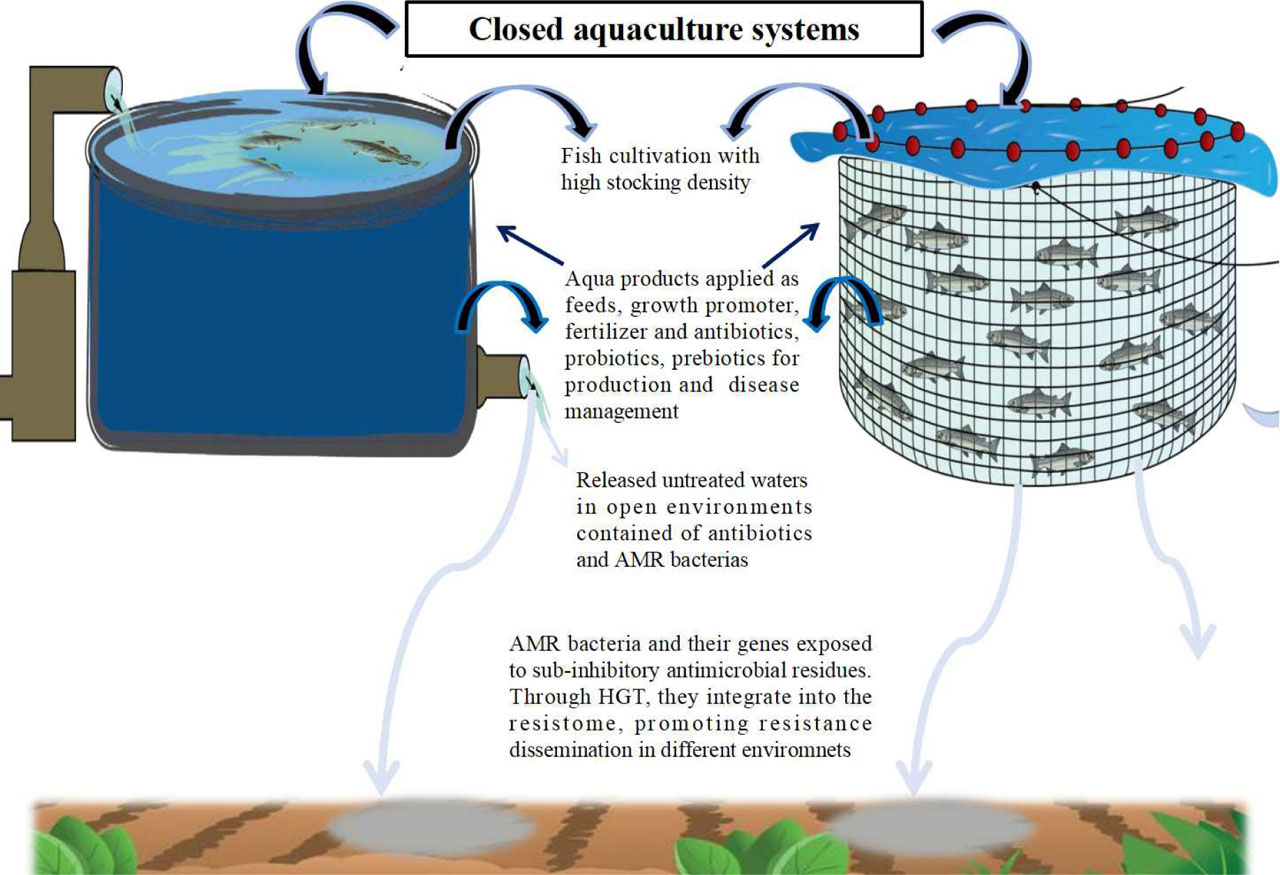
Figure 1.
The release of leftover antibiotics into aquatic systems contributes to the spread and rise of AMR
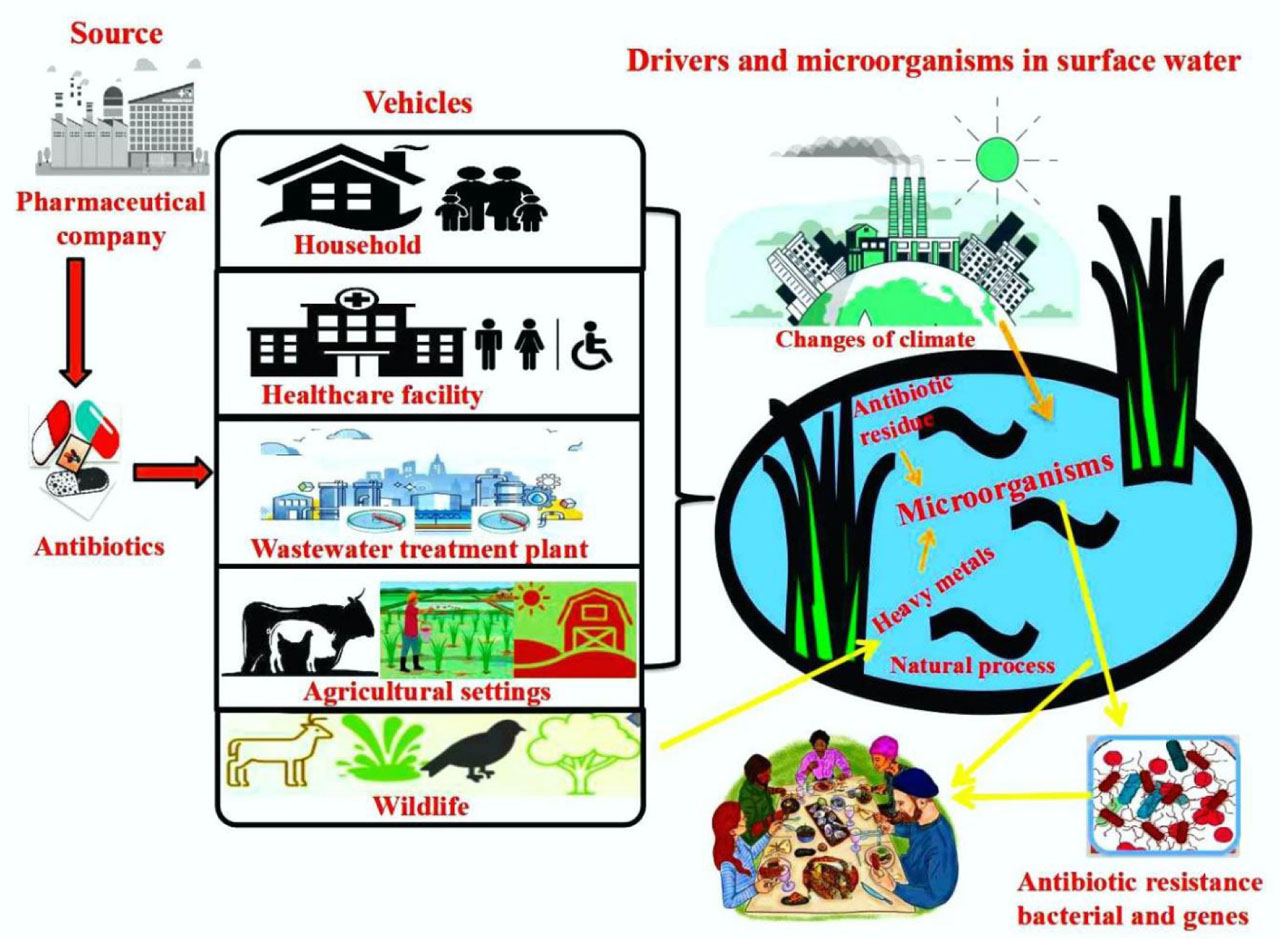
Figure 2.
Model depicting the origin, transmission mechanism and factors influencing AMR in aquatic ecosystems
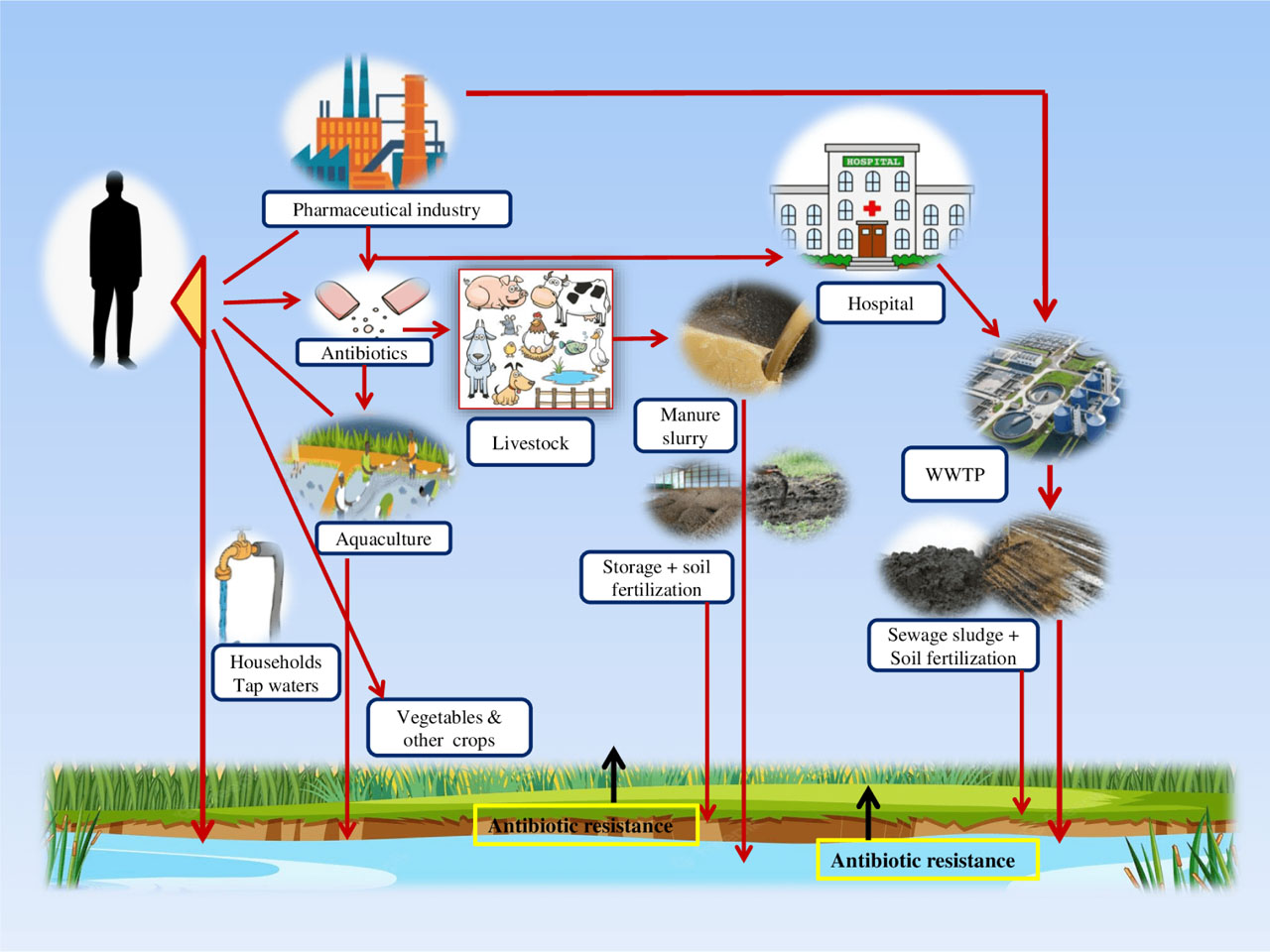
Figure 3.
Aside from the discharge of antibiotic remnants into the nearby surroundings, individuals are also subjected to antibiotic-resistance bacteria