
Pork is one of the most widely consumed meats in many countries due to its high nutritional value and palatability and relatively low price. Mass-produced pork in the European Union comes mainly from hybrid fatteners. For their production, transboundary breeds are used such as Landrace, Large White, Yorkshire, Duroc, Hampshire, and Pietrain, which is characterised by a fast growth rate (Morales et al., 2013). As a result, a significant amount of protein is deposited in the carcass with a limited proportion of fat. Large quantities of lean pork are obtained from such individuals mainly in the form of the pork carcass components most valued by consumers, i.e. loin and ham (Blicharski et al., 2015). In Europe, in addition to transboundary breeds, indigenous pig breeds are used, e.g., Alentejano, Apulo Calabrese, Basque, Bísaro, Black Slavonian, Cinta Senese, Gascon, Ibérico, Krškopolje, Lithuanian Indigenous Wattle, Lithuanian White, Majorcan Black, Mangalitsa, Mora Romagnola, Moravka, Nero Casertano, Nero Siciliano, Sarda, Schwäbisch-Hällisches, and Turopolje (Čandek-Potokar and Nieto, 2019). Indigenous breeds, compared to commercial breeds, are characterised, among other things, by better adaptation to environmental conditions (climate, soil, feed resources and rearing conditions), better health, longevity, and better eating quality of meat (Szulc and Skrzypczak, 2016). In Poland, the native breed pigs are: Puławska, Złotnicka White, and Złotnicka Spotted. The Puławska breed has the oldest breeding traditions (Babicz et al., 2017), the origins of which date back to 1926. Until the 1990s, this breed was very popular due to a number of favourable traits, including resistance to changing environmental conditions and high fattening and slaughter value expressed by efficient feed farm conversion and high dressing percentage. Changes in the demand for lean meat on the pork market towards the end of the 20th century resulted in a decline in the importance of the Puławska breed, resulting in decreased breeding. To counteract this, the Puławska breed was included in the Genetic Resources Conservation Programme in 1996.
Considering that meat processing plants prefer high lean pork carcasses, and that consumers are also more likely to choose lean meat, it is expedient to characterise pork with a varying proportion of muscle tissue. In this aspect, quality classes E and U, which meet the current expectations of processors and consumers with regard to muscling and fatness, are of particular interest. In addition to the proportion of muscle tissue and fat, the consumer pays particular attention to the colour and meat juice loss.
During consumption, the consumer pays greatest attention to palatability, tenderness, juiciness, and the palatability of fat. Cooking methods, i.e. heat treatment used to prepare raw meat for consumption, change the microstructure of the muscle fibres and connective tissue and the water holding capacity (WHC) of the meat, thereby altering the tenderness, juiciness and palatability of processed meat (Migdał et al., 2007). A number of chemical reactions take place in processed meat, including lipolysis, lipid oxidation, Strecker degradation, and the Maillard reaction, resulting in the formation of various metabolites, such as free fatty acids, amino acids, and volatile compounds (Fu et al., 2022), which can affect key characteristics related to consumer preferences (Meinert et al., 2007; Becker et al., 2016). The type of heat treatment, as well as the way it is carried out, also affects the chemical composition of meat due to nutrient losses (Clausen and Ovesen, 2005).
The above studies of changes in raw material quality during heat treatment concern pork from fattening pigs of high-producing breeds (Migdał et al., 2007) or hybrids of these breeds (Meinert et al., 2007; Becker et al., 2016). There are few studies related to the evaluation of changes in raw material during heat treatment obtained from pigs of native breeds (Echegaray et al., 2020; Ianni et al., 2022; Skałecki et al., 2019). In view of the fact that the breed of animal, through its different fat content in meat and different fatty acid profile, may influence lipolysis and fat oxidation in meat products (Fu et al., 2022), it is advisable to determine the technological and eating quality of heat-treated meat derived from fattening pigs of the Puławska breed.
The aim of the study was to determine the effect of carcass leanness in terms of the E and U classes on the slaughter value and quality of heat-treated meat derived from fattening pigs of the Puławska breed.
Material and methods
Animals
The experimental material consisted of 100 fattening pigs of the Puławska breed with carcass leanness falling into classes E and U (1:1 ratio). This choice was dictated by the expectations of consumers, who prefer lean meat and at the same time expect high taste qualities from it.
The animals were obtained within the framework of the Genetic Resources Conservation Programme for Puławska Pigs and were maintained in accordance with welfare requirements (Journal of Laws 2010, No. 56, item 344, as amended) in a litter housing system. The initial weight of the piglets was 28.69±2.07 kg. Fattening lasted 117.7±3.13 days. Daily gain during fattening was 779±64.4 g.
Two-phase feeding was applied ad libitum, with loose feed prepared on the basis of cereals with the addition of a supplementary feed mixture. In the first fattening phase (from 30 to 70 kg body weight), animals were fed a mixture containing 15.8% crude protein, 2.4% fat, 5.5% fibre and 13 MJ ME/kg feed; in the second phase (from 70 kg to the end of fattening) the mixture contained 14.2% protein 2.0% fat, 5.0% fibre, and 12.5 MJ ME/kg feed.
Slaughter of the fattening pigs was carried out in an abattoir, 2–4 hours after transport, according to the slaughterhouse regulations, using automatic electrical stunning (230V, 3A, 50 Hz, 700W) and bleeding in the hanging position.
Age and weight on the day of slaughter were 185.48±3.13 days and 120.05±3.21 kg, respectively. The sex ratio in each group (E and U classes) was 1:1 (gilts:barrows).
Post-slaughter carcass evaluation
Carcass weight was determined using a scale placed within the slaughter line, approximately 25 minutes after the start of slaughter operations. The percentage of meat in the carcass was determined using “one point” measurements taken with a SYDEL CGM device (code: YXX20123.01.T01). As it passes through the backfat and loin, the device's probe takes more than 5,000 tissue brightness measurements. From the analysis of this data, the device assesses the thickness of the fat and muscle, which it then converts into the percentage of lean meat in the carcass and the SEUROP class.
The first stage of dissection was to determine the dividing lines, i.e. the basic dividing line (BDL), which ran tangentially to the lower edge of the cervical spine arch and the lower edge of the pubic bone section, and two transverse dividing lines (TDL): TDL-1 running perpendicular to the BDL between the 4th and 5th thoracic vertebrae, and TDL-2 running perpendicular to the BDL between the 2nd and 3rd sacral vertebrae. The head was then severed at the joint plane between the occiput and atlas (perpendicular to the basic dividing line), the foreleg at the joint between the forearm bones and the wrist, and the hind leg at right angles to the axis of the hind leg, slightly below the ankle joint (through the middle elevation of the middle tarsal bone). Cutting up the half-carcasses along the designated dividing lines resulted in the following primal cuts: ham, loin, neck, shoulder, belly, ribs, chump, front knuckle, hind knuckle, fore leg, hind leg, head, jowl, backfat, tail, groin, leaf fat, and tenderloin.
The weight of the main cuts from the dissection was determined on an electronic scale to the nearest 5 g. The percentage of the five most valuable cuts (ham, loin, neck, shoulder, belly) in relation to the weight of the chilled right half-carcass was calculated. The ham was dissected taking into account the weight of meat, fat, skin, and bone.
Samples, each of 200 g, were collected from both loin (Longissimus lumborum) and ham (Semimembranosus) and vacuum-packed, then transported and stored at a refrigeration temperature of 2–4°C.
Physical properties
The pH of the muscle (Longissimus lumborum) was measured 45 minutes and 24 hours after slaughter with a pH-STAR CPU apparatus (Matthäus). Meat lightness (L) was assessed 24 hours after slaughter using a Minolta CR-310 colorimeter. The test sample was a 1.5 cm slice of loin (Longissimus lumborum). The lightness and pH result is the average of the three measurements. The percentage of free water (WHC) was determined using the method of Grau and Hamm (1952) as modified by Pohja and Niinivaara (1957). First, two samples of ground meat were weighed out at 300 mg each,. The sample was transferred to Whatman filter paper and placed between two glass plates. The plates were pressurised by placing a 2 kg weight on them for 5 minutes. Once the weight and top plate were removed, the visible juice and compressed meat sample was outlined on the filter paper. The meat was then removed and the filter paper was dried. From the difference of the resulting expressible juice and meat areas, the juice area of the test sample was determined in cm2 (1 cm2 of juice area corresponds to 10 mg of free water).
Chemical composition
The samples were homogenised and then the percentages of total fat, total protein, and water were determined using a FoodScan analyser in accordance with PN-A-82109:2010 using artificial neural network (ANN) calibration already available.
Heat treatment
After 48 hours, three types of heat treatment of raw meat were applied: grilling, frying and steaming according to the method presented by Szmańko et al. (2021) and Wyrwisz et al. (2012). Samples of loin (Longissimus lumborum) and ham (Semimembranosus) were prepared for processing as three 1.5 cm-thick slices of meat.
Grilling
The samples were subjected to a heat treatment process at 85°C using an electric rotisserie (230 V, 1.5 kW) with corrugated surface heating plates. The samples were grilled on both sides until a temperature of 72°C was reached inside the slice. The grilling process was carried out using a MORPHY RICHARDS electric grill model 48018, 2017.
Steaming
Loin and ham samples were steamed until a temperature of 72°C was reached inside the slice using a MORPHY RICHARDS compact food steamer, model 48775, 2017.
Frying
The samples were fried at 120°C using an electrically powered frying pan (230 V, 1.4 kW, Hendi brand, 2015), covered, until a temperature of 72°C was reached inside the slice. Rapeseed oil was used as an auxiliary material.
Evaluation of meat after heat treatment
Samples from each heat treatment were homogenised to test the chemical composition using a method analogous to raw meat.
A consumer evaluation of ham and loin was also carried out with 100 participants (50 men and 50 women). The age of consumers was between 25 and 70 years. They all had completed university studies. The evaluation was carried out using the scaling method with the use of linear scales with precisely defined boundary determinations (0–10 conventional units, according to PN-ISO 4121:1998). After heat treatment to 72°C, as described above, the meat was cooled and portioned into pieces of equal size and weight (approx. 25 g) and placed in disposable plastic containers with lids. All samples for evaluation were given unique codes and were administered in a random order to avoid the so-called carry-over effect (effect of the previous sample on the evaluation of the next sample). The test was conducted indoors at 22±1°C, in daylight.
The study took into account the following quality characteristics: overall quality; aroma: meaty, roasted, sour, fatty, foreign; juiciness; tenderness; ease of fragmentation; taste: meaty, roasted, sour, bitter, fatty, foreign.
Statistical analysis
Statistical analysis was performed with SAS software (version 9.4 by SAS Institute Inc Cary, NC) using one-way analysis of variance. The experimental factor was meat class E (50 pcs.) and U (50 pcs.). The dependent variables included in the calculations were body weight, age, and sex. Normality of distribution was assessed using the Kolmogorov–Smirnov test, and Levene's test of homogeneity of variance was used to test for equality of variance. The Tukey test was used for multiple comparisons of means, considering P<0.01 and P<0.05.
Results
Table 1 shows the dressing percentage and carcass leanness and fatness indices. It was shown that the hot and cold dressing percentage remained at a high level and was 81.11% (E), 82.02% (U); and 79.56% (E), 80.01% (U), respectively. With regard to fatness and muscling parameters, statistically significant differences were found between classes E and U in the case of backfat thickness and carcass leanness, where class U carcasses were characterised by 5.69 mm higher fatness (E–16.99; U–22.68, P≤0.05), while average muscling was 3.68% higher in class E (E–56.78, U–53.10, P≤0.05).
Table 1.
Slaughter value indicators of fattening pigs according to conformation class
| Conformation class | Weight of fattening pig (kg) | Hot carcass weight (kg) | Hot dressing percentage (%) | Cold carcass weight (kg) | Cold dressing percentage (%) | Backfat thickness (mm) | Loin eye height (mm) | Carcass meat content (%) | |
|---|---|---|---|---|---|---|---|---|---|
| E | x̄ | 119.63 | 97.03 | 81.11 | 95.18 | 79.56 | 16.99 a | 62.43 | 56.78 a |
| SD | 8.89 | 8.30 | 3.87 | 8.11 | 3.80 | 2.49 | 9.17 | 1.43 | |
| U | x̄ | 120.03 | 98.44 | 82.02 | 96.14 | 80.01 | 22.68 b | 60.67 | 53.10 b |
| SD | 7.98 | 7.53 | 1.89 | 7.33 | 1.84 | 3.46 | 9.35 | 2.01 | |
Table 2 shows the effect of carcass conformation class (E, U) and Table 3 shows the results of detailed ham dissection. It was found that the carcasses of pigs of classes U and E differed statistically significantly only in terms of backfat weight, which was 0.45 kg higher in the pigs of class U (P≤0.05). There was no effect of carcass conformation class on the amount of meat, fat and bone in hams (Table 3).
Table 2.
Dissection results and value of half-carcasses in classes E and U
| Cuts | E | U | ||
|---|---|---|---|---|
| x̄ | SD | x̄ | SD | |
| Ham (kg) | 12.94 | 2.07 | 12.33 | 1.68 |
| Loin (kg) | 4.56 | 0.77 | 4.24 | 0.65 |
| Neck (kg) | 3.50 | 0.41 | 3.70 | 0.40 |
| Shoulder (kg) | 7.01 | 0.85 | 6.64 | 1.54 |
| Belly (kg) | 3.92 | 0.68 | 4.29 | 0.78 |
| Ribs (kg) | 2.51 | 0.25 | 2.67 | 0.34 |
| Tenderloin (kg) | 0.62 | 0.09 | 0.53 | 0.06 |
| Chump (kg) | 0.52 | 0.09 | 0.40 | 0.08 |
| Groin (kg) | 1.29 | 0.46 | 1.46 | 0.54 |
| Front knuckle (kg) | 0.87 | 0.16 | 0.96 | 0.15 |
| Hind knuckle (kg) | 1.42 | 0.25 | 1.50 | 0.17 |
| Foreleg (kg) | 0.58 | 0.09 | 0.57 | 0.08 |
| Hind leg (kg) | 0.79 | 0.19 | 0.82 | 0.06 |
| Head (kg) | 0.30 | 0.29 | 0.30 | 0.21 |
| Jowl (kg) | 1.65 | 0.31 | 1.85 | 0.41 |
| Backfat (kg) | 3.35 a | 0.69 | 3.80 b | 0.56 |
| Tail (kg) | 0.44 | 0.14 | 0.43 | 0.21 |
| Leaf fat (kg) | 1.22 | 0.26 | 1.46 | 0.35 |
| Dissection losses (kg) | 0.10 | 0.10 | 0.12 | 0.10 |
| Half-carcass weight (kg) | 47.59 | 3.76 | 48.07 | 3.88 |
| Weight of 5 cuts (kg) | 31.93 | 2.12 | 31.20 | 2.34 |
| Proportion of 5 cuts in half-carcass weight (kg) | 67.09 | 4.89 | 64.90 | 4.37 |
Table 3.
Ham dissection results by carcass conformation class
| meat (kg) | fat with skin (kg) | bone (kg) | ||
|---|---|---|---|---|
| E | x̄ | 7.71 | 4.02 | 1.21 |
| SD | 1.16 | 1.26 | 0.17 | |
| U | x̄ | 7.10 | 4.27 | 0.96 |
| SD | 0.89 | 1.02 | 0.10 |
Table 4 shows the characteristics of the physical properties of raw meat according to meat class. There were no statistically significant differences in the pH45 and pH24 values of ham and tenderloin. These indicators assumed values characteristic of good quality meat. In the case of free water (WHC) and meat lightness (L*), there was slightly less drip loss and a darker colour in the meat of the ham and loin with conformation class U. However, these differences were not statistically significant.
Table 4.
Physical properties of raw meat according to conformation class
| Trait | Raw ham | Raw loin | ||||||
|---|---|---|---|---|---|---|---|---|
| E | U | E | U | |||||
| x̄ | SD | x̄ | SD | x̄ | SD | x̄ | SD | |
| pH45 | 6.64 | 0.24 | 6.79 | 0.22 | 6.34 | 0.34 | 6.59 | 0.32 |
| pH24 | 5.58 | 0.30 | 5.51 | 0.24 | 5.54 | 0.27 | 5.59 | 0.19 |
| WHC (mg) | 17.23 | 1.34 | 15.59 | 1.56 | 19.49 | 1.14 | 18.65 | 1.45 |
| L* | 49.56 | 4.21 | 47.84 | 4.91 | 54.45 | 3.68 | 52.35 | 4.12 |
Tables 5 and 6 show the chemical composition of raw and heat-treated loin and ham meat according to conformation class. It was shown that the proportion of the most important nutrients, i.e. fat and protein, in raw loin ranged from 2.05% (E) to 2.32% (U) and from 23.89% (E) to 24.01% (U), respectively, while in ham this ranged from 2.68% (E) to 3.05% (U) and from 22.51% (E) to 22.63% (U). Based on statistical analysis, there was no effect of conformation class on changes in the parameters presented, either in raw or heat-treated meat. However, heat treatment of raw meat decreased its water content and increased its protein and fat concentration. As expected there was a loss of water and increase in protein content was found during steaming and grilling of pork loin and ham.
Table 5.
Chemical properties of raw and heat-treated loin
| Loin | ||||||||||||||||
|---|---|---|---|---|---|---|---|---|---|---|---|---|---|---|---|---|
| raw | grilled | fried | steamed | |||||||||||||
| E | U | E | U | E | U | E | U | |||||||||
| x̄ | SD | x̄ | SD | x̄ | SD | x̄ | SD | x̄ | SD | x̄ | SD | x̄ | SD | x̄ | SD | |
| Water (%) | 72.97 | 3.65 | 72.24 | 4.86 | 63.92 | 4.21 | 62.14 | 3.96 | 65.45 | 3.27 | 65.68 | 2.87 | 64.41 | 4.02 | 63.12 | 3.78 |
| Protein (%) | 23.89 | 1.56 | 24.01 | 2.09 | 30.97 | 1.76 | 29.67 | 1.57 | 29.46 | 1.92 | 29.07 | 2.14 | 31.10 | 1.14 | 31.82 | 3.12 |
| Fat (%) | 2.05 | 0.88 | 2.32 | 1.12 | 3.53 | 1.07 | 3.95 | 0.98 | 4.03 | 1.12 | 4.12 | 1.20 | 3.95 | 0.98 | 4.38 | 0.76 |
| Ash (%) | 1.09 | 0.34 | 1.43 | 0.22 | 1.58 | 0.49 | 4.24 | 0.76 | 1.06 | 0.98 | 1.13 | 0.86 | 0.54 | 0.11 | 0.68 | 0.20 |
Table 6.
Chemical properties of raw and heat-treated ham
| Ham | ||||||||||||||||
|---|---|---|---|---|---|---|---|---|---|---|---|---|---|---|---|---|
| raw | grilled | fried | steamed | |||||||||||||
| E | U | E | U | E | U | E | U | |||||||||
| x̄ | SD | x̄ | SD | x̄ | SD | x̄ | SD | x̄ | SD | x̄ | SD | x̄ | SD | x̄ | SD | |
| Water (%) | 73.84 | 4.21 | 73.75 | 3.84 | 64.83 | 3.29 | 63.97 | 5.88 | 66.24 | 4.66 | 66.61 | 3.26 | 64.12 | 4.48 | 63.38 | 5.01 |
| Protein (%) | 22.51 | 1.57 | 22.63 | 2.12 | 30.44 | 2.33 | 29.95 | 2.09 | 28.76 | 2.01 | 27.42 | 2.30 | 30.85 | 1.85 | 31.12 | 2.13 |
| Fat (%) | 2.68 | 0.67 | 3.05 | 0.98 | 3.63 | 1.01 | 4.37 | 1.00 | 4.11 | 0.89 | 4.58 | 1.12 | 3.95 | 0.82 | 4.41 | 0.56 |
| Ash (%) | 0.97 | 0.20 | 0.57 | 0.15 | 1.10 | 0.13 | 1.71 | 0.18 | 0.89 | 0.23 | 1.39 | 0.19 | 1.08 | 0.09 | 1.09 | 0.12 |
Figures 1–6 show the results of the consumer evaluation of pork loin and ham subjected to specific heat treatments. Analysing the consumer evaluation results of grilled loin and ham, it was found that in loin meat, consumers showed more differences between products from different conformation classes than in ham meat. Grilled loin of class U scored higher than loin graded E for meaty, fatty aroma (P<0.05), roasted taste and aroma (P<0.05), as well as receiving lower scores for juiciness (P<0.05) For juiciness and tenderness, consumers assigned higher ratings to the grilled loin classified as E and to the grilled ham graded U. In general, higher overall quality scores in the consumer evaluation were given to U loin and ham. Statistically significant differences in the comparison of hams from the two groups were observed only for tenderness (U>E; P>0.01).
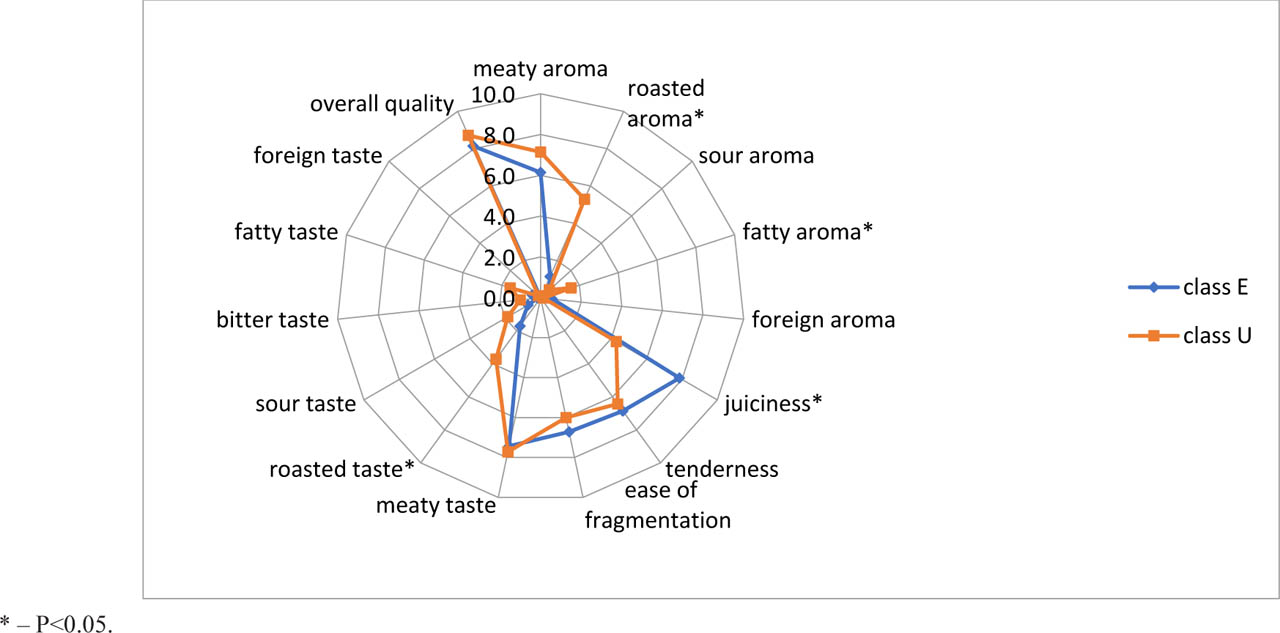
Figure 1.
Consumer evaluation of grilled pork loin from carcasses classified as E and U
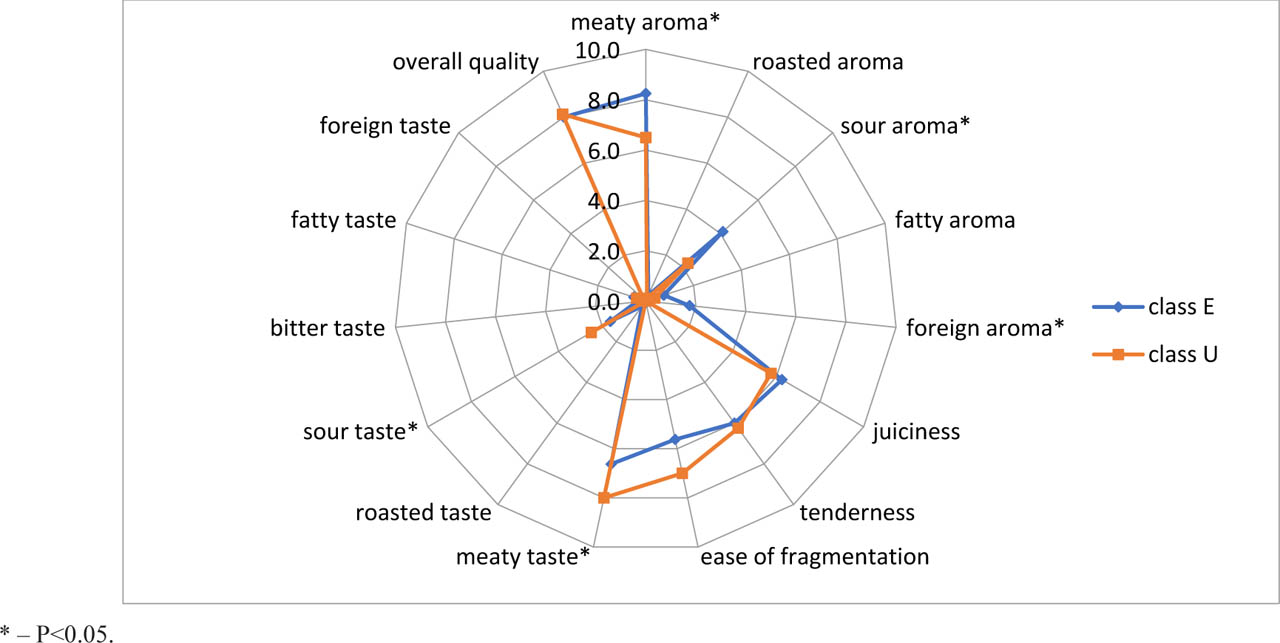
Figure 2.
Consumer evaluation of steamed pork loin from carcasses classified as E and U
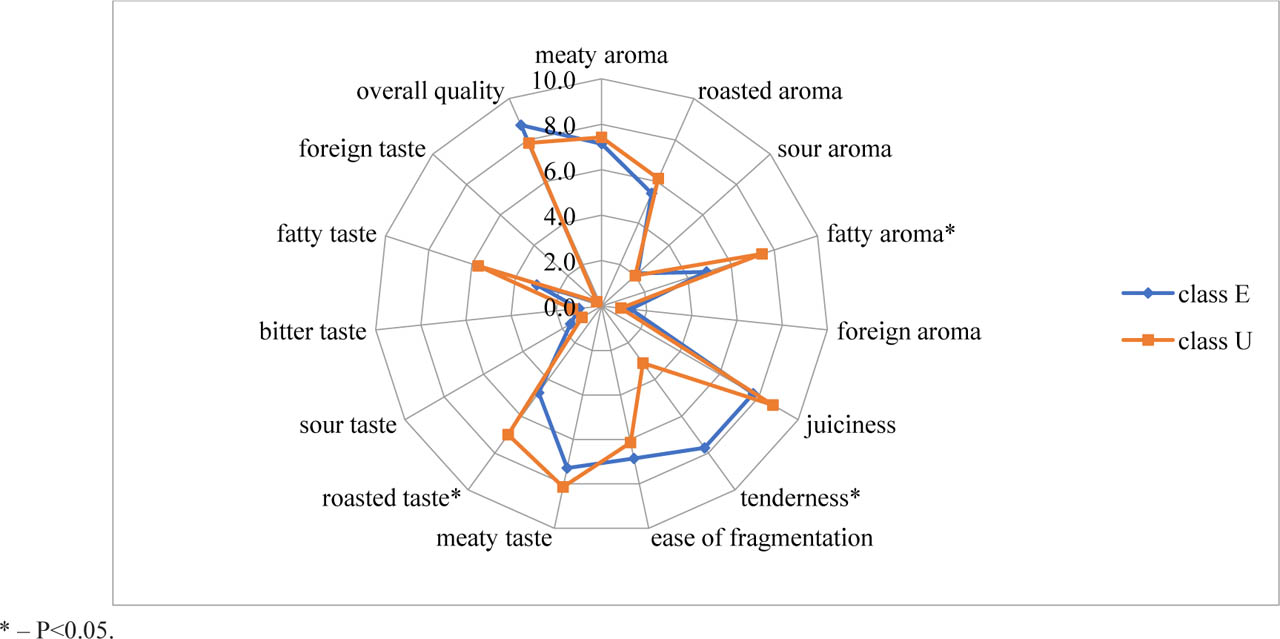
Figure 3.
Consumer evaluation of fried pork loin from carcasses classified as E and U
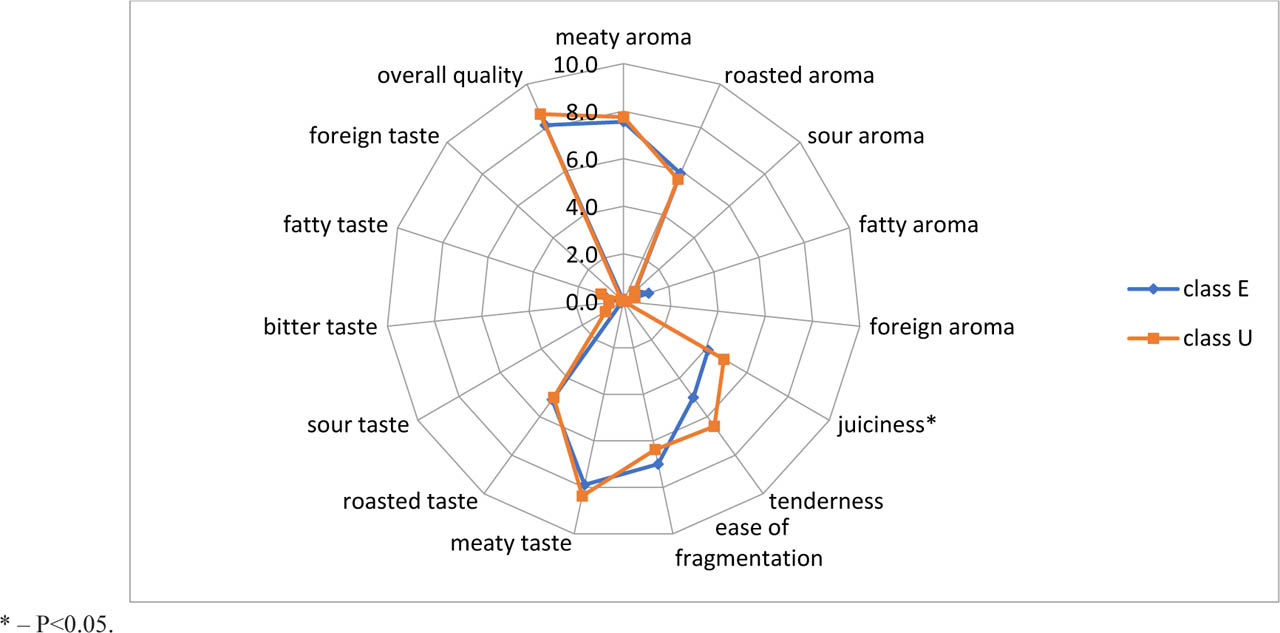
Figure 4.
Consumer evaluation of grilled ham from carcasses classified as E and U
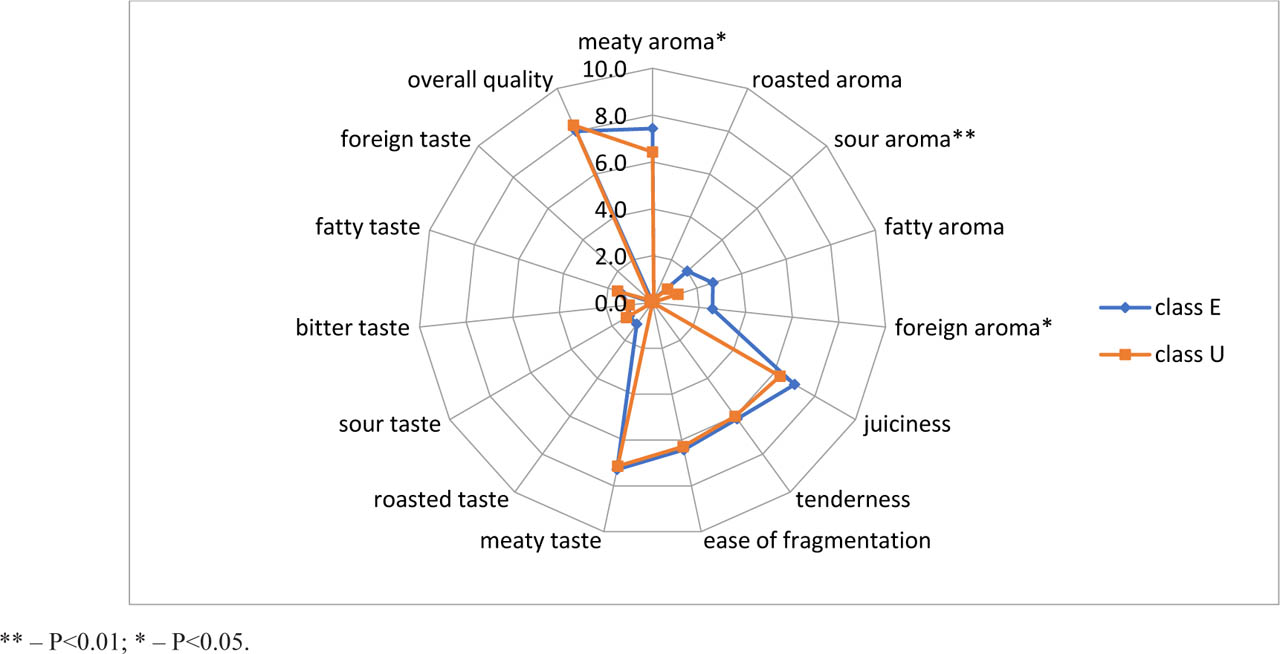
Figure 5.
Consumer evaluation of steamed ham from carcasses classified as E and U
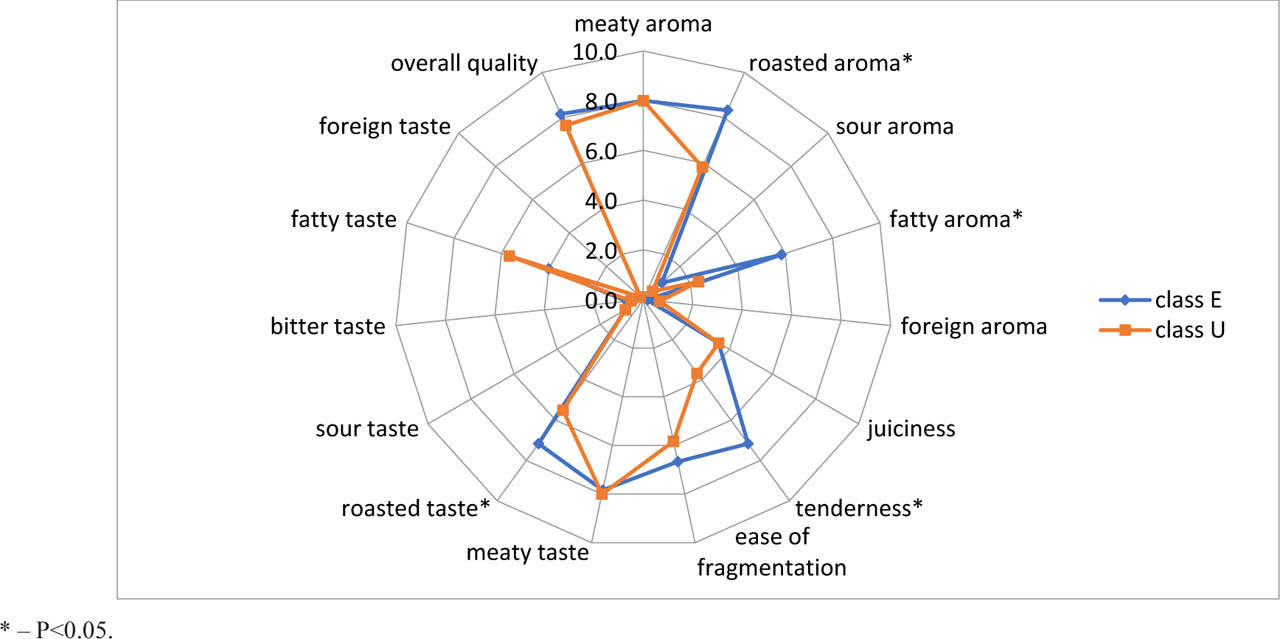
Figure 6.
Consumer evaluation of fried ham from carcasses classified as E and U
In terms of steamed products, loin and ham of class E scored higher in the consumer evaluation regarding meaty (P<0.05) aroma as well as sour (P<0.05) and foreign (P<0.05) aroma. In terms of taste, only in loin did consumers sense differences between conformation classes. Higher scores for meaty (P<0.05) and sour (P<0.05) taste were given to the steamed loin of class U. Considering the overall quality of the analysed products, consumers found no differences in either loin or ham between conformation classes.
In the consumer assessment, fried loin of class U scored higher in terms of roasted and fatty aroma and meaty, roasted and fatty taste, and also scored higher for juiciness. Consumers had the opposite impression for fried ham. Higher scores were given to ham graded E in terms of fatty aroma and roasted aroma and taste. In terms of tenderness and ease of fragmentation, both loin and ham of class E scored higher, compared to class U. Higher scores for the overall quality assessment of the fried loin and hams were also achieved by the E class.
Discussion
Slaughter value of Puławska pigs
Analysing the slaughter value of Puławska fatteners it was shown that the hot dressing percentages were higher compared to other European native breeds, e.g. Mangalitsa or Iberian. According to Radović et al. (2016), the hot dressing percentage of Mangalitsa fatteners slaughtered at 116 kg body weight was 78.3%. In contrast, for Iberian fatteners with a comparable body weight (118 kg), the value was 78.6% (Serra et al., 1998).
According to studies conducted on European native pig breeds, carcass leanness varies considerably between breeds, ranging from 33% for the Mangalitsa breed to 52.7% for the Schwäbisch-Hällisches breed (Čandek-Potokar and Nieto, 2019). Scientific studies also show large variability among pig breeds for lean content. Santos de Silva et al. (2007) showed that the lowest carcass leanness of Bisaro pigs was 46.3%, while the highest was 49.4%. But in a study by Figueiredo et al. (2004), carcass leanness in this breed was as high as 51%. The Mangalitsa pig population also shows variability in this regard, as shown by the results published by Petrović et al. (2010, 2012) and Kralik et al. (2012), where the average carcass leanness of the evaluated animals was 27.8%, 37.1% and 28.8%, respectively.
In the case of the indigenous breeds Puławska, Złotnicka White and Złotnicka Spotted maintained in conservation breeding, the carcass leanness of breeding animals has changed over the years. In 2005, it was, in gilts: Puławska – 54.5%, Złotnicka White – 48.0%, Złotnicka Spotted – 47.5%. In turn, in 2022, the value was as follows: Puławska – 56.1%, Złotnicka White – 49.5%, Złotnicka Spotted – 49% (Szyndler-Nędza et al., 2006, 2023). In terms of carcass muscling, the studied animals represent the currently maintained population of Puławska pigs.
Results of dissection of carcasses into primal cuts
An important element in relation to the profitability of fattener production is the commercial value of the carcass, which depends primarily on the proportion of primal cuts and the tissue composition of the carcass (Nowachowicz, 2012; Nowachowicz et al., 2013). The group of the most valuable pork carcass cuts includes loin, ham, neck, shoulder, and belly. Due to their price and volume share, they represent the main profit from pork carcass sales (Zybert et al., 2005).
In our own research, it was found that the proportion of the five most valuable cuts in E and U half-carcasses was 67.09% and 64.90%, respectively (Table 2). This means that for the population in question, the production of pork obtained from E carcasses was slightly more profitable compared to U carcasses. It should be noted that U carcasses contained statistically significantly (P≤0.05) more backfat, which is combined with a slightly higher (P>0.05) fat content in the culinary meat (Figures 1 and 2). A higher fat content in meat increases its juiciness and palatability This is now beneficial in terms of organoleptic characteristic and appreciated by a large group of consumers (Muñoz et al., 2011). In addition, it is increasingly observed that good-quality backfat is a scarce commodity sought for the production of high-quality cured meats (Catillo et al., 2021).
Results of ham dissection
As can be seen from the data presented in Table 3, the ham as marketed, i.e. without backfat and skin, weighed 8.92 kg in class E and 8.06 kg in class U, and the proportion of muscle tissue in this component ranged from 59.6% (class E) to 57.6 (class U). The weight of this cut in the Puławska breed was lower compared to the results obtained for maternal breeds kept in Poland. According to Tyra (2023), the weight of rump ham without backfat and skin in individuals of the Polish Large White and Polish Landrace breeds assessed in 2022 at the Pig Performance Testing Station was 10.29 kg and 10.36 kg, respectively, with these values still about 1 kg lower a decade ago (Różycki and Tyra, 2014). However, it should be emphasised that the PLW and PL breeds represent the meat type, while the Puławska breed represents the fat and meat type, which in practice means a lower proportion of components with high muscle content.
Physical properties of raw meat
An analysis of the physical properties of raw meat carried out showed in both conformation classes a slightly lower pH45 level for loin compared to ham meat. This could have been translated into water holding capacity expressed by the amount of free water, of which more was recorded in the loin. On the other hand, the reduction in juice loss may be influenced by the higher intramuscular fat content in the meat (Łyczyński et al., 2004). In our study, we observed a slightly higher fat content in the meat of pork loin and ham graded U compared to class E products (by 0.3 and 0.4 percentage points, respectively) (Figures 1 and 2) and a lower WHC value, by 1.64 percentage points in ham and by 0.84 percentage points in loin (Table 4). However, it should be stated that the values of the analysed parameters remained within the limits characteristic of normal quality meat (Przybylski et al., 2016).
Comparing the results of the pH45 and pH24 values of the loin we obtained, similarity was observed to the results reported by Čandek-Potokar and Nieto (2019) for the Basque, Cinta Senese, Iberíco, and Schwäbisch-Hällisches breeds.
One of the important characteristics of pork is its colour, which, as an element of the sensory evaluation of pork, is an important factor influencing consumers' purchasing decisions (Kosicka-Gębska and Gębski, 2014). It is the first indicator from the organoleptic group that they have to deal with when choosing pork.
The performed evaluation of the meat of the Puławska fatteners showed higher colour lightness (L*) in loin and ham of class E (Table 4); however, this difference was not statistically significant. However, the estimated values of this parameter for both products (ham and loin) were similar to the values for the same breed presented by Cebulska et al. (2018). Additionally, Razmaitė et al. (2019) showed L* values of approximately 55 for the Lithuanian Indigenous Wattle breed. In contrast, for the Mangalitsa breed, much lower values indicative of dark meat colour were found: L* equal to 38 (Stanišić et al., 2015). In terms of lightness, loin obtained from the Puławska breed is similar to that obtained from pigs of the Krškopolje, old-type Lithuanian White, and Mora Romagnola breeds (Čandek-Potokar and Nieto, 2019).
Chemical properties of raw and heat-treated meat
The nutritional value of pork and its products expressed by its chemical composition is one of the main factors guiding consumers in their dietary preferences (Połom and Baryłko-Pikielna, 2004; Salejda and Janczar-Smuga, 2013). According to consumers, protein and fat are the most important components determining both the taste sensation and the health-promoting properties of meat (Grochowska et al., 2016).
The data presented in Figures 1 and 2 show that pork loin and ham of class U were characterised by a slightly (statistically insignificant difference) higher fat content, which can translate into their higher calorific value, but also more favourable organoleptic qualities. At the same time, these values obtained in both E and U classes are characteristic of meat of good eating quality and high technological suitability (Blicharski et al., 2015). They are also similar to the values of these parameters (protein and fat) determined for other Polish native breeds. According to literature data, Złotnicka White and Złotnicka Spotted pigs provide meat with a protein content of 21.7–24.5% and 22.3–25.2% and a fat content of 1.77–3.0% and 1.87–3.6%, respectively (Prasow et al., 2018; Szulc et al., 2024).
The proportion of intramuscular fat (IMF) significantly affects the flavour, tenderness and juiciness of heat-treated meat, which is why this parameter is also so important in the opinion of consumers (Tyra and Mitka, 2016). A level of 2.0–3.0% IMF is considered optimal for a highly palatable pork product (Blicharski et al., 2015; Wood et al., 2008). At the same time, animal fat is presented as a major cause of diseases of modern civilisation, including, above all, diseases of the circulatory system (Kołodziej-Skalska et al., 2016). In our own research, but also that of other authors (Becker et al., 2016), it was found that the effect of heat treatment is an increase in protein and lipid concentration and a decrease in water content, which is partially reduced as a result of heating the raw material. Analysing the different types of heat treatment of meat, it can be concluded that, for obtaining a high protein content, steaming and grilling raw meat proved to be the most beneficial for both ham and loin. It was observed that grilled pork loin and ham of class E showed a slightly lower proportion of fat compared to the other thermal treatments of meat in this class.
Consumer evaluation of the product
In a study of consumer interest in pork products, Ruda et al. (2016) showed that the primary determinants of perceived quality of regional pork products were freshness (90%), followed by taste and aroma (81.18% and 74.41%, respectively). Analysing consumer sensations in terms of the quality of meat from different conformation classes (E and U), subjected to heat treatment, it was found that grilled and fried pork loin of class U scored better in terms of taste and aroma. In the case of ham, the fried and steamed product of class E scored higher only in terms of aroma; in terms of taste, no difference was perceived or perceptions were ambiguous. Considering the overall quality score for pork loin and ham, it was found that the lower fat products of class E subjected to frying in the presence of rapeseed oil (temp. 120°C) scored higher, while in the case of fat-free grilling (temp. 85°C) both products with more fat in the meat of class U scored higher. For meat steaming, the panellists found no differences in the overall quality of the meat from the different meat classes. The results obtained for the overall quality of heat-treated meat perfectly reflect the preferences of today's consumers, whose expectations of pork are primarily related to its high muscle content, but also to its adequate taste, aroma and juiciness, parameters that are associated with a higher amount of fat in the meat (Muñoz et al., 2011). In the case of products with a lower fat content (class E), their taste, aroma and juiciness are improved by the addition of rapeseed oil during the frying process.
Conclusion
Based on the analysis of the results, it was shown that the conformation class of the fatteners did not influence the proportion of the five most valuable cuts in the E and U carcasses, which remained at a similar level. The physico-chemical indices of the loin and ham remained within the values characteristic of meat of good quality. The proportion of fat and protein found in loin and ham indicated their very good eating quality and high technological and culinary suitability. Analysis of the selected types of heat treatment of meat showed that, in order to obtain a high protein content in meat, steaming and grilling are the most favourable. In the case of frying in the presence of rapeseed oil, pork loin and ham of class E proved to be the most preferred by consumers, while in the case of fat-free grilling, the most preferred were pork loin and ham of class U.