
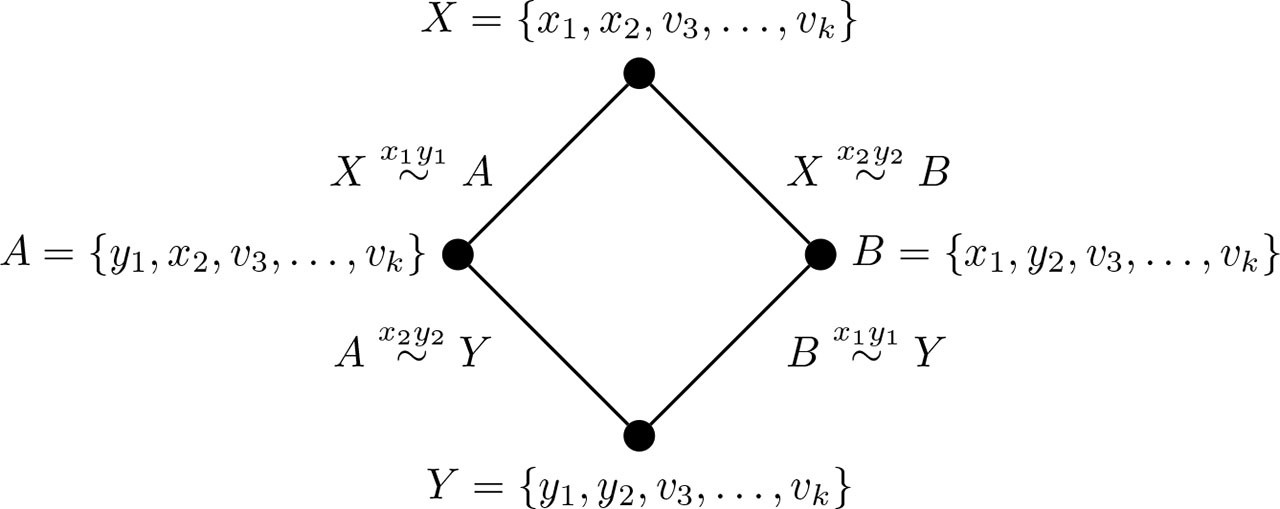
Figure 1.
Reconfiguration structure of an induced C4 subgraph from Proposition 3.6
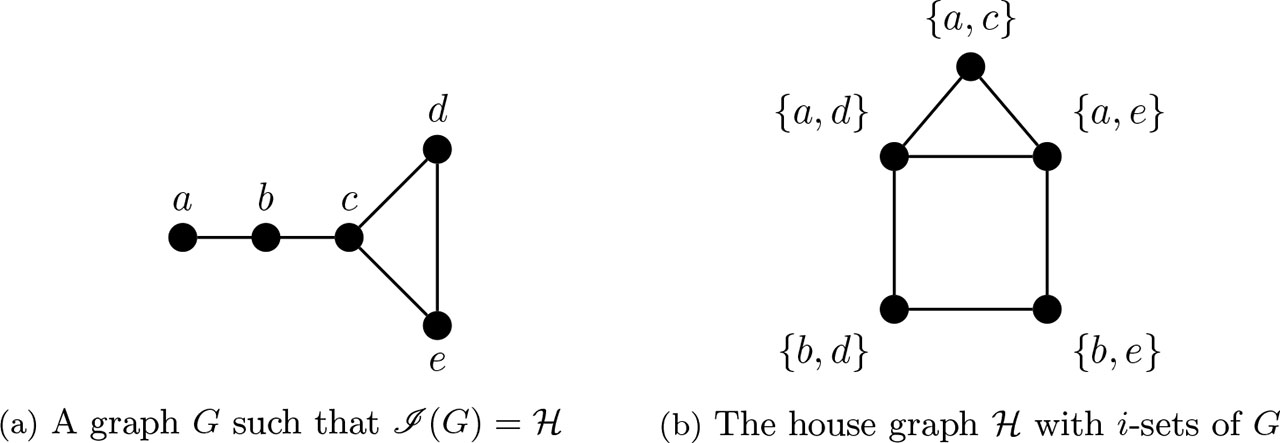
Figure 2.
The graph G for Proposition 3.8 with ℐ (G) = ℋ
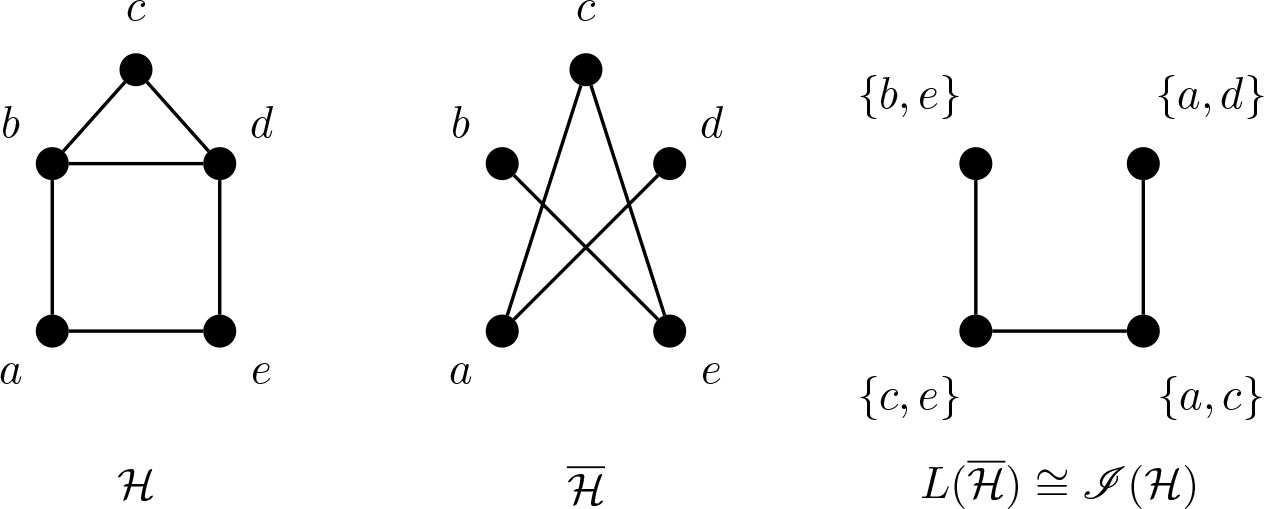
Figure 3.
The complement and line graphs complement of the well-covered house graph ℋ
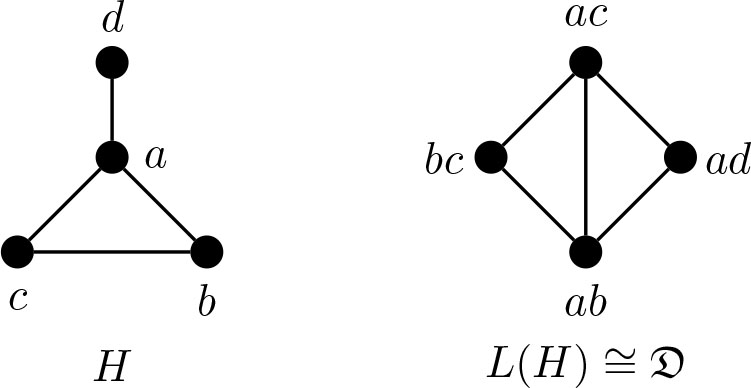
Figure 4.
The “paw” H with L(H) ≅ 𝔇
Table 1.
i-graph realizability of theta graphs
| Θ 〈j, k, ℓ〉 | Realizability | Result |
|---|---|---|
| Θ 〈1, 2, 2〉 | non-i-graph | 𝔇. Proposition 3.7 |
| Θ 〈1, 2, ℓ〉, ℓ ≥ 3 | i-graph | Lemma 5.4 |
| Θ 〈1, k, ℓ〉, 3 ≤ k ≤ ℓ | i-graph | Lemma 5.6 |
| Θ 〈2, 2, 2〉 | non-i-graph | K2,3. Proposition 3.7 |
| Θ 〈2, 2, 3〉 | non-i-graph | κ. Proposition 3.7 |
| Θ 〈2, 2, 4〉 | non-i-graph | Proposition 6.1 |
| Θ 〈2, 2, ℓ〉, ℓ ≥ 5 | i-graph | Lemma 5.10 |
| Θ 〈2, 3, 3〉 | non-i-graph | Proposition 6.2 |
| Θ 〈2, 3, 4〉 | non-i-graph | Proposition 6.3 |
| Θ 〈2, 3, ℓ〉, ℓ ≥ 5 | i-graph | Lemma 5.12 |
| Θ 〈2, 4, 4〉 | i-graph | Lemma 5.14 |
| Θ 〈2, k, 5〉, 4 ≤ k ≤ 5 | i-graph | Lemma 5.16 |
| Θ 〈2, k, ℓ〉, k ≥ 4, ℓ ≥ 6, ℓ ≥ k | i-graph | Lemma 5.18 |
| Θ 〈3, 3, 3〉 | non-i-graph | Proposition 6.4 |
| Θ 〈3, 3, 4〉 | i-graph | Lemma 5.19 |
| Θ 〈3, 3, 5〉 | i-graph | Lemma 5.21 |
| Θ 〈3, 3, ℓ〉, ℓ ≥ 6 | i-graph | Lemma 5.23 |
| Θ 〈3, 4, 4〉 | i-graph | Lemma 5.25 |
| Θ 〈3, 4, ℓ〉, ℓ ≥ 5 | i-graph | Lemma 5.27 |
| Θ 〈3, 5, 5〉 | i-graph | Lemma 5.29 |
| Θ 〈4, 4, 4〉 | i-graph | Lemma 5.31 |
| Θ 〈j, k, 5〉, 4 ≤ j ≤ k ≤ 5. | i-graph | Lemma 5.33 |
| Θ 〈j, k, ℓ〉, 3 ≤ j ≤ k ≤ ℓ, and ℓ ≥ 6. | i-graph | Lemma 5.35 |
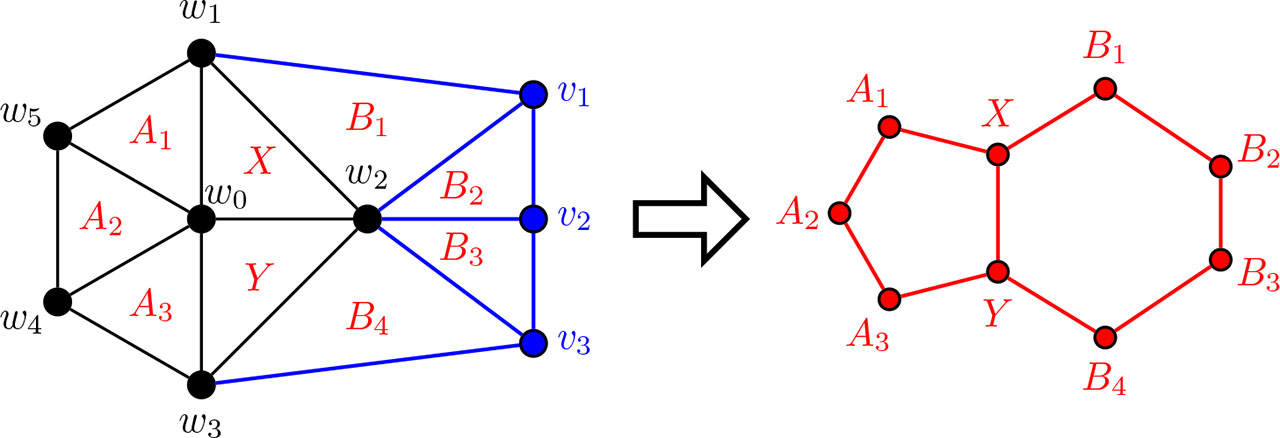
Figure 5.
A graph G̅ (left) such that ℐ (G) = Θ 〈1, 4, 5〉 (right)
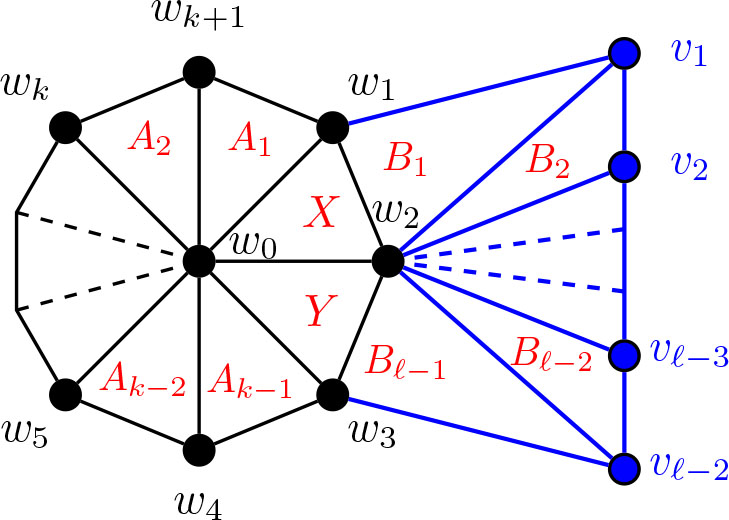
Figure 6.
The graph G̅ from Construction 5.5 such that ℐ (G) = Θ 〈1, k, ℓ〉 for 3 ≤ k ≤ ℓ
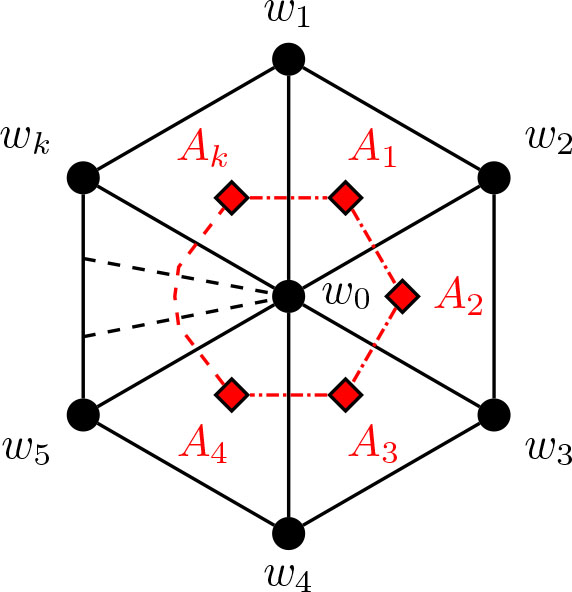
Figure 7.
The wheel Hk = Wk+1, with the i-graph of its complement, , embedded in red
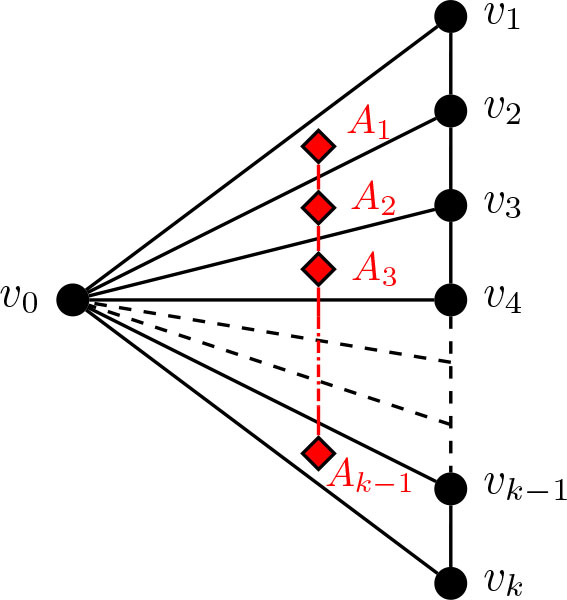
Figure 8.
The fan Hk = K1 ∨ Pk, with the i-graph of its complement, , embedded in red
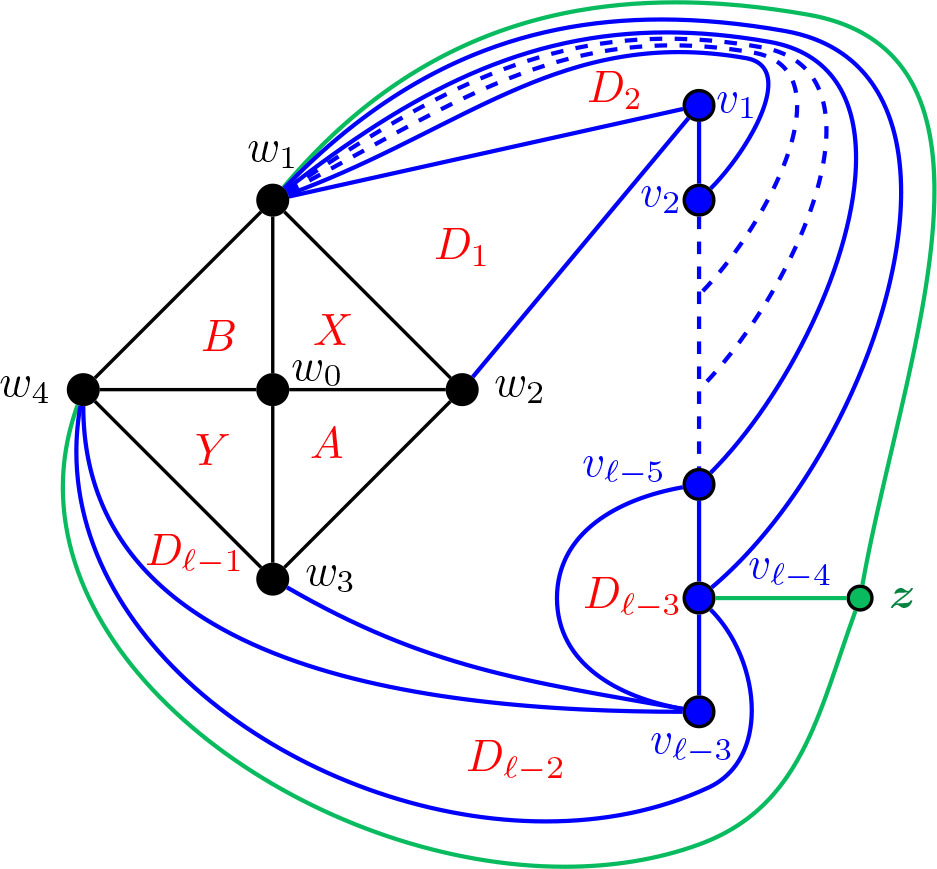
Figure 9.
The graph G̅ from Construction 5.9 such that ℐ (G) = Θ 〈2, 2, ℓ〉 for ℓ ≥ 6
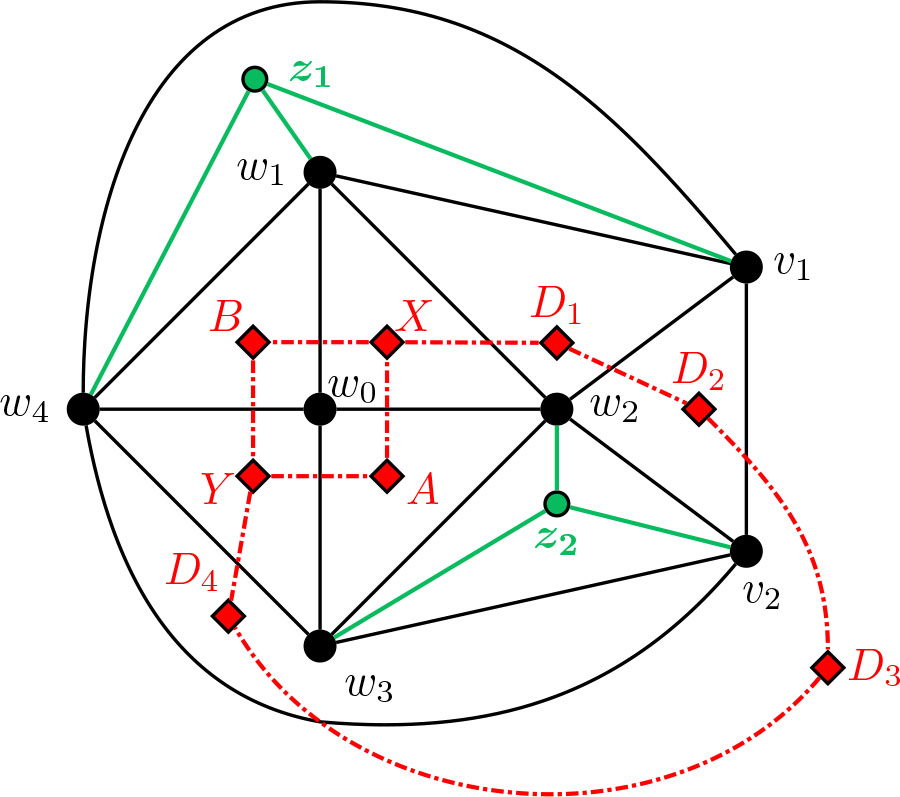
Figure 10.
The graph G̅ from Construction 5.9 such that ℐ (G) = Θ 〈2, 2, 5〉, with Θ 〈2, 2, 5〉 overlaid in red
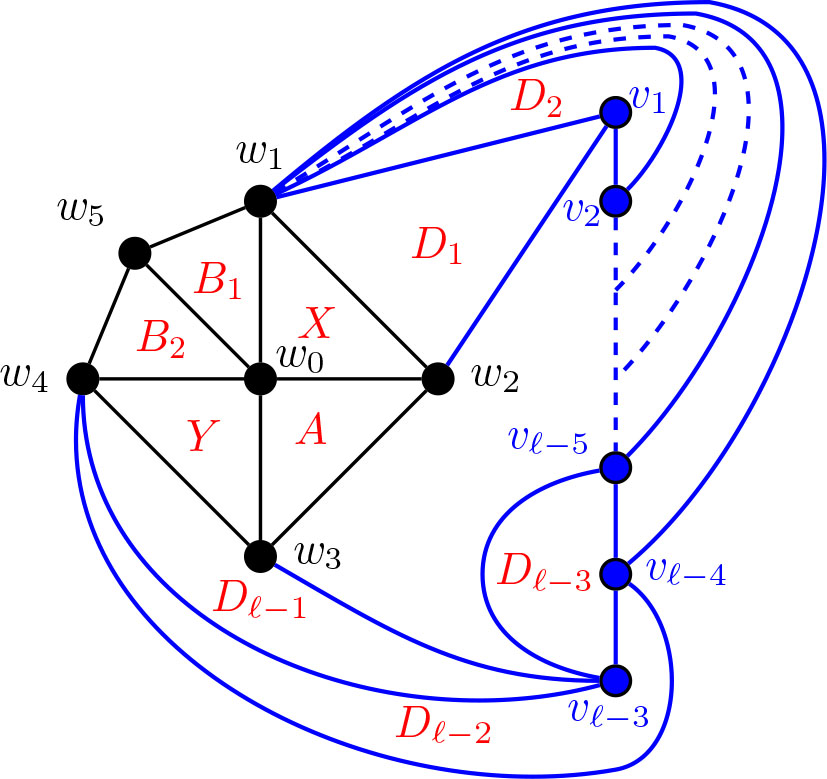
Figure 11.
The graph from Construction 5.11 (a) such that ℐ (G2,3, ℓ) = 𝒜 (G2,3, ℓ) = Θ 〈2, 3, ℓ〉 for ℓ ≥ 6
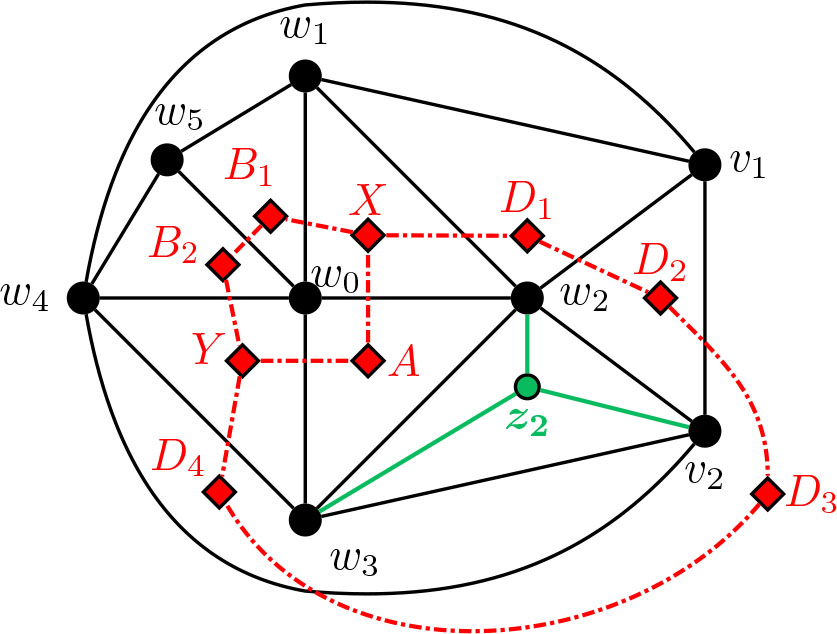
Figure 12.
The graph from Construction 5.11 (b) such that ℐ (G2,3,5) = Θ 〈2, 3, 5〉, with ℐ (G2,3,5) over-laid in red
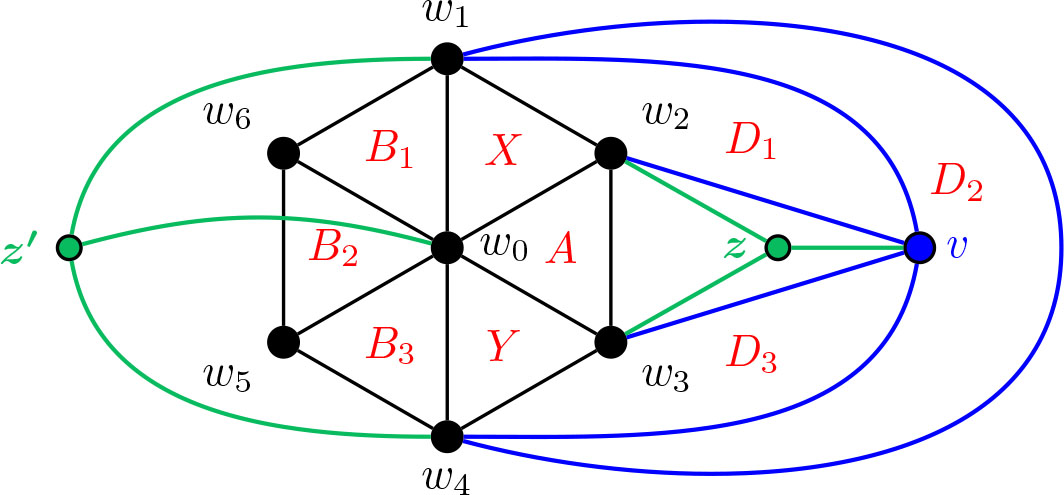
Figure 13.
A graph G̅ such that ℐ (G) = Θ 〈2, 4, 4〉
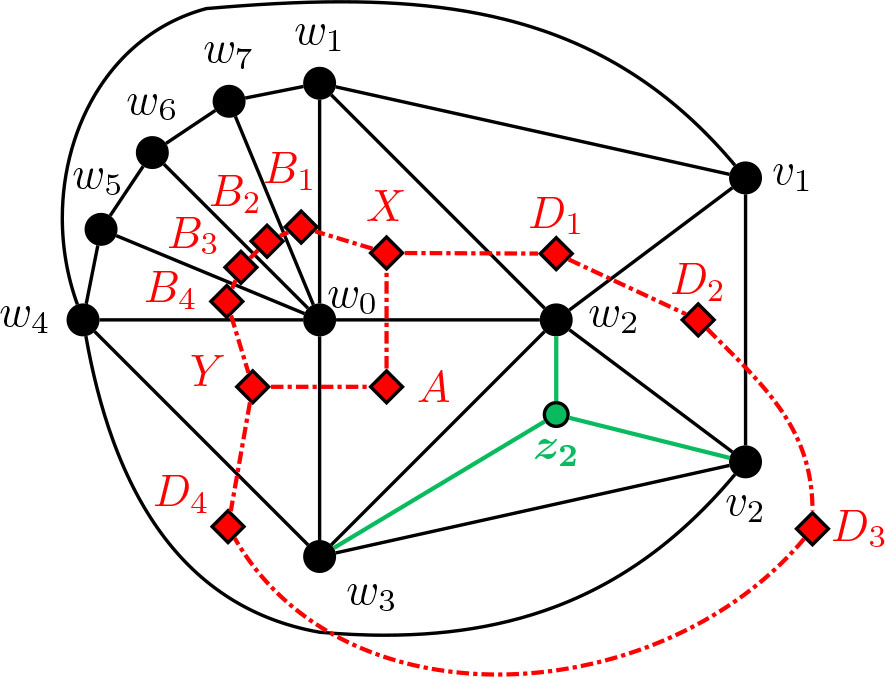
Figure 14.
The graph from Construction 5.15 such that ℐ (G) = Θ 〈2, 5, 5〉, with ℐ (G) overlaid in red.
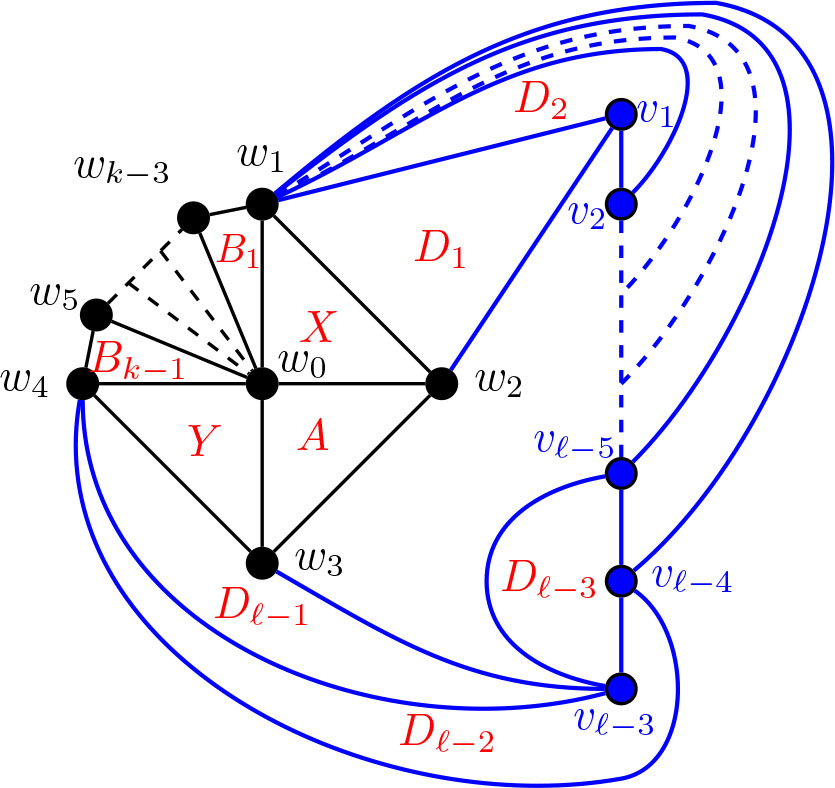
Figure 15.
The graph from Construction 5.17 such that for ℓ ≥ k ≥ 4 and ℓ ≥ 6
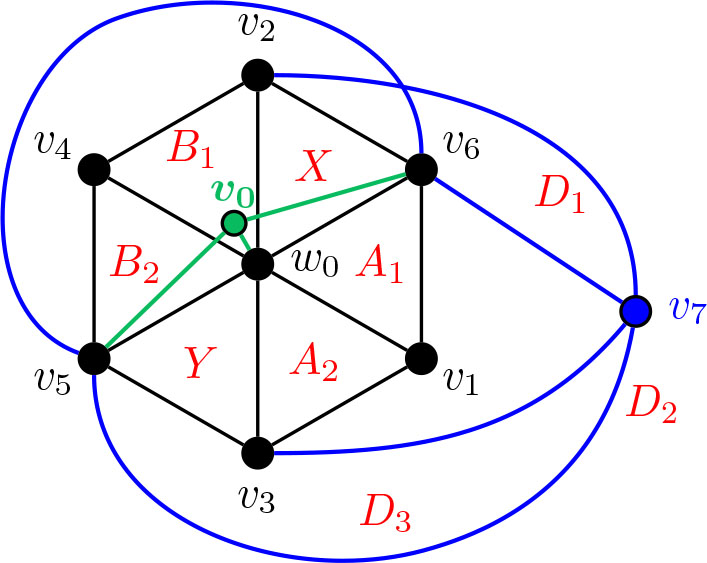
Figure 16.
A graph G̅ such that ℐ (G) = Θ 〈3, 3, 4〉
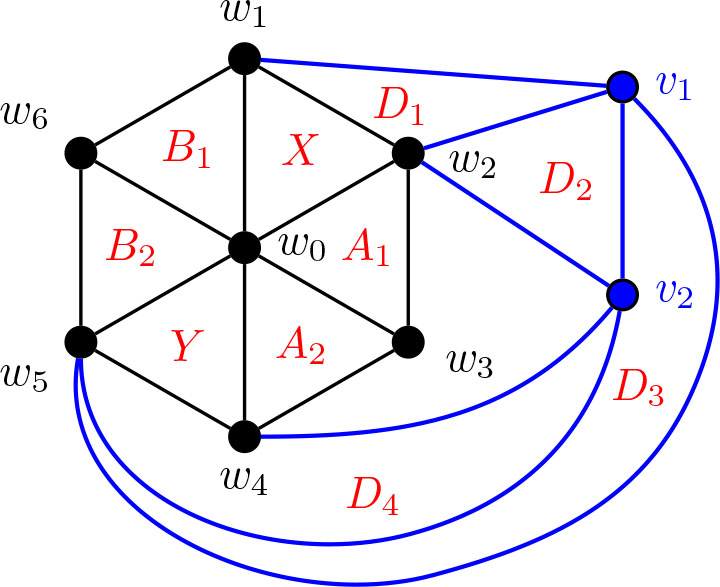
Figure 17.
A graph from Construction 5.20 such that ℐ (G3,3,5) = Θ 〈3, 3, 5〉.
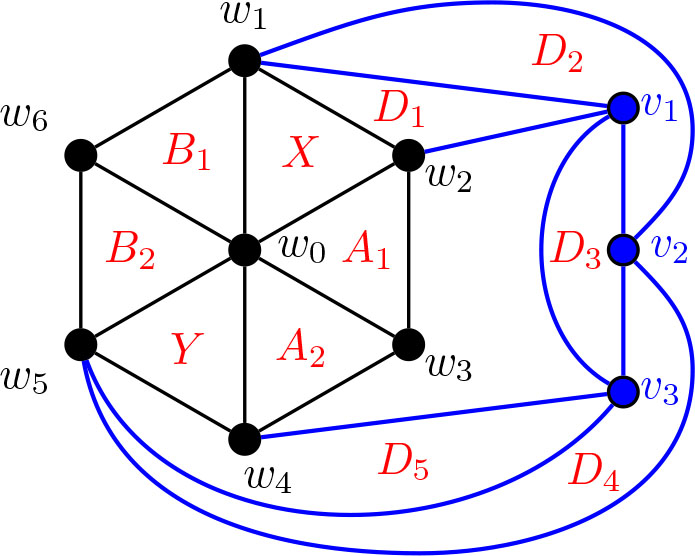
Figure 18.
The graph from Construction 5.22 such that ℐ (G3,3,6) = 𝒜 (G3,3,6) = Θ 〈3, 3, 6〉
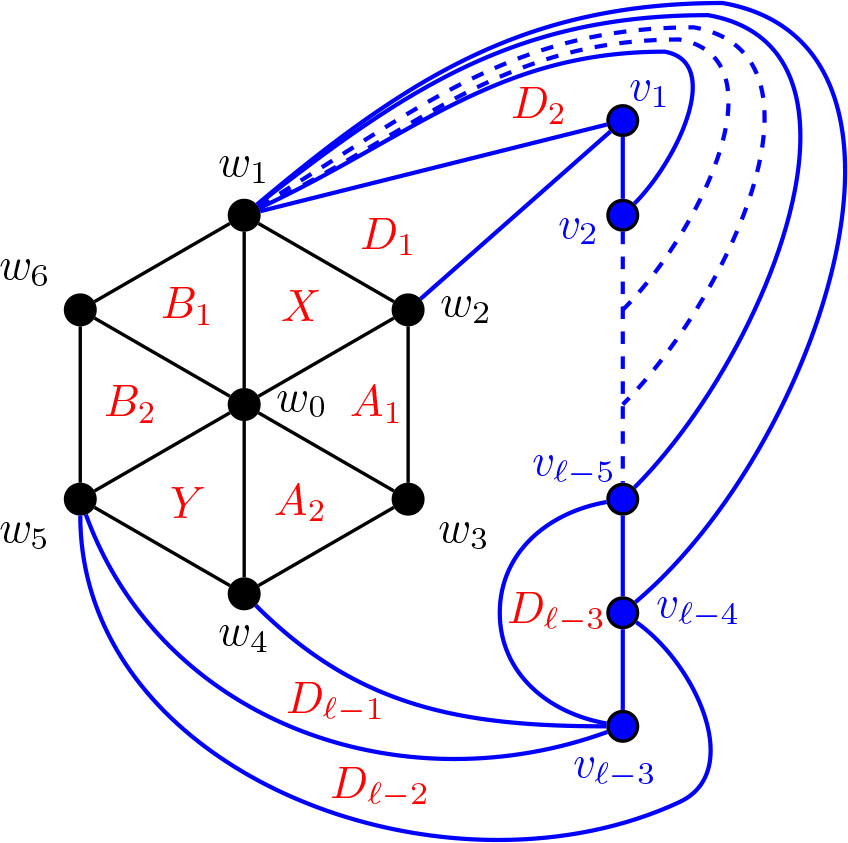
Figure 19.
The graph from Construction 5.22 such that ℐ (G) = 𝒜 (G) = Θ 〈3, 3, ℓ〉 for ℓ ≥ 6
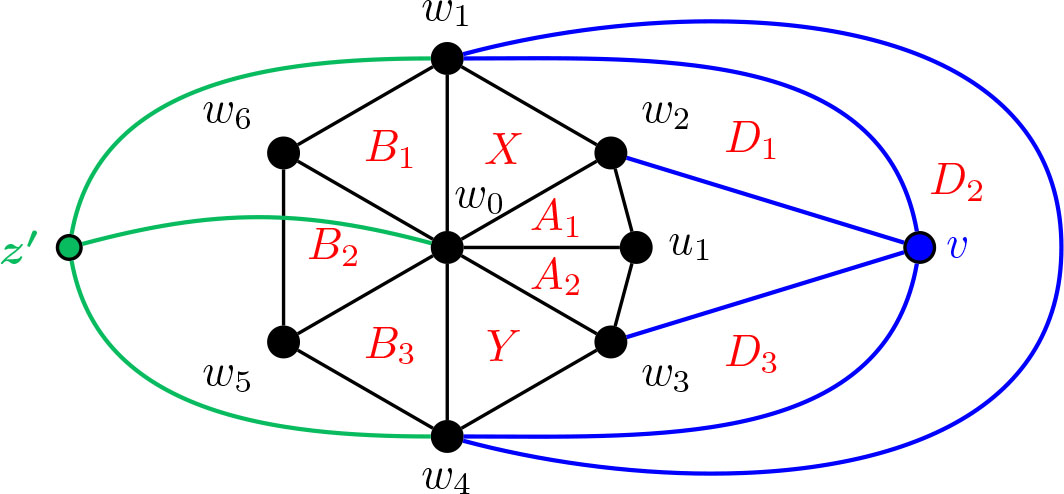
Figure 20.
The graph from Construction 5.24 such that ℐ (G3,4,4) = Θ 〈3, 4, 4〉
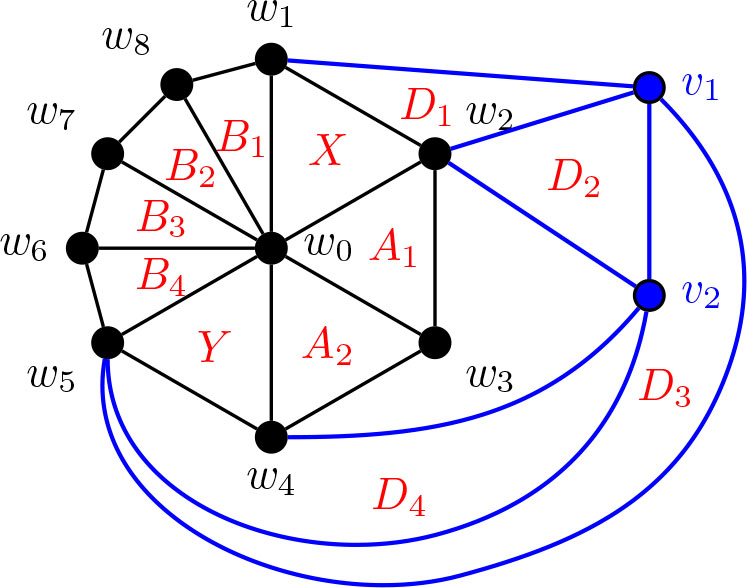
Figure 21.
A graph from Construction 5.28 such that ℐ (G3,5,5) = Θ 〈3, 5, 5〉.
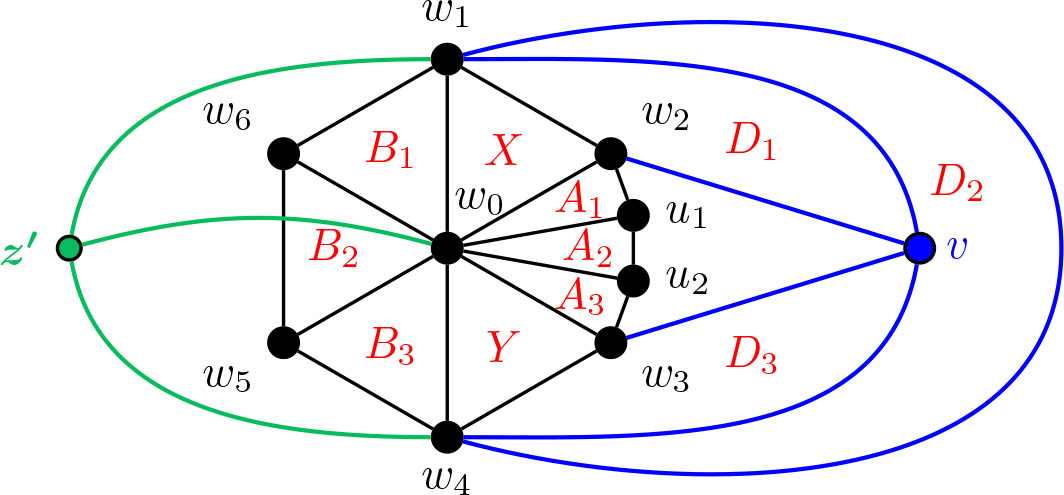
Figure 22.
The graph from Construction 5.30 such that ℐ (G4,4,4) = Θ 〈4, 4, 4〉
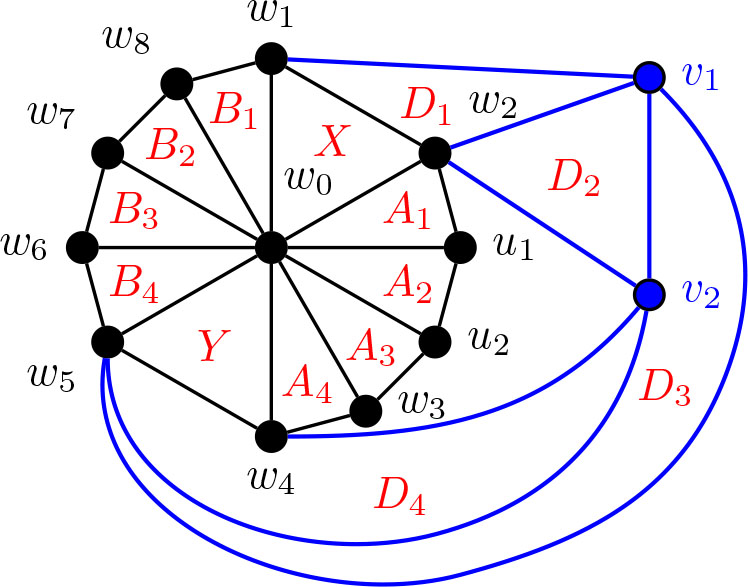
Figure 23.
A graph from Construction 5.28 such that ℐ (G5,5,5) = Θ 〈5, 5, 5〉
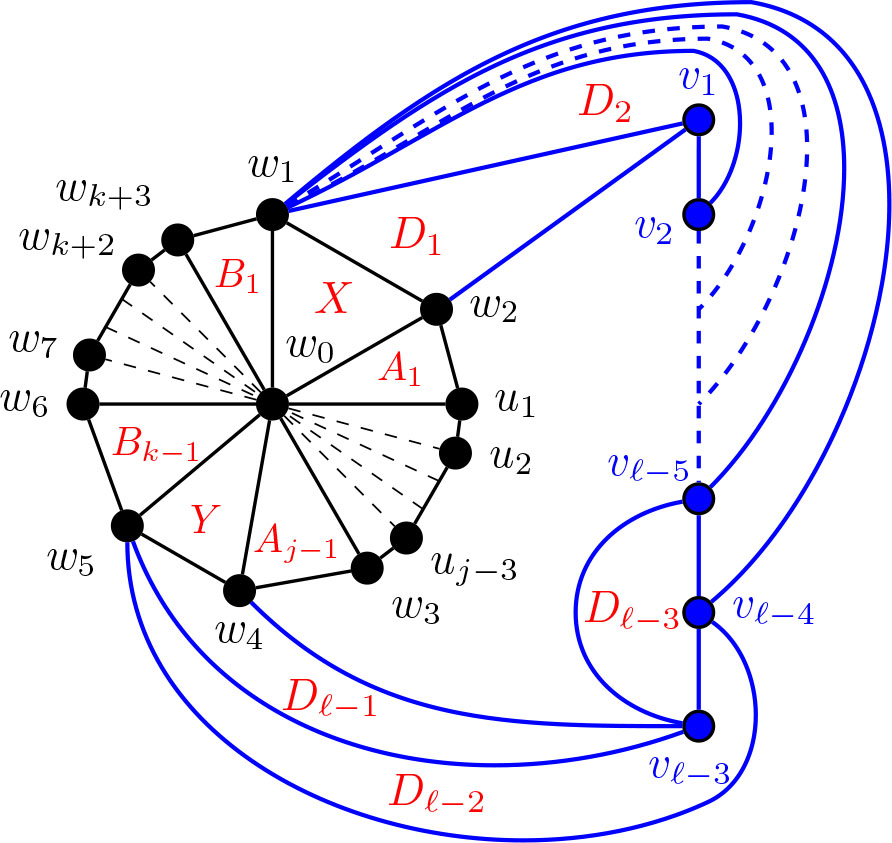
Figure 24.
The graph from Construction 5.34 such that ℐ (Gj, k, ℓ) = Θ 〈j, k, ℓ〉 for 3 ≤ j ≤ k ≤ ℓ and ℓ ≥ 6
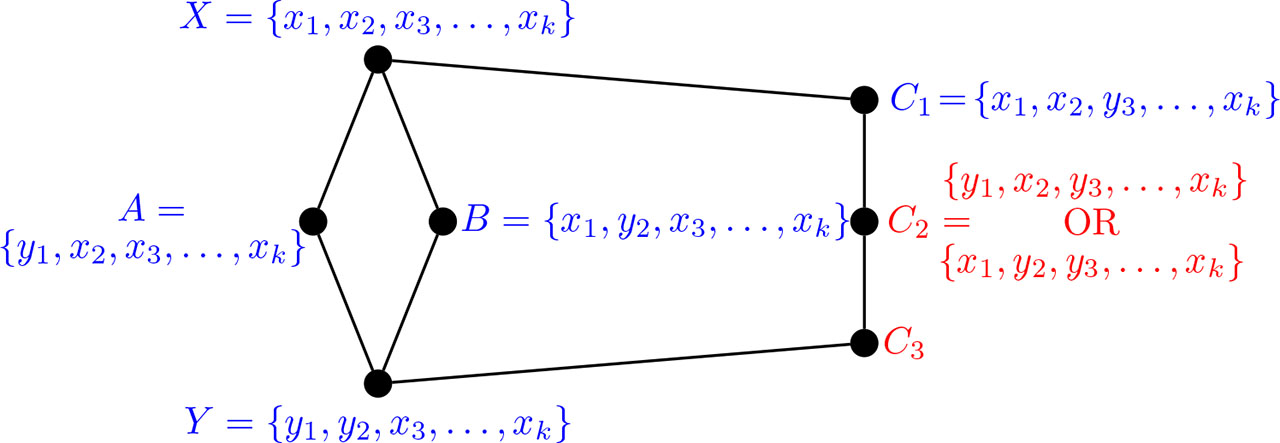
Figure 25.
H = Θ 〈2, 2, 4〉 non-construction
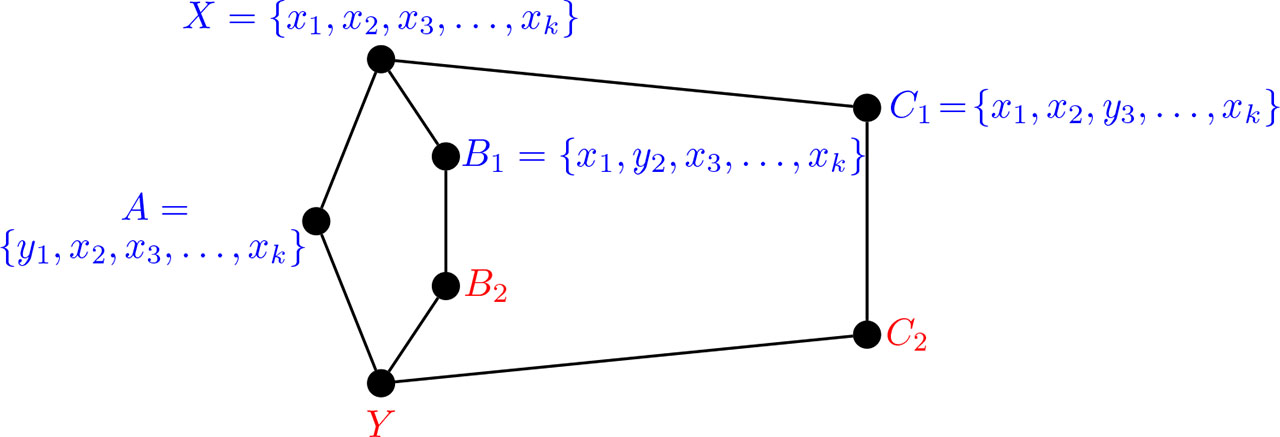
Figure 26.
H = Θ 〈2, 3, 3〉 non-construction
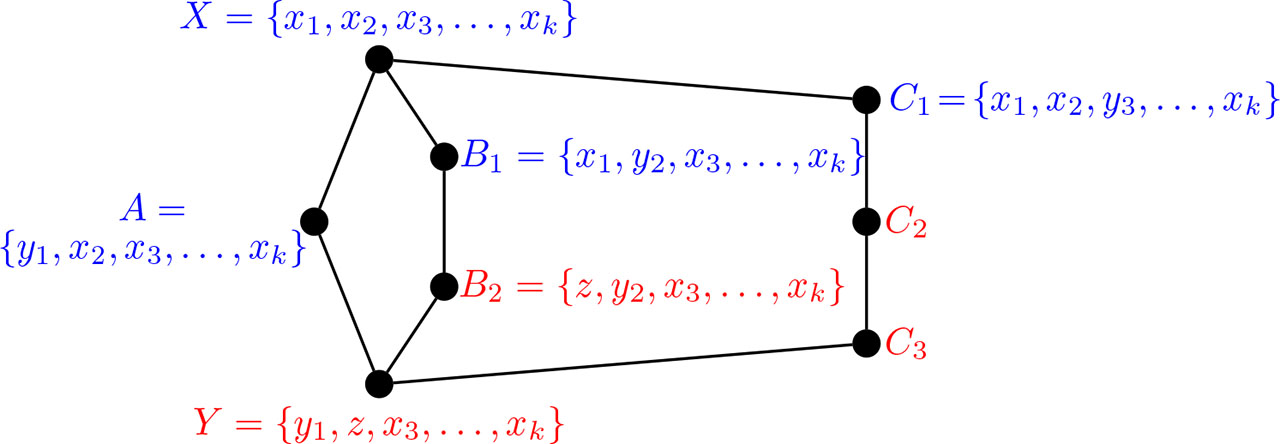
Figure 27.
H = Θ 〈2, 3, 4〉 non-construction
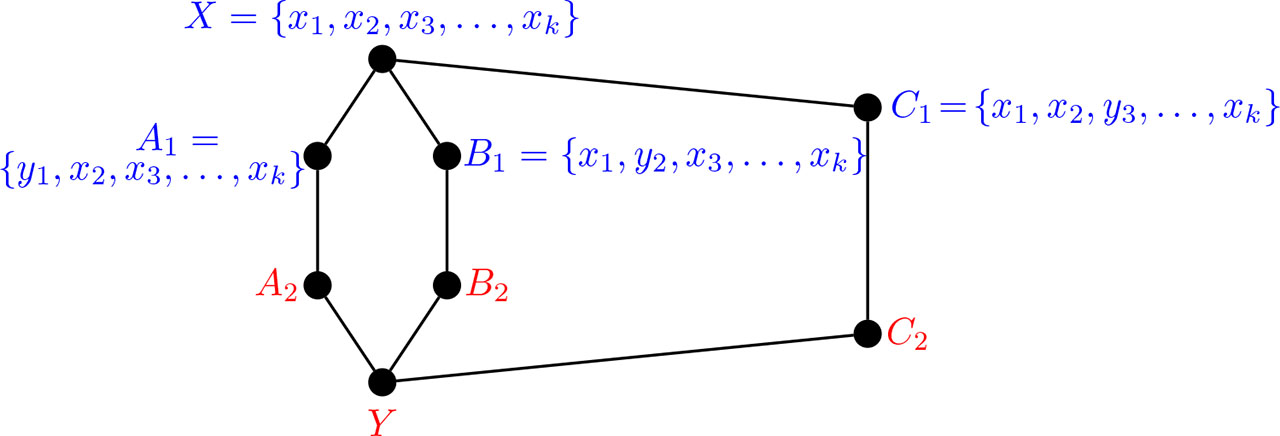
Figure 28.
H = Θ 〈3, 3, 3〉 non-construction
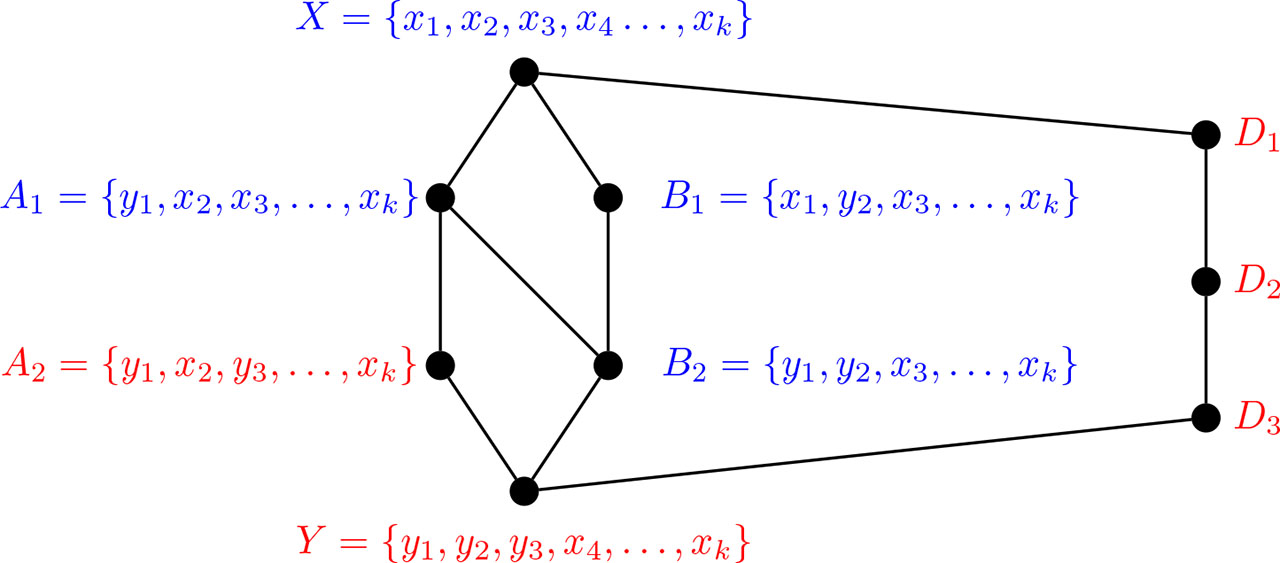
Figure 29.
A non-theta non-i-graph 𝒯.