
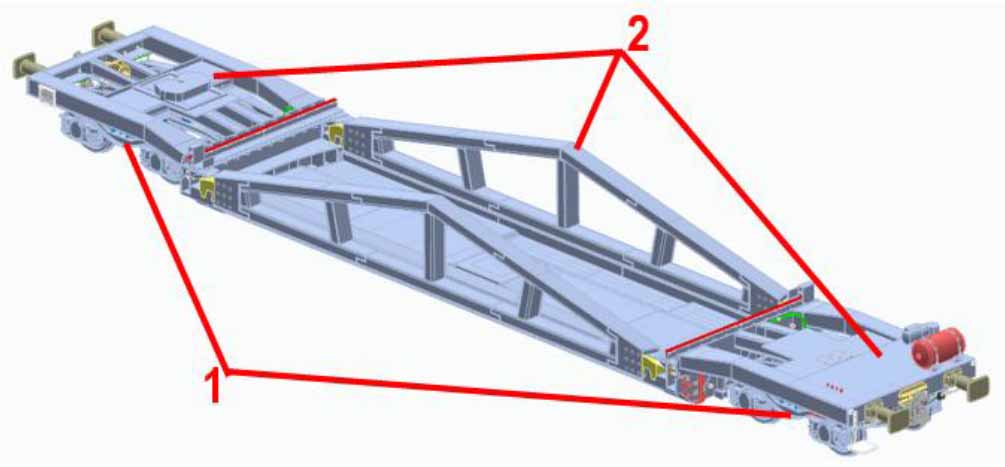
Fig. 1.
Prototype structure of the intermodal wagon with the rotating loading platform: 1 – standard Y25 bogies, 2 – wagon frame with the body – rotating platform in the lowered part
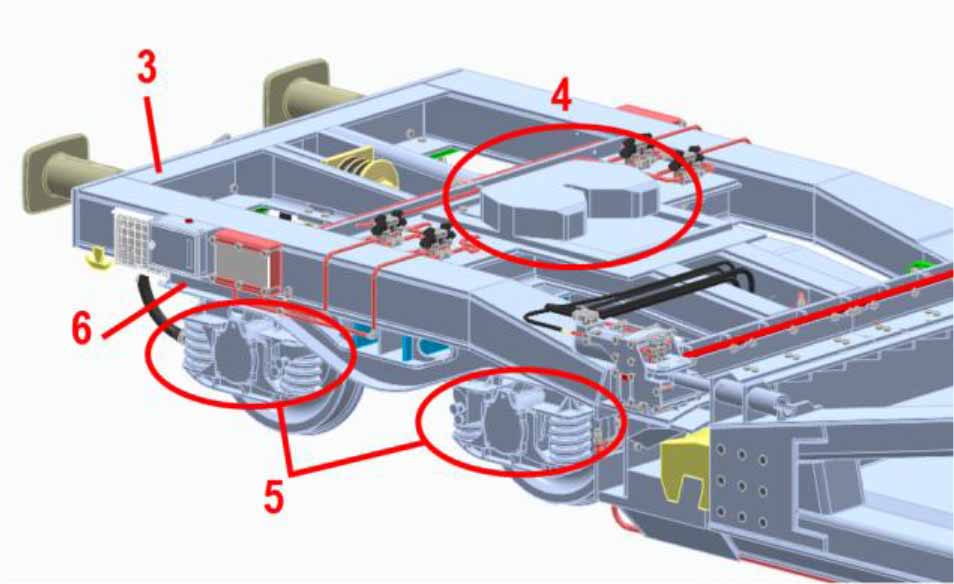
Fig. 2.
Oblique view of the overbogie part of the intermodal wagon: 3 – wagon frame, 4 – typical fifth wheel for securing semi-trailers, 5 – axle suspension stage of the bogie, 6 – bogie frame
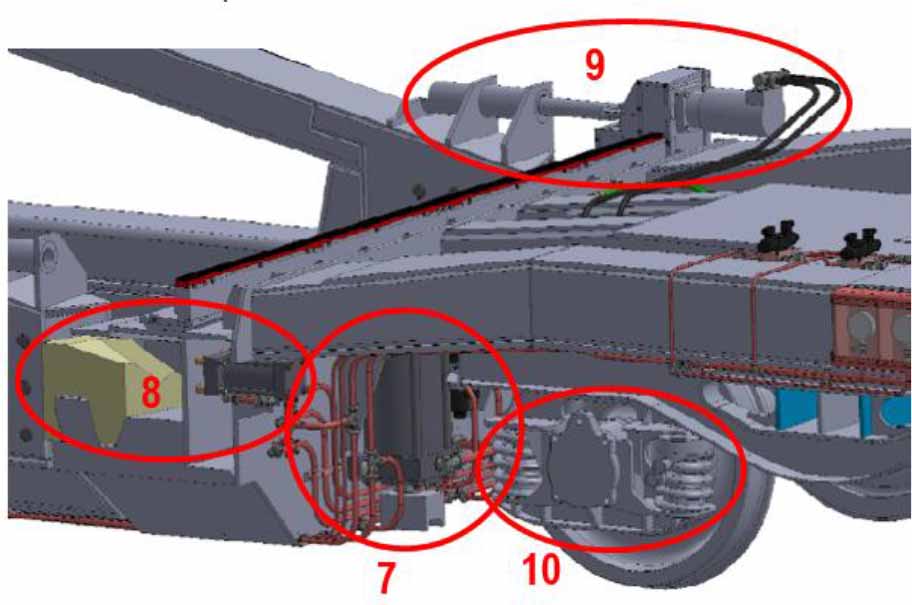
Fig. 3.
Side view of the overbogie part of the intermodal wagon with equipment: 7 – support mechanism, 8 – side connector, 9 – gear rotating mechanism of the loading platform with drive elements, 10 – classic Y25 bogie suspension stage
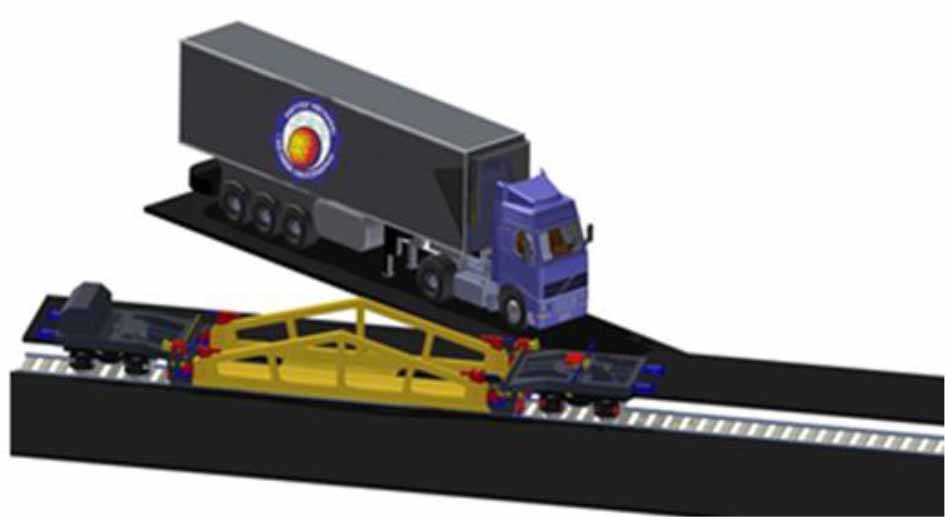
Fig. 4.
Stage I of loading – entry of the wagon onto the railway platform adapted for loading semi-trailers, positioning the tractor in the loading area and preparing the wagon for the rotation of the loading platform
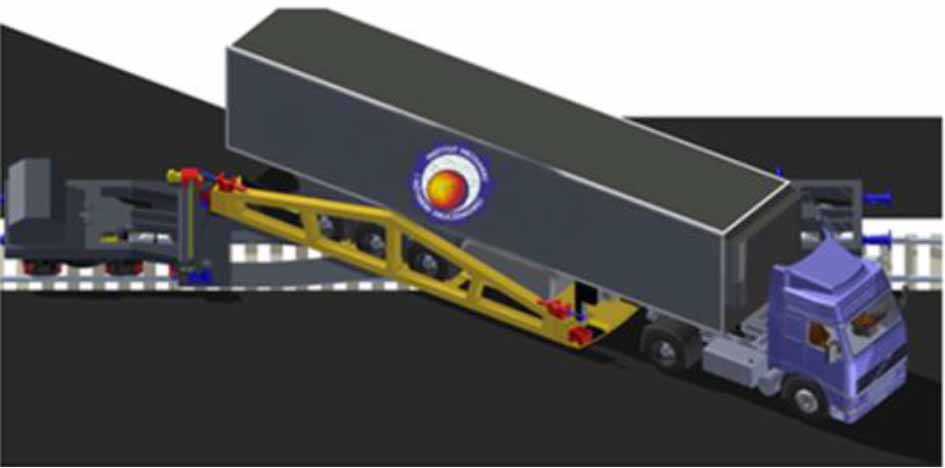
Fig. 5.
Stage II of loading – rotation of the platform, entry of the tractor with the semi-trailer, detachment and exit of the tractor itself and then re-rotation of the wagon’s loading platform to the transport position
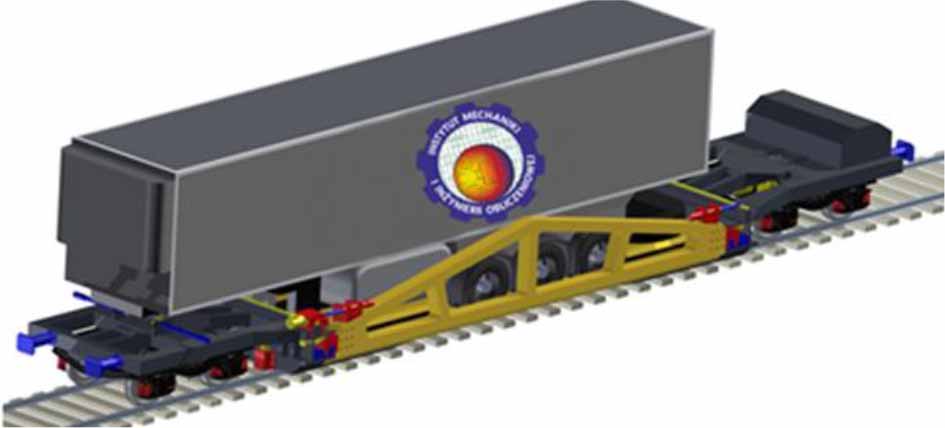
Fig. 6.
Stage III of loading – preparation of the wagon with the load for rail transport
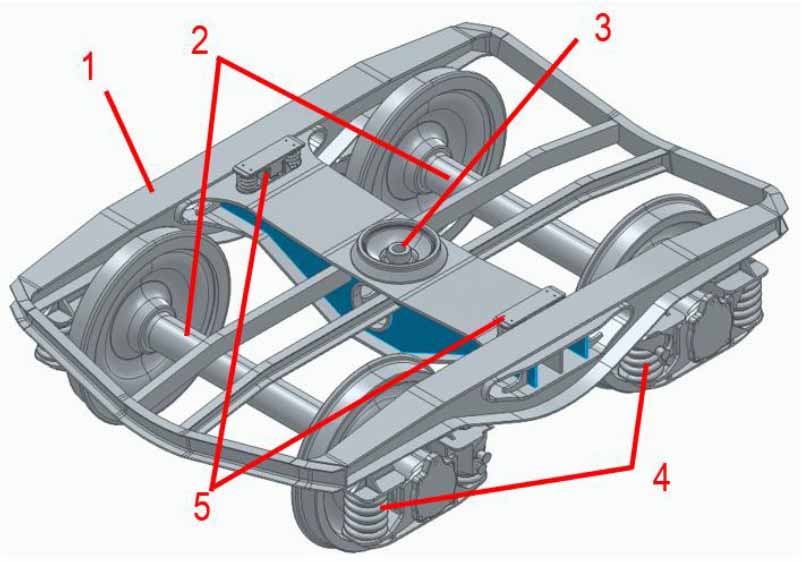
Fig. 7.
Y25 railway bogie [own development], 1 – frame, 2 – bogie axle, 3 – pivot pin, 4 – suspension (springs, friction dampers), 5 – side slides (mechanical vibration damper)
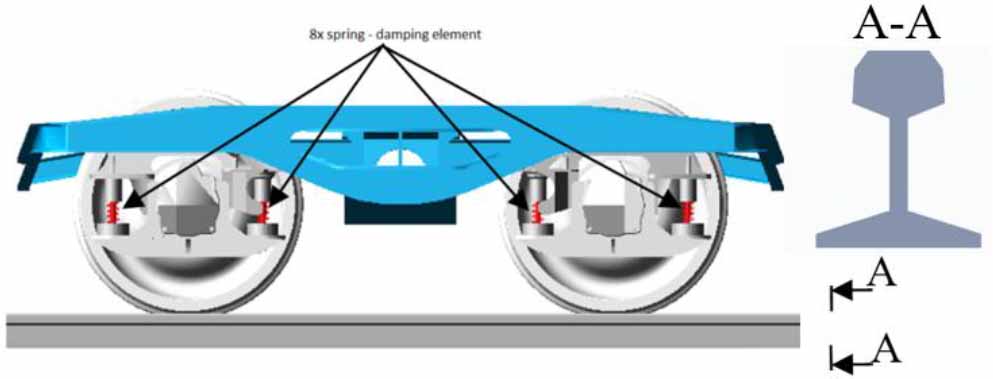
Fig. 8.
Model of the Y25 bogie and the outline of the rail profile in cross-section
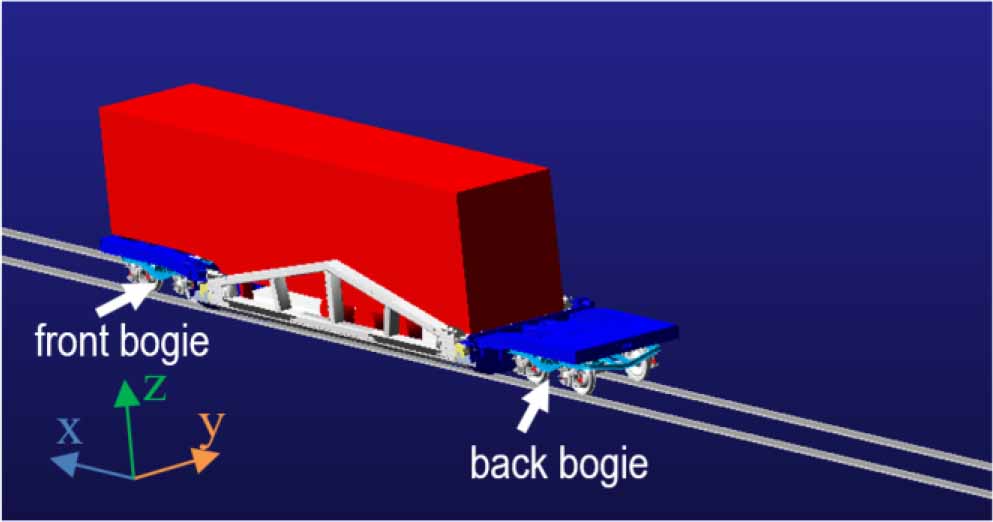
Fig. 9.
View of the model on the curved track
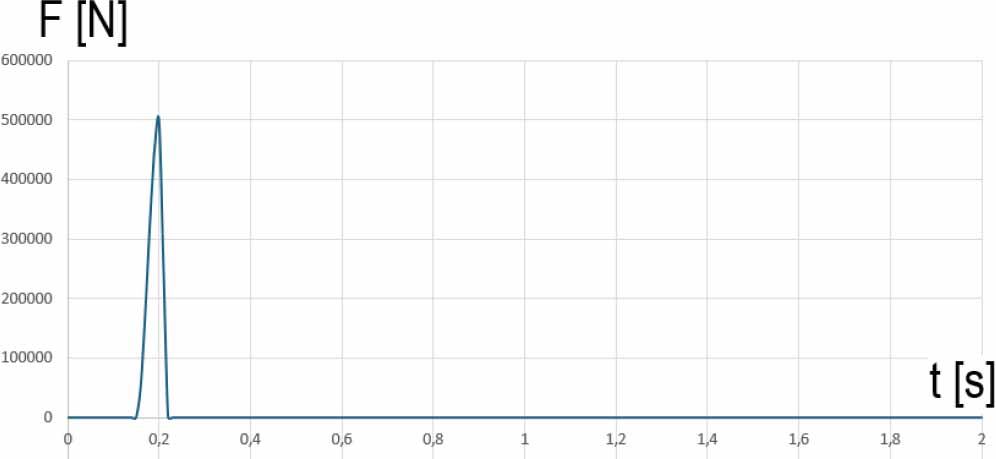
Fig. 10.
A force impulse in the wagon frame pin causing vibrations. Force vs. time graph
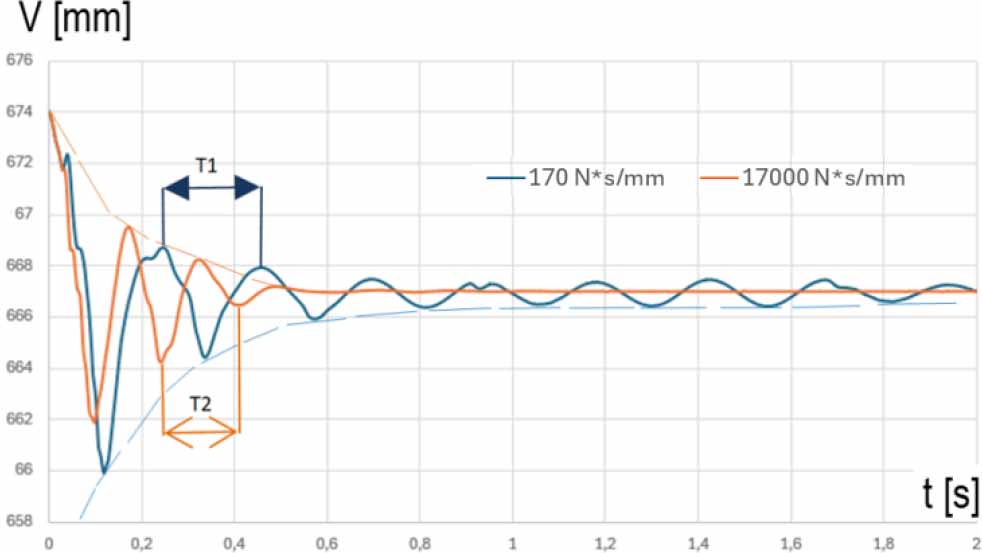
Fig. 11.
The influence of damping changes on the vibrations of the front bogie caused by the force impulse on the wagon with the semi-trailer. Graphs of vertical displacement as a function of time for two different damping values with marked vibration periods for suspension with different damping variants Cmin = 170 [N·s/mm] and Cmax = 17000 [N·s/mm]
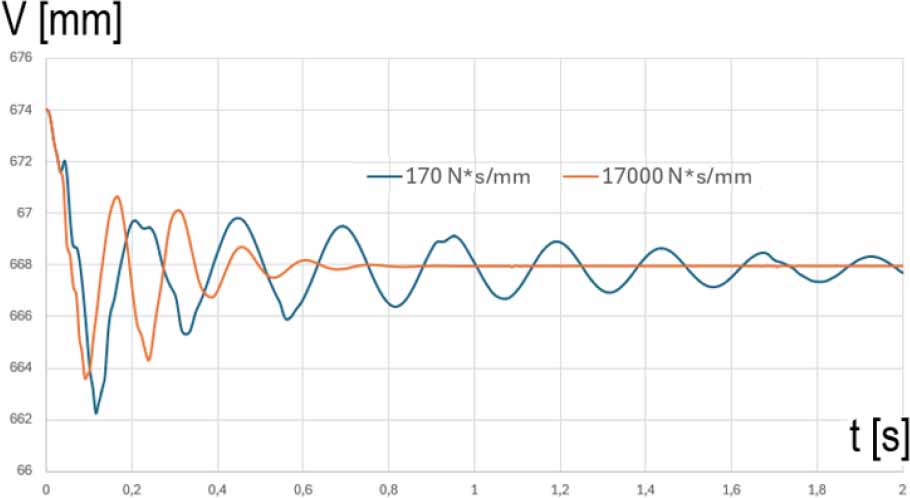
Fig. 12.
The influence of damping changes on the vibrations of the rear bogie caused by the force impulse on the wagon with the semi-trailer. Graphs of vertical displacement as a function of time for two extreme damping values Cmin and Cmax
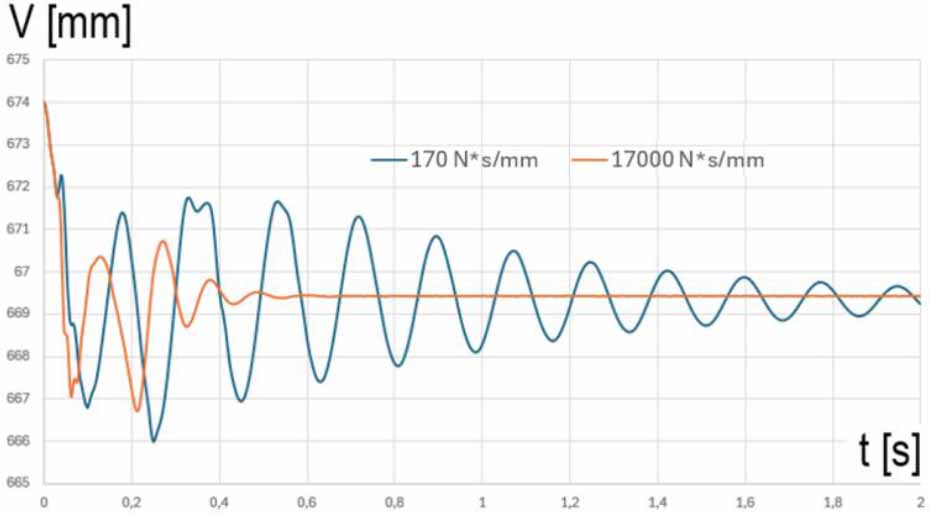
Fig. 13.
The influence of damping changes on the vibrations of the front bogie caused by the force impulse on the wagon without the load/semi-trailer. Graphs of vertical displacement as a function of time for two extreme damping values Cmin and Cmax
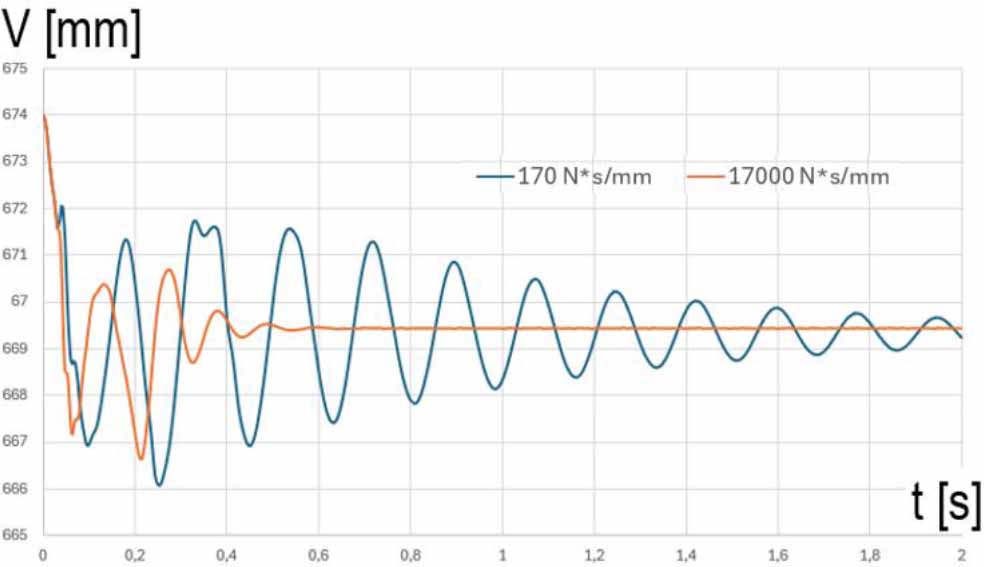
Fig. 14.
The influence of damping changes on the vibrations of the rear bogie caused by the force impulse on the wagon without the load/semi-trailer. Graphs of vertical displacement as a function of time for two extreme damping values Cmin and Cmax
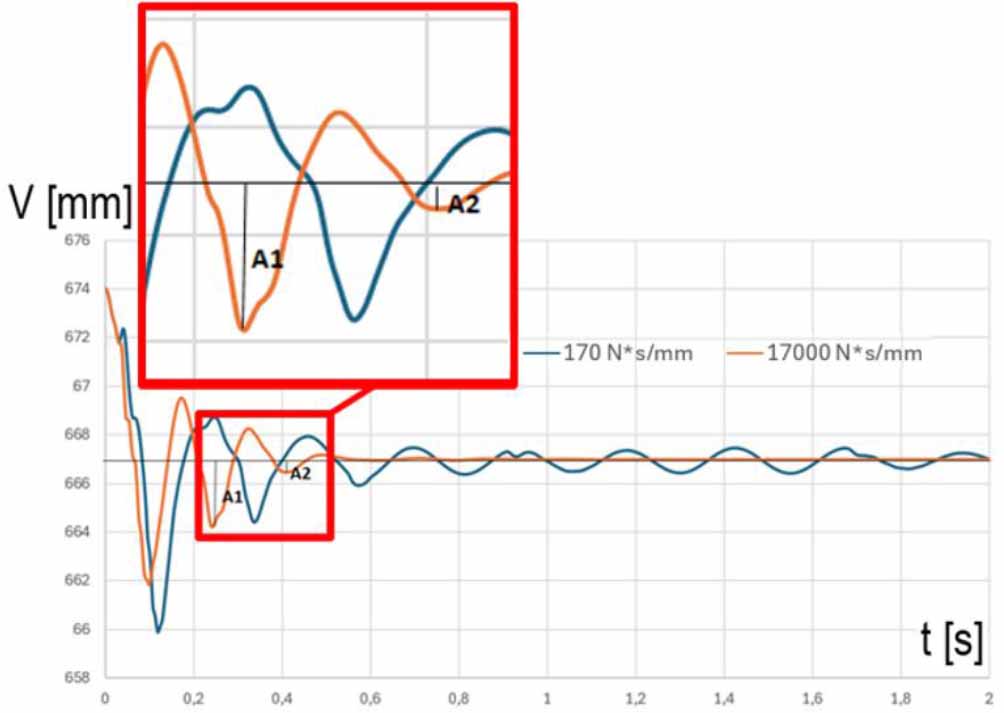
Fig. 15.
The influence of damping changes on the vibrations of the front bogie caused by the force impulse on the wagon with the semi-trailer. Graphs of vertical displacement as a function of time for two different damping values with marked amplitudes for calculating the logarithmic vibration damping decrement for suspensions with different damping variants Cmin = 170 [N·s/mm] and Cmax = 17000 [N·s/mm]
Table 1
Summary of parameters describing the wagon’s natural vibrations
| WAGON WITHOUT SEMI-TRAILER | WAGON WITH SEMI-TRAILER AND LOAD | |||
|---|---|---|---|---|
| DAMPING | Cmin | Cmax | Cmin | Cmax |
| Vibration period – T | 0.2 s | 0.116 s | 0.232 s | 0.172 s |
| Vibration frequency – ϑ | 5 Hz | 8.6 Hz | 4.3 Hz | 5.8 Hz |
| Amplitude after releasing vibrations – Amax | 3.5 mm | 2.8 mm | 1.5 mm | 2.7 mm |
| Logarithmic damping decrement – δ | 0.07 | 1.5 | 0.51 | 1.69 |
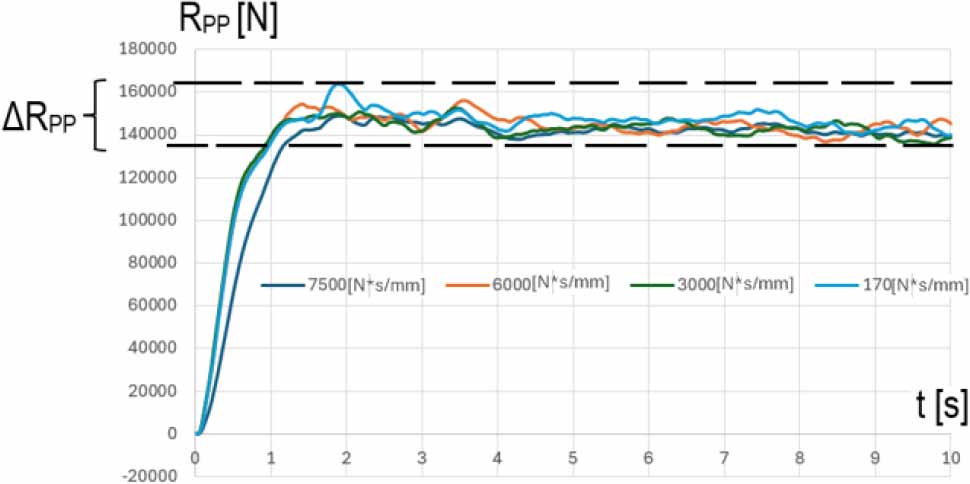
Fig. 16.
Graphs of changes in the contact force between the front right wheel and the rail as a function of time – V = 100 km/h, RPP – force on the front right wheel
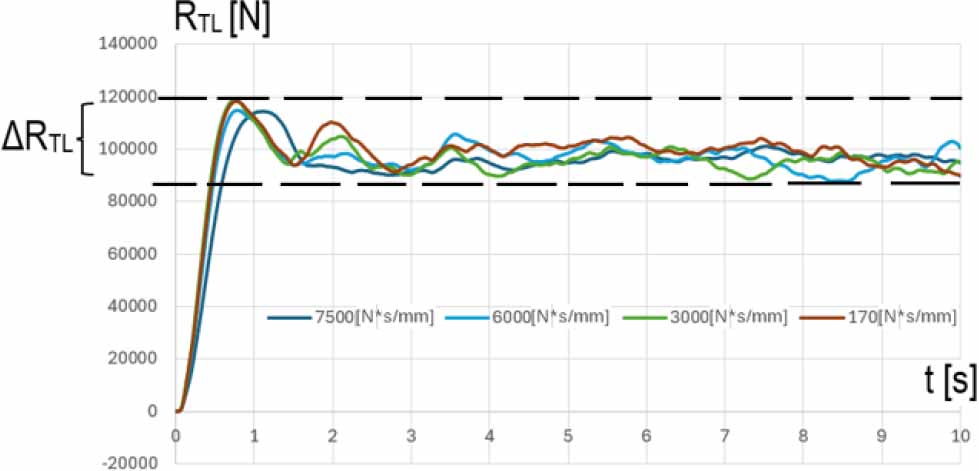
Fig. 17.
Graphs of changes in the contact force between the rear left wheel and the rail as a function of time – V = 100 km/h, RTL – force on the rear left wheel

Fig. 18.
Configuration and dimensions of the curved track; CL – curvature to the left, CR – curvature to the right, O – point of inflection of the curvature/change of direction of track curvature
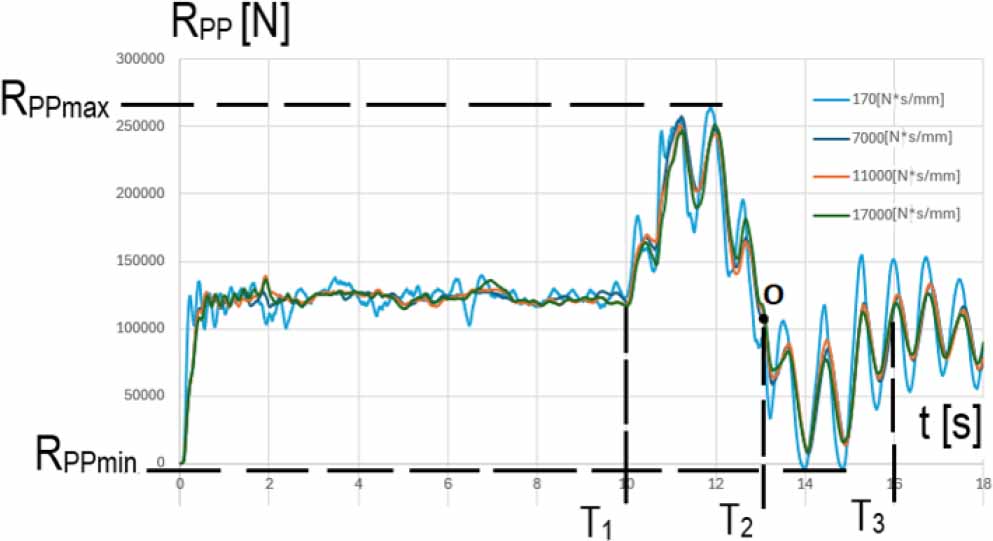
Fig. 19.
The influence of the change in damping on the course of the contact force between the front right wheel and the rail in the movement variant at a speed of 100 km/h on the curved track
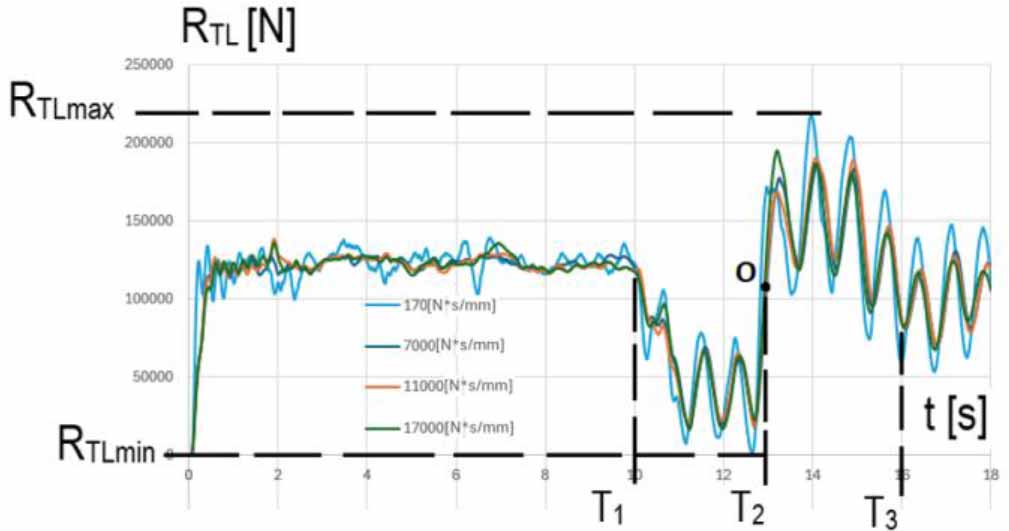
Fig. 20.
The influence of the change in damping on the course of the contact force between the rear left wheel and the rail in the movement variant at a speed of 100 km/h on the curved track
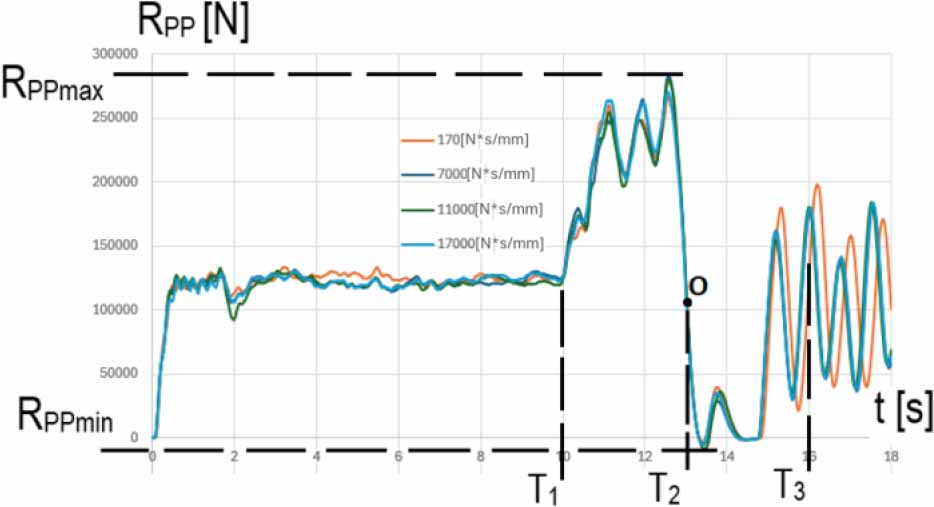
Fig. 21.
The influence of the change in damping on the course of the contact force between the front right wheel and the rail in the movement variant at a speed of 120 km/h on the curved track
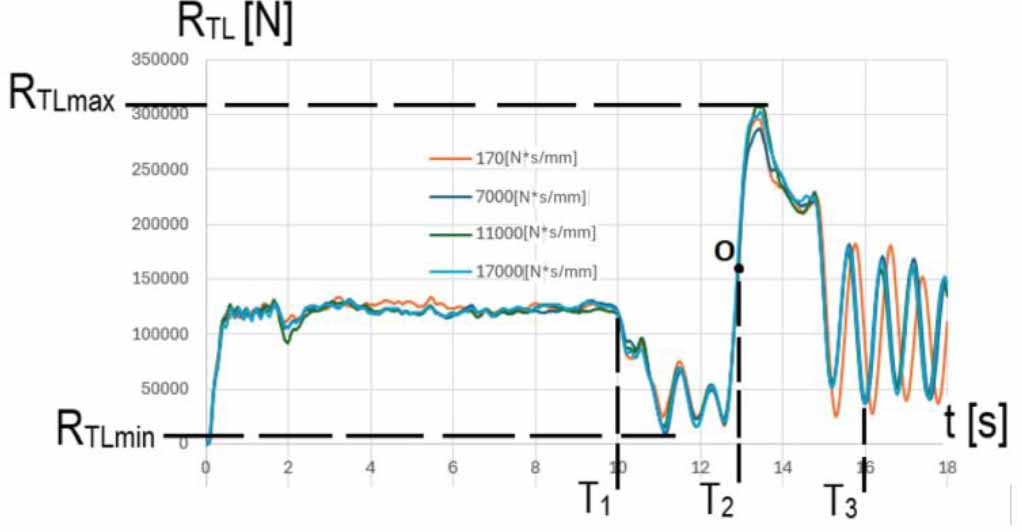
Fig. 22.
The influence of the change in damping on the course of the contact force between the rear left wheel and the rail in the movement variant at a speed of 120 km/h on the curved track
Tab. 2.
Summary of the maximum and minimum reactions in the wheelrail contact for various conditions of the wagon motion simulation
| Straight track | Curved track | ||
|---|---|---|---|
| Speed V [km/h] | 100 | 100 | 120 |
| Reaction of the front right wheel – RPPmax[kN] | 163.8 | 264 | 283 |
| Reaction of the front right wheel – RPPmin [kN] | 138.2 | -4 | -6 |
| Reaction of the rear left wheel – RTLmax[kN] | 119 | 217.9 | 308 |
| Reaction of the rear left wheel - RTLmin [kN] | 87.4 | ~0 | 10 |