
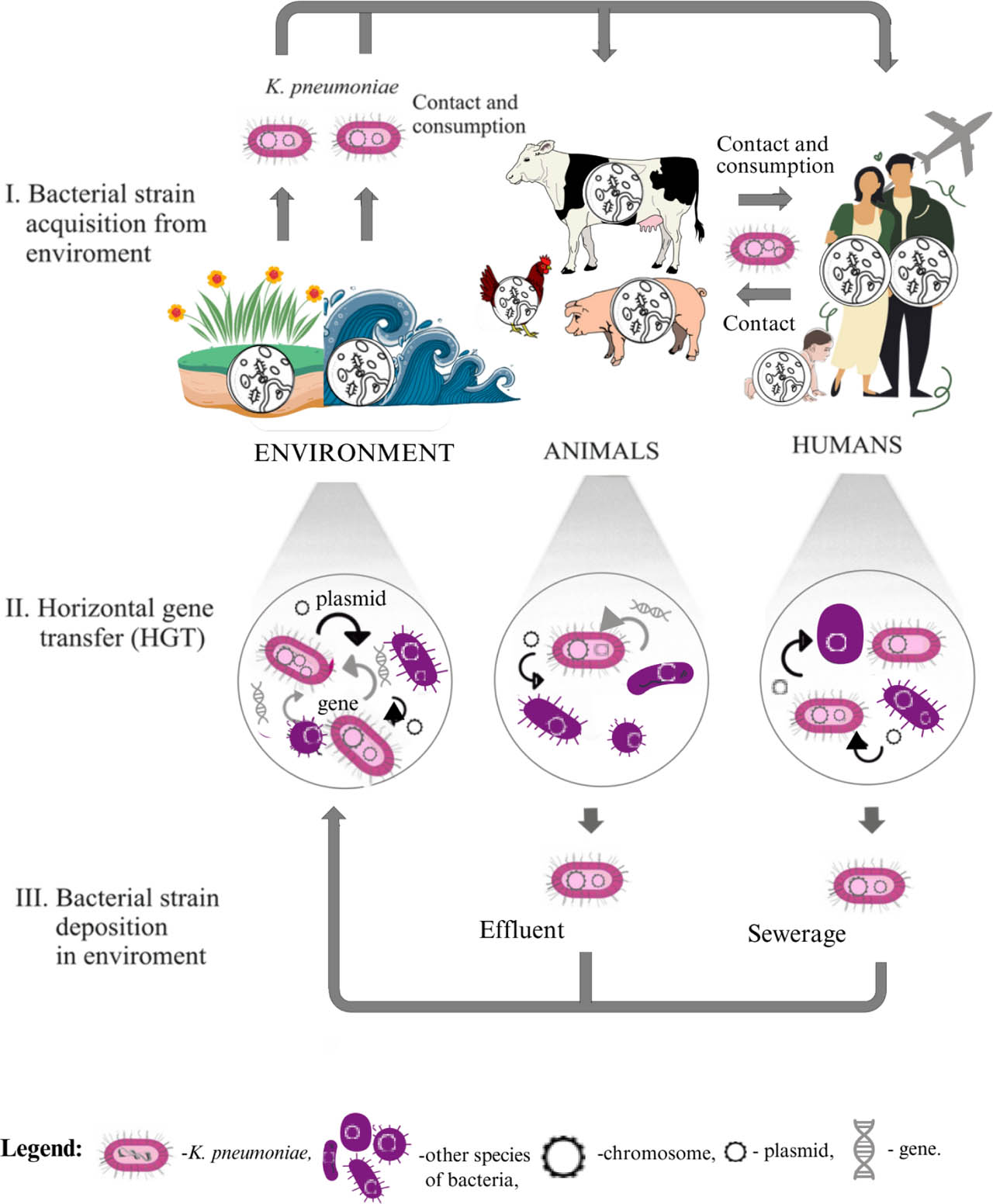
Fig. 1.
Diagram illustrating horizontal gene transfer (HGT) of resistance to antibiotics and/or other antimicrobial agents (ARGs) among K. pneumoniae strains. Own graphic design based on (Meek et al., 2015; Wyres et al., 2018 and Catalano et al., 2022).
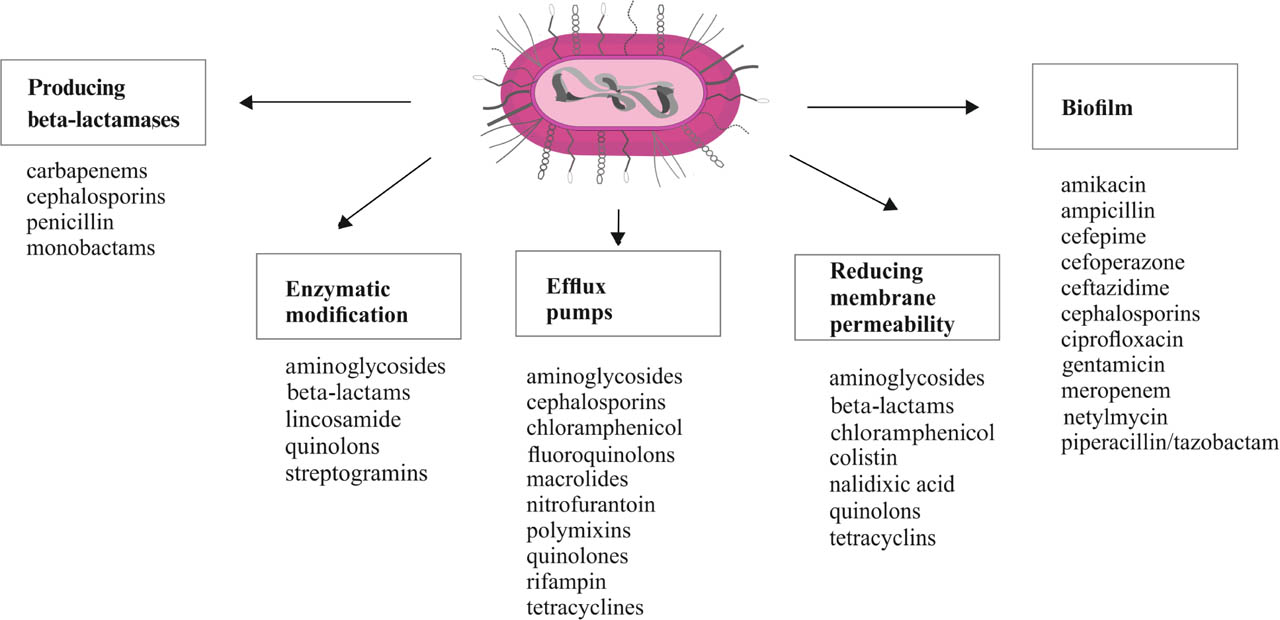
Fig. 2.
Diagram showing the resistance mechanisms of K. pneumoniae, along with the classes of antibiotics and/or chemotherapeutics to which each mechanism applies. Own graphic design based on (Hughes et al., 2020; Karami-Zarandi et al., 2022; Dzierżanowska-Fangrat, 2023).
Table I.
Classification of preferred substrates for beta-lactam antibiotics, beta-lactamase inhibitors (BLIs), and bacterial beta-lactamases. Own graphic design based on (Livermore 1995; Bush and Jacoby 2010; Mączyńska 2015; Bush 2018).
| Molecular class according to Ambler | Bush-Jacoby-Mederios functional group | Preferred substrates in the group of beta-lactam antibiotics | Inhibited by beta-lactamase inhibitors (BLIs): | Bacterial beta-lactamases - representative enzymes | ||
|---|---|---|---|---|---|---|
| AV | CA or TZB | EDTA | ||||
| A | 2a | P | + | + | − | PC1 |
| 2b | P, Cp | + | + | − | TEM-1, TEM-2, SHV-1 | |
| 2be | P, Cp, E, Mb | + | + | − | ESBL (e.g. CTX-M), TEM, SHV, K1 (OXY) in K. oxytoca | |
| 2br | P | + | − | − | TEM-30, SHV-10 | |
| 2c | P, Cbp | + | ± | − | CARB-1, PSE-1, PSE-3, PSE-4 | |
| 2e | Cp | + | + | − | Inducible cephalosporinases Proteus vulgaris | |
| 2f | P, Cp, Cb, E, Mb | + | ± | − | KPC | |
| B | 3a | P, Cp, E, Cb | + | − | + | IMP-1, VIM-1, NDM-1, L1 |
| 3b | Cb | − | − | + | CphA | |
| C | 1 | Cp | + | − | − | AmpC (e.g. MIR-1), CMY |
| 1e | Cp, E | + | − | − | GC1 | |
| D | 2d | P, Clox | + | ± | − | OXA-1, OXA-10 (PSE-2) |
| 2de | P, Cb | + | − | − | OXA-23, OXA-48 | |
| 2df | P, E, Mb | + | ± | − | OXA-11, OXA-15 | |
[i] Abbreviations: AV, avibactam; CA, clavulanic acid; Cb, carbapenem; Cbp, carboxypenicillins; Cp, cephalosporin; Clox, cloxacillin; E, extended-spectrum cephalosporin; EDTA, ethylenediaminetetraacetic acid; Mb, monobactam; P, penicillin; TZB, tazobactam; (+), hydrolyzed; (−), unhydrolyzed; (±), barely hydrolyzed.
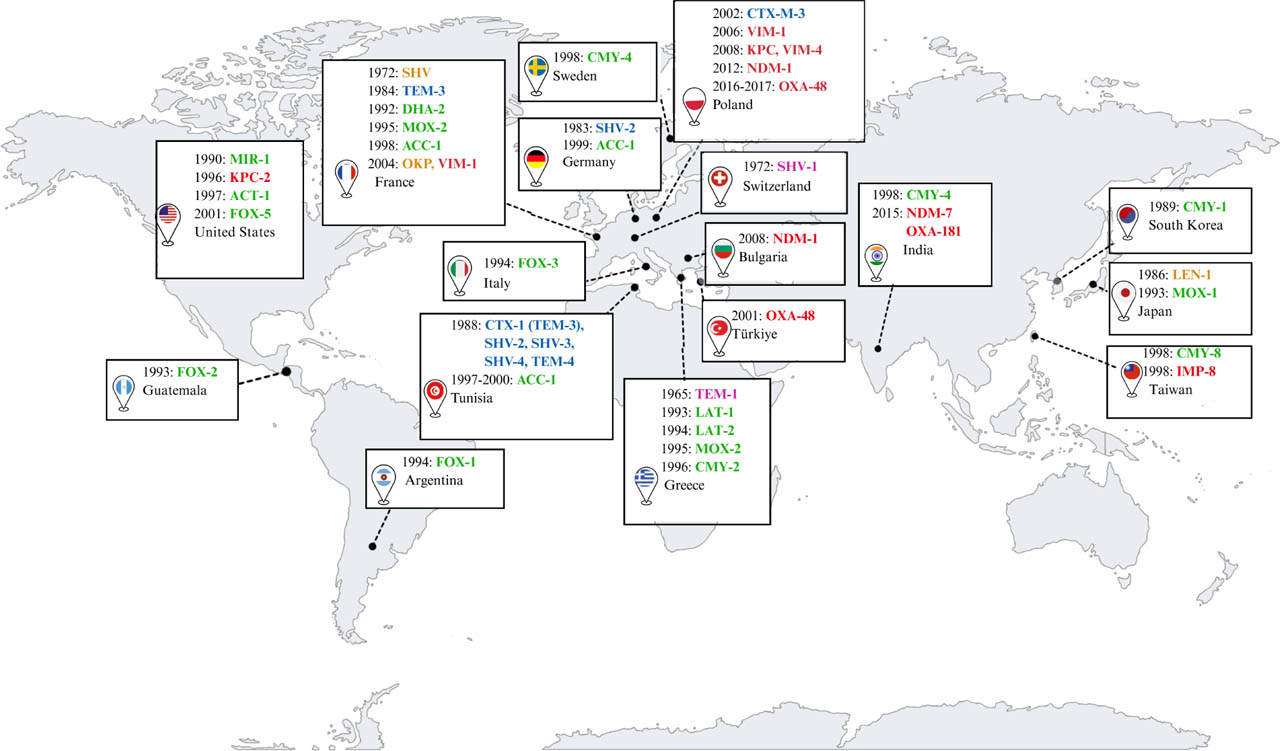
Fig. 3.
World map showing the spread and origin of K. pneumoniae strains producing: species-specific beta-lactamases (marked in orange); selected BSBL-type beta-lactamases (marked in purple); selected ESBL-type beta-lactamases (marked in blue); selected plasmid-encoded AmpC beta-lactamases (marked in green); and selected carbapenemases KPC, NDM, and OXA-48 (marked in red). Own graphic design based on (Jacoby 2009; Dzierżanowska et al. 2010; Mączyńska et al. 2015; Castanheira et al. 2021).
Table II.
Table listing currently used antibiotics for treating infections caused by carbapenem-resistant Gram-negative bacteria (CR-GNB) and the recommended and approved indications for their use. Own graphic design based on Paul et al., (2022).
| ESBLs | CRE non-CP | CRE-KPC | CRE-O-XA-48 | CRE-MBL | Current clinical indications | Approval | |
|---|---|---|---|---|---|---|---|
| New antibiotics | |||||||
| Cefiderocol | Yes | Yes | Yes | Yes | Yes | cUTIs, HAP, VAP | FDA |
| for the treatment of infectious due to aerobic Gram-negative organisms in adults with limited treatment options | EMA | ||||||
| Ceftolozane-tazobactam | Yes | No | No | No | No | cIAI, cUTIs, HAP, VAP | FDA and EMA |
| Ceftazidime-avibactam | Yes | +/− | Yes | Yes | No | cIAI, cUTIs, HAP, VAP | FDA and EMA |
| for the treatment Gram-negative infections in patients with limited treatment options | EMA | ||||||
| Eravacycline | Yes | Yes | Yes | Yes | Yes | cIAI | FDA and EMA |
| Imipenem-cilastatin-relebactam | Yes | +/− | Yes | No | No | cIAI, cUTIs | FDA |
| HAP, VAP, BSI with a suspected respiratory source, and for the treatment Gram-negative infections in patients with limited treatment options | EMA | ||||||
| Meropenem-vaborbactam | Yes | +/− | Yes | No | No | cUTIs | FDA |
| cUTIs, HAP, VAP, and for the treatment Gram-negative infections in patients with limited treatment options | EMA | ||||||
| Plazomicin | Yes | Yes | Yes | Yes | +/− | cUTIs | FDA |
| EMA application withdrawn | |||||||
| Old antibiotics | |||||||
| Aminoglycosides | +/− | +/− | +/− | +/− | +/− | for the treatment of a variety of bacterial infections | FDA and EMA |
| Aztreonam | No | No | No | No | +/− | for the treatment of infections caused by susceptible Gram-negative micro-organisms | FDA and EMA |
| Fosfomycin iv | Yes | +/− | +/− | +/− | +/− | to treat serious infections when other antibiotics treatment are not suitable | EMA |
| FDA under review | |||||||
| Polymyxins | Yes | Yes | Yes | Yes | Yes | to treat serious infections caused by susceptible strains, when less potentially toxic drugs are ineffective or contraindicated | FDA |
| to treatment of serious infections due to aerobic Gram-negative pathogens in patients with limited treatment options | EMA | ||||||
| Tygecycline | Yes | Yes | Yes | Yes | Yes | complicated SSTI and IAI | FDA and EMA |
| CAP | FDA | ||||||
[i] Abbreviations: BSI, bloodstream infection; CAP, community-acquired pneumonia; cIAI, complicated intra-abdominal infections; CRE non-CP, non-carbapenemase-producing carbapenem-resistant Enterobacterales; cUTIs, complicated urinary tract infections; EMA, European Medicines Agency; ESBLs, extended-spectrum beta-lactamases; FDA, US Food and Drug Administration; HAP, hospital-acquired pneumonia; iv, intravenous administration; MBL, metallo-beta-lactamases; SSTI, skin and soft-tissue infections; VAP, ventilator-associated pneumonia; +/−, variable antibiotic activity.
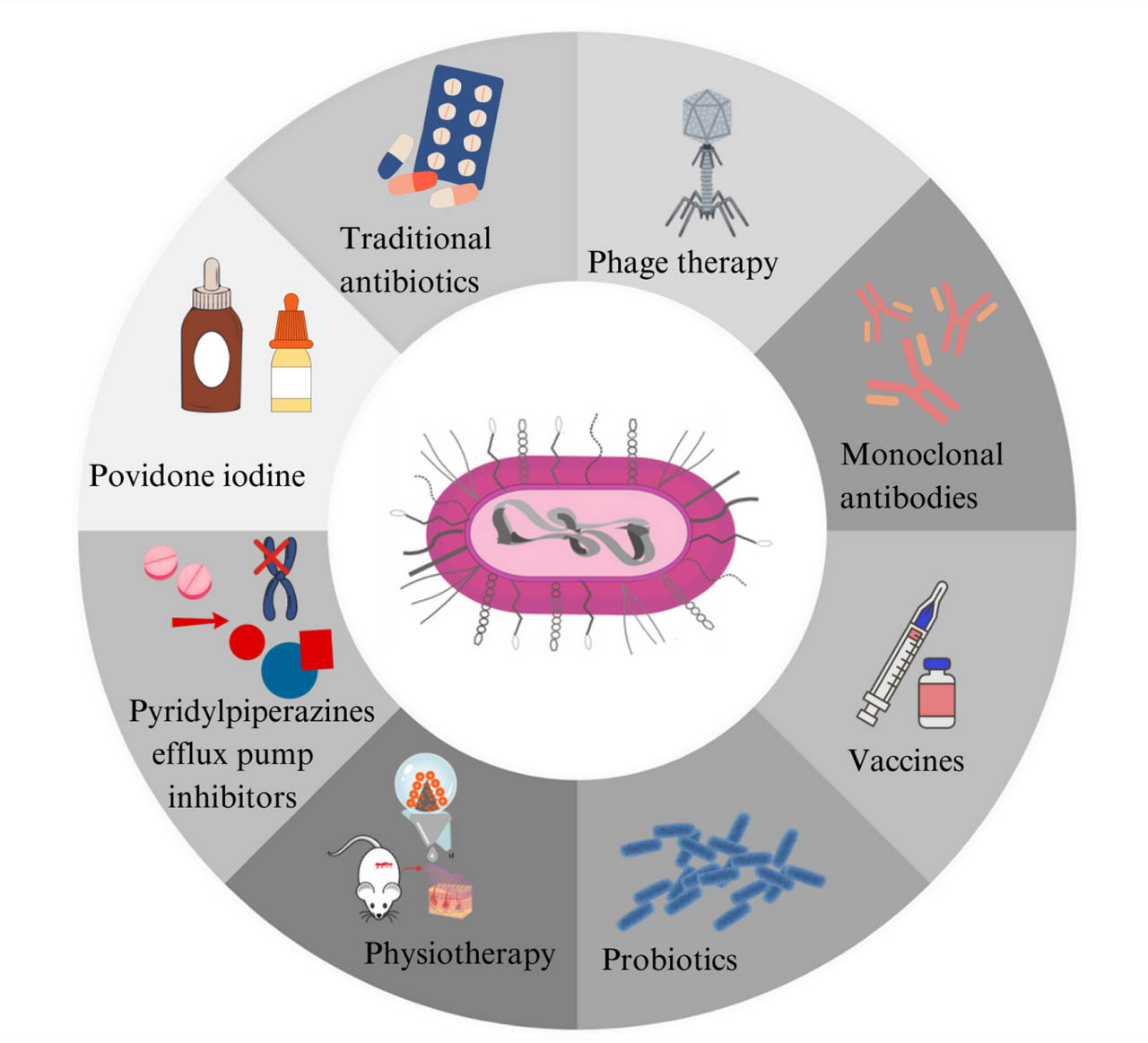
Fig. 4.
Diagram showing therapeutic strategies for treating infections caused by multidrug-resistant (MDR) K. pneumoniae. Own graphic design based on (Wantuch and Rosen, 2023; Lei et al., 2024 and Li et al., 2024).
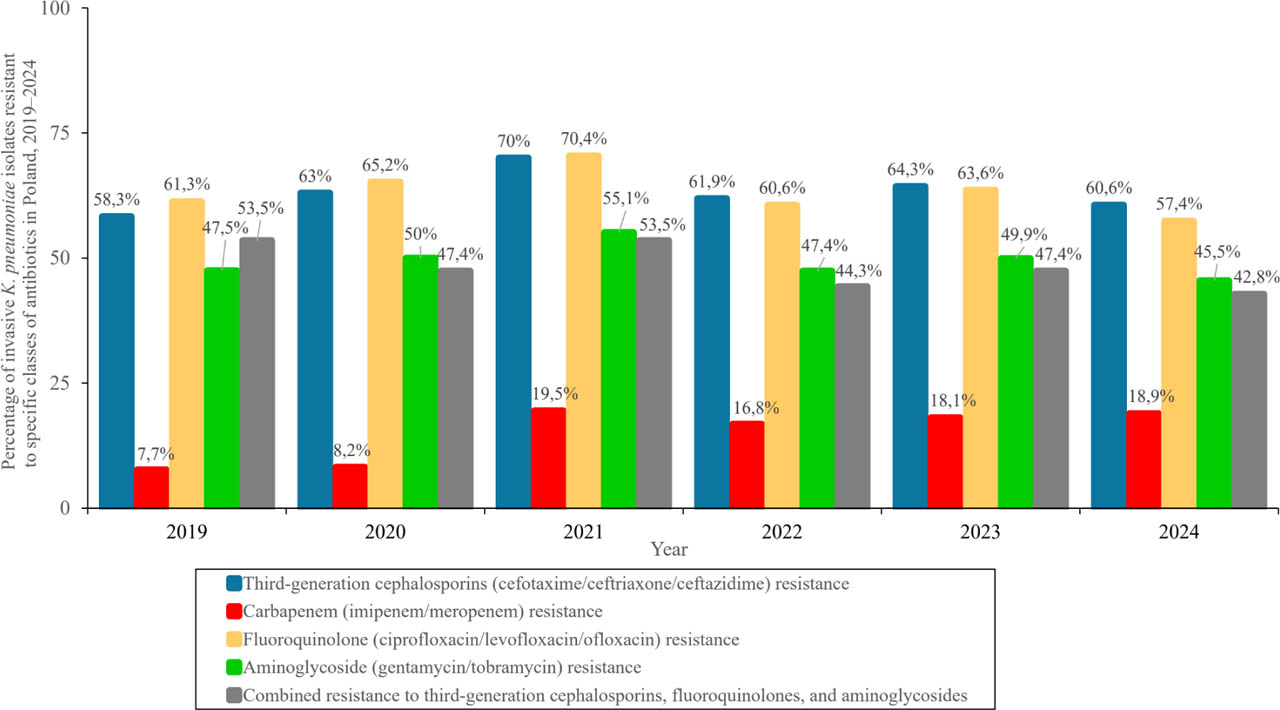
Fig. 5.
Graph showing the percentage of invasive K. pneumoniae isolates resistant to specific antibiotic classes in Poland, 2019–2024. Own graphic design based on data from EARS-Net (2024) and ECDC (2026).