
Table 1.
Characteristics of the main types of HPV, with examples (Chen et al., 2014; McBride, 2021).
| Type | Cell tropism | Characteristics | Examples of HPV types |
|---|---|---|---|
| Alphapapillomavirus | Mostly epithelial cells of the oral cavity and genital mucosa | The largest and best-known group. They include low-risk types responsible for the development of warts or condylomas and high-risk, so-called oncogenic types associated with the development of cancer. | 6, 11,16, 18, 31, 33, 45, 52, 58 |
| Betapapillomavirus | Skin (including hair follicles) | Common skin viruses, often acquired during childhood. A frequent component of the skin microbiome. In immunocompromised individuals and when exposed to UV radiation, some types may contribute to the development of non-melanoma skin cancer. | 5, 8, 14 |
| Gammapapillomavirus | Skin of the hands or feet | Common skin viruses, usually asymptomatic infection. May cause skin warts. | 4, 65, 95 |
| Mupapillomavirus | Skin of the feet (soles) | Skin viruses causing plantar warts in children and adolescents resolve spontaneously. | 1, 63 |
| Nupapillomavirus | Skin (hands, feet) | Skin viruses. Associated with common warts. The course of infection is mild and self-limiting. | 1 |
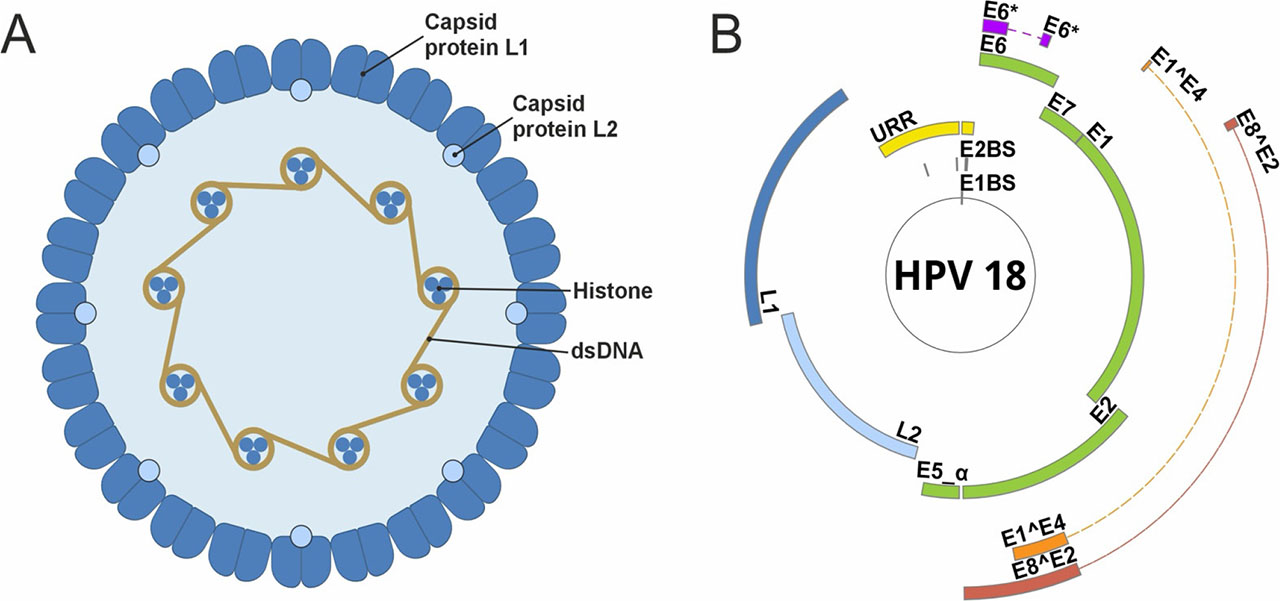
Fig. 1.
Diagram of the structure of an HPV virion (A) based on Payne (2023) and the circular genome organization of HPV 18 (B) (PapillomaVirus Episteme, 2025). Created in BioRender.
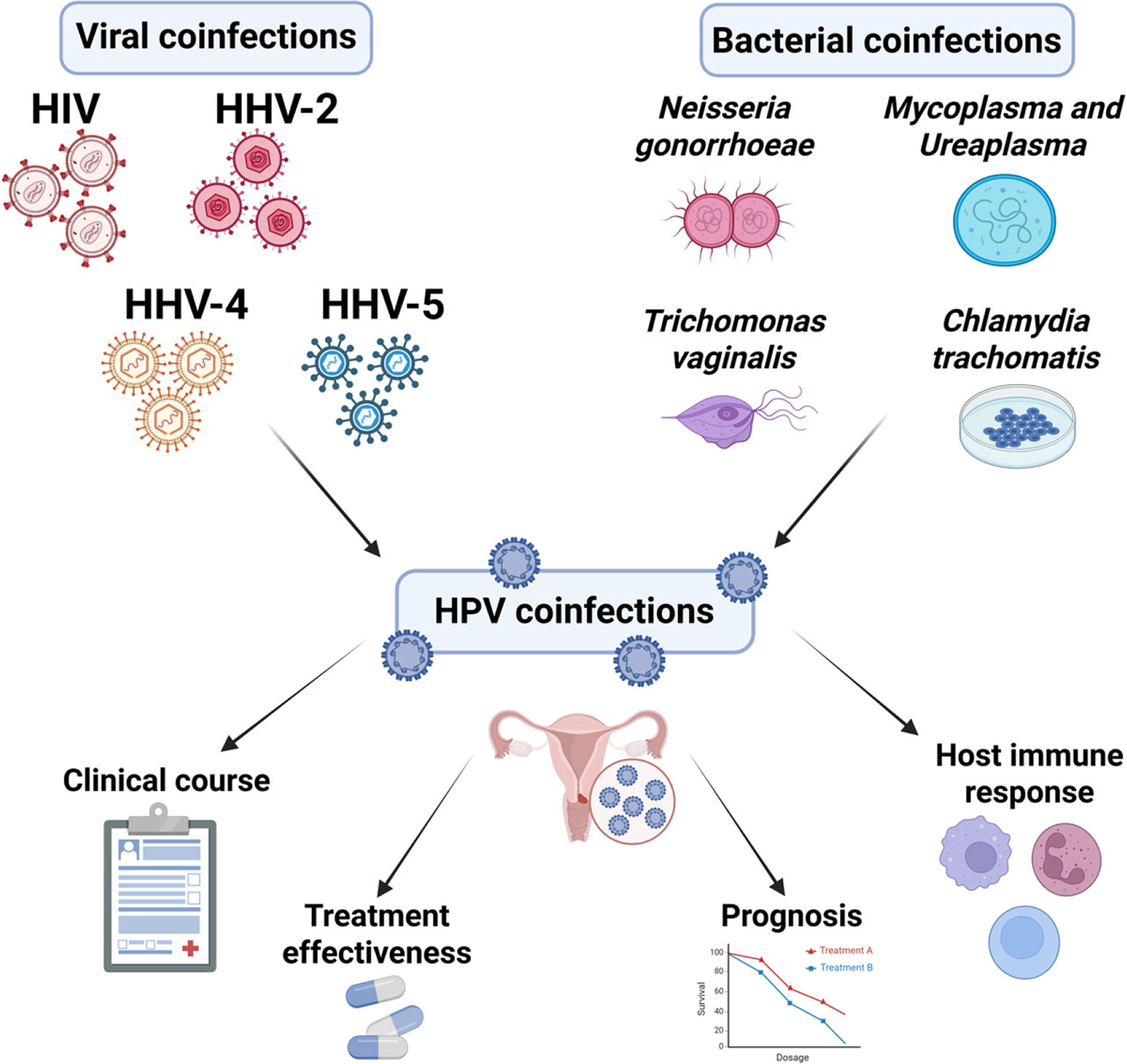
Fig. 2.
Coinfections of HPV with other viruses and bacteria and their impact on the course of infection. Created in BioRender.
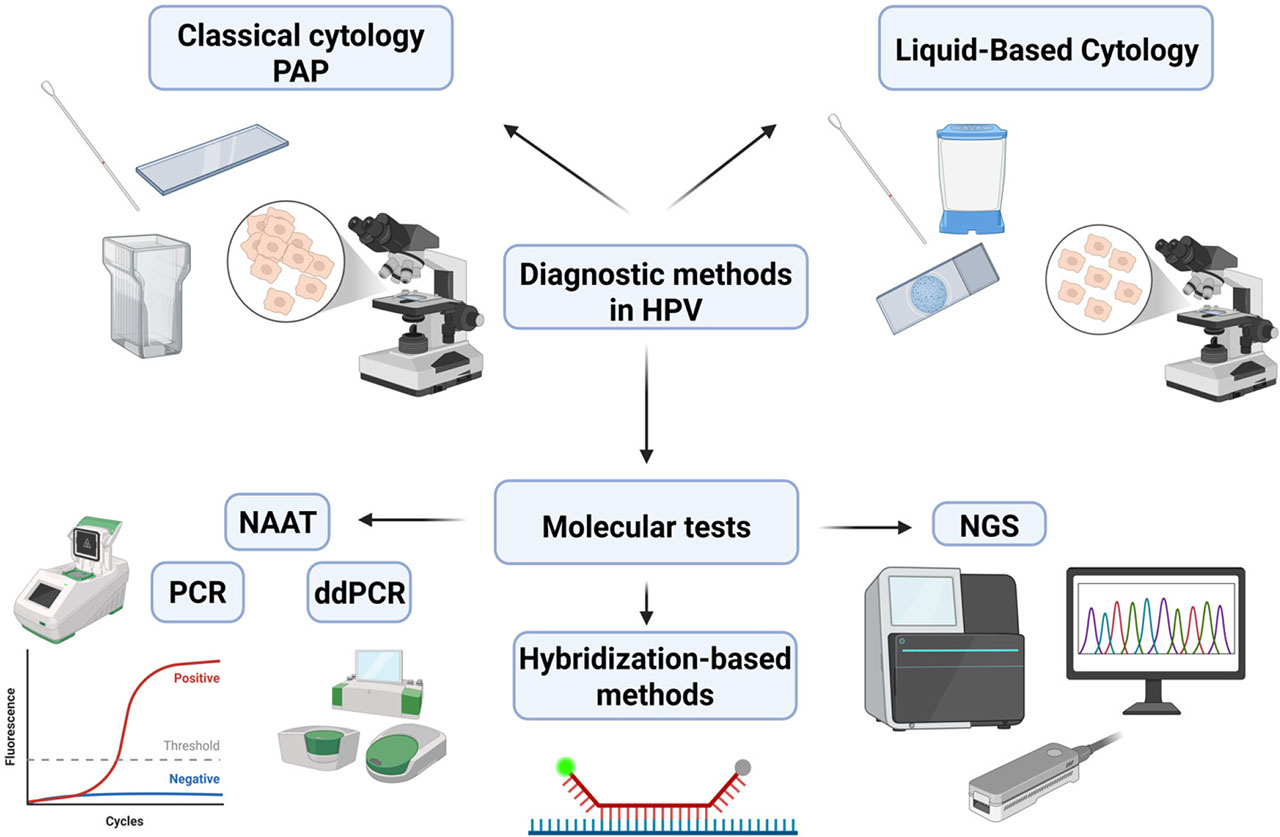
Fig. 3.
Diagnostic methods for the prevention and diagnosis of HPV infection. Created in BioRender.
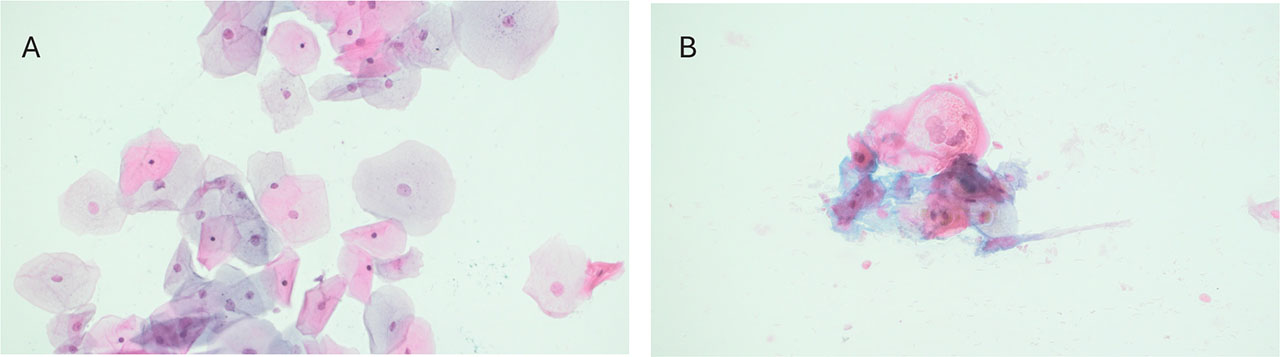
Fig. 4.
Normal cytology (A) compared to cytology showing koilocytes (B), indicative of HPV-related changes. Author’s own source.
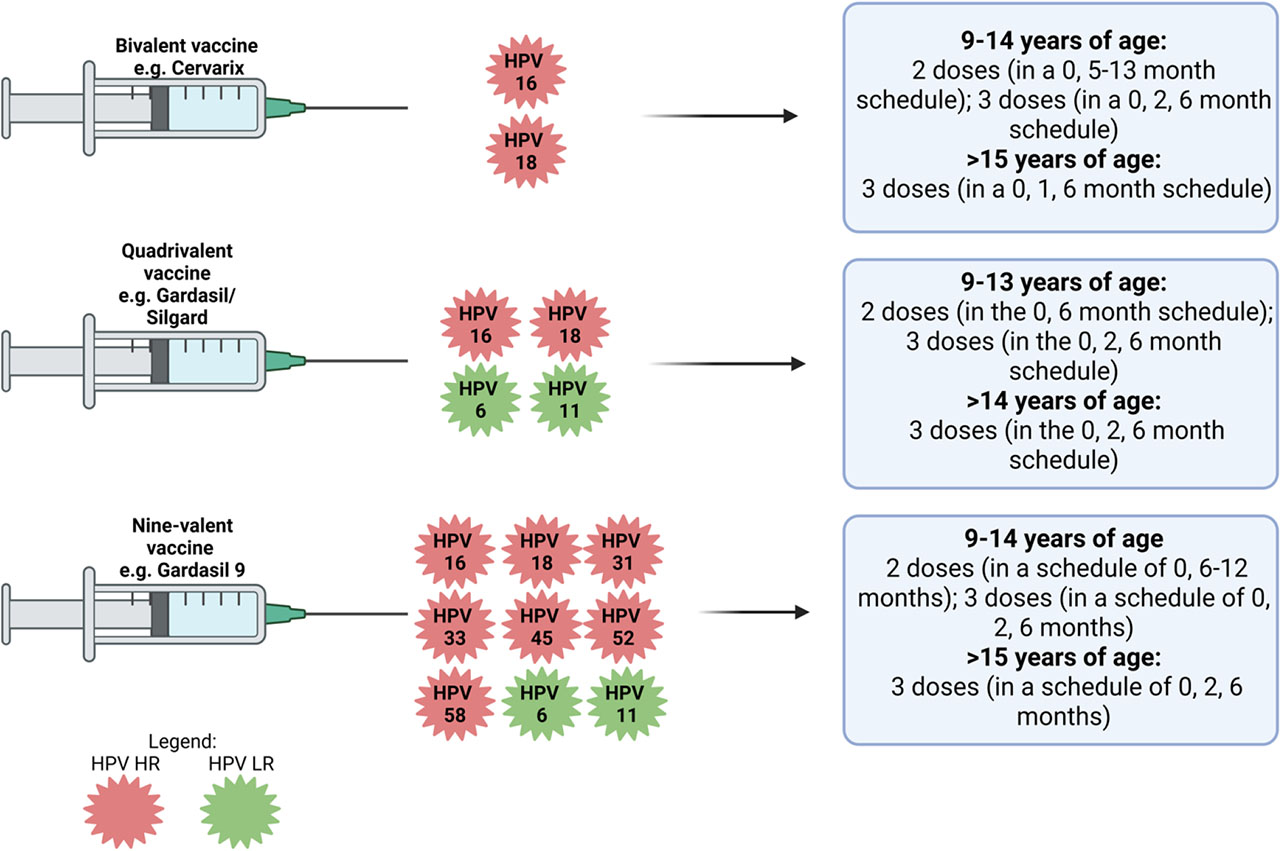
Fig. 5.
Examples of prophylactic vaccines available on the market, along with their dosage schedules. Created in BioRender.