
1. Introduction
Human papillomavirus is estimated to be responsible for approximately 5% of all cancers worldwide, i.e., over 800,000 new cases annually (De Martel et al., 2012; Zhang et al., 2025). HPV infections affect both sexes, but the burden of HPV-related diseases is significantly higher in women because cervical epithelial cells are highly susceptible to infection (De Martel et al., 2012). Almost all cases of cervical cancer and a significant proportion of cancers of the anogenital organs (vulva, vagina, penis, and anus) and the oral cavity and throat are etiologically related to HPV infection (Bosch et al., 2013; de Sanjosé et al., 2018). HPV is divided into high-risk (HR-HPV) and low-risk (LR-HPV) types based on their potential to cause cancerous changes. The HR-HPV group includes types 16, 18, 31, 33, 34, 35, 39, 45, 51, 52, 56, 58, 59, 66, 68, and 70, which are most strongly associated with carcinogenesis. In contrast, LR-HPV types, such as 6, 11, 40, 42, 43, 44, 55, 61, 81, and 83, are mainly responsible for benign lesions, including genital warts. High-risk HPV infections are a significant etiological factor in the development of many malignant tumors occurring in various anatomical locations and among populations with different sexual behaviors. HPV 16 and 18 are primarily responsible for cervical cancer. HPV 16, the most common genotype, is followed by HPV 31, 33, and 18 in head and neck cancers. HPV 16 and 18 are also the main causes of cancers of the anogenital region (Aden et al., 2024; de Martel et al., 2017). Cervical cancer is predominantly a consequence of HPV infection and ranks fourth in terms of incidence and mortality among women (Bruni et al., 2023). In 2020, there were nearly 604,000 new cases of cervical cancer worldwide and approximately 342,000 deaths related to this cancer. It is also the second most common cancer in women aged 15–44. A significant proportion of high-risk HPV types are also observed in head and neck cancers, especially in oropharyngeal squamous cell carcinoma (OPSCC; tonsils, base of the tongue). Head and neck cancers are the eighth most common malignant tumors worldwide, with approximately 30% of OPSCC cases associated with HPV infection (Zhang et al., 2025; Bruni et al., 2023; Vojtechova & Tachezy, 2025). HPV infection is also associated with skin and mucosal lesions such as warts and condyloma acuminata. Most infections are asymptomatic and resolve spontaneously within 12–24 months. The course of infection and accompanying factors are essential for understanding the mechanisms of HPV infection and, consequently, for developing effective strategies for early detection of HPV and treatment of infection (Bosch et al., 2013; de Sanjosé et al., 2018).
Table 1.
Characteristics of the main types of HPV, with examples (Chen et al., 2014; McBride, 2021).
| Type | Cell tropism | Characteristics | Examples of HPV types |
|---|---|---|---|
| Alphapapillomavirus | Mostly epithelial cells of the oral cavity and genital mucosa | The largest and best-known group. They include low-risk types responsible for the development of warts or condylomas and high-risk, so-called oncogenic types associated with the development of cancer. | 6, 11,16, 18, 31, 33, 45, 52, 58 |
| Betapapillomavirus | Skin (including hair follicles) | Common skin viruses, often acquired during childhood. A frequent component of the skin microbiome. In immunocompromised individuals and when exposed to UV radiation, some types may contribute to the development of non-melanoma skin cancer. | 5, 8, 14 |
| Gammapapillomavirus | Skin of the hands or feet | Common skin viruses, usually asymptomatic infection. May cause skin warts. | 4, 65, 95 |
| Mupapillomavirus | Skin of the feet (soles) | Skin viruses causing plantar warts in children and adolescents resolve spontaneously. | 1, 63 |
| Nupapillomavirus | Skin (hands, feet) | Skin viruses. Associated with common warts. The course of infection is mild and self-limiting. | 1 |
2. History of the discovery of HPV
Condylomas have been described since the time of Hippocrates (460–370 BC), reflecting their long presence in the history of medicine. At the beginning of the 1st century AD, Celsus distinguished three morphologically distinct types of warts, and in the following centuries, concepts of their origin persisted, including the theory of “venereal poison,” which mistakenly linked them to syphilis and later to gonorrhoea. In the 19th century, Domenico Rigoni-Stern linked cervical cancer to sexually transmitted diseases, while Joseph Payne, Gémy, C. Licht, and Gaston Variot provided evidence for the infectious nature of warts. In 1907, Giuseppe Ciuffo demonstrated the viral nature of condylomas. The early 20th century saw groundbreaking discoveries in wart research. In 1956, the presence of HPV in lesions was confirmed, and koilocytosis was described on cytological smears. A breakthrough came in 1976, when Harald zur Hausen formulated a hypothesis about the role of HPV in the etiology of cervical cancer. This led to the identification of oncogenic HPV types 16 and 18 in 1983, and as a result, the researcher was awarded the Nobel Prize in Physiology or Medicine in 2008 for his discovery of human papillomavirus and for demonstrating its link to the development of this cancer. Many years later, these achievements enabled the development of HPV vaccines, reducing the risk of cancer associated with this virus (Koss & Durfee, 1956; Karamanou et al., 2010).
3. Systematics and biology of the HPV
HPV belongs to the Papillomaviridae family. It is a diverse group of small, unenveloped DNA viruses with a diameter of 50–55 nm and an icosahedral capsid composed of 72 capsomers that infect epithelial cells (Fig. 1A). Currently, the Papillomaviridae family includes more than 450 identified types of human papillomavirus (McBride, 2021). With the development of molecular biology and DNA sequencing tools, an HPV classification system based on L1 gene sequence analysis has been approved by the International Committee on Taxonomy of Viruses (McBride, 2021). These viruses have been classified into five phylogenetic types designated by letters of the Greek alphabet: Alpha (α)-, Beta (β)-, Gamma (γ)-, Mu (μ)-, and Nu (ν)- papillomaviruses (Flores-Miramontes et al., 2020).
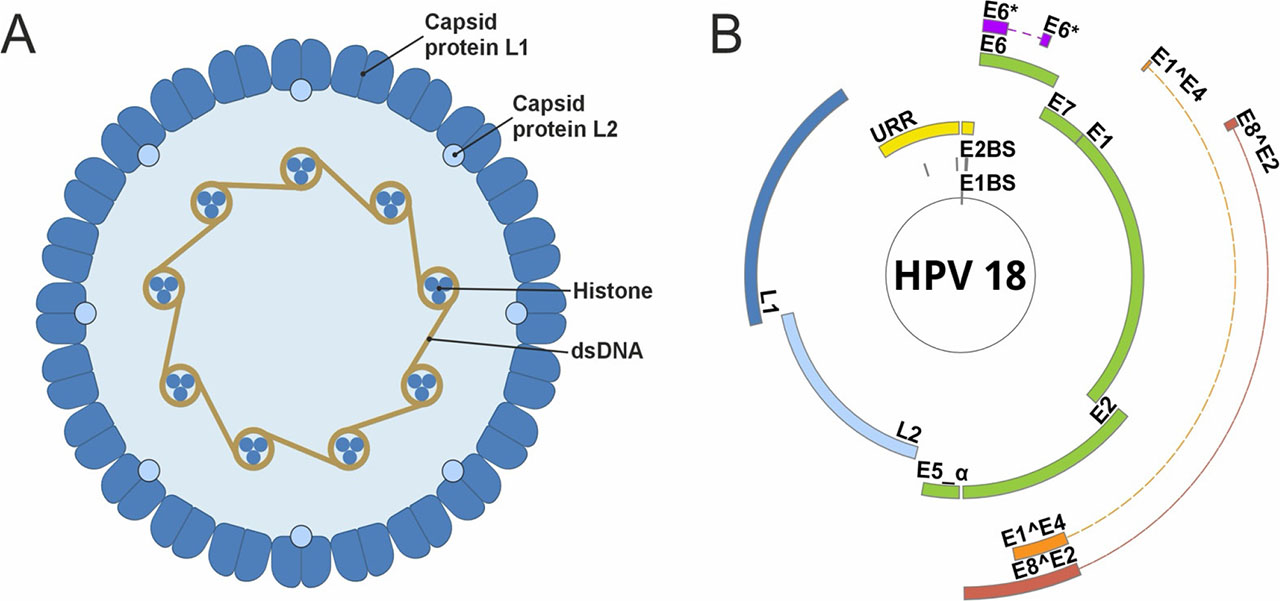
Fig. 1.
Diagram of the structure of an HPV virion (A) based on Payne (2023) and the circular genome organization of HPV 18 (B) (PapillomaVirus Episteme, 2025). Created in BioRender.
The human papillomavirus genome is a circular double-stranded DNA (dsDNA) molecule 7.5–8 kbp in length (Fig. 1B). It is organized into three structural domains: the early region (E), encoding proteins required for replication and regulation of viral gene expression (E1, E2, E4, E6, E7); a late region (L), encoding the L1 and L2 capsid proteins; and a regulatory, non-coding control region (LCR, long control region) located between the sequences encoding the L1 and E6 proteins. The relative sizes of these domains are 50% (E), 40% (L), and 10% (RNC/LCR), respectively (Vojtechova & Tachezy, 2025; Mateos-Lindemann et al., 2017). The E5 protein is encoded by representatives of the Alphapapillomavirus and Nupapillomavirus genera. The E8 protein is encoded by HPV 16 and HPV 31 types. The HPV genome also contains the p670 promoter, which regulates expression of late genes (Sitarz et al., 2022). Furthermore, disruption of the E1 and E2 genes during integration is a major pathway of oncogenesis, as E1 and E2 normally regulate expression of the major oncoproteins E6 and E7. The oncoprotein E6, one of the major HPV oncoproteins, acts in carcinogenic types by degrading the p53 protein. E7, also a major oncoprotein, targets the retinoblastoma protein pRb, inactivating it, which is crucial for maintaining cervical cancer and leading to cell cycle disruption (Chase W. Nelson, 2023).
4. HPV Coinfections with other viruses and bacteria
HPV infections often co-occur with other bacterial or viral infections, creating coinfections, i.e., the presence of multiple infectious agents in host cells. These coinfections can significantly affect the clinical course, treatment efficacy, prognosis, and transmission dynamics of HPV-related diseases, and they can also modulate the host’s immune response. Coinfection with other viruses can alter the course of HPV infection and the response to therapeutic interventions, while the presence of bacteria can further exacerbate inflammation and promote virus survival. For this reason, individuals infected with HPV should be screened for other viral and bacterial infections, especially in populations at increased risk of coinfection (Wolf et al., 2024).
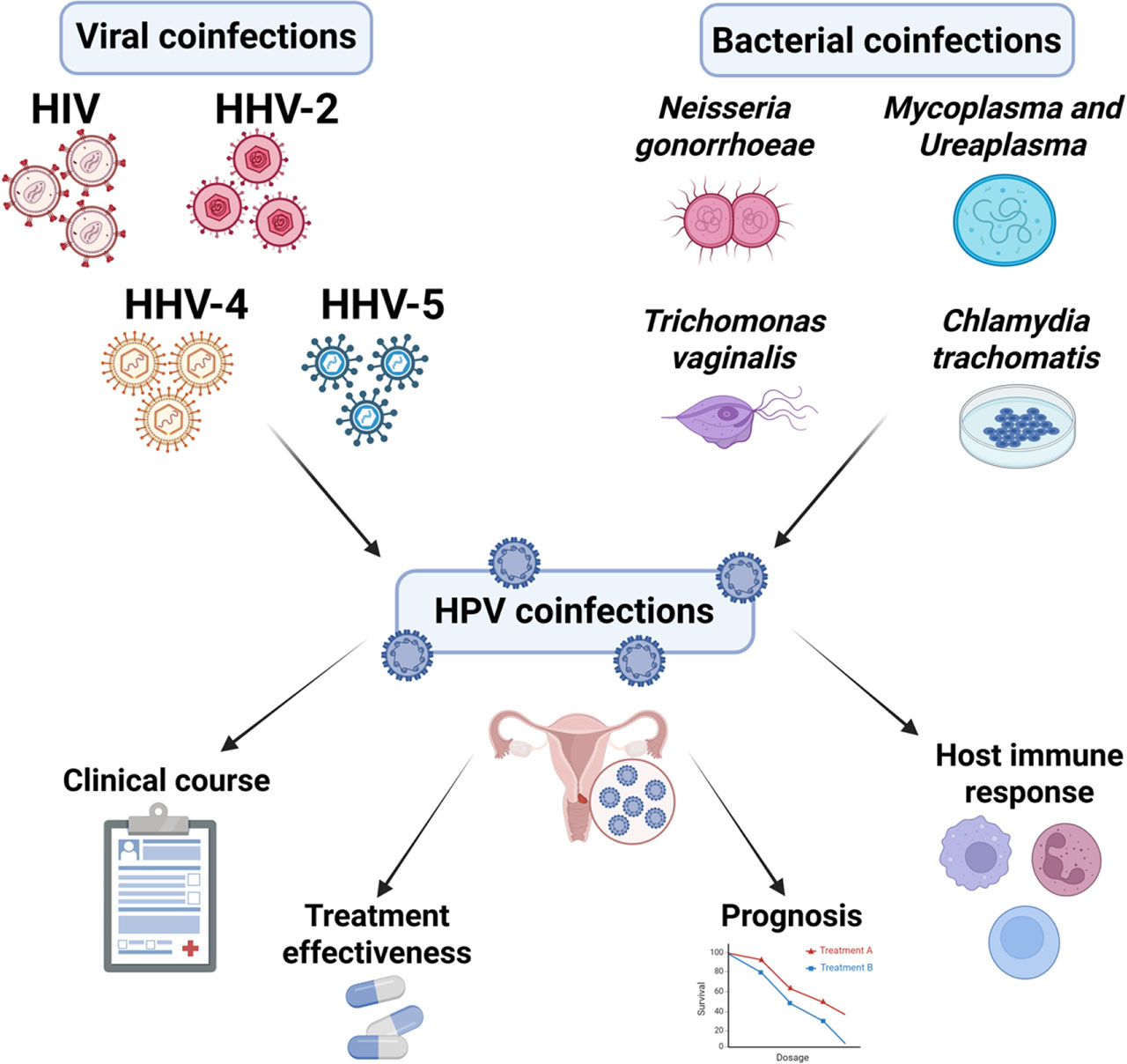
Fig. 2.
Coinfections of HPV with other viruses and bacteria and their impact on the course of infection. Created in BioRender.
4.1. Coinfection of HPV with the human immunodeficiency virus (HIV)
HPV infection of the cervix can increase susceptibility to HIV infection by inducing inflammatory and immunomodulatory proteins. Among women infected with HPV and HIV, a significantly higher prevalence of HPV genotypes such as HPV 16, 18, and 45 is observed. Immunosuppression caused by HIV infection weakens the immune system’s ability to eliminate HPV infection, allowing it to persist in the body for a long time due to limited immune surveillance. This altered immune environment promotes the integration of the HR-HPV genome into the host genome, leading to cellular dysregulation and increasing the risk of malignant transformation (Swase et al., 2025).
HIV-1 proteins, such as Tat, interact with cellular mechanisms and HPV genes, enhancing cell proliferation, viral gene expression, and neoplastic transformation. The Tat protein increases expression of the HPV E6 oncoprotein and reduces p53 protein levels, thereby promoting loss of control over the cell cycle and malignant transformation (Barillari et al., 2016).
4.2. Coinfection of HPV with herpes simplex virus 2 (human herpesvirus 2, HHV-2)
The Herpesviridae family includes enveloped DNA viruses that can remain latent in the body for life and, in response to stress, become reactivated, causing secondary infections in the epithelium of the oral cavity and the genital tract (Akbari et al., 2023). Coinfection with human papillomavirus and human herpesvirus HHV-2 (HSV-2) can increase the risk of developing and maintaining precancerous lesions and cervical cancer. At the molecular level, HHV-2 (HSV-2) can promote cellular transformation by increasing expression of HPV genes (e.g., E1, E2, E6), promoting integration of the HPV genome into host cells, and maintaining an environment conducive to inflammation and cell proliferation. As a result, HPV/HHV-2 (HSV-2) infection is associated with higher expression of angiogenic factors and apoptosis inhibitors (Sausen et al., 2023).
4.3. Coinfection of HPV with Epstein-Barr virus (human herpesvirus 4, HHV-4)
Epstein–Barr virus (EBV) is a DNA-containing herpesvirus (human herpesvirus 4, HHV-4) with a seroprevalence of approximately 90%, i.e., the percentage of the population with antibodies indicating past infection. It persists in a latent form primarily in B lymphocytes and is associated with numerous lymphoid cancers, including Burkitt’s lymphoma, Hodgkin’s lymphoma, and lymphomas in immunocompromised patients. Human herpesvirus HHV-4 (EBV) encodes several genes (including EBNA1, LMP1, LMP2A, BARF1) that support infection, survival, and cell transformation by mimicking cytokines and modulating host signaling pathways and epigenetics. HHV-4/HPV coinfection in the same epithelial cells can lead to synergy between oncoproteins: LMP1/BARF1 (HHV-4) and E6/E7 (HPV), which enhance proliferation, resistance to apoptosis, and an impaired response to DNA damage, and consequently promote progression to cancer. In addition, HHV-4 (EBV) may indirectly support HPV-infected cells through immunosuppression in the tumor microenvironment (infection of lymphocytic infiltrates), and the interaction of both viruses also involves chromatin modifications and latency maintenance (Ebrahimi et al., 2024).
In addition, it is worth noting that nasopharyngeal carcinoma (NPC) is a metastatic malignancy closely associated with the Epstein–Barr virus. In most patients, the disease is diagnosed at an advanced stage because of nonspecific symptoms such as headache, nosebleed, and facial pain. The risk of developing NPC is increased by genetic and environmental factors, as well as poor diet. The incidence of NPC is two to three times higher in men than in women (Su et al., 2023).
4.4. Coinfection of HPV with human cytomegalovirus (human herpesvirus 5, HHV-5)
Human cytomegalovirus (HCMV) is another herpesvirus (human herpesvirus 5, HHV-5) that infects 60% to 90% of adults worldwide. It exhibits broad tropism, infecting mononuclear cells, fibroblasts, endothelial cells, and epithelial cells (Guidry & Scott, 2017). HHV-5 (HCMV) may promote the integration or persistence of the HPV genome in host cells by altering genomic stability in epithelial cells, inducing DNA damage, and promoting chronic inflammation. These mechanisms may increase the risk of progression from precancerous lesions to cancer. Therefore, HHV-5/HPV coinfection may be an important factor in cervical carcinogenesis, even though HHV-5 (HCMV) is not a typical oncogenic virus but rather acts as an oncomodulator supporting the transformation process (Blanco & Muñoz, 2024).
4.5. HPV coinfection with Chlamydia trachomatis
Chlamydia trachomatis is the most common sexually transmitted infection worldwide. Most infections are asymptomatic, and untreated infections can lead to serious complications, including infertility (Lu et al., 2024). HPV coinfection with C. trachomatis is common and may correlate with the occurrence of cervical intraepithelial neoplasia (CIN) and cytological abnormalities. C. trachomatis infection is associated with an increased risk of HR-HPV infection, and coinfection with HR-HPV and C. trachomatis is associated with a more than fourfold increase in the risk of cervical cancer (Bowden et al., 2023). C. trachomatis infection damages the mucosal barrier, impairs the immune response, promotes chronic inflammation, and increases the persistence of HPV infection. The bacterium produces, among other things, the CPAF protease, which degrades MHC molecules, inhibits antigen presentation, and promotes virus survival. These changes may increase the susceptibility of the epithelium to infection with multiple high-risk HPV genotypes, leading to carcinogenesis. Understanding the mechanisms underlying the interaction between HPV and C. trachomatis is crucial for identifying risk factors and developing effective cervical cancer prevention strategies (Kumari & Bhor, 2022).
4.6. HPV coinfection with Mycoplasma and Ureaplasma
Bacteria from the Mycoplasmataceae family are pleomorphic microorganisms without cell walls that primarily colonize the epithelium of the human urogenital tract and are transmitted primarily through sexual contact (except for Mycoplasma pneumoniae). The pathogenic properties of many species are associated with increased numbers of bacteria in the urogenital tract. The most commonly isolated species include Ureaplasma urealyticum, Ureaplasma parvum, Mycoplasma hominis, and Mycoplasma genitalium. These species constitute an important group of pathogens that negatively affect women’s reproductive health. Infection with M. genitalium is associated with an increased risk of cervicitis, pelvic inflammatory disease, preterm birth, and miscarriage. In addition, these infections can persist and induce chromosomal changes that promote host cell transformation, especially in chronic cases (Adebamowo et al., 2017; Ye et al., 2018). The presence of Ureaplasma urealyticum has been shown to be associated with a 57% increase in the risk of HPV infection, while Ureaplasma parvum infection is associated with a more than threefold increase in the likelihood of infection compared to uninfected individuals. Additionally, Mycoplasma hominis infection correlates with a 48% increased risk of abnormal cervical cytology results (Ye et al., 2018).
4.7. HPV coinfection with Neisseria gonorrhoeae
Neisseria gonorrhoeae infections are among the most common sexually transmitted infections. Infections most often occur in the 20–24 age group and are usually asymptomatic but can lead to long-term complications (Tamarelle et al., 2019; Nerlander et al., 2024).
N. gonorrhoeae can, independently or in synergy with HPV, increase the risk of malignant cell transformation by disrupting the regulation of multiple signaling pathways and inducing double-stranded DNA breaks. Furthermore, this bacterium stimulates the expression of pro-inflammatory cytokines and cyclin-dependent kinase inhibitors (p21, p27), while simultaneously reducing the level of the suppressor protein p53, which promotes the maintenance of inflammation and genomic instability (Akbari et al., 2023).
4.8. HPV coinfection with Trichomonas vaginalis
Trichomonas vaginalis is a protozoan that causes a parasitic disease of the genital organs called trichomoniasis. Infection with T. vaginalis can cause inflammation of the vagina, cervix, or urethra. T. vaginalis can cause microdamage to the cervical epithelium and reduce the protective layer of vaginal mucus, which facilitates HPV penetration into the epithelial basement membrane. T. vaginalis infection during pregnancy is significantly associated with prematurity and low birth weight. This infection also promotes a pro-inflammatory environment by inducing neutrophil production of nitric oxide (NO), which leads to DNA damage, increased cell proliferation, and persistent HPV infection. Furthermore, T. vaginalis can enhance viral oncogenic processes by activating signaling pathways responsible for host cell neoplastic transformation (Akbari et al., 2023; Fazlollahpour-Naghibi et al., 2023; Govender et al., 2024).
5. The role of the vaginal microbiome in preventing HPV infection
The vaginal microbiome plays a crucial role in maintaining the health of the female reproductive system. In most women, the quantitative and qualitative composition of the vaginal bacterial profile is dominated by Lactobacillus species (Sroka-Oleksiak et al., 2020). The development of molecular techniques has significantly expanded our understanding of the complexity and diversity of the vaginal microbiota. In 2011, Ravel et al. introduced the classification of community state types (CST), and analysis of the 16S rRNA gene sequence allowed the distinction of five types of bacterial communities (CST I-V). Four of them are dominated by Lactobacillus species: L. crispatus (CST I), L. gasseri (CST II), L. iners (CST III), and L. jensenii (CST V), while CST IV is characterized by a lower proportion of Lactobacillus and the presence of anaerobic microbiota, including Gardnerella, Atopobium, Mobiluncus, and Prevotella (Abou Chacra et al., 2022; Shen-Gunther et al., 2025; Ravel et al., 2011). The stability of the vaginal microbiota prevents colonization by pathogens, thereby preventing infections. Bacteria produce compounds that maintain the balance of the microbiota, such as hydrogen peroxide, which protects against harmful microorganisms; lactic acid, which maintains the normal pH of the vagina in the range of 3.5–4.5; bacteriocins, which inhibit the growth of pathogenic microorganisms in the vagina; and enzymes such as arginine deaminase, which deprive anaerobic bacteria of the amino acid arginine, necessary for their growth (Abou Chacra et al., 2022; Tachedjian et al., 2017). An imbalance in the microbiota, known as bacterial vaginosis (BV), leads to a decline in microbial biodiversity and the dominance of anaerobic bacteria such as Gardnerella vaginalis, Atopobium vaginae, Prevotella, Peptoniphilus, Megasphaera, and Mobiluncus (Coudray & Madhivanan, 2020; Kyrgiou & Moscicki, 2022; Norenhag et al., 2020; Abou Chacra et al., 2022).
The composition of the vaginal microbiota is crucial for susceptibility to HPV infection, infection persistence, and progression to precancerous lesions. A microbiota dominated by Lactobacillus species, especially L. crispatus, promotes viral clearance by creating a low-pH environment with limited inflammation. Maintaining a Lactobacillus dominant vaginal microbiota may be important for preventing HPV infections and cervical cancer, and probiotic modulation of the microbiome is a promising therapeutic strategy (Zeng et al., 2023).
In turn, studies have shown that bacteria associated with bacterial vaginosis, in this case representatives of the Atopobiaceae family and Sneathia spp., may promote the persistence of HPV infection and progression to cervical cancer (Bradshaw et al., 2025). A vaginal microbiome with reduced Lactobacillus is more susceptible to persistent HPV infections and the development of high-grade intraepithelial lesions (HSIL). In particular, the presence of L. iners instead of L. crispatus is correlated with a higher risk of HPV infection and the development of intraepithelial neoplasia. L. iners can adapt to environments with varying pH levels and probably lacks the genes for bacteriocin synthesis, creating conditions for the proliferation of pathogenic bacteria (Zeng et al., 2023).
Vaginal dysbiosis promotes local inflammation, facilitating HPV penetration into basal layer cells through microdamage to the epithelium and weakening of the mucosal barrier (Kyrgiou & Moscicki, 2022; Norenhag et al., 2020). The pro-inflammatory environment associated with BV causing bacteria increases production of pro-inflammatory cytokines and oxidative stress, during which free radicals damage DNA and can promote the transformation of HPV-infected cells (Kyrgiou & Moscicki, 2022). Muntinga et al. showed that in HSIL (high-grade intraepithelial lesion), there is an increase in the number of immature dendritic cells, regulatory T cells, PD-L1+ cells, and macrophages, with a simultaneous decrease in the number of Langerhans cells, CD4+, and CD8+ cells compared to healthy tissue and low-grade lesions (Muntinga et al., 2022; Schellekens et al., 2025). Women with precancerous cervical lesions were found to have lower levels of IFN-γ and higher levels of IL-10, indicating a Th1/Th2 imbalance conducive to the persistence of HPV infection (Fernandes et al., 2015).
6. Detection of HPV infection
Human papillomavirus infection is the most common sexually transmitted infection worldwide, with estimates indicating that more than 80% of people will be infected at some point in their lives (Bartosik et al., 2024). Understanding the role of HPV in carcinogenesis has revolutionized screening approaches, leading to the introduction of molecular tests into preventive programs (Chrysostomou et al., 2018). Currently, HPV testing is the recommended approach to cervical cancer screening in women over age 30 (Poljak et al., 2020).
Detection of human papillomavirus infection is based on molecular methods that identify the virus’s genetic material. The presence of this material confirms viral infection but does not always correlate with the development of pathological changes. Diagnosing HPV-related diseases involves detecting oncogenic transcripts of the E6/E7 genes, a marker of active viral infection that can lead to malignant transformation of cells. Biomarkers such as P16/Ki-67, HPV E6/E7 mRNA tests, and DNA methylation tests play a key role in complementing the diagnosis (Abreu et al., 2012). The P16 protein is a cyclin-dependent kinase inhibitor, while the Ki-67 protein is associated with cell proliferation. Expression of these biomarkers is associated with the progression and severity of cervical cancer. The p16 IHC marker is a reliable substitute for squamous intraepithelial lesions and potentially progressive high-grade disease; it can be used to identify and confirm severe cervical dysplasia. Furthermore, the complete absence of p16 immunostaining can be used to rule out accompanying high-grade squamous intraepithelial lesions, at least in biopsy material sent to the laboratory. Ki-67 is a proliferation marker that is restricted to the parabasal cell layer of normal stratified squamous epithelium but is expressed in stratified squamous epithelium in CIN lesions, correlating with the degree of maturation disturbance (Silva et al., 2017).
The HR-HPV E6/E7 mRNA test is a promising non-invasive biomarker for detecting high-grade cervical lesions (CIN2+), enabling detection of HPV infection and simultaneous prediction of cervical lesions, as the continuous expression of the E6/E7 oncogenes of high-grade HPV viruses is essential for the development and maintenance of the dysplastic phenotype (Derbie et al., 2020). DNA methylation tests show promise for detecting CIN2+ in triage settings when used in combination with existing high-sensitivity screening tools. Methylation may be a useful alternative to cytology as a triage test among women with positive HR-HPV test results, given its similar effectiveness and additional advantages in terms of objectivity and automation (Kelly et al., 2019).
The World Health Organization (WHO) is implementing a global strategy to eliminate cervical cancer, in which screening based on testing for human papillomavirus plays a key role. In 2020, the WHO announced the so-called 90-70-90 initiative, which assumes that by 2030 90% of girls will be fully vaccinated against HPV by age 15; 70% of women should be tested for HPV infection at least twice in their lifetime – at ages 35 and 45; and 90% of women diagnosed with cervical disease will receive appropriate treatment and care. Unlike traditional cytology, molecular diagnostics are much more sensitive and allow earlier detection of changes and longer intervals between tests, from 5 to 10 years. The WHO recommends that tests based on HPV DNA detection become the primary screening method (primary HPV testing), with cytology used only as a confirmatory test (triage) (Purandare, 2024).
In recent years, Europe has significantly revised its approach to cervical cancer prevention, in line with WHO’s global goal of eliminating the disease by 2030. The new guidelines emphasize that the primary screening method should be DNA testing for high-risk types of human papillomavirus, which is more sensitive than traditional cytology (Lynge et al., 2024). In European Union countries, population-based screening programs are recommended, with HPV as the primary test for women aged 30–65, with a screening interval of every 5 years (Hellfritsch et al., 2025).
Since 2007, Poland has had a Population-Based Cervical Cancer Prevention and Early Detection Program (OCCSP), which offered cytological screening tests to women aged 25–59 every three years (Nowakowski et al., 2015). In March 2025, the National Health Fund (NFZ) and the Ministry of Health introduced new guidelines for the cervical cancer prevention program, based on high-risk HPV molecular testing and liquid-based cytology (LBC). The new screening model was officially announced in the “Communication to healthcare providers” of March 26, 2025, and supplemented by a communication of July 1, 2025 (National Health Fund, 2025). The cervical cancer prevention program covers women aged 25–64, with two parallel screening regimens allowed: the traditional regimen – conventional cytology every 3 years, or the new regimen – HPV HR testing in triage with LBC every 5 years. The choice of pathway depends on the availability of technology in each unit and the preferences of the healthcare provider and patient (Pacjent.gov.pl, 2025).
The HIPPO project (HPV testing in the Polish population-based cervical cancer screening program) is the first randomized health policy study in Poland to evaluate the effectiveness of HPV testing in the national cervical cancer screening program. The study was designed in response to persistently high incidence and mortality rates of cervical cancer in Poland, despite the existence of a cytology screening program (Glinska et al., 2023). The aim of the project is to assess whether HPV DNA (HPV HR) tests yield higher detection rates for precancerous lesions (CIN2+, i.e., cervical intraepithelial neoplasia of at least moderate grade) than traditional cytology. Women who receive an ASC-US (atypical squamous cells of undetermined significance) or LSIL (low-grade squamous intraepithelial lesion) result are referred for colposcopy, while patients with a confirmed positive HPV result undergo LBC cytology before possible referral for further diagnosis. The results of the HIPPO project will form the basis for modifying the national prevention program and its full digitization (Glinska et al., 2023).
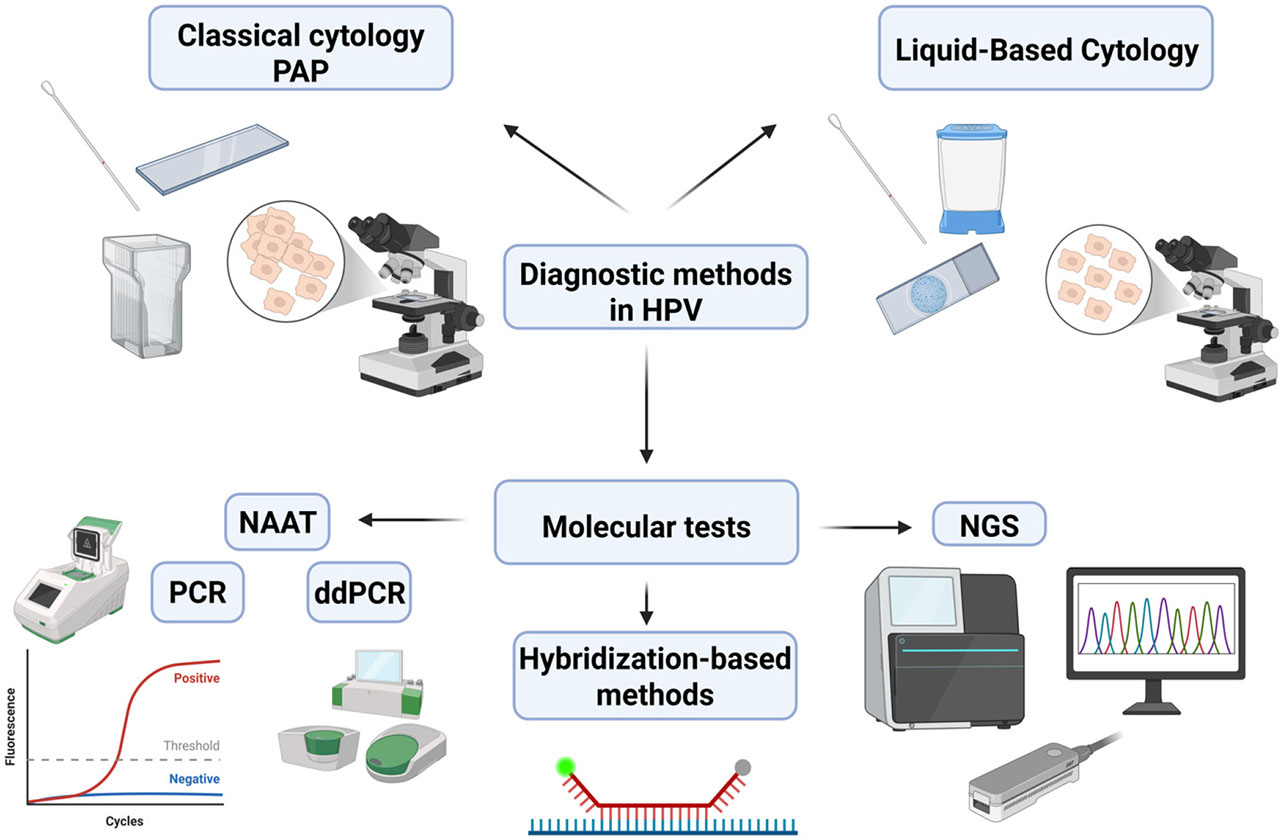
Fig. 3.
Diagnostic methods for the prevention and diagnosis of HPV infection. Created in BioRender.
6.1. Classic and liquid cytology
Cervical cytology involves microscopic evaluation of cells collected from the cervical epithelium to identify any atypical changes in the cytoplasm and nuclei. In conventional cytology, the cell material is applied directly to a microscope slide, fixed in ethyl alcohol to preserve cell morphology, and then stained using the Papanicolaou (PAP) method. Cytology results are most often reported using the Bethesda system (Rajaram & Gupta, 2021; Banerjee et al., 2022).
The Bethesda System (TBS) is an internationally recognized standard for describing cervical cytology results, developed in 1988 and subsequently updated several times (Crothers, 2005). It standardizes terminology, classification, and reporting of cytology test results, particularly in the context of human papillomavirus infections. It replaced the older Papanicolaou (PAP) classifications, introducing more precise terms for cellular changes and their clinical significance (Nayar & Wilbur, 2017).
The basic element of the Bethesda system is a three-step report structure that includes: (1) assessment of the adequacy of the material, (2) general diagnostic category, and (3) detailed description of cellular changes. The diagnostic section distinguishes the following categories: NILM (no intraepithelial or malignant changes), ASC-US/ASC-H (atypical squamous cells of undetermined significance or HSIL cannot be excluded), LSIL (low-grade intraepithelial lesion), HSIL (high-grade intraepithelial lesion), and SCC (squamous cell carcinoma) (Alrajjal et al., 2021).
A key concept in cytological assessment of HPV infection is koilocytes, i.e., squamous epithelial cells that exhibit a characteristic cytopathic effect (CPE) caused by HPV infection. A typical koilocyte has an enlarged, hyperchromatic nucleus with irregular contours, surrounded by a wide, clear zone of cytoplasm (perinuclear halo). These features reflect viral replication and serve as a morphological marker of HPV infection (Whitaker et al., 2013). Koilocytosis, by contrast, refers to the presence of multiple koilocytes on cytological examination and indicates active HPV infection, most often with high-risk types. In the Bethesda system, these changes are classified as LSIL because they reflect early, transient intraepithelial changes associated with HPV infection (Nayar & Wilbur, 2015).
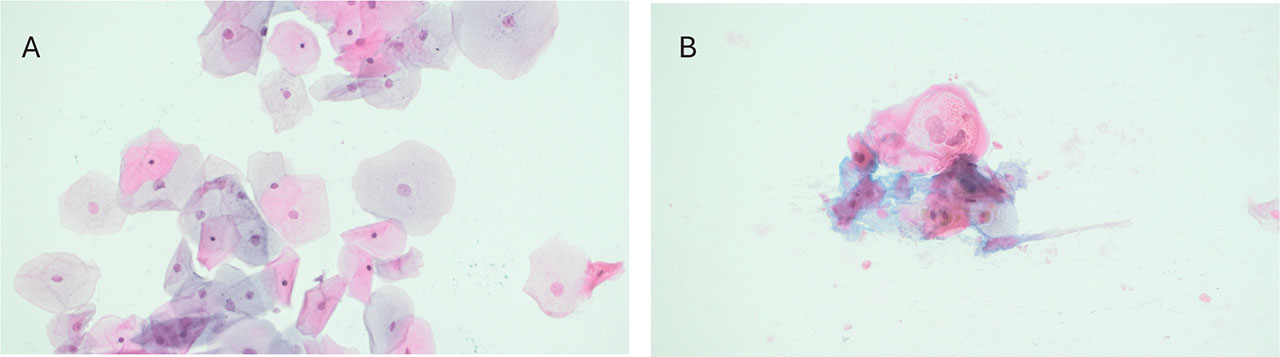
Fig. 4.
Normal cytology (A) compared to cytology showing koilocytes (B), indicative of HPV-related changes. Author’s own source.
In liquid-based cytology (LBC), the collected cells are placed in a preservative solution that stabilizes them and prevents degradation. Depending on the system, two types of fixative solutions are used: formalin-based and formalin-free. These solutions cause erythrocyte lysis and protein dissolution, resulting in a clear background and good cell visualization. Cell suspension preparation methods are based on two main techniques: membrane filtration and gravitational sedimentation. In membrane filtration, cells are filtered and automatically transferred to a microscope slide by pressing down. The resulting preparation has evenly distributed cells and a flattened cell image. This method increases the clarity of cell nuclei and enlarges the cytoplasm. Gravity sedimentation involves cells falling onto a special microscope slide under the influence of gravity and being adsorbed because of the negative surface charge. The resulting preparations have a higher cell density and a more three-dimensional appearance. Both methods result in a single-layer preparation with high diagnostic quality. After preparation, the slides are stained using the standard Papanicolaou method and then evaluated by a pathologist or cytodiagnostician. The liquid cytology result is reported according to the Bethesda system (TBS). Material from the liquid cytology sample can also be used for other molecular tests, such as HPV screening or full genotyping (Rajaram & Gupta, 2021; Banerjee et al., 2022; Abe et al., 2024). Conventional cytology is a subjective method with diagnostic limitations. Its effectiveness depends on the quality of the collected material and the experience of the cytodiagnostician. Comparative studies have shown that cytology’s sensitivity for detecting advanced precancerous lesions (CIN2+) is relatively low, estimated in meta-analyses at approximately 53–75% (Bhatla & Singhal, 2020; Ronco et al., 2014). The low sensitivity of cervical cytology increases the risk of false-negative results. HPV testing, on the other hand, is a more sensitive screening strategy than the PAP test alone. As a result, there has been a gradual shift away from classical cytology in favor of liquid-based cytology combined with molecular HPV testing (Bartosik et al., 2024; World Health Organization, 2021).
According to current WHO recommendations, the primary method of cervical cancer screening for women over age 30 should be HPV DNA testing, performed every 5–10 years, depending on the resources of the healthcare system. In countries with limited laboratory capacity, conventional cytology may be used as an alternative, but the WHO clearly states that HPV testing provides the highest sensitivity for detecting CIN2+ lesions (World Health Organization, 2021).
6.2. Molecular tests
The introduction of automated molecular testing systems approved by the US Food and Drug Administration (FDA) has led to a fundamental change in cervical cancer screening, moving from cytology alone to a combination of cytology and molecular testing. Molecular tests are more sensitive and specific than cytology and have become essential to daily clinical practice (Salazar et al., 2019). Many of these tests must meet strict validation requirements or FDA guidelines (Bartosik et al., 2024). The FDA details the validation elements each HPV molecular test must meet to obtain approval and IVD (In Vitro Diagnostic Device) status. There are three main categories for evaluating the effectiveness of molecular tests: analytical validity, clinical validity, and reproducibility. Analytical validity: The FDA requires, among other things, that test manufacturers demonstrate the minimum number of copies of HPV DNA the test detects with ≥95% efficiency, show no cross-reactions with other HPV genotypes or microorganisms, and ensure repeatability of results for positive and negative samples. Clinical validity: The FDA requires that the test demonstrate the ability to detect changes in women with HPV infection and be comparable to a reference clinical test. Reproducibility: The test protocol must demonstrate consistency of results when testing the same sample multiple times in the same laboratory, between laboratories, and regardless of the person performing the test. The requirements also address test calibration methods, internal and external controls (positive and negative) in each test series, and the correct operation of automated system software (Food and Drug Administration, 2017).
It has been shown that detecting viral DNA offers higher sensitivity for detecting advanced precancerous lesions (CIN2+ and CIN3+) than cytology alone (Glinska et al., 2023). Molecular diagnostics for human papillomavirus infections have advanced significantly thanks to the widespread use of nucleic acid amplification tests (NAAT). These tests are based on the amplification of nucleic acid fragments (DNA or mRNA) specific to high-risk HPV genotypes, enabling detection with high sensitivity and specificity in cervical samples. The basic amplification method remains the polymerase chain reaction (PCR) and its variants (real-time PCR, multiplex PCR, digital PCR), which enable quantitative and qualitative assessment of viral presence (Bartosik et al., 2024). Most commercial tests are based on PCR to identify HPV DNA, targeting the L1 gene or the E6 and E7 oncogenes (Bhatla & Singhal, 2020). There are also more modern tests, such as the Aptima HPV Assay, which detects viral mRNA of the E6/E7 oncogenes. Unlike DNA detection alone, E6/E7 mRNA detection is more specific for identifying precancerous lesions (Rajaram & Gupta, 2021; Salazar et al., 2019). Although more than 250 commercial HPV tests are available on the global market, only a small proportion has been fully verified according to international criteria (Poljak et al., 2020).
Nucleic acid hybridization is a molecular technique used to detect the presence of genetic material (DNA or RNA). Within this group of diagnostic methods, techniques such as Southern blotting, Northern blotting, and in situ hybridization (ISH) are distinguished. These techniques use signal amplification and constitute a separate category of tests. Southern blotting detects specific DNA sequences (e.g., HPV DNA, episomal vs. integrated forms). Northern blotting detects specific RNA transcripts (e.g., HPV mRNA), not the viral genome. In situ hybridization (ISH) allows the localization of viral DNA/RNA in tissues and cells, enabling determination of the virus’s location (Bogusiak & Kobos, 2014).
In 2019, the FDA approved seven HPV detection tests, including three hybridization-based signal amplification tests: Hybrid Capture 2 (HC2) HPV DNA test, Cervista HPV HR, and Cervista HPV 16/18, and four nucleic acid amplification tests: Cobas 4800 HPV Test, Aptima HPV Assay, Aptima HPV16 18/45, and BD Onclarity HPV Assay (Salazar et al., 2019; Sitarz & Szostek, 2019).
The Hybrid Capture 2 (HC2) HPV DNA test (Qiagen) was the first molecular HPV test approved by the FDA in 1999, replacing the HC1 test approved in 1995 (Burd, 2016). It is a microplate-based nucleic acid hybridization test with signal amplification and is widely recognized as the reference standard in many earlier studies. HC2 is designed for the qualitative detection of 13 HR HPV genotypes (16, 18, 31, 33, 35, 39, 45, 51, 52, 56, 58, 59, and 68) and 5 low-risk HPV genotypes (6, 11, 42, 43, and 44) (Mateos-Lindemann et al., 2017; Rajaram & Gupta, 2021; Williams et al., 2022). This test does not distinguish between individual HPV genotypes (Mateos-Lindemann et al., 2017).
The Cervista HPV HR Test (Hologic/Third Wave Technologies) was approved by the FDA in 2009 (Salazar et al., 2019). It uses signal amplification to detect DNA from 14 high-risk genotypes, including HPV 66, which is detected as part of a pooled HPV HR test (Bhatla & Singhal, 2020; Williams et al., 2022). A complementary Cervista HPV 16/18 test is also FDA-approved and allows genotyping of these two types. An advantage of this platform is the inclusion of a built-in internal control, human histone 2 (HIST2H2BE) (Mateos-Lindemann et al., 2017; Williams et al., 2022; Burd, 2016).
The Cobas 4800 HPV Test (Roche Molecular Diagnostics) was approved by the FDA in 2011 (Burd, 2016). It uses multiplex real-time PCR for DNA amplification (Williams et al., 2022). The Cobas 4800 detects 14 HR HPV genotypes, providing simultaneous individual genotyping for HPV 16 and HPV 18, and reports the remaining 12 HR-HPV genotypes as a pooled result (Williams et al., 2022). This platform is fully automated and uses the beta-globin gene as an internal control (Bhatla & Singhal, 2020).
The Aptima HPV Assay (originally Gen Probe, now Hologic) received FDA approval in 2011. It is a nucleic acid amplification test that differs from DNA tests in that it uses the mRNA of viral oncogenes E6 and E7 from 14 types of HR-HPV as its molecular target (Salazar et al., 2019). Detection of E6/E7 mRNA is considered crucial because it indicates a transcriptionally active infection, which is associated with higher clinical specificity for advanced precancerous lesions (CIN2+) (Mateos-Lindemann et al., 2017). The Aptima platform, like Cobas, can operate fully automatically (Williams et al., 2022). The Aptima HPV16 18/45 genotype assay, approved by the FDA for the identification of mRNA from these three genotypes (16, 18, and/or 45), is also available (Burd, 2016).
The BD Onclarity HPV Assay (Becton Dickinson) is the newest of the major tests, approved by the FDA in 2018. It is a fully automated real-time PCR DNA amplification test. It stands out for its extended genotyping of the six most important HPV genotypes: HPV16, 18, 31, 45, 51, and 52, in addition to detecting other HR HPV genotypes in three groups: 33/58; 56/59/66; 35/39/68, for a total of 14 genotypes. It uses the beta-globin gene as an internal control and has been approved for primary screening and co-testing (Bhatla & Singhal, 2020; Salazar et al., 2019).
6.3. Developing molecular methods in HPV diagnostics
In recent years, there has been significant progress in molecular diagnostics. Classic techniques, such as nucleic acid hybridization and the polymerase chain reaction, although widely used clinically, have limitations in quantifying viral DNA, detecting low viremia levels, and assessing virus genome integration into the host genome. To address these needs, modern technologies with high sensitivity and specificity, such as Droplet Digital Polymerase Chain Reaction (ddPCR) and Next-Generation Sequencing (NGS), have been introduced, revolutionizing the detection and analysis of HPV in clinical trials (Williams et al., 2022; Gradíssimo & Burk, 2017).
Droplet Digital Polymerase Chain Reaction (ddPCR) is an ultra-sensitive and highly precise molecular method that has gained significant interest in the diagnosis and monitoring of human papillomavirus-related cancers. ddPCR is a promising technology for the minimally invasive detection of oncogenic HPV. ddPCR enables the precise quantification of the absolute number of target nucleic acid molecules, with several-fold higher precision and repeatability than traditional quantitative PCR (qPCR). This method divides a single nucleic acid sample into up to 20,000 uniform, nanoliter-sized water-in-oil droplets. Genetic material is amplified in each droplet individually, and the results are reported digitally. Absolute quantification is performed without a standard curve by analyzing positive and negative droplets using a Poisson distribution. The advantage of ddPCR is its ability to detect rare sequences and measure gene expression even at low copy numbers. Furthermore, compared to Next Generation Sequencing (NGS), ddPCR has lower costs (Williams et al., 2022).
First-generation sequencing, developed by Maxam, Gilbert, and Frederick Sanger, laid the foundation for modern DNA analysis methods. It enabled the reading of short fragments of amplified DNA, limiting its application to relatively small genomic sequences. The next step was the development of high-throughput technologies that revolutionized the sequencing process, enabling the simultaneous analysis of multiple DNA regions from many samples. These technologies, classified as second and third generation, made it possible to generate large amounts of data in a short time. The most important second-generation platforms include Roche 454 and Illumina HiSeq. Both the first and second generations of sequencers required a DNA amplification step, which increased signal intensity and thus enabled detection. This process carried the risk of errors in sequence reading, which could affect the accuracy of the results. In response to these limitations, third-generation sequencers were developed, eliminating the need for amplification and enabling direct reading of individual DNA molecules. They are characterized by longer sequence reads, shorter analysis times, and higher throughput, which significantly increases their usefulness in genomic research. The most well-known third-generation platforms include: tSMS (Helicos BioSciences), SMRT Sequencing (Pacific Biosciences), TruSeq Synthetic Long-Read (Illumina), and the Oxford Nanopore Technologies system, which enables real-time sequencing (Liu et al., 2012; Bansal et al., 2018).
NGS in HPV diagnostics offers a broader detection spectrum and comparable or better performance than current reference methods. One of the most important advantages of NGS is its ability to provide complete genotyping, i.e., discrimination of each HPV genotype present in the sample, which is not possible with pooled probes used in older tests (Bartosik et al., 2024; Chan et al., 2020). NGS is characterized by high accuracy, reproducibility, and sensitivity, which are crucial for detecting and identifying multiple infections with different HPV genotypes. The sequencing result is a direct readout of the DNA sequence, and NGS enables detection of unknown and uncharacterized HPV genotypes. Comparative studies have shown that NGS can detect additional HPV genotypes that traditional hybridization-based tests miss. In addition, NGS can identify small changes or point mutations in the viral genome. This feature allows analysis of HPV variants, which is epidemiologically important and can provide information on pathogenic potential (Gradíssimo & Burk, 2017; Ardhaoui et al., 2021; Tuna et al., 2016).
7. Vaccination and population prevention
The introduction of vaccination is an effective way to prevent HPV infections and related diseases. Currently used vaccines are recombinant protein vaccines based on virus-like particles (VLPs) that do not contain viral genetic material and are therefore incapable of replication. VLPs are produced by recombinant expression of the L1 gene, which encodes the major HPV capsid protein. The L1 protein spontaneously assembles into structures resembling the natural virus capsid, which mimic its antigenic surface and elicit a strong immune response, mainly humoral (Mo et al., 2022).
These vaccines are highly immunogenic and designed to induce the production of specific neutralizing antibodies that prevent primary HPV infection. Currently, three types of prophylactic vaccines are available: bivalent, quadrivalent, and nonavalent (Mo et al., 2022). At the population level, widespread implementation of vaccination programs has led to a significant decline in the incidence of HPV types covered by vaccines and a reduction in the number of genital wart cases. Confirmed post-vaccination protection is long-lasting, persisting for at least ten years (Markowitz & Schiller, 2021). Given global strategies to eliminate HPV-related cancers, universal vaccination is a key public health priority (Phillips et al., 2017).
7.1. Characteristics of the bivalent HPV vaccine
The bivalent human papillomavirus vaccine, marketed under the trade name Cervarix, is one of three licensed preventive vaccines available on the market (Mo et al., 2022). It was developed and manufactured by GlaxoSmithKline (GSK) Biologicals SA. Cervarix was approved by the European Medicines Agency (EMA) in September 2007 and by the US Food and Drug Administration (FDA) in October 2009 (Kombe Kombe et al., 2021). It is a recombinant subunit vaccine based on virus-like particles (VLPs). VLPs are formed by the self-assembly of the major capsid protein L1. VLPs do not contain a viral genome (DNA), making them non-infectious and non-oncogenic (Mo et al., 2022). The vaccine is administered intramuscularly into the deltoid muscle. The standard vaccination schedule consists of three doses at 0, 1, and 6 months (EC Europa, 2025; European Medicines Agency, 2025).
The active substance in Cervarix is virus-like particles (VLPs) containing the L1 protein of two high-risk oncogenic HPV types responsible for most cases of cervical cancer: HPV type 16 and HPV type 18. A single dose of Cervarix (0.5 mL) contains 20 μg of HPV 16 VLPs and 20 μg of HPV 18 VLPs. Cervarix is produced in an expression system using the L1 protein in the form of non-infectious virus-like particles obtained using recombinant DNA technology and a baculovirus expression system, with cells derived from Trichoplusia ni.
The bivalent Cervarix vaccine contains the AS04 adjuvant, which consists of aluminum hydroxide (500 μg) and 3-O-deacyl-4’-monophosphoryl lipid A (MPL) (50 μg). The use of the AS04 adjuvant may accelerate and enhance the immune response (Yousefi et al., 2022; European Medicines Agency, 2025; EC Europa, 2025a).
Clinical trials have shown that Cervarix is highly effective (>90%) in preventing infections and precancerous lesions (CIN2, CIN3) caused by HPV types 16 and 18 in women who have not previously been exposed to these types (Mo et al., 2022). Furthermore, results from Wu et al., 2025 indicate that the bivalent vaccine is more effective at preventing chronic HPV infections with types 16 and 18 and at reducing the risk of high-grade intraepithelial lesions (CIN2+) across the entire vaccinated population. Owing to its broader immunogenicity, longer persistence of anti-HPV16/18 antibodies, higher levels of neutralizing antibodies, and lower cost compared with quadrivalent and nonavalent vaccines, this preparation may be a universal preventive option, especially in countries with limited resources (Wu et al., 2025). Long-term immunogenicity up to 10 years after the first vaccination has also been confirmed in women aged 15–55, suggesting long-term protection against HPV (Waheed et al., 2021).
7.2. Characteristics of the quadrivalent HPV vaccine
The quadrivalent vaccine Gardasil/Silgard was developed and manufactured by Merck & Co. It was the first commercially available HPV vaccine, approved by the FDA in 2006 (Yousefi et al., 2022). Gardasil/Silgard protects against four HPV types: HPV 6 and HPV 11 (low-risk types), which cause approximately 90% of genital warts (condyloma acuminata), and HPV 16 and HPV 18 (high-risk types), which cause most cervical cancers (Yousefi et al., 2022). A single dose (0.5 mL) contains virus-like particles (VLPs) of L1 protein at the following amounts: 20 μg HPV 6, 40 μg HPV 11, 40 μg HPV 16, and 20 μg HPV 18. L1 proteins are produced in a yeast expression system (Saccharomyces cerevisiae). Amorphous aluminum hydroxyphosphate sulfate (AAHS) is used as an adjuvant in this vaccine at a dose of 225 μg (EC Europa, 2025).
The Gardasil/Silgard vaccine is administered intramuscularly. For adolescents aged 9–13, regardless of gender, the dose regimen is two doses 6 months apart. For individuals aged 14 years and older, the vaccine is administered according to a three-dose schedule. The second dose should be given at least one month after the first dose, and the third dose should be given at least 3 months after the second dose. It is recommended that individuals who start vaccination with Gardasil/Silgard continue and complete the series with the same product to ensure full protection (EC Europa, 2025; European Medicines Agency, 2025).
Gardasil 4 is no longer widely available in Poland because it has been withdrawn in favor of Gardasil 9, which provides broader protection against HPV and is now the standard in vaccination programs.
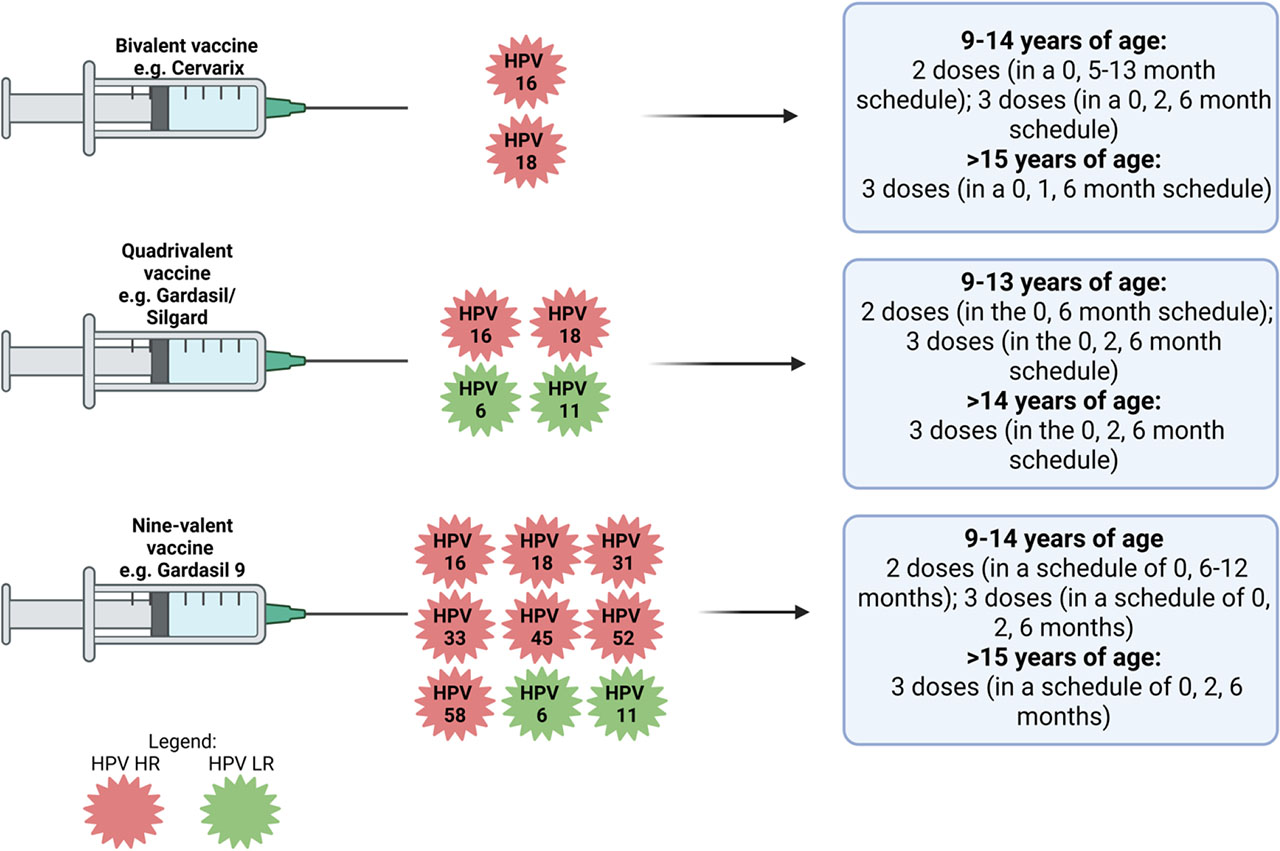
Fig. 5.
Examples of prophylactic vaccines available on the market, along with their dosage schedules. Created in BioRender.
7.3. Characteristics of the nine-valent HPV vaccine
The nine-valent vaccine, marketed under the trade name Gardasil 9, is the second-generation prophylactic vaccine against human papillomavirus. It was manufactured by Merck & Co. The vaccine was approved by the FDA in December 2014 (Mo et al., 2022). The Gardasil 9 vaccine includes the four genotypes in the previous quadrivalent vaccine (HPV 6, 11, 16, and 18) and five additional high-risk oncogenic types: HPV 31, 33, 45, 52, and 58 (Joura et al., 2015). The vaccine contains the following amounts of virus-like particles (VLPs): 30 μg HPV 6, 40 μg HPV 11, 60 μg HPV 16, 40 μg HPV 18, 20 μg HPV 31, 20 μg HPV 33, 20 μg HPV 45, 20 μg HPV 52, and 20 μg HPV 58. Gardasil 9, like the Gardasil vaccine, contains the AAHS adjuvant. It should be noted that it contains a higher amount of adjuvant (500 μg) than the quadrivalent vaccine (225 μg). L1 proteins are produced using recombinant DNA in yeast (Saccharomyces cerevisiae) (European Medicines Agency, 2025b).
The Gardasil 9 vaccine is administered intramuscularly. For ages 9–14, the schedule is two doses, given 6 to 12 months apart. A 3-dose schedule is recommended for individuals starting vaccination at age 15 years or older, with the second dose given at least one month after the first and the third dose given at least three months after the second. The entire vaccination cycle should be completed within 12 months (European Medicines Agency, 2025b).
7.4. mRNA vaccines in the prevention and treatment of HPV infections
Messenger RNA (mRNA) vaccines are a promising therapeutic strategy in immunotherapy that has the potential to revolutionize conventional vaccine development. Compared with approved HPV prophylactic vaccines based on virus-like particles (VLPs), the mRNA platform offers exceptional speed of production, safety, and design flexibility (Mo et al., 2022; Movahed et al., 2024).
The mRNA structure includes a coding sequence, a poly(A) tail at the 3’ end, a 5’ cap structure at the 5’ end, and untranslated regions (UTRs) at both ends (Maruggi et al., 2019). Currently, no therapeutic HPV vaccine has been approved by FDA. Research on mRNA vaccines for HPV is limited, but their potential, especially in therapy, is significant (Movahed et al., 2024).
While prophylactic HPV vaccines (based on VLP L1) induce humoral immunity (neutralizing antibodies) to prevent primary infection, therapeutic mRNA vaccines are designed to stimulate cellular immunity (especially CD8+ CTL T cells). The goal is to eliminate existing latent HPV infections, precancerous lesions (e.g., CIN), and HPV-related cancer (Mo et al., 2022). Although mRNA vaccines have achieved significant clinical success in COVID-19, research on them in the context of HPV remains in the early clinical or preclinical stages (Movahed et al., 2024). There are currently 5 registered clinical trials for HPV mRNA vaccines (EU Clinical Trials Register, 2025).
7.5. Population-based prevention
Long-term analyses of HPV vaccination implementation in the first decade after its introduction showed a significant reduction in the incidence of infections with viruses covered by the vaccine, a decrease in the incidence of genital warts, and a reduction in the percentage of precancerous lesions (CIN 2/3) among young women. Vaccination programs in countries with high vaccination coverage have reduced the prevalence of HPV 16 and HPV 18 and fostered herd immunity (Harper & DeMars, 2017).
Since the introduction of the first HPV vaccine in 2006, many countries have gradually adopted its use. The latest data indicate that 148 of the 194 member states of the World Health Organization have included the HPV vaccine in their national vaccination programs. Among countries that have included the vaccine in their programs, 132 countries reported estimated first-dose coverage data in 2023, and 129 countries reported full coverage. In 2023, global HPV vaccination coverage was 27% among girls after the first dose and 20% after the full vaccination series. For boys, the vaccination rates were 7% after the first dose and 6% after the full series. For adolescents up to 15 years of age, the HPV vaccination rate was 20% among girls after the first dose and 15% after the full vaccination, while among boys it was 7% after the first dose and 5% after the full cycle (Han et al., 2025).
Regarding dosage regimens, national programs vary: 67 countries (45%) have adopted a single-dose regimen, 73 countries (49%) have adopted a two-dose regimen with a six-month interval, and 4 countries (3%) have implemented a two-dose regimen with a 12-month interval.
The effectiveness of HPV vaccination can vary by age group and country. For example, in China and South Korea, the highest coverage with full doses was reported in the 20–29 age group and the lowest in the 9–14 age group, which was probably due to the vaccine not being included in the national immunization program, making adults with a certain economic capacity more likely to get vaccinated. In contrast, in Australia, France, and Switzerland, vaccination coverage rates declined with age above 20 years. An analysis of time trends in 15 countries that adopted the vaccine early (between 2006 and 2008) showed that in most of them, the incidence of cervical cancer is on a downward trend. Nevertheless, the full protective effect of the HPV vaccine on the elimination of cervical cancer in the population requires a longer period of observation (Han et al., 2025).
The HPV vaccine first-dose coverage rate among girls in the target group in 2023, along with global and regional vaccination rates weighted by country population size, are as follows. The countries with the highest coverage rates (≥ 90% for the first dose in 2023) are: Bhutan, Burkina Faso, Cabo Verde, Cambodia, Cook Islands, Denmark, Iceland, Niue, Norway, Portugal, Sweden, Turkmenistan, Uganda, United Republic of Tanzania, Uzbekistan. The countries with the highest full coverage rate (≥ 90% for the full dose in 2023) are: Burkina Faso, Cabo Verde, Cambodia, Cyprus, Niue, Norway, Portugal, Turkmenistan, Uganda, United Republic of Tanzania, Uzbekistan (Han et al., 2025).
Estimated global and regional HPV vaccination rates among women in 2023, based on program implementation indicators in Europe, were 67.1% for the first dose and 60.9% for the full two-dose schedule. Among high-income countries, Norway reported the highest full coverage rate (94%). Turkmenistan achieved 99% coverage with the first dose and 99% full coverage. Countries with stable or increasing vaccination programs (which correlate with a downward trend in cervical cancer incidence) include Australia, Portugal, the United Kingdom, Belgium, France, Germany, Luxembourg, New Zealand, Spain, Switzerland, and the United States. Some low-income countries, such as Rwanda, Uganda, Bhutan, and Tanzania, have achieved higher HPV vaccination coverage rates than some high-income countries, which may be related to targeted vaccination campaigns or pilot programs (Han et al., 2025).
In Poland, HPV vaccinations were first included in the calendar in 2008, as recommended. Until 2020, the vaccination rate among adolescents in the general population remained low, at only 10% (Jankowski et al., 2023; Magdziarz Ibrahim-El-Nur et al., 2025). This changed on June 1, 2023, when a universal, free HPV vaccination program was introduced. This program is part of the National Oncology Strategy (NSO) for 2020–2030. The goal of the NSO is to vaccinate at least 60% of the adolescent population against HPV by 2028. Girls and boys aged 12 and 13 are eligible for free vaccinations under the program. The program provides access to 2-valent (Cervarix) and 9-valent (Gardasil 9) vaccines (Jankowski et al., 2023; Magdziarz Ibrahim-El-Nur et al., 2025).
Following a change on September 1, 2024, as part of the universal HPV vaccination program, the Cervarix and Gardasil 9 vaccines are available free of charge to people aged 9 to 14 (Ministry of Health, 2024). Despite extensive promotion of the HPV vaccination program, in July 2023 only 51.3% of adult Poles had heard of it, and just 31.9% correctly identified the eligible population. These data come from a nationwide, representative cross-sectional study assessing public awareness of the program, which was launched on 1 June 2023. The survey was conducted using the CAWI method between 14 and 17 July 2023 on a sample of 1056 adult residents of Poland, based on a protocol developed by the authors (Jankowski et al., 2023).
Secondary prevention in Poland is based on the Organized Cervical Cancer Screening Program, which has been operating since 2006/2007 (Glinska et al., 2023). Under the OCCSP, women aged 25–59 are entitled to a free cytological test every 3 years. Unfortunately, population coverage in the OCCSP is low (14% in 2019), which contributes to the unfavorable epidemiological situation. Pilot studies (HIPPO project) are currently underway in Poland to evaluate and compare the effectiveness of primary screening based on HR-HPV (high-risk oncogenic virus genotypes) testing instead of standard cytology (Glinska et al., 2023; Magdziarz Ibrahim-El-Nur et al., 2025). Starting in July 2025, a modern HR HPV molecular test and liquid-based cytology were included in the Cervical Cancer Prevention Program. The revised program provides women in Poland with access to diagnostics based on the latest medical knowledge. The HPV HR test detects precancerous cervical lesions more than twice as effectively as traditional cytology. This enables earlier diagnosis of abnormalities and the initiation of treatment (gov.pl, 2025).
Implementation of effective human papillomavirus vaccination programs requires urgent, coordinated action. Scientific evidence confirms the high efficacy of HPV vaccines and supports the need to implement vaccination programs targeting both sexes before sexual initiation. Comprehensive programs, including universal vaccination of girls and boys aged 9–14 years, represent the most effective strategy to prevent HPV-related diseases in both sexes. Early vaccination in younger cohorts is particularly important because age-dependent immune responses allow the use of reduced-dose schedules. This approach is driven by expected gains in vaccine efficacy, safety, and cost-effectiveness, resulting in a substantial reduction in the overall cost of vaccination programs. Vaccination is a cornerstone of any healthcare system aiming to maximize population health and ensure equitable protection for both men and women. Decisions regarding male vaccination should not rely solely on cost-effectiveness analyses but must also consider public health benefits, gender equity, and the broader health and social impacts of HPV-related diseases in both sexes. A comprehensive economic evaluation of vaccination programs is often limited, as cost analyses typically omit broader societal values—such as impacts on productivity, patient and caregiver costs, and the fundamental right to access preventive healthcare. There are strong ethical, scientific, strategic, and economic arguments for the development and implementation of a coordinated, geographically and culturally balanced strategy targeting both sexes, with the goal of eliminating cervical cancer and other HPV-induced diseases (Audisio et al., 2016).
8. Summary
The article summarizes the current approach to controlling human papillomavirus infections, grounded in two key pillars: diagnosis and prevention. Primary prevention relies on highly immunogenic VLP vaccines (2-, 4-, and 9-valent), which significantly reduce the incidence of high-risk HPV infections and the occurrence of precancerous lesions and genital warts. Vaccines based on recombinant L1 virus-like particles effectively prevent infection with high-risk types, including HPV 16 and 18, and with low-risk types associated with genital warts. Countries with high vaccination coverage have seen a marked decline in the incidence of HPV infections and associated diseases. The introduction of free vaccination for 9- to 14-year-olds in Poland as part of the National Oncology Strategy is an important step toward improving public health and building population immunity.
The development of molecular methods has revolutionized the diagnosis and monitoring of HPV infection. NAAT tests based on PCR are highly sensitive and specific, enabling detection of infections with high oncogenic potential. The development of advanced technologies such as ddPCR enables ultrasensitive detection of even single copies of HPV DNA in samples, while next-generation sequencing (NGS) enables the simultaneous detection of multiple HPV genotypes, analysis of variants, mutations, and epigenetic changes, including methylation of regulatory regions of the viral genome. The integration of these methods may pave the way for personalized diagnostics and more effective oncologic surveillance in the future.
Measures for early detection of infection should combine HR-HPV screening with LBC cytology. This approach increases diagnostic sensitivity and ensures standardized clinical procedures in the event of a positive result, in accordance with current recommendations.
An essential complement to preventive strategies is the monitoring and treatment of infections caused by other viruses or bacteria that can lead to co-infection with HPV, along with the maintenance of the normal composition of the vaginal microbiota, whose disturbances increase the risk of latent HPV infections and the progression of precancerous lesions to cancer.
Comprehensive and integrated measures, including universal vaccination, modern molecular diagnostics, effective screening, and health education, will significantly reduce the incidence and mortality of HPV-related cancers in the population.